

New York taxpayers just made some history by committing $850 million to the Buffalo Bills’ new stadium. This makes it the biggest public handout to an NFL facility ever! The total price tag is $2.1 billion for a 60,000-seat open-air venue that’s deliberately old-school in every way. New York State ponied up $600 million while Erie County added $250 million, with a chunk of the state’s share coming from seized Seneca Nation casino funds. The Bills threw in $350 million, and the NFL kicked in a $200 million loan. And the cost overruns? Those fell entirely on owners Terry and Kim Pegula, who took an extra $700 million without asking taxpayers for another dime.
Deliberate Open-Air Design Rejects NFL Industry Trend

Jan 11, 2026; Jacksonville, FL, USA; Owner of the Buffalo Bills Terry Pegula before an AFC Wild Card Round game against the Jacksonville Jaguars at EverBank Stadium. Mandatory Credit: Melina Myers-Imagn Images
While everyone else is building climate-controlled entertainment palaces, Buffalo said “nah, we’re good” and went full throwback. Terry Pegula made the call in February 2022 from his Florida home: no dome, no retractable roof, just pure outdoor football. By 2031, open-air stadiums will actually be the minority in the NFL as Nashville, Cleveland, Denver, Washington, and Kansas City all build covered venues. The Bills are walking away from Super Bowls and year-round concerts to preserve their identity as a team built for harsh weather. As team president Pete Guelli put it, the priority was football, not hosting NCAA tournaments or indoor mega-events.
Engineering Winter: Hydronic Snow-Melting System
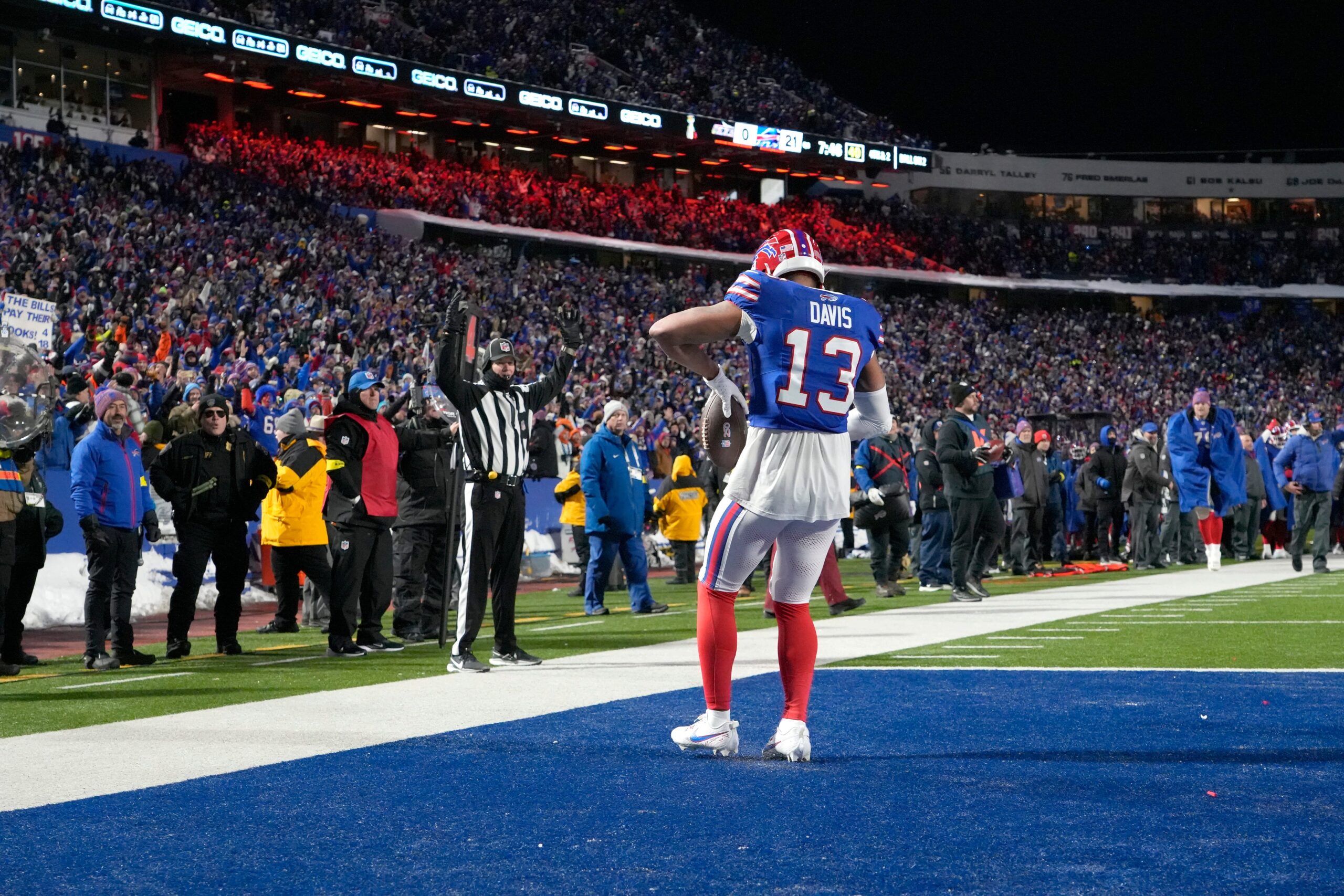
Bills wide receiver Gabe Davis celebrates his touchdown in the third quarter against the New York Jets during the last regular season game at Highmark Stadium in Orchard Park Sunday, Jan. 4, 2026 Mandatory Credit: Shawn Dowd/Rochester Democrat and Chronicle-Imagn Images
Just because they skipped the roof doesn’t mean they’re ignoring Buffalo’s brutal winters. The new stadium features the NFL’s largest hydronic snow-melting system, built into a massive 270,000-square-foot canopy that covers about 60 percent of the seats. Sensors detect snowfall and automatically pump hot water through pipes embedded in the steel structure, melting snow on contact and radiating heat down to fans. V-shaped drainage handles the runoff even during monster lake-effect storms. Additional heating lives under the grass and in concrete seating areas, while perforated steel panels shaped like the Bills logo break up wind gusts before they pummel the bowl.
Natural Grass Commitment Adds $1 Million Annual Costs
Oct 5, 2025; Glendale, Arizona, USA; An NFL football with the Crucial Catch logo lies on the turf during the game between the Arizona Cardinals and the Tennessee Titans in the first quarter at State Farm Stadium. Mandatory Credit: Matt Kartozian-Imagn Images
Most new NFL stadiums go with artificial turf because it’s easier and cheaper, but Buffalo installed natural grass with all the bells and whistles: SubAir technology, wireless monitoring, hydronic heating, and even grow lights to keep it alive through winter. This annual maintenance bill exceeds $1 million, way more than turf, but the Bills cite player safety since the NFL Players Association has documented higher injury rates on synthetic surfaces. The downside? That pristine grass means concerts and soccer matches become more complicated, since they require expensive field replacements. It’s another signal that this building exists purely for football, not packed event calendars.
Cost Overruns Reach $700 Million

Dec 8, 2024; Inglewood, California, USA; Buffalo Bills owner Terry Pegula attends the game against the Los Angeles Rams at SoFi Stadium. Mandatory Credit: Kirby Lee-Imagn Images
The original 2022 budget pegged the stadium at $1.4 billion, but by November 2024, that figure had exploded to $2.1 billion due to post-pandemic inflation, which drove up labor and materials costs. So, here’s the thing, though: the funding deal makes the team’s problem, not the public’s, overrun. The Pegulas, worth about $7 billion combined, used roughly $700 million in extra costs without cutting a single feature. Team officials said they actually added enhancements instead of scaling down. To cover their share, the Bills are tapping NFL loans and rolling out new season-ticket licensing fees that longtime fans aren’t exactly thrilled about.
Pegula Family Seeks Minority Buyers to Offset Losses
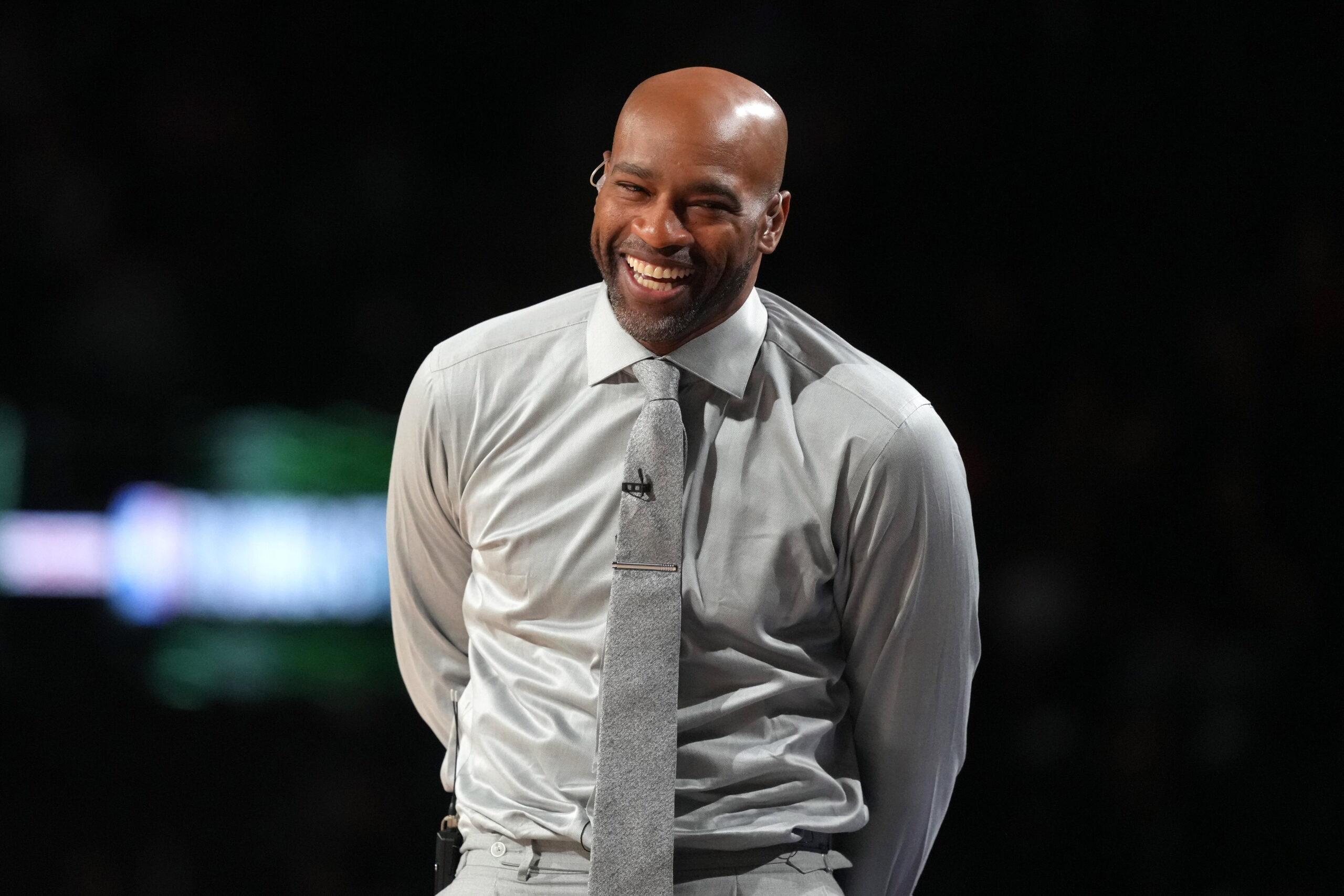
Feb 13, 2026; Inglewood, California, USA; Team Vince honorary coach Vince Carter looks on during an NBA All Star Rising Stars game at Intuit Dome. Mandatory Credit: Kirby Lee-Imagn Images
In April 2024, right as those overruns were piling up, Terry Pegula hired investment bankers to explore selling a minority stake in the team. By November, a deal emerged: selling 20.6 percent total, with 10 percent going to private equity firm Arctos Partners and another 10.6 percent to an investor group including NBA legends Vince Carter and Tracy McGrady. The Pegulas keep 79 percent control. Team president Pete Guelli insists this isn’t about the stadium costs, but the timing raises eyebrows. They bought the team for $1.4 billion in 2014, and it’s now valued at $4.2 billion, so even a minority slice brings serious capital.
Capacity Reduction Creates “Intimacy” Marketing Narrative
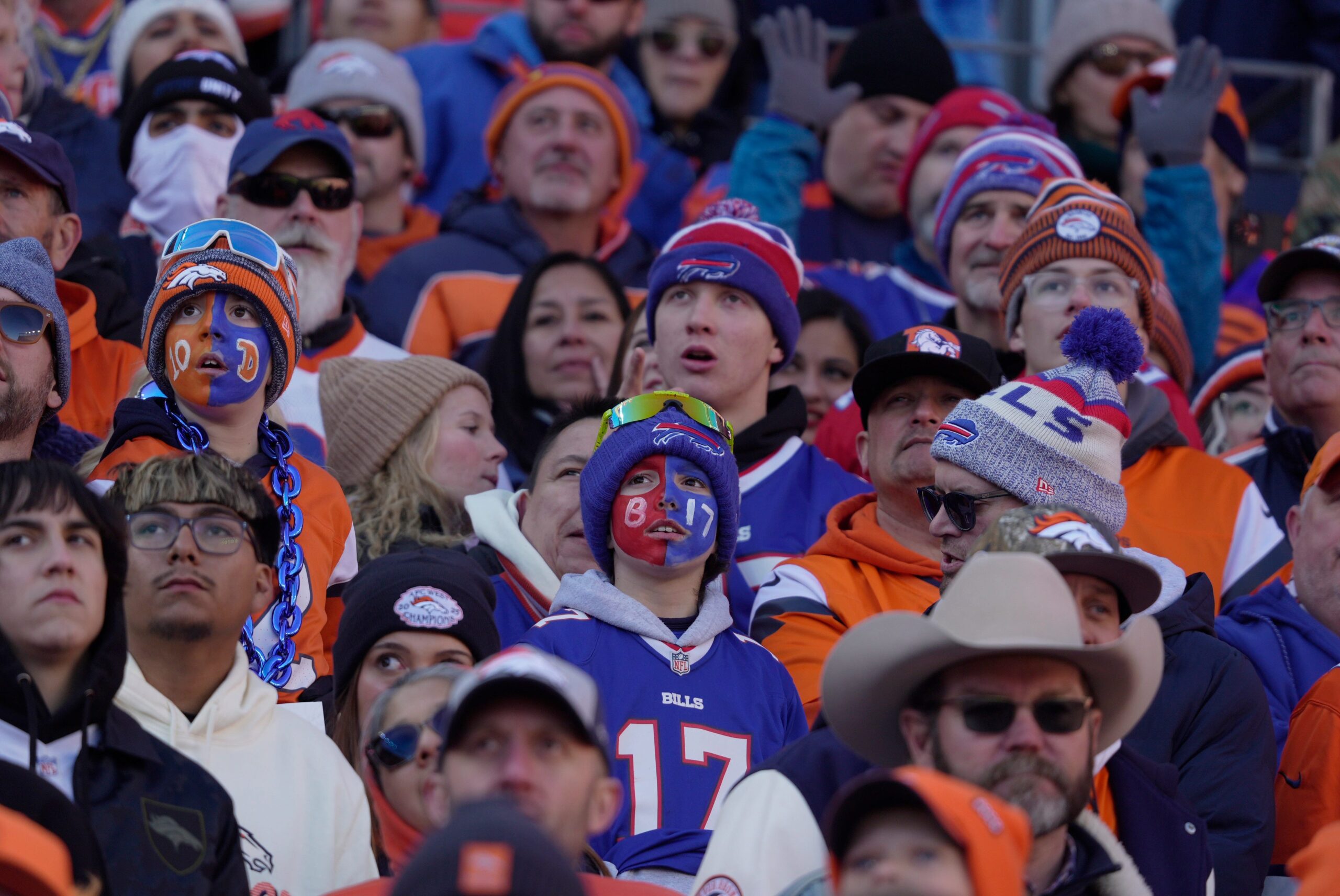
Bills fans were scattered throughout the stadium during first half action at Empower FIeld at Mile High in Denver, Colorado on Jan. 17, 2026. Mandatory Credit: Tina MacIntyre-Yee/Democrat and Chronicle-Imagn Images
The old stadium held roughly 72,000 fans while the new one seats 60,000, plus standing-room areas that can push it into the mid-60,000s. The Bills are spinning this as “intimacy optimization” with better sightlines and closer seats. The upper deck sits nearer to the field than any other NFL stadium, and the standing-room section in the north end zone is just 12.5 feet from the grass. But here’s the reality: they cut about 12,000 of the worst, cheapest seats, which lets them jack up prices on what remains. That sunken-bowl design also permanently locks in the geometry, since major changes later would cost almost as much as rebuilding.
Thirty-Year Lease Extends Through 2050s

New York State Governor Kathy Hochul addresses the crowd at White Pine Commerce Park in Clay, NY during Micron’s groundbreaking ceremony on Friday, January 16, 2026. Mandatory Credit: Daniel DeLoach/Utica Observer-Dispatch-Imagn Images
The funding deal ties the Bills to Western New York through the 2050s with a 30-year lease. The state committed $100 million for maintenance over 15 years, plus $6 million per year for inflation-adjusted capital improvements. Governor Hochul defends this by pointing to projected annual tax revenue of about $27 million from players and visiting teams. But that assumes salaries keep growing, tax rates stay stable, and players maintain New York residency. Even if everything works perfectly, it’s just break-even on construction without creating any public surplus. Erie County also turned over the old stadium complex to the state.
Design Inspired by Tottenham Stadium, Prioritizes Acoustics
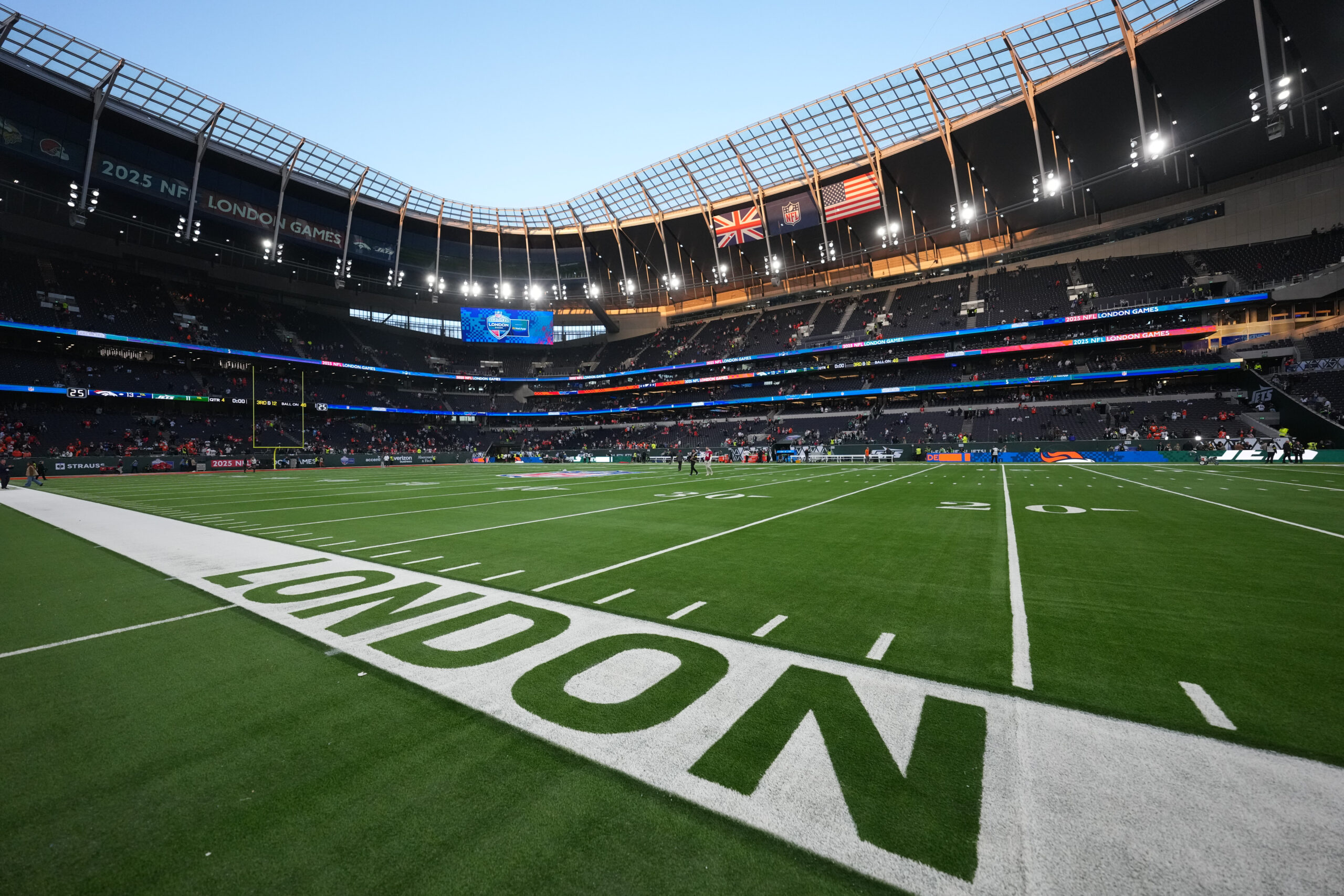
Oct 12, 2025; Tottenham, United Kingdom; General view of the London logo on the field after an NFL International Series game between the Denver Broncos and the New York Jets at Tottenham Hotspur Stadium. Mandatory Credit: Kirby Lee-Imagn Images
Buffalo borrowed heavily from London’s Tottenham Hotspur Stadium, which pioneered that enclosed-yet-open vibe with steep stands and noise-amplifying canopy structures. The Bills’ canopy angles to bounce crowd noise back through the stands and down toward the field, while standing areas right by the action create an acoustic wall that feels physically oppressive to opponents. The perforated steel facade references Buffalo’s own Kleinhans Music Hall while managing wind flow. The whole thing spans 1.35 million square feet and uses 25,000 tons of steel. Construction hit about 75 percent completion by December 2025, staying on track for summer 2026 opening.
Immutable Structure Bets on Football Permanence
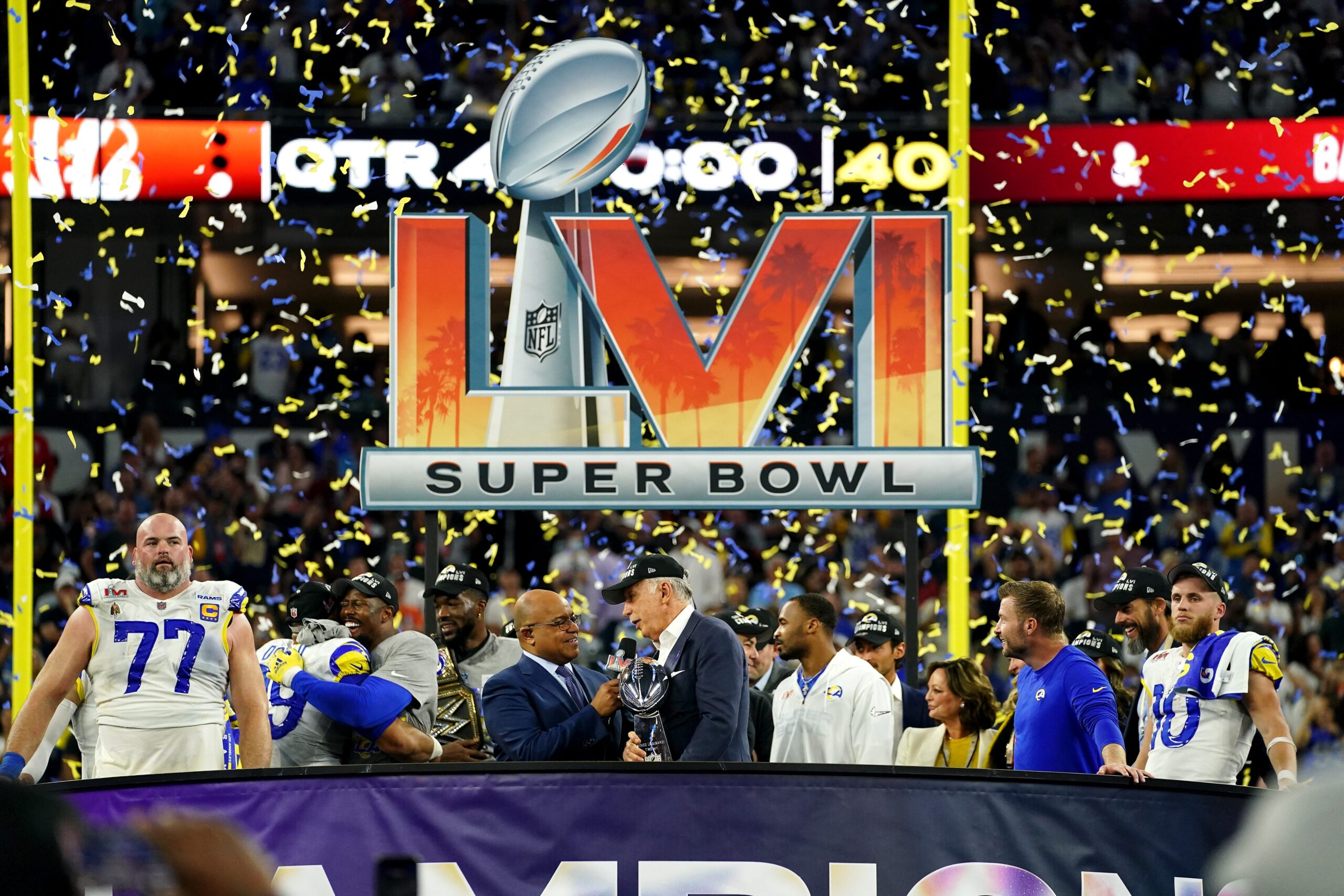
Los Angeles Rams owner Stan Kroenke receives the Lombardi Trophy at the conclusion of Super Bowl 56 after the Rams defeated the Cincinnati Bengals 23-20 at SoFi Stadium in Inglewood, Calif. Xxx 021322 Bengals Ke 0015 Jpg S Fbn Usa Ca Mandatory Credit: Kareem Elgazzar-Imagn Images
This is a purpose-built football stadium that can’t easily be repurposed. The excavated bowl, fixed canopy, and grass field lock it into a single role, without the flexibility of retractable-roof venues that host 200 events each year. Analysts estimate the open-air design rules out maybe 60 to 70 percent of events that climate-controlled buildings can host, from NCAA tournaments to corporate conferences. It might draw occasional outdoor concerts or an NHL Winter Classic, but it’ll never match SoFi Stadium’s packed calendar of 20-plus non-football events annually. As costs edge toward $2.2 billion, the bet becomes clear: Buffalo’s betting on football stays popular enough to justify this specialized building through the 2050s.
If you enjoyed this article please like and follow us here on MSN! Thank you for reading and have a great day!
Sources:
Associated Press, Bills’ new stadium costs balloon to $2.1 billion, $560 million over initial estimate, 2024-11-15
Politico, New York taxpayers to shell out record $850M for new Buffalo Bills stadium, 2022-03-27
Sports Business Journal, Buffalo’s $2.2B Highmark Stadium brings modern amenities to its ardent Bills fans, 2026-01-18
talkSPORT, Buffalo Bills shun NFL stadium trend with $2.2bn soccer-style design, 2026-01-25
Yahoo Finance / AP, Bills’ new stadium costs balloon to $2.1 billion, $560 million over initial estimate, 2024-11-15
CBC, Vince Carter, Tracy McGrady among 10 limited partners in Buffalo Bills ownership group, 2024-12-11