
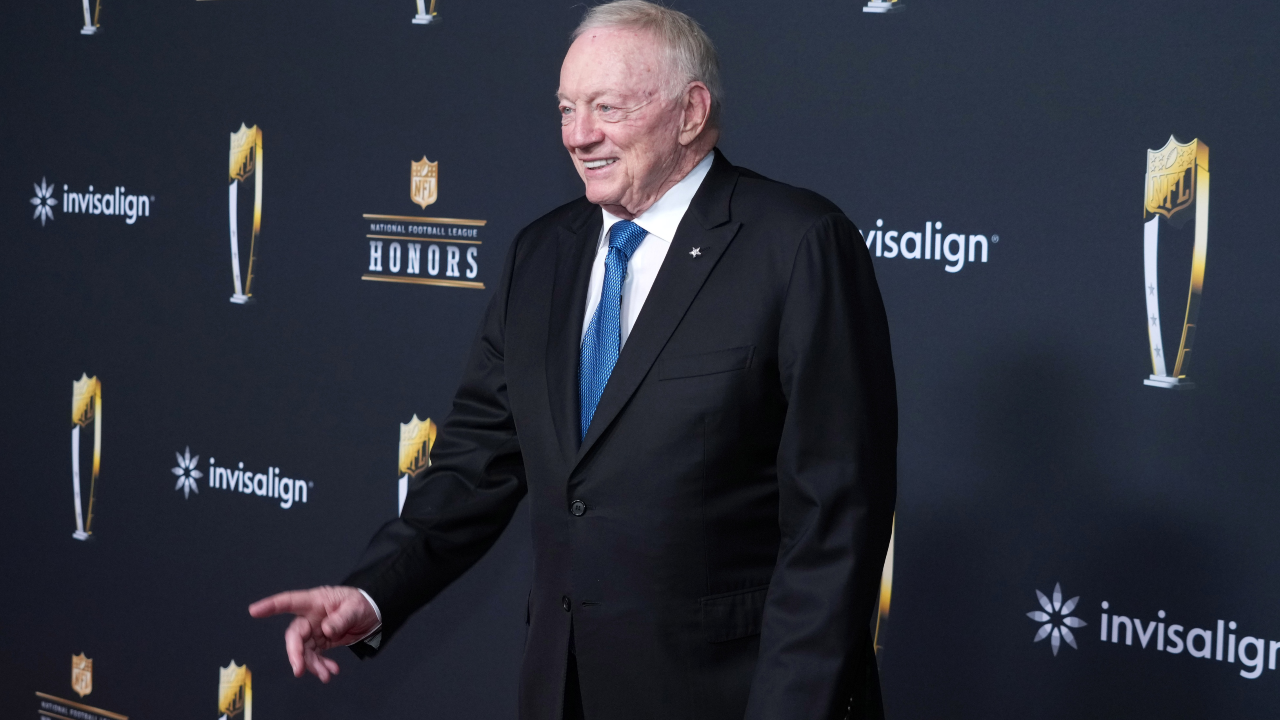
At April’s owners meeting, Jerry Jones stepped to the microphone and said something that landed like a grenade in every locker room in America. The Cowboys owner made his case for an 18th regular-season game, framing it as a gift to the men who play the sport. “I think that’s great for the players,” Jones said. “Emphasize great for the players.” That word, “emphasize,” hung in the air. It sounded less like conviction and more like a talking point somebody rehearsed in a mirror. The union had already answered.
NFL revenue exceeded $23 billion in 2024. Average franchise valuations hit approximately $7.1 billion, up 25% year-over-year. The salary cap has grown roughly 50% in four years, climbing from around $200 million to a projected $301 to $306 million for 2026. Ownership isn’t hurting. Nobody’s passing the collection plate. Yet here was Jones, alongside Patriots owner Robert Kraft, who declared flatly that “every team will go to 18.” The league’s richest men weren’t asking for survival money. They were asking for one more game from 1,600 players already giving 17.
The Playbook Has Run Before
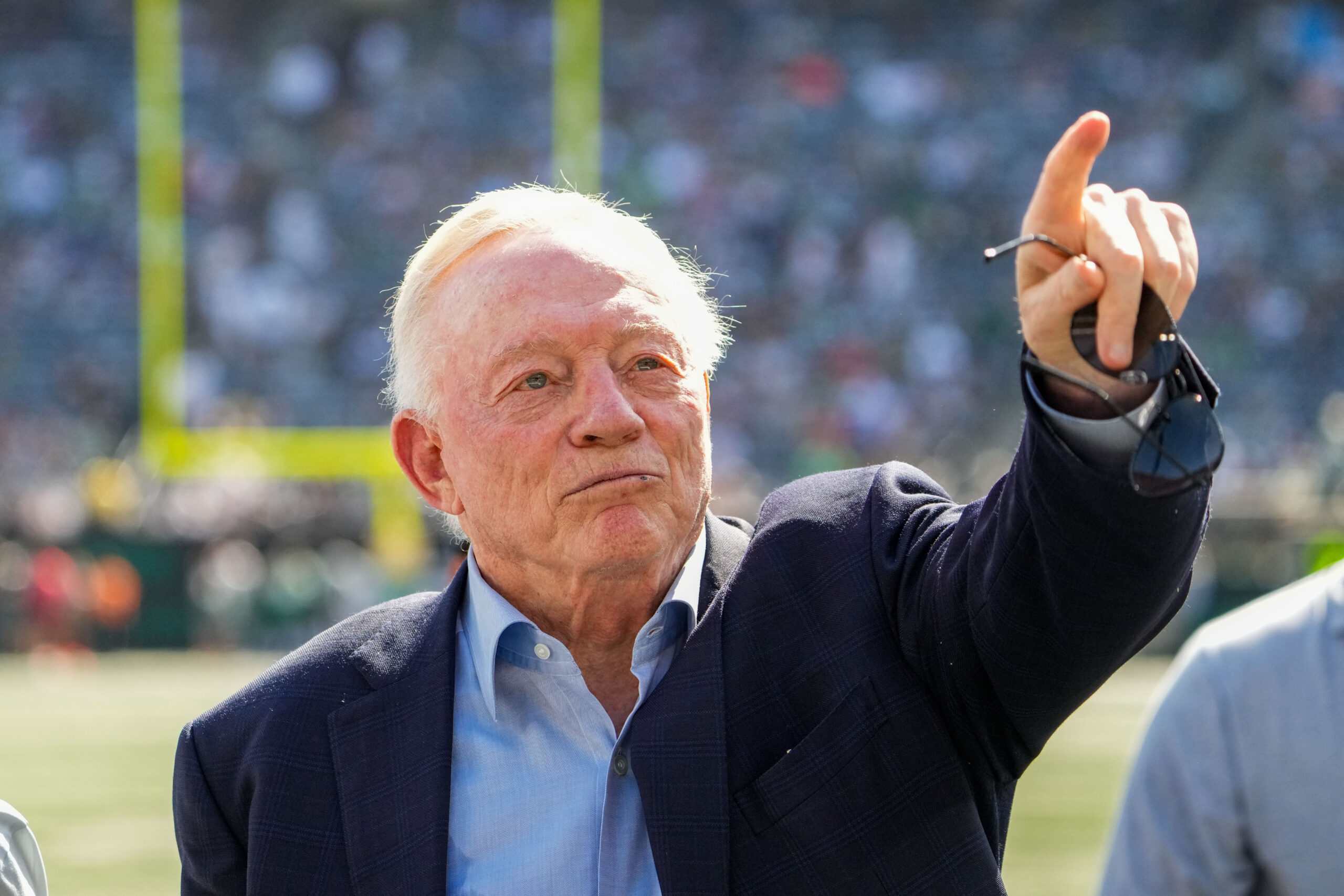
Oct 5, 2025; East Rutherford, New Jersey, USA; Dallas Cowboys Owner, President and general manager Jerry Jones stands on the field prior to a game against the New York Jets at MetLife Stadium. Mandatory Credit: Robert Deutsch-Imagn Images
Jones has pushed this idea for over a decade. During 2011 CBA negotiations, he personally championed 18 games. It failed then. In 2021, ownership settled for 17, the first schedule expansion since 1978, a 43-year gap. The NFLPA initially opposed that expansion on health grounds. The vote was close. But revenue-sharing sweetened the deal, and the union approved it anyway. That pattern should look familiar: ownership pitches, union objects on safety, money overrides the objection. The assumption that owners genuinely prioritize player welfare starts cracking right here.
The Timing Tells the Real Story
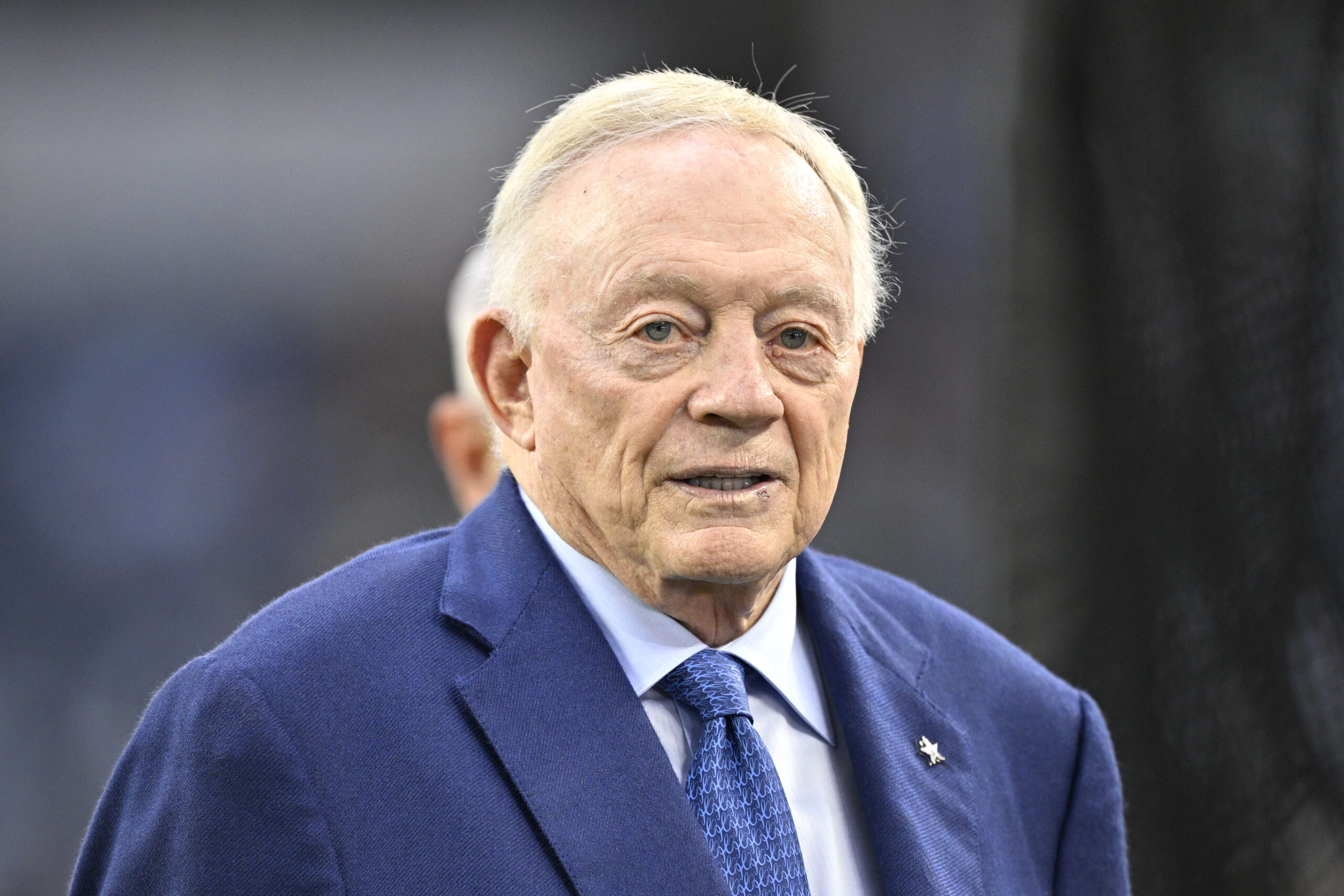
Sep 28, 2025; Arlington, Texas, USA; Dallas Cowboys owner Jerry Jones looks on before the game against the Green Bay Packers at AT&T Stadium. Mandatory Credit: Jerome Miron-Imagn Images
Weeks before Jones spoke, NFLPA interim director David White stated players have “no appetite” for 18 games. “The 18th game is not casual for us,” White said. “It’s a very serious issue.” Ownership pressed forward anyway, accelerating the push just as new NFLPA executive director JC Tretter took office after a long transition. A union installing fresh leadership. An ownership bloc that’s been planning this for years. One side was ready. The other was still finding the light switches. That timing wasn’t accidental.
The Math Behind the Messaging
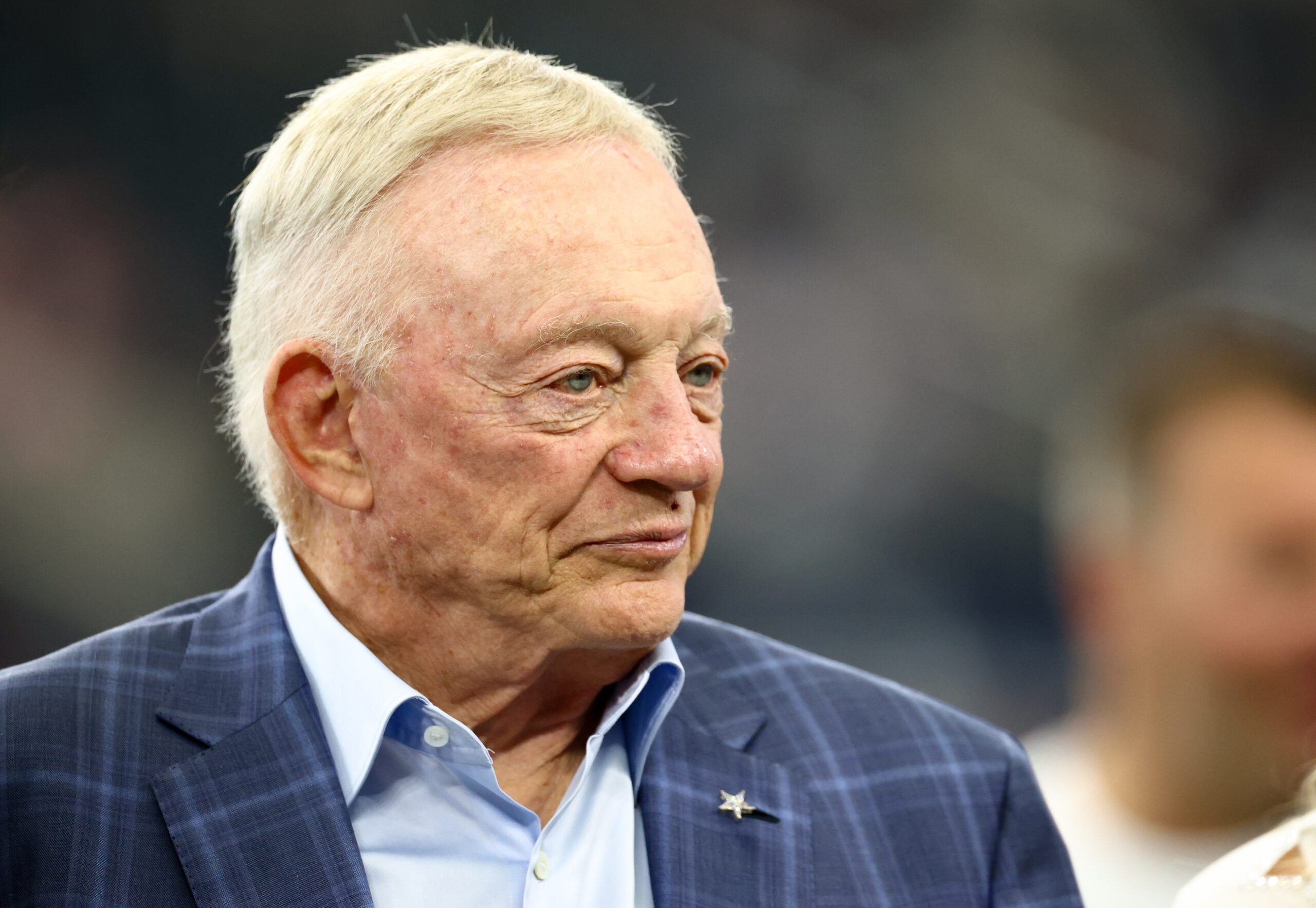
Aug 16, 2025; Arlington, Texas, USA; Dallas Cowboys owner Jerry Jones before the game against the Baltimore Ravens at AT&T Stadium. Mandatory Credit: Kevin Jairaj-Imagn Images
Here’s what the “great for the players” pitch obscures. Preseason games generate roughly 60 to 70% less revenue than regular-season contests due to lower ticket prices, sparse attendance, and reduced broadcast value. Ownership drops one low-revenue preseason game and adds one high-revenue regular-season game. The net result for players: one additional meaningful game of full-speed contact. Jones frames that as burden reduction. It’s a credit card company offering a lower interest rate while quietly raising the total debt. The financial outcome favors the lender, not the borrower.
Every Owner Benefits Equally
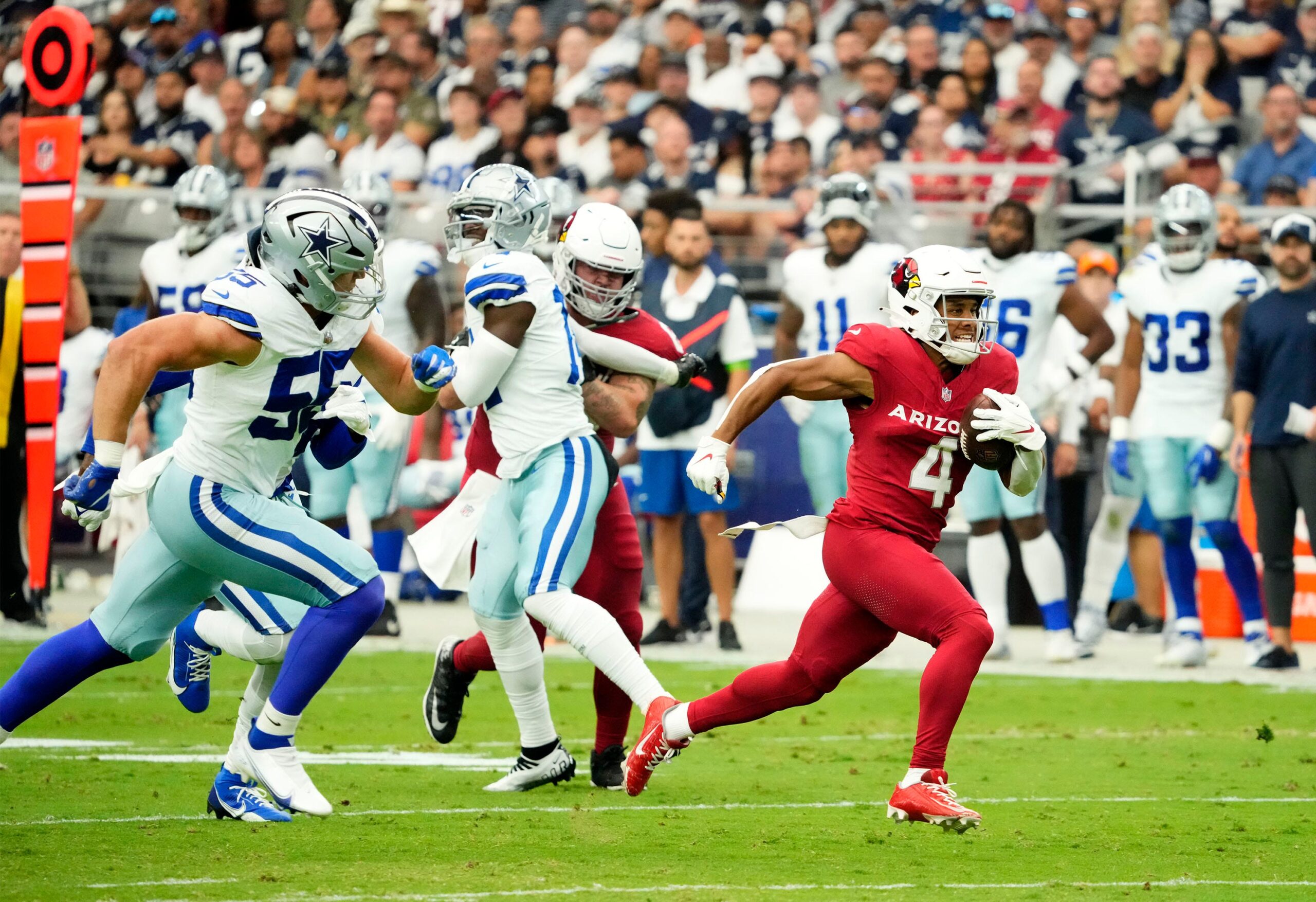
Sep 24, 2023; Glendale, Arizona, USA; Arizona Cardinals wide receiver Rondale Moore (4) runs for a touchdown against the Dallas Cowboys in the first half at State Farm Stadium. Mandatory Credit: Rob Schumacher-Arizona Republic-Imagn Images
The NFL distributes 62% of total revenue equally among all 32 teams. That structure means every franchise benefits identically from adding a high-value regular-season game, regardless of market size. It creates unanimous ownership incentive. Meanwhile, the CBA ties player revenue share to overall league growth, so total player compensation rises. But per-game earnings could actually decline if revenue doesn’t grow proportionally to the game increase. More money in the pool, spread across more games. Mid-tier players and backups absorb the extra injury risk without guaranteed per-game gains.
The Calendar Nobody’s Discussing
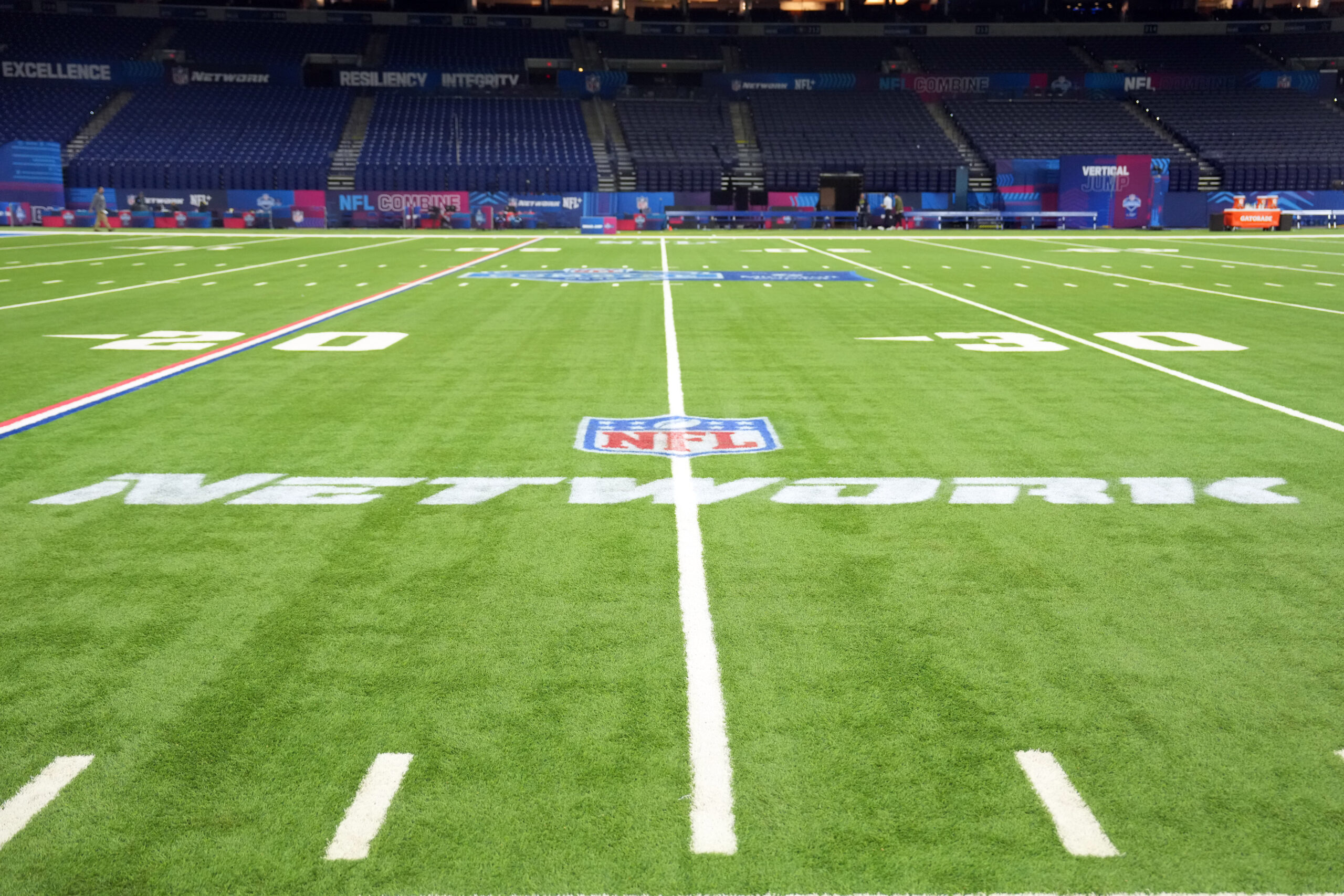
Feb 27, 2026; Indianapolis, IN, USA; The NFL Network logo on the field during the NFL Scouting Combine at Lucas Oil Stadium. Mandatory Credit: Kirby Lee-Imagn Images
An 18-game season could push the Super Bowl to late February. Playoff teams would face 23 to 24 total games in a single season. The league already has nine international games scheduled for 2026, with a stated goal of 16 annual overseas contests. Mandatory international rotation combined with an expanded schedule compounds travel fatigue and recovery compression. New Orleans Saints coach Kellen Moore raised concerns about cumulative game load. Even Cleveland Browns owner Jimmy Haslam called the conversation “a little premature.” Ownership isn’t unanimous, and the calendar consequences are stacking fast.
A New Rule, Not an Exception
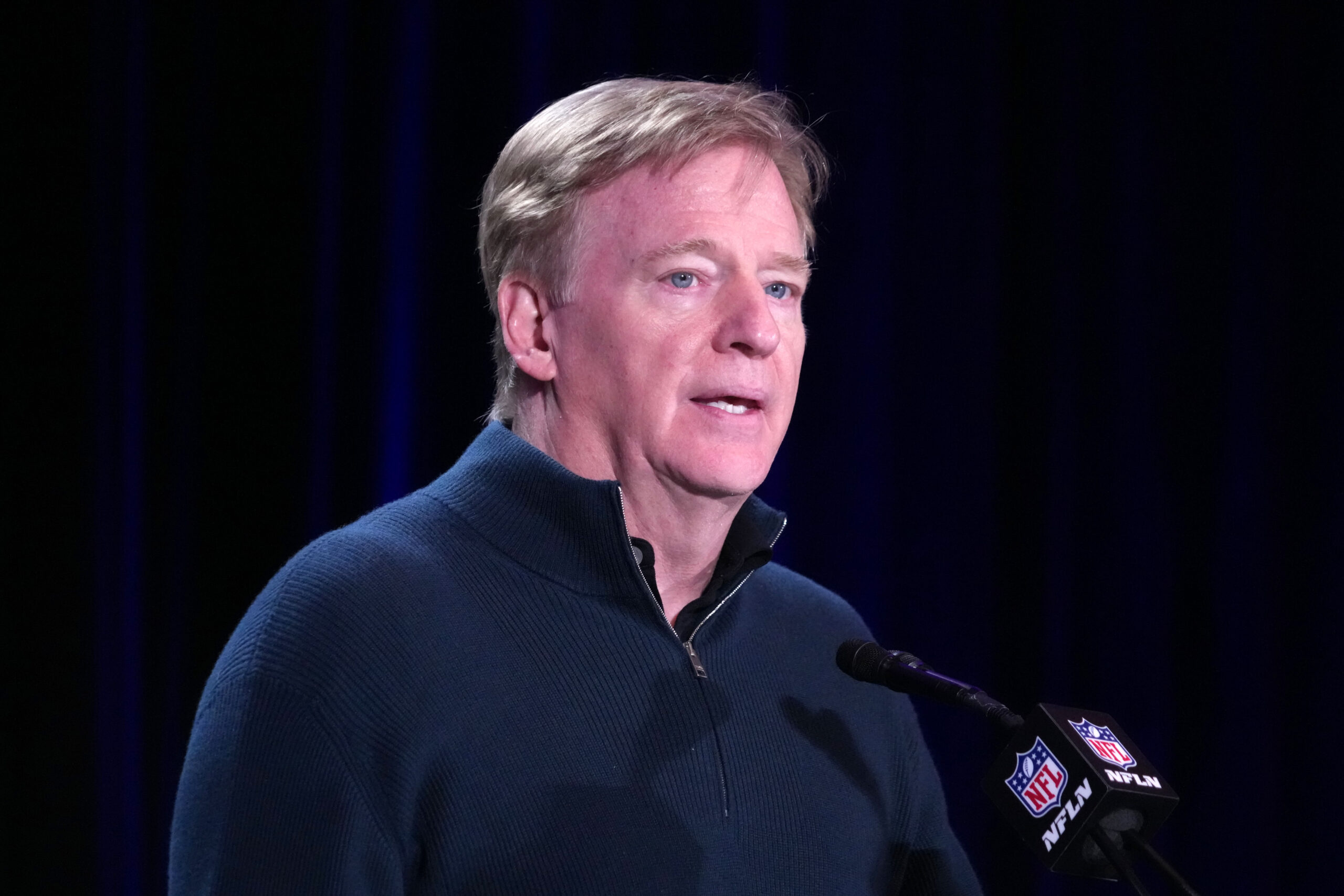
Feb 9, 2026; San Francisco, CA, USA; NFL commissioner Roger Goodell speaks at the Super Bowl LX host committee handoff press conference at Moscone Center. Mandatory Credit: Kirby Lee-Imagn Images
Commissioner Goodell said the expansion is “not a given” and that “we have not had any formal discussions about it.” That directly contradicts Kraft’s certainty. But the contradiction is the point. Goodell manages the messaging while owners build inevitability. The 2021 expansion established the blueprint: frame revenue-sharing as the override, time the push during union vulnerability, deploy “player benefit” language. Once you see the pattern, every element of the 18-game push serves one purpose. Revenue maximization disguised as schedule optimization, with international expansion as the hidden engine.
What Players Stand to Lose
Feb 5, 2025; New Orleans, LA, USA; The NFLPA logo at press conference at the Super Bowl LIX media center at the Ernest N. Morial Convention Center. Mandatory Credit: Kirby Lee-Imagn Images
If the NFLPA refuses to reopen the CBA, which runs through 2030, ownership could attempt to impose 18 games at expiration, risking a lockout. The 2011 lockout still haunts both sides. Aging veterans face compounded injury risk from additional meaningful games. Backup players and special teamers absorb the worst of it with the smallest paychecks. Seattle Seahawks receiver Cooper Kupp acknowledged the leverage: “There’s going to have to be some talks about what makes that worth it to the players.” Worth it. That’s the negotiation ownership doesn’t want to have publicly.
The Fight That Defines the Next Decade
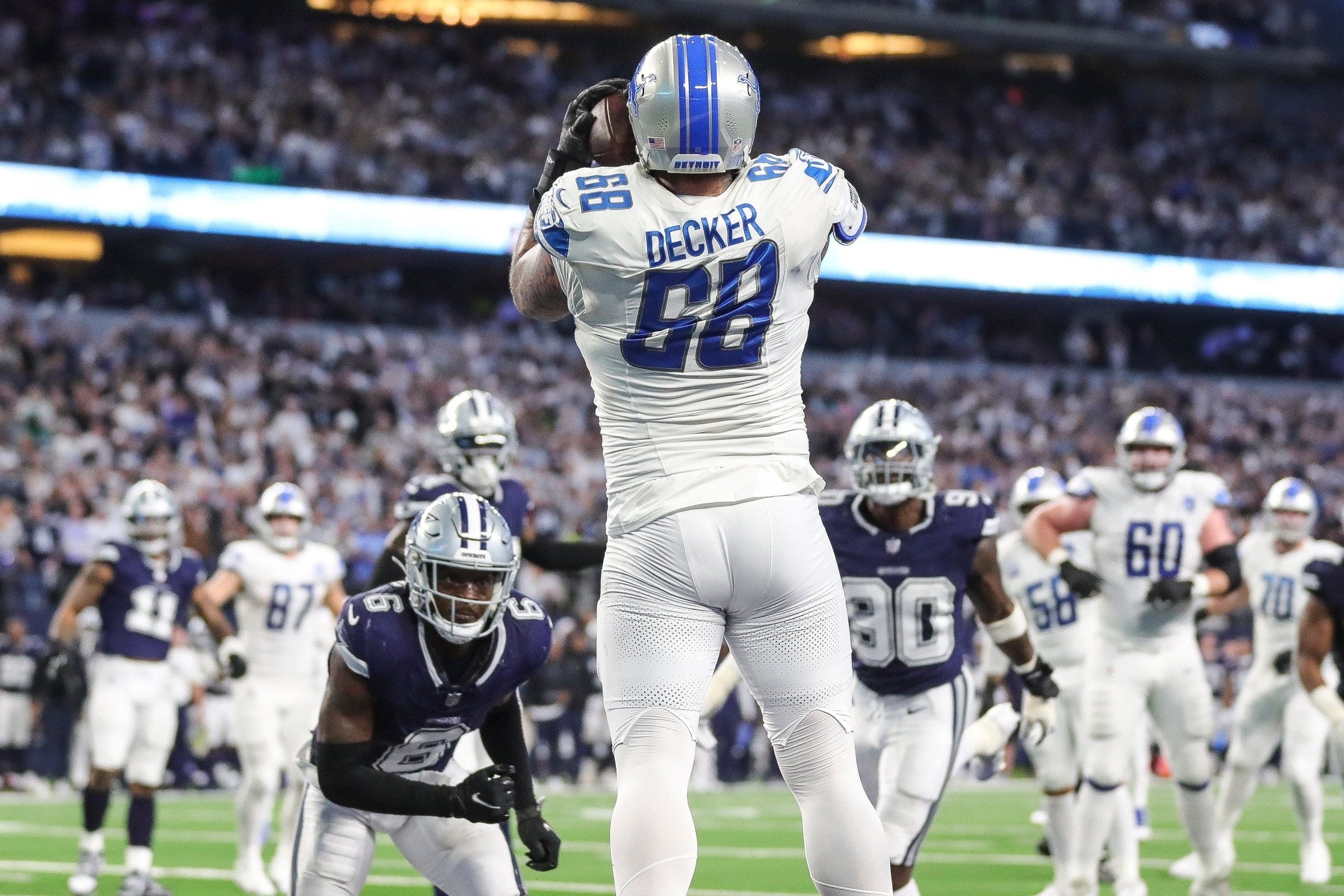
Detroit Lions offensive tackle Taylor Decker (68) catches the ball in the end zone for a 2-point conversion against Dallas Cowboys during the second half at AT&T Stadium in Arlington, Texas on Saturday, Dec. 30, 2023. The play was flagged for illegal touching.-Imagn Images
The union could demand expanded rosters, guaranteed contracts, or elimination of franchise tags as the price of that 18th game. Ownership will likely offer incremental revenue bumps and resist structural concessions. The real question every fan should carry out of this story: if the league is already generating $23 billion and the salary cap has grown 50% in four years, why does ownership need one more game at all? The answer has nothing to do with what’s great for the players. It never did.
Sources:
Randy Gurzi, “Jerry Jones Makes Bold Claim About 18-Game Season Benefiting Players,” Sports Illustrated, March 31, 2026.
ESPN staff, “18-Game Regular Season? Mixed Reaction by NFL Owners, Coaches,” ESPN, March 30, 2026.
Brooke Pryor, “NFLPA’s Interim Boss: Players ‘Have No Appetite’ for 18th Game,” ESPN, Feb. 2, 2026.
NFL.com staff, “NFL Commissioner Roger Goodell Discusses 18-Game Schedule, Diversity Hiring Ahead of Super Bowl LX,” NFL.com, Feb. 2, 2026.
NFL.com staff, “NFL Salary Cap Projected at $301.2 Million to $305.7 Million Per Team for 2026 Season,” NFL.com, Jan. 30, 2026.
NFL.com staff, “JC Tretter, Former OL and Union President, Elected NFLPA Executive Director,” NFL.com, March 17, 2026.