
Somewhere in a Los Angeles studio lot, the lights are off. Not for a night shoot. Just off. Production shoot days in LA collapsed to 19,694 in 2025, down from 36,792 three years earlier. A 46% freefall. The soundstages that built American pop culture are going dark while broadcast networks write checks so large the ink hasn’t dried before the next bill arrives. The NFL wants $15.9 billion a year in media rights. That money has to come from somewhere, and it’s coming from Hollywood’s chest cavity.
The Bill Nobody Can Refuse
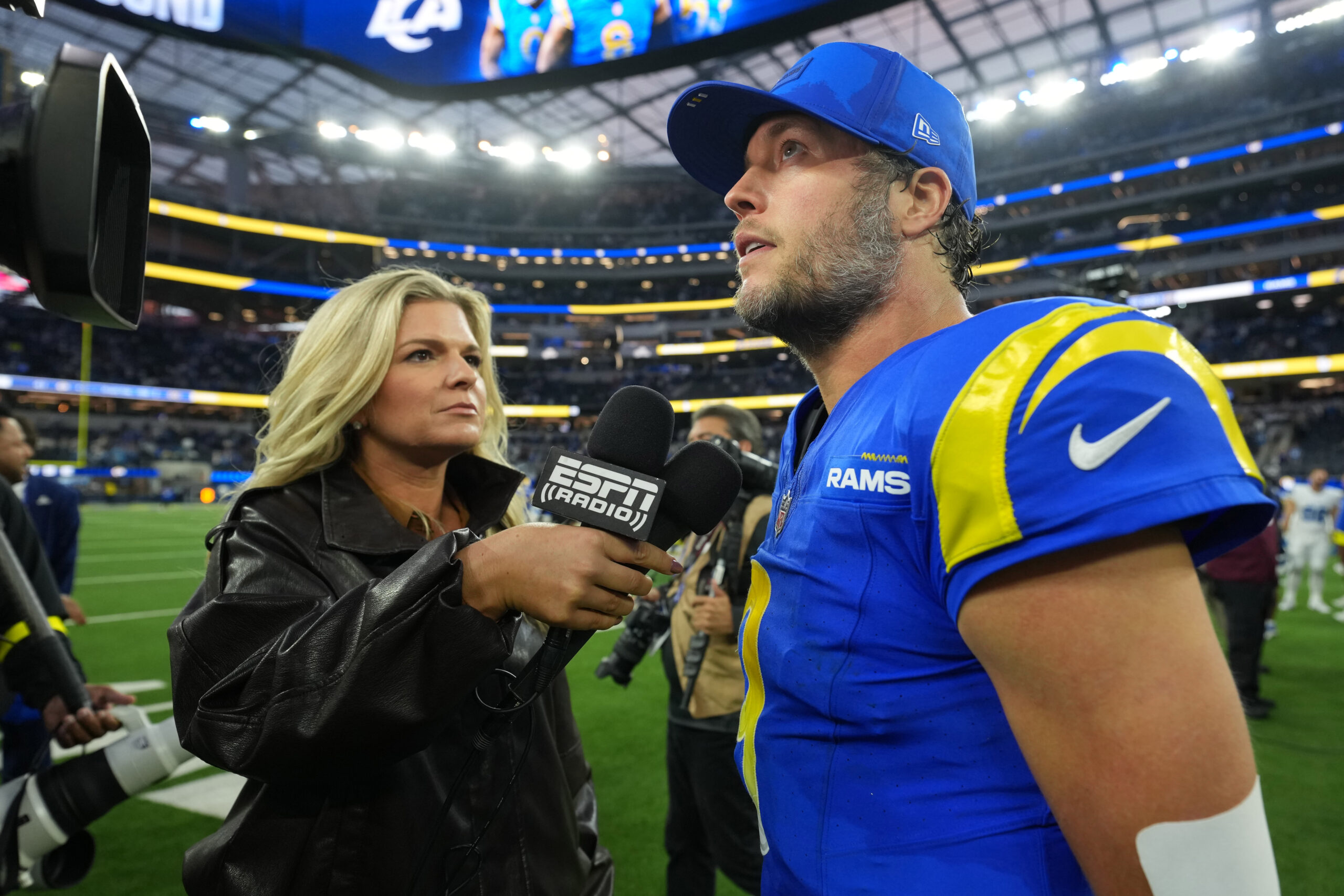
Dec 14, 2025; Inglewood, California, USA; ESPN radio reporter Lindsey Thiry. (left) interviews Los Angeles Rams quarterback Matthew Stafford (9) after the game against the Detroit Lions at SoFi Stadium. Mandatory Credit: Kirby Lee-Imagn Images
ESPN pays $2.7 billion annually. Fox pays $2.2 billion. CBS pays $2.1 billion. NBC pays $2 billion. Amazon pays $1 billion for Thursday nights alone. That’s roughly $10 billion a year flowing to the NFL right now. MoffettNathanson projects that number surging 58% to $15.9 billion. The NFL wants deals finalized by September 2026. Networks built their entire existence around Sunday football. Walking away means losing the one product that justifies their place in the cable bundle. So they’ll pay. Every single one of them.
The Wallet Everyone Shares
Nov 10, 2025; Green Bay, Wisconsin, USA; General view of an ESPN Monday Night Football logo during the game between the Philadelphia Eagles and Green Bay Packers at Lambeau Field. Mandatory Credit: Jeff Hanisch-Imagn Images
Most people blame Netflix or content oversaturation for Hollywood’s collapse. That assumption misses the mechanism entirely. Four of the NFL’s five broadcast partners are owned by parent companies that also control major film studios. Paramount Pictures and CBS share a wallet. Disney funds both ESPN and Walt Disney Studios. Comcast bankrolls NBC and Universal. Amazon runs Prime Video and MGM Studios. One corporate budget. Two competing demands. When the NFL takes a bigger slice, the studio gets whatever’s left. That structure turns every rights increase into a studio budget cut.
The Prediction That Became Policy
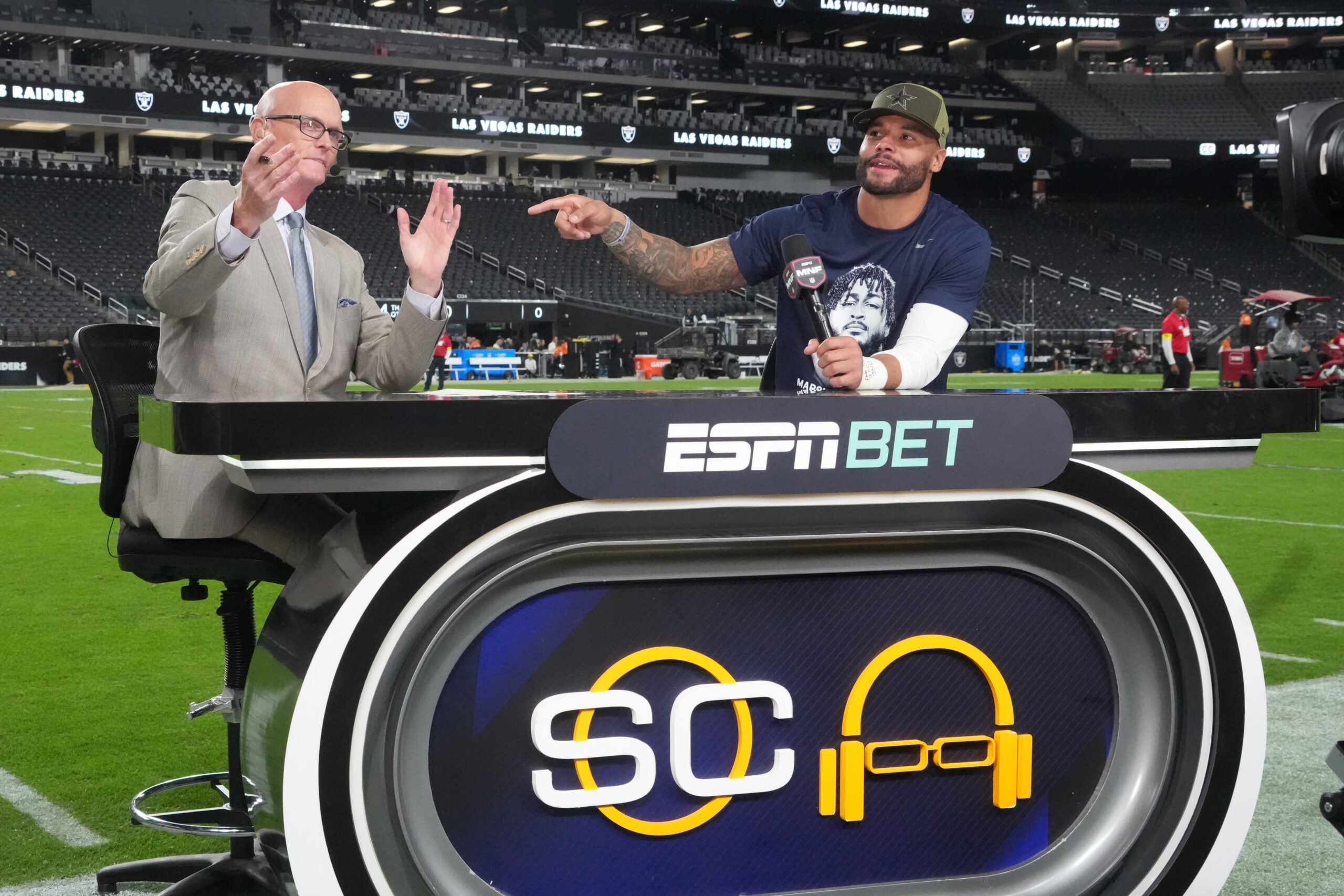
Nov 17, 2025; Paradise, Nevada, USA; ESPN’s Scott Van Pelt on set with Dallas Cowboys quarterback Dak Prescott (4) following a game against Las Vegas Raiders at Allegiant Stadium. Mandatory Credit: Kirby Lee-Imagn Images
Matthew Belloni, who runs Puck’s “What I’m Hearing” newsletter, warned that networks would “pull back spending on other areas of content like scripted entertainment and films, which likely means less money for Hollywood.” Weeks later, Paramount Skydance announced significant cost cuts and content spend reductions as part of its merger strategy. The speed was striking. Whether the NFL was the direct trigger or an accelerant to decisions already forming in executive suites, analysts like Belloni saw the pattern clearly: rising rights fees and studio budget pressure were moving in the same direction at the same time. Paramount Skydance separately announced $6 billion in projected cost synergies tied to its proposed Warner Bros. Discovery acquisition, a restructuring driven by M&A pressures. Analysts like Belloni warned the NFL’s escalating demands would compound that pressure on all studio budgets.
A Law Turned Inside Out
Jan 12, 2026; Pittsburgh, PA, USA; ESPN Monday Night Football logo on an end zone camera before the Pittsburgh Steelers host the Houston Texans in an AFC Wild Card Round game at Acrisure Stadium. Mandatory Credit: Charles LeClaire-Imagn Images
The 1961 Sports Broadcasting Act granted the NFL antitrust immunity so it could negotiate collectively and keep games on free television. That was the deal. Protect consumers from monopoly pricing. Sixty-five years later, the same exemption enables the NFL to fragment access across paywalls while extracting unprecedented fees from networks that cannot negotiate downward or walk away. Senator Mike Lee put a number on the consumer cost: “To watch every NFL game during this past season, football fans spent almost $1,000 on cable and streaming subscriptions.” The law meant to protect fans now funds the extraction.
The Numbers That Bury Hollywood
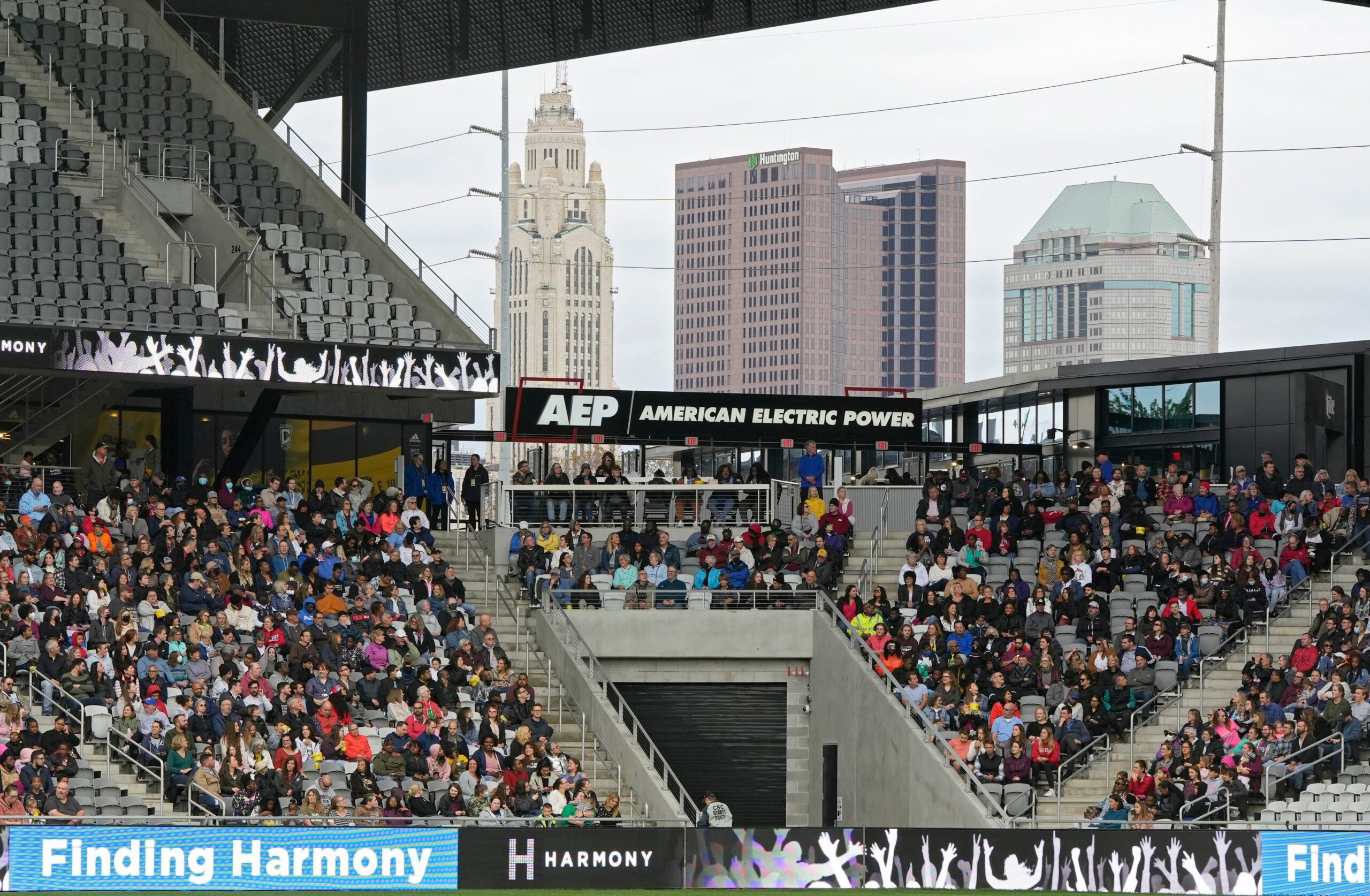
May 7, 2022; Columbus, Ohio, USA; About five thousand people filled the lower bowl of Lower.com Field on Saturday to join the Harmony Project choir during filming of part of a pilot for a music-based reality television show produced by ABC, Disney and John Legend’s Get Lifted film company. Mandatory Credit: Barbara Perenic/Columbus Dispatch News Harmony Project Pop Up
TV pilots in Los Angeles dropped 62.5% in Q4 2025 compared to Q4 2024. Overall TV production fell 16.1% in a single year. Between 2022 and 2024, approximately 41,000 entertainment workers left the Los Angeles area. That’s not a correction. That’s an exodus matching the fastest industry flight since the 1950s studio system collapse. Meanwhile, NBA broadcast partners pay $3.55 per viewer hour versus the NFL’s approximately $1.20 to $1.27, despite the NFL delivering four times the audience. The NFL is underpriced and still crushing everything around it.
The Ripple Hitting Everyone
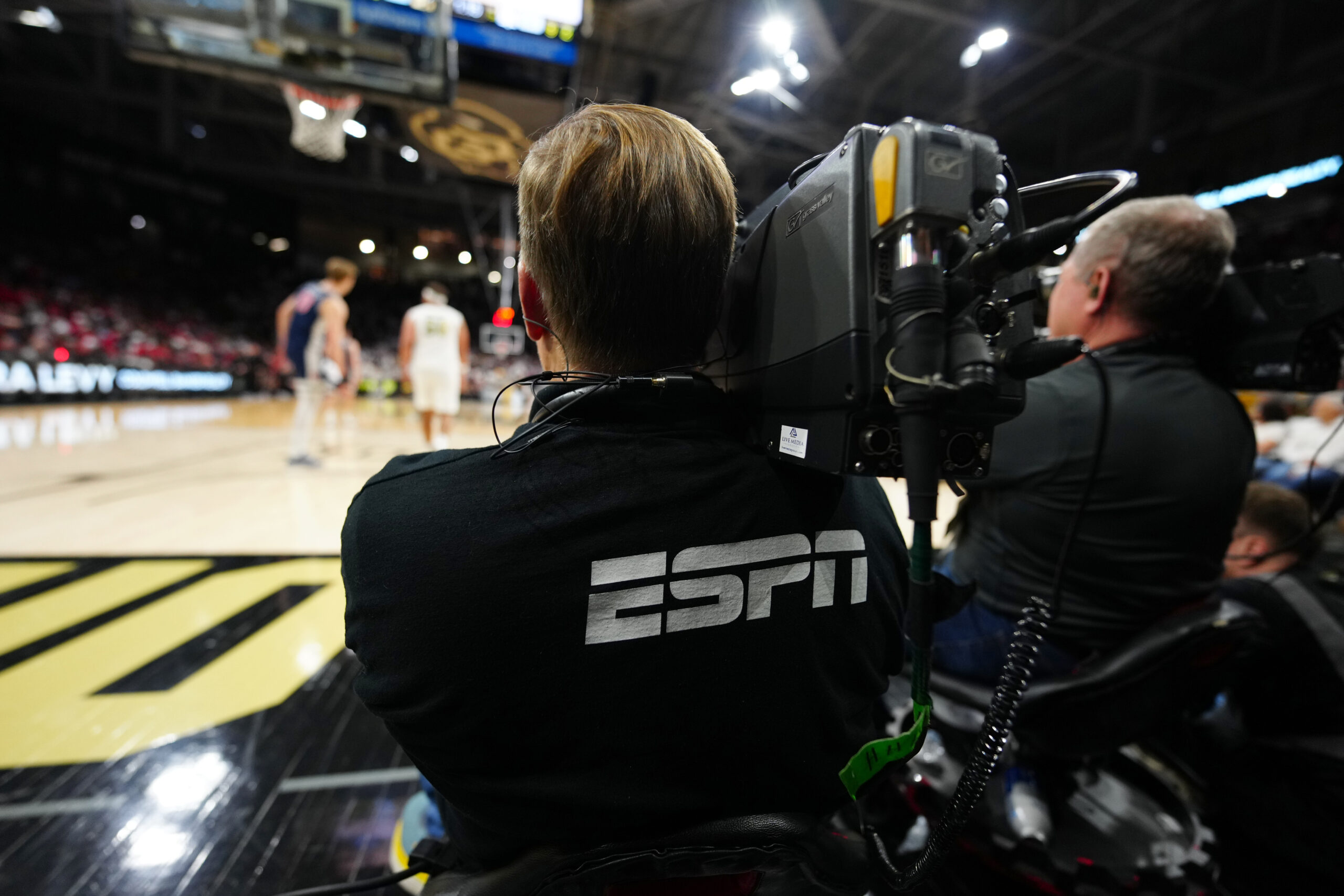
Mar 7, 2026; Boulder, Colorado, USA; General view of a ESPN sports video broadcaster during the second half between the Arizona Wildcats against the Colorado Buffaloes at the CU Events Center. Mandatory Credit: Ron Chenoy-Imagn Images
Local broadcast television is bleeding out alongside Hollywood. Nexstar Media Group posted a $170 million net loss in Q4 2025, forcing layoffs across its 164 stations. Local TV ad revenue, projected to peak at $25.58 billion in 2028, drops to $22.11 billion by 2029. Fox and Sinclair filed FCC comments warning that paywalled streaming sports could drive local broadcast toward obsolescence. Networks already replaced scripted shows with cheaper reality TV as placeholder content. Writers, directors, cinematographers, gaffers, grips: the entire supply chain starves when the parent company redirects the money upstream.
The Precedent Nobody Sees Coming
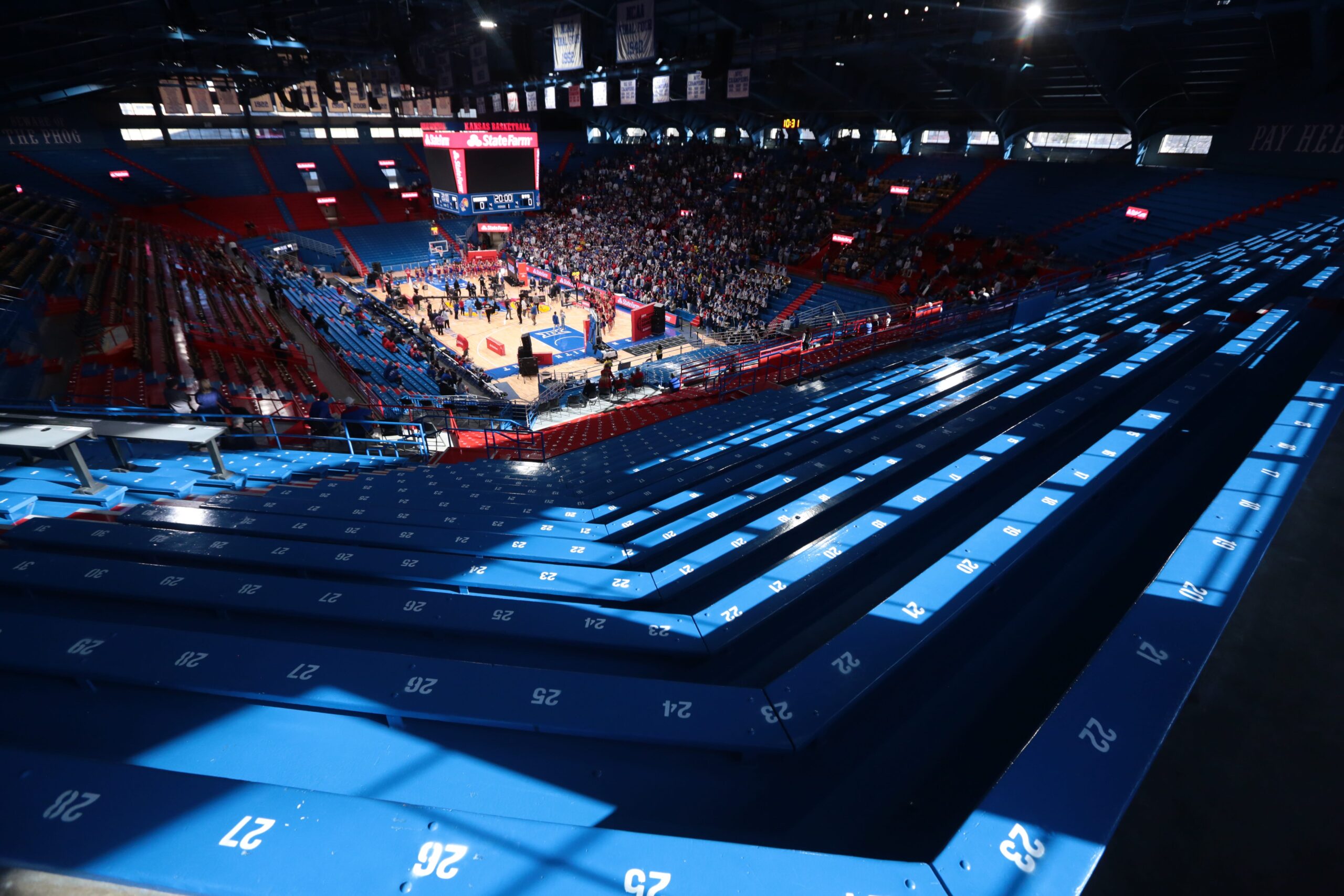
Light hits the empty stands during ESPN College Gameday inside Allen Fieldhouse on Jan. 31, 2026.
The NBA’s 11-year, $76 billion media deal in 2024 represented a 164% increase. That deal prompted the NFL to renegotiate early. For the first time, one league’s contract triggered another league’s acceleration. If the NBA precedent applied proportionally to the NFL, MoffettNathanson’s 58% projection could be understated by half. Once you see the pattern, you cannot unsee it: a single monopoly entity, shielded by a 1961 exemption, now dictates budget allocation across the entire American entertainment sector. This is not an exception. It is the new operating system.
The Trap With No Exit

Ohio State Buckeyes kicker Jayden Fielding places a ball on the tee for a kickoff during Pro Day for NFL scouts at the Woody Hayes Athletics Center on March 25, 2026.
FCC Chair Brendan Carr warned that the NFL is approaching a point where too many games behind paywalls could cause the league’s antitrust exemption to “collapse.” Meanwhile, Netflix seeks to expand from two NFL games to four, including Thanksgiving Eve and international matchups. The regulator threatens action against paywalls while streaming platforms bid to create more of them. If the exemption survives, consumer costs could exceed $1,500 annually by 2028. If it falls, the NFL pivots internationally and broadcast economics face upheaval either way.
The Fight That Hasn’t Started
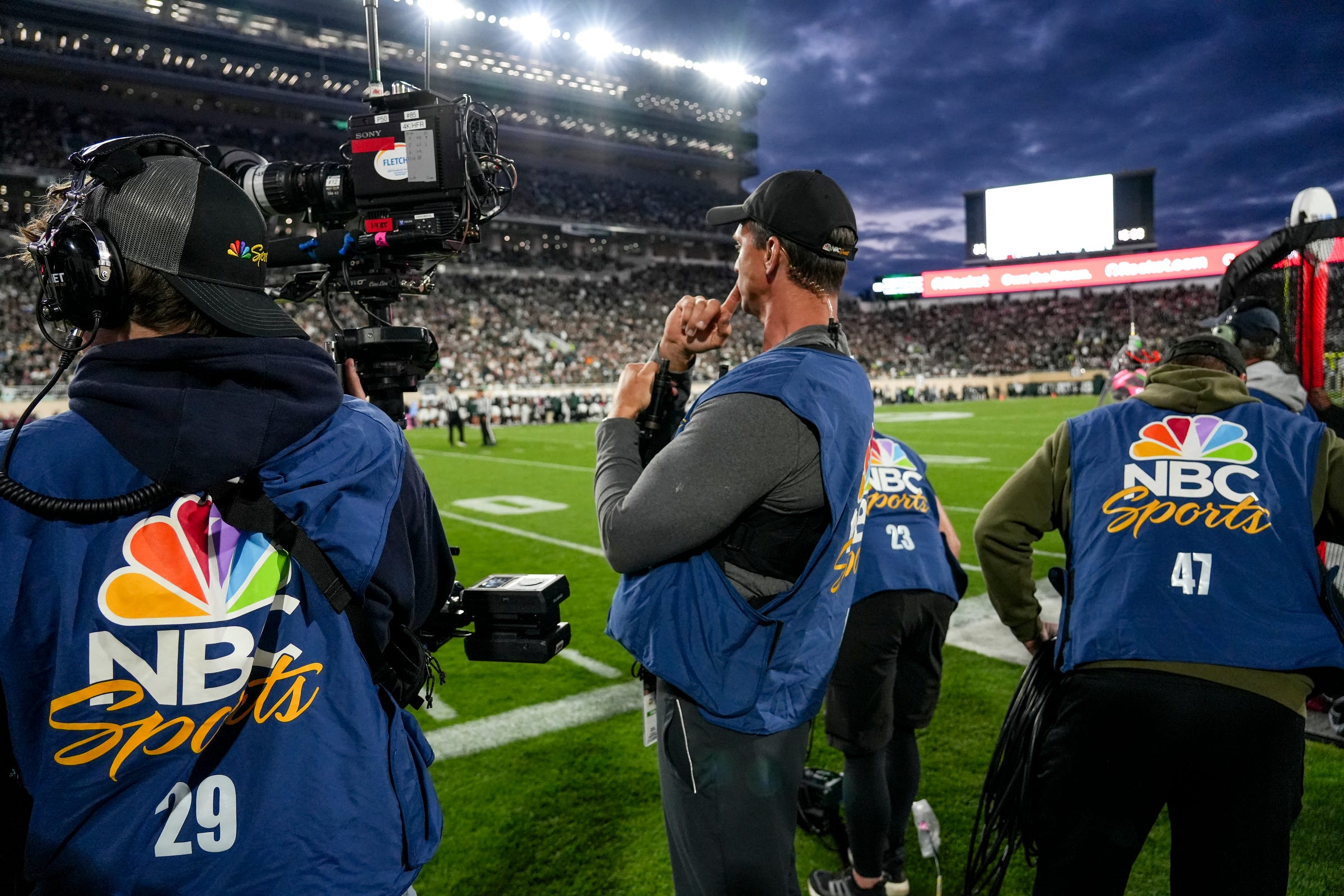
The NBC Sports broadcast team works Michigan State’s football game against Boston College on Saturday, Sept. 6, 2025, at Spartan Stadium in East Lansing.
Comcast has explored spinning off its cable network division, separating channels like MSNBC, CNBC, and USA Network from NBC broadcast and Peacock, as cord-cutting erodes the cable bundle that has historically helped offset sports rights costs. That’s NBC’s parent company restructuring around the reality that traditional TV economics no longer work. Hollywood unions have not yet demanded studio investment guarantees tied to NFL budget pressure, but the math forces their hand soon. The next person who tells you Hollywood’s problem is bad scripts or too many streaming platforms doesn’t understand the checkbook. One league, one exemption, one extraction mechanism. Every cancelled show, every empty soundstage, every packed U-Haul leaving Los Angeles traces back to the same source.
If you enjoyed this article please like and follow us here on MSN! Thank you for reading and have a great day!
Sources:
“L.A. On-Location Film and TV Production Down 16.1% In 2025.” FilmLA / Deadline, January 2026.
“New NFL Rights Deals Could Approach $16 Billion Annually.” MoffettNathanson / Awful Announcing, April 2026.
“Broadcast Outlook 2025: Challenges and Opportunities Facing US TV Stations.” S&P Global Market Intelligence, October 2025.
“Senator Lee Urges Probe of NFL’s Soaring Streaming Service Prices.” Office of Senator Mike Lee, March 2026.
“Hollywood Employment Drops 30% as Productions Leave California.” The Washington Times, April 2026.