
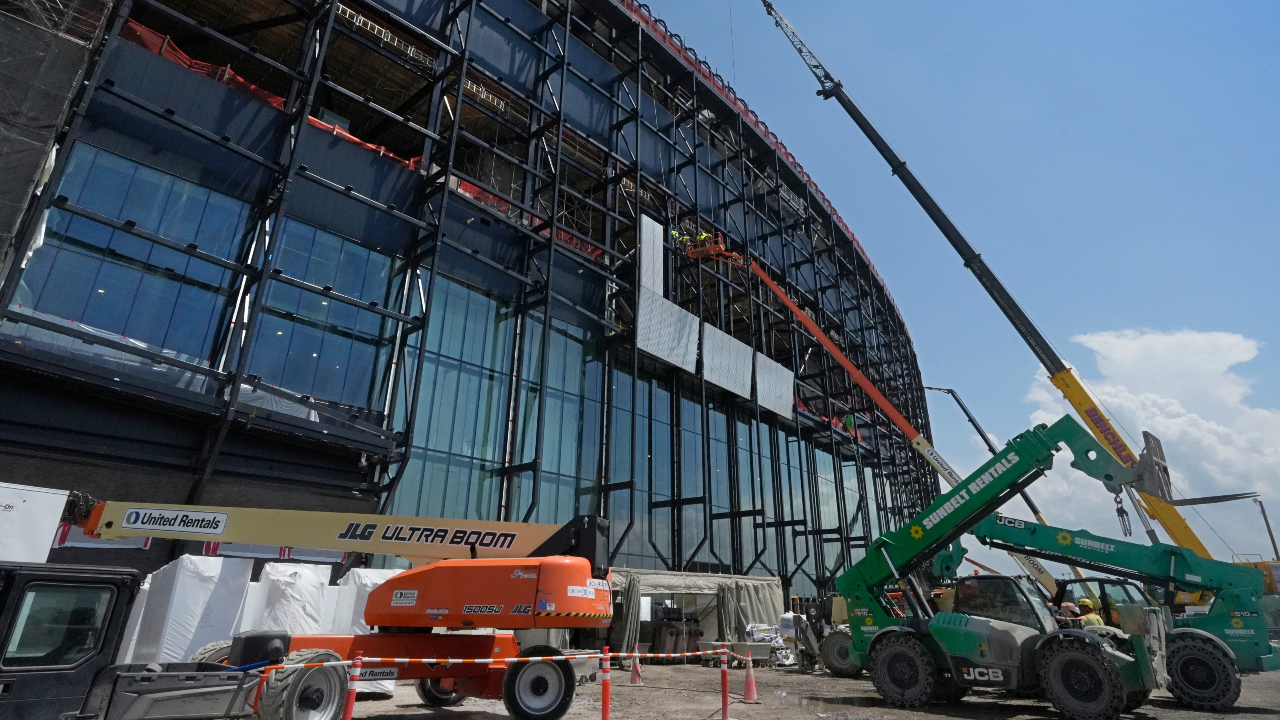
The Buffalo Bills are building a $2.2 billion open-air stadium in one of America’s snowiest cities, and every single day matters. Highmark Stadium hit 93% completion by March 2026 with a summer 2026 substantial completion target. To get there, 1,400 workers have been locked into seven-day-a-week construction schedules through Buffalo winters averaging 95 inches of annual snowfall. No days off. No buffer. No backup venue if they miss the NFL’s immovable September kickoff. That’s the part everyone knows. The cascade of consequences underneath tells a different story entirely.
Why Zero Buffer Exists
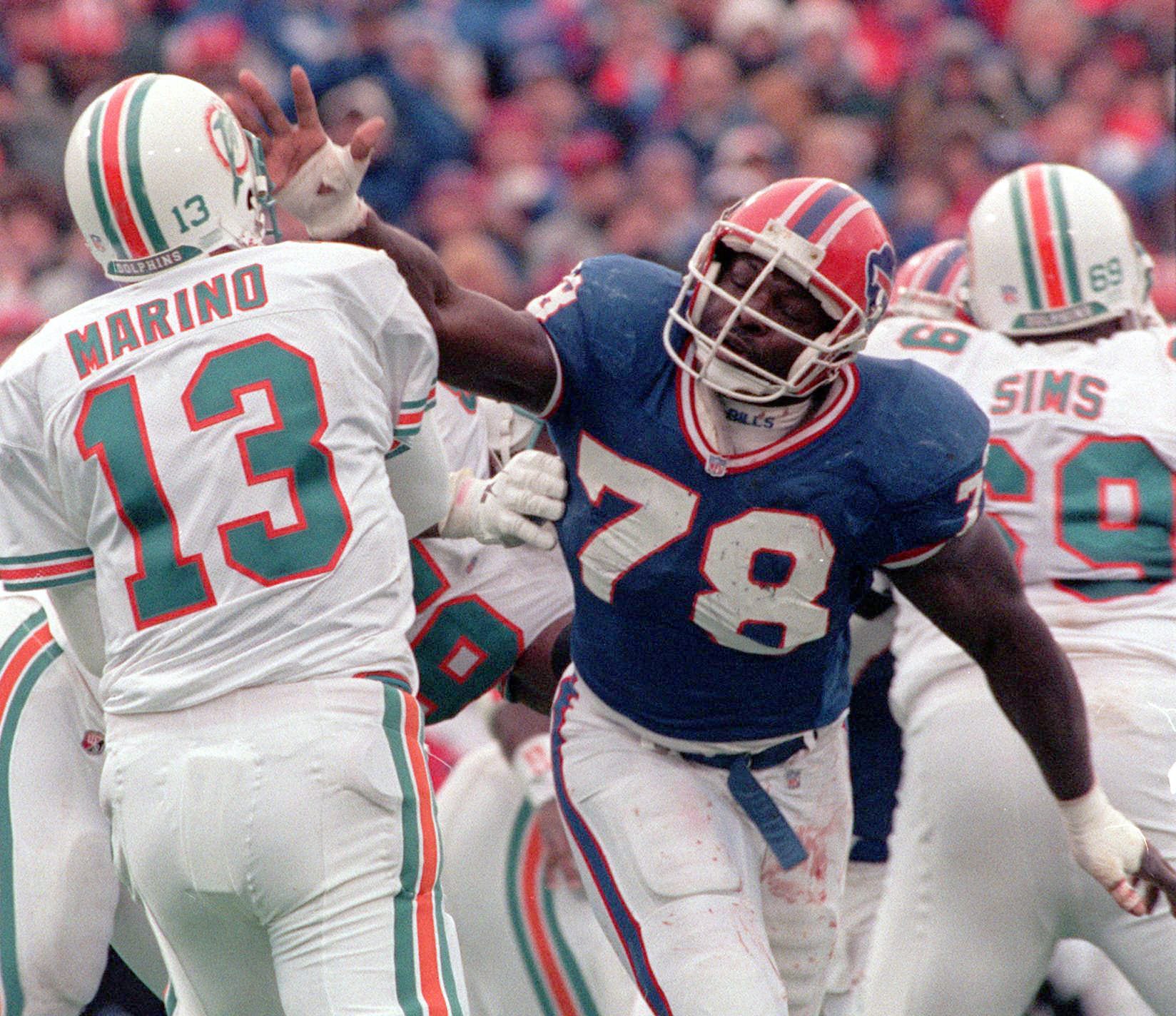
Buffalo Bills’ Bruce Smith pressures Miami Dolphins quarterback Dan Marino during the fourth quarter in 1995.
Three crises stacked on top of each other. A crane incident in January 2025 damaged underground MEP systems, creating what project managers call “negative float,” meaning the schedule was already behind before the calendar caught up. Then Buffalo weather pushed construction further back through early 2026. Then, in February 2026, graffiti vandalism forced a full work suspension. Each disruption alone was manageable. Together, they eliminated every day of slack in a project built on 22,000 pieces of structural steel and zero room for recovery. The seven-day schedule became the only math that worked.
Your Season Tickets Buy a Promise
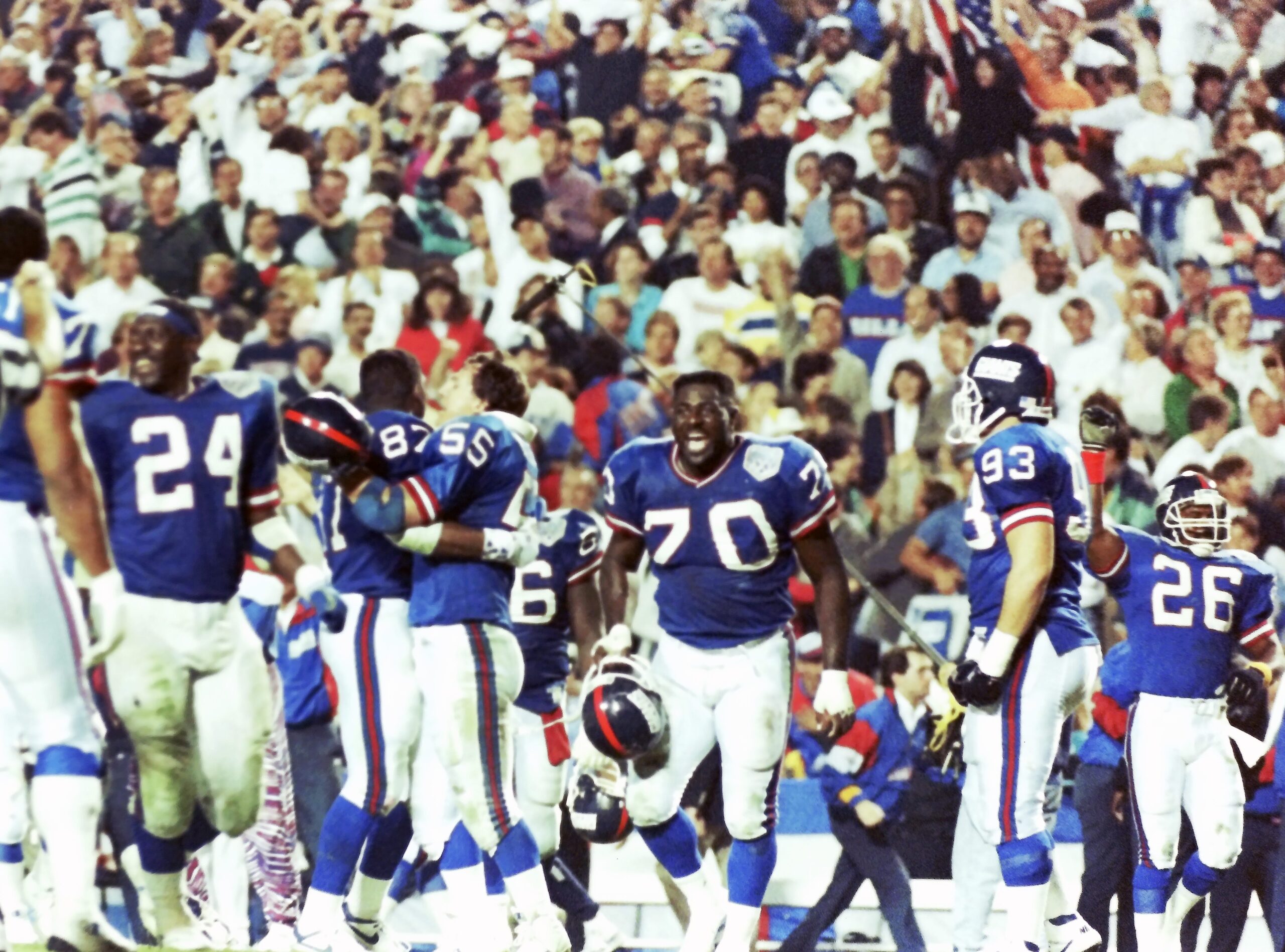
The New York Giants defeated the Buffalo Bills 20 19 in Super Bowl XXV at Tampa Stadium in Tampa, Florida, on January 27, 1991,
If the stadium misses its summer 2026 opening, the Bills face season displacement with no fallback. The original 1973 Highmark Stadium, the NFL’s fourth-oldest facility, is scheduled for demolition by March 2027 regardless. That demolition clock doesn’t pause. Bills fans holding tickets for the August 2026 preseason opener are holding a promise backed entirely by construction pace. Miss the date, and 60,000-plus seat holders confront refunds, litigation, and a franchise playing somewhere else. The old building comes down either way.
The Taxpayer Tab Runs Regardless
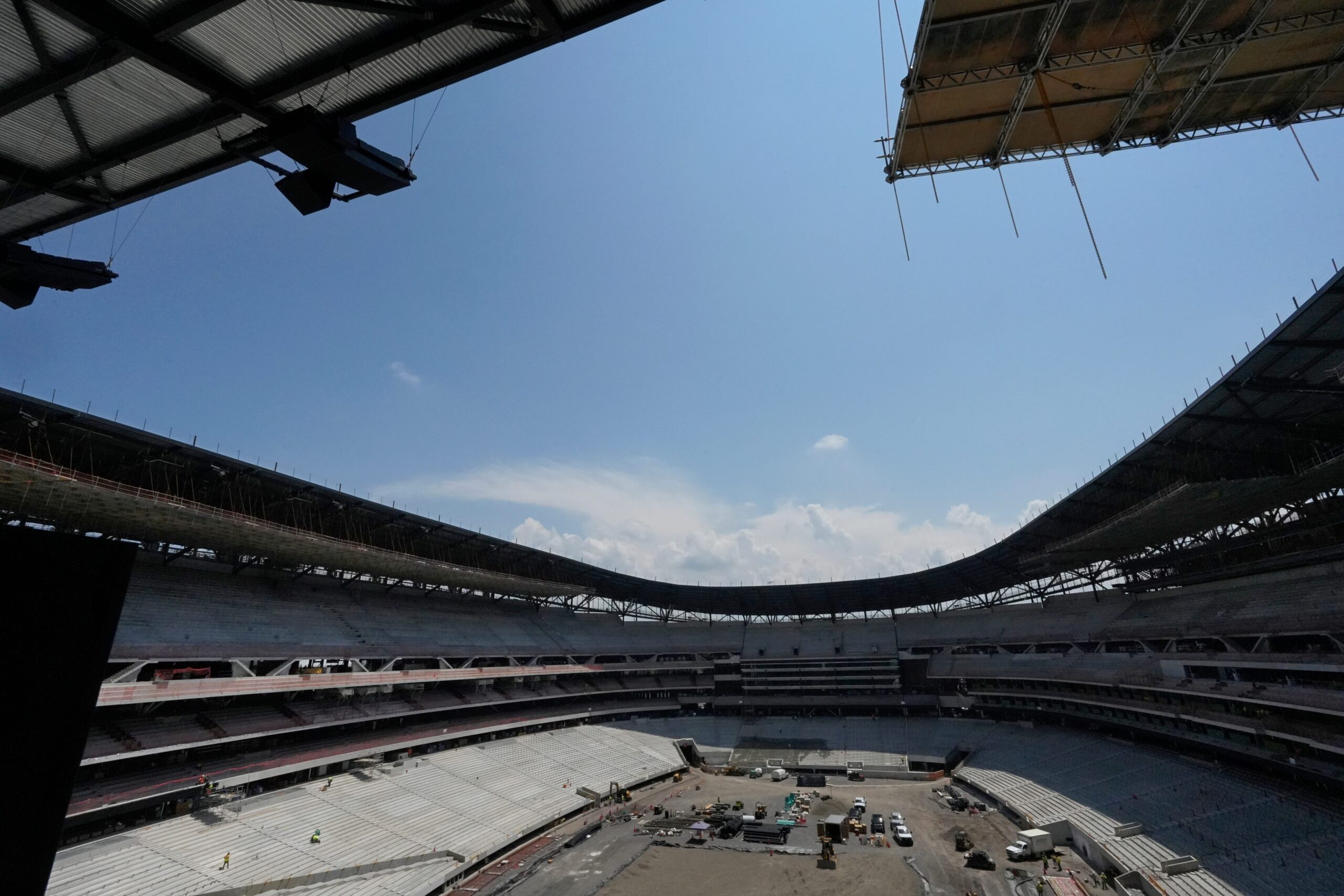
Construction continues on the Buffalo Bills new stadium, across the street from their current home at Highmark Stadium, in Orchard Park, NY Thursday, July 10, 2025. This is the view from one of the end zone’s looking out into the stadium.
Erie County committed $250 million and New York State committed $600 million, totaling $850 million in public funding. The largest public contribution to any NFL stadium when proposed. Erie County locked into $25 to $30 million in annual maintenance costs through 2056, a 30-year obligation. That debt service runs whether the stadium opens on time or sits unfinished. Taxpayers absorb the financial risk of delay while the Bills organization controls the revenue streams. The public pays. The private operator profits. Same structure, different stadium.
Five Teams, $10 Billion in Crisis
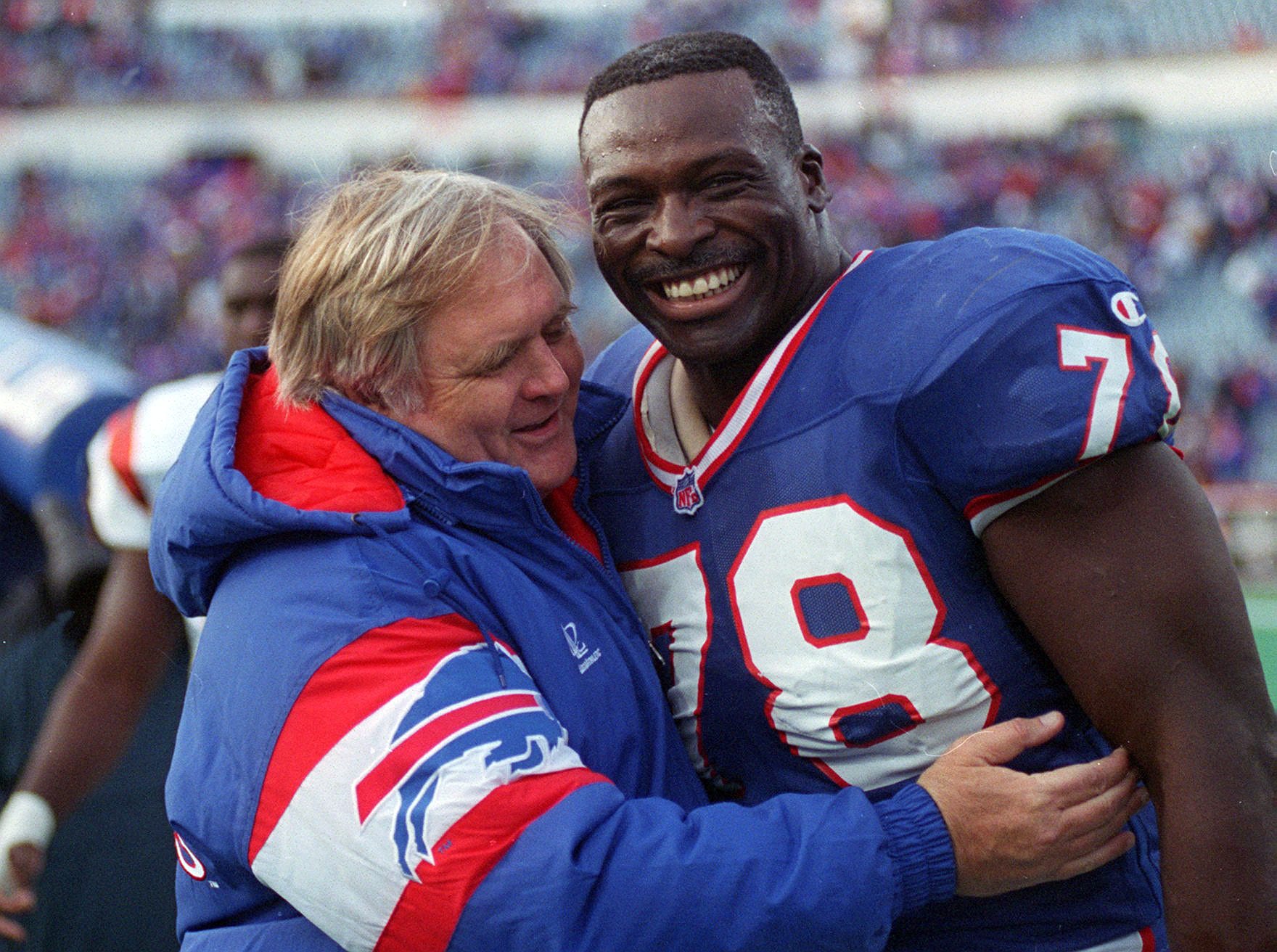
Buffalo Bills defensive end Bruce Smith is hugged by defensive coordinator Wade Phillips after a win over the Cincinnati Bengals in 1996. The sack moved Smith into second place on the NFL’s all-time sacks list.
Buffalo’s project doesn’t exist in isolation. Five NFL franchises face over $10 billion in cumulative stadium crises. Cleveland’s Browns are planning a $2.4 billion build battling aviation height restrictions. Nashville’s Titans project sits at approximately $2.1 billion. Washington’s Commanders are staring at $3 billion-plus. Stadium construction costs jumped roughly 40% industry-wide since 2020, driven by material inflation and labor shortages. Every one of these teams is watching Buffalo. Success validates the compressed timeline. Failure gives every city council in America a reason to say no.
More Engineering, More Ways to Break
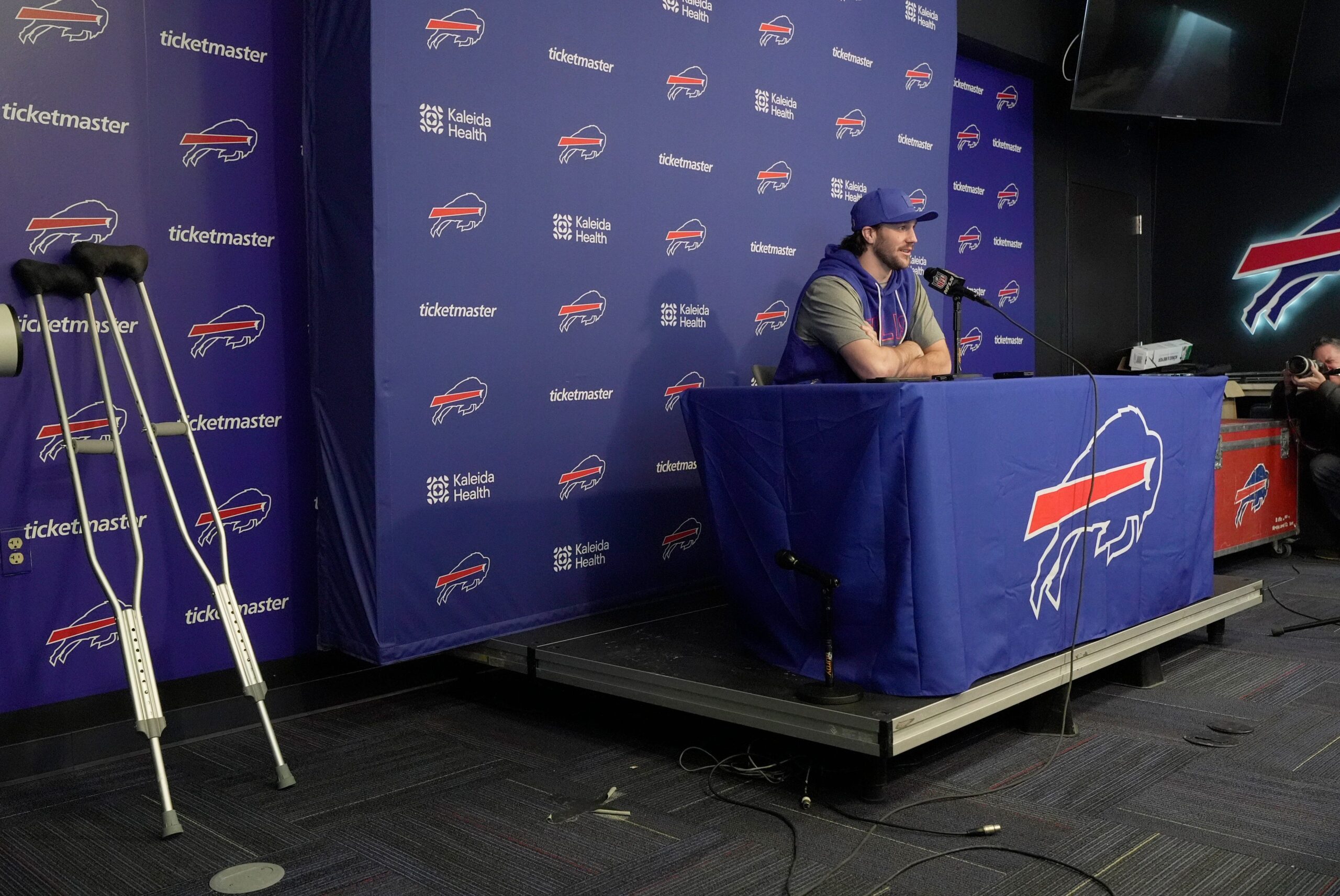
Bills quarterback Josh Allen answers a range of questions during a press conference at the Bills field house in Orchard Park on Jan. 29, 2026. He had minor surgery on his foot recently.
Here is the part that connects everything. Buffalo built the NFL’s largest hydronic snow-melt system into a 360-degree canopy covering 60 to 65% of seating. They installed 4,400 perforated steel facade panels shaped like charging buffalo logos to manipulate wind. They heat the natural grass field to 60-plus degrees year-round. World-class engineering. But each system adds a dependency point. Crane damages MEP lines. MEP delays push heating installation. Heating delays collide with snow season. Snow doesn’t wait for catch-up. More complexity created more ways for one failure to cascade into the next.
The Threat From Inside

A Buffalo Bills helmet sits on a yard marker during stretching before the Return of the Blue & Red practice at Highmark Stadium in Orchard Park on Aug.1, 2025.
Gilbane Turner maintains zero tolerance for graffiti, vandalism, or any behavior that undermines the respectful and supportive environment they strive to create on all of their projects. In February 2026, pornographic and anti-LGBTQ+ graffiti was discovered in secured areas — including newly constructed luxury suites — accessible only with authorized security passes. The damage hit an estimated $150,000 and shut the project down for nearly a week. Two workers from the 1,400-person workforce were identified as responsible for the vandalism following a $100,000 reward offered for information leading to arrest and conviction; the investigation subsequently escalated, with additional workers detained by federal authorities in March 2026. Construction workers deliberately defacing their own worksite during the final critical window. The $100K bounty wasn’t about catching random vandals. It was an admission that seven-day weeks under extreme pressure had fractured trust from within.
The New Rules for Stadium Deals

Nov 9, 2025; Miami Gardens, Florida, USA; Buffalo Bills quarterback Josh Allen (17) scrambles against Miami Dolphins linebacker Bradley Chubb (2) during the first half at Hard Rock Stadium. Mandatory Credit: Jeff Romance-Imagn Images
Open-air stadiums will be in the minority by 2031 as the industry trends toward enclosed domes. Buffalo built the opposite, betting that winter becomes a competitive advantage rather than a liability. If the project delivers on time, “no margin for error” becomes the new pitch every NFL owner makes to every state legislature. Seven-day-a-week crewing gets normalized. Labor unions face pressure to accept it as standard. One stadium in Orchard Park, New York, is quietly rewriting the negotiating template for billions of dollars in public funding commitments nationwide.
Who Wins, Who Bleeds

Mar 3, 2026; Toronto, Ontario, CAN; Former Toronto Raptors and Buffalo Bills minority owner Tracy McGrady talks to the media before a game between the New York Knicks and Toronto Raptors the at Scotiabank Arena. Mandatory Credit: John E. Sokolowski-Imagn Images
The Bills ownership group wins either way. On-time delivery gives them “we delivered the impossible” as leverage for future lease terms and revenue-sharing negotiations. Equipment manufacturers selling hydronic systems and perforated facades win regardless of outcome. The losers are specific: Erie County taxpayers carrying 30-year debt service, construction workers absorbing seven-day schedules through Buffalo winters, and adjacent communities absorbing years of congestion. Cleveland, Nashville, and Washington absorb inflation pressure if Buffalo’s overruns ripple into competitor labor costs. The money flows upward. The risk flows down.
The Cascade Keeps Moving

Buffalo Bills safety Sam Franklin Jr. (28) waves to the Jacksonville Jaguars crowd during the fourth quarter of an NFL football AFC Wild Card playoff matchup, Sunday, Jan. 11, 2026, in Jacksonville, Fla. The Bills defeated the Jaguars 27-24. [Corey Perrine/Florida Times-Union]
Bills President Pete Guelli said it himself: “If there’s anything we need to pick up, we will throw the resources at it to make it happen. I have no concerns about that building opening on time.” Three documented crises later, that confidence carries a different weight. The stadium will likely open. The precedent it sets will outlast the concrete. Every future mega-project will cite Buffalo to justify compressed timelines, public billions, and workforce pressure that breaks from the inside out. The building opens once. The template repeats for decades.
Sources:
“Governor Hochul, Buffalo Bills and Erie County Mark Major Construction Milestone at New Highmark Stadium.” Office of Governor Kathy Hochul, 3 Apr 2025.
“Bills Stadium Construction Pushes Ahead Despite Weather Setbacks.” Sports Business Journal, 16 Feb 2026.
“Inside Look at the New Highmark Stadium, Future Home of the Buffalo Bills, Now 93 Percent Complete.” WKBW Buffalo, 23 Mar 2026.
“$100K Reward Offered to Catch Vandals Who Damaged New Buffalo Bills Stadium.” Syracuse.com, 19 Feb 2026.