
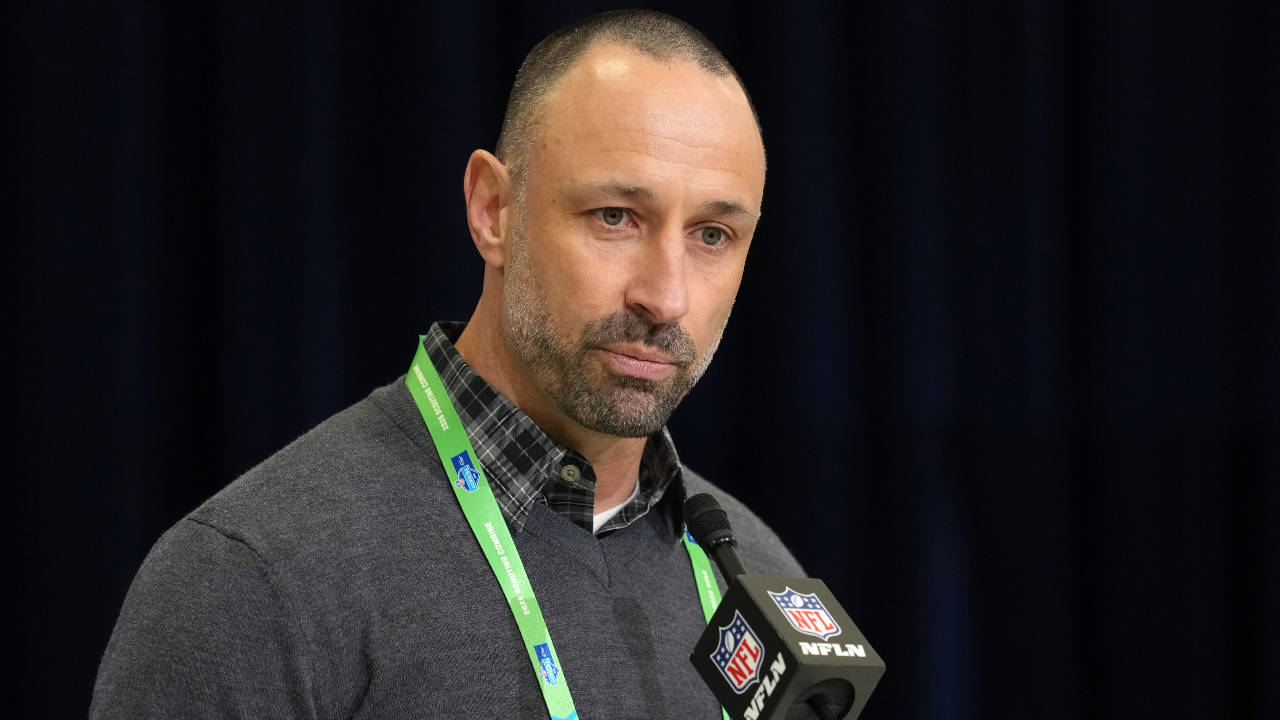
Eight days before the draft, Dolphins GM Jon-Eric Sullivan stepped to a podium in Miami and said something that sounded like a man clinging to every asset he owned. “I think we need all 11 picks,” he told reporters. Eleven selections across five rounds, including a league-high four picks in Round 3 alone. For a franchise that holds two first-rounders and a mountain of midround capital, it sounded like survival math. Then Sullivan kept talking, and the math stopped adding up.
The Contradiction Nobody Caught
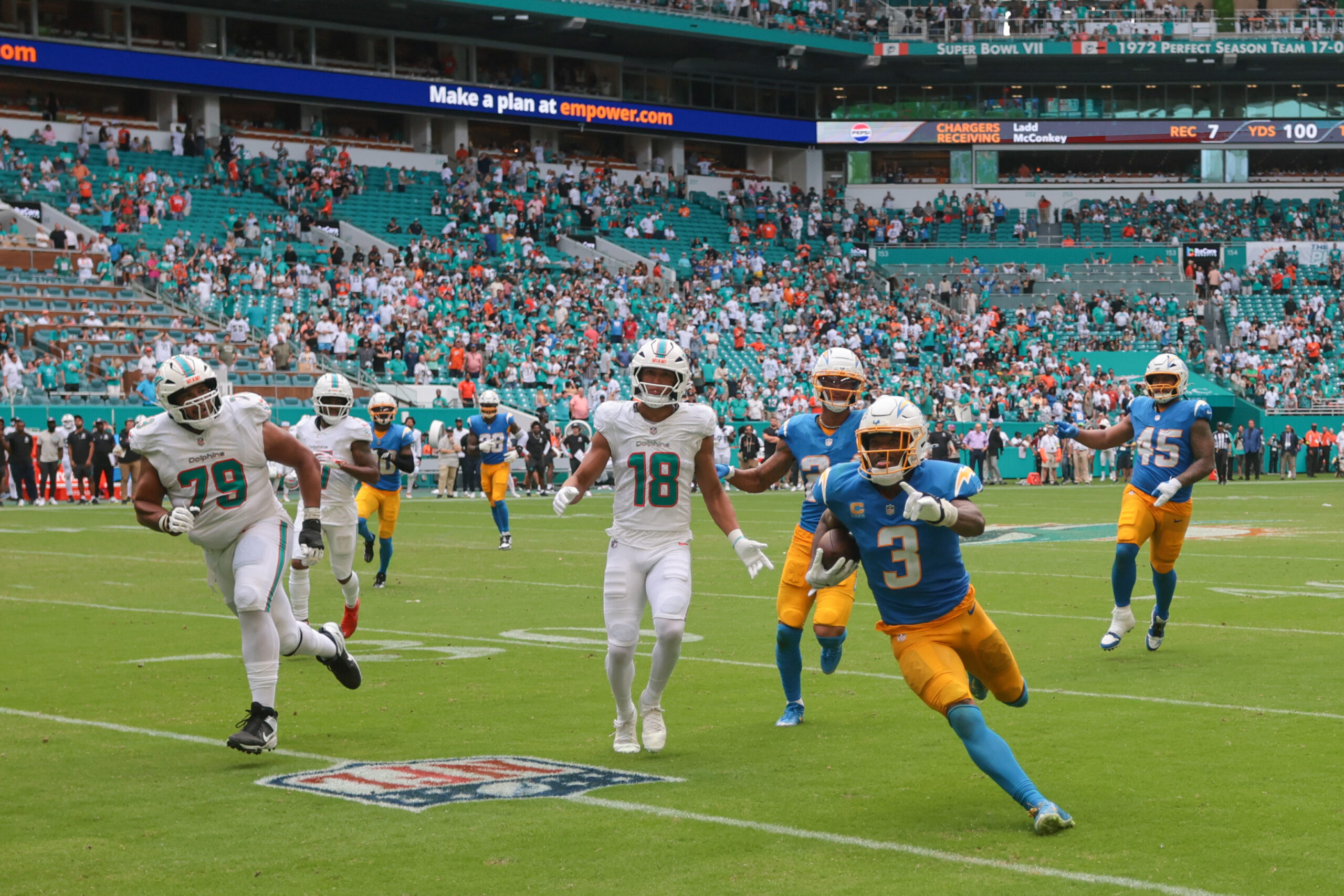
Oct 12, 2025; Miami Gardens, Florida, USA; Los Angeles Chargers free safety Derwin James (3) carries the football after an interception against the Miami Dolphins during the fourth quarter at Hard Rock Stadium. Mandatory Credit: Sam Navarro-Imagn Images
In the same April 15 media session, Sullivan added a second line: the Dolphins are “more likely to move back than move up.” That’s the new GM telling the NFL he needs every pick he has, then immediately admitting he’s more inclined to trade down. Media and analysts heard that signal and immediately began sketching out concrete trade-down routes for Miami. The 11‑pick number wasn’t a war chest. It was a price tag.
A Win Now Machine In Reverse
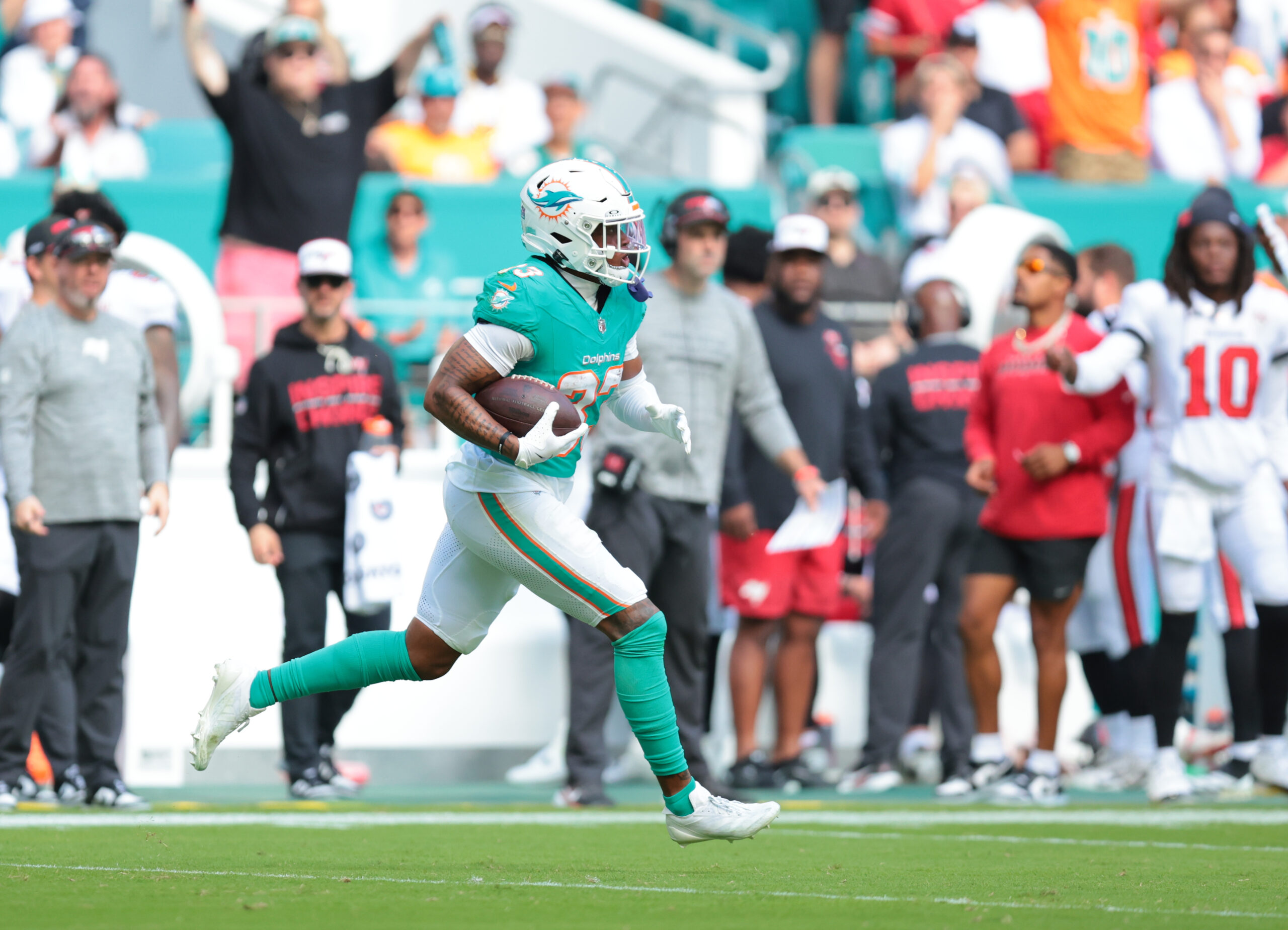
Dec 28, 2025; Miami Gardens, Florida, USA; Miami Dolphins cornerback Jason Marshall Jr. (33) intercepts the football during the second quarter against the Tampa Bay Buccaneers at Hard Rock Stadium. Mandatory Credit: Sam Navarro-Imagn Images
Fans expecting the new regime to swing big had reason to believe it. The old Dolphins front office traded aggressively for Tyreek Hill and Jaylen Waddle, building a roster designed to win immediately. That era, at least philosophically, is over. Sullivan’s stated approach is to “build from inside out,” and his early comments emphasized that team-building will run through the draft and internal development rather than splashy veteran spending. Reporting around his hire has made it clear he’s in charge of this draft and that he has the authority to steer the board according to that vision. One voice. One direction. And that direction, unmistakably, points backward toward patience and accumulation rather than win‑now aggression.
Three Blueprints, One Strategy
Dec 15, 2025; Pittsburgh, Pennsylvania, USA; National Football League shield logo in the end zone of Acrisure Stadium before the Pittsburgh Steelers host the Miami Dolphins. Mandatory Credit: Charles LeClaire-Imagn Images
Sullivan didn’t walk to the podium and hand out a menu of pre‑negotiated trades. What he did do was publicly state that he’s more likely to move back than move up, with 11 total picks and a league‑high concentration in Round 3. In response, analysts modeled three specific trade-down scenarios—with exact pick values—that translate his philosophy into action:
- Steelers (No. 11 becomes No. 21, No. 76, and a 2027 fourth-rounder)
- Eagles (Nos. 43 and 94 plus a 2027 sixth become Nos. 54, 98, 114, and a 2027 third-rounder)
- Jaguars (Nos. 75 and 130 plus a 2027 fifth become Nos. 81 and 100, and a 2027 fourth-rounder)
Every route includes 2027 picks. Every single one. These are not trades the team has announced; they’re media-built blueprints reverse‑engineered from a GM whose public comments make trade‑down logic obvious. The underlying strategy, though, looks like it’s already sketched out: move back, stack chances.
The 2027 Arbitrage
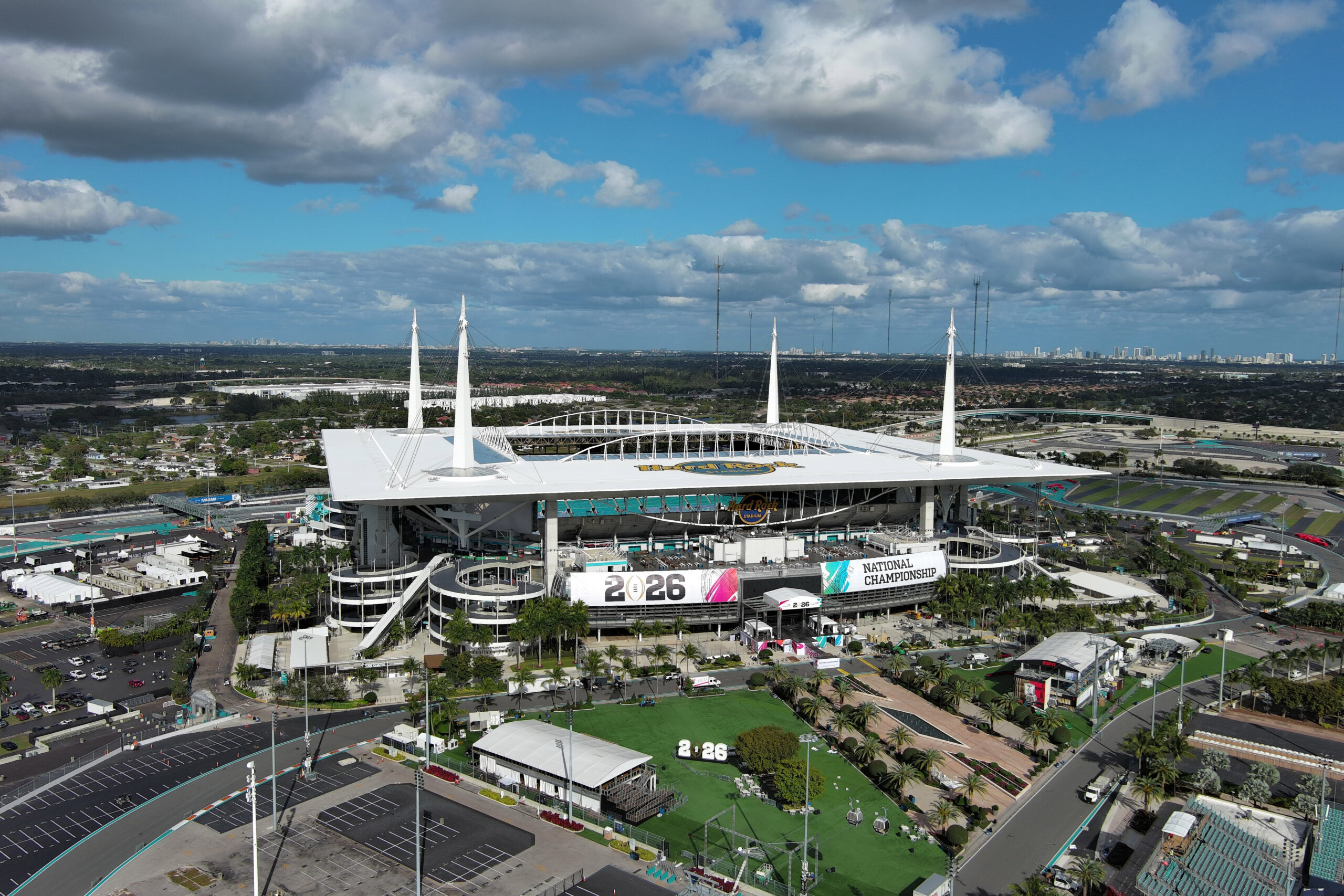
Jan 20, 2026; Miami, FL, USA; A general overall aerial view of Hard Rock Stadium, the home of the Miami Dolphins and site of the 2026 CFP Championship playoff game. Mandatory Credit: Kirby Lee-Imagn Images
Here’s what makes this calculated, not cowardly. Across draft media, the 2026 NFL Draft is often described as thinner in top‑end talent than some upcoming classes, and Sullivan has openly acknowledged the value of extra swings. Teams routinely overvalue current‑year picks relative to future ones. So the model Sullivan is inspiring is simple: trade down in a weaker draft, absorb 2026 mediocrity, and stockpile premium 2027 selections when the talent pool could be stronger. He’s buying low in a down market. While other GMs fight over 2026 midround prospects, the Dolphins are positioning themselves to shop more heavily in 2027.
Achane Is The Foundation
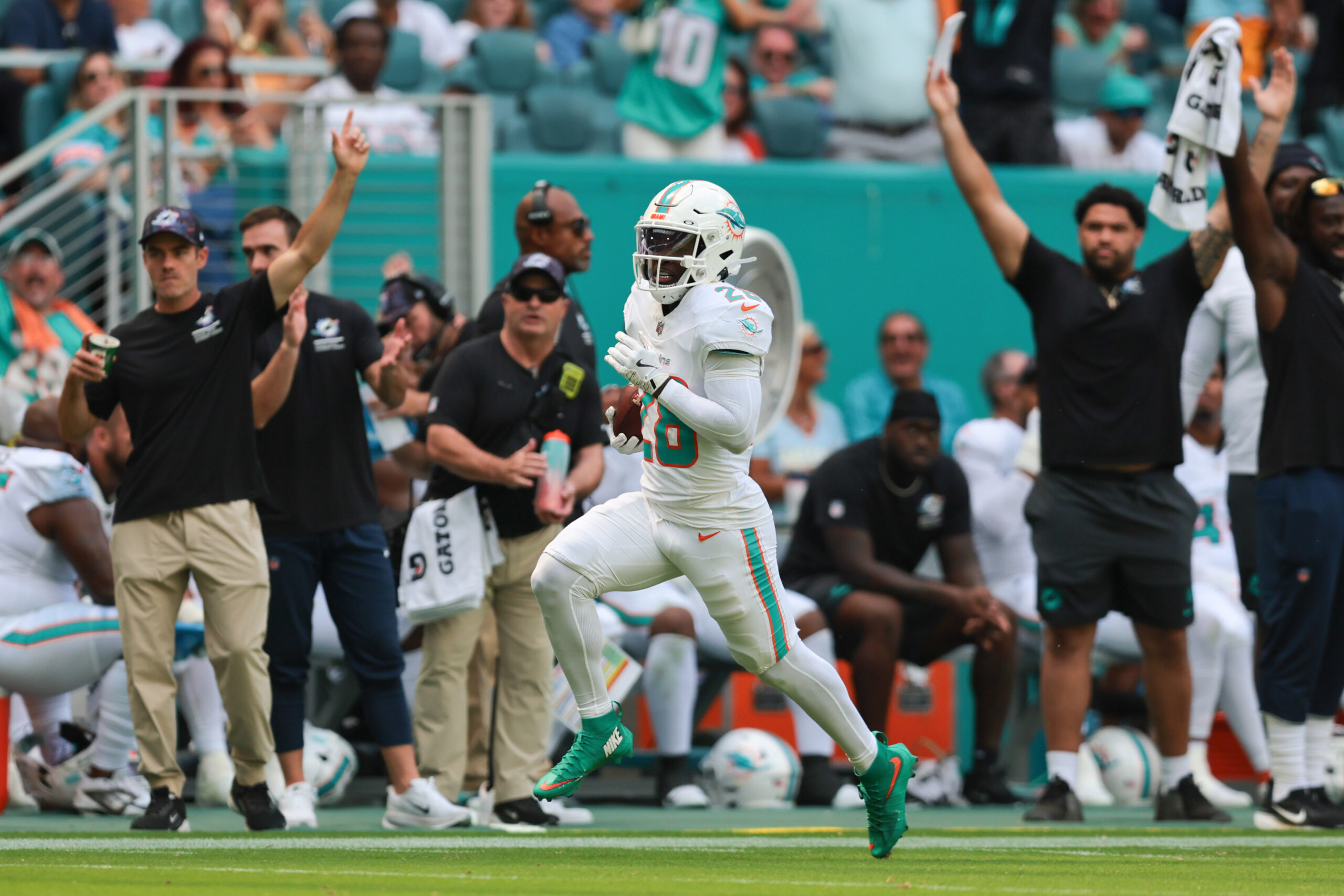
Oct 12, 2025; Miami Gardens, Florida, USA; Miami Dolphins running back De’Von Achane (28) carries the football for a touchdown against the Los Angeles Chargers during the first quarter at Hard Rock Stadium. Mandatory Credit: Sam Navarro-Imagn Images
On one point, Sullivan has already removed the mystery: De’Von Achane “is not available for trade,” and the GM says he’s had “positive conversations” about the running back’s future with the team. Extension figures in the $60‑million neighborhood have been floated in rumor and talk‑show circles, though no contract terms have been announced or confirmed by Miami. That’s a franchise signaling it wants to lock in its running back while reshaping the rest of the offense around him. Whatever happens with the receiver room and the rest of the skill positions, Achane isn’t a luxury. He’s the foundation they’re pouring concrete around.
The AFC East Smells Blood
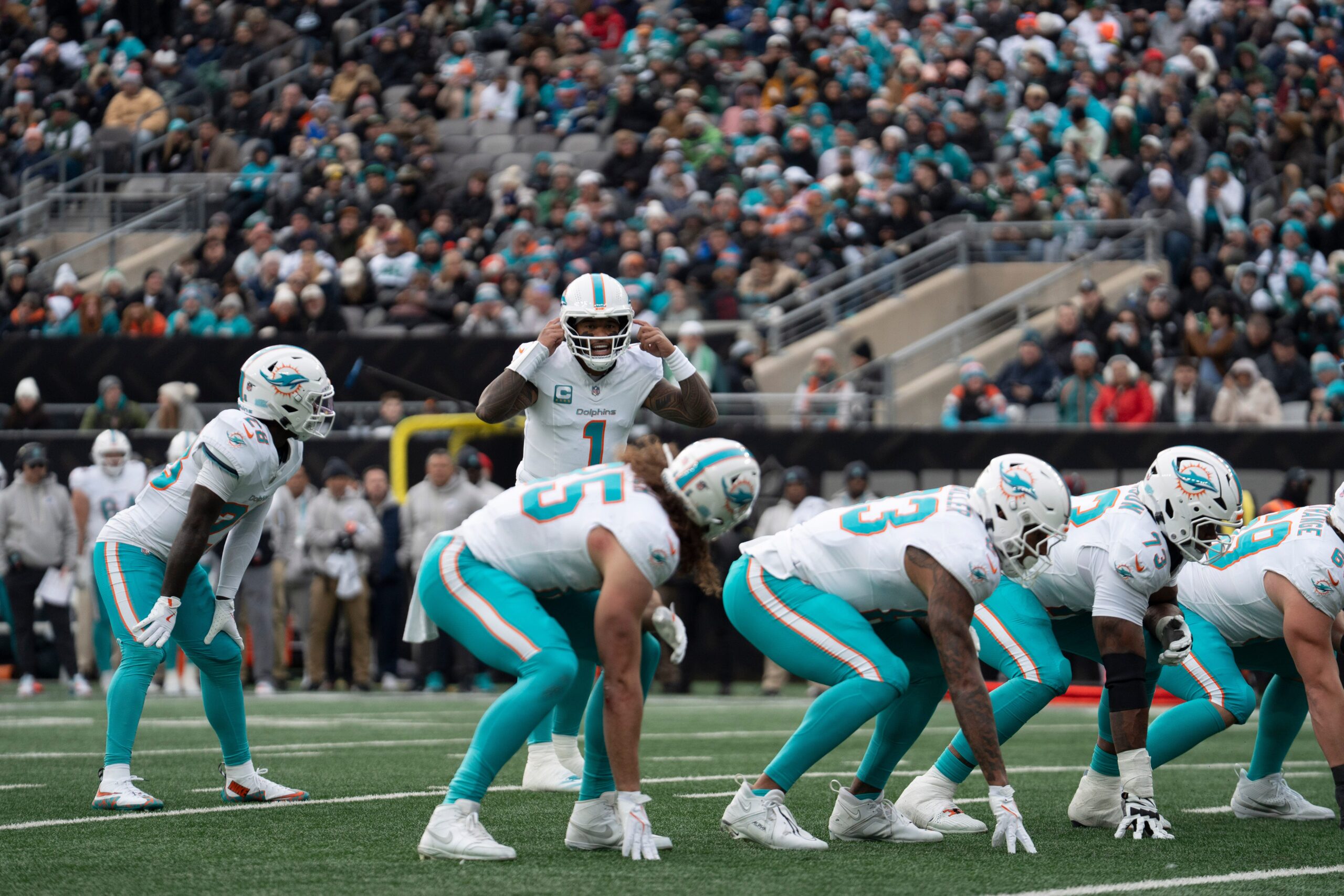
Miami Dolphin’s quarterback Tua Tagovailoa (1) makes a play call from the backfield during a week 14 football game between the New York Jets and Miami Dolphins at MetLife Stadium on Sunday, Dec. 7, 2025.
While Sullivan explores trade‑down routes, the Bills, Jets, and Patriots are free to do the opposite. Every Dolphins trade‑back in 2026 is an opportunity for a division rival to climb the board and address a need right now. For some free agents, a team that publicly discusses patience and moving back in the draft will feel less attractive than a win‑now destination. Sullivan’s transparency carries a cost: AFC East competitors can read his general intentions and decide to pile on during a softer Miami window.
A New Rule For Rebuilding
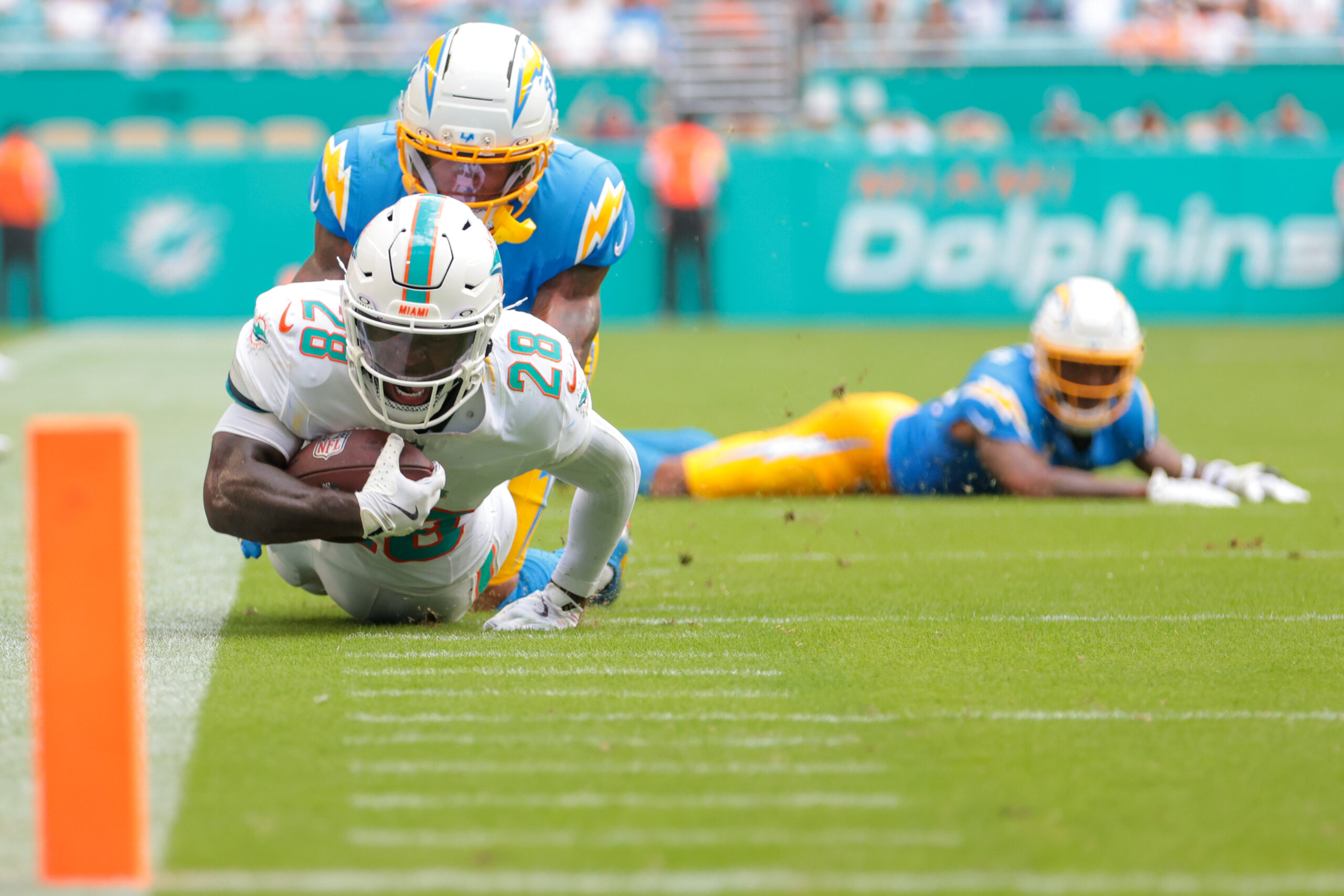
Oct 12, 2025; Miami Gardens, Florida, USA; Miami Dolphins running back De’Von Achane (28) carries the football against Los Angeles Chargers cornerback Benjamin St-Juste (24) during the second quarter at Hard Rock Stadium. Mandatory Credit: Sam Navarro-Imagn Images
Sullivan may be setting a precedent other rebuilding GMs will study. Clear authority. Public disclosure of strategic direction. A willingness to talk about volume and patience instead of dangling instant contention. Previous Dolphins regimes wrestled with ambiguity between the GM and ownership over who truly controlled the draft. Sullivan has worked to eliminate that perception by stressing his role and outlining his philosophy. New defensive leadership under Jeff Hafley brings a scheme that values specific athletic profiles at edge and corner, and that, combined with a draft‑first mindset, all but guarantees that targeting will be scheme‑specific across multiple classes. Once you see it, every move connects: patience through 2026, precision in 2027 and beyond.
The Clock Sullivan Built
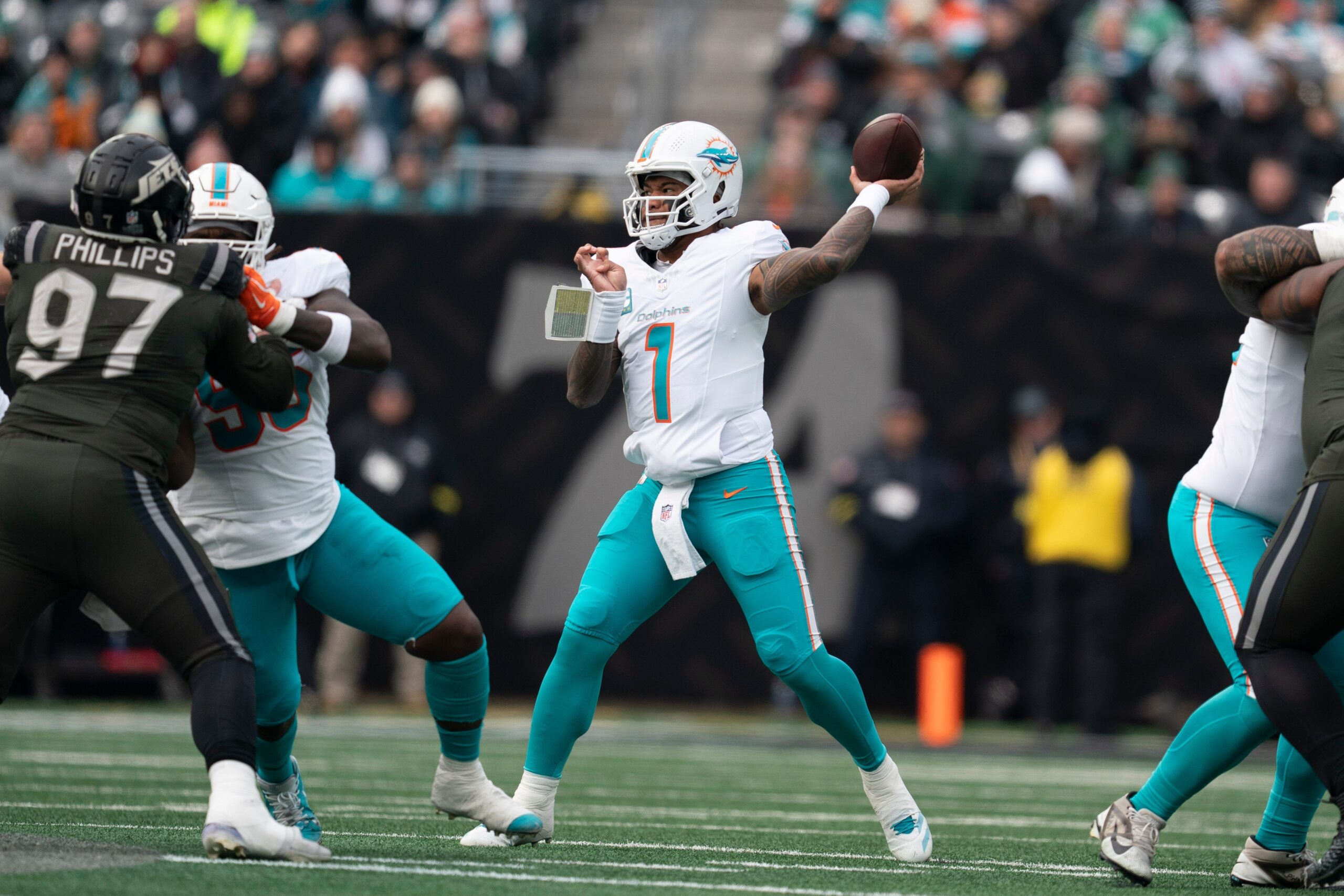
Miami Dolphin’s quarterback Tua Tagovailoa (1) looks to pass the ball during a week 14 football game between the New York Jets and Miami Dolphins at MetLife Stadium on Sunday, Dec. 7, 2025.
If the Dolphins execute even two of the three modeled trade-downs, they could effectively accumulate close to two years’ worth of draft capital in a single weekend. That volume creates its own pressure. Cluster enough rookies into one draft cycle and your 2029–2030 extension math starts to get tricky. The Steelers, Eagles, and Jaguars retain leverage too, because everyone can see the kinds of moves Miami is being urged to make. If any of those potential partners—or others like them—demand better terms, the trade‑down strategy gets more expensive.
The Bet Only Patient Fans Survive
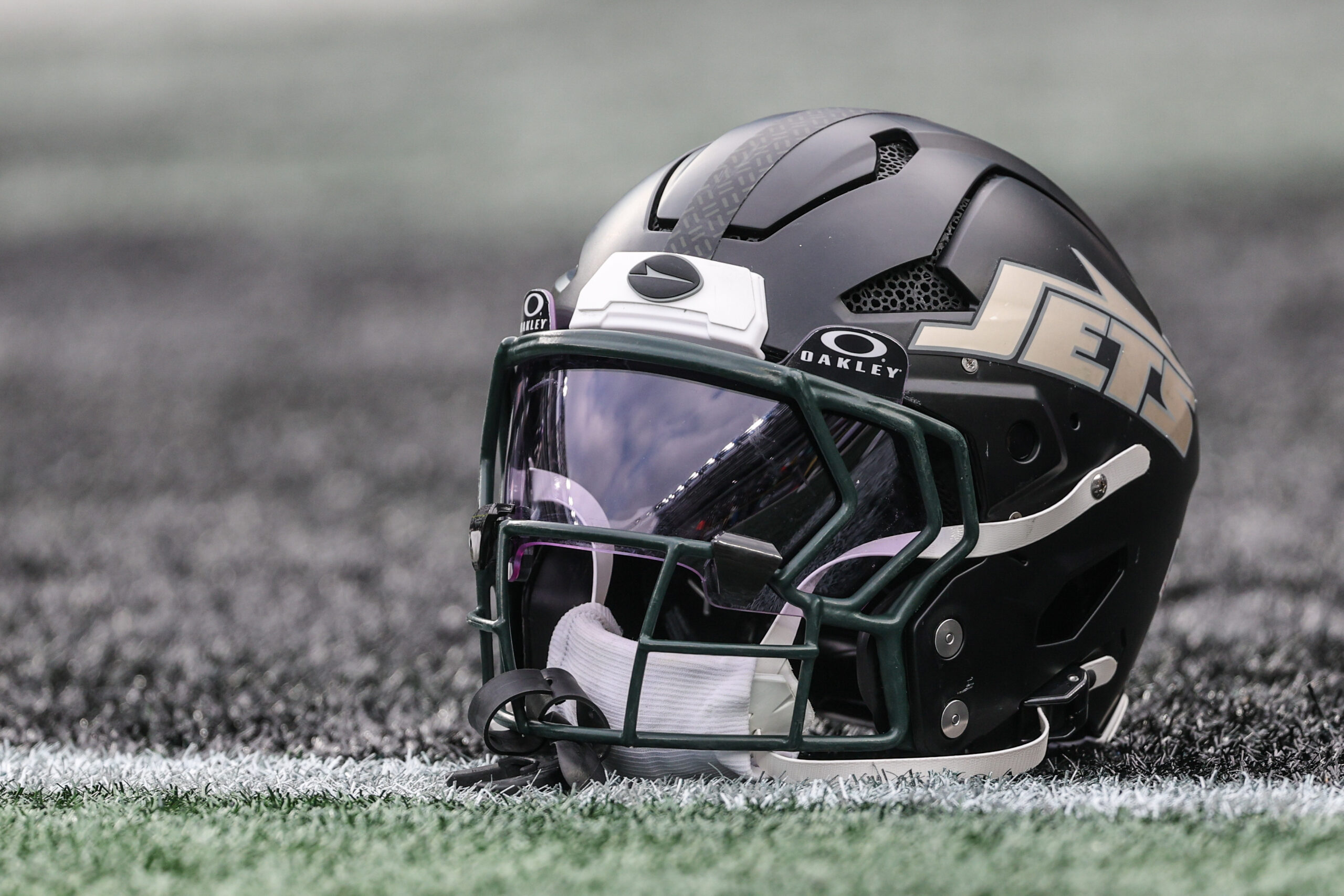
Dec 7, 2025; East Rutherford, New Jersey, USA; A general view of a Gotham City football rivalries helmet resting on the field before the game against the Miami Dolphins at MetLife Stadium. Mandatory Credit: Vincent Carchietta-Imagn Images
Sullivan’s “need all 11 picks” line was never just a plea for assets. It was part negotiating posture, part misdirection, delivered alongside an admission that he’s more likely to move back than move up. The Dolphins aren’t simply building a 2026 roster. They’re using a pile of 2026 picks as trading currency, betting that short‑term pain buys a better championship window later in the decade. Most fans will call it a teardown. The ones paying attention will recognize it as perhaps the most transparent rebuild the franchise has attempted in years. Whether Sullivan is a genius or a gambler depends entirely on how well he converts today’s volume into tomorrow’s stars.
If you enjoyed this article please like and follow us here on MSN! Thank you for reading and have a great day!
Sources
“Breaking Down the Biggest Sullivan Press Conference Takeaways.” Sports Illustrated (Miami Dolphins OnSI), 14 Apr 2026.
“Dolphins trading WR Jaylen Waddle to Broncos for draft picks, including 2026 first-rounder.” NFL.com, 17 Mar 2026.
“Dolphins releasing five-time All-Pro WR Tyreek Hill in slew of cost-cutting moves.” NFL.com, 17 Feb 2026.
“New Dolphins GM labels extension for RB Achane a priority.” ESPN, 30 Mar 2026.
“De’Von Achane ‘not available’ for trade, Dolphins GM says.” ESPN, 14 Apr 2026.