
The filing landed in Los Angeles County Superior Court on a Monday, and the number at the center of it stopped people cold. Not $83 million, the contract Jameson Williams signed with the Detroit Lions. The other number. Zero. That is what Williams says he earned for his name, image, and likeness across three seasons of college football at Ohio State and Alabama. Two of the biggest programs on earth. Billions in broadcast revenue flowing through both. And the player generating it walked away with nothing. The defendants named in the suit tell you everything about who kept the money.
Three Defendants, One System
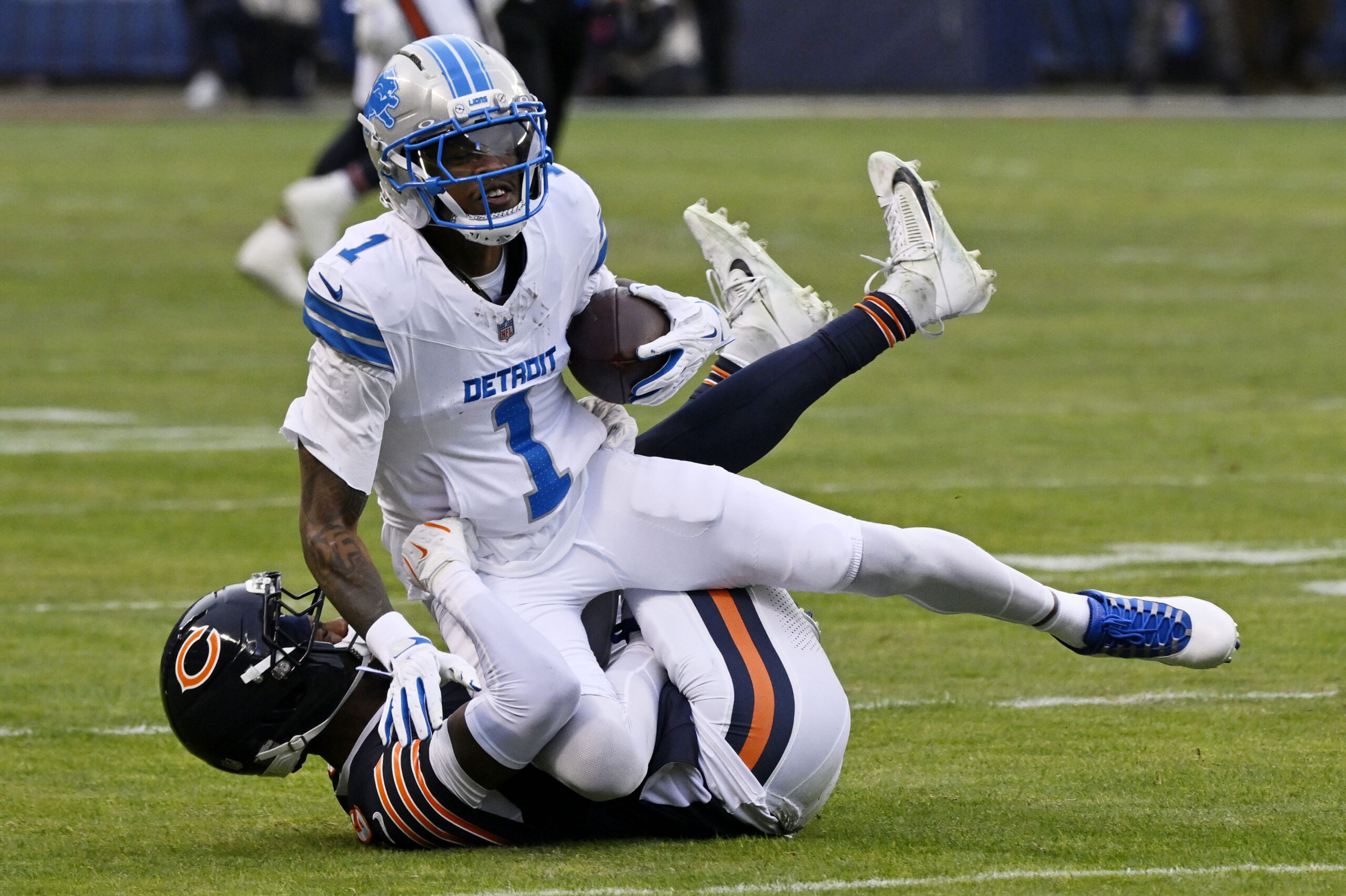
Jan 4, 2026; Chicago, Illinois, USA; Chicago Bears cornerback Nahshon Wright (26) tackles Detroit Lions wide receiver Jameson Williams (1) during the first half at Soldier Field. Mandatory Credit: Matt Marton-Imagn Images
Williams named the NCAA, the Big Ten Conference, and the Southeastern Conference. Three entities that collectively generate billions annually from televised college football. The SEC distributed hundreds of millions of dollars to its member schools in the 2024 to 2025 fiscal year, and the Big Ten’s current media rights package is valued at roughly $7 billion across seven years. Williams played at flagship programs in both conferences during 2019 to 2021, his prime collegiate years, while rules those same organizations enforced largely banned him from earning off his own name, image, and likeness. The 12th overall pick in the 2022 draft carried a price tag everyone could see except the player himself.
Filed in California for a Reason
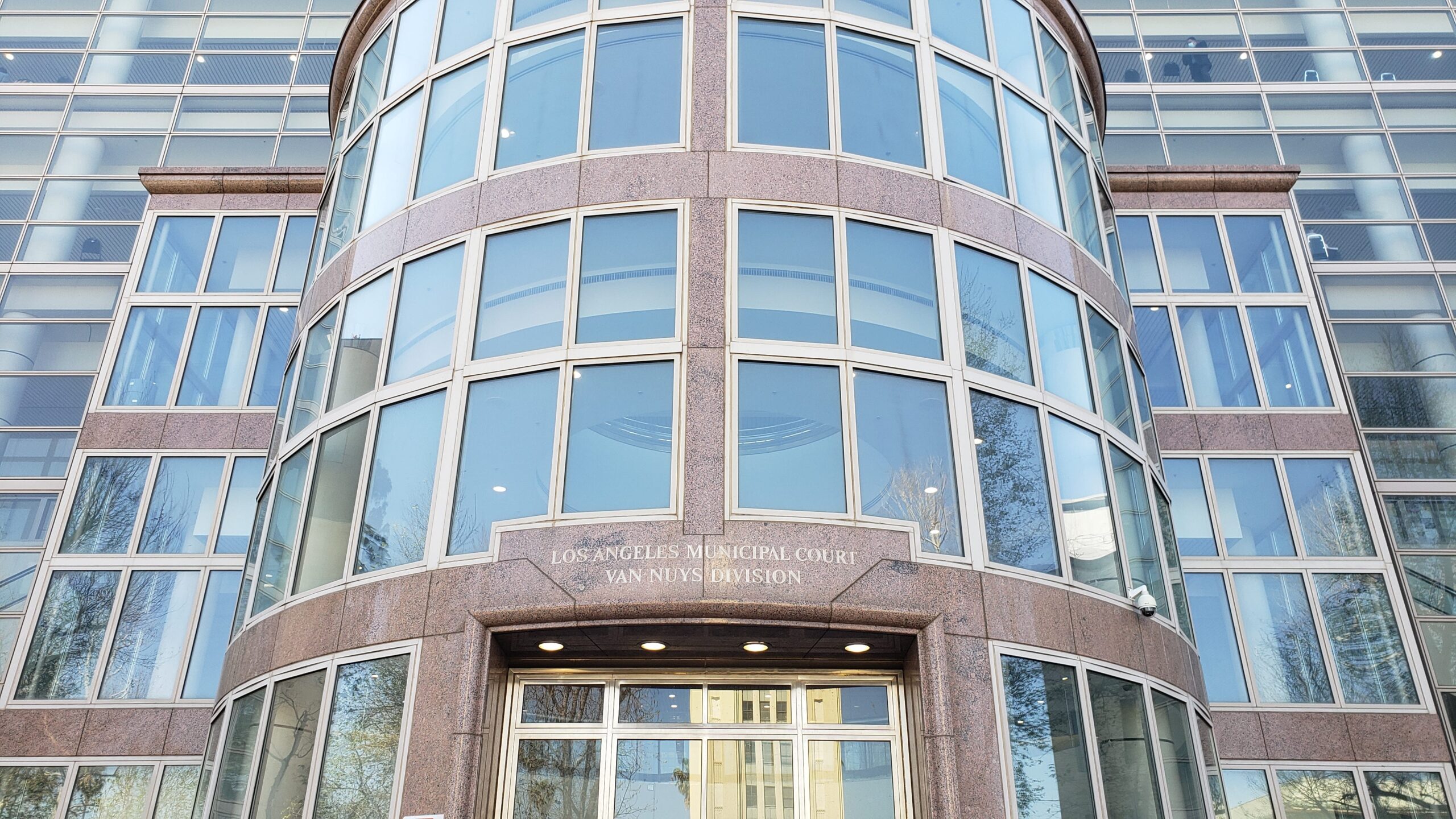
Los Angeles County Superior Court municipal courthouse in Van Nuys
The choice of venue is not accidental. The complaint was filed in Los Angeles County Superior Court and leans heavily on the Cartwright Act, California’s state antitrust statute, which permits broader damage recovery and, in certain fact patterns, longer look-back windows than federal antitrust law. California is also the jurisdiction that produced the O’Bannon ruling and housed the House v. NCAA settlement, giving Williams a plaintiff-friendly legal terrain where judges already understand how NIL economics work. For a case built on antitrust theory and ongoing-violation claims, filing in Los Angeles is a strategic signal, not a geographic accident.
The Amateurism Fiction
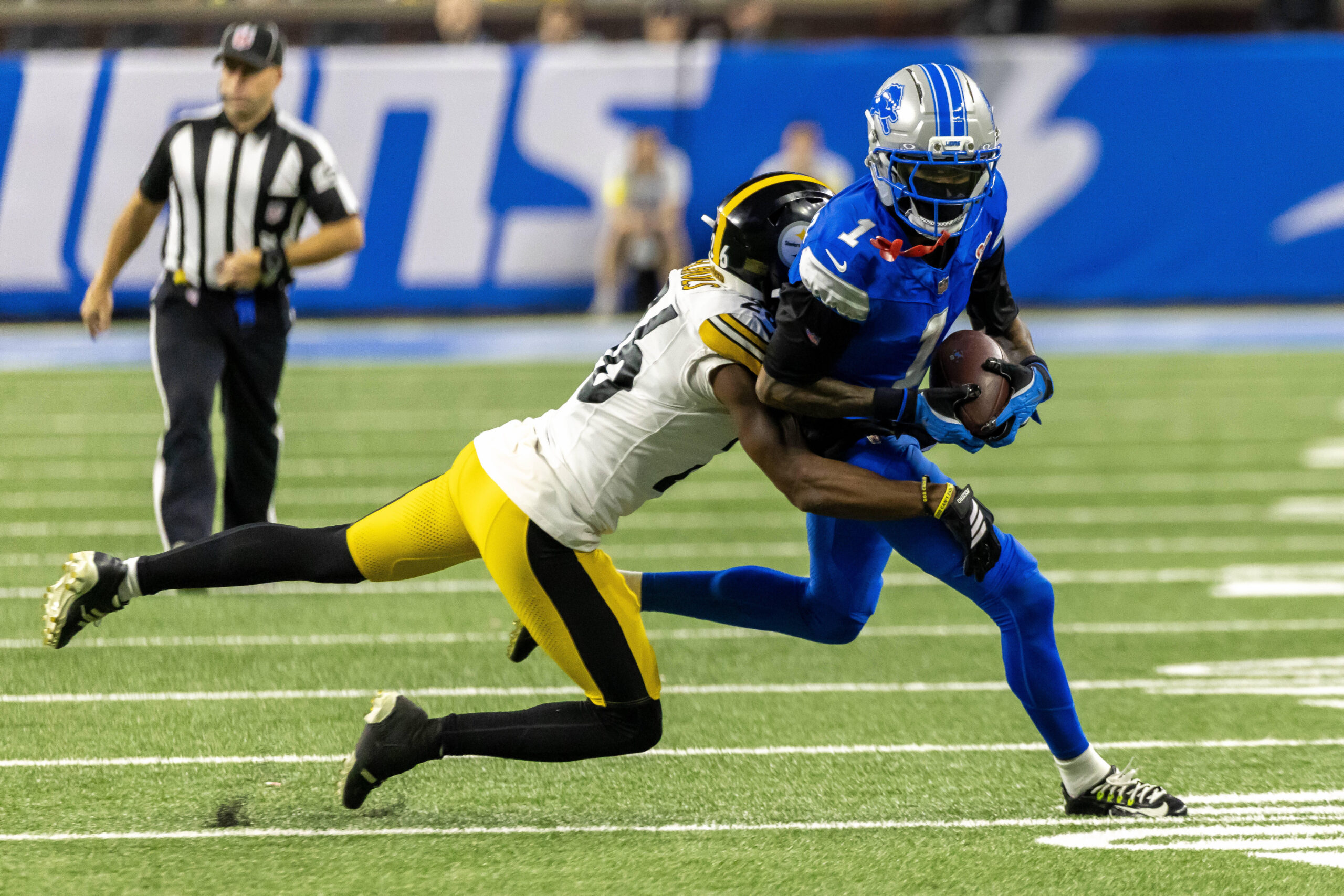
Dec 21, 2025; Detroit, Michigan, USA; Pittsburgh Steelers cornerback Brandin Echols (26) tackles Detroit Lions wide receiver Jameson Williams (1) during the fourth quarter at Ford Field. Mandatory Credit: David Reginek-Imagn Images
For decades, the NCAA sold a story. Athletes received scholarships, and that was fair compensation. The system existed to protect education. Except the approximately $2.8 billion House v. NCAA settlement, approved in June 2025, one of the largest antitrust settlements in American history, shattered that premise entirely. Courts ruled the old arrangement amounted to illegal restraint of trade. Schools can now pay athletes up to roughly $20.5 million annually in direct payments. The system admitted the prior model was wrong. Williams played nearly all of his college career under that model, and nobody cut him a retroactive check.
$83 Million Proves the Theft
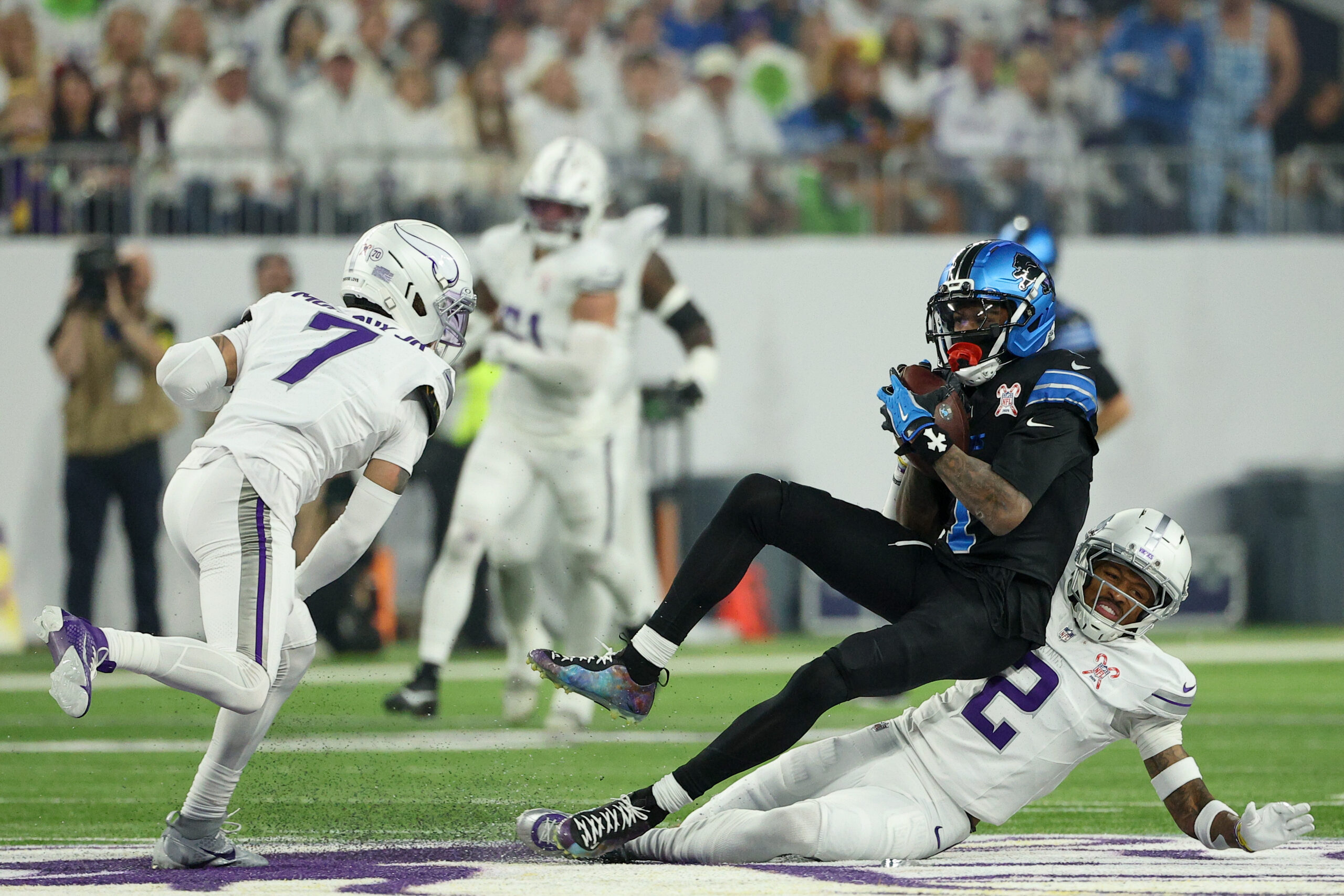
Dec 25, 2025; Minneapolis, Minnesota, USA; Minnesota Vikings cornerback Isaiah Rodgers (2) tackles Detroit Lions wide receiver Jameson Williams (1) in the second quarter at U.S. Bank Stadium. Mandatory Credit: Matt Krohn-Imagn Images
His lawsuit filing states it plainly. “Plaintiff received less — zero — than he otherwise would have received for the use of his name, image, and likeness in a competitive marketplace.” Williams, a 12th overall pick who signed a three-year extension worth up to $83 million with Detroit, proved exactly what his labor was worth on the open market. The Lions committed up to roughly $27.7 million per year on average to him. The conferences that broadcast his college performances committed zero. Same skills. Same athlete. Two completely different compensation systems separated by a rule change that came too late for most of his college career.
What Williams Is Actually Asking For
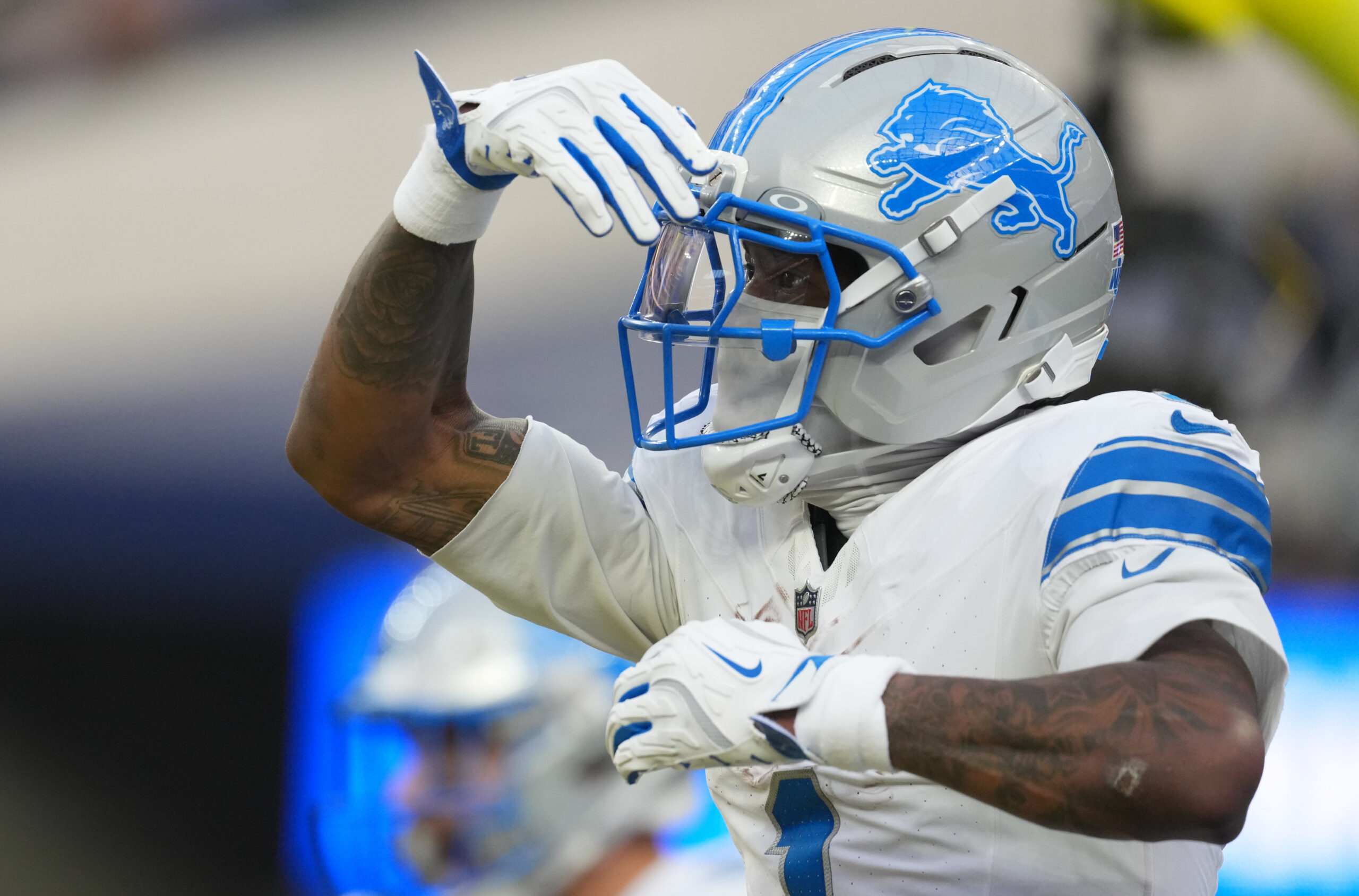
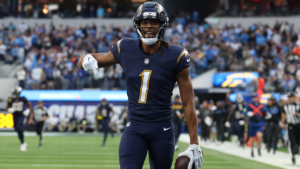
Dec 14, 2025; Inglewood, California, USA; Detroit Lions wide receiver Jameson Williams (1) celebrates after a touchdown during the second quarter against the Los Angeles Rams at SoFi Stadium. Mandatory Credit: Kirby Lee-Imagn Images
The filing is not a press release. It asks for three specific remedies. First, Williams seeks recovery of the social-media and endorsement income he was barred from collecting while the suppression rules were active. Second, he wants a share of the game telecast group licensing revenue tied directly to his performances on the field. Third, he is asking the court for an injunction prohibiting the NCAA and the conferences from continuing to use his NIL without consent and payment going forward. Those three asks convert the headline-grabbing outrage into a concrete legal framework a judge can actually rule on.
From Ohio State to Alabama: The On-Field Résumé Behind the Filing
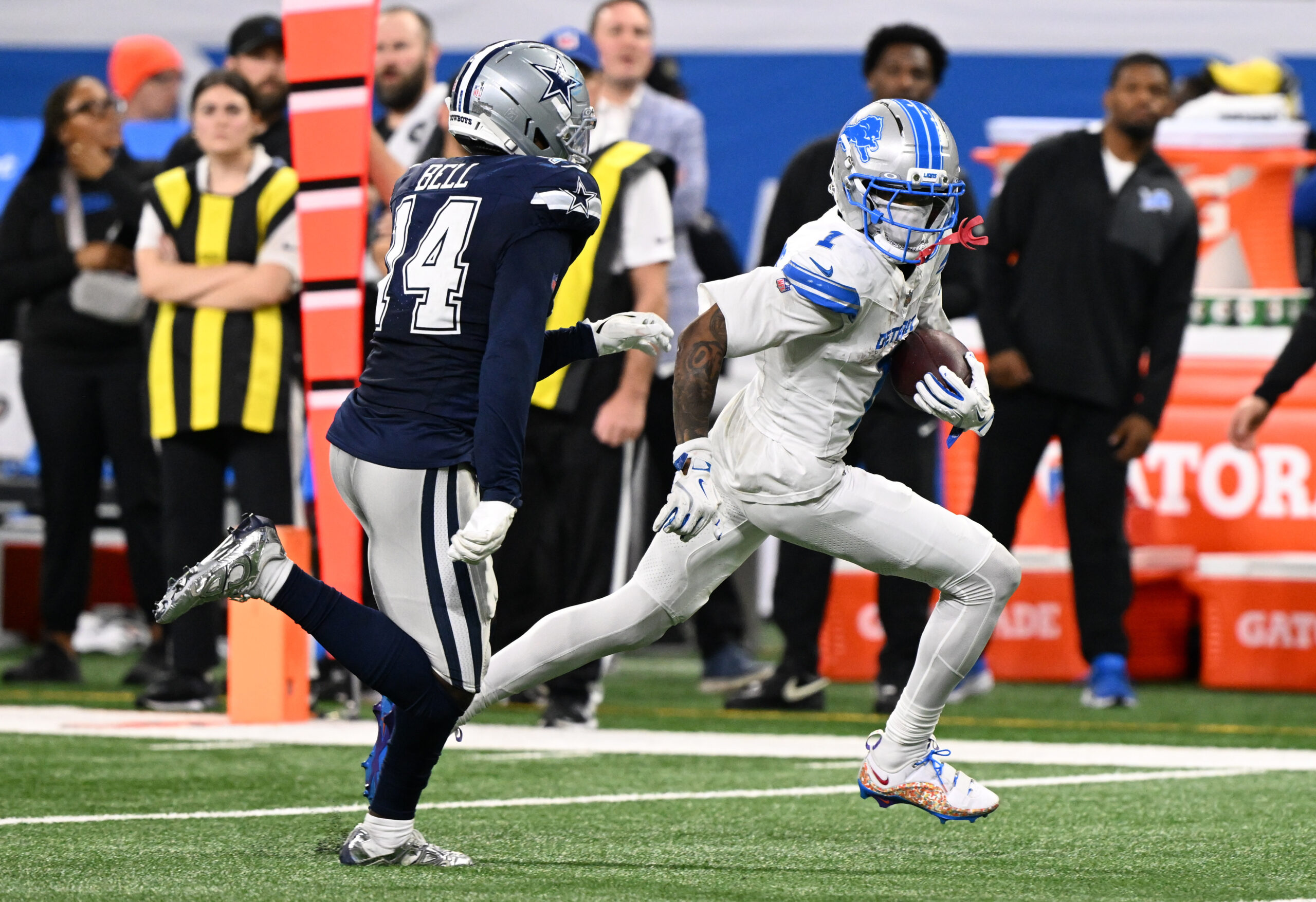
Dec 4, 2025; Detroit, Michigan, USA; Detroit Lions wide receiver Jameson Williams (1) runs against Dallas Cowboys safety Markquese Bell (14) during the second half at Ford Field. Mandatory Credit: Lon Horwedel-Imagn Images
The football itself matters for damages. Williams enrolled at Ohio State in 2019, spent two seasons in Columbus, then transferred to Alabama for the 2021 campaign, where his breakout season produced first-round draft capital. His Alabama tape is exactly the footage the lawsuit alleges is still being monetized, including SEC Championship appearances and College Football Playoff games watched by millions. Broadcast ratings during his 2021 Alabama run were among the highest in the sport. If damages end up tied to the revenue specific performances generated, his résumé is both the evidence and the ledger.
The Hidden Revenue Layer
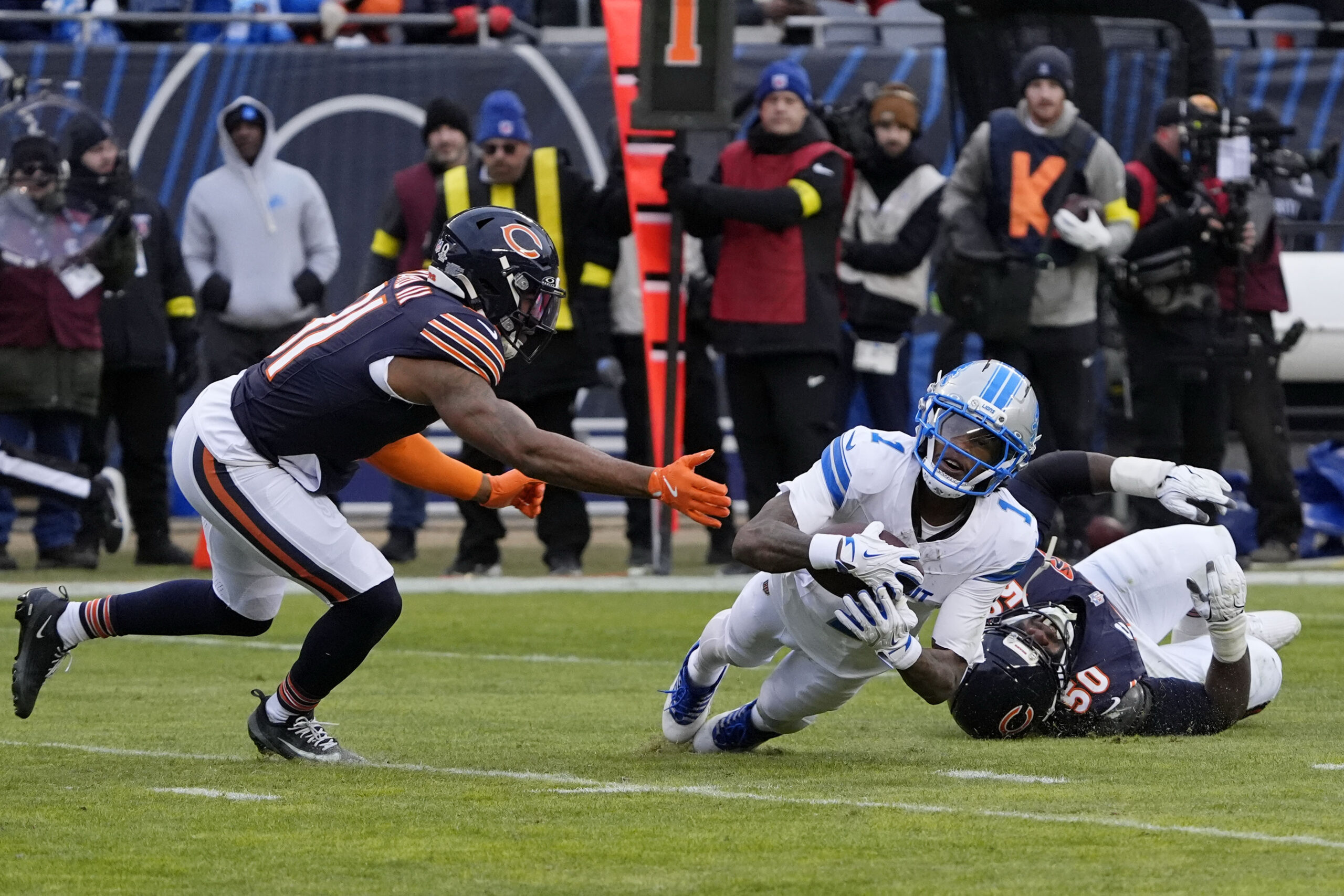
Jan 4, 2026; Chicago, Illinois, USA; Detroit Lions wide receiver Jameson Williams (1) makes a catch against Chicago Bears defensive end Grady Jarrett (50) and safety Kevin Byard III (31) during the first half at Soldier Field. Mandatory Credit: David Banks-Imagn Images
Williams is not just chasing endorsement money. His lawsuit targets something most fans never think about, which is game telecast group licensing revenue. Networks paid conferences billions for broadcast rights. Conferences kept every dollar. Athletes whose performances filled those broadcasts received nothing. Think of it as a landlord collecting rent from a tenant’s commercial activity while the tenant gets zero. Williams’ highlight reels, social media posts featuring his likeness, and SEC Network replays of his Alabama catches are all monetized, all without his consent or compensation, according to the complaint. The lawsuit demands an injunction barring future use without payment.
The Numbers Behind the Cartel
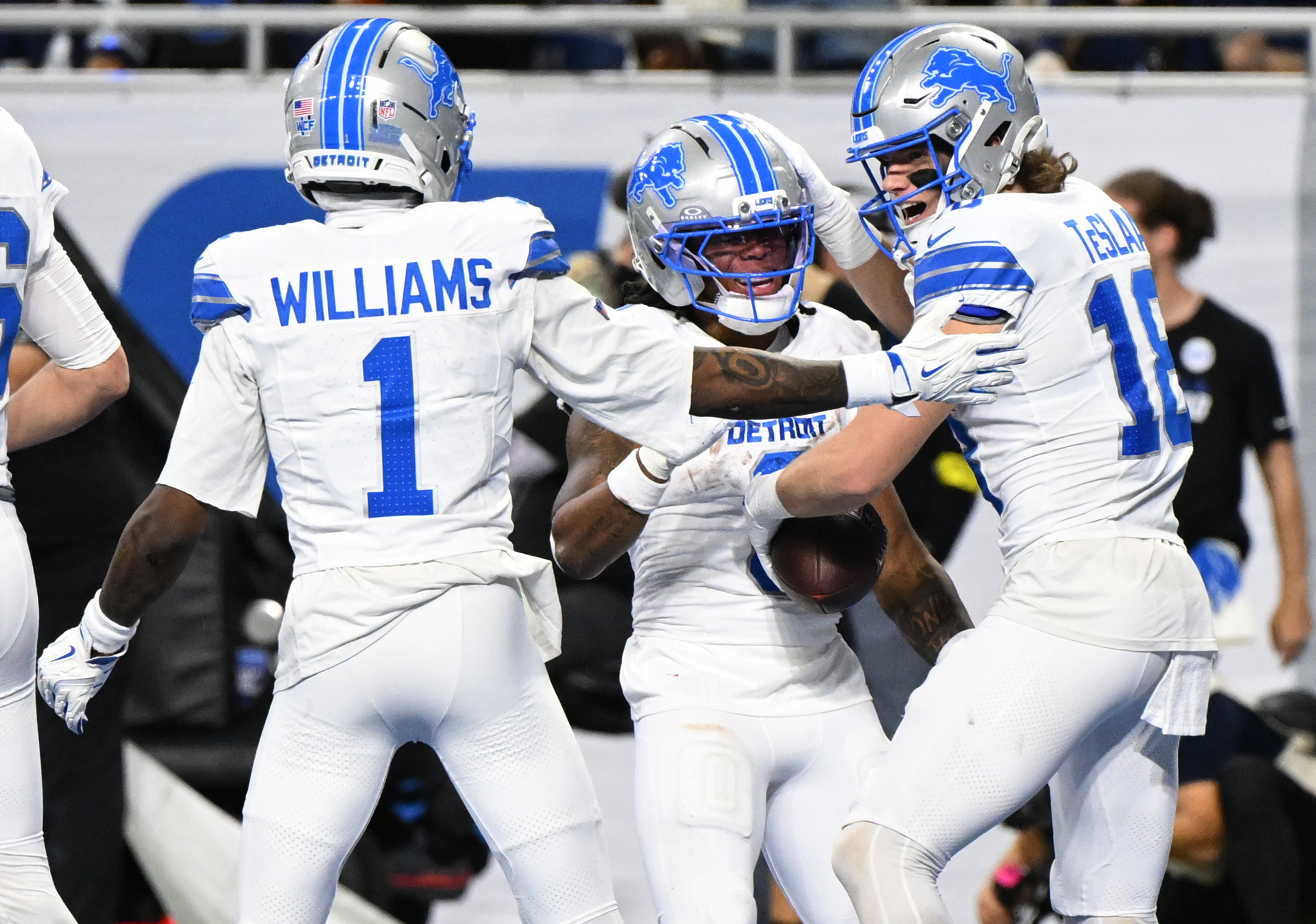
Dec 4, 2025; Detroit, Michigan, USA; Detroit Lions wide receiver Isaac Teslaa (18) celebrates with wide receiver Jameson Williams (1) and running back Jahmyr Gibbs (0) after scoring a touchdown during the second half against the Dallas Cowboys at Ford Field. Mandatory Credit: Lon Horwedel-Imagn Images
The lawsuit alleges violations of four separate statutes. The Cartwright Act targets coordinated restraints of trade under California law. The Sherman Antitrust Act is the federal counterpart and reaches interstate commerce, which broadcast revenue plainly is. The Unfair Practices Act addresses predatory and discriminatory pricing conduct. The Lanham Act covers unauthorized commercial use of identity and likeness. Stacked together, the four statutes attack the same mechanism from four angles, which is a coordinated refusal to negotiate with athletes for NIL value. The overwhelming majority of House settlement damages are earmarked for football and basketball players, the same athletes whose performances generated the bulk of broadcast revenue.
Thousands of Athletes Are Watching
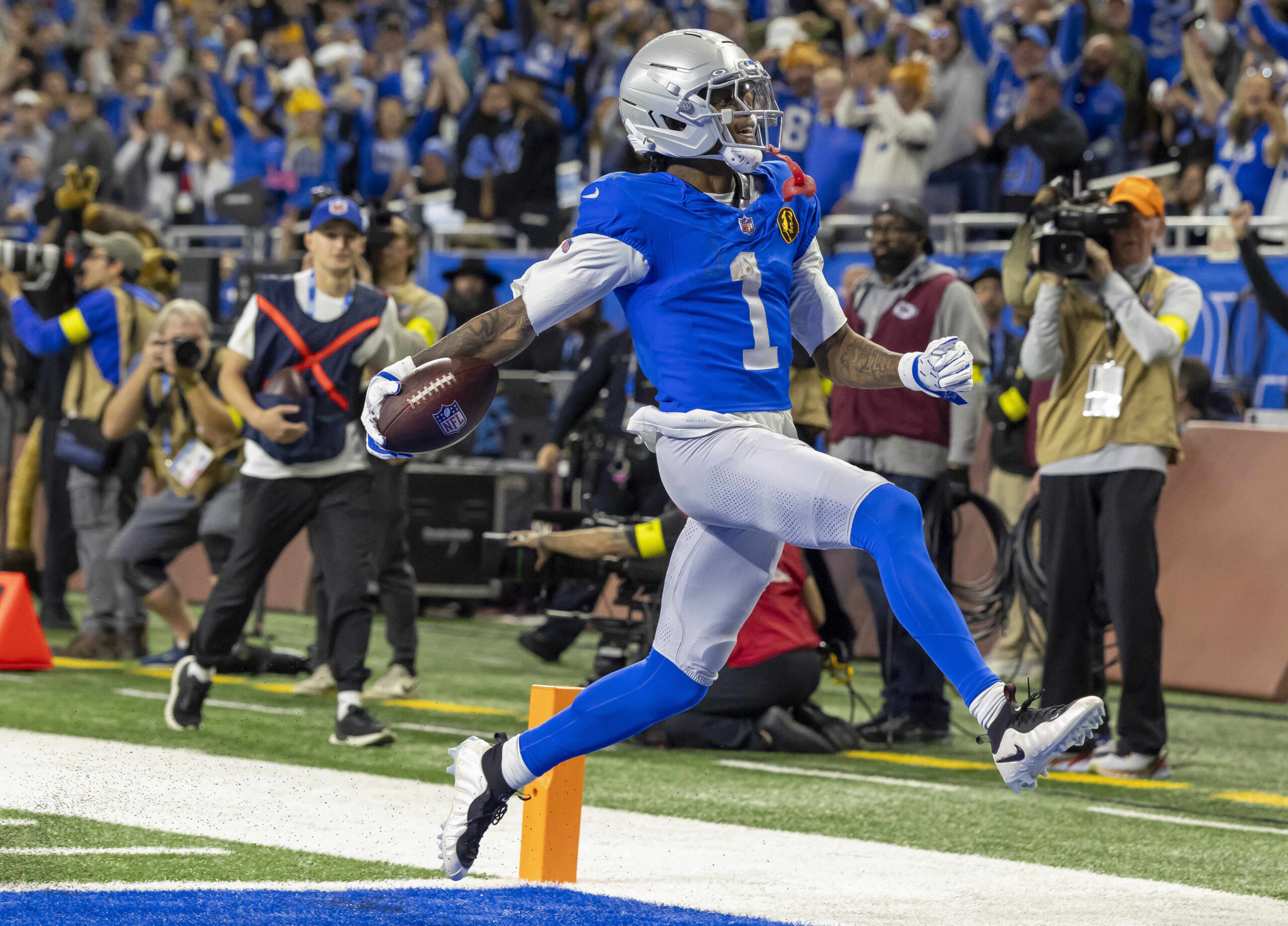
Nov 27, 2025; Detroit, Michigan, USA; Detroit Lions wide receiver Jameson Williams (1) scores a touchdown against the Green Bay Packers during the second quarter at Ford Field. Mandatory Credit: David Reginek-Imagn Images
Williams is not alone in the gap. Tens of thousands of Division I athletes competed during the pre-2021 suppression era without NIL rights. If his lawsuit succeeds and courts allow quantification of broadcast revenue owed to individual athletes, it creates a template. Other transition-era players at Power 5 schools could file similar claims. Television networks that knowingly benefited from suppressed-cost talent could face secondary liability. Athletic departments already budgeting for revenue-sharing under the House settlement would face unexpected clawback risk on top of existing obligations.
Reggie Bush Already Opened the Door
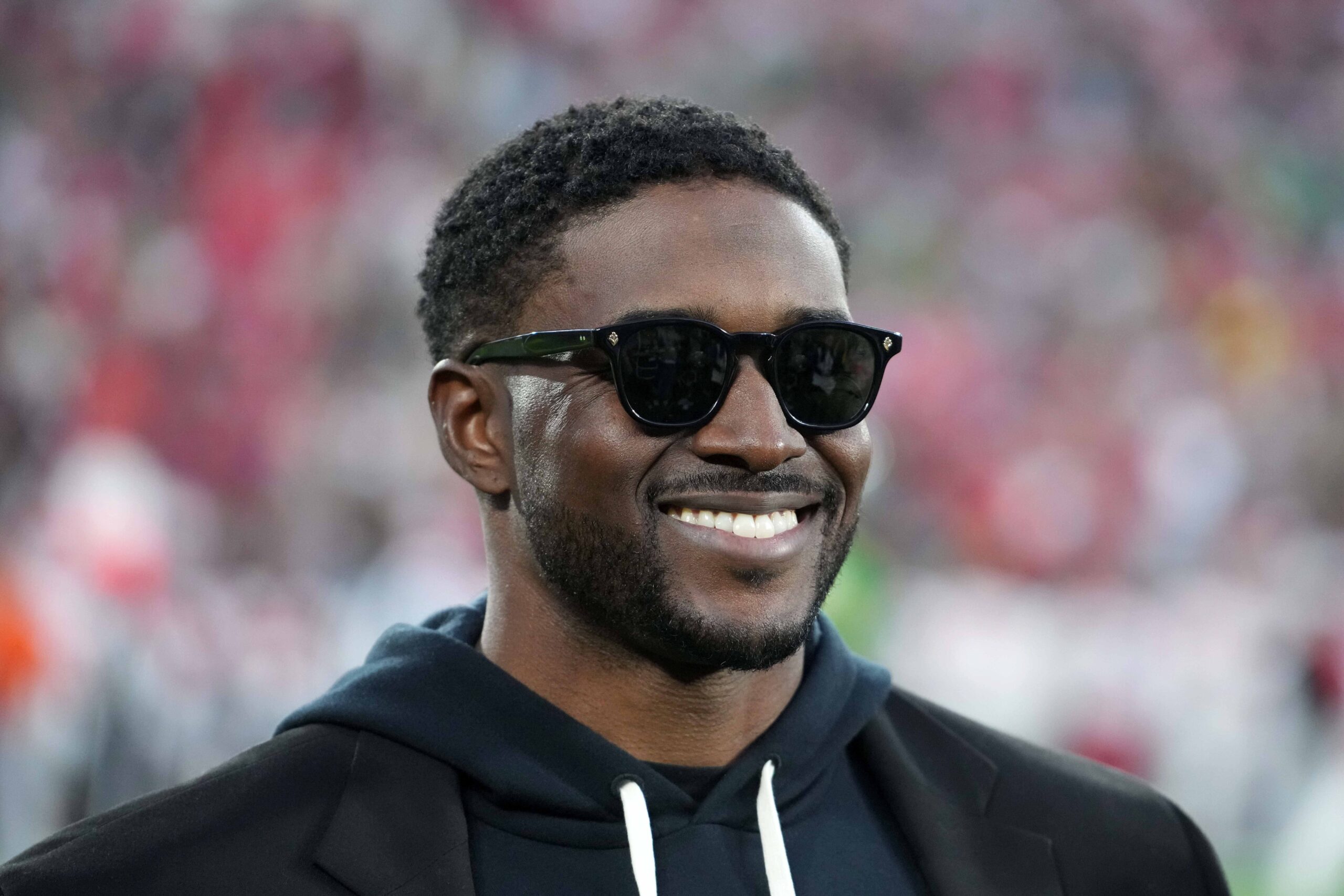
Jan 1, 2025; Pasadena, California, USA; Southern California Trojans former running back and Rose Bowl Hall of Fame inductee Reggie Bush during a CFP Quarterfinal at Rose Bowl Stadium. Mandatory Credit: Kirby Lee-Imagn Images
Here is what makes Williams’ case more than symbolic. Reggie Bush filed a similar NIL lawsuit in September 2024. In late January 2026, a judge ruled that USC, the NCAA, and the Pac-12 could not exit the case despite statute-of-limitations arguments, roughly two decades after Bush’s college career at USC ended. The court accepted the theory of ongoing violations, meaning the defendants still profit from Bush’s likeness today. Williams’ filing uses a similar framework. His college footage still runs on conference networks. His highlights still generate clicks. The exploitation, his lawyers argue, never stopped.
How This Case Fits Alongside Other NIL Lawsuits
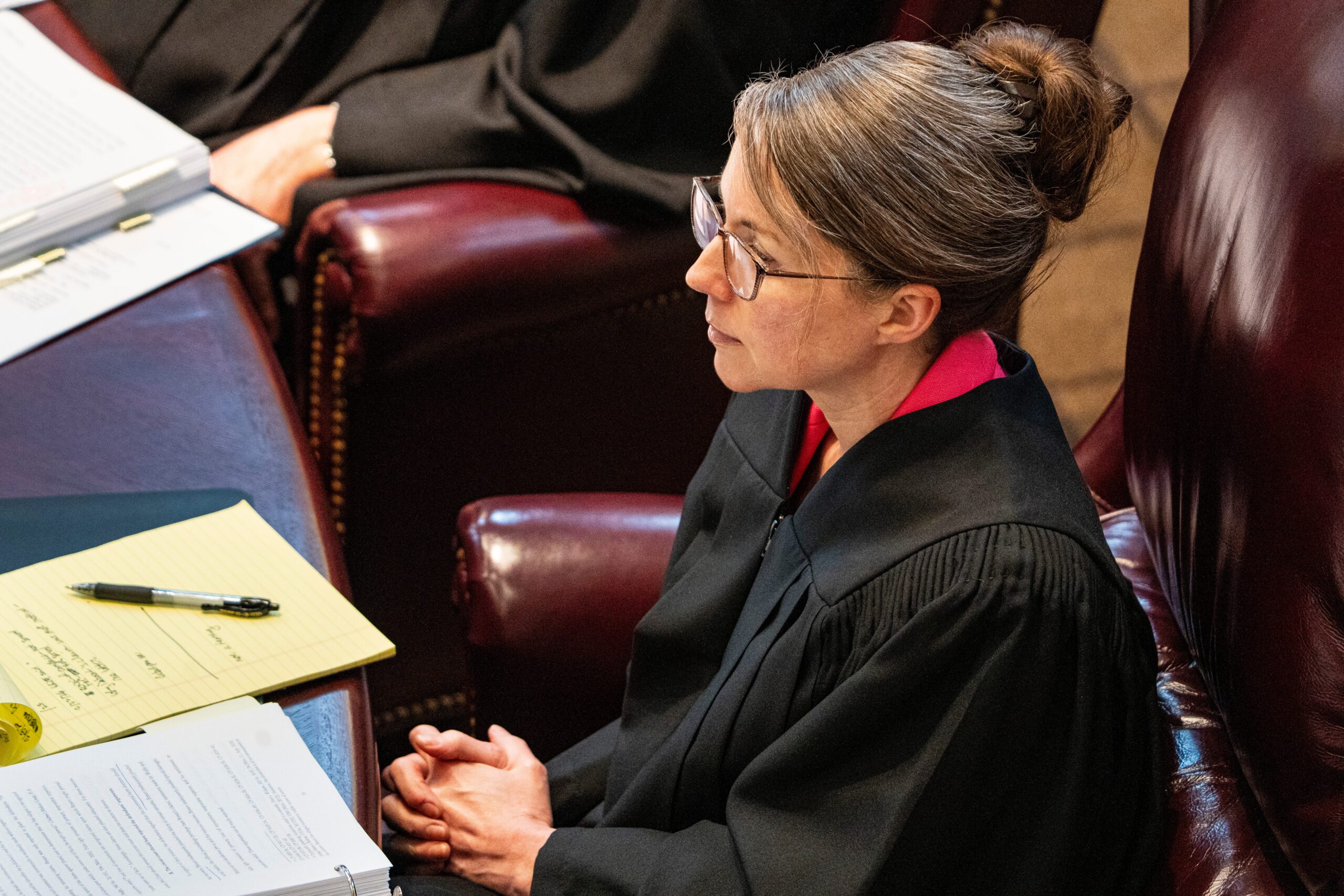
Associate Justice Jenifer B. Branning listens to a speaker during a defamation lawsuit case between former Mississippi Gov. Phil Bryant and Mississippi Today journalist Anna Wolfe at the Mississippi Supreme Court in Jackson, Miss., on Wednesday, Feb. 18, 2026. The lawsuit claims Mississippi Today defamed Bryant when Mississippi Today personnel made public statements about the Mississippi Welfare Scandal.
Williams joins a growing docket. Public litigation trackers show multiple active antitrust suits against the NCAA and the power conferences over group licensing and broadcast NIL, and they are moving at different speeds in different courts. In April 2026, the NCAA also agreed to a roughly $2 million settlement and a rule change in the Brantmeier prize-money case, another sign that courts are chipping away at the old compensation model one carve-out at a time. Williams’ filing is one front on a widening legal map, not an isolated shot, and that matters because rulings in one case often end up cited in another.
The State-Law Patchwork Working in His Favor
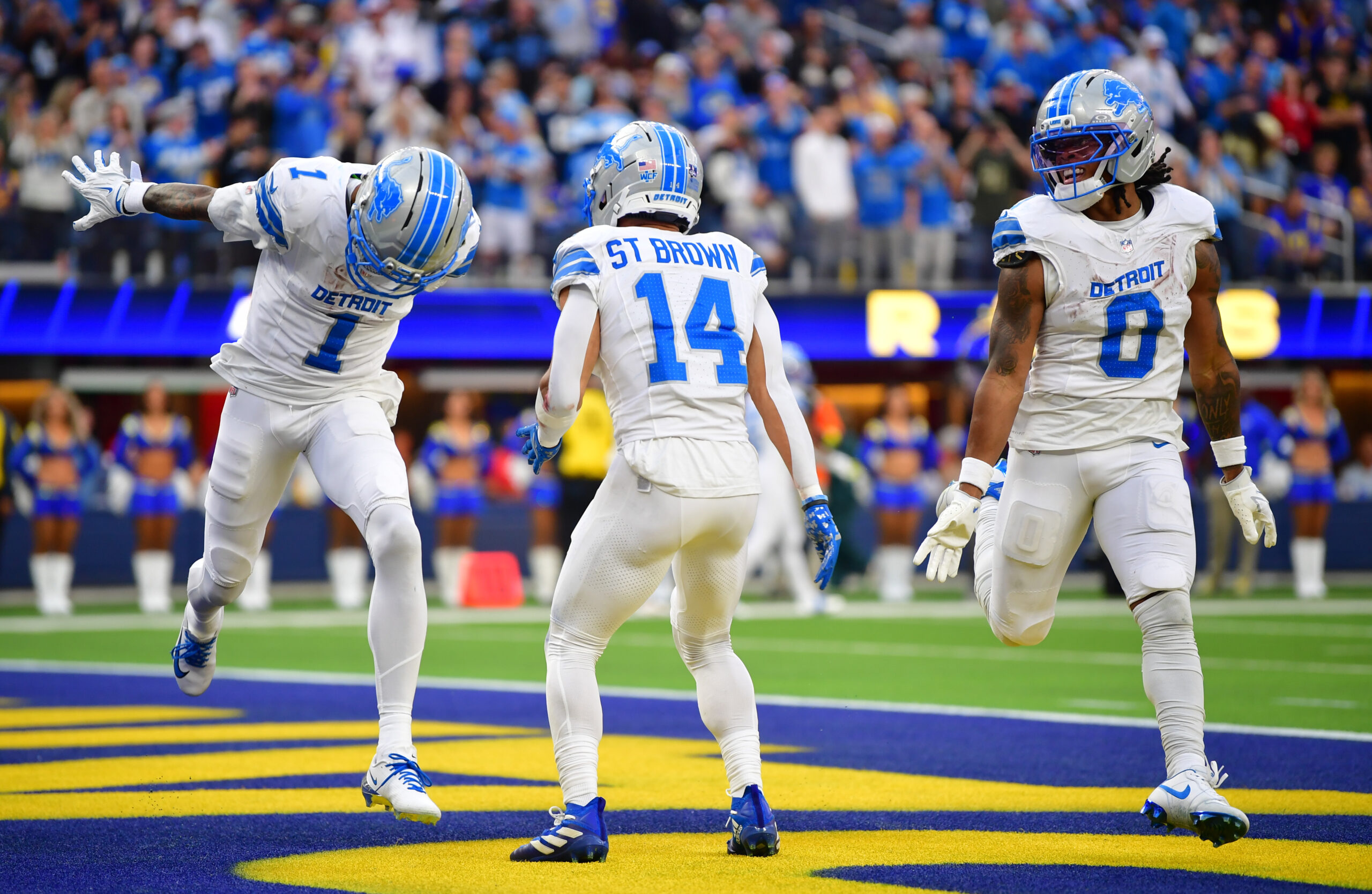
Dec 14, 2025; Inglewood, California, USA; Detroit Lions wide receiver Jameson Williams (1), Detroit Lions wide receiver Amon-Ra St. Brown (14) and Detroit Lions running back Jahmyr Gibbs (0) celebrate after a touchdown during the second quarter against the Los Angeles Rams at SoFi Stadium. Mandatory Credit: Gary A. Vasquez-Imagn Images
State legislation has already reshaped the baseline Williams is arguing from. Most states now have NIL statutes on the books, and under the House v. NCAA settlement framework, schools may directly pay athletes up to approximately $20.5 million annually, with the bulk of those dollars flowing to football and men’s basketball. That regulatory admission, that athletes deserve a direct cut of the revenue they generate, strengthens the core narrative of the lawsuit. Pre-2021 players were excluded from a market that every level of the system now concedes exists and is valuable.
What Happens Next: The Procedural Timeline
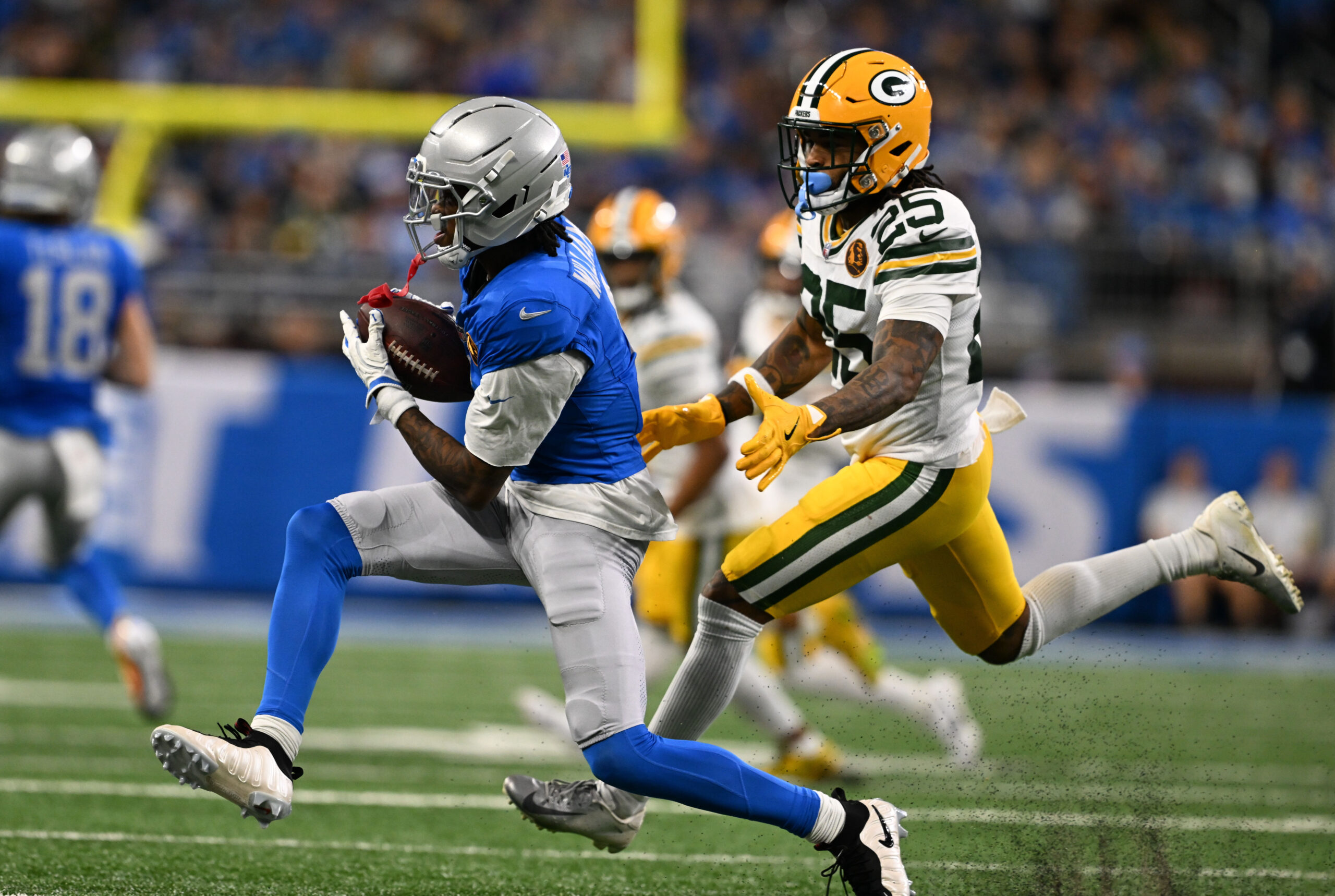
Nov 27, 2025; Detroit, Michigan, USA; Detroit Lions wide receiver Jameson Williams (1) catches a pass against Green Bay Packers cornerback Keisean Nixon (25) during the third quarter at Ford Field. Mandatory Credit: Lon Horwedel-Imagn Images
The road ahead is reasonably predictable. The defendants will almost certainly file motions to dismiss on statute-of-limitations, preemption, and antitrust-standing grounds, echoing arguments the Bush court already rejected. If the case survives the pleadings stage, discovery into conference broadcast contracts and group-licensing revenue could run anywhere from twelve to twenty-four months. Class certification is the fulcrum. If Williams amends the complaint to seek class status on behalf of pre-2021 athletes, the potential exposure multiplies by orders of magnitude. A ruling or settlement before the 2027 college football season would be fast. A multi-year fight is the more realistic expectation.
The System That Can’t Hide Anymore
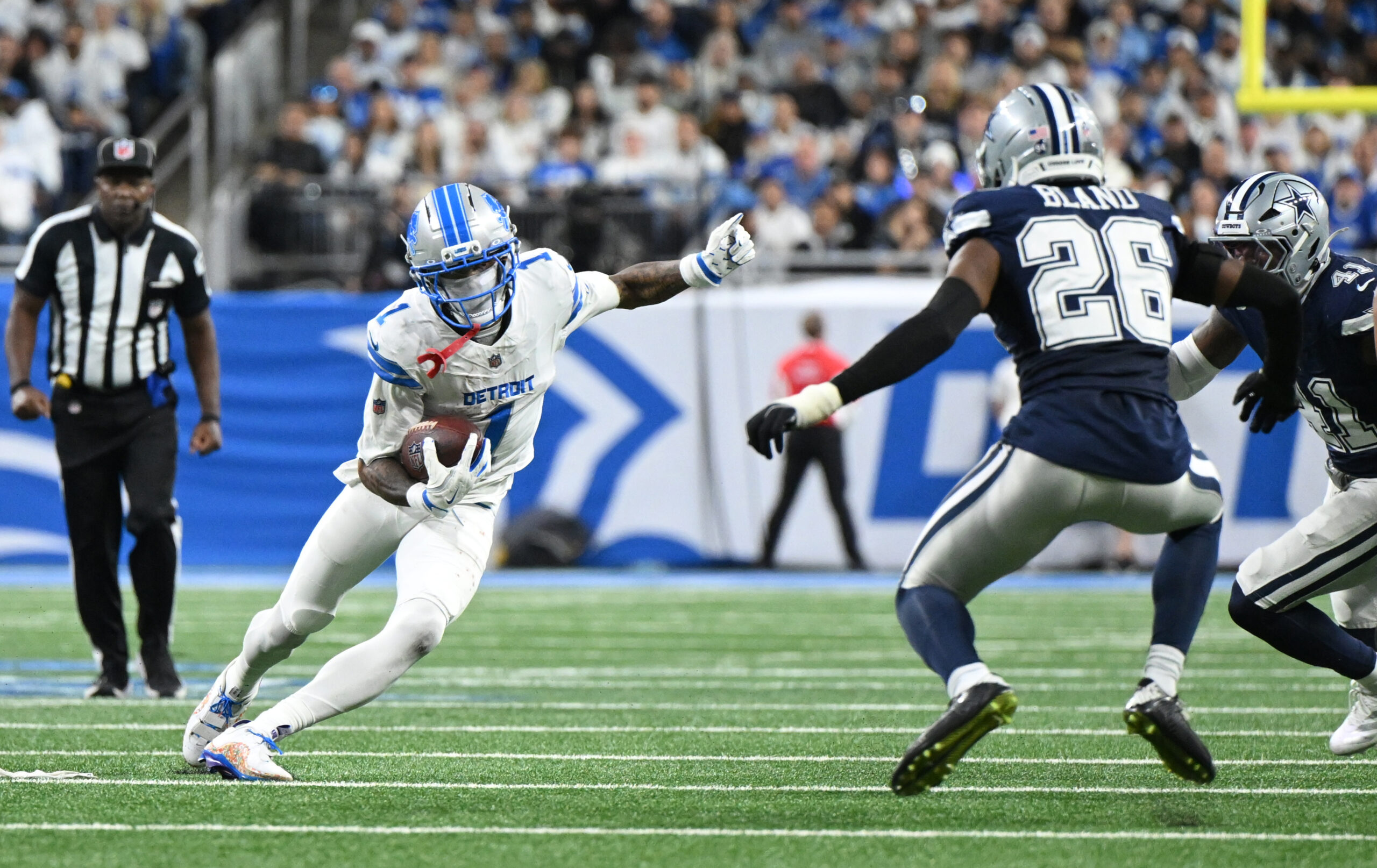
Dec 4, 2025; Detroit, Michigan, USA; Detroit Lions wide receiver Jameson Williams (1) runs against Dallas Cowboys cornerback DaRon Bland (26) and defensive end Donovan Ezeiruaku (41) during the second half at Ford Field. Mandatory Credit: Lon Horwedel-Imagn Images
Every SEC Network replay of a Williams touchdown catch. Every Big Ten promotional video featuring Ohio State highlights. Every social media post using his likeness to sell tickets or merchandise. All of it, the lawsuit argues, represented uncompensated labor performed by an athlete the free market later valued at up to $83 million. Once you see that, you cannot unsee it. The House settlement already addressed the prior system’s illegality. Williams’ lawsuit asks the next question. If it was illegal, where is the money?
The Bill Comes Due
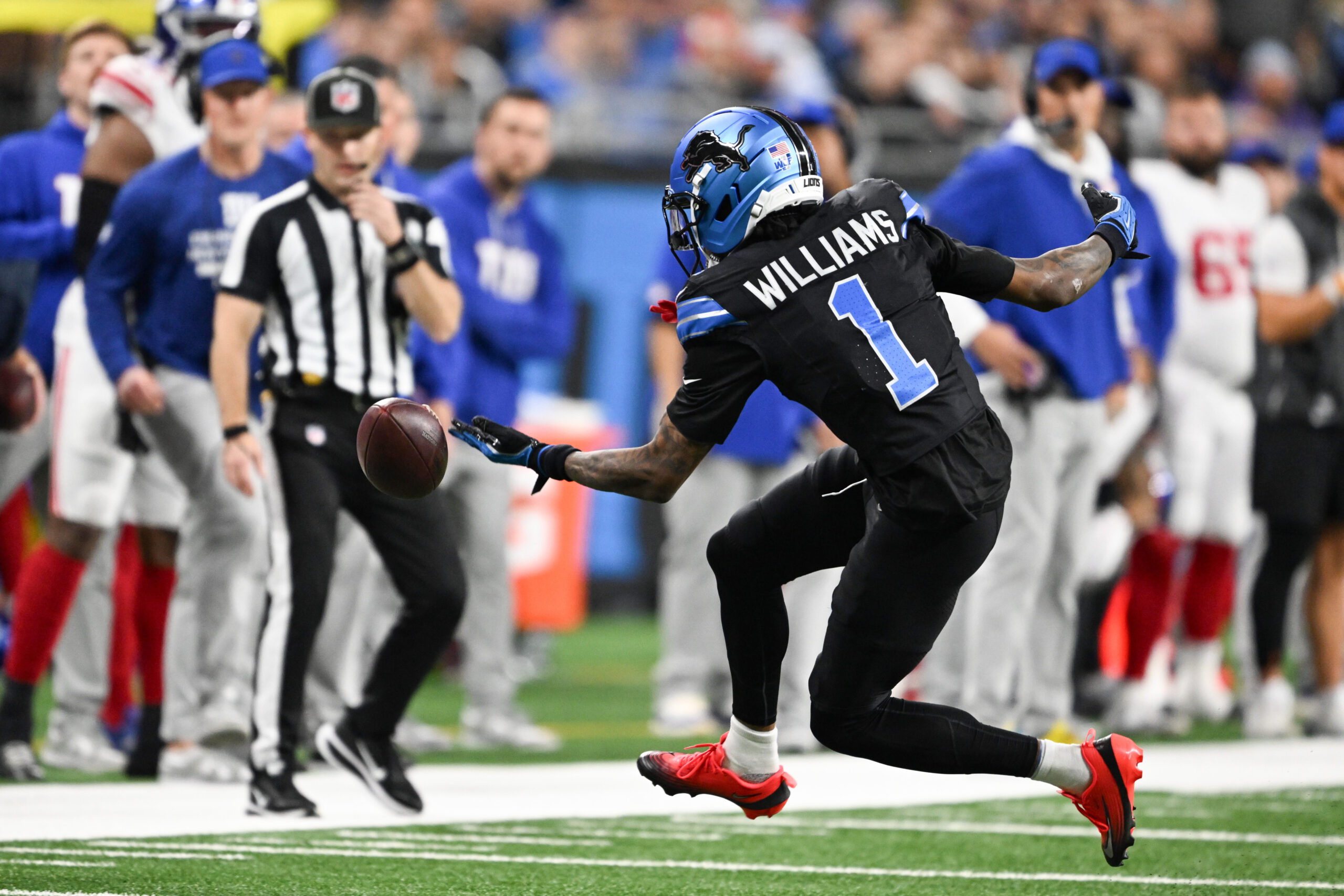
Nov 23, 2025; Detroit, Michigan, USA; Detroit Lions wide receiver Jameson Williams (1) misses a pass in the fourth quarter against the New York Giants at Ford Field. Mandatory Credit: Lon Horwedel-Imagn Images
The House settlement paid roughly $2.8 billion and called it closure. Williams’ lawsuit says it was not nearly enough. If courts accept his ongoing-violation theory, the damages window stays open indefinitely, and every conference highlight reel becomes a potential liability. Conferences that built billion-dollar media empires on athlete performances now face a choice. License the footage retroactively or stop airing it. Neither option is cheap. The athlete who earned zero in college is now pushing the richest organizations in amateur sports to put a dollar figure on what they took.
Should pre-2021 college athletes get a cut of every highlight reel still running on conference networks, or did the House settlement already close the book? Tell us where you land in the comments.
Sources:
Mike Florio, “Jameson Williams files NIL lawsuit against NCAA, Big Ten, SEC,” NBC Sports Pro Football Talk, April 28, 2026
Ryan Gaydos, “Lions star files lawsuit claiming NCAA, conferences unlawfully profited off likeness,” Fox News, April 27, 2026
Ben Portnoy, “Lions WR Jameson Williams sues NCAA, power leagues over NIL use,” Sports Business Journal, April 28, 2026
Eric Edholm, “Lions, WR Jameson Williams agree to three-year extension worth up to $83 million,” NFL.com, September 6, 2025
Paolo Uggetti, “Reggie Bush sues USC, Pac-12, NCAA for NIL compensation,” ESPN, September 22, 2024
Luca Evans, “USC and other defendants barred from exiting Reggie Bush case,” Annenberg Media, January 28, 2026