
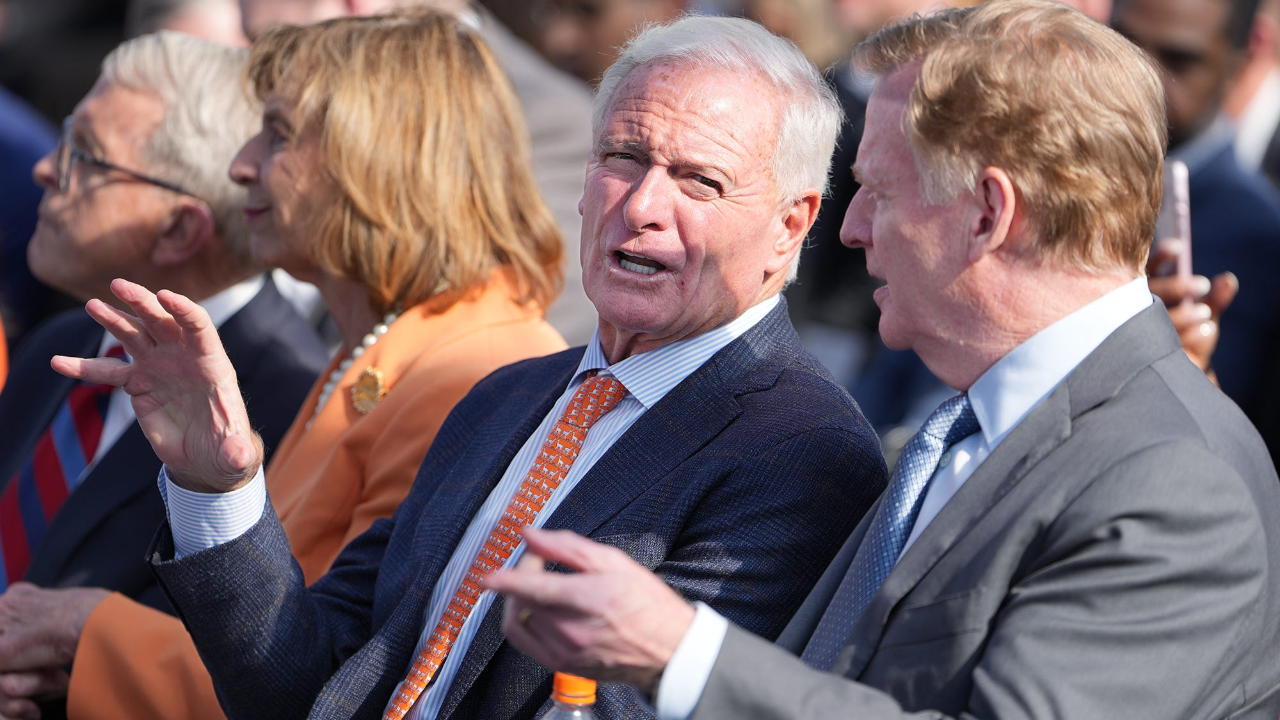
Roger Goodell stood in Brook Park, Ohio, praised the Cleveland Browns’ new $2.6 billion enclosed stadium as “certainly Super Bowl quality,” then spent the rest of his remarks explaining why Cleveland can’t actually host one. The NFL typically asks host regions for roughly 50,000 to 60,000 hotel rooms within about a 60-minute drive. Cleveland has roughly 25,000. That is a 50 percent shortfall. The stadium is scheduled to open in 2029 with 67,500 seats and one of the largest concourse footprints in professional football at about 377,000 square feet. The region surrounding it tells a different story entirely.
Why the Stadium Was Never the Problem
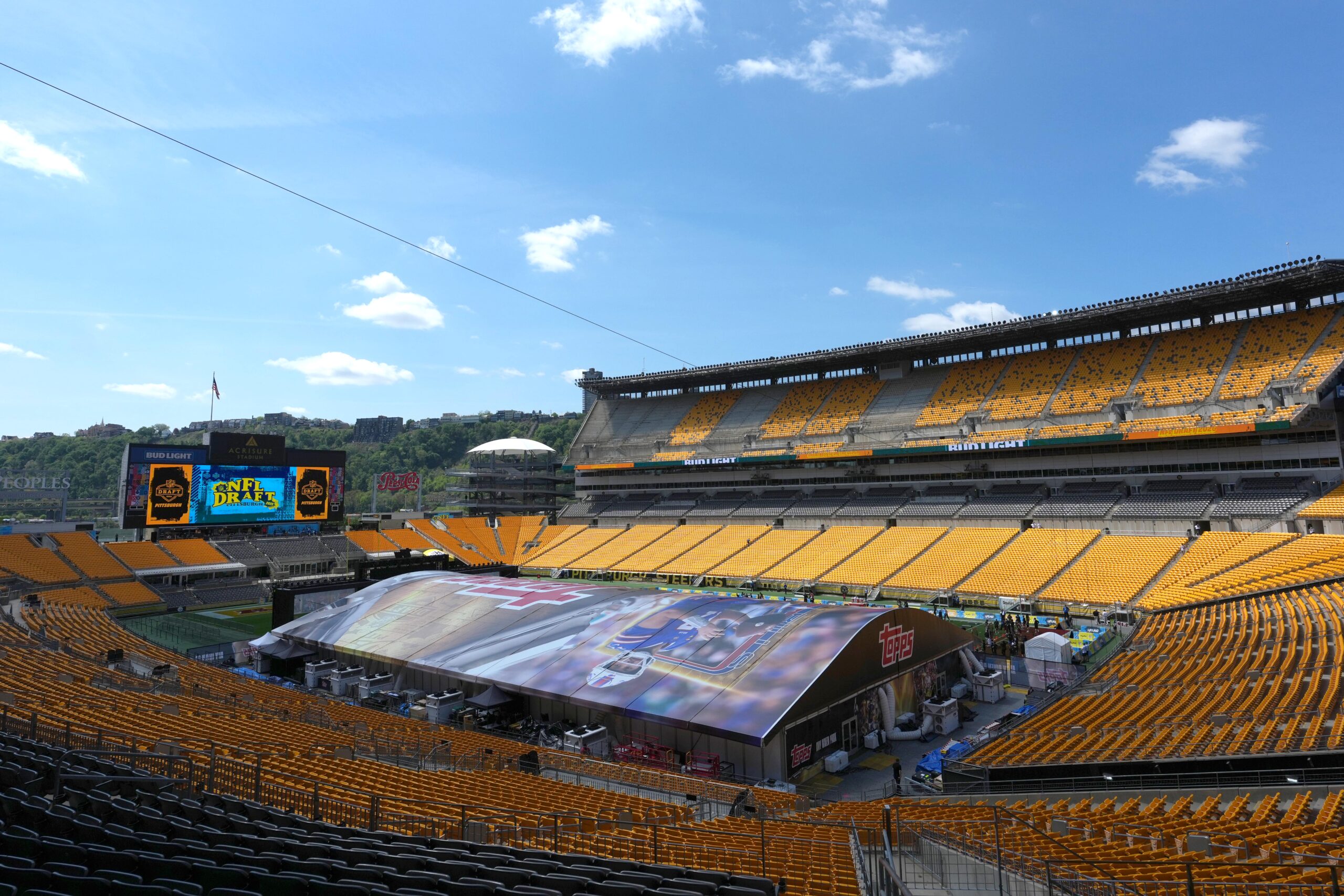
Apr 23, 2026; Pittsburgh, PA, USA; A general overall view of Acrisure Stadium during the 2026 NFL Draft. Mandatory Credit: Kirby Lee-Imagn Images
The NFL stopped evaluating Super Bowl bids on stadium quality years ago. Venue design is pass or fail. The real audit measures whether an entire region can absorb approximately 200,000 visitors over event week. Hotels, airports, restaurants, parking, and entertainment districts. Goodell said the real challenge is whether the surrounding region can transform, and that the airport and hotels are important for the league’s evaluation. Cleveland’s facility sits on a former Ford manufacturing site adjacent to Cleveland Hopkins International Airport. The building passed. The surrounding 178 acres did not.
The Dome Decision: Why Enclosed Changes Everything
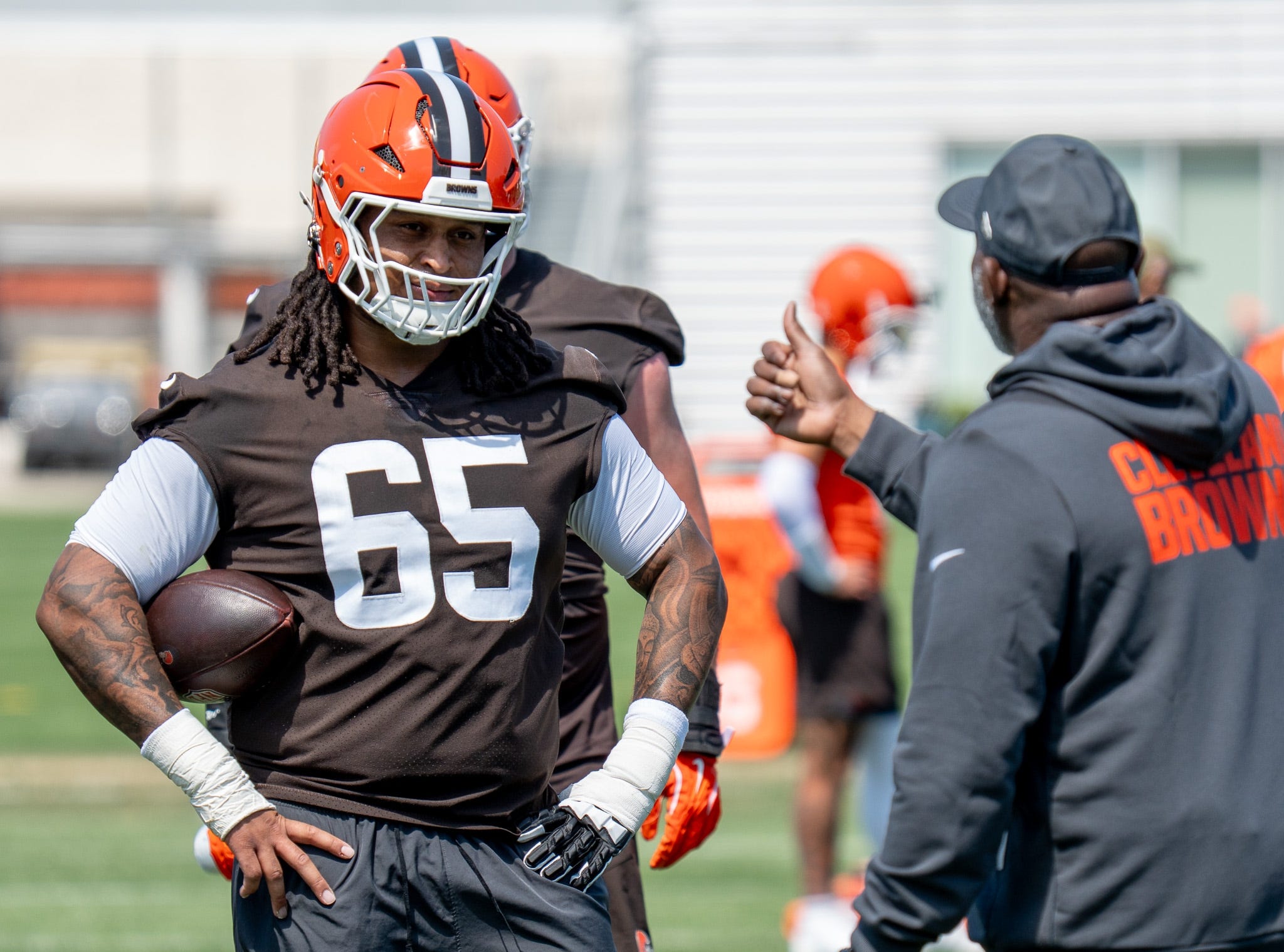
Kingsley Eguakun, listens to a coach at the Browns mini camp in Berea on April 21, 2026.
Enclosing the venue is the financial linchpin Haslam Sports Group is betting on. An indoor stadium in Northeast Ohio means year round programming rather than a twelve game NFL schedule plus a handful of cold weather concerts. The design supports NCAA Final Fours, Wrestlemania style events, international soccer friendlies, and the kind of stadium tours that have historically skipped Cleveland due to weather risk. A flexible configuration allows the venue to scale down for smaller events without the dead sightlines that plague open bowl stadiums. This is how the Haslams justify the cost even if a Super Bowl never arrives.
Who’s Actually Building It
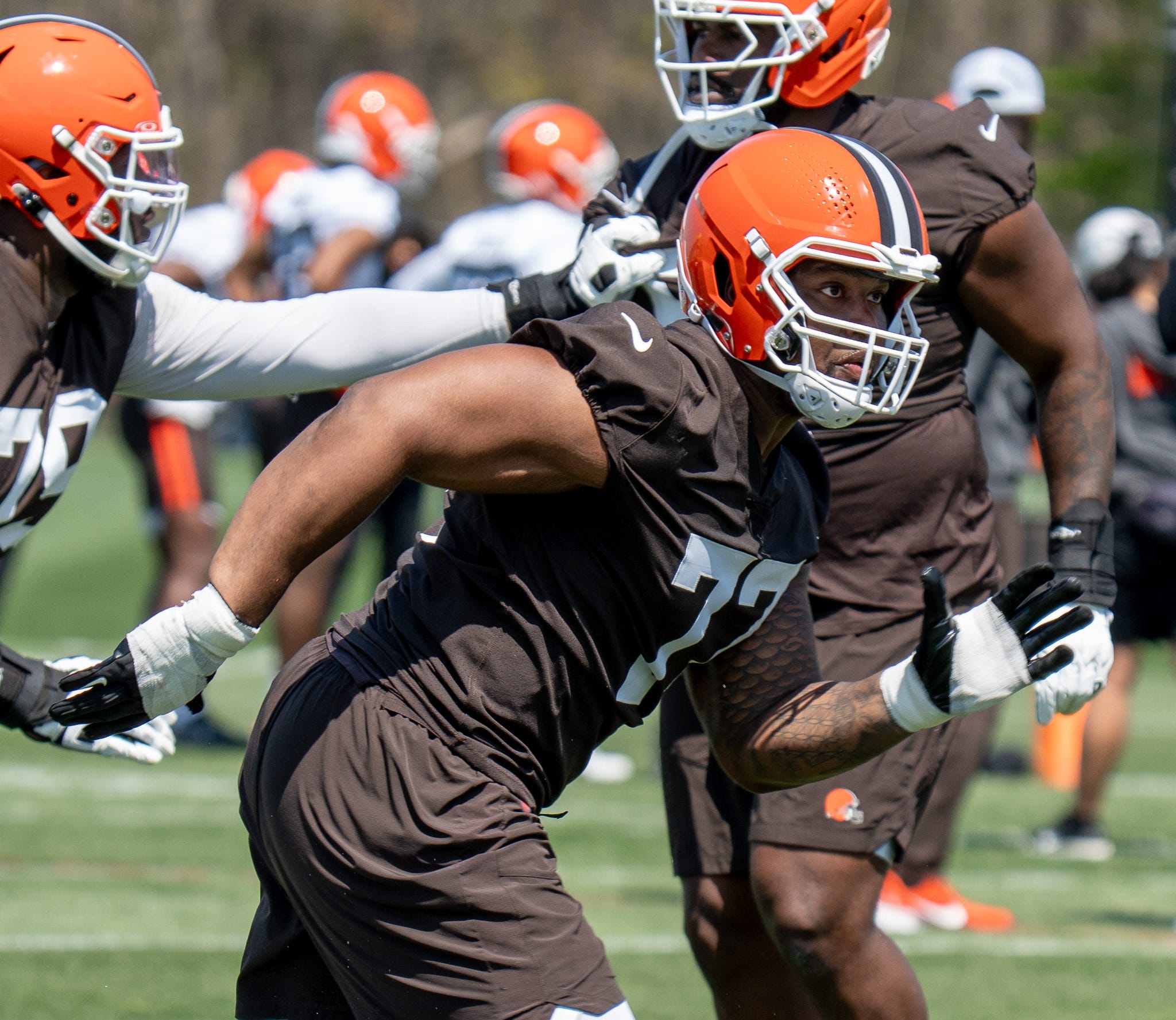
Zion Johnson during a drill at the Browns mini camp in Berea on April 21, 2026.
The joint venture of AECOM Hunt and Turner Construction is leading construction, with HKS serving as the lead architect. That trio is responsible for some of the most complex recent stadium projects in North America, which matters when you are digging a playing field 80 feet below grade to satisfy aviation rules. Mass excavation began in early March 2026, and roughly 6,000 construction workers will cycle through the site before opening. The accountability trail for every overrun now runs through those three firms rather than through the Browns front office.
What Cleveland Residents Actually Get Right Now
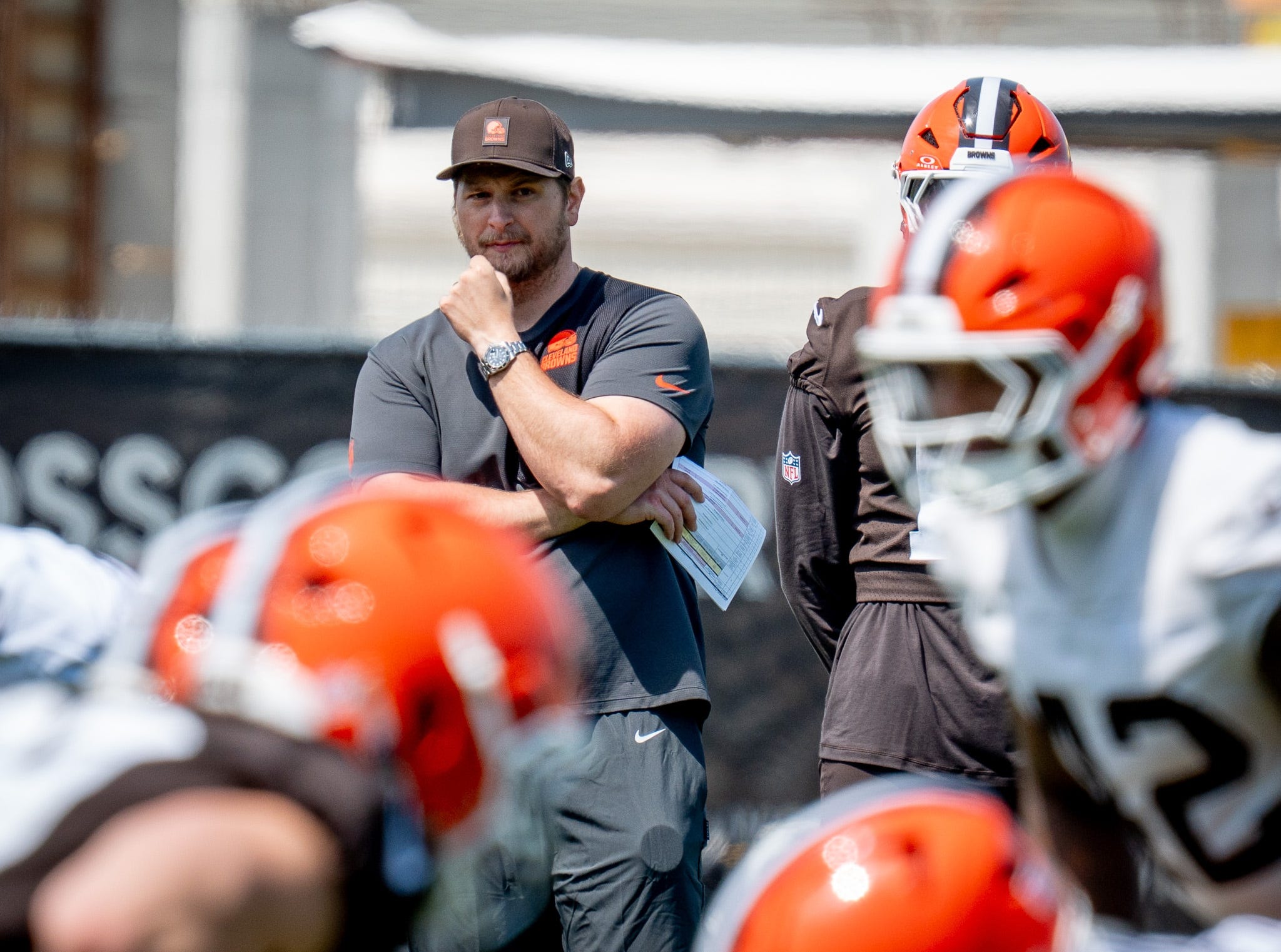
Travis Switzer, offensive coordinator, watches during a 7 on 7 play at the Browns mini camp in Berea on April 21, 2026.
For Cleveland residents, the immediate ripple is simpler than Super Bowl dreams. Construction creates more than 6,000 jobs across what the Browns call Northeast Ohio’s largest economic development project to date. That is real money flowing into a region that watched Ford close the plants this stadium now replaces. But here is what nobody is saying out loud. Without a Super Bowl, the venue competes for concerts, college football playoffs, and NFL Drafts. Goodell even suggested the Draft is more likely to return before any championship game. A $2.6 billion building chasing mid tier events.
The Naming Rights Already Banked
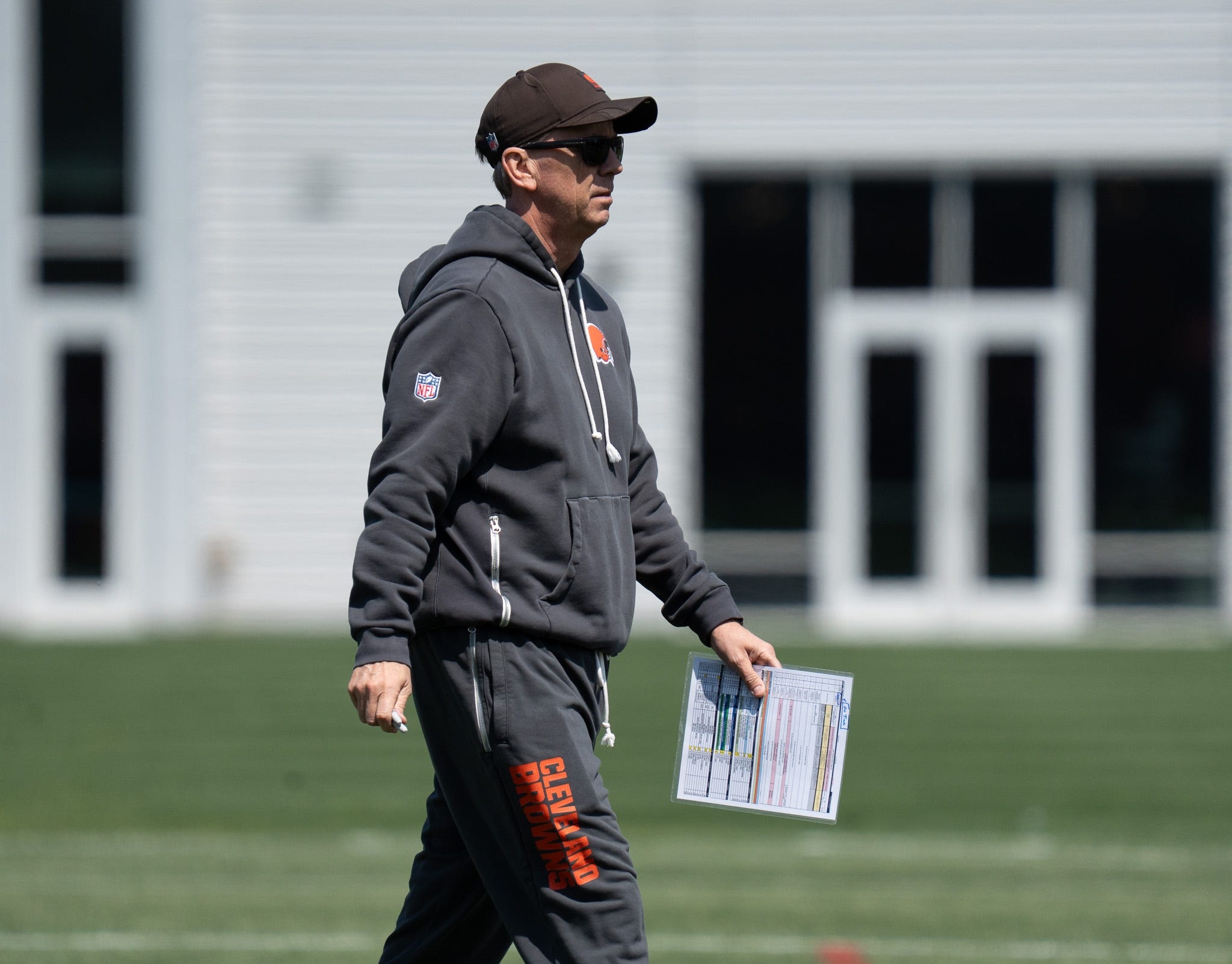
Coach Todd Monken walks through groups of players as they train at the Browns mini camp in Berea on April 21, 2026.
The new venue carries the Huntington Bank Field name forward from the current lakefront stadium, which means a major sponsor is already locked in before the concrete cures. Naming rights deals of this scale often determine whether a stadium’s first decade is profitable or not. Landing a renewal during a construction window, rather than after opening, is unusual and signals that commercial partners believe the project will be completed on schedule. For the Haslam family, this is one of the few revenue streams already de risked. For taxpayers, it is a reminder that private benefit is flowing long before public benefit arrives.
The Hotel Math That Terrifies Developers
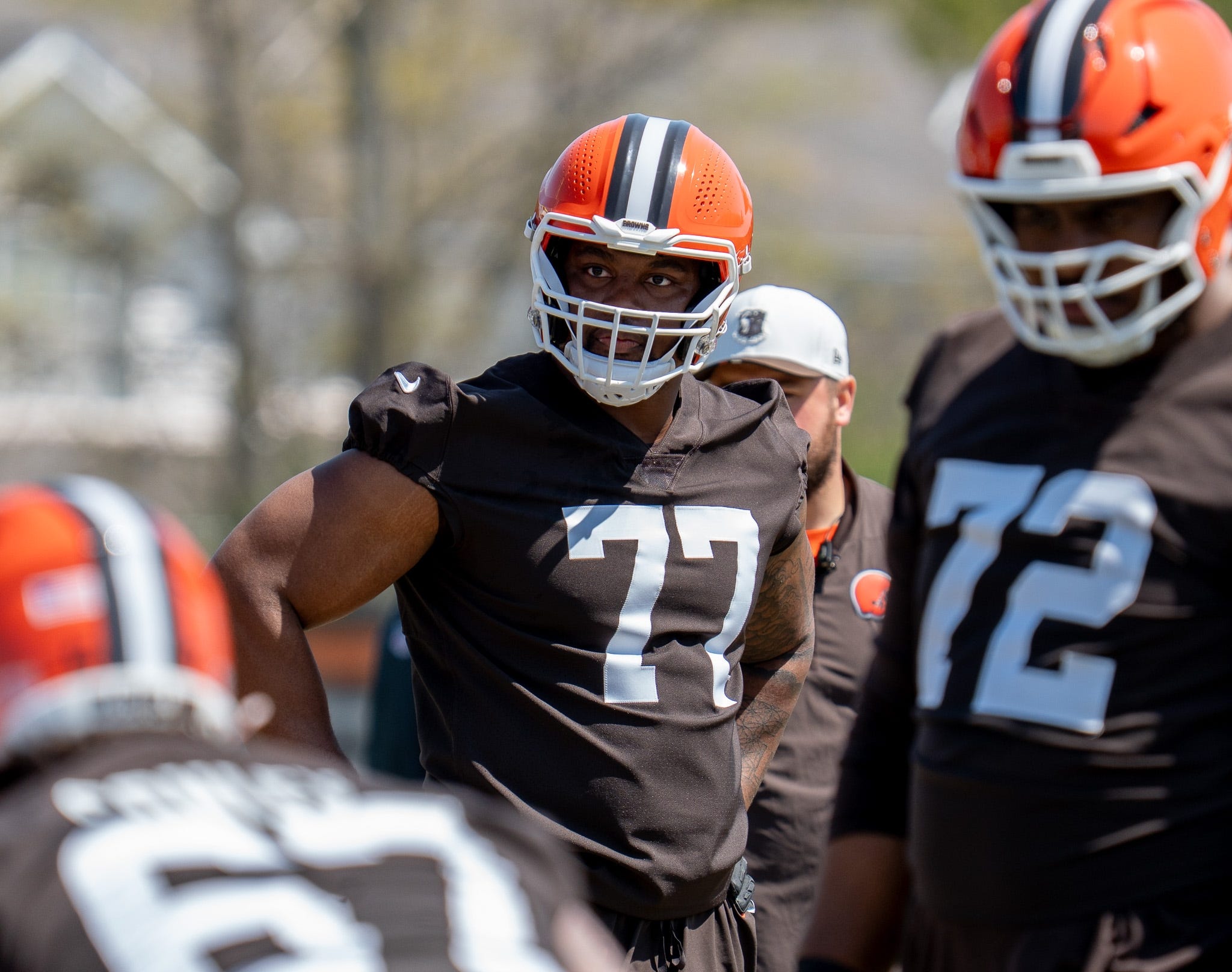
Zion Johnson waits to run a drill at the Browns mini camp in Berea on April 21, 2026.
Building 25,000 new hotel rooms is not a construction project. It is a decade long capital deployment decision worth billions in private investment. Hotel developers now face a brutal question. Does Brook Park, Ohio, justify that bet? Los Angeles, which is scheduled to host its next Super Bowl at SoFi Stadium in 2027, already has more than 100,000 rooms. Cleveland’s mixed use district plans include just a few hundred hotel rooms on site. The gap between that number and 25,000 is where ambition meets market reality. And competing cities are already doing the math.
Nashville, Chicago, and Buffalo Are Building Too
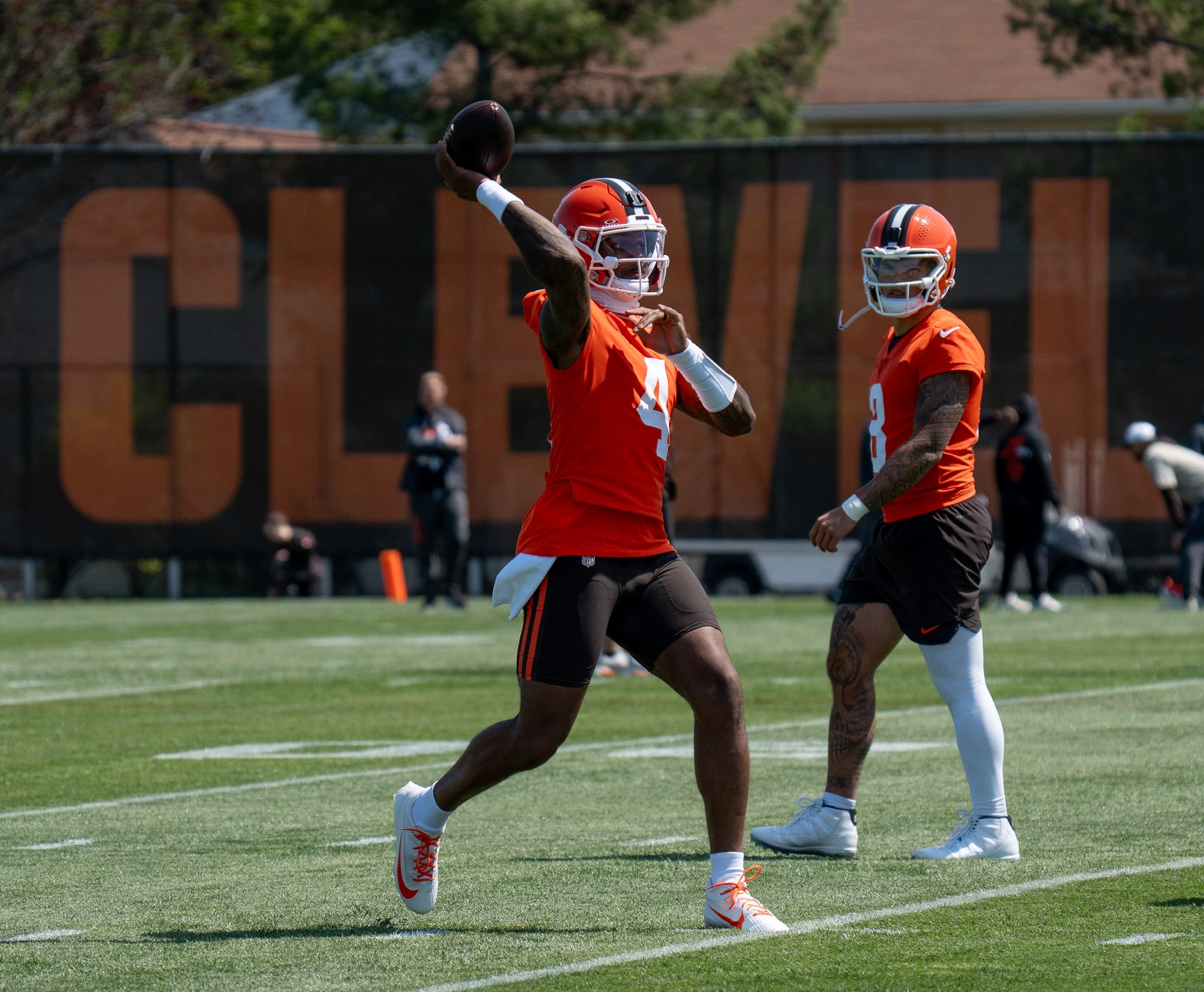
Quarterbacks Deshaun Watson and Dillon Gabriel practice together at the Browns mini camp in Berea on April 21, 2026.
Cleveland is not the only city planning or building new NFL stadiums. Nashville and Buffalo are under construction, and Chicago is actively pursuing a new venue, all of them targeting the same 2030 and beyond Super Bowl slots. The NFL announces host cities three to four years in advance. Super Bowls through 2029 are locked in Santa Clara, Los Angeles, and Atlanta. Every city with a new stadium and existing hotel infrastructure jumps the line. Cleveland is building the best house on the block while the neighbors already have the plumbing.
The System Behind the Curtain
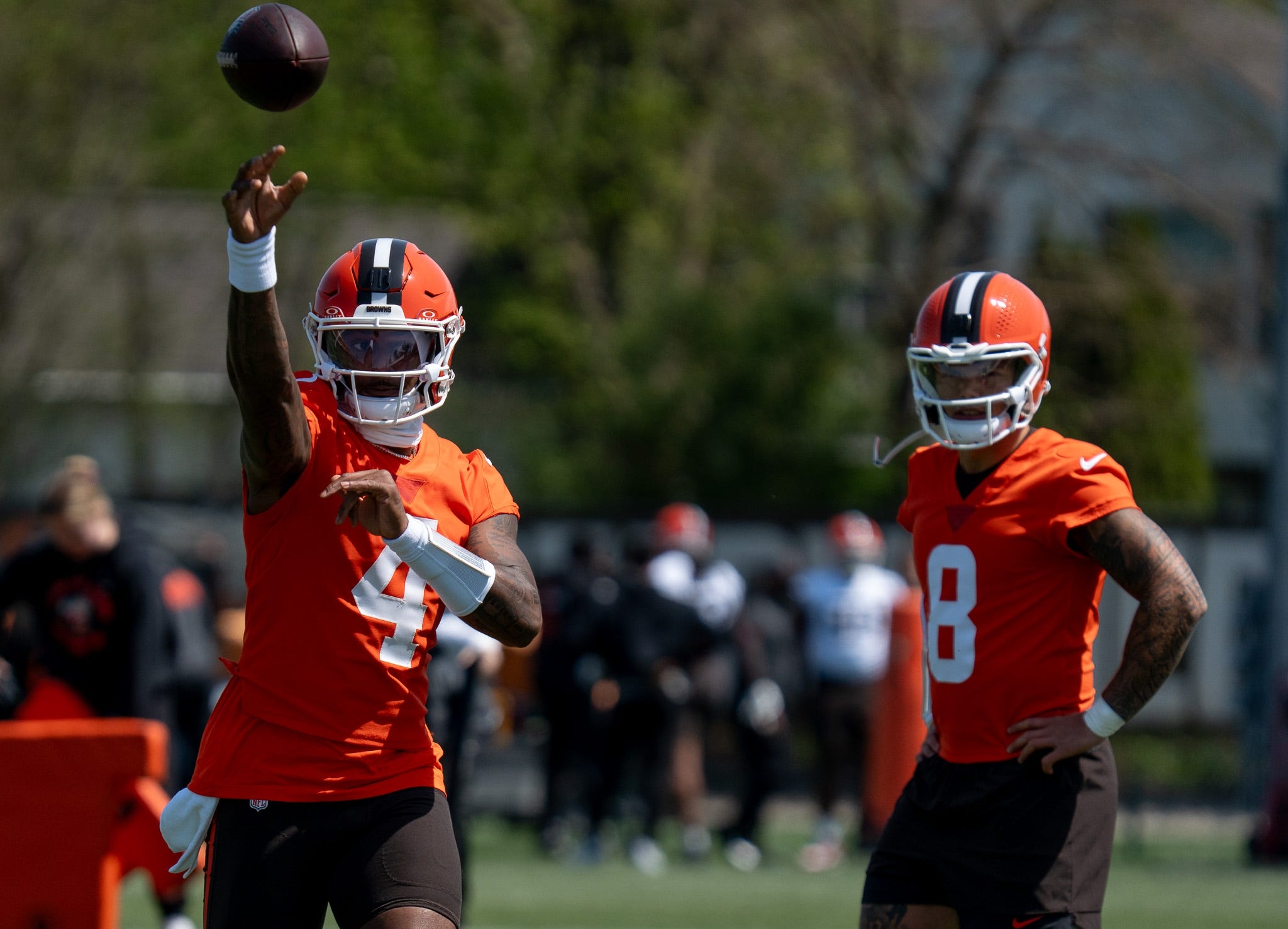
Quarterbacks Deshaun Watson and Dillon Gabriel practice together at the Browns mini camp in Berea on April 21, 2026.
The NFL does not just pick cities. It dictates terms. Host cities typically provide free venues for league functions, free parking, and sales tax exemptions. The league retains essentially all of the ticket revenue. The host absorbs billions in infrastructure costs. The NFL profits. One policy framework applied to every host market produces the same mechanism and the same result. Cities compete to subsidize the league’s most profitable event. Cleveland’s stadium cost $2.6 billion. The infrastructure to make it Super Bowl eligible could cost billions more. And the NFL keeps the ticket sales regardless.
Goodell Said the Quiet Part Out Loud
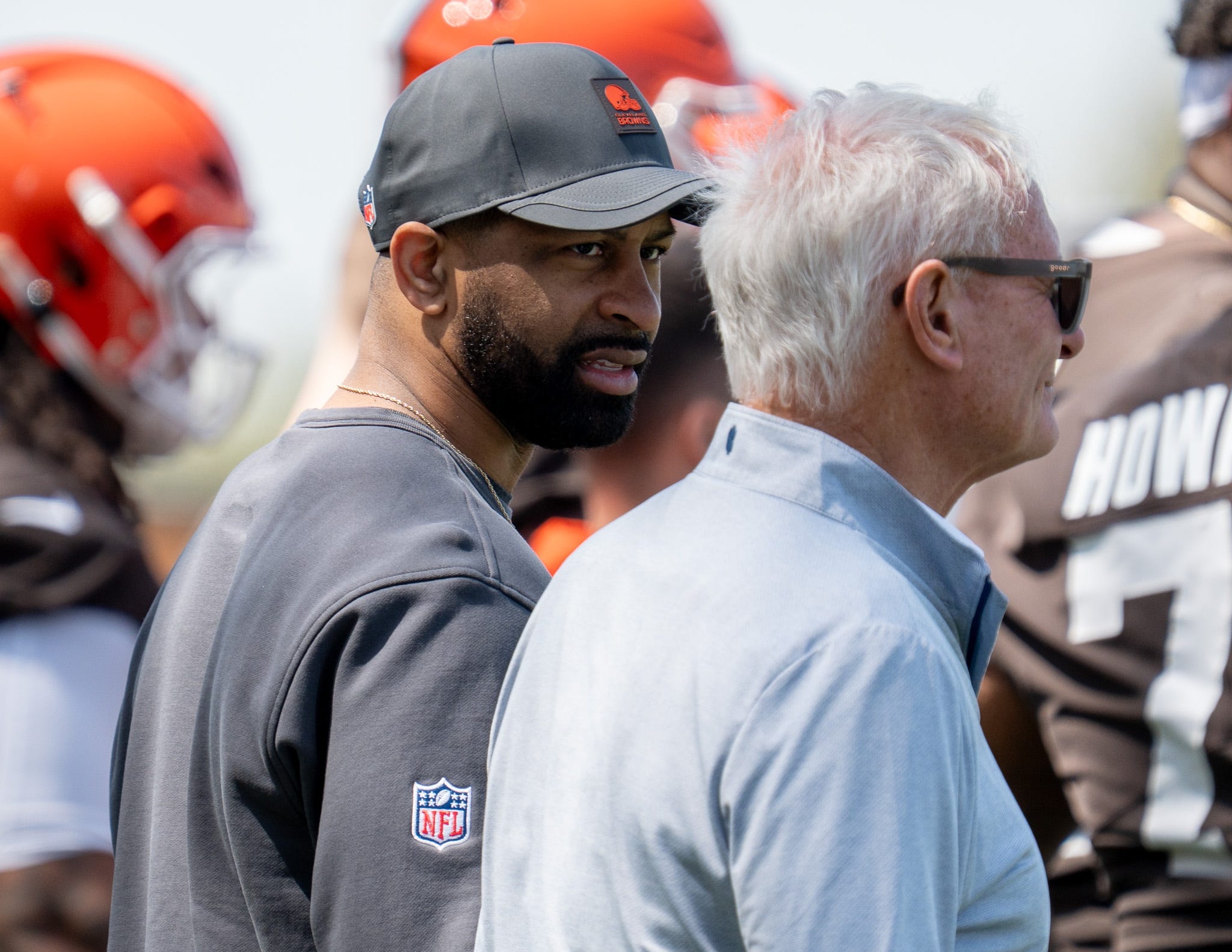
Andrew Berry, general manager, and Jimmy Haslam, owner, chat at the Browns mini camp in Berea on April 21, 2026.
“This stadium is certainly Super Bowl quality. The question is the community and [surrounding infrastructure],” Goodell said. Read that again. He did not say “when” Cleveland hosts a Super Bowl. He said the test is whether the entire region transforms around the stadium. That is a commissioner telling a city its $2.6 billion investment is the starting line, not the finish. The playing field sits 80 feet underground, with ODOT waiving a 150 foot height limit after a consultant determined the stadium would not affect flight paths. Even the architecture bends to infrastructure constraints.
The Funding Is Stuck in Court
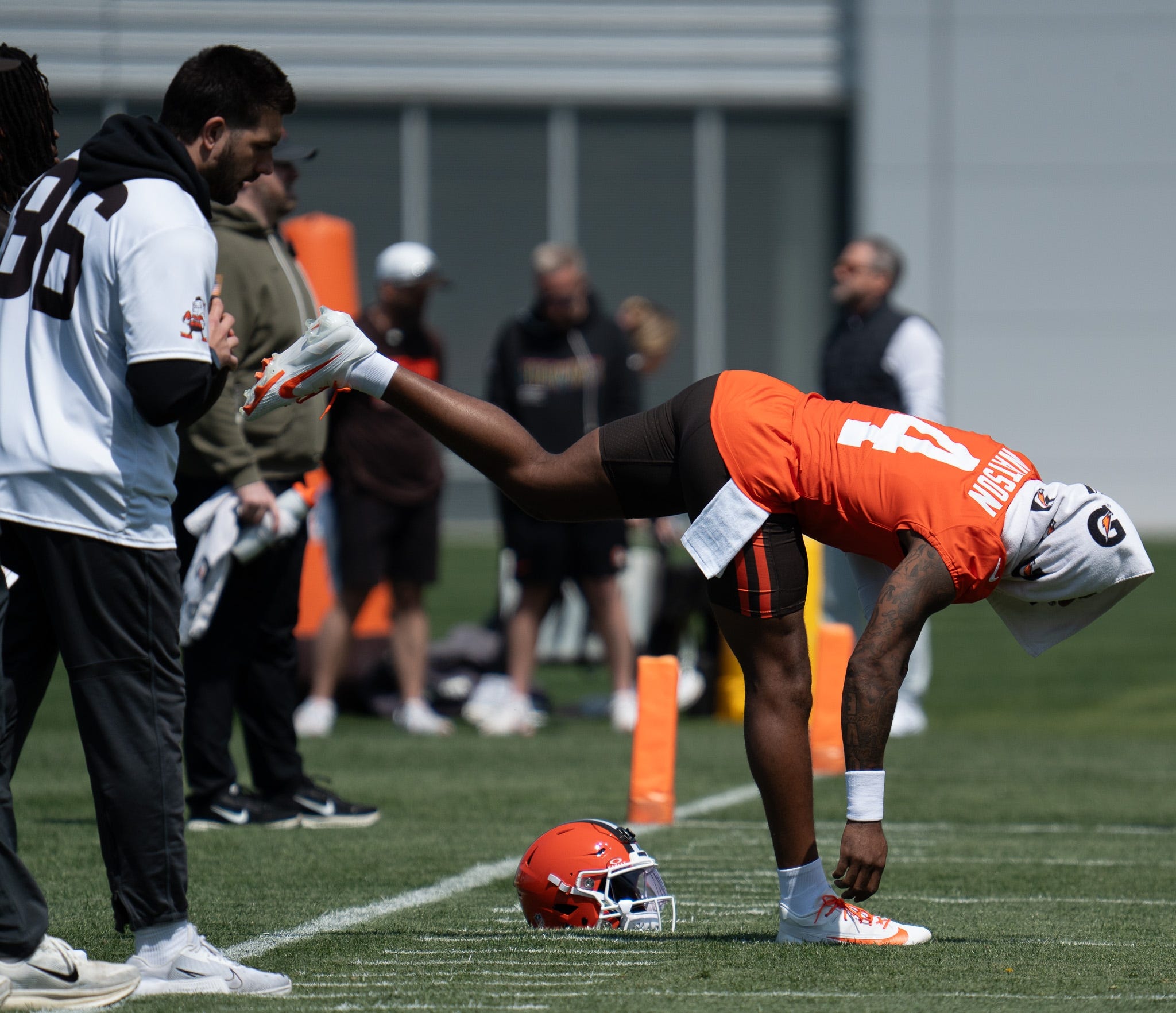
Deshaun Watson stretches at the start of the Browns mini camp in Berea on April 21, 2026.
Ohio committed $600 million in state funding. That money is frozen in a lawsuit challenging whether the state can redirect roughly $1 billion from its Unclaimed Funds Account to sports facilities, and a magistrate paused the plan in March 2026. Meanwhile, Brook Park has not formally approved its $245 million commitment. The Haslam Sports Group covers $1.76 billion plus overruns, but public funding gaps create timeline risk for the entire mixed use district. Miami and New Orleans have each hosted 11 Super Bowls. Cleveland has hosted zero. The cities that win this race resolved their funding decades ago.
The Old Stadium’s Fate
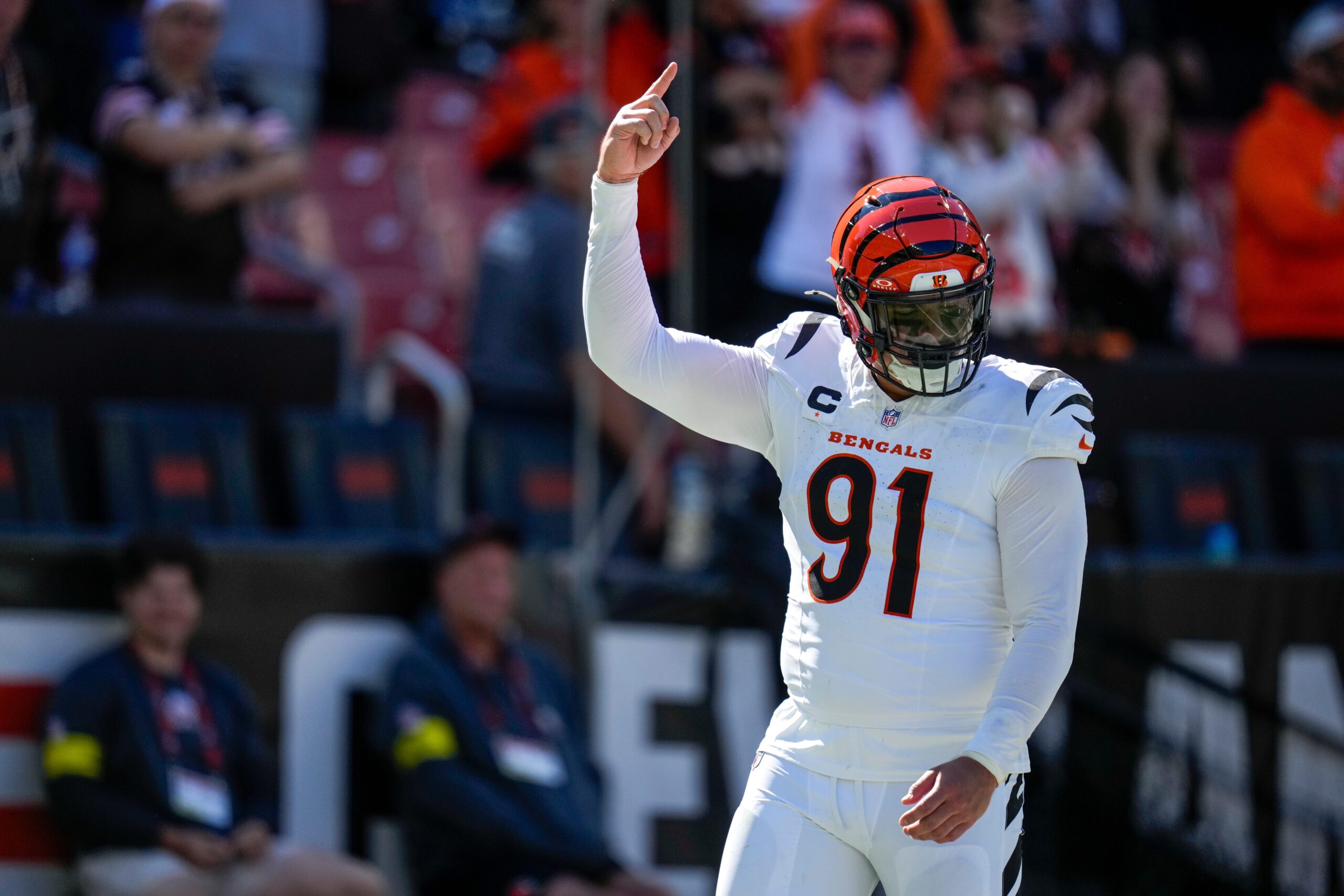
Cincinnati Bengals defensive end Trey Hendrickson (91) celebrates as time winds down in the fourth quarter of the NFL Week 1 game between the Cleveland Browns and the Cincinnati Bengals at Huntington Bank Field in Cleveland on Sunday, Sept. 7, 2025. The Bengals begin the season with a 17-16 win over the Browns.
The current lakefront Huntington Bank Field, which opened in 1999, becomes obsolete once the Browns move in 2029. Cleveland officials are already discussing lakefront redevelopment scenarios that would repurpose the prime shoreline real estate for mixed use housing, parks, or commercial space. That transition is its own political fight, because the lakefront site was built with public money and is tied to land use agreements that predate the current lease. The Brook Park move does not just build a new stadium. It forces a civic decision about what the lakefront becomes when football leaves.
Who Wins and Who Pays
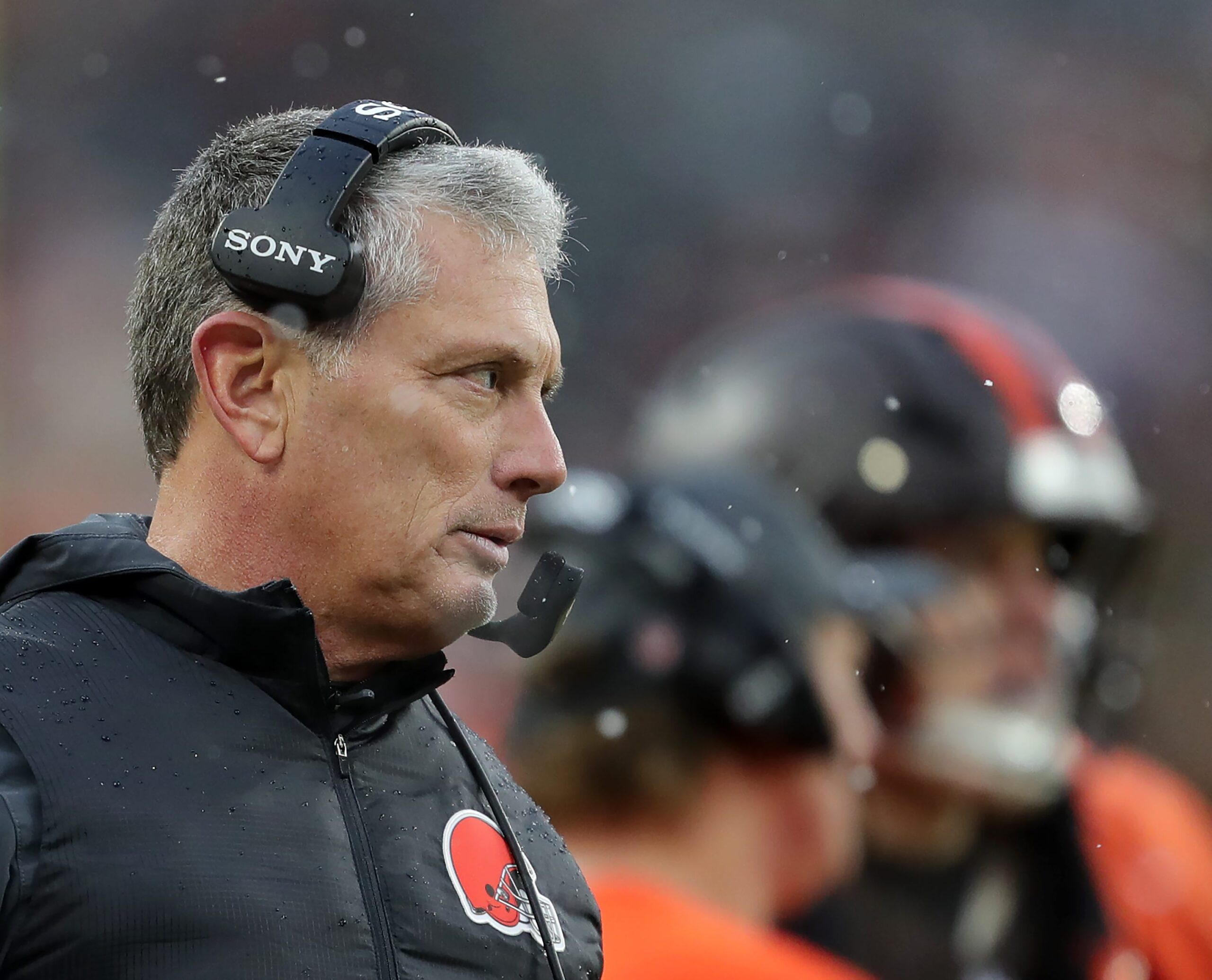
Cleveland Browns defensive coordinator Jim Schwartz works the sideline during the second half of an NFL football game at Huntington Bank Field, Dec. 7, 2025, in Cleveland, Ohio.
The Haslam family wins regardless. They get a world class stadium whether or not the Super Bowl ever arrives. Construction firms win with more than 6,000 jobs. Politicians win with groundbreaking photos. Hotel developers in Las Vegas and Miami win by default as Cleveland’s infrastructure gap persists. Cleveland taxpayers and fans absorb the risk. They funded the ambition. They will wait the longest for the payoff. Think about that. $2.6 billion committed, $600 million frozen, $245 million unapproved, and the biggest prize still requires billions more in private hotel investment.
The 2035 Watch: Cleveland’s Realistic Super Bowl Window
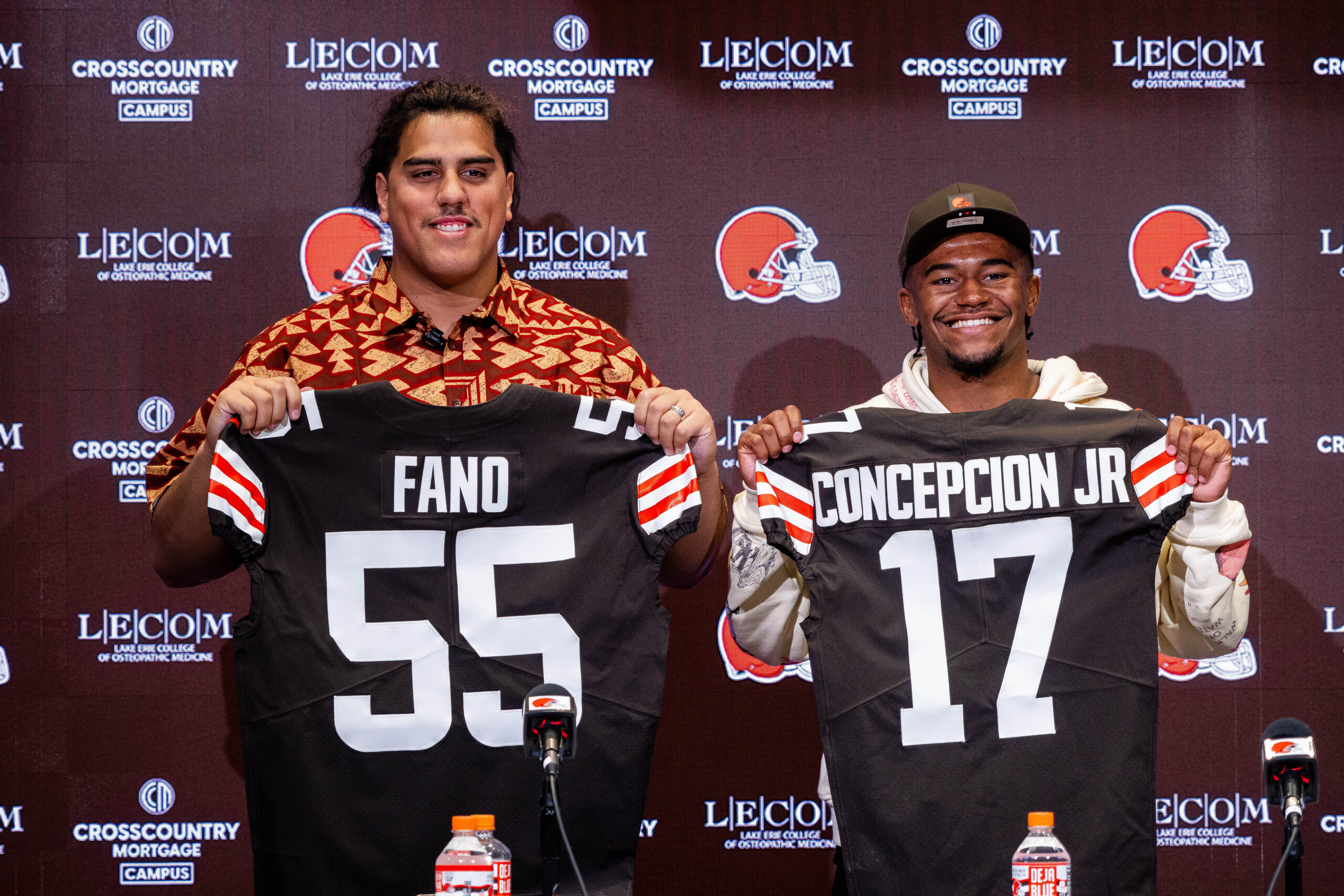
Apr 24, 2026; Berea, OH, USA; Cleveland Browns first round draft picks Spencer Fano, left, and KC Concepcion hold their new jerseys during an introductory press conference at CrossCountry Mortgage Campus. Mandatory Credit: Ken Blaze-Imagn Images
Super Bowls are awarded through 2029, with Los Angeles, Atlanta, and Las Vegas on deck. That means the earliest realistic opening for Cleveland is the 2030 game, but hotel capacity alone rules that out. Fan forums and industry observers are already circling Super Bowl 70 in early 2036 as the first plausible Cleveland shot, assuming hotel construction begins in earnest within 24 months. Miss that window and Nashville, Chicago, or a returning host like Dallas or Tampa likely takes the slot. The clock for Cleveland is not theoretical. It has a date.
The Cascade Isn’t Finished
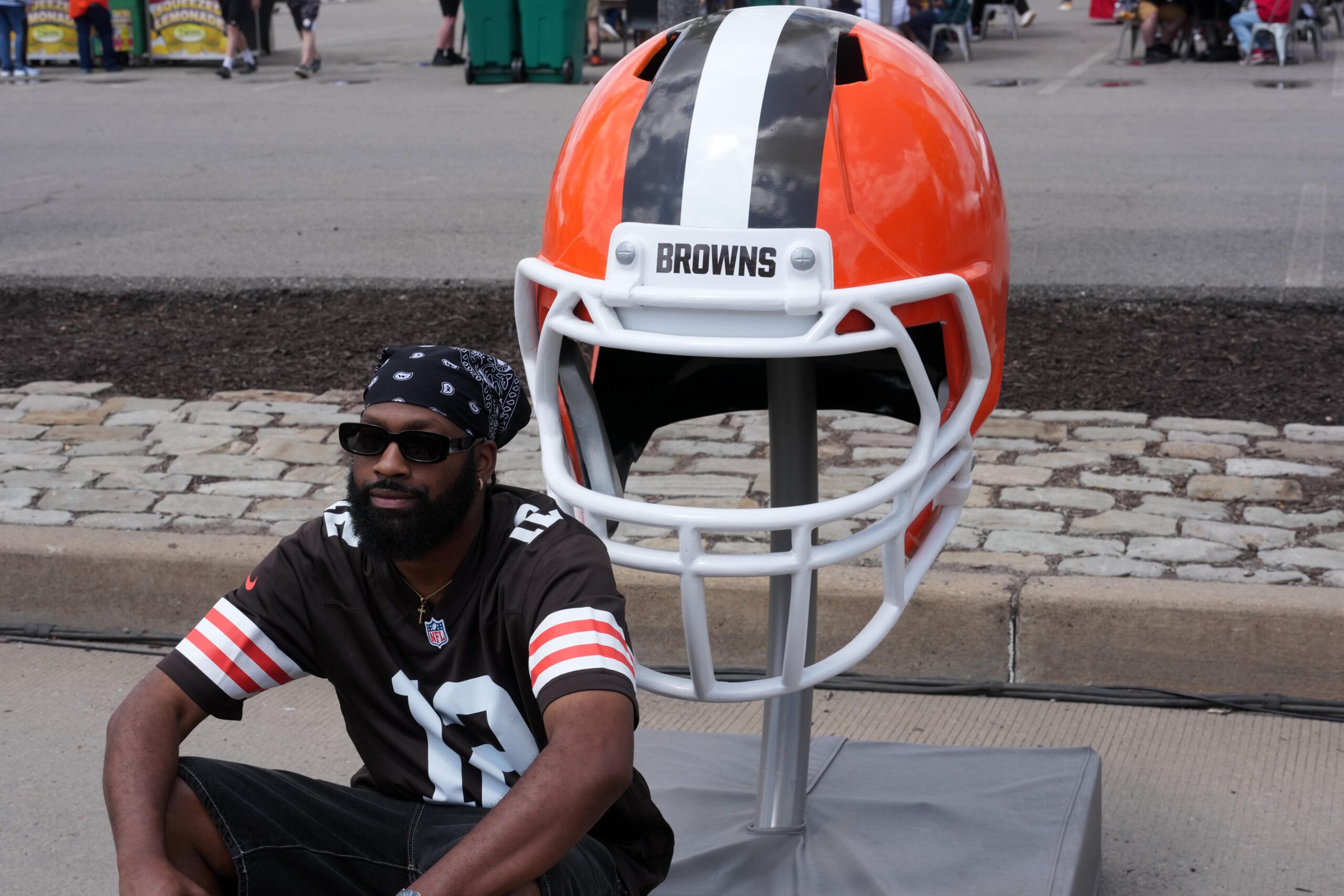
Apr 23, 2026; Pittsburgh, PA, USA; A Cleveland Browns fan poses with large helmet at the NFL raft Experience at Acrisure Stadium. Mandatory Credit: Kirby Lee-Imagn Images
The stadium opens in 2029. The hotel market could take eight to twelve years to catch up. By then, Nashville and Chicago may have locked down multiple Super Bowl rotations. Cleveland’s realistic window might not open until the mid 2030s, if competing markets do not fill every slot first. Goodell did not open a door. He published a gap analysis and handed Cleveland the receipt. The stadium was always the easy part. The region surrounding it is the test, and that test just started a clock most fans do not realize is already running.
So here is the question Cleveland has to answer out loud. Is a $2.6 billion stadium worth building if the Super Bowl never actually shows up, and would you still back the deal knowing the hotel bill is coming next?
Sources:
Associated Press, “Browns break ground on $2.4 billion stadium targeted for ’29,” April 30, 2026.
Cleveland Browns, “Browns officially break ground on new Huntington Bank Field,” April 30, 2026.
Sports Illustrated, “Roger Goodell Says Browns May Have to Wait to Host Super Bowl Despite New Stadium,” April 29, 2026.
The Stadium Business, “Browns break ground on $2.6bn ‘Super Bowl-quality’ stadium,” May 1, 2026.
Yahoo Sports, “Browns stadium cost to rise up to $2.6 billion, according to reports,” March 26, 2026.
Fox Sports, “Judge pauses Ohio’s plan to fund new Browns stadium with unclaimed funds,” March 8, 2026.