
The name echoed through the draft hall on a night loaded with trades and surprises, but this one landed differently. A kid from Cologne, Germany, heard his name called by the Houston Texans with the 59th overall pick. Not a kicker. Not a long snapper plucked from some international publicity stunt. A tight end. A 23-year-old who spent his early years an ocean away from a single Friday night football game. Marlin Klein walked to the stage carrying an entire continent’s credibility on his shoulders.
From Cologne to the Combine

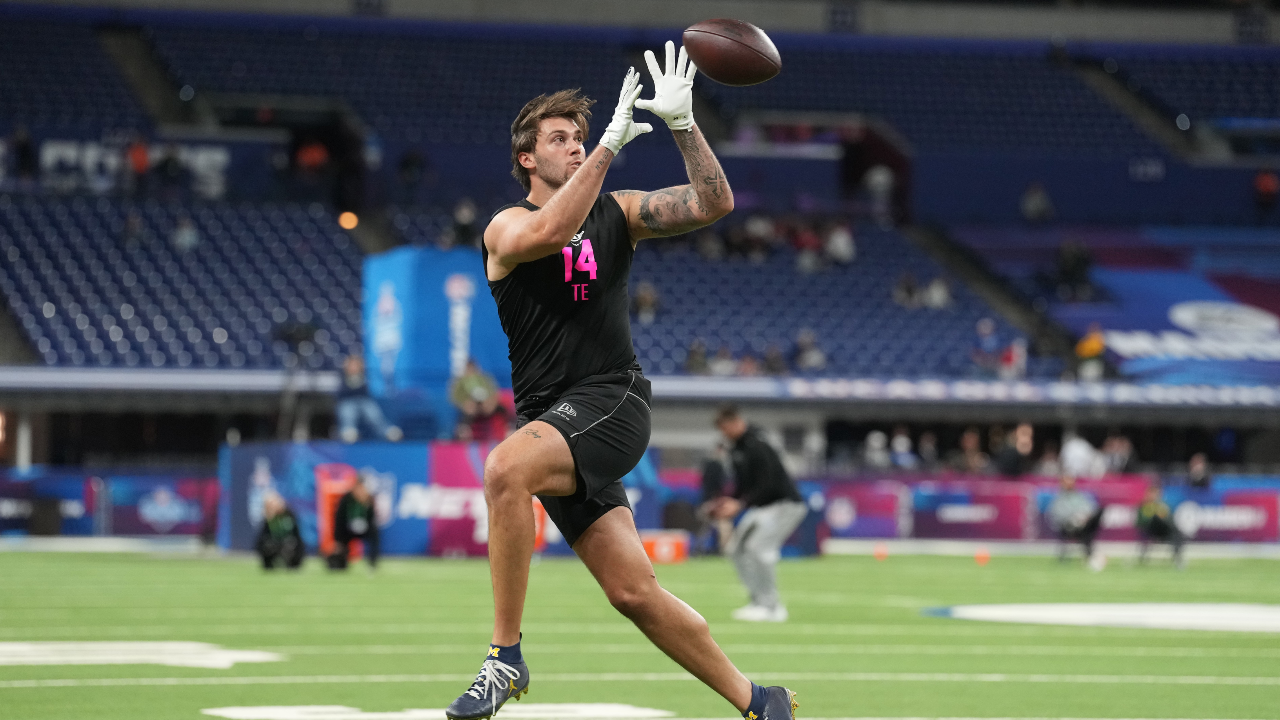
Feb 27, 2026; Indianapolis, IN, USA; Michigan tight end Marlin Klein (TE14) during the NFL Scouting Combine at Lucas Oil Stadium. Mandatory Credit: Kirby Lee-Imagn Images
Klein grew up playing for the Cologne Crocodiles youth team, a world where American football exists in borrowed gymnasiums and borrowed time slots. He later relocated to the United States through a boarding school opportunity that most European teenagers never hear about, let alone pursue. From there, he earned a scholarship to Michigan, one of the most storied programs in college football, where he won a national championship in 2023. That pipeline, from a German youth league to the Big Ten, barely existed a generation ago. Klein didn’t just travel it. He validated it.
The Measurables That Changed the Room
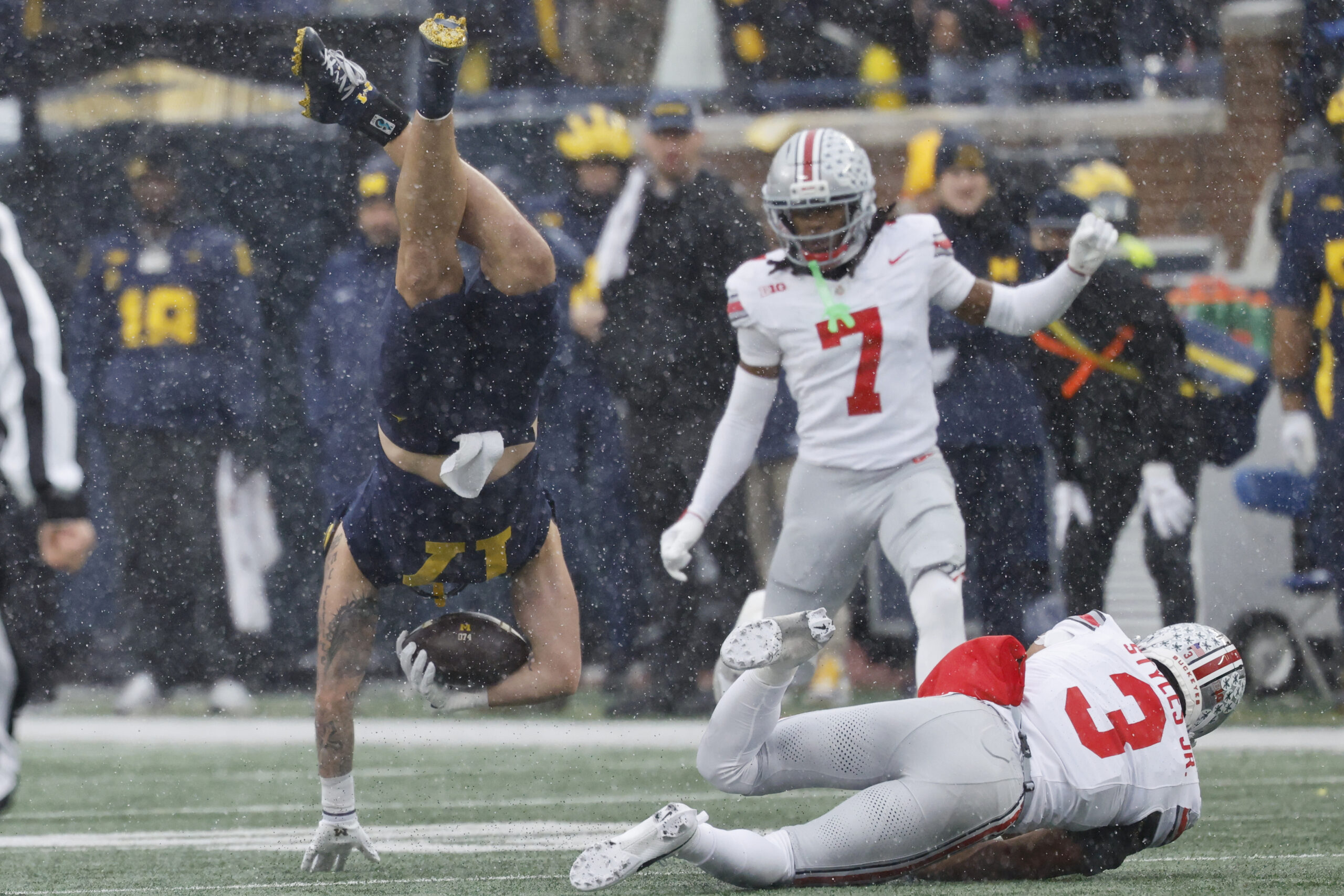
Nov 29, 2025; Ann Arbor, Michigan, USA; Michigan Wolverines tight end Marlin Klein (17) is tackled by Ohio State Buckeyes cornerback Lorenzo Styles Jr. (3) at Michigan Stadium. Mandatory Credit: Rick Osentoski-Imagn Images
Scouting reports consistently flagged Klein’s physical tools as the reason his stock climbed into Day 2 territory. He measured 6-foot-6 and 250 pounds with a 4.61-second 40-yard dash, a rare combination of length and straight-line speed for an in-line tight end. PFF ranked him No. 138 on its big board heading into the draft, projecting him as a TE2 with blocking upside if he continued to add weight and strength. NFL Draft Buzz rated him 82.4 overall and listed him as the No. 11 tight end in the class. Those numbers made the 59th pick less of a reach than some initial reactions suggested.
The Myth of the American Monopoly
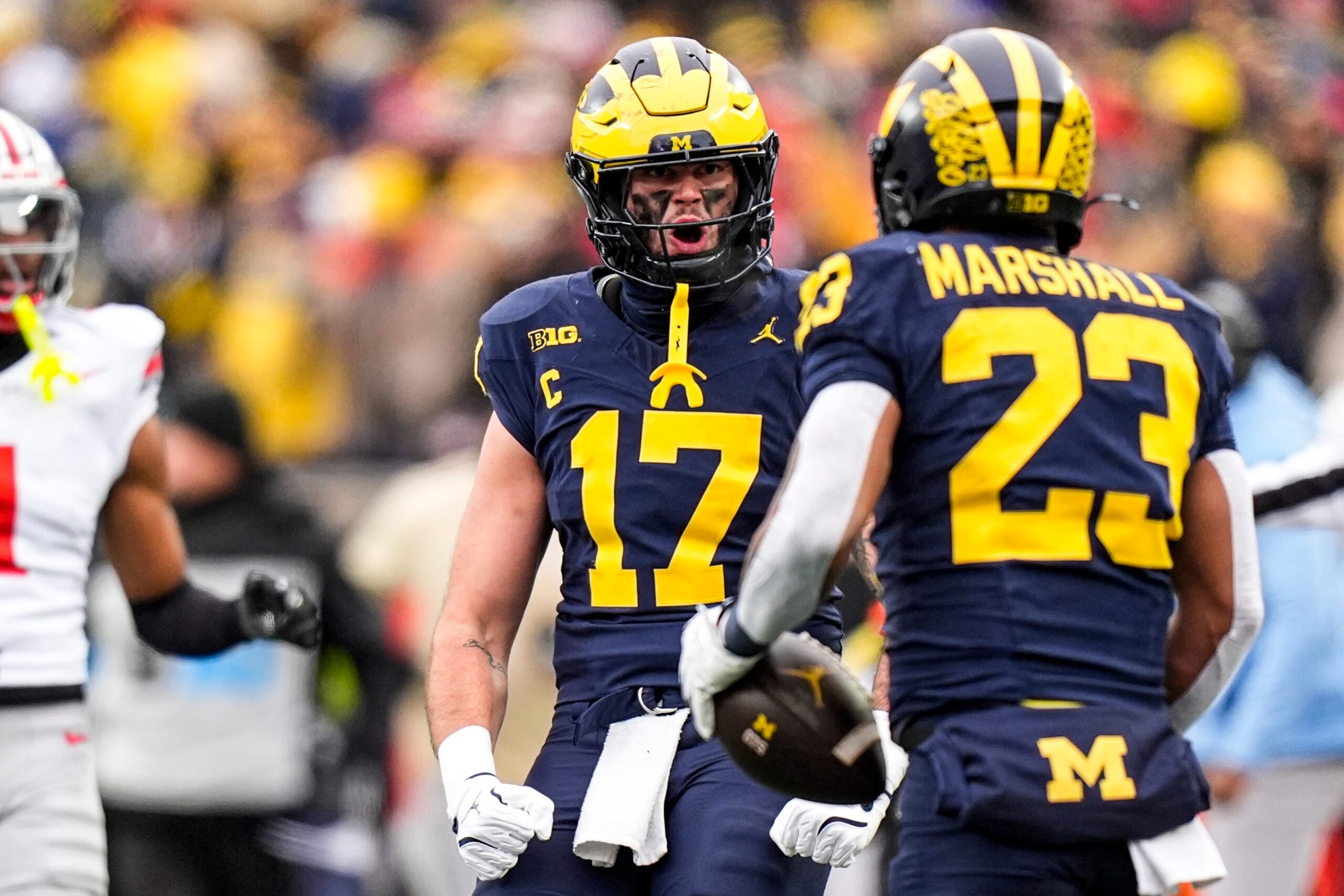
Michigan tight end Marlin Klein (17) celebrates a play made by running back Jordan Marshall (23) against Ohio State during the first half at Michigan Stadium in Ann Arbor on Saturday, Nov. 29, 2025.
The comfortable assumption has always been simple. Real NFL talent comes from Texas high schools, Florida camps, and SEC recruiting wars. International players were treated as curiosities, not commodities. But a meaningful number of German-born players have logged NFL regular-season snaps over the decades, and that number has grown steadily in the modern era. That reality alone cracks the foundation of the domestic-only myth. Klein’s second-round selection didn’t arrive in a vacuum. It arrived on a runway that Sebastian Vollmer paved at pick 58 in 2009 and Björn Werner widened at pick 24 in 2013.
Where Klein Actually Ranks

Feb 26, 2026; Indianapolis, IN, USA; Michigan tight end Marlin Klein (TE14) speaks to members of the media during the NFL Combine at the Indiana Convention Center. Mandatory Credit: Jacob Musselman-Imagn Images
Some outlets rushed to call Klein the highest-drafted German player in NFL history. That claim collapses under basic arithmetic. Werner went 24th overall to the Colts in 2013. Vollmer’s 2009 selection by the Patriots at pick 58 still sits one slot ahead of Klein at 59. Klein is officially the highest-drafted German player since Werner in 2013. Three Germans across seventeen years have now cracked the top 60. Each selection has kept Germany in the national draft conversation, replacing the old truth with a trajectory nobody can ignore.
The Hidden Development Machine
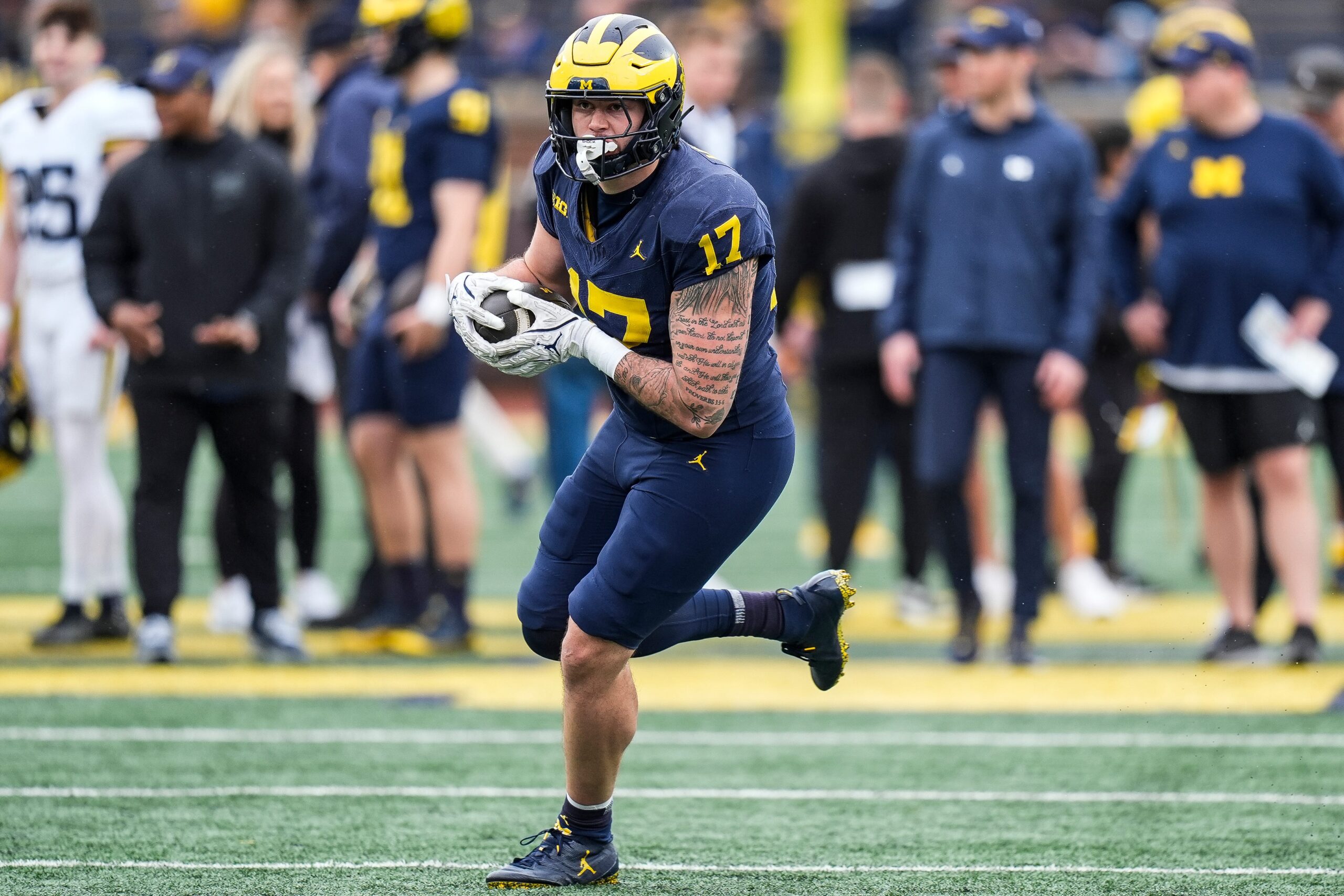
Michigan tight end Marlin Klein (17) warm up before the spring game at Michigan Stadium in Ann Arbor on Saturday, April 19, 2025.
The mechanism behind Klein’s rise isn’t raw athleticism alone. European youth sports culture builds something American high school football often skips. Multi-sport athletes with soccer footwork and an obsessive tactical education arrive on the gridiron with unusual body control. Klein’s transition from the Cologne Crocodiles to a U.S. boarding school mirrors a development model that treats relocation as a feature, not a sacrifice. The NFL’s International Player Pathway and its Munich and Frankfurt regular-season games have accelerated broader German interest in the sport. Scouting networks now stretch into Germany the way they once stretched into junior colleges. Houston didn’t gamble on Klein. Houston bought into a system.
The Numbers Behind the Bet
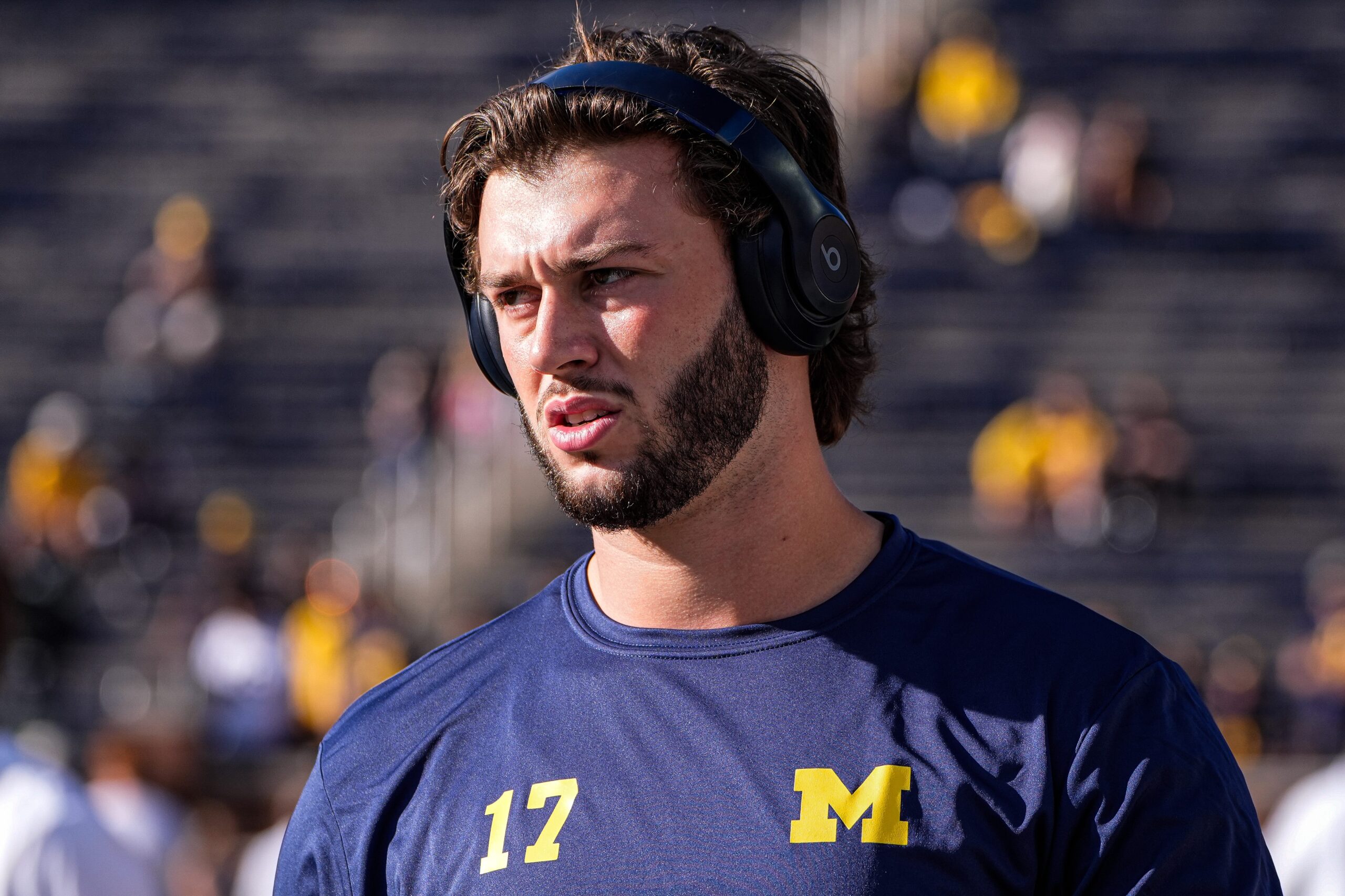
Michigan tight end Marlin Klein (17) warms up ahead of the New Mexico game at Michigan Stadium in Ann Arbor on Saturday, August 30, 2025.
A second-round pick carries enormous financial weight. The Texans committed a premium draft asset to a player whose football career started on a different continent. Of the German-born players to log NFL regular-season snaps, the overwhelming majority arrived as undrafted free agents or through international pathway programs. Only a small handful, namely Vollmer, Werner, and now Klein, have earned selections inside the first 60 picks in the modern era. Klein joining that group means Houston’s front office saw a talent floor high enough to justify Round 2 capital on an internationally developed prospect. That calculus would have been unthinkable even a decade ago.
How He Fits the Texans Depth Chart
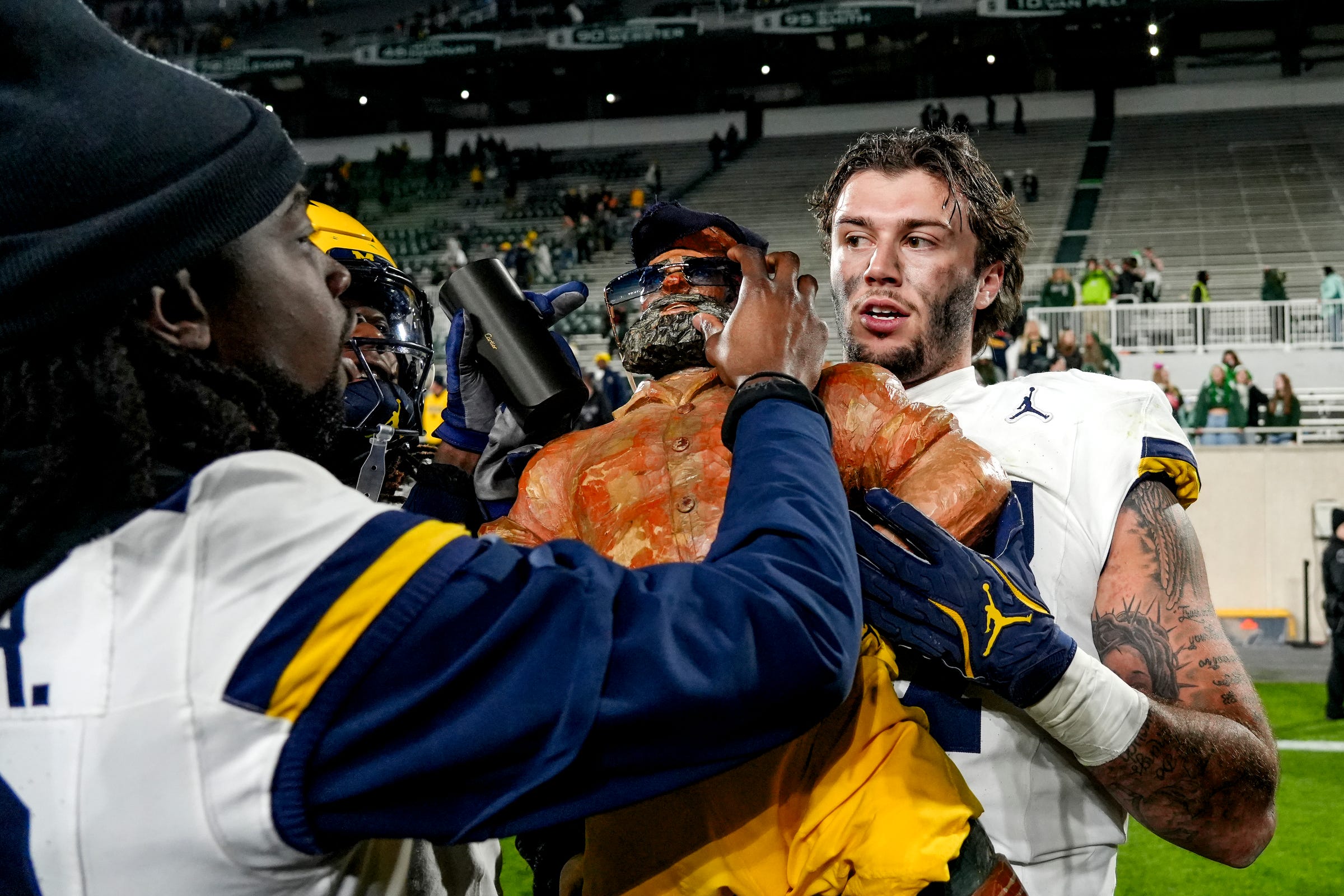
Michigan State’s Michigan’s Rod Moore, left, puts sunglasses on the Paul Bunyan Trophy as teammate Marlin Klein holds it after beating the Spartans on Saturday, Oct. 25, 2025, at Spartan Stadium in East Lansing.
Houston’s tight end room entering 2026 left room for a developmental body with Klein’s frame, and the front office publicly framed the pick as a long-term investment rather than an immediate starter play. PFF’s projection of a TE2 with blocking upside aligns cleanly with a depth role behind the Texans’ veteran starter. The team’s draft analysts explicitly cited Klein’s ceiling and room to add weight as the core of the evaluation. That framing matters. If Klein is treated as a two-year developmental project, the pick reads very differently than if he were expected to produce as a rookie.
Ripple Effects Across the League
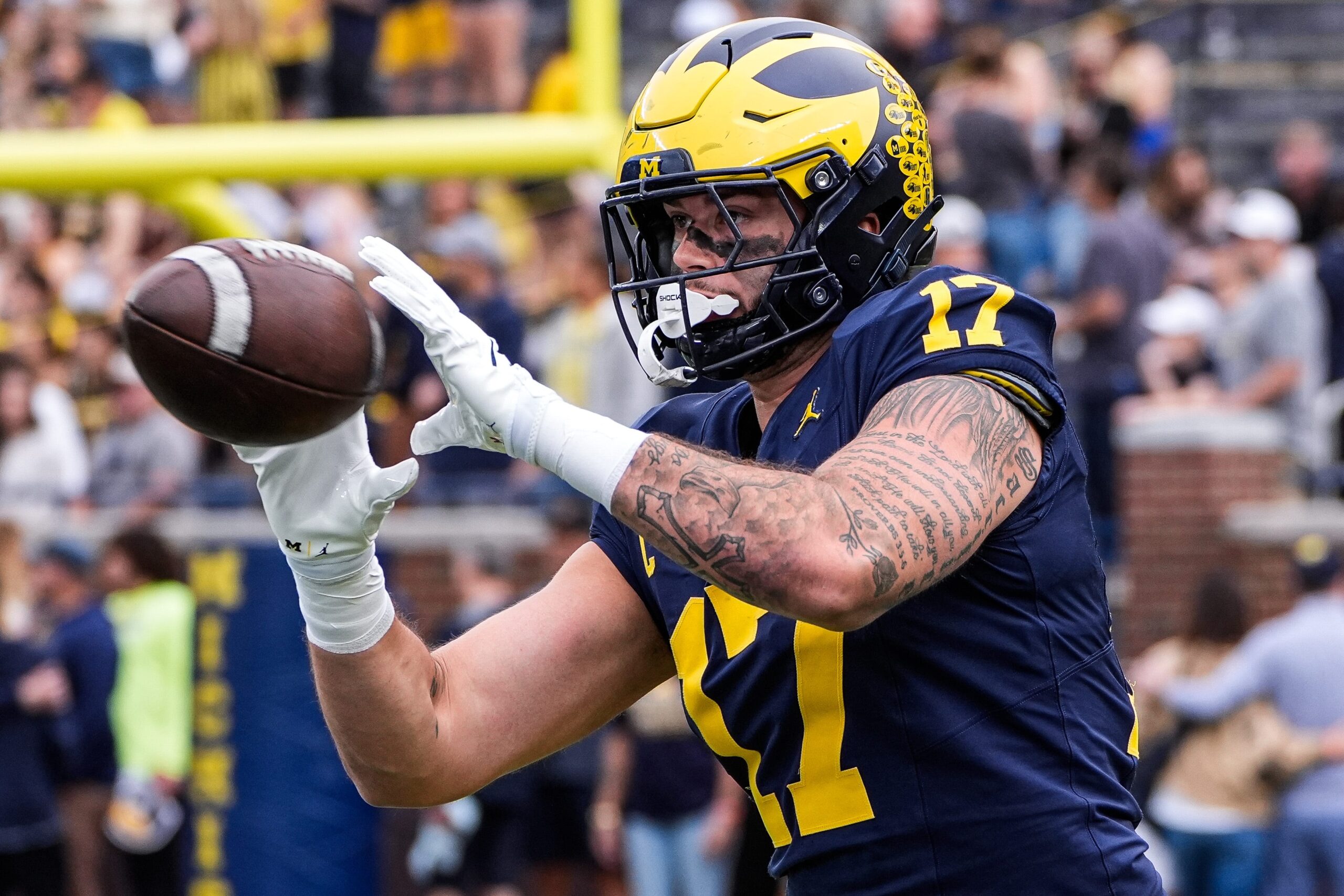
Michigan tight end Marlin Klein (17) warms up before the Central Michigan game at Michigan Stadium in Ann Arbor on Saturday, Sept. 13, 2025.
When a franchise spends a second-round pick on a German-developed tight end, every other front office recalibrates. International scouting budgets get harder to cut. European youth programs gain leverage when negotiating with American prep schools. The Vollmer-to-Werner-to-Klein trajectory suggests to general managers that Germany can produce repeatable NFL talent rather than one-off anomalies. Programs in Cologne, Frankfurt, and Munich suddenly look less like charity outreach and more like potential feeder systems. One pick can reshape how organizations allocate attention and money overseas.
The International Player Pathway Context
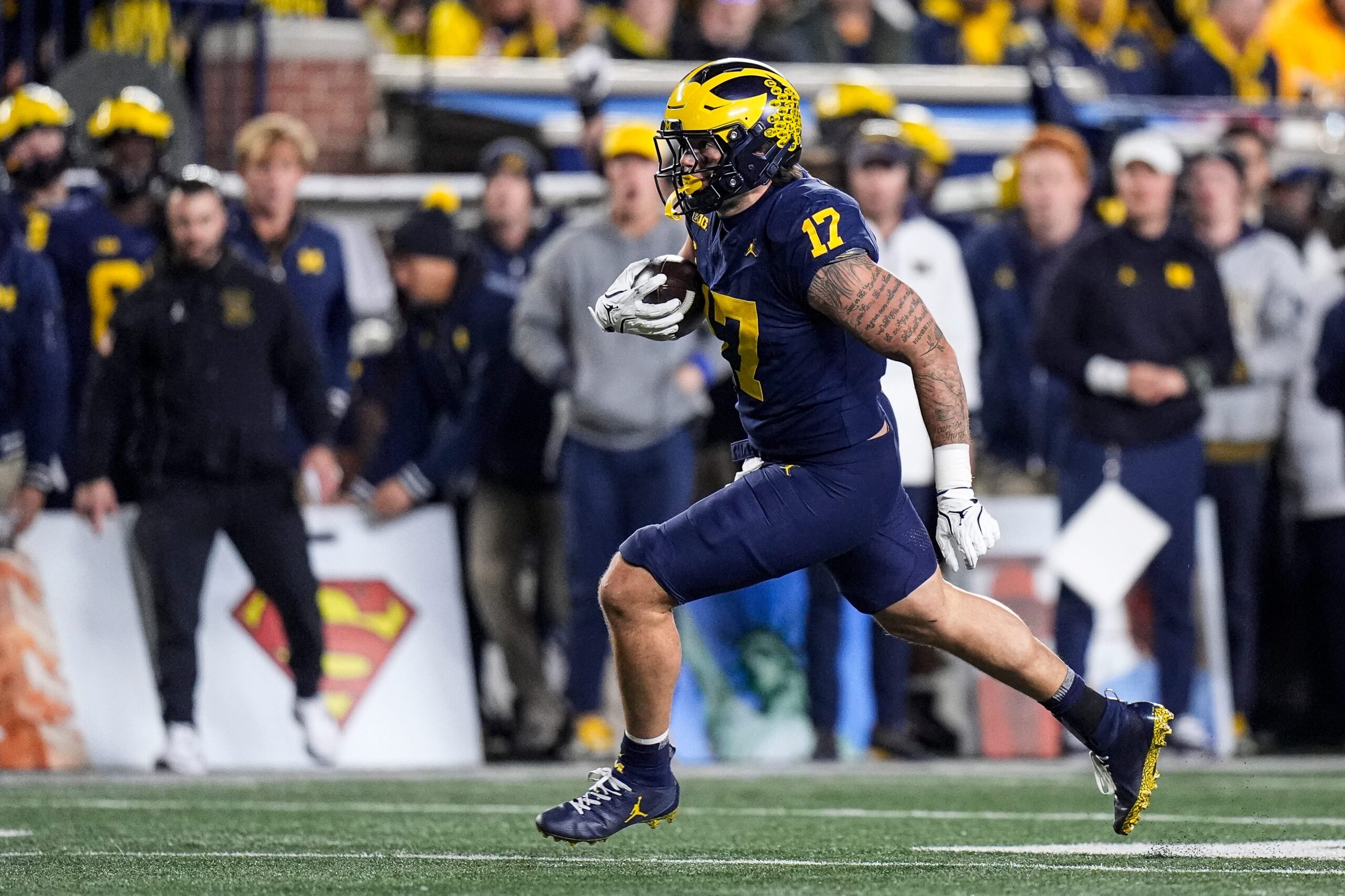
Michigan tight end Marlin Klein (17) runs for a first down against Purdue during the first half at Michigan Stadium in Ann Arbor on Saturday, November 1, 2025.
Klein’s selection lands against a backdrop the league has deliberately cultivated. The NFL’s International Player Pathway program, combined with regular-season games staged in Munich and Frankfurt in recent seasons, has pushed American football deeper into German consciousness than at any point since NFL Europe folded. German-raised receiver Amon-Ra St. Brown has become one of the league’s most productive receivers and a cultural bridge for German fans. Klein’s second-round selection extends that momentum from the free-agent and late-round margins into premium draft capital. The pathway is no longer theoretical.
A New Rule, Not an Exception
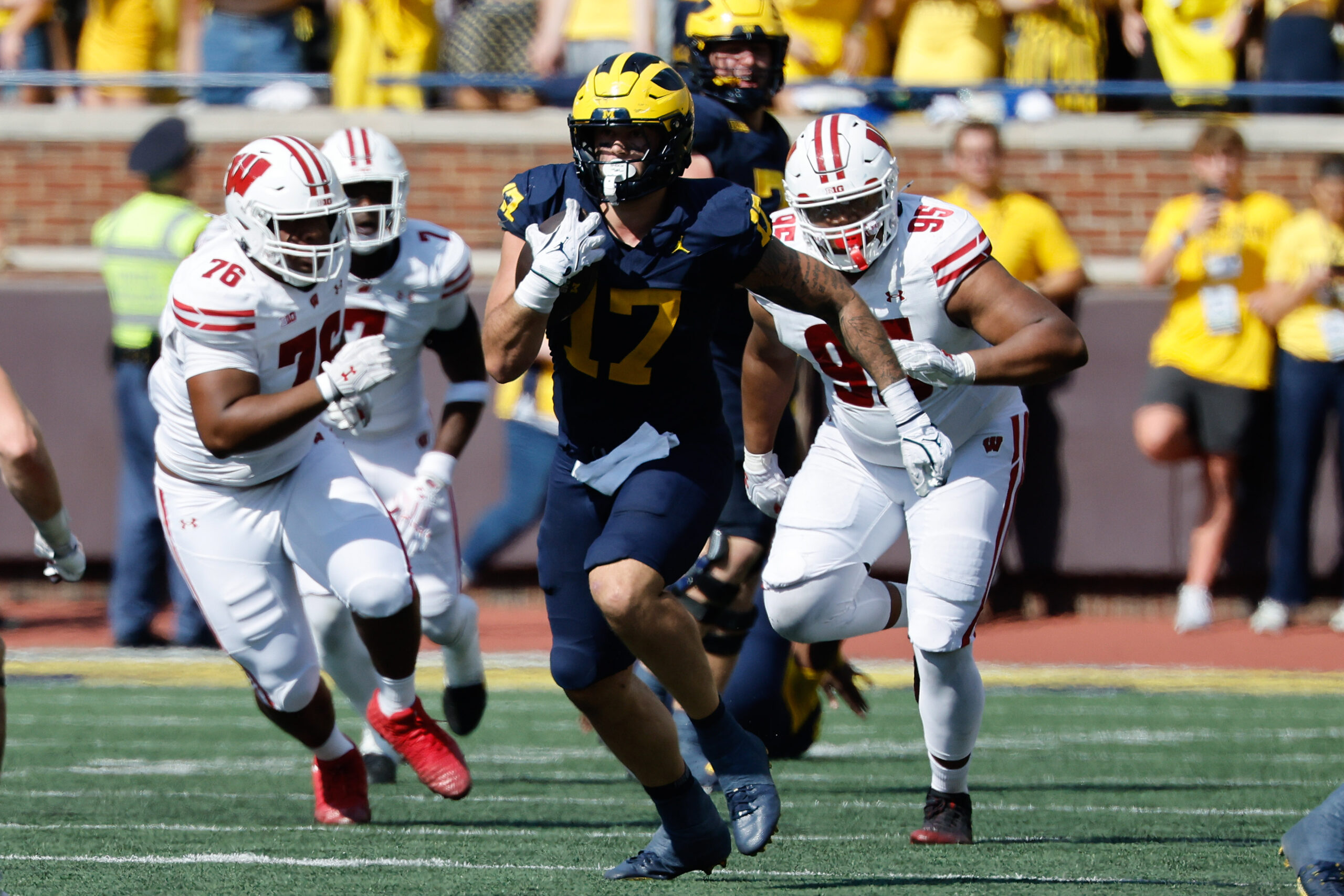
Oct 4, 2025; Ann Arbor, Michigan, USA; Michigan Wolverines tight end Marlin Klein (17) runs the ball in the second half against the Wisconsin Badgers at Michigan Stadium. Mandatory Credit: Rick Osentoski-Imagn Images
Vollmer in 2009 looked like a fluke. Werner in 2013 looked like confirmation. Klein in 2026 looks like a precedent. Three German-developed players drafted in premium positions across seventeen years establishes something no single selection could. It establishes a pattern. Once you see the pattern, the story changes entirely. Klein’s pick isn’t about one kid from Cologne beating the odds. It’s evidence that European football development can produce draft-ready talent on a repeatable cycle.
What the Scouts Actually Saw
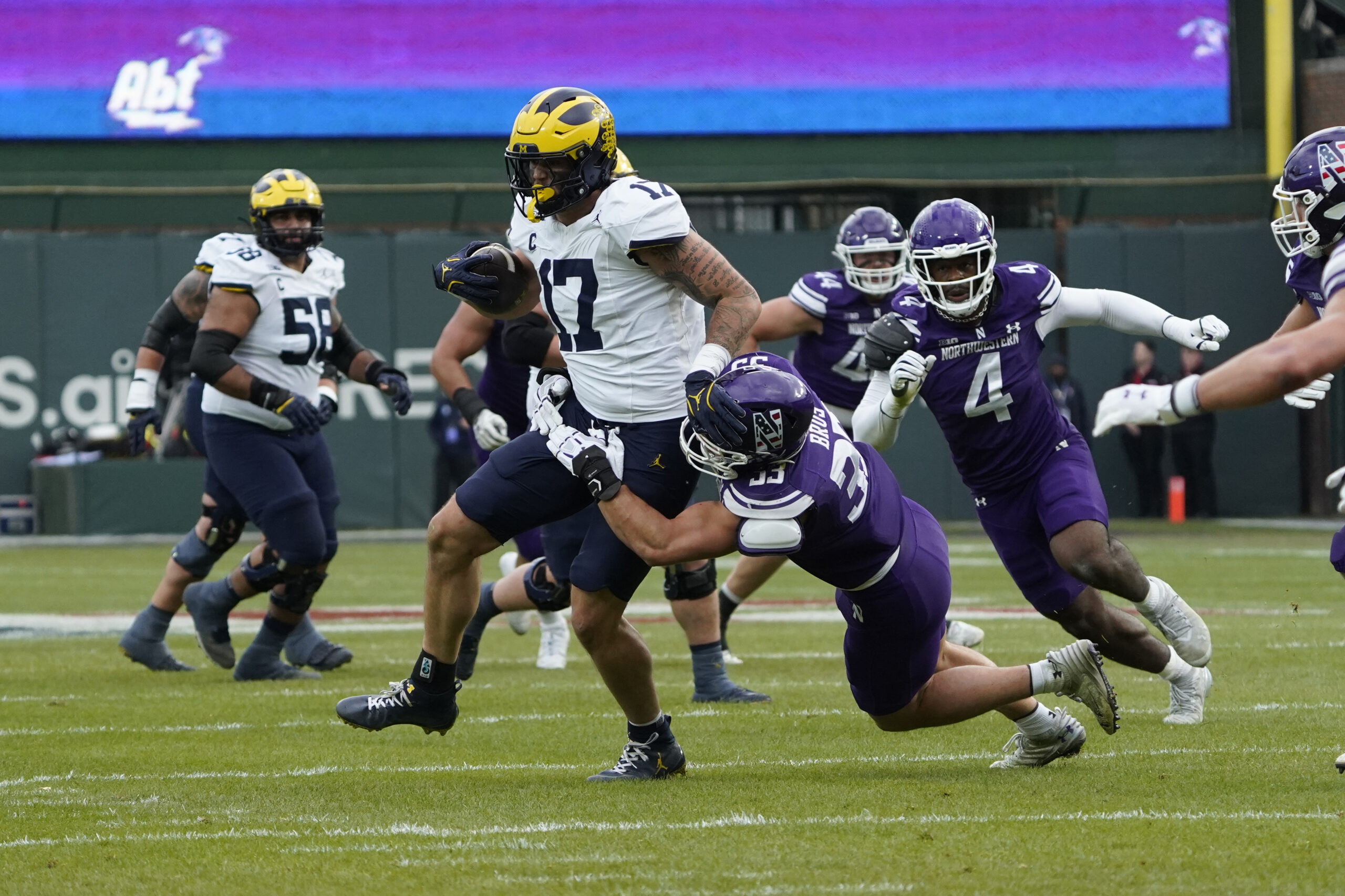
Nov 15, 2025; Chicago, Illinois, USA; Northwestern Wildcats linebacker Braydon Brus (33) tackles Michigan Wolverines tight end Marlin Klein (17) during the first half at Wrigley Field. Mandatory Credit: David Banks-Imagn Images
Pre-draft reports were consistent on both the ceiling and the caveat. PFF’s scouting writeup highlighted his effort and developmental trajectory while noting he is still relatively new to the sport compared to American peers. Bleacher Report’s scouting report flagged his length and blocking frame as Day 2 selling points while noting route-running polish as the primary development area. The consensus read as a high floor as a blocker with meaningful upside as a receiver if the technical refinement catches up to the physical tools. Houston’s pick essentially bought that development curve at market rate.
What Houston Still Needs to Prove
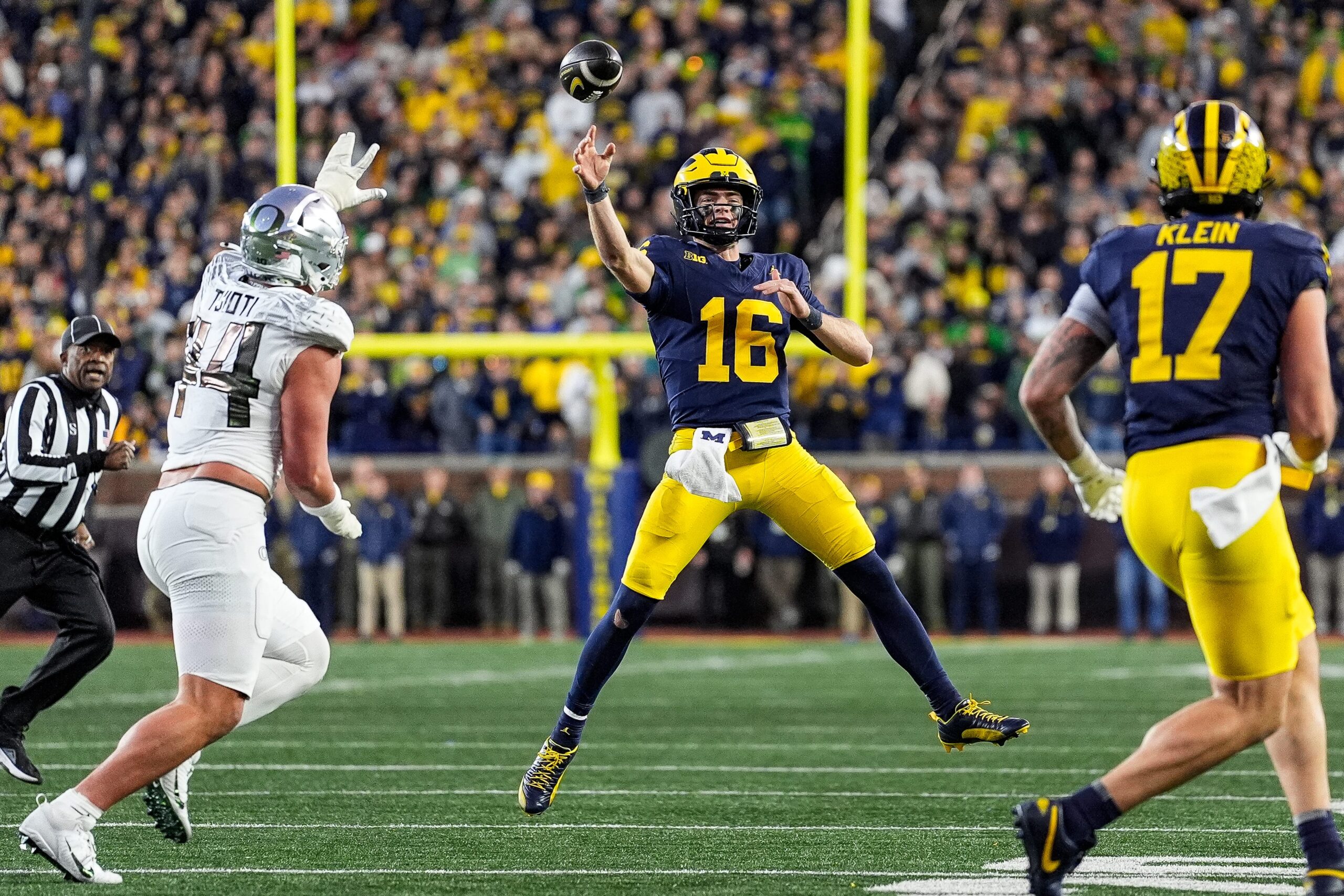
Michigan quarterback Davis Warren (16) makes a pass to tight end Marlin Klein (17) against Oregon during the second half at Michigan Stadium in Ann Arbor on Saturday, Nov. 2, 2024.
Draft night is the easy part. Werner, drafted 24th overall, was released by the Colts after three seasons. Vollmer built a Super Bowl career in New England, winning two rings over eight seasons. The gap between those two outcomes is the gap Klein now stares across. Houston invested second-round capital in a raw but physically gifted prospect still relatively new to the sport compared to his American peers. The Texans bet that Klein’s international pathway produced resilience rather than fragility. That bet remains unproven until he takes the field.
What Klein Must Show in Year One
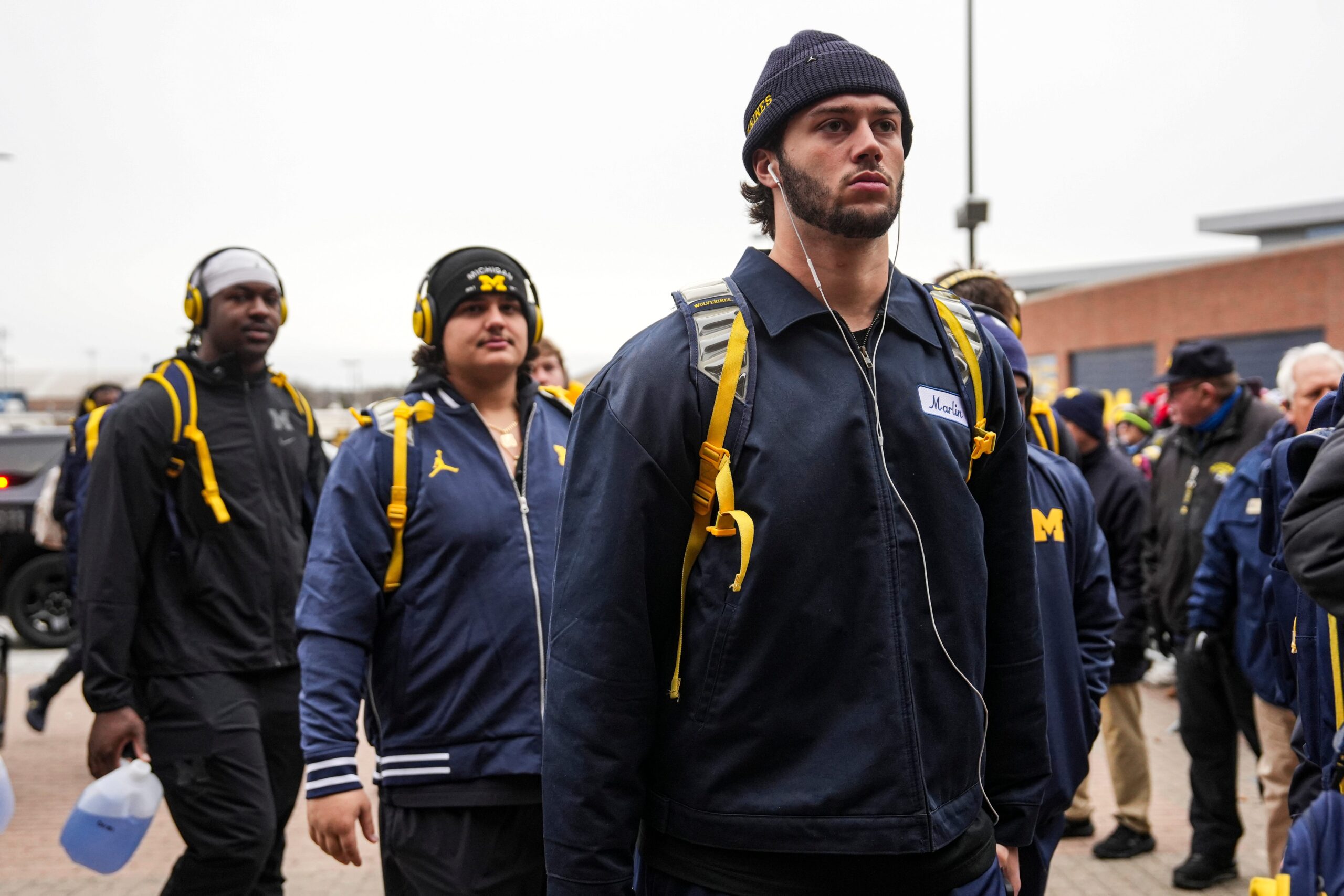
Michigan tight end Marlin Klein (17) arrives at Michigan Stadium in Ann Arbor ahead of the Ohio State game on Saturday, Nov. 29, 2025.
The realistic rookie-year checklist is narrow but measurable. Klein needs to prove he can hold up as an in-line blocker against NFL edge defenders, because that role is the fastest route to snaps. He needs to add functional weight without sacrificing the 4.61 speed that made scouts pay attention. He also needs to translate Michigan’s tight-end concepts, where he put together a productive 2025 season under the program’s offensive staff, into an NFL route tree. Hit those three marks and the TE2 projection becomes a TE1 conversation by Year 3.
The Draft Pick That Redrew the Map
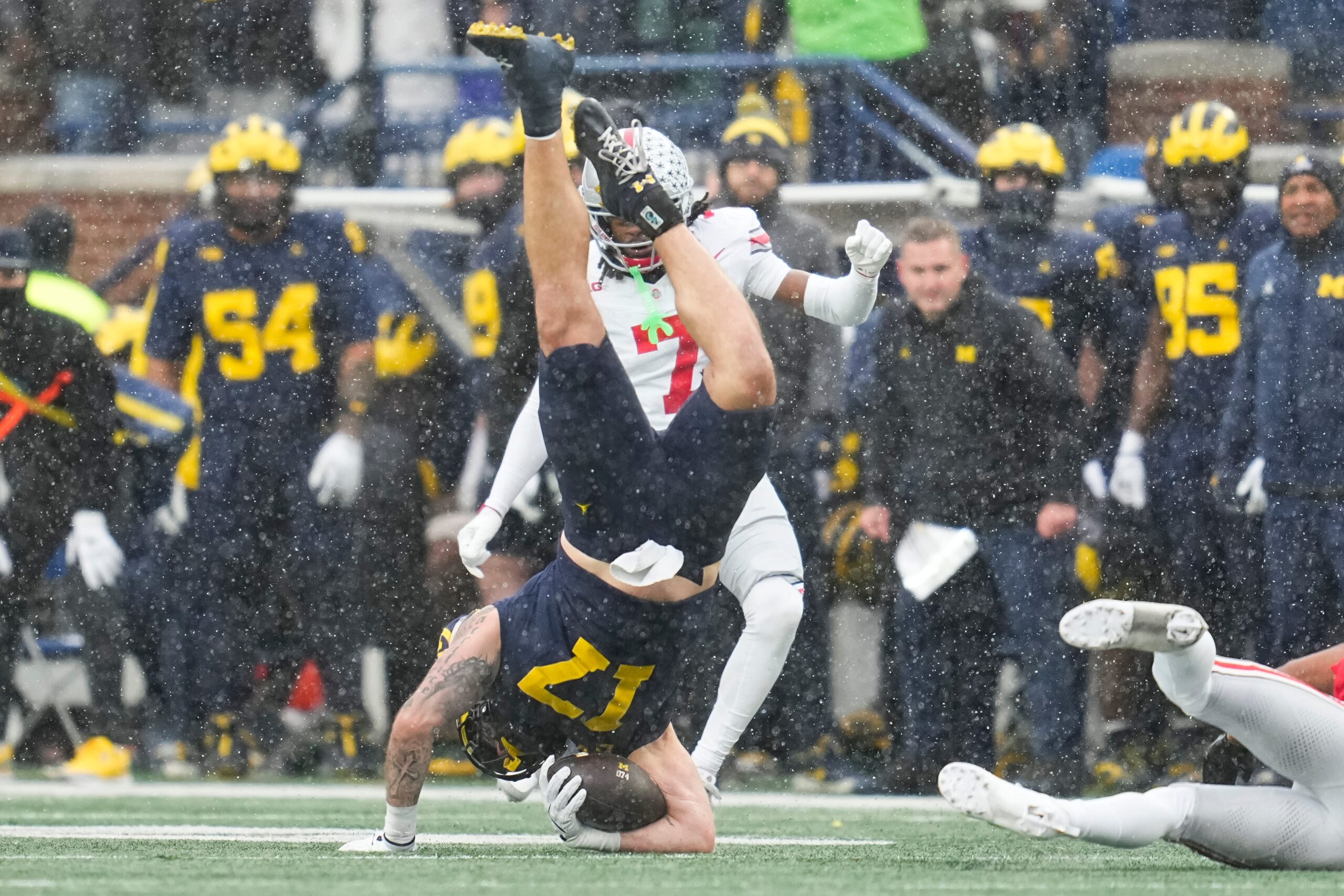
Michigan Wolverines tight end Marlin Klein (17) is upended in front of Ohio State Buckeyes cornerback Jermaine Mathews Jr. (7) during the NCAA football game at Michigan Stadium in Ann Arbor, Mich. on Nov. 29, 2025. Ohio State won 27-9.
Somewhere in Germany right now, a teenager is watching Klein’s draft clip the same way Klein once watched the NFL from Cologne. That’s the real consequence of the 59th pick. Not the roster spot. Not the contract. The signal. Klein stands as the highest-drafted German player since Björn Werner in 2013, and only the third inside the top 60 in the modern era alongside Vollmer and Werner. The next German prospect won’t need to explain the pathway. Klein just made it visible. Whether Houston got a starter or a bust matters less than what every European kid with a helmet now believes is possible.
Does Klein follow the Vollmer blueprint to a Super Bowl ring, or does he become the next Werner cautionary tale? Tell us where you’d set the over-under on his career in the comments.
Sources:
Houston Texans Communications Department, “TE Marlin Klein from Michigan drafted at No. 59 overall,” HoustonTexans.com, April 24, 2026
Pro Football Focus, “2026 NFL Draft Guide: Marlin Klein scouting report and projection,” by the PFF Draft Team, April 9, 2026
European League Football staff, “NFL Draft: Marlin Klein becomes third-highest-drafted German in history,” EuropeanLeague.football, April 24, 2026
Wikipedia contributors, “Marlin Klein,” Wikipedia entry citing Michigan Athletics and NFL.com, last updated April 2026
The Associated Press, “Top NFL German players ever: Vollmer, Von Schamann lead list,” AP wire, November 7, 2022
Deutsche Welle staff, “Berlin-born NFL star Björn Werner released by Indianapolis Colts,” DW.com, March 8, 2016