

Eighteen Nebraska football players signed NIL contracts this winter expecting real money. More than $1 million worth of deals, structured through the school’s own multimedia rights partner, Playfly Sports. The ink was dry. The commitments were board-approved. And on May 11, 2026, a neutral arbitrator looked at every one of those deals and killed them. Not renegotiated. Not revised. Denied. The College Sports Commission had just won its first binding arbitration ruling, and the wreckage landed squarely on players who thought they were getting paid.
The $8 Million Promise
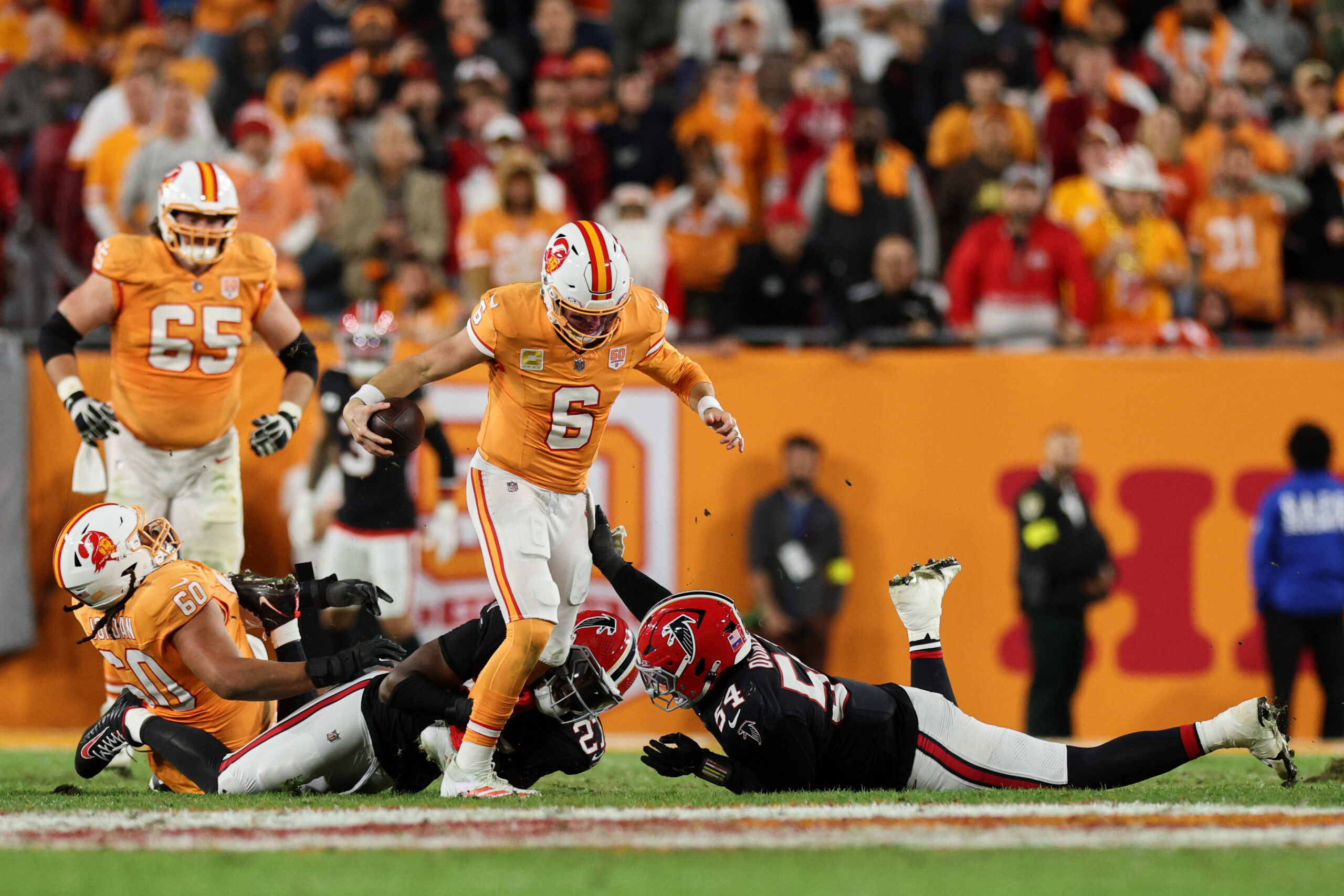
Dec 11, 2025; Tampa, Florida, USA; Atlanta Falcons linebacker James Pearce Jr. (27) and defensive tackle Brandon Dorlus (54) sack Tampa Bay Buccaneers quarterback Baker Mayfield (6) during the second quarter at Raymond James Stadium. Mandatory Credit: Nathan Ray Seebeck-Imagn Images
Playfly Sports had pledged more than $8 million to “support NIL activities” with Cornhuskers athletes. Nebraska’s Board of Regents unanimously approved the arrangement. On paper, it looked generous: a multimedia partner investing heavily in athlete compensation alongside the school’s existing $20.5 million annual salary cap. That $8 million figure mattered because it sat outside the cap. Schools can pay athletes directly up to the limit. Playfly’s investment was supposed to supplement that through third-party NIL deals. The CSC had been watching similar arrangements spread across power conference schools all winter.
Common Practice, Sudden Problem
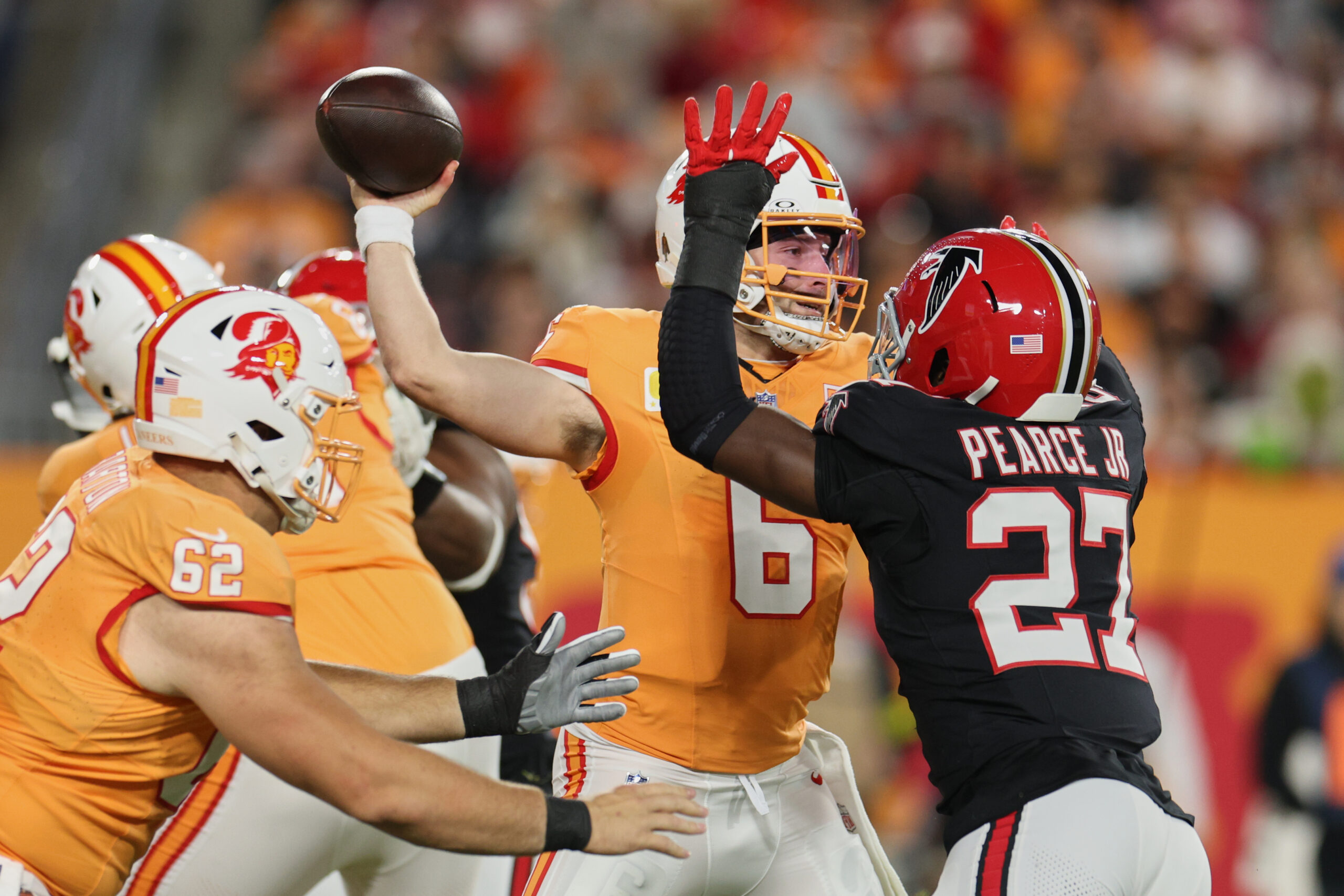
Dec 11, 2025; Tampa, Florida, USA; Tampa Bay Buccaneers quarterback Baker Mayfield (6) passes the ball against Atlanta Falcons linebacker James Pearce Jr. (27) during the first quarter at Raymond James Stadium. Mandatory Credit: Nathan Ray Seebeck-Imagn Images
Nebraska wasn’t inventing something new. The practice of routing athlete compensation through multimedia partnerships had become common among power conference schools by winter 2026. Schools assumed their multimedia partners operated independently enough to avoid the “associated entity” label under the House settlement. That assumption just died. The CSC has rejected 1,153 NIL deals since its NIL Go platform launched in June 2025, but only 21 went to arbitration. Eighteen of those 21 came from Nebraska. One school represented 86% of all CSC appeals, and it just lost the test case.
One Word Killed the Deals
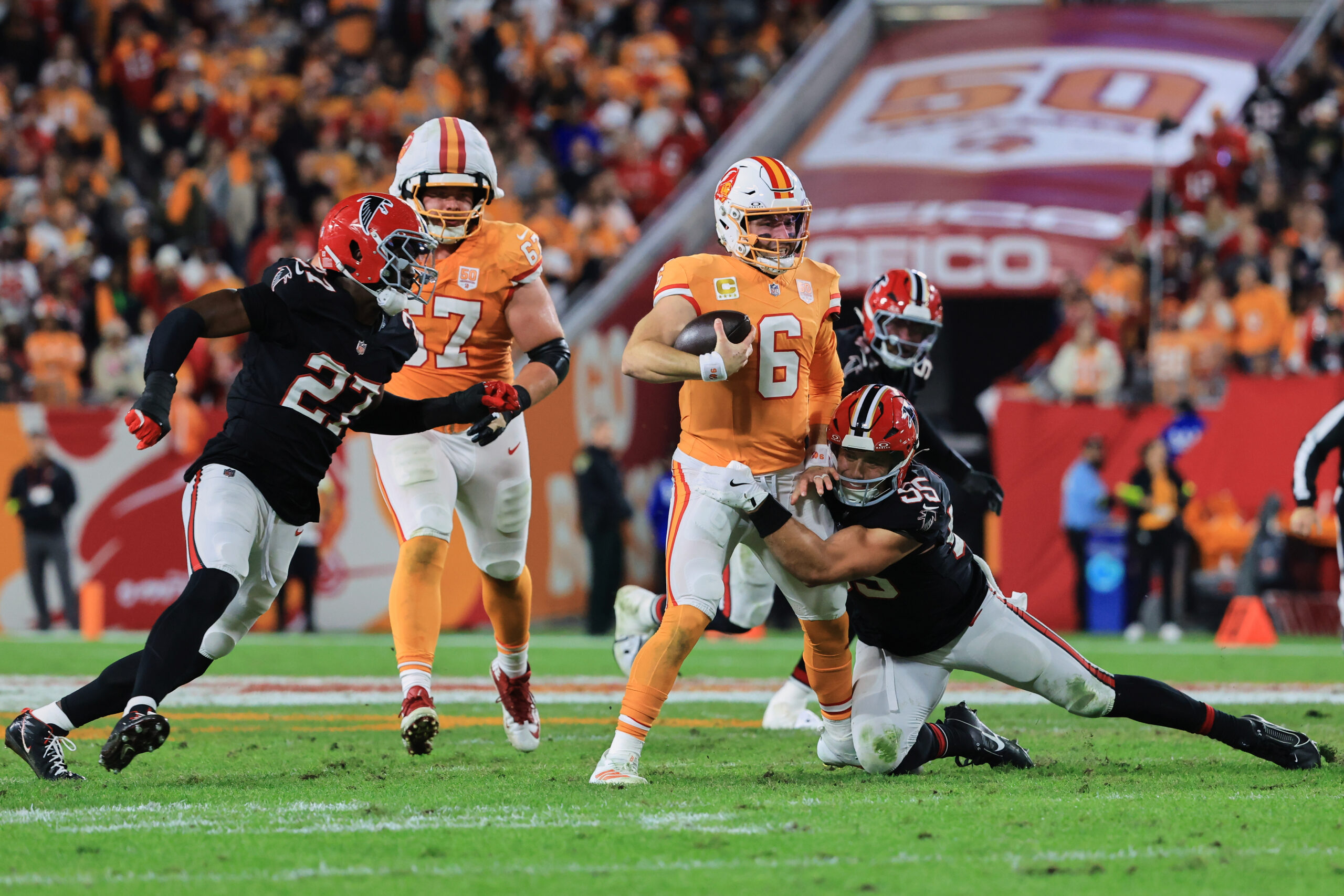
Dec 11, 2025; Tampa, Florida, USA; Atlanta Falcons linebacker Kaden Elliss (55) tackles Tampa Bay Buccaneers quarterback Baker Mayfield (6) as offensive tackle Luke Goedeke (67) and Atlanta Falcons linebacker James Pearce Jr. (27) watch the play during the second quarter at Raymond James Stadium. Mandatory Credit: Kim Klement Neitzel-Imagn Images
The arbitrator found three violations. Playfly qualified as an associated entity. The deals lacked valid business purpose. And the arrangement constituted prohibited “warehousing” of athlete NIL rights. That last finding was the kill shot. Warehousing means purchasing rights to use an athlete’s name, image, and likeness in the future without providing specific deliverables or information about intended use. Playfly promised $8 million for undefined future “NIL activation.” No concrete products. No goods sold to the public. No specific deliverables. Eight million dollars aimed at nothing in particular.
The Salary Cap Workaround
Ohio State Buckeyes wide receiver Jaxon Smith-Njigba (11) dashes past Nebraska Cornhuskers safety Marquel Dismuke (9) during Saturday’s NCAA Division I football game at Memorial Stadium in Lincoln, Neb., on November 6, 2021.
Here is the mechanism the arbitrator saw through: the House settlement caps direct athlete payments at $20.5 million annually per school. Nebraska structured Playfly’s $8 million commitment to flow outside that cap through third-party NIL deals. CSC CEO Bryan Seeley had warned months earlier that “every NIL deal done with a student-athlete must be a legitimate NIL deal, not pay-for-play in disguise.” The arbitrator agreed. The scheme worked like a blank check: Playfly purchased undefined rights to athletes’ intellectual property without packaging them into specific products sold to the public.
The Numbers Behind the Curtain
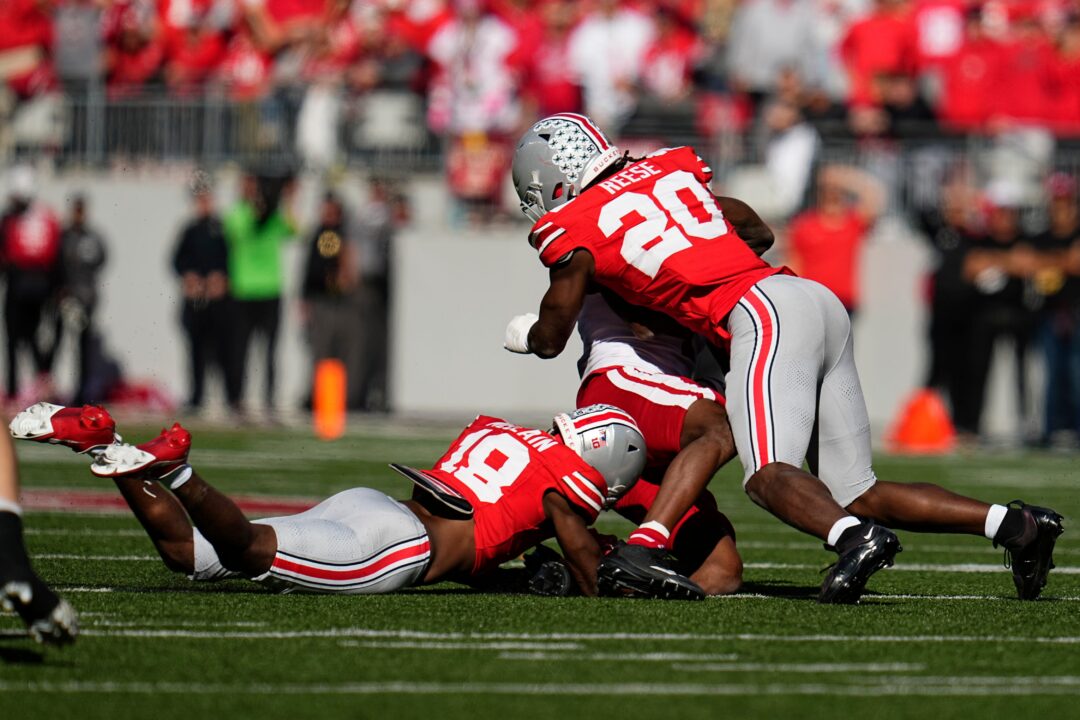
Ohio State Buckeyes linebacker Arvell Reese (20) hits Nebraska Cornhuskers wide receiver Jahmal Banks (4) during the second half of the NCAA football game at Ohio Stadium in Columbus on Saturday, Oct. 26, 2024. Reese was called for targeting on the play. Ohio State won 21-17.
The CSC’s overall rejection rate looks modest: 1,153 deals denied against 26,556 cleared in its first 10 months — roughly 4% of submissions, but those rejected deals represented about 19% of the total dollar value under review. The cleared deals alone added up to $242.35 million in athlete compensation. But the warehousing standard the arbitrator just validated could retroactively disqualify far more. Industry analysts have estimated that a substantial share of previously common booster-collective deals would now fail CSC scrutiny under this ruling’s framework. That is not a rounding error. That is a nationwide renegotiation of how athlete compensation flows through third parties, and every school with a Playfly-style arrangement now faces an immediate audit.
The Ripple Hits Everyone
The 18 Nebraska players now face a brutal choice: resubmit revised deals with concrete deliverables, or risk losing the money. Players who already received funds may need to return them. Meanwhile, other Power Four schools with similar multimedia-partner contracts must scramble to restructure before CSC flags their deals too. The precedent forces multimedia services companies to legally separate their NIL operations from school partnerships or risk the “associated entity” designation. Playfly’s $8 million commitment sits in legal limbo. Schools that relied on multimedia workarounds as salary supplements just lost their escape hatch.
The Victory That Exposed a Weakness
Nov 28, 2025; Lincoln, Nebraska, USA; Herky the Hawk poses during the fourth quarter between the Nebraska Cornhuskers and the Iowa Hawkeyes at Memorial Stadium. Mandatory Credit: Dylan Widger-Imagn Images
The CSC’s first arbitration win looks like enforcement triumph. It is actually the first crack in the commission’s authority. Nebraska state law explicitly prohibits the NCAA or CSC from penalizing athletes for earning NIL compensation. Multiple states have enacted similar protections shielding athletes from outside enforcement. A federal executive order issued April 3, 2026, directs the Attorney General to address the patchwork of state NIL laws and federal policy on college athlete compensation. Until federal courts settle the constitutional question, CSC operates in a system where state statutes create legal exit ramps from national enforcement.
The Court Date That Changes Everything
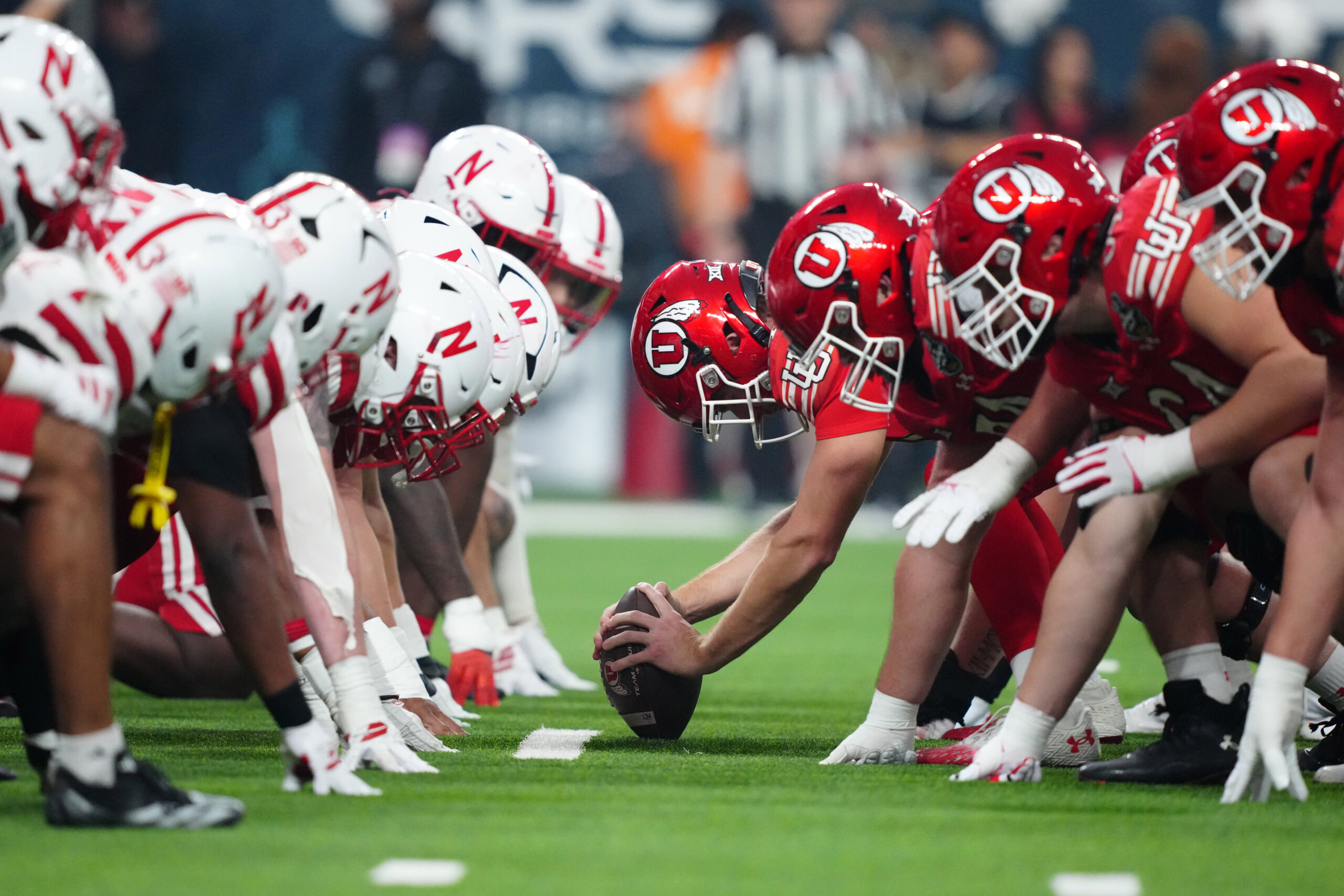
Dec 31, 2025; Las Vegas, NV, USA; Helmets at the line of scrimmage as Utah Utes long snapper Logan Castor (44) snaps the ball against the Nebraska Cornhuskers in the first half during the SRS Distribution Las Vegas Bowl at Allegiant Stadium. Mandatory Credit: Kirby Lee-Imagn Images
On May 27, a critical hearing on the interpretation of “associated entities” under the House settlement is set to take place, and it could reshape current enforcement policies. If the court sides with arguments like Nebraska’s, the arbitration precedent weakens across the country. Nebraska’s attorney general could pursue action under state law. Other states could follow. The CSC won a ruling. It has not won the war. The real question is whether a national commission with limited enforcement leverage can survive when state legislatures keep building doors for athletes to walk through.
Who Really Controls the Money
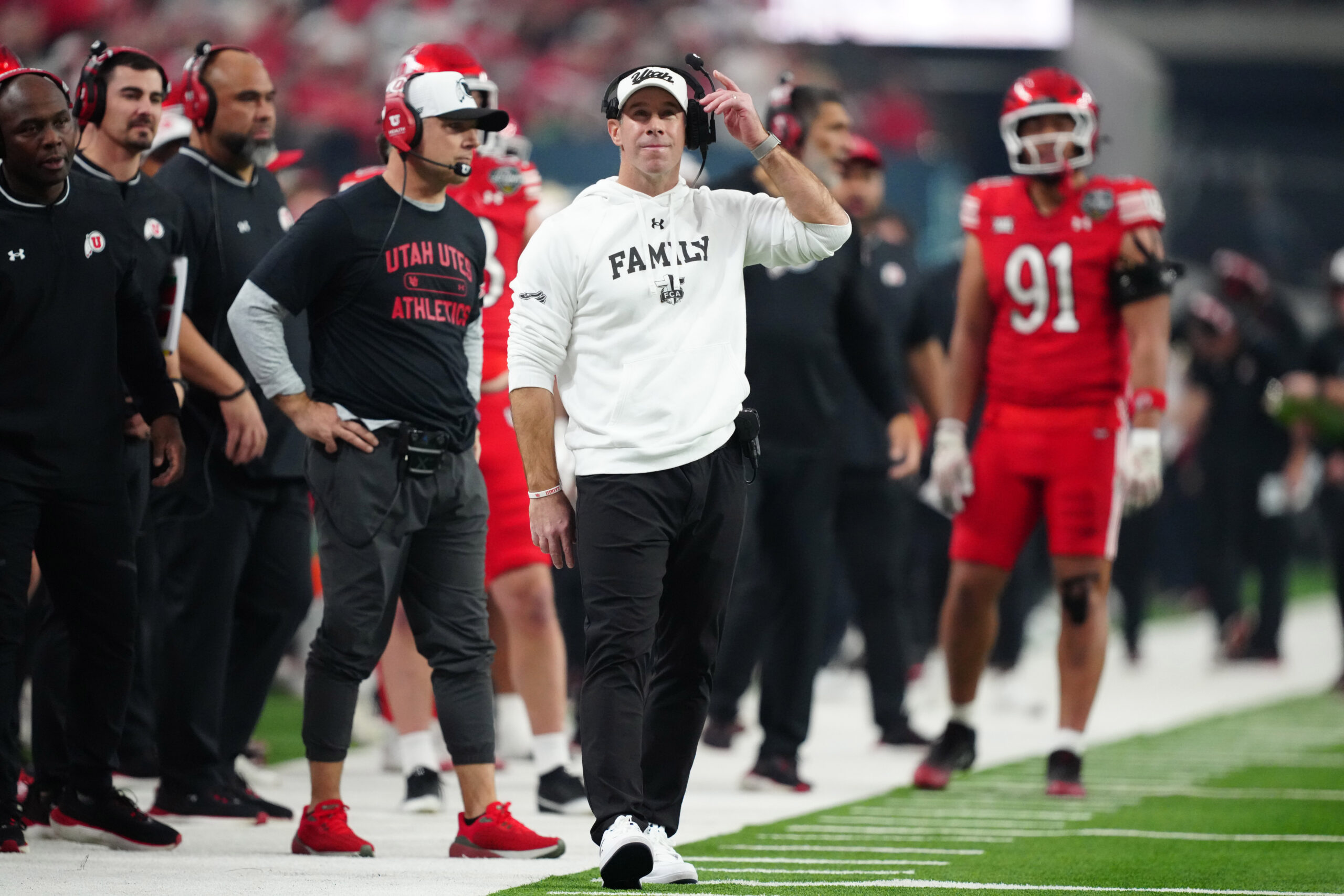
Dec 31, 2025; Las Vegas, NV, USA; Utah Utes interim coach Morgan Scalley watches from the sidelines against the Nebraska Cornhuskers in the first half during the SRS Distribution Las Vegas Bowl at Allegiant Stadium. Mandatory Credit: Kirby Lee-Imagn Images
Most people will remember this as the day an arbitrator blocked 18 players from getting paid. The deeper story: college sports now operates under competing legal systems with no clear winner. The CSC can threaten eligibility. States can override that threat with protective statutes. Federal courts can overrule both. Congress could preempt everyone. Nobody currently controls athlete compensation in America. The person who understands that understands why this arbitration ruling, for all its drama, may be the last enforcement victory the CSC ever celebrates unchallenged. Should the CSC have the power to void deals players already signed, or do state laws protecting athlete pay deserve to win this fight? Sound off in the comments.