
The ink dried on May 13, 2026, and somewhere in Miami’s front office, a new general manager pushed all his remaining chips toward one name. De’Von Achane, the third-round pick who’d torched defenses for three straight seasons, just became the NFL’s third-highest-paid running back. Four years. $64 million, up to $68 million with incentives. On a team trying to dig out from a historic cap mess. Every dollar of that deal landed on a franchise already bleeding money it couldn’t stop spending.
A Franchise Drowning Before It Could Swim
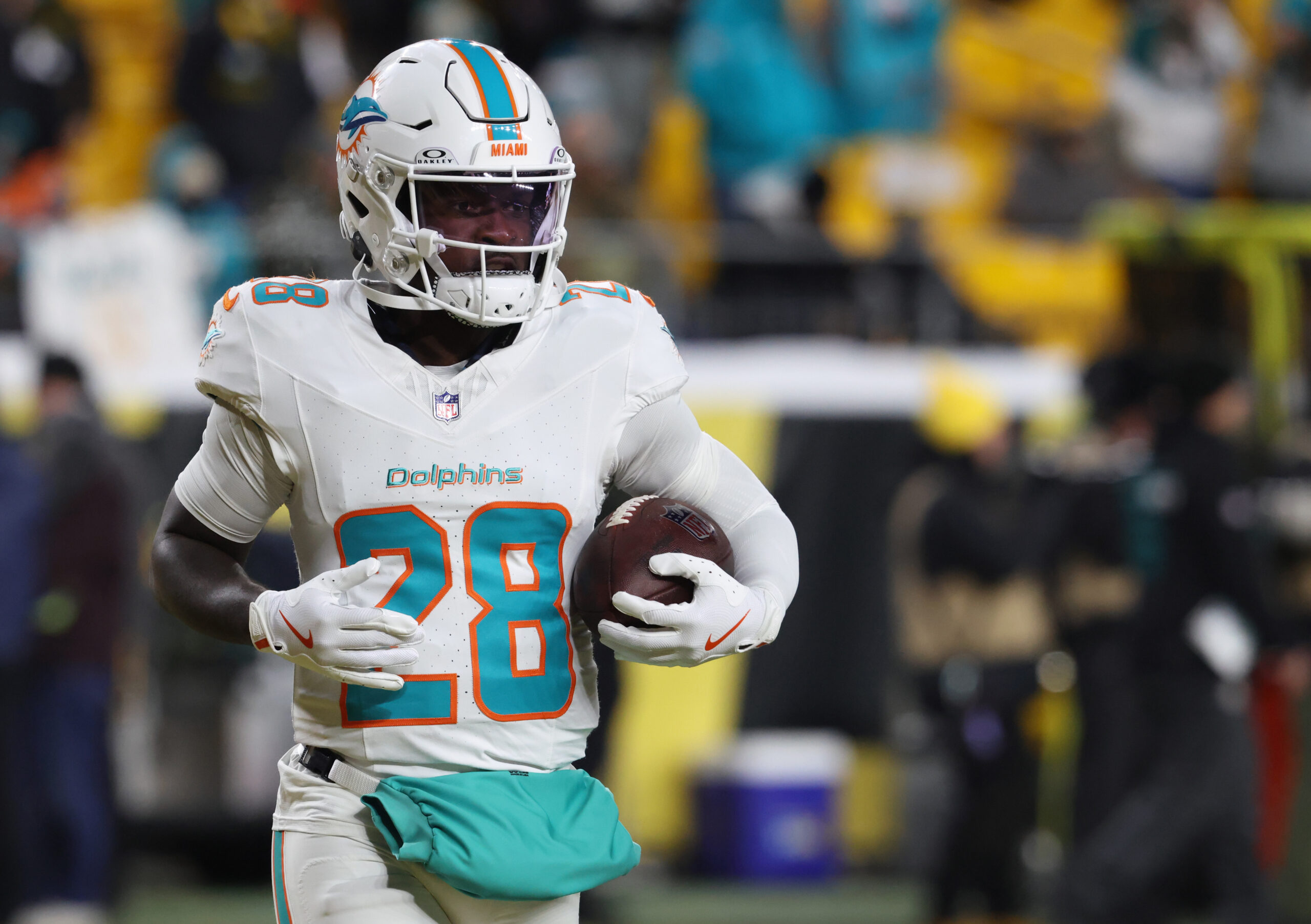
Dec 15, 2025; Pittsburgh, Pennsylvania, USA; Miami Dolphins running back De’Von Achane (28) warms up before the game against the Pittsburgh Steelers at Acrisure Stadium. Mandatory Credit: Charles LeClaire-Imagn Images
The Dolphins entered 2026 carrying an NFL-record $182.29 million in dead money, roughly 60.5% of their salary cap. Unprecedented in NFL history. That means more than sixty cents of every cap dollar goes to players who no longer wear aqua and orange. Tua Tagovailoa alone accounts for a $55.4 million hit in 2026, with another $43.8 million following in 2027. Tyreek Hill ($28.25M) and Jaylen Waddle ($26.31M) pile on more. The previous regime’s contracts became concrete blocks chained to the new administration’s ankles, and the new front office inherited every pound.
The Trade Calls Nobody Expected
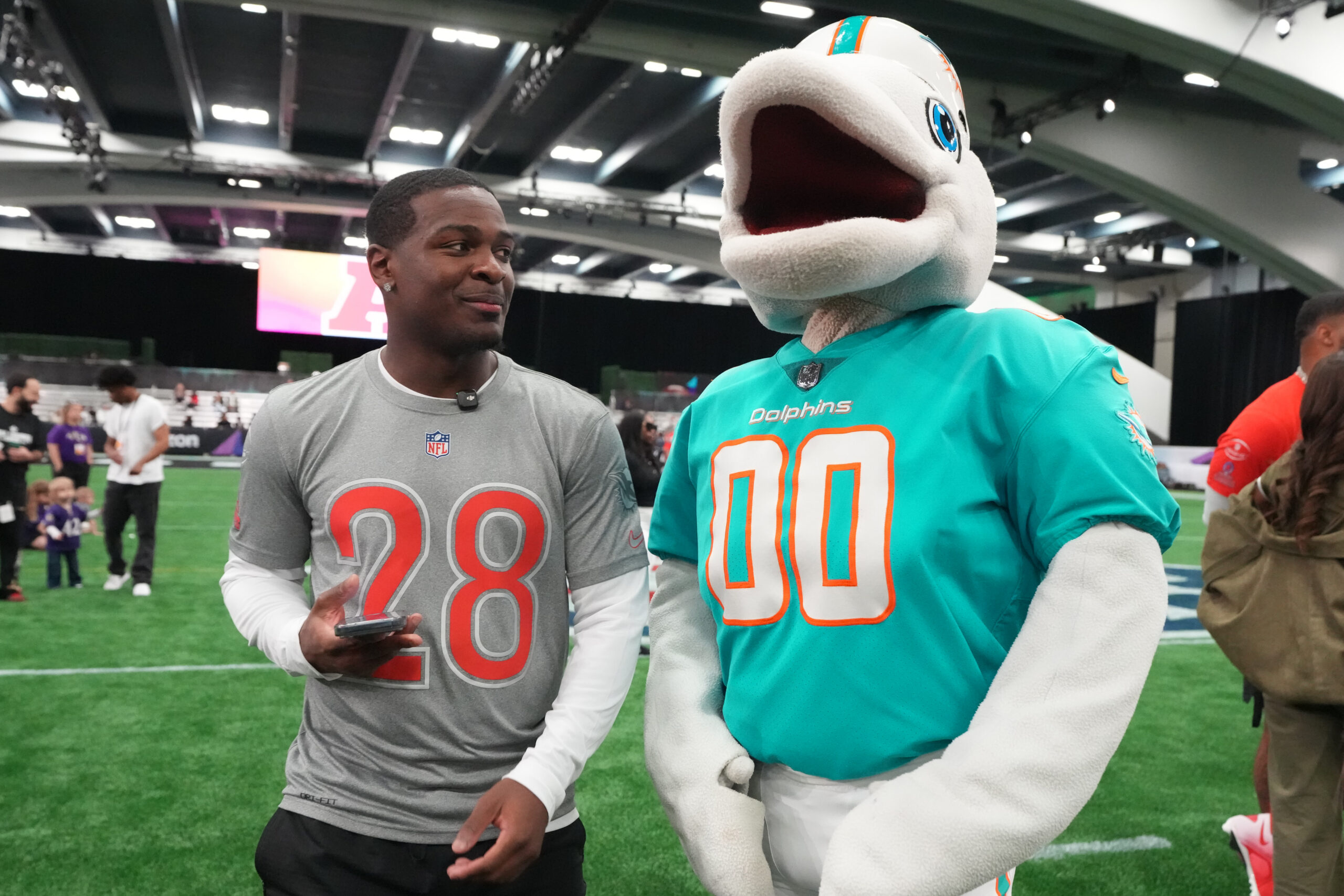
Feb 2, 2026; San Francisco, CA, USA; Miami Dolphins running back De’Von Achane (28) with Dolphins mascot T.D. during AFC practice at the NFL Flag Fieldhouse at Moscone Center South Building. Mandatory Credit: Kirby Lee-Imagn Images
Standard rebuild playbook says you trade the expensive star, collect draft picks, and start over. Achane was not made available for trade prior to the 2026 draft. That detail sat quietly for months, unremarkable at the time. Then the new GM installed his “draft, develop, and retain” philosophy and locked Achane into the richest deal the franchise has ever given a running back. The conventional wisdom about rebuilding teams never paying premium money for running backs was about to shatter.
The Bet Sullivan Had No Choice But to Make
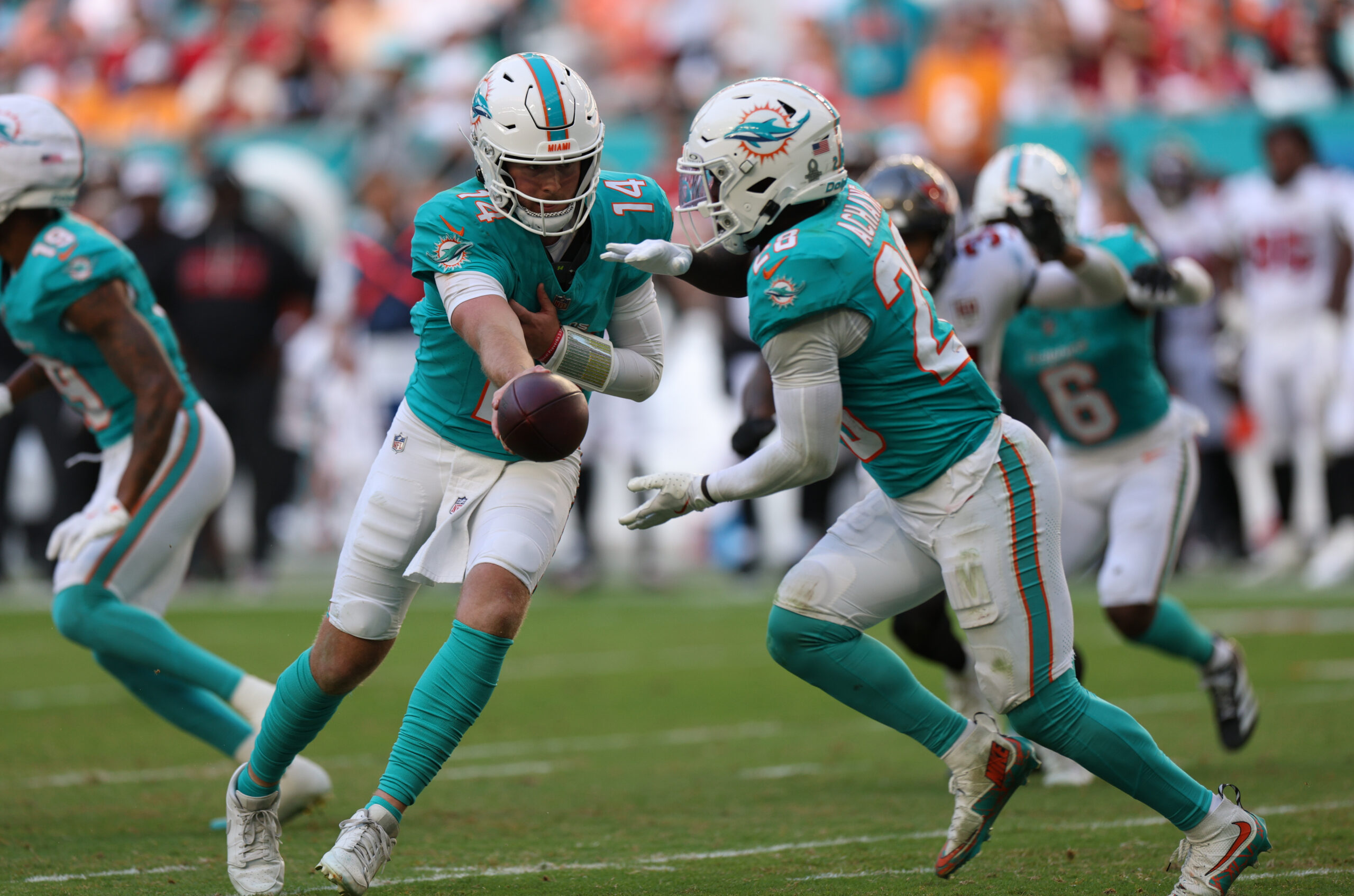
Dec 28, 2025; Miami Gardens, Florida, USA; Miami Dolphins quarterback Quinn Ewers (14) hands the ball off to running back De’Von Achane (28) during the fourth quarter against the Tampa Bay Buccaneers at Hard Rock Stadium. Mandatory Credit: Nathan Ray Seebeck-Imagn Images
Strip away the celebration and the deal reveals triage, not triumph. With 60.5% of cap space committed to ghosts, the front office couldn’t chase free agents. Couldn’t build through trades. Couldn’t distribute investment across positions. Achane represented the only controllable, predictable asset on the roster as a Pro Bowl producer entering his prime. So Miami concentrated $32 million in guarantees on its one proven weapon. One player. One bet. No fallback position.
The Engine in a Broken Machine
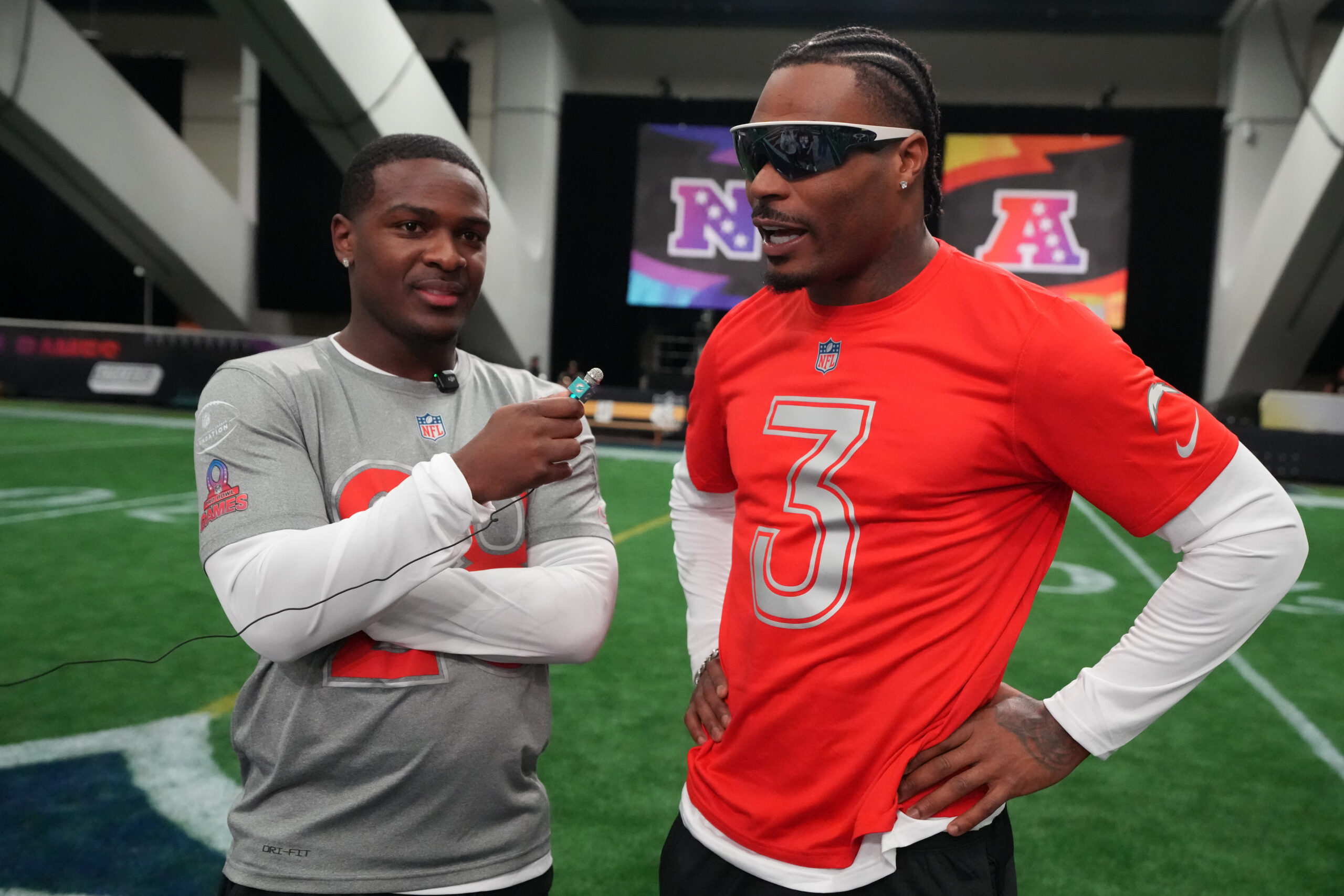
Feb 2, 2026; San Francisco, CA, USA; Miami Dolphins running back De’Von Achane (28) interviews Los Angeles Chargers safety Derwin James (3) AFC practice at the NFL Flag Fieldhouse at Moscone Center South Building. Mandatory Credit: Kirby Lee-Imagn Images
Achane’s 2025 season produced 1,838 scrimmage yards and 12 total touchdowns en route to a Pro Bowl nod. And the Dolphins still struggled to win games. That disproportion between individual brilliance and team failure is the entire tension of this contract. The new GM identified Achane, along with center Aaron Brewer and linebacker Jordyn Brooks, as the franchise’s “pillars.” Bought in to what, exactly, remains the open question.
Numbers That Rewrite the Argument
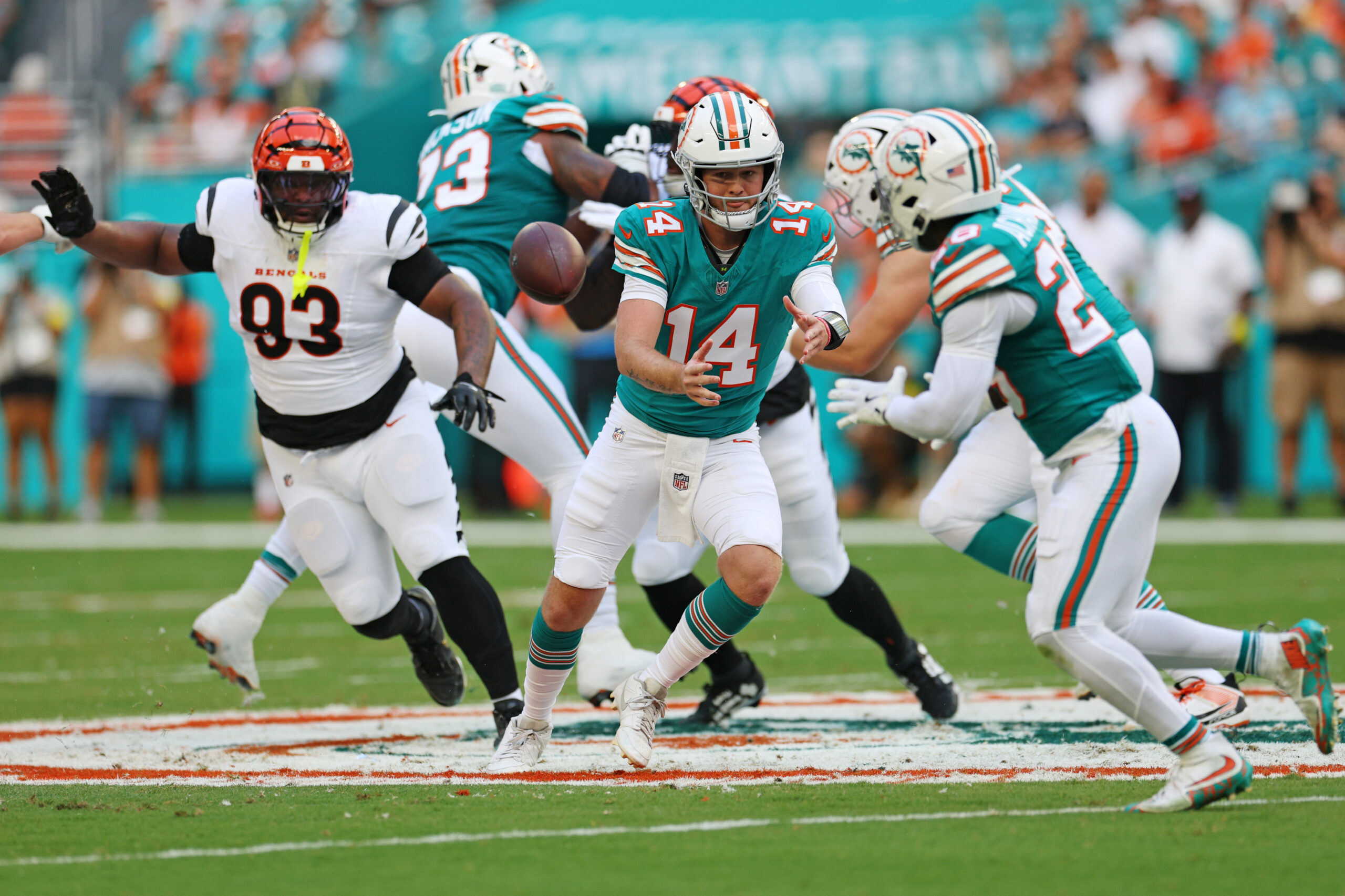
Dec 21, 2025; Miami Gardens, Florida, USA; Miami Dolphins quarterback Quinn Ewers (14) hands off the ball to Miami Dolphins running back De’Von Achane (28) for a touchdown during the second quarter against the Cincinnati Bengals at Hard Rock Stadium. Mandatory Credit: Nathan Ray Seebeck-Imagn Images
The NFL’s consensus wisdom says running backs are replaceable. Achane’s production says otherwise. At $16 million annually, he sits behind only Saquon Barkley and Christian McCaffrey among running backs. Breece Hall, who had just signed a $45.75 million deal, was passed by Achane’s extension. The market moved that fast because the production demanded it.
The Ripple Nobody’s Calculating
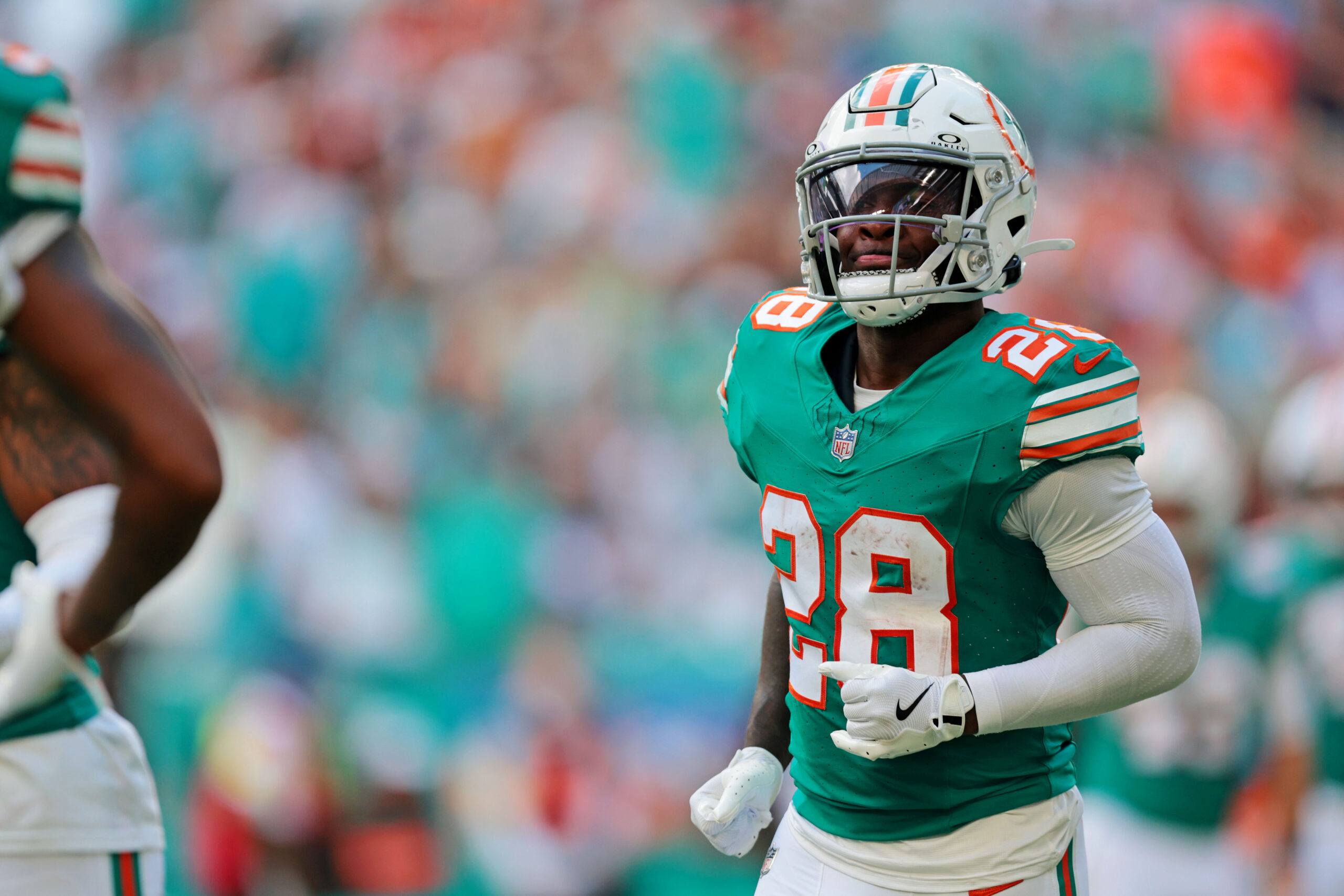
Dec 21, 2025; Miami Gardens, Florida, USA; Miami Dolphins running back De’Von Achane (28) reacts after scoring a touchdown during the first quarter against the Cincinnati Bengals at Hard Rock Stadium. Mandatory Credit: Sam Navarro-Imagn Images
Achane’s deal doesn’t exist in isolation. Aaron Brewer and Jordyn Brooks, the other two “pillars,” are next in line for extensions and will use this contract as their baseline. Backup running backs compete for whatever cap scraps remain. And by 2027, the Dolphins still carry Tagovailoa’s $43.8 million dead hit, meaning the cap crisis extends well beyond this season. Add Achane’s $16 million-plus annual commitment, and tens of millions are spoken for before a single other player signs. Sullivan built his foundation on one cornerstone, and the rest of the house has no budget.
From Third Round to New Rule
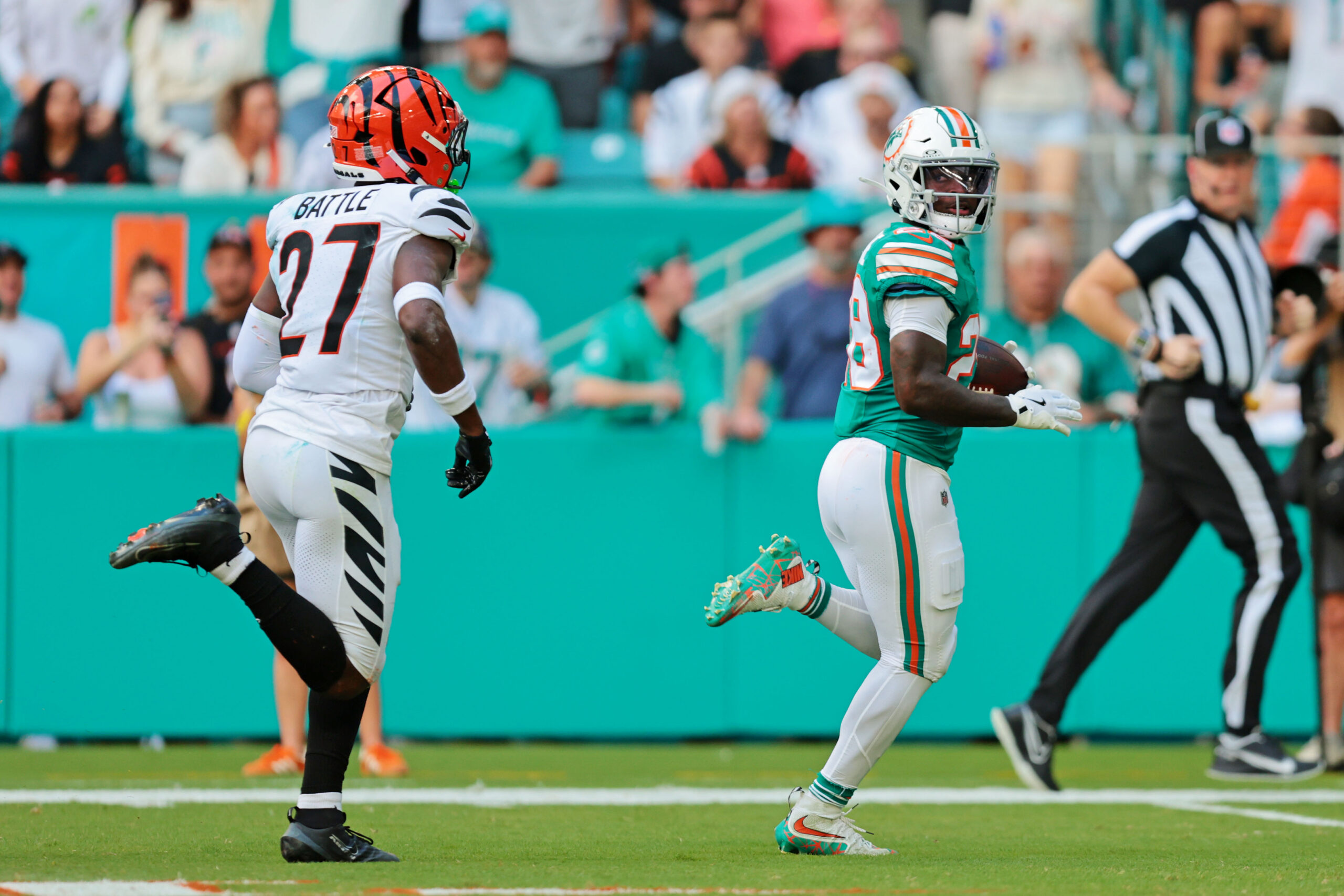
Dec 21, 2025; Miami Gardens, Florida, USA; Miami Dolphins running back De’Von Achane (28) runs the ball for a touchdown during the first quarter against the Cincinnati Bengals at Hard Rock Stadium. Mandatory Credit: Sam Navarro-Imagn Images
Achane was the 84th pick in the 2023 draft. Three seasons later, he’s the third-highest-paid running back alive. That trajectory alone rewrites how front offices evaluate mid-round running backs. But the larger precedent is the new philosophy made operational: a rebuilding team, drowning in dead money, chose to extend its one elite homegrown player rather than sell him for draft capital. If the Dolphins improve, every cap-strapped franchise will copy this model. Once you see it, the Achane deal stops being about one running back and becomes a blueprint for organizational survival under financial siege.
The Dominoes That Haven’t Fallen
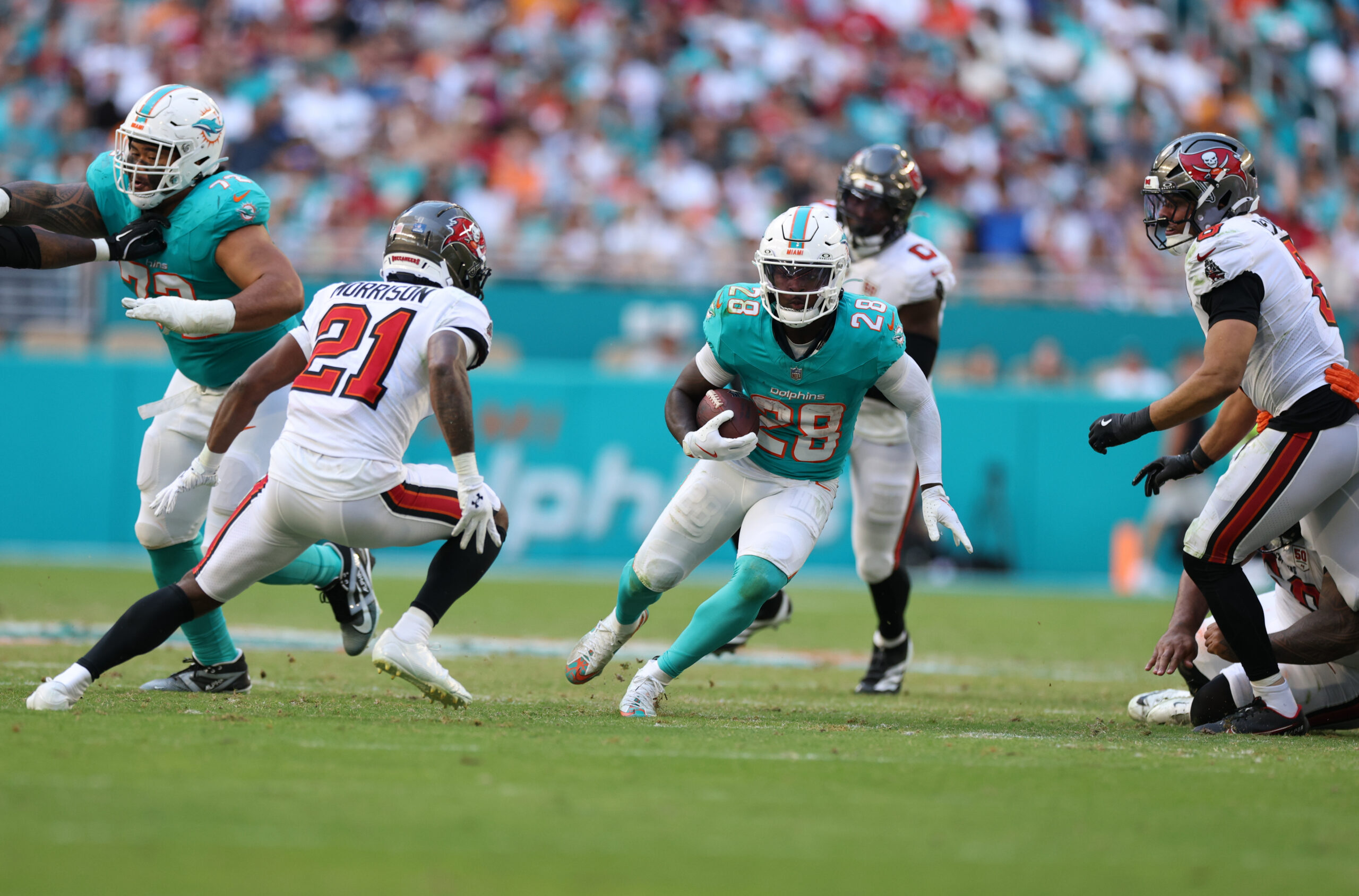
Dec 28, 2025; Miami Gardens, Florida, USA; Miami Dolphins running back De’Von Achane (28) runs for a gain past Tampa Bay Buccaneers cornerback Benjamin Morrison (21) during the third quarter at Hard Rock Stadium. Mandatory Credit: Nathan Ray Seebeck-Imagn Images
One chronic setback, one torn ligament, and this contract transforms from cornerstone to anchor overnight. The front office has no flexibility to absorb that blow. The cap won’t allow a replacement signing. The dead money won’t clear fast enough. Sustaining elite efficiency across four more years is a different kind of test entirely.
The Framework Most Fans Will Miss
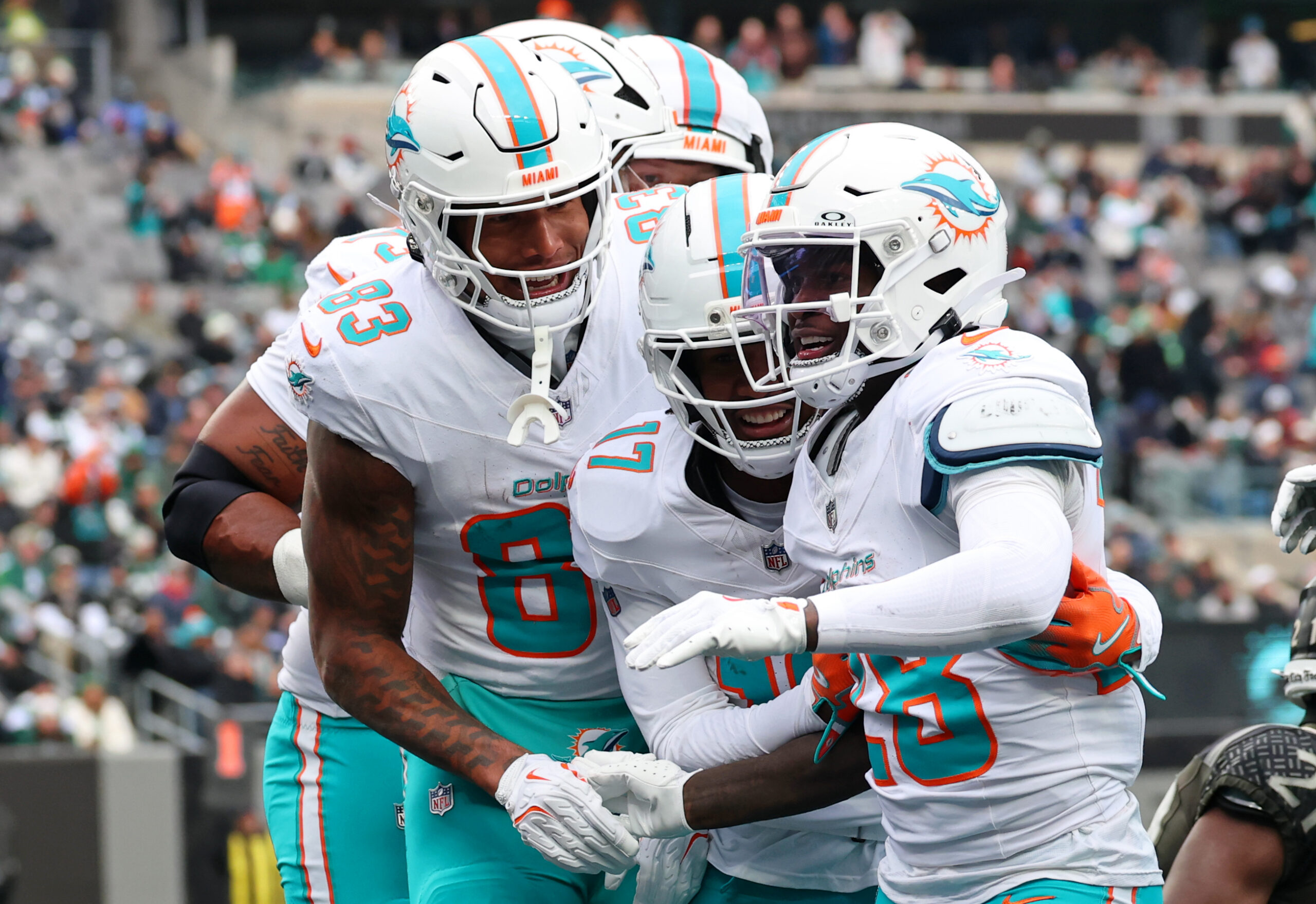
Dec 7, 2025; East Rutherford, New Jersey, USA; Miami Dolphins running back De’Von Achane (28) celebrates with tight end Darren Waller (83) and wide receiver Jaylen Waddle (17) after scoring a touchdown against the New York Jets during the first half at MetLife Stadium. Mandatory Credit: Ed Mulholland-Imagn Images
This extension locks Achane through the 2030 season. The dead money crisis peaks in 2026 and bleeds into 2027. Miami’s entire rebuild timeline depends on Achane’s elite efficiency outlasting the financial wreckage it inherited. Every other rebuilding team in the NFL will watch Miami to see whether concentrating resources on one controllable star can overcome systemic failure, or whether $68 million on one player just adds another name to the dead money list down the road. The teams that called about Achane are still watching, too.