
The NFL’s Finance Committee officially approved a transaction valuing the Las Vegas Raiders at $11 billion in total consideration, including a 10% flip tax redistributed to the other 31 teams, on an underlying equity valuation of $9.9 billion. A group led by Silver Lake co-CEO Egon Durban is acquiring a 25% equity stake from minority investor First Football, bringing Durban’s group’s total ownership to roughly 40%. Mark Davis retains his controlling stake. Full ownership ratification follows at the NFL owners meeting in May. That $11 billion figure represents a 669% increase from the $1.43 billion Forbes valuation in 2015. And the valuation is only the beginning of this story.
How a 7.5% Stake Became a Takeover
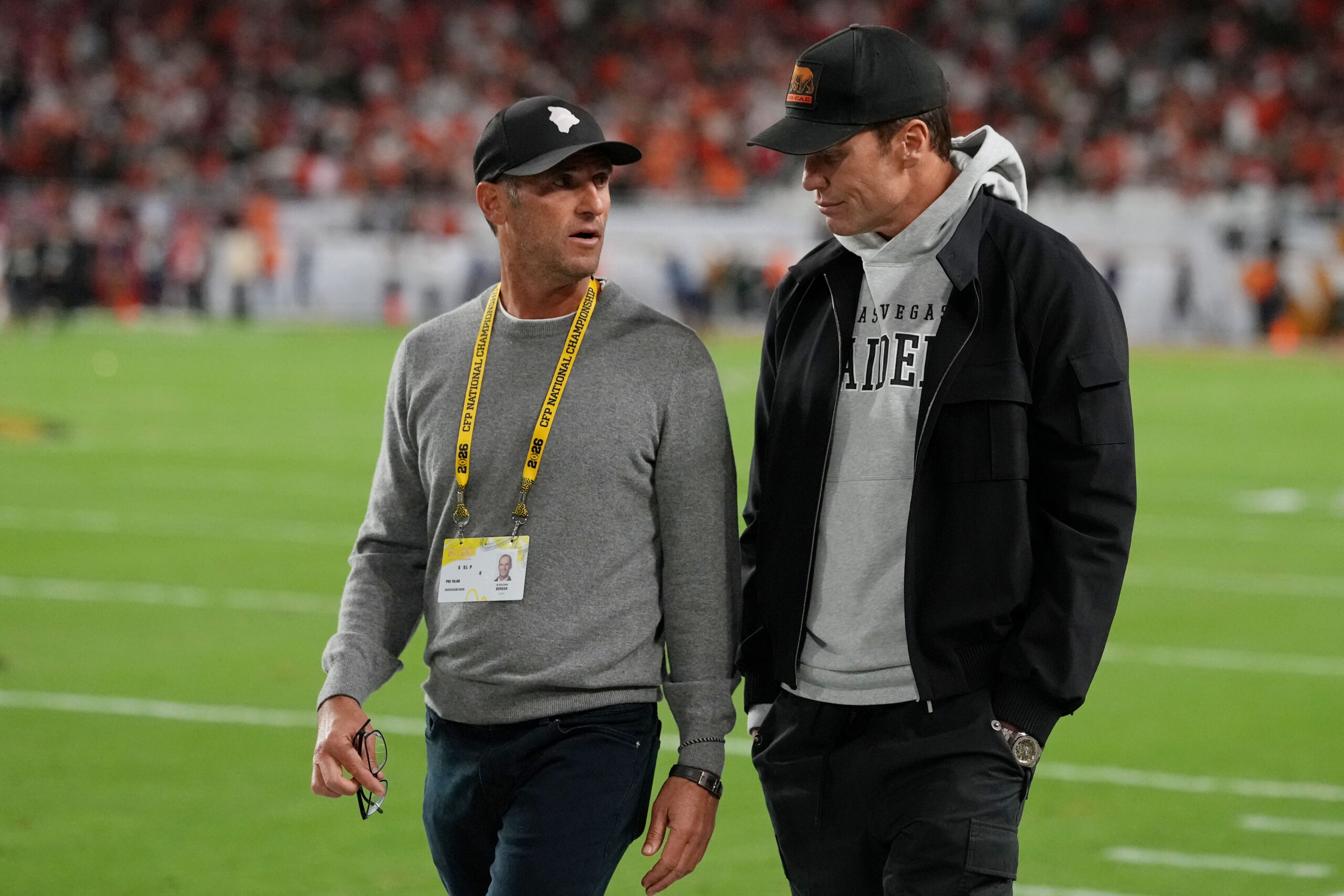
Jan 19, 2026; Miami Gardens, FL, USA; Egon Durban walks on the sideline with Tom Brady before the CFP National Championship college football game between the Indiana Hoosiers and the Miami Hurricanes at Hard Rock Stadium. Mandatory Credit: Kirby Lee-Imagn Images
Durban bought his initial 7.5% stake in December 2024, when the franchise was valued at $6.5 billion, alongside Discovery Land Co. chairman Michael Meldman, who acquired a portion at the same time, for a combined 15%. Roughly 17 months later, the underlying valuation rose to $9.9 billion, and Durban’s group is absorbing 25% more from First Football. The NFL approved a succession plan in March 2026 giving Durban the option to purchase majority control whenever Davis exits. Minority stake purchases, stacked in sequence with pre-approved options, function as a majority takeover assembled in installments.
What $11 Billion Buys a 3-14 Team
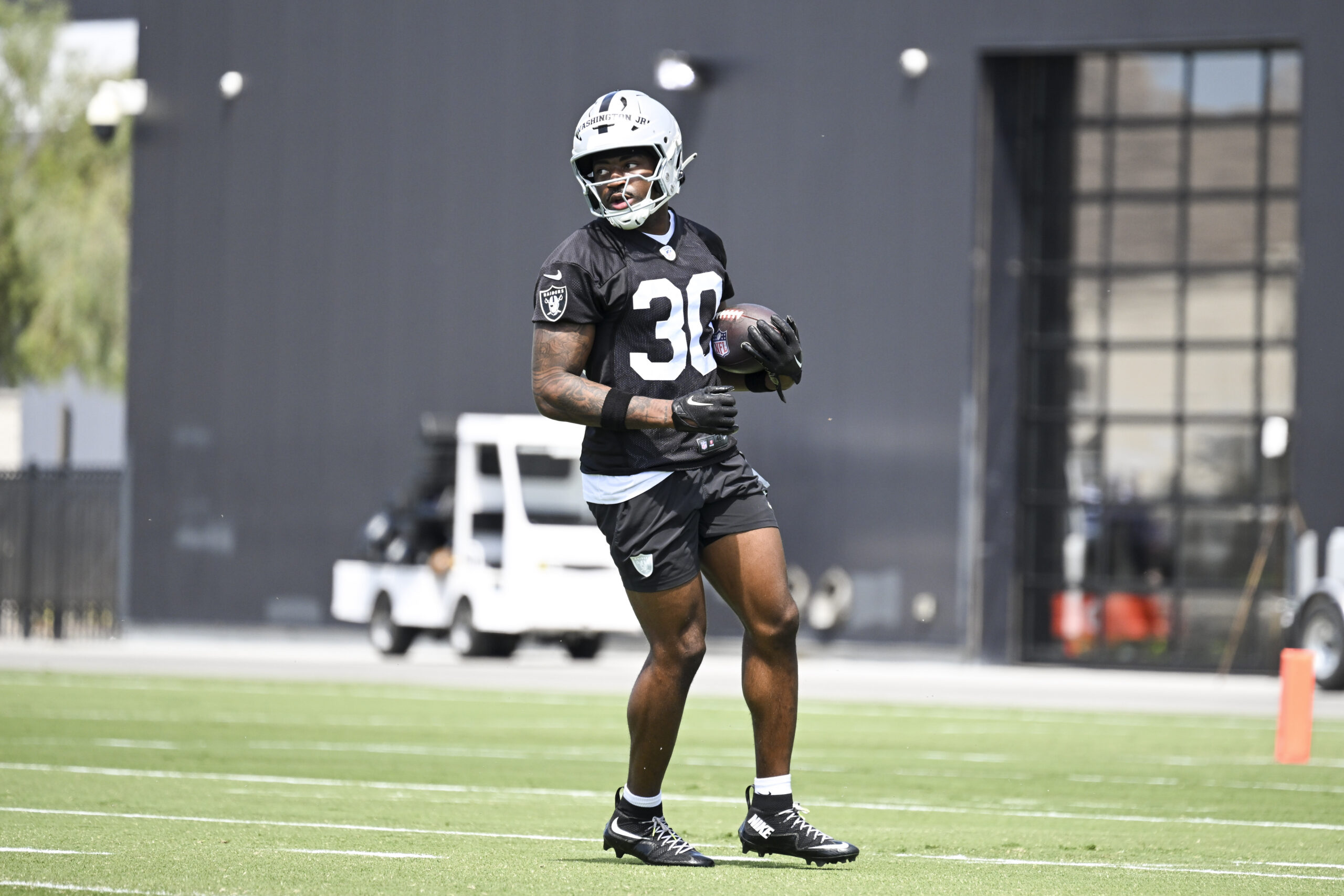
May 2, 2026; Henderson, NV, USA; Las Vegas Raiders running back Mike Washington Jr. (30) runs through a drill during a Rookie Minicamp at Intermountain Health Performance Center. Mandatory Credit: Candice Ward-Imagn Images
The Raiders posted a 3-14 record in 2025, dead last in the AFC West. The average NFL franchise sits at roughly $7.1 billion. The Raiders’ new deal cleared $11 billion in total consideration. That premium over the league average has nothing to do with wins. It has everything to do with Las Vegas as a market and Durban’s private equity pedigree signaling future revenue optimization. Fans watching the worst season in recent franchise history were simultaneously watching the most expensive ownership restructuring in Raiders history. The product on the field became irrelevant to the price tag.
The Corporate Playbook Hits the Sideline
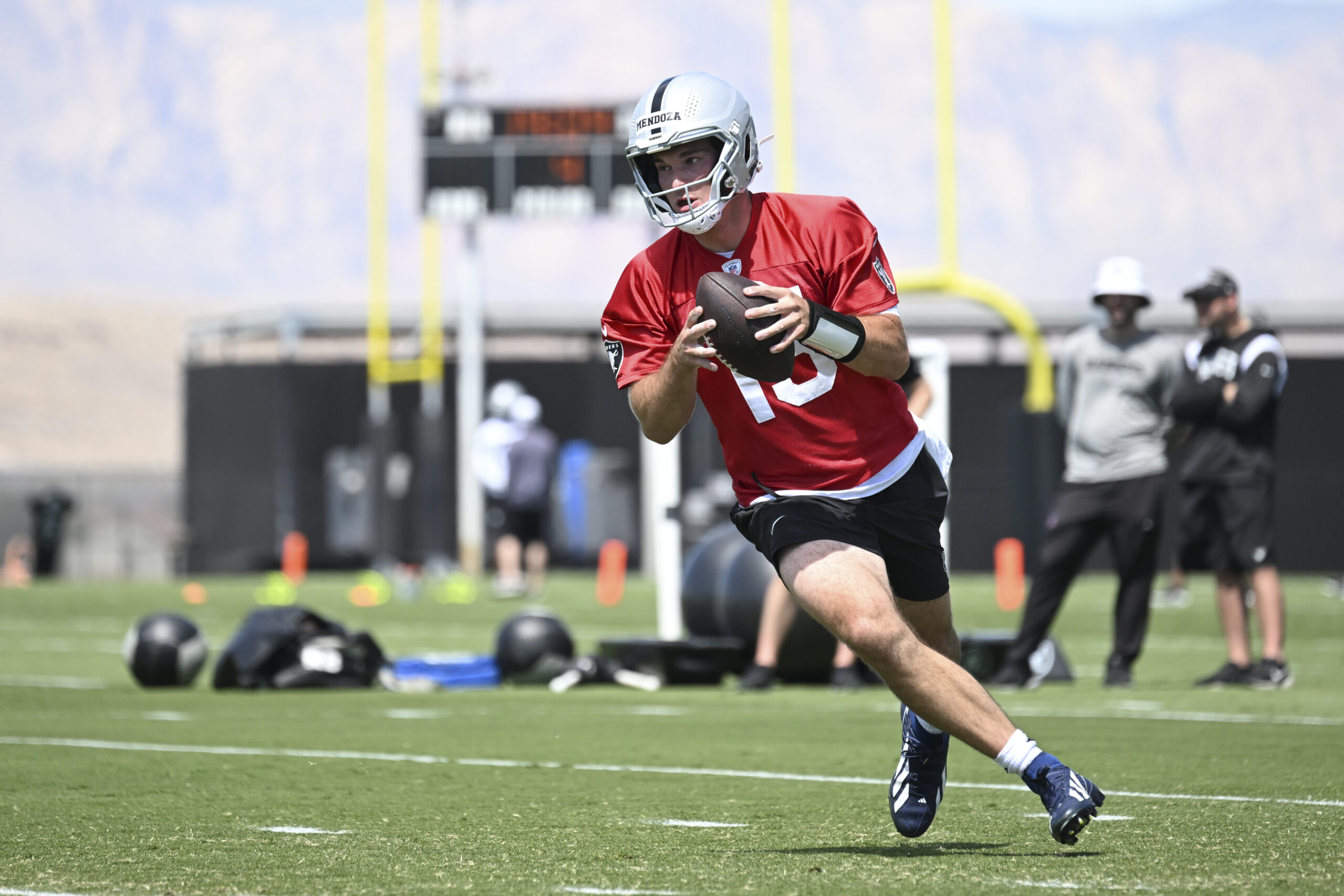
May 2, 2026; Henderson, NV, USA; Las Vegas Raiders quarterback Fernando Mendoza (15) runs through a drill during a Rookie Minicamp at Intermountain Health Performance Center. Mandatory Credit: Candice Ward-Imagn Images
Silver Lake itself is not on the NFL’s approved list of institutional private equity investors. Durban invests personally, sidestepping the restriction while carrying every tool from his PE toolkit. That distinction matters enormously. The NFL opened its doors to institutional investment firms in recent years, but the rules still restrict which firms can hold direct ownership stakes. So the co-CEO of a global technology investment firm buys in as a private individual, and the league pre-approves his path to controlling interest. Same brain. Same strategy. Different letterhead. Other aging NFL owners are watching this template very closely.
Tom Brady’s Shrinking Chair
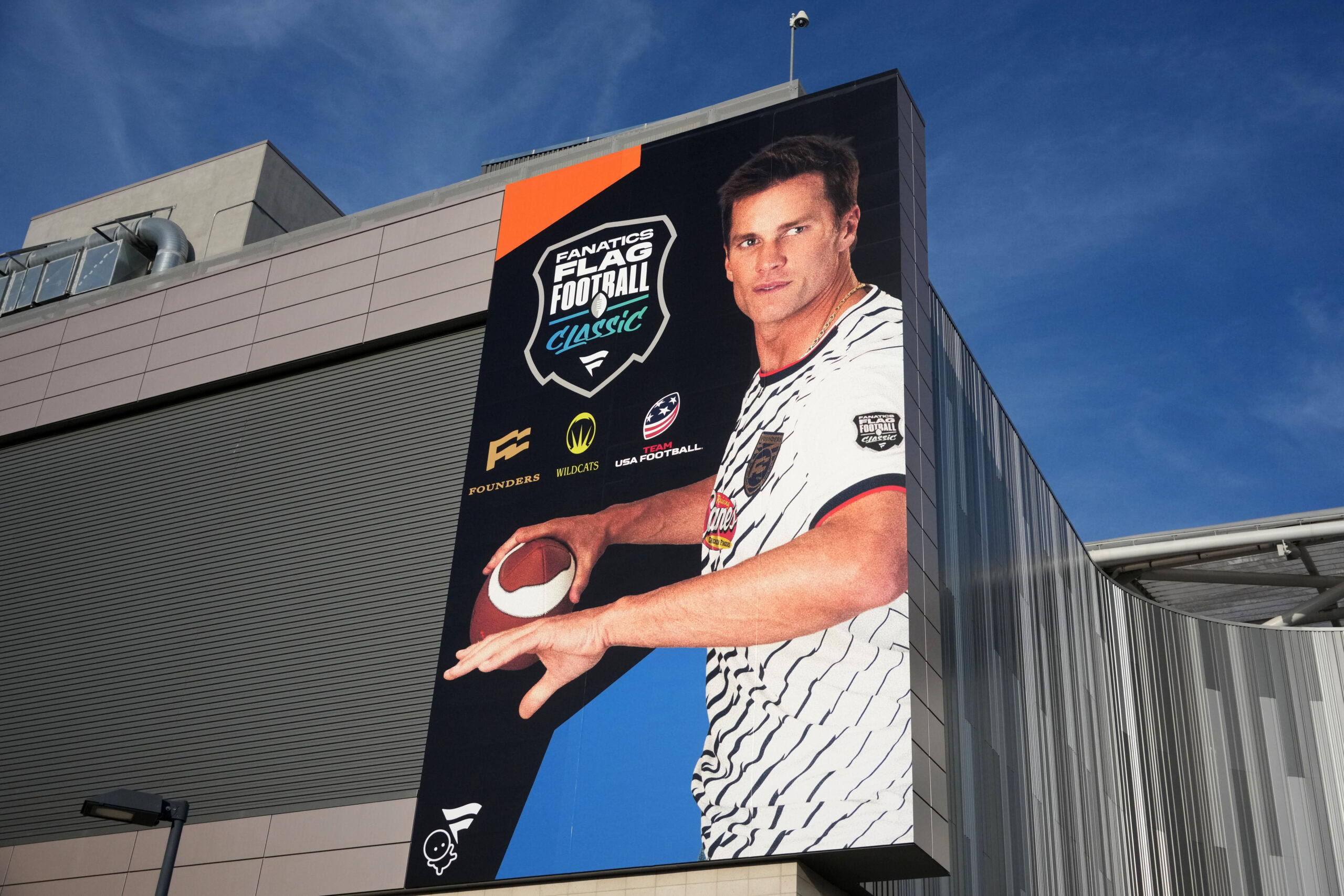
Mar 21, 2026; Los Angeles, CA, USA; An image of Founders FFC quarterback Tom Brady on the BMO Stadium facade during the Fanatics Flag Football Classic. Mandatory Credit: Kirby Lee-Imagn Images
Brady acquired his 5% stake in October 2024. He explored returning as a player-owner. The NFL rejected it. “I actually have inquired, and they don’t like that idea very much,” Brady said. Now Durban’s group controls roughly 40%. Brady’s 5% becomes a rounding error in the power structure. Seven Super Bowl rings, the most famous name in football history, and the league’s pre-approved successor is a tech executive most fans have never heard of. That contrast tells you exactly where the NFL’s priorities landed.
The Machine Behind the Curtain
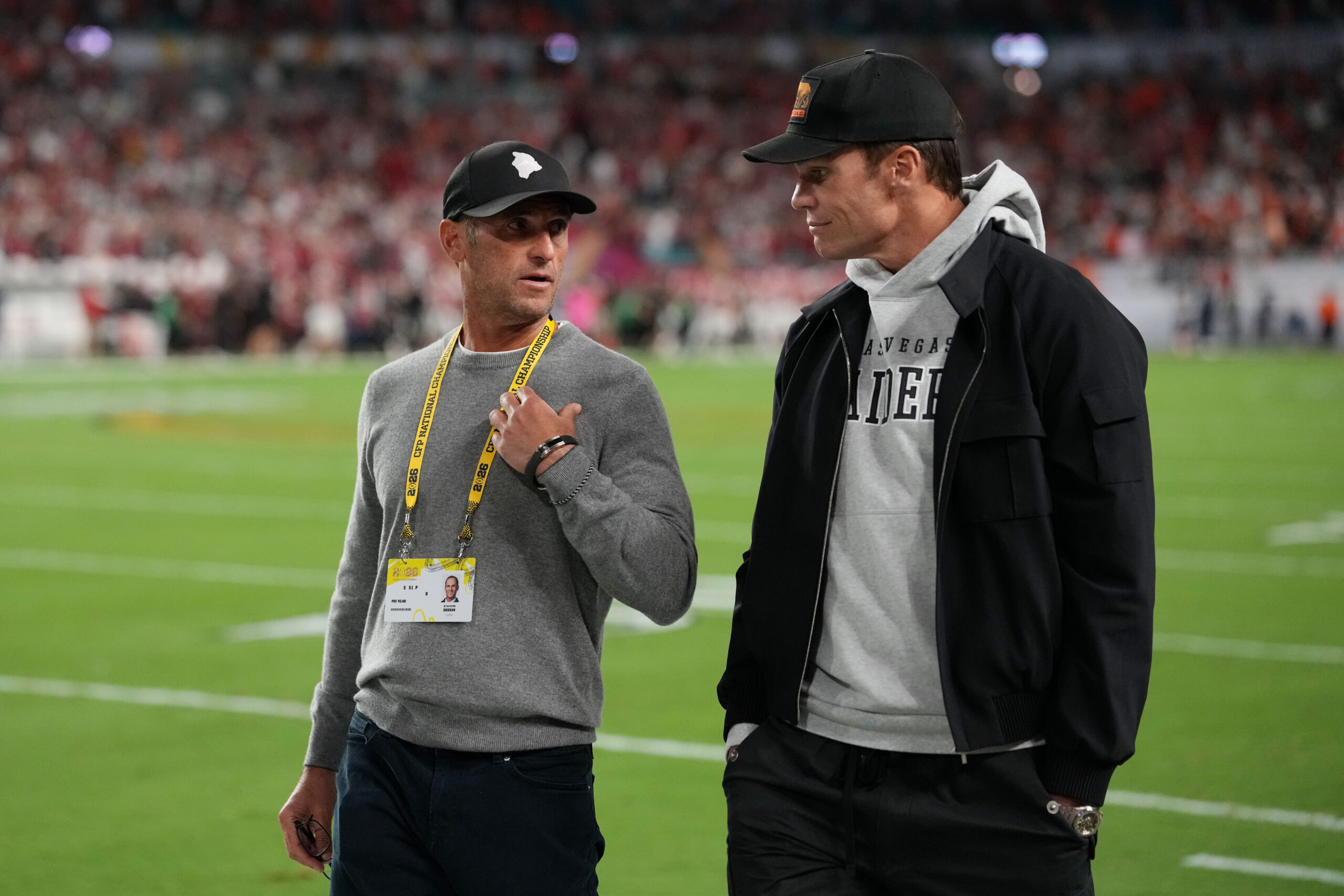
Jan 19, 2026; Miami Gardens, FL, USA; Egon Durban walks on the sideline with Tom Brady before the CFP National Championship college football game between the Indiana Hoosiers and the Miami Hurricanes at Hard Rock Stadium. Mandatory Credit: Kirby Lee-Imagn Images
The NFL requires a 30% minimum for a controlling stake. Davis holds the controlling interest. Durban’s group holds roughly 40% but lacks controlling designation. The succession plan bridges that gap: the moment Davis steps aside, Durban has first right to purchase majority control. League approves the successor. League sets the valuation. League structures the timeline. December 2024 stake. March 2026 succession vote. May 2026 acquisition. The institution decided the next owner before the current owner decided to leave. Same mechanism. Every step. One direction.
Decades of Davis, Ending on Someone Else’s Schedule
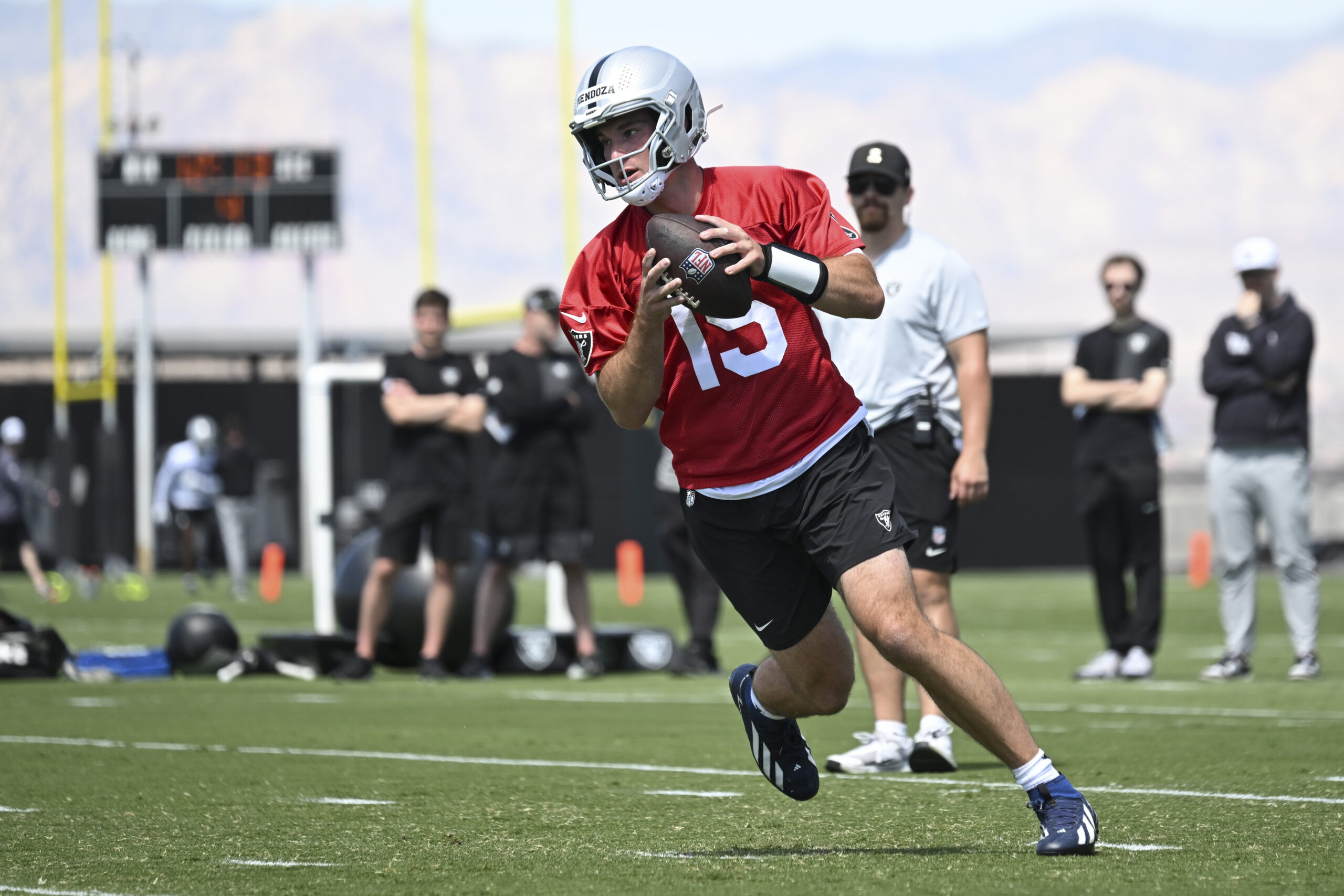
May 2, 2026; Henderson, NV, USA; Las Vegas Raiders quarterback Fernando Mendoza (15) runs through a drill during a Rookie Minicamp at Intermountain Health Performance Center. Mandatory Credit: Candice Ward-Imagn Images
A source close to Davis told ESPN that Davis “has no intention to sell his majority stake” and that the arrangement “sets up a smooth succession plan.” Read that twice. No intention to sell, but the succession plan is already approved. The Davis family has controlled this franchise since the early 1970s. Decades of family ownership, and the exit architecture was voted into place before Davis said a word about leaving. “Smooth” is doing extraordinary work in that sentence.
The Blueprint Every Owner Will Copy
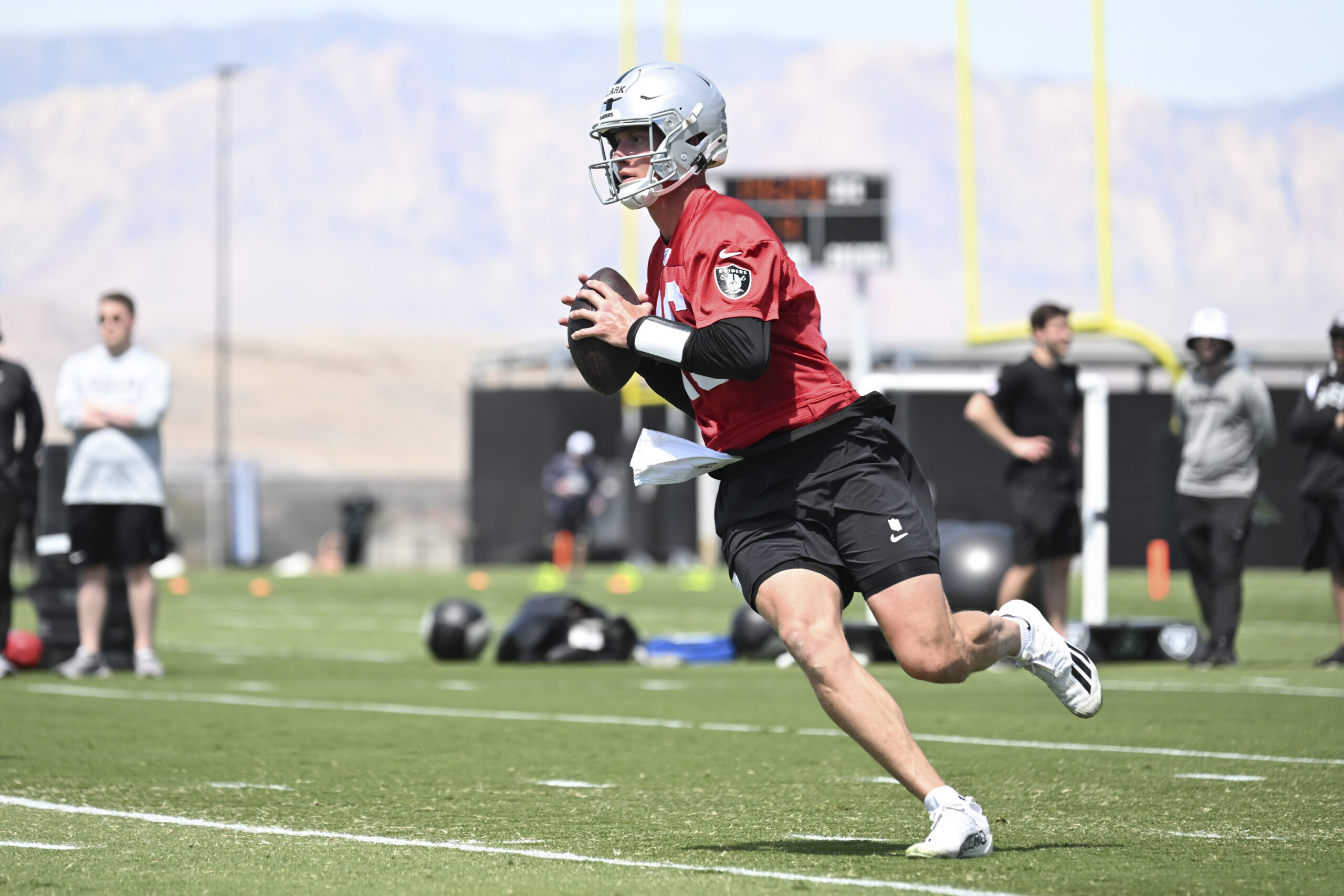
May 2, 2026; Henderson, NV, USA; Las Vegas Raiders quarterback Jacob Clark (16) runs through a drill during a Rookie Minicamp at Intermountain Health Performance Center. Mandatory Credit: Candice Ward-Imagn Images
This succession structure sets a precedent that rewrites how NFL ownership transfers work. Pre-arranged transitions replace open-market bidding. The next owner gets chosen by the current owner and league insiders, not by the highest bidder. For aging dynasty owners across the league, the Raiders model offers a template: bring in a PE-connected partner, let them accumulate minority stakes, get the league to pre-approve the succession option, and the transition happens without a messy public auction. The era of family-to-family franchise inheritance just got a formal alternative.
Who Profits, Who Pays
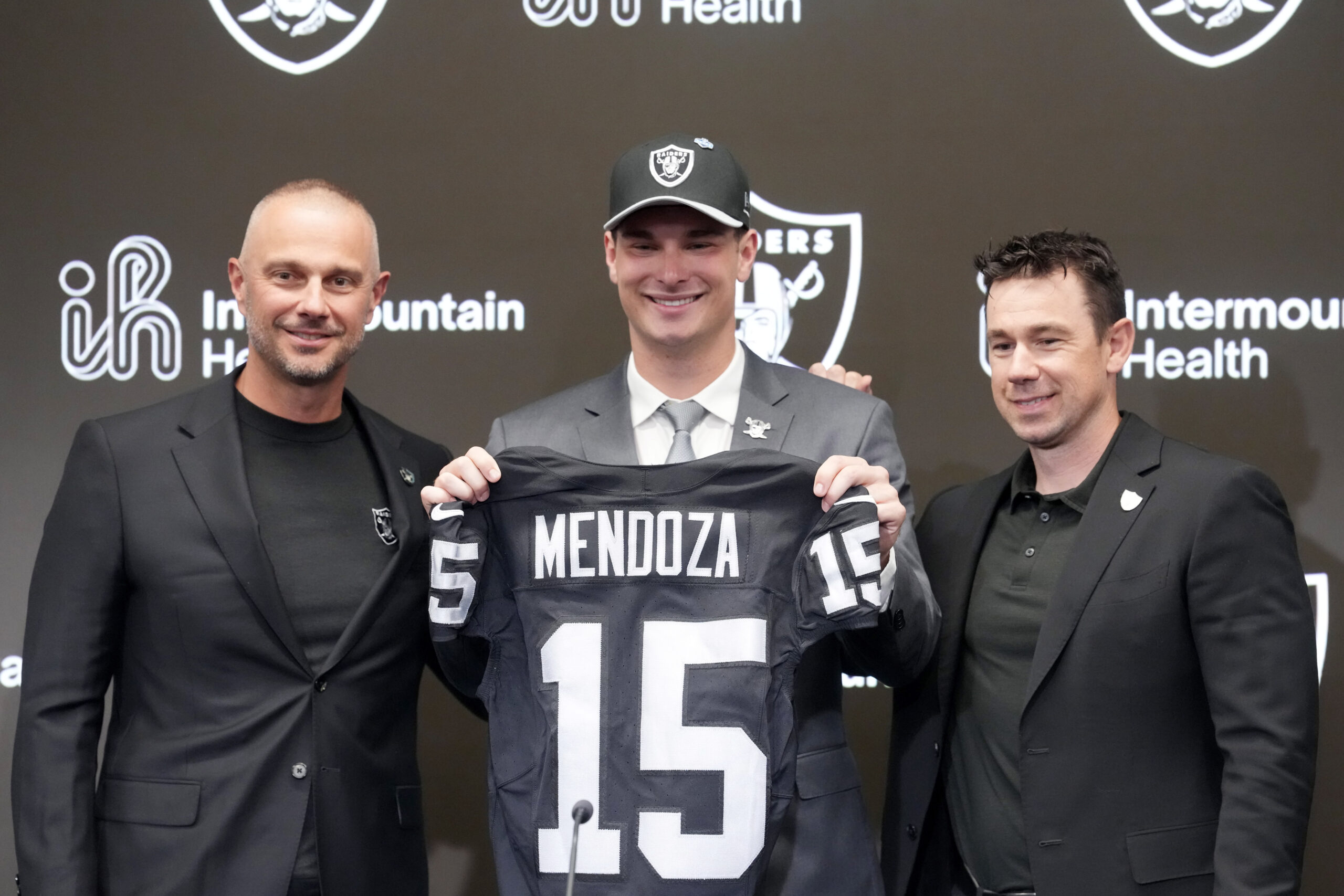
Apr 24, 2026; Henderson, NV, USA; Las Vegas Raiders quarterback Fernando Mendoza (center) poses with jersey with general manager John Spytek (left) and head coach Klint Kubiak at introductory press conference at Intermountain Health Performance Center after being selected as the No. 1 pick in the 2026 NFL Draft. Mandatory Credit: Kirby Lee-Imagn Images
The 31 other NFL owners split roughly $1.1 billion from the flip tax alone, calculated as 10% of the $11 billion total consideration. Durban’s group locks in a franchise that has appreciated dramatically since his entry. Davis preserves his controlling stake at the new valuation. The losers: fans who assumed their team’s identity was tied to its founding family, Brady’s diminishing influence at 5%, and future bidders locked out of a franchise that was pre-sold before it hit the market. The wealth transfers here are staggering, and every one of them was pre-arranged.
The Cascade That Keeps Breaking
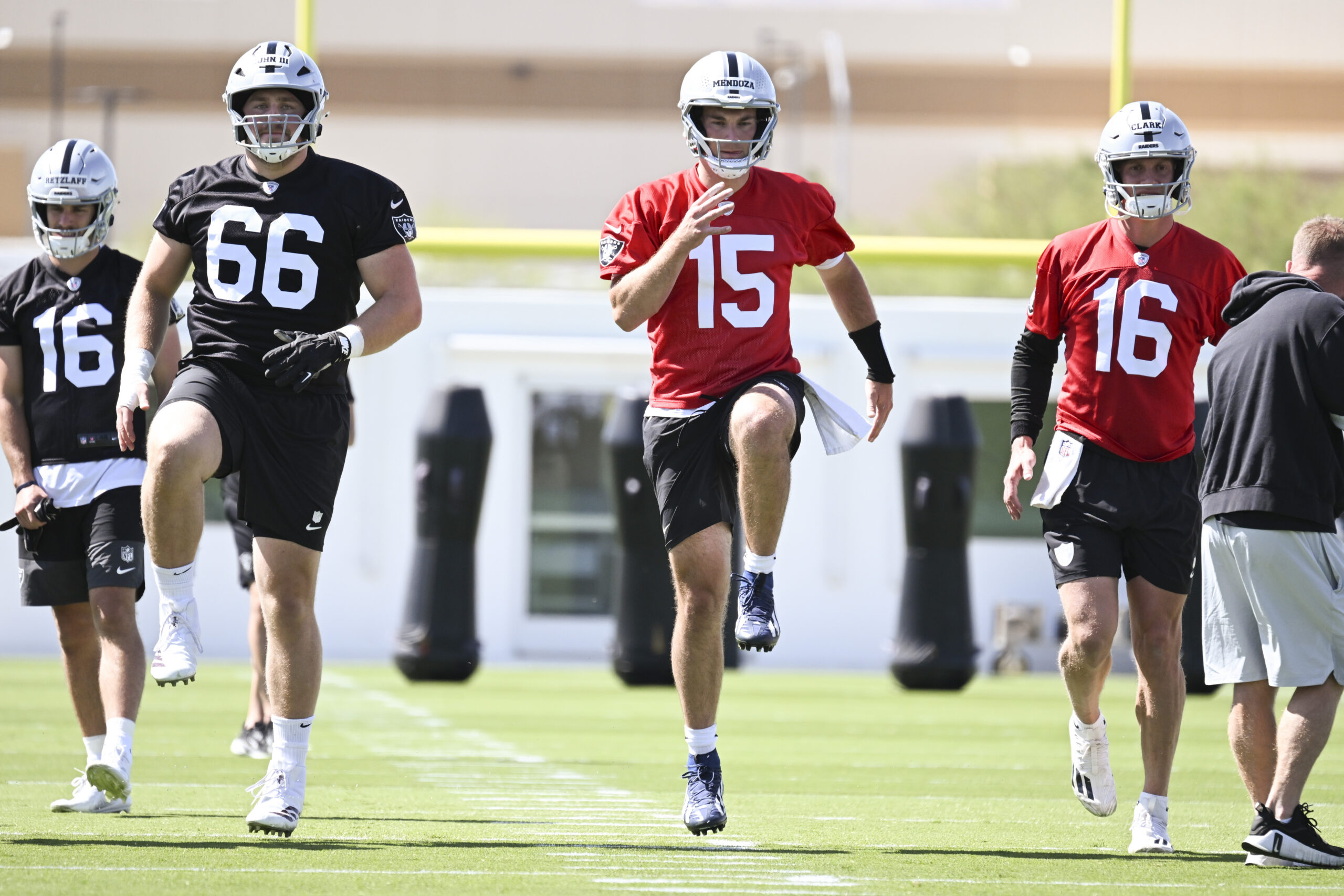
May 2, 2026; Henderson, NV, USA; Las Vegas Raiders quarterback Fernando Mendoza (15) warms up during a Rookie Minicamp at Intermountain Health Performance Center. Mandatory Credit: Candice Ward-Imagn Images
If Davis sells in the future, Durban has first right of refusal under the league-approved succession plan. If Davis stays, Durban at roughly 40% still shapes board decisions while Davis holds the title. Every scenario leads to the same destination. More tech money will follow this model into NFL ownership. Franchise valuations will keep climbing as PE capital competes for entry. The Raiders were not sold in May. They were sold in March, when the league voted to approve the exit plan. Everything since has been paperwork. Is this the smartest succession plan in NFL history—or the moment family-owned football officially died? Sound off in the comments.