

The podium microphone was live at Steelers OTAs when Aaron Rodgers, 42 years old and entering year 22, said the two words that closed a generation of football. “This is it.” Four MVP trophies. One Super Bowl ring. A career that started with a draft-day slide nobody in Green Bay’s front office saw coming, ending now in Pittsburgh, the same city whose defense he beat to win that lone championship. The man who dominated individual awards like no quarterback of his era picked the strangest possible stage to say goodbye.
The Full-Circle Reunion
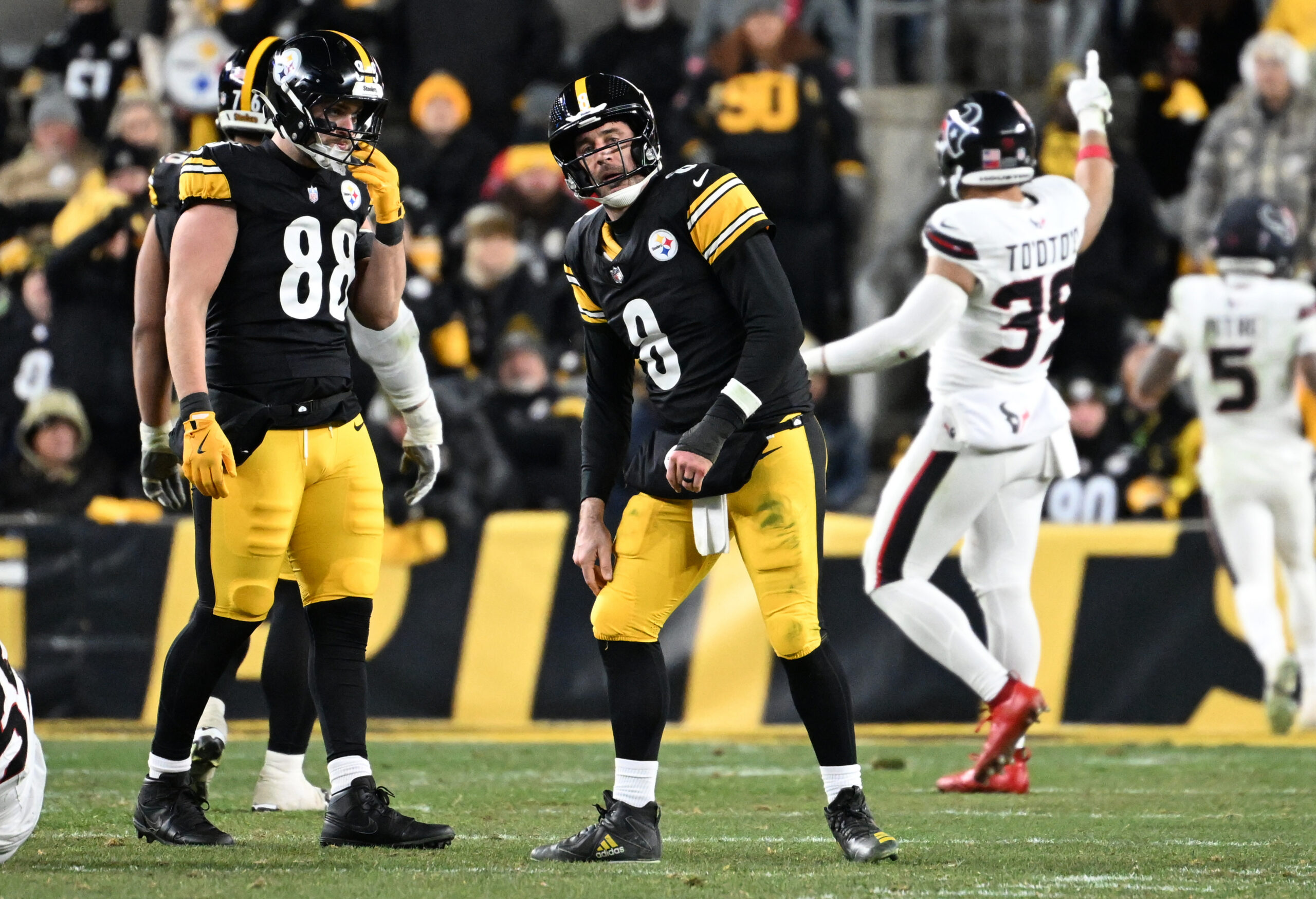
Jan 12, 2026; Pittsburgh, PA, USA; Pittsburgh Steelers quarterback Aaron Rodgers (8) and tight end Pat Freiermuth (88) react after a fumble was returned for a touchdown during the second half of an AFC Wild Card Round game against the Houston Texans at Acrisure Stadium. Mandatory Credit: Barry Reeger-Imagn Images
Rodgers signed with Pittsburgh to reunite with Mike McCarthy, the coach who guided him through 13 seasons in Green Bay and that sole Super Bowl victory. McCarthy was hired in January 2026 as the Steelers’ next head coach, succeeding Mike Tomlin. McCarthy was fired mid-season from the Packers in 2018. Rodgers eventually left Green Bay too. Now both have landed in the same building again, older, carrying different scars, chasing something neither could name as a trophy. Rodgers told reporters he made his decision “after the draft concluded,” once he saw the roster Pittsburgh assembled around him for one last run.
The Draft-Day Ghost
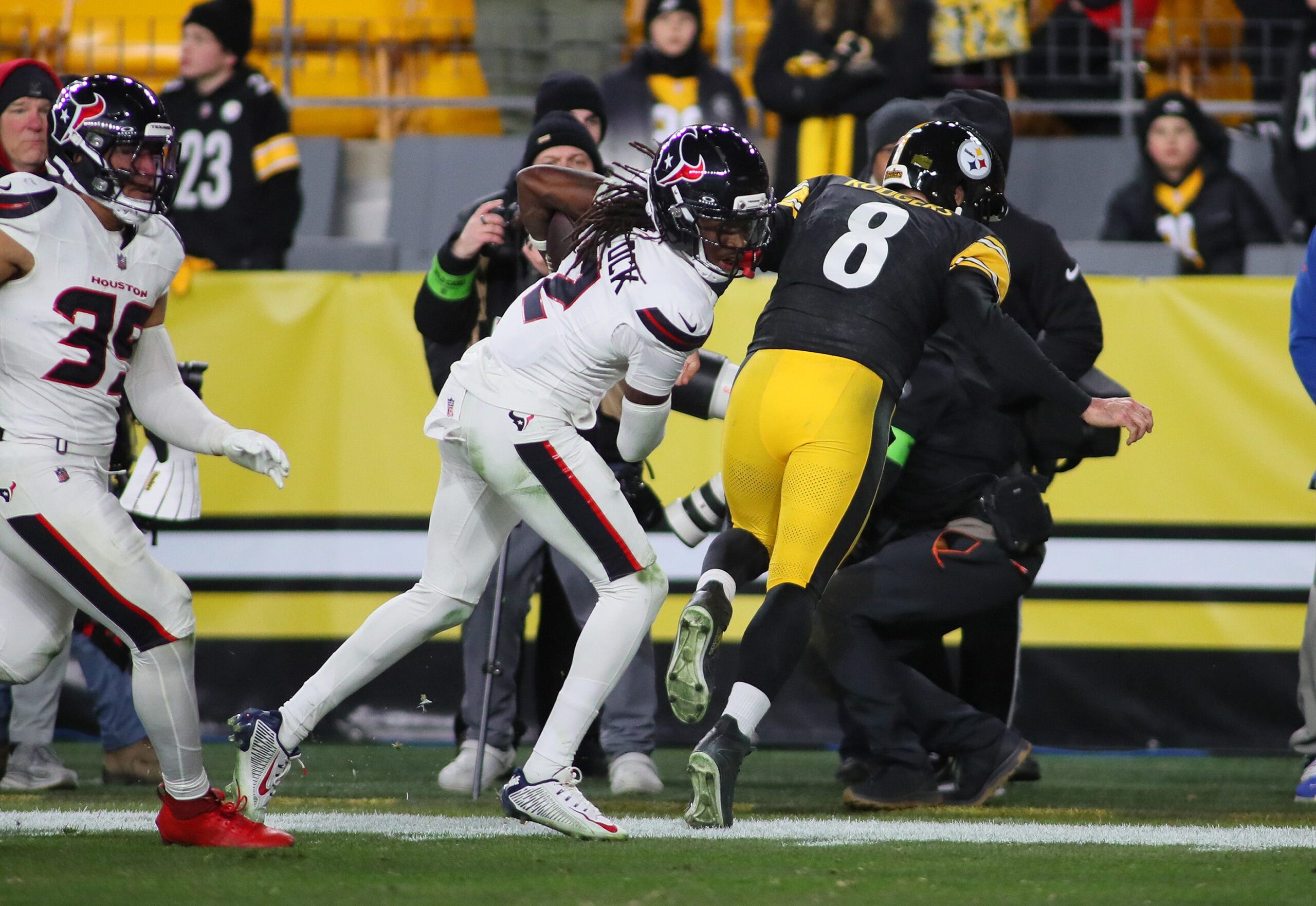
Houston Texans safety Calen Bullock (2) shoves Pittsburgh Steelers quarterback Aaron Rodgers (8) out of the way while on his way to the end zone after intercepting a pass during the second half of the NFL Wild Card game at Acrisure Stadium in Pittsburgh, PA on January 12, 2026.
Back in 2005, Rodgers plummeted through round one. The Steelers reportedly considered him at pick 30. Green Bay grabbed him at 24 instead, then sat him behind Brett Favre for three full seasons. Everyone assumed a quarterback that talented, once unleashed, would stack championships. Four MVPs later, that assumption looks naive. The NFL kept proving that one extraordinary arm couldn’t outrun a sport designed to punish individual brilliance with team-wide failure, and Rodgers’ career became the longest proof of concept.
Four Trophies, One Ring
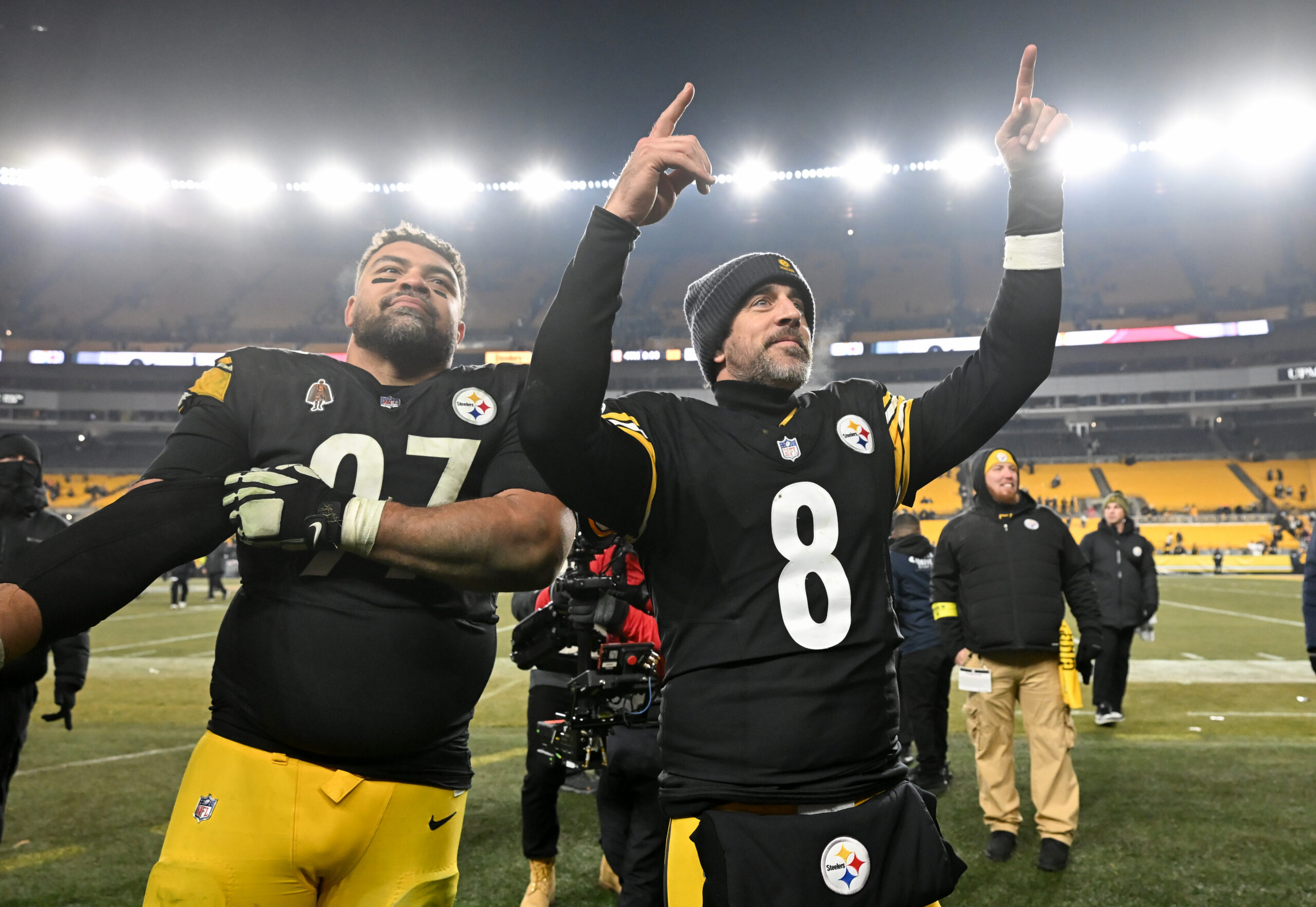
Jan 4, 2026; Pittsburgh, Pennsylvania, USA; Pittsburgh Steelers quarterback Aaron Rodgers (8) and defensive tackle Cameron Heyward (97) celebrate after defeating the Baltimore Ravens at Acrisure Stadium. Mandatory Credit: Barry Reeger-Imagn Images
Rodgers won MVP awards in 2011, 2014, 2020, and 2021. That 2021 honor made him the fifth player to win consecutive MVPs and the first since Peyton Manning in 2008. His Super Bowl ring came in the 2010 season, Super Bowl XLV, where he earned game MVP honors against Pittsburgh. Then fifteen more seasons of elite play. Zero more championships. The ring arrived in his sixth year. He spent the next sixteen proving you can be the best player in football and still never get back.
The System That Ate Him

Jan 12, 2026; Pittsburgh, PA, USA; Pittsburgh Steelers quarterback Aaron Rodgers (8) warms up before an AFC Wild Card Round game against the Houston Texans at Acrisure Stadium. Mandatory Credit: Barry Reeger-Imagn Images
The NFL’s salary cap is designed to prevent dynasties. Rodgers’ excellence priced Green Bay out of surrounding him with enough talent to win again. Every MVP season raised his market value. Every contract extension squeezed the roster around him. Tom Brady took pay cuts. Rodgers took what he earned. Neither approach is wrong, but one produced seven rings and the other produced four individual trophies and a career spent watching lesser quarterbacks hoist the Lombardi. Football’s structure punished the very dominance it rewarded him for.
The Numbers That Sting
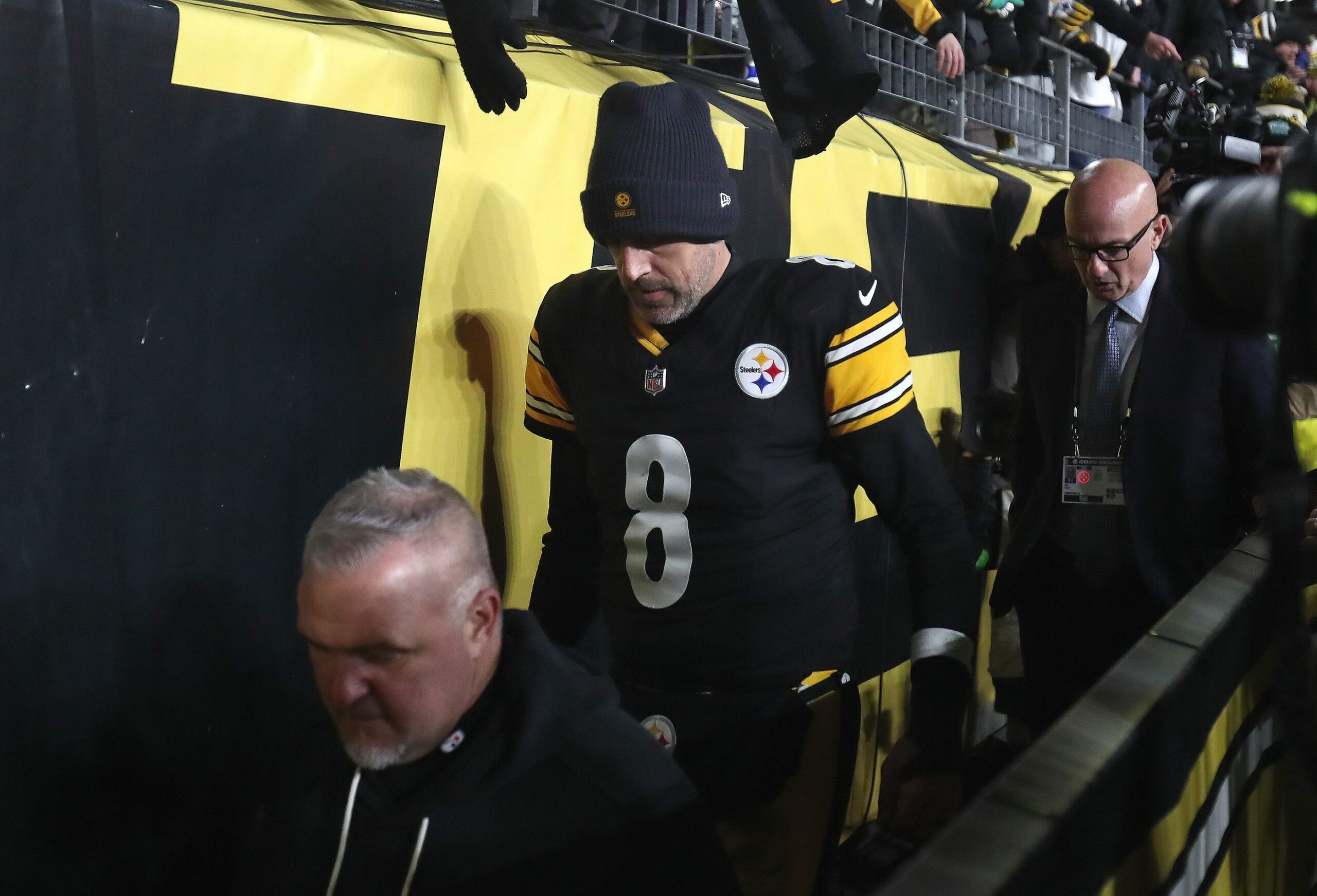
Pittsburgh Steelers quarterback Aaron Rodgers (8) walks into the tunnel after suffering a crushing 30-6 defeat by the Houston Texans during the NFL Wild Card game at Acrisure Stadium in Pittsburgh, PA on January 12, 2026.
Among quarterbacks with four or more MVP awards, Rodgers owns the fewest Super Bowl victories. Brady has seven. Manning has two. Rodgers has one, earned before most of his MVP seasons even happened. His championship came early, then the league spent fifteen years reminding him that individual brilliance and team glory run on separate tracks. Patrick Mahomes already has multiple rings with fewer seasons played. That comparison will follow Rodgers into every Hall of Fame conversation for the rest of his life.
Who Pays for the Legacy Gap
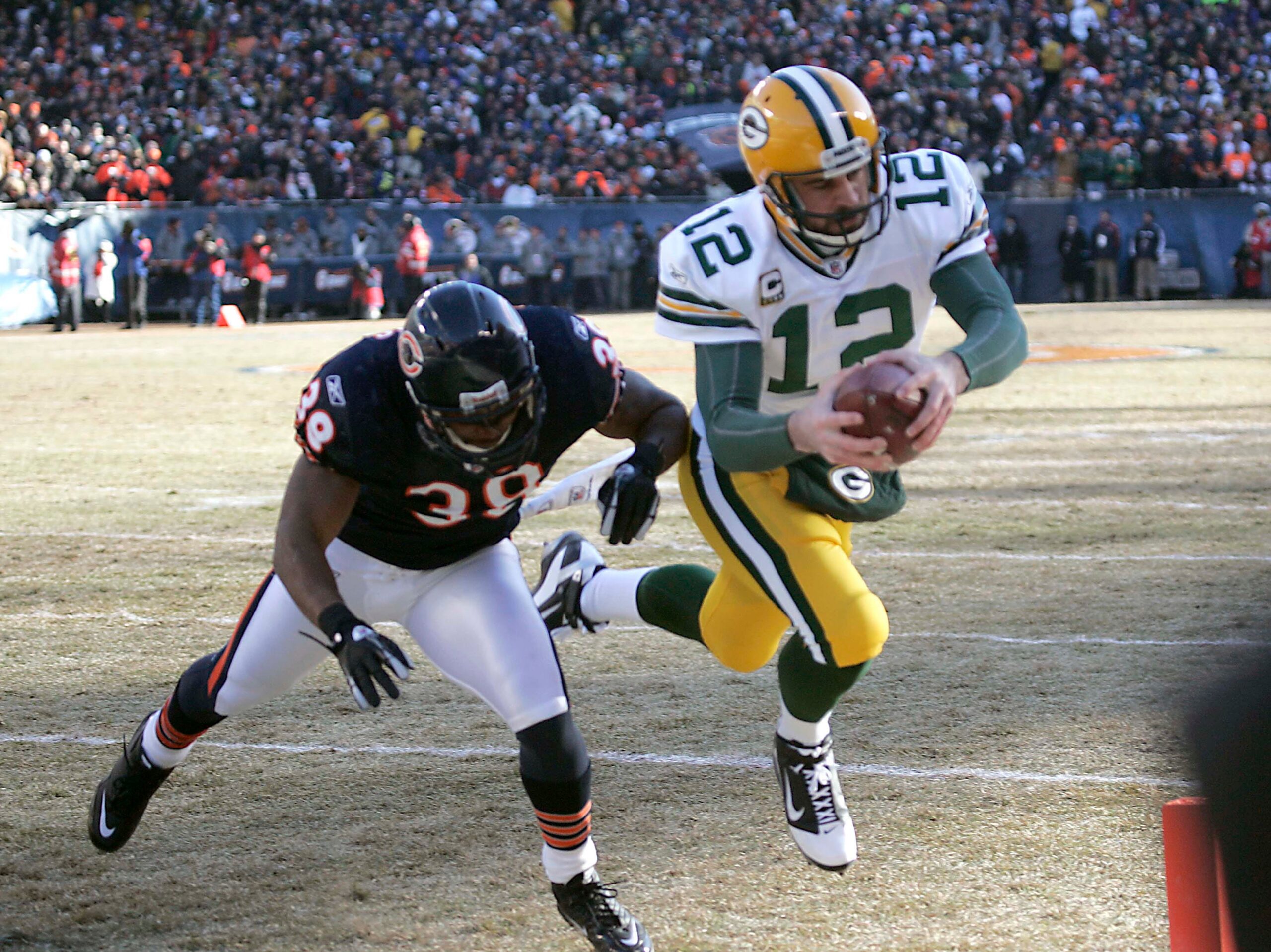
Green Bay Packers quarterback Aaron Rodgers gets past Chicago Bears defender Danieal Manning to score during the NFC Championship game between the Green Bay Packers and the Chicago Bears on January 23, 2011, at Soldier Field in Chicago.
Green Bay invested two decades in a quarterback who delivered everything except repeat championships. Rodgers eventually left the Packers, and the franchise entered a rebuild it still hasn’t finished. The ripple hit every team that traded for him afterward, too. Each organization bet that surrounding Rodgers with pieces would finally unlock a second ring. None did. The economic cost of chasing quarterback-driven championships with a player whose price tag consumed the roster became the NFL’s most expensive recurring lesson.
The Rule Nobody Admits
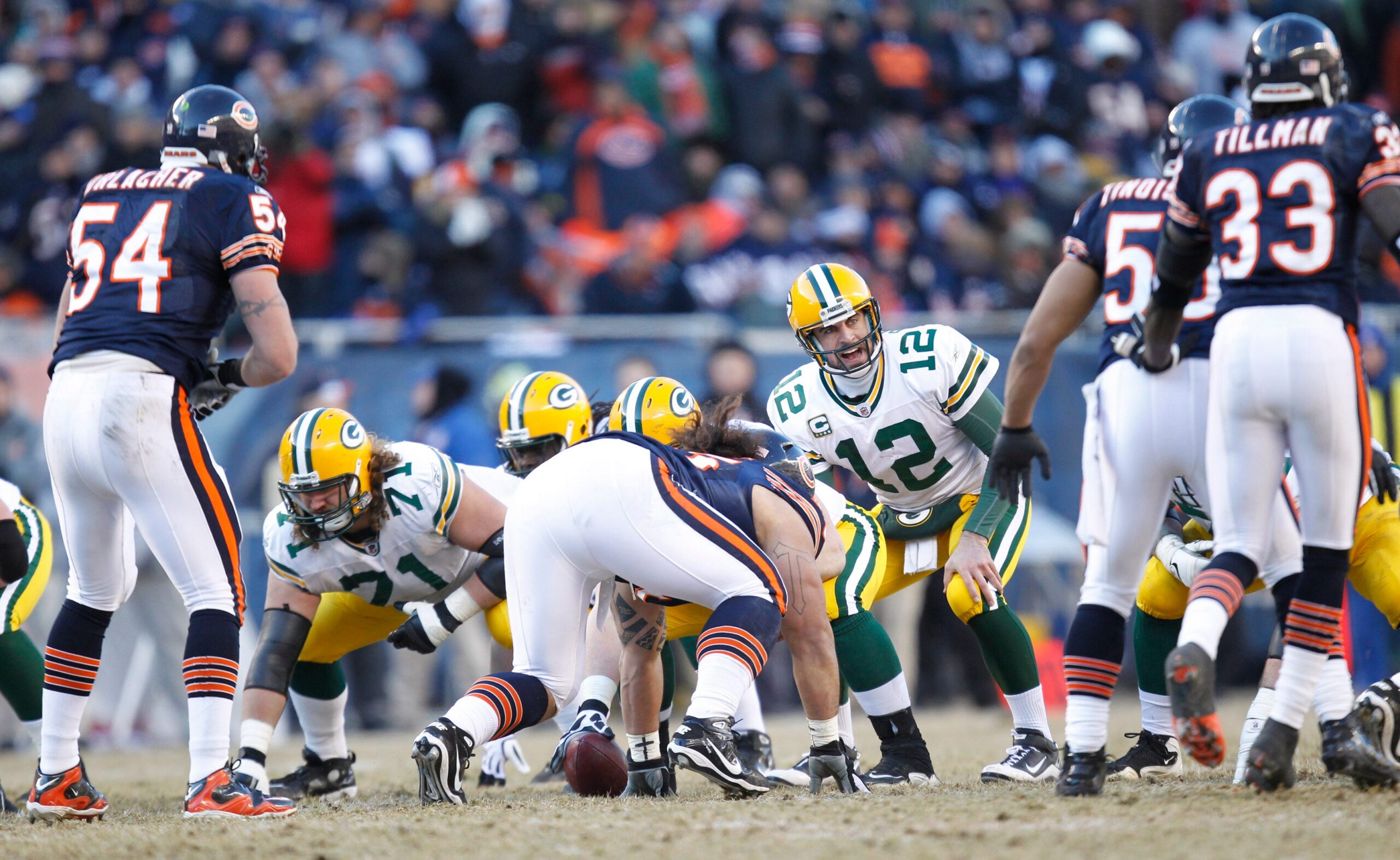
Green Bay Packers’ Aaron Rodgers during the NFC Championship game against the Chicago Bears on January, 23, 2011, at Soldier Field in Chicago.
Rodgers’ career established something front offices will study for decades: sustained quarterback excellence and championship accumulation are separate achievements in the modern NFL. Once you see that, his entire legacy reframes. He didn’t underperform. The sport’s structure made his outcome nearly inevitable. His Super Bowl victory came during a narrow window when his salary, his supporting cast, and his peak aligned. That window opened once in 22 seasons. Every other year, at least one variable was wrong. That pattern will repeat across the league.
One Last Season in Pittsburgh
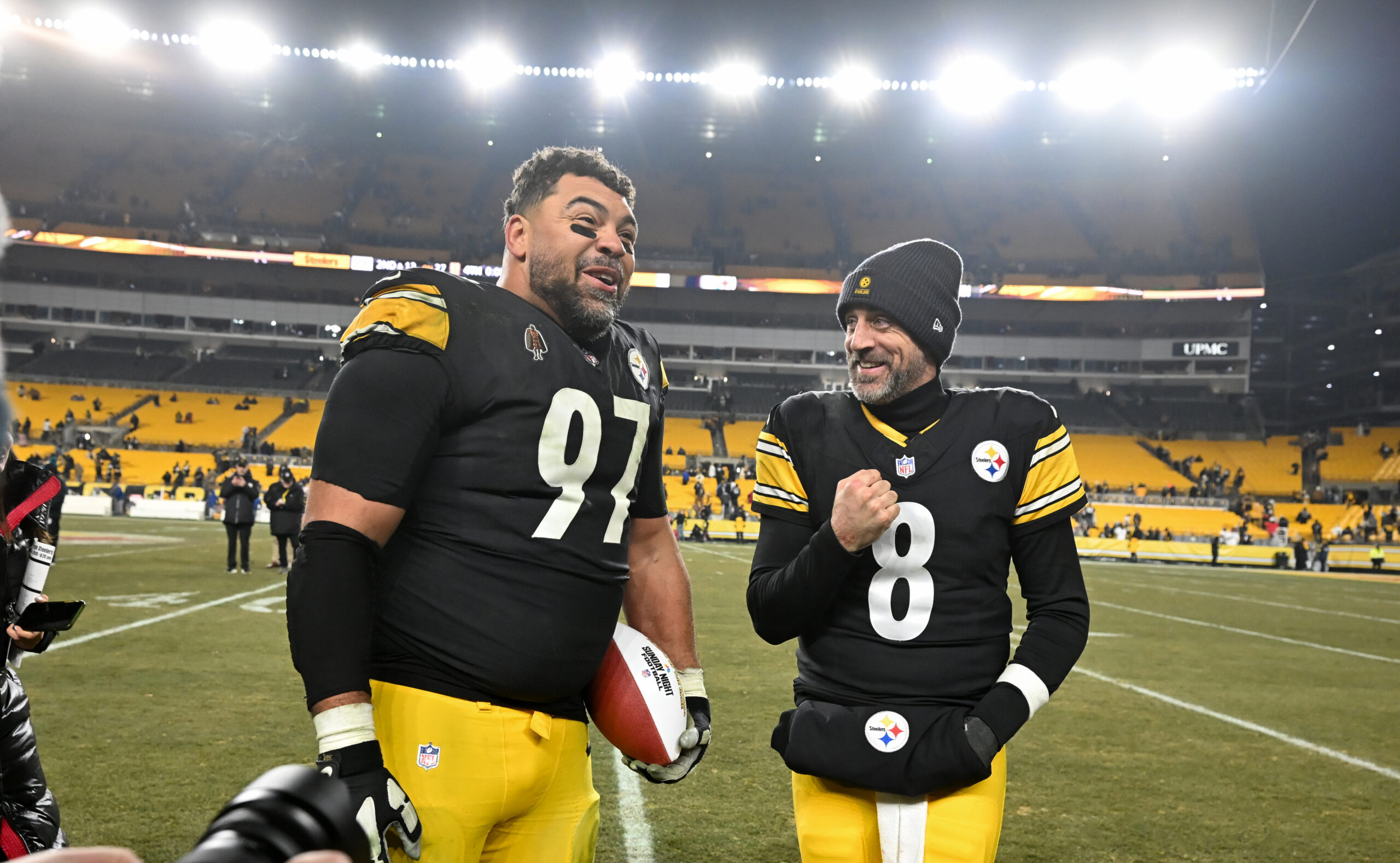
Jan 4, 2026; Pittsburgh, Pennsylvania, USA; Pittsburgh Steelers defensive tackle Cameron Heyward (97) and quarterback Aaron Rodgers (8) celebrate after defeating the Baltimore Ravens at Acrisure Stadium. Mandatory Credit: Barry Reeger-Imagn Images
Rodgers enters 2026 turning 43 in December, reunited with McCarthy, wearing the jersey of the team he beat for his only ring. If Pittsburgh makes a playoff run, the narrative writes itself. If they don’t, the career ends exactly how the pattern predicted: one more elite quarterback season, zero additional championships. Every team in the AFC North now faces a farewell-tour Rodgers with nothing left to lose and a coaching staff that already knows how to win with him.
The Debate That Outlives the Career

Jan 12, 2026; Pittsburgh, PA, USA; Pittsburgh Steelers quarterback Aaron Rodgers (8) audibles during the second half of an AFC Wild Card Round game against the Houston Texans at Acrisure Stadium. Mandatory Credit: Charles LeClaire-Imagn Images
Rodgers will enter the Hall of Fame. Nobody disputes that. The argument that follows him there is whether one ring diminishes four MVPs or whether four MVPs expose how broken the championship metric always was. He played 22 NFL seasons and proved that the most talented quarterback in any given year can still watch someone else celebrate in February. The Steelers gave him one more shot at changing that math. By next February, the football world finds out if the system bends for Aaron Rodgers one final time. Four MVPs and one ring — does that make Aaron Rodgers a legend the system failed, or a great quarterback the championship era exposed? Drop your verdict in the comments.