
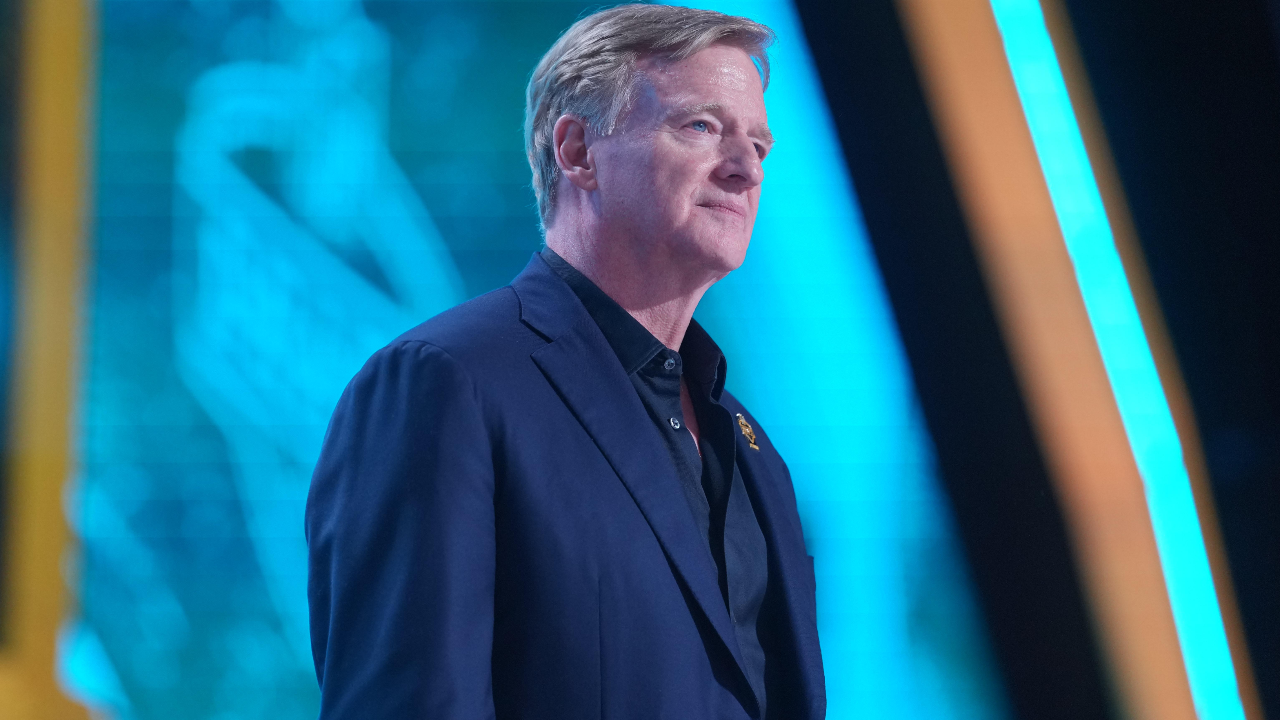
Roger Goodell stood at a podium in Orlando and did something NFL commissioners rarely do in public: he narrowed a franchise’s future to two pins on a map. One in Illinois. One in Indiana. Not Chicago proper. Goodell made that clear without ever saying the words “Chicago is out.” He called both sites “viable,” praised the Bears for doing their homework, and stressed the importance of a decision “relatively soon.” Behind him, 31 other owners listened. Somewhere in the room, a century-old stadium started losing its grip.
The Clock Goodell Set
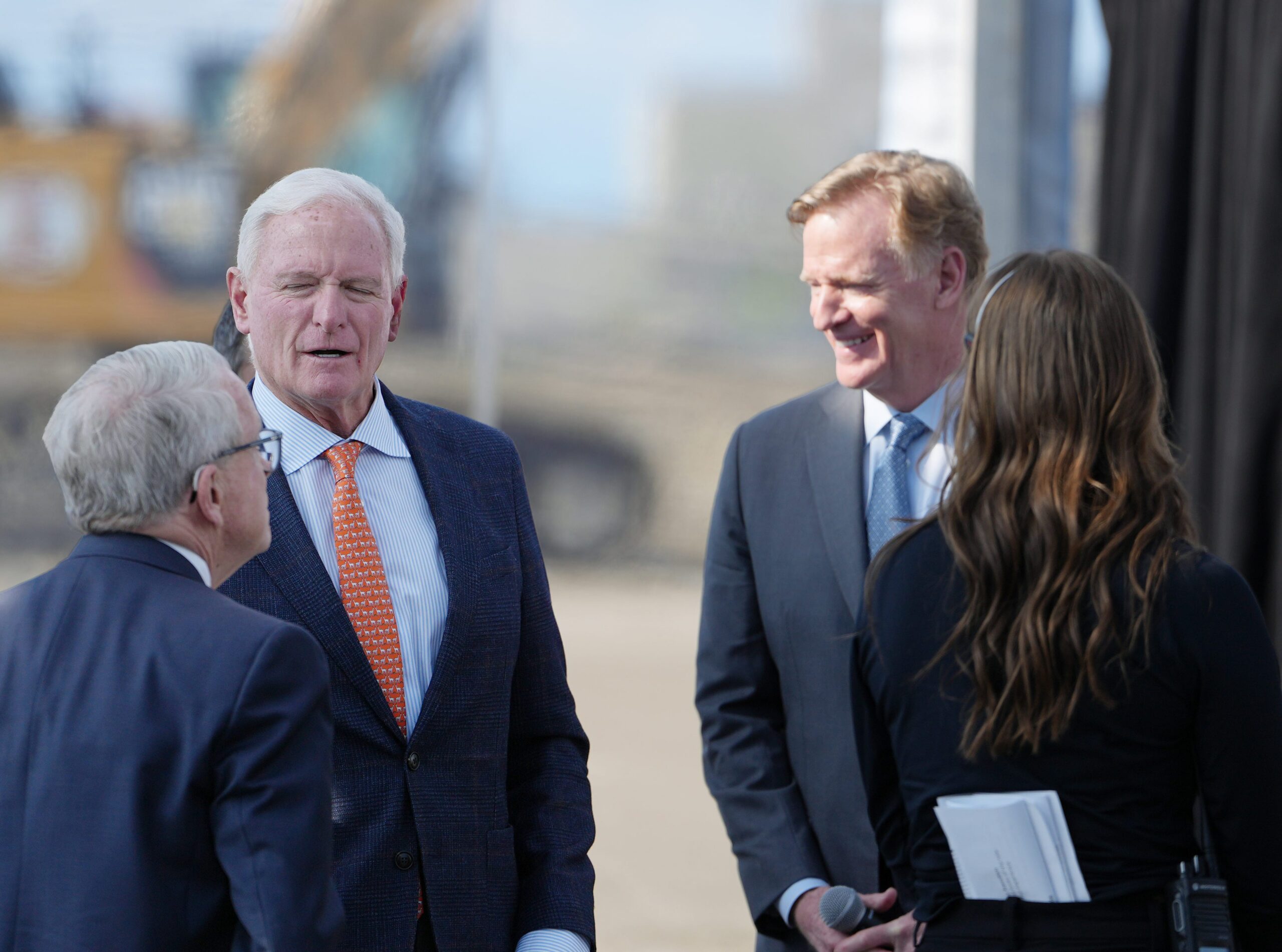
Ohio Governor Mike DeWine chats with Jimmy Haslam and NFL Commissioner Roger Goodell before they take the stage during the Cleveland Browns groundbreaking ceremony for the new Huntington Bank Field in Brook Park, Ohio on April 30, 2026.
Bears President/CEO Kevin Warren put a date on the pressure: “The target is to make sure that we have a decision made by … late spring, early summer.” That lines up with Illinois’ spring legislative session, which ends May 31. Miss that window and the political math changes entirely, requiring supermajority votes instead of simple ones. Indiana doesn’t have that problem. Its stadium bill — Senate Bill 27 — already cleared both chambers with lopsided bipartisan margins, including a 95-4 House vote. One state is ready. The other is still negotiating the terms of its own offer.
Two States, One Franchise
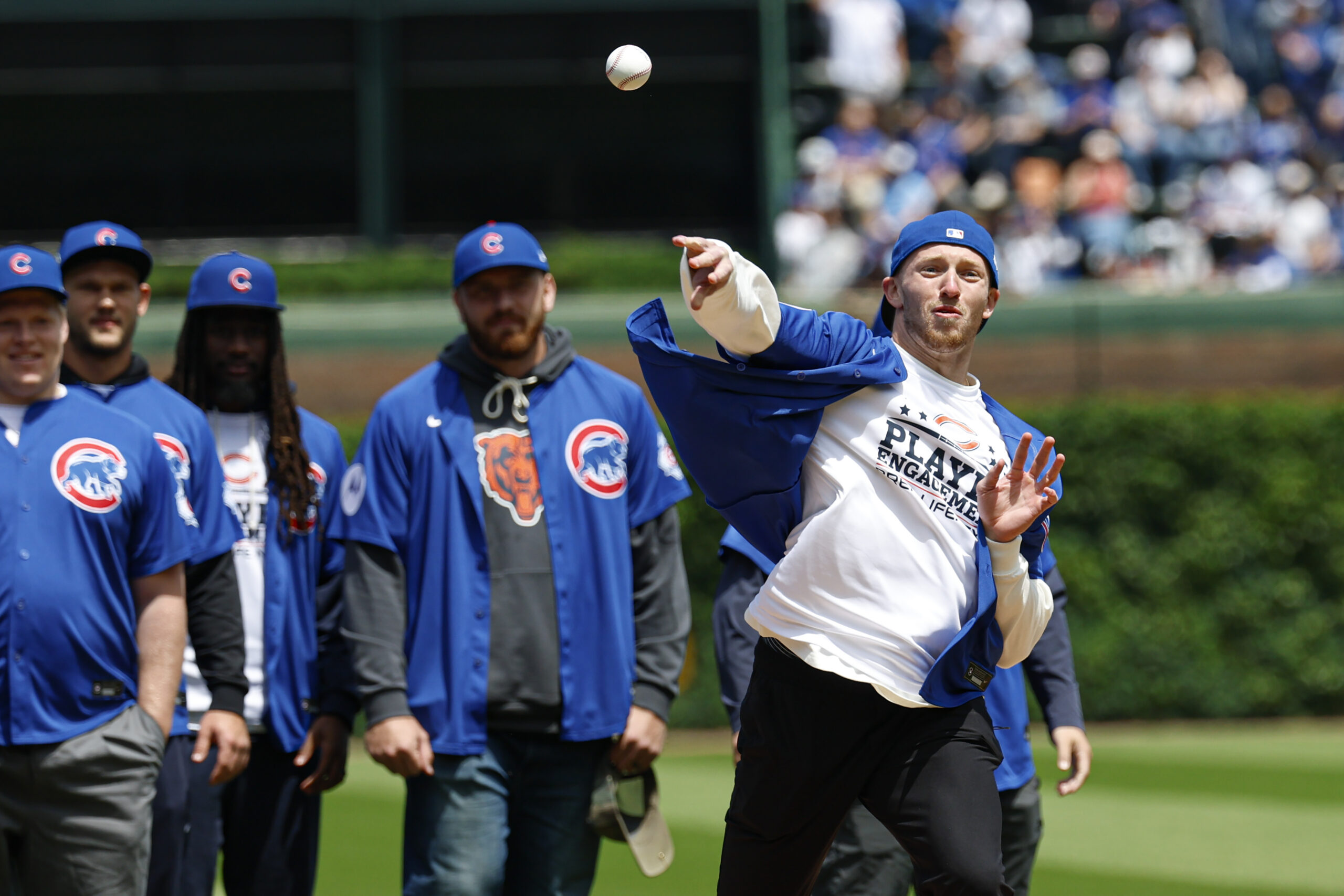
May 22, 2026; Chicago, Illinois, USA; Chicago Bears first-round draft pick Dillon Thieneman throws out a ceremonial first pitch before a baseball game between the Chicago Cubs and Houston Astros at Wrigley Field. Mandatory Credit: Kamil Krzaczynski-Imagn Images
The Bears own 326 acres in Arlington Heights, purchased for approximately $197.2 million. They’ve committed roughly $2 billion to build a domed stadium there. But they still lack a deal from Illinois. Across the border, Hammond has something Arlington Heights doesn’t: a finished legislative framework. Indiana created the Northwest Indiana Stadium Authority via SB 27, with the power to issue bonds, acquire land, and finance construction, backed by mechanisms including a stadium-district admissions tax and food, beverage, and innkeeper levies in designated counties. The Bears called SB 27’s passage “the most meaningful step forward” in their planning. That phrase should terrify Springfield.
The Bill That Won’t Move
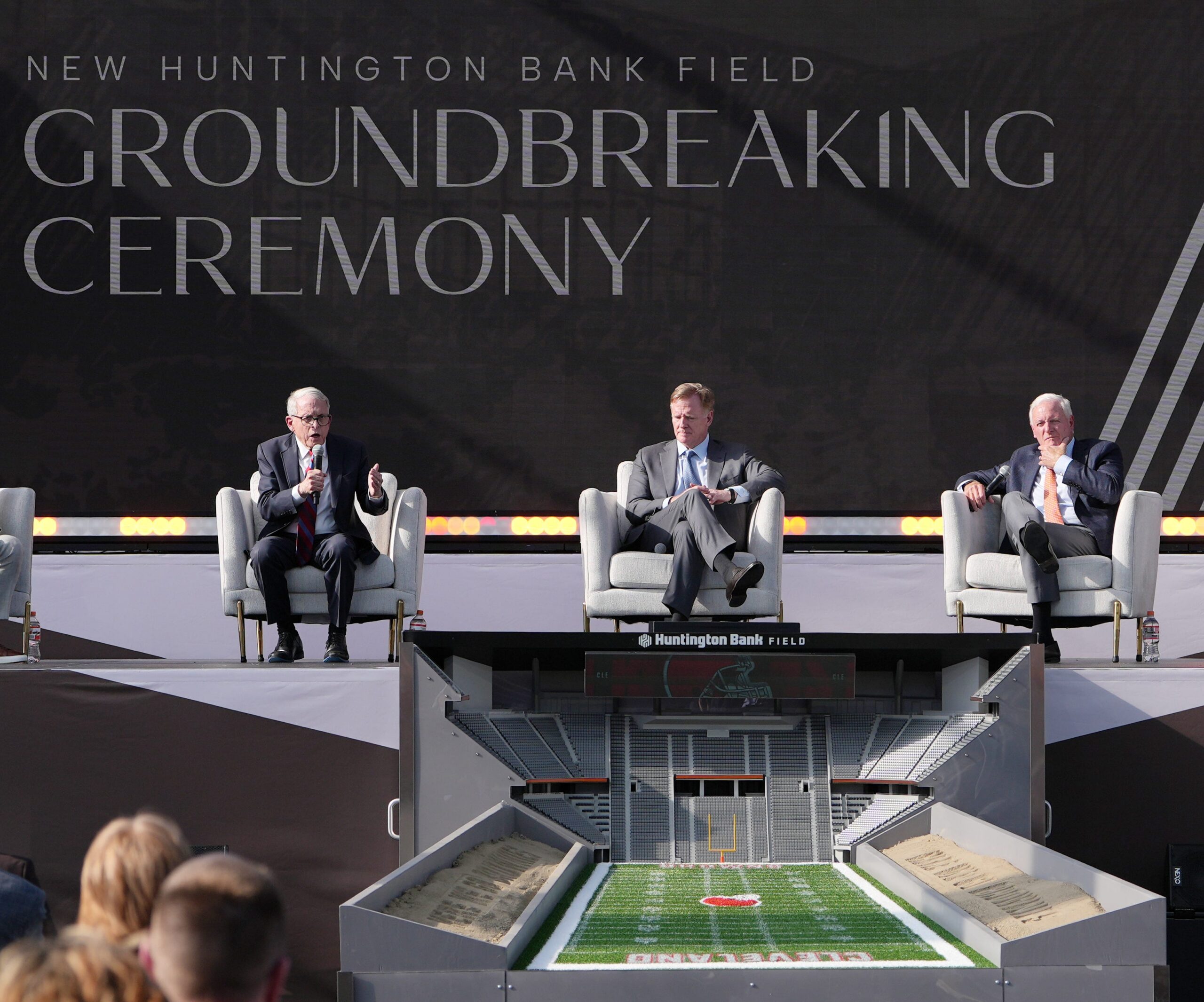
Ohio Governor Mike DeWine addresses the audience as NFL Commissioner Roger Goodell and Jimmy Haslam listen during the Cleveland Browns groundbreaking ceremony for the new Huntington Bank Field in Brook Park, Ohio on April 30, 2026.
Illinois passed a megaprojects bill through the House. Then it stalled in the Senate. The Bears said the current version doesn’t give them enough tax certainty. Meanwhile, an Illinois House committee canceled a stadium-related hearing on the same day Indiana advanced its own bill. Goodell never used the word “now,” but his insistence that the Bears decide “relatively soon,” paired with Warren’s late-spring deadline, turned this legislative session into a decide-now moment. Two states racing. One state tripping over its own shoelaces.
The Machine Behind the Renderings

May 22, 2026; Chicago, Illinois, USA; Chicago Bears first-round draft pick Dillon Thieneman warms up before throwing out a ceremonial first pitch before a baseball game between the Chicago Cubs and Houston Astros at Wrigley Field. Mandatory Credit: Kamil Krzaczynski-Imagn Images
The Bears bought land first, then asked for public money. That sequence matters. Owning 326 acres gives a franchise leverage no press conference can match. Indiana responded by building a financing authority around a single team’s timeline, complete with bonds, stadium-district taxes, and county-level food and beverage levies. Goodell personally toured proposed Bears stadium sites, including locations in Indiana, with team and state officials. He has also engaged directly with Illinois leadership, including Governor JB Pritzker’s office. The commissioner frames it as neutral evaluation. The effect is a coordinated pressure campaign across two statehouses simultaneously.
The $855 Million Ask
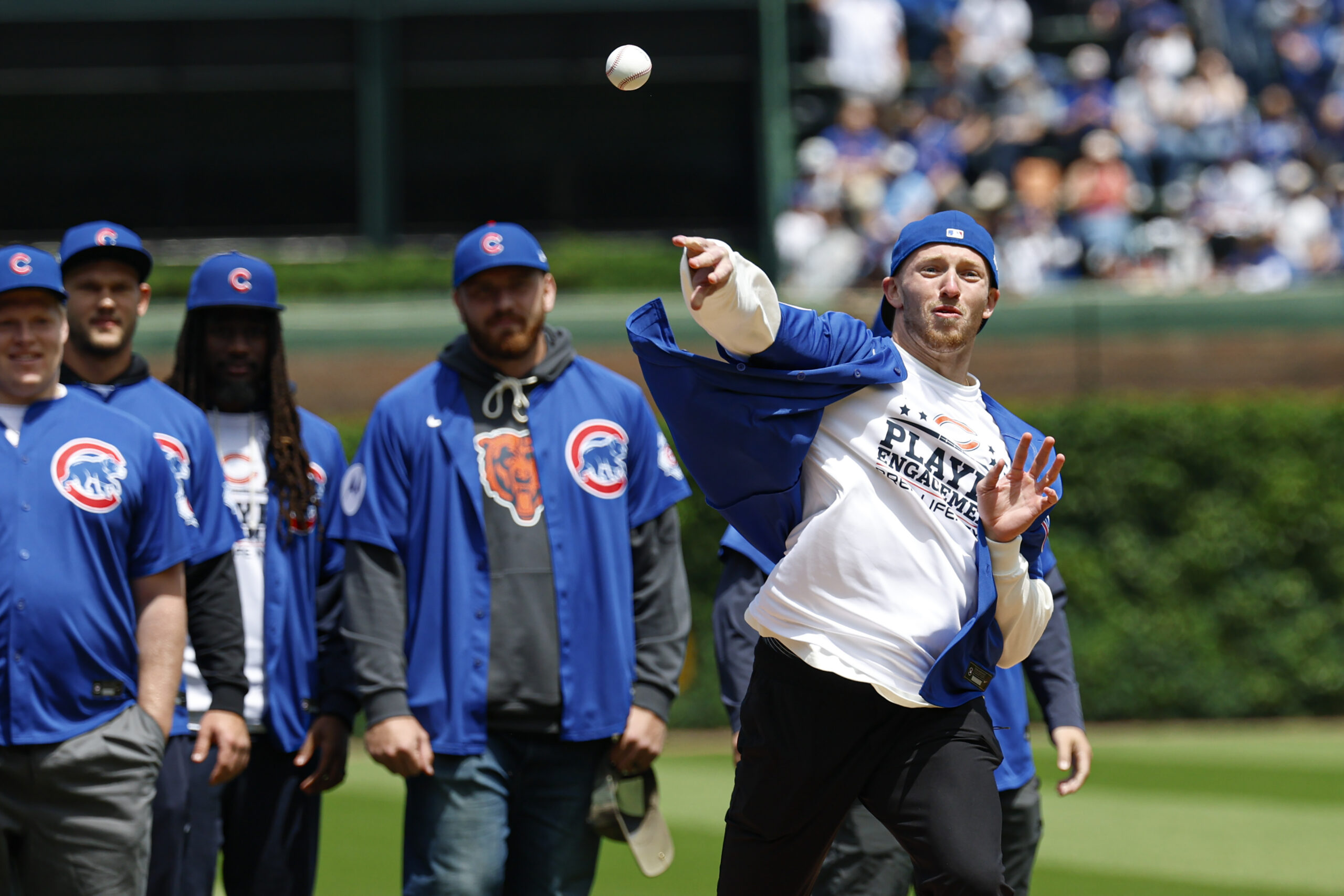
May 22, 2026; Chicago, Illinois, USA; Chicago Bears first-round draft pick Dillon Thieneman throws out a ceremonial first pitch before a baseball game between the Chicago Cubs and Houston Astros at Wrigley Field. Mandatory Credit: Kamil Krzaczynski-Imagn Images
The Bears say they’ll fund the stadium itself. No state money for the building. But, per a team consultant report released in September, they are seeking roughly $855 million in public infrastructure funding tied to Arlington Heights: roads, sewers, rail modifications, and freeway interchanges. The consultant report calls it necessary to “set the stage” for mixed-use redevelopment. The total projected capital investment exceeds $5 billion, with a significant portion coming from additional private development around the stadium. The promise: tens of thousands of construction jobs and a major boost in annual visitors. The price: decades of public obligation wrapped in optimistic projections.
Where the Money Lands
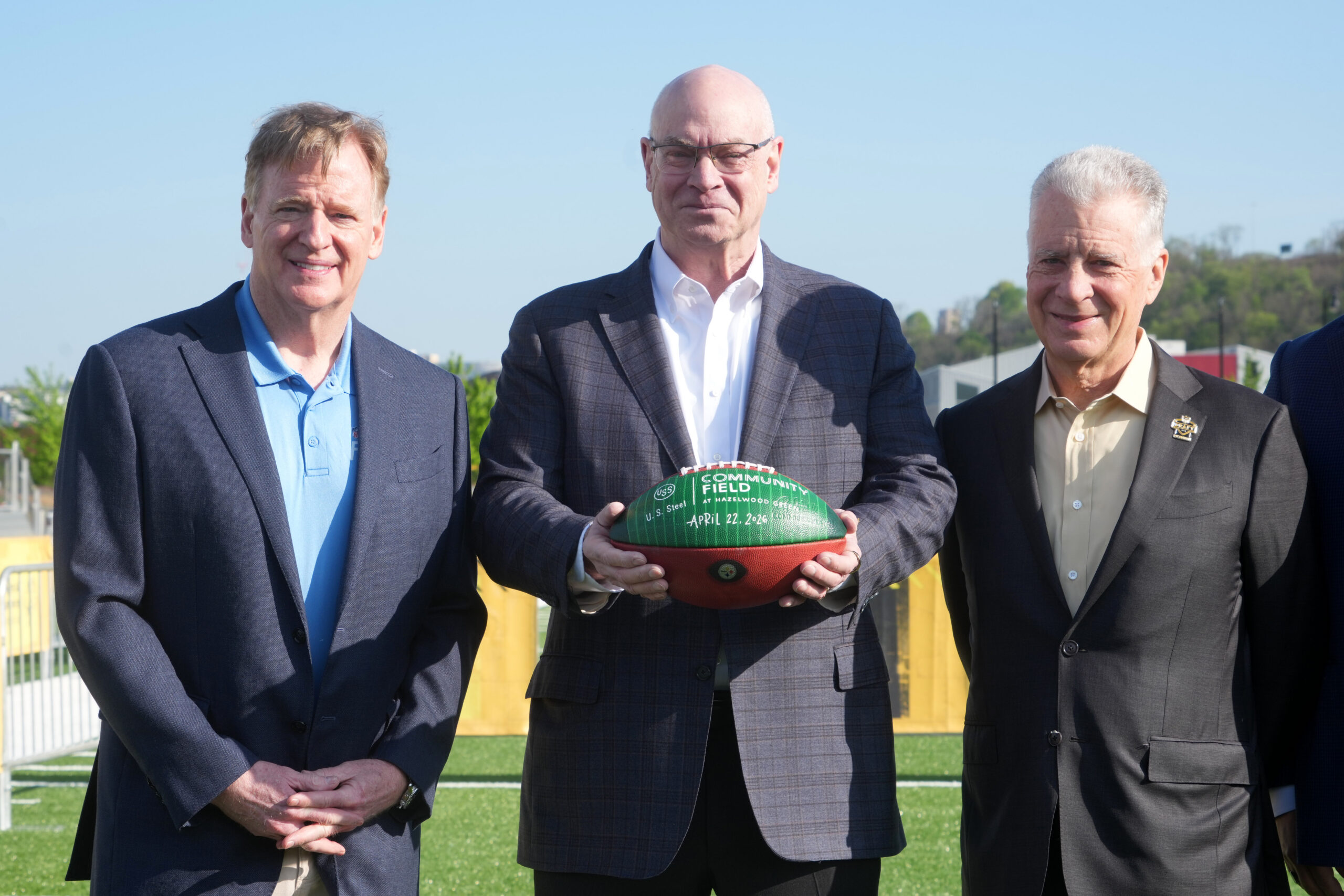
Apr 22, 2026; Pittsburgh, PA, USA; NFL commissioner Roger Goodell (left), U.S. Steel chief executive officer David Burritt (center) and Pittsburgh Steelers owner Art Rooney II pose during Hazelwood Green Park Field ground breaking ceremony. Mandatory Credit: Kirby Lee-Imagn Images
If Hammond wins, game-day spending moves to Indiana. Tickets, concessions, hotel rooms, restaurant tabs. All taxed under Indiana law, flowing into Indiana coffers. Arlington Heights’ own projections estimate roughly $15 million per year in local tax revenue, more than $500 million over 40 years. Losing that to a stadium roughly 30 miles away but across a state line would sting for decades. Governor Pritzker’s tone on funding reportedly shifted after Indiana’s talks gained momentum. Nothing focuses a governor’s attention like watching tax revenue drive toward the border.
The Stadium That Never Stopped Costing
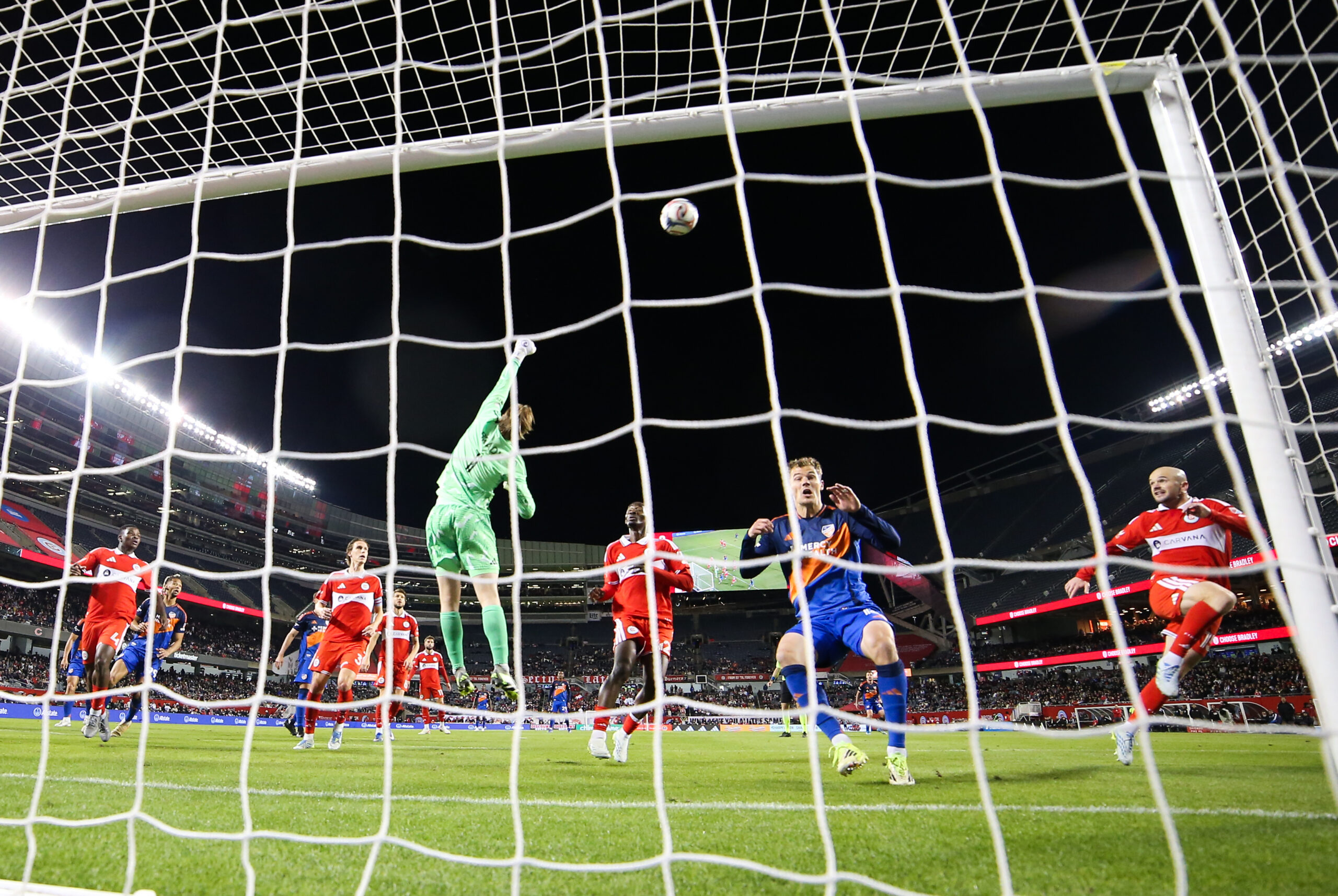
May 2, 2026; Chicago, Illinois, USA; Chicago Fire FC goalkeeper Chris Brady (1) makes a save during the second half as FC Cincinnati forward Tom Barlow (16) reacts during the second half at Soldier Field. Mandatory Credit: Talia Sprague-Imagn Images
Soldier Field opened in 1924. It remains the NFL’s smallest and oldest stadium, with a football capacity of about 61,500. A major renovation completed in 2003 was supposed to secure the Bears’ future on the lakefront. Illinois taxpayers are still paying off that debt. Now the team wants $855 million more for a different site entirely. Two “permanent” solutions in one generation. That pattern reveals something most fans haven’t considered: stadium deals aren’t final settlements. They’re recurring leverage plays. Each renovation resets the clock on another round of public obligations rather than ending the cycle.
The Super Bowl Carrot
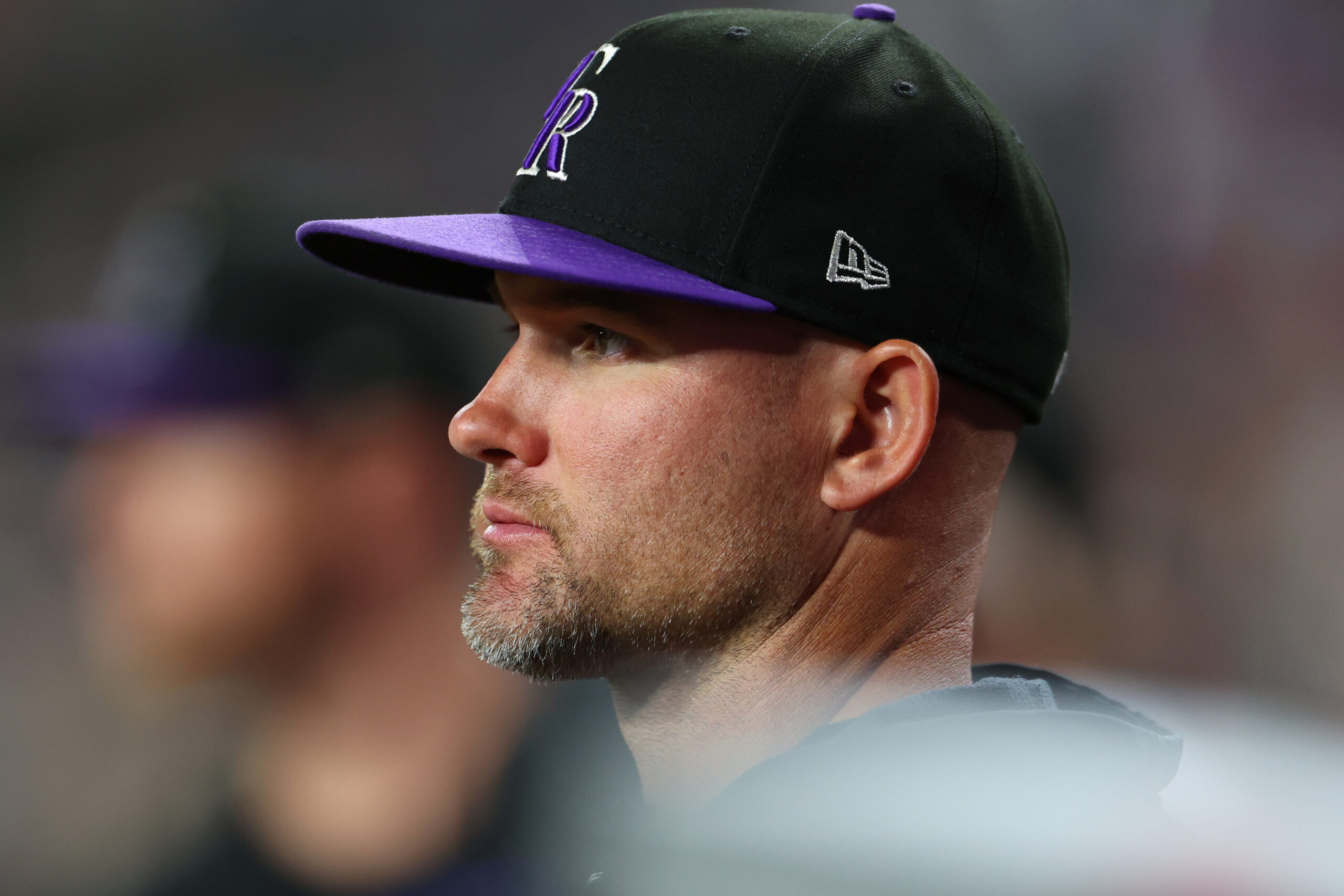
May 23, 2026; Phoenix, Arizona, USA; Colorado Rockies manager Warren Schaeffer (4) looks on against the Arizona Diamondbacks in the third inning at Chase Field. Mandatory Credit: Anna Carrington-Imagn Images
Warren wrote to fans that “this is the year” to finalize long-term stadium plans, noting a new enclosed stadium could let the Bears bid for a Super Bowl “as soon as 2031.” That timeline dangles the league’s biggest prize in front of lawmakers still debating tax mechanisms. The NFL routinely awards Super Bowls to its newest domed venues. Soldier Field, open-air and undersized, never qualified. If the Bears relocate to Indiana, the move would still require formal NFL ownership approval, meaning the league holds the final card. Every incentive points toward whichever state writes the bigger check faster.
Loyalty Has a Price Tag
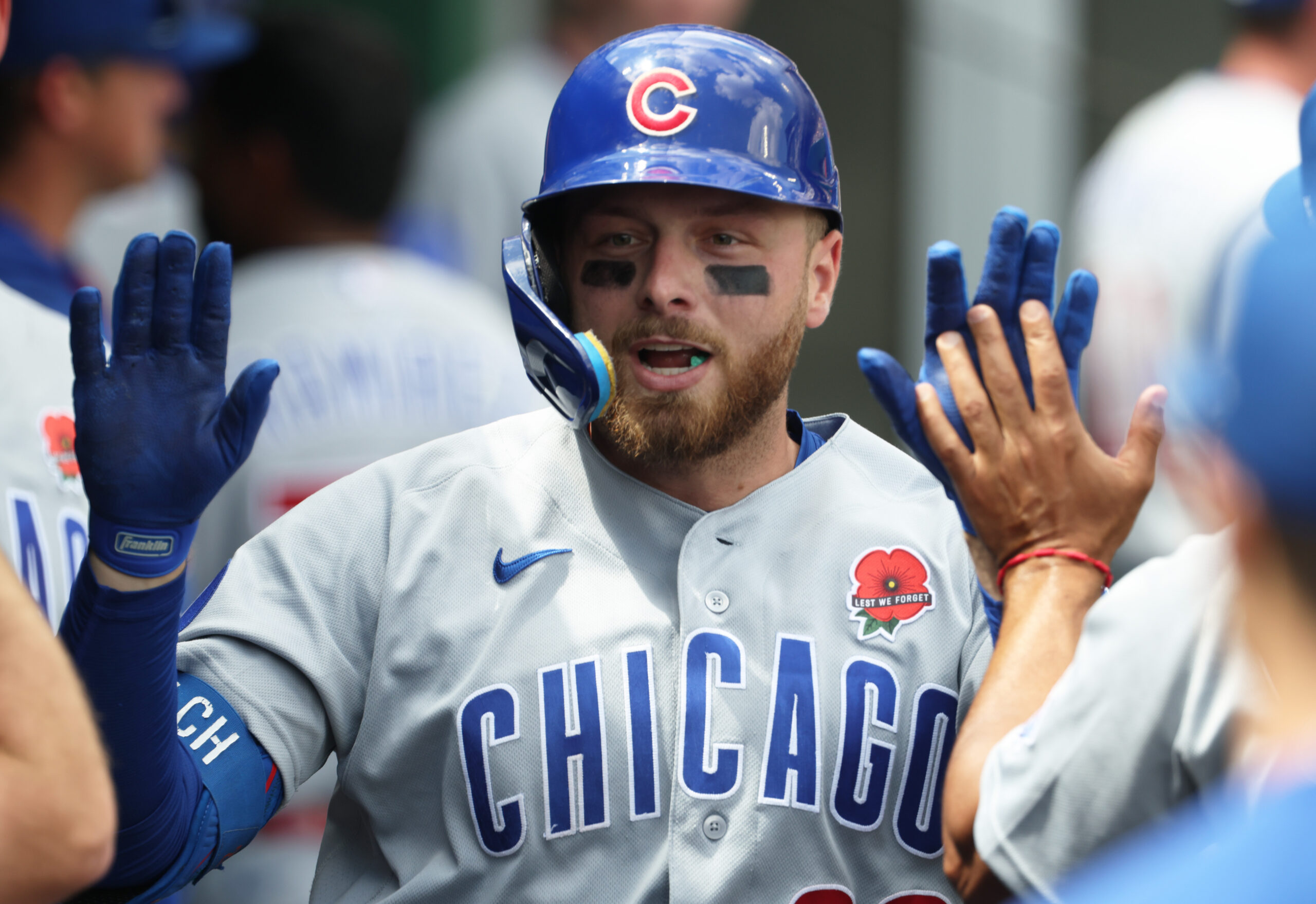
May 25, 2026; Pittsburgh, Pennsylvania, USA; Chicago Cubs first baseman Michael Busch (29) celebrates with teammates in the dugout after hitting a solo home run against Pittsburgh Pirates starting pitcher Carmen Mlodzinski (not pictured) during the fifth inning at PNC Park. Mandatory Credit: Charles LeClaire-Imagn Images
A franchise synonymous with Chicago could play home games in Indiana while still calling itself a Chicago team. Most NFL relocations move franchises to entirely different metro areas. This one would cross a state line without leaving the broader Chicago market. Same fans, different tax jurisdiction. That’s the part worth understanding before the renderings and job projections blur together: the real contest isn’t about which site is best for fans. It’s about which government will shoulder the most long-term risk for the privilege of hosting an iconic brand. Whoever figures that out first owns the conversation at the bar. If you were a Bears season-ticket holder, would you follow the team across the state line to Hammond, or hand in your tickets the day the move is announced? Tell us in the comments — and tell us which state should blink first.