

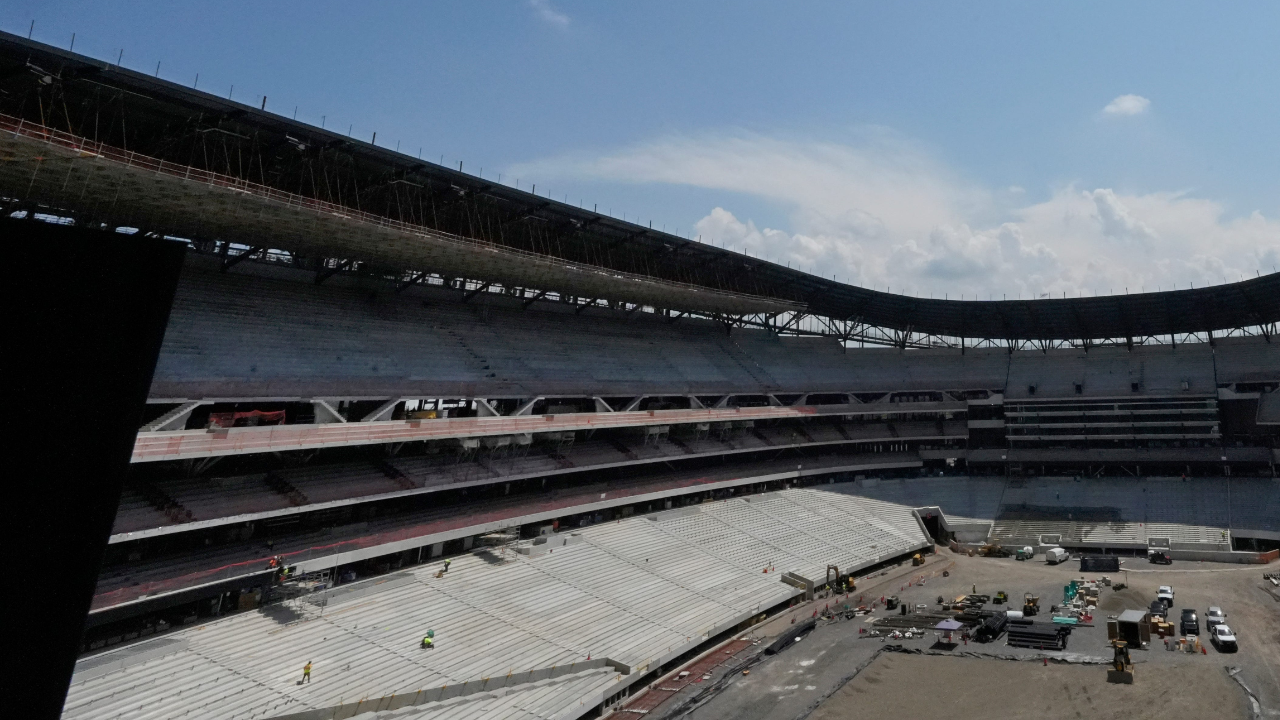
Excavators gnaw at concrete where 71,608 fans once screamed through lake-effect blizzards. Across Abbott Road in Orchard Park, steel rises on a $2.2 billion replacement. The old Highmark Stadium, open to the sky since 1973, is being taken apart section by section, not blown up in a single spectacular cloud. No implosion. No dramatic finale. Just machines chewing through more than a million square feet of memory, slow enough that you can watch your childhood disappear one grandstand at a time. The demolition runs through March 2027, and what’s vanishing isn’t just concrete.
Fifty-Three Winters in the Open Air
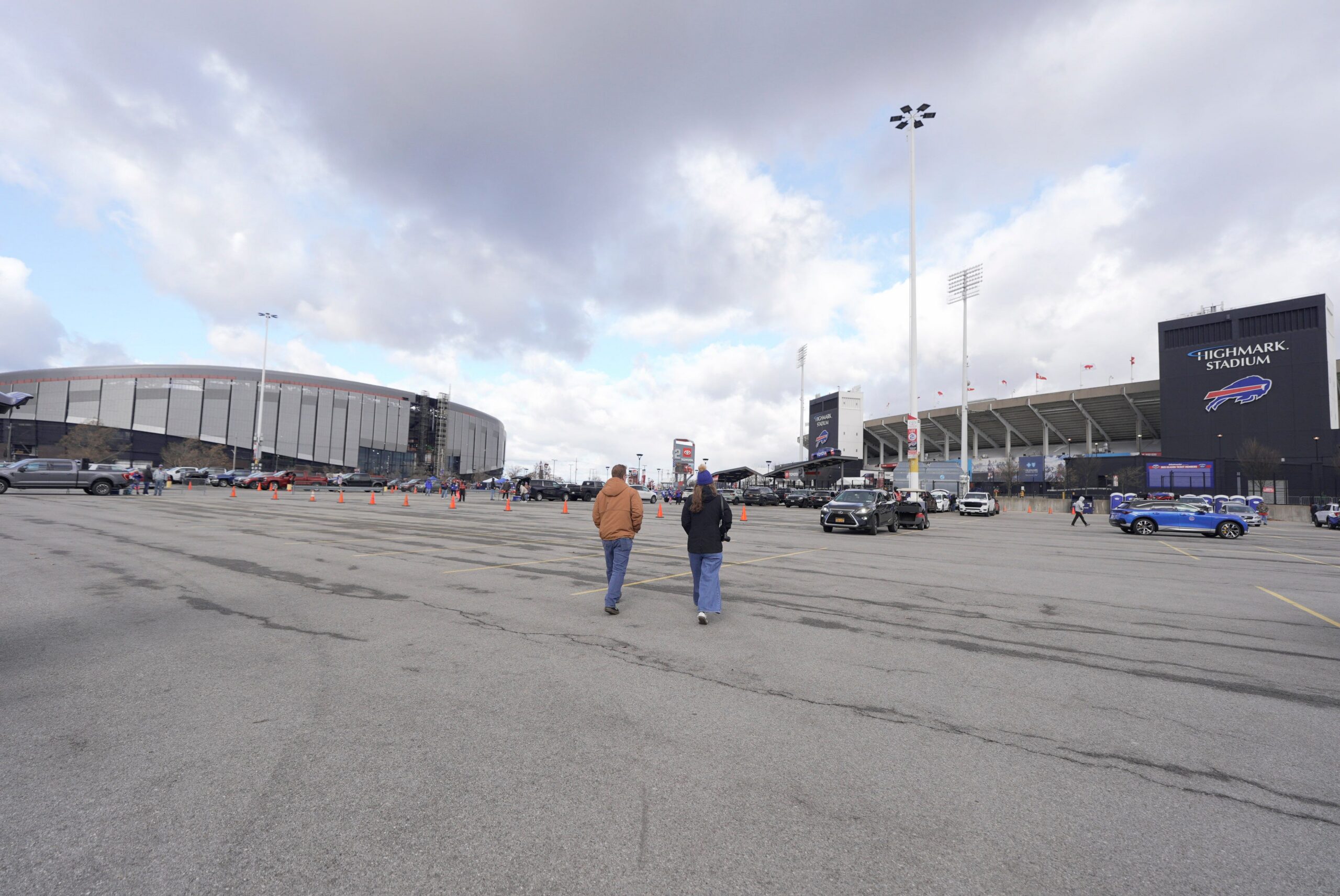
A couple of people head towards tailgating before the Bills home game against the Tampa Bay Buccaneers on Nov 16, 2025 at Highmark Stadium in Orchard Park. The new stadium is looking almost complete.
For 53 consecutive seasons, this stadium hosted Bills football without a roof, without enclosed concourses, without apology. It opened as Rich Stadium, became Ralph Wilson Stadium after the franchise’s original owner, then cycled through corporate names until Highmark stuck. The venue saw four straight Super Bowl appearances in the early 1990s and “The Comeback,” when the Bills erased a 32-point deficit against the Houston Oilers. Multiple major renovations kept it standing. None made it comfortable. That was the point. And the building they’re raising across the street plans to fix that particular “problem.”
The Myth of the Upgrade
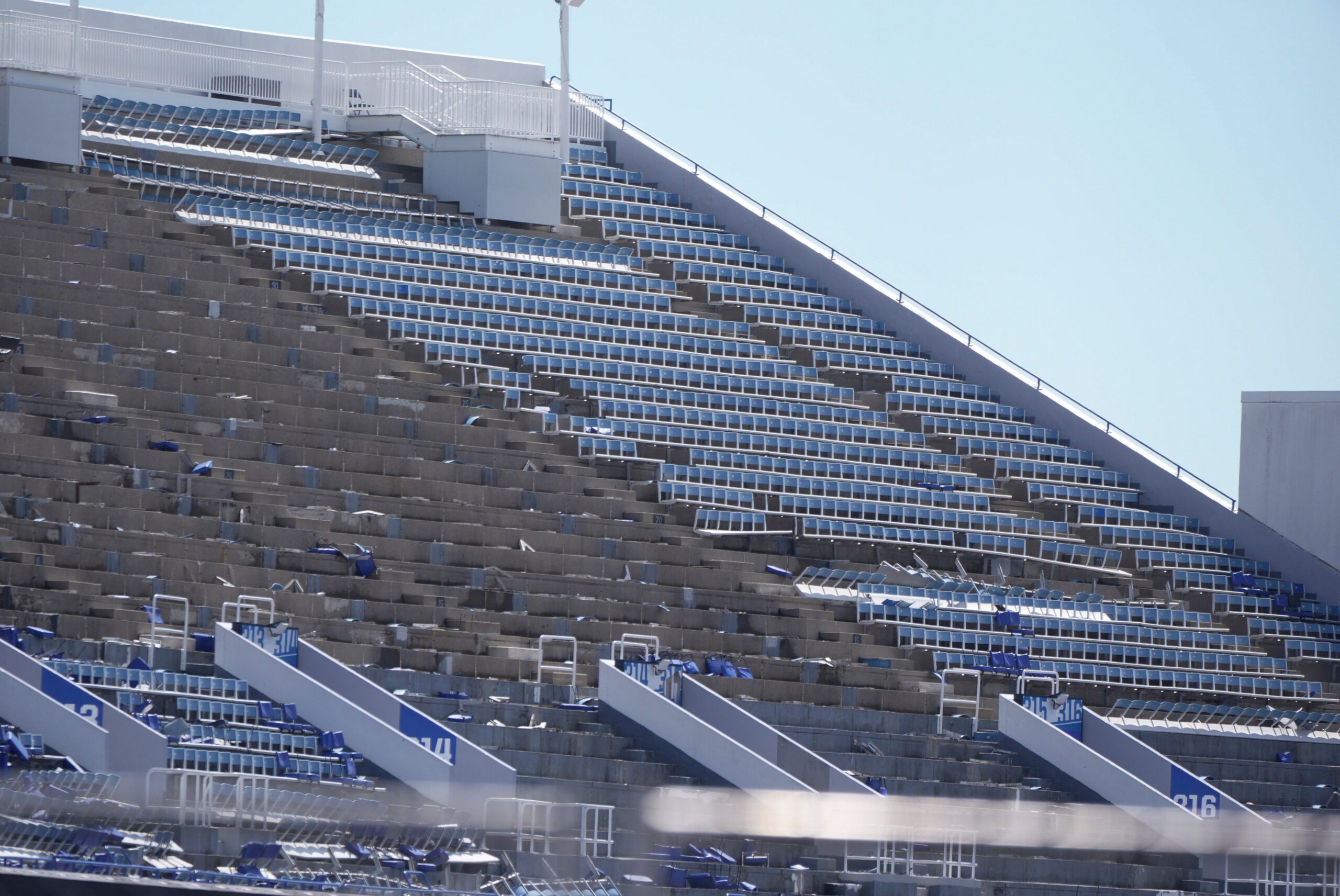
A section of seats remain in the upper deck at the old Highmark Stadium in Orchard Park on May 15, 2026.
Most people assume the new stadium exists to give fans a better game-day experience. Reasonable assumption. Also wrong. The new Highmark holds roughly 62,000 seats, approximately 10,000 fewer than the old one. But it stretches 1.7 million square feet, up from 1.1 million. More than 30 elevators and escalators move bodies through the building, a fivefold increase. Every hallway features adjustable lighting controllable at the touch of a button. The facility functions as its own network, with antennas built directly into the structure. Fewer seats. More square footage. That math tells you everything about the real priorities.
The Irony Built Into the Blueprint
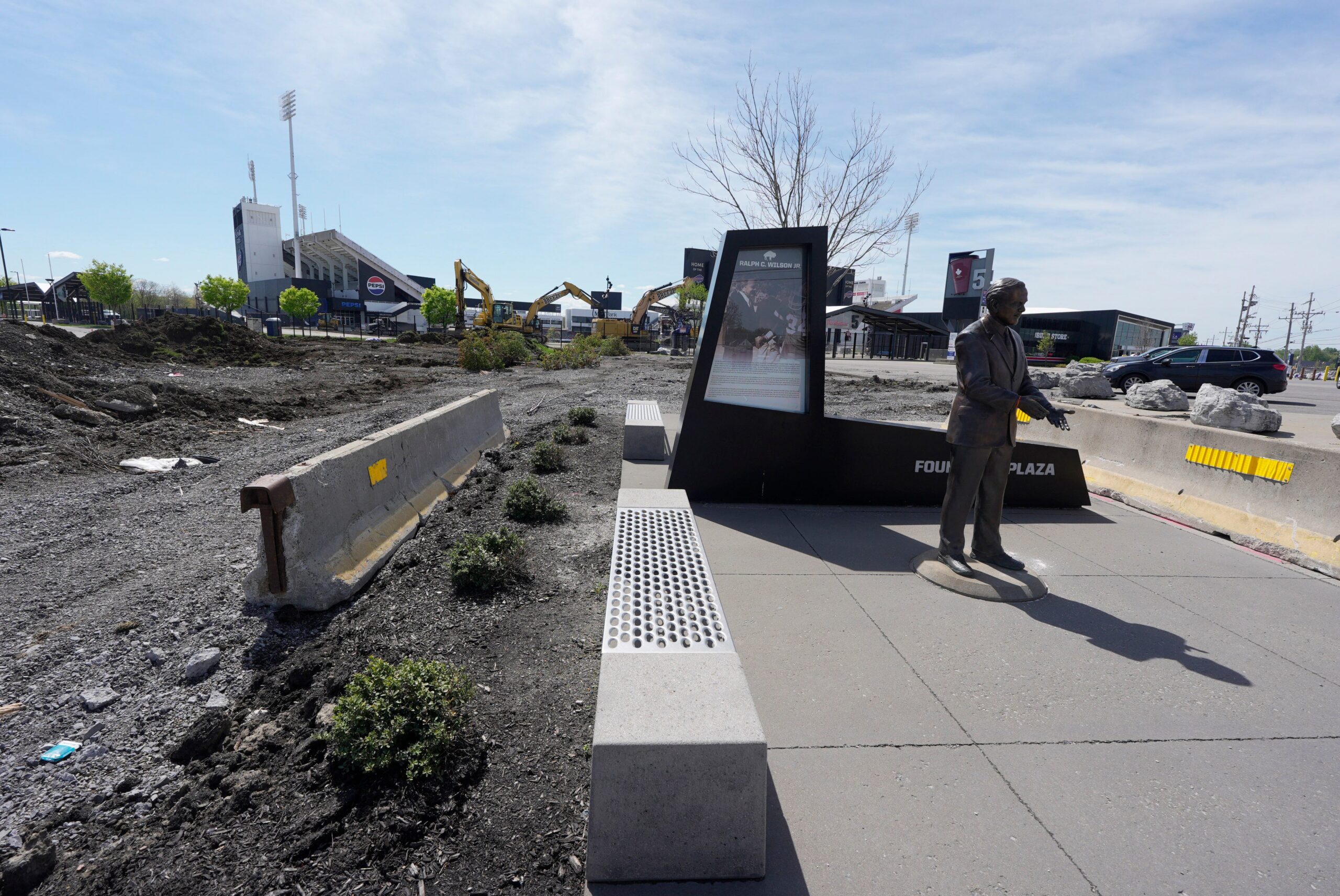
Parts of the parking lot near the old Highmark Stadium in Orchard Park is slowly being dismantled on May 15, 2026. Barriers were put around the Founder’s Plaza to protect it.
The team famous for brutal, open-air winter football built what officials call the world’s largest snow melt system. A steel canopy covers roughly 65% of the seating bowl, with hydronic heating designed to melt snow before it ever piles up, and sheltered concourses let fans move through much of the building without standing in the weather. The franchise spent $2.2 billion to engineer away the exact conditions that forged its identity. A stadium that cost $22 million in 1973 replaced by one costing roughly a hundred times more. With fewer seats. Under a heated canopy. Bills Mafia earned its reputation by freezing together. The new building makes sure far fewer people have to, and the culture that cold weather created may not survive the thermostat.
Revenue Per Fan, Not Fans Per Game
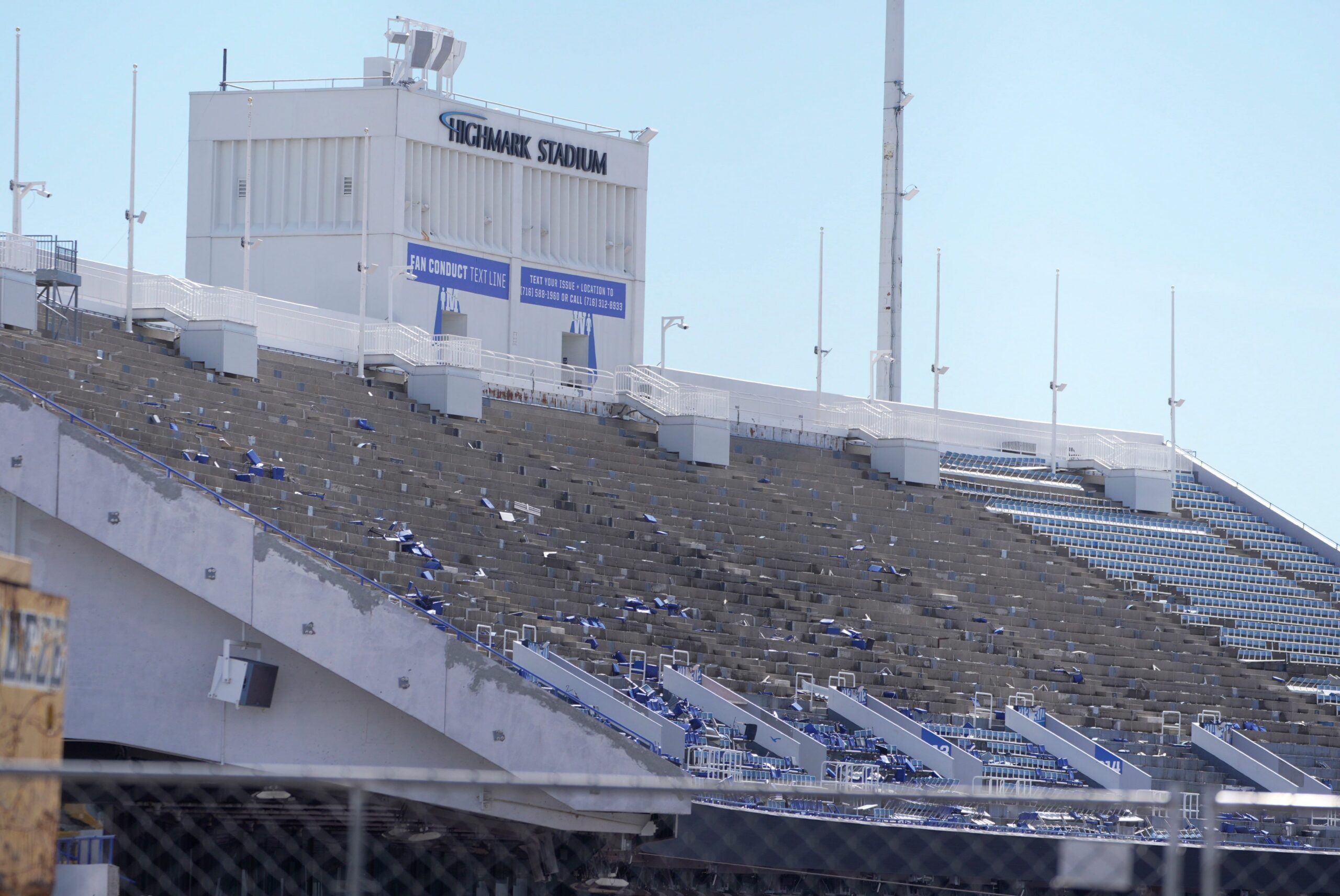
A wide swath of seat have been removed from old Highmark Stadium in Orchard Park. Work continues on removing seats and other pieces of the stadium which are on sale on May 15, 2026.
Here is the hidden system driving every design choice: modern NFL stadiums prioritize how much each person spends, not how many people show up. Cutting roughly 10,000 seats while adding 600,000 square feet creates premium clubs, luxury suites, and commercial corridors that generate revenue on days when no football is played. The steel and metal decking were specifically designed to amplify crowd noise, making 62,000 fans sound like 72,000. The building compensates for fewer bodies with better acoustics. That is an engineering confession about what the franchise actually values.
Even the Demolition Turns a Profit
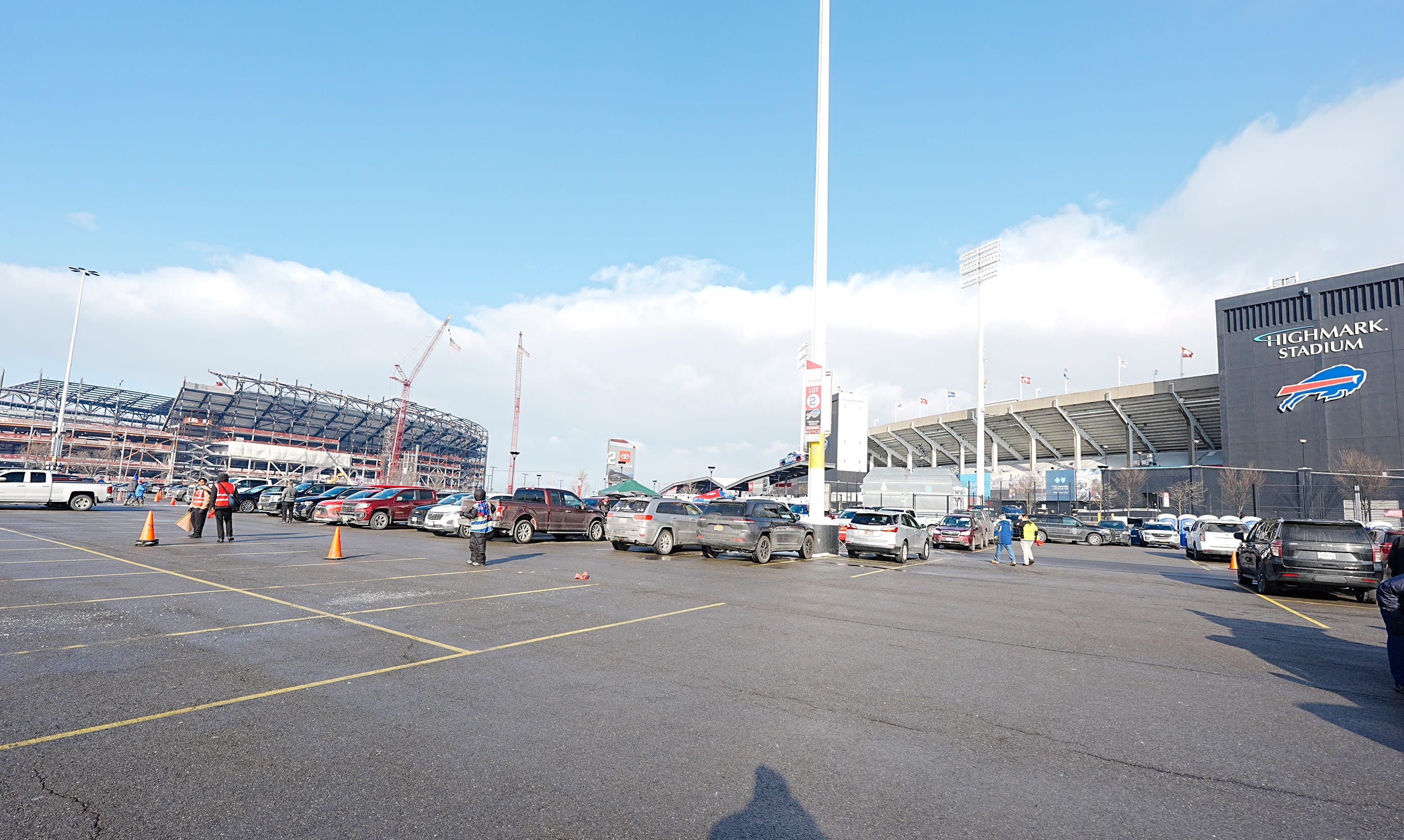
The new Highmark Stadium is starting to loom over the current stadium in Orchard Park on Jan. 12, 2025.
CollectibleXchange crews systematically remove seats, turf, goal posts, locker room fixtures, and even bathroom hardware, authenticate each piece, and sell it to fans. Erie County and CollectibleXchange split the proceeds, with roughly half flowing back to the county. Goal posts already sold out. Turf inventory is running dangerously low. Brandon Steiner told News10NBC: “I think we’re going to run out of seats. I know that sounds crazy but this fan base is a little crazy, there’s no stopping them.” A sports bar somewhere is installing a Highmark Stadium urinal right now. The teardown itself became a revenue stream.
What Rises on the Rubble
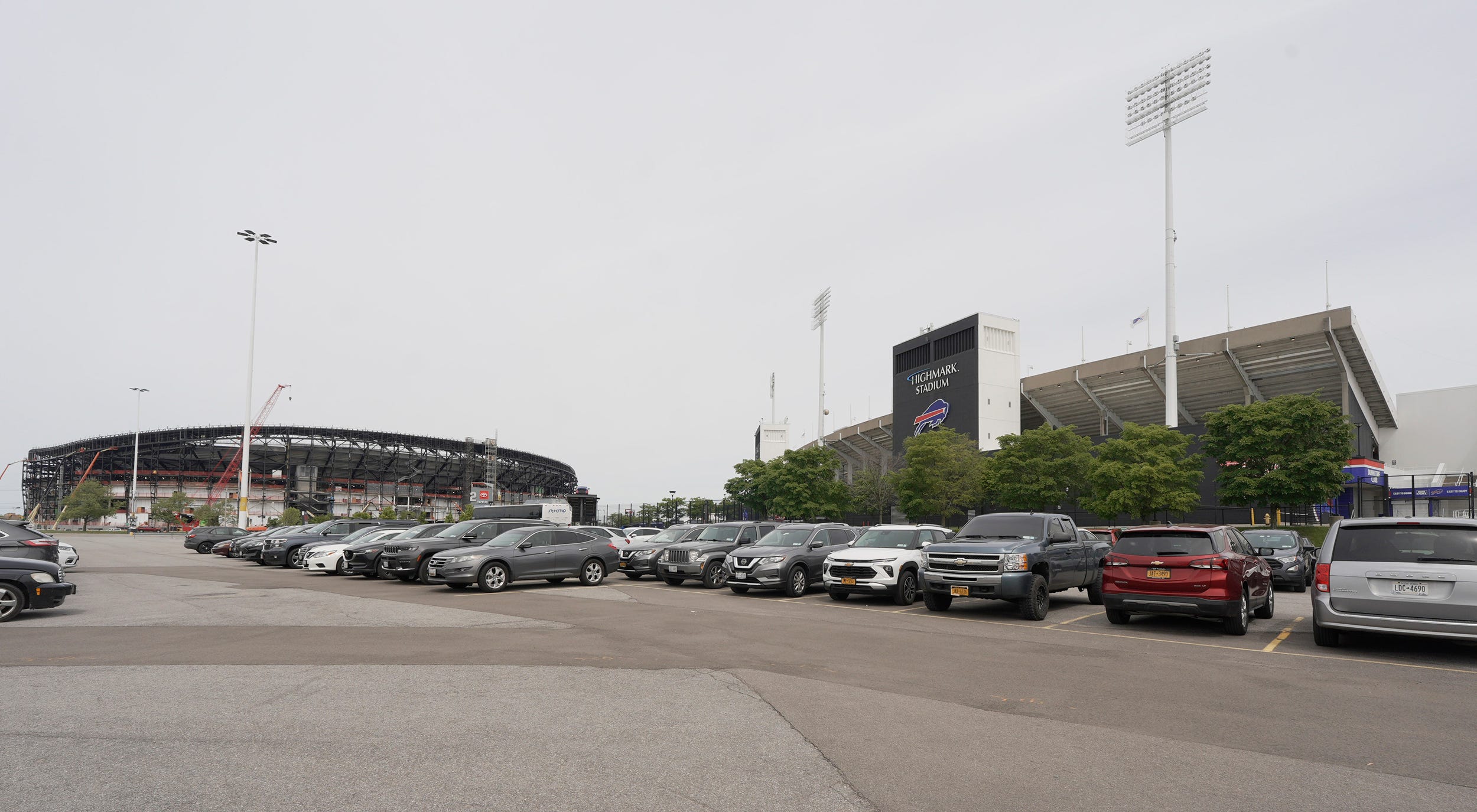
The new stadium for the Buffalo Bills is being built across the road from the current Highmark Stadium in Orchard Park on May 27, 2025.
Once demolition finishes, the cleared site is expected to be converted primarily into parking and supporting infrastructure for the new stadium across Abbott Road. The team’s training facility and headquarters stay put, keeping the franchise’s footprint intact on its existing campus. Orchard Park’s planning process and the long-term lease arrangement set the stage for additional development around the new venue. The franchise keeps its real estate, expands its commercial possibilities, and generates income from land that used to just hold an aging bowl. Other cold-weather NFL teams are watching closely, because this model could become the template.
The Precedent Nobody Is Naming
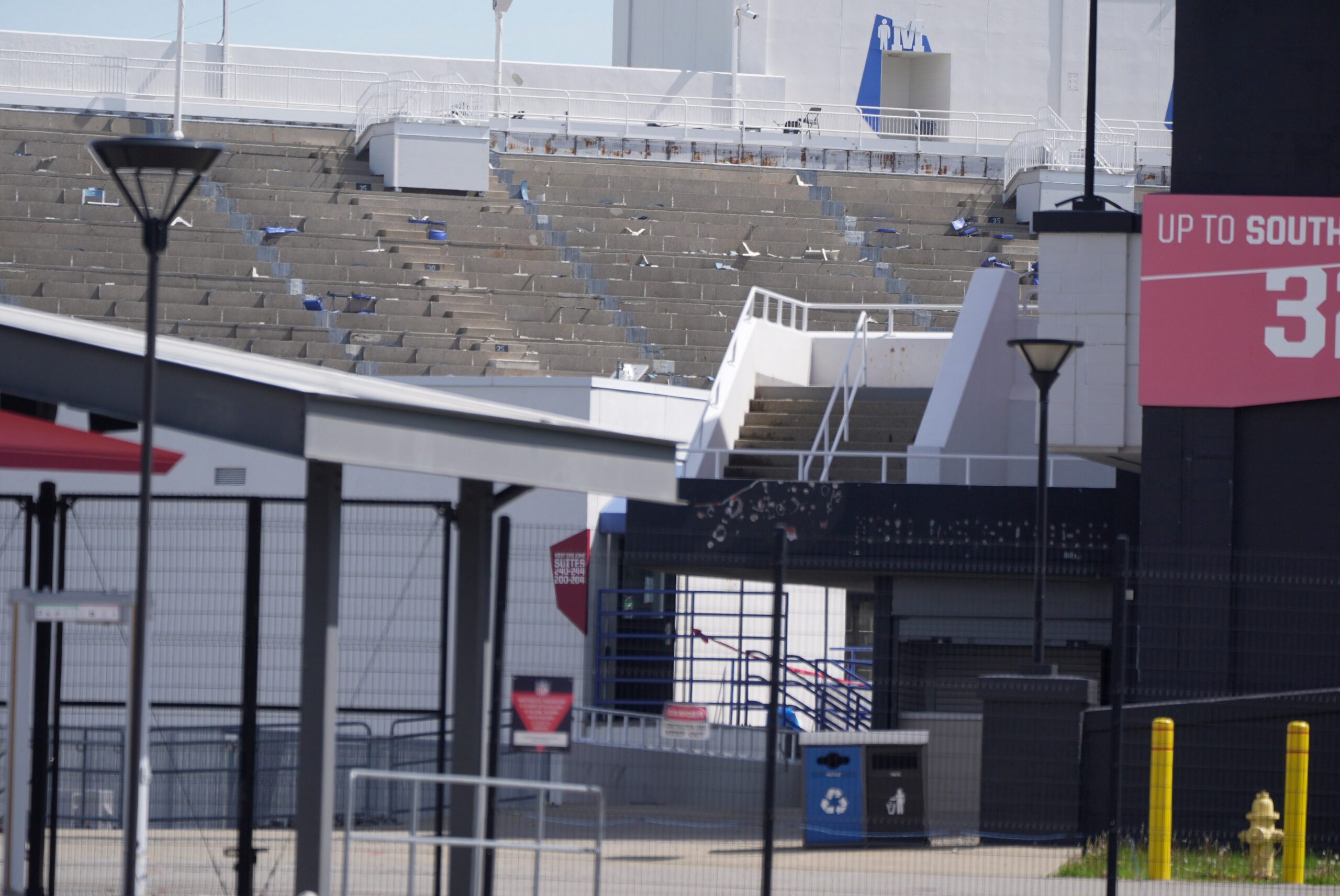
The old Highmark Stadium in Orchard Park is slowly being dismantled on May 15, 2026. Seats in one area of the stadium have been taken out.
This is not an exception. It is a new rule. Smaller capacity, larger footprint, weather-protected luxury, year-round commercial use, memorabilia monetization of the old building. Every modern stadium is now designed as a revenue-generating machine first and a sports venue second. Once you see that pattern, you cannot unsee it. As Josh Allen put it after the final regular-season game at the old building in early 2026: “A lot of good memories in this stadium.” He was talking about the old one. The new one is engineered to produce memories, experiences, and transactions in equal measure, and the NFL just found its blueprint for what comes next.
The Tailgate Question
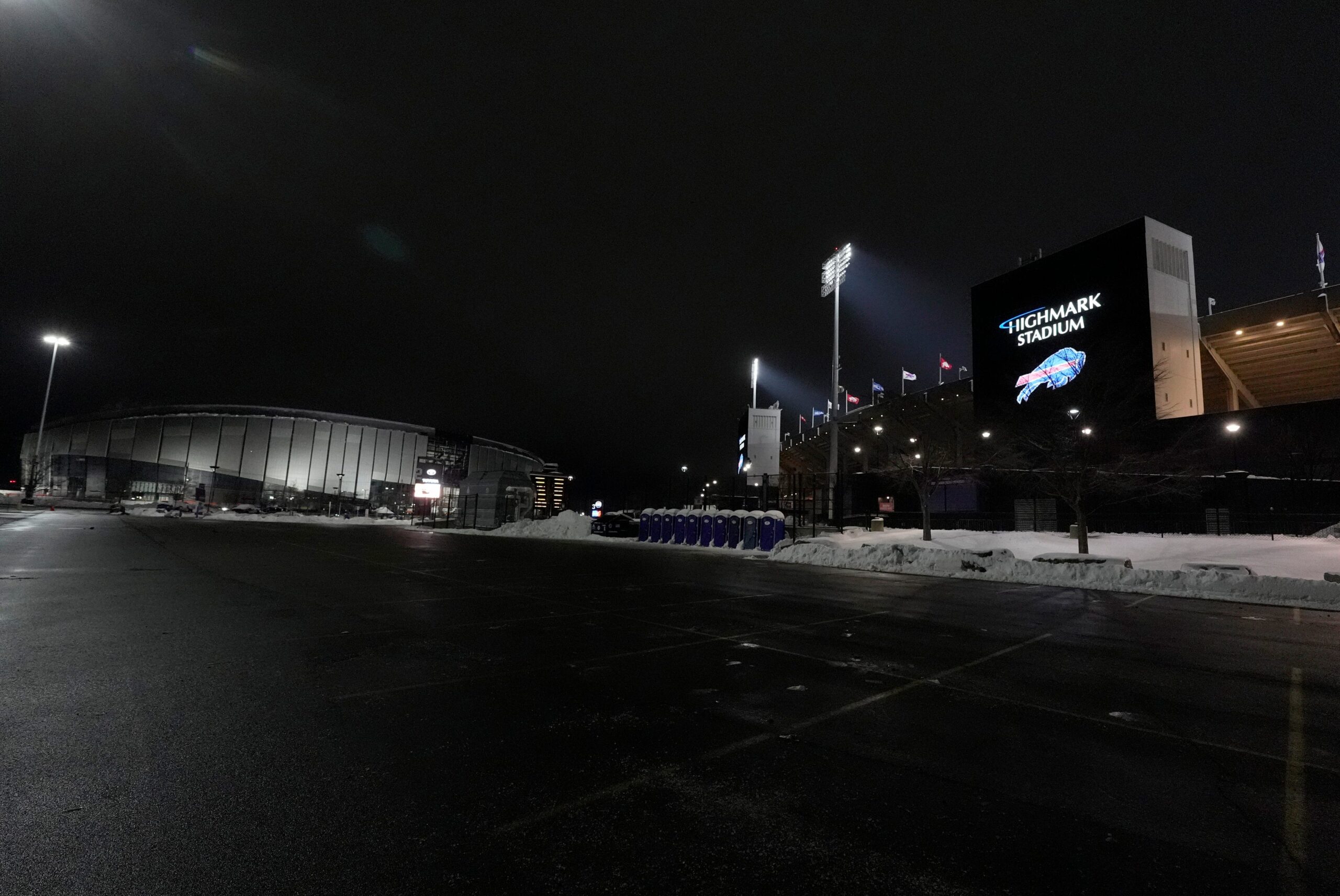
The last home game was held at Highmark Stadium against the Jets on Jan. 4, 2026 in Orchard Park, across the street is the new stadium.
Traditional tailgating culture thrived because the old stadium was open-air and raw. Fans arrived hours early, built community in parking lots, and endured conditions together. Sheltered concourses, a heated canopy, and snow-melt systems remove the shared suffering that bonded strangers into Bills Mafia. Nobody knows whether that identity survives a building designed to keep everyone more comfortable. More teams will follow with similar investments, shrinking general admission while expanding premium tiers. The fans who lose next are the ones who could only afford the cheap seats that no longer exist in the new math.
Owning the Wreckage
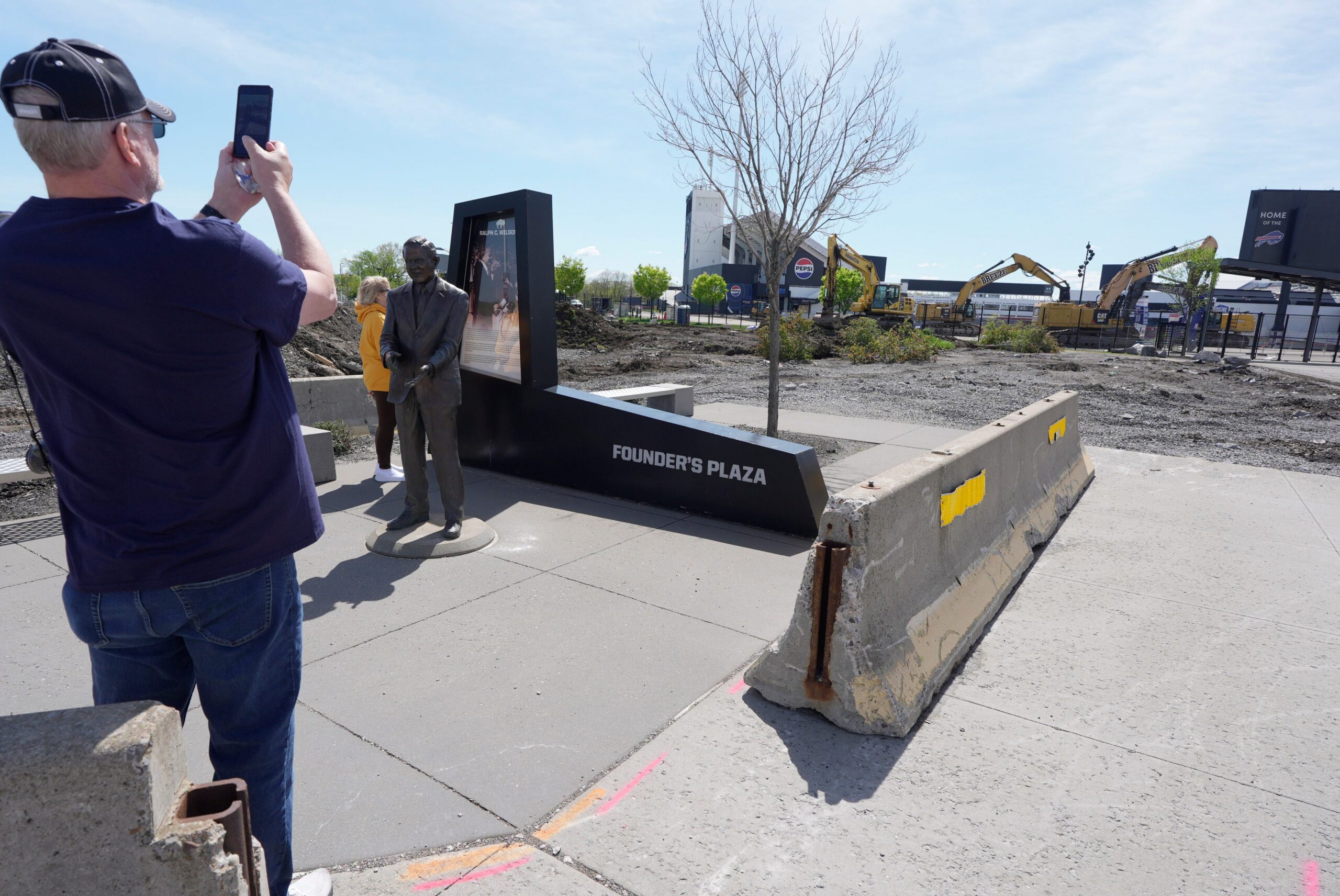
Jonathan Doyle takes a photo the old Highmark Stadium in Orchard Park while his wife, Betty Swanson-Doyle, reads the information plaque at Founder’s Plaza on May 15, 2026. The couple who live in Norfolk, VA were visiting Niagra Falls and dropped by the Bills Store. Swanson-Doyle is a fan of Josh Allen.
Somewhere in Western New York, a piece of frozen turf sits in a frame on a basement wall. A goal post section leans against a garage. A stadium seat holds a spot in a man cave that smells like chicken wings and devotion. Those fragments are the counter-move. Fans cannot stop the $2.2 billion machine from replacing what they loved, but they can carry pieces of it home. Saying “I was there in the old stadium” is about to become the most valuable credential in Bills country, and no canopy can replicate it. What’s the one piece of the old Highmark Stadium you’d pay real money to own — a seat, a chunk of turf, a goal post, or something weirder? Drop your answer in the comments.