
A former head coach filed a discrimination lawsuit against the most powerful sports league in America. The NFL responded with every procedural weapon in its arsenal: motions to compel arbitration, appeals through the Second Circuit, and a final petition to the Supreme Court itself. Four years of sustained legal combat aimed at one objective: keeping Brian Flores’ claims out of a public courtroom. On May 26, 2026, the Supreme Court refused to hear the NFL’s appeal. The league’s last off-ramp just closed.
The Suit That Wouldn’t Die
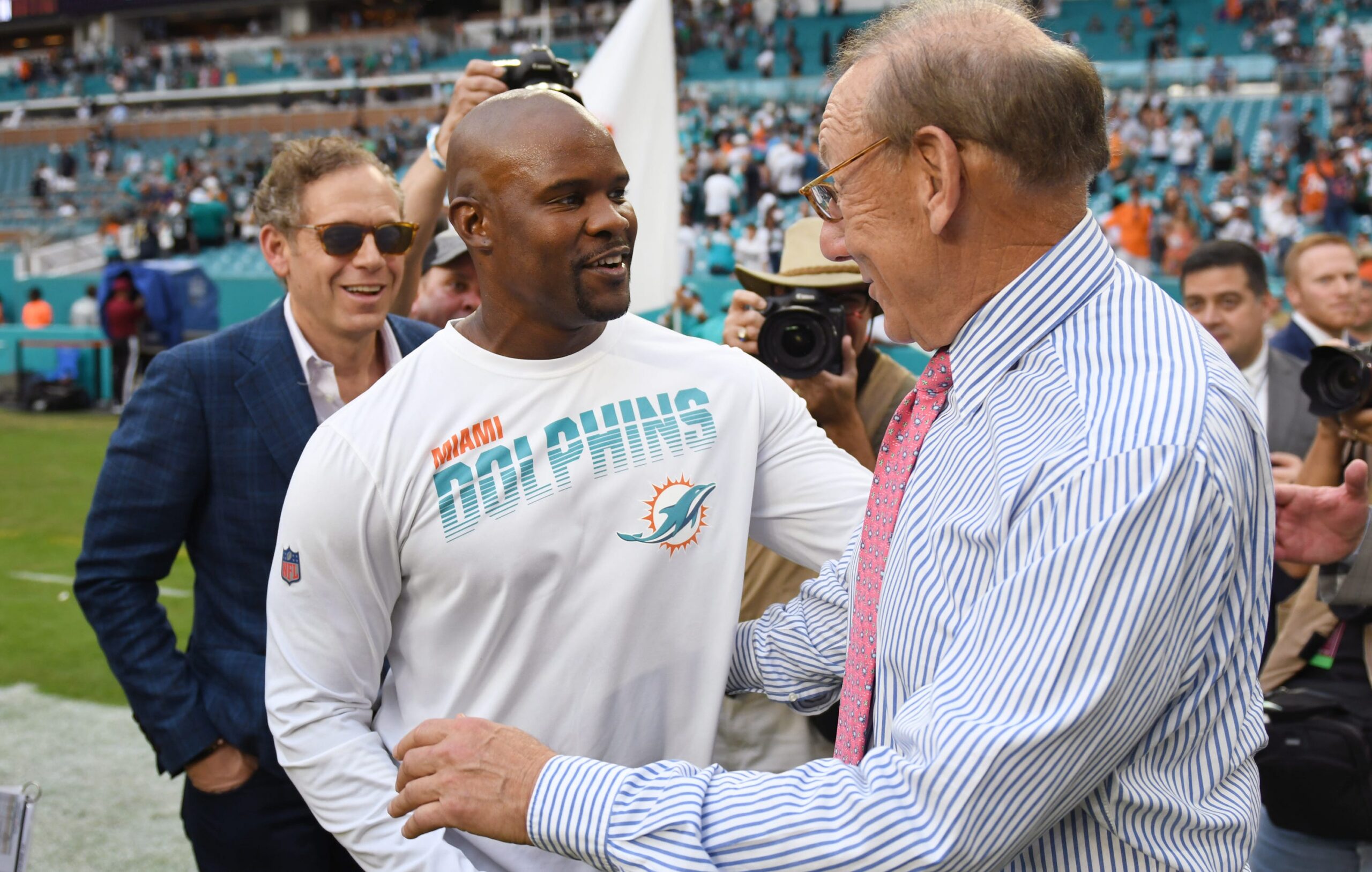
Miami Dolphins head coach Brian Flores is congratulated by Miami Dolphins owner Stephen Ross after the victory over the Philadelphia Eagles. Hard Rock Stadium, Miami Gardens, Florida. The Dolphins were docked a first-round pick in 2023 and a third-rounder in 2024 and owner Stephen Ross was suspended through mid-October and fined $1.5 million for damage to the integrity of the game, NFL Commissioner Roger Goodell announced Tuesday. The penalties largely surround the Dolphins flirtation with quarterback Tom Brady not only before the 2021 season when Brady was a member of the Tampa Bay Buccaneers but extending all the way back to the 2019-20 season when he was with the New England Patriots. Stephen Ross Over The Years 33
Flores filed his class action in February 2022, naming the NFL and multiple teams as defendants. The allegations cut deep: systemic race discrimination, sham Rooney Rule interviews, and retaliation against coaches who spoke up. His complaint ran to 483 numbered paragraphs. As of January 2026, just three Black head coaches held jobs out of 32 teams across the league. The NFL treated the filing like an existential threat from the start, immediately pushing to force the entire dispute into its own internal arbitration system, far from public view.
The Commissioner as Judge
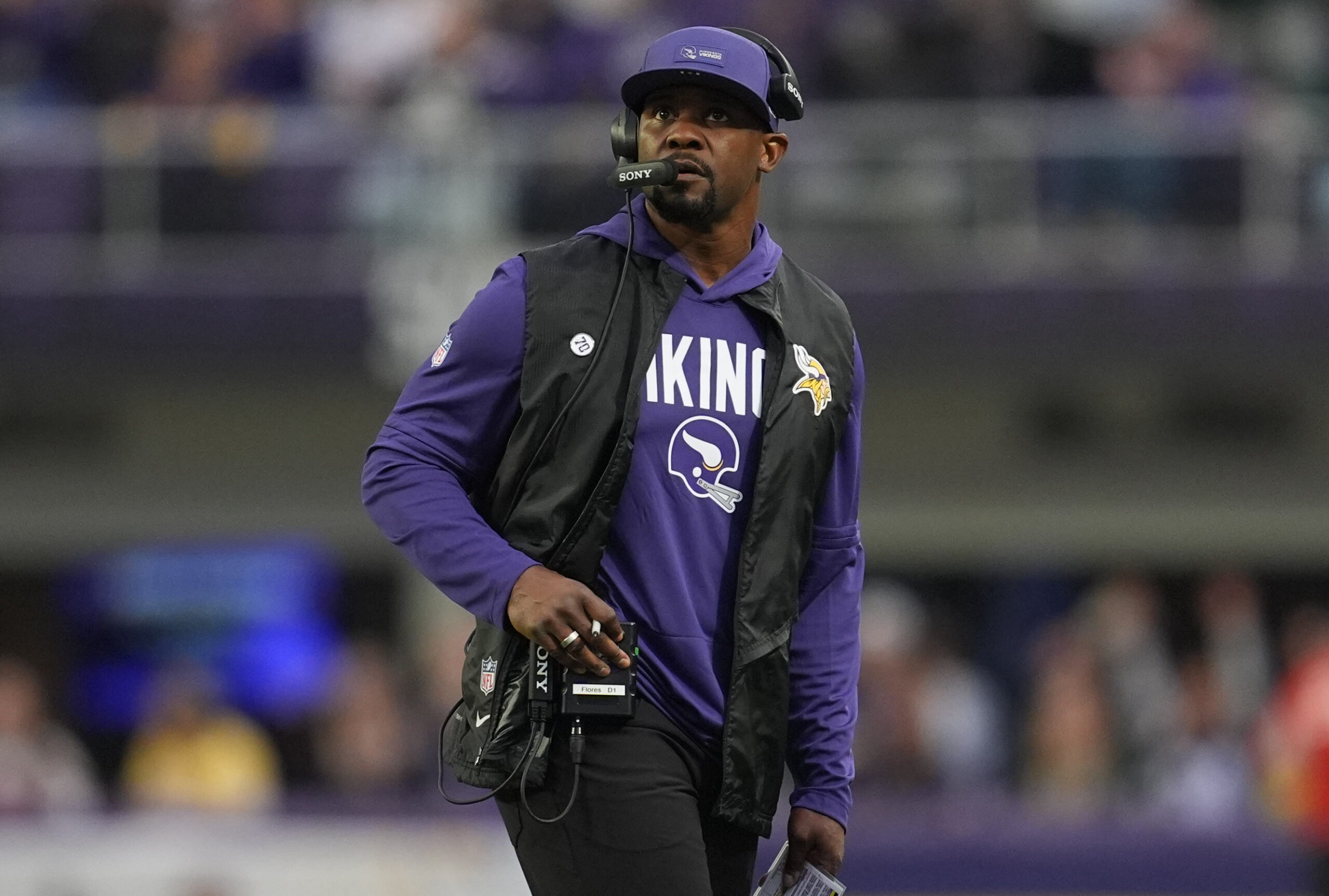
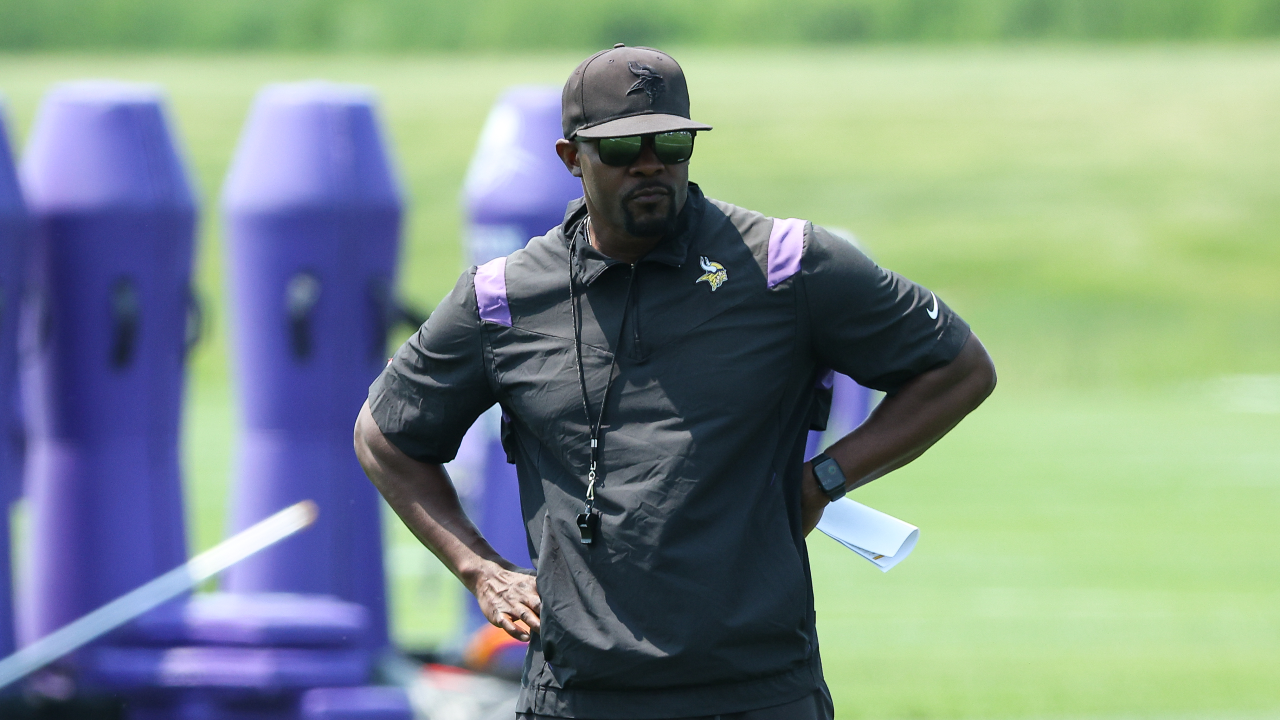
Jan 4, 2026; Minneapolis, Minnesota, USA; Minnesota Vikings defensive coordinator Brian Flores looks on against the Green Bay Packers during the fourth quarter at U.S. Bank Stadium. Mandatory Credit: Matt Blewett-Imagn Images
The NFL’s defense hinged on a single structural argument: its own constitution required disputes to be resolved through arbitration overseen by the commissioner. Think about that for a second. The league wanted discrimination complaints against itself decided by its own chief executive, in a hearing the league designed and controlled. The district court split its ruling in 2023, sending some claims to arbitration but keeping others in federal court. That crack in the wall mattered more than anyone realized at the time.
Arbitration in Name Only
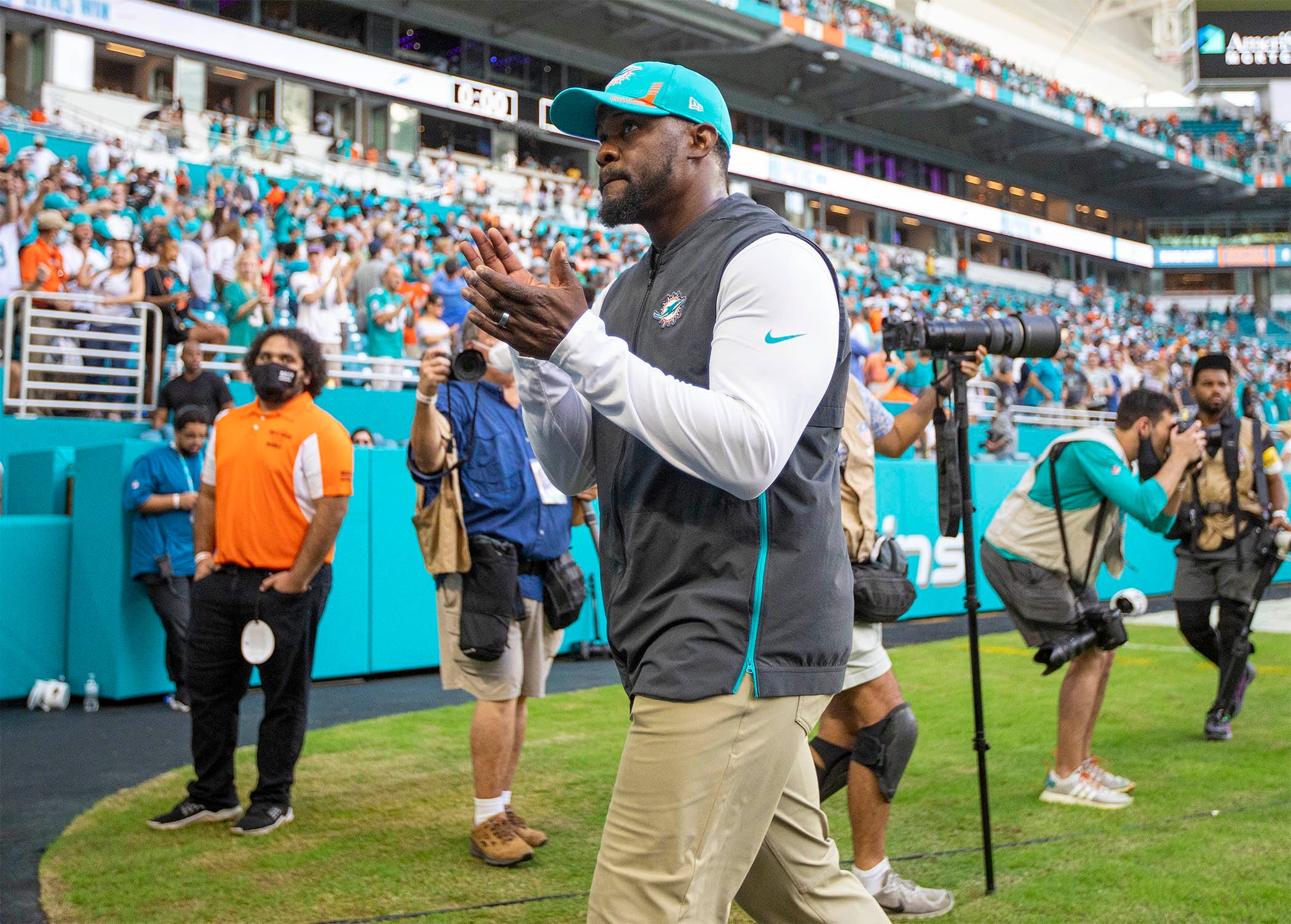
Miami Dolphins head coach Brian Flores, walks off the field after defeating the New York Jets during NFL game at Hard Rock Stadium Sunday in Miami Gardens.
In August 2025, the U.S. Court of Appeals for the Second Circuit rejected the NFL’s arbitration provisions outright, calling the commissioner-controlled process “arbitration in name only.” Federal judges looked at the league’s system and concluded it offered no meaningful neutrality. Major portions of Flores’ claims would proceed in open federal court. The NFL appealed to the Supreme Court. The Supreme Court said no. Four years of legal maneuvering, compel-arbitration motions, appeals, a certiorari petition. All of it failed. Every off-ramp, closed.
The Shield Cracks Open
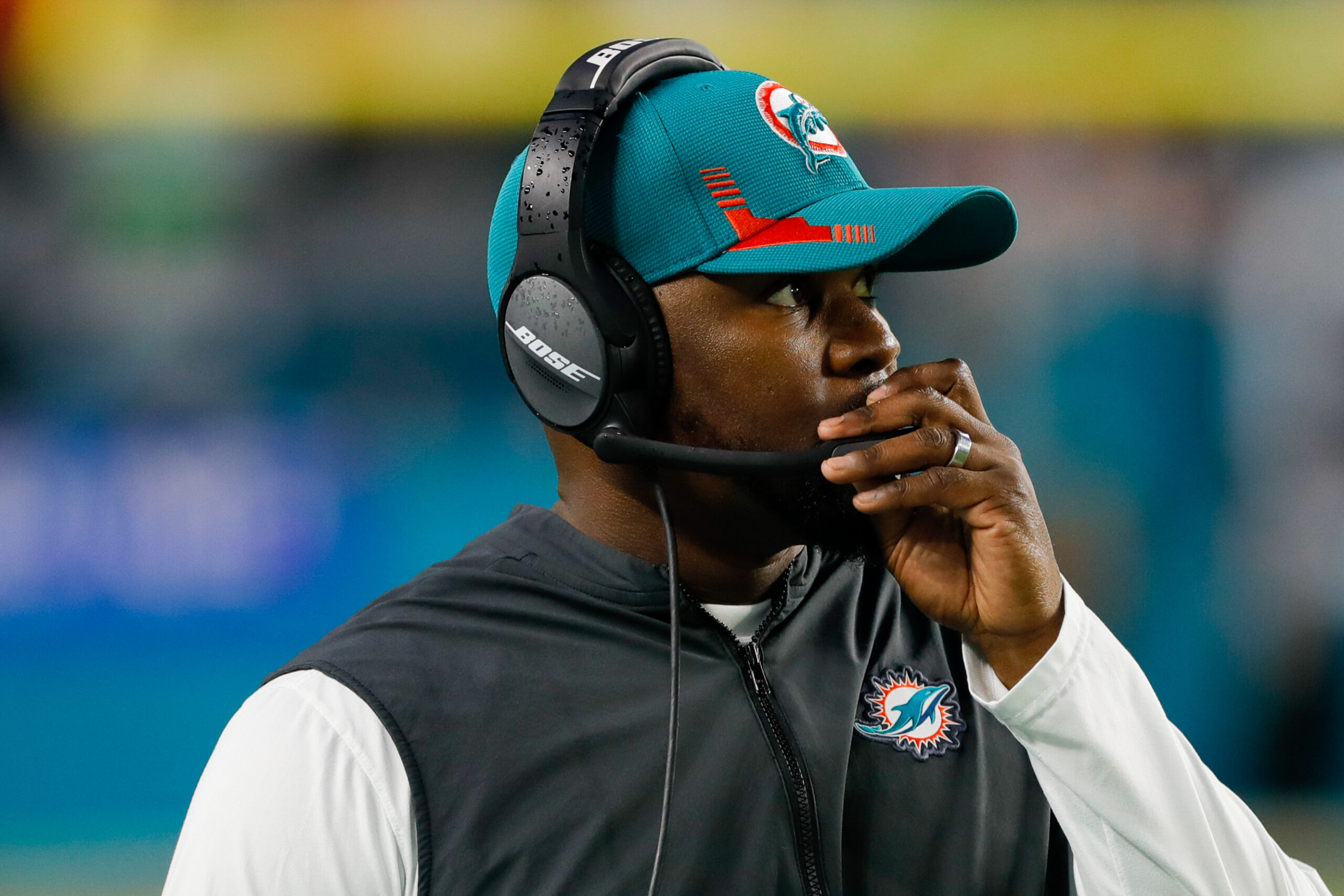
Jan 9, 2022; Miami Gardens, Florida, USA; Miami Dolphins head coach Brian Flores watches from the sideline during the second quarter of the game against the New England Patriots at Hard Rock Stadium. Mandatory Credit: Sam Navarro-Imagn Images
With arbitration dead, sweeping discovery into decades of NFL hiring practices became possible. Flores’ legal team began serving subpoenas on nearly the entire league. Internal documents, hiring records, communications about the Rooney Rule, evidence of how teams actually conducted coaching searches: all of it now subject to court-ordered disclosure. For a league that built its dispute-resolution system specifically to keep these files private, that exposure represents a structural failure. The mechanism designed to contain dissent became the reason a federal court pried the lid off.
The Numbers Behind the Curtain
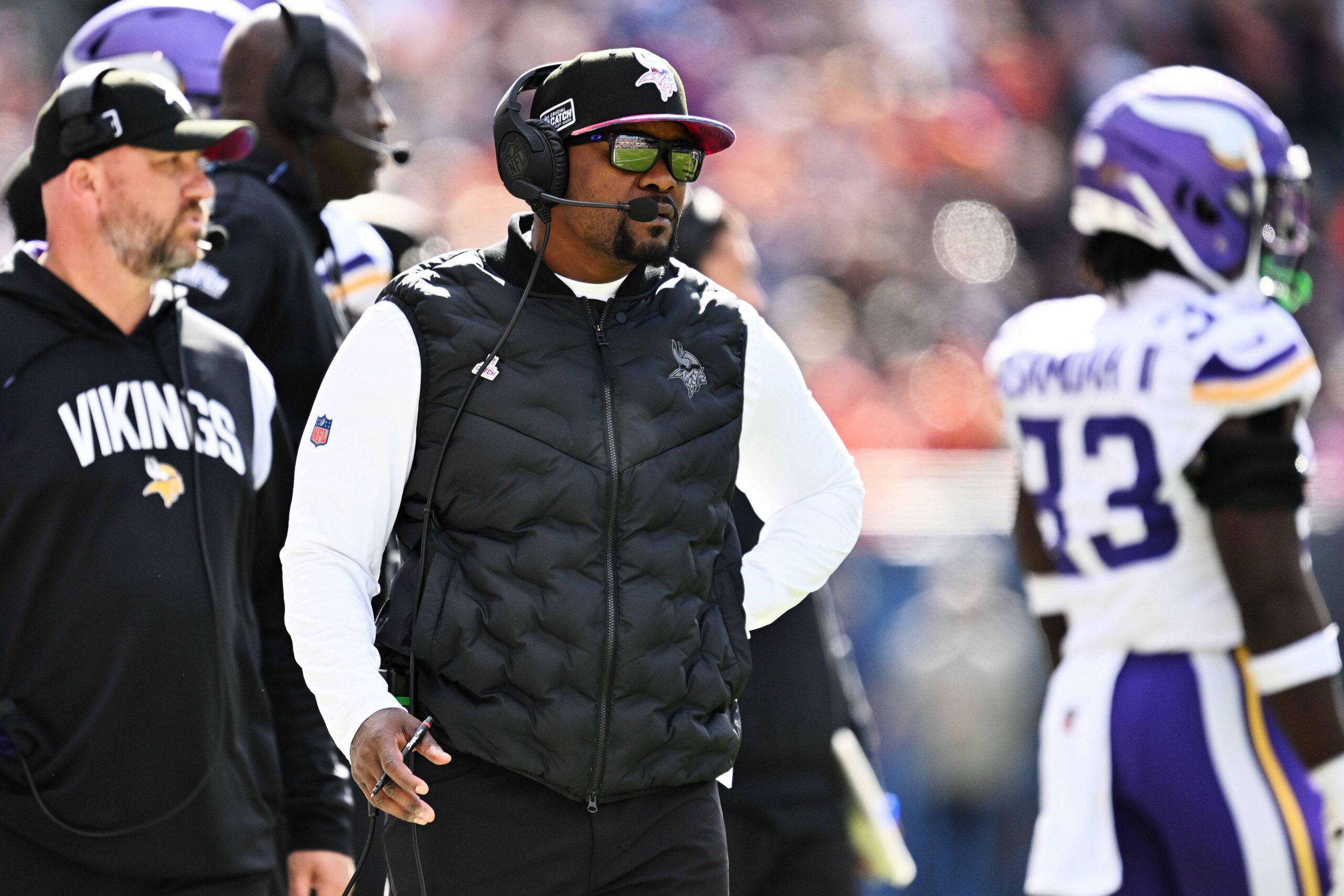
Oct 15, 2023; Chicago, Illinois, USA; Minnesota Vikings defensive coordinator Brian Flores watches his team play against the Chicago Bears at Soldier Field. Mandatory Credit: Jamie Sabau-Imagn Images
Three Black head coaches out of 32 teams as of January 2026. That’s roughly nine percent in a league where the majority of players are Black. Flores’ complaint stretches across 483 paragraphs, and the defendants currently contesting his claims in court are the NFL, the Denver Broncos, the New York Giants, and the Houston Texans. As part of discovery, his team has served subpoenas on 25 franchises seeking leaguewide hiring records. The breadth alone tells a story. One coach’s grievance doesn’t generate subpoenas to nearly every franchise. A pattern does. And now a federal court gets to examine whether that pattern holds up under oath.
Retaliation as Business Model
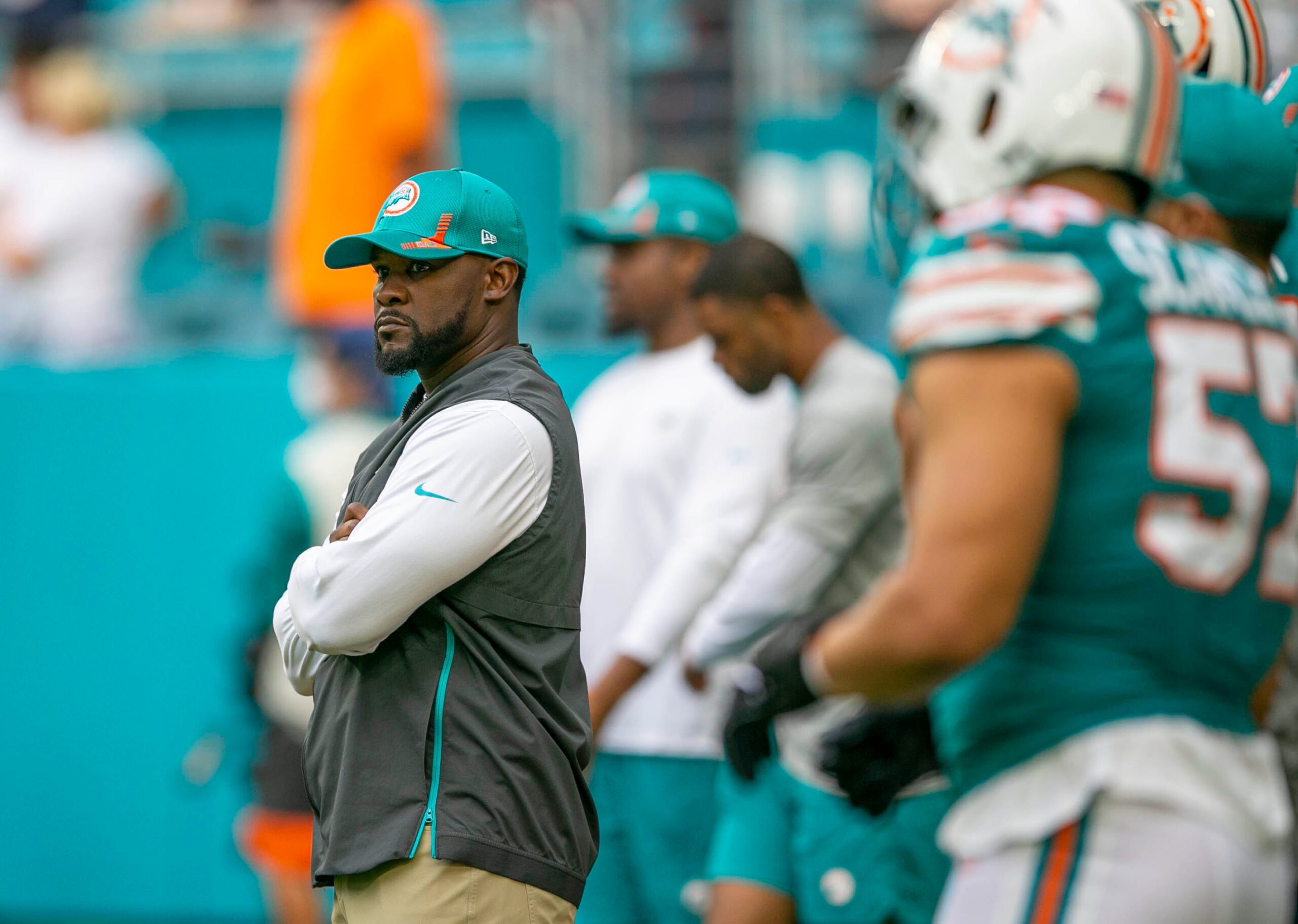
Miami Dolphins head coach Brian Flores before the start of they game against the New England Patriots during NFL game at Hard Rock Stadium Sunday in Miami Gardens. New England Patriots V Miami Dolphins 09
Flores’ third amended complaint added a new count: a “culture of retaliation” allegation claiming the NFL punished him for filing the lawsuit by freezing him out of head coaching opportunities. He remains employed as the Minnesota Vikings’ defensive coordinator, still working inside the league he’s suing. That detail alone is extraordinary. Most employees who sue their industry disappear from it. Flores kept coaching and kept amending his complaint. The NFL kept fighting. Late 2025 brought renewed efforts to strip remaining claims from the case.
A New Rule for the League
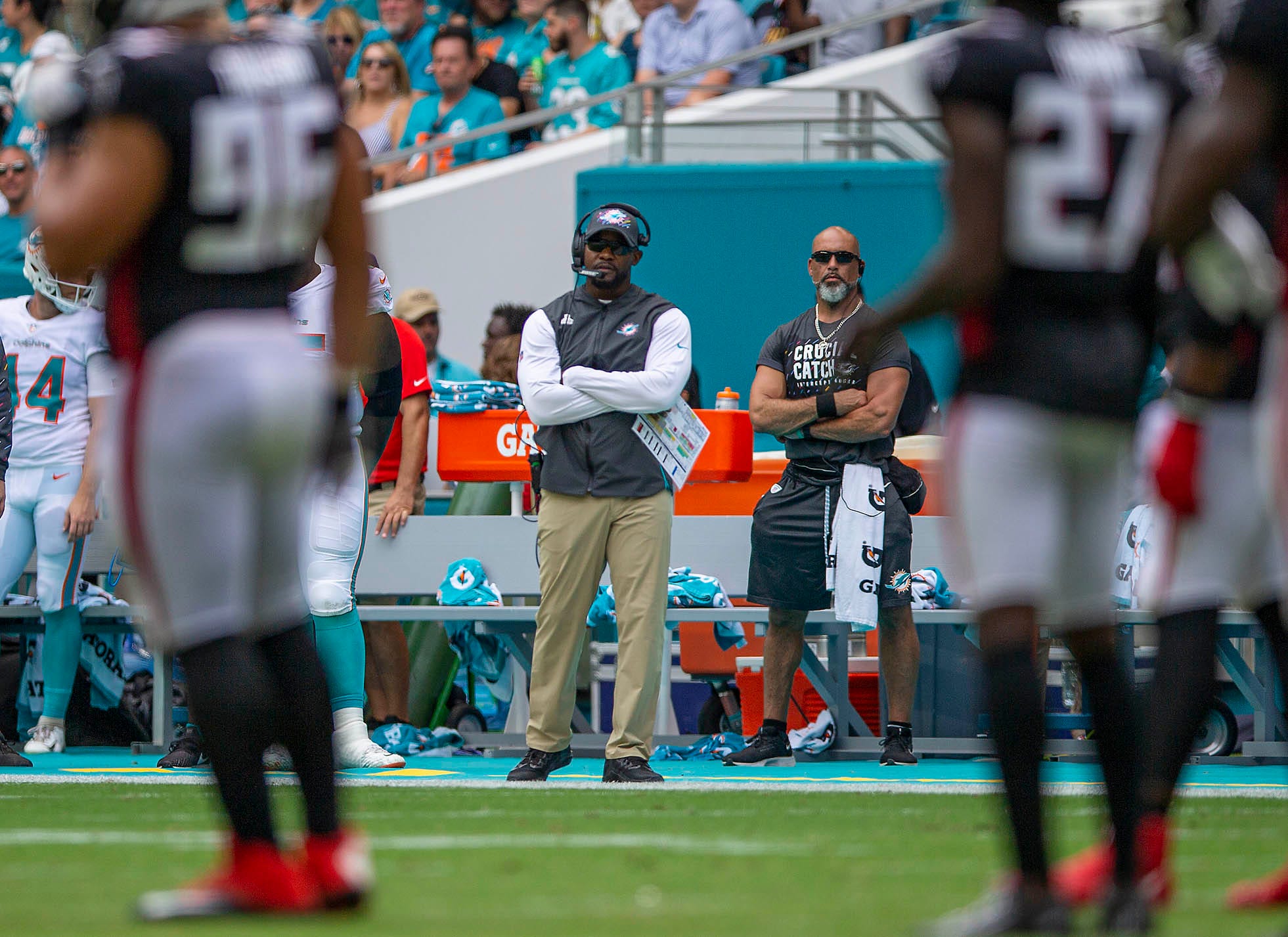
Miami Dolphins head coach Brian Flores, look from the sidelines as time runs out on the Miami Dolphins against Atlanta Falcons during NFL game at Hard Rock Stadium Sunday in Miami Gardens. Atlant Falcons V Miami Dolphins 19
The Second Circuit’s ruling didn’t just save Flores’ case. It established that the NFL’s commissioner-controlled arbitration system cannot shield the league from federal civil rights claims. Any non-player employee with a discrimination grievance now has a roadmap to open court. The NFL’s internal dispute machinery, built over decades to contain exactly this kind of challenge, lost its legal teeth in a single appellate decision. Once that precedent exists, it doesn’t go away. Every future complaint against the league starts from stronger ground.
Discovery Season Approaches
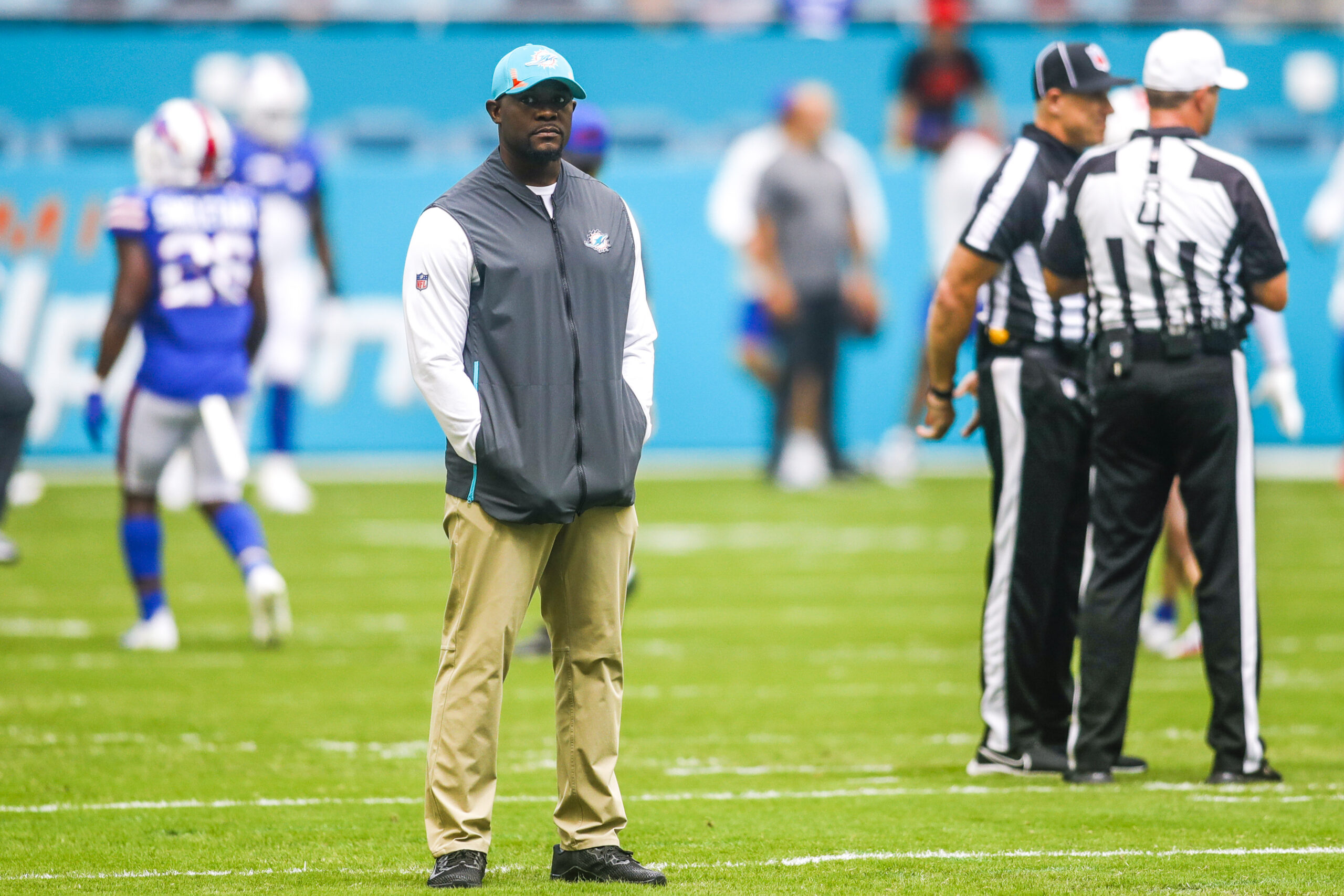
Sep 19, 2021; Miami Gardens, Florida, USA; Miami Dolphins head coach Brian Flores stands on the field prior the game against the Buffalo Bills at Hard Rock Stadium. Mandatory Credit: Sam Navarro-Imagn Images
The NFL still has moves left. Motions to dismiss Flores’ expanded complaint are expected, and the league will fight the scope of discovery at every turn. But the terrain has shifted permanently. Flores’ team has already begun requesting documents from franchises across the league. The case now functions as a structural test of the Rooney Rule itself: whether it operates as a genuine hiring reform or as institutional cover. That question has never been examined under oath, with subpoena power, in a federal courtroom.
The Files Nobody Was Supposed to See
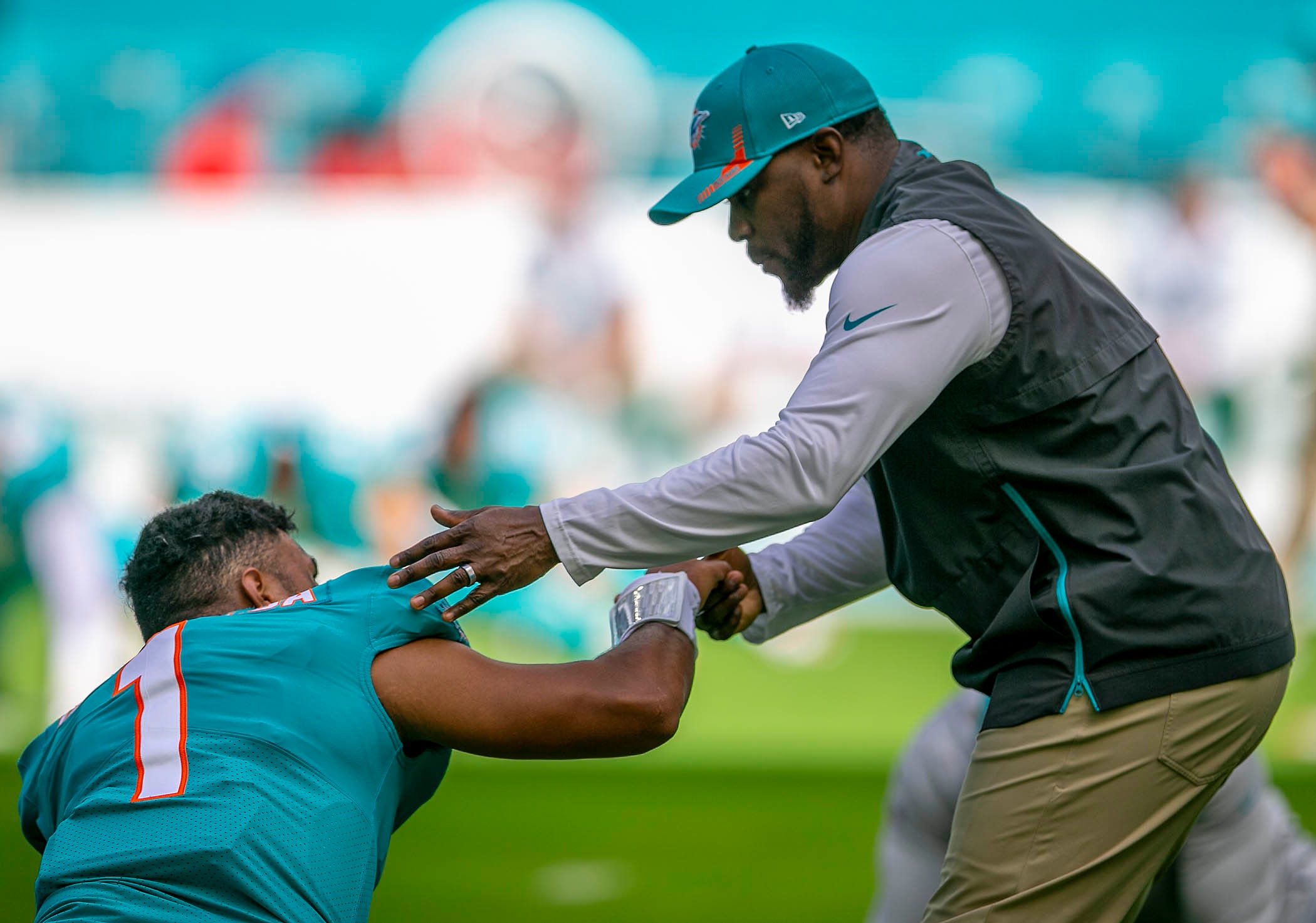
Miami Dolphins head coach Brian Flores, shakes hands withMiami Dolphins quarterback Tua Tagovailoa (1) before the start of the game against the New York Jets during NFL game at Hard Rock Stadium Sunday in Miami Gardens. New York Jet V Miami Dolphins 09
For four years, the NFL chose every possible off-ramp to keep this lawsuit from reaching a public trial. Arbitration. Appeals. The Supreme Court. All denied. Now the league faces the one scenario its legal strategy was built to prevent: a federal judge with subpoena power examining how 32 franchises actually hire coaches. Flores bet his career that the system would crack under scrutiny. The system bet it could outlast him. The courthouse doors are open, and the league’s hiring files go next. Is Flores exposing a system that was rigged all along, or is the Rooney Rule getting a bad rap? Drop your take in the comments.