


Springfield smelled like desperation. With the Illinois legislative session bleeding toward its May 31 adjournment deadline, lawmakers had already torn open a bill they’d moved through the House months earlier. The megaprojects bill, HB910, began as a routine piece of economic development legislation. Then the Chicago Bears showed up with a $5 billion stadium proposal and a list of demands. The bill got a late-night overhaul that changed its entire DNA on April 22, and the clock has kept ticking toward adjournment with no guarantee the Senate will even take it up.
The $5 Billion Squeeze Play

Chicago Bears wide receiver DJ Moore (2) runs for a touchdown in the fourth quarter of the NFL football game between Chicago Bears and Cincinnati Bengals at Paycor Stadium in Cincinnati on Nov. 2, 2025.
The Bears weren’t asking Illinois to build them a stadium. The franchise committed roughly $2 billion of its own money toward the new enclosed facility in Arlington Heights, with the broader project pushing total capital investment above $5 billion. What the Bears wanted was something more valuable than a check: long-term tax certainty through a PILOT framework, a payment-in-lieu-of-taxes structure that would lock in financial predictability for decades. The deal would not fund stadium construction directly. Instead, it would let the Bears negotiate their property tax bill with surrounding taxing bodies for up to 40 years.
A Bill Rewritten Overnight

Detroit Lions safety Kerby Joseph (31), left, and safety Brian Branch (32) celebrate a play against Chicago Bears during the first half at Ford Field in Detroit on Thursday, Nov. 28, 2024.
Most people assumed this fight was about public money funding a billionaire’s playground. That assumption missed the point entirely. HB910 had been on the legislative backburner for more than three years before lawmakers filed a revamped version overnight and pushed it through the House Revenue and Finance Committee on a 15-5 vote. Then the full House passed it the same night, April 22, 2026. The updated proposal was roughly ten times longer than the version the House had advanced in February, and it bundled the megaproject framework with new taxpayer protections. Illinois lawmakers cracked open their own legislation and rebuilt it around the Bears’ timeline.
Half the Money Walked Out the Door

May 8, 2026; Lake Forest, IL, USA; Chicago Bears offensive lineman Logan Jones (54) speaks during Rookie Minicamp at Halas Hall. Mandatory Credit: Kamil Krzaczynski-Imagn Images
Here’s what the restructuring actually did: 50% of all PILOT receipts now flow toward property tax relief instead of the project. Of that redirected half, 60% goes to property tax rebates for residential homeowners in taxing districts with a megaproject. The remaining 40% feeds the state’s existing property tax relief fund. The bill also specifically bans data centers from using the megaproject incentives and includes a sunset clause that ends the tool after seven years unless lawmakers renew it. Illinois lawmakers took a corporate tax framework and turned it into a homeowner relief program. The Bears welcomed the progress but immediately signaled they wanted more changes before the Arlington Heights plan would be feasible.
The PILOT Nobody Talks About
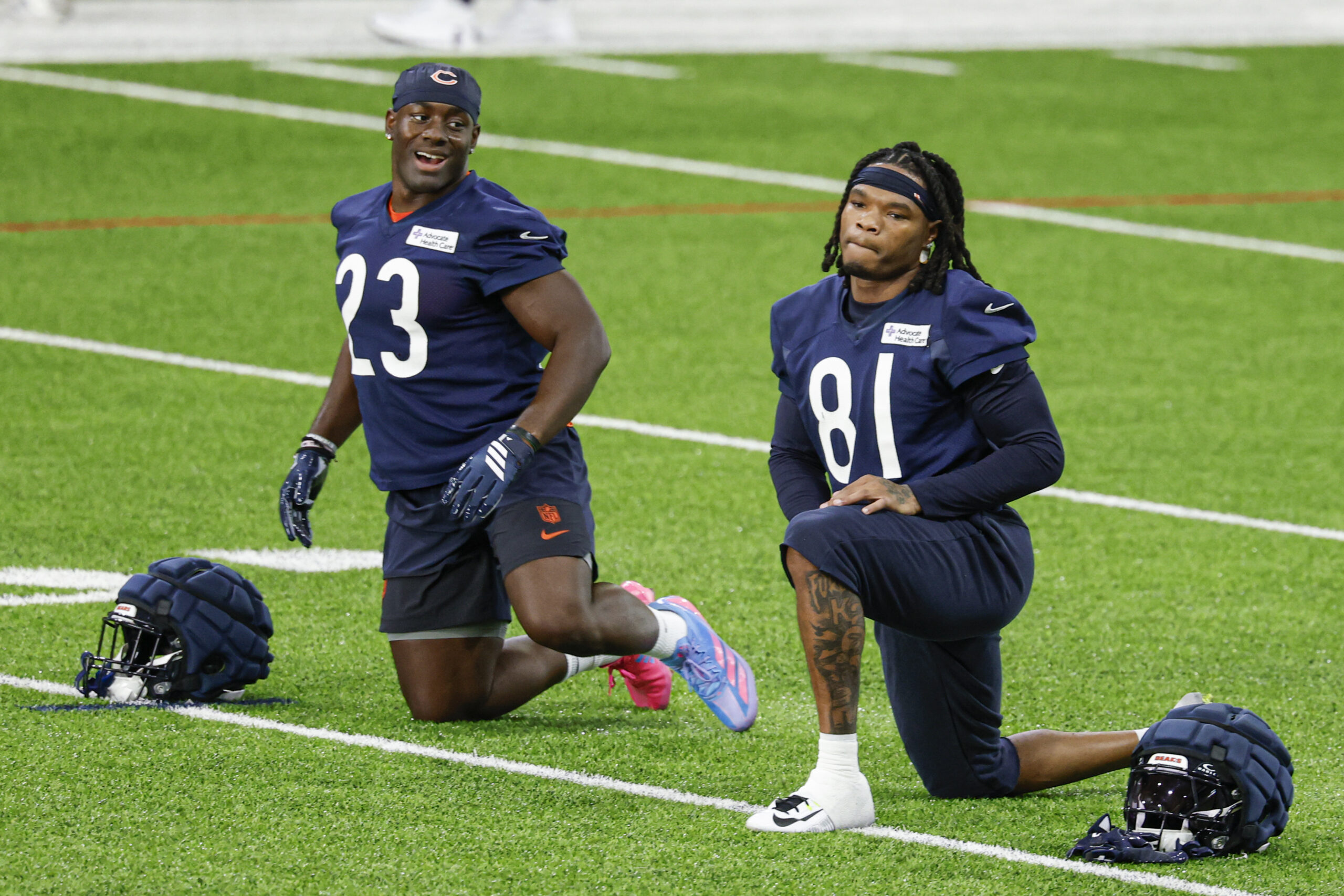
May 8, 2026; Lake Forest, IL, USA; Chicago Bears wide receiver Zavlon Thomas (81) stretches during Rookie Minicamp at Halas Hall. Mandatory Credit: Kamil Krzaczynski-Imagn Images
The real story isn’t construction money. Stadium deals across the country have evolved from “give us cash to build” into something far more sophisticated: decades-long tax frameworks that provide financial predictability no annual budget process can touch. The Bears don’t need Illinois to write a check. They need Illinois to guarantee a tax structure that survives every future governor, every future legislature, every future budget crisis. The megaproject designation is tiered: projects investing at least $100 million can lock in payments for 25 years, $500 million for 30 years, and $1 billion or more — like the Bears’ proposal — for 40 years, with extra years available for sites needing environmental remediation. It’s a financial fortress disguised as a sports bill.
The Numbers Behind the Rewrite

May 22, 2026; Chicago, Illinois, USA; Chicago Bears first-round draft pick Dillon Thieneman throws out a ceremonial first pitch before a baseball game between the Chicago Cubs and Houston Astros at Wrigley Field. Mandatory Credit: Kamil Krzaczynski-Imagn Images
The House passed HB910 by a 78-32 vote. That margin looks comfortable until you realize the bill that passed bore almost no resemblance to the one introduced months earlier. A House floor amendment rewrote the core provisions, replacing everything after the enacting clause. The HR&A Advisors analysis the Bears commissioned pegged total capital investment above $5 billion. The franchise treated the legislative calendar the way a quarterback treats a play clock: maximum pressure, minimum time for the defense to adjust.
Who Pays When the Bill Shrinks

May 8, 2026; Lake Forest, IL, USA; Chicago Bears defensive back Dillon Thieneman (31) runs during Rookie Minicamp at Halas Hall. Mandatory Credit: Kamil Krzaczynski-Imagn Images
Redirecting half the PILOT revenue toward property tax relief sounds generous until you trace where that money was originally headed. Every dollar flowing to homeowners is a dollar not flowing to the project and its surrounding infrastructure. Arlington Heights-area homeowners get property tax rebates. The statewide fund gets a cut. But the development footprint around the stadium loses funding flexibility. Other Illinois taxing bodies now operate under a framework they didn’t design, built around a project they didn’t request. The ripple effect touches every municipality watching Springfield for a template.
The Playbook Every Owner Will Copy

May 8, 2026; Lake Forest, IL, USA; Chicago Bears defensive coordinator Dennis Allen looks on during Rookie Minicamp at Halas Hall. Mandatory Credit: Kamil Krzaczynski-Imagn Images
Once you see what the Bears accomplished, you cannot unsee it in every future stadium negotiation. They didn’t lobby for a handout. They positioned themselves as the anchor tenant of a state economic development bill, then pressed for the legislation to be reshaped around their needs. The state rewrote its own bill to accommodate the franchise’s priorities. That’s not a one-time concession. That’s a precedent. Every NFL, NBA, and MLB owner now has a case study in leveraging legislative deadlines to extract tax frameworks that outlast any single administration’s political will.
The Senate Clock Is Already Running
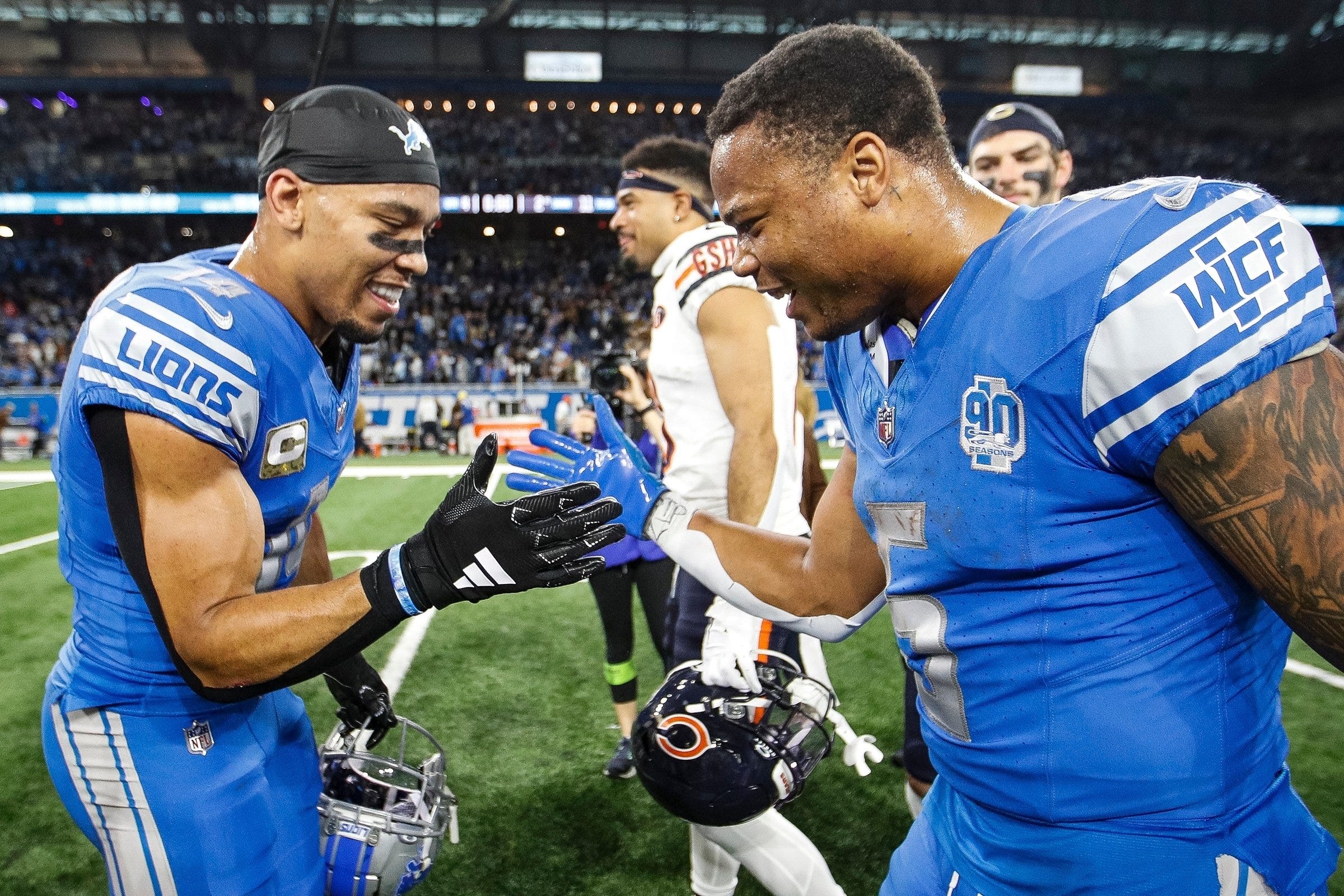
Detroit Lions wide receiver Amon-Ra St. Brown and running back David Montgomery celebrate the 31-26 win over the Chicago Bears at Ford Field in Detroit on Sunday, Nov. 19, 2023.
The House vote cleared on April 22, and the Senate returned to session the following Tuesday, April 28. But the bill was referred to the Senate’s Assignments Committee and has not advanced since, and the session ends May 31. The Bears have publicly signaled that additional changes remain necessary to make Arlington Heights feasible. That means any deal would require negotiations crammed into a shrinking window, with the framework still needing Gov. JB Pritzker’s blessing to become law. If the Senate stalls past adjournment, the entire framework collapses and negotiations restart from zero in a future session with different political dynamics.
The Tax Framework That Outlives Them All
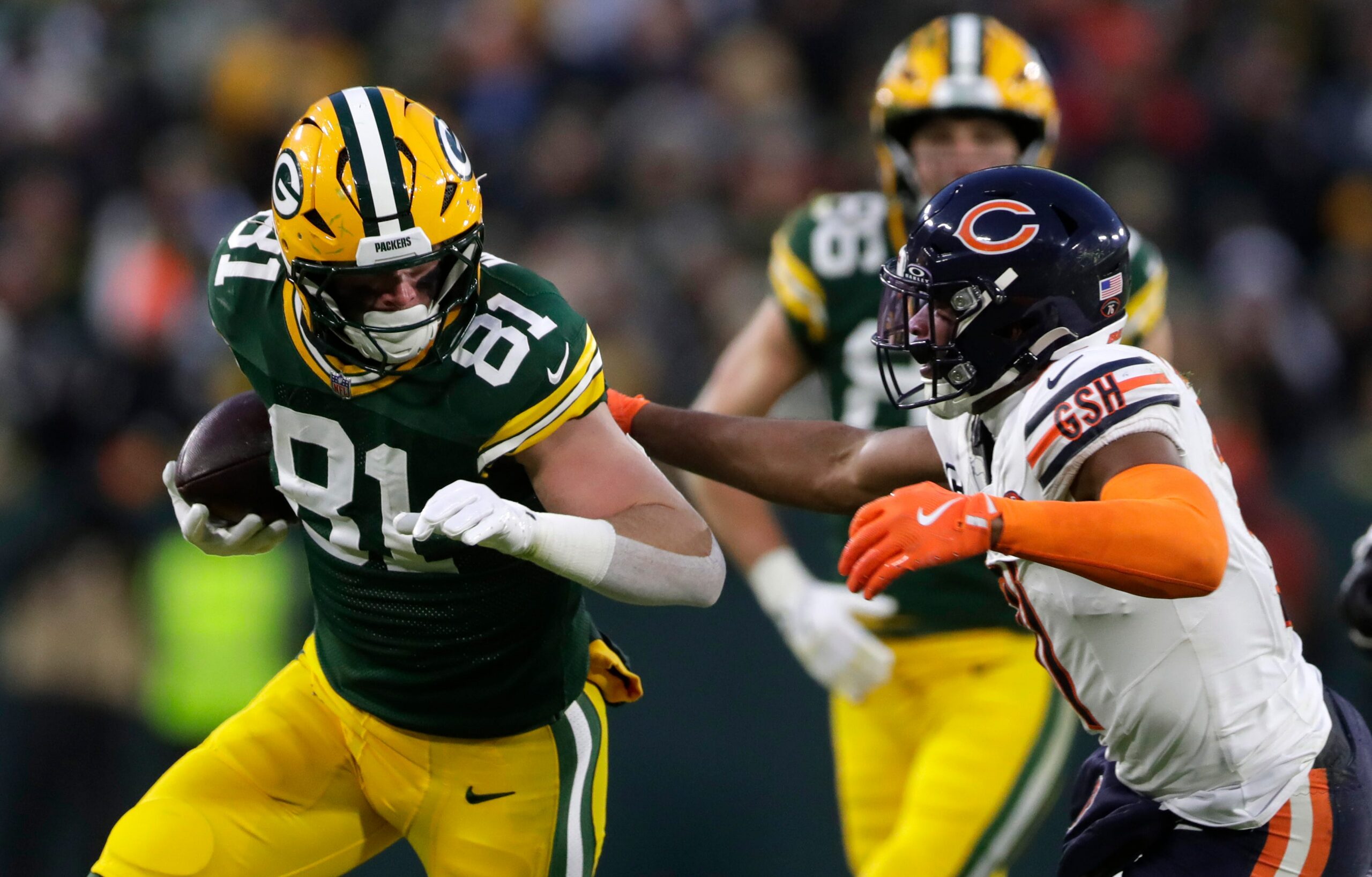
Green Bay Packers tight end Josh Whyle (81) runs the ball during a football game against the Chicago Bears on Dec. 7, 2025, at Lambeau Field in Green Bay, Wis. The Packers defeated the Bears 28-21.
The Bears’ George McCaskey and Kevin Warren didn’t walk into Springfield asking for stadium money. They walked in asking for something no future legislature can easily undo: a tax certainty framework embedded in state law. Everyone who read this story as a stadium funding fight missed the actual negotiation. The real product isn’t a domed stadium in Arlington Heights. It’s a financial structure designed to survive decades of political turnover. The franchise that convinces a state to rebuild its own economic development law around its timeline doesn’t need public funding to win the most important battle. So here’s the real question: is this smart economic development that keeps the Bears in Illinois, or a blueprint for every billionaire owner to squeeze a statehouse? Drop your take in the comments.