
The reigning NFL MVP stood at a podium in May, sun on his face, grinning like a man who just got everything he wanted. Matthew Stafford had signed fresh ink with the Los Angeles Rams. One year. $55 million. The press release read like a love letter between a franchise and its late‑30s quarterback. But buried in the contract’s back pages sat a number so large it could only mean one thing: somebody built an ejection seat into this marriage. The $55 million was the handshake. The real story lived deeper.
An MVP Season Nobody Saw Coming
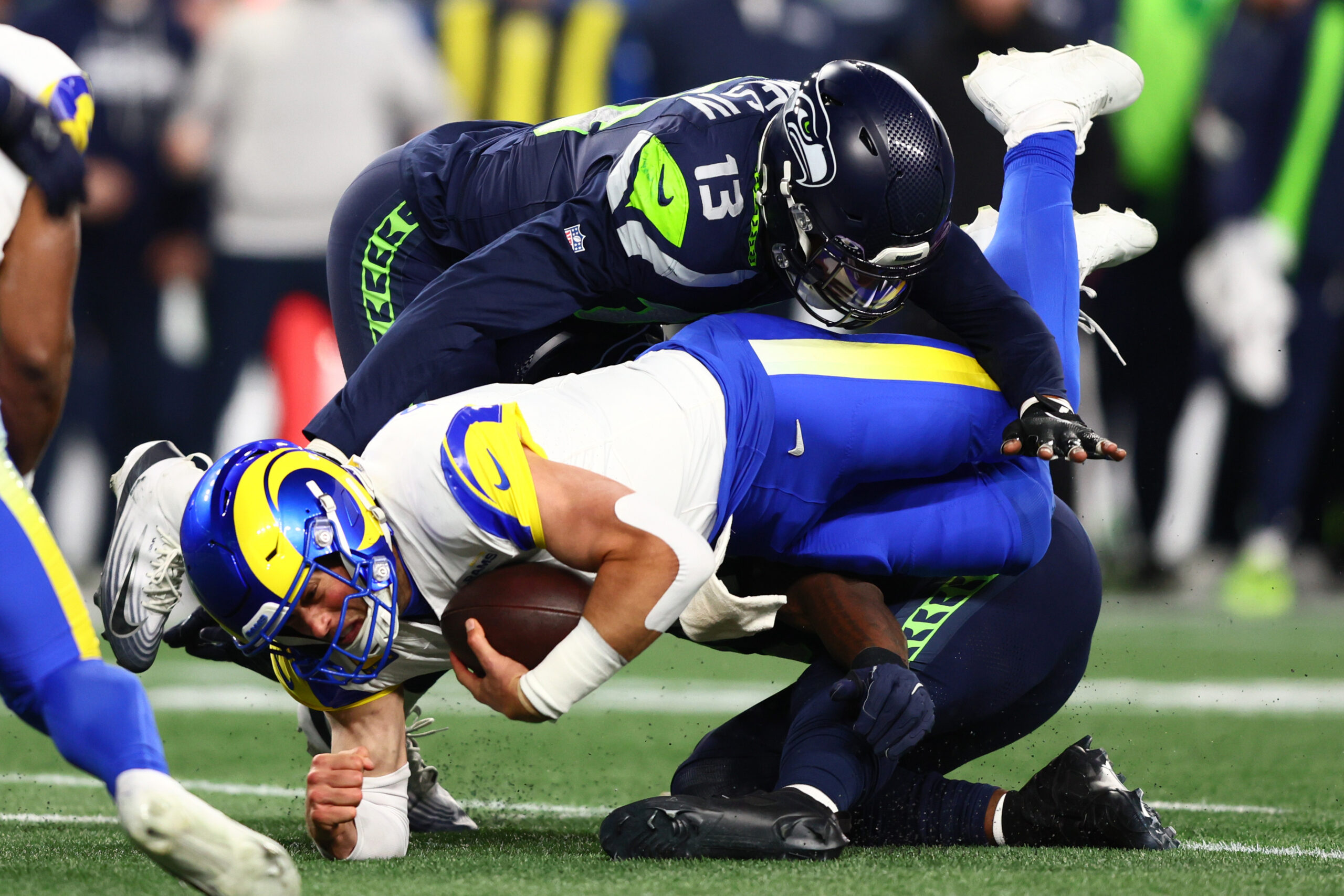
Jan 25, 2026; Seattle, WA, USA; Los Angeles Rams quarterback Matthew Stafford (9) dives for a first down against Seattle Seahawks linebacker Ernest Jones IV (13) during the second half in the 2026 NFC Championship Game at Lumen Field. Mandatory Credit: Kevin Ng-Imagn Images
Stafford earned that payday. His 2025 campaign vaulted him back into the league’s top tier and ended with his first career NFL MVP award. He announced after the season that he intended to keep playing, and the Rams moved quickly to make sure that would happen in Los Angeles. Sean McVay called that quick decision “big” for the Rams’ ability to go all in. The franchise adjusted his workload, managed his offseason, and watched him play some of the best football of his career. Before the extension, Stafford had been scheduled to make $40 million in 2026.
The Successor Already in the Building
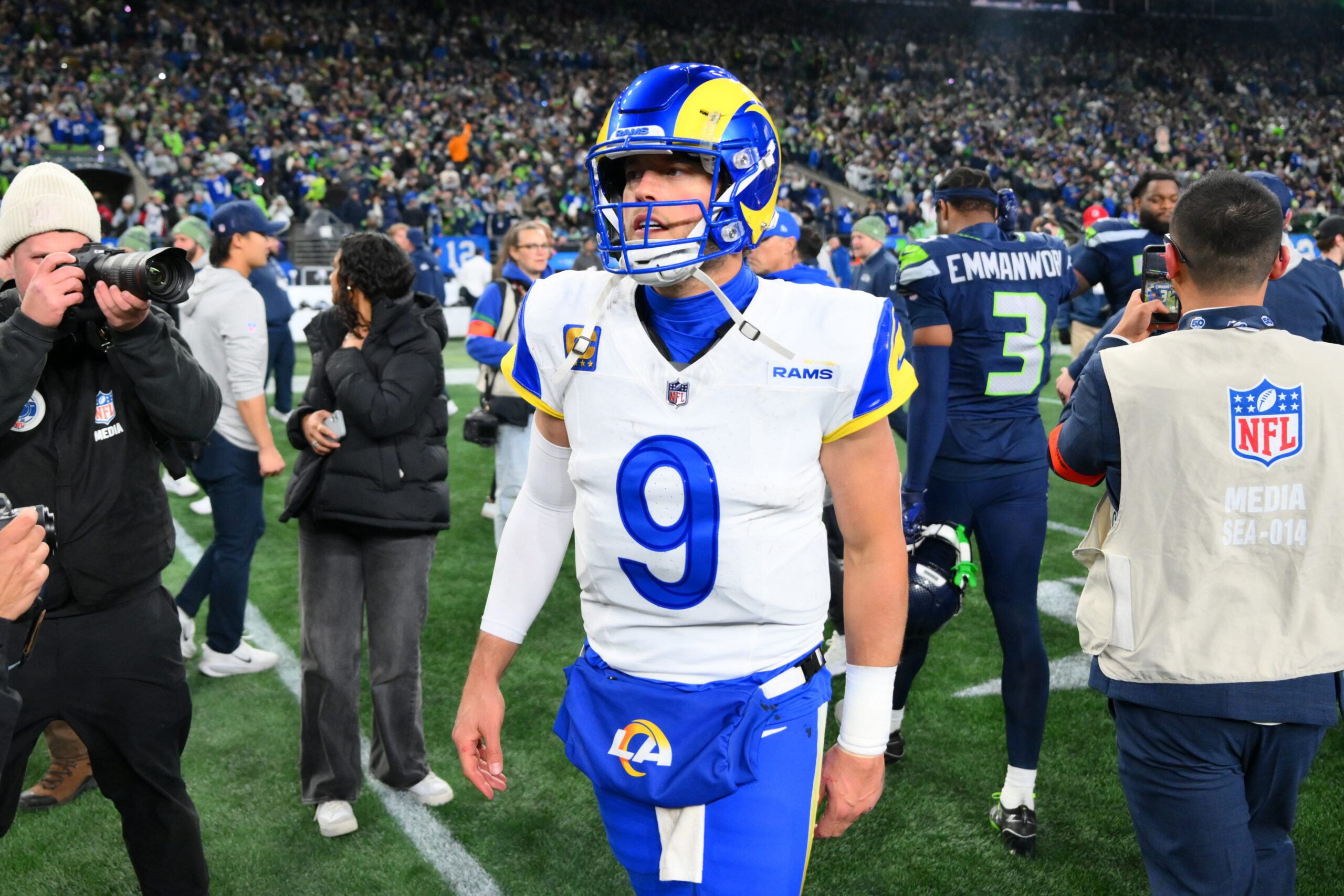
Jan 25, 2026; Seattle, WA, USA; Los Angeles Rams quarterback Matthew Stafford (9) leaves the field after the 2026 NFC Championship Game against the Seattle Seahawks at Lumen Field. Mandatory Credit: Steven Bisig-Imagn Images
If you assumed drafting a first‑round quarterback meant Stafford was halfway out the door, the contract says otherwise. The Rams used a premium pick on a young passer in the same offseason they gave their MVP a significant raise. GM Les Snead has described the front office as intentional but not panicked about succession planning, even while investing serious draft capital in one. McVay made sure Stafford was looped in before the move. That age gap between starter and heir tells you the Rams are running two timelines at once.
The Number Nobody Was Supposed to Notice
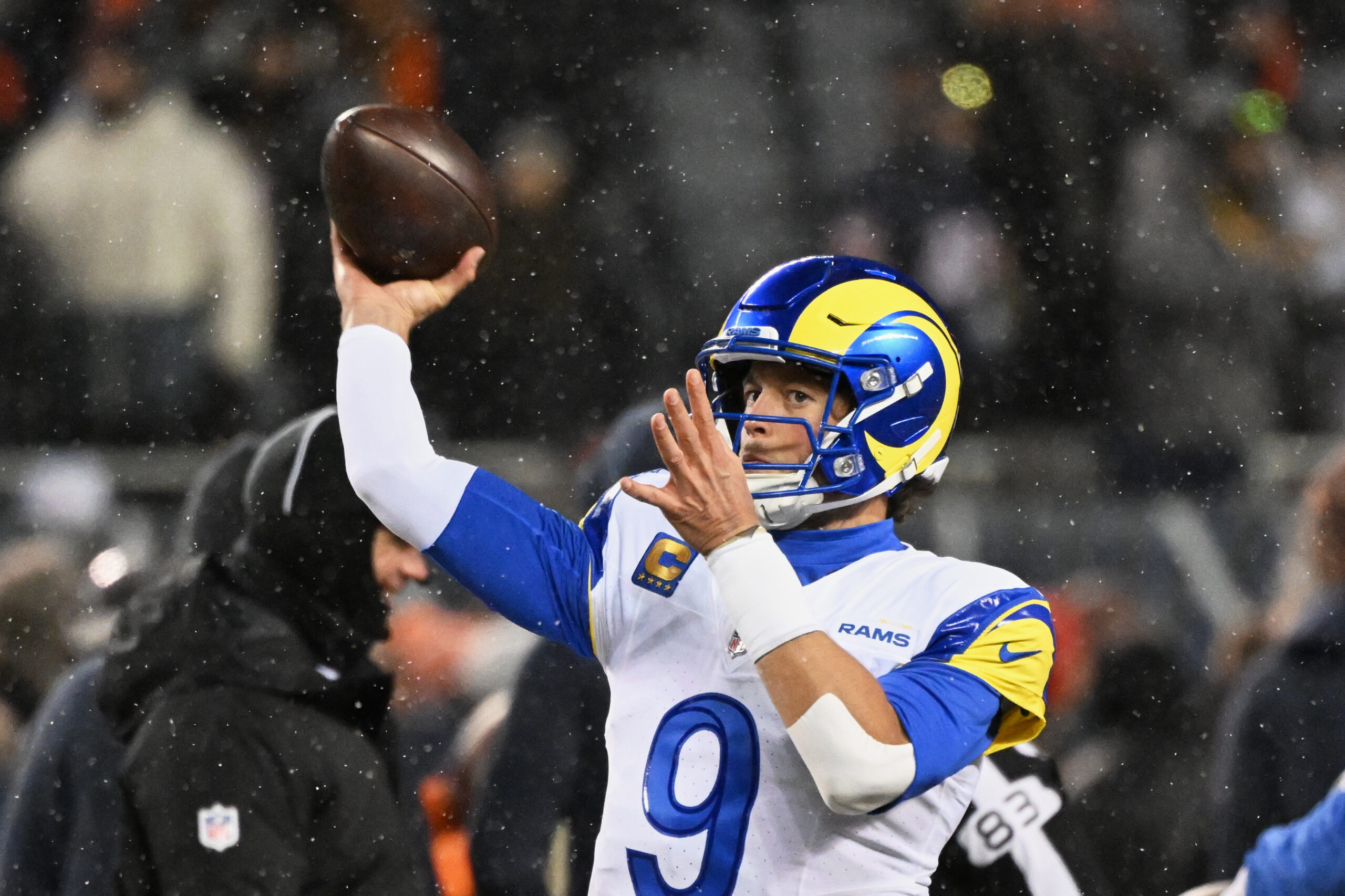
Jan 18, 2026; Chicago, IL, USA; Los Angeles Rams quarterback Matthew Stafford (9) throws a pass during warmups before an NFC Divisional Round game against the Chicago Bears at Soldier Field. Mandatory Credit: Matt Marton-Imagn Images
On the surface, the extension looked clean. One year, $55 million, up to $60 million with incentives. Then the national reports unpacked the fine print. Tucked into the out‑years sits a notional $100 million base salary for the 2029 season, vesting if Stafford remains on the roster by the 10th day of the 2028 league year. Nobody expects a quarterback pushing 40 to collect nine figures for one season. That number exists to detonate. It forces both sides to renegotiate or walk away before the bill comes due. A $5 million roster bonus is guaranteed at signing. Another $50 million locks in at the start of the 2027 league year. Then comes the $100 million cliff.
Rolling Guarantees as Annual Deadlines
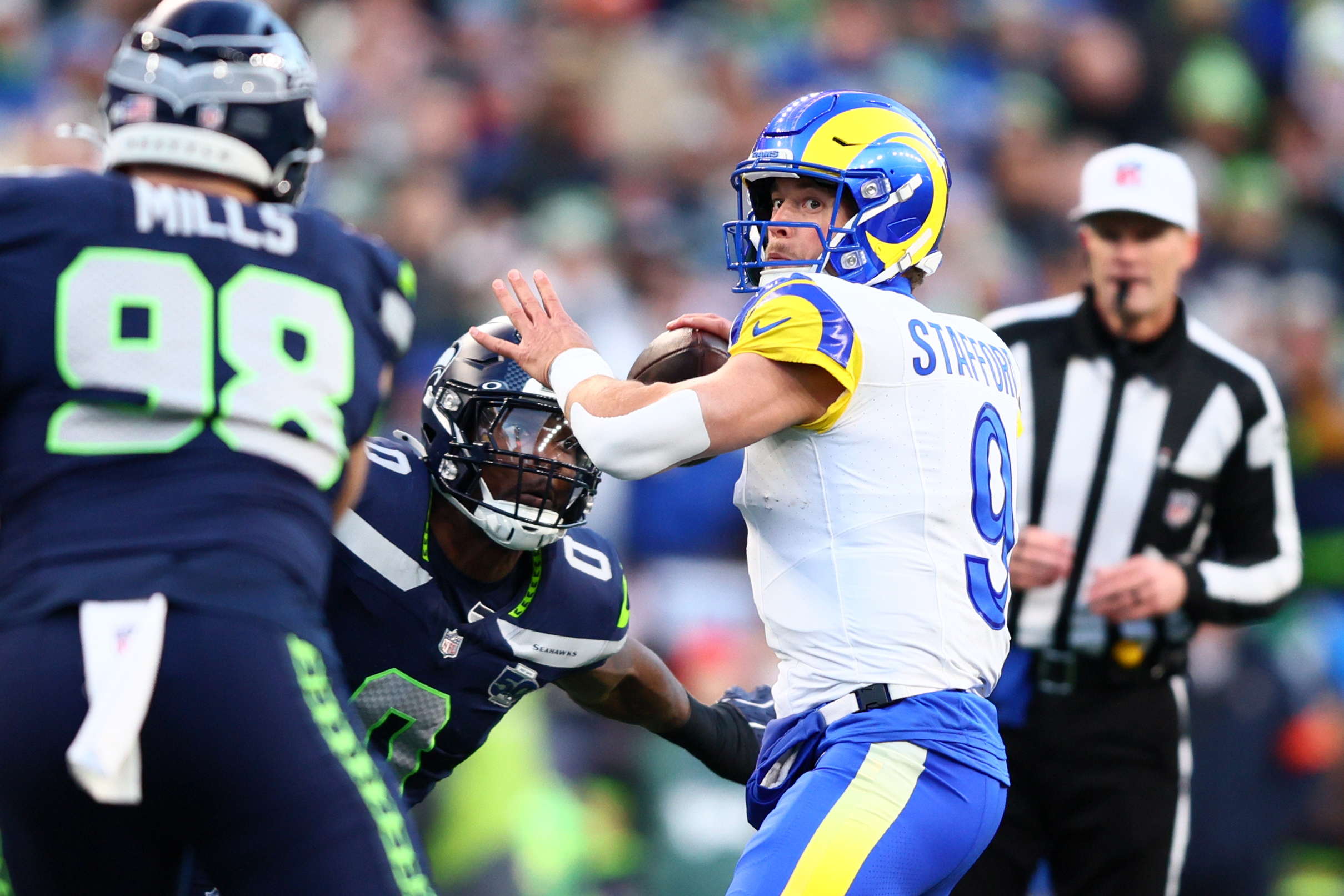
Jan 25, 2026; Seattle, WA, USA; Los Angeles Rams quarterback Matthew Stafford (9) passes against Seattle Seahawks defensive end DeMarcus Lawrence (0) during the first half in the 2026 NFC Championship Game at Lumen Field. Mandatory Credit: Kevin Ng-Imagn Images
The hidden machine driving this deal is the rolling guarantee. According to the reported structure, Stafford’s 2027 base salary and a future roster bonus become fully guaranteed if he is still on the roster on the third day of that league year. Think of it like a credit card statement deadline: ignore it, and the cost of carrying the balance explodes. Every March becomes a referendum. Cut him, restructure, or commit. The Rams built annual exit ramps into a contract designed to look like loyalty. That is not an accident. That is architecture.
The Numbers Behind the Curtain
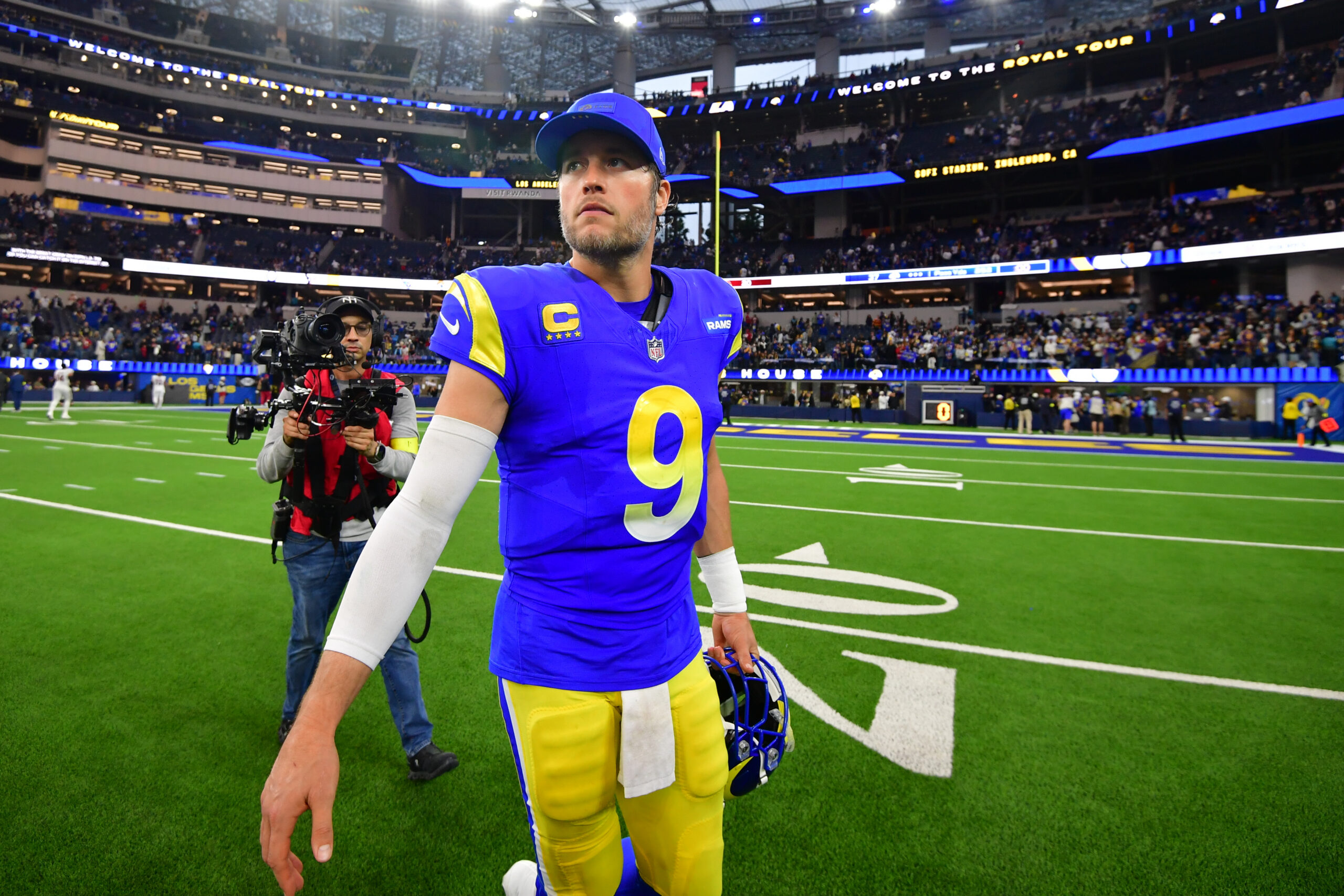
Jan 4, 2026; Inglewood, California, USA; Los Angeles Rams quarterback Matthew Stafford (9) leaves the field following a game against the Arizona Cardinals at SoFi Stadium. Mandatory Credit: Gary A. Vasquez-Imagn Images
With the extension and incentives, Stafford is now tied to Los Angeles through the 2027 season with roughly $105 million in total remaining compensation, including incentive money. If he plays through 2027 and earns his full base salaries and roster bonuses, he can collect tens of millions across those two seasons alone. The incentive structure adds another layer: $5 million per season in bonuses tied to postseason success, including deep playoff runs and a potential Super Bowl. That is approximately $10 million total in playoff incentives tied to the deepest possible runs. The Rams are paying championship‑or‑bust money to a quarterback whose cap number will constrain every other roster move they make.
What This Costs Everyone Else
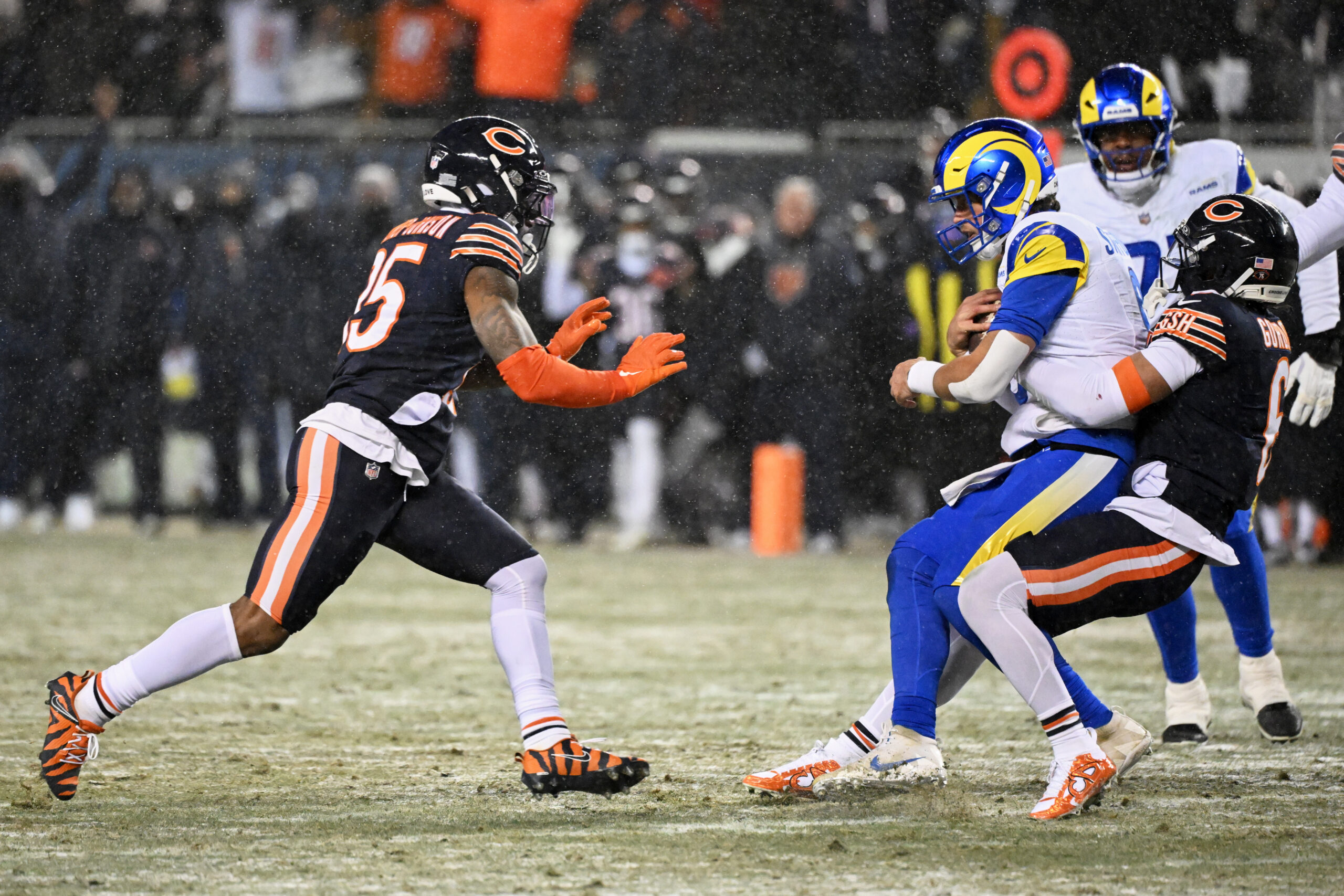
Jan 18, 2026; Chicago, IL, USA; Chicago Bears cornerback Kyler Gordon (6) sacks Los Angeles Rams quarterback Matthew Stafford (9) during the second quarter of an NFC Divisional Round game at Soldier Field. Mandatory Credit: Matt Marton-Imagn Images
Stafford’s guarantees consume cap space that cannot go to other positions. Every dollar locked into a late‑30s quarterback is a dollar unavailable for a pass rusher, a corner, or depth. Meanwhile, his potential successor sits and learns. Other teams with aging stars are watching the Rams’ template: short‑term premium extension, rolling guarantees, drafted successor on a rookie deal in the background. This model may keep young first‑round quarterbacks redshirted longer across the league, delaying their earning potential while franchises squeeze every last snap from the incumbent. Stafford’s deal reinforces a market precedent that older elite quarterbacks can still command top dollar.
A Script, Not a Surprise
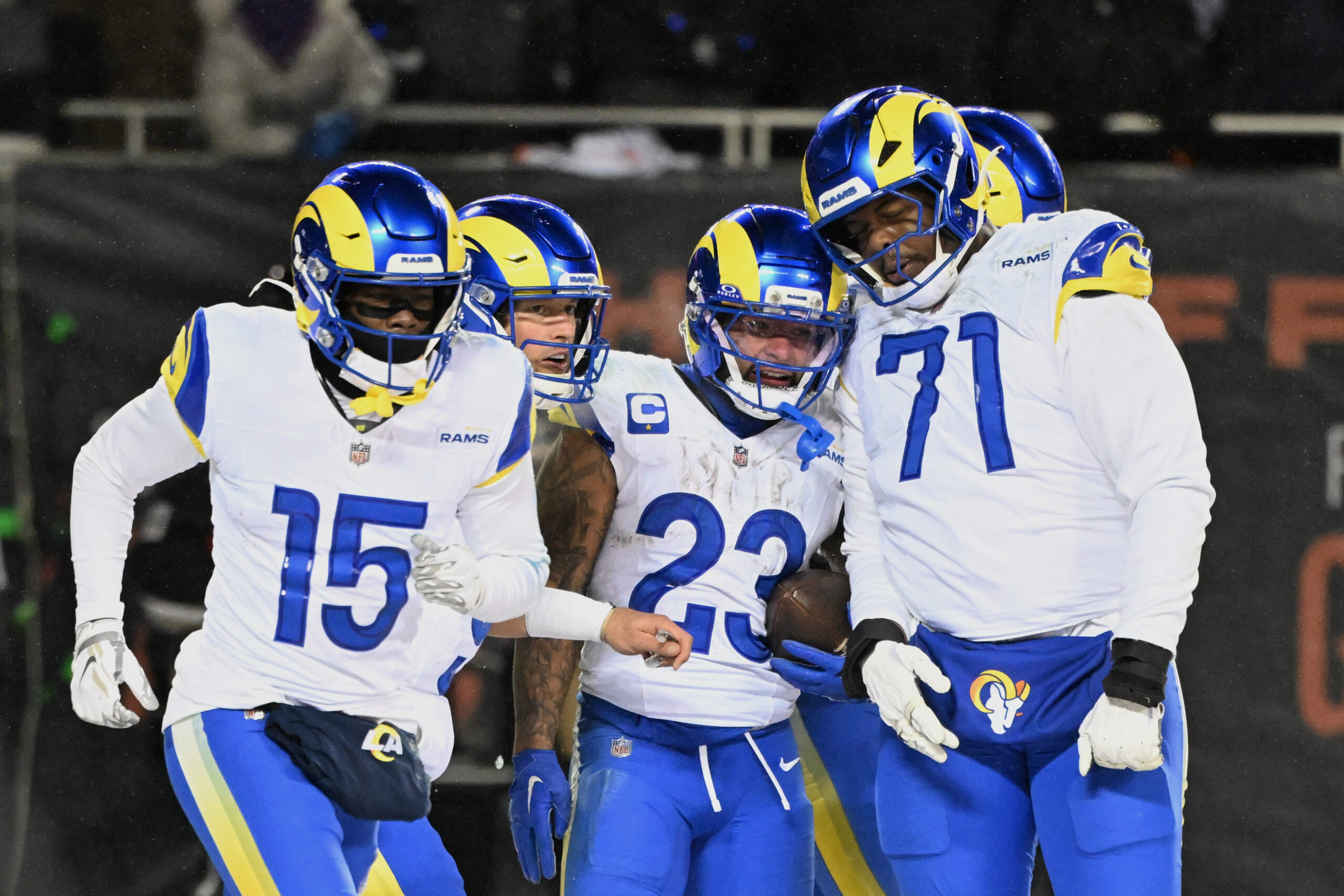
Jan 18, 2026; Chicago, IL, USA; Los Angeles Rams running back Kyren Williams (23) celebrates with wide receiver Konata Mumpfield (15), quarterback Matthew Stafford (9) and offensive tackle Warren McClendon Jr. (71) after scoring a touchdown against the Chicago Bears during the fourth quarter of an NFC Divisional Round game at Soldier Field. Mandatory Credit: Matt Marton-Imagn Images
Once you see how the rolling guarantees, the March trigger dates, the $100 million phantom salary, and the timing of the succession plan fit together, Stafford’s comments stop sounding spontaneous. “Hopefully some more football after that. I love playing this game.” Lines like that read differently when you understand the contract was built to force the conversation he’s pretending hasn’t started. The Rams drafting a successor behind an established star echoes how Green Bay once drafted Aaron Rodgers behind Brett Favre. The $100 million single‑year figure pushes that tactic into new territory. This looks like a new rule, not an exception.
The Clock Only Gets Louder
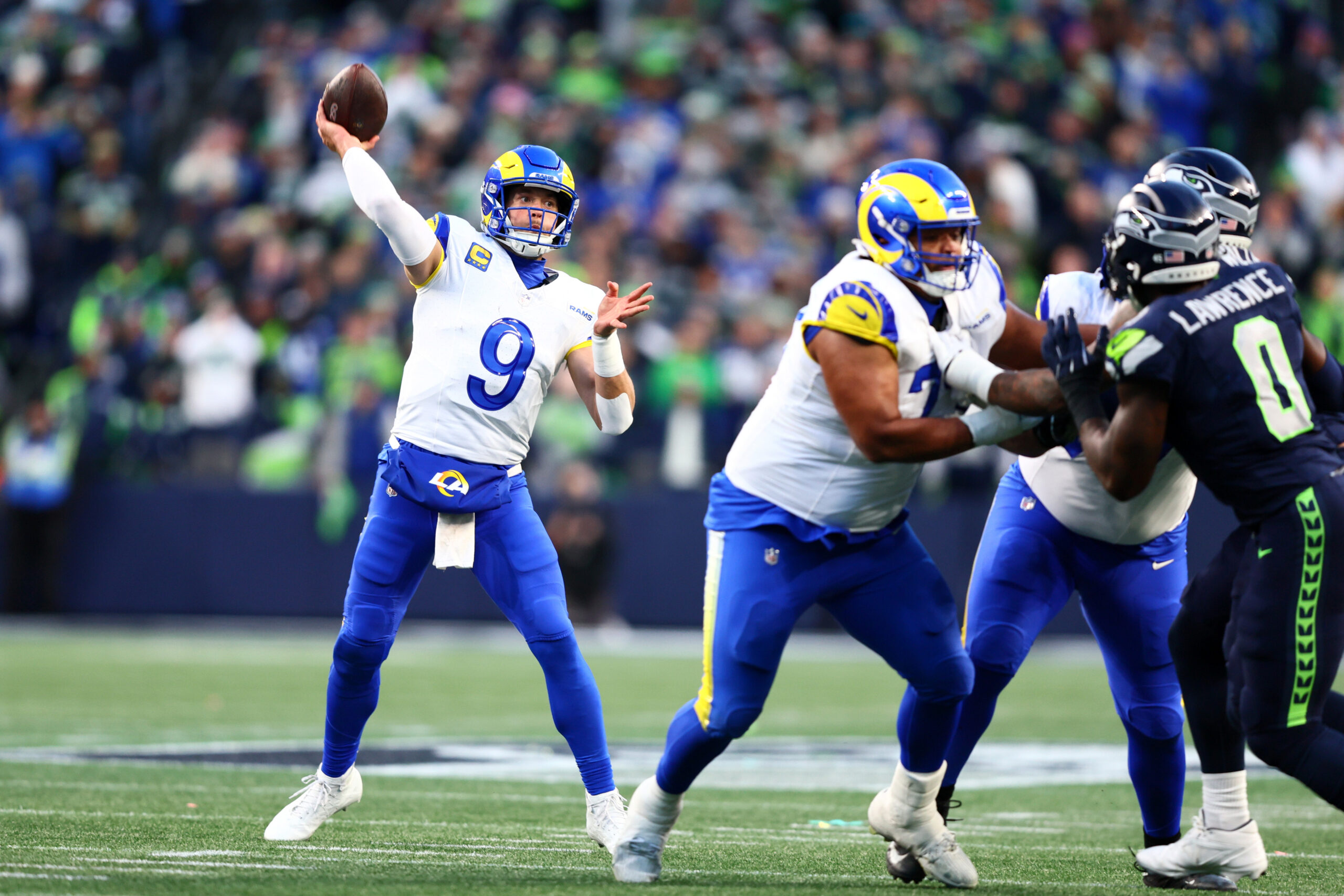
Jan 25, 2026; Seattle, WA, USA; Los Angeles Rams quarterback Matthew Stafford (9) passes against the Seattle Seahawks during the first half in the 2026 NFC Championship Game at Lumen Field. Mandatory Credit: Kevin Ng-Imagn Images
If Stafford plays at an MVP level again in 2027, the Rams face an impossible fork: extend a nearly 40‑year‑old quarterback yet again, pushing the financial envelope further, or hand the franchise to the younger passer and absorb the backlash of benching a still‑productive legend. Playing into his 40s is unlikely but not impossible in today’s NFL, and Stafford himself has acknowledged he is no longer in his mid‑20s. Every snap the rookie takes in practice shifts the locker room’s center of gravity by a fraction. The fuse shortens whether Stafford plays well or not.
The Bomb Goes Off Either Way
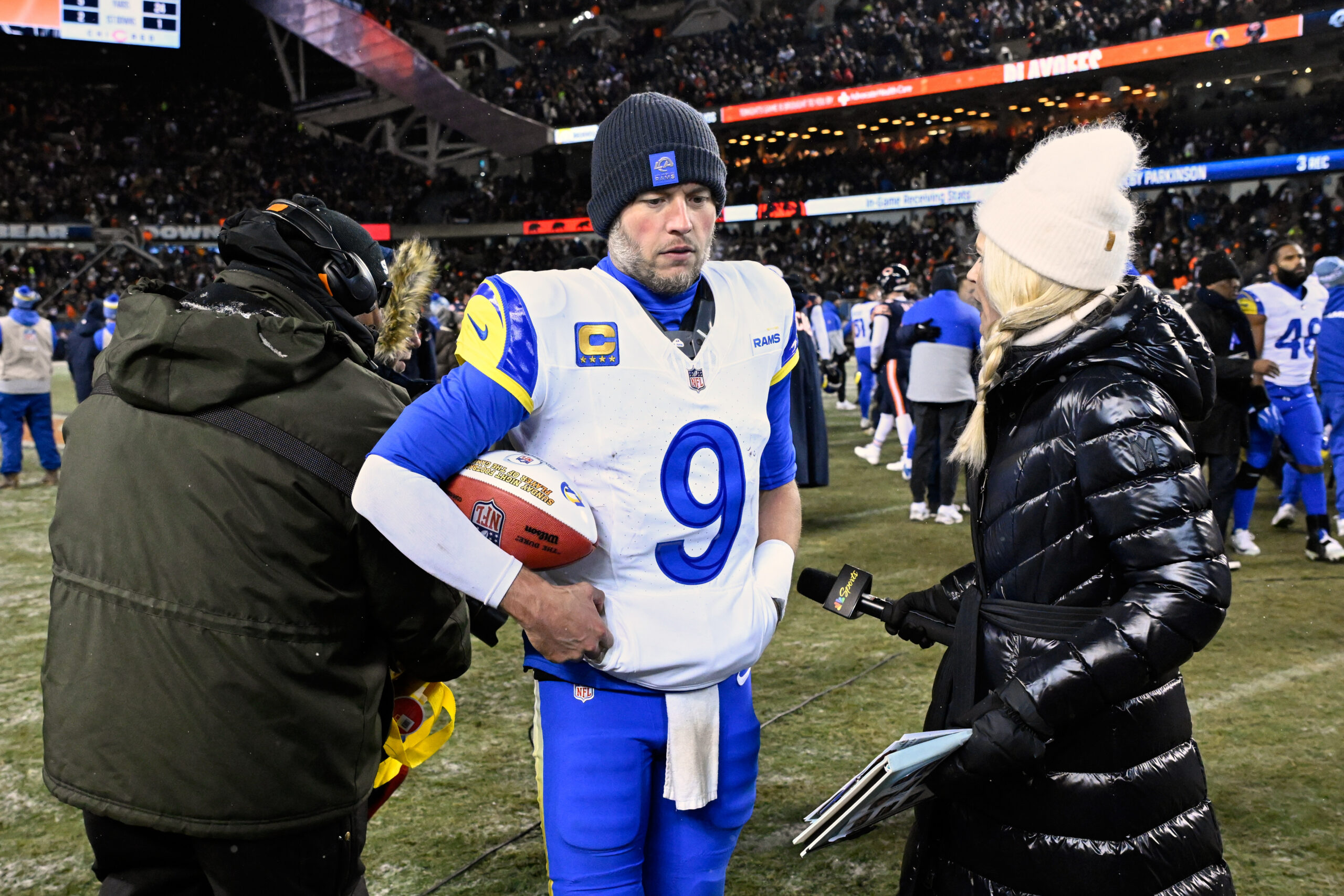
Jan 18, 2026; Chicago, IL, USA; Los Angeles Rams quarterback Matthew Stafford (9) holds a game ball as he is interviewed by NBC sideline reporter Melissa Stark after a NFC Divisional Round game against the Chicago Bears at Soldier Field. Mandatory Credit: Matt Marton-Imagn Images
Should Stafford decline or suffer a serious injury, the Rams can pivot to their young quarterback and use the contract’s out‑clauses to reallocate cap space. The extension functions less like a marriage and more like an option the team can exercise or let expire. That is the part most fans miss. The feel‑good story of a beloved MVP staying in Los Angeles obscures a deal engineered to end on a specific date, at a specific cost, with a specific replacement already learning the playbook. Knowing the trigger dates and the $100 million cliff is what separates someone who follows the Rams from someone who understands them. Would you ride out every last snap with an MVP in his late 30s, or flip the switch early and hand the keys to the kid?