
The chair was empty. Sometime after the Super Bowl, the woman who greets NFL fans every weekday morning simply stopped showing up. No announcement. No explanation. Just a familiar face missing from the Good Morning Football desk while the rest of the set kept rolling like nothing happened. Viewers noticed. Speculation mounted. And Jamie Erdahl, the host of NFL Network’s flagship morning show, said nothing beyond a cryptic social media post about an “extremely personal + tragic health situation.” What nobody knew yet would rewrite every broadcast she’d done since.
The Post That Raised More Questions
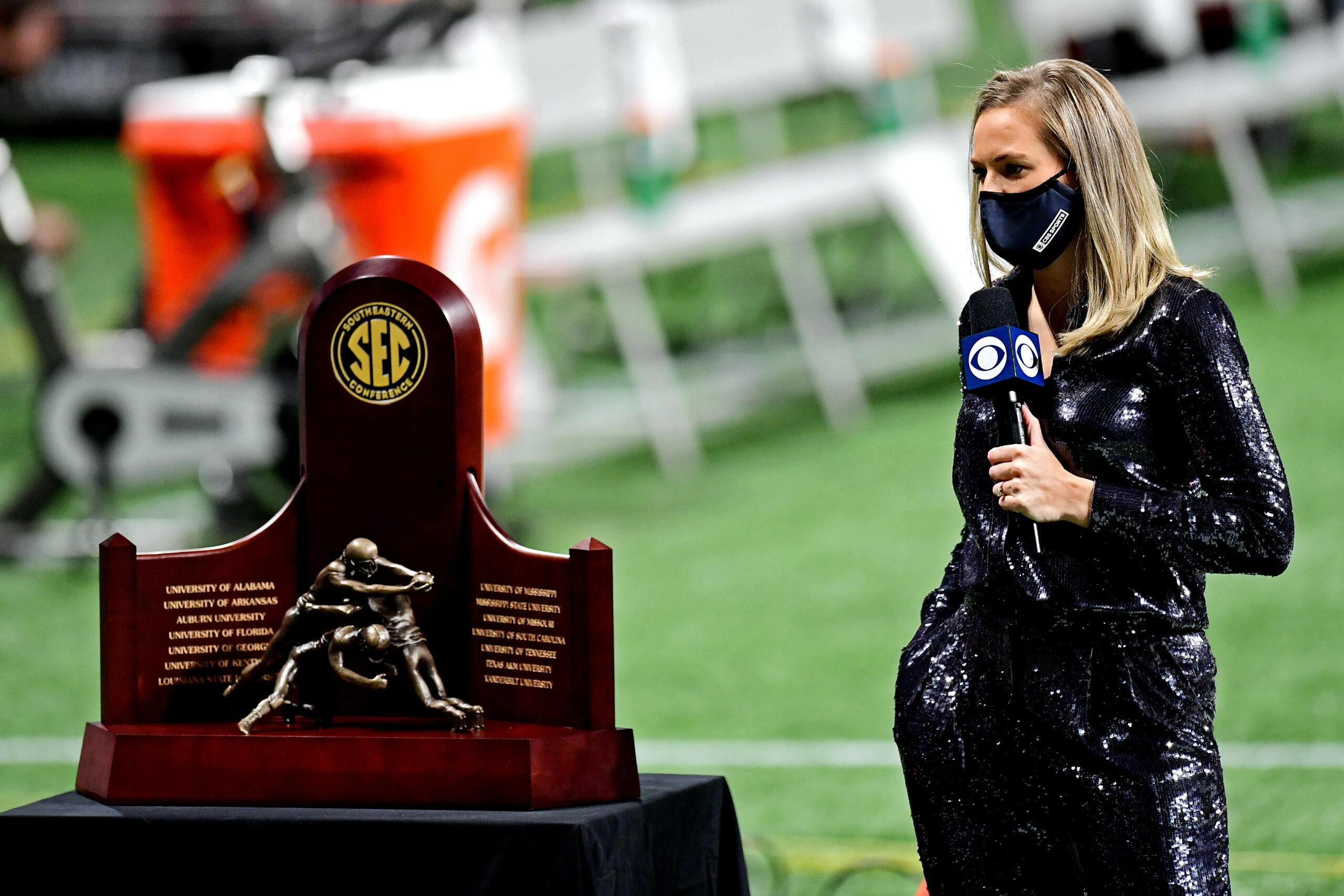
Dec 19, 2020; Atlanta, Georgia, USA; CBS Sports announcer Jamie Marie Erdahl speaks near the SEC Championship trophy before the SEC Championship between the Alabama Crimson Tide and the Florida Gators at Mercedes-Benz Stadium. Mandatory Credit: Adam Hagy-Imagn Images
On March 11, Erdahl finally addressed the curiosity. “Since curiosity is mounting I’ll share what I feel comfortable with,” she wrote, revealing only that an immediate family member faced a health crisis. She thanked “my leaders at the NFL” for giving her time at home. Five days later, on March 16, she returned to the set. Composed. Professional. Ready to talk football. The whole thing looked like a brief personal detour, maybe a scare that passed. Fans assumed the worst was behind her, and Erdahl let them believe it.
A Career Built on Showing Up
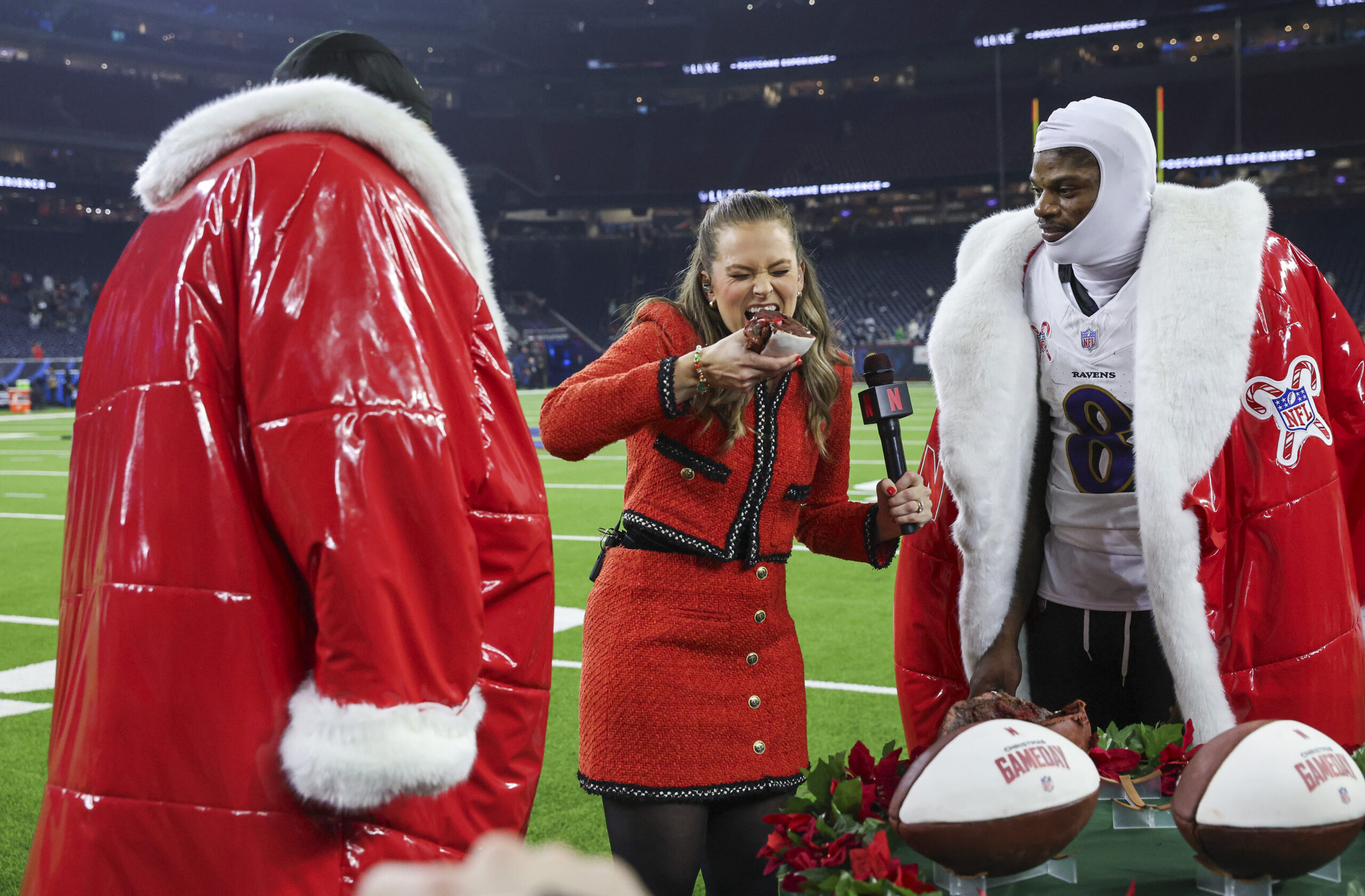
Dec 25, 2024; Houston, Texas, USA; Netflix host Jamie Erdahl eats cake while interviewing Baltimore Ravens quarterback Lamar Jackson (8) and running back Derrick Henry (22) after the game against the Houston Texans at NRG Stadium. Mandatory Credit: Troy Taormina-Imagn Images
Erdahl joined Good Morning Football in 2022 and became co-host in 2024 after the show relocated to NFL Network’s headquarters. She’d climbed through CBS Sports and CBS Sports Network, covering the NFL and college football before landing the chair that made her the face of the league’s daily morning coverage. Married to former Michigan football player Sam Buckman since 2017, she had three daughters under seven at home. This wasn’t someone whose absence could be chalked up to contract drama or creative differences.
Three Days After the Confetti
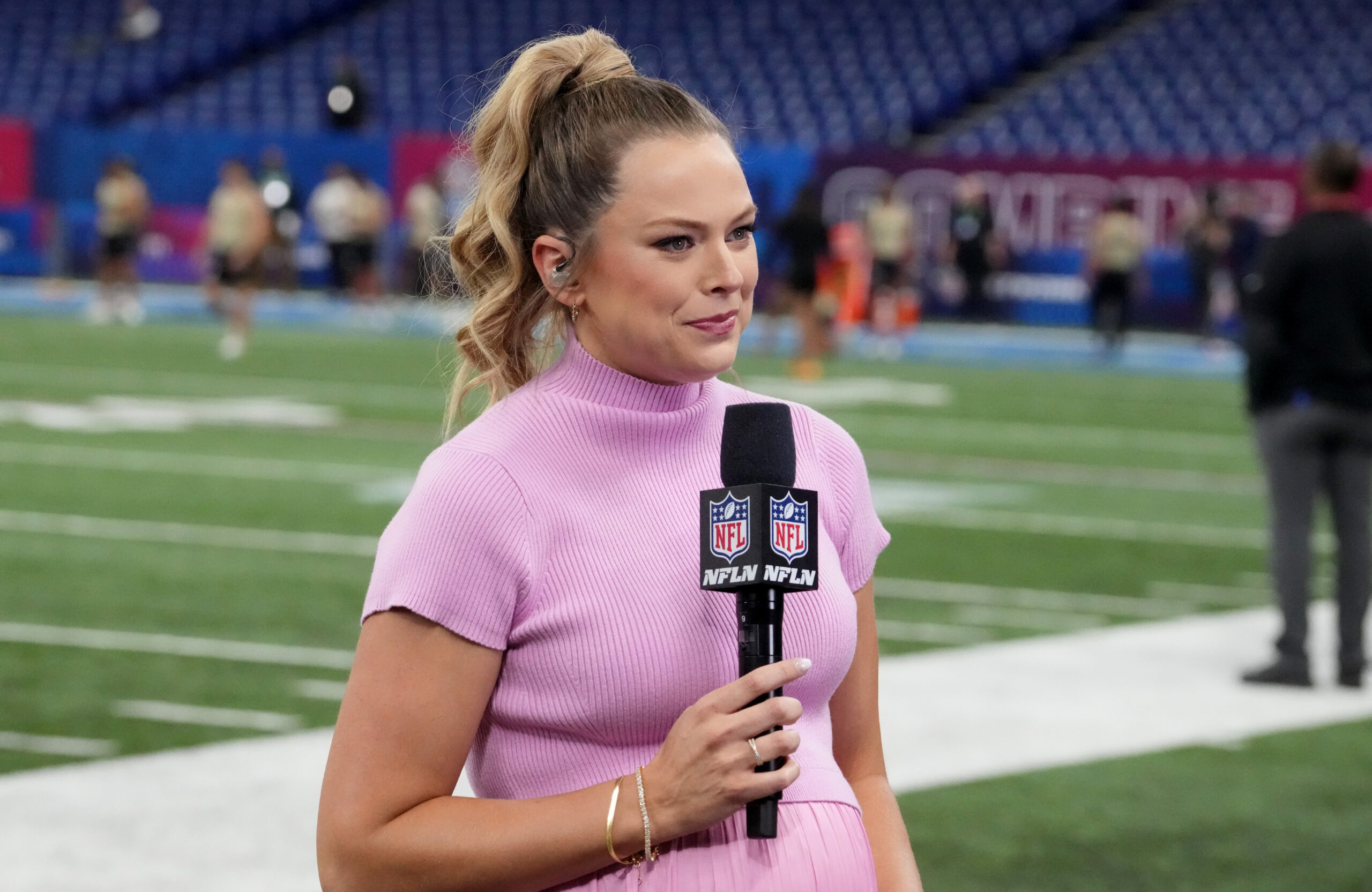
Mar 2, 2024; Indianapolis, IN, USA; NFL Network reporter Jamie Erdahl during the 2024 NFL Combine at Lucas Oil Stadium. Mandatory Credit: Kirby Lee-Imagn Images
On May 28, Erdahl told the real story. “3 days after the Super Bowl, my Dad was diagnosed with pancreatic cancer. And now, he’s not here.” Her father, Gary, received the diagnosis just seventy-two hours after the biggest game on her professional calendar. A few months later, he was gone. The Super Bowl, the peak of everything she covers, became the last marker before the worst phone call of her life. Three days. That’s the distance between confetti and a death sentence.
The Show That Never Stopped
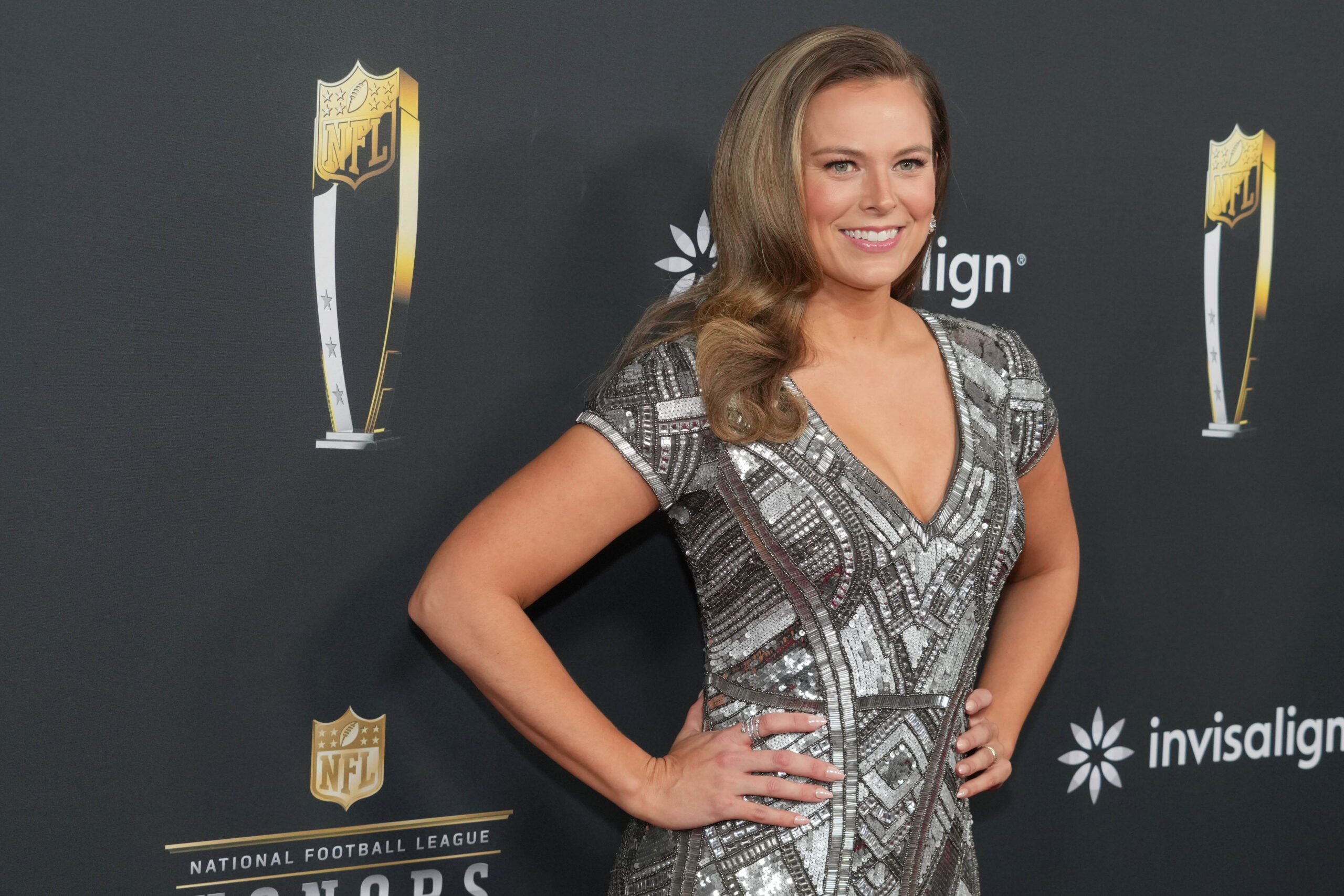
Feb 6, 2025; New Orleans, LA, USA; Jamie Erdahl on the red carpet before Super Bowl LIX NFL Honors at Saenger Theatre. Mandatory Credit: Kirby Lee-Imagn Images
Think about what that return on March 16 actually means. Erdahl sat under studio lights, discussed free agency, cracked jokes with co-hosts, and delivered highlight packages while her father’s cancer was accelerating at home. Viewers saw composure. Behind it was a woman managing a terminal diagnosis, three young children, and the knowledge that every broadcast could be interrupted by a call she couldn’t take on air. The show kept airing. The machine never paused. She just carried the weight where the cameras couldn’t see it.
The Numbers Behind the Silence
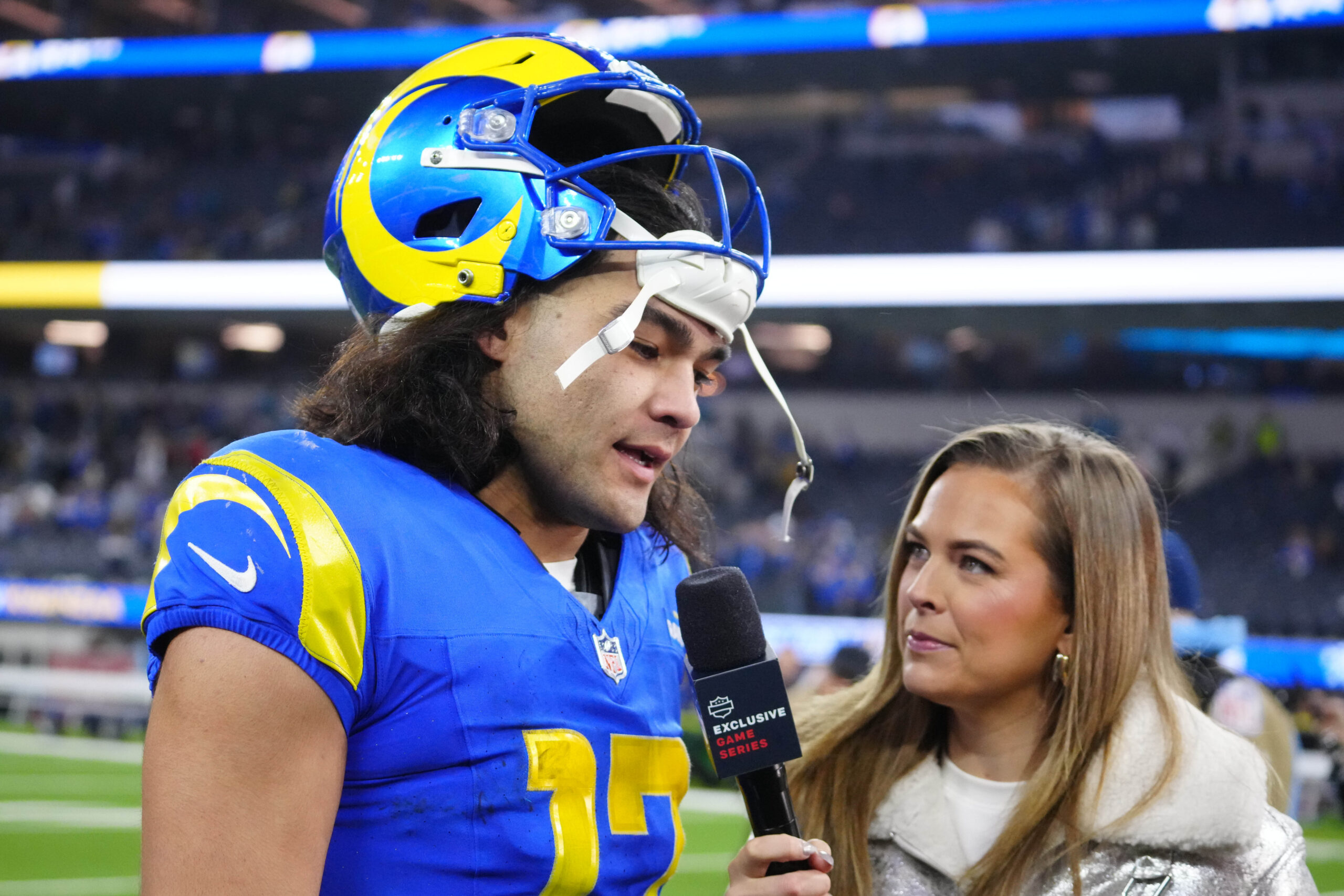
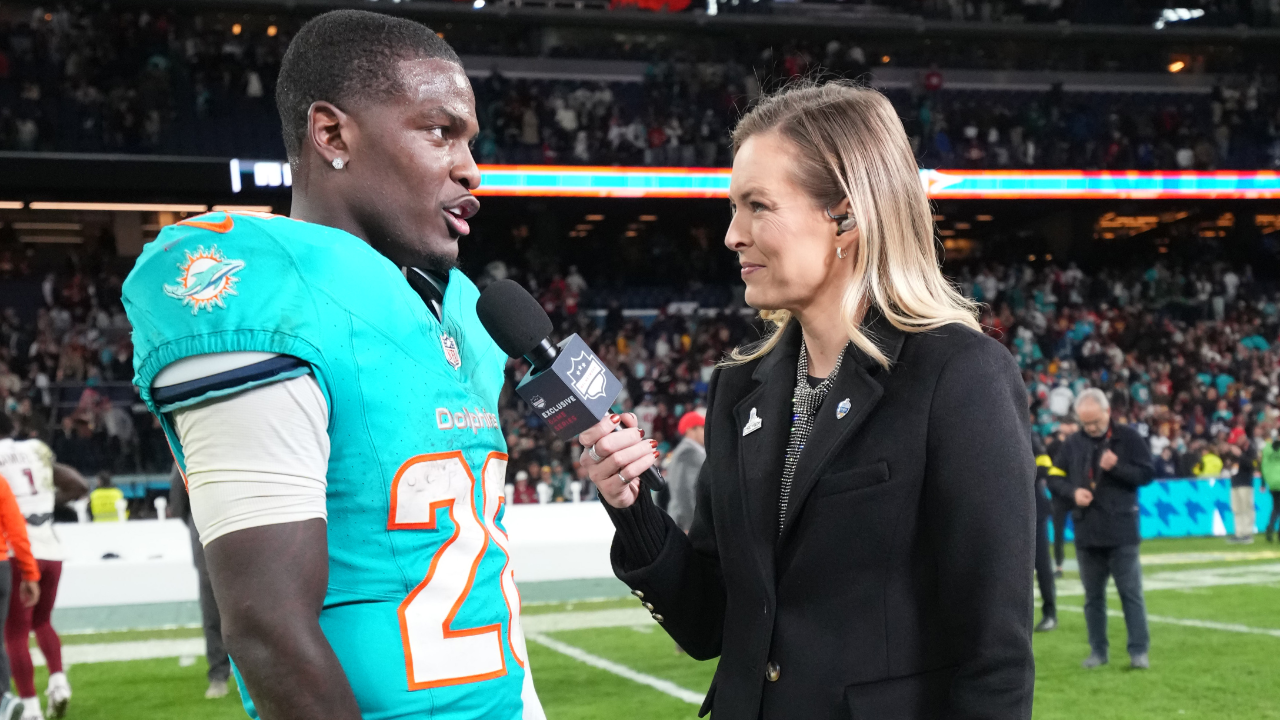
Dec 28, 2024; Inglewood, California, USA; NFL Network reporter Jamie Erdahl interviews Los Angeles Rams wide receiver Puka Nacua (17) after the game against the Arizona Cardinals in the second half at SoFi Stadium. Mandatory Credit: Kirby Lee-Imagn Images
The timeline is brutal in its compression. Roughly ten to fourteen weeks separated diagnosis from death, based on the “few months” her family described. Erdahl’s formal absence lasted from sometime after the Super Bowl until March 16, meaning she took only weeks off during the initial crisis before returning to daily live television. Her three daughters, born in July 2019, 2021, and March 2024, lost their grandfather before the oldest could finish first grade. And just before all of this, her dog Toby had died of bone cancer. Loss stacked on loss.
Grief as Content
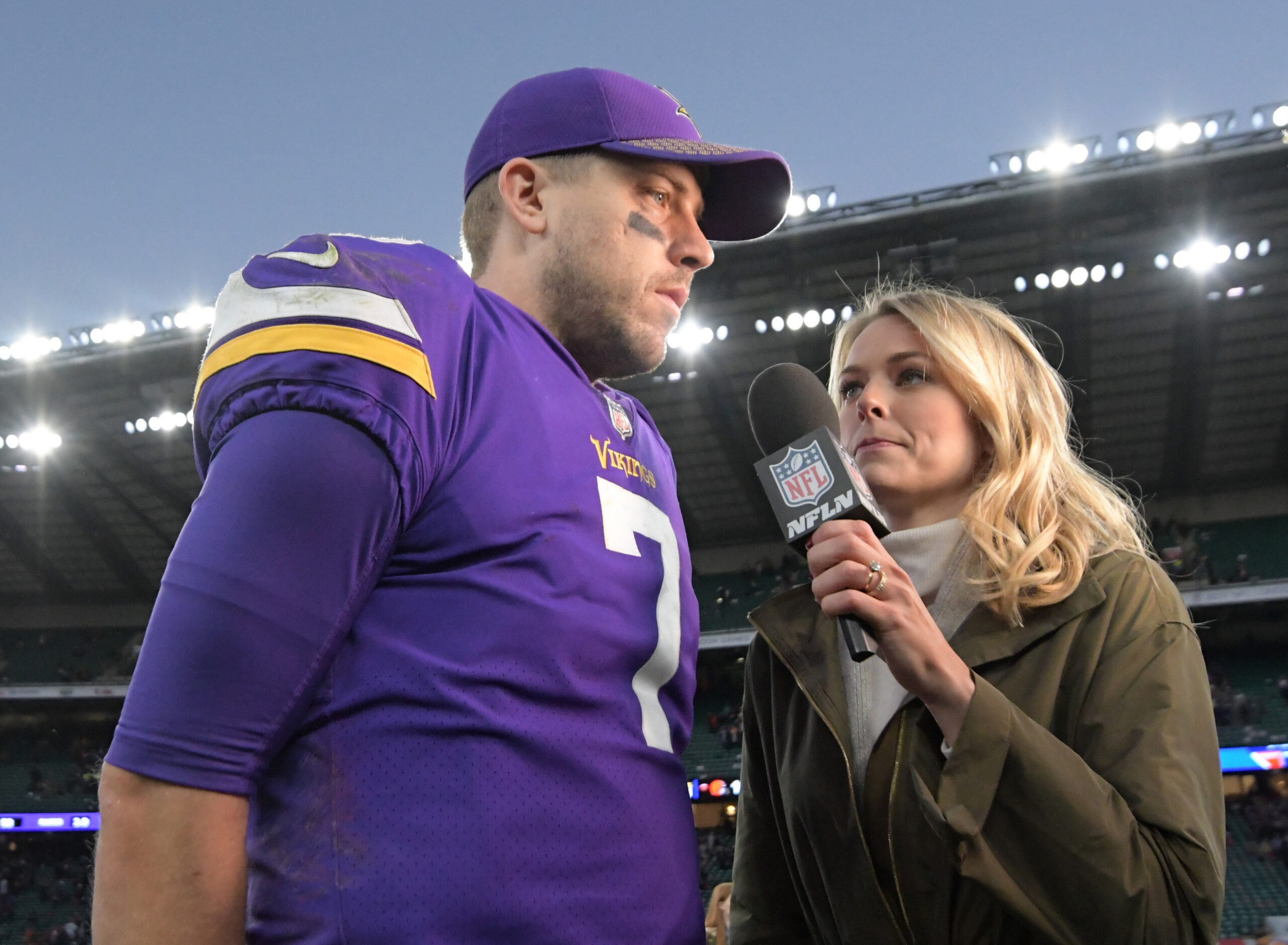
Oct 29, 2017; London, United Kingdom; Minnesota Vikings quarterback Case Keenum (7) is interviewed by NFL Network sideline reporter Jamie Erdahl after an NFL International Series game against the Cleveland Browns at Twickenham Stadium. The Vikings defeated the Browns 33-16. Mandatory Credit: Kirby Lee-Imagn Images
Within hours of Erdahl’s Instagram tribute, outlets from Us Weekly to Yardbarker to The Spun had repackaged her grief into headlines. One personal post became a half-dozen articles. That’s the hidden engine here: a single Instagram caption enters the sports-media ecosystem and gets syndicated, reformatted, and monetized across platforms before the family finishes reading the comments. Erdahl herself acknowledged the pressure, citing “mounting curiosity” as the reason she felt compelled to say anything at all in March. The audience’s need to know became its own gravitational force.
A Template Nobody Wanted
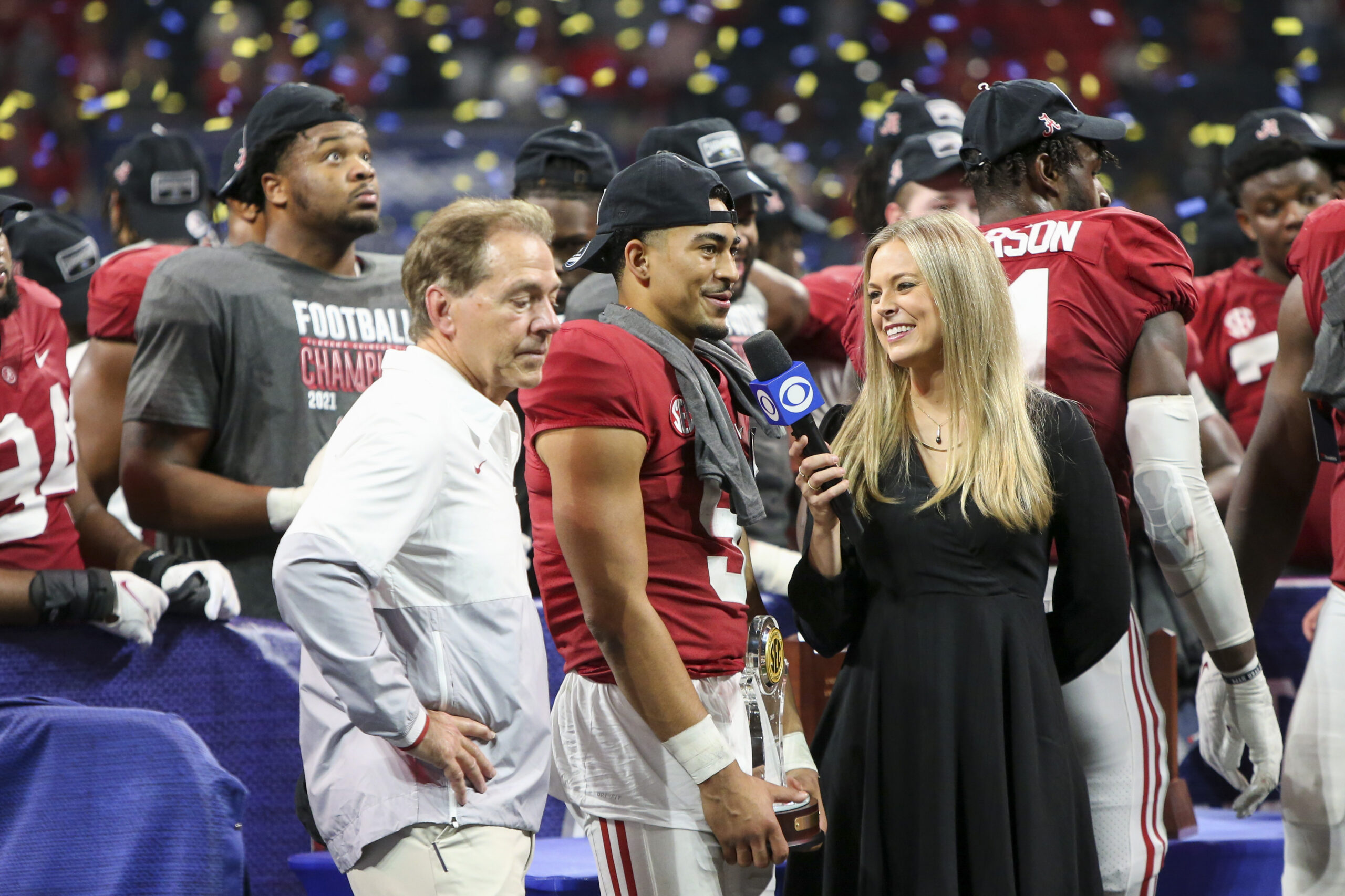
Dec 4, 2021; Atlanta, GA, USA; Alabama Crimson Tide quarterback Bryce Young (9) talks with sideline reporter Jamie Erdahl after a victory against the Georgia Bulldogs in the SEC championship game at Mercedes-Benz Stadium. Mandatory Credit: Brett Davis-Imagn Images
Erdahl’s approach may have quietly set a precedent for every broadcaster who faces a family crisis on camera. State the bare minimum. Assert boundaries. Return to work. Share the full story only when the family is ready, not when the audience demands it. HITC noted her tribute “did not try to sanitize grief,” and that rawness, “A great man is gone,” felt like a deliberate rejection of polished media-speak. Once you see how her private emergency became structured content within hours, you can’t unsee how the system converts pain into product.
What Comes Next for the Morning Desk
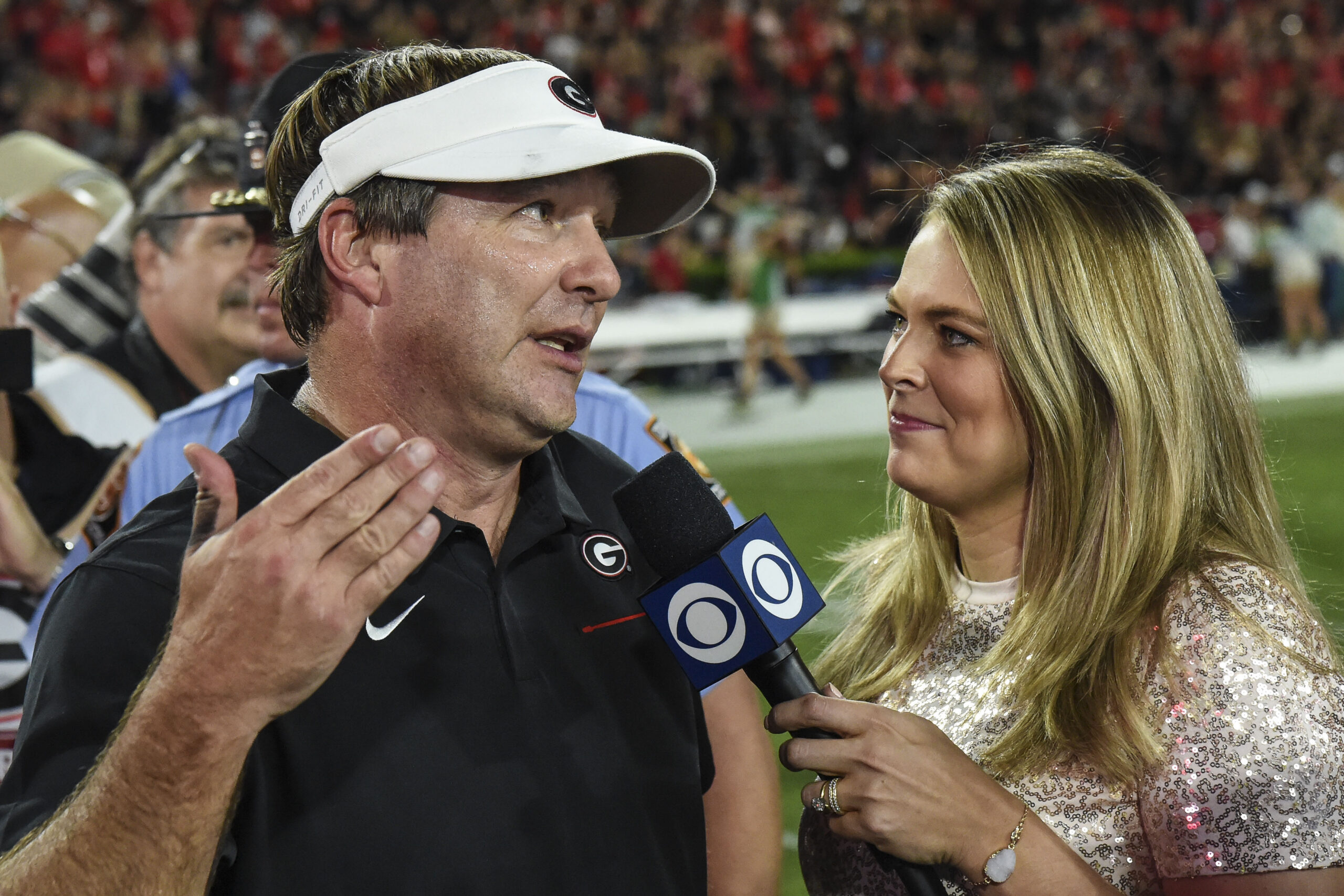
Sep 21, 2019; Athens, GA, USA; Georgia Bulldogs head coach Kirby Smart is interviewed by CBS sports reporter Jamie Erdahl after defeating the Notre Dame Fighting Irish at Sanford Stadium. Mandatory Credit: Dale Zanine-Imagn Images
Erdahl’s revelation will likely deepen her bond with Good Morning Football viewers, granting her more room to be visibly human on air. But it also exposes how dependent NFL Network’s daily programming is on a small group of recognizable hosts. When one steps away, the production scrambles. The broader ripple may normalize compassionate leave in sports media, encouraging other on-air talent to negotiate time off without fearing career stigma. If the pattern holds, though, every future unexplained absence will trigger the same speculation cycle that pressured Erdahl to speak before she was ready.
The Gap Between the Screen and the Living Room
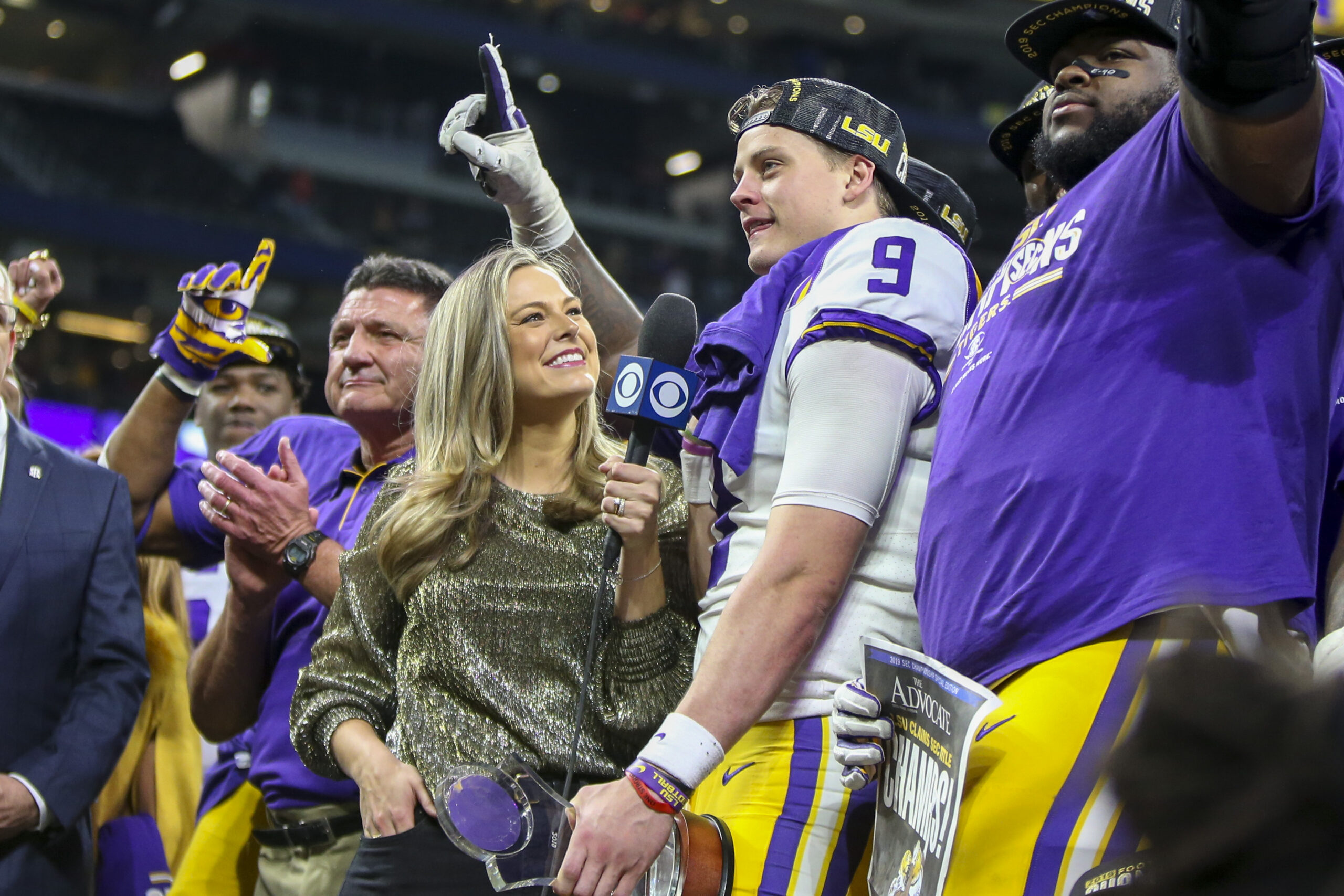
Dec 7, 2019; Atlanta, GA, USA; LSU Tigers quarterback Joe Burrow (9) talks to sideline reporter Jamie Erdahl after a victory against the Georgia Bulldogs in the 2019 SEC Championship Game at Mercedes-Benz Stadium. Mandatory Credit: Brett Davis-Imagn Images
Gary Erdahl loved “the girls in his life more,” his daughter wrote, a line that lands differently when you know three granddaughters are too young to fully understand what they lost. Networks could formalize protocols telling audiences that not every absence requires an explanation, training fans to accept ambiguity instead of demanding transparency. Whether that happens is another question. What’s already clear is this: the distance between “why isn’t she on my TV?” and “her father is dying of pancreatic cancer” was never more than a few unspoken words. Most viewers just never thought to ask gently. Have you ever had to keep showing up at work while quietly carrying a private loss? Share your story or a message of support for Jamie and her family in the comments.