
Somewhere inside the Baltimore Ravens’ front office, a calculator was running and the math kept getting uglier. Lamar Jackson’s $260 million contract, the one he negotiated himself without an agent, had produced a 2026 salary cap figure of $74.5 million. Second highest in the entire NFL. The kind of number that doesn’t just limit a roster. It suffocates one. And after an 8-9 finish in 2025, Baltimore’s first losing record in years, suffocation was no longer theoretical. The Ravens needed air, and Jackson’s deal was the only place to find it.
A Losing Season Changed Everything
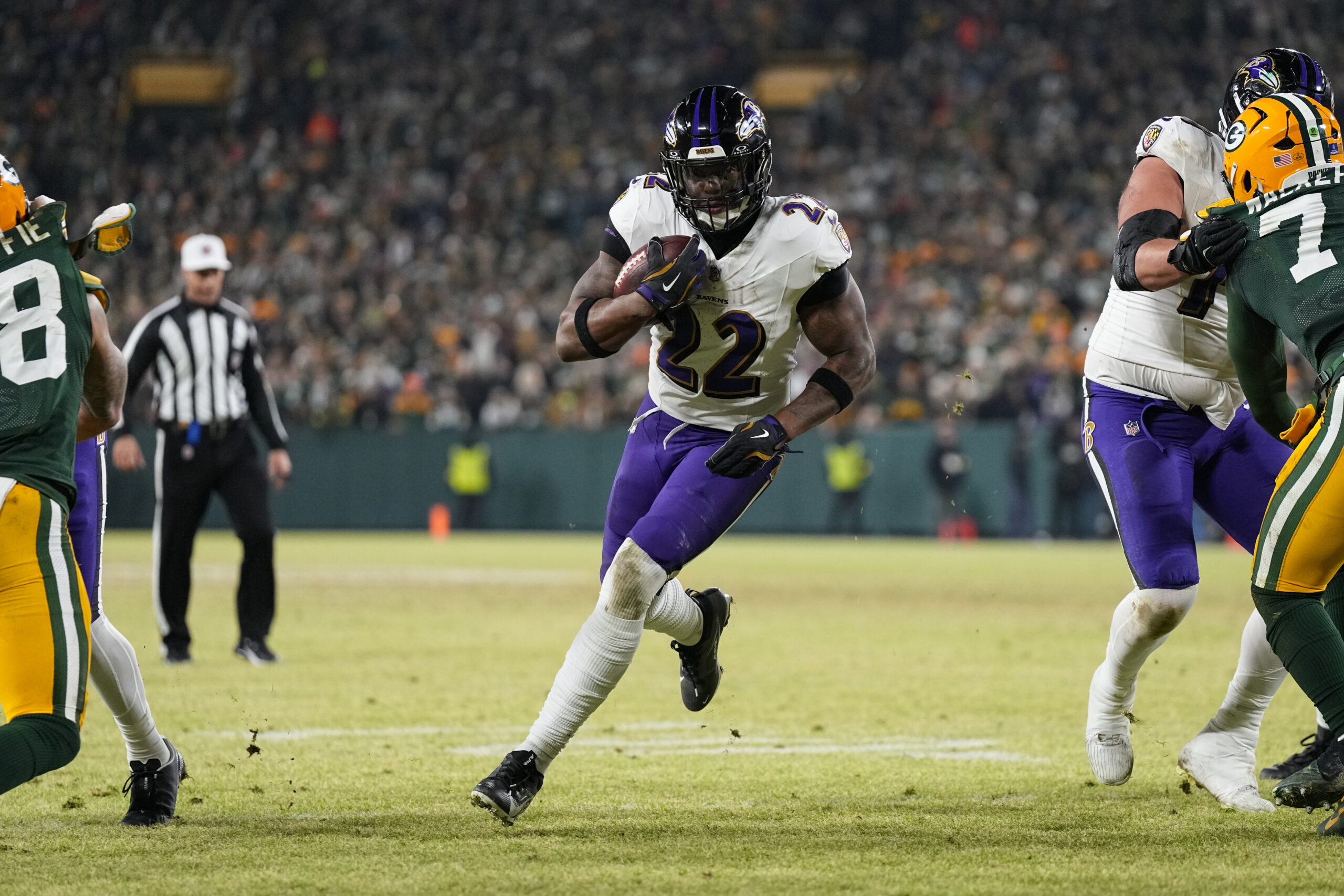
Dec 27, 2025; Green Bay, Wisconsin, USA; Baltimore Ravens running back Derrick Henry (22) during the game against the Green Bay Packers at Lambeau Field. Mandatory Credit: Jeff Hanisch-Imagn Images
That 8-9 finish in 2025 wasn’t supposed to happen. Not with a two-time MVP under center. Not with $185 million in guaranteed money invested in the franchise quarterback. The Ravens entered the year as Super Bowl contenders and instead posted their first losing record in years, and the front office spent the following offseason openly working on a Jackson extension to keep their championship window open. The pressure to fix the roster collided head-on with a cap number that consumed roughly a quarter of Baltimore’s budget.
The Agent Who Wasn’t There
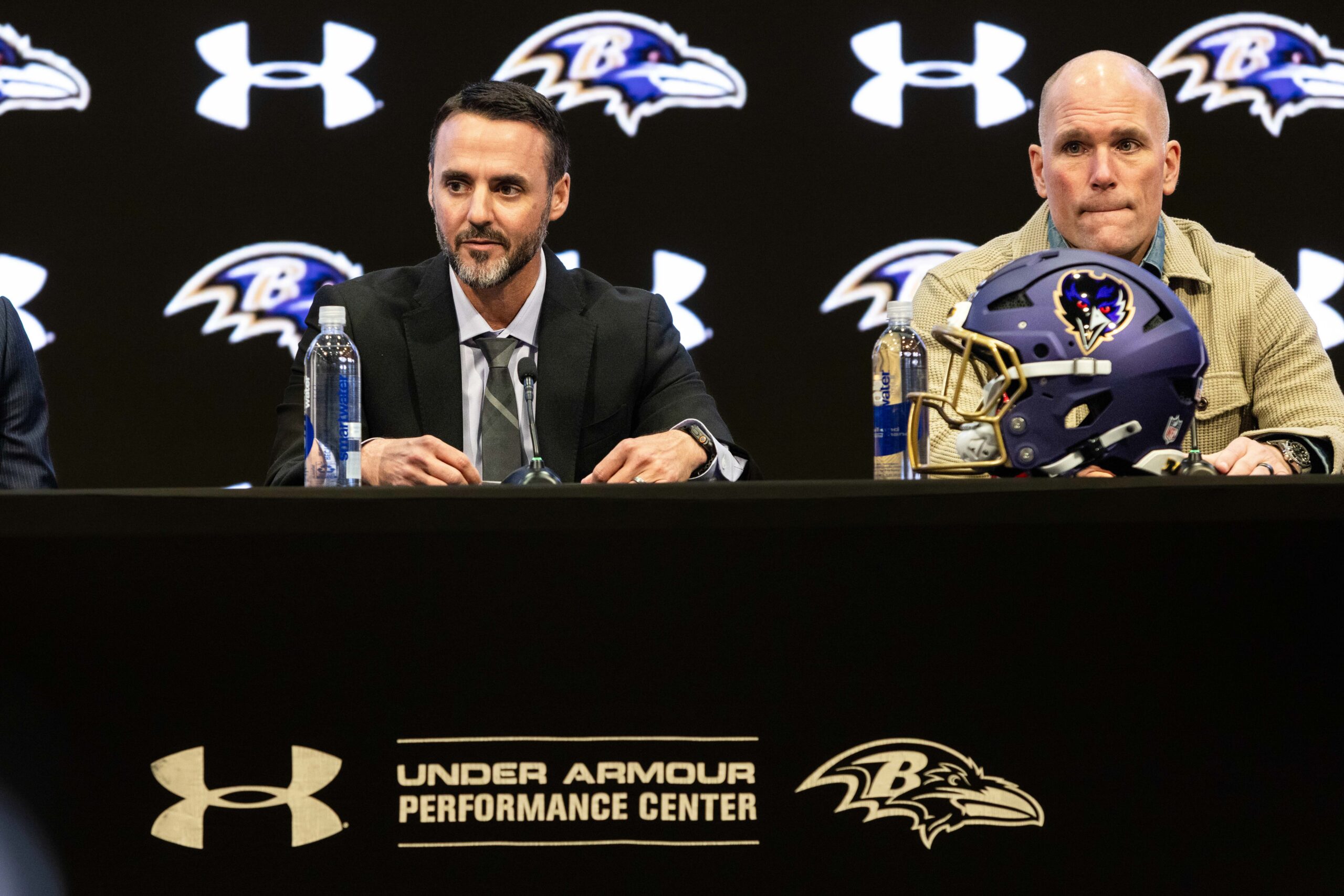
Jan 29, 2026; Owings Mills, MD, USA; Jesse Minter and Eric DeCosta at press conference at Under Armour Performance Center. Mandatory Credit: Lexi Thompson-Imagn Images
Most people assumed a quarterback negotiating without an agent would get outmaneuvered. Jackson shattered that assumption. His five-year, $260 million extension included a no-trade clause and a provision barring the Ravens from ever using the franchise or transition tag on him. Every clause a weapon. Every provision designed to keep maximum leverage in the player’s hands, not the franchise’s. When Jackson signed in 2023, his $52 million average annual value made him the highest-paid player in NFL history. The rest of the quarterback market would spend the next two years chasing and eventually passing that number, which was about to become the Ravens’ biggest headache.
The Restructure That Solved Nothing
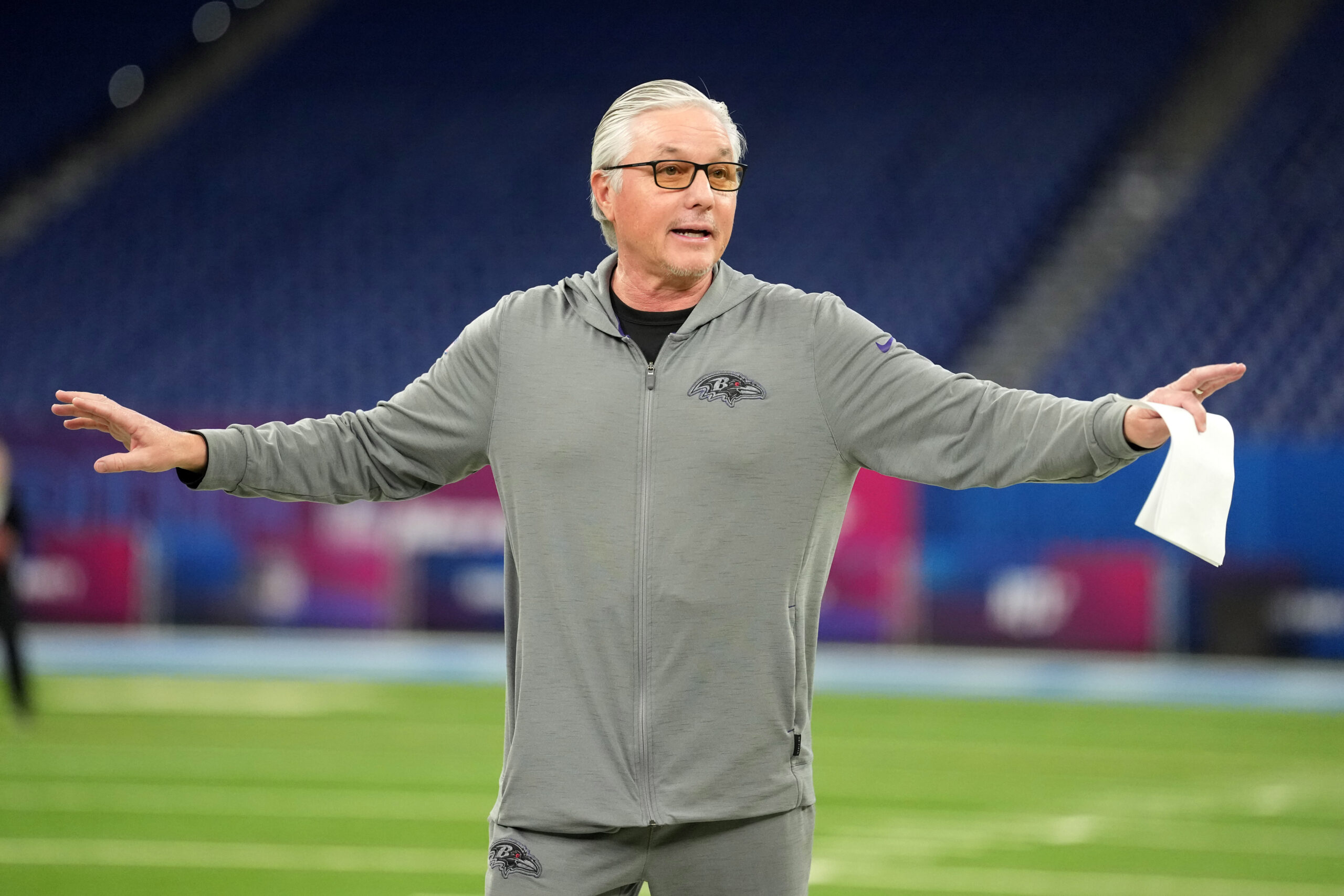
Feb 25, 2026; Indianapolis, IN, USA; Baltimore Ravens senior special teams coach Randy Brown during the NFL Scouting Combine at Lucas Oil Stadium. Mandatory Credit: Kirby Lee-Imagn Images
Baltimore converted most of Jackson’s roughly $51.3 million 2026 base salary into a signing bonus and added void years. By triggering an automatic restructure clause, his 2026 cap hit dropped from $74.5 million to $34.54 million. The Ravens created $39.96 million in immediate cap space, money they promptly funneled toward reshaping the roster. Relief flooded the building. Then someone looked at 2027. Jackson’s cap figure there jumped from $74.5 million to $84.49 million, the third highest in the entire league. The Ravens hadn’t solved the problem. They’d moved it one year closer to detonation.
The Credit Card Trap
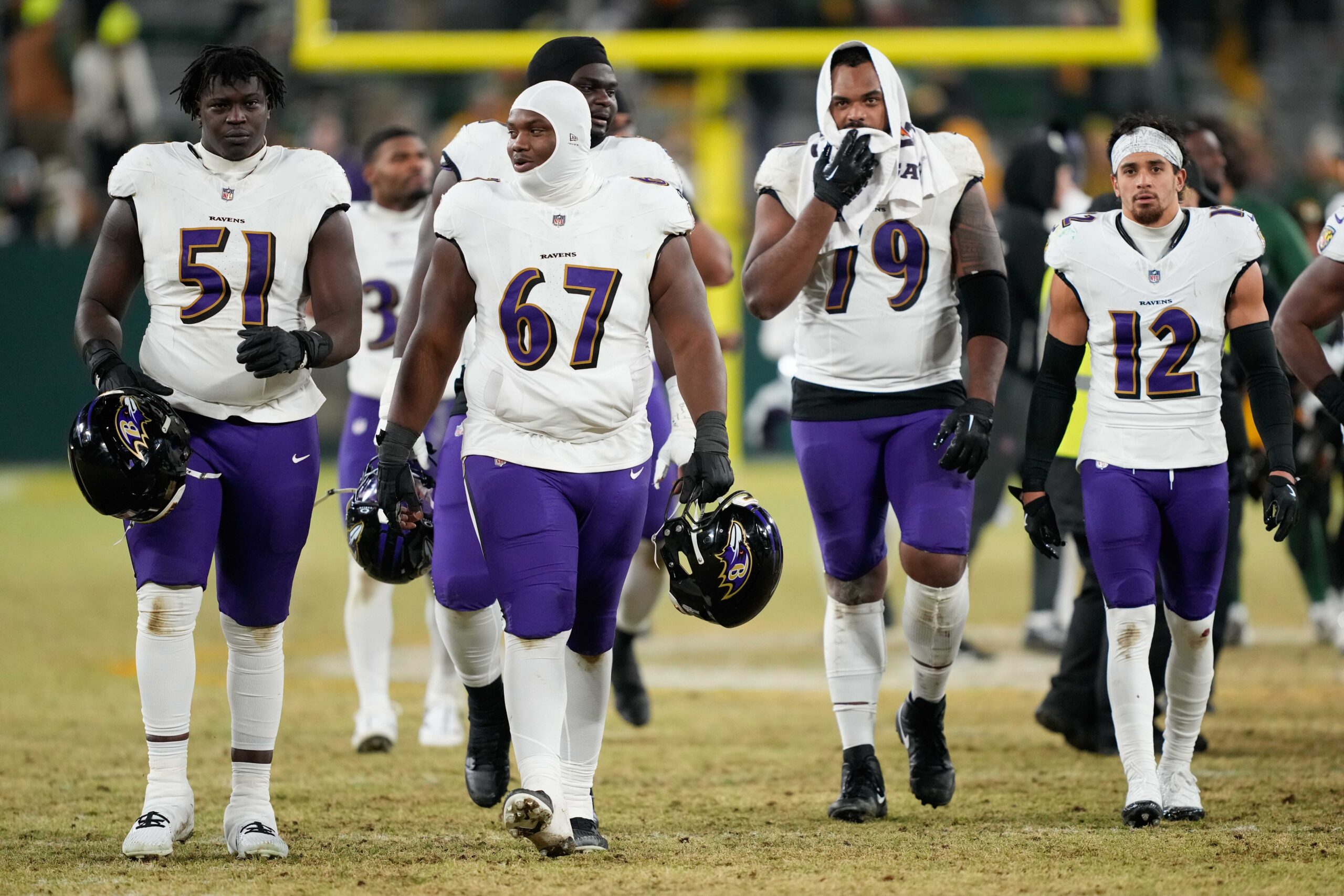
Dec 27, 2025; Green Bay, Wisconsin, USA; Baltimore Ravens offensive tackle Emery Jones Jr. (51), Baltimore Ravens center Corey Bullock (67), Baltimore Ravens defensive tackle CJ Okoye (91), Baltimore Ravens offensive tackle Ronnie Stanley (79) and Baltimore Ravens safety Alohi Gilman (12) after a game against the Green Bay Packers at Lambeau Field. Mandatory Credit: Kayla Wolf-Imagn Images
Think of it like paying off one credit card with another that charges a higher minimum next month. That’s exactly what the NFL’s salary cap system incentivizes. Teams with elite quarterbacks face a perverse loop: the star’s contract creates the cap pressure, the restructure provides temporary relief, and the delayed charges guarantee a bigger crisis later. Jackson’s 2027 cap number of $84.49 million would rank third in the NFL behind only a handful of the league’s biggest deals. One player, one season, nearly $85 million off the books before a single snap.
The Numbers Behind the Squeeze
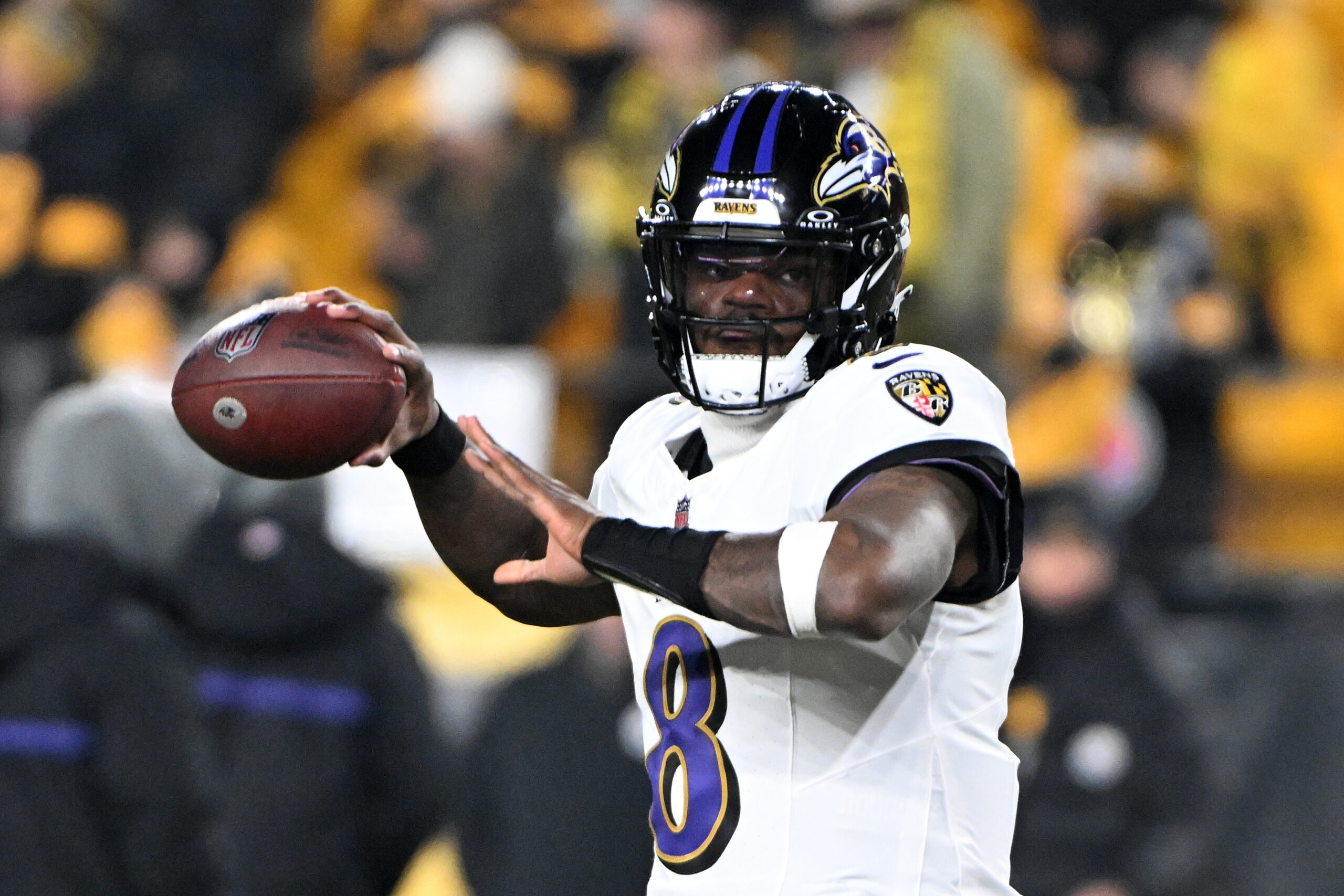
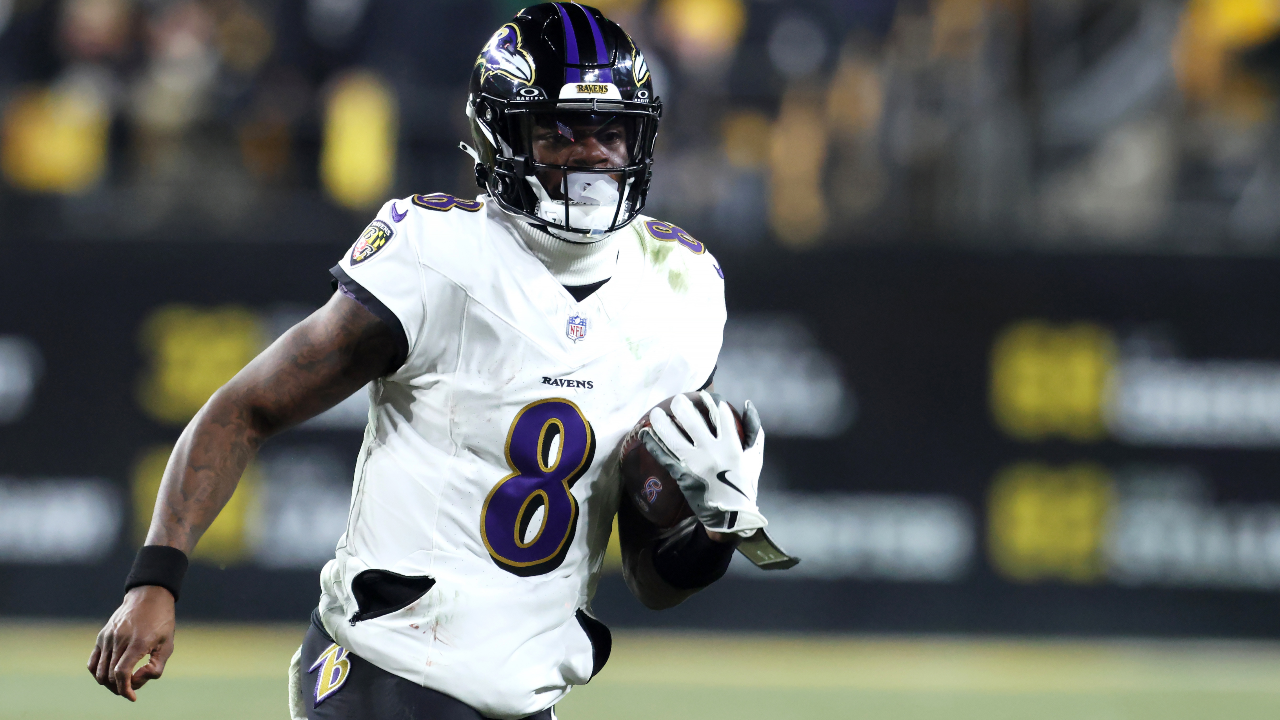
Jan 4, 2026; Pittsburgh, Pennsylvania, USA; Baltimore Ravens quarterback Lamar Jackson (8) practices before the game at Acrisure Stadium. Mandatory Credit: Barry Reeger-Imagn Images
Jackson’s contract carries $185 million in total guarantees, of which $135 million was fully guaranteed at signing, accounting for roughly 71 percent of the $260 million total value. The Ravens are not in a position to move on cheaply, and his no-trade clause means any exit would have to be on his terms anyway. Every door out has a toll booth attached. That’s the financial architecture of a contract designed by a man who didn’t need an agent to build a fortress around himself.
Who Pays the Price
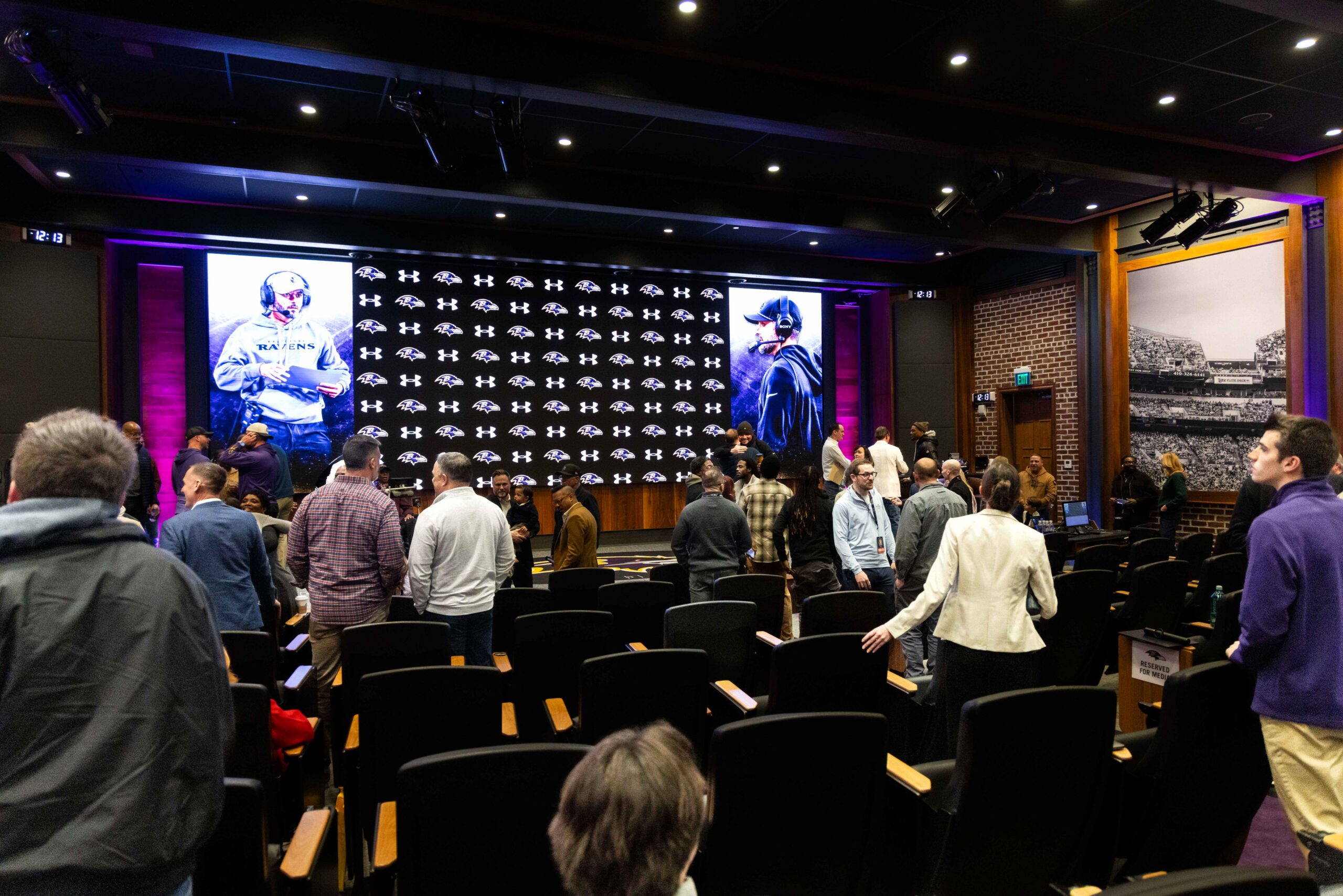
Jan 29, 2026; Owings Mills, MD, USA; Under Armour Performance Center auditorium after the press conference at Under Armour Performance Center. Mandatory Credit: Lexi Thompson-Imagn Images
The supporting cast. That’s who absorbs the damage when one contract dominates the cap sheet. The $39.96 million freed by the restructure went toward retooling the roster rather than into a war chest the Ravens could sit on. The championship window the front office talked about keeping open depends on surrounding Jackson with talent, yet Jackson’s deal actively complicates that at full scale. The team’s best player has become the primary obstacle to building a championship roster, and nobody did anything wrong. The system built this trap.
A New Rule, Not an Exception
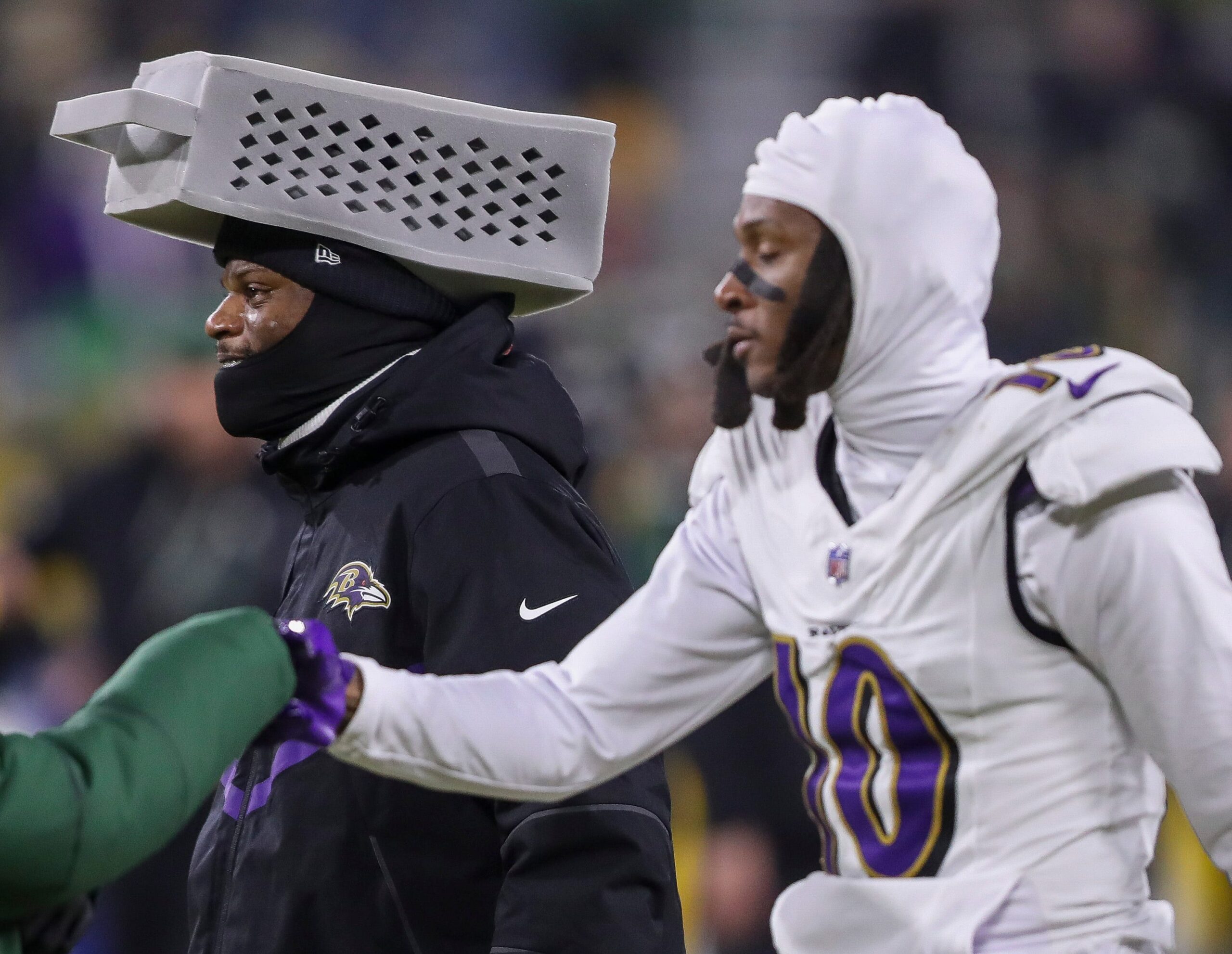
Baltimore Ravens quarterback Lamar Jackson wears a foam cheese grater hat as he walks off the field after a game against the Green Bay Packers on Saturday, December 27, 2025, at Lambeau Field in Green Bay, Wis. The Ravens won the game, 41-24. Tork Mason/USA TODAY NETWORK-Wisconsin
This restructure landed in the same March 2026 window that saw Buffalo rework Josh Allen’s deal and Detroit rework Jared Goff’s, part of a league-wide wave of quarterback restructures triggered by ballooning cap hits. It sets a template. Other franchises with elite quarterbacks on massive deals will study Baltimore’s playbook and see the same ugly math waiting for them. Once you see the pattern, you can’t unsee it: every star quarterback’s contract shapes the entire roster construction for years. The relief is immediate. The consequences are not.
The Clock Jackson Controls
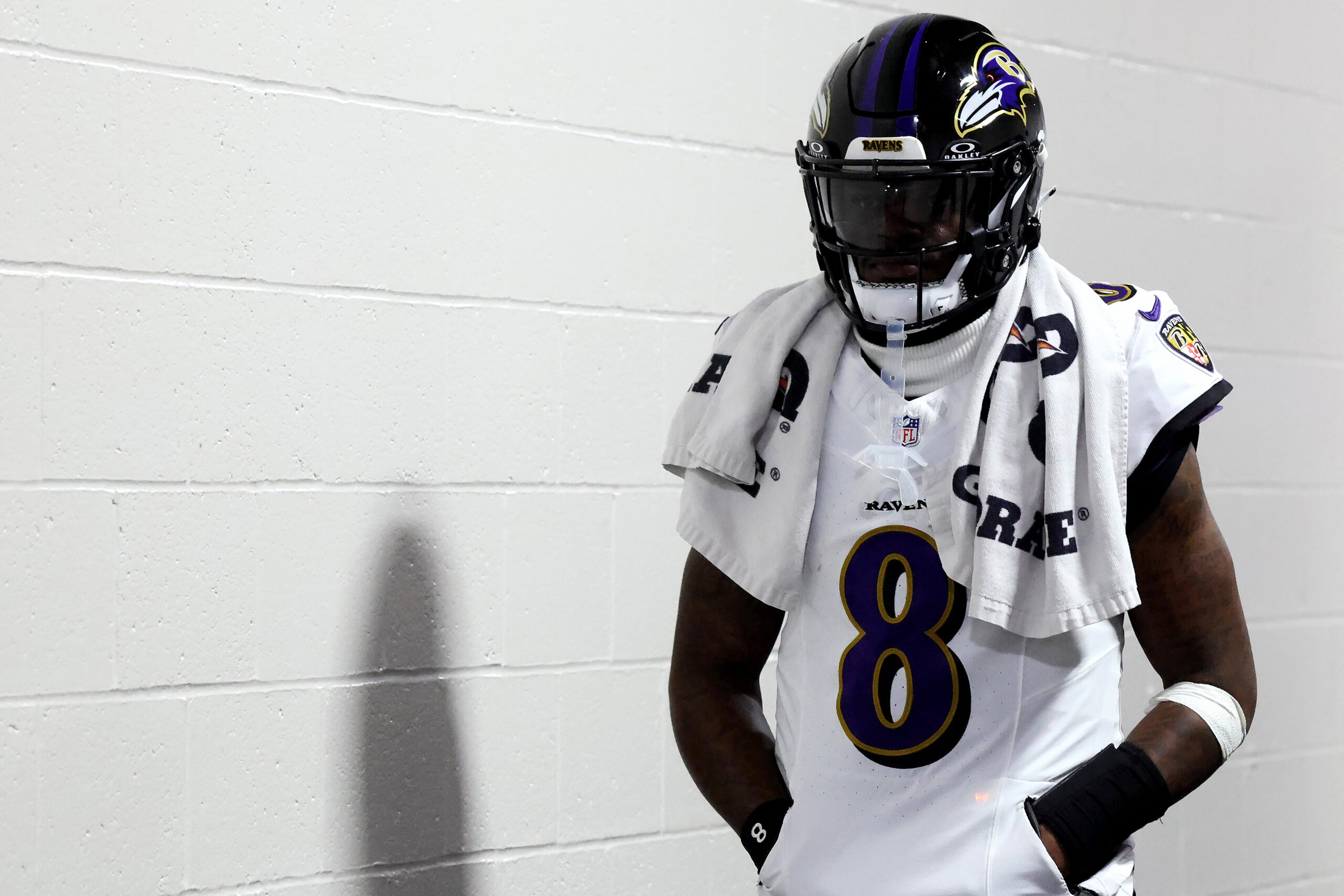
Jan 4, 2026; Pittsburgh, Pennsylvania, USA; Baltimore Ravens quarterback Lamar Jackson (8) walks to the field to play the Pittsburgh Steelers at Acrisure Stadium. Mandatory Credit: Charles LeClaire-Imagn Images
Because of the no-tag clause, Jackson can become an unrestricted free agent after the 2027 season if no extension materializes. The Ravens cannot keep him from the open market the way they leveraged the franchise tag back in 2023. If he plays out both remaining years without signing, he’d hit free agency with every team in the league able to bid. His leverage doesn’t diminish with time. It compounds. And Jackson knows it, telling reporters after the restructure that he intends to keep his contract conversations with the team private.
The Quiet War Ahead
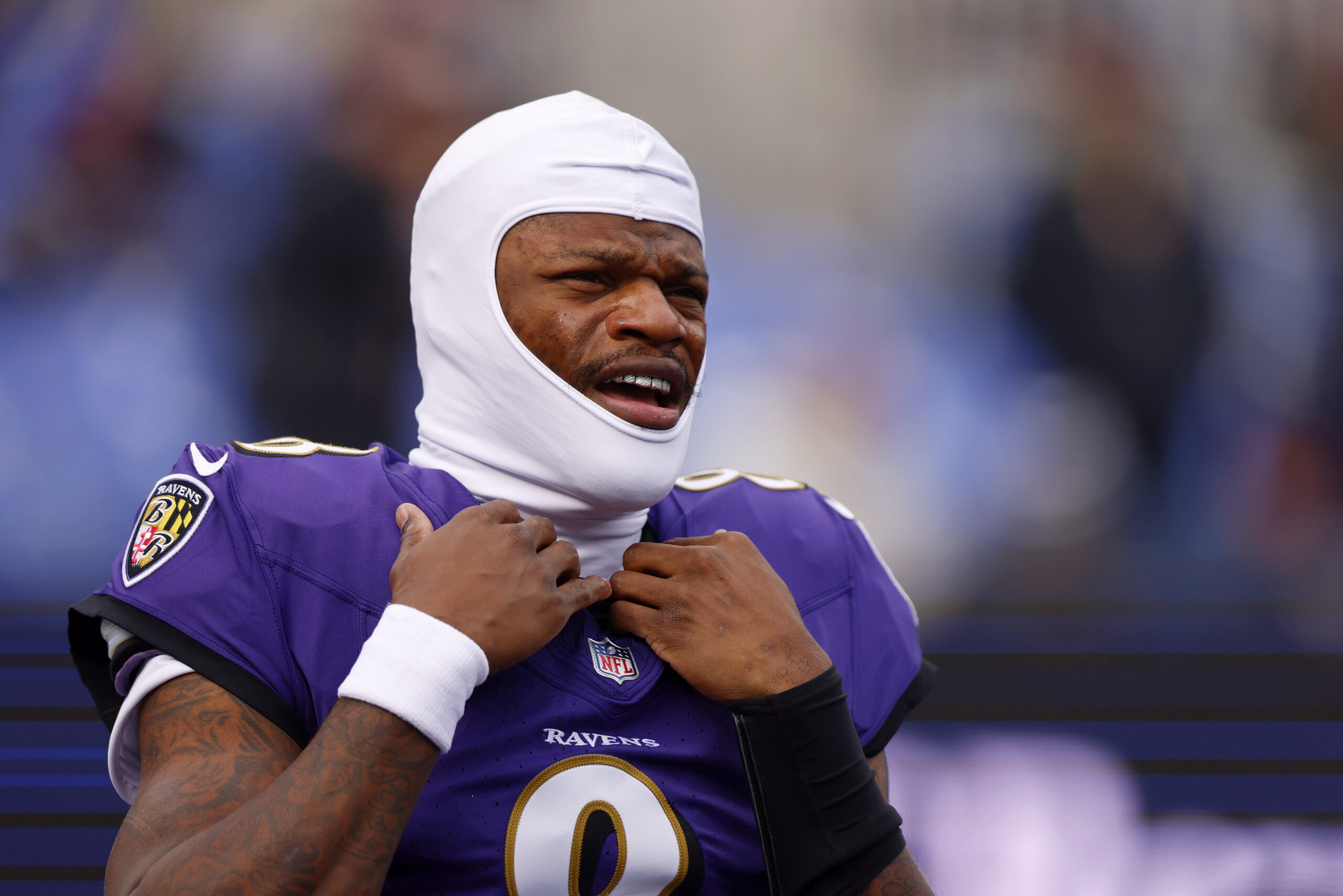
Dec 7, 2025; Baltimore, Maryland, USA; Baltimore Ravens quarterback Lamar Jackson (8) looks on during warmups before the game between the Pittsburgh Steelers and Baltimore Ravens at M&T Bank Stadium. Mandatory Credit: Peter Casey-Imagn Images
Jackson has made clear he isn’t relitigating old fights in public. Asked in 2026 about his past push for a fully guaranteed deal, he waved it off: “What year was that? 2022? That conversation is in 2022. This is 2026.” That deflection tells you everything. The Ravens face a choice no restructure can delay forever: extend Jackson at a number that will dwarf his current deal, or watch him walk toward unrestricted free agency with the leverage to reset the entire quarterback market. Most fans see a contract dispute. The people who understand the cap mechanics see something different: a franchise paying for today’s survival with tomorrow’s flexibility, and a quarterback who built the trap himself. So where do you land: did Lamar outsmart the Ravens by building this fortress, or did Baltimore just buy itself a problem it can’t afford in 2027? Sound off in the comments.