

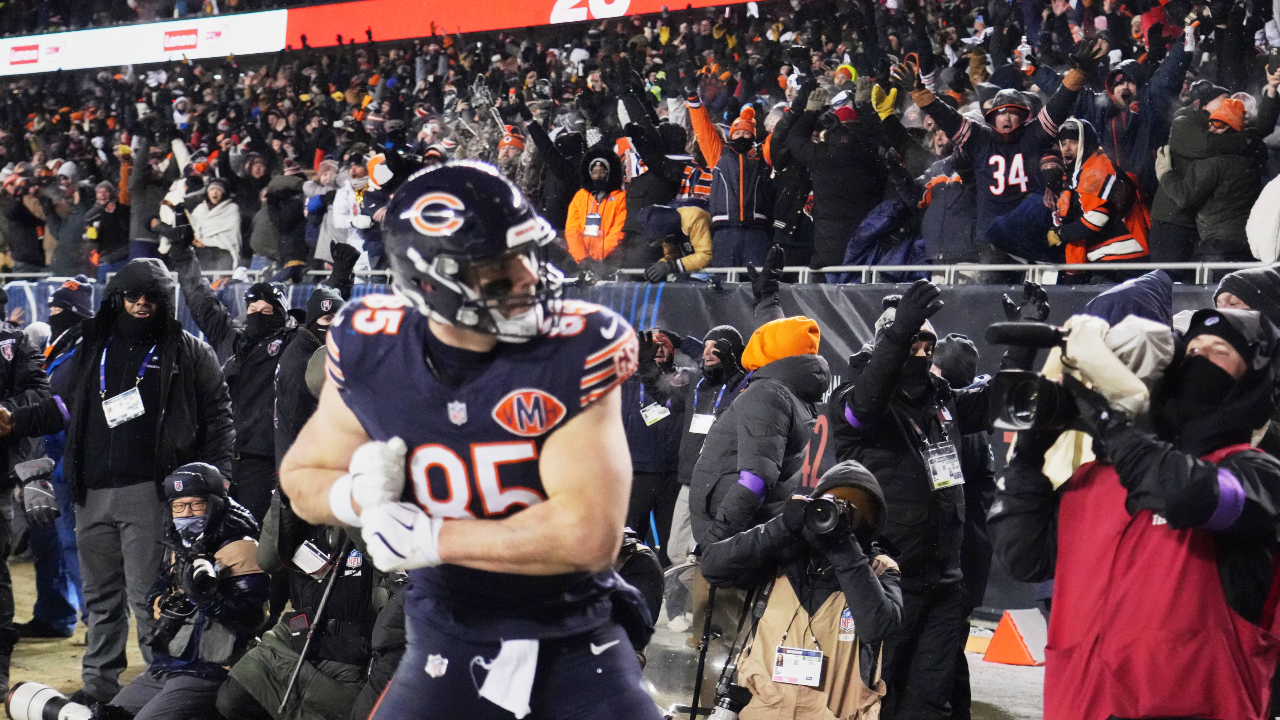
The Chicago Bears have concluded that, under current terms, there is not a workable stadium deal on city-owned land in Chicago, effectively putting a century of lakefront football at Soldier Field at risk. Soldier Field opened in 1924 as a memorial to fallen soldiers. Now the franchise is weighing a multibillion-dollar redevelopment in suburban Arlington Heights against a billion-dollar public financing package in Hammond, Indiana, roughly 20 miles from downtown. The team has said it expects to make a stadium decision by late spring or early summer. The part most fans have not processed yet is how far this shockwave travels beyond game day.
Why Tax Code Killed Tradition
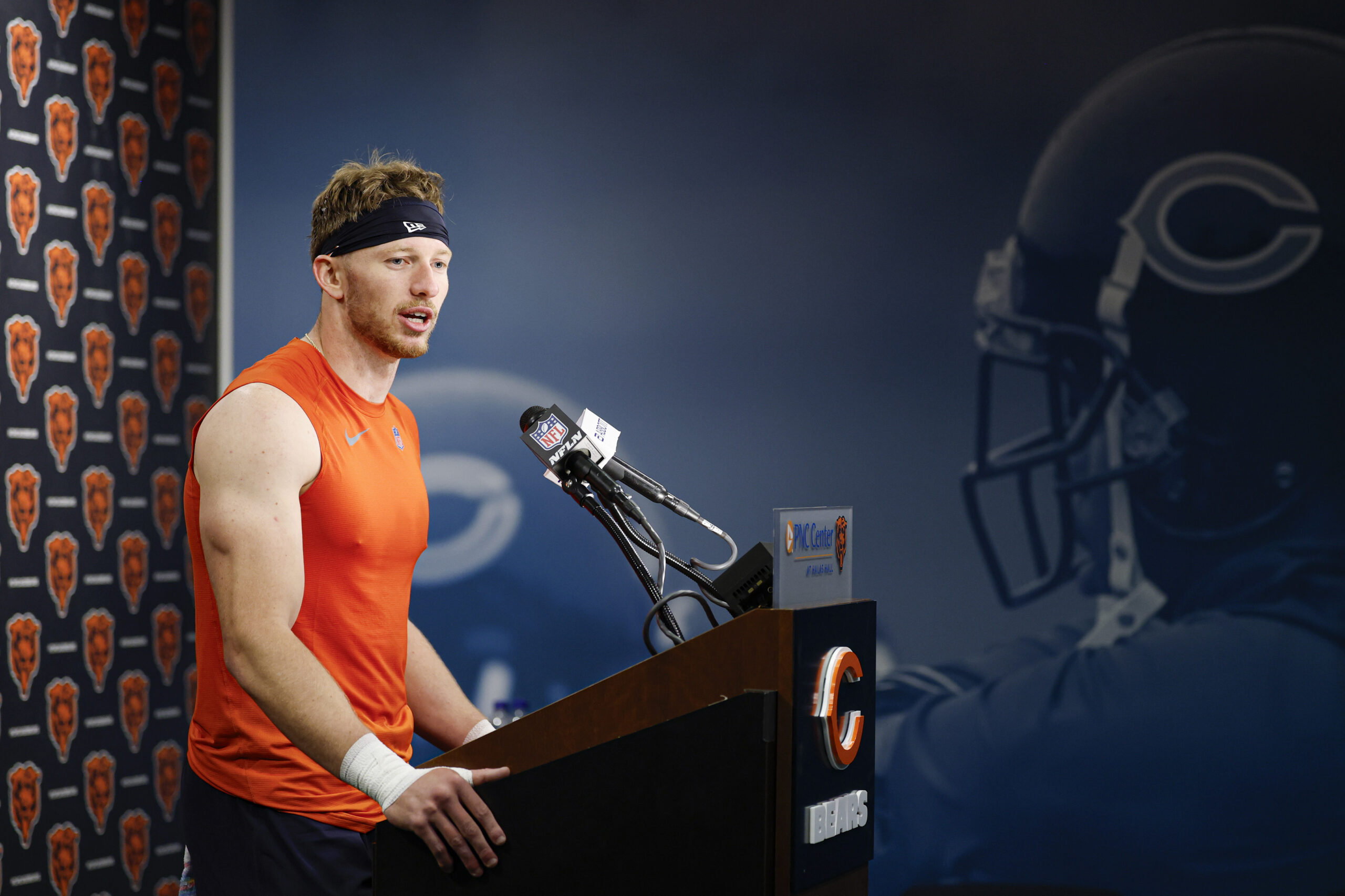
May 8, 2026; Lake Forest, IL, USA; Chicago Bears defensive back Dillon Thieneman (31) speaks during Rookie Minicamp at Halas Hall. Mandatory Credit: Kamil Krzaczynski-Imagn Images
The Bears do not own Soldier Field. The Chicago Park District does. That means the team controls limited revenue from naming rights, concerts, or non-football events. In Arlington Heights, they already own 326 acres of land at the former Arlington International Racecourse, purchased for about 197.2 million dollars in 2023. In Hammond, Indiana’s Senate Bill 27 created a Northwest Indiana Stadium Authority that would own a new NFL stadium and lease it long term to the team. That structure is designed to give the Bears more control over stadium revenue than they have as a tenant at Soldier Field. Control over long-term stadium and campus revenue, not sentiment about the skyline, is the engine driving every option on the table.
Your Game Day Just Got Expensive
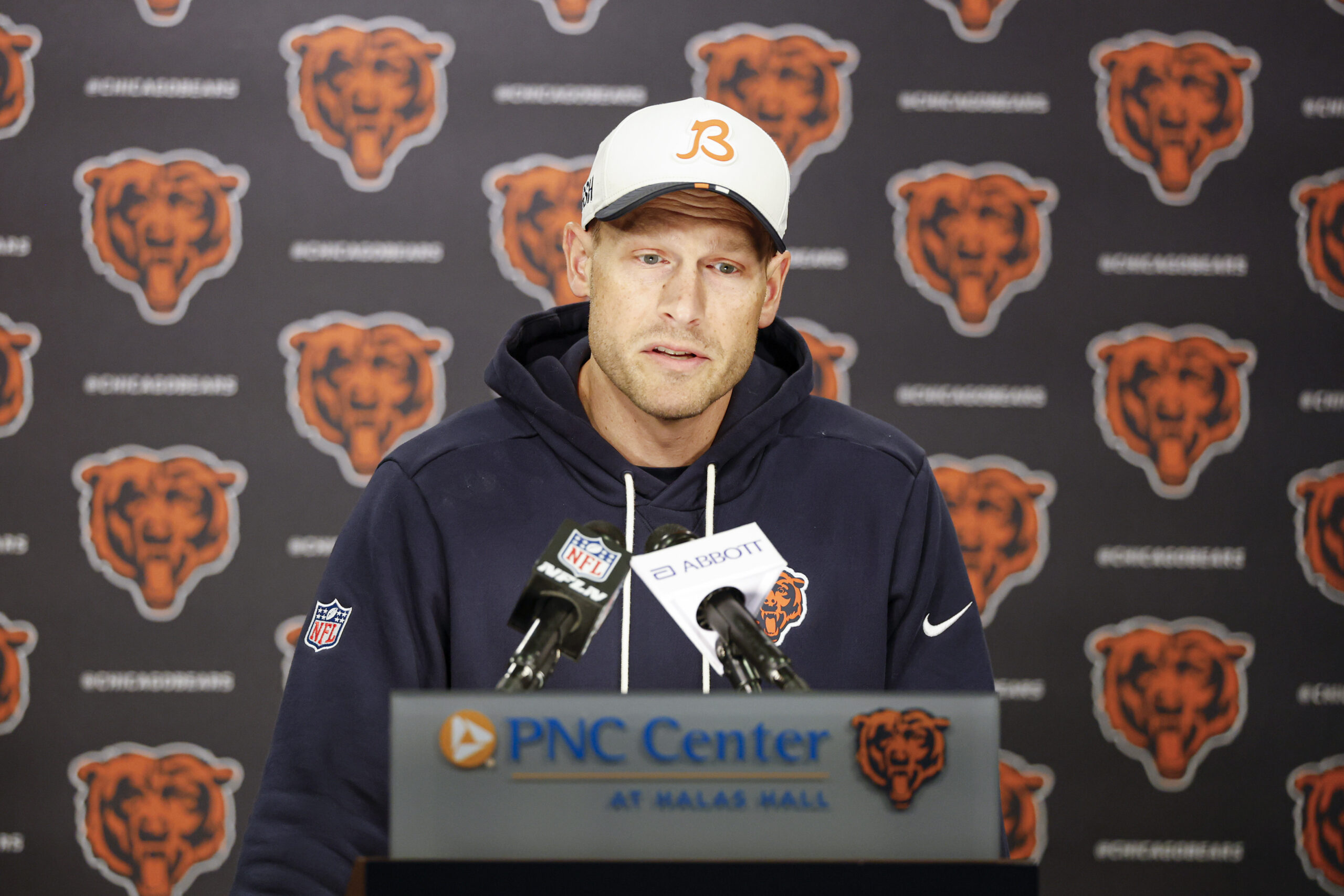
May 8, 2026; Lake Forest, IL, USA; Chicago Bears head coach Ben Johnson addresses the media at Halas Hall before Rookie Minicamp. Mandatory Credit: Kamil Krzaczynski-Imagn Images
Chicago’s combined sales tax sits around 10.25 to 10.5 percent, which places it among the highest rates for major United States cities. Indiana charges a flat 7 percent state sales tax with no general local sales tax added on top. Every beer, every jersey, and many game-related purchases cost fans measurably more on the Illinois side of the border once local tax is factored in. If the Bears land in Hammond, much of that game day spending shifts to Indiana’s tax base. If they choose Arlington Heights, fans trade lakefront access for a suburban trip roughly 30 miles from downtown and, for many, a longer drive. Either way, the casual Sunday tailgate absorbs a new geography, new logistics, and, for many South Side and West Side fans, a commute that costs real money.
Corporate Chicago Scrambles
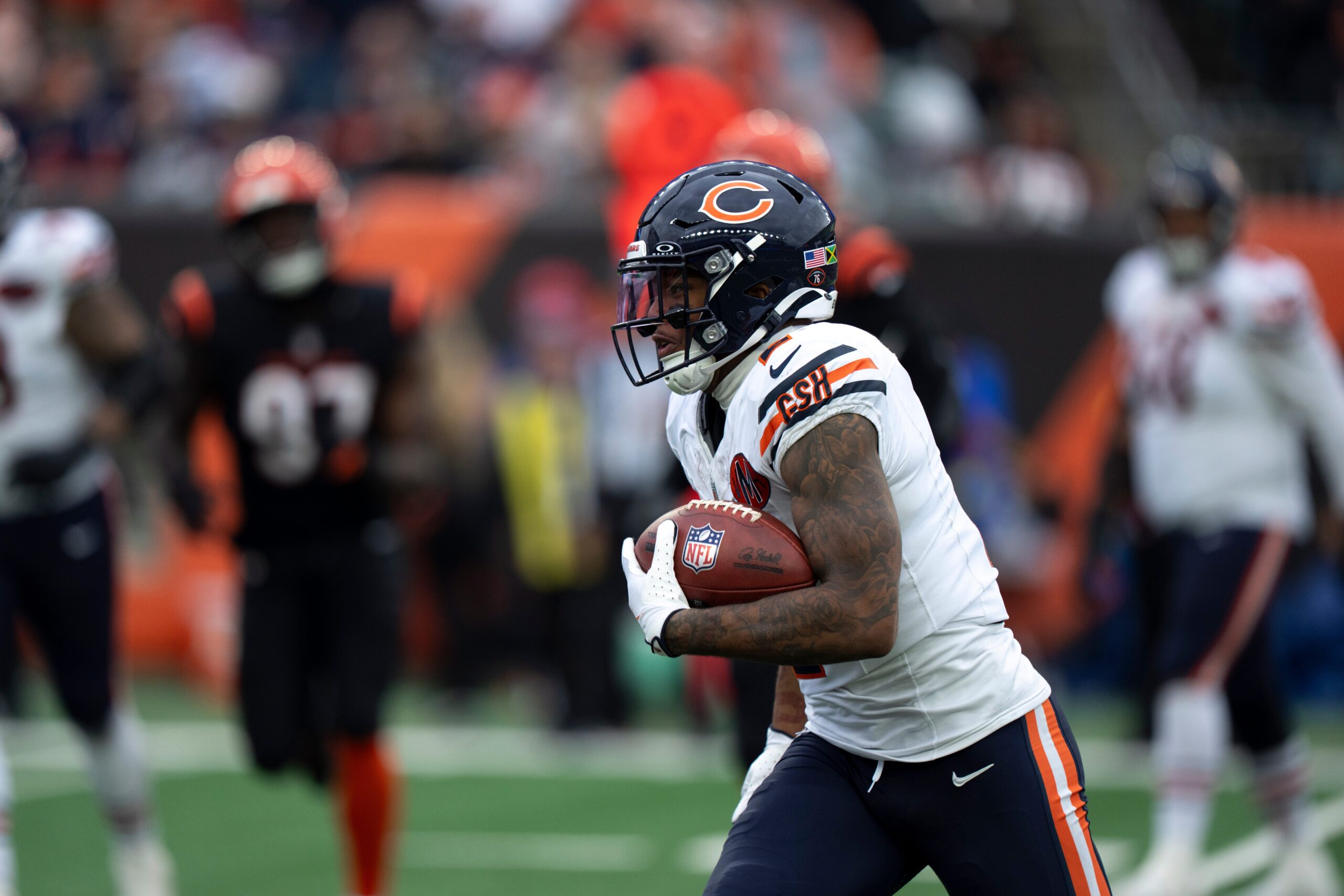
Chicago Bears wide receiver DJ Moore (2) runs for a touchdown in the fourth quarter of the NFL football game between Chicago Bears and Cincinnati Bengals at Paycor Stadium in Cincinnati on Nov. 2, 2025.
Plans for Arlington Heights contemplate more than 2 billion dollars in private stadium investment by the Bears and additional billions in mixed-use development around the site, including hotels, restaurants, retail, and entertainment venues. Chicago’s downtown hospitality sector, already heavily dependent on convention traffic, stands to lose eight regular-season home dates plus potential playoff games as a reliable anchor if the Bears move. The Bears have asked Illinois for approximately 855 million dollars in public infrastructure support tied to the Arlington Heights site. Restaurants and bars near Soldier Field are not calculating whether the team leaves. They are calculating how they will replace the foot traffic if it does.
Indiana’s Toll Roads Enter The Stadium Business

May 8, 2026; Lake Forest, IL, USA; Chicago Bears tight end Sam Roush (87) speaks during Rookie Minicamp at Halas Hall. Mandatory Credit: Kamil Krzaczynski-Imagn Images
Indiana’s roughly $1 billion stadium package is funded through a mix of toll road-related revenue, a 1 percent food and beverage tax in Lake and Porter counties, higher hotel taxes in Lake County, and a 12 percent admissions tax on stadium tickets and events. In practice, that means residents and visitors who never attend a Bears game will help subsidize the stadium when they pay those taxes or use tolled routes. That funding structure effectively turns part of a regional transportation and tourism network into a sports financing tool, even though voters did not weigh in through a direct statewide referendum on the deal.
The Machine Behind The Bidding War
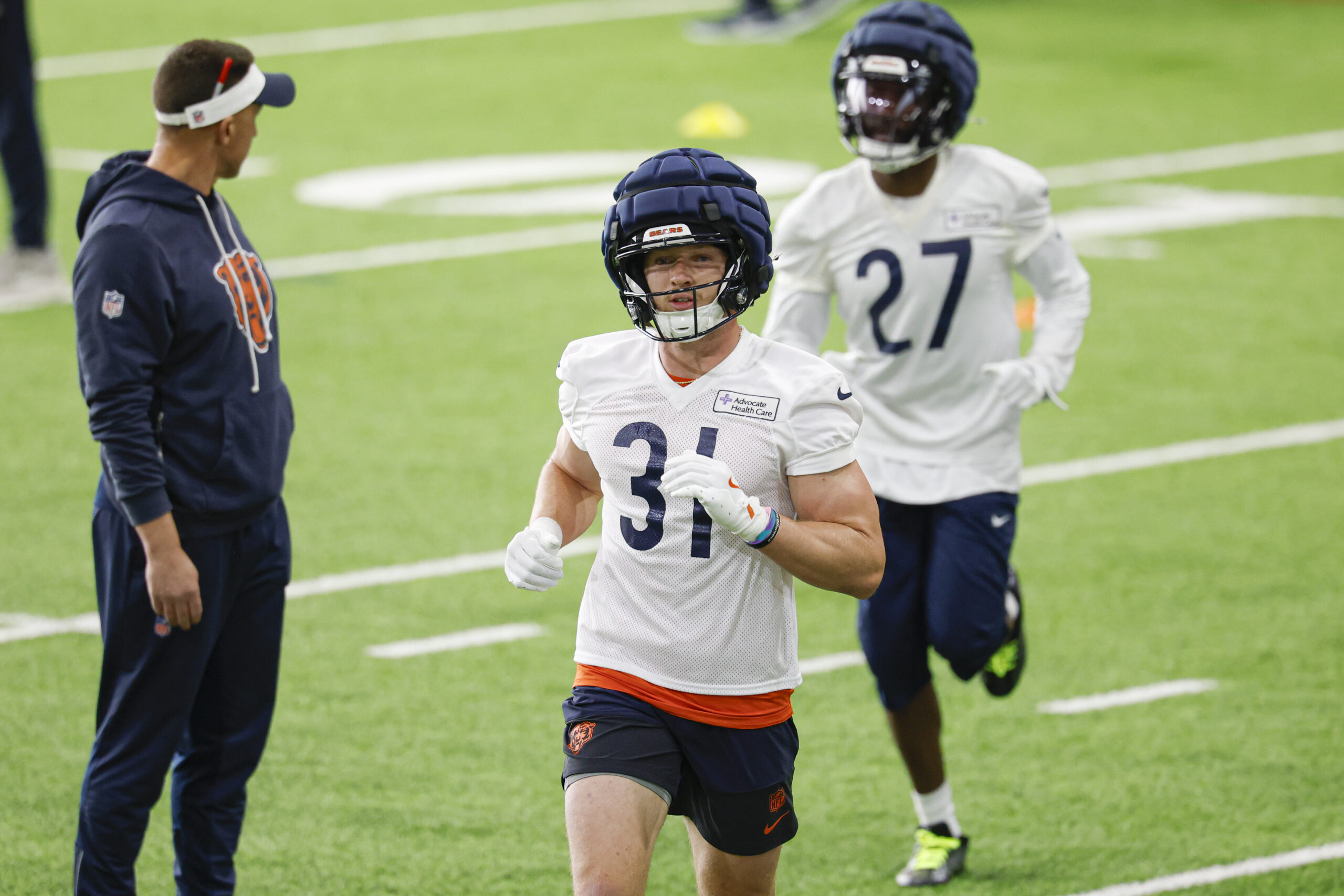
May 8, 2026; Lake Forest, IL, USA; Chicago Bears defensive back Dillon Thieneman (31) runs during Rookie Minicamp at Halas Hall. Mandatory Credit: Kamil Krzaczynski-Imagn Images
Every ripple traces back to the same mechanism. New stadium authorities, negotiated payment in lieu of taxes arrangements, and legislative calendars that most fans will never read are driving the outcome. In Illinois, a stadium-related bill that would have allowed certain municipalities to establish stadium authorities and offer long-term property tax relief for projects like the Bears effort passed the Senate but stalled when the House adjourned without taking it up. In Indiana, Senate Bill 27 created the Northwest Indiana Stadium Authority and locked in a framework for approximately 1 billion dollars in public support. One state completed its legislation. The other did not. That contrast helps explain why a franchise born in Chicago may end up playing regular home games in Indiana, funded in part by hot dogs and highway tolls.
A Mayor’s Lonely Counteroffer

Jan 18, 2026; Chicago, IL, USA; Los Angeles Rams placekicker Harrison Mevis (92) celebrates with punter Ethan Evans (42), offensive tackle David Quessenberry (68) and tight end Davis Allen (87) after kicking the game-winning field goal against the Chicago Bears during overtime of an NFC Divisional Round game at Soldier Field. Mandatory Credit: Matt Marton-Imagn Images
Mayor Brandon Johnson insists Chicago remains viable. In announcing his proposal, he said, “We are the only municipality that has presented a feasible plan for a publicly owned stadium that the residents of Chicago could continue to enjoy.” His administration has proposed a modernized lakefront facility financed through existing hotel tax revenue via the Illinois Sports Facilities Authority. Under that framework, public financing would come from that existing hotel tax stream, and the Bears would be expected to cover a substantial majority of construction costs, roughly around seventy percent or more, according to city and team estimates. Johnson’s office continues to promote that plan, but Bears leadership has said they are finalizing their evaluation of possible stadium sites in Arlington Heights and Hammond and “remain on the same timeline” for a decision. Hammond’s mayor, Thomas McDermott, has emphasized Indiana’s responsiveness, pointing to how quickly Senate Bill 27 moved through the legislature and how the proposed site near Wolf Lake was readied for consideration. From the Bears’ perspective, Indiana now represents a fully authorized funding framework, while Illinois still lacks enabling legislation for either the Arlington Heights or the lakefront concepts. That contrast, as much as any emotional tie to the city, defines the leverage in play.
The Precedent Every Owner Is Watching
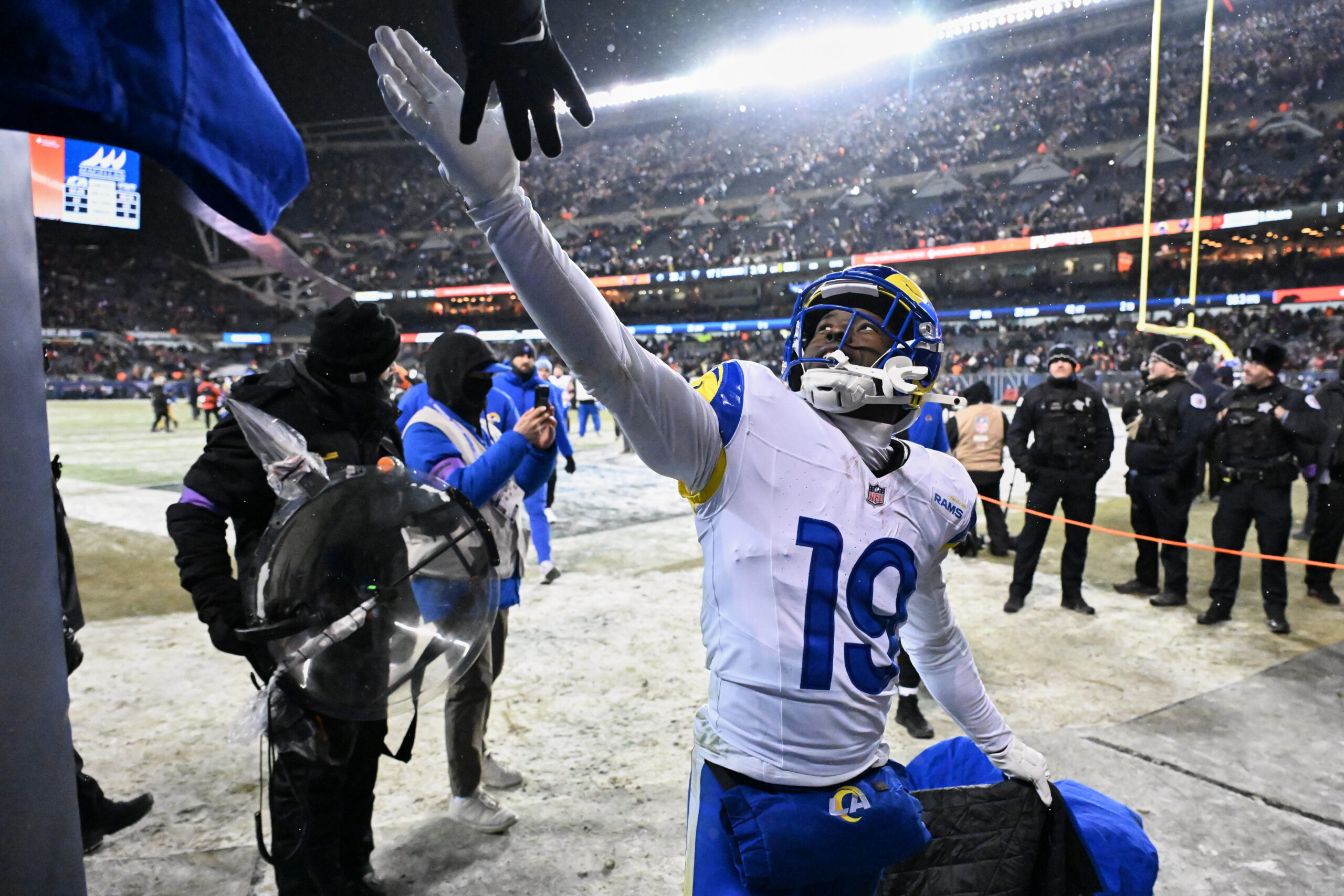
Jan 18, 2026; Chicago, IL, USA; Los Angeles Rams wide receiver Xavier Smith (19) shakes hands with a fan as he leaves the field after an NFC Divisional Round game against the Chicago Bears Soldier Field. Mandatory Credit: Matt Marton-Imagn Images
If Indiana lands the Bears with a billion-dollar package assembled in a matter of months while Illinois’ effort bogged down over multiple sessions, every NFL owner with a lease expiring in the next decade will see a template. Pit two jurisdictions against each other. Let the slower legislature lose. The Bears’ own materials for Arlington Heights describe tens of thousands of construction job years and significant long-term tax revenue from a mixed-use campus, numbers that turn stadium deals into political survival tests for governors and mayors. Once you see that home field tends to follow the best tax structure and revenue certainty, not the deepest roots, every future relocation threat makes more sense.
Winners, Losers, And The Fine Print
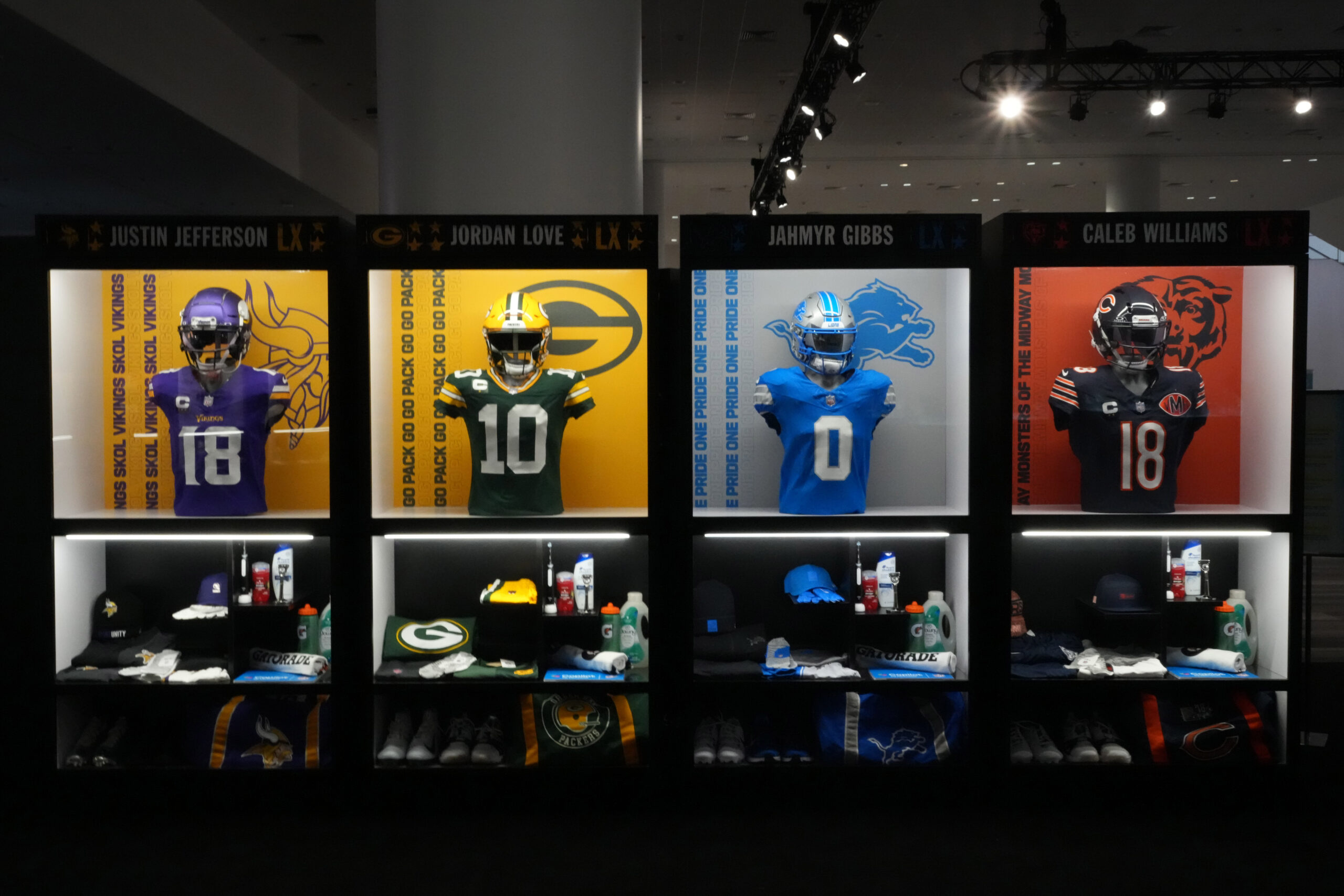
Feb 4, 2026; San Francisco, CA, USA; A locker room exhibit with the helmets and jerseys of Minnesota Vikings receiver Justin Jefferson (18), Green Bay Packers quarterback Jordan Love (10), Detroit Lions running back Jahmyr Gibbs (0) and Chicago Bears quarterback Caleb Williams (18) at the Super Bowl LX Experience at the Moscone Center. Mandatory Credit: Kirby Lee-Imagn Images
Winners include Northwest Indiana’s hotel and restaurant industry, suburban developers eyeing hundreds of acres in Arlington Heights, and every sports consultant who sells optimistic economic impact studies. Losers include Chicago’s near South Side businesses that depend on Bears crowds, Illinois local governments that could face long periods of constrained property tax growth under any future freeze, and fans who built their identity around a lakefront stadium originally dedicated as a war memorial. Reporting from outlets including The TRiiBE shows that some Black Chicagoans prefer the idea of an Indiana site to Arlington Heights, citing accessibility and concerns about displacement and gentrification around a large suburban development. The community that many outsiders assume would fight hardest to keep the team downtown is, in reality, split on where it should go.
The Cascade Isn’t Close To Finished
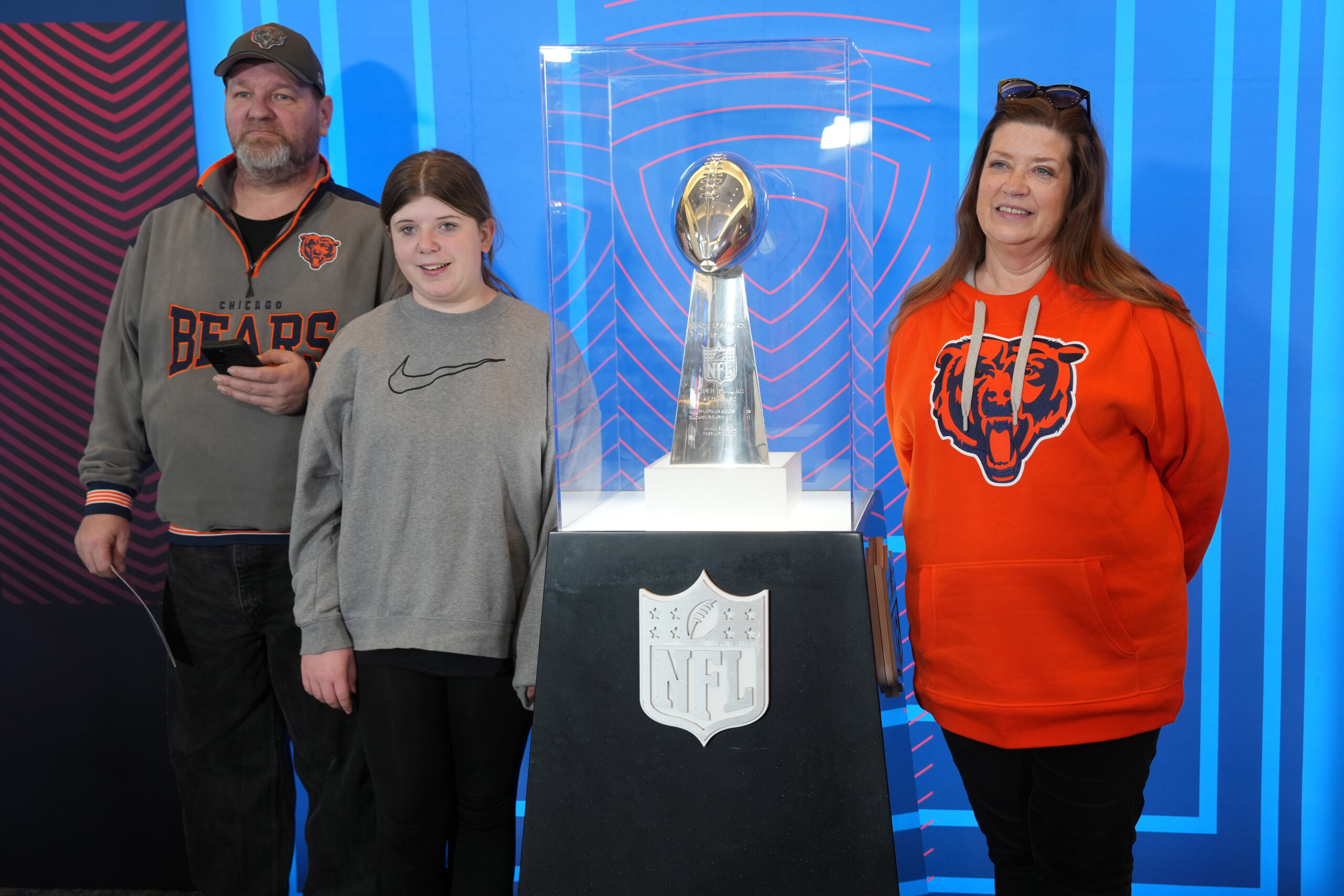
Feb 26, 2026; Indianapolis, IN, USA; Chicago Bears fans pose with Super Bowl Vince Lombardi trophy at the NFL Scouting Combine Experience at Lucas Oil Stadium. Mandatory Credit: Kirby Lee-Imagn Images
Soldier Field will not sit quietly if and when the Bears leave. Chicago could reimagine the nearly 100-year-old monument as a concert venue, a soccer stadium, or a college football anchor. A private architectural firm has already proposed enclosing the stadium with a transparent ETFE roof and expanding capacity to about 72,000 seats, along with building an adjacent entertainment district over nearby roadways and rail lines. Meanwhile, Illinois lawmakers may respond to losing the Bears by rethinking how much public money they are willing to put into future stadium projects, while other states study how quickly Indiana moved. The Bears’ decision is expected by late spring or early summer. The consequences will reshape how American cities bargain with billionaire team owners for years to come. What would you do if you were running the Bears or the city? Share your thoughts in the comments and tell us where you think the team should play next.