


Snow blowing sideways across the construction site in Orchard Park. Steel beams rising against a gray February sky. Sixty-two thousand seats taking shape in a venue built to feel like a freezer, on purpose. The Buffalo Bills poured roughly $2.2 billion into a stadium designed around the very weather that disqualifies it from the NFL’s biggest stage. Multiple franchises across the league are building or renovating stadiums right now, spending billions combined. Buffalo’s project stands apart for a reason nobody expected.
A $2.2 Billion Bet on Cold

Bills quarterback Josh Allen breaks out of the pocket against the Vikings and Za’Daius Smith.
The New Highmark Stadium opens for the 2026 NFL season directly across from the Bills’ current home in Orchard Park. Construction reached its topping-out milestone in April 2025, with a 260,000-square-foot canopy designed to cover roughly 65 percent of seats. Not a dome. Not retractable. A canopy. The budget climbed from an initial $1.4 billion to a reported $2.1 billion by late 2024, with later figures around $2.2 billion. It is one of the most expensive NFL venues ever built without a roof over the field.
The Super Bowl Has Rules
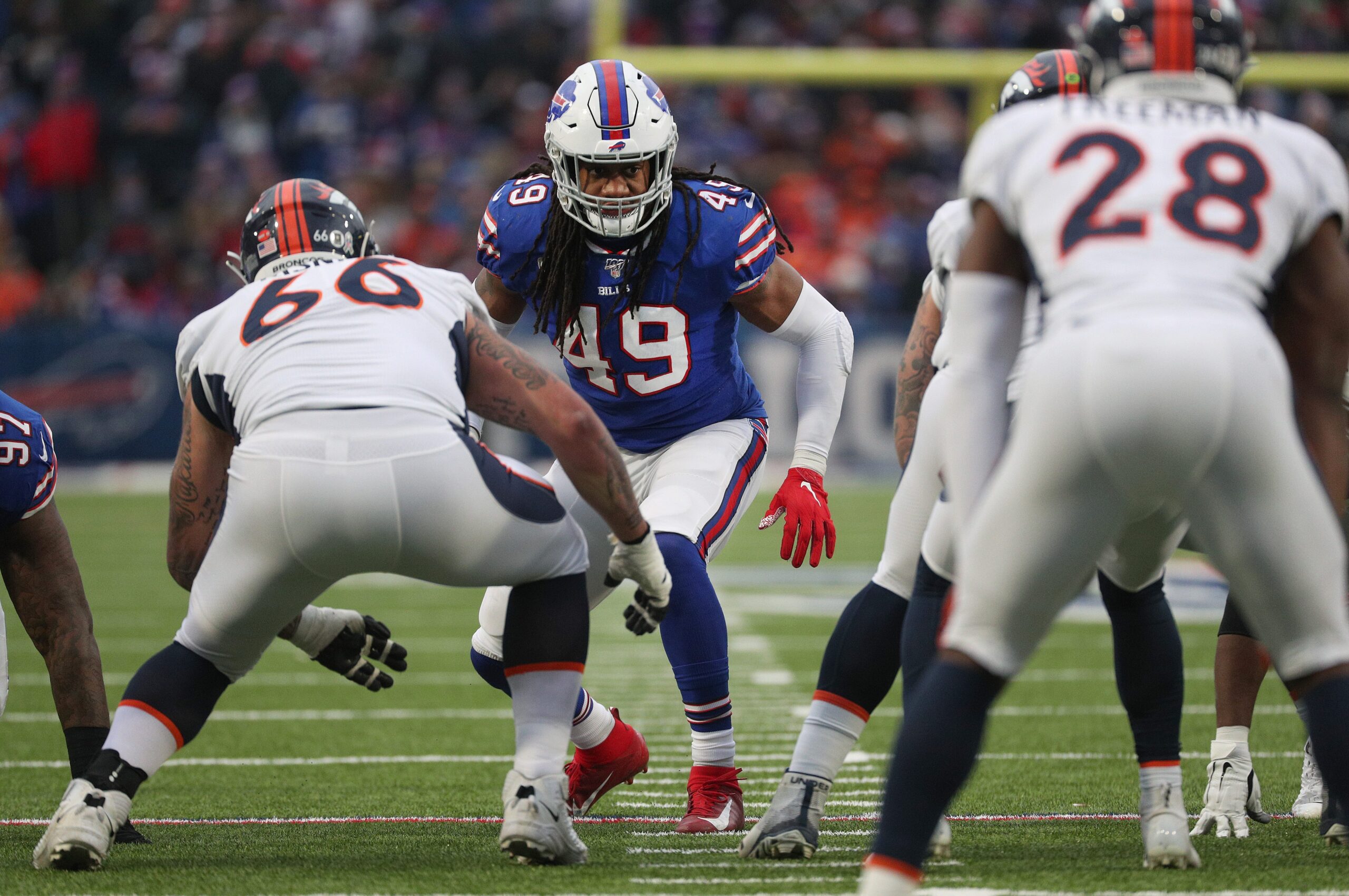
Bills linebacker Tremaine Edmunds looks to blitz against the Broncos. Jg 112419 Bills 39
Most fans assume any new stadium gets a crack at hosting the Super Bowl. That assumption collapses in Buffalo. The NFL has historically required a seating capacity of roughly 70,000 for Super Bowl host venues. New Highmark holds about 62,000 (60,108 fixed seats plus several thousand standing-room spots). That alone is a steep hurdle. Then there’s climate: host cities must show an average February temperature above 50 degrees Fahrenheit, or play under a dome. Buffalo’s February average sits around 32 degrees. Roughly twenty degrees below the threshold, with no roof to close the gap.
They Knew and Built It Anyway
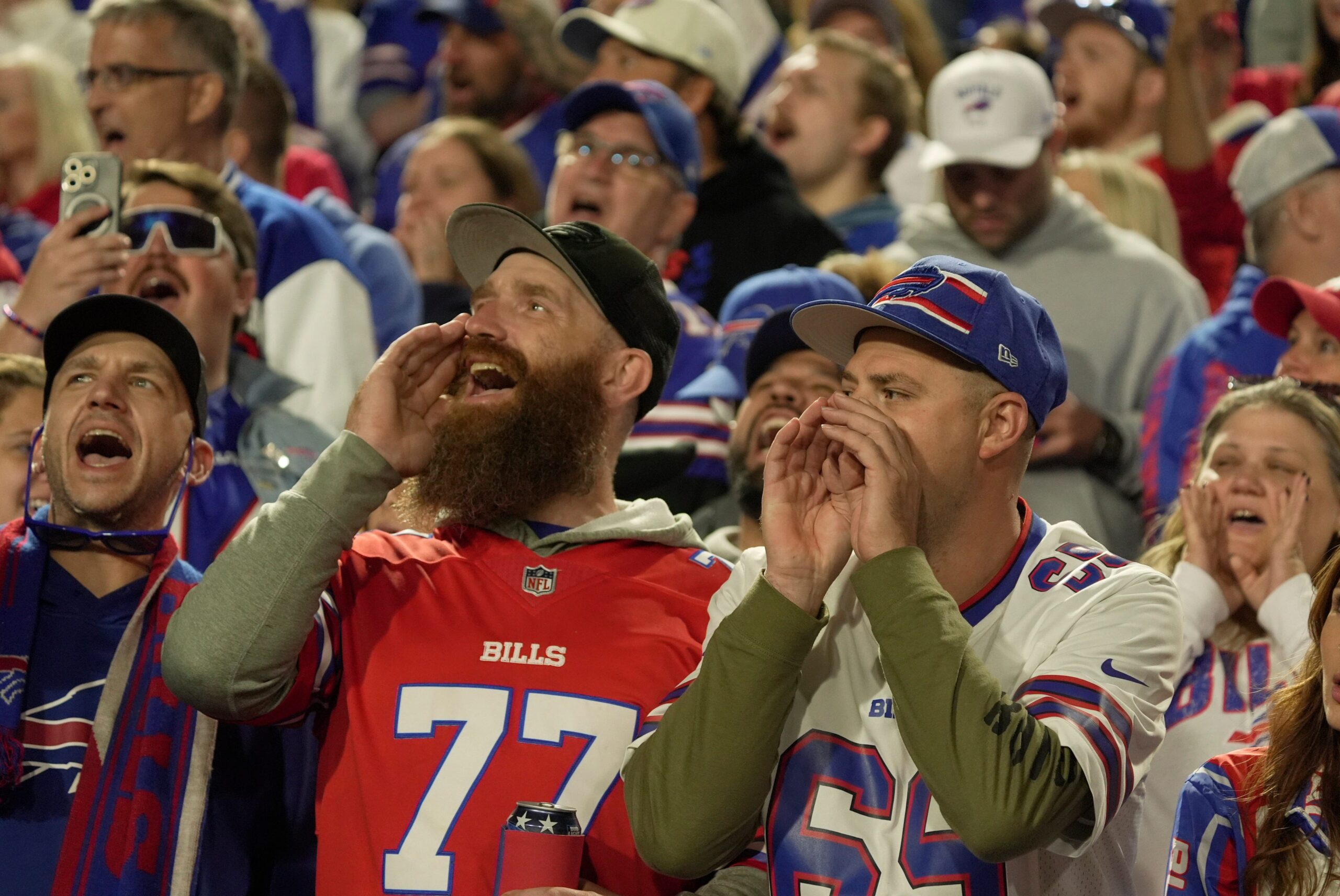
Fans have a call and response with former Buffalo Bills Andre Reed before their game against the Baltimore Ravens at Highmark Stadium in Orchard Park on Sept. 7, 2025.
This wasn’t an oversight. The Bills chose open air over flexibility, locking in decisions that most NFL teams avoided. No major overhauls to add a roof later. No pivots to new event categories. No structural flexibility to accommodate league trends. The stadium will be what it is from opening day forward. Other franchises spending billions right now, from the Titans to the Commanders to the Bears, designed with Super Bowl eligibility in mind. Buffalo looked at that playbook and threw it out. Under capacity. Twenty degrees too cold. Permanent.
Built for Football Weather
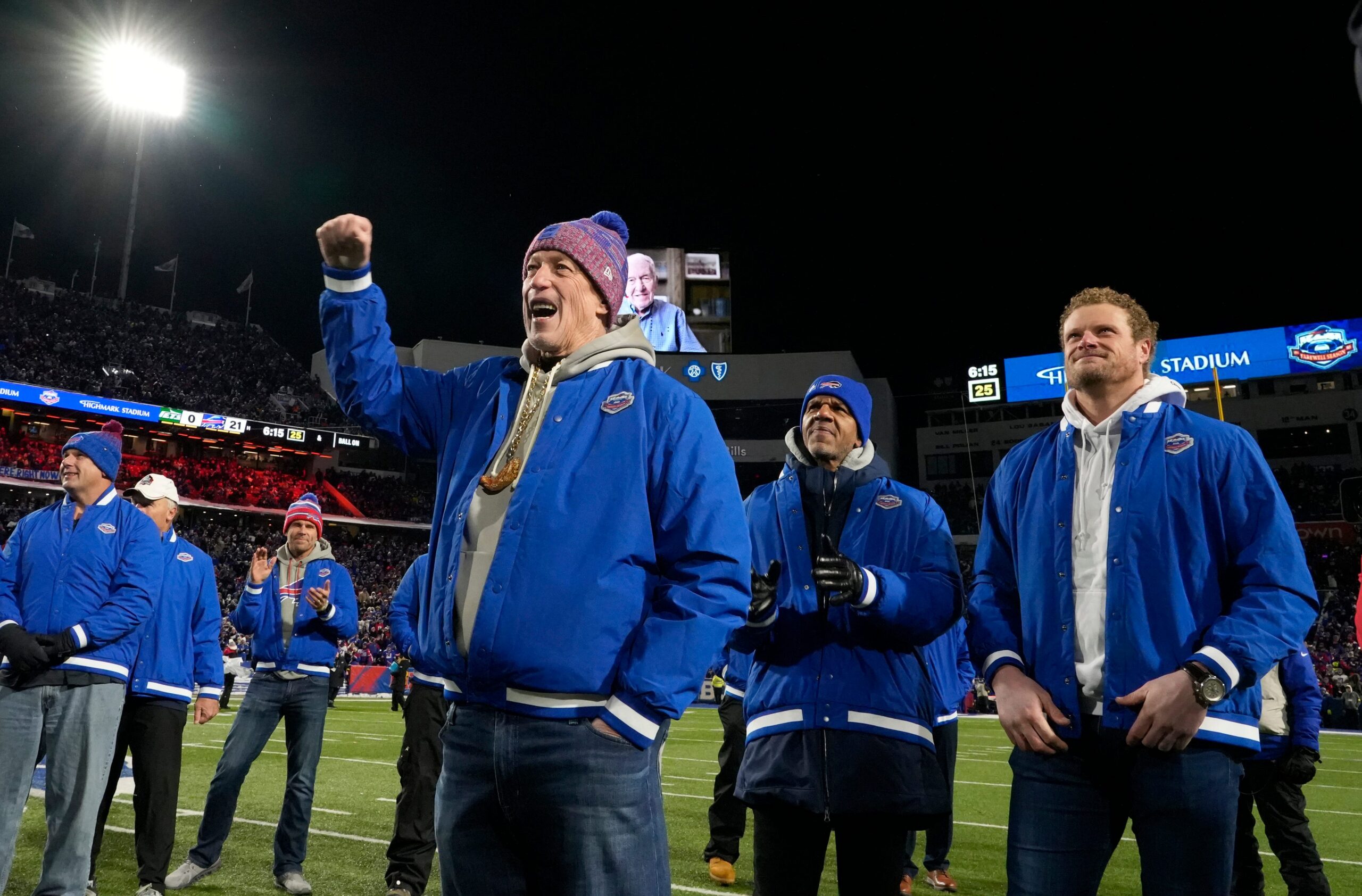
Bills legends Jim Kelly, Andre Reed and Eric Wood listen to a video message from former head coach Marc Levy, seen behind Kelly, during a halftime ceremony of the Bills last regular season game at Highmark Stadium in Orchard Park Sunday, Jan. 4, 2026.
Think of it as a surgical instrument versus a Swiss Army knife. Denver’s proposed new stadium has been discussed with a retractable roof in its plans. Washington’s new stadium in the planned Commanders project anticipates full event flexibility. Buffalo rejected that model entirely. The open-air design channels wind and cold directly onto the field, turning weather into a home-field weapon. The canopy protects fans from the worst of it while keeping the elements in play where they matter. The stadium can host summer concerts and outdoor events, but its soul belongs to January football.
The Numbers That Explain Everything

Bills quarterback Josh Allen celebrates a touchdown in a 38-10 win over the Raiders.
About 62,000 seats versus the roughly 70,000 the NFL has typically required of Super Bowl hosts. That gap represents a deliberate choice to build an intimate, loud venue rather than a cavernous multipurpose arena. The financing structure includes $850 million in public money — $600 million from New York State and $250 million from Erie County — alongside team equity, an NFL loan, and personal seat license revenue. Buffalo ranks roughly 50th among U.S. media markets, the smallest market among NFL cities currently building new stadiums. Spending more than $2 billion without Super Bowl revenue potential in a bottom-tier market takes conviction most ownership groups would never risk.
What Buffalo Sacrificed

Buffalo Bills quarterback Josh Allen (17) smiles at something someone said before the Buffalo Bills wild card game against the Denver Broncos at Highmark Stadium in Orchard Park on Jan. 12, 2025.
Super Bowl host cities generate hundreds of millions in economic impact. Hotels, restaurants, national media attention for weeks. Buffalo will never see that windfall from New Highmark Stadium. Other recent stadium projects have factored Super Bowl hosting into their business cases. Buffalo’s return on investment depends largely on regular-season atmosphere and playoff runs. No safety net of a marquee neutral-site event to offset the construction debt. The financial model bets on one thing: Bills fans showing up in the cold, every single week.
The New Rule for Stadium Success

Nov 9, 2025; Miami Gardens, Florida, USA; Buffalo Bills quarterback Josh Allen (17) scrambles against Miami Dolphins linebacker Bradley Chubb (2) during the first half at Hard Rock Stadium. Mandatory Credit: Jeff Romance-Imagn Images
Here’s what most people miss. The old assumption was that every franchise must build a venue capable of hosting the Super Bowl to justify the price tag. Buffalo just challenged that. Stadium success can be measured by fan experience and team performance in a specific environment rather than Super Bowl hosting potential. Once you see it, every other billion-dollar stadium project looks like it was designed by committee, chasing a single weekend instead of building for the home schedule.
The Dominos Still Falling
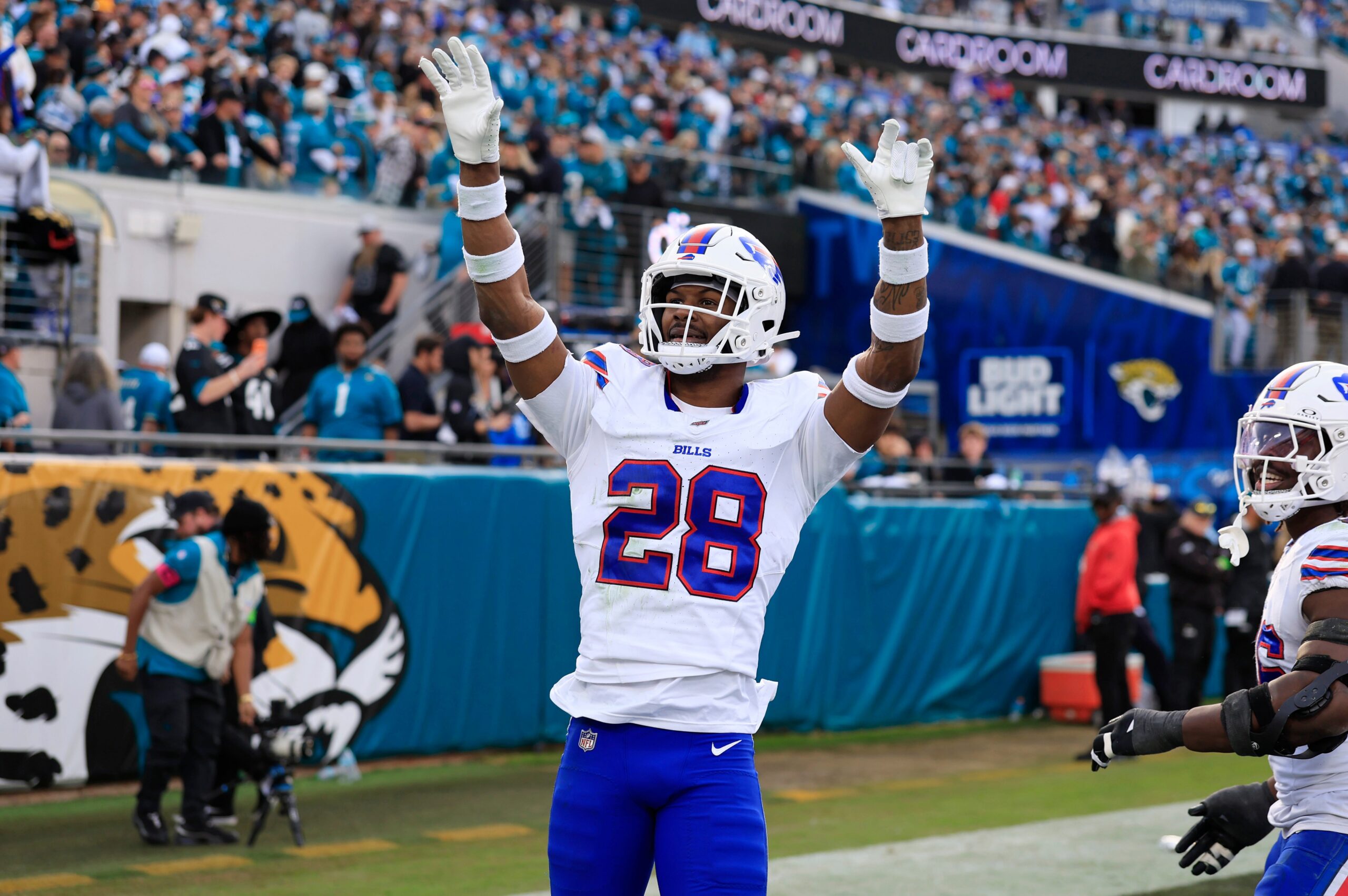
Buffalo Bills safety Sam Franklin Jr. (28) waves to the Jacksonville Jaguars crowd during the fourth quarter of an NFL football AFC Wild Card playoff matchup, Sunday, Jan. 11, 2026, in Jacksonville, Fla. The Bills defeated the Jaguars 27-24. [Corey Perrine/Florida Times-Union]
If New Highmark Stadium delivers the atmosphere Buffalo expects, other cold-weather franchises will face an uncomfortable question. Green Bay, Chicago, New England — markets where domes feel like betrayal. The precedent Buffalo sets could split the NFL’s stadium philosophy in two: warm-weather multipurpose palaces chasing Super Bowls, and cold-weather fortresses built exclusively for their fan bases. The league’s current wave of stadium investment — billions across multiple teams — may end up proving that Buffalo’s approach was the smartest bet at the table.
The Franchise That Chose Identity Over Everything

Buffalo Bills tight end Dalton Kincaid (86) scores a touchdown during the fourth quarter in an NFL football AFC Wild Card playoff matchup, Sunday, Jan. 11, 2026, in Jacksonville, Fla. Bills lead 10-7 at the half over the Jaguars. The Bills defeated the Jaguars 27-24.
Other ownership groups hedged. Buffalo went all in on being Buffalo. The 2026 season opener will reveal whether more than $2 billion buys the most hostile home-field advantage in professional football or an expensive monument to stubbornness. What the rest of the league cannot do is ignore it. A bottom-50 media market just built a top-tier stadium that tells the NFL’s showcase event to stay home. The next franchise to break ground will have to answer a question that didn’t exist before Orchard Park: are you building for one weekend, or for every Sunday? Bills fans — is a permanent home-field freezer worth more than a Super Bowl banner Buffalo could’ve hosted? Tell us in the comments whether Pegula made the boldest move in the NFL or the most expensive mistake.