
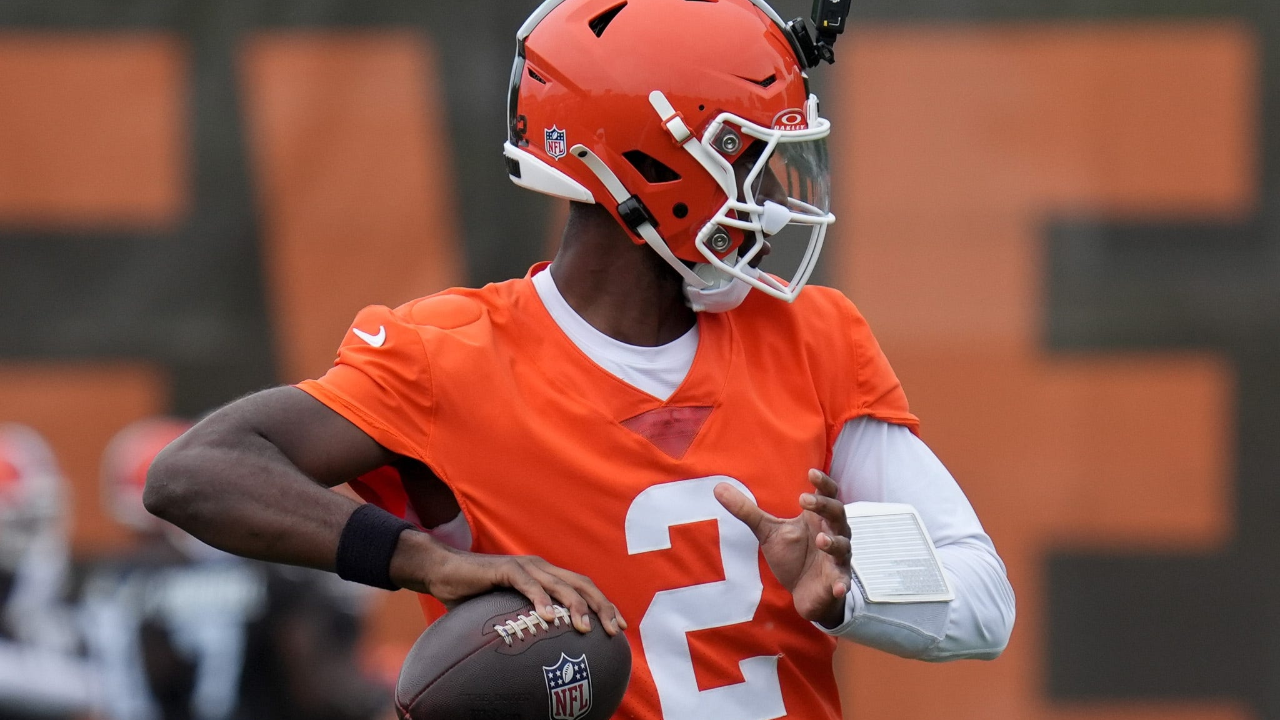
The practice field in Berea told one story. The spreadsheet in the front office told another. Deshaun Watson lined up behind center with the first‑team offense during OTAs, barking cadences like a man who already knew the job belonged to him. Shedeur Sanders stood behind him, watching, waiting, running the same plays with the second unit. Offensive coordinator Travis Switzer told reporters the Browns “don’t have somebody who’s ahead” and said they “have two quarterbacks competing every day” without declaring a clear leader. The betting odds told a different story entirely, and the owner’s mouth told the real one.
The Odds Nobody Wants to Say Out Loud
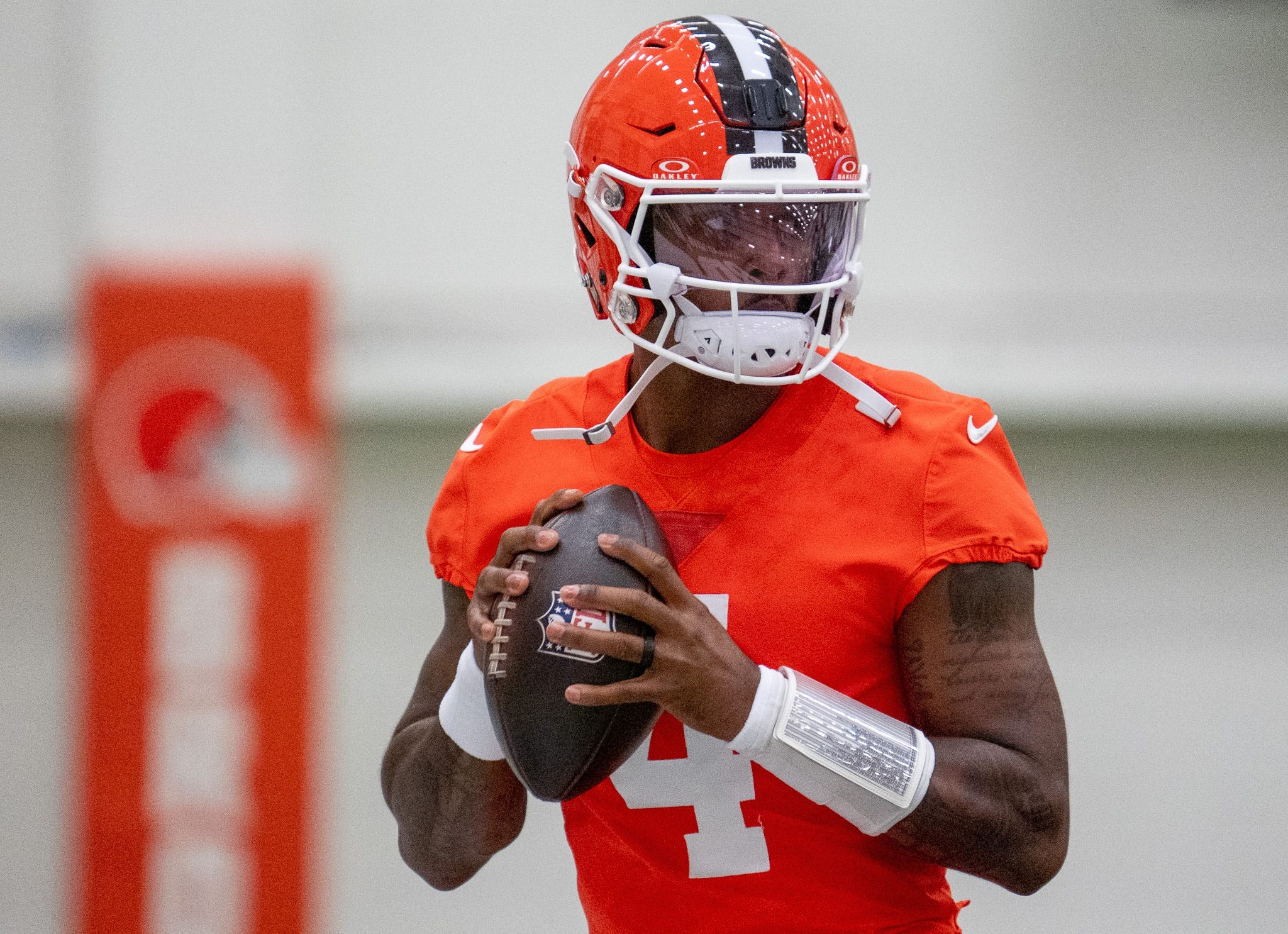
Deshaun Watson with the ball at the Browns OTA camp in Berea on May 20, 2026.
Watson opened as a clear betting favorite to start Week 1. Sanders sat as an underdog. That translates to roughly a low‑60s implied probability that the guy recovering from a major Achilles injury wins the job over the young quarterback Cleveland drafted to be its future. The Browns have cycled through around 10 starting quarterbacks since 2018, a carousel of instability that should make developing a young passer the obvious priority. Instead, the organization kept feeding most first‑team reps to the veteran whose body has failed him twice in the last two seasons. Sanders’ draft pedigree as the 144th overall pick carried no financial gravity in that building.
A Rookie Season That Left Scars
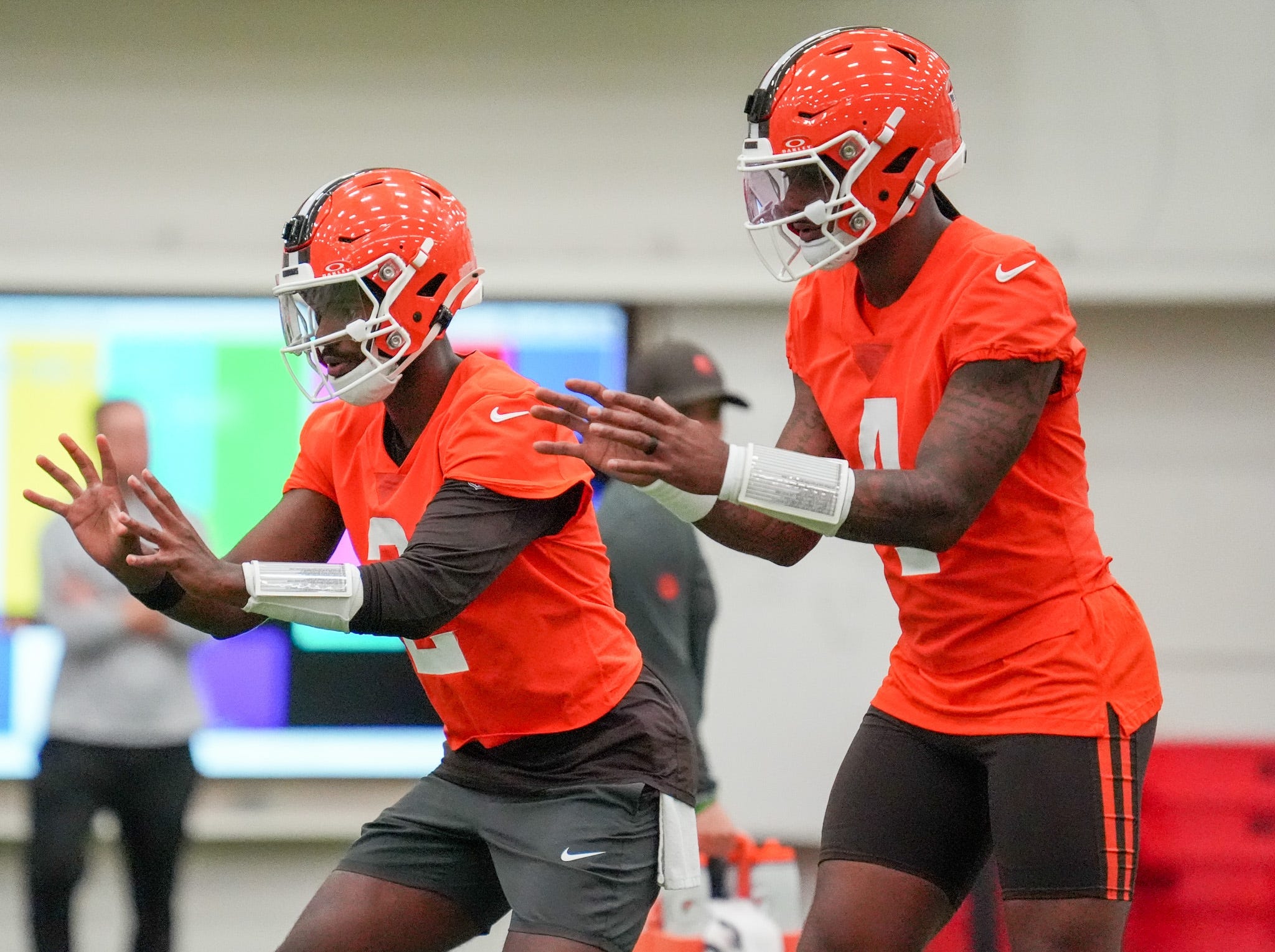
Quarterbacks Shedeur Sanders and Deshaun Watson at the Browns OTA camp in Berea on May 20, 2026.
Sanders started the final seven games of 2025. The numbers were brutal: roughly 1,400 passing yards, 7 touchdowns, 10 interceptions, and more than 20 sacks. His passing efficiency by most advanced metrics ranked near the bottom of the NFL. A fifth‑round pick getting seven starts that fast is almost unheard of, which means the Browns needed him badly enough to throw him into the fire. He absorbed one of the league’s higher sack rates behind an offense that was already wobbling. Most teams would call that a rough education worth enduring. Cleveland’s owner saw it differently.
The Owner Said It Out Loud
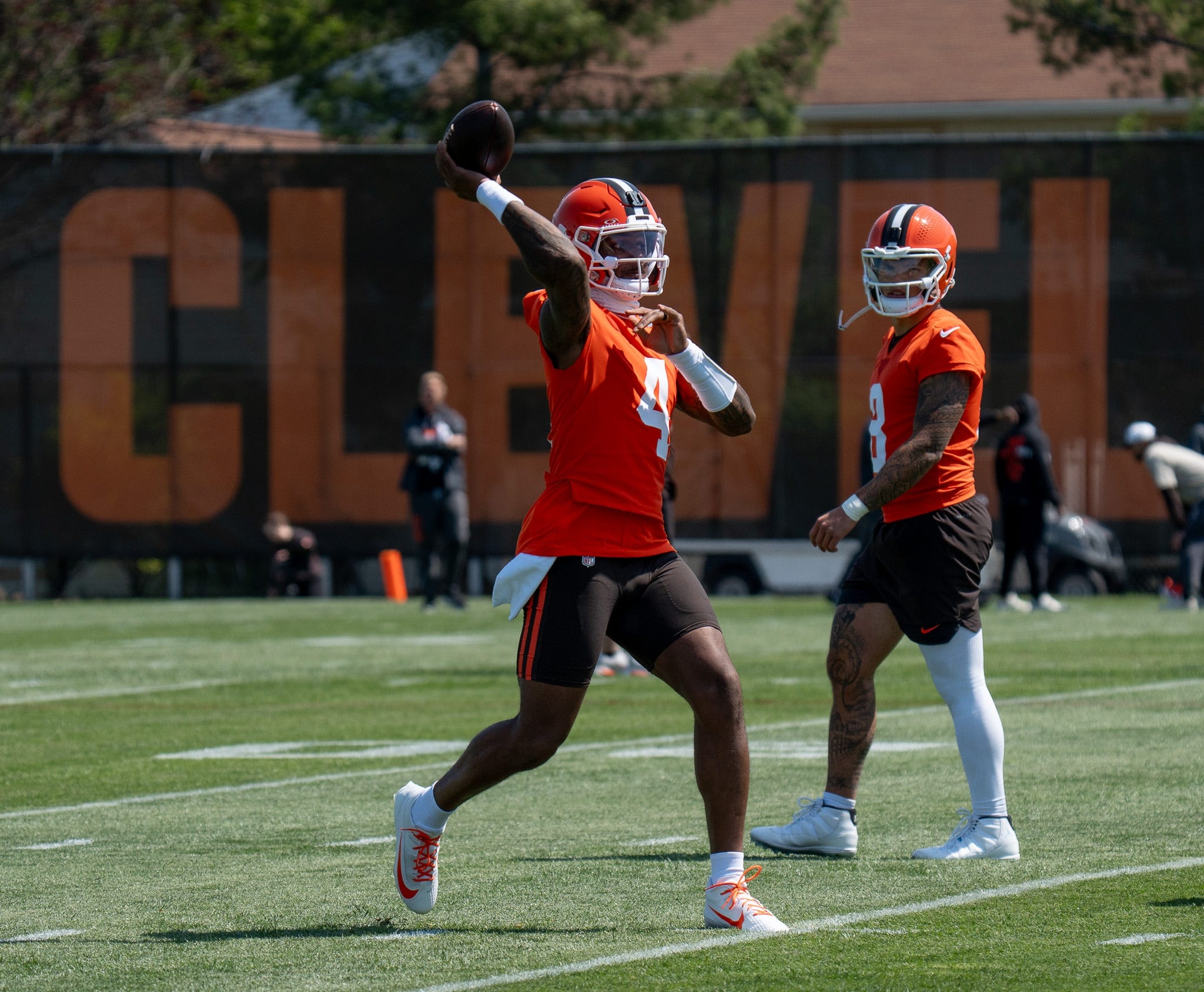
Quarterbacks Deshaun Watson and Dillon Gabriel practice together at the Browns mini camp in Berea on April 21, 2026.
Jimmy Haslam publicly admitted he never wanted Sanders. “At the end of the day, that’s Andrew Berry’s call,” Haslam said. “Andrew made the call to pick Shedeur.” Then Cleveland‑based reporting revealed the other side: Haslam was so effusive in his praise of Deshaun, so excited about him, so positive about him that it strongly suggested the Browns were thinking seriously about Watson being their starting quarterback in 2026. The owner undermined his own draft pick. On the record. While championing a quarterback with a significant Achilles history and a massive contract. That’s not a competition. That’s a verdict dressed up as one.
The $80 Million Handcuffs
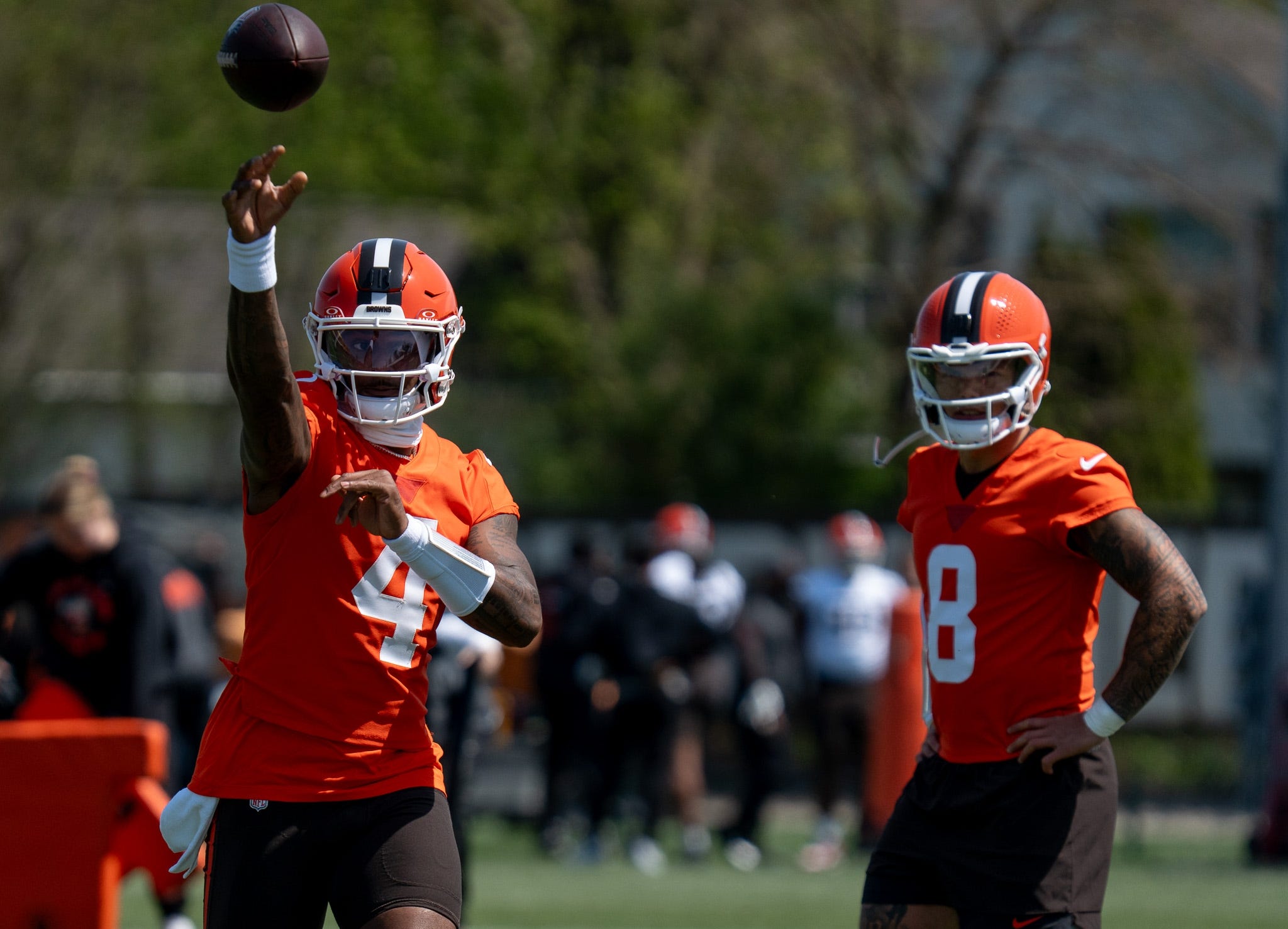
Quarterbacks Deshaun Watson and Dillon Gabriel practice together at the Browns mini camp in Berea on April 21, 2026.
Here is the mechanism nobody in the building will name plainly. Watson’s contract restructuring keeps him effectively on Cleveland’s books through a string of seasons that now stretch into 2030. Cutting him after 2026 would still leave the Browns staring at roughly $80 million in dead money spread across the remaining years of the deal, one of the largest obligations in NFL history. That number functions like a prison sentence. The Browns cannot walk away without detonating their salary cap for years. Watson has become less a quarterback and more a financial obligation the franchise must justify. Every first‑team rep he takes in OTAs is the organization trying to extract value from an underwater mortgage it cannot sell.
Bridge to Nowhere
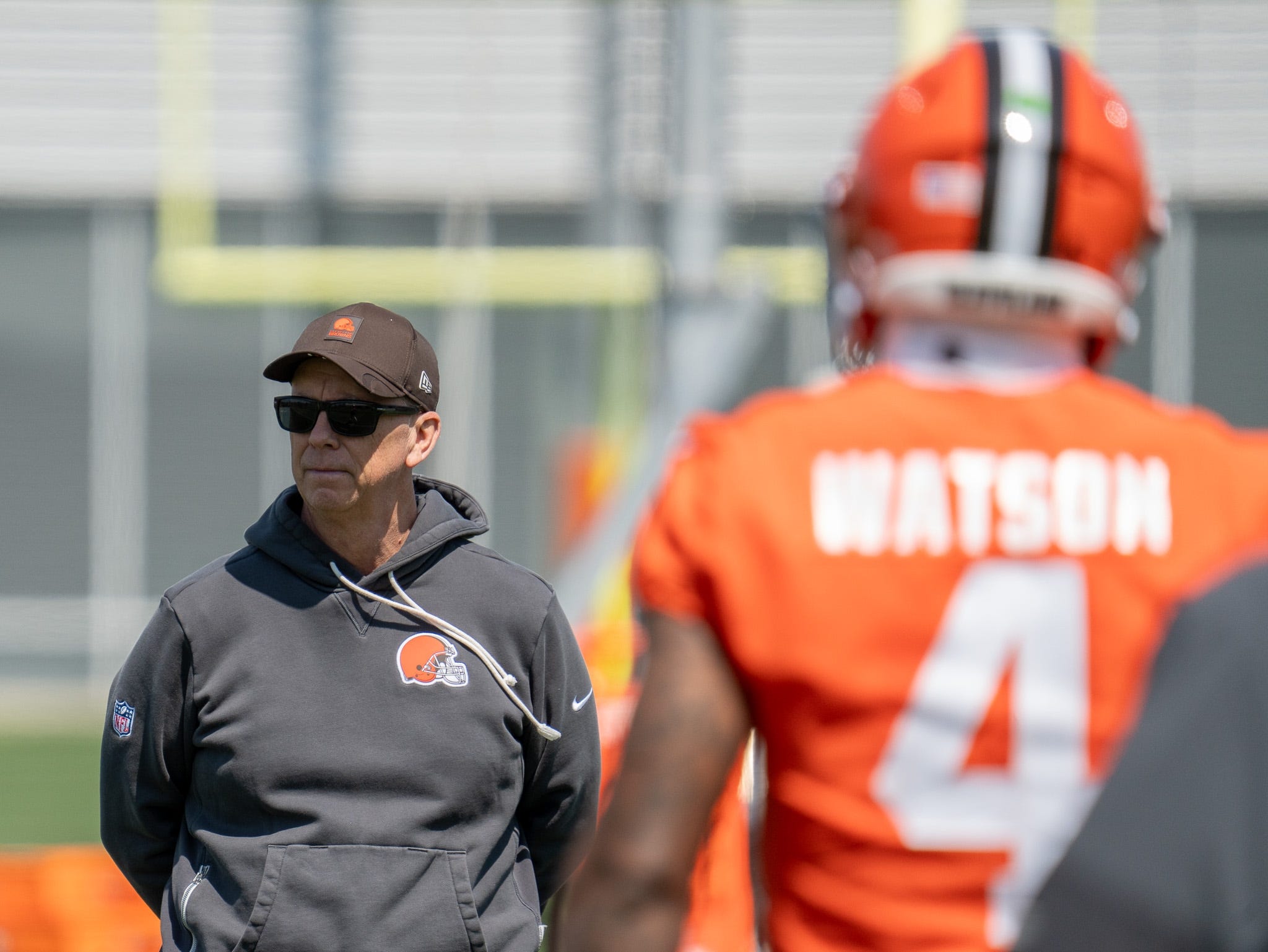
Browns coach Todd Monken watches players practice, including quarterback Deshaun Watson, April 21, 2026, in Berea.
Browns insider Tony Grossi stripped away the pretense entirely: “Consider Watson a one‑year bridge quarterback to 2027. He will not be back after 2026.” Read that again. The organization already knows, at least in the way people inside the league talk, that Watson is likely gone after this season. They are starting a player they plan to discard because the alternative, absorbing the cap fallout now, hurts worse than fielding a compromised quarterback. GM Andrew Berry still insists both players will “compete to earn a role,” and that the new coaching staff will have its say. That language sounds like meritocracy. The math behind it sounds like damage control.
What the Numbers Actually Cost
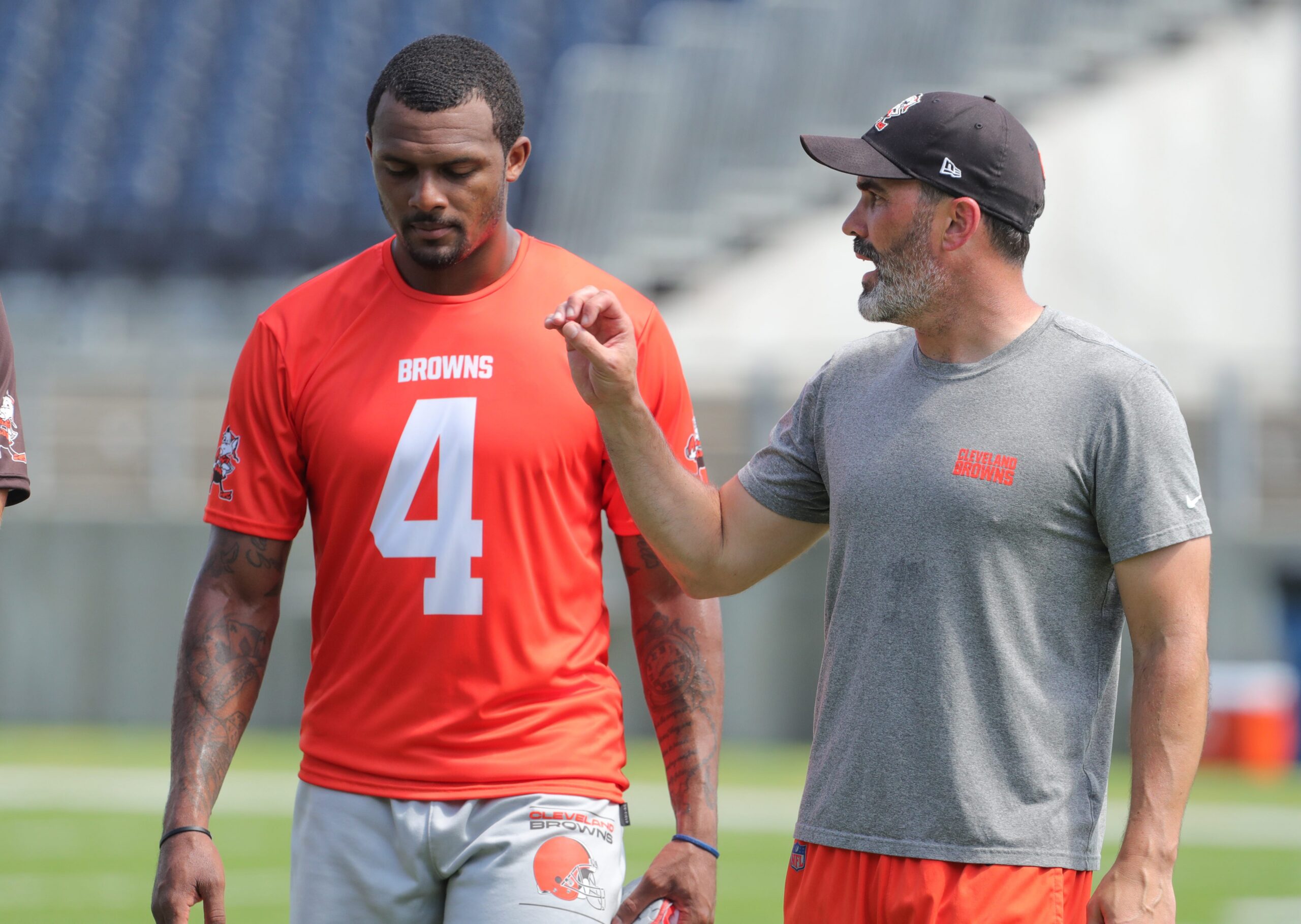
Quarterback Deshaun Watson, talking with coach Kevin Stefanski at a 2022 minicamp session, has only played in 19 of the Browns’ 52 games since being acquired from the Texans in 2022.
Watson’s 2026 cap hit currently sits just under $45 million after the Browns restructured his deal again to avoid an unprecedented single‑year charge in the low‑$80‑million range. Sanders, on his rookie deal, costs a fraction of that. The financial asymmetry is staggering: the cheap young quarterback must outperform the expensive, injury‑battered one by a wide margin just to earn equal consideration. Meanwhile, Cleveland drafted Arkansas quarterback Taylen Green in the sixth round in 2026 as additional insurance, signaling the front office trusts neither option enough to go in clean. Three quarterbacks, one starting spot, and an $80 million anchor dragging the whole roster underwater.
A New Rule for the NFL
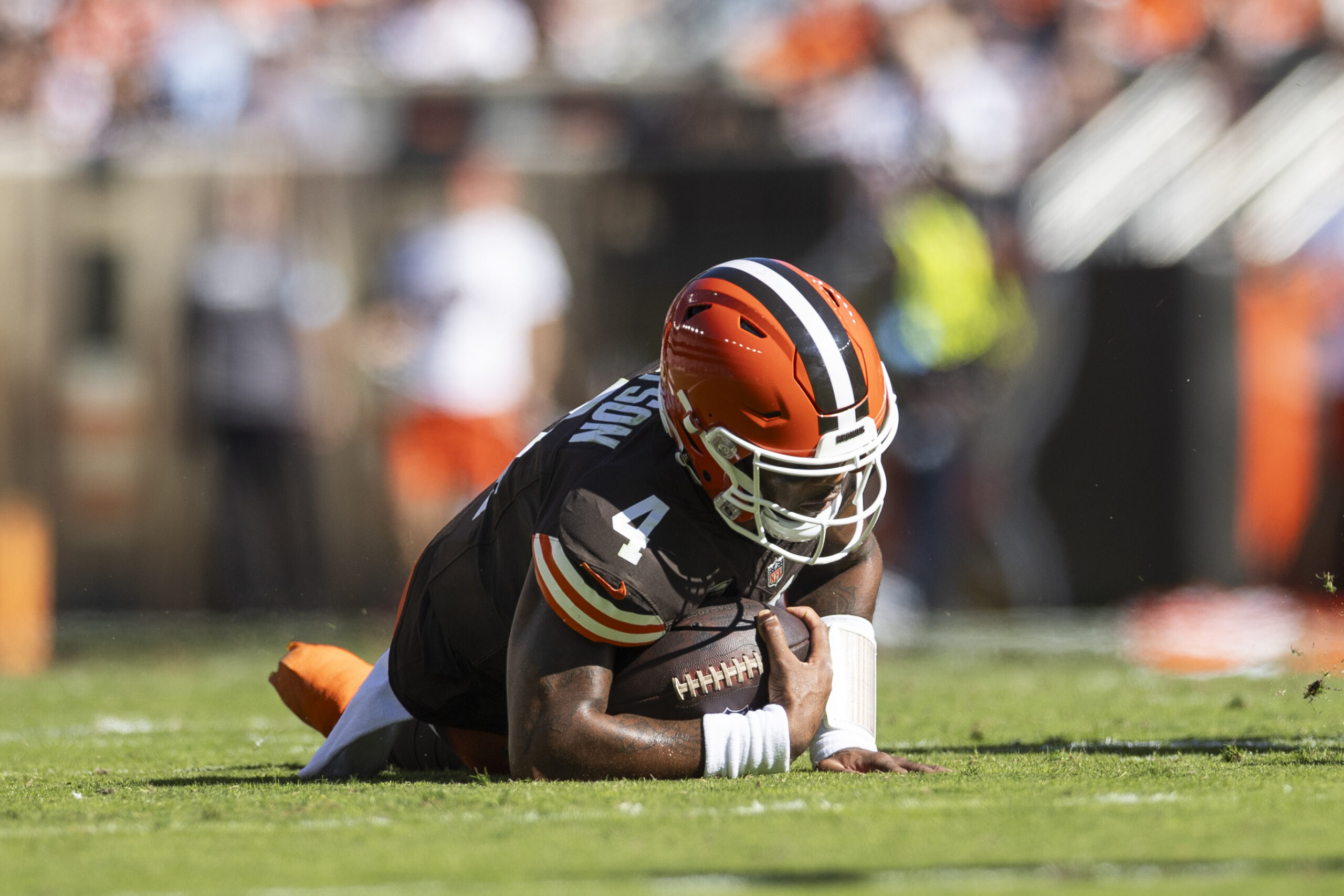
Oct 20, 2024; Cleveland, Ohio, USA; Cleveland Browns quarterback Deshaun Watson (4) falls to the ground with a torn Achilles during the second quarter against the Cincinnati Bengals at Huntington Bank Field. Mandatory Credit: Scott Galvin-Imagn Images
The myth that NFL teams always start the best quarterback available dies in Cleveland this summer. What the Browns are doing sets a precedent: contract structures can override football logic entirely. Watson is trying to become one of the very few quarterbacks in league history to return from repeated Achilles damage and start meaningful games again. Once you see the hidden math, every “open competition” in the league looks different. Teams are not always choosing winners. They are choosing the option that minimizes financial wreckage. Cleveland just made that truth impossible to ignore.
Sanders’ Shrinking Window
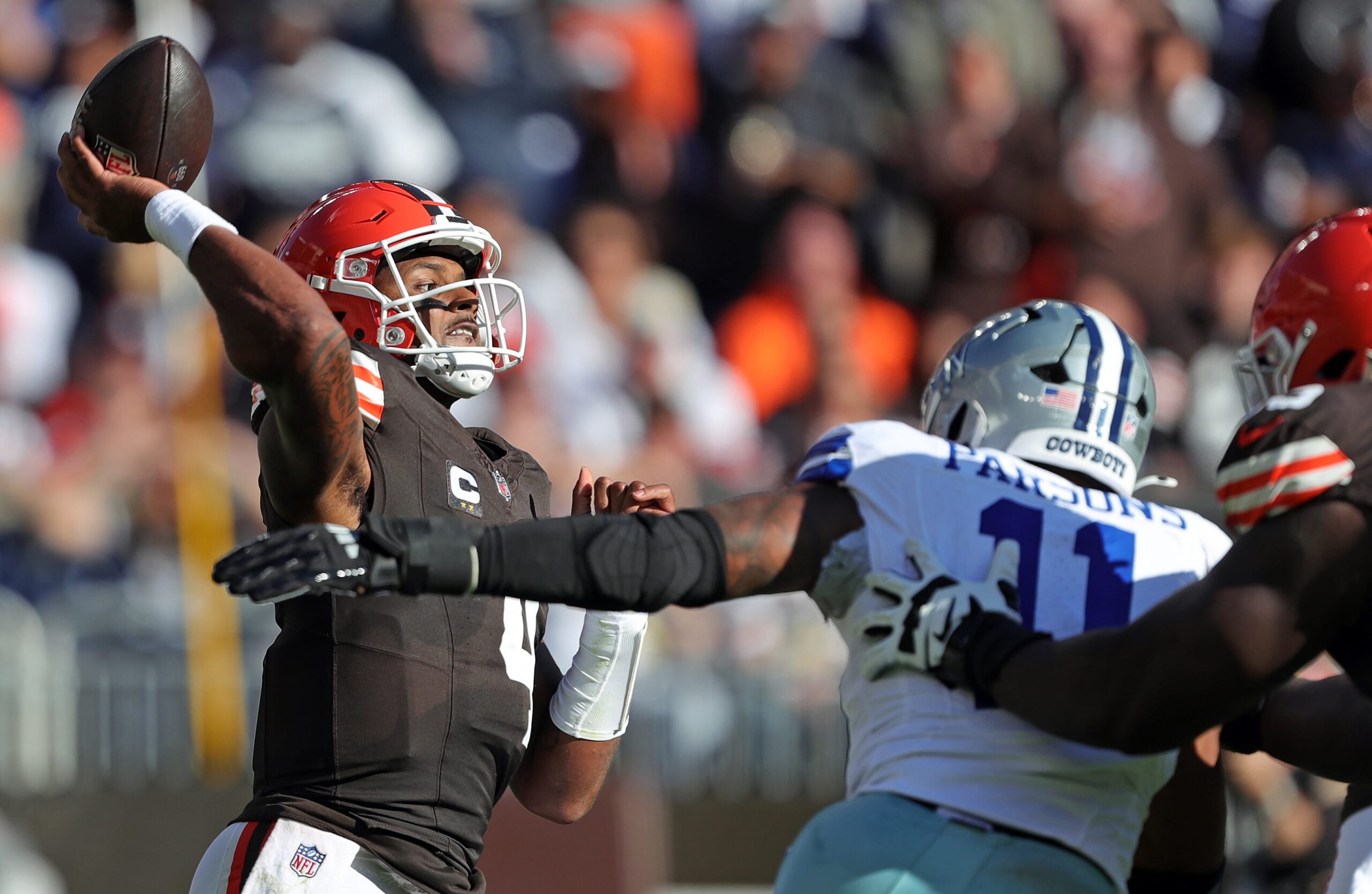
Browns QB Deshaun Watson throws as Dallas Cowboys linebacker Micah Parsons closes in during the first half, Sunday, Sept. 8, 2024, in Cleveland.
If Watson starts Week 1 and struggles early, Cleveland faces a fan revolt for sticking with a cap obligation over the young quarterback they drafted to be a future face of the franchise. If Sanders loses the competition outright, his trade value craters. He becomes difficult to move, stuck behind a placeholder the organization already plans to move on from once the contract allows. Watson is working his way back on the practice field now, while Sanders risks spending months watching from the sideline as his NFL future evaporates in real time, all because a spreadsheet outranked a depth chart.
The Fight Nobody Can Win
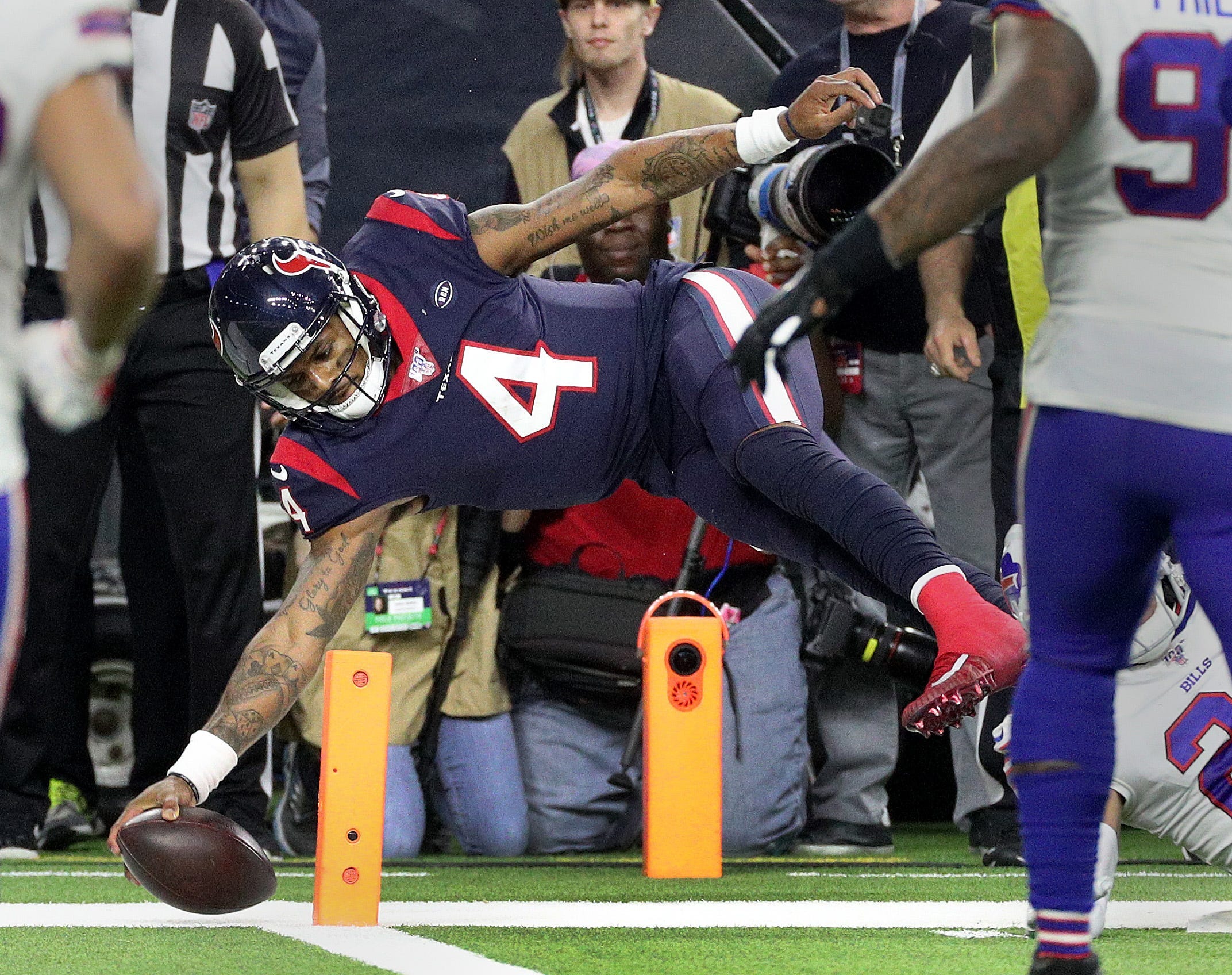
Houston quarterback Deshaun Watson dives for the corner of the end zone to score on this two-point conversion. The Texans beat the Bills 22-19 in overtime.
Other franchises are watching Cleveland and taking notes. Massive quarterback guarantees may soon come with escape clauses teams never thought they needed. Watson changed his jersey, mentored younger players, and took first‑team reps like a man earning his spot. Sanders changed back to No. 2 and kept throwing. Coach Todd Monken says no quarterback has a decisive edge. The betting market, the owner, and tens of millions in dead‑cap risk say otherwise. Whoever starts Week 1 in Cleveland, the salary cap already won the quarterback competition months ago. So if you were running the Browns, are you riding the cap prisoner or handing the keys to Sanders right now?