
Somewhere inside the Chiefs’ draft room, a franchise that spent years stacking tall, long-armed edge rushers along Steve Spagnuolo’s defensive front looked at a 241-pound pass rusher from Oklahoma and said yes. Not as a flier. As the 40th overall pick. R Mason Thomas, listed at 6-foot-2 and 241 pounds with 31⅝-inch arms, falls well below the size and length profile of the edge rushers Kansas City has typically targeted. The same coaching staff that helped define the modern prototype for powerful, lengthy defenders just torched its own blueprint. And they did it coming off a 6-11 season with 33 sacks, near the bottom of the NFL.
A Dynasty Bleeding Pressure
Dec 25, 2025; Kansas City, Missouri, USA; General view of the Amazon Prime Thursday Night Football logo at GEHA Field at Arrowhead Stadium. Mandatory Credit: Denny Medley-Imagn Images
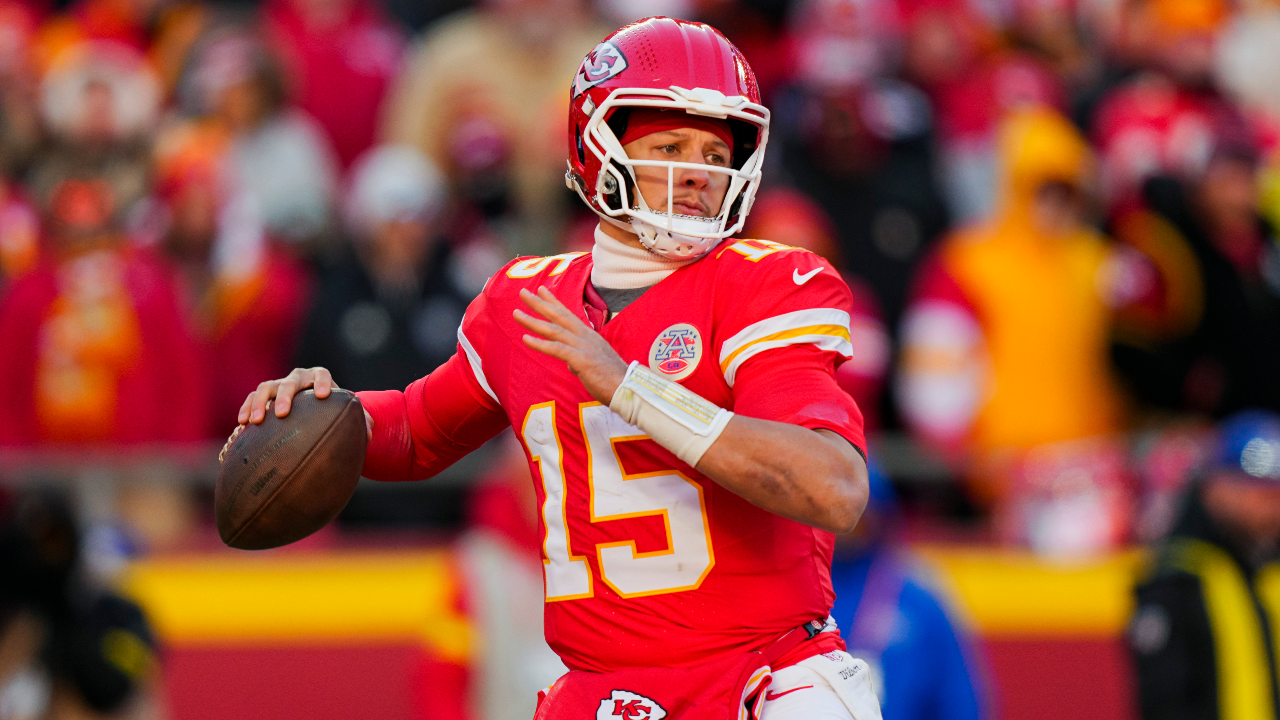
This pass-rush problem didn’t appear overnight. Coverage of the Mahomes-Reid era traces it across multiple seasons: Kansas City has lacked consistent, premium edge production even while stacking playoff runs and Super Bowl appearances. The 2025 collapse just ripped the bandage off. Chris Jones, the defensive centerpiece, faded through stretches of the season as his pressure production dipped. Andy Reid publicly preached collective improvement rather than singling out the front. The metrics told a sharper story about an aging interior star carrying too much of the load.
Winning Blocks, Losing Games
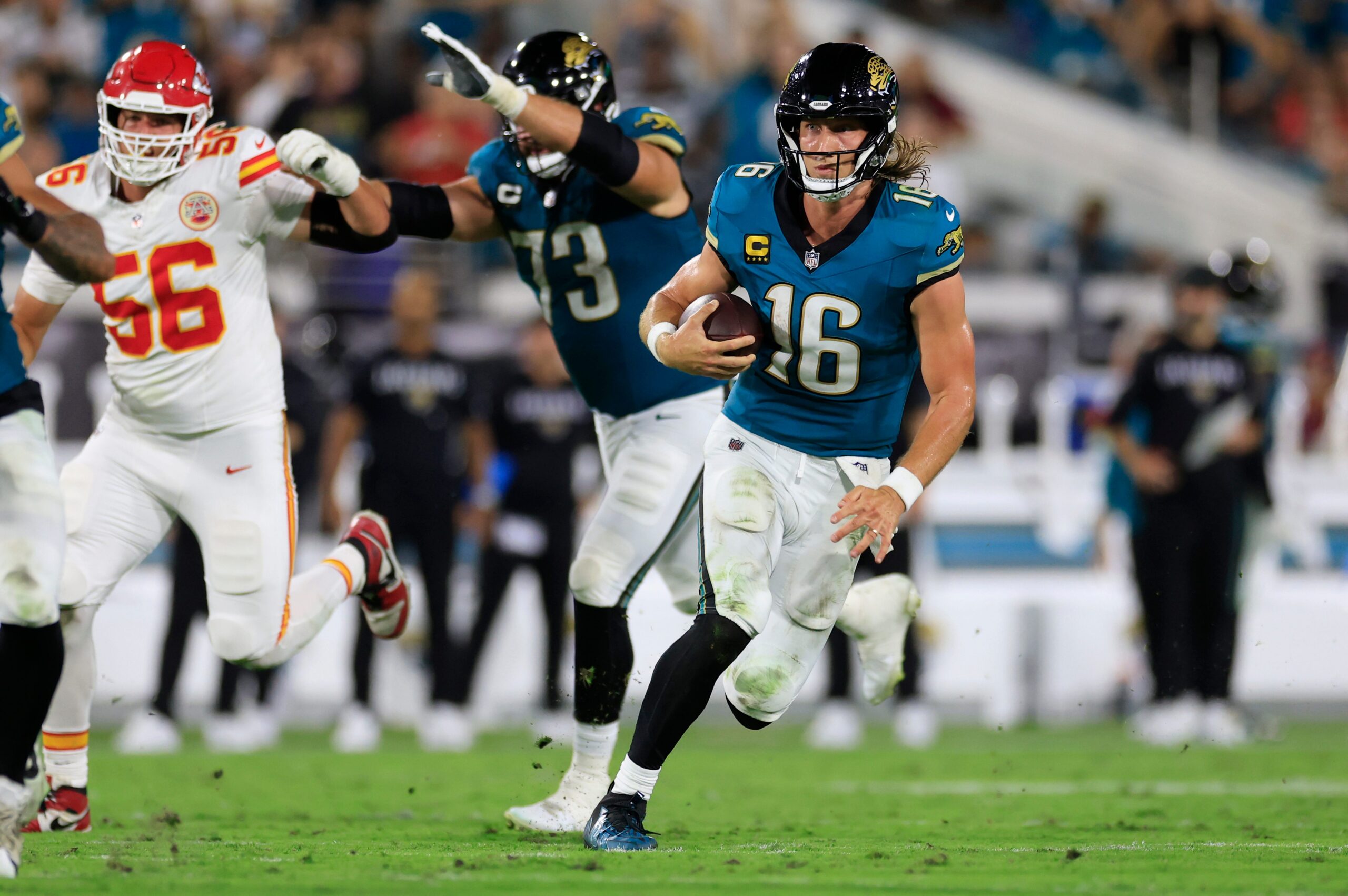
Jacksonville Jaguars quarterback Trevor Lawrence (16) rushes for yards during the second quarter of an NFL football matchup at EverBank Stadium, Monday, Oct. 6, 2025, in Jacksonville, Fla. The Jacksonville Jaguars edged the Kansas City Chiefs 31-28. [Corey Perrine/Florida Times-Union]
Here’s where the assumption cracks. Most fans figured Kansas City simply couldn’t beat offensive linemen. Wrong. The Chiefs posted a 40% pass-rush win rate in 2025, tied for 10th in the league. ESPN defines that as a pass rusher beating his block within 2.5 seconds. So the front four got home. They just couldn’t finish. A defense that ranked top-10 in winning reps yet languished near the bottom in sacks points to something deeper than raw talent. Coverage breakdowns, coordination failures, a system eating its own pressure. The sack column exposed a structural flaw the win-rate column hid.
The Prototype They Burned
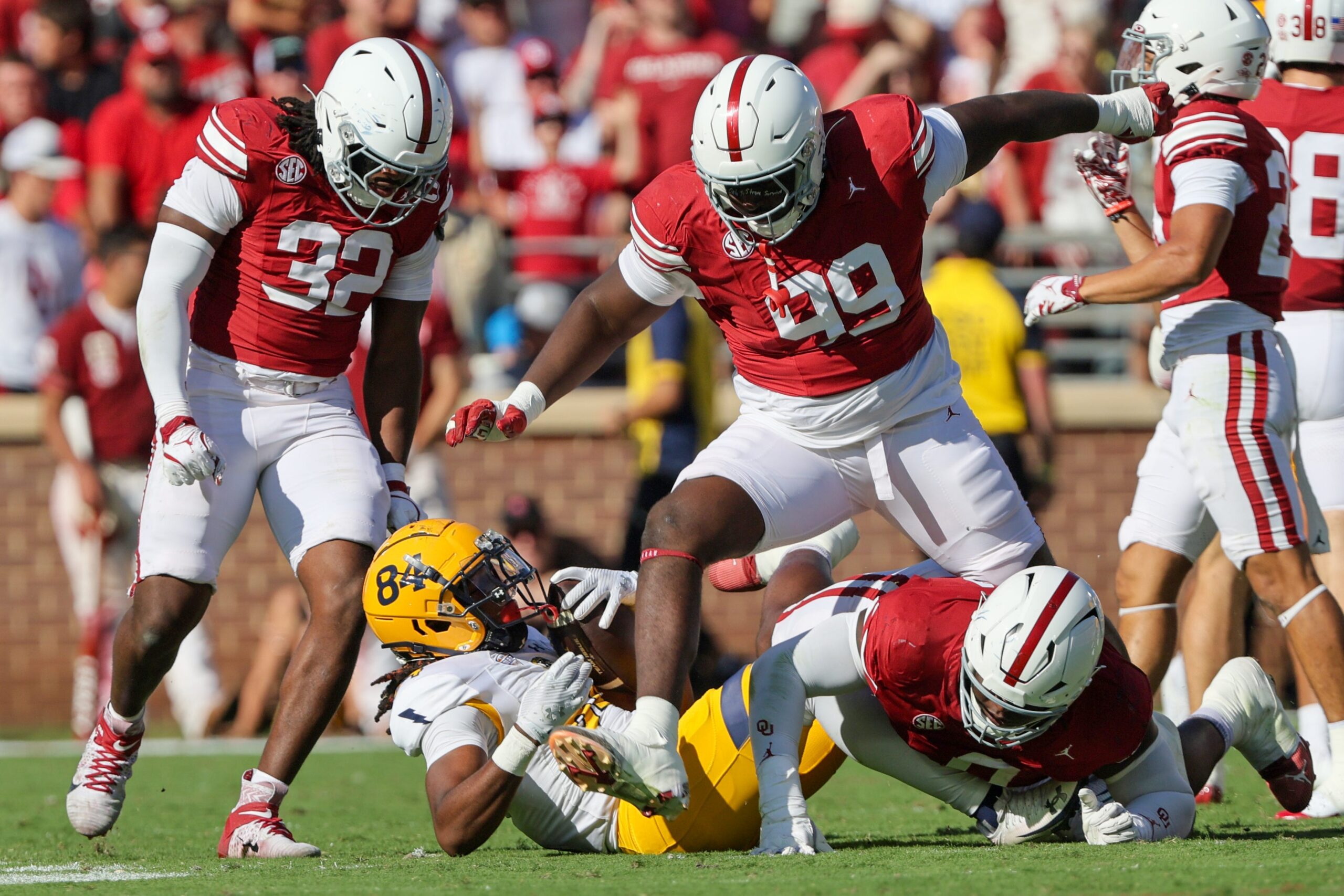
Oklahoma defensive linemen R Mason Thomas (32), Markus Strong (99) and David Stone, lower right, react to stopping Kent State running back Jahzae Kimbrough (84) during the first half of an NCAA football game between the Oklahoma Sooners (OU) and Kent State Golden Flashes at Gaylord Family – Oklahoma Memorial Stadium in Norman, Okla., Saturday, Oct. 4, 2025.
Kansas City’s answer to all of it was Thomas. He is built unlike the prototypical edge rusher long coveted for Spagnuolo’s defense. Shorter. Lighter. Shorter arms. ESPN itself called the pick “quite a gamble,” noting he is undersized at 6-foot-2 and 241 pounds. The team’s internal justification leans on his elite get-off: the idea that snap-to-snap explosiveness, as it’s tracked in the analytics community, can offset the lack of arm length. That’s the franchise betting analytics over anatomy. At the most physically punishing position on the field. After the worst season of the Mahomes era.
Where The Money Actually Went
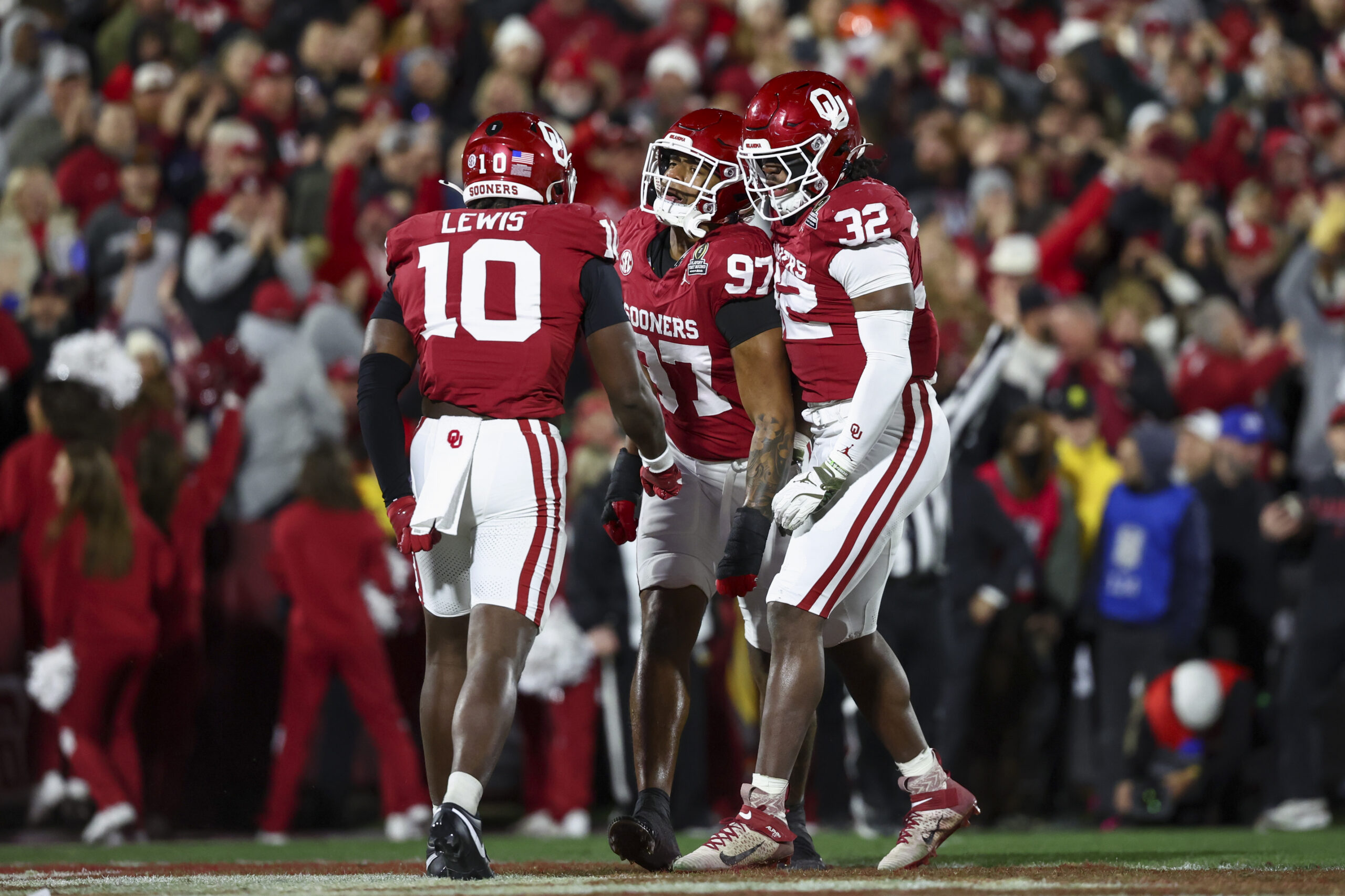
Dec 19, 2025; Norman, OK, USA; Oklahoma Sooners linebacker Kip Lewis (10), defensive lineman Marvin Jones Jr. (97) and defensive lineman R Mason Thomas (32) celebrate a tackle against the Alabama Crimson Tide in the first half at Gaylord Family OK Memorial Stadium. Mandatory Credit: Mark J. Rebilas-Imagn Images
The hidden mechanism driving this gamble is cap allocation. Kansas City handed Kenneth Walker III a three-year deal with a base value of $43.05 million, up to $45 million, and $28.7 million guaranteed. Travis Kelce returned on a deal worth up to $15 million. Alohi Gilman signed for $24.75 million. Khyiris Tonga got $21 million. They traded for Justin Fields. Running back, tight end, safety, defensive tackle, backup quarterback. All funded. Premium edge rusher? A rookie in Thomas, an aging Jones, and George Karlaftis. The Chiefs are treating edge pass rush as a problem solvable by scheme and bargain traits rather than premium investment.
The One Man Holding It Together
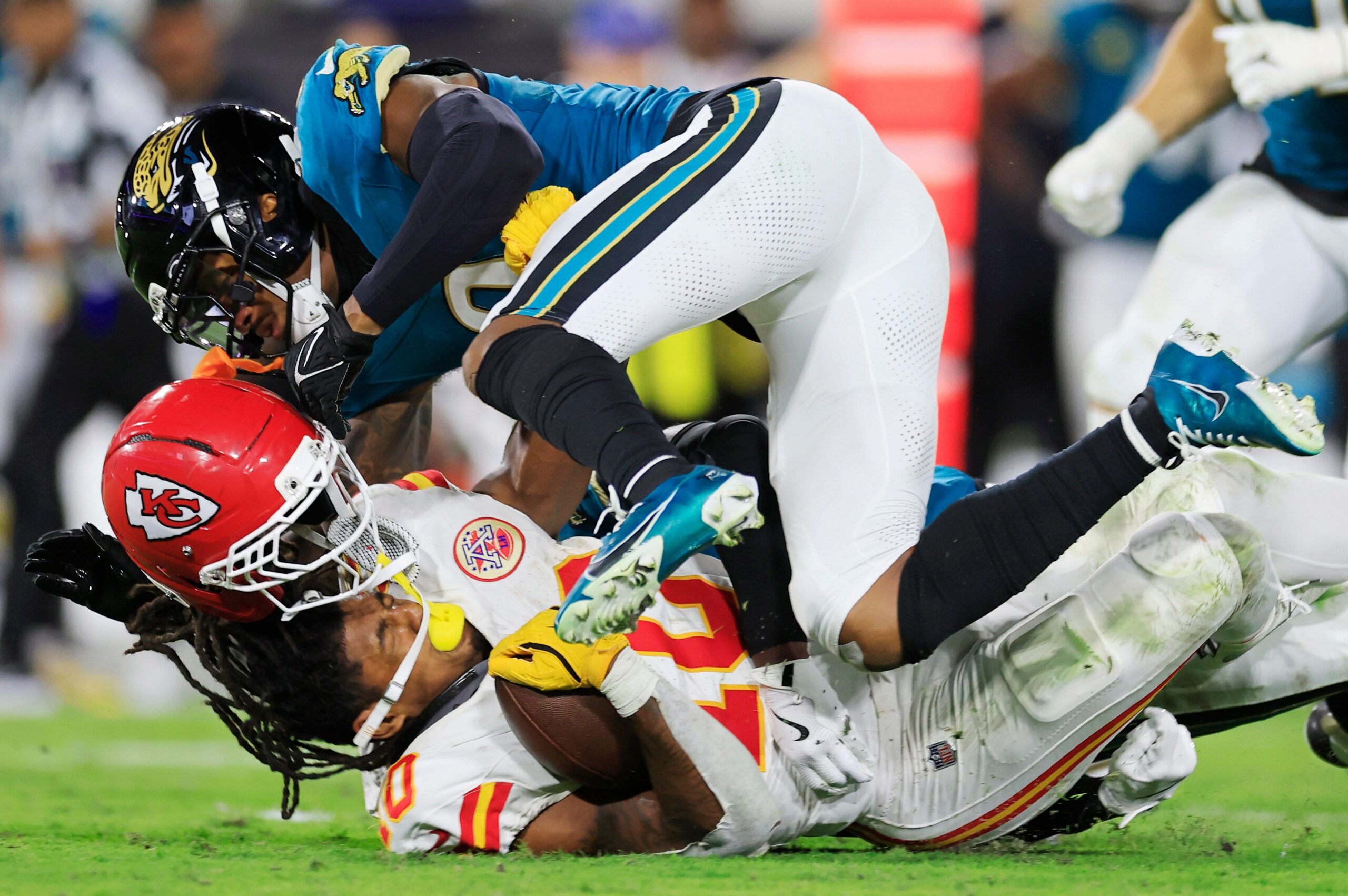
Jacksonville Jaguars cornerback Tyson Campbell (3), top and safety Eric Murray (29) back, combine to tackle Kansas City Chiefs running back Isiah Pacheco (10) as he loses his helmet during the third quarter of an NFL football matchup at EverBank Stadium, Monday, Oct. 6, 2025, in Jacksonville, Fla. The Jacksonville Jaguars edged the Kansas City Chiefs 31-28.
Karlaftis has quietly become the pass rush’s load-bearing wall. Since Week 12 of the 2022 season, his 24 sacks rank 11th among all players in the NFL, and his postseason sack total over that span leads the league. One player, 11th over multiple seasons. The rest of the unit lagged near the bottom in team sacks. That concentration of production is a flashing warning light. Felix Anudike-Uzomah, who was expected to compete for a larger edge role, was placed on injured reserve in 2025 with a strained hamstring, gutting the developmental pipeline before it produced.
A Rookie Edge And A New-Look Front
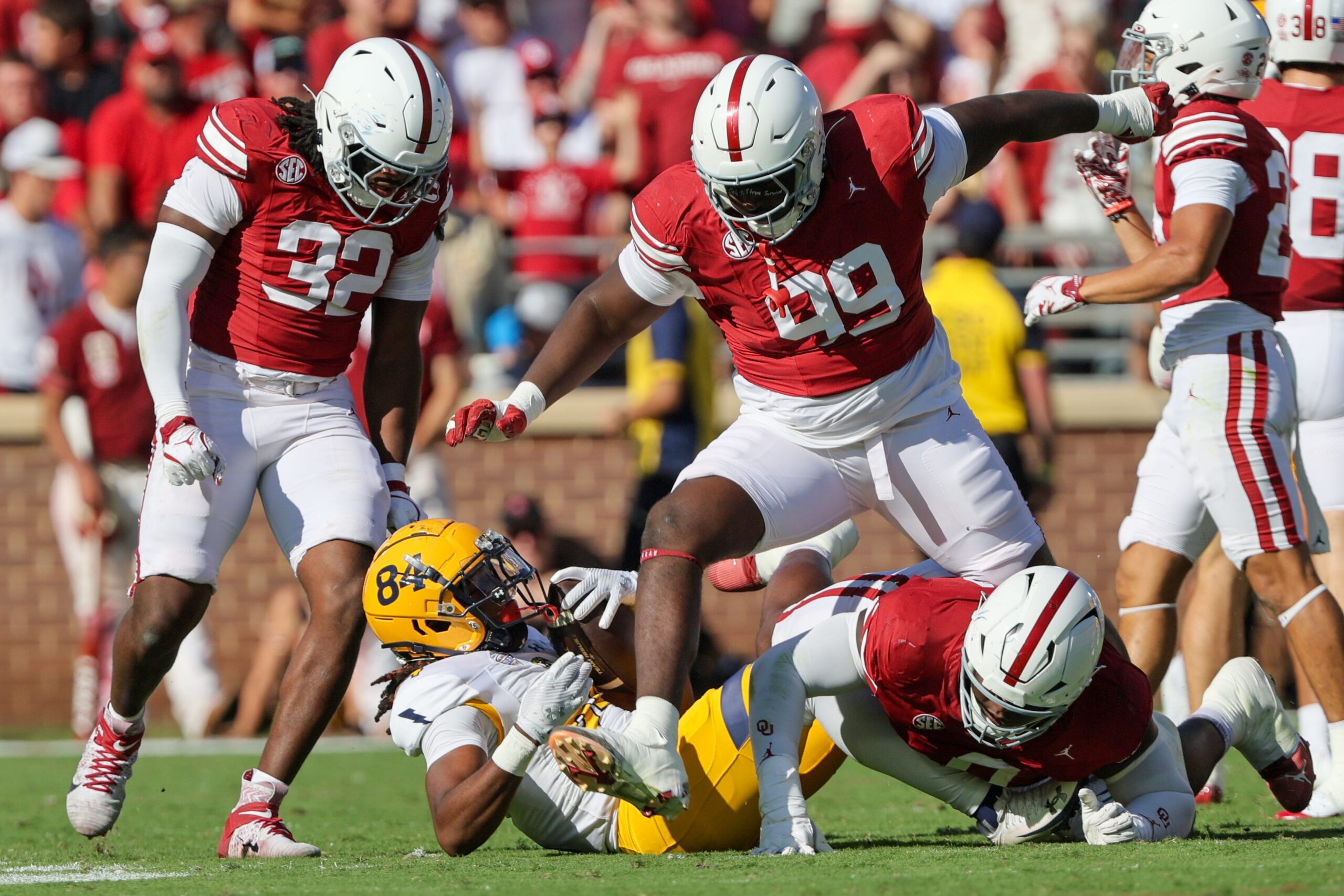
Oklahoma defensive linemen R Mason Thomas (32), Markus Strong (99) and David Stone, lower right, react to stopping Kent State running back Jahzae Kimbrough (84) during the first half of an NCAA football game between the Oklahoma Sooners (OU) and Kent State Golden Flashes at Gaylord Family – Oklahoma Memorial Stadium in Norman, Okla., Saturday, Oct. 4, 2025.
Kansas City also reshaped its interior with first-round defensive tackle Peter Woods out of Clemson, but the pure edge room remains thin. The team’s bet is that quick-twitch traits up front can compensate for a lack of premium pass-rush spending. ESPN graded Thomas as a player “tailor-made” for a designated pass-rusher role, even while flagging his size. The risk is concentrated at the edge spot, where Thomas is the lone notable rookie addition behind Karlaftis and an aging Jones.
The Veteran They Haven’t Called
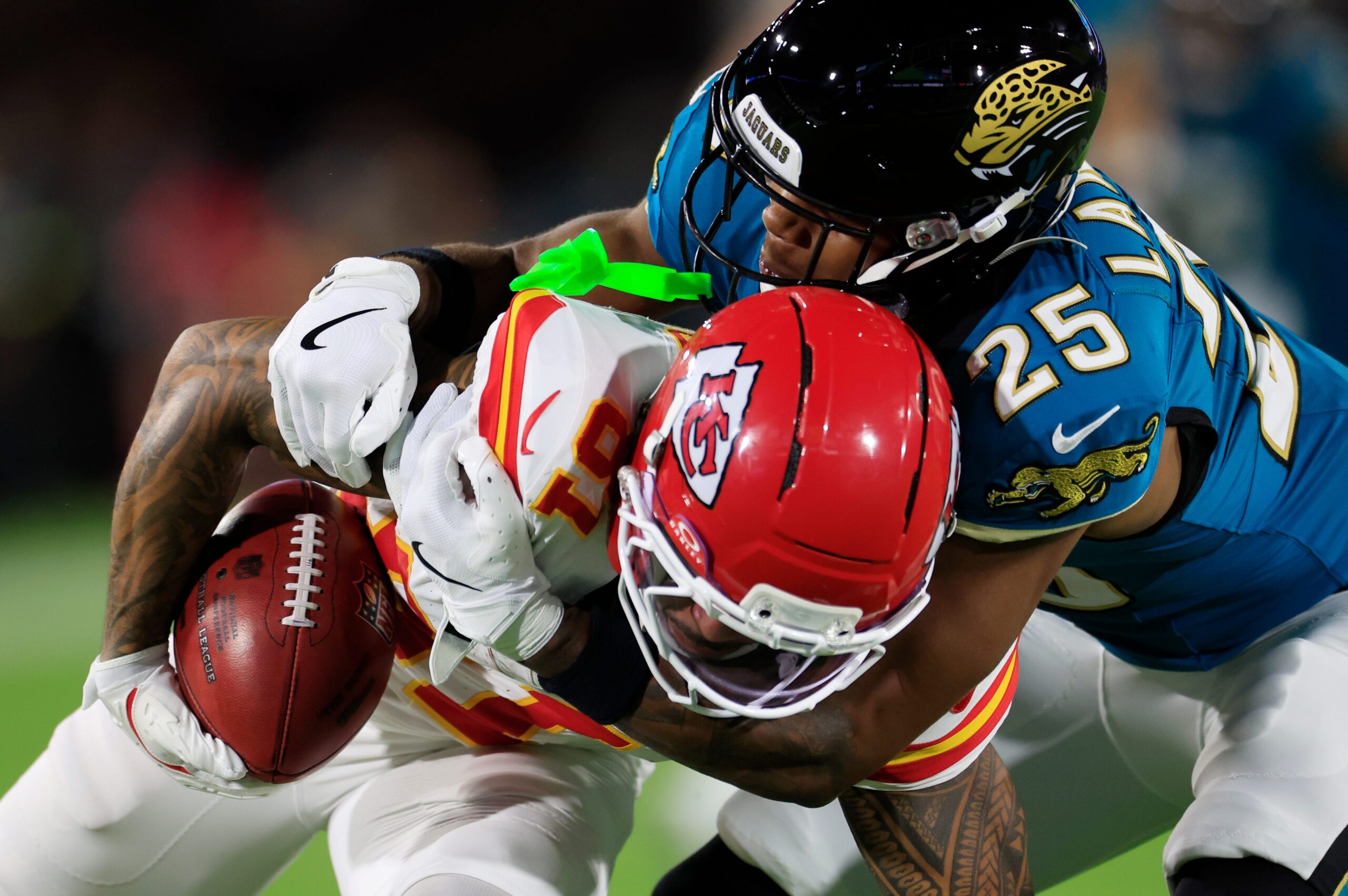
Jacksonville Jaguars safety Rayuan Lane III (25) tackles Kansas City Chiefs wide receiver Nikko Remigio (81) on a punt return during the first quarter of an NFL football matchup at EverBank Stadium, Monday, Oct. 6, 2025, in Jacksonville, Fla. The Jacksonville Jaguars edged the Kansas City Chiefs 31-28. [Corey Perrine/Florida Times-Union]
Cameron Jordan recorded 10.5 sacks and 15 quarterback hits in 2025 with New Orleans. If he replicated that in Kansas City, he alone would account for roughly 32% of the Chiefs’ entire 2025 sack output. One aging veteran, nearly a third of the team’s production. Analysts at multiple outlets floated him as a logical target. And yet the Chiefs entered the offseason pouring resources into offense and the secondary while leaving the edge rotation to a rookie, a veteran, and hope. Large contracts to non-edge players now constrain future flexibility if this experiment backfires.
A New Rule Or A Cautionary Draft
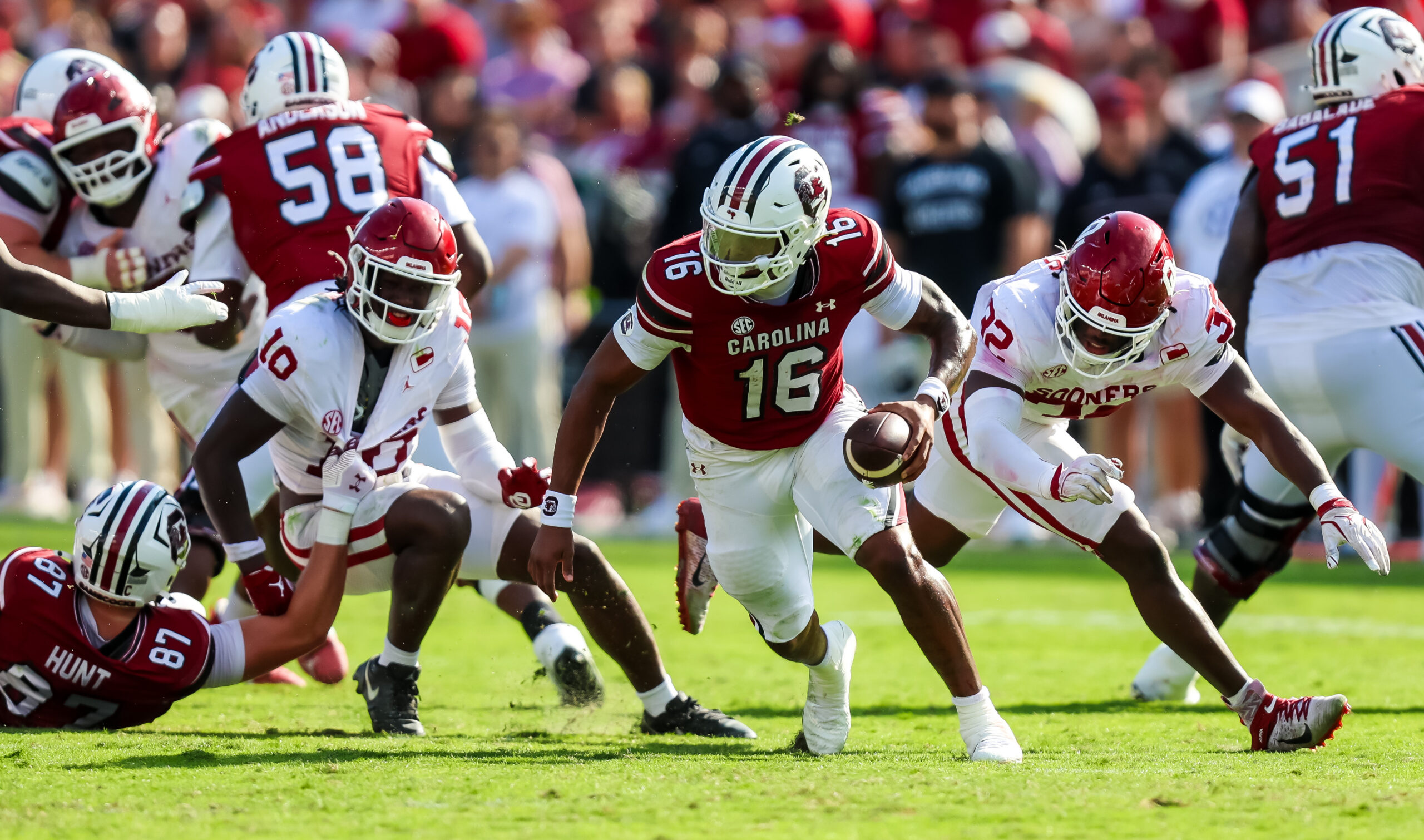
Oct 18, 2025; Columbia, South Carolina, USA; South Carolina Gamecocks quarterback Lanorris Sellers (16) attempts to elude the rush of Oklahoma Sooners defensive lineman R Mason Thomas (32) and linebacker Kip Lewis (10) in the second half at Williams-Brice Stadium. Mandatory Credit: Jeff Blake-Imagn Images
Once you see the pattern, you can’t unsee it. Kansas City is arbitraging edge traits, not paying for them. If Thomas succeeds, every cap-strapped team in the league will point to this draft as proof that quickness beats length and scheme beats spending. If he fails, it becomes the example cited for a generation: you cannot outsmart the need for size at the collision points. ESPN called Thomas “tailor-made” as a designated pass rusher. In the same breath, the question lingered: does Kansas City need another proven pass rusher before Week 1?
The Clock Mahomes Can Hear
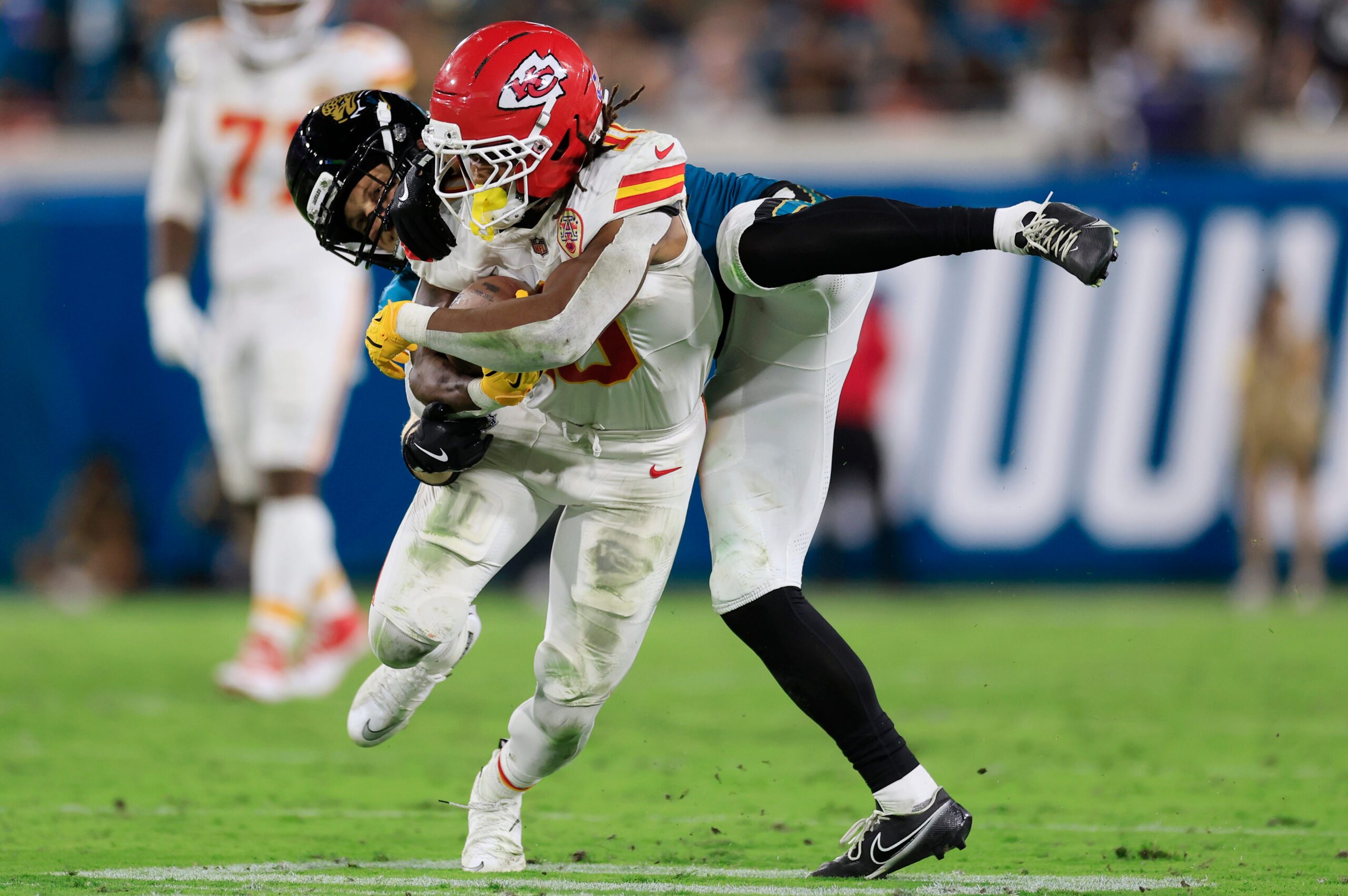
Jacksonville Jaguars safety Andrew Wingard (42) tries to tackle Kansas City Chiefs running back Isiah Pacheco (10) during the third quarter of an NFL football matchup at EverBank Stadium, Monday, Oct. 6, 2025, in Jacksonville, Fla. The Jacksonville Jaguars edged the Kansas City Chiefs 31-28. [Corey Perrine/Florida Times-Union]
A second straight year of ineffective pass rush doesn’t just cost wins. It forces a 2027 reckoning: restructured contracts, abandoned veterans, offensive luxuries sacrificed to finally fund the edge. The defensive assistants responsible for line development feel the heat first. Then the general manager’s reputation as a talent evaluator. The most likely emergency valve is an in-season trade or signing, but by then the price is inflated and the scheme-integration window is shrinking. Every week without proven edge production compresses the margin Mahomes has left to carry.
Cleverness Has An Expiration Date
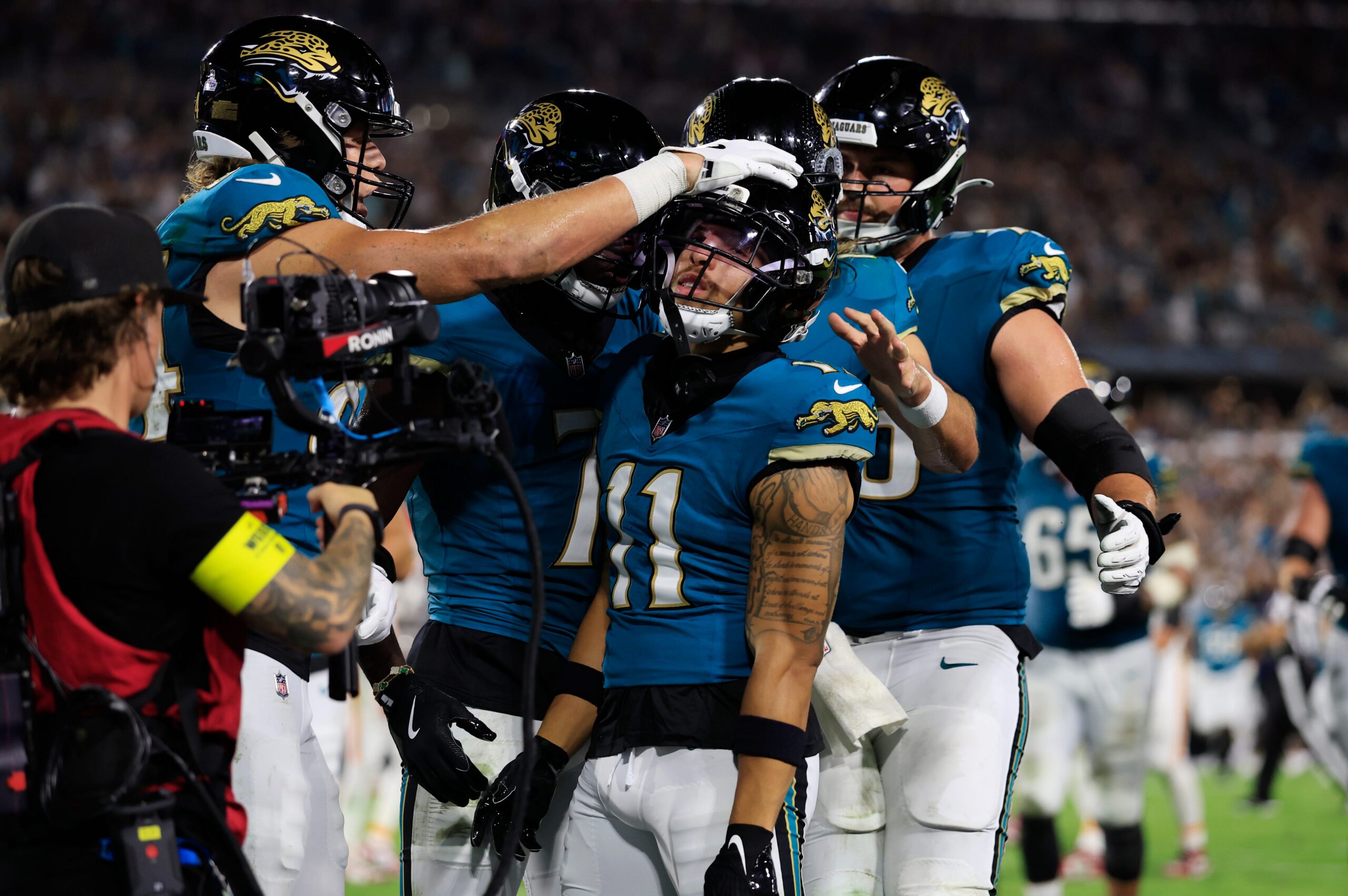
Jacksonville Jaguars tight end Hunter Long (84), left, pats the head of wide receiver Parker Washington (11) who scored a touchdown during the second quarter of an NFL football matchup at EverBank Stadium, Monday, Oct. 6, 2025, in Jacksonville, Fla. The Jacksonville Jaguars edged the Kansas City Chiefs 31-28. [Corey Perrine/Florida Times-Union]
The myth that Mahomes plus scheme can cover cheap pass rush died at 6-11. The new truth is harder to swallow: for a contender whose offensive margin for error has narrowed, edge pressure is an expensive core asset, not a line item to solve with bargains and motor. Kansas City built a sports car with a powerful engine and undersized brakes. It accelerates off the snap. It just cannot stop drives. The readers who understand that distinction now see every Chiefs game differently than the fans still waiting on a rookie to fix everything. So which is it: did Kansas City just outsmart the league, or set itself up to relearn the hard way that size wins at the edge? Drop your verdict in the comments.