
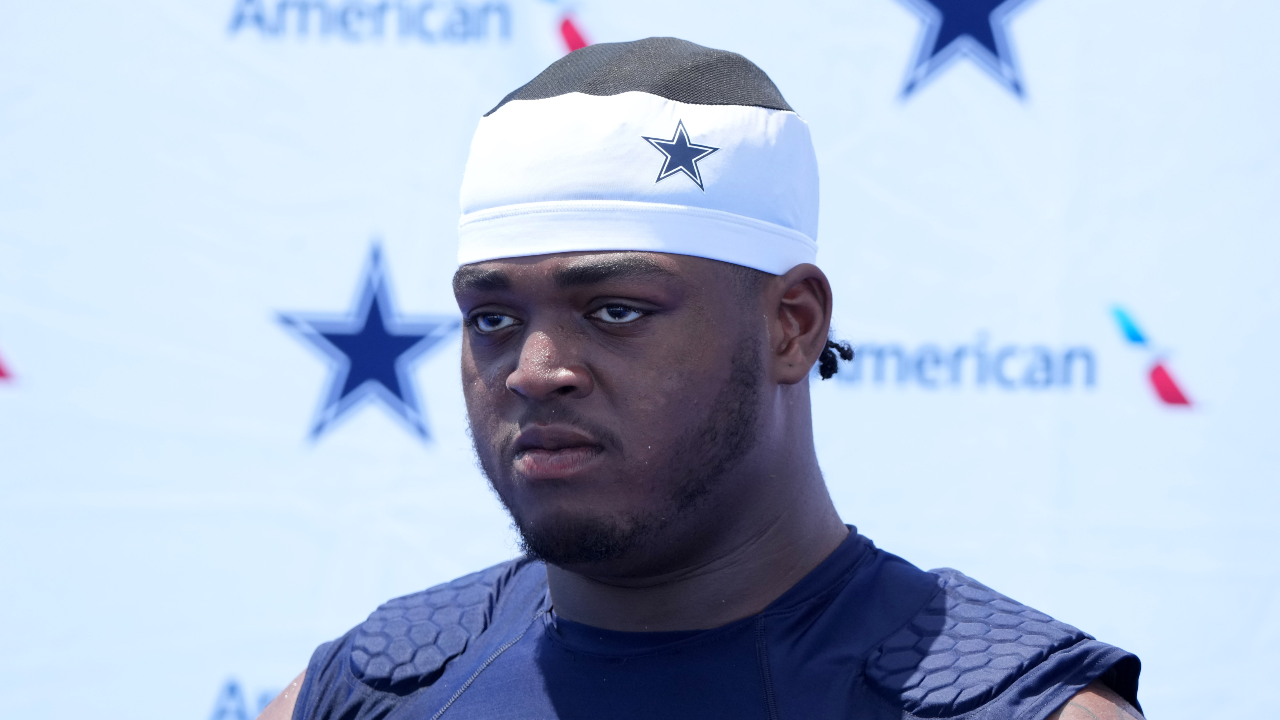
Somewhere inside the Cowboys’ front office, somebody decided the most important thing about the 2026 season wasn’t replacing the pass rusher they traded or locking down the receiver playing on a franchise tag. It was the offensive line. Specifically, the left side of it. Tyler Smith put pen to paper on a four-year extension worth up to $96 million with $81.2 million guaranteed, making him the highest-paid interior offensive lineman in NFL history. The man he’s protecting watched a blowout from the bench months earlier, when Dak Prescott was benched during a 34-17 loss to the Giants that capped another losing season.
A 7-9-1 Foundation
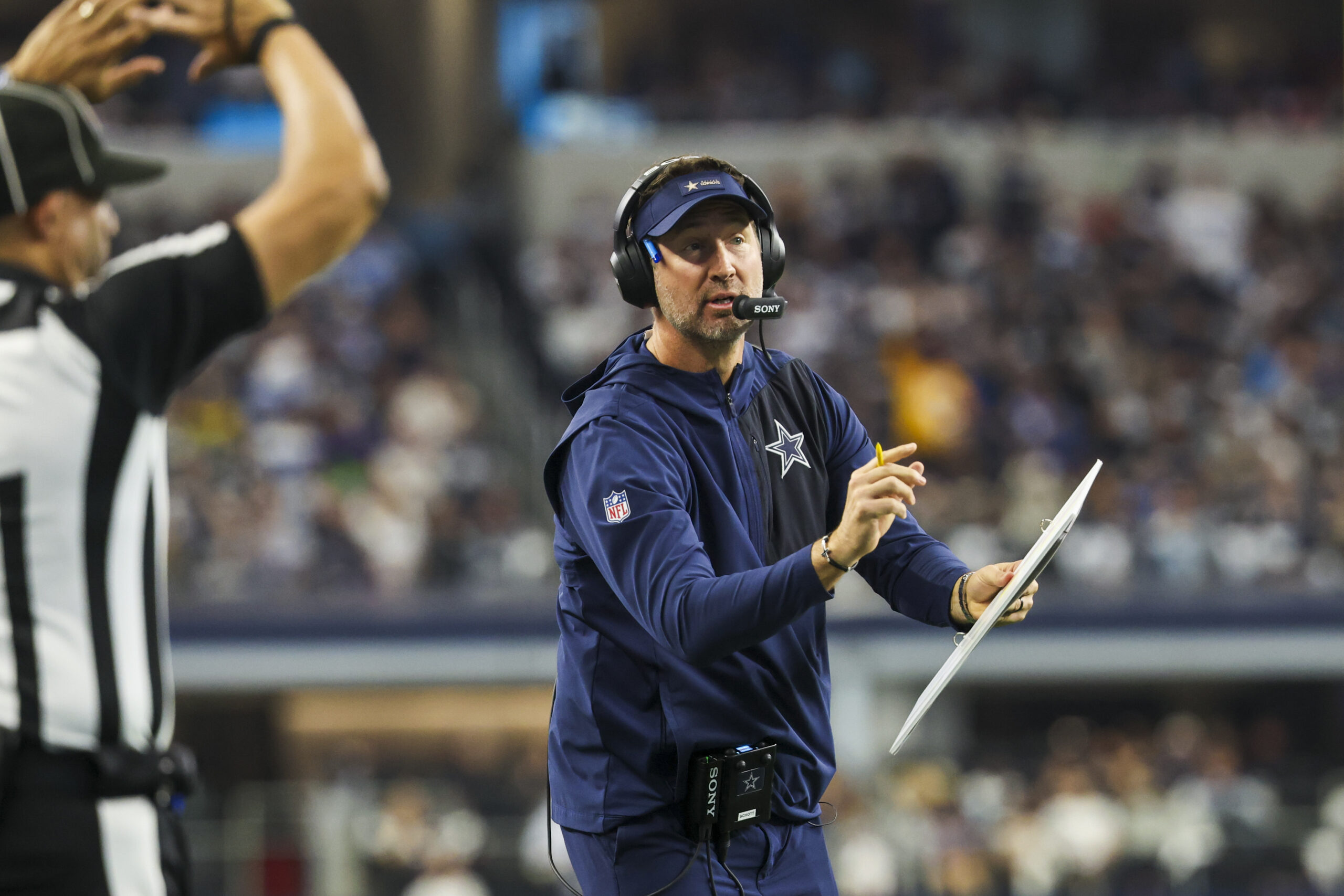
Dec 21, 2025; Arlington, Texas, USA; Dallas Cowboys head coach Brian Schottenheimer reacts to a play against the Los Angeles Chargers during the second quarter at AT&T Stadium. Mandatory Credit: Kevin Jairaj-Imagn Images
Brian Schottenheimer’s first season as the 10th head coach in Cowboys history produced a 7-9-1 record. The year ended in a 34-17 collapse against the Giants in Week 18, a game in which Dak Prescott was pulled as the Cowboys suffered a second straight losing season. Jerry Jones had already praised Schottenheimer months earlier, saying he had “exceeded” Jones’ expectations as a head coach, even calling the hire “as big a risk as you can take.” The cap situation told a different story. Dallas had already picked up Smith’s fully guaranteed $21.27 million fifth-year option for 2026 and later converted a large chunk of his future salary into bonus to reduce his 2026 cap hit, a standard cap-engineering move that pushes costs into future years. That’s not confidence. That’s triage before the bleeding starts again.
The Myth of Defensive Dallas
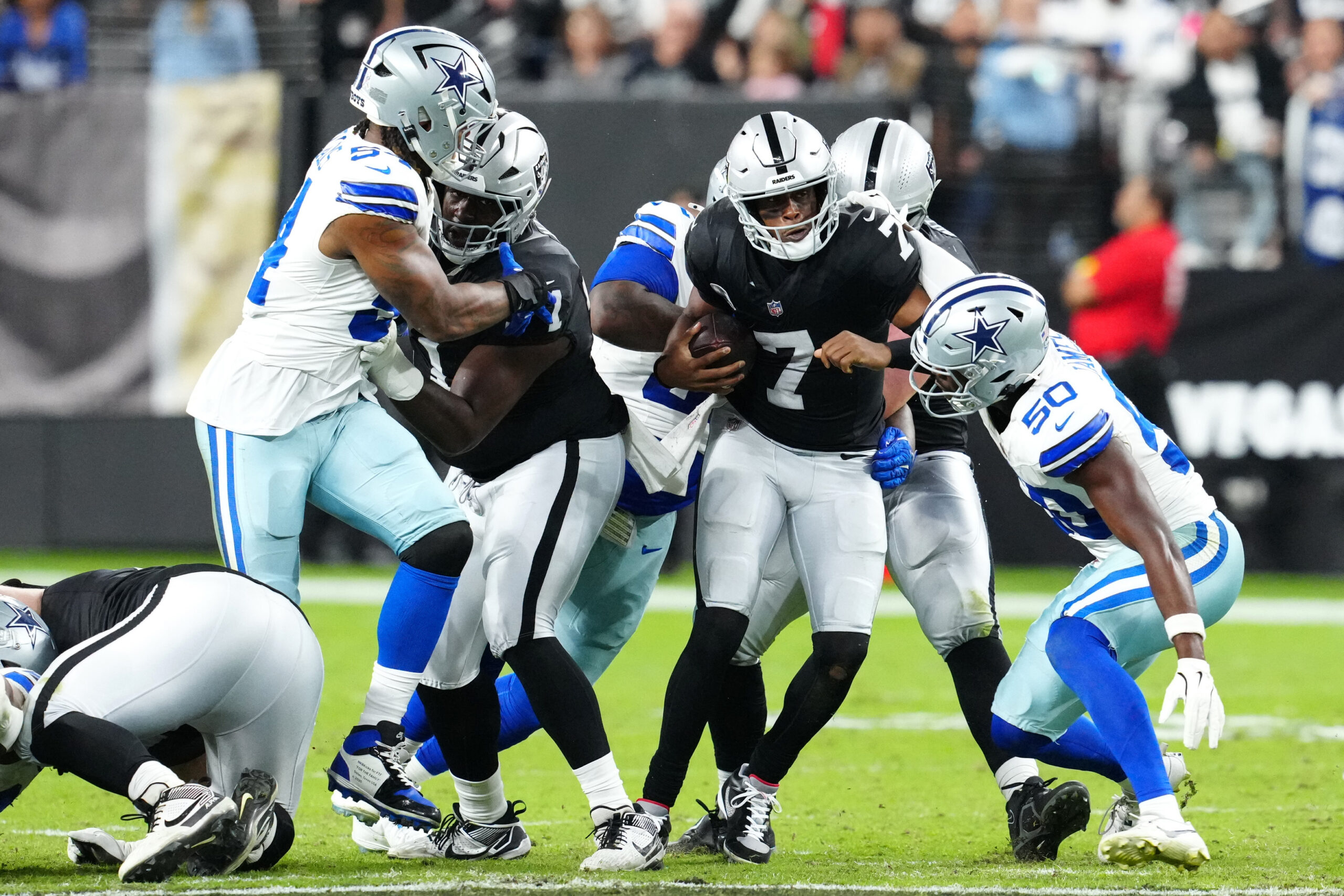
Nov 17, 2025; Paradise, Nevada, USA; Las Vegas Raiders quarterback Geno Smith (7) is sacked by Dallas Cowboys guard Tyler Booker (52) during the first half at Allegiant Stadium. Mandatory Credit: Stephen R. Sylvanie-Imagn Images
For years, the assumption held: Jerry Jones spends big on defense. Micah Parsons was supposed to be the franchise cornerstone on that side of the ball. Then came the trade saga. Parsons requested a move and was ultimately dealt to the Packers, who signed him to a four-year, $188 million contract with $136 million guaranteed, one of the biggest non-quarterback deals in league history. Dallas pivoted by sending a 2026 second-rounder, a 2027 first-rounder, and defensive tackle Mazi Smith to the Jets for All-Pro defensive tackle Quinnen Williams. The defensive identity didn’t just shift. It evaporated.
The Crown Nobody Expected
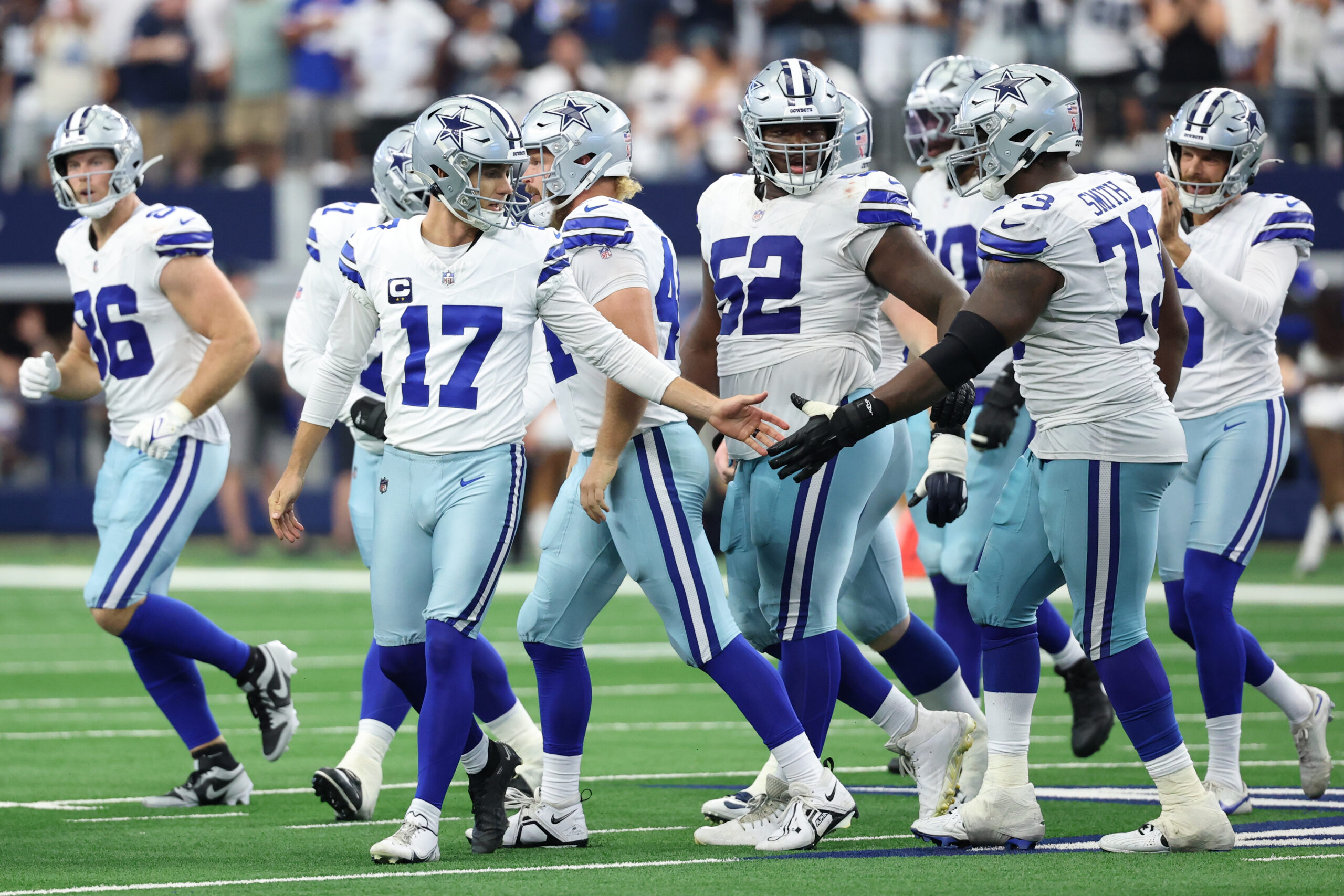
Sep 14, 2025; Arlington, Texas, USA; Dallas Cowboys place kicker Brandon Aubrey (17) high fives guard Tyler Smith (73) after making a field goal against the New York Giants to tie the game during the fourth quarter at AT&T Stadium. Mandatory Credit: Kevin Jairaj-Imagn Images
Smith’s extension surpassed the previous record held by Kansas City’s Trey Smith, who landed a four-year extension reported in the $92–94 million range earlier that offseason. That’s roughly $24 million per year for a guard, money that now sits at the top of the interior offensive line market. The Cowboys locked him through 2030 after exercising his $21.27 million fifth-year option for 2026 and then extending him to keep him out of free agency. DallasCowboys.com described it as Smith accepting “his crown” as the “heir apparent to the offensive line throne” in Dallas. Four years. $81.2 million guaranteed. For a player protecting a quarterback who just got benched in a blowout. That’s not a contract. That’s a $96 million insurance policy on Dak Prescott’s blind side.
How the Money Actually Moves
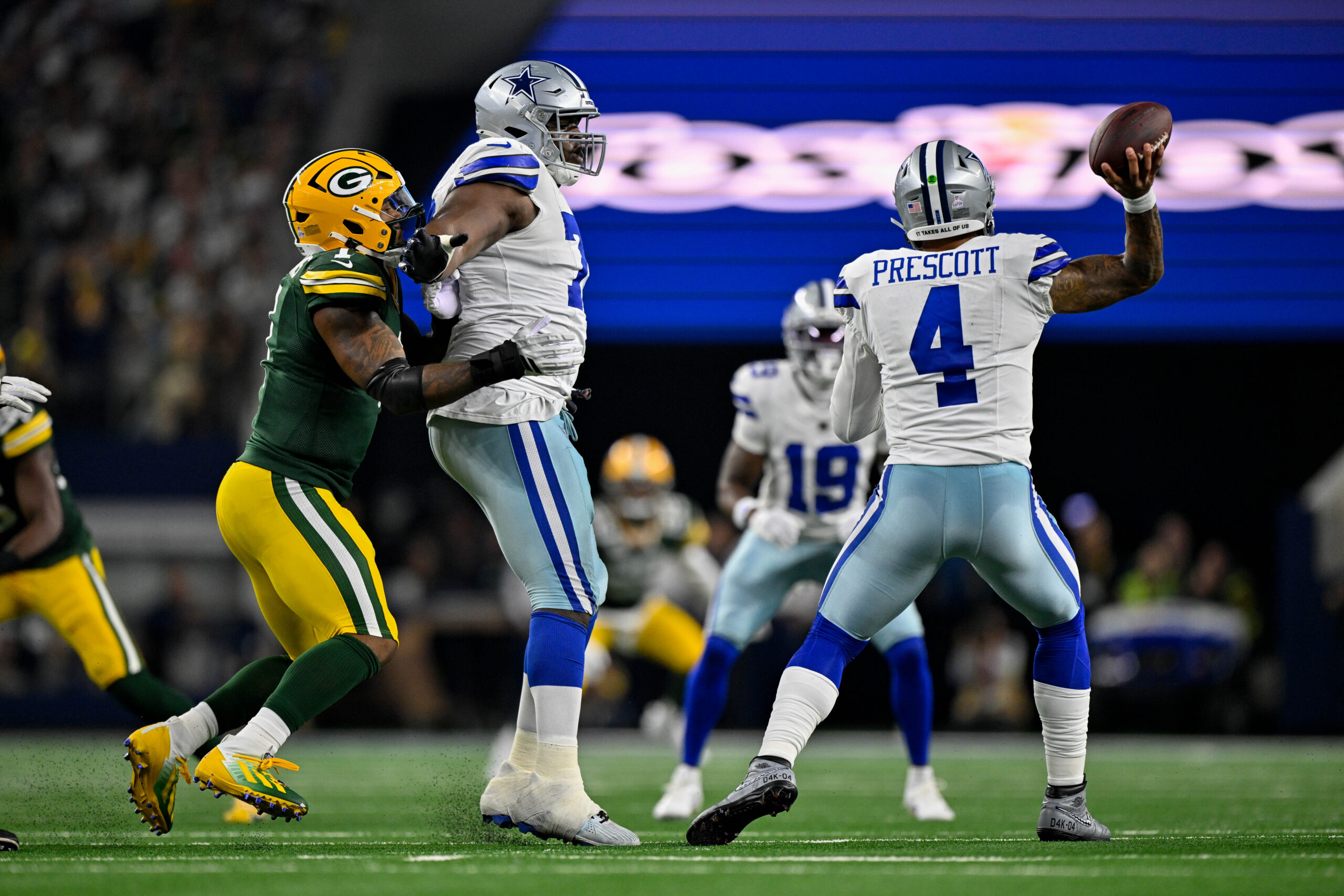
Sep 28, 2025; Arlington, Texas, USA; Dallas Cowboys guard Tyler Smith (73) blocks Green Bay Packers defensive end Micah Parsons (1) as quarterback Dak Prescott (4) throws the ball during the game between the Dallas Cowboys and the Green Bay Packers at AT&T Stadium. Mandatory Credit: Jerome Miron-Imagn Images
The hidden mechanism behind this deal is cap engineering. Dallas first locked in Smith’s pricey fifth-year option for 2026, then followed with an extension that converts large chunks of future salary into signing bonus, the standard way to lower near-term cap hits while accepting bigger cap numbers later. The Cowboys have used similar restructures across the roster in recent years, moving money around on multi-year deals to manufacture space without losing core starters. Meanwhile, George Pickens will play 2026 on a $27.3 million franchise tag after the Cowboys decided they would not discuss a long-term deal before the July 15 deadline, informing his camp that talks were on hold until at least 2027. Smith gets security through 2030. Pickens gets a one-year audition on a fully guaranteed tag. Same locker room, two entirely different realities.
$96 Million vs. $27.3 Million
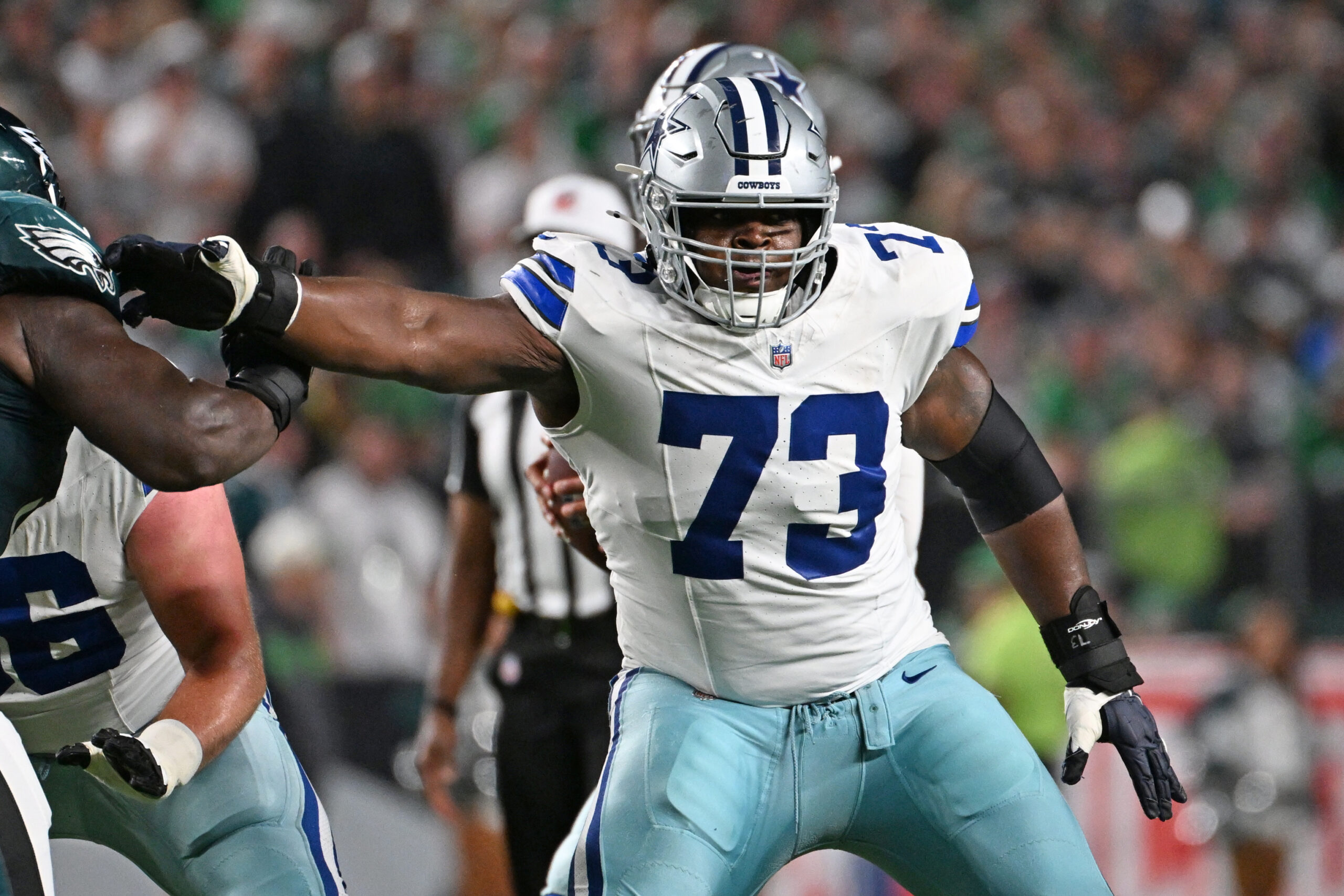
Sep 4, 2025; Philadelphia, Pennsylvania, USA; Dallas Cowboys guard Tyler Smith (73) blocks against the Philadelphia Eagles at Lincoln Financial Field. Mandatory Credit: Eric Hartline-Imagn Images
CeeDee Lamb signed his four-year, $136 million extension before the 2024 season, locking in about $34 million per year and making him one of the highest-paid receivers in football. Smith now earns roughly $24 million annually on his new deal, the top number for any interior offensive lineman. Pickens earns $27.3 million on his tag with no long-term guarantees beyond 2026, and the Cowboys have already signaled they will let him play on it rather than push for an immediate extension. Dallas now has massive money tied up in its quarterback, its number-one receiver, and the left side of its line. Pickens, effectively the second receiver, gets a rental agreement and a ticking clock toward free agency or a second, even pricier tag.
The Defense They Left Behind
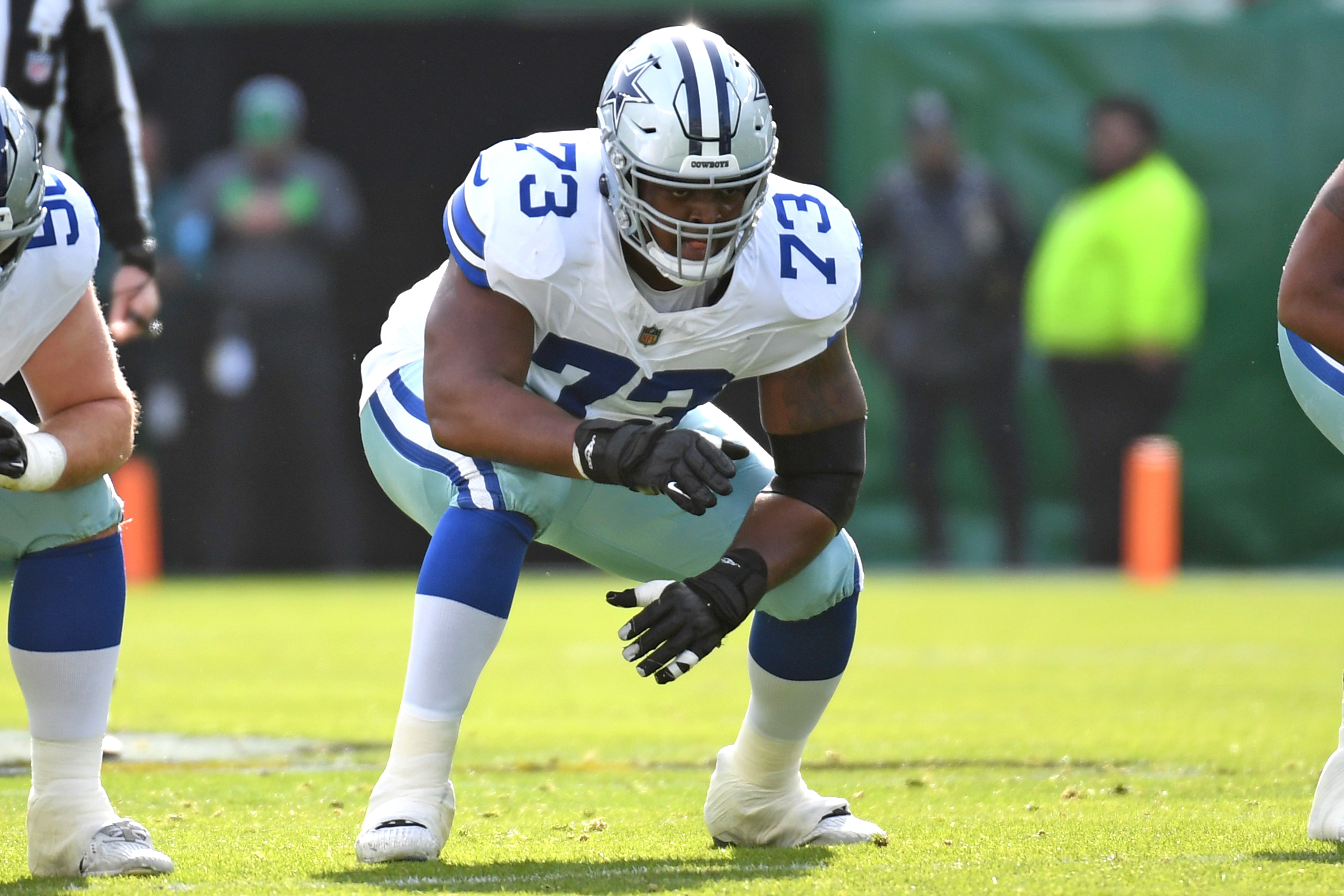
Dec 29, 2024; Philadelphia, Pennsylvania, USA; Dallas Cowboys offensive tackle Tyler Smith (73) against the Philadelphia Eagles at Lincoln Financial Field. Mandatory Credit: Eric Hartline-Imagn Images
Parsons is gone. Trevon Diggs got waived, with Schottenheimer and team officials citing performance issues and other factors, including his missing a team flight, as part of the decision to move on. On the sideline, the Cowboys reshuffled their defensive leadership again, turning to Christian Parker as defensive coordinator after another short-lived stint for their previous playcaller. Three defensive pillars, removed or reshaped in a single offseason. Quinnen Williams fills one gap in the middle, but the pass rush that Parsons anchored doesn’t have an obvious replacement on the edge. The Cowboys traded defensive star power for draft capital and cap flexibility, then poured the savings and the structure of their books into the offensive line and premium offensive positions. Every dollar that went to Smith is a dollar that didn’t go to replacing what walked out the door on defense.
A New Rule for the NFL
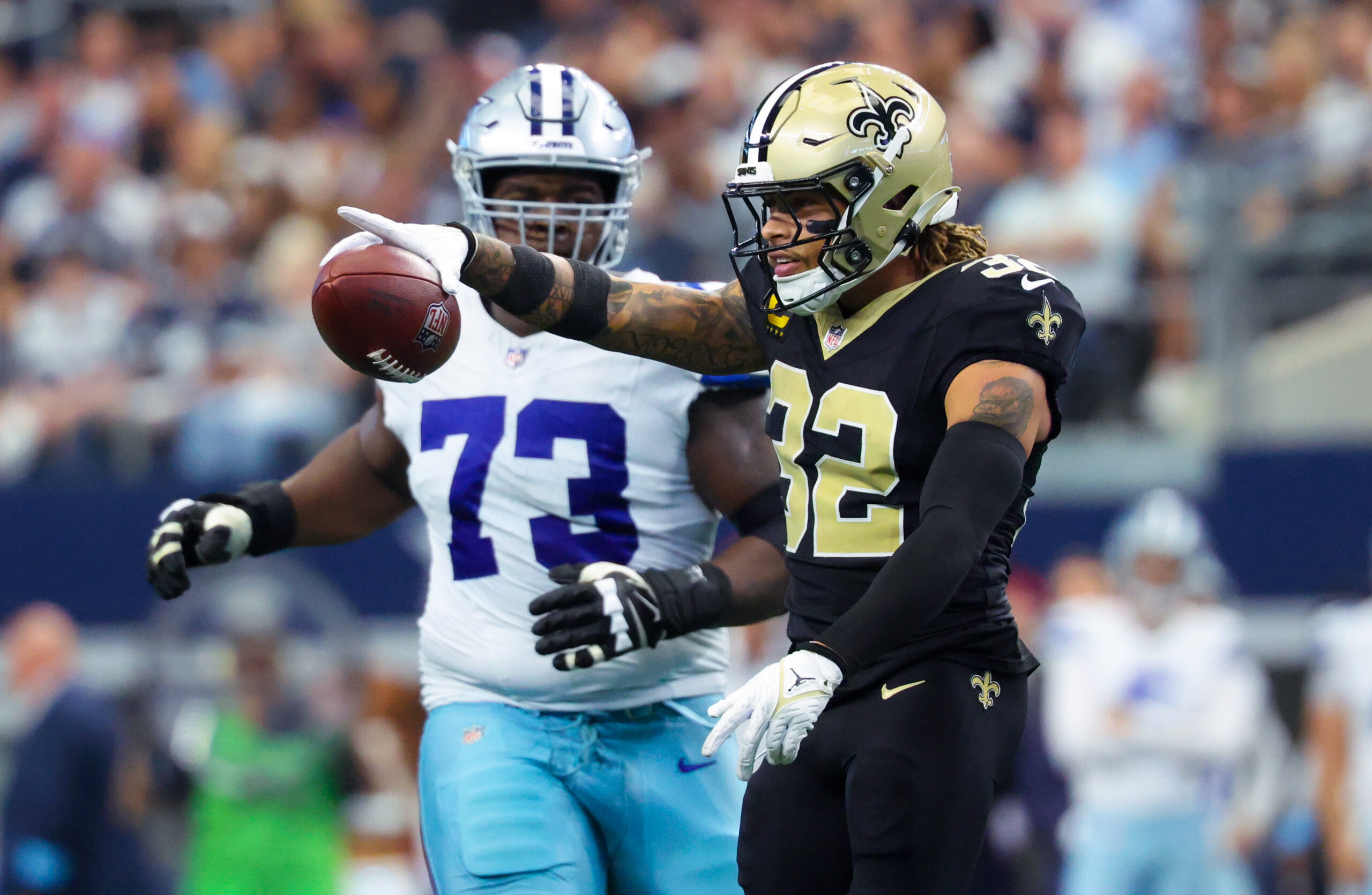
Sep 15, 2024; Arlington, Texas, USA; New Orleans Saints safety Tyrann Mathieu (32) reacts in front of Dallas Cowboys offensive tackle Tyler Smith (73) after making an interception during the second half at AT&T Stadium. Mandatory Credit: Kevin Jairaj-Imagn Images
Smith’s deal sets a precedent that will ripple across every front office in the league. With his four-year, $96 million extension, interior offensive linemen now have a real, documented $96 million benchmark for a second contract. Teams drafting guards and centers in the first round know that if they hit, the second deal can sit in a neighborhood that used to be reserved for tackles and mid-tier quarterbacks. The Cowboys just proved that a franchise will pay a premium to keep its offensive line intact rather than gamble on free agency or plug-and-play rookies. Once you see it, the pattern is unmistakable: Dallas chose controllable offensive assets over volatile defensive playmakers. That’s not one contract. That’s a philosophy.
The Pickens Problem
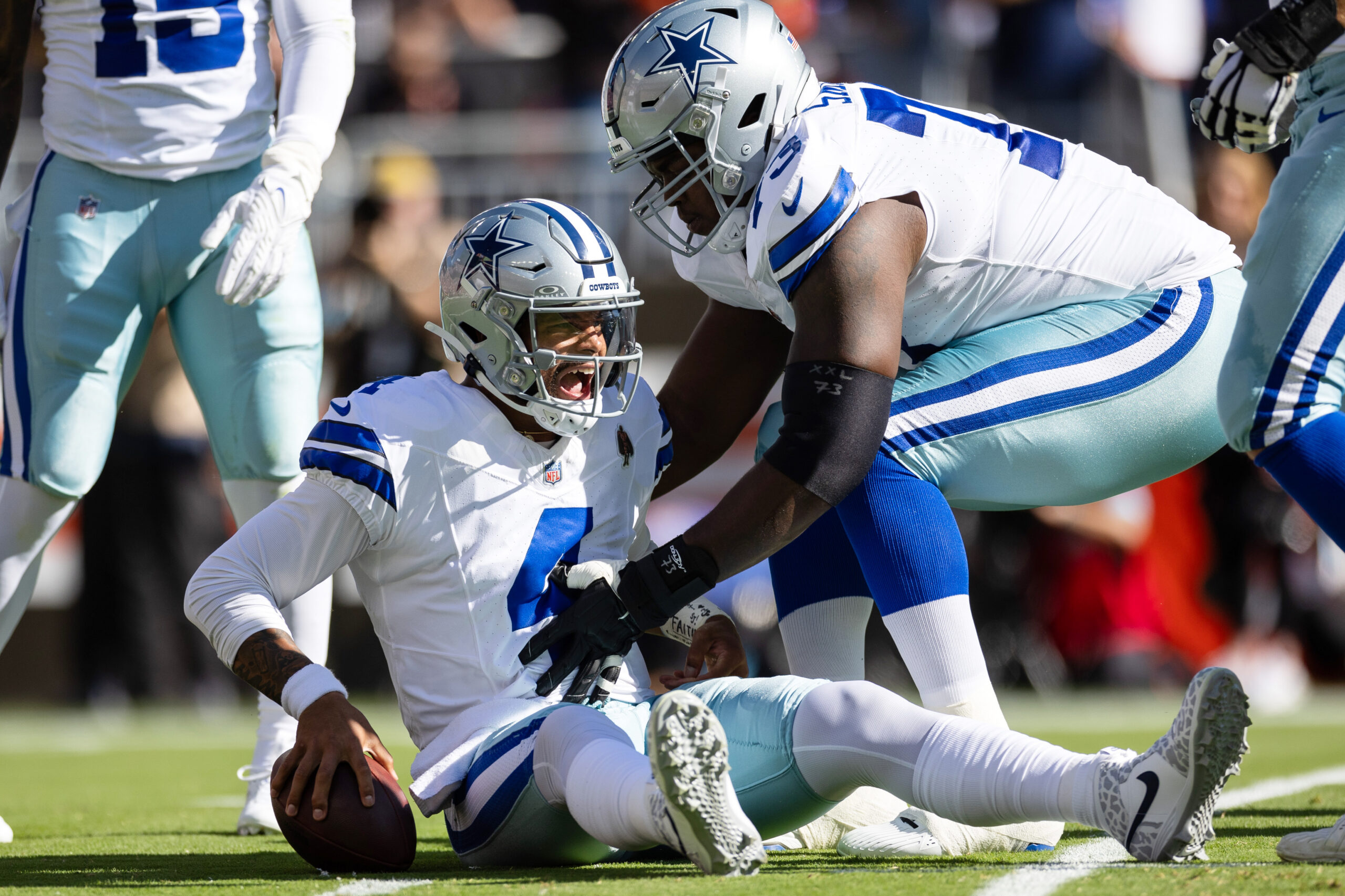
Sep 8, 2024; Cleveland, Ohio, USA; Dallas Cowboys quarterback Dak Prescott (4) yells out as offensive tackle Tyler Smith (73) picks him up following a sack by the Cleveland Browns during the first quarter at Huntington Bank Field. Mandatory Credit: Scott Galvin-Imagn Images
Lamb publicly backed the strategy. “I don’t care about that, I just want my man to get what he deserves,” he said on San Antonio’s Sports Star radio station at the Super Bowl’s radio row when asked about Pickens potentially earning more than him to stay in Dallas. But Pickens sitting on a franchise tag with the team openly saying there will be no new long-term talks before the 2026 deadline creates a fault line. Lamb and Pickens have already had their discipline tested once, when they were briefly benched to start a game after a curfew violation, a reminder of how thin the line can be between chemistry and conflict in a high-stakes locker room. The commitment from the front office is not equal. July 15 arrives, and Pickens either plays motivated on a prove-it tag or plays angry knowing the long-term security went elsewhere.
The Bet Schottenheimer Has to Win
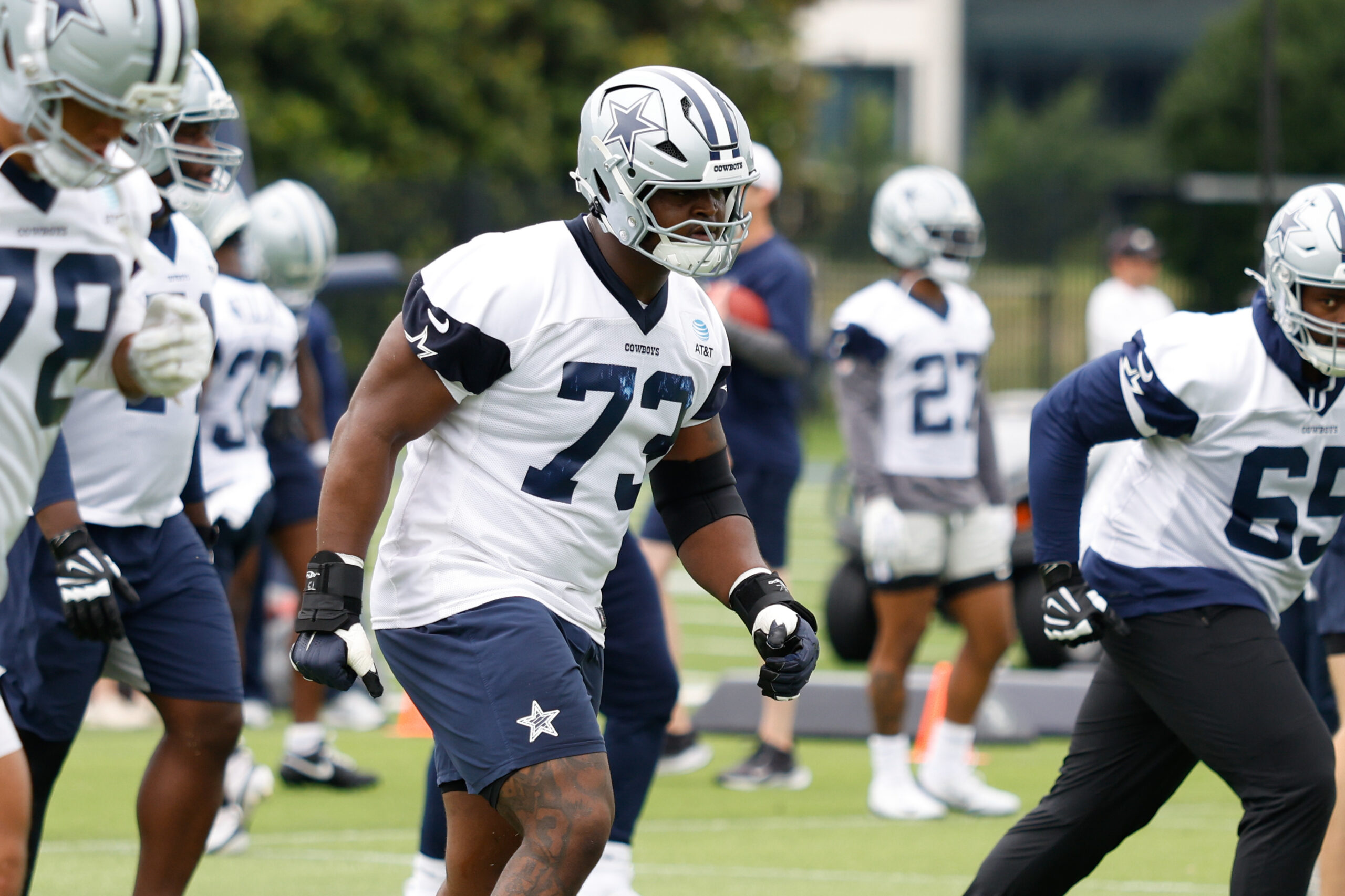
Jun 10, 2025; Arlington, TX, USA; Dallas Cowboys guard Tyler Smith (73) goes through a drill during practice at the Ford Center at the Star Training Facility in Frisco, Texas. Mandatory Credit: Chris Jones-Imagn Images
The Cowboys are now the team that traded Micah Parsons, waived Trevon Diggs, tagged George Pickens with no long-term talks planned before the deadline, and made an interior lineman the highest-paid in league history. All under a head coach who went 7-9-1 in year one and is still being framed by his owner as a calculated risk who has “exceeded” expectations more in process than in record. If Prescott stays healthy behind Smith and the offense carries a rebuilt defense, Schottenheimer looks like a genius who rewired a franchise’s DNA. If the defense collapses and Pickens walks after back-to-back tags or a messy negotiation, Dallas becomes the team that paid $96 million to protect a quarterback and forgot to build anything around him worth protecting. If you’re a Cowboys fan, did they just future-proof the offense or overpay to protect a quarterback you’re no longer sold on?