
Somewhere in a Miami front office, a new general manager stared at a spreadsheet and made a decision most GMs spend entire careers avoiding. Tua Tagovailoa, the quarterback the Dolphins once handed $212.4 million, was officially released with a post-June 1 designation. The franchise tried to find a trade partner first. ESPN reported the Dolphins attempted to facilitate one, “but with no takers, they decided to outright release the 2023 NFL passing yards leader.” Nobody wanted the contract. So Miami ate it, and the number that landed on their books rewrote NFL history.
The Extension That Built the Trap
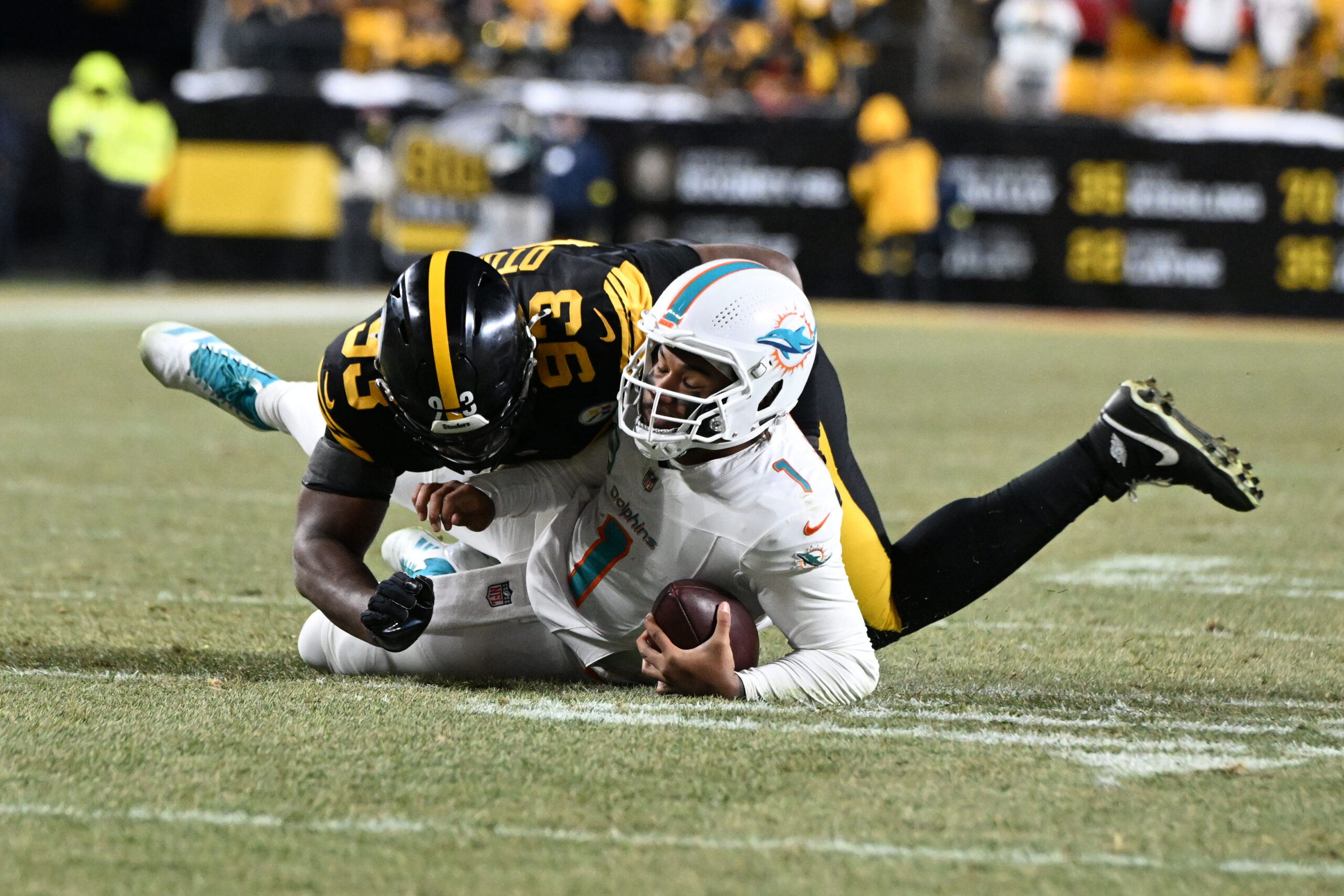
Dec 15, 2025; Pittsburgh, Pennsylvania, USA; Miami Dolphins quarterback Tua Tagovailoa (1) is sacked by Pittsburgh Steelers defensive end Esezi Otomewo (93) in the fourth quarter at Acrisure Stadium. Mandatory Credit: Barry Reeger-Imagn Images
In July 2024, Miami signed Tagovailoa to a four-year, $212.4 million extension averaging $53.1 million per year. The deal carried $167.171 million in total guarantees, with $93.171 million fully guaranteed at signing, including a $42 million signing bonus prorated at $8.4 million annually through 2028. A $25 million option bonus in 2025 added another $5 million per year in proration. Those layers of deferred accounting looked like smart cap management at the time. They became landmines the moment Tua’s trajectory changed.
The Cracks Nobody Could Ignore
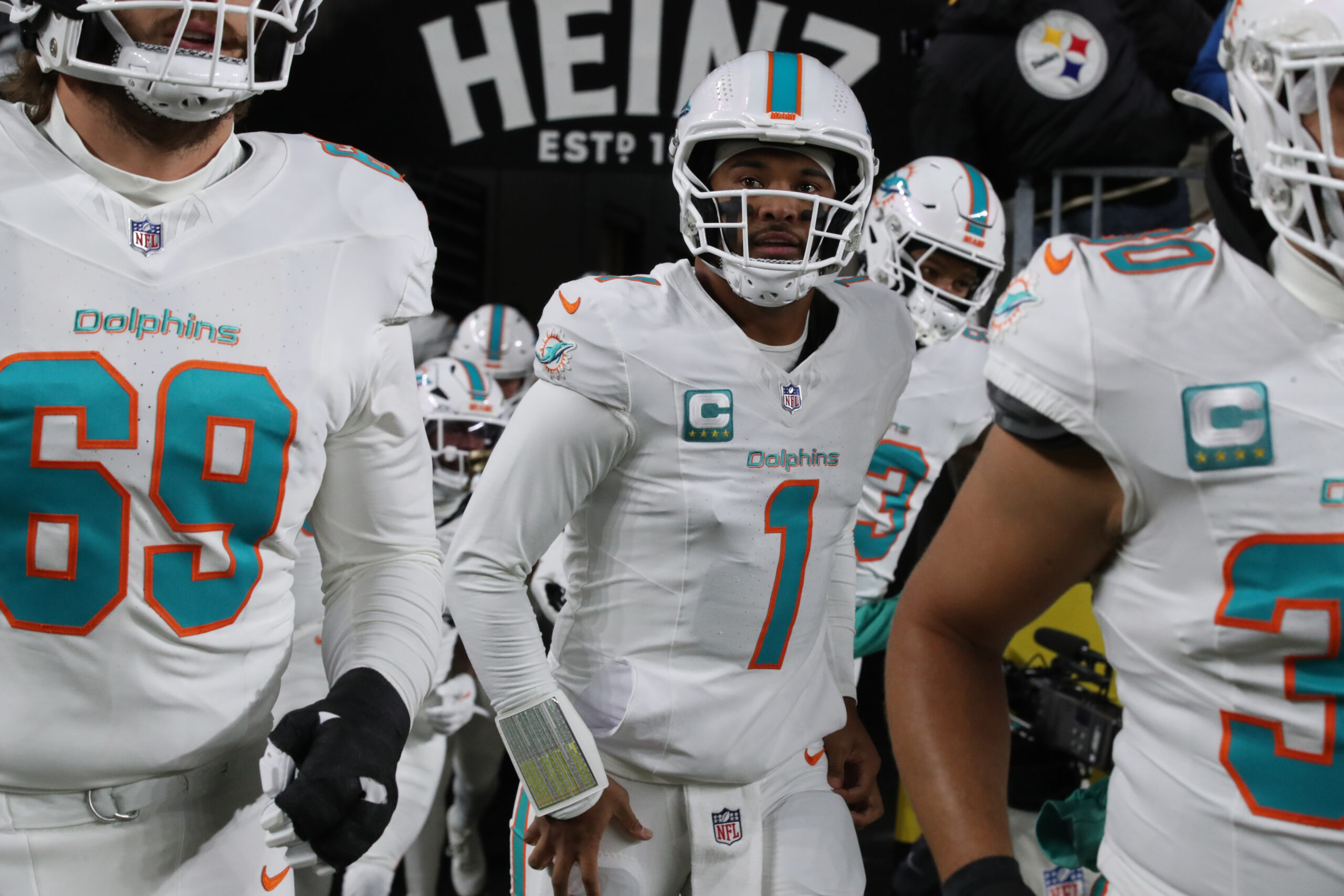
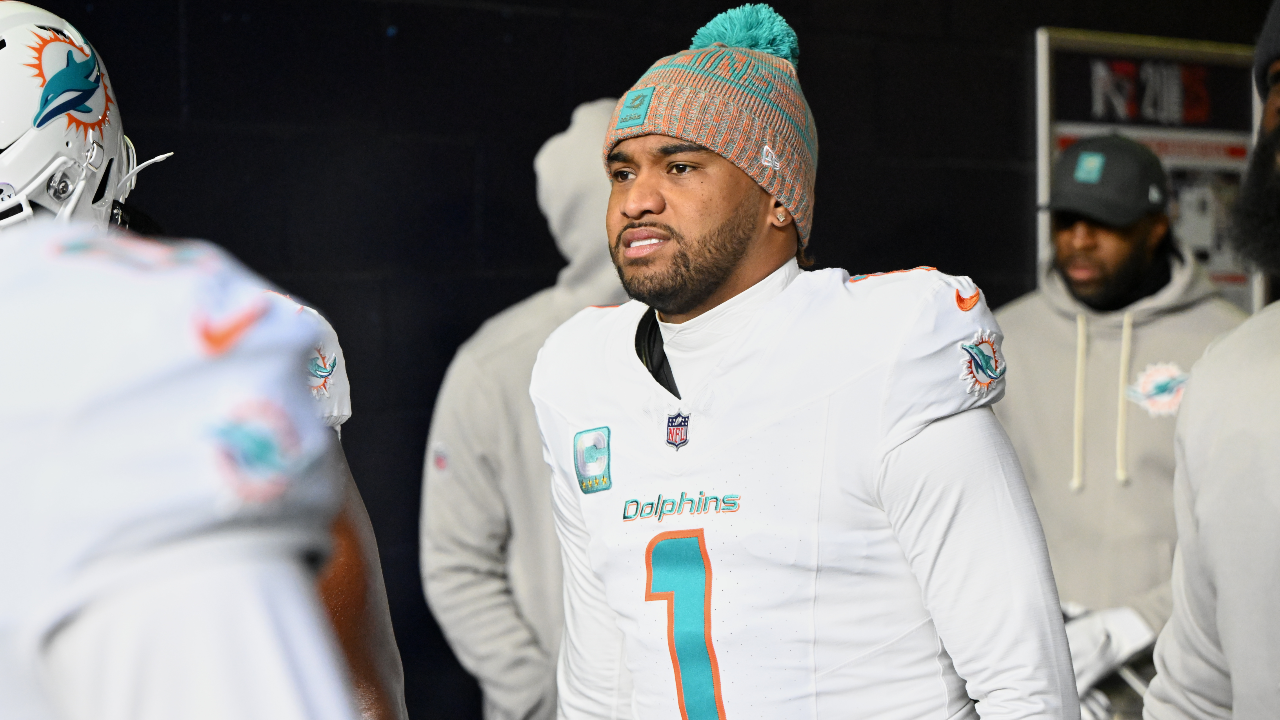
Dec 15, 2025; Pittsburgh, Pennsylvania, USA; Miami Dolphins quarterback Tua Tagovailoa (1) enters the field for warm ups prior to the game against the Pittsburgh Steelers at Acrisure Stadium. Mandatory Credit: Charles LeClaire-Imagn Images
After leading the NFL in passing yards in 2023, Tagovailoa threw a career-high 15 interceptions in 14 games during 2024 and got benched. His 2025 PFF numbers told the rest: 2,660 yards, 20 touchdowns, 15 interceptions, and a 62.1 overall grade across 440 dropbacks. The stat that stings most: 25 turnover-worthy plays against just 18 big-time throws. Plenty of fans assumed a $53.1 million-per-year quarterback was untouchable. Miami’s new regime looked at that film and decided the myth of the unbreakable mega-deal was exactly that.
$99.2 Million for a Ghost
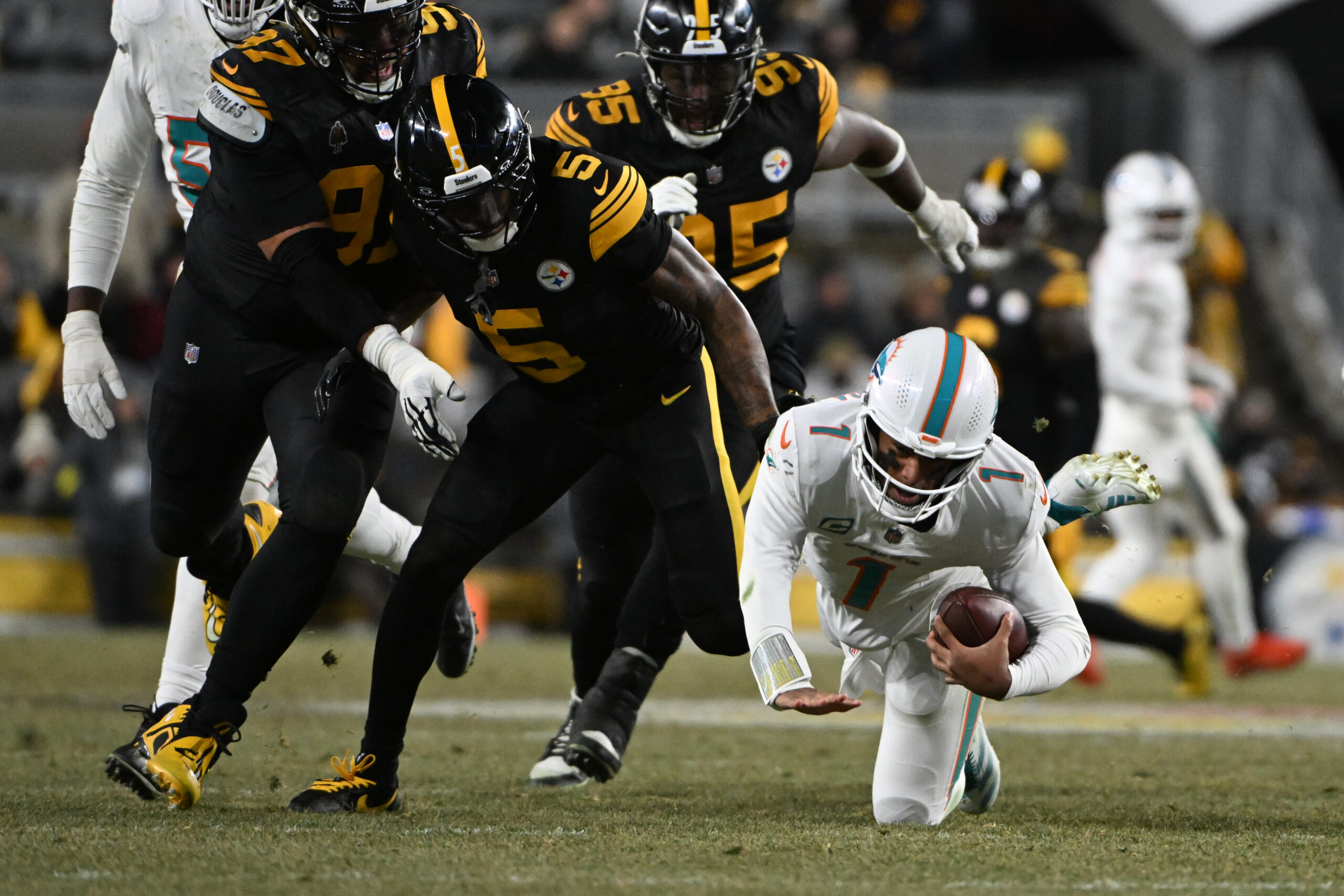
Dec 15, 2025; Pittsburgh, Pennsylvania, USA; Pittsburgh Steelers cornerback Jalen Ramsey (5) sacks Miami Dolphins quarterback Tua Tagovailoa (1) in the third quarter at Acrisure Stadium. Mandatory Credit: Barry Reeger-Imagn Images
The Dolphins will absorb $99.2 million in dead-cap charges over 2026 and 2027, an NFL record for a single player. ESPN traced the math: $54 million in fully guaranteed 2026 salary plus $45.2 million in remaining prorated bonuses, including $25.2 million from the signing bonus and $20 million from the 2025 option bonus. Miami exercised his 2026 option bonus before cutting him, shifting the split from $67.4 million to $55.2 million in 2026 and from $31.8 million to $43.8 million in 2027. A controlled detonation. Still a crater.
The Cap System Ate Itself
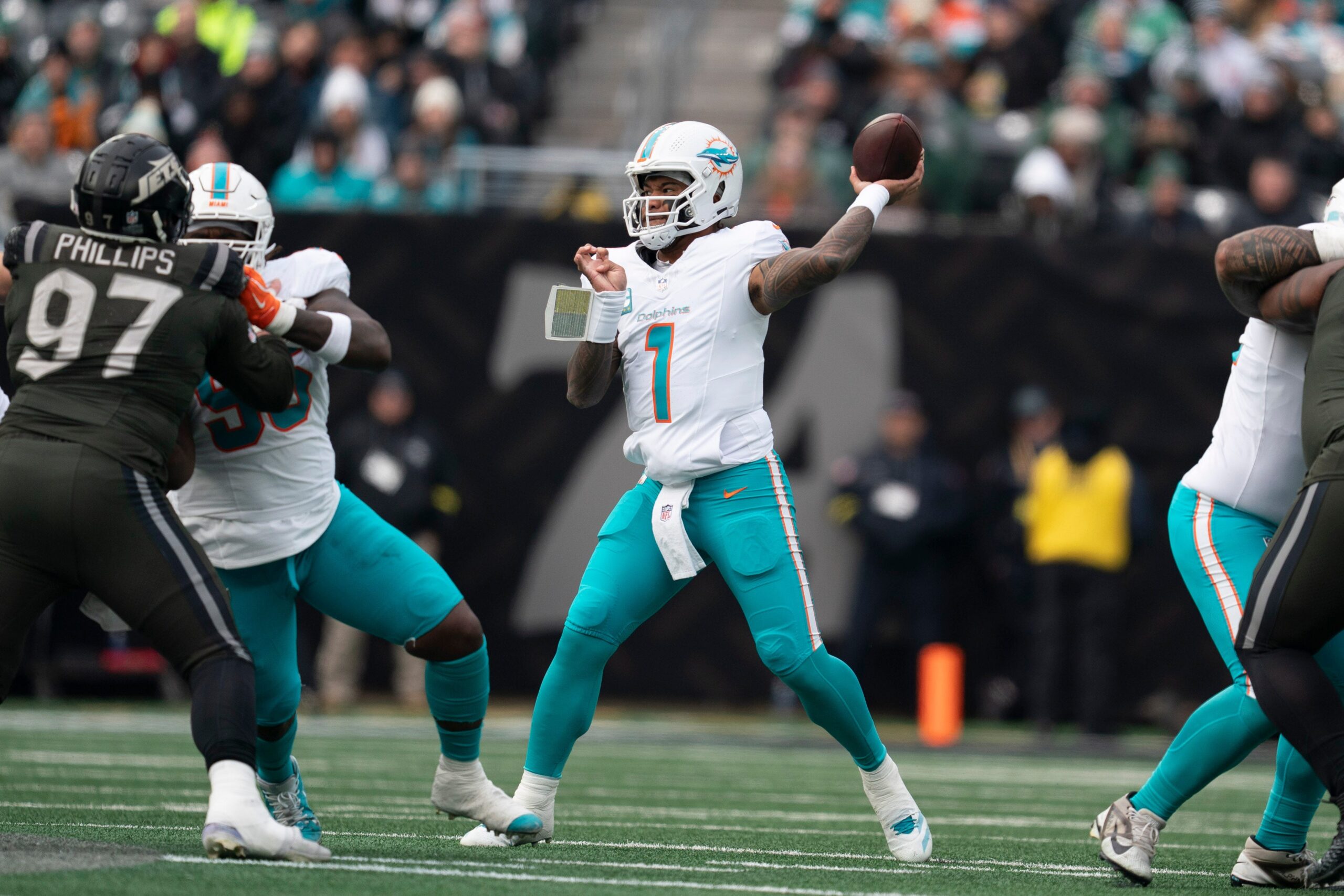
Miami Dolphin’s quarterback Tua Tagovailoa (1) looks to pass the ball during a week 14 football game between the New York Jets and Miami Dolphins at MetLife Stadium on Sunday, Dec. 7, 2025.
Every bonus proration that once smoothed Tua’s cap hits now accelerated into a wall of dead money the moment Miami pulled the trigger. That is the hidden engine of this story: the NFL’s salary-cap system rewards teams for spreading costs across years, but punishes them brutally when the relationship ends early. Guarantees designed to protect the player become a trapdoor for the franchise. Joel Corry of CBS Sports noted the extension “runs through the 2028 season.” It ran through two. Miami is still writing checks on a car they no longer drive.
The Numbers Behind the Wreckage
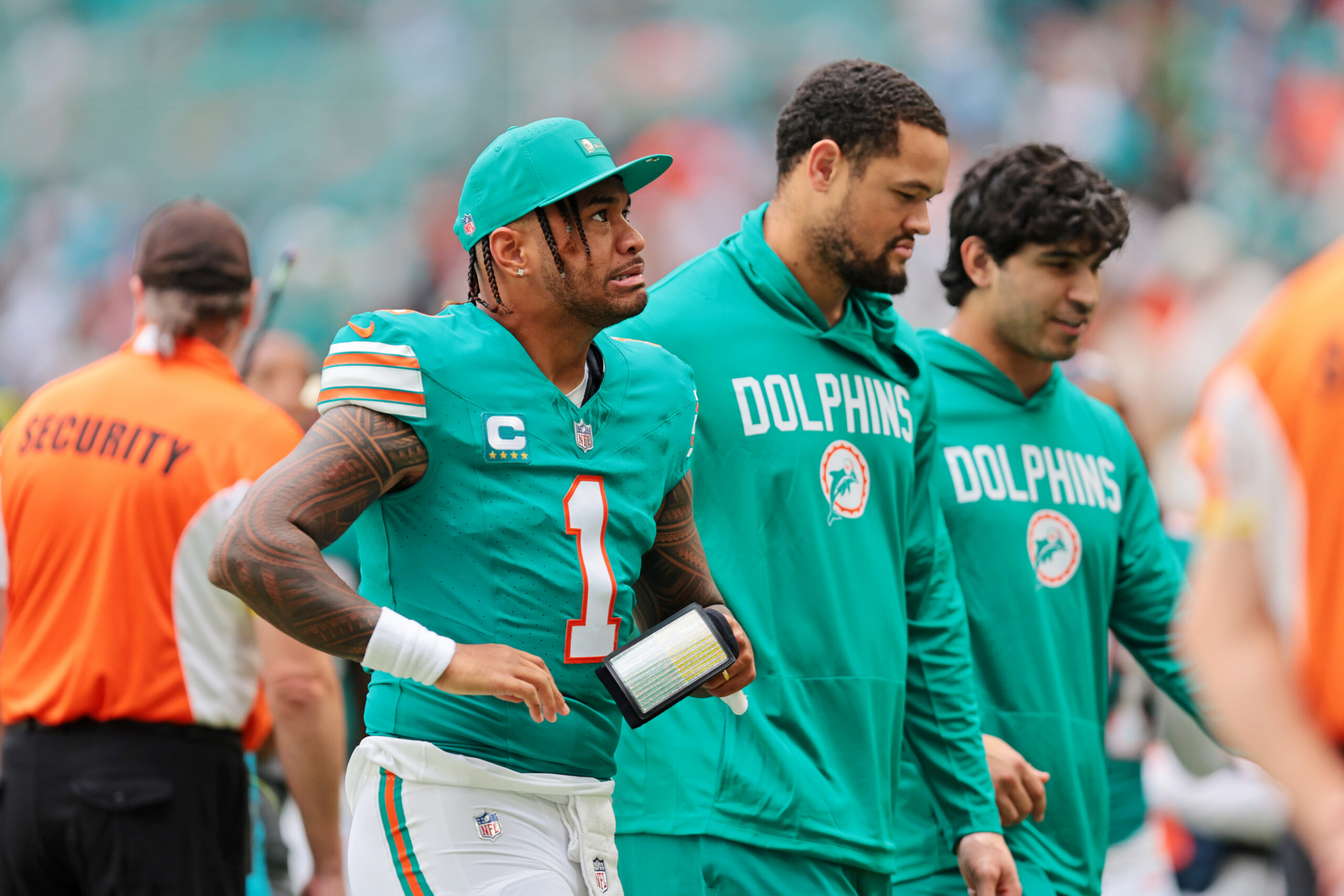
Dec 21, 2025; Miami Gardens, Florida, USA; Miami Dolphins quarterback Tua Tagovailoa (1) looks on from the sidelines during the second quarter against the Cincinnati Bengals at Hard Rock Stadium. Mandatory Credit: Sam Navarro-Imagn Images
Tagovailoa is expected to sign a one-year deal with the Atlanta Falcons for roughly $1.3 million. Miami still owes approximately $52.7 million of his $54 million guaranteed 2026 salary. Read that again: the Dolphins will pay a quarterback roughly 40 times more than his new team does, and he will wear someone else’s jersey. After cutting kicker Jason Sanders and fullback Alec Ingold to save roughly $7 million combined, OverTheCap figures showed Miami sitting about $5 million under the 2026 cap. Five million. To build an entire roster.
The Roster They Burned to Get Here
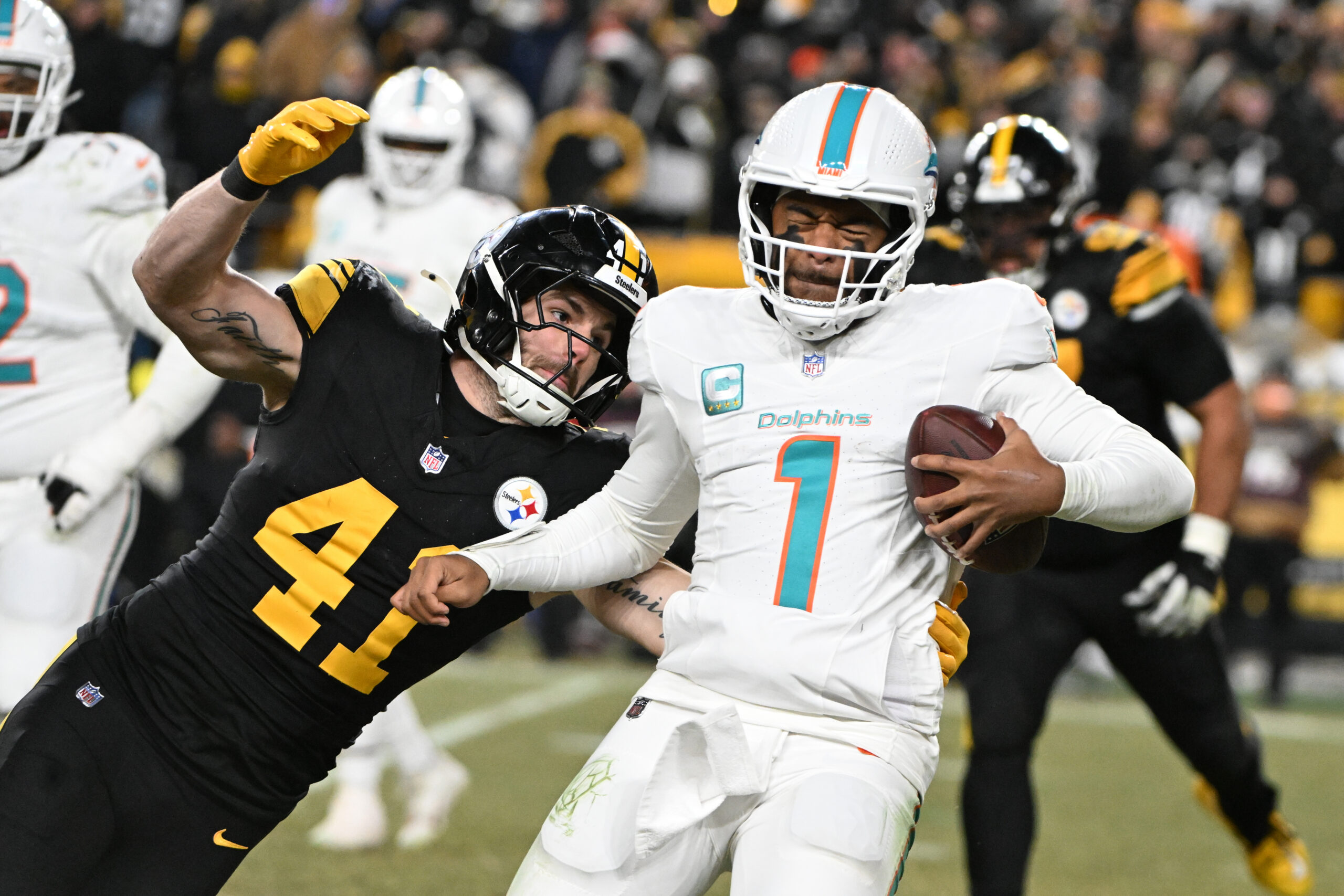
Dec 15, 2025; Pittsburgh, Pennsylvania, USA; Pittsburgh Steelers linebacker Payton Wilson (41) sacks Miami Dolphins quarterback Tua Tagovailoa (1) in the third quarter at Acrisure Stadium. Mandatory Credit: Barry Reeger-Imagn Images
Before touching Tua, new GM Jon-Eric Sullivan and head coach Jeff Hafley released Tyreek Hill, Bradley Chubb, Nick Westbrook-Ikhine, and James Daniels, clearing over $56 million in 2026 cap space. That is a Pro Bowl receiver, a pass rusher, and two starters sacrificed partly to absorb the financial blast from one quarterback’s deal. The Dolphins are cutting streaming subscriptions and skipping dinners out just to afford the mortgage on a house they already moved out of. And the record dead-cap charge could reshape how every other front office handles its next quarterback extension.
The Precedent Nobody Can Unsee
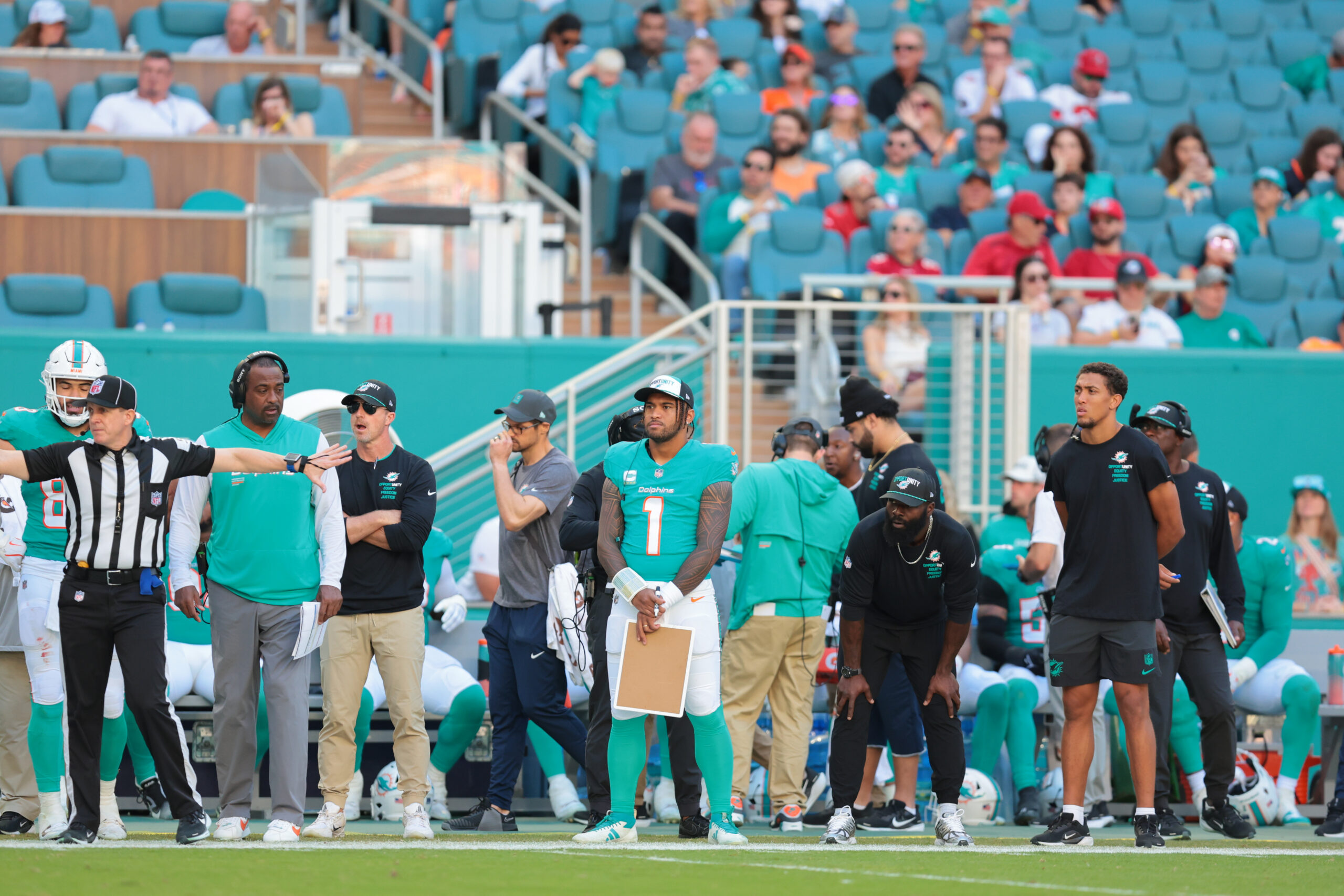
Dec 28, 2025; Miami Gardens, Florida, USA; Miami Dolphins quarterback Tua Tagovailoa (1) stands on the sidelines during the fourth quarter against the Tampa Bay Buccaneers at Hard Rock Stadium. Mandatory Credit: Sam Navarro-Imagn Images
ProFootballRumors once described a 2027 separation from Tua as “relatively manageable” at $31.8 million. Miami’s new regime chose the more punishing exit anyway, accepting more than triple that burden to reset a year earlier. That is the insight that reframes everything: the Dolphins had already paid for the privilege of moving on through years of vested guarantees and prorated bonuses. The new leadership simply refused to throw more good money after bad. This move sets a benchmark. “Untradeable” contracts can still be bought out if ownership has the stomach for it.
Two Years in a Straitjacket
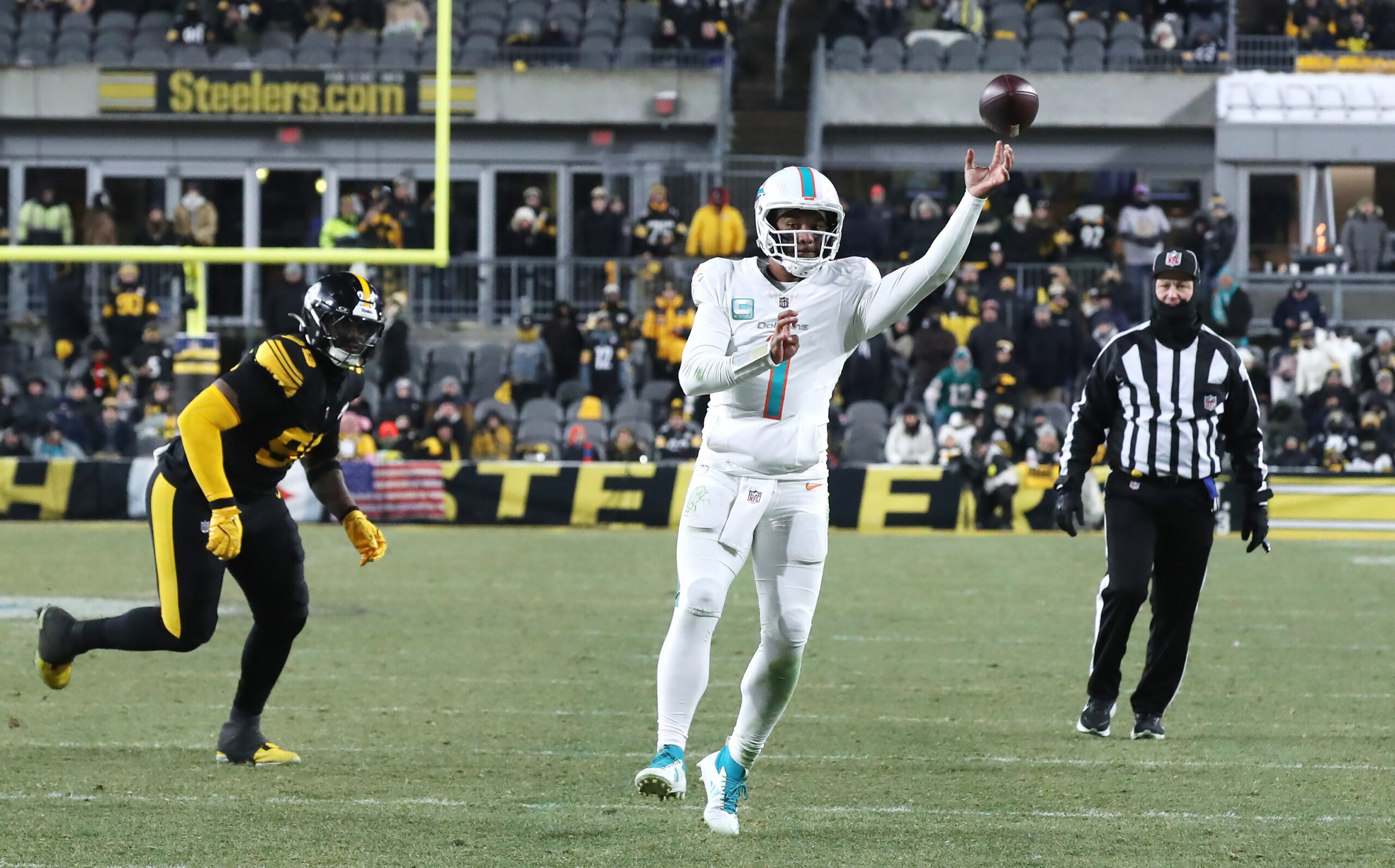
Dec 15, 2025; Pittsburgh, Pennsylvania, USA; Miami Dolphins quarterback Tua Tagovailoa (1) throws a touchdown pass against the Pittsburgh Steelers during the fourth quarter at Acrisure Stadium. Mandatory Credit: Charles LeClaire-Imagn Images
The record dead-money hit will constrain Miami’s roster-building for at least two full seasons, forcing heavier reliance on draft picks, bargain veterans, and schematic creativity from Hafley’s staff. Other expensive veterans on rosters with struggling quarterbacks should be watching closely: if Miami’s reset works and a cheaper quarterback solution emerges, more franchises will consider aggressive, cap-punishing divorces from underperforming starters. Luke Braun of Wide Left noted that “repeated brain trauma causes long-term vision issues,” a line that reframes Tua’s turnover spike as something potentially deeper than bad reads.
Atlanta Gets the Bargain. Miami Gets the Bill.
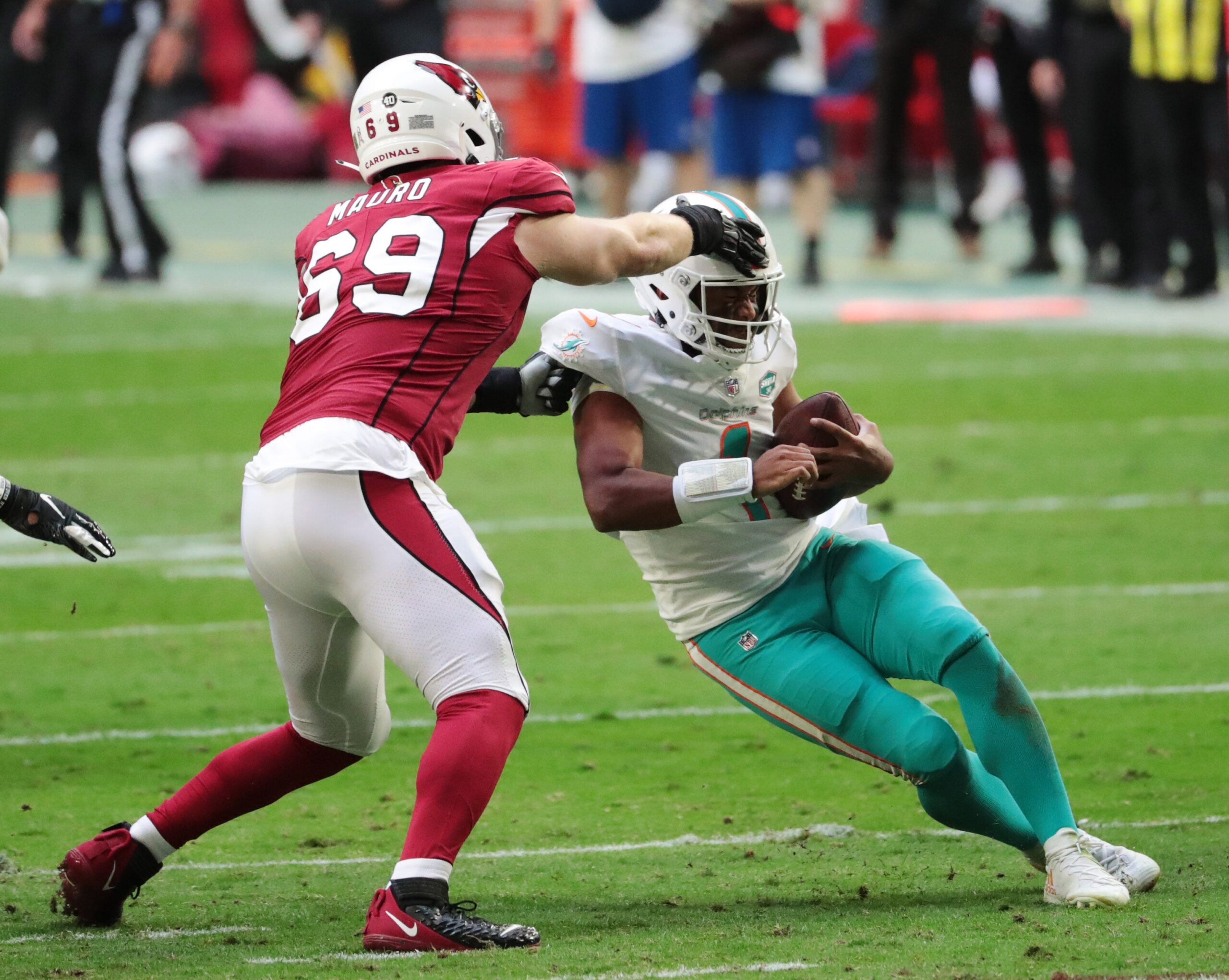
Arizona Cardinals defensive end Josh Mauro (69) sacks Miami Dolphins quarterback Tua Tagovailoa (1) during the second quarter in Glendale, Ariz. November 8, 2020.
The same quarterback who once threw four touchdowns in a 34-10 blowout of the Falcons now becomes their cheap reclamation project. Atlanta layers Tua’s experience alongside 2024 first-round pick Michael Penix Jr. at near-zero cap cost while Miami foots the real bill. Quarterback agents will push even harder for ironclad guarantees after this. Teams may respond with shorter terms and more cautious structures. The era of the untouchable mega-deal may already be over, and the franchise that killed it is still $99.2 million deep in the proof. Was Miami right to rip the bandage off now, or did they just set fire to two seasons for nothing? Drop your verdict in the comments — and tell us which team you think becomes the next franchise brave (or desperate) enough to detonate its own quarterback deal.