
Ten contracts hit the table at once. No staggered announcements, no drawn-out negotiations. The Miami Dolphins moved from zero signed rookies to ten in a single overnight wave, locking roughly 77% of their 2026 draft class into four-year deals before most fans finished refreshing their feeds. The names on those contracts told a story the transaction wire couldn’t capture: three wide receivers, three linebackers, a safety, a guard, a tight end, and a defensive end. All cheap. All hungry. And the one generating the most buzz never played defense until college.
A Class Built for Specific Wounds
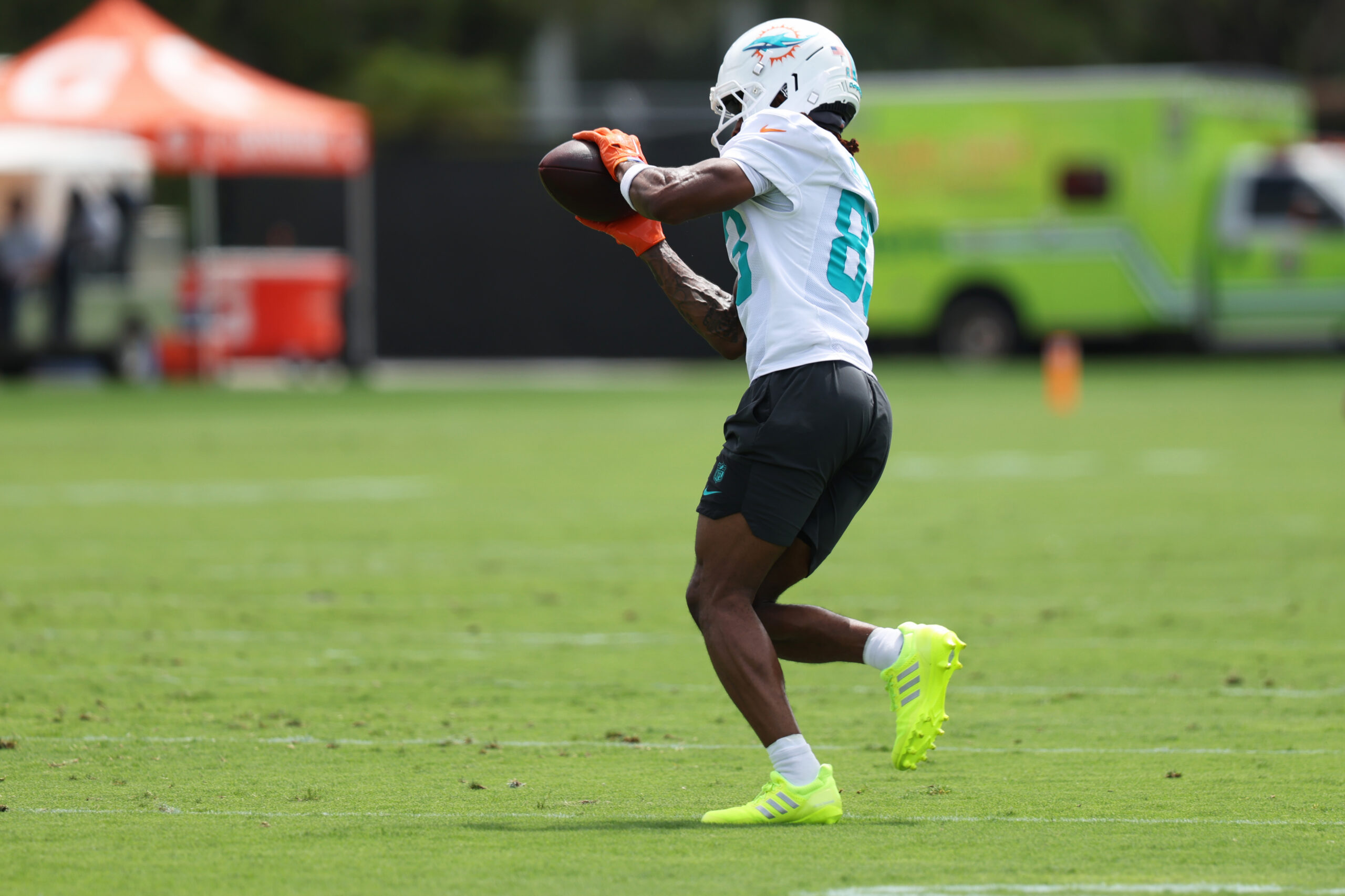
Jun 2, 2026; Miami Gardens, FL, USA; Miami Dolphins wide receiver Kevin Coleman Jr. (83) catches a ball during mini camp at Baptist Health Training Complex. Mandatory Credit: Isabella Frias-Imagn Images
Miami entered this draft with Sharp Football Analysis flagging wide receiver and defensive back as the roster’s deepest holes. The Dolphins answered with six selections in the top 100 picks, tying a franchise record reached only three other times: 1968, 1997, and 2020. That kind of top-100 volume is rare enough to feel accidental. It wasn’t. GM Jon-Eric Sullivan loaded up at the exact positions bleeding talent, then signed the bulk of them before training camp opened. Veterans at those spots felt the ground shift beneath them overnight.
The First-Round Names Everyone Watched
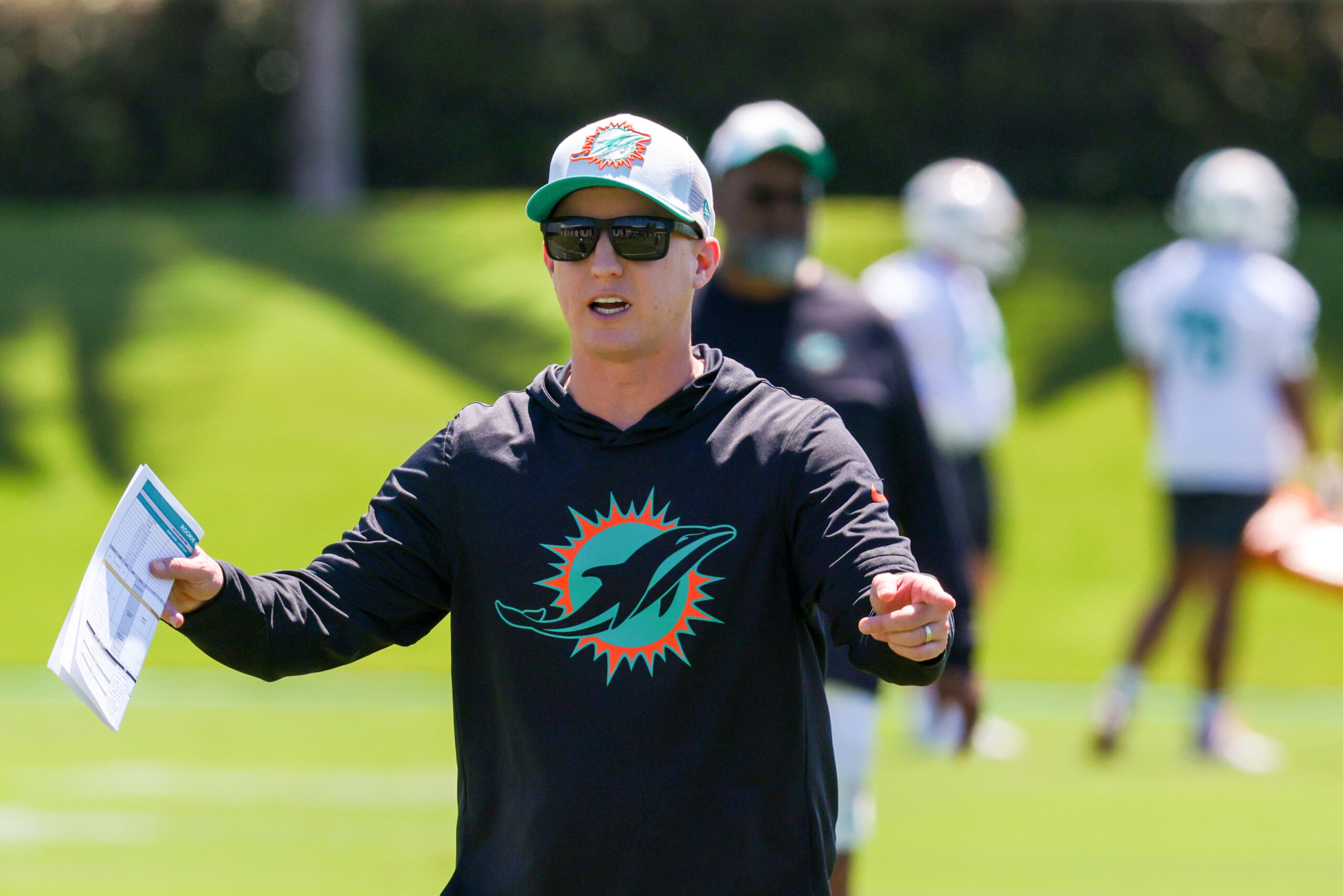
May 8, 2026; Miami Gardens, FL, USA; Miami Dolphins offensive coordinator Bobby Slowik works with his players during rookie minicamp at Baptist Health Training Complex. Mandatory Credit: Sam Navarro-Imagn Images
Kadyn Proctor went 12th overall out of Alabama. Chris Johnson went 27th from San Diego State, carrying a 91.6 PFF defensive grade, the best among all college cornerbacks in 2025, plus an AP midseason All-America nod. Sullivan told reporters he believed Johnson could play any defensive back position. Both first-rounders were initially excluded from the 10-player signing wave, their deals coming later. Casual observers assumed the draft story started and ended with those two names. The real edge, though, was hiding further down the board.
The Quarterback Who Became a Turnover Machine
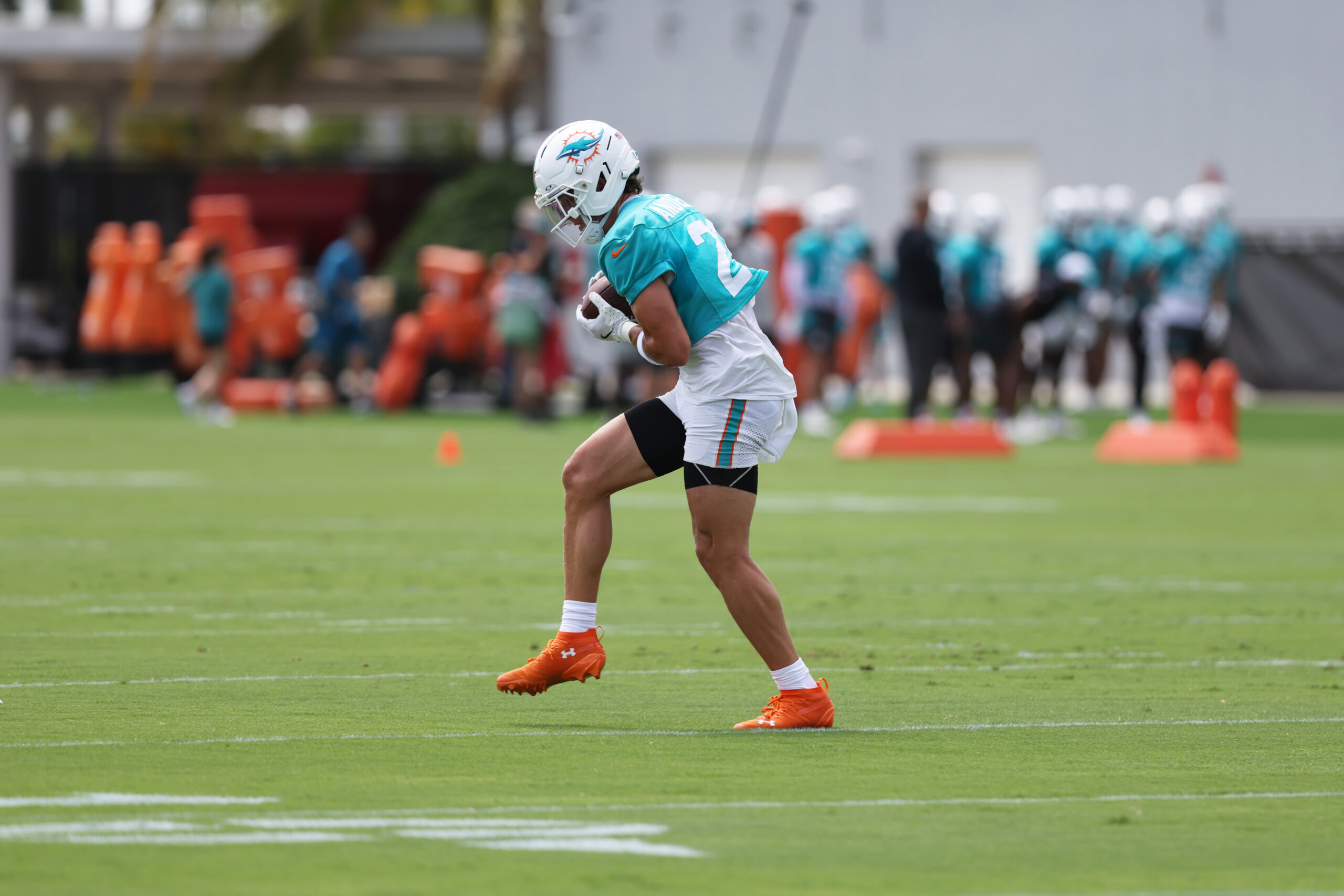
Jun 2, 2026; Miami Gardens, FL, USA; Miami Dolphins center Zayne Anderson (23) catching a pass at mini camp at Baptist Health Training Complex. Mandatory Credit: Isabella Frias-Imagn Images
Jacob Rodriguez arrived at Texas Tech as a three-star dual-threat quarterback recruit. He switched positions. Then he switched everything. In 14 games during the 2025 season, Rodriguez recorded 128 tackles, 11 tackles for loss, and forced 11 turnovers: seven forced fumbles and four interceptions. Roughly one turnover every 1.3 games. From a linebacker. A second-round linebacker. Miami drafted him 43rd overall, reviving a Texas Tech pipeline the franchise had largely left dormant for years. That kind of takeaway production will either define him quickly or set an impossible bar.
Where the Real Money Hides
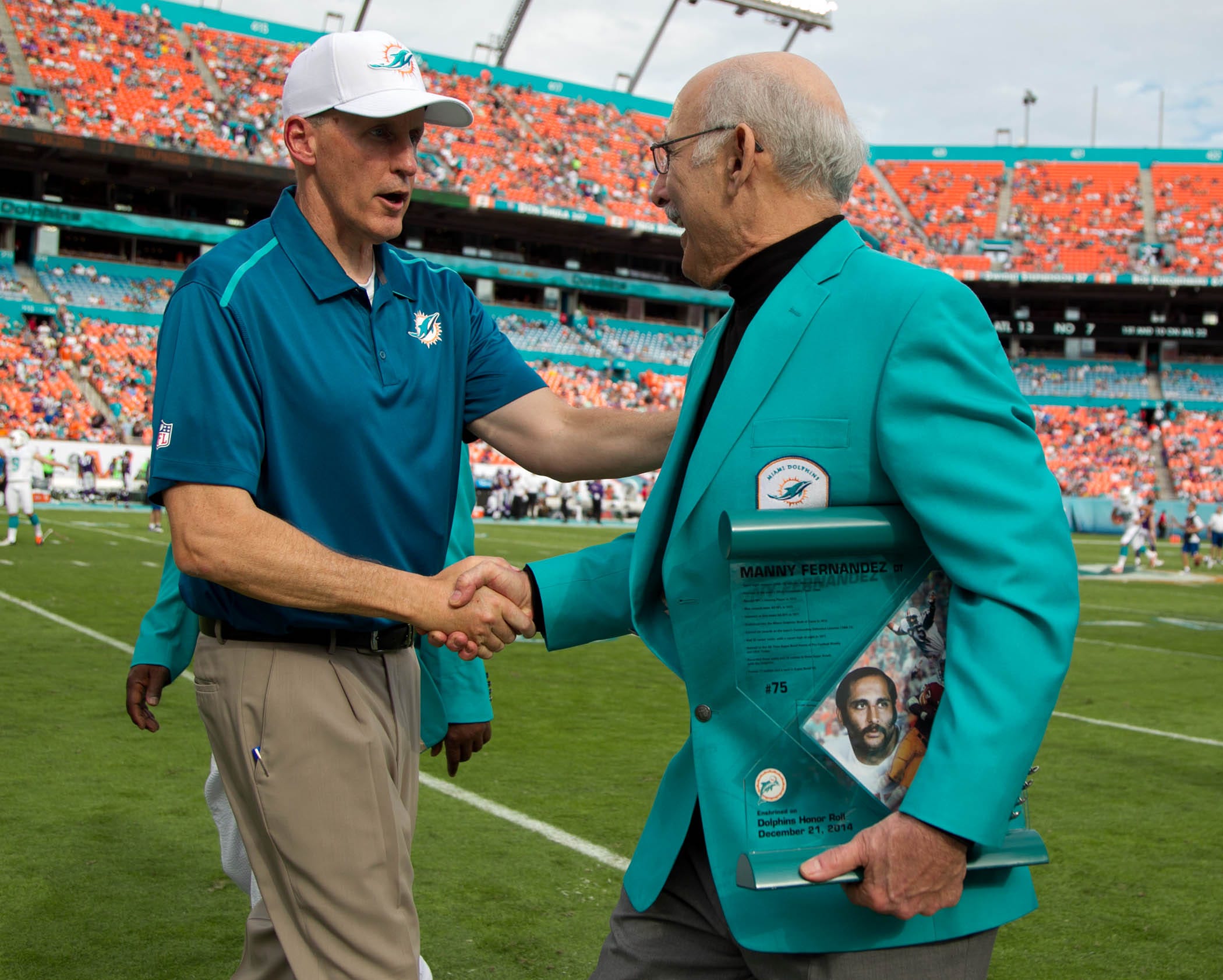
Miami Dolphins head coach Joe Philbin shakes hands with Manny Fernandez after Fernandez was inducted to the Honor Roll at a halftime ceremony at Sun Life Stadium in Miami Gardens, Florida on December 21, 2014. (Allen Eyestone / The Palm Beach Post)
The rookie wage scale is the mechanism nobody talks about because it sounds boring. It shouldn’t. Third-round receiver Caleb Douglas signed a four-year deal worth $7,168,498 with $1,673,452 guaranteed. His 2026 cap hit: $1,303,363, roughly 0.42% of the projected salary cap. Fifth-round safety Michael Taaffe’s deal came in at $4.88 million over four years. Miami committed approximately $12 million total to just those two players across eight combined seasons. That’s less than one mid-tier veteran receiver costs for a single year on the open market.
The Analytics Said It Loud
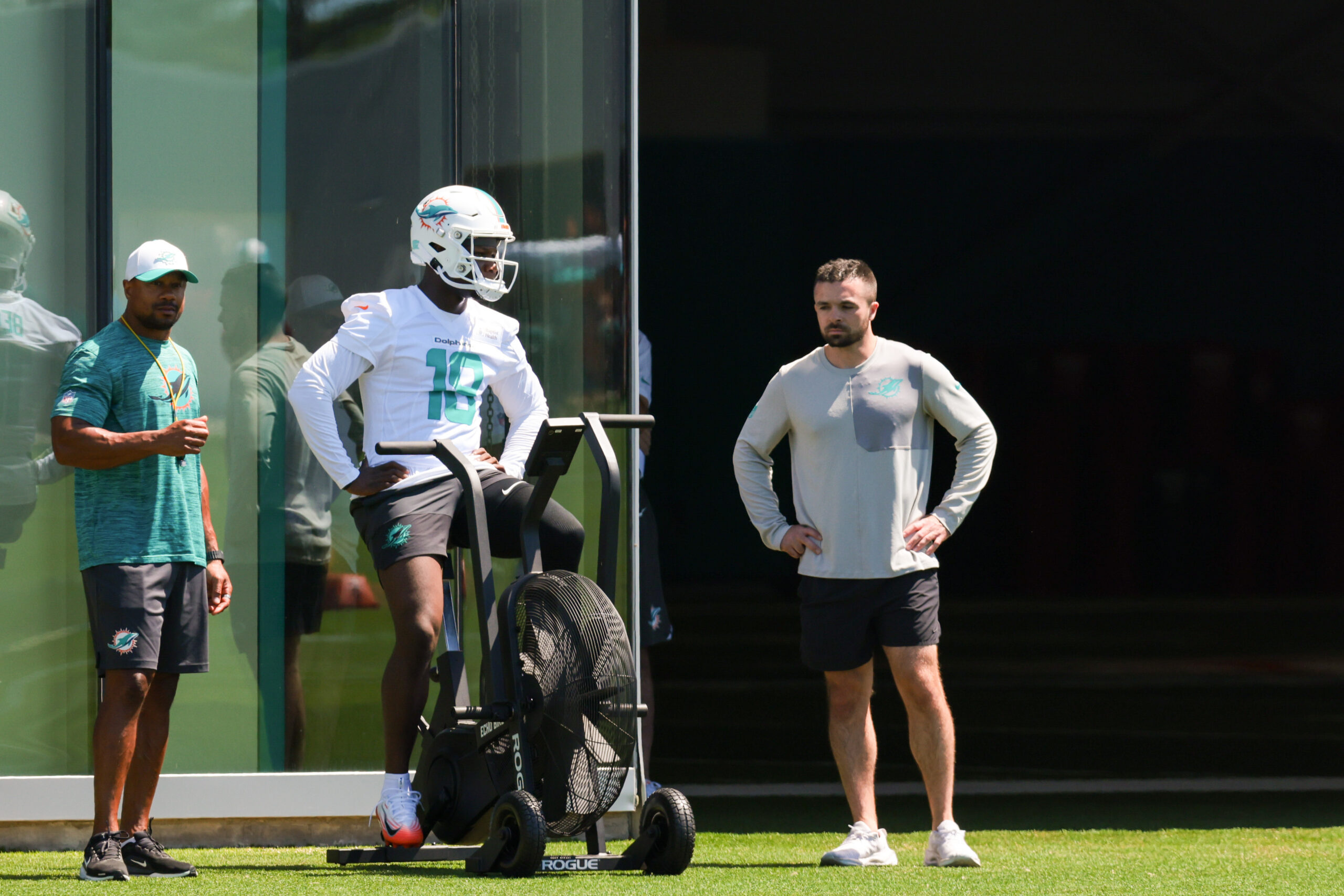
May 8, 2026; Miami Gardens, FL, USA; Miami Dolphins wide receiver Chris Bell (18) rides an air bike during rookie minicamp at Baptist Health Training Complex. Mandatory Credit: Sam Navarro-Imagn Images
PFF graded the Dolphins’ 2026 class at B+ and ranked it third in the entire NFL in Wins Above Average added, at 2.092. That number matters because it measures projected on-field impact, not draft-night applause. PFF labeled third-round receiver Chris Bell, taken 94th overall out of Louisville, a “significant steal.” The irony is thick: a class that drew lukewarm consensus reactions graded out as one of the three most valuable in the league by the numbers. Film scouts and data analysts were watching two different drafts.
The Roster Squeeze Nobody Mentions
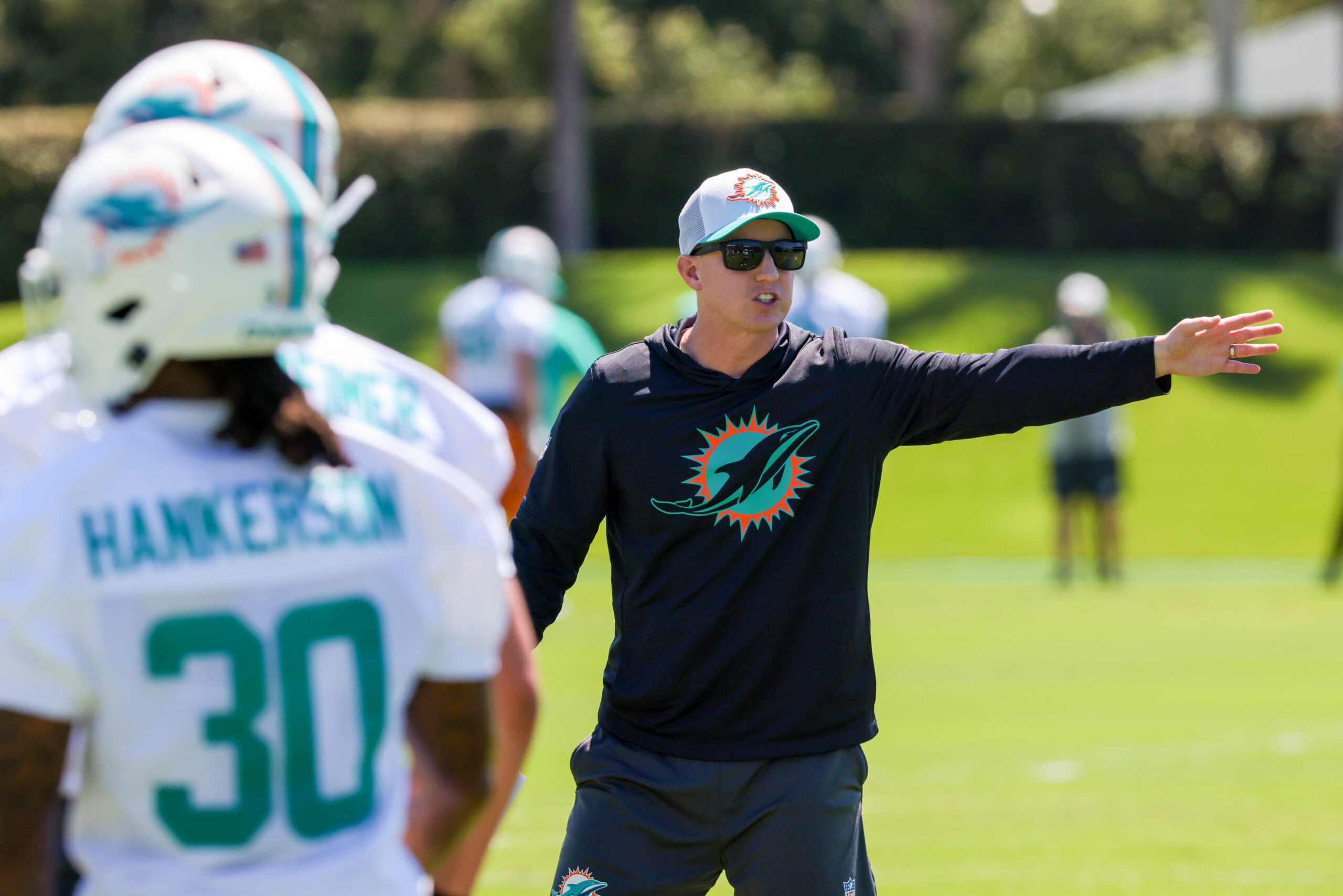
May 8, 2026; Miami Gardens, FL, USA; Miami Dolphins offensive coordinator Bobby Slowik works with his players during rookie minicamp at Baptist Health Training Complex. Mandatory Credit: Sam Navarro-Imagn Images
Ten rookies under contract means ten players competing for jobs that veterans currently hold. Depth wideouts, rotational linebackers, back-end tight ends: every fringe roster spot just got more expensive to keep. Signing the class early gives Miami maximum OTA and camp evaluation time, compressing the window for mid-rounders to leapfrog established players. If Douglas, Bell, or 6-foot-6, 261-pound tight end Will Kacmarek flash early, the Dolphins could trade or cut mid-tier veterans not just to save cap but to clear developmental snaps for cheaper, younger options.
A Template, Not an Exception
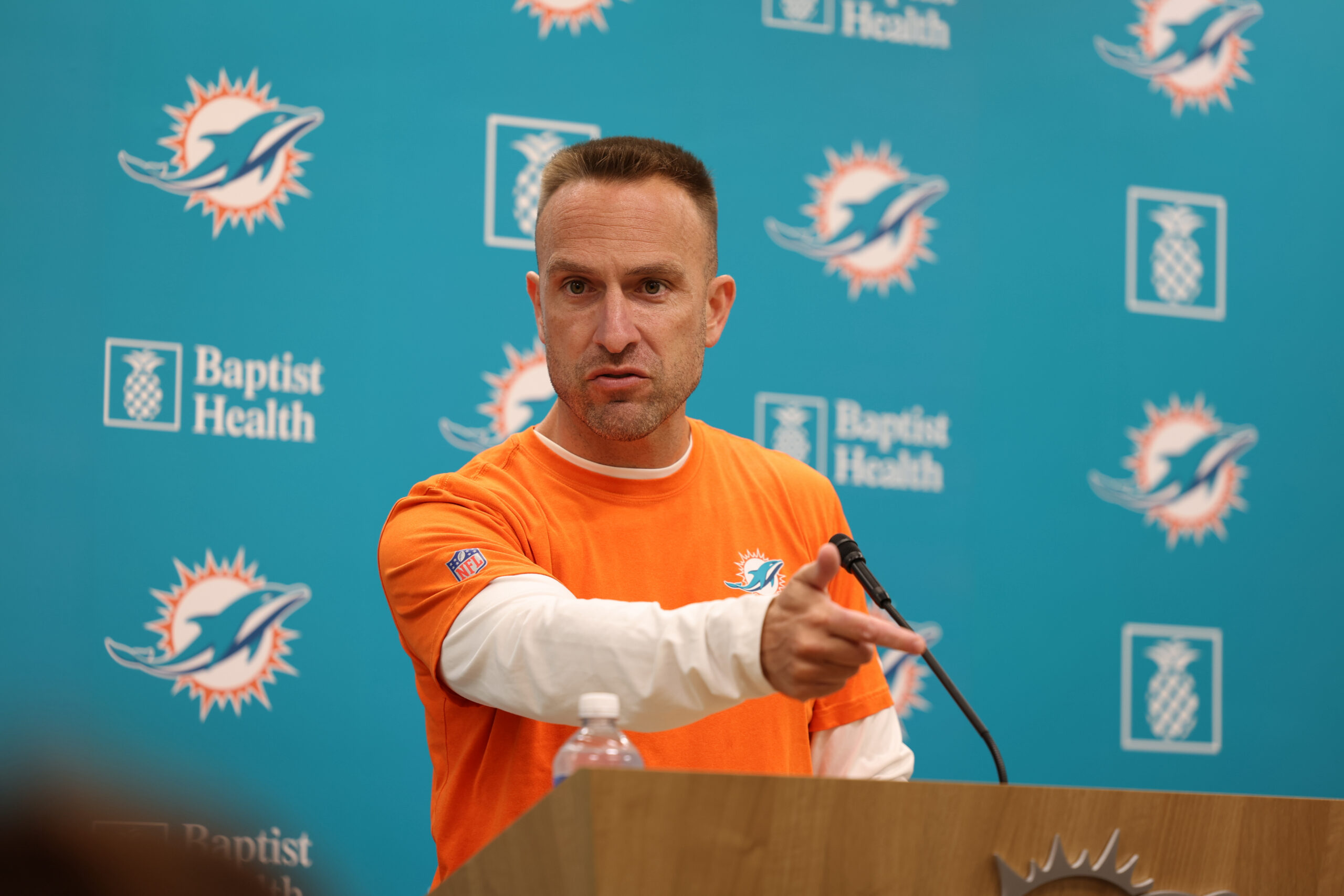
Jun 2, 2026; Miami Gardens, FL, USA; Miami Dolphins head coach Jeff Hafley speaks during the press conference for mini camp at Baptist Health Training Complex. Mandatory Credit: Isabella Frias-Imagn Images
This is one of only four Dolphins drafts since 1968 with six top-100 selections. That fact alone should reframe the signing wave from routine to structural. Miami is reinforcing a template: heavy draft investment, fast contract execution, youth-driven roster turnover at premium positions. With both Rodriguez and Douglas coming out of Texas Tech, the front office revived a college pipeline it had leaned on only sparingly in past decades. Once you see the pattern, the overnight flurry stops looking like paperwork and starts looking like a front-office philosophy being cemented into precedent.
What Breaks First
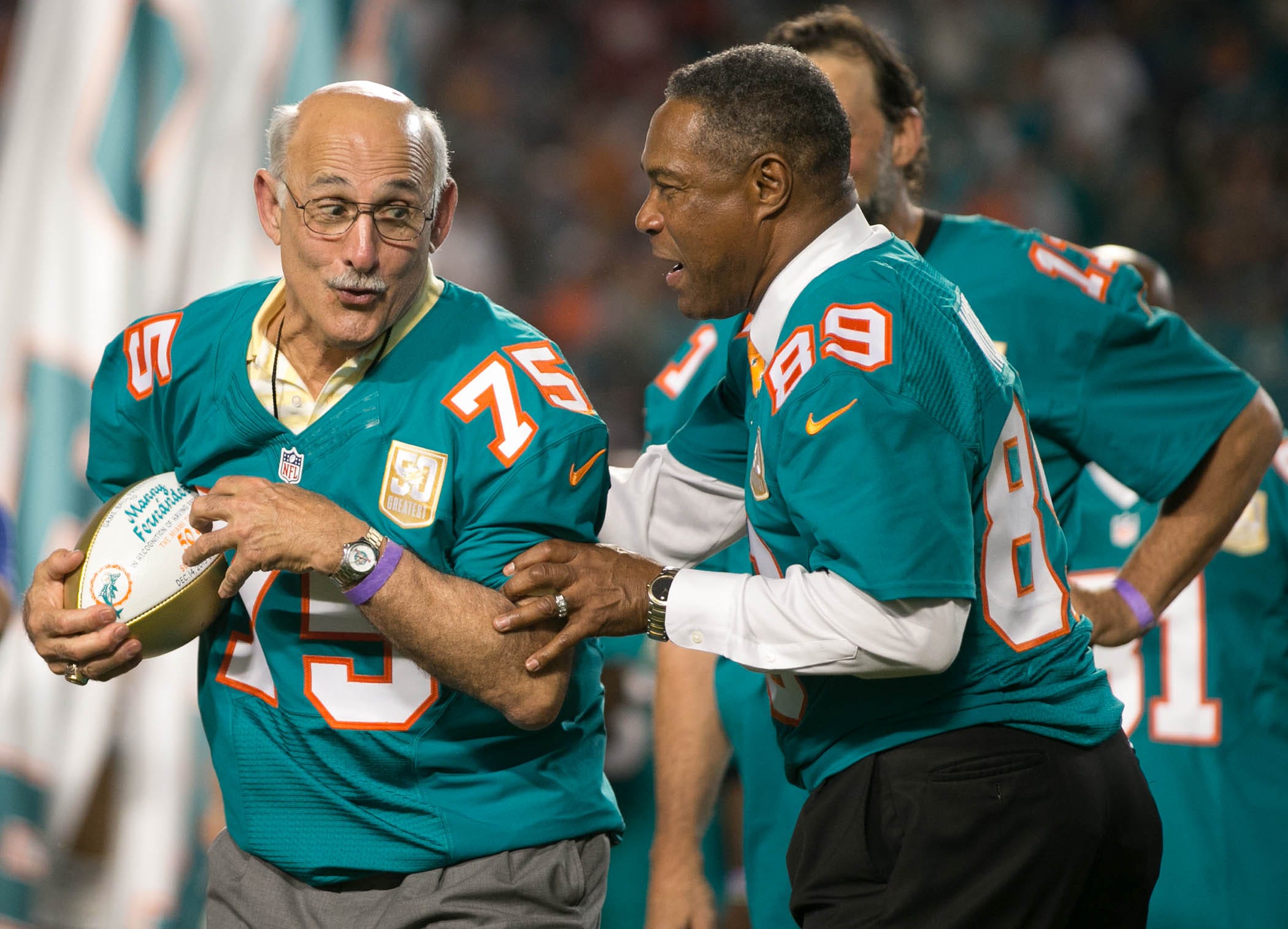
Manny Fernandez jokes with Nat Moore during a halftime ceremony honoring the top 50 players in Dolphins history at Sun Life Stadium in Miami Gardens, Florida on December 14, 2015. (Allen Eyestone / The Palm Beach Post)
The risk is real. Promising classes get mishandled all the time: depth-chart politics, coaching impatience, short-term pressure to win now with veterans over developing rookies. If several of these mid-rounders stall, Miami burns years of cheap contract control with nothing to show. ProFootballTalk noted the Dolphins “compensated for their leisurely start by executing a flurry of agreements simultaneously.” That choreographed patience suggests confidence, not panic. But confidence and results occupy different zip codes until September proves otherwise.
The Bet Most Fans Will Miss
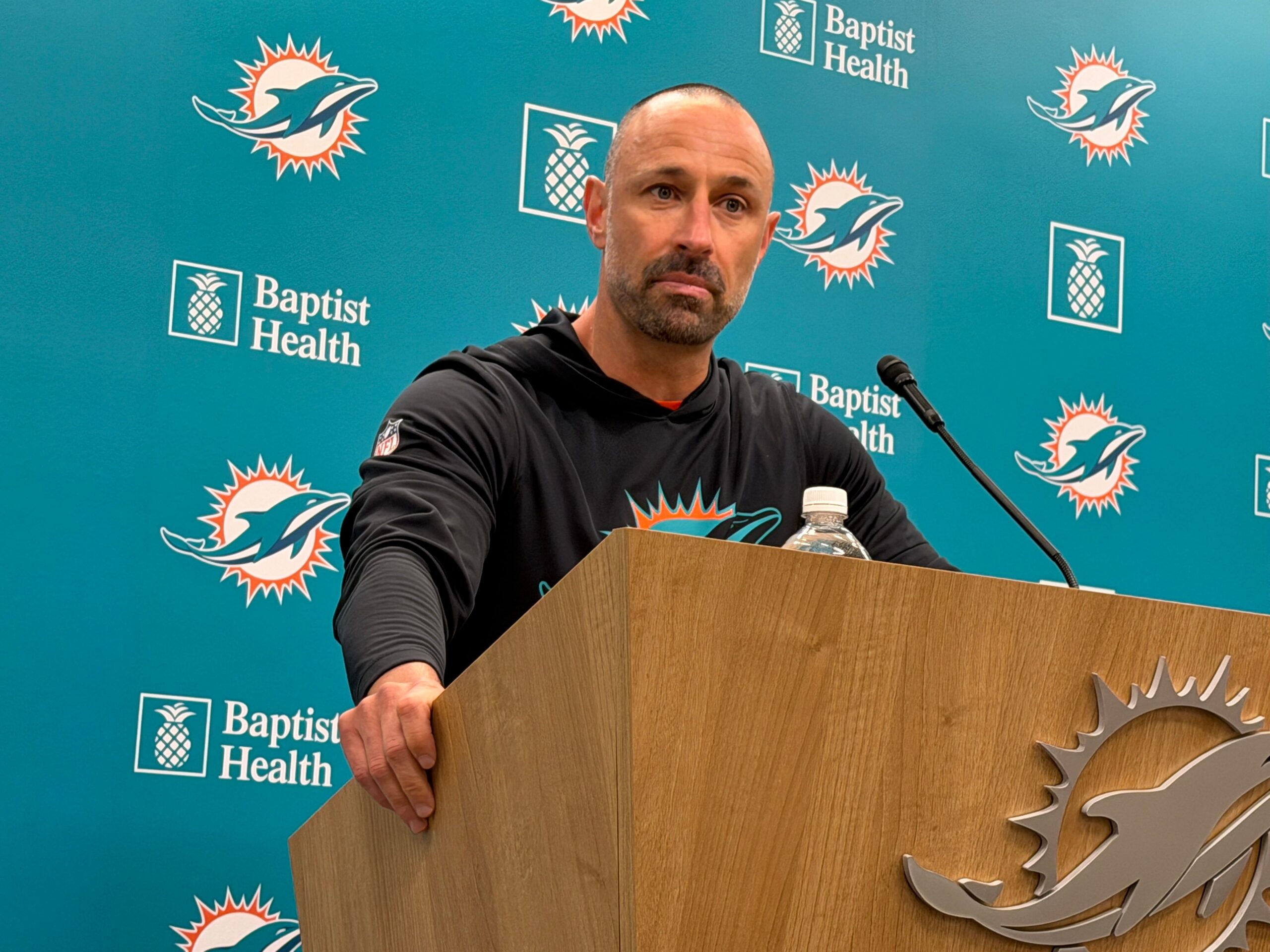
Miami Dolphins general manager Jon-Eric Sullivan discusses the upcoming NFL Draft.
Most people read “Dolphins sign 10 draft picks” and kept scrolling. That’s the wrong instinct. This was a portfolio lock: ten low-cost, four-year options on turnover production, physical size, and positional flexibility, executed in a single night by a front office betting that mid-round playmakers at controlled prices can tilt a competitive window more reliably than chasing the free-agent market. If even three of these ten outperform their draft slot, Miami’s next contention cycle starts here. The boring headline was the whole point. So here’s the question worth arguing in the comments: which of these ten rookies is the one that actually outperforms his draft slot — and which veteran loses his job to make room?