
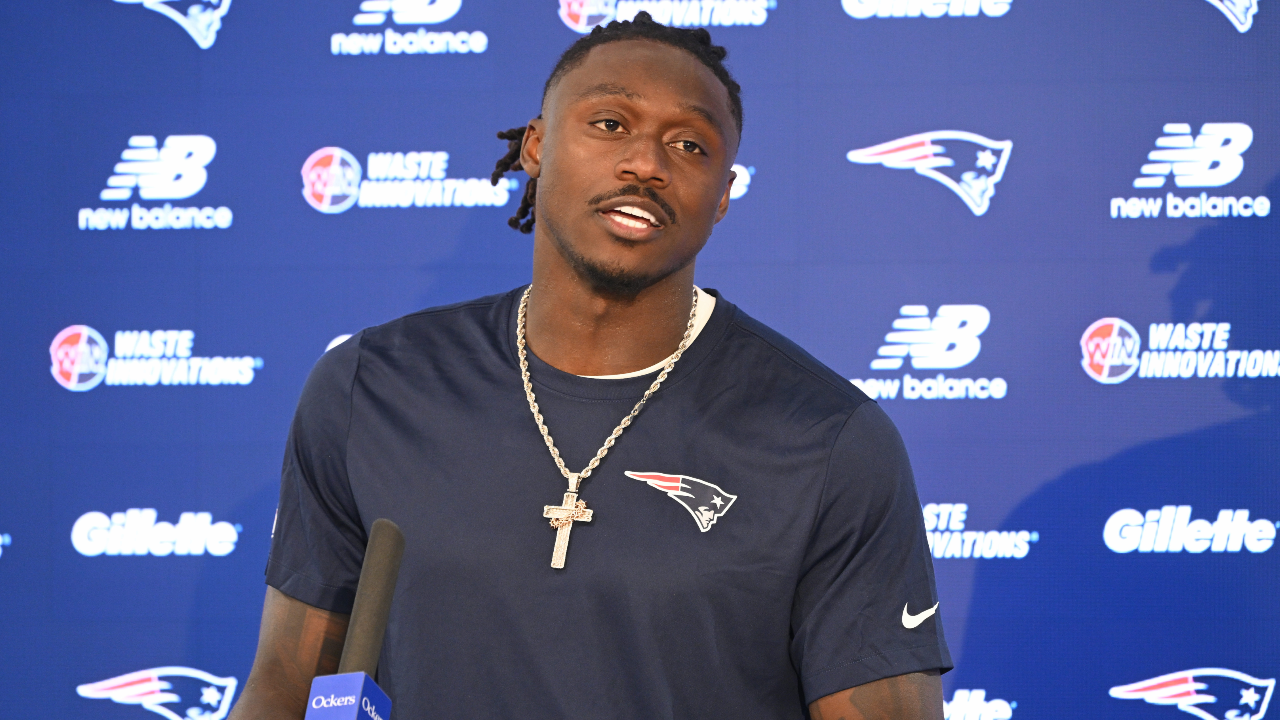
The call had been coming for months. Every restructured bonus, every converted salary, every short-term cap trick the Eagles ran on A.J. Brown’s deal pushed more money into the future. Then June 1 hit, and Philadelphia pulled the trigger. Brown headed to New England. The Eagles got a 2028 first-round pick and a 2027 fifth-rounder. What they kept was heavier: $43,364,609 in dead money for a receiver now catching passes from someone else’s quarterback. That number didn’t appear overnight, and the way it got there changes how you think about every big contract in football.
A Star Still Producing
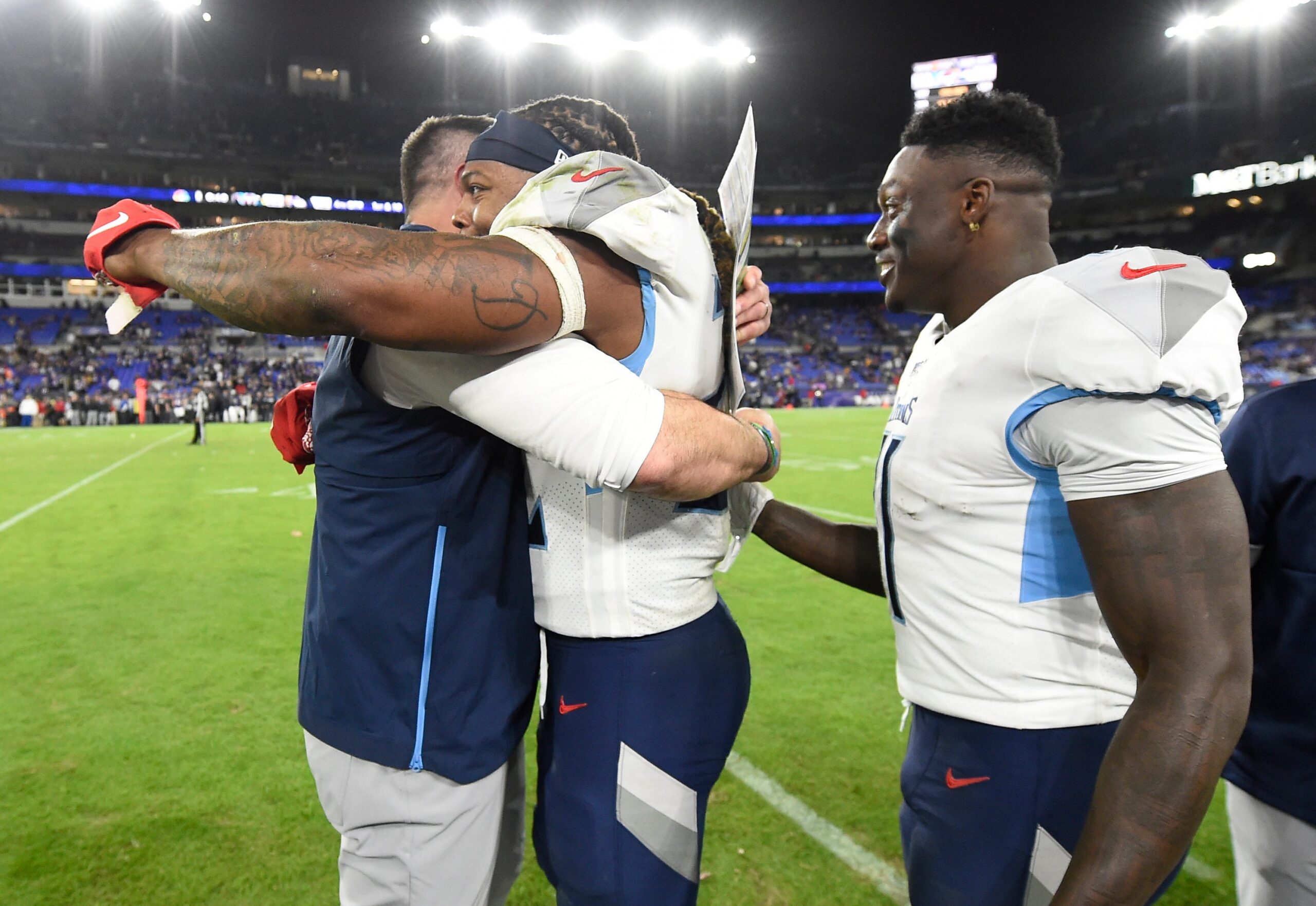
Tennessee Titans head coach Mike Vrabel hugs running back Derrick Henry (22) as wide receiver A.J. Brown (11) pats him on the back after the team s 28-12 win over the Baltimore Ravens in an an NFL Divisional Playoff game at M&T Bank Stadium Saturday, Jan. 11, 2020 in Baltimore, Md. Gw42837
This wasn’t a salary dump for a fading talent. Brown posted 78 catches, 1,003 yards, and 7 touchdowns across 15 games in 2025. Over 13 career playoff games, he’d racked up 623 yards and 5 scores. Philadelphia moved a proven Pro Bowl receiver who was still performing at a No. 1 level. ESPN’s contract breakdown pegged his average annual value around $32 million per year, seventh among all wideouts. The Eagles weren’t escaping a bad player. They were detonating a financial time bomb they’d built themselves.
The Restructure Trap
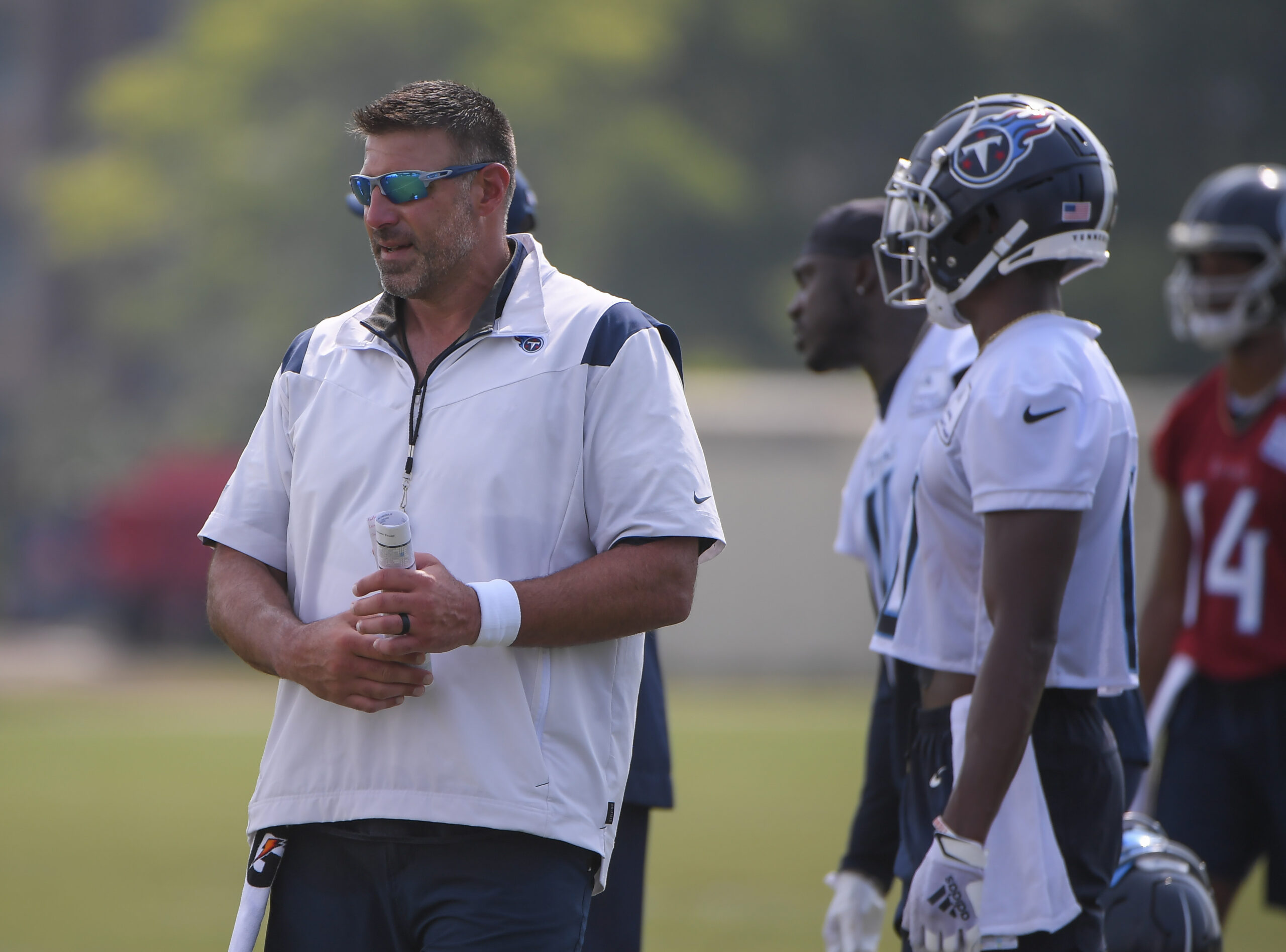
Jul 29, 2021; Nashville, TN, United States; Tennessee Titans head coach Mike Vrabel talks with wide receiver A.J. Brown (11) during training camp at Saint Thomas Sports Park. Mandatory Credit: Steve Roberts-Imagn Images
Here’s what most fans miss. Since acquiring Brown in 2022, the Eagles paid him roughly $87 million in cash but accounted for just under $44 million on their salary cap. That gap, about $43.5 million, lived in the future as prorated bonus money spread across multiple years. Every time they restructured his deal to create short-term cap relief for a playoff push, they shoved more money forward. The same moves that helped Philadelphia compete in the short term created the ghost charge that would haunt them once Brown left.
June 1 Flips the Switch
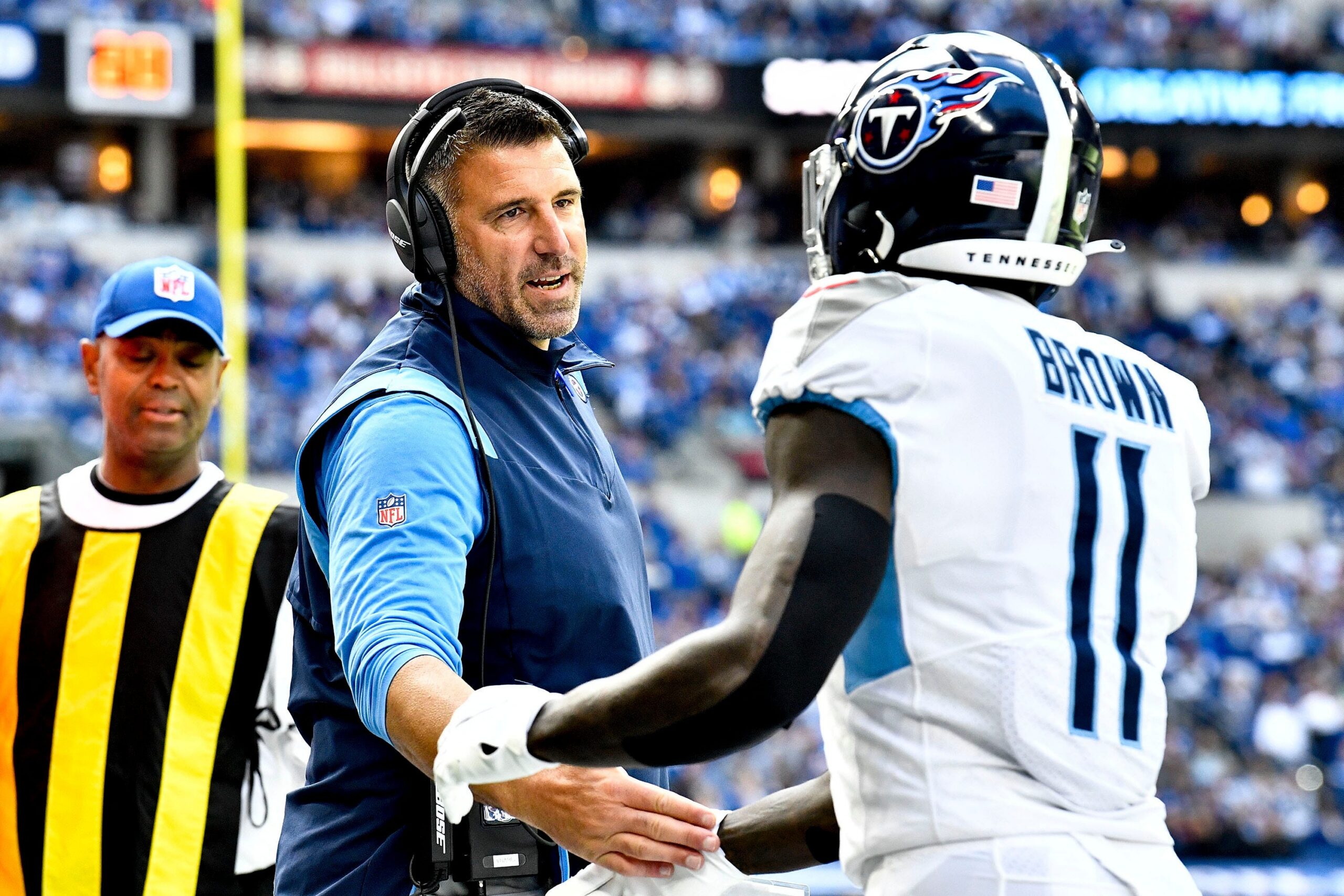
Tennessee Titans head coach Mike Vrabel congratulates wide receiver A.J. Brown (11) on his touchdown during the second quarter at Lucas Oil Stadium Sunday, Oct. 31, 2021 in Indianapolis, Ind.
Trade Brown before June 1, and the entire $43,364,609 dead charge crashes onto the 2026 cap in one devastating hit. Trade him after, and it splits: $16.303 million in 2026, $27,061,609 in 2027. Two painful years instead of one catastrophic one. Sports Illustrated called Brown the “clearest example” of why June 1 matters. The Eagles and Patriots couldn’t backdate the deal on paper either. Post-June 1 designations apply only to releases, not trades. They had to physically wait for the calendar. One date on a wall turned “impossible” into “pull the trigger.”
The Hidden Machine Behind the Deal
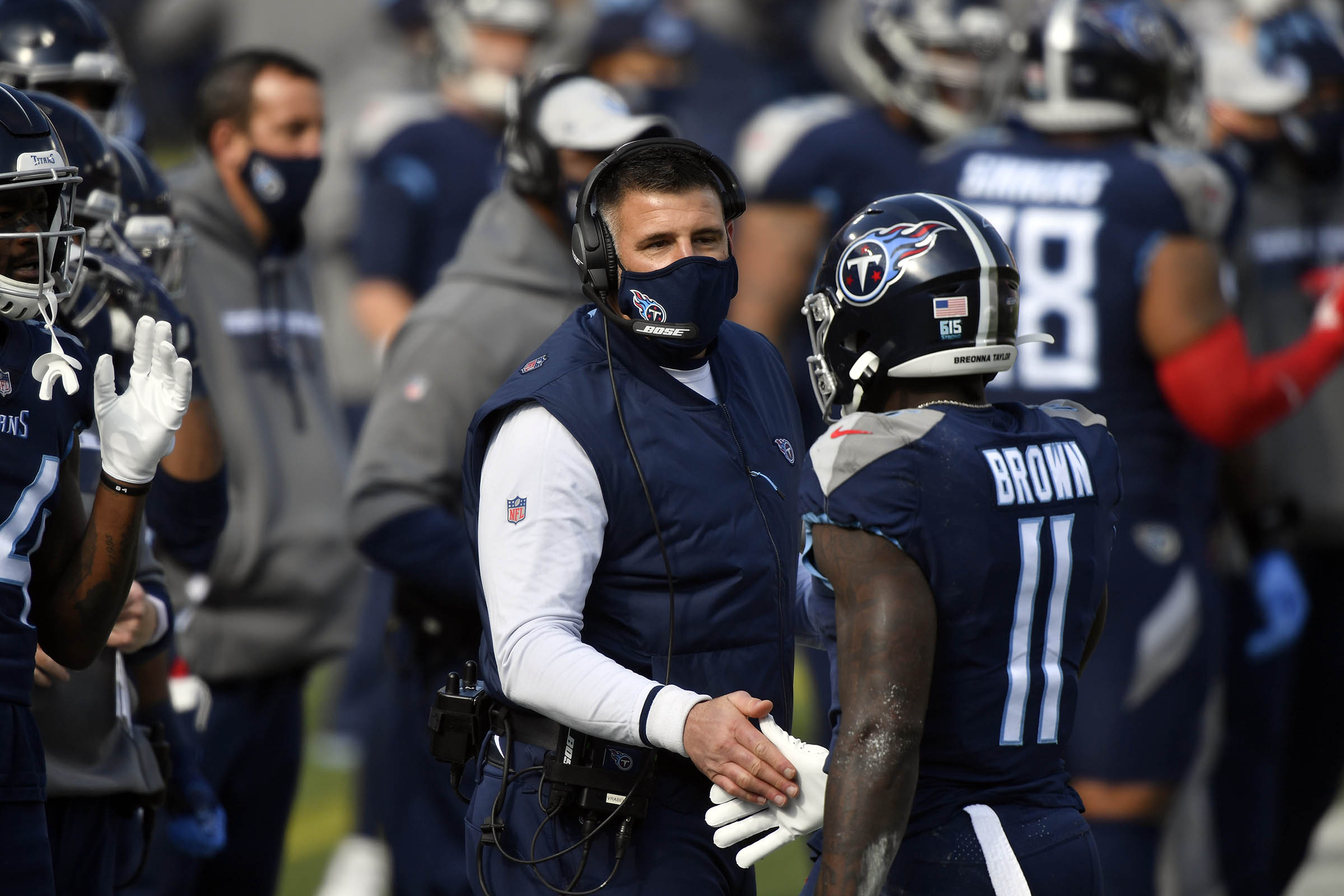
Jan 10, 2021; Nashville, Tennessee, USA; Head coach Mike Vrabel talks to wide receiver A.J. Brown (11) during the Tennessee Titans game against the Baltimore Ravens. Mandatory Credit: George Walker IV/The Tennessean via Imagn Images
The system underneath this trade is invisible unless you know where to look. Signing bonuses can be prorated over five years. Each restructure converts salary into bonus, spreading costs forward. When the player leaves, all that deferred money accelerates into dead cap. The June 1 rule lets teams split that acceleration over two seasons instead of one. Philadelphia weaponized every piece of this machinery. The result: Brown becomes a $43 million cap ghost on the Eagles’ books while suiting up as Drake Maye’s No. 1 target in Foxborough.
The Numbers That Sting
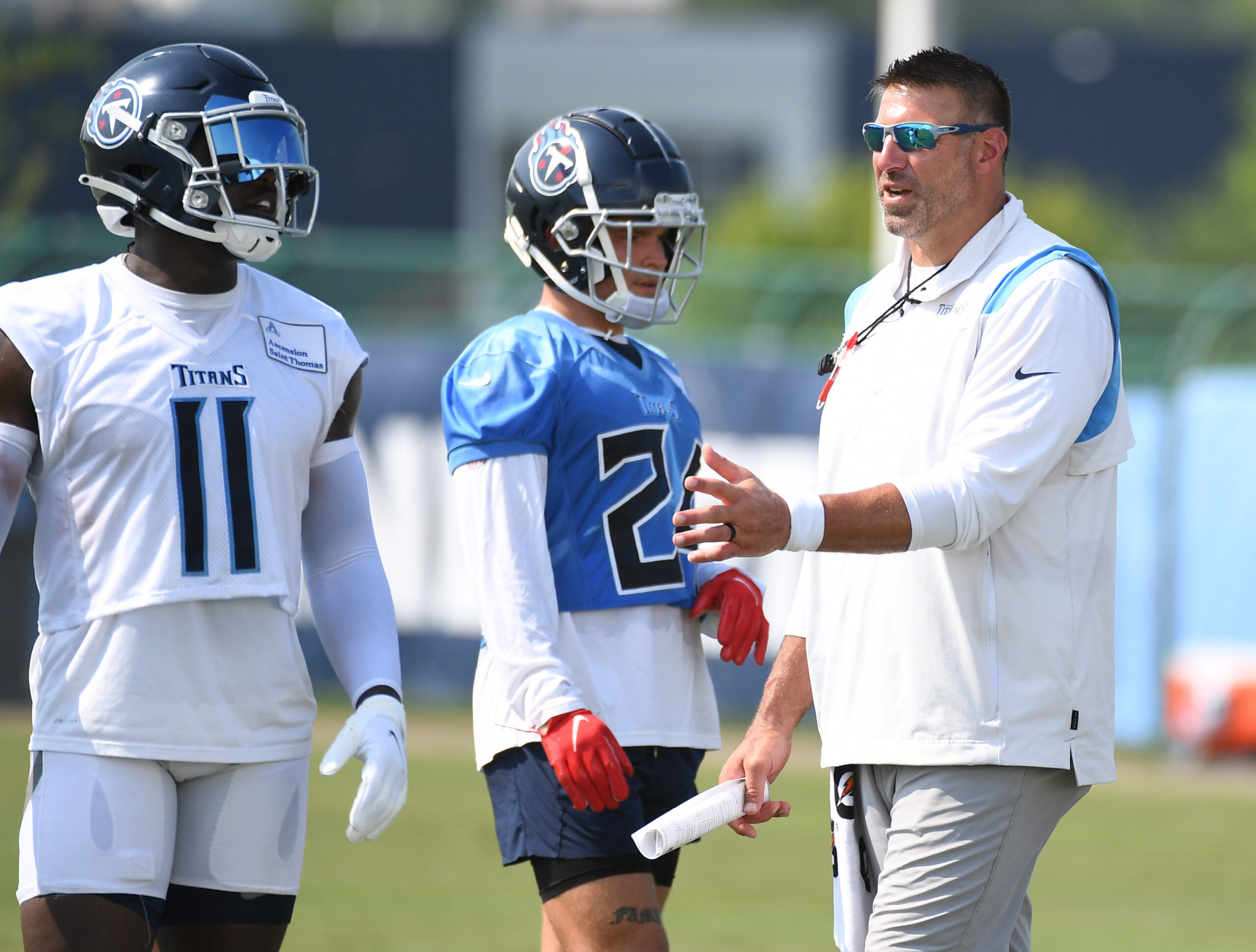
Jul 28, 2021; Nashville, TN, United States; Tennessee Titans head coach Mike Vrabel talks with Tennessee Titans wide receiver A.J. Brown (11) during training camp at Saint Thomas Sports Park. Mandatory Credit: Christopher Hanewinckel-Imagn Images
Brown’s 2027 ghost charge of roughly $27.06 million could consume an estimated 8 to 10 percent of Philadelphia’s projected cap that year. One non-player eating the salary slot of a Pro Bowl starter. Meanwhile, the Patriots gave up zero players and inherit a contract worth $96 million, with $51 million fully guaranteed. New England paid nothing for Brown’s past. Philadelphia pays everything for it. The buyer got the receiver. The seller got the bill.
Ripple Through Both Rosters
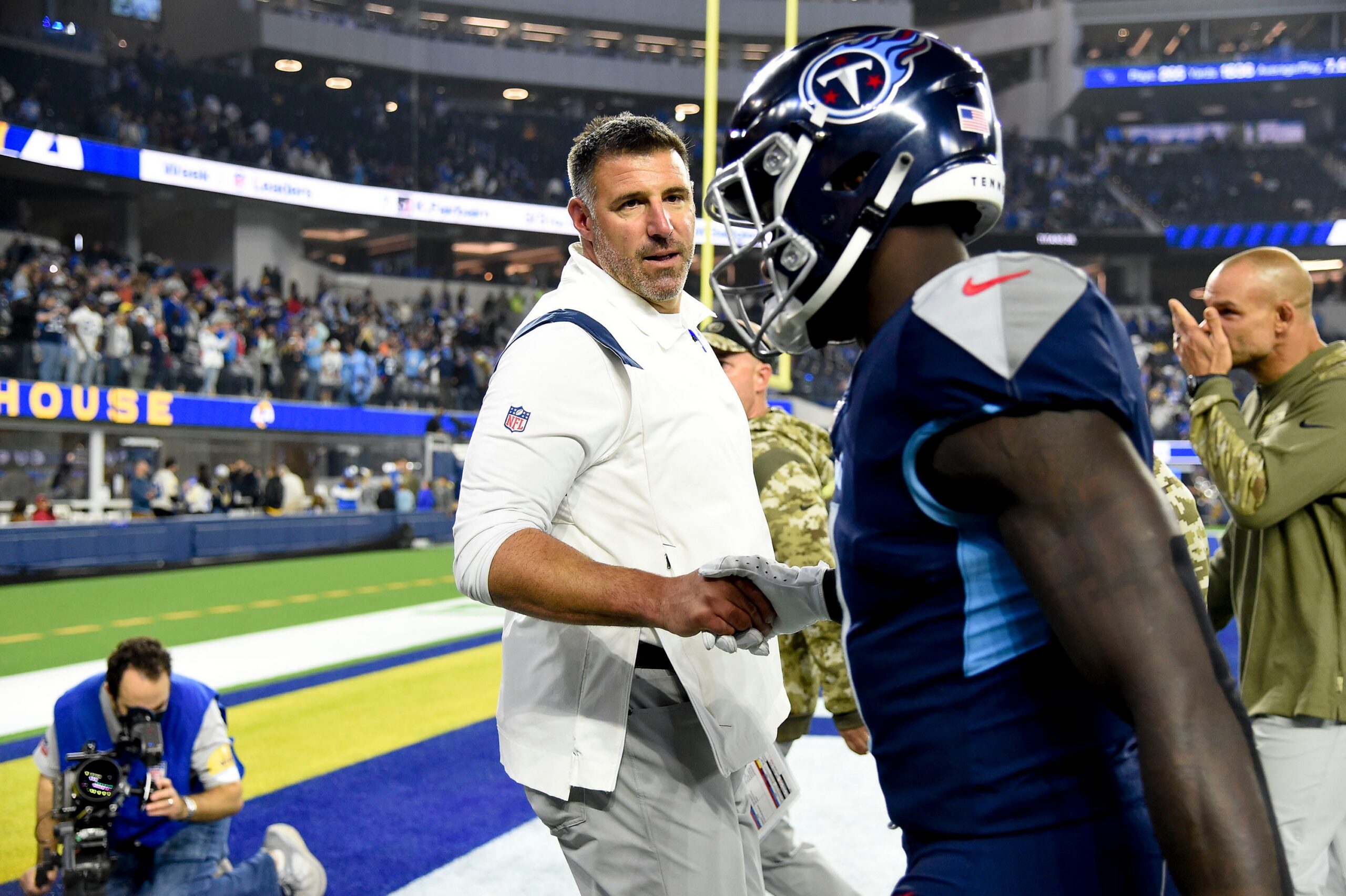
Tennessee Titans head coach Mike Vrabel congratulates Tennessee Titans wide receiver A.J. Brown (11) after they beat the Rams at SoFI Stadium Sunday, Nov. 7, 2021 in Inglewood, Calif. Titans Rams 125
Philadelphia didn’t just lose Brown. They rebuilt the receiver room around DeVonta Smith with Hollywood Brown and Dontayvion Wicks, plus first-rounder Makai Lemon after trading up from No. 23 to No. 20. Barnwell noted the Eagles drafted Brown’s replacement before officially dealing him. In New England, Brown joins Romeo Doubs, already signed to a four-year deal worth up to $80 million. The Patriots are stacking weapons around Maye while his rookie contract stays cheap. That window won’t last forever, which is exactly the point.
The Precedent Nobody Can Ignore
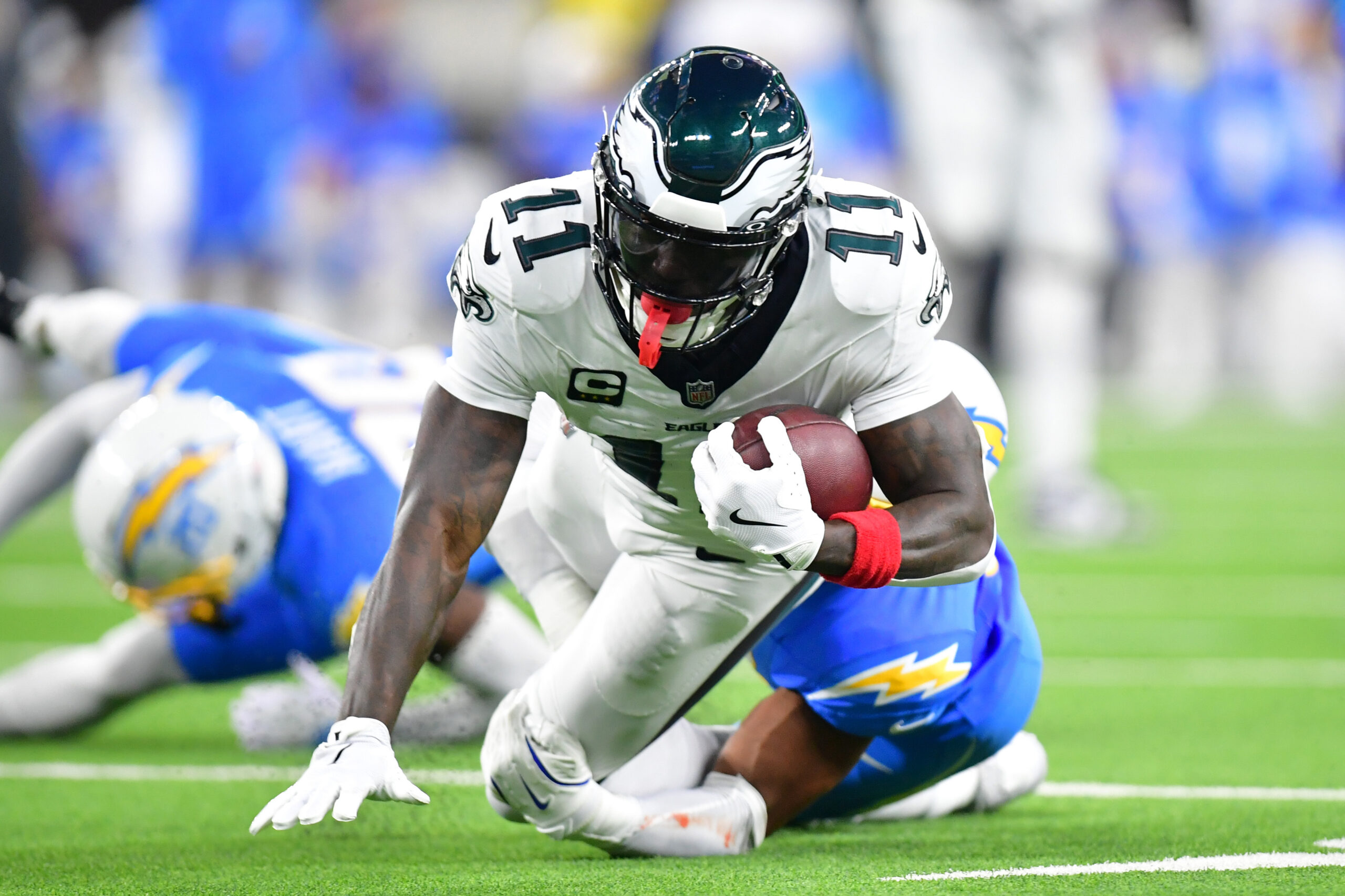
Dec 8, 2025; Inglewood, California, USA; Philadelphia Eagles wide receiver A.J. Brown (11) runs against Los Angeles Chargers linebacker Daiyan Henley (0) in the first half at SoFi Stadium. Mandatory Credit: Gary A. Vasquez-Imagn Images
Ghost charges this large used to belong to quarterbacks. The Jets carry roughly $35 million in dead money for Aaron Rodgers in 2026. Brown’s $43.36 million dwarfs that, and he plays wide receiver. This trade follows the pattern of Hill, Adams, and now Brown: elite receivers moved when the cap math and team philosophy shift. The difference is the scale of the dead money. Philadelphia just proved a franchise can “buy” a future first-round pick by swallowing a ghost charge that would have been unthinkable five years ago. That’s not an exception. That’s a new rule.
What Comes Next
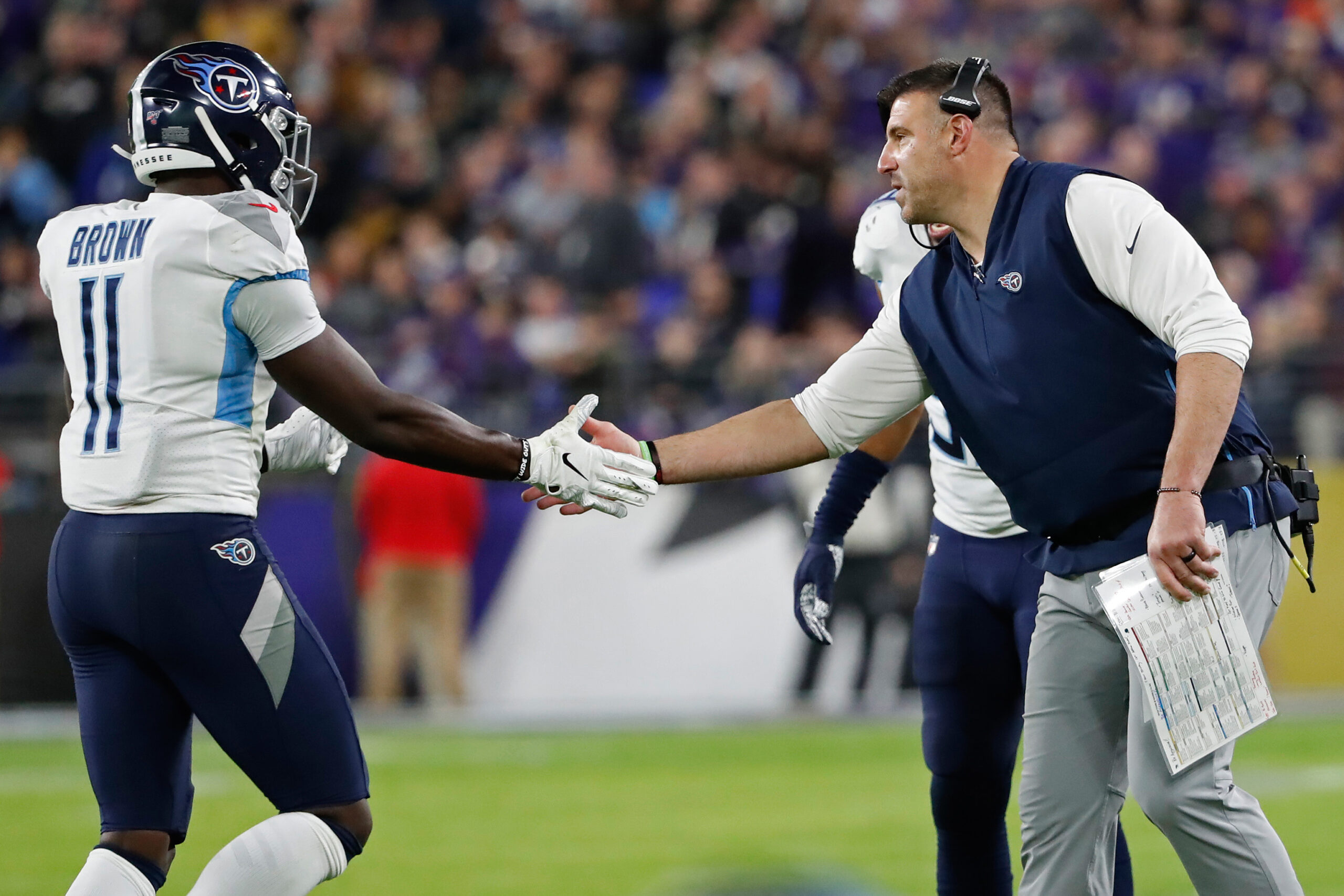
Jan 11, 2020; Baltimore, Maryland, USA; Tennessee Titans head coach Mike Vrabel (M) congratulates Titans wide receiver A.J. Brown (11) on the sidelines against the Baltimore Ravens in a AFC Divisional Round playoff football game at M&T Bank Stadium. Mandatory Credit: Geoff Burke-Imagn Images
Other front offices are watching. If the Eagles can stomach $43 million in dead cap for a still-prime receiver and walk away with a future first, every team with a heavily restructured star contract now has a playbook. June could become as dramatic as March for blockbuster moves. Agents will push harder for no-trade clauses. Players will demand bonus structures that can’t be weaponized against them. Howie Roseman called it a “win-win situation.” The next receiver who gets turned into a cap ghost might use different language.
The Ghost Everyone Should Fear
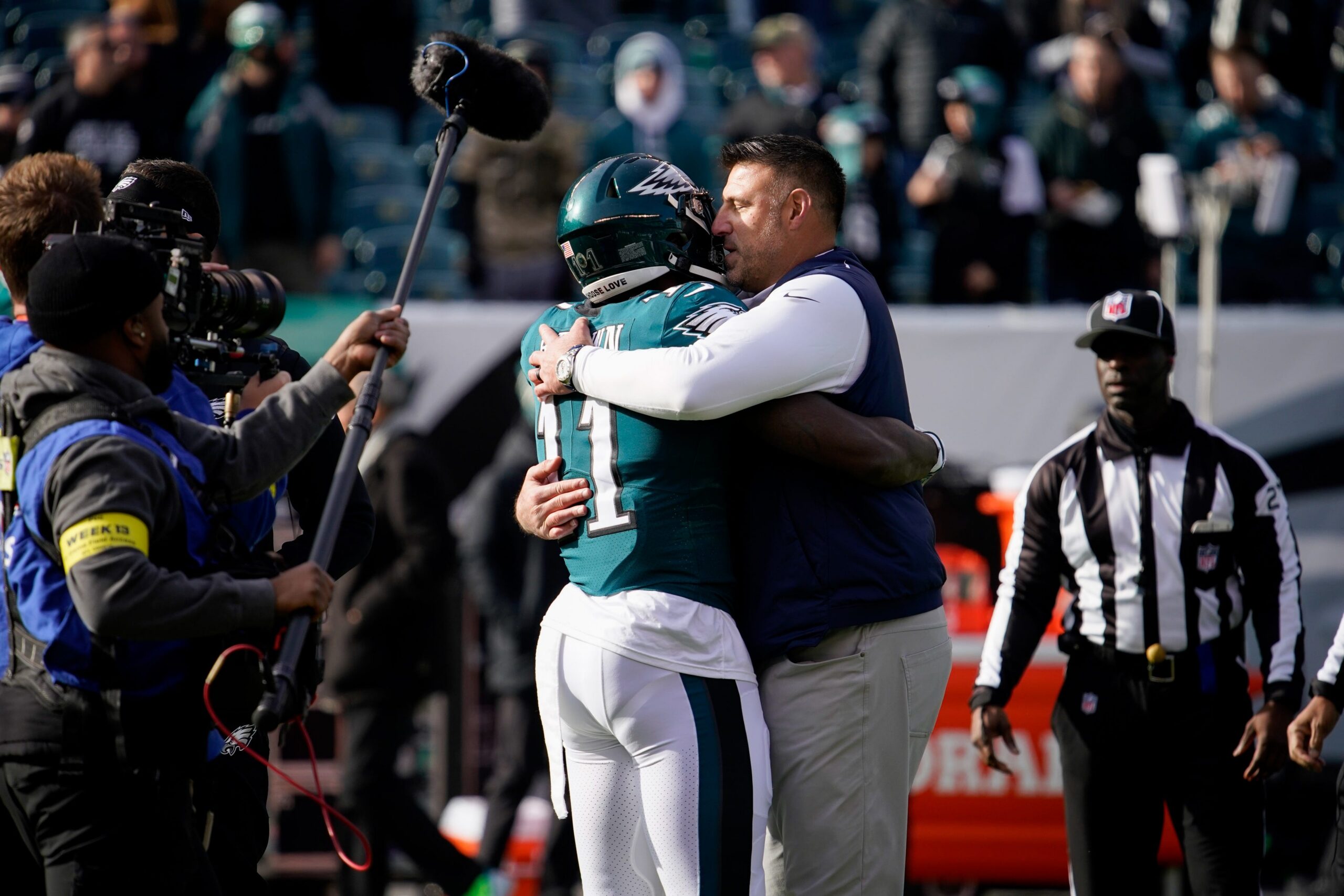
Tennessee Titans head coach Mike Vrabel hugs Philadelphia Eagles wide receiver A.J. Brown (11) as the teams get ready to face off at Lincoln Financial Field Sunday, Dec. 4, 2022, in Philadelphia, Pa. Nfl Tennessee Titans At Philadelphia Eagles
Because the trade happened after June 1, the Eagles couldn’t receive 2026 draft picks. Their compensation lands in 2027 and 2028, stretching the payoff across a three-year competitive timeline. Philadelphia is betting that Lemon, Hollywood Brown, and future picks will outweigh what they lost. New England is betting that pairing Brown with Vrabel again, the coach who helped develop him in Tennessee, unlocks a contention window before Maye’s second contract arrives. Every big-money contract in the NFL now carries a shadow. The only variable is when the calendar catches up. Did Howie Roseman just write the new blueprint for cap management, or hand the Patriots a steal? Tell us who really won this trade in the comments.