
The phone call came days after the June 1 deadline, and it changed two franchises in opposite directions. Philadelphia’s front office had been staring at a salary cap spreadsheet for weeks, watching the numbers close in like walls. A three-time Pro Bowl receiver, a guy who’d hauled in over 5,000 career receiving yards, was about to become someone else’s weapon. Not because he couldn’t play. Because the money said he had to go. The Eagles absorbed $43.36 million in dead cap to make it happen.
The Cap Trap Philadelphia Built
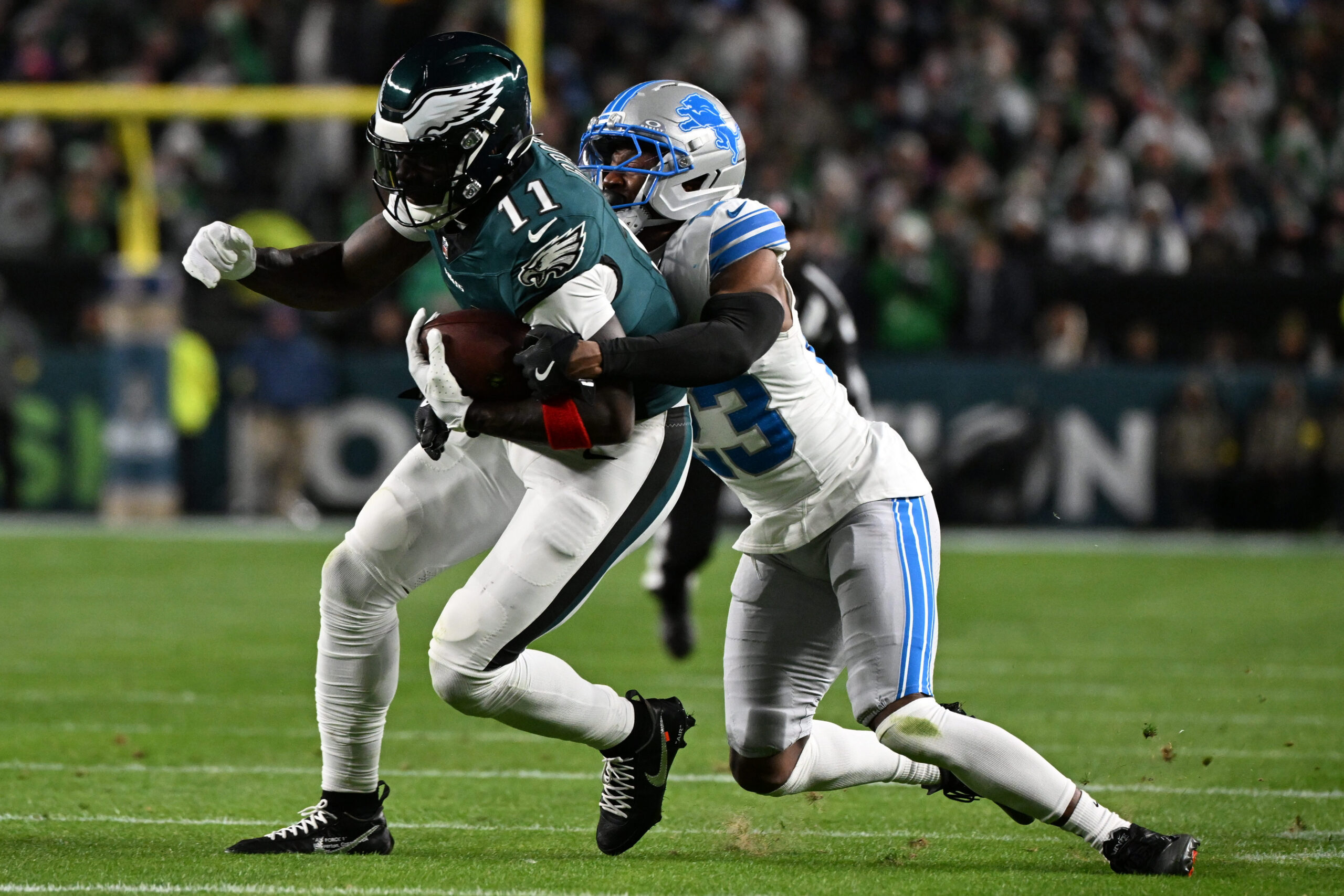
Nov 16, 2025; Philadelphia, Pennsylvania, USA; Philadelphia Eagles wide receiver A.J. Brown (11) makes a catch over Detroit Lions cornerback Rock Ya-Sin (23) during the first half at Lincoln Financial Field. Mandatory Credit: Eric Hartline-Imagn Images
A.J. Brown didn’t lose a step. He didn’t cause locker room problems that tanked the roster. Philadelphia’s own contract structuring created a financial sinkhole so deep the only way out was trading their best pass catcher. The Eagles waited specifically until after June 1 to split that $43 million dead cap hit over two seasons: roughly $16.3 million in 2026 and $27.1 million in 2027. That timing tells you everything. This wasn’t a football decision. It was an accounting decision wearing a football jersey.
Frustration Was Already Brewing
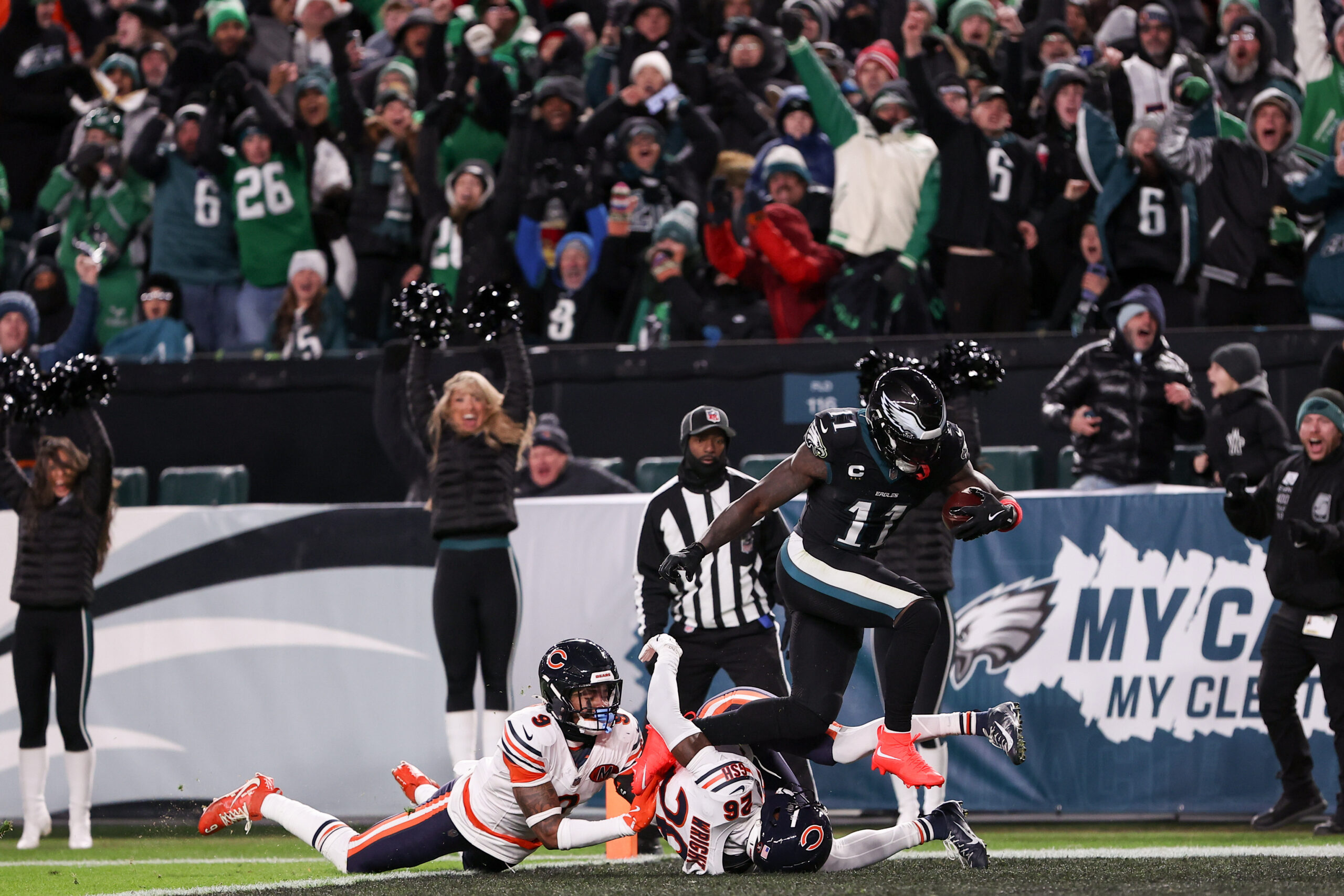
Nov 28, 2025; Philadelphia, Pennsylvania, USA; Philadelphia Eagles wide receiver A.J. Brown (11) scores a touchdown defended by Chicago Bears safety Jaquan Brisker (9) and cornerback Nahshon Wright (26) during the third quarter of the game at Lincoln Financial Field. Mandatory Credit: Bill Streicher-Imagn Images
Brown’s frustration with the offense had been simmering. Inconsistent targets, a scheme that didn’t feed him the ball enough. The divorce felt inevitable to insiders. But here’s what most fans assumed: that the Eagles would at least extract maximum value from a star receiver in his prime. That a franchise this sophisticated would never let a productive asset walk for pennies. That assumption is dead now. Philadelphia sent Brown to New England for a 2028 first-round pick and a 2027 fifth-round pick, prioritizing future draft capital over winning now.
New England’s $7 Million Heist
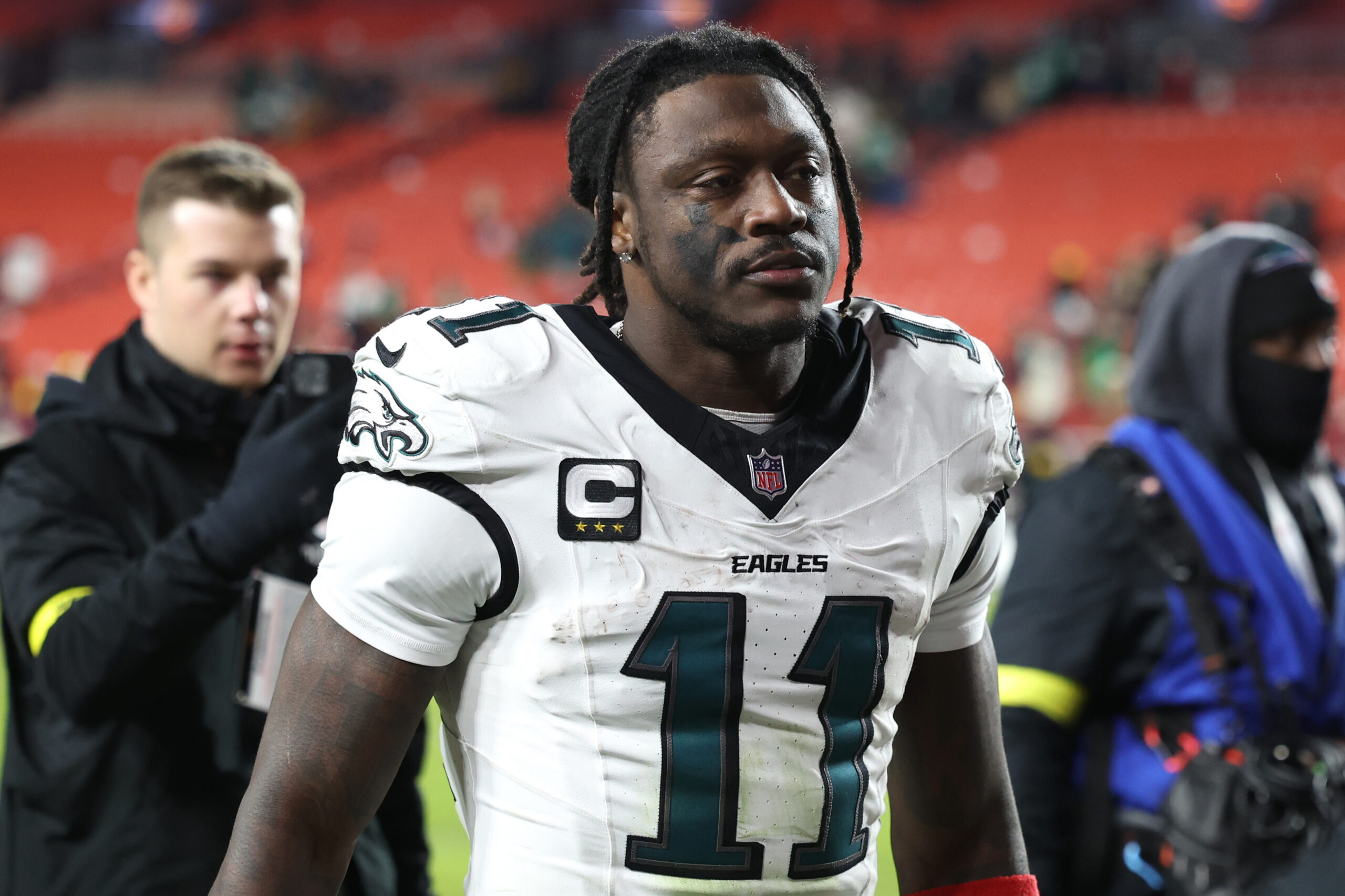
Dec 20, 2025; Landover, Maryland, USA; Philadelphia Eagles wide receiver A.J. Brown (11) leaves the field after the game against the Washington Commanders at Northwest Stadium. Mandatory Credit: Geoff Burke-Imagn Images
The Patriots, a rising contender reuniting Brown with head coach Mike Vrabel and quarterback Drake Maye, acquired a franchise-caliber receiver for approximately $7 million against their 2026 cap. Seven million. That’s less than what mid-tier starters cost. Brown’s base salary sits at $1.3 million, with a $27.45 million option bonus decision looming before the regular season opener. New England gets all the production. Philadelphia eats all the financial wreckage. One team paid $43 million to lose a weapon. The other paid a fraction to gain one.
The Hidden Machinery of Dead Money
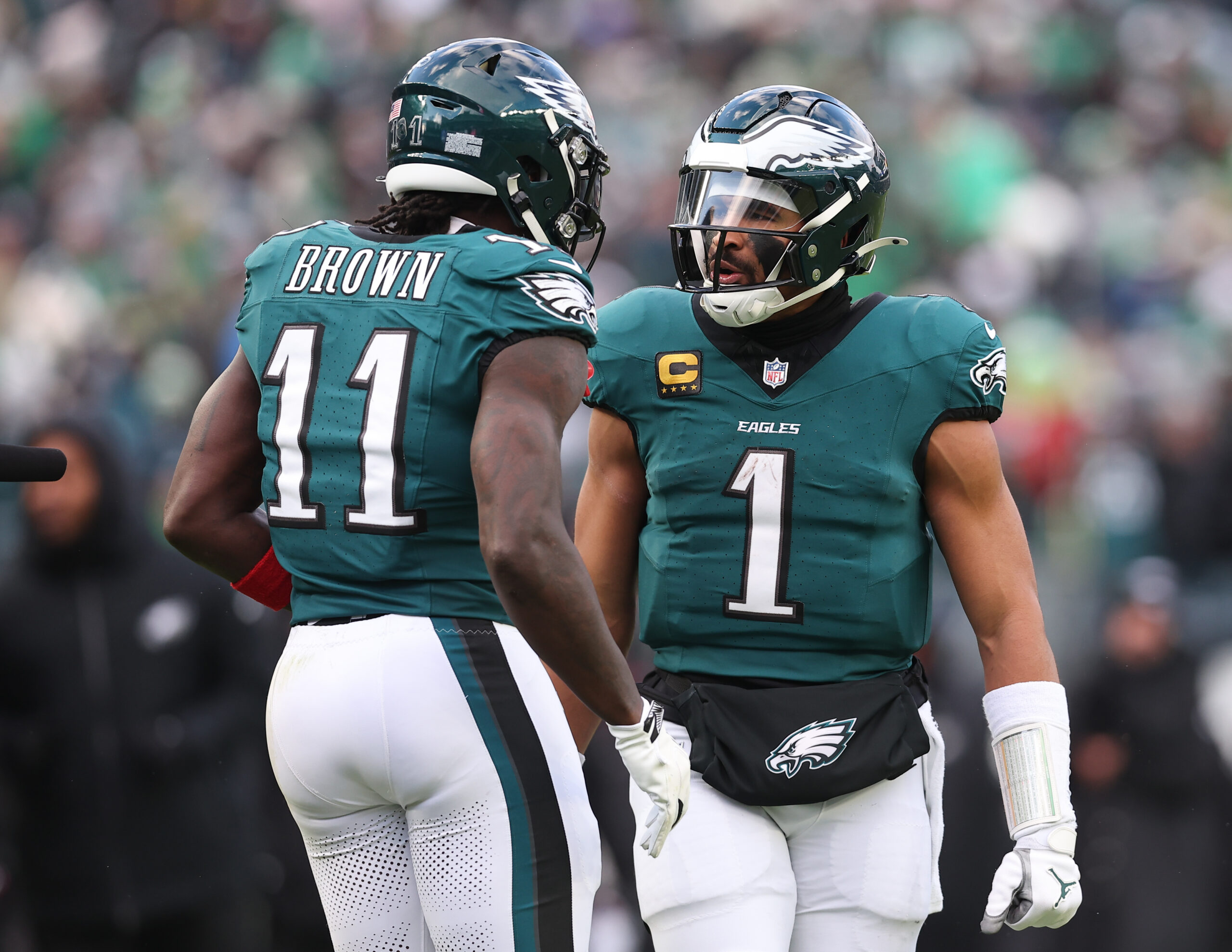
Dec 14, 2025; Philadelphia, Pennsylvania, USA; Philadelphia Eagles quarterback Jalen Hurts (1) reacts with wide receiver A.J. Brown (11) after their touchdown connection during the fourth quarter against the Las Vegas Raiders at Lincoln Financial Field. Mandatory Credit: Bill Streicher-Imagn Images
The NFL salary cap doesn’t punish bad teams. It punishes bad contracts. Philadelphia structured Brown’s deal with massive signing bonuses that accelerated into future cap years, creating a financial time bomb that detonated the moment the relationship soured. Think of it like refinancing a mortgage to avoid foreclosure: the monthly payment shrinks, but the total debt balloons. The Eagles avoided a single-year $43 million catastrophe by spreading it across two seasons. They still owe every penny. They just don’t have the player anymore.
The Numbers That Bury Philadelphia
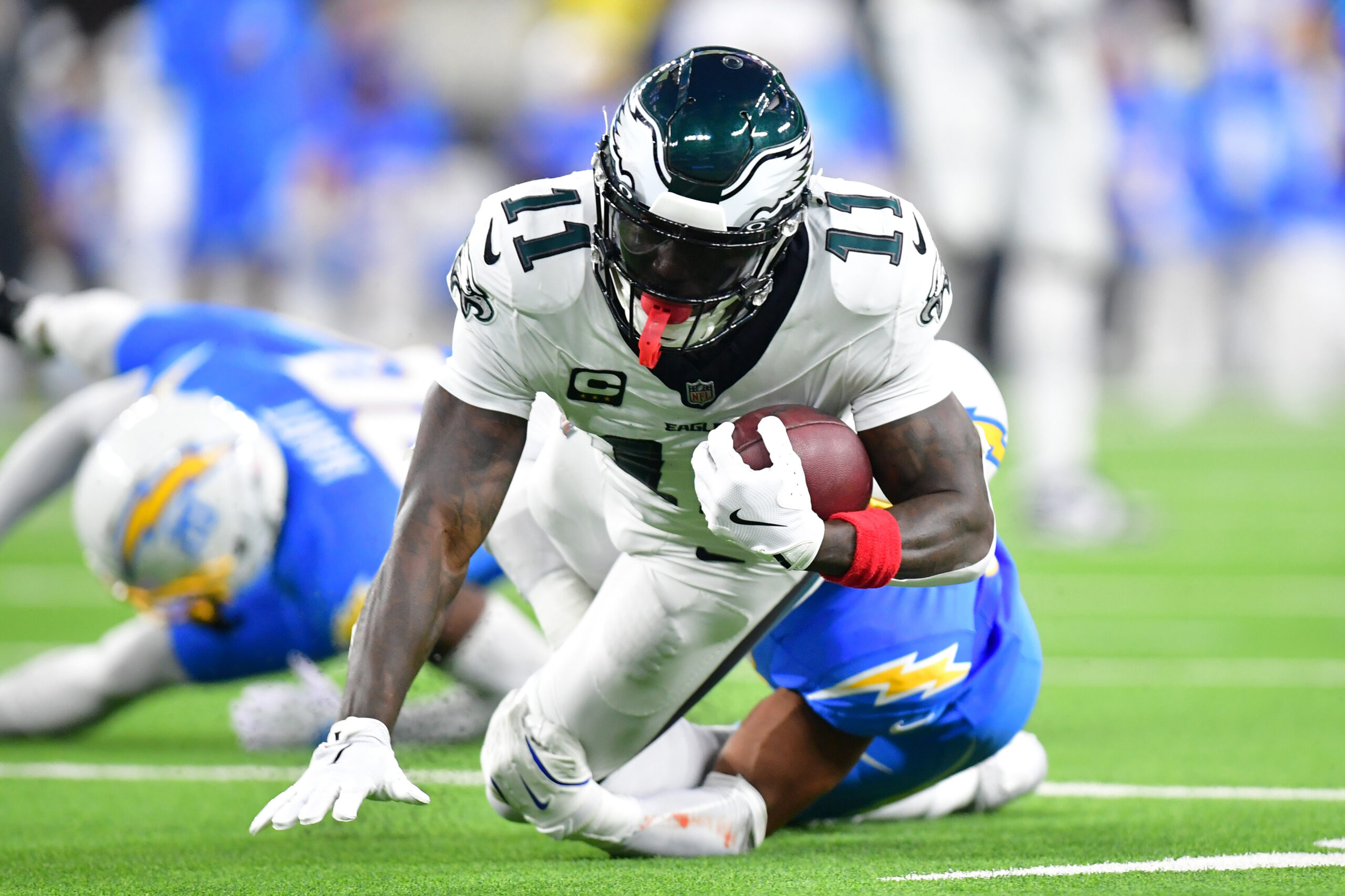
Dec 8, 2025; Inglewood, California, USA; Philadelphia Eagles wide receiver A.J. Brown (11) runs against Los Angeles Chargers linebacker Daiyan Henley (0) in the first half at SoFi Stadium. Mandatory Credit: Gary A. Vasquez-Imagn Images
The precise dead cap charge: $43,364,609. That figure occupies Philadelphia’s salary cap for a player catching passes in a different uniform. Meanwhile, New England’s cap hit of roughly $7.04 million means the Patriots acquired a Pro Bowl receiver for less than what some teams pay their backup quarterbacks. The value disparity is staggering enough to rewrite how front offices think about trade leverage. When one team’s desperation becomes another team’s discount, the cap system stops being a leveling mechanism and starts being a weapon.
The Ripple Hitting Both Rosters
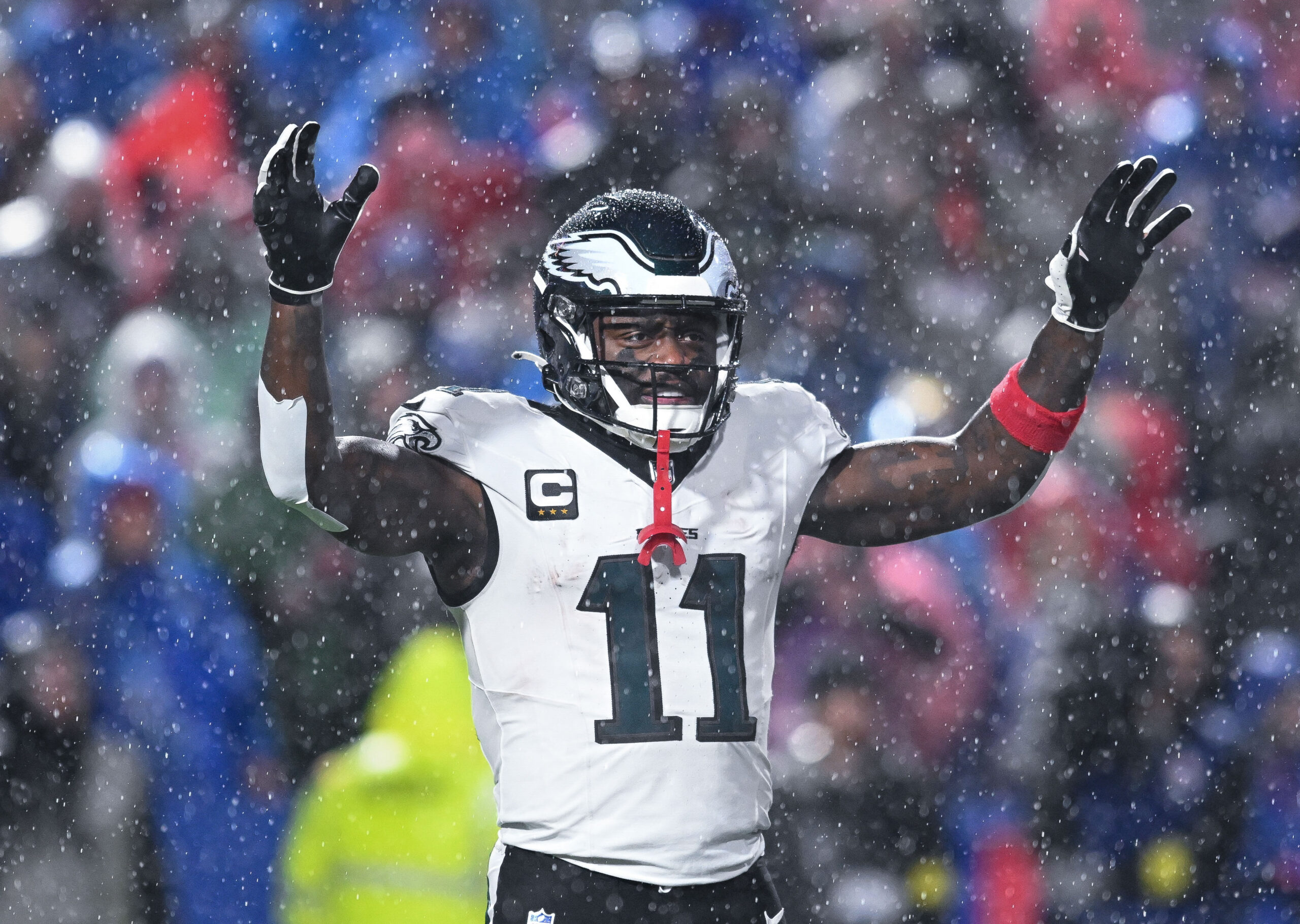
Dec 28, 2025; Orchard Park, New York, USA; Philadelphia Eagles wide receiver A.J. Brown (11) during a timeout in the third quarter against the Buffalo Bills at Highmark Stadium. Mandatory Credit: Mark Konezny-Imagn Images
Philadelphia’s receiver room now has a crater where its most productive target stood. That $16.3 million dead cap charge in 2026 limits the Eagles’ ability to sign a replacement anywhere close to Brown’s caliber. New England, already a contender, just added an elite offensive weapon without sacrificing roster flexibility. Every team in the league watched this happen. Every general manager with a bloated contract on the books just felt a chill. The Eagles didn’t just lose a player. They handed a conference rival a loaded gun.
A New Rule for the NFL
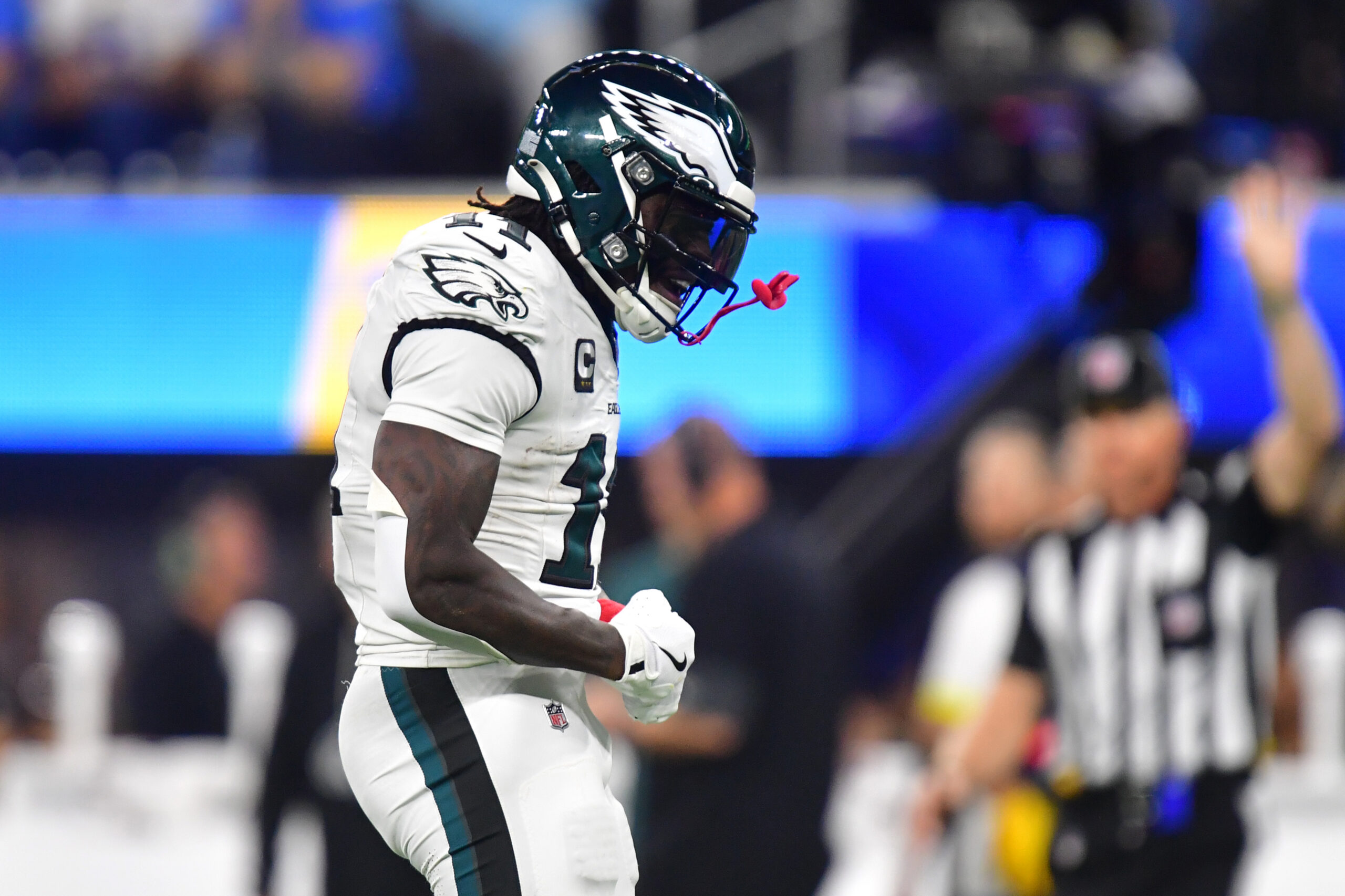
Dec 8, 2025; Inglewood, California, USA; Philadelphia Eagles wide receiver A.J. Brown (11) reacts in the second half against the Los Angeles Chargers at SoFi Stadium. Mandatory Credit: Gary A. Vasquez-Imagn Images
Once you see it, you can’t unsee it: the June 1 deadline doesn’t protect teams. It creates a predator-prey dynamic where cap-strapped franchises become discount warehouses for competitors smart enough to wait. This trade sets a precedent. Star players on bloated contracts aren’t untradeable anymore. They’re fire-sale inventory for any team with cap space and patience. The myth that NFL front offices always maximize value on star players died in this transaction. Deadline-driven cap management now officially turns cornerstones into bargains.
The Dominoes Still Falling
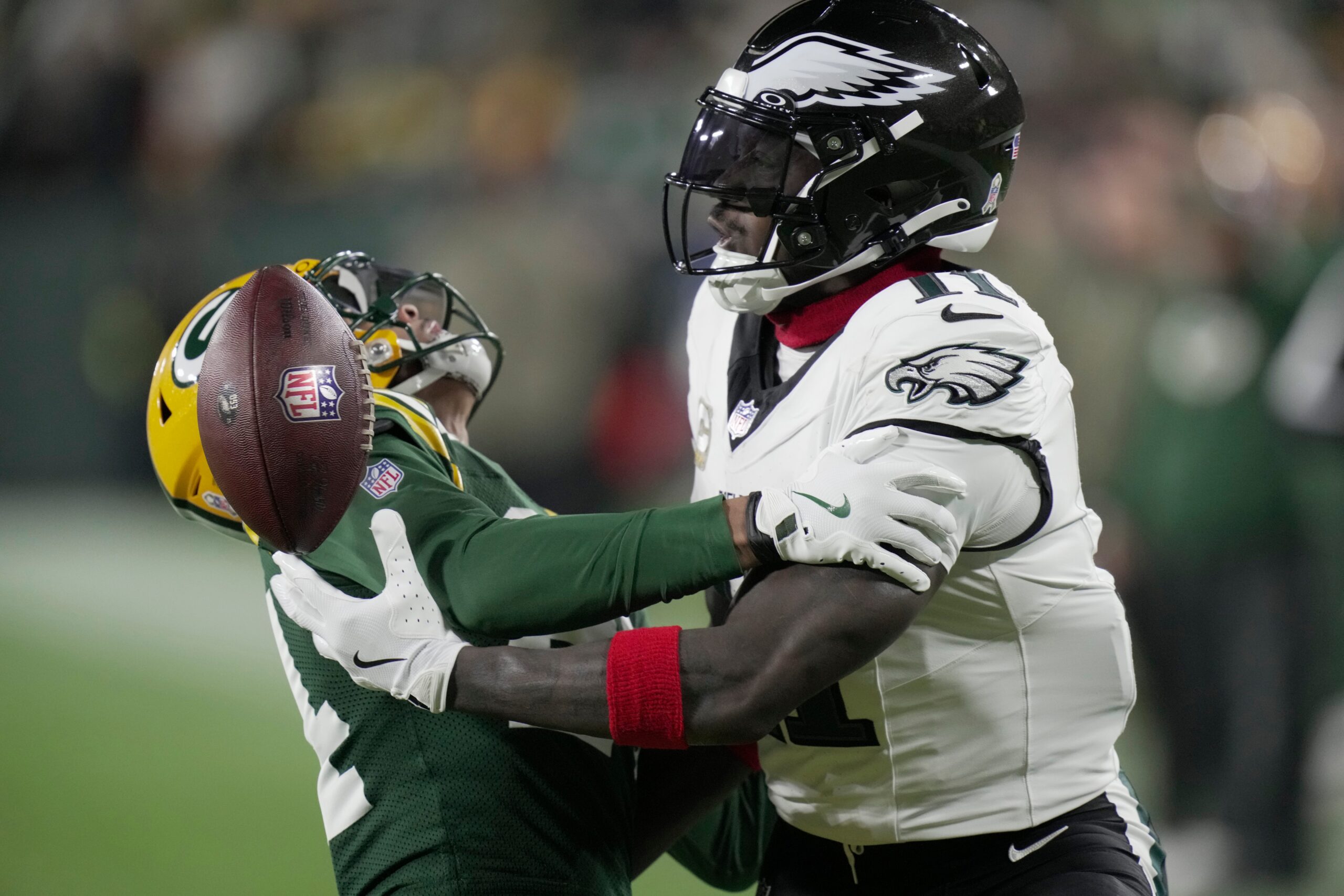
Green Bay Packers cornerback Carrington Valentine (24) breaks up a pass intended for Philadelphia Eagles wide receiver A.J. Brown (11) during the fourth quarter of their game Monday, November 10, 2025 at Lambeau Field in Green Bay, Wisconsin.
Philadelphia still carries $27.1 million in dead money from Brown hitting their 2027 cap. That’s next year’s problem becoming next year’s crisis. Other teams with similarly structured contracts are watching their own stars differently now, wondering if they’re one bad season away from the same forced sale. The escalation path is clear: more teams will stockpile cap space specifically to exploit June 1 desperation from rivals. The predators are learning from New England’s playbook, and the prey list is getting longer.
Who Wins the Bar Argument
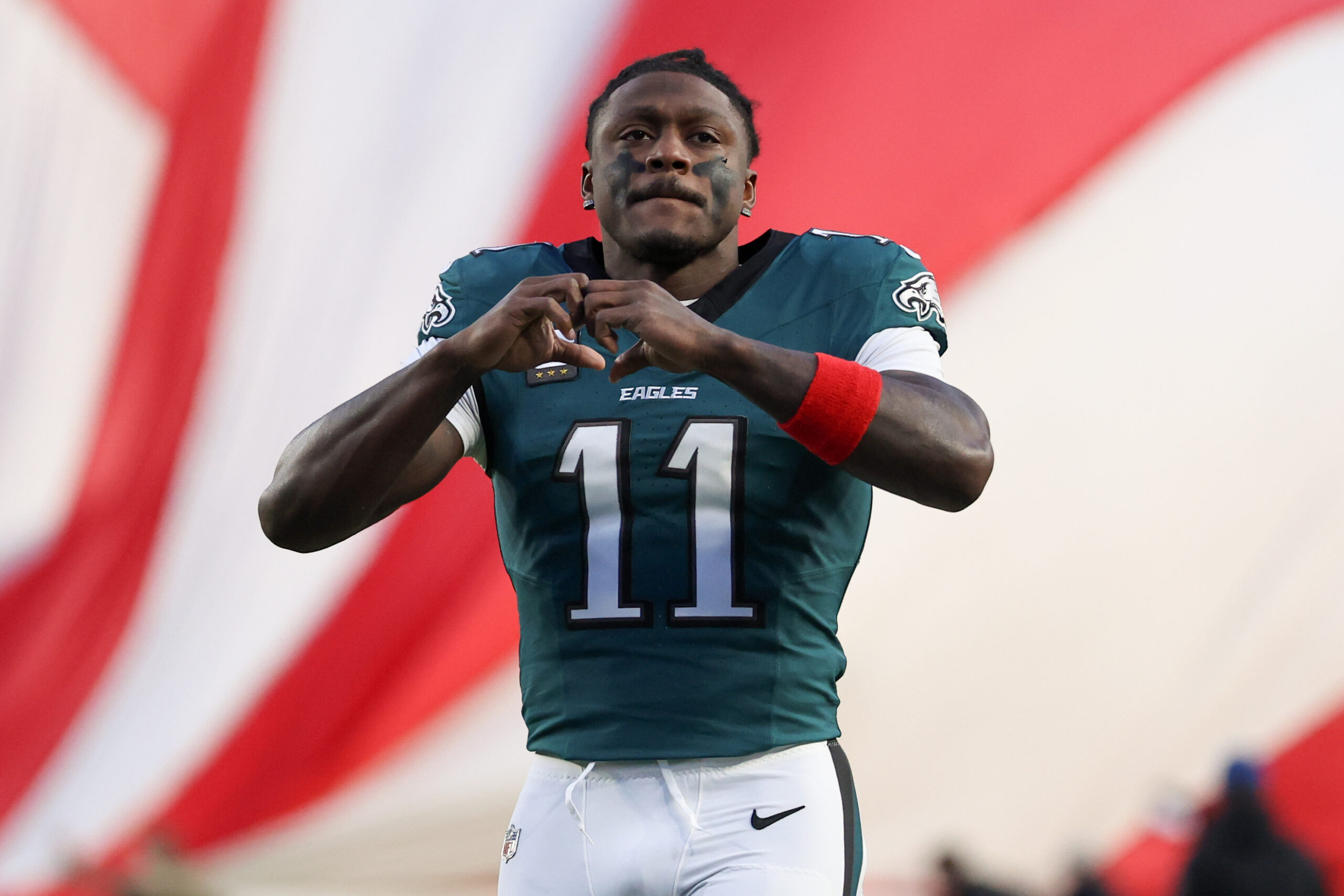
Jan 11, 2026; Philadelphia, PA, USA; Philadelphia Eagles wide receiver A.J. Brown (11) looks on prior to an NFC Wild Card Round game against the San Francisco 49ers at Lincoln Financial Field. Mandatory Credit: Bill Streicher-Imagn Images
The Patriots have until their first regular-season game to decide on Brown’s $27.45 million option bonus. That single decision determines whether this stays a bargain or becomes New England’s own cap headache down the road. Philadelphia bet that a 2028 first-round pick and a 2027 fifth-rounder would be worth more than a proven receiver right now. New England bet the opposite. Both franchises just staked their futures on the same player pulling in different directions. Somebody’s wrong, and the whole league is watching to find out who. So settle it for us: did Howie Roseman fleece the Patriots by cashing in a future first, or did Bill Belichick’s old shop just steal a Pro Bowl weapon for backup-QB money? Sound off in the comments with the team you think won this trade.