

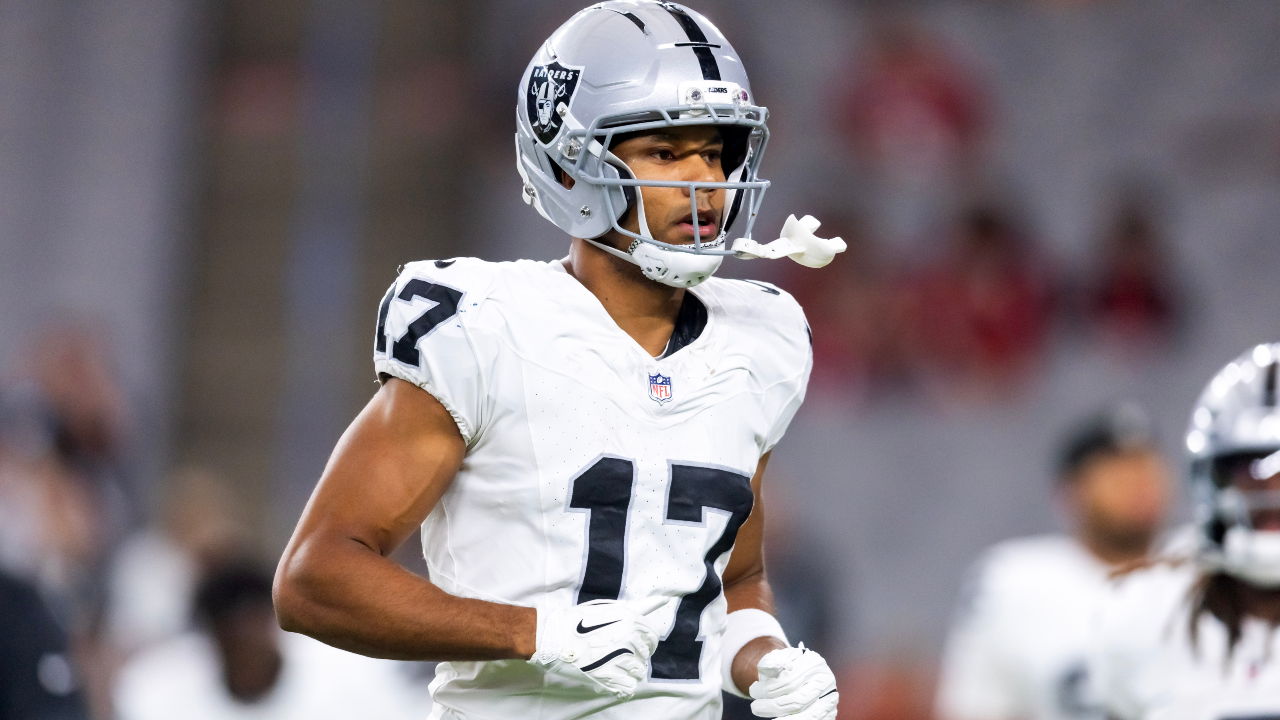
The retirement announcement dropped in May 2026, and it read nothing like a goodbye. Collin Johnson, a wide receiver who suited up for three NFL franchises across four seasons of game action, announced he was done with professional football. At 28 years old, with a body still capable of playing on Sundays, he chose to stop. Thirty-one career catches to his name. And an acceptance letter to MIT Sloan in his pocket.
The Name He Carried
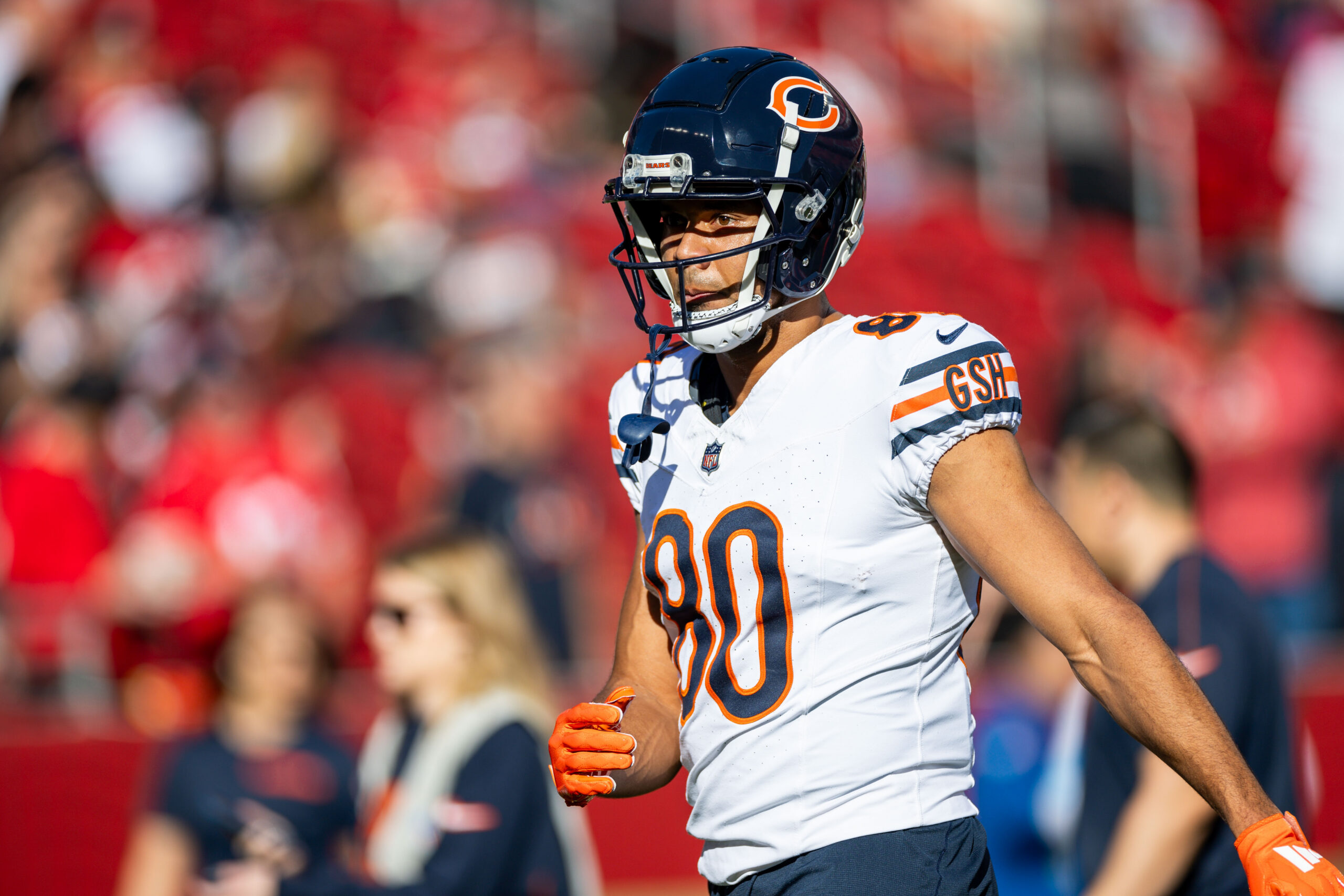
Dec 8, 2024; Santa Clara, California, USA; Chicago Bears wide receiver Collin Johnson (80) warms up before the game against the San Francisco 49ers at Levi’s Stadium. Mandatory Credit: Bob Kupbens-Imagn Images
Collin Johnson grew up as the son of College Football Hall of Famer Johnnie Johnson, a standout defensive back at Texas who went on to play professionally for the Los Angeles Rams and Seattle Seahawks. That bloodline carried weight. When the Jacksonville Jaguars selected Collin in the fifth round of the 2020 NFL Draft, the assumption was simple: the kid had the genes, the frame, and the pedigree to stick. Four seasons of regular‑season action later, he’d bounced from Jacksonville to the New York Giants to the Chicago Bears, collecting 31 receptions and 394 yards along the way.
Fewer Than Eight Catches a Year
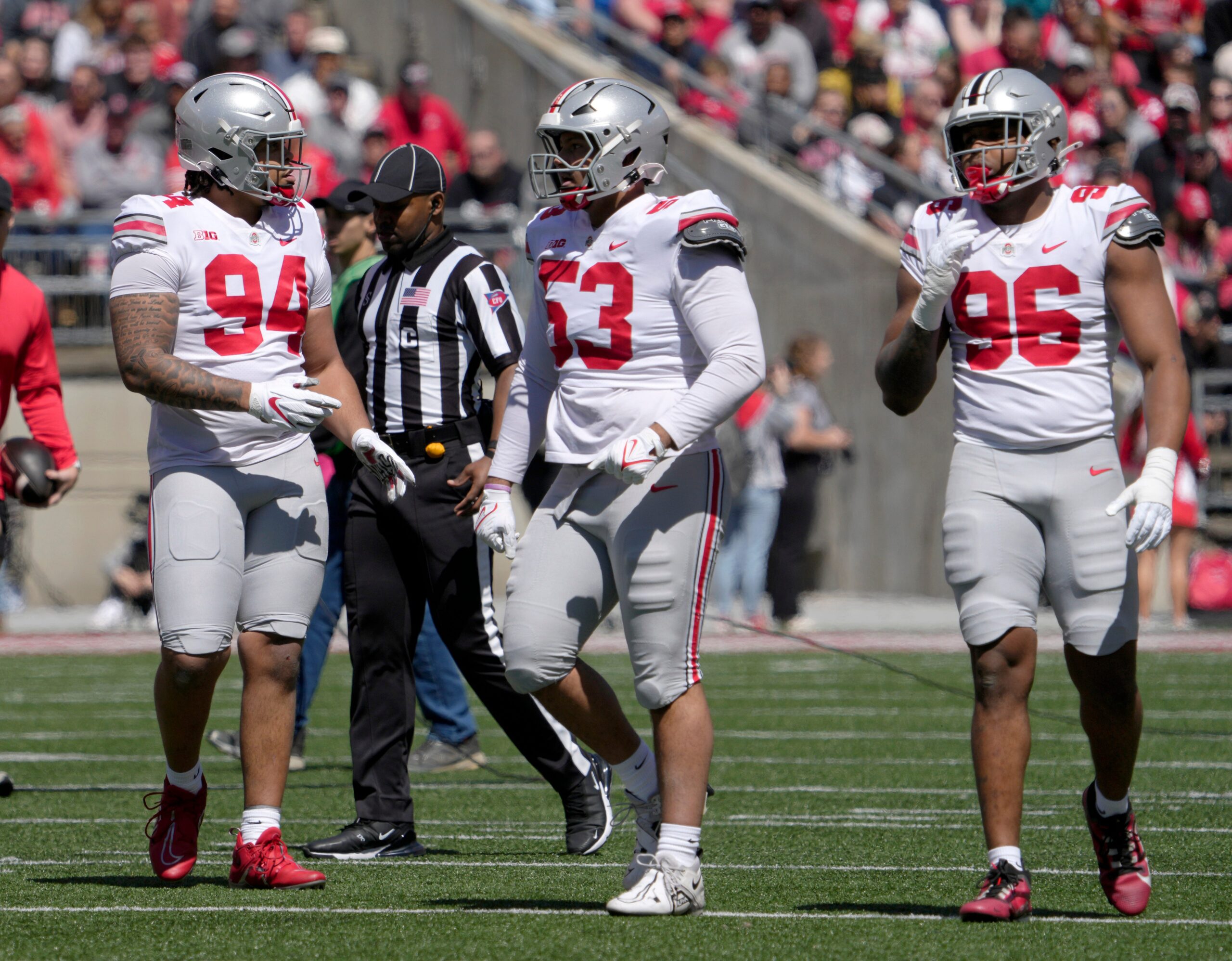
April 13, 2024; Columbus, Ohio, USA; Ohio State Buckeyes defensive linemen Jason Moore (94) and Will Smith Jr. (53), and long snapper Collin Johnson (96) compete during the first half of the LifeSports spring football game at Ohio Stadium on Saturday.
Thirty-one receptions across 38 games. Two touchdowns. That averages out to fewer than eight catches per season over the years he saw regular‑season action, a number most starting receivers hit in a single game. The conventional wisdom says you keep grinding, keep chasing the roster spot, keep collecting checks until the league forces you out. Johnson looked at those numbers and arrived at a different conclusion. The NFL wasn’t going to become something it hadn’t been for four years. The pattern was already written, and he could read it clearly.
The MIT Pivot
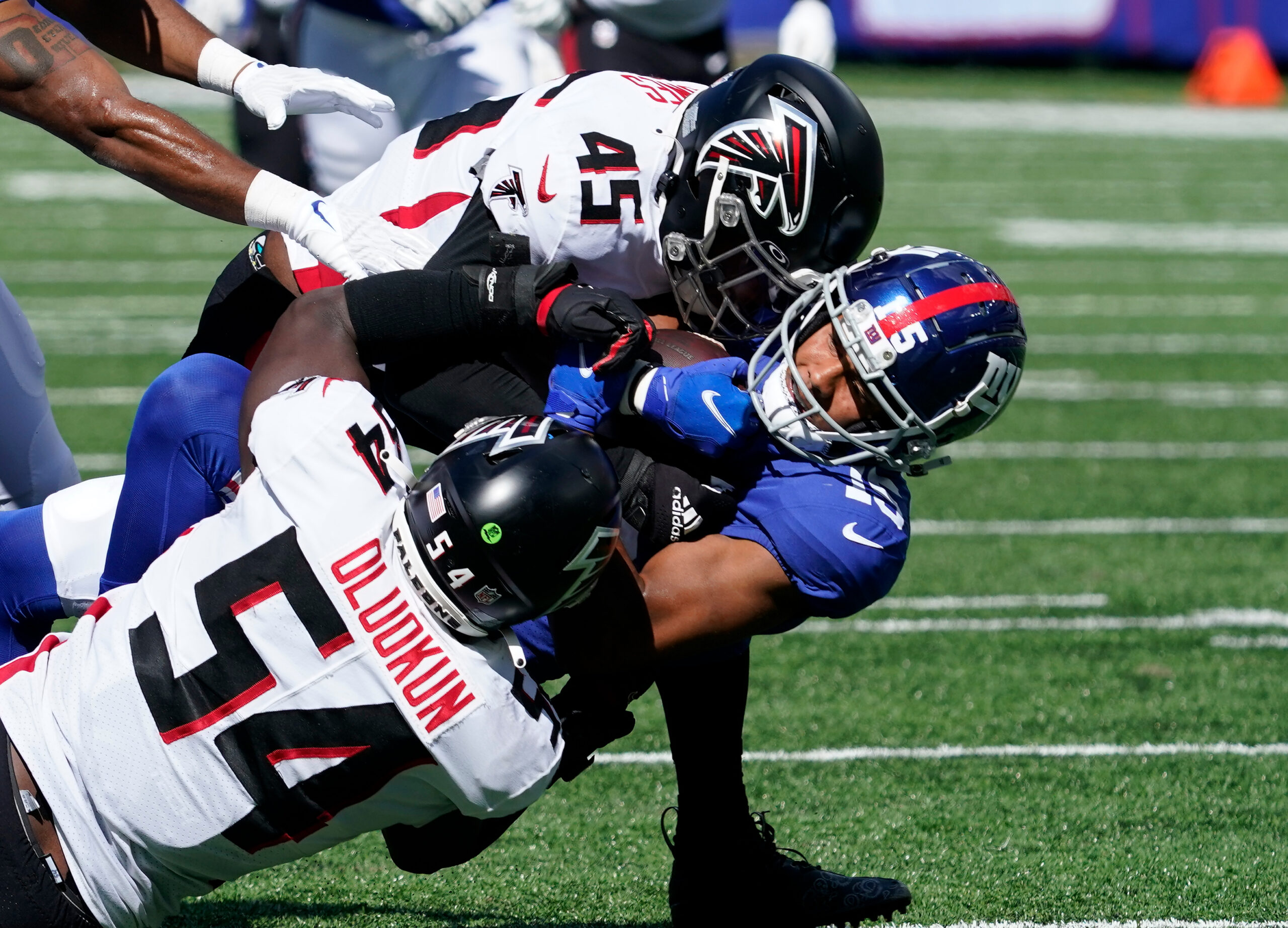
Sep 26, 2021; E. Rutherford, N.J., USA; New York Giants wide receiver Collin Johnson (15) carries the ball as Atlanta Falcons linebacker Deion Jones (45) and Atlanta Falcons linebacker Foye Oluokun (54) tackle in the first half at MetLife Stadium. Mandatory Credit: Robert Deutsch-Imagn Images
Johnson has been accepted to MIT Sloan and will be enrolling there this fall to pursue an MBA. A 28-year-old NFL receiver traded film sessions for case studies at one of the most competitive business programs in the world. He also founded Beyond-Sports, a development and education platform designed to help other current and former professional athletes navigate business and educational opportunities outside their playing careers. This wasn’t a guy stumbling into retirement without a plan. He built the exit ramp while still on the highway. Thirty-one catches funded a launchpad, not a legacy.
The Math Nobody Talks About

Aug 1, 2023; East Rutherford, NJ, USA; New York Giants wide receiver Collin Johnson (15) runs a drill during training camp at the Quest Diagnostics Training Facility. Mandatory Credit: Vincent Carchietta-Imagn Images
A fifth-round pick’s rookie contract pays a fraction of what first-rounders earn. By his later seasons, Johnson was competing for low‑end roster spots against younger, cheaper talent. Meanwhile, every snap carried the risk of a major injury that could have complicated doors MIT was now opening. The hidden calculation most fans never see: marginal NFL money versus the lifetime earning potential of an MIT MBA. Johnson ran that equation and the answer wasn’t close. The smartest play he ever made never showed up on a stat sheet.
What 31 Catches Actually Cost
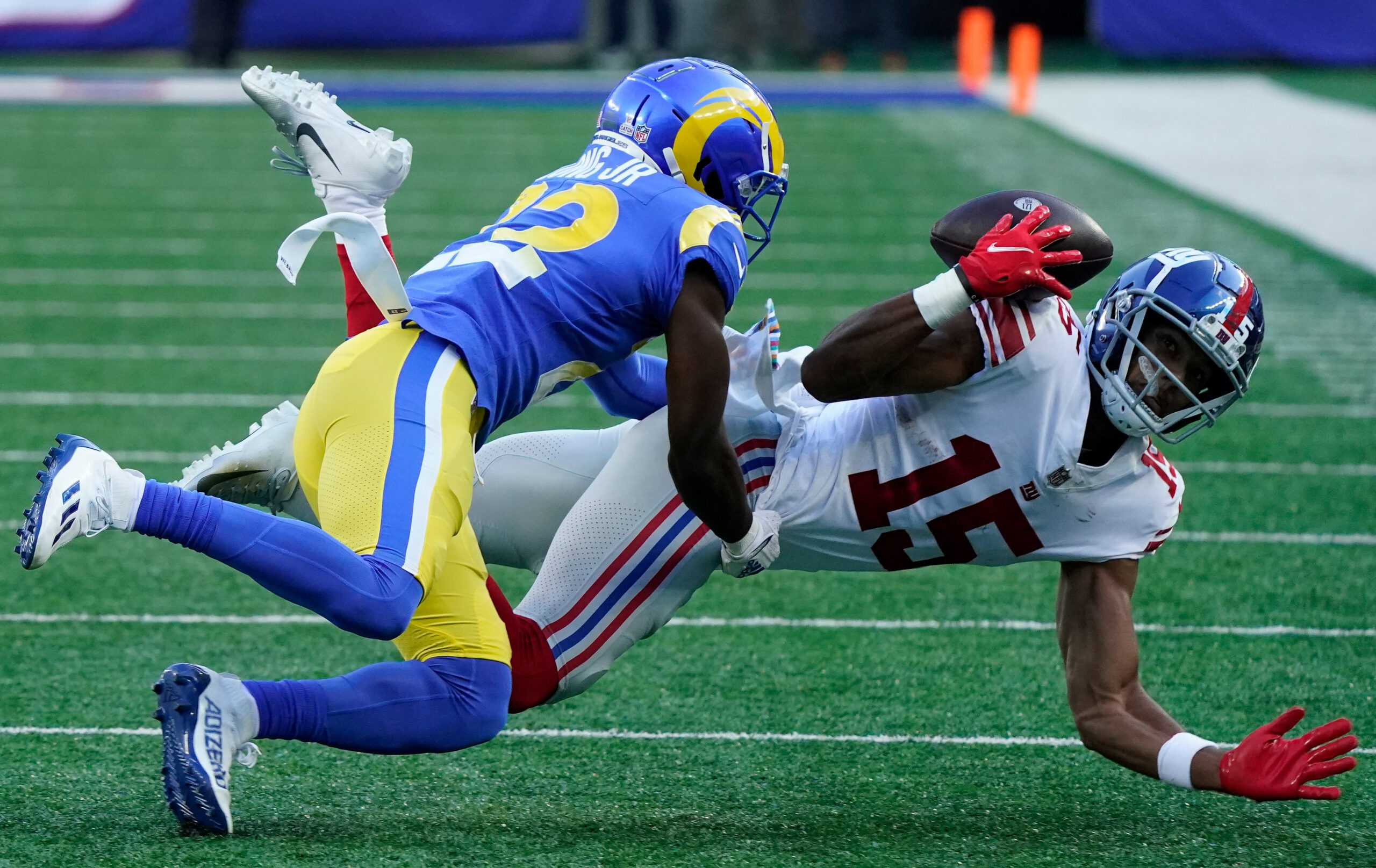
Oct 17, 2021; East Rutherford, New Jersey, USA; New York Giants wide receiver Collin Johnson (15) cannot hang onto a pass as Los Angeles Rams defensive back David Long (22) defends at MetLife Stadium. Mandatory Credit: Robert Deutsch-Imagn Images
Those 394 receiving yards and two touchdowns came across four seasons of regular‑season games and three organizations. Each team change meant uprooting, learning a new playbook, earning trust from a new quarterback, and fighting for targets against receivers who’d been in the system longer. The physical toll of NFL training camps, preseason games, and practice‑squad or depth‑chart battles doesn’t appear in the box score. Johnson absorbed all of it for production that wouldn’t fill a single highlight reel. The cost‑benefit ratio had been upside down for years before he finally flipped the table.
A Generation Doing the Math Differently
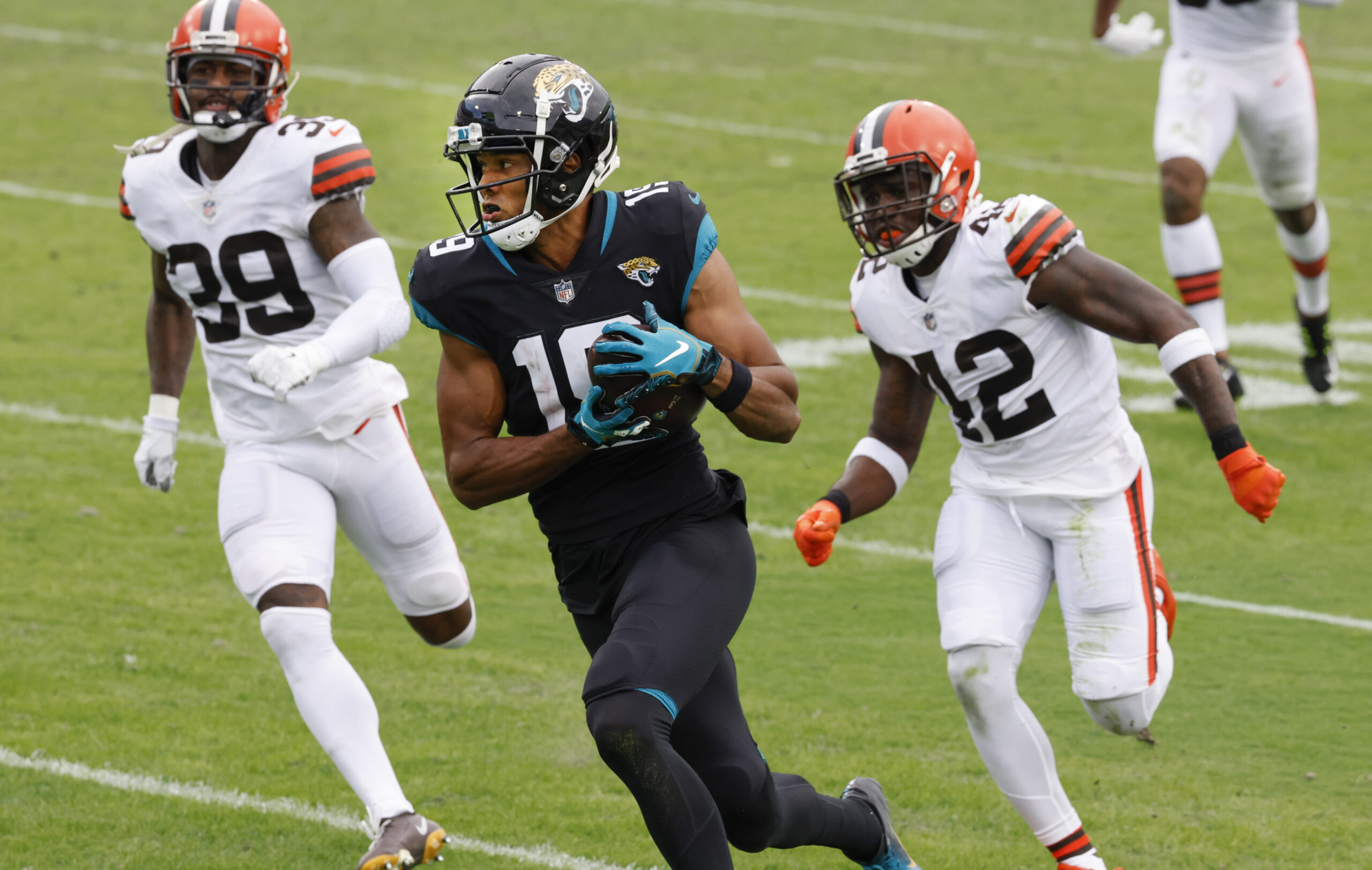
Nov 29, 2020; Jacksonville, Florida, USA; Jacksonville Jaguars wide receiver Collin Johnson (19) runs for a touchdown against Cleveland Browns cornerback Terrance Mitchell (39) and strong safety Karl Joseph (42) during the second quarter at TIAA Bank Field. Mandatory Credit: Reinhold Matay-Imagn Images
Johnson’s retirement signals something bigger than one receiver’s career decision. Younger NFL players increasingly view their playing years as a platform, not a destination. The old model demanded you squeeze every last dollar from the league before it discarded you. The new model treats the NFL like a credential, a network, a springboard. Johnson played 38 games and walked away with connections, name recognition, and the discipline of professional athletics. Then he converted all of it into admission at MIT Sloan and a startup already serving other athletes.
The Rule That Changed
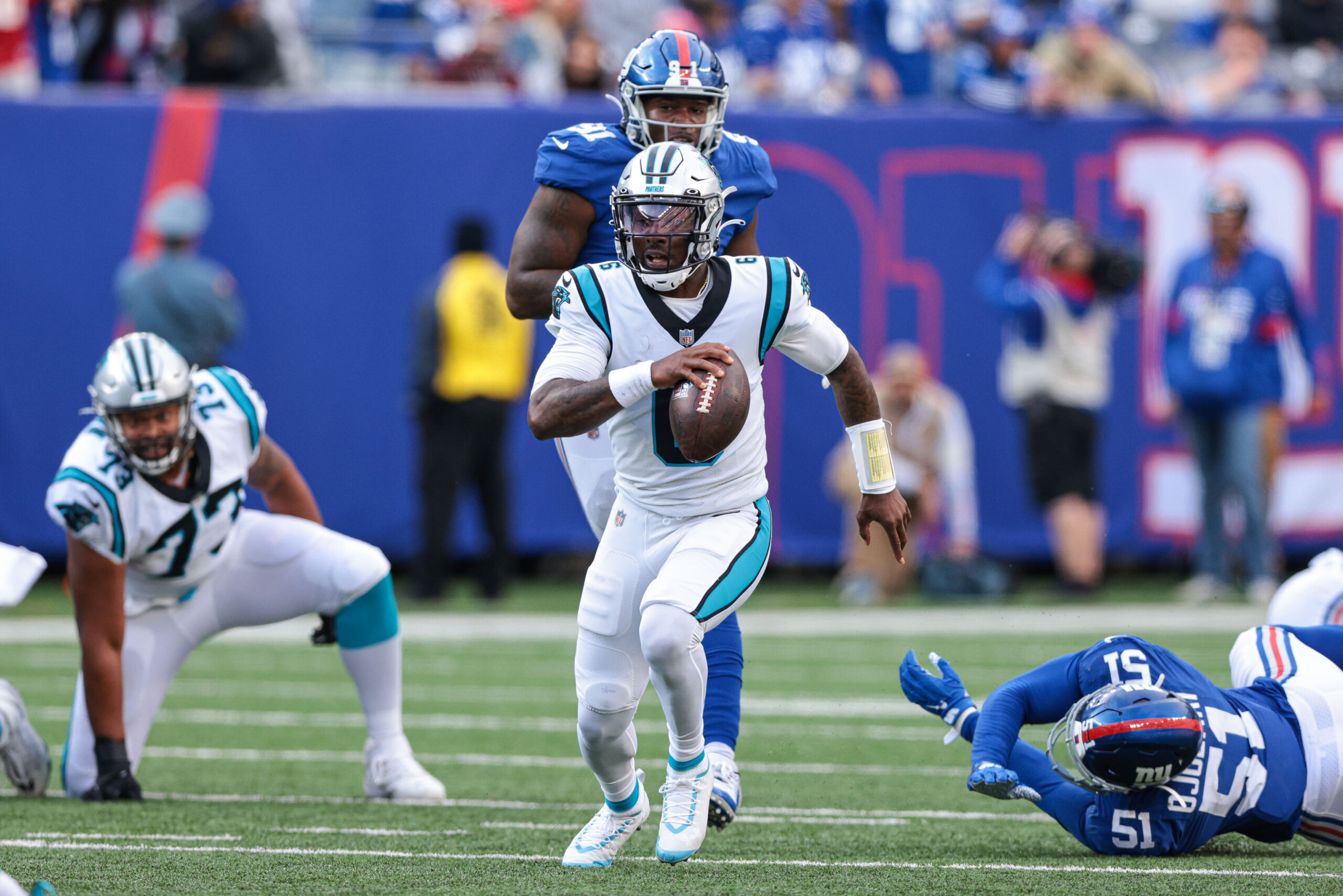
Oct 24, 2021; East Rutherford, New Jersey, USA; Carolina Panthers quarterback P.J. Walker (6) rushes for yards in front of New York Giants wide receiver Collin Johnson (15) during the second half at MetLife Stadium. Mandatory Credit: Vincent Carchietta-Imagn Images
For decades, the unwritten rule was clear: play until they cut you, then figure out life. Johnson rewrote it. Retiring at 28, with a business already launched and an elite graduate program ahead of him, sets a precedent that could reshape how fringe NFL players think about their futures. Once you see it, the logic is brutal. A backup receiver chasing marginal contracts is depreciating. A 28-year-old MIT MBA candidate is appreciating. Johnson chose the asset that compounds.
What Comes Next for the Fringe

Carmel’s Collin Johnson (25) gains some yardage on the run only to be brought back on a penalty as Carmal takes on Westfield in the IHSAA football Class 6A sectional, Oct 27, 2023; Carmel, IN, USA; at Carmel High School.
The ripple hits hardest among the hundreds of NFL players who, like Johnson, hover between roster spots and practice squads every September. If Beyond-Sports gains traction, it becomes part of the infrastructure for a pipeline that barely existed before: athletes transitioning out on their own terms, with guidance, before the league makes the decision for them. Every player who watched Johnson leave will run the same calculation next training camp. Some of them will arrive at the same answer, and the NFL’s grip on its marginal talent gets a little weaker.
The Catch He’ll Be Remembered For

Aug 1, 2023; East Rutherford, NJ, USA; New York Giants wide receiver Collin Johnson (15) runs a drill during training camp at the Quest Diagnostics Training Facility. Mandatory Credit: Vincent Carchietta-Imagn Images
Collin Johnson’s NFL career produced 31 receptions, 394 yards, and two touchdowns across four seasons of regular‑season action with three teams. None of those numbers will appear in any record book. But the son of a College Football Hall of Famer just proved that walking away at 28 can be the most ambitious move an athlete makes. The NFL will move on and fill his old roster spot soon enough. MIT Sloan and Beyond-Sports, though, could define his impact for decades. The real question is how many current players are already drafting their own exit letters. If you were in his shoes, would you keep chasing a roster spot or walk away for something like MIT Sloan?