

The Illinois House voted 78–32 on a bill nobody in Springfield wanted to explain slowly. HB910, branded as economic development and property tax relief, sailed through during the spring session while the Chicago Bears quietly owned 326 acres in Arlington Heights, waiting for a multibillion‑dollar domed stadium complex to become financially painless. The franchise has promoted tens of thousands of construction and permanent jobs tied to the project. Lawmakers promised relief for homeowners. The Cook County Treasurer’s Office ran the actual numbers, and what came back should make every property taxpayer in the state sit up straight.
The Tax Bill That Vanishes
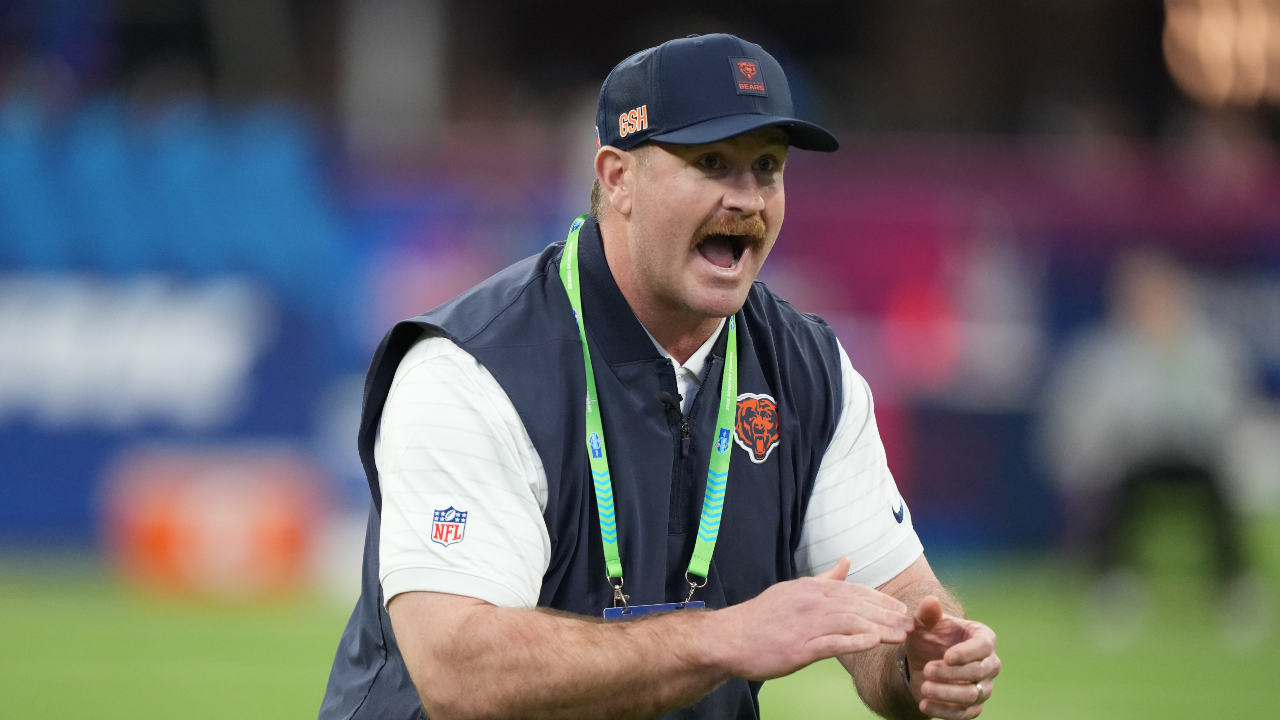
May 8, 2026; Lake Forest, IL, USA; Chicago Bears defensive coordinator Dennis Allen walks on the field during Rookie Minicamp at Halas Hall. Mandatory Credit: Kamil Krzaczynski-Imagn Images
HB910 lets any development investing at least $100 million freeze its property tax assessment at pre‑construction levels for decades. A $100 million project locks in for 25 years. At $500 million, 30 years. At $1 billion, 40 to 45 years under the megaproject tier. Environmental remediation can add additional years. The Bears’ proposed stadium sits comfortably in that top tier. Instead of paying taxes on a finished NFL stadium, the franchise pays taxes on what the land looked like before a single shovel hit dirt. Cook County property taxes have already surged 182% since 1995, rising to $19.2 billion, and somebody has to cover the difference.
The Promise of Relief

May 8, 2026; Lake Forest, IL, USA; Chicago Bears tight end Sam Roush (87) speaks during Rookie Minicamp at Halas Hall. Mandatory Credit: Kamil Krzaczynski-Imagn Images
Supporters sold HB910 as a two‑way street. Fifty percent of negotiated Payments in Lieu of Taxes must go toward property tax relief. Of that half, 60% flows to homeowner rebates in the hosting district, and 40% goes into a statewide relief fund. The Bears tout billions of dollars in total economic impact and more than 9,000 permanent jobs after the stadium opens, including an estimated $60 million in local and state tax revenue. That sounds like a community winning. But the governor’s own office and the Treasurer’s analysis looked at what those PILOT dollars would mean per household. The word they used was “negligible.”
$53 Million Becomes $14 Million
May 8, 2026; Lake Forest, IL, USA; Chicago Bears wide receiver Zavlon Thomas (81) stretches during Rookie Minicamp at Halas Hall. Mandatory Credit: Kamil Krzaczynski-Imagn Images
The Treasurer’s study modeled a Bears stadium scenario using a conservative stadium valuation. Without HB910, the Bears’ annual property tax bill would run roughly $53 million. Under the bill’s freeze, the team pays about $4 million on the land’s pre‑development value in Arlington Heights. Add a projected $10 million PILOT. Total annual payment: approximately $14 million. That leaves $39 million a year the Bears don’t pay. Over 40 years, more than $1.5 billion in property taxes disappear from the books. The Treasurer’s Office put it plainly in its public comments: the benefits for the Bears and other megaproject developers are clear, while the benefits for Illinois residents are murky.
The System Behind the Discount
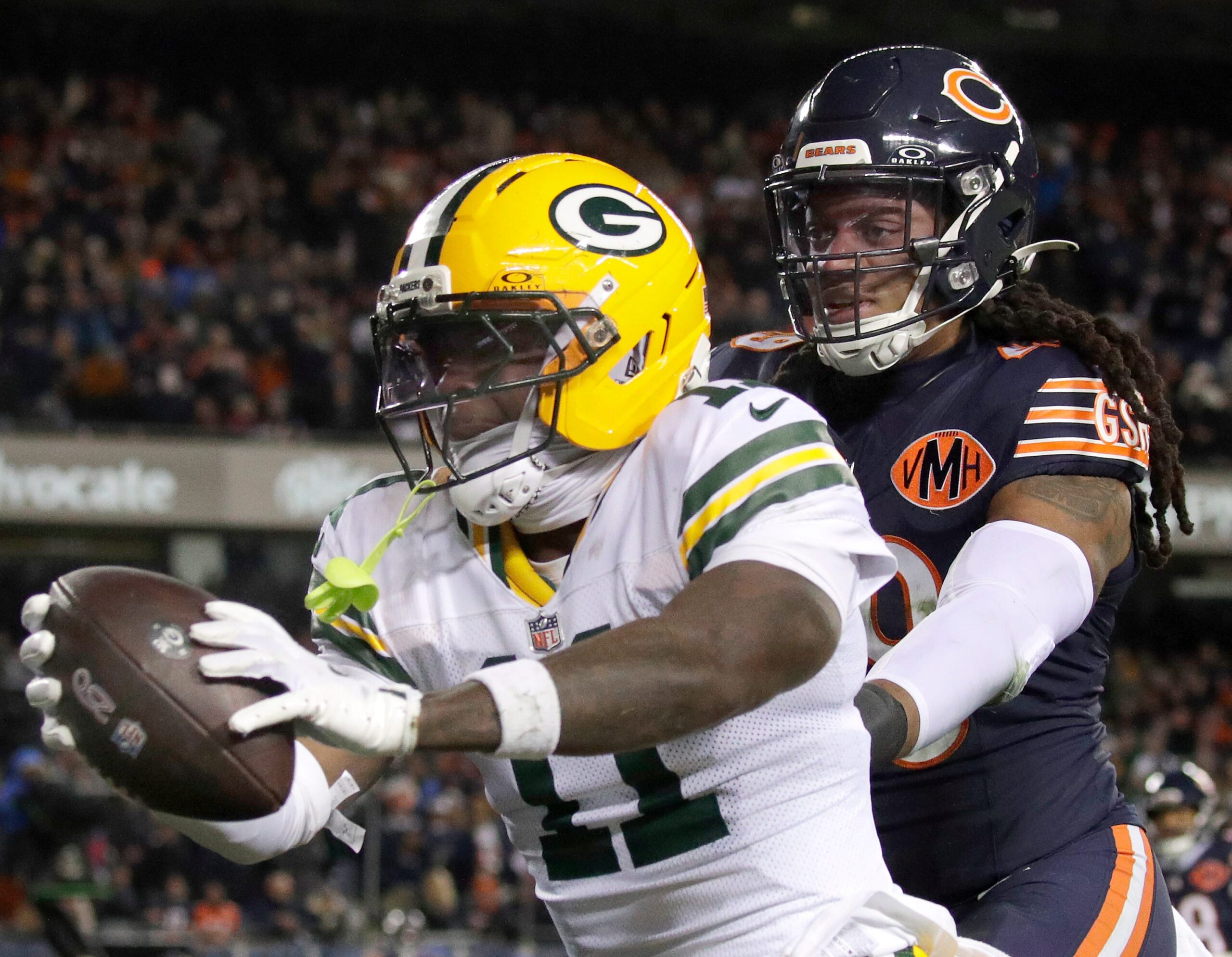
Green Bay Packers wide receiver Jayden Reed (11) scores a toucdown against Chicago Bears linebacker Tremaine Edmunds (49) during their wild-card playoff football game Saturday, January 10, 2026, at Soldier Field in Chicago, Illinois. Wm. Glasheen /USA TODAY NETWORK-Wisconsin.
Here is what makes HB910 structurally different from a typical tax break. Local governments can still calculate levies based on the stadium’s full post‑development value. They just can’t collect that amount from the Bears. The shortfall gets absorbed by every other taxable property in the same jurisdiction. A homeowner who renovates a kitchen sees taxes rise. An NFL stadium worth hundreds of millions locks in a rate from before construction started. The Institute on Taxation and Economic Policy called it “a direct property tax cut for corporations that other residents will pay for.” That is not a side effect. That is the mechanism.
Breaks on Top of Breaks

Detroit Lions safety Kerby Joseph (31), left, and safety Brian Branch (32) celebrate a play against Chicago Bears during the first half at Ford Field in Detroit on Thursday, Nov. 28, 2024.
The property tax freeze is only one layer. HB910 also qualifies megaprojects for sales tax‑based incentives on building materials and expands STAR bonds, letting new sales tax revenue generated by the project pay eligible costs. The Treasurer’s research director, Hal Dardick, described the result as “breaks on top of breaks.” For the largest megaprojects, the required annual PILOT payment is heavily negotiable and can be set far below what a standard property tax bill would be. Most other megaprojects can negotiate payments well under the level of a fully taxed development. That is a negotiating table where only billion‑dollar players get a seat.
Schools Feel It First
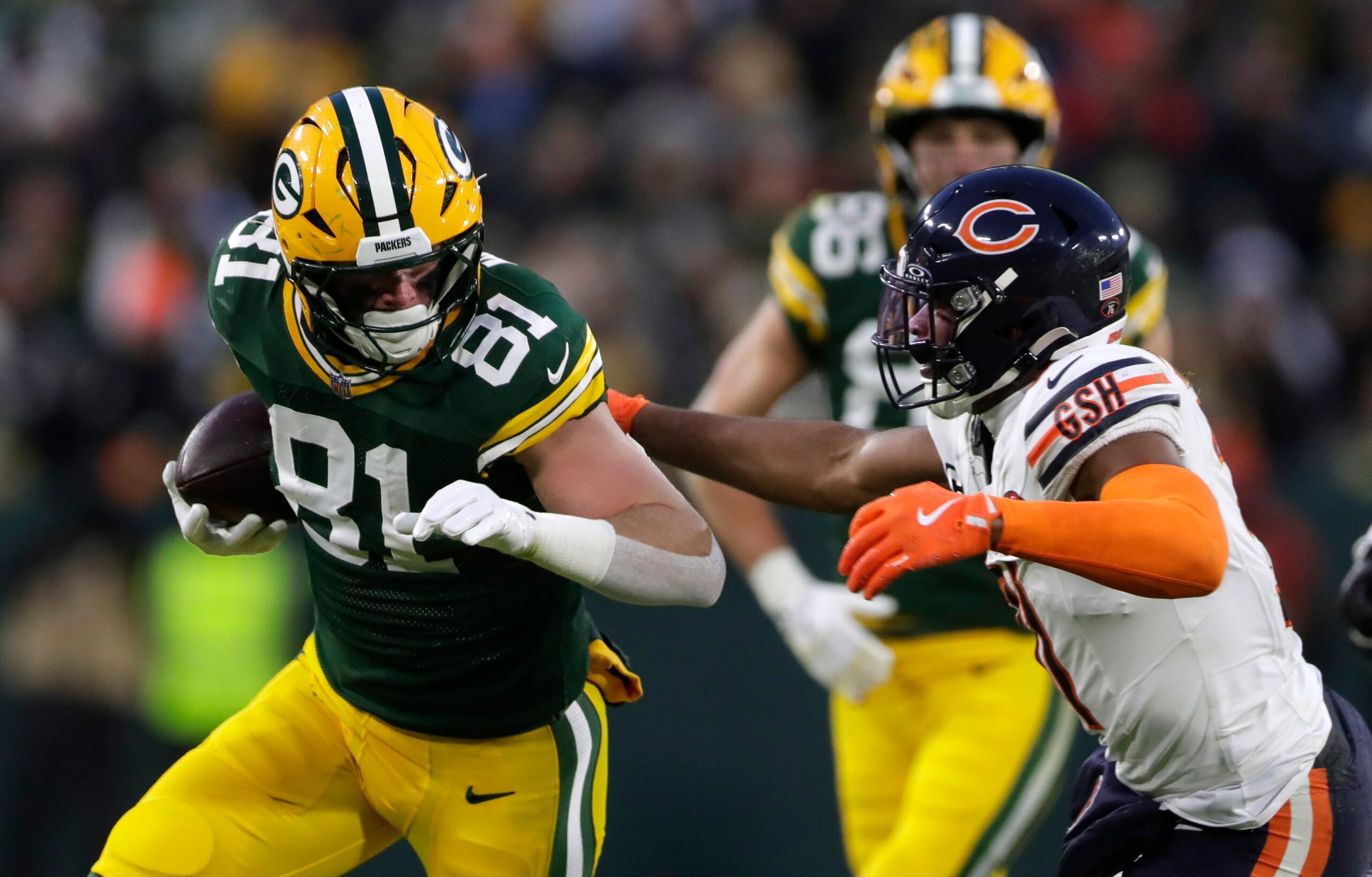
Green Bay Packers tight end Josh Whyle (81) runs the ball during a football game against the Chicago Bears on Dec. 7, 2025, at Lambeau Field in Green Bay, Wis. The Packers defeated the Bears 28-21.
Property taxes fund more than half of school budgets across Cook County. The Chicago Teachers Union called HB910 “a bad deal for taxpayers,” pointing out that Chicago Public Schools already face a major budget deficit and potential layoffs. Freezing assessments on the most valuable new developments for decades hollows out the tax base that schools depend on. Cook County levies grew from roughly $6.8 billion to $19.2 billion over 30 years, and past relief promises never slowed that climb. Now the bill opens a new multi‑decade exemption framework for some of the largest properties in the state.
Not a One-Time Deal
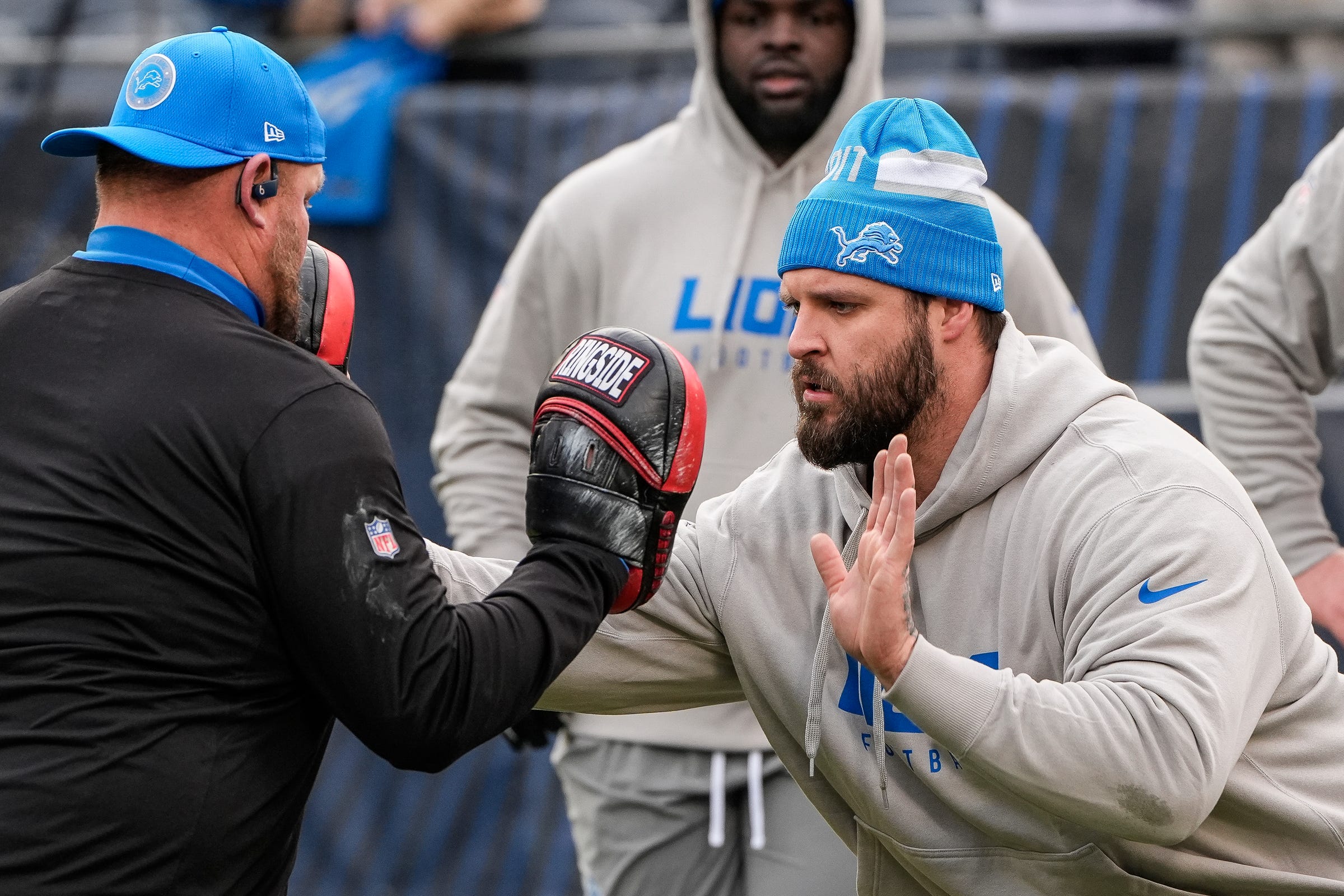
Detroit Lions offensive tackle Taylor Decker (68) warms up before the game between Chicago Bears and Detroit Lions at Soldier Field in Chicago, Ill. on Sunday, Dec. 22, 2024.
The Bears are the headline, but HB910 creates a statewide framework. Any warehouse, manufacturing plant, or shopping center clearing the $100 million threshold qualifies. Policy analysts describe this as a qualitative rewrite of Illinois’ property tax rules for large commercial developments, not a one‑off stadium subsidy. The bill has a seven‑year sunset, but once 40‑year PILOT and assessment‑freeze agreements are signed, that sunset means nothing for deals already locked in. Stadium deals don’t shrink the tax bill. They rearrange who pays it. That pattern, once established, becomes the template every developer demands.
The Leverage Card
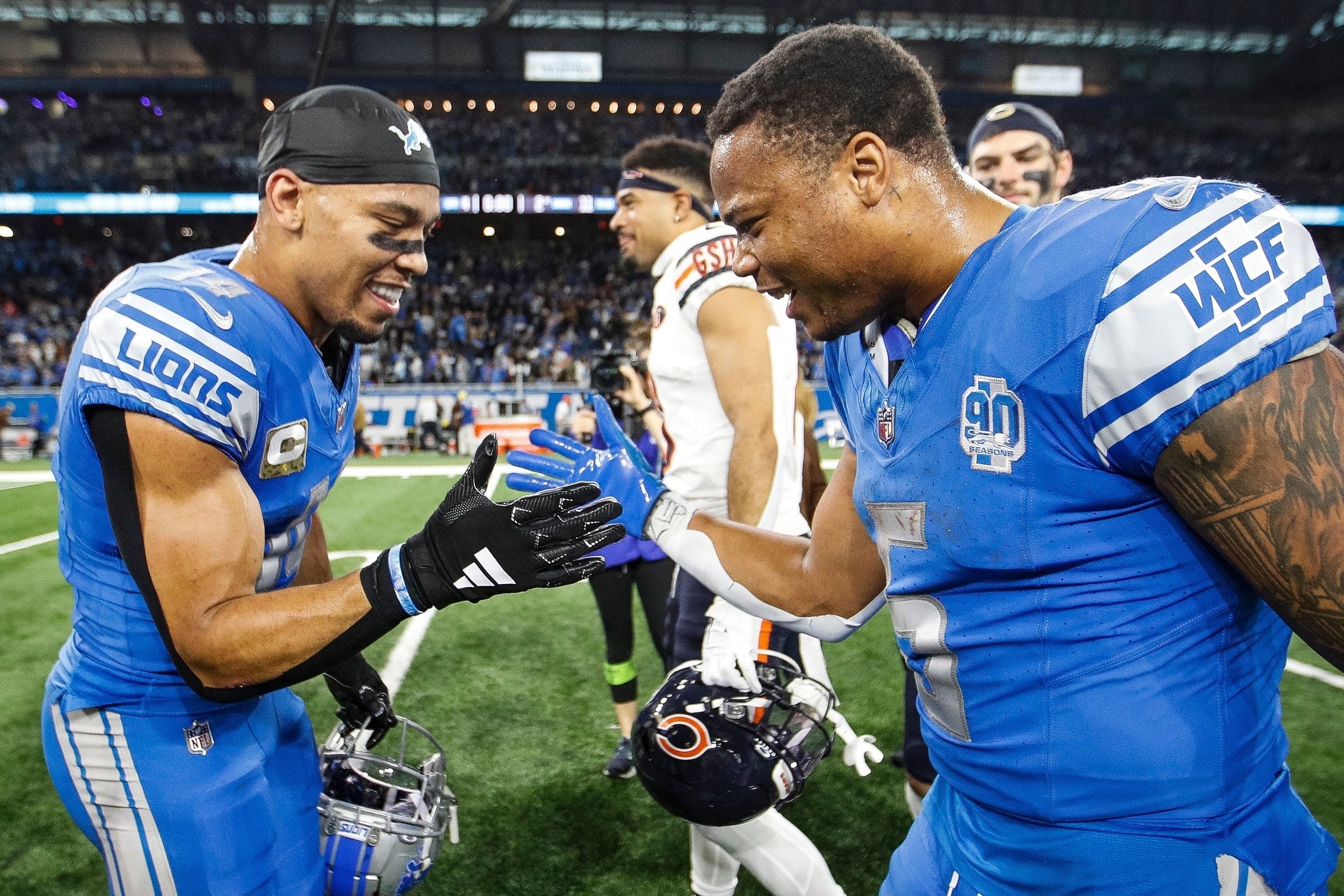
Detroit Lions wide receiver Amon-Ra St. Brown and running back David Montgomery celebrate the 31-26 win over the Chicago Bears at Ford Field in Detroit on Sunday, Nov. 19, 2023.
The Bears have publicly explored stadium sites outside Cook County and even outside Illinois, including Northwest Indiana. That threat of relocation accelerated HB910 through the legislature under emotional pressure: keep the team or lose a storied NFL franchise. Treasurer Maria Pappas has argued Springfield should close existing property tax loopholes, not open new ones. But urgency short‑circuits analysis. A 100‑plus‑page property tax overhaul moved through the House while the debate centered on loyalty to a football team, not on the 40‑year fiscal commitments buried in the fine print.
Who Picks Up the Tab

Chicago Bears wide receiver DJ Moore (2) runs for a touchdown in the fourth quarter of the NFL football game between Chicago Bears and Cincinnati Bengals at Paycor Stadium in Cincinnati on Nov. 2, 2025.
Americans for Prosperity–Illinois warned the bill creates a dollar‑for‑dollar shift: every dollar a megaproject doesn’t pay, a homeowner or small business does. Competing states may now craft their own versions, triggering a race to the bottom where each round of concessions erodes the tax base further. Reformers are already pushing for statutory caps on levy growth and alternative revenue sources to counteract the tilt. The question going forward is whether Illinois taxpayers realize what just passed before the first PILOT agreement gets signed. By then, the concrete will be poured and the discount locked in for four decades. Do you think deals like this are smart long‑term planning or just another way to shift the tax burden—who should really be paying for a new NFL stadium?