

Somewhere over the Pacific, roughly 7,850 miles from Santa Clara, a 53-man roster will be trying to sleep in business-class seats while their circadian systems scream that it’s 3 a.m. The San Francisco 49ers open the 2026 season in Melbourne, Australia, against the Rams on September 10. A 17-hour time shift. The first NFL game ever played on Australian soil. And for the 49ers, that flight is just the beginning of something no franchise has ever endured. The league made sure of that.
The Number That Should Scare San Francisco
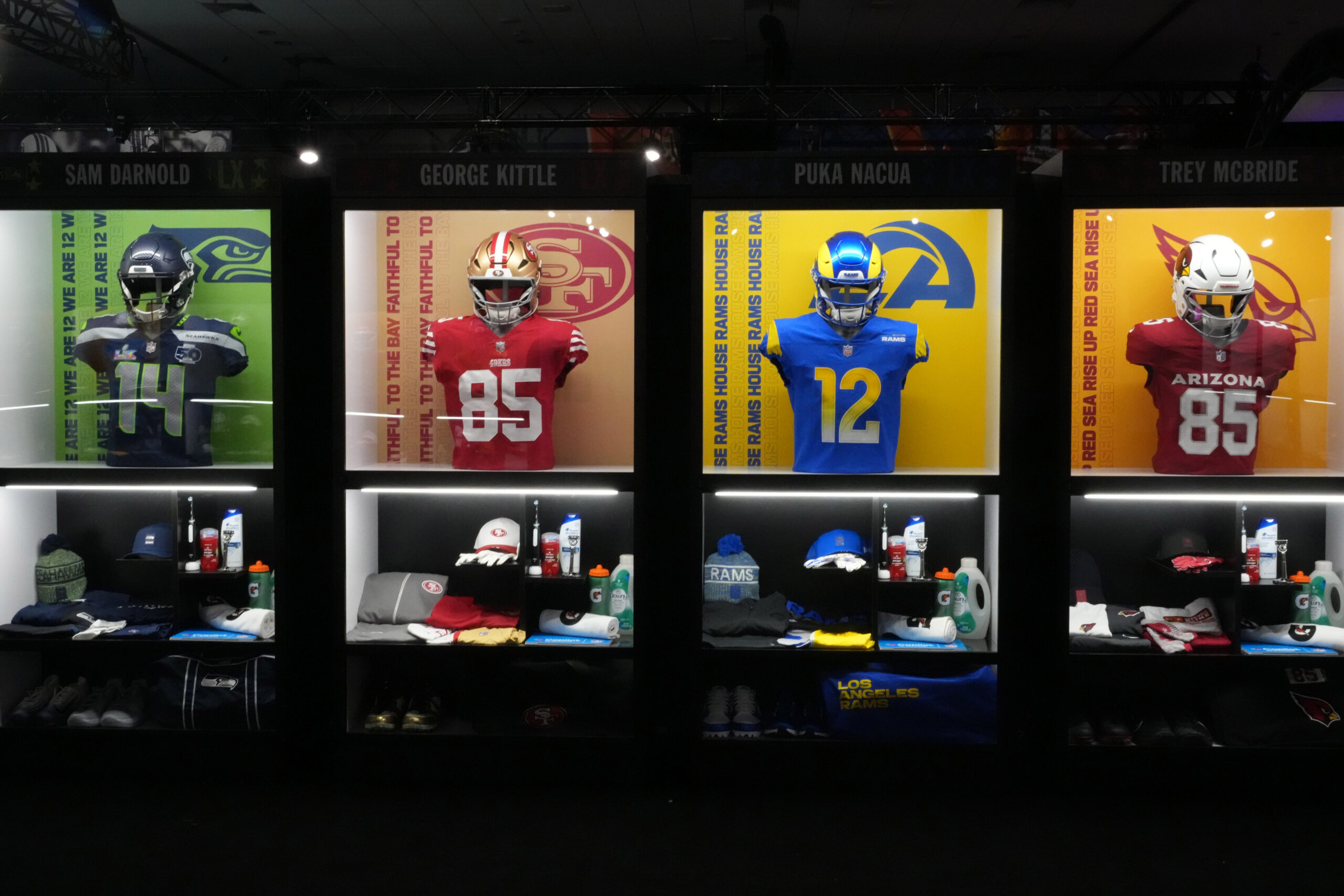
Feb 4, 2026; San Francisco, CA, USA; A locker room exhibit wth the helmets and jerseys of Seattle Seahawks quarterback Sam Darnold (14), San Francisco 49ers tight end George Kittle (85), Los Angeles Rams receiver Puka Nacua (12) and Arizona Cardinals tight end Trey McBride (85) at the Super Bowl LX Experience at the Moscone Center. Mandatory Credit: Kirby Lee-Imagn Images
The 49ers will travel 38,105 miles in 2026. That shatters the previous record of 37,086 miles set by the Los Angeles Chargers in 2025, which itself broke a mark the 2016 Rams had held for nearly a decade. The 49ers won’t just edge past the old record. They’ll blow through it by over 1,000 miles. They’ll cross 58 time zones across the season, obliterating the prior mark of 42. Six NFL teams will exceed Earth’s circumference in total travel this year. The 49ers will lap them all.
The Myth of Neutral Scheduling
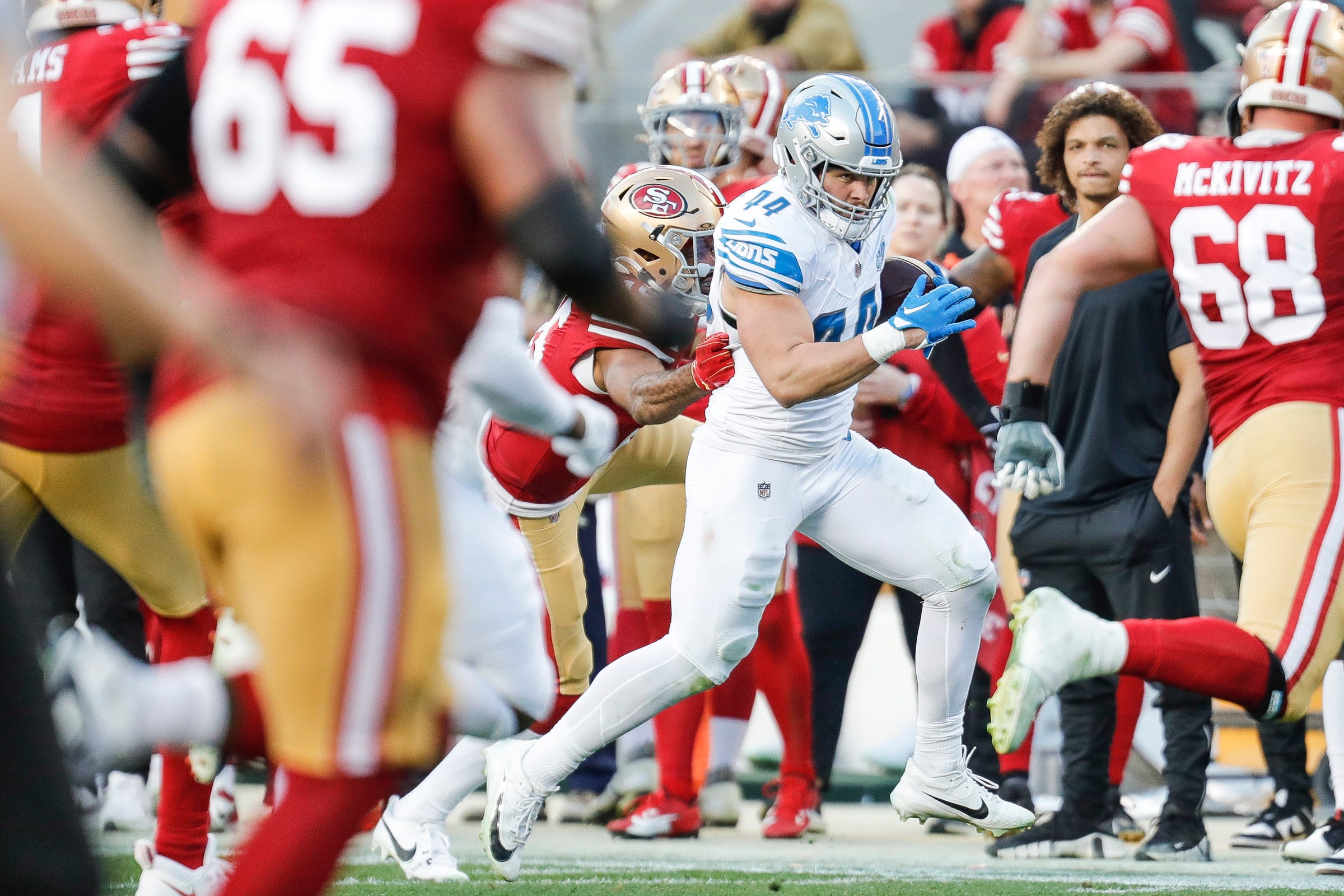
Detroit Lions linebacker Malcolm Rodriguez runs after intercepting a pass from San Francisco 49ers quarterback Brock Purdy during the first half of the NFC championship game at Levi’s Stadium in Santa Clara, California, on Jan. 28, 2024.
Most fans assume the schedule is fair. Same 17 games, same salary cap, same rules. Then look at the Carolina Panthers: 8,740 miles total. That’s roughly 4.4 times less than the 49ers. Same league. Same prize. Nine international games in 2026 account for a disproportionate share of league travel relative to their share of contests. Each international game carries a hidden mileage tax several times heavier than a domestic matchup. And the 49ers drew two of them.
The Miles the NFL Chose Not to Save

San Francisco 49ers linebacker Dre Greenlaw (57) celebrates his interception during the third quarter at Levi’s Stadium.
The 49ers play Melbourne in Week 1 and Mexico City in Week 11. Ten weeks apart. CBS Sports Research noted that if the league had bundled the 49ers’ road games against the Giants and Falcons together, San Francisco would have stayed under the all-time travel record entirely. The NFL knew this. They scheduled the trips separately anyway. The league chose the record. On purpose.
What 58 Time Zones Do to a Body
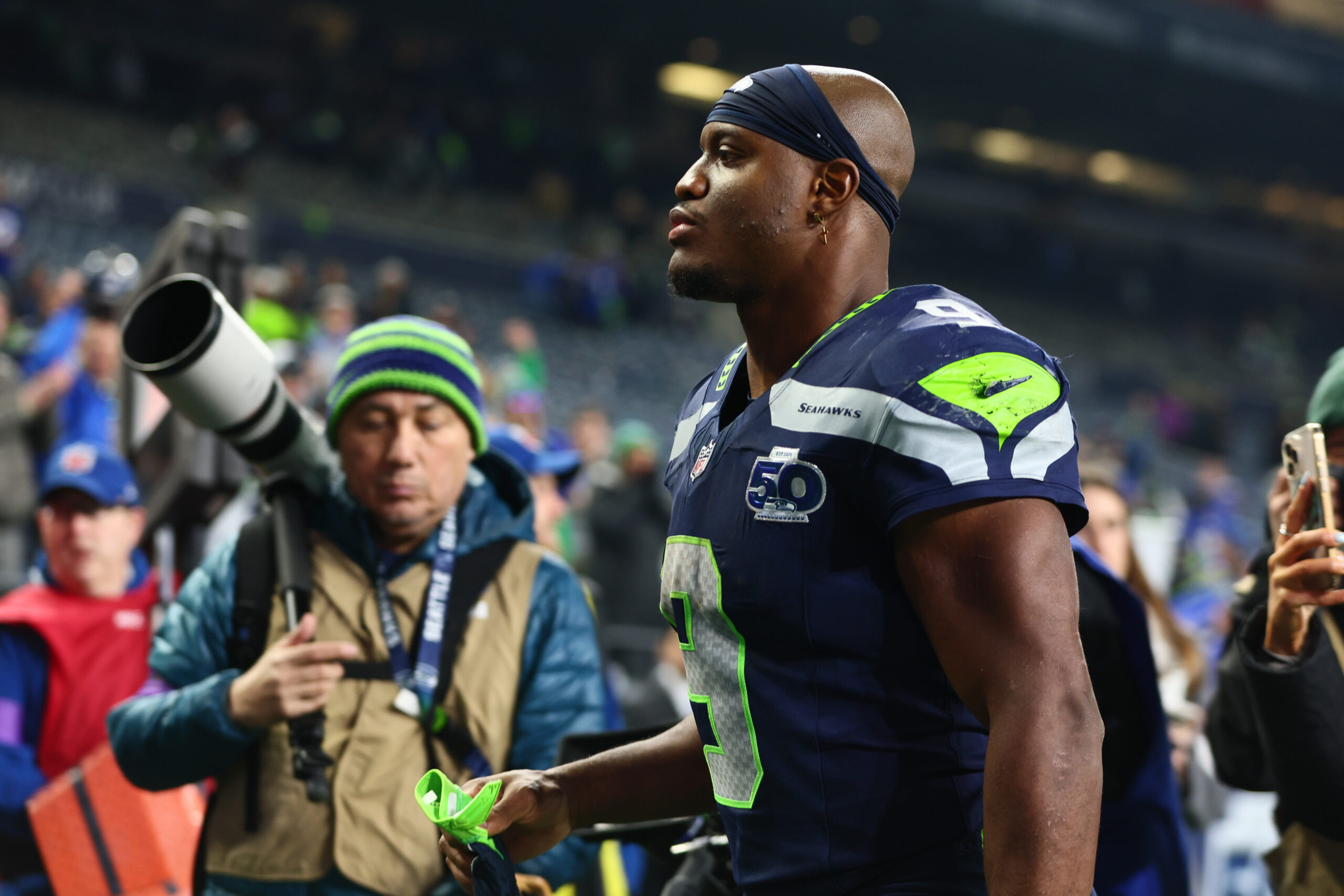
Jan 17, 2026; Seattle, WA, USA; Seattle Seahawks running back Kenneth Walker III (9) leaves the field following an NFC Divisional Round game against the San Francisco 49ers at Lumen Field. Mandatory Credit: Kevin Ng-Imagn Images
Every reader has felt jet lag after one flight. Now multiply it across 17 weeks. Peer-reviewed studies show transcontinental travel suppresses reaction time for up to 72 hours post-arrival. The 49ers will face continuous windows of degraded performance all season. Sleep disruption, dehydration at altitude, reduced practice quality. FanDuel Research called travel fatigue one of the most underrated factors in the race for Super Bowl LXI. The Panthers, meanwhile, stay regional. Their bodies never leave their native clock. Same sport, different physics.
The Numbers Vegas Refuses to Price
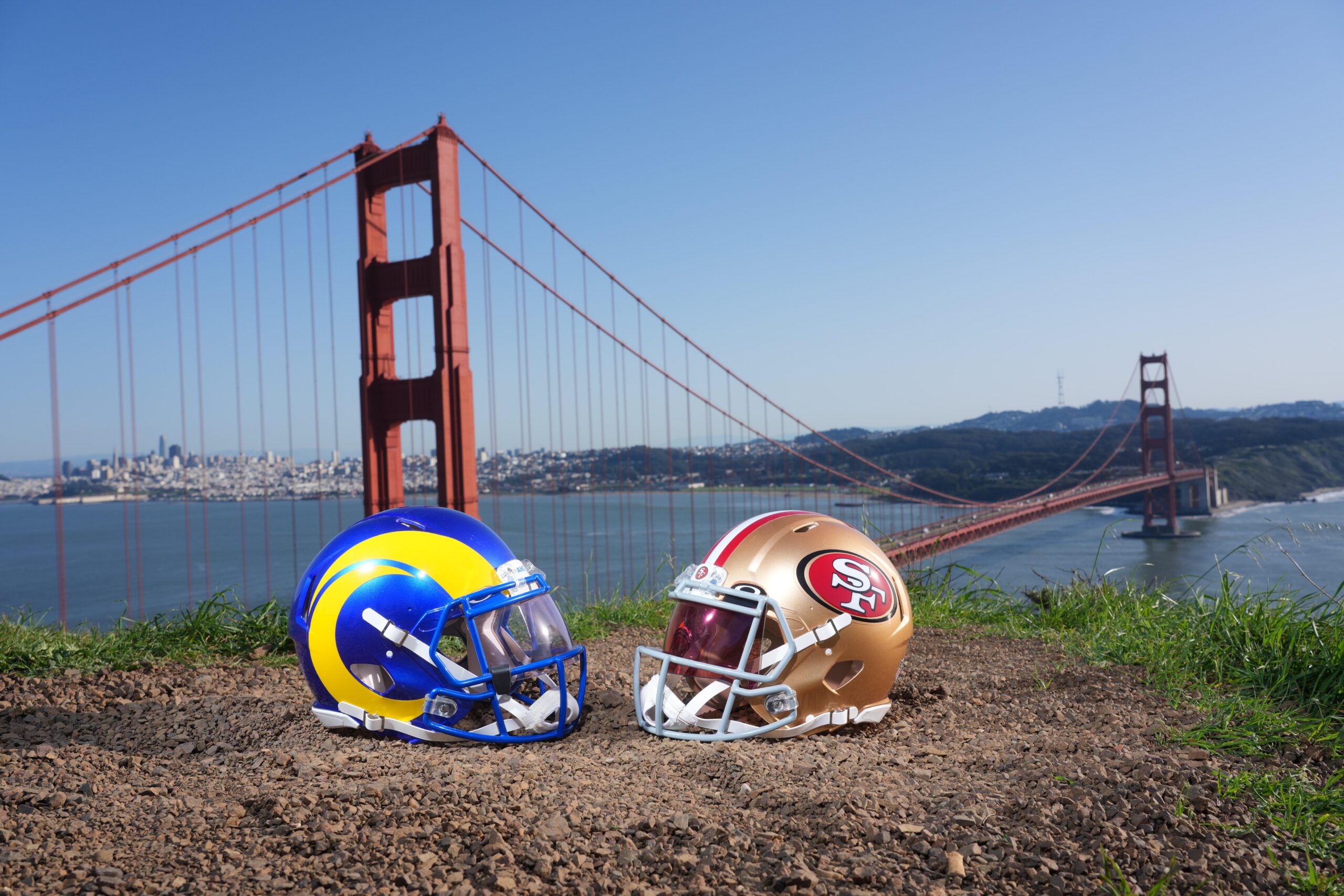
Jan 29, 2026; San Francisco, California, USA; Los Angeles Rams and San Francisco 49ers helmets with the Golden Gate bridge as a backdrop. Mandatory Credit: Kirby Lee-Imagn Images
The Rams will fly roughly 7,850 miles to Melbourne for Week 1, the furthest any team in NFL history has traveled for a regular-season game. The Giants’ shortest trip is a short drive to Philadelphia, illustrating the enormous variance in single-game travel within the same league. Estimated injury risk for teams carrying transcontinental travel loads rises measurably above baseline. Yet sportsbooks still price 49ers odds as if geography doesn’t exist. Predicting NFL outcomes without travel science is like forecasting weather without measuring atmospheric pressure.
Who Else Pays the Tax

Feb 1, 2026; San Francisco, CA, USA; NFC coach Jerry Rice talks with Detroit Lions receiver Amon-Ra St. Brown (14) and San Francisco 49ers running back Christian McCaffrey (23) during practice at the Flag Fieldhouse Moscone Center South Building. Mandatory Credit: Kirby Lee-Imagn Images
The Rams sit second at 34,847 miles. Houston follows at 28,470. Dallas logs 27,980, New England 27,590, and Miami 27,568. All six exceed Earth’s circumference of 24,901 miles. Meanwhile, the Panthers stay below 10,000 miles at 8,740. The Chargers’ burden plummeted from 37,086 miles in 2025 to 24,816 in 2026 after losing their international game. That roughly 12,000-mile drop will produce measurable performance improvement that everyone will credit to roster moves instead of scheduling relief.
The Rule Nobody Wrote Down
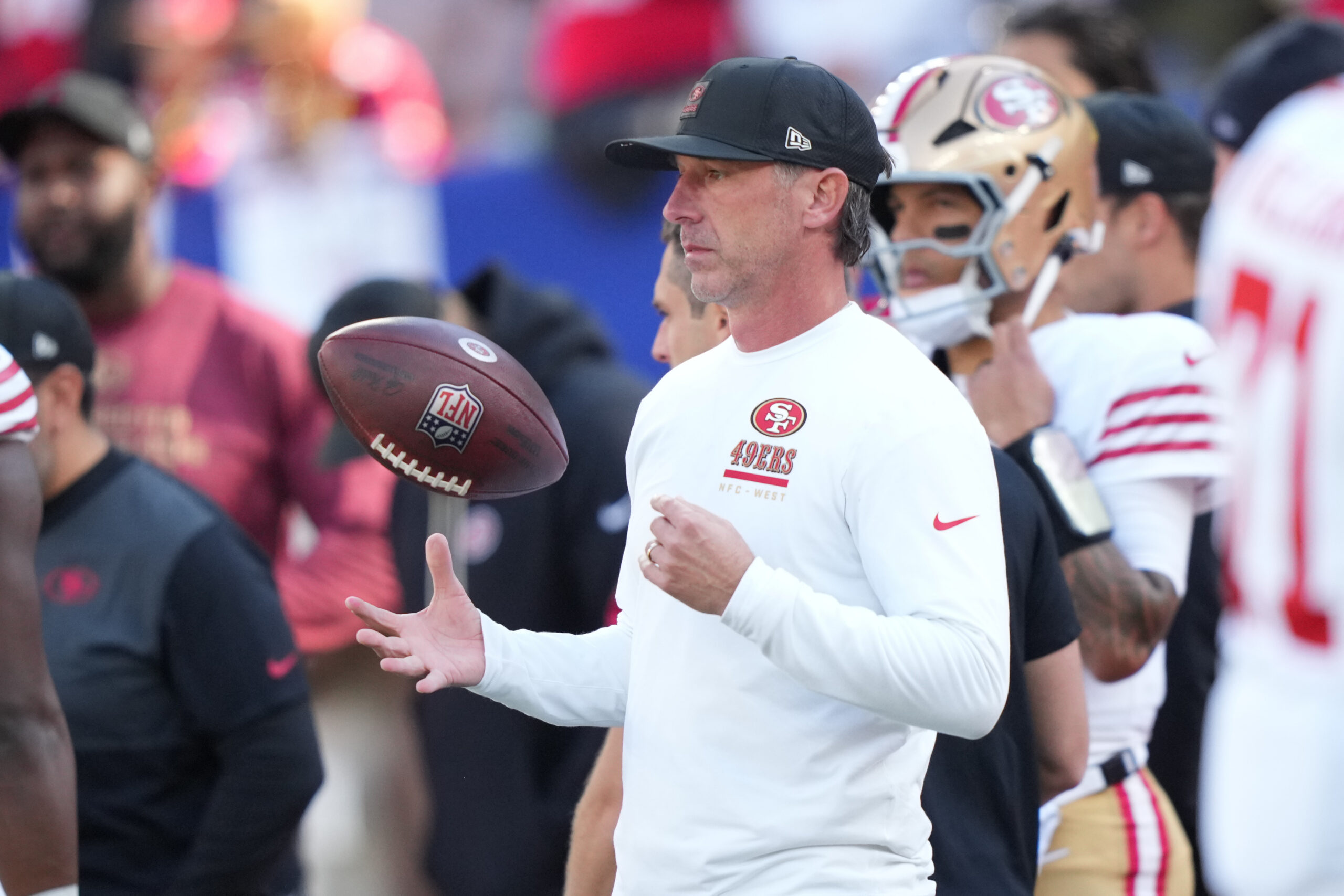
Nov 2, 2025; East Rutherford, New Jersey, USA; San Francisco 49ers head coach Kyle Shanahan tosses a football in the air during warm ups prior to a game against the New York Giants at MetLife Stadium. Mandatory Credit: Robert Deutsch-Imagn Images
This is the first season with NFL games across multiple international venues at this scale. The first regular-season game in Australia. The most international contests ever in a single year. And the first time the 49ers have played two international games in the same season in non-consecutive weeks. The 49ers are the test case for a new model: extract maximum global revenue from selected franchises while maintaining the appearance of competitive neutrality. Once you see it, every future schedule release looks different. The travel burden is not a bug. It is the business model.
The Season Before It Starts
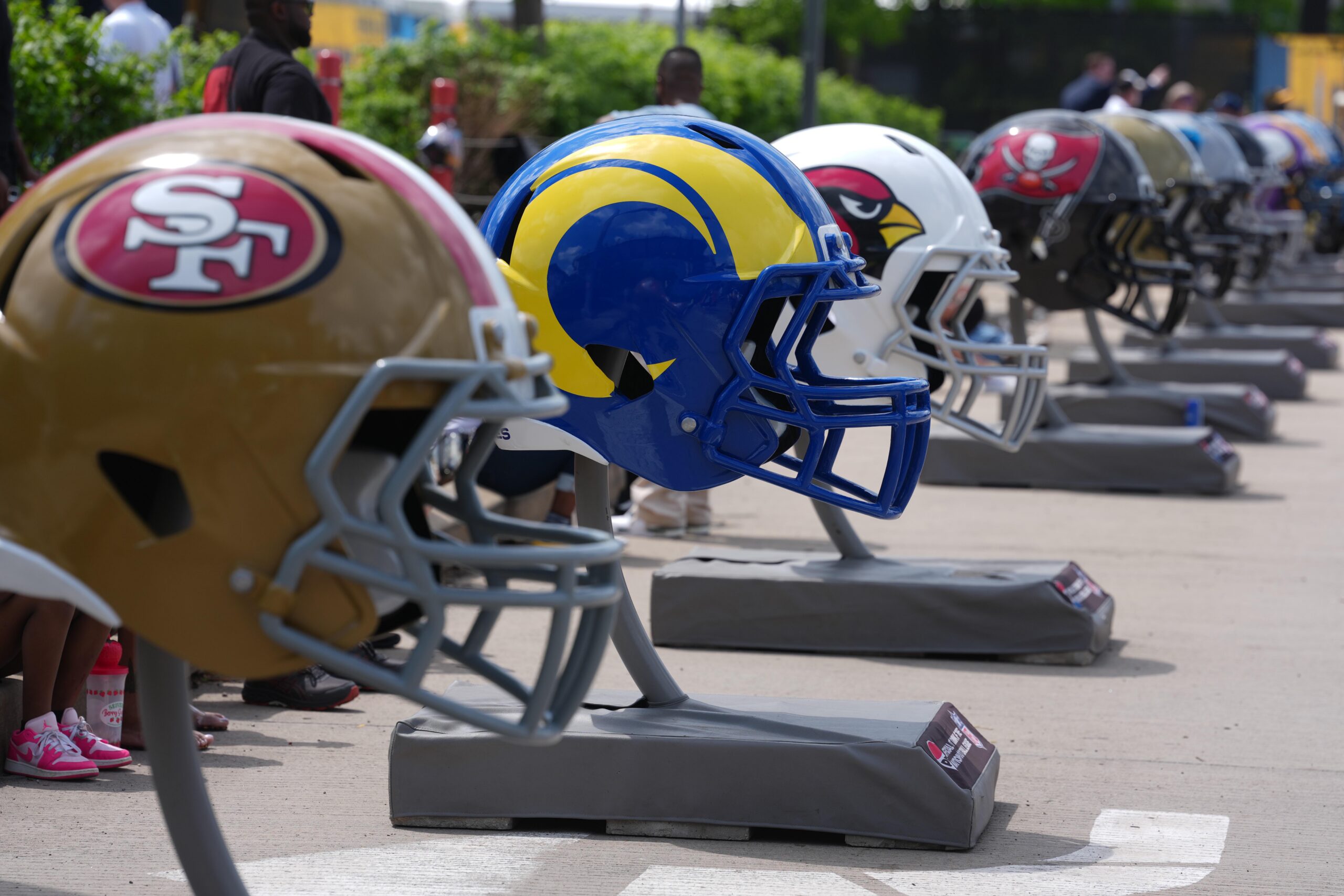
Apr 23, 2026; Pittsburgh, PA, USA; Large helmets of the San Francisco 49ers, Los Angeles Rams and Arizona Cardinals at Acrisure Stadium. Mandatory Credit: Kirby Lee-Imagn Images
If the 49ers start 0-4, every talking head on television will blame Kyle Shanahan. The coaching. The scheme. The roster decisions. Nobody will mention that the franchise crossed 58 time zones while competing in the NFC West. Nobody will mention the 72-hour reaction-time deficit after Melbourne. The Panthers face the lightest travel load in the league at 8,740 miles. That compound advantage is invisible, unpriced, and completely engineered before September.
Ahead of the Algorithm

Sep 14, 2025; New Orleans, Louisiana, USA; Detailed view of NFL footballs on the field during warmups before the game between the New Orleans Saints and the San Francisco 49ers at Caesars Superdome. Mandatory Credit: Stephen Lew-Imagn Images
The NFL could cap travel variance so no team exceeds a set threshold above the league average. They could consolidate international trips. They could award salary cap relief proportional to excess miles. They have done none of these things. All 32 teams will travel a combined 628,873 miles in 2026. The 49ers absorb a disproportionate share, and the league calls it global growth. Now you know what the algorithm actually optimizes for. The 49ers’ season starts in Melbourne. Their competitive disadvantage started in May, when the schedule dropped. Do you think the NFL deliberately stacked the 49ers’ schedule, or is this just the price of going global? Tell us in the comments — and name the team you think gets the easiest ride this season.