
For three straight years, Monday nights felt like a trick. Two games running simultaneously, the remote bouncing between broadcasts, and the nagging sense that watching both meant watching neither. Fans complained. Loudly. And for three years, the NFL kept scheduling doubleheaders anyway, convinced that more football on a Monday evening was a gift nobody could refuse. This week, at the league’s annual meetings, NFL Executive Vice President of Media Distribution Hans Schroeder acknowledged what millions of viewers already knew: the gift had a receipt attached.
The Promise That Started It All
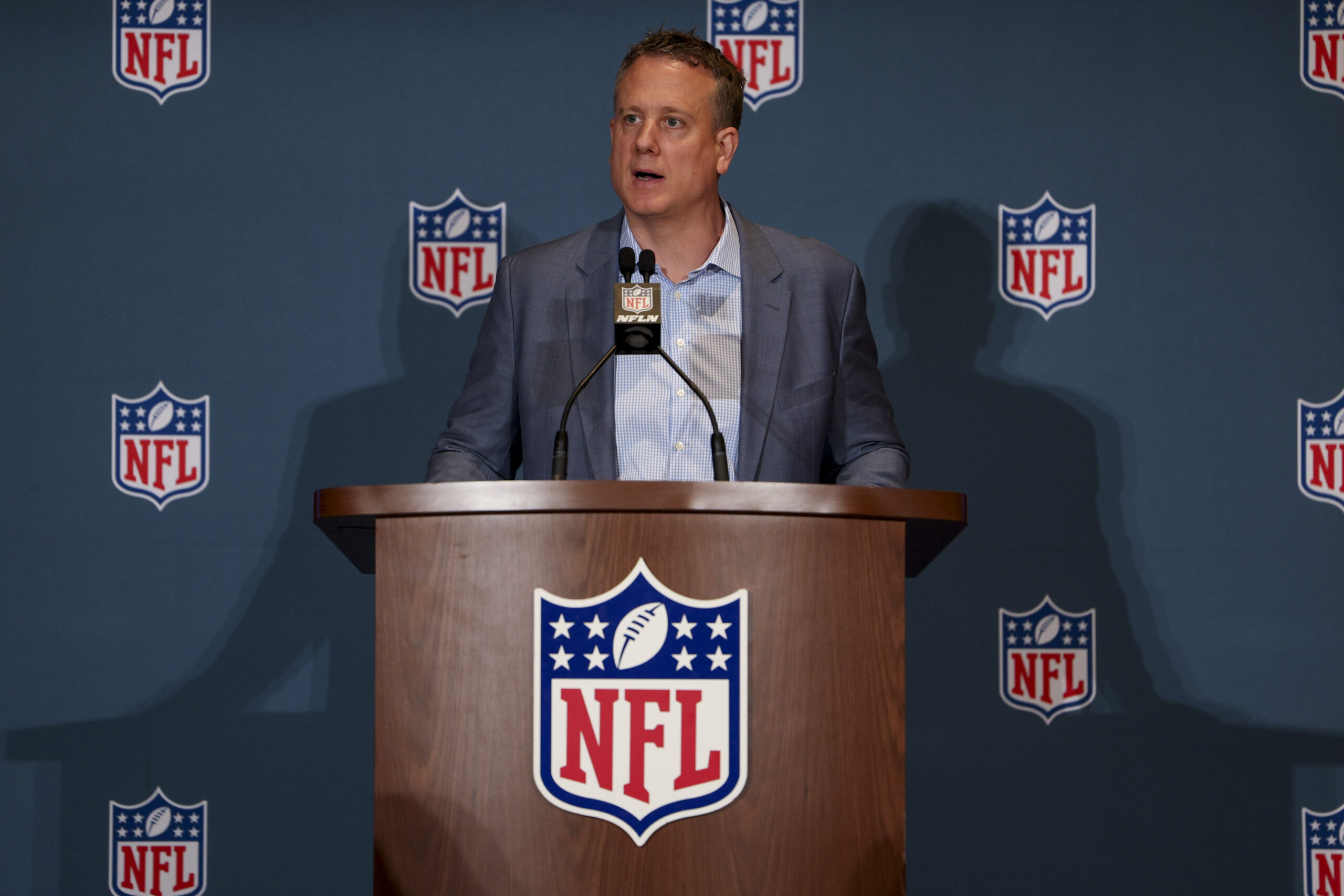
Mar 26, 2024; Orlando, FL, USA; NFL executive vice president of media distribution Hans Schroeder speaks to media during the annual league meetings at the JW Marriott. Mandatory Credit: Nathan Ray Seebeck-Imagn Images
Schroeder’s own words framed the original pitch: “We thought adding two games on Monday night would be a great thing for fans. It was more free football that was sort of outside of a Sunday afternoon.” The logic sounded bulletproof. ESPN’s expanded media rights deal kicked in, and beginning in the early 2020s, Monday night doubleheaders aired in both back-to-back and concurrent formats. A $15 billion-a-year league had bet that more inventory meant more eyeballs. Three seasons of data were about to prove that bet wrong.
Monday Isn’t Sunday
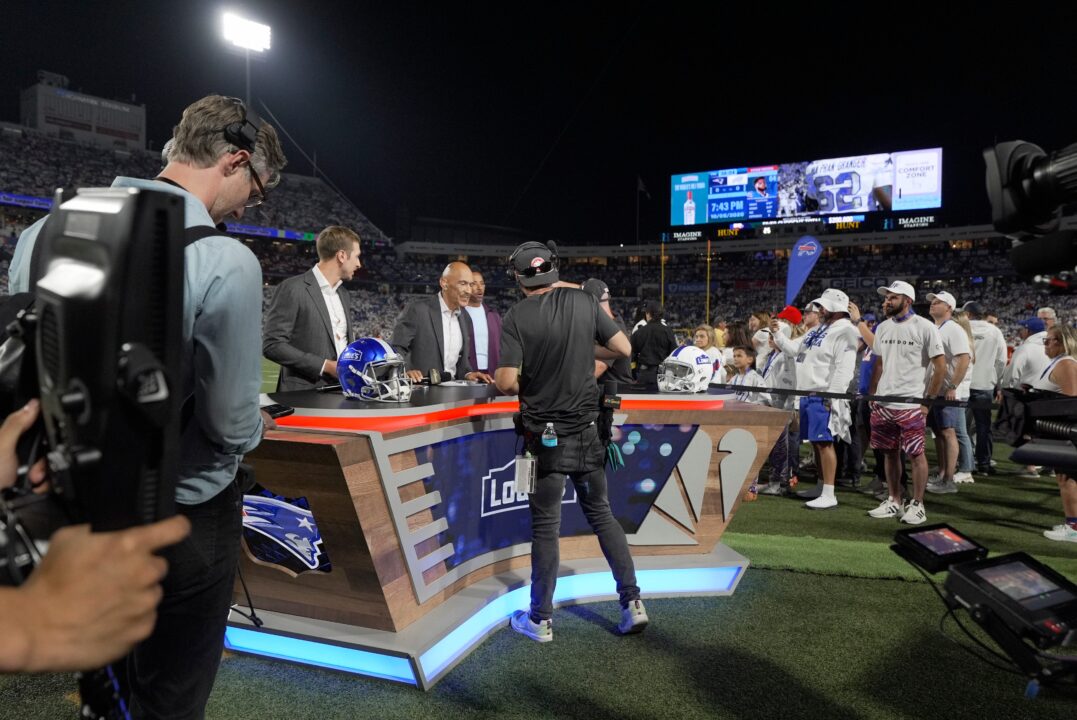
Sunday afternoons handle five concurrent games because fans are on their couches, guilt-free, with hours to burn. Monday night sits inside the workweek. Dinner, kids, alarm clocks. The assumption that viewers would happily juggle two primetime broadcasts on a school night ignored something no ratings model could capture: exhaustion. Fans didn’t always channel-hop. Many picked one game and abandoned the other entirely. The NFL had confused weekend leisure psychology with weeknight survival mode, and the ratings were about to expose the gap.
The Numbers That Buried the Format
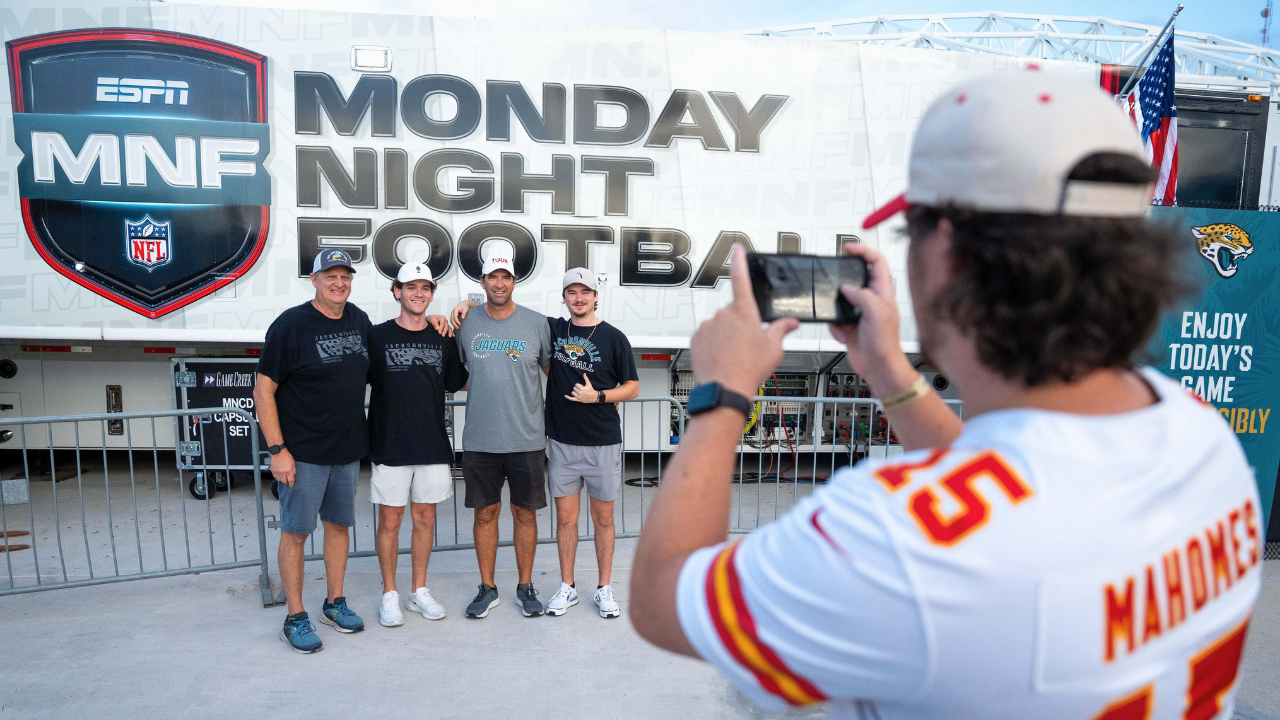
Jan 12, 2026; Pittsburgh, PA, USA; ESPN Monday Night Football logo on an end zone camera before the Pittsburgh Steelers host the Houston Texans in an AFC Wild Card Round game at Acrisure Stadium. Mandatory Credit: Charles LeClaire-Imagn Images
League and network executives quietly tracked how the split windows performed versus a traditional single-game showcase. In one key week, a doubleheader averaged around 12 to 13 million viewers per slot, well below the historical Monday Night Football single-game average of roughly 15 million. In another, a standalone matchup – Packers-Eagles – pulled more than 20 million viewers on its own. One focused game was drawing roughly 60% more viewers than a typical doubleheader slot. Only a small fraction of doubleheader games cleared the 15 million threshold that used to be routine for a marquee MNF night. According to coverage in outlets like OutKick, the feedback was clear: fans didn’t want more options; they wanted a single, focused game. The league killed the format permanently.
Even the Best Game Proved the Flaw
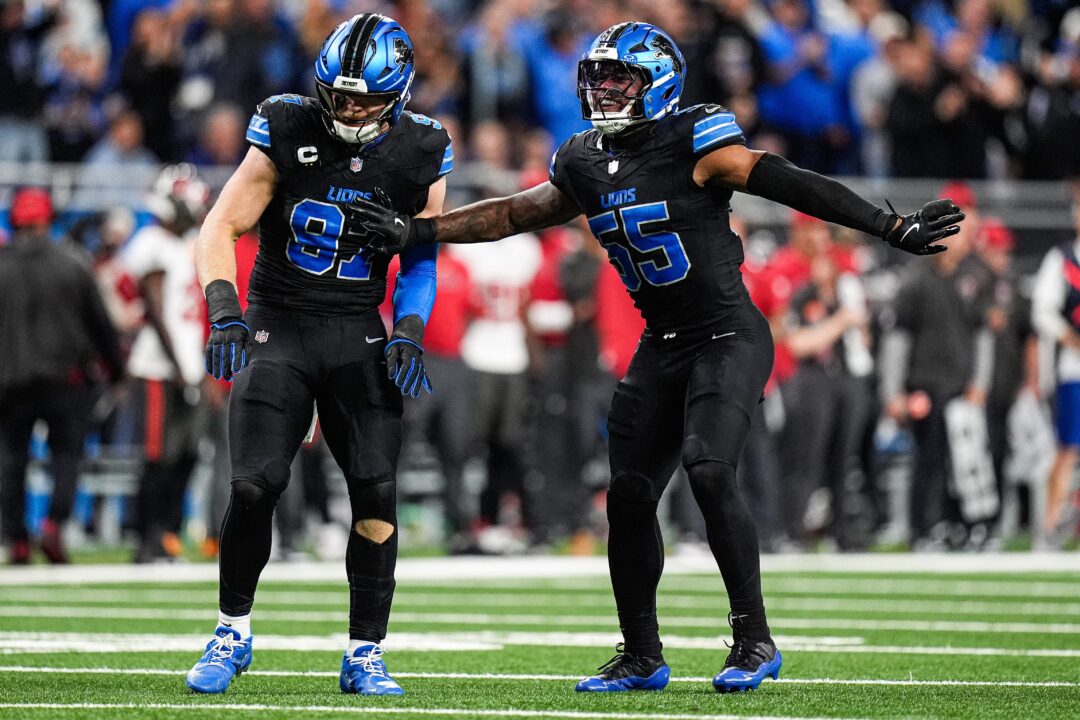
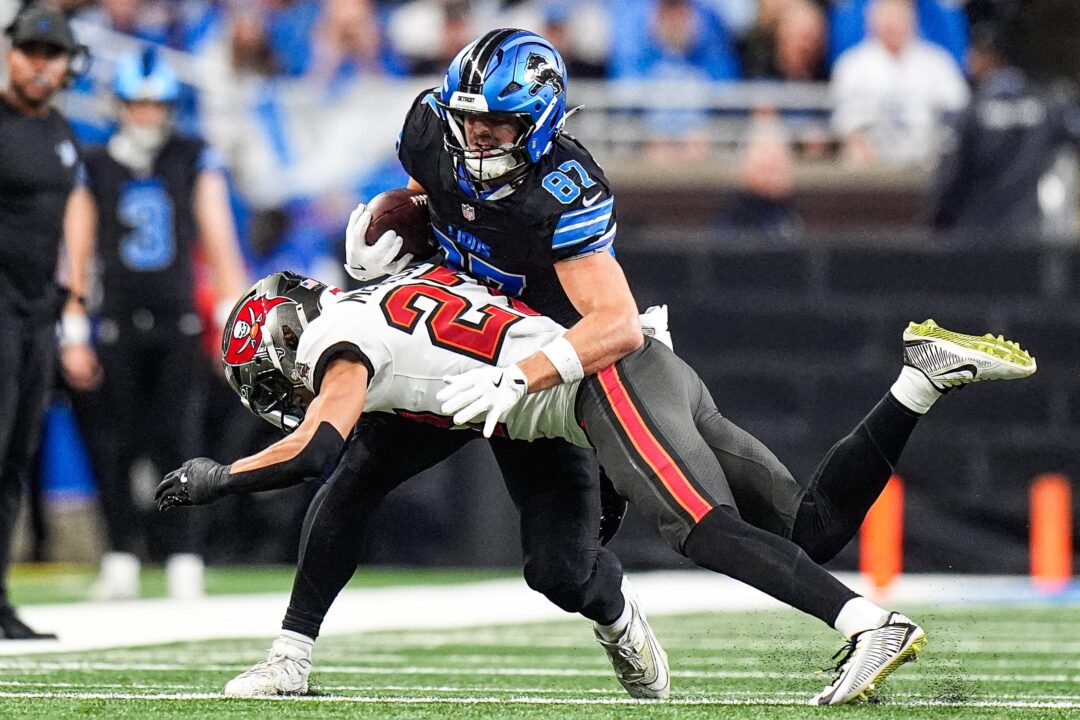
Lions-Buccaneers in Week 7 drew 18.8 million viewers, the most-watched Monday Night Football Week 7 game ever and ESPN’s most-watched individual game on a multiple-game MNF night. Sounds like a success story. Look at the other slot. That monster audience cannibalized its companion game, leaving the secondary broadcast orphaned. One game thrived precisely because it devoured the other. That’s the hidden mechanism: concurrent primetime games don’t split audiences evenly. They create a winner and a corpse. The format’s single greatest night was also its clearest autopsy.
The 28-Game Guarantee
Under a restructured equity deal, ESPN is set to receive 28 stand-alone Monday Night Football games per season once the agreement is fully in effect. Every single one is designed to air in its own window with no other national NFL broadcast competing for the same audience. The NFL also owns 10% of ESPN as part of that restructuring. Recent reporting on the deal notes that exclusive, national “stand-alone” windows are now a featured concept in broadcaster agreements. Doubleheader clauses, once treated as extra inventory, suddenly looked like a liability. Advertisers chasing concentrated audiences will pay premium CPMs for a single-game window that commands 18 to 20 million undivided viewers.
Growth Didn’t Stop, It Scattered
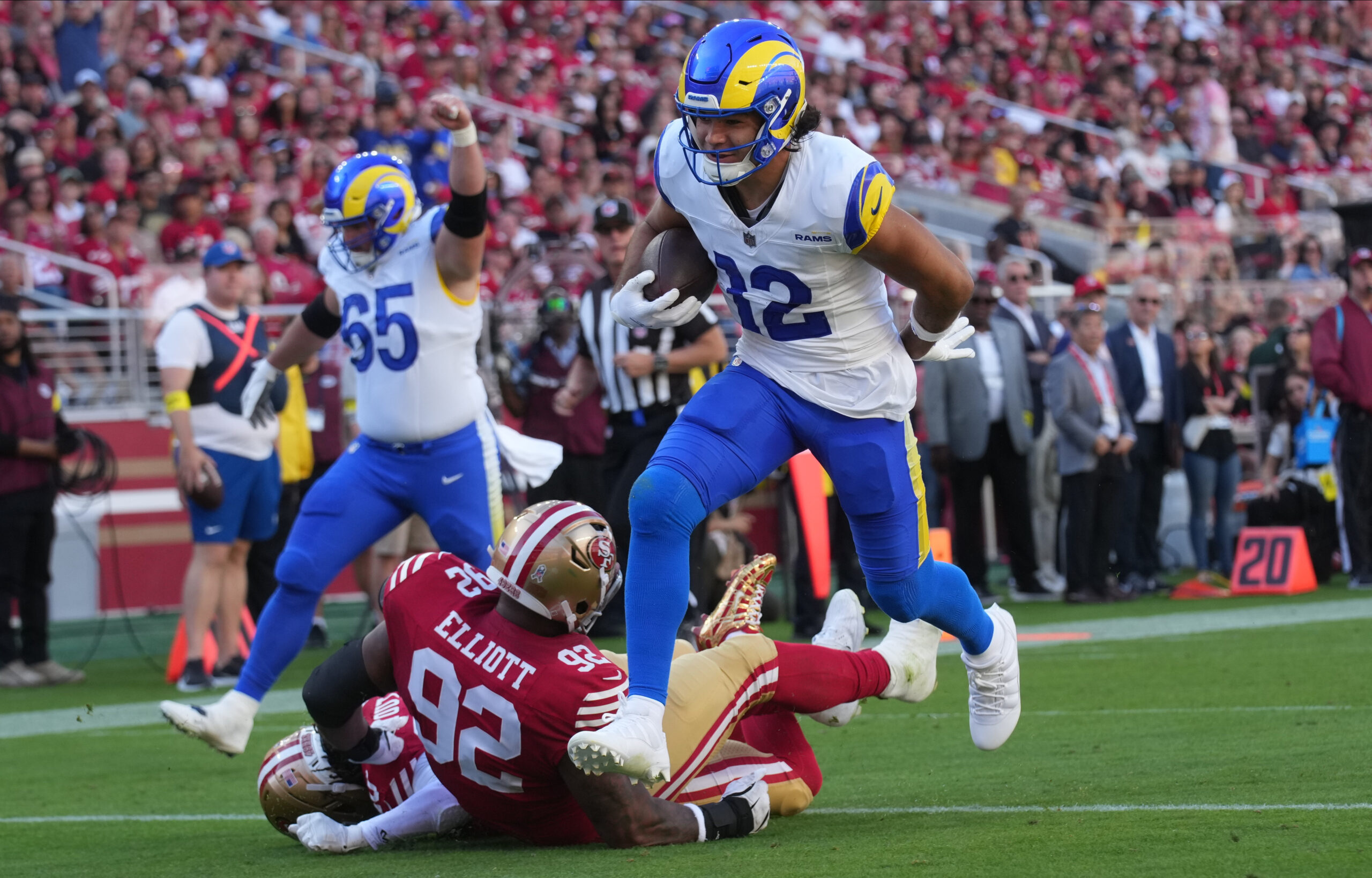
Nov 9, 2025; Santa Clara, California, USA; Los Angeles Rams wide receiver Puka Nacua (12) scores a touchdown past San Francisco 49ers defensive tackle Jordan Elliott (92) during the first quarter at Levi’s Stadium. Mandatory Credit: Cary Edmondson-Imagn Images
The NFL didn’t abandon expansion. It abandoned duplication. The 2026 season opens on a Wednesday, September 9, in Seattle in a primetime window on NBC and Peacock. The next night, the 49ers and Rams play in Melbourne, Australia, marking the first-ever NFL regular-season game in Australia. The league is exploring a Thanksgiving Eve game on November 25, which would help create a nine-day stretch with seven days of NFL broadcasts. Netflix will have two games on Christmas Day, and Fox will have the third. Every new window sits on a different day. That distinction is everything.
The Rule Nobody Saw Coming
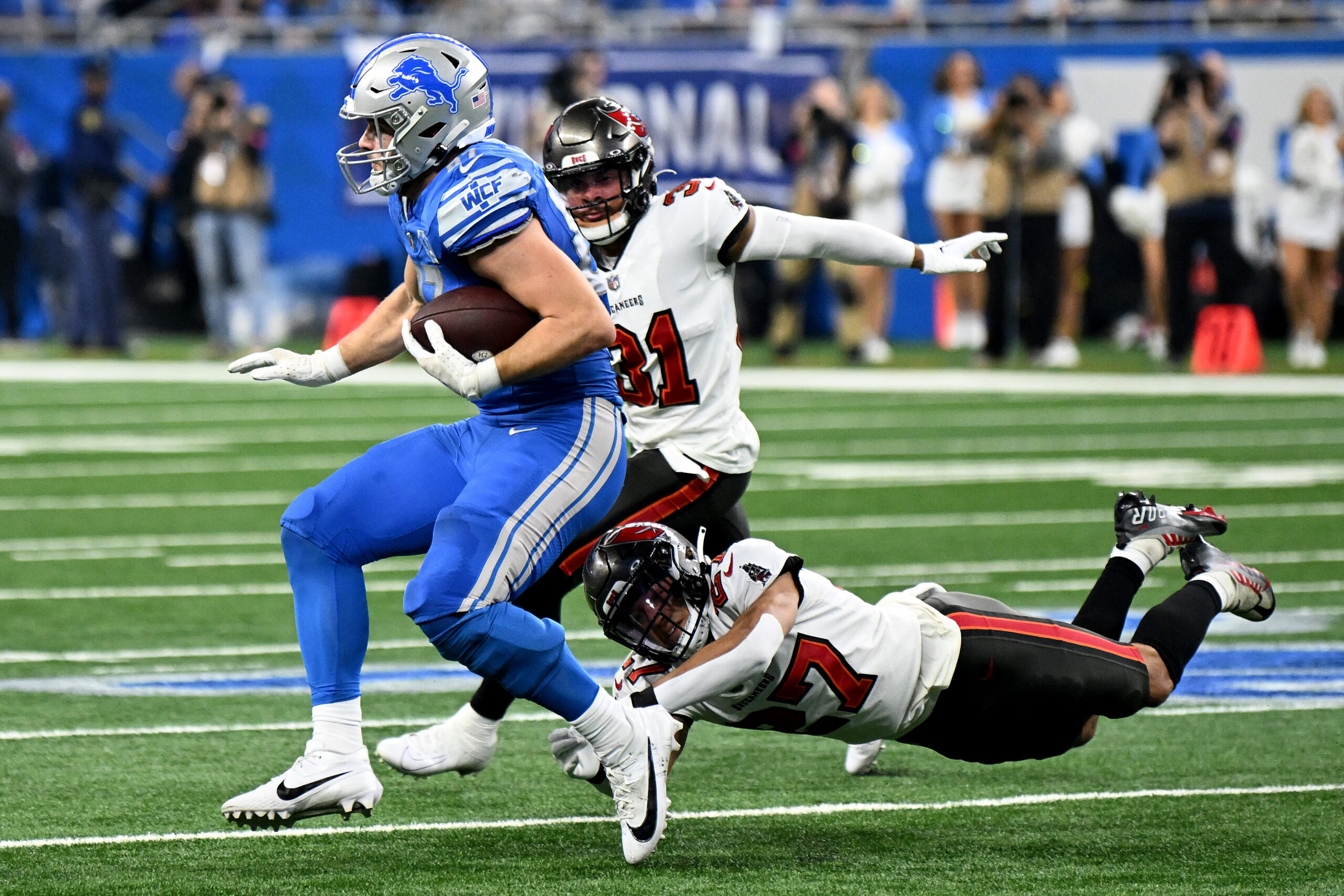
Jan 21, 2024; Detroit, Michigan, USA; Detroit Lions tight end Sam LaPorta (87) runs with the ball against Tampa Bay Buccaneers cornerback Zyon McCollum (27) during the first half in a 2024 NFC divisional round game at Ford Field. Mandatory Credit: Lon Horwedel-Imagn Images
NFL average viewership in recent seasons has climbed back toward late-1980s territory, with the league reporting the strongest through-Week-15 numbers in decades. The league’s audience isn’t shrinking. It was being mismanaged on Monday nights. Once you see the pattern, you can’t unsee it: spread games across different days and they thrive. Stack them on the same night and they cannibalize. Every media company assumes growth through duplication. The NFL just suggested that some environments reward scarcity. That precedent will ripple into future sports media negotiations for years.
Who Loses From Here
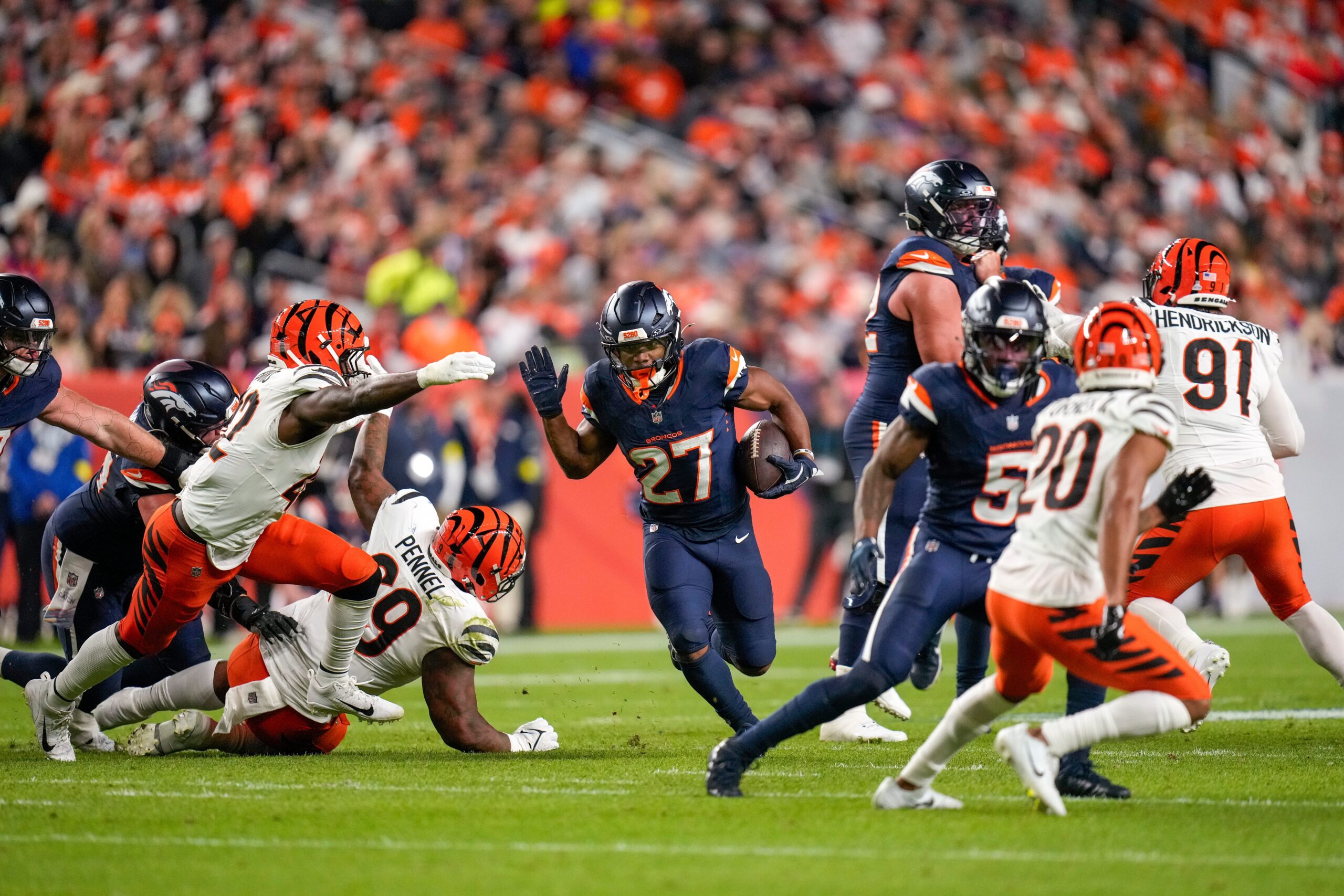
Denver Broncos running back J.K. Dobbins (27) runs the ball in the second quarter of the NFL Week 4 Monday Night Football game between the Denver Broncos and the Cincinnati Bengals at Empower Field at Mile High in Denver on Monday, Sept. 29, 2025.
Fantasy players lose their dual-game Monday hedge. Casual viewers lose the option of flipping between matchups. International fans lose the late-night concurrent window that let them catch two games in one sitting. Some games involved in the Disney equity restructure will land with new broadcasters, fragmenting where fans need to look. If the Thanksgiving Eve game succeeds, expect Saturday late-season saturation, potential Thursday doubleheaders on Amazon, and more experiments with Wednesday games becoming an occasional fixture. The calendar keeps filling. Just never the same night twice.
The Monday Night Ritual Returns
Nov 10, 2025; Green Bay, Wisconsin, USA; General view of an ESPN Monday Night Football logo during the game between the Philadelphia Eagles and Green Bay Packers at Lambeau Field. Mandatory Credit: Jeff Hanisch-Imagn Images
The NFL admitted something no major sports league often says out loud: its own audience has psychological limits, and respecting those limits can be more profitable than ignoring them. Fans who complained about doubleheaders for several years just watched a $15 billion enterprise reverse course because of their viewing habits. That’s real power. Other leagues may be watching this reversal closely. The open question now isn’t whether Monday Night Football survives. It’s whether every other league copies the playbook before their own concurrent formats collapse.
If you enjoyed this article, please like and follow us here on MSN! Thank you for reading, and have a great day!
Sources:
Front Office Sports, NFL Seeks Buyers for 5 Games, Drops ‘MNF’ Doubleheaders, March 30 2026
Front Office Sports, ESPN’s ‘MNF’ Doubleheaders Will End—If NFL Equity Deal Clears, October 19 2025
Yahoo Sports, NFL Scrapped Dual MNF Games After Concluding “Fans Felt Like They Were Conflicted”, March 31 2026
Yahoo Sports, 2026 NFL Season Will Kick Off in Seattle on a Wednesday Night Followed by Thursday Game in Melbourne, March 25 2026
Yahoo Sports, Netflix Will Have Two Games on Christmas, and Fox Will Have the Other, March 31 2026
Sports Illustrated, Lions Set Week 7 ESPN Monday Night Football Record, October 24 2025