
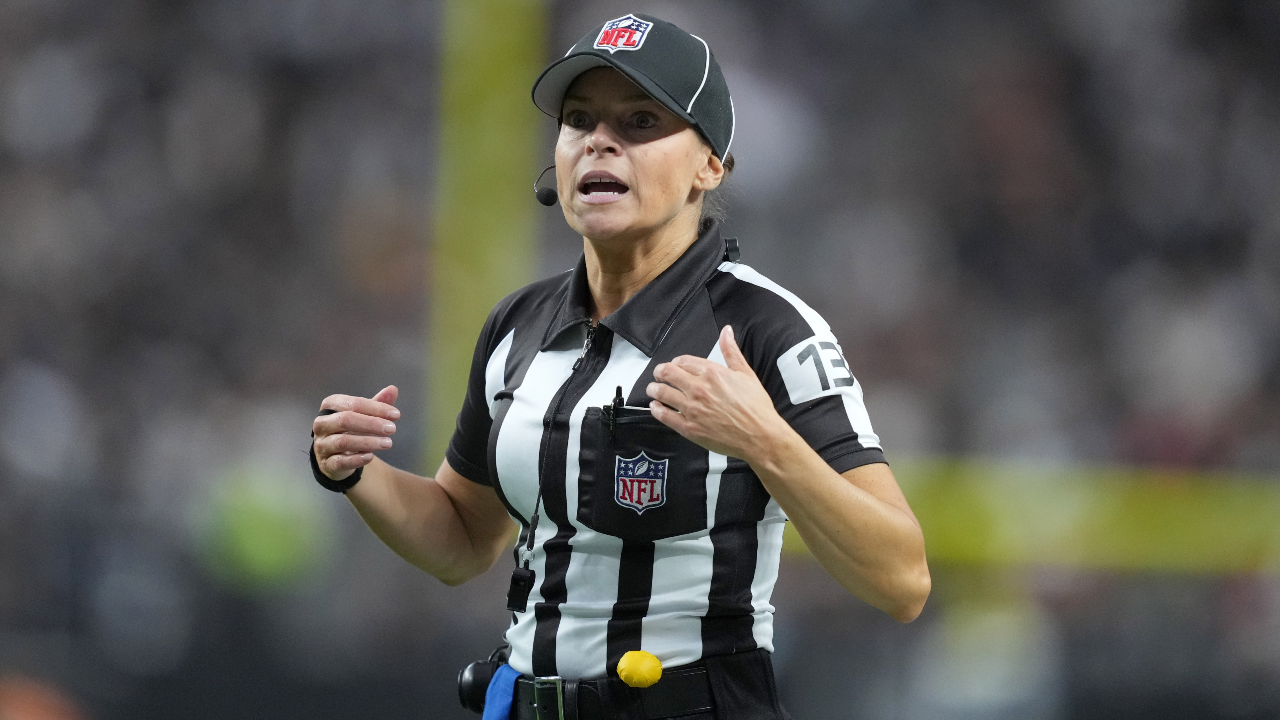
The NFL told Robin DeLorenzo to wear her hair in a ponytail, threaded through the back of her official’s cap, so every camera and every player could see a woman on the field. That was the instruction from Walt Anderson, the league’s senior vice president of officiating, when she arrived in 2022 as one of just three women ever hired as a permanent NFL official. The league wanted her visible. It got exactly what it wanted. What happened next filled 32 pages of a federal complaint.
Twenty Years to Get There
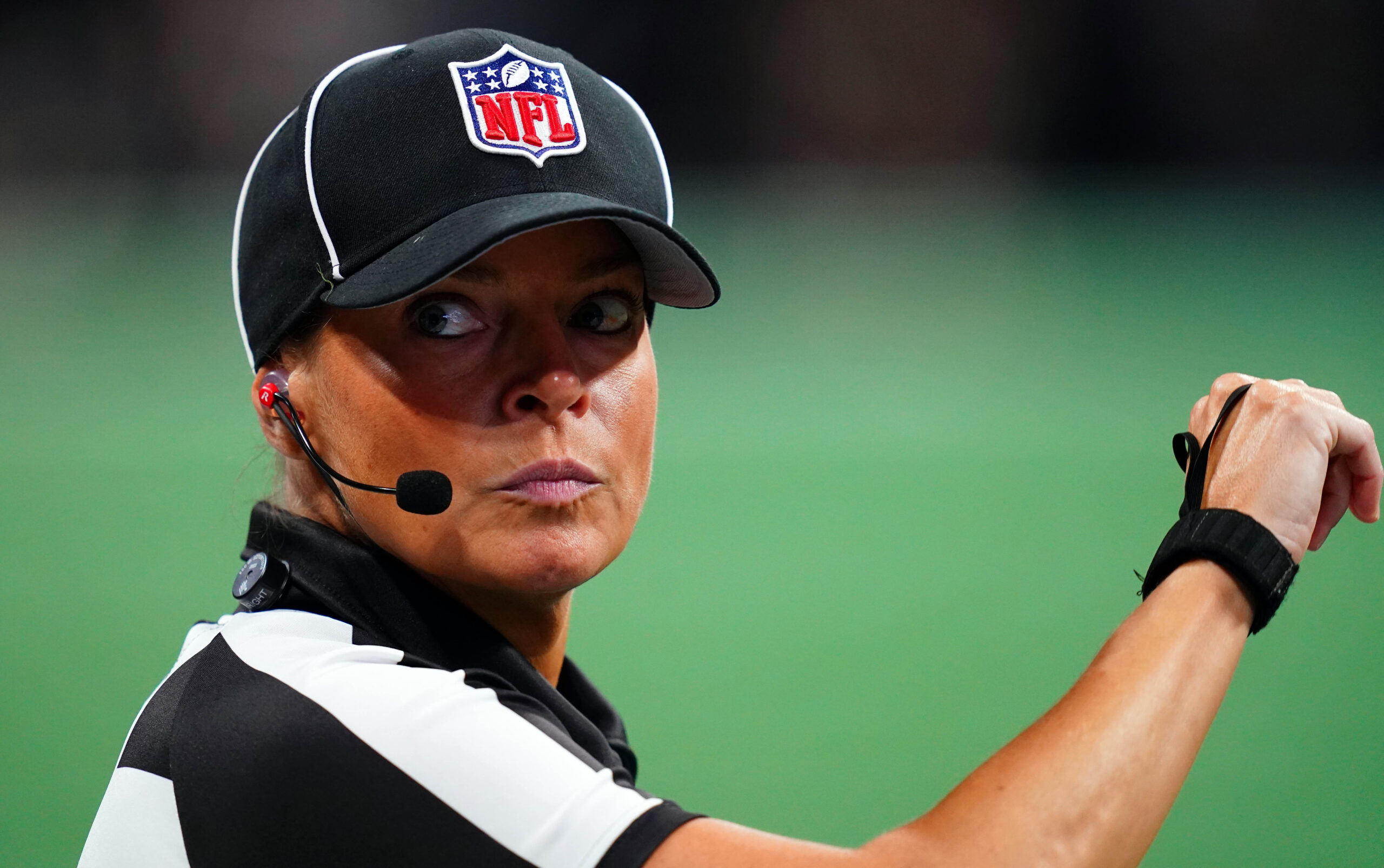
Dec 24, 2023; Atlanta, Georgia, USA; NFL line judge Robin DeLorenzo (134) looks down the sideline during the Atlanta Falcons game against the Indianapolis Colts during the first half at Mercedes-Benz Stadium. Mandatory Credit: John David Mercer-Imagn Images
DeLorenzo spent two decades officiating before the NFL hired her in 2022 as one of 10 new officials. She joined a league where only two women had previously held permanent positions, Sarah Thomas, who became the first full-time female official in 2015, and Maia Chaka, who joined as the NFL’s first Black female official in 2021. Shannon Eastin had broken the on-field barrier in 2012 as a temporary replacement official during the referee lockout. The pressure on DeLorenzo wasn’t just personal. She carried the weight of a pipeline that barely existed.
The Uniform Didn’t Fit
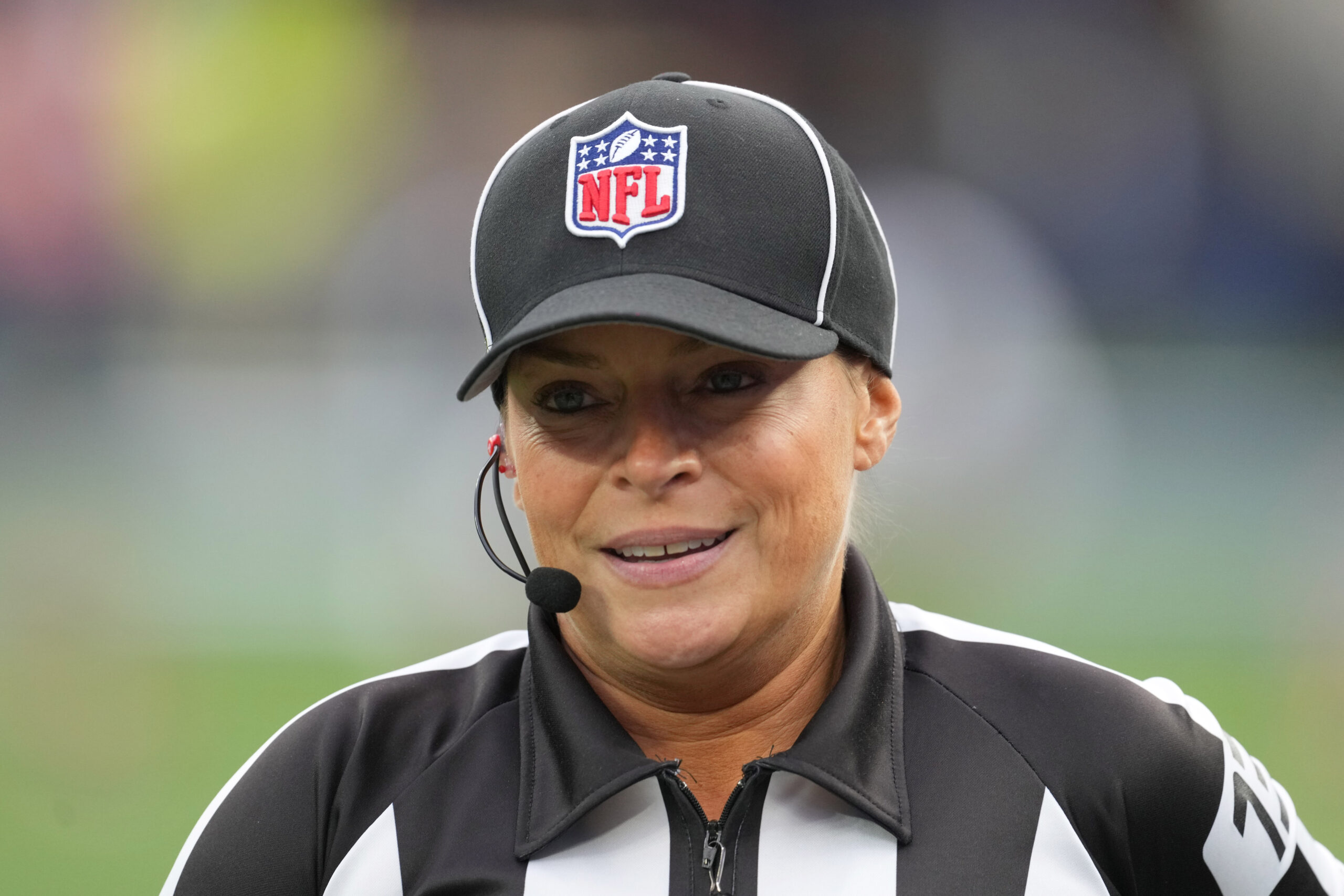
Dec 17, 2023; Inglewood, California, USA; NFL female line judge Robin Delorenzo (134) during the game between the Los Angeles Rams and the Washington Commanders at SoFi Stadium. Mandatory Credit: Kirby Lee-Imagn Images
From the start, the complaint alleges, the league sent DeLorenzo oversized men’s uniforms with no women’s sizing available. The ponytail requirement made her gender a broadcast prop. Then came Steelers training camp, where she was forced to perform a singing routine like a rookie initiation, recorded without her consent. Crew chief John Hussey allegedly subjected her to verbal abuse, including telling her to “shut your [censored] mouth”. The league celebrated hiring a woman. The people running the field, according to the lawsuit, treated her like an intruder.
The Ponytail Was the Setup
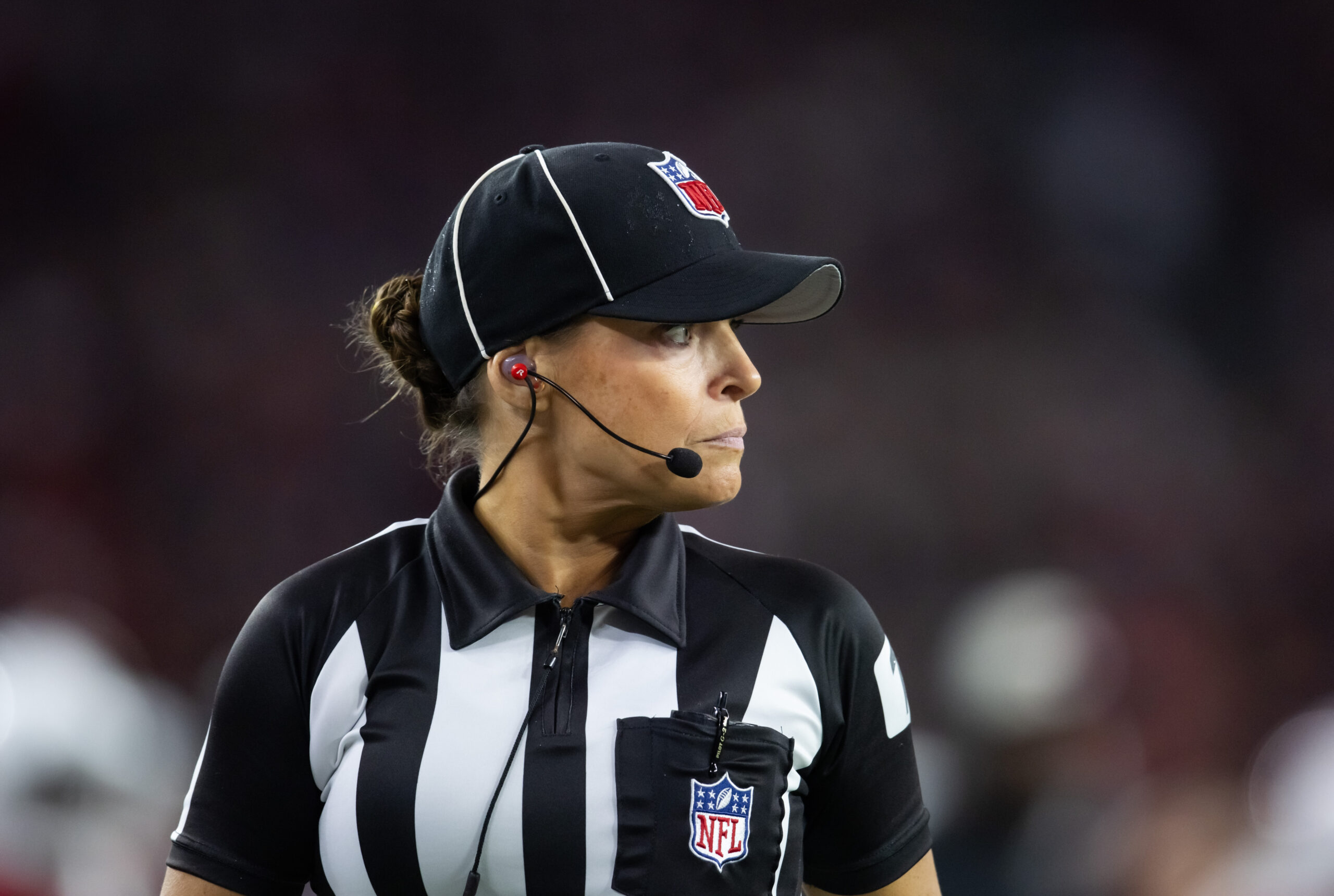
Nov 3, 2024; Glendale, Arizona, USA; NFL line judge Robin DeLorenzo during the Arizona Cardinals game against the Chicago Bears at State Farm Stadium. Mandatory Credit: Mark J. Rebilas-Imagn Images
Anderson directed DeLorenzo to make her gender visible on the field. Then, according to the complaint, he mocked her by suggesting she “join the Frozen play on Broadway and learn to sing ‘Let It Go'” because her “issue” was “a mental one.” The forced singing performance became ammunition for ridicule. The visible ponytail became a target. The institution that marked her as a woman to celebrate diversity allegedly attacked her womanhood as a character flaw. Visibility was the trap. Humiliation was the follow-through.
How the System Worked Against Her
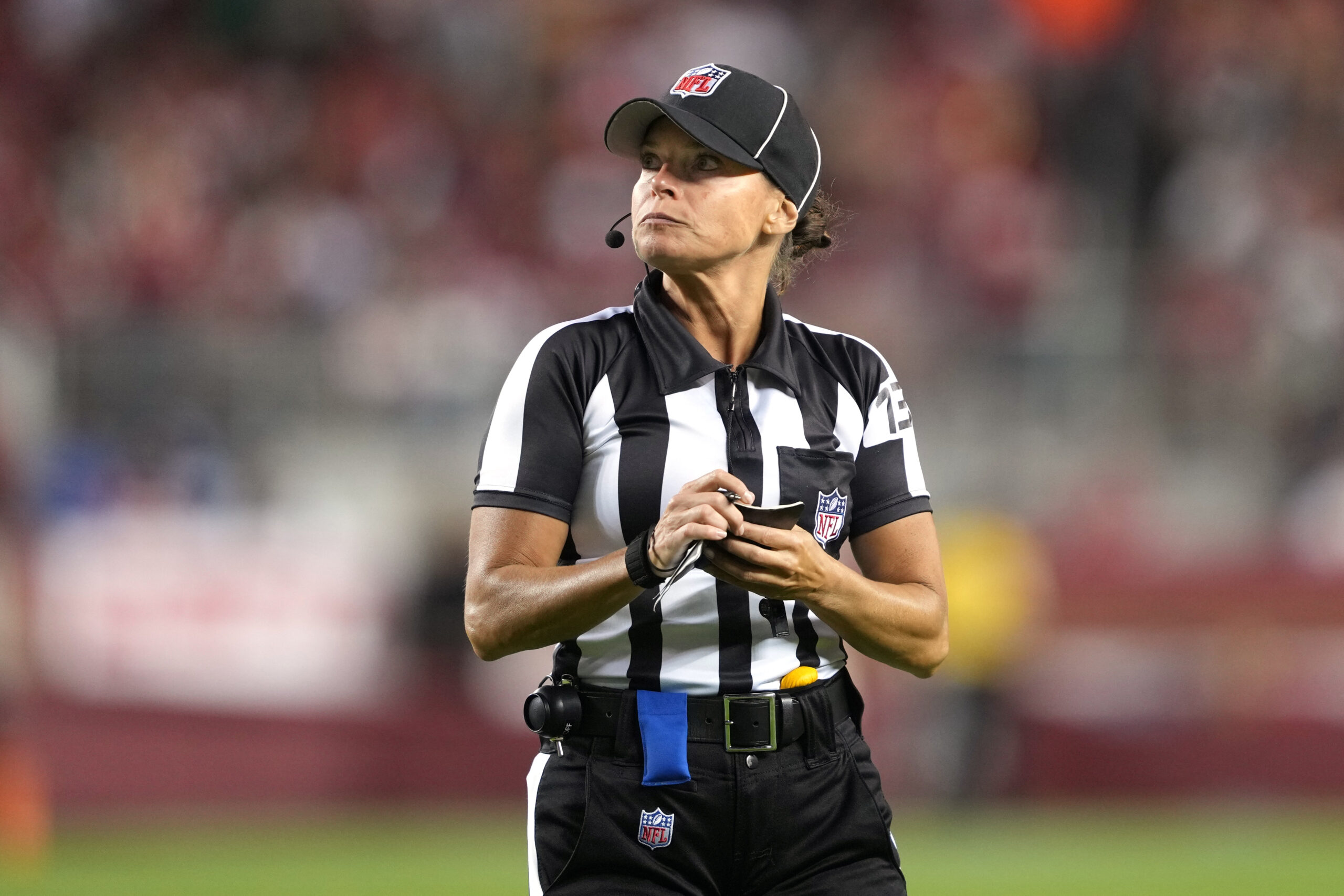
Sep 9, 2024; Santa Clara, California, USA; Line judge Robin DeLorenzo (134) during the fourth quarter of the game between the San Francisco 49ers and the New York Jets at Levi’s Stadium. Mandatory Credit: Darren Yamashita-Imagn Images
The complaint alleges Hussey ignored DeLorenzo’s on-field calls while immediately responding to a male peer’s identical flag on the same play. In 2024, the league forced her to attend a low-level college officiating clinic, a demotion unprecedented for an on-staff NFL official. The referees’ union filed a grievance and won: the league reimbursed her expenses and ended her probation early. The union proved the system was rigged. Then the league built a new system. Same bias, different paperwork.
Graders Loyal to the Accused
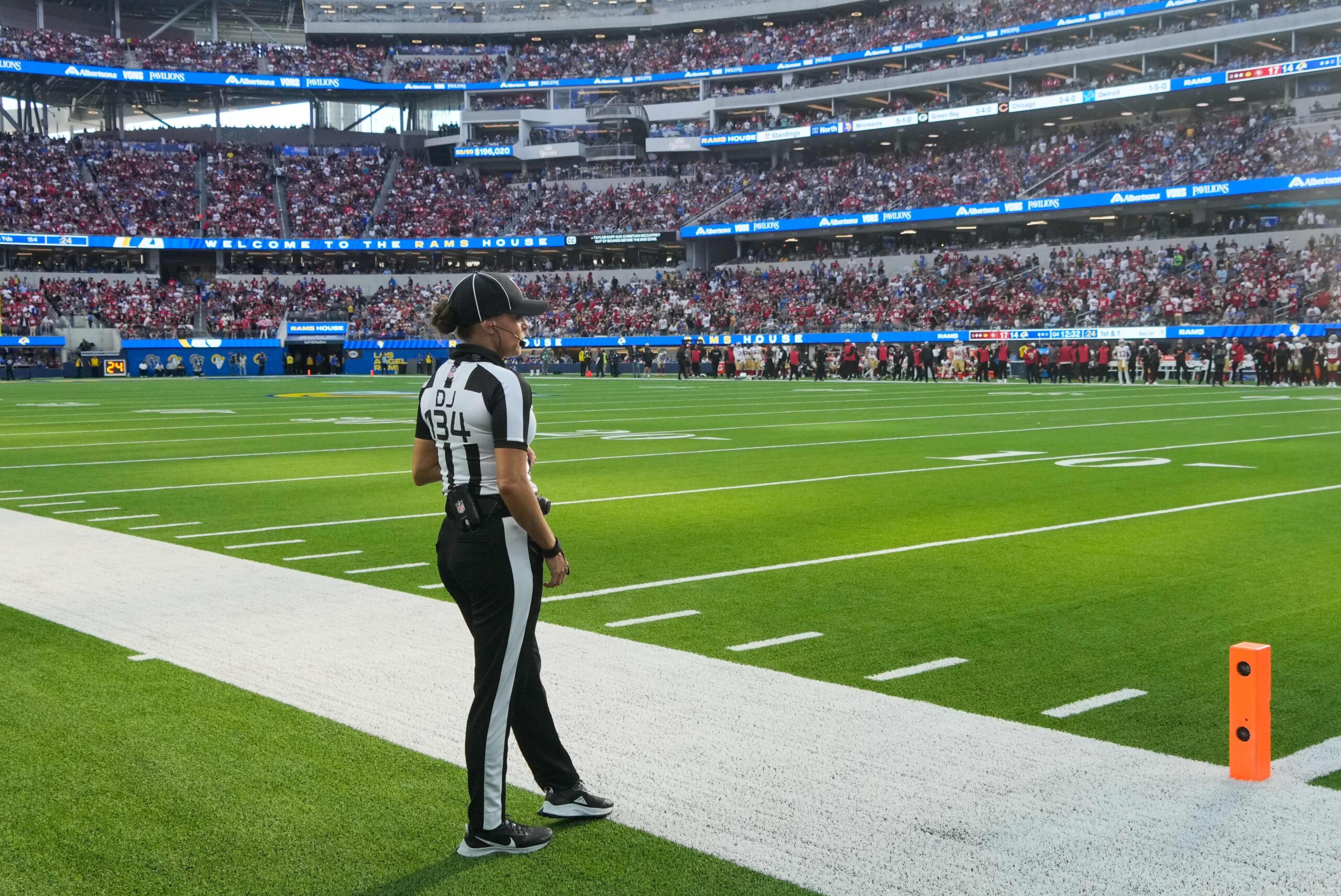
Oct 30, 2022; Inglewood, California, USA; NFL referee Robin DeLorenzo during an NFL game between the Los Angeles Rams and San Francisco 49ers at SoFi Stadium. Mandatory Credit: Robert Hanashiro-Imagn Images
In DeLorenzo’s third season, VP of officiating Ramon George implemented a new grading system. The complaint alleges the evaluators assigned to grade her were “still loyal” to Anderson and Boston, the very officials she had accused of harassment. DeLorenzo allegedly received lower grades than his male counterparts on identical calls. The NFL’s response: she was “terminated following three seasons of documented underperformance.” That’s the league’s entire defense. Performance metrics built by people with reason to want her gone are treated as objective proof.
The Ripple Beyond One Official
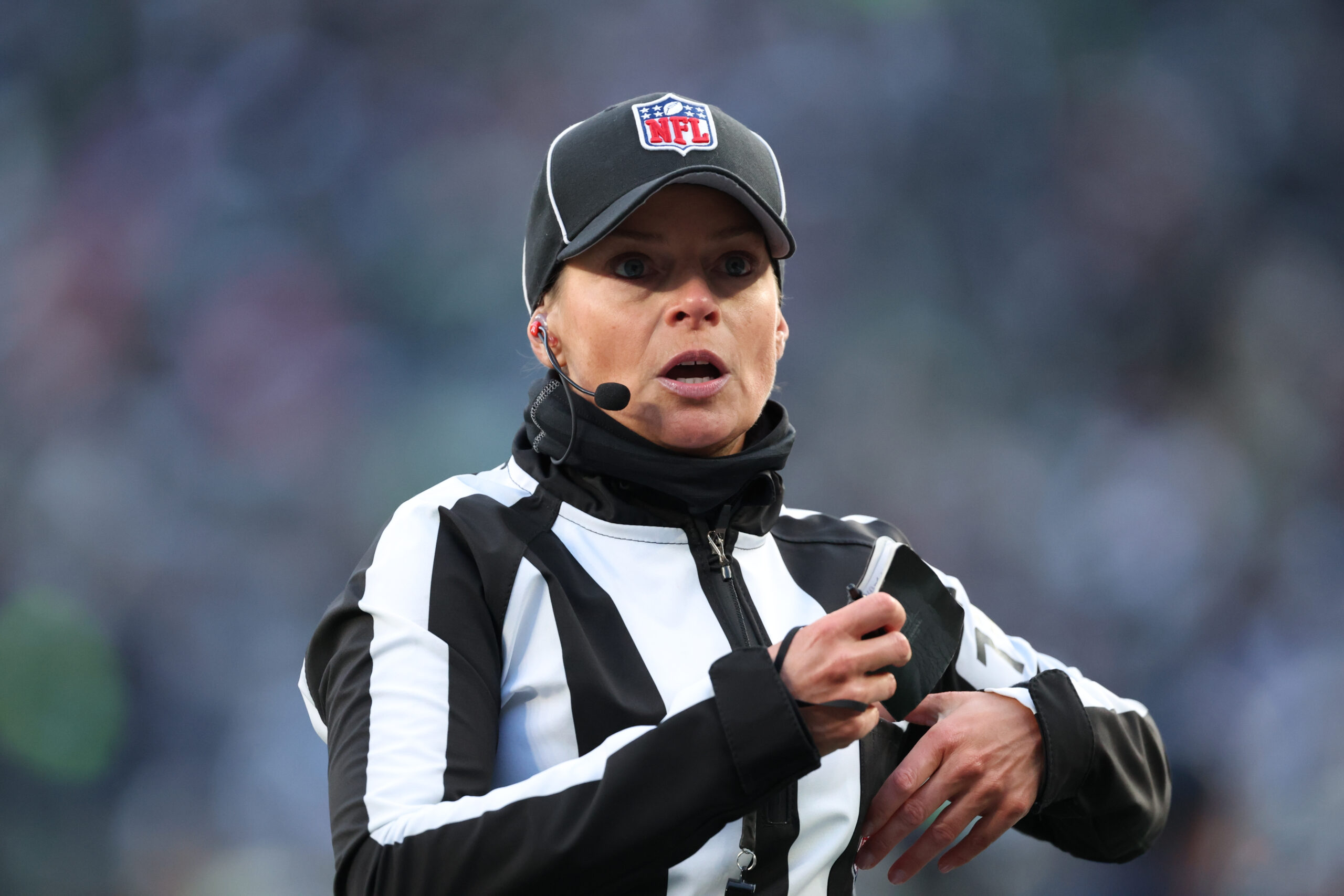
Dec 1, 2024; East Rutherford, New Jersey, USA; NFL side judge Robin DeLorenzo (134) looks on during the second half between the New York Jets and the Seattle Seahawks at MetLife Stadium. Mandatory Credit: Vincent Carchietta-Imagn Images
DeLorenzo wasn’t the only official pushed out. Three officials total were relegated to college conferences in 2025, an unprecedented move that bypassed the union grievance process entirely. The NFL’s current CBA with the referees’ union expires May 31, 2026, and the league has already begun preparing replacement officials. Among the league’s CBA priorities: extending probation periods for new officials and tying postseason assignments to performance grades. The same grading system DeLorenzo’s lawsuit calls tainted could soon determine every official’s career.
A Template, Not an Exception
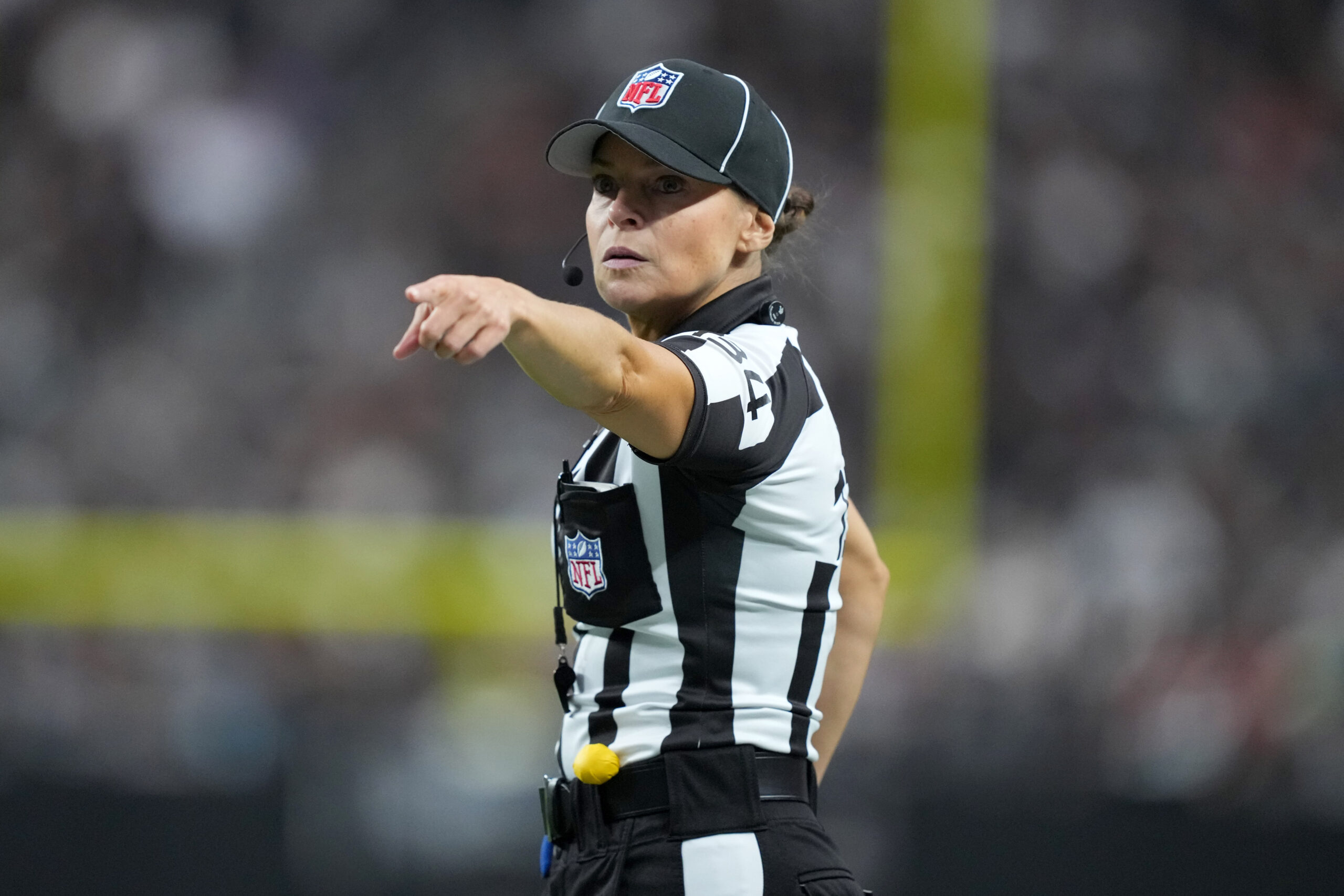
Dec 22, 2024; Paradise, Nevada, USA; NFL line judge Robin DeLorenzo (134) gestures during the game between the Jacksonville Jaguars and the Las Vegas Raiders Allegiant Stadium. Mandatory Credit: Kirby Lee-Imagn Images
The 32-page complaint carries 12 causes of action under Title VII, New York State law, New York City law, and New Jersey law. The EEOC issued its administrative notice on December 31, 2025. Attorneys Krista DiMercurio and Mark Magarian filed in Manhattan federal court. This complaint reads like a blueprint. If performance-based termination can constitute discrimination when evaluators are biased, every female official in professional sports now has legal precedent to cite. The exception just became the test case.
What Discovery Will Uncover
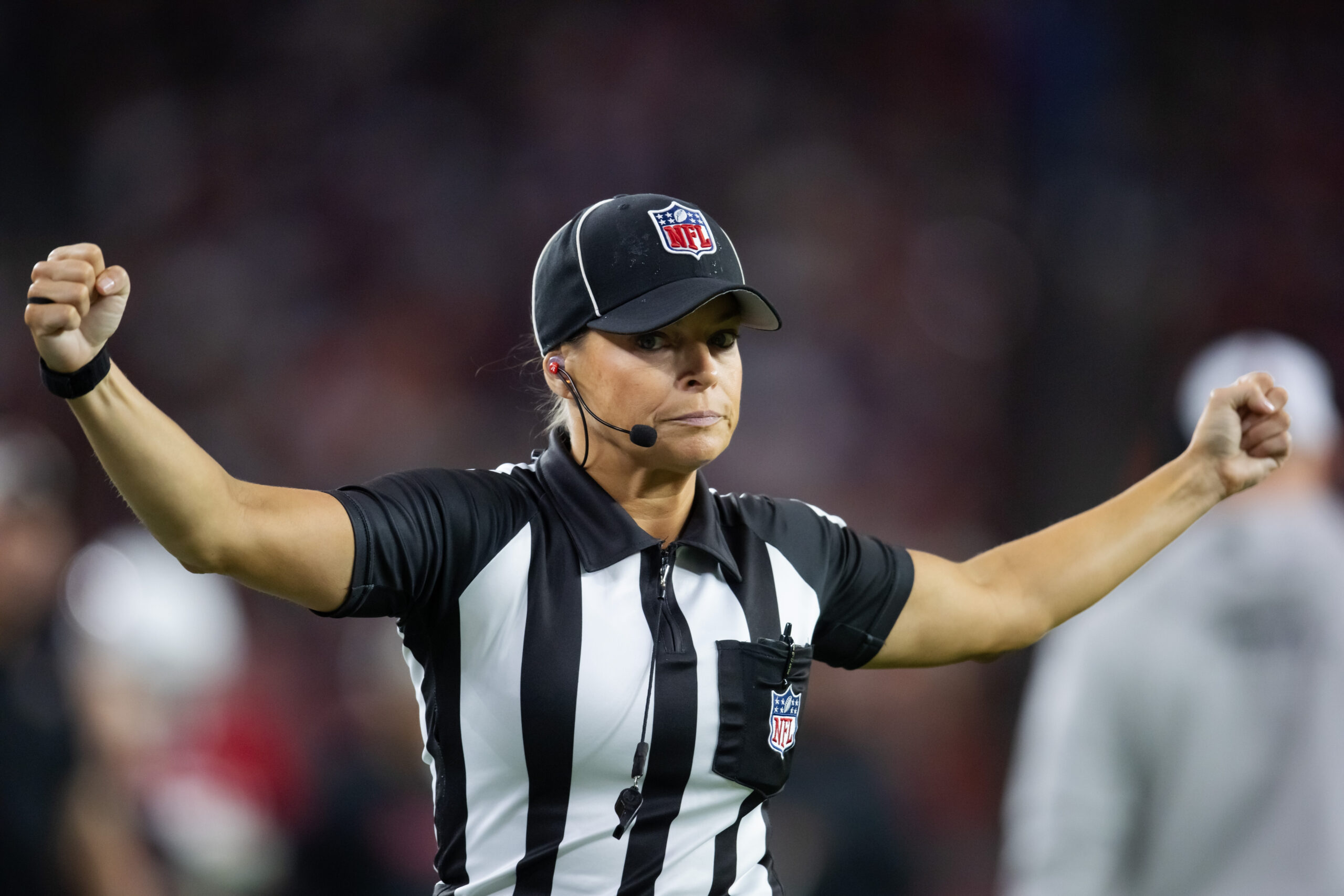
Nov 3, 2024; Glendale, Arizona, USA; NFL line judge Robin DeLorenzo during the Arizona Cardinals game against the Chicago Bears at State Farm Stadium. Mandatory Credit: Mark J. Rebilas-Imagn Images
DeLorenzo seeks reinstatement, back pay, and compensatory and punitive damages. The discovery phase will compel the NFL to produce internal communications, grading documents, and deletion logs from that recorded singing performance. Anderson’s and Boston’s files face a subpoena. The complaint states the recording was deleted at DeLorenzo’s request, but the incident was preserved through witness accounts. The NFL built its defense on “documented underperformance.” Federal discovery will now test whether those documents prove bias or disprove it.
The Next Woman Watching
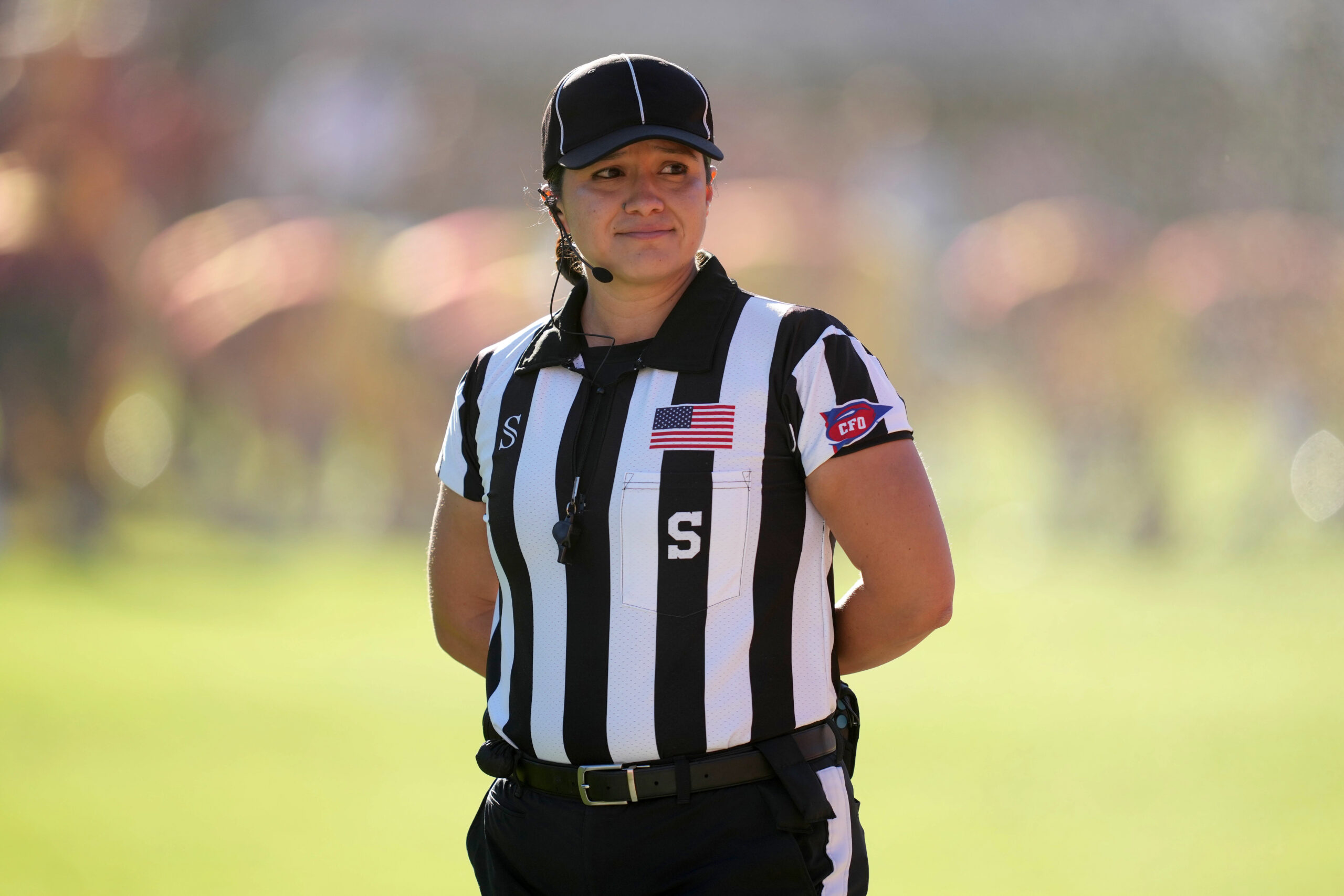
Oct 21, 2023; Los Angeles, California, USA; Referee Karina Tovar during the game between the Southern California Trojans and the Utah Utes at United Airlines Field at Los Angeles Memorial Coliseum. Mandatory Credit: Kirby Lee-Imagn Images
Five women have officiated in the NFL across its entire history. Karina Tovar became the fifth, the first Latina referee. The pipeline remains that thin. DeLorenzo’s lawsuit forces the league to answer a question it never had to: after the press release, the ponytail, and the historic photo op, what actually changes inside the building? The filing’s own language says it plainly: she “outperformed expectations at every level, only to be met with hostility, retaliation, and systemic inequality.” The league will argue performance. The court will examine who graded it.
Sources:
“One of first women to officiate NFL games sues for reinstatement and damages.” ESPN, 30 Mar. 2026.
“Former official sues the NFL for discrimination and harassment in a bombshell civil complaint.” Football Zebras, 30 Mar. 2026.
“NFL fires three officials, relegates them to college ranks in unprecedented move, per report.” CBS Sports, 10 Apr. 2025.
“Sources: NFL, referees break off labor talks amid impasse.” ESPN, 24 Mar. 2026.