
Somewhere right now, three quarterbacks who once commanded entire franchises are sitting by phones that refuse to ring. Russell Wilson, Jimmy Garoppolo, and Derek Carr have banked more than $650 million in combined career earnings between them. They called audibles in playoff games, signed contracts that reset the market, and saw their jerseys hanging in stadium pro shops from coast to coast. The 2026 offseason keeps grinding forward, with free agency having opened March 11 under a $301.2 million salary cap. Rosters keep filling up. And these three former franchise cornerstones remain effectively shut out — Carr retired in 2025 after a rotator-cuff injury, Wilson left the Giants after a benching, and Garoppolo lingered into late free agency with only backup-tier interest.
Half A Billion And No Real Offers
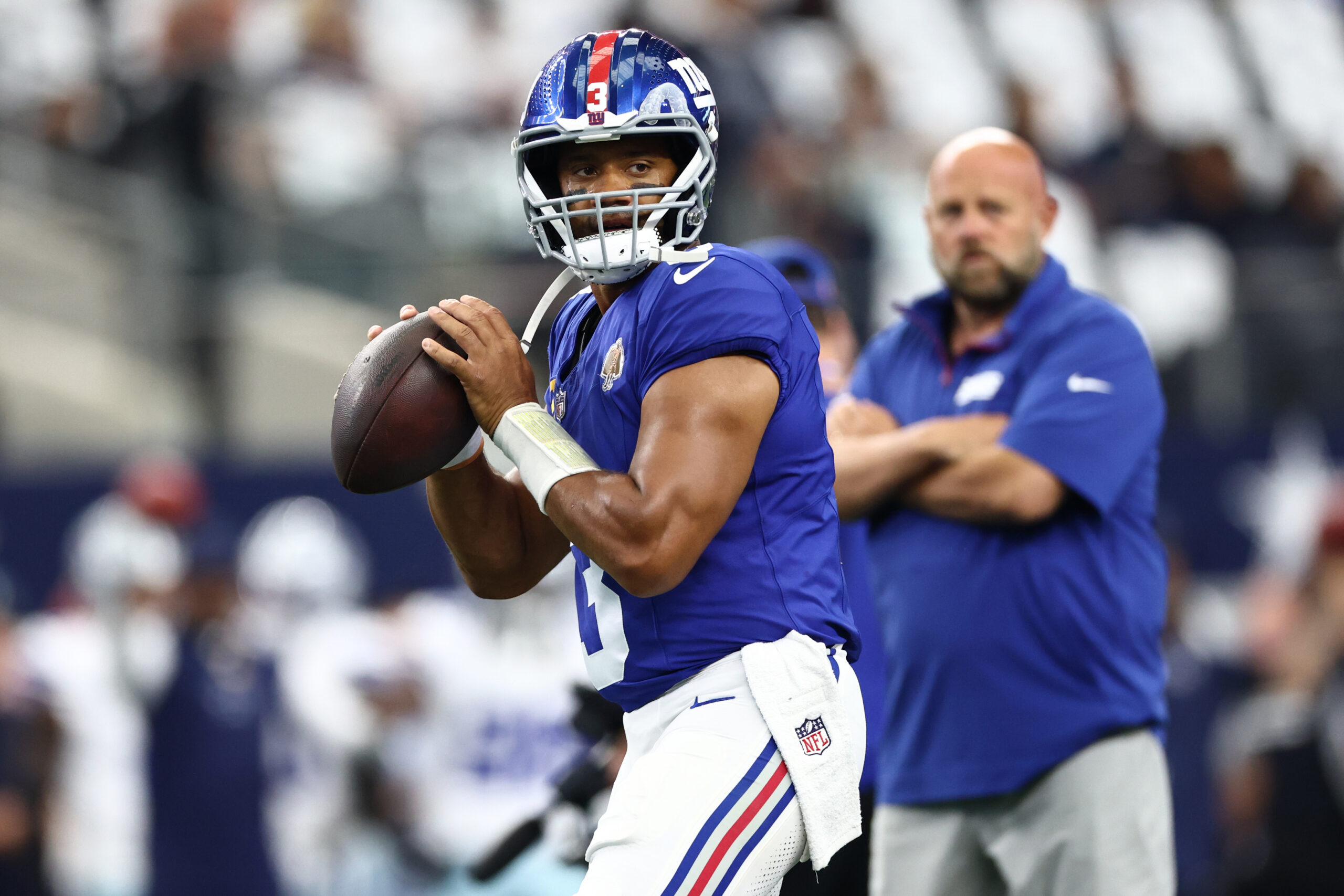
Sep 14, 2025; Arlington, Texas, USA; New York Giants quarterback Russell Wilson (3) warms up before the game against the Dallas Cowboys at AT&T Stadium. Mandatory Credit: Kevin Jairaj-Imagn Images
Wilson alone has earned roughly $305 million in career NFL pay, Carr walked away with about $195.7 million, and Garoppolo has banked roughly $156–159 million. That number should buy leverage, respect, maybe even a courtesy call from a desperate general manager. Instead, it buys silence. The NFL’s quarterback market has shifted so violently toward youth and upside that past production carries almost zero weight in negotiations. Teams would rather gamble on a raw arm with four cheap years of team control than pay a veteran who knows every blitz but can’t outrun any of them.
The Myth Of Quarterback-Proof Careers
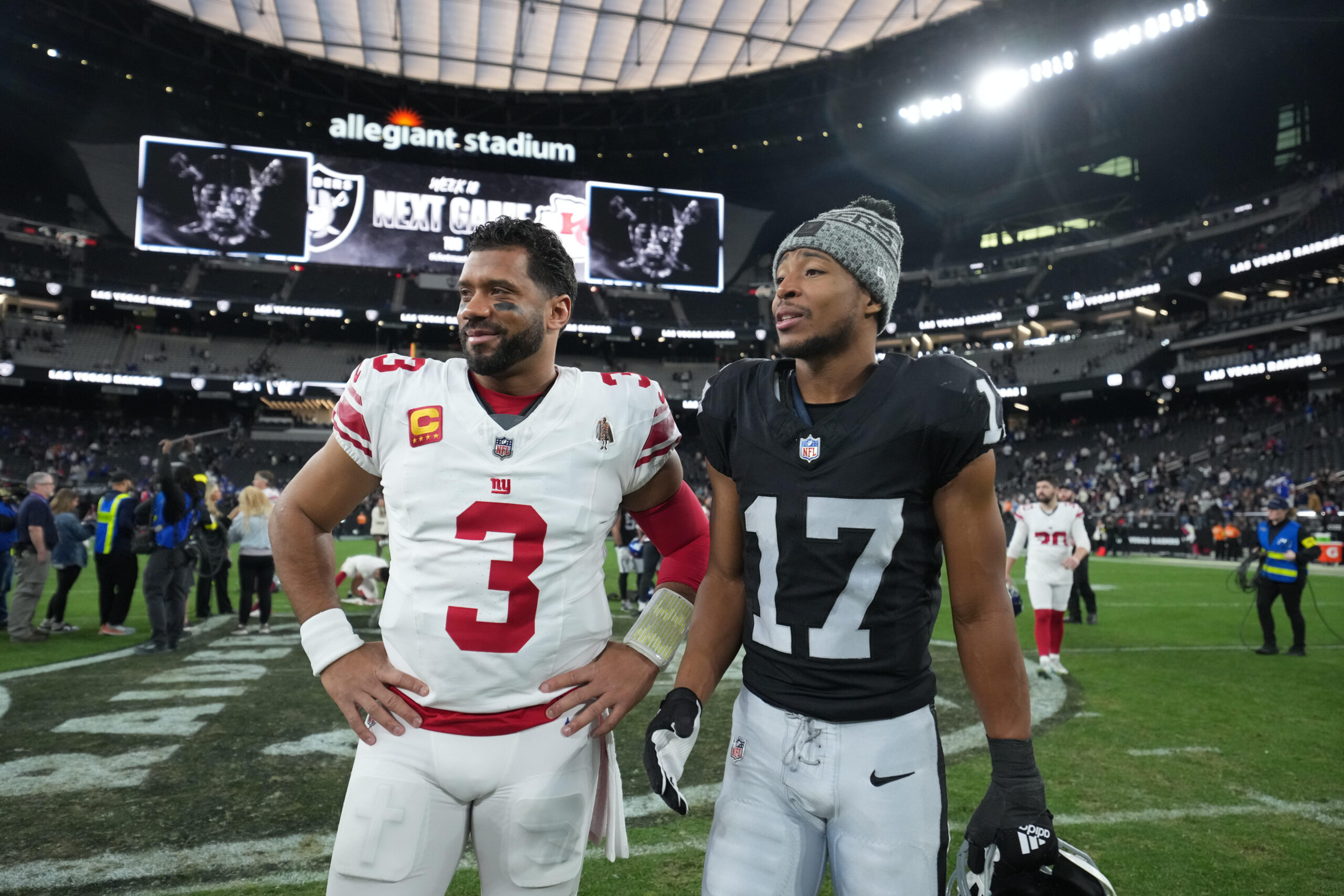
Dec 28, 2025; Paradise, Nevada, USA; New York Giants quarterback Russell Wilson (3) and Las Vegas Raiders wide receiver Tyler Lockett (17) pose for a photo after the game at Allegiant Stadium. Mandatory Credit: Kirby Lee-Imagn Images
Everyone assumed franchise quarterbacks were recession-proof. The position was supposed to be the one job in football where experience actually appreciated in value. Film study, pocket presence, leadership — all the intangibles that supposedly mattered more with age. That assumption is crumbling in real time. Older options like Wilson (declining EPA) and Garoppolo (injury history dragging down QBR) are now openly framed as low-probability bets relative to younger alternatives. A 24-year-old on a rookie deal now represents more organizational value than a proven veteran on a market-rate contract, regardless of résumé.
From Franchise Saviors To Buyer’s Market
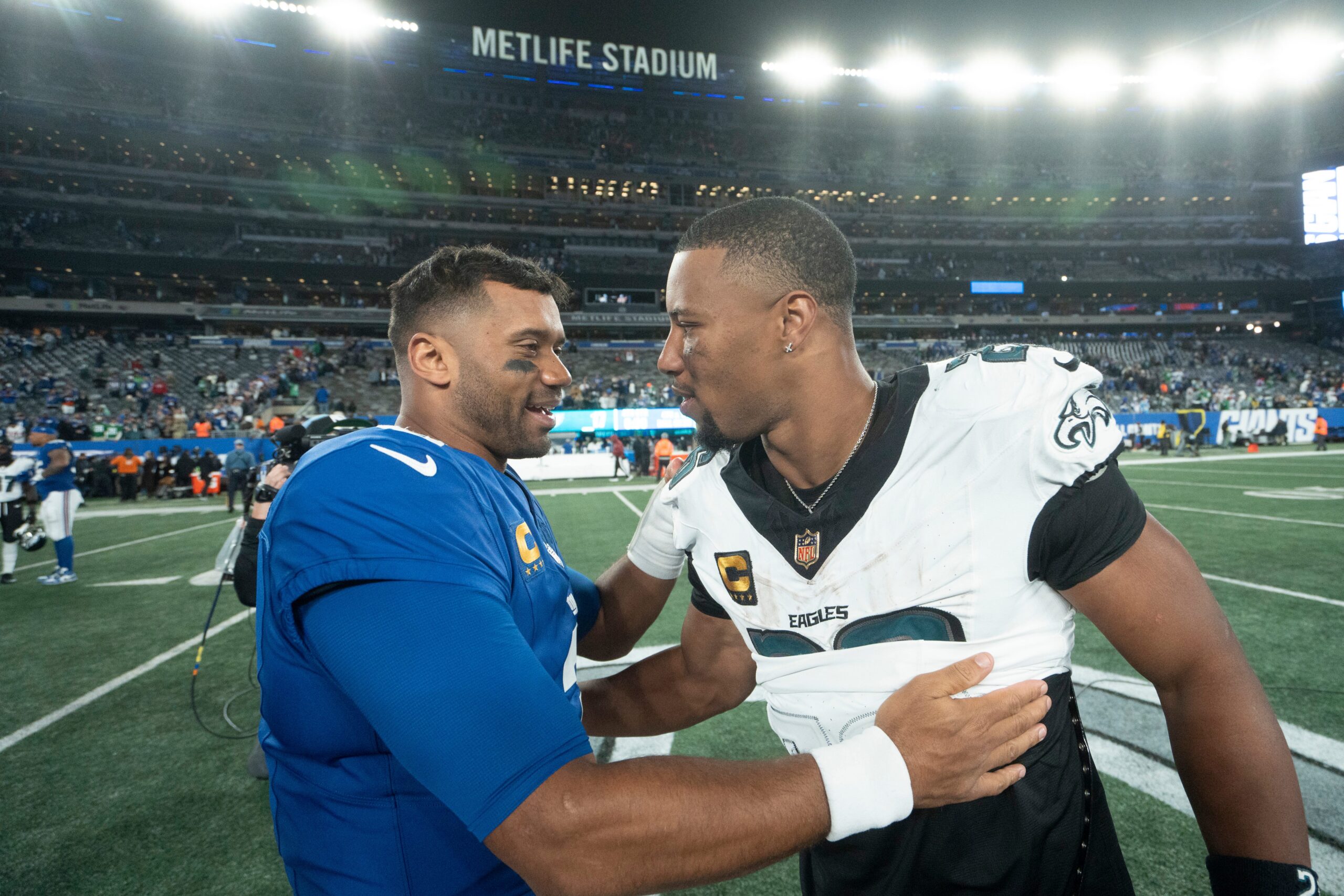
New York Giants quarterback Russell Wilson (3) and Philadelphia Eagles running back Saquon Barkley (26) talk after a Thursday Night Football game between the New York Giants and the Philadelphia Eagles at MetLife Stadium in East Rutherford on Oct. 9, 2025.
Wilson, who finished 2025 demoted to third-string in New York, entered 2026 weighing limited offers from struggling AFC teams or retirement into broadcasting. Garoppolo, after a record-setting $137.5 million deal in San Francisco in 2018, surfaced this spring only as a potential bridge or backup target tied to teams like the Cardinals if their Jacoby Brissett contract dispute escalates. Carr, still owed money on his four-year, $150 million Saints contract, chose to walk away rather than rehab through another season. The gap between their last big contract and their current market position exposes something brutal about the NFL’s economics: the league doesn’t pay for what you did. It pays for what it believes you’ll do next.
The Rookie-Deal Machine
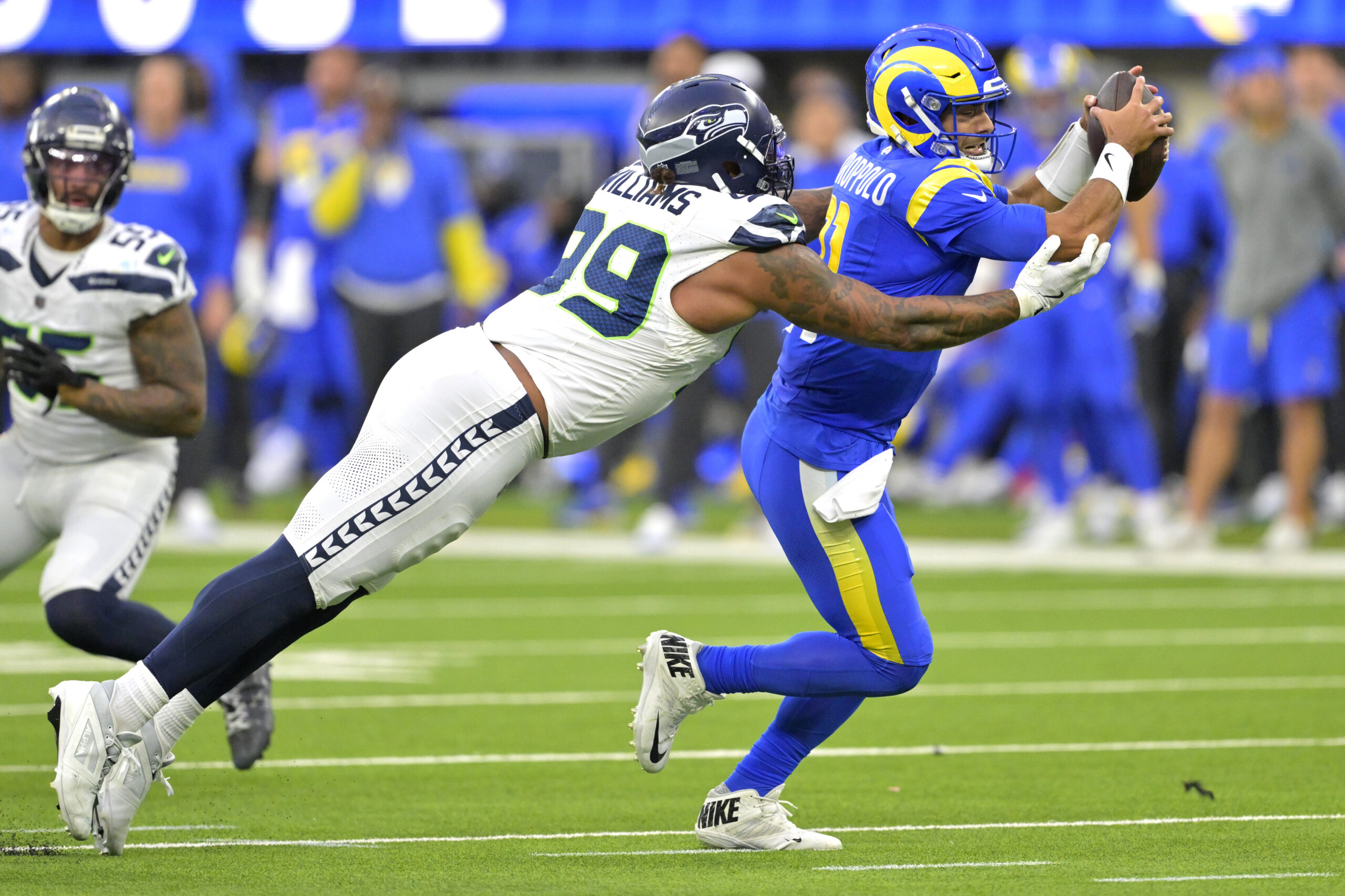
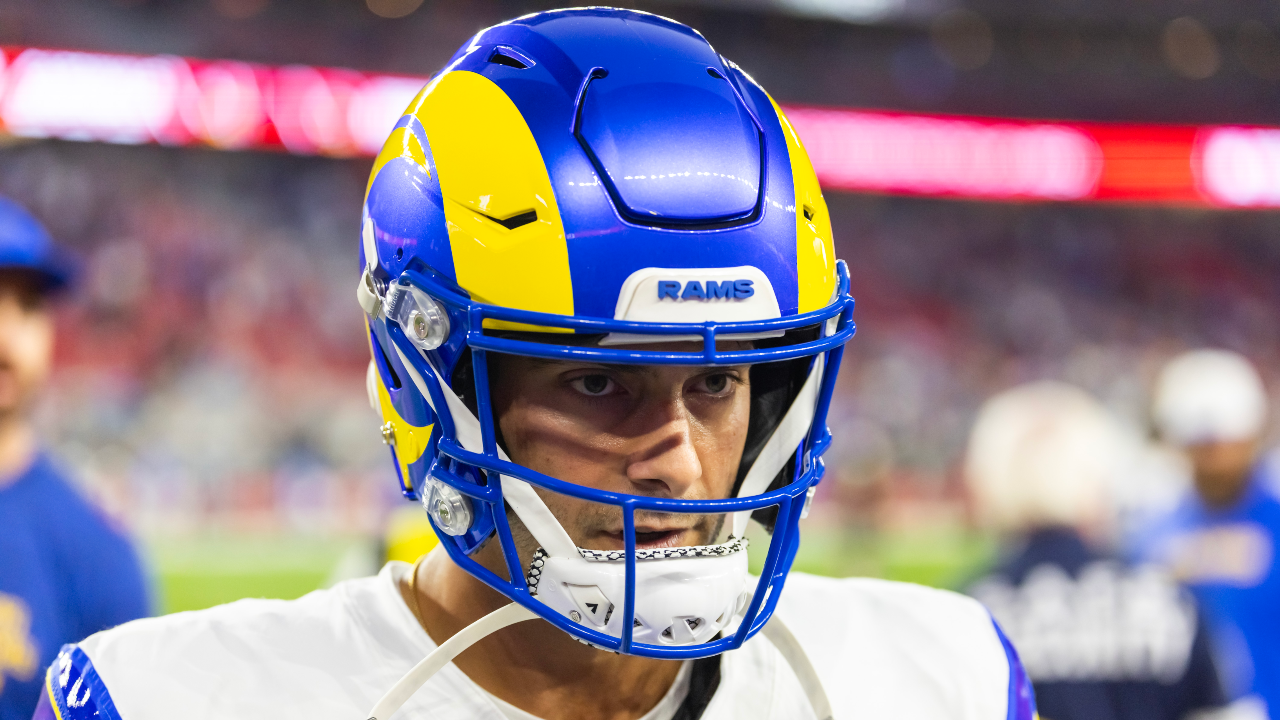
Jan 5, 2025; Inglewood, California, USA; Los Angeles Rams quarterback Jimmy Garoppolo (11) is sacked by Seattle Seahawks defensive end Leonard Williams (99) in the second half at SoFi Stadium. Mandatory Credit: Jayne Kamin-Oncea-Imagn Images
The system driving this isn’t complicated. It’s arithmetic. A first-round quarterback costs roughly $10 million per year against the salary cap for four seasons, while veteran starters now routinely average $45 million or more per year on their current deals. Every dollar saved at quarterback gets redirected to defensive linemen, receivers, offensive tackles. Teams have figured out that a competent young quarterback surrounded by elite talent wins more games than an elite aging quarterback surrounded by cap casualties. That trade-off killed the veteran market. Not malice. Math.
The Numbers That Bury Them
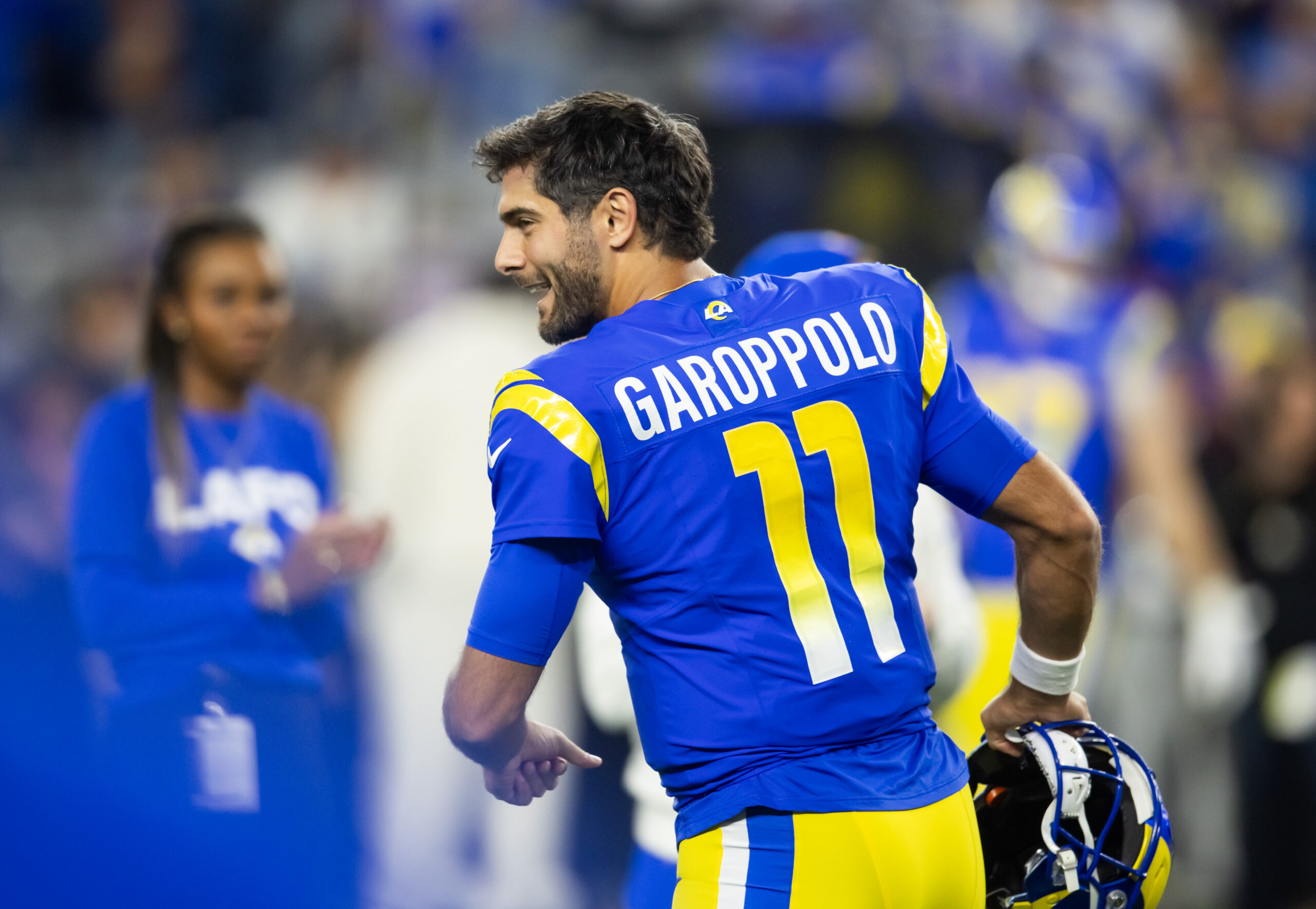
Jan 13, 2025; Glendale, AZ, USA; Detailed view of the jersey of Los Angeles Rams quarterback Jimmy Garoppolo (11) against the Minnesota Vikings during an NFC wild card game at State Farm Stadium. Mandatory Credit: Mark J. Rebilas-Imagn Images
Over $650 million earned collectively by Wilson, Garoppolo, and Carr, and the combined market interest amounts to backup conversations, stalled talks, and one retirement announcement. That disproportion between career earnings and current demand tells the entire story of modern quarterback economics. The 2026 free-agent QB rankings tellingly placed Daniel Jones, Malik Willis, and Kyler Murray ahead of any of the three. Signing a veteran quarterback to even a modest deal means not signing a younger developmental player who might become the next franchise cornerstone.
Who Else Gets Squeezed
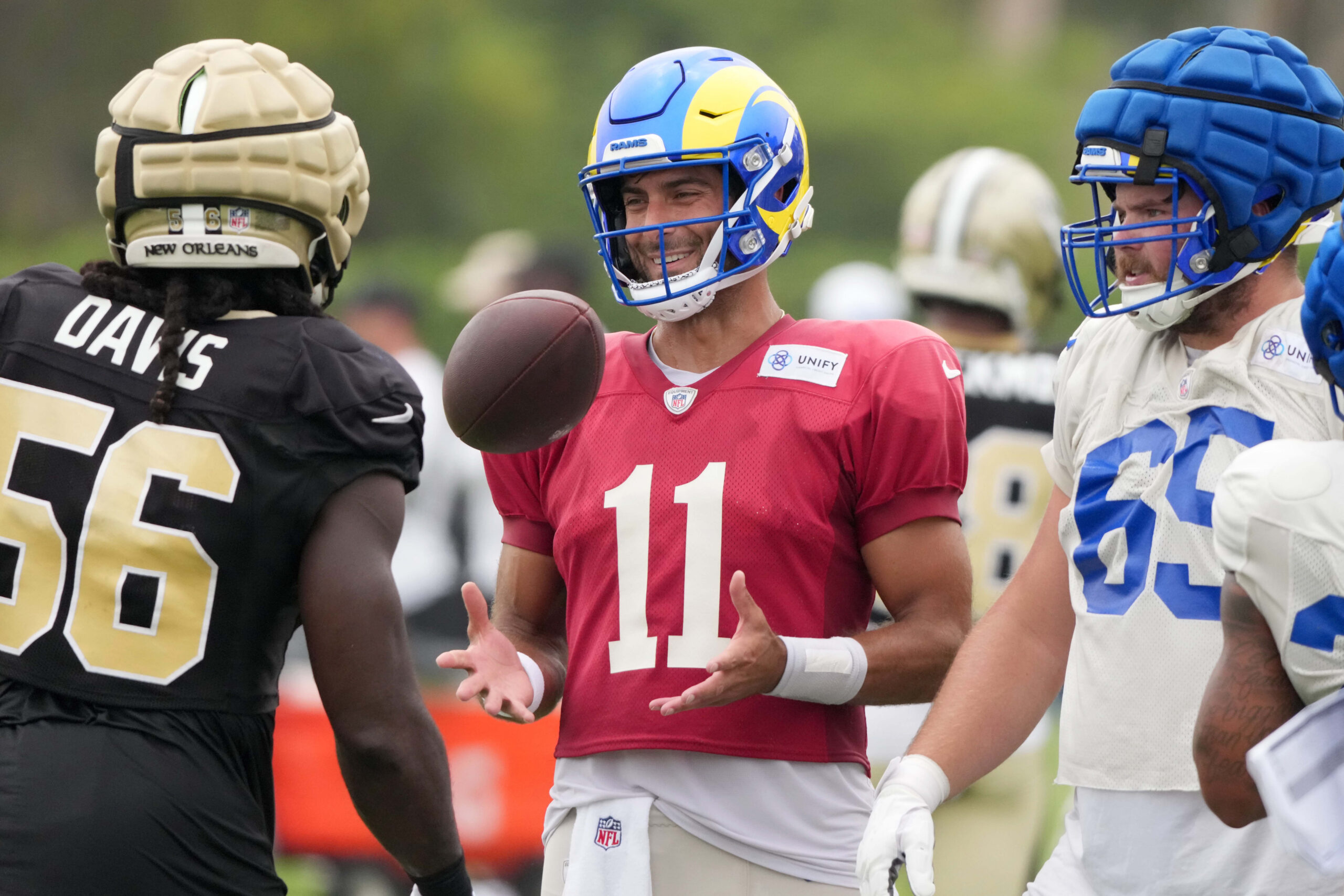
Aug 14, 2025; Carson, CA, USA; Los Angeles Rams quarterback Jimmy Garoppolo (11) talks with New Orleans Saints linebacker Demario Davis (56) during a joint practice at the Dignity Health Sports Park. Mandatory Credit: Kirby Lee-Imagn Images
This isn’t just about three quarterbacks. Every veteran at every position is watching. If players as visible and once-marketed as Wilson, Garoppolo, and Carr can’t find meaningful work after earning more than half a billion dollars between them, what chance does a 31-year-old linebacker have? Agents representing aging veterans are recalculating career timelines. Players entering their late twenties are suddenly thinking about second careers earlier than any previous generation.
A New Rule, Not An Exception
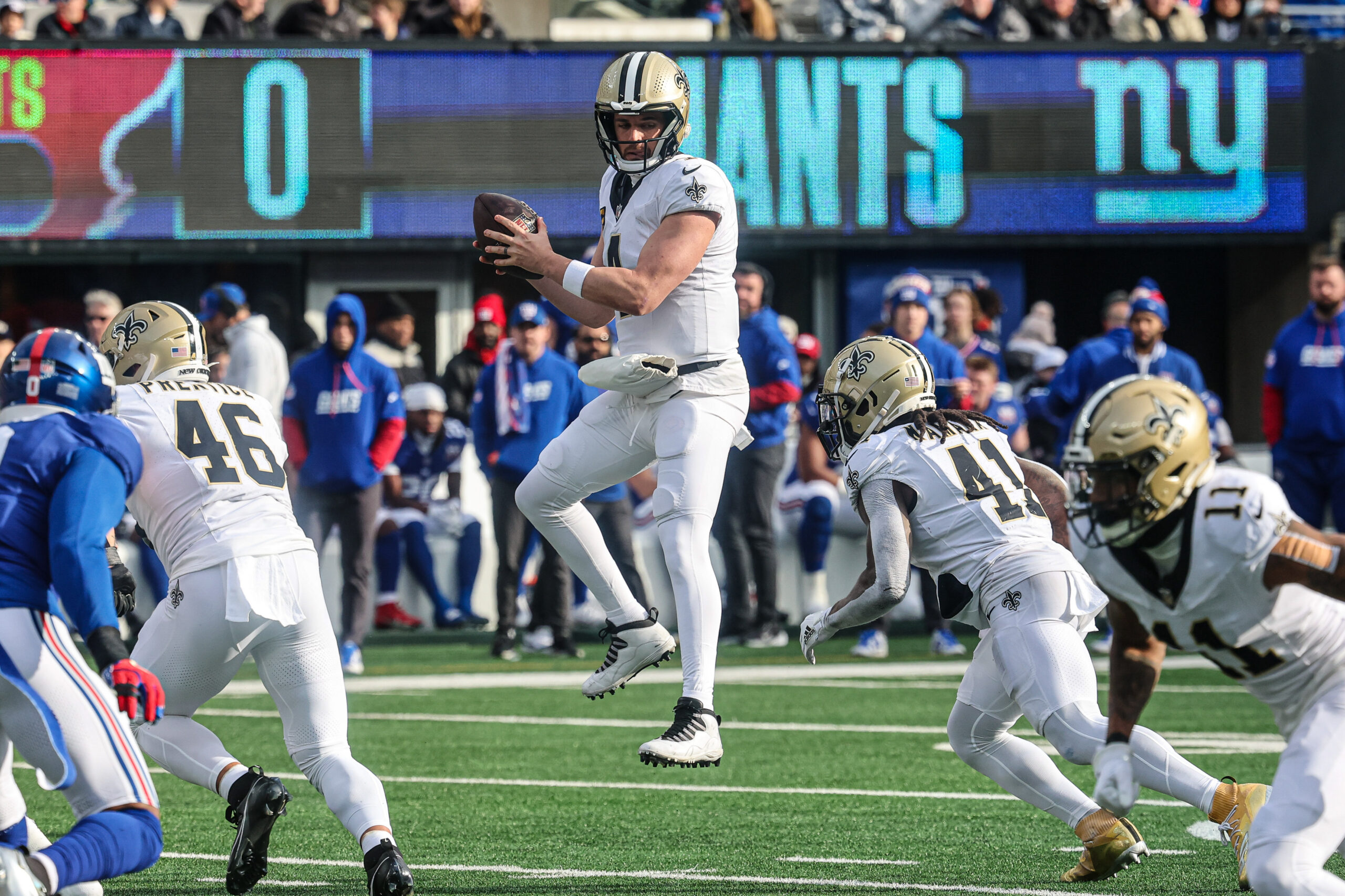
Dec 8, 2024; East Rutherford, New Jersey, USA; New Orleans Saints quarterback Derek Carr (4) fields a snap during the first quarter against the New York Giants at MetLife Stadium. Mandatory Credit: Vincent Carchietta-Imagn Images
This used to happen to running backs. Everyone accepted that running backs had short shelf lives and brutal market corrections after 28. Quarterbacks were supposed to be different — the brain position, the one role where knowledge could compensate for declining physical tools. That exception just died. The Falcons were reportedly poised to release Kirk Cousins before his $67.9 million salary became fully guaranteed, even as the Colts re-signed Daniel Jones to a two-year, $88 million deal with over $60 million guaranteed. Once you see that pattern, every massive quarterback extension looks less like a reward and more like a countdown clock.
The Clock Nobody Hears Ticking
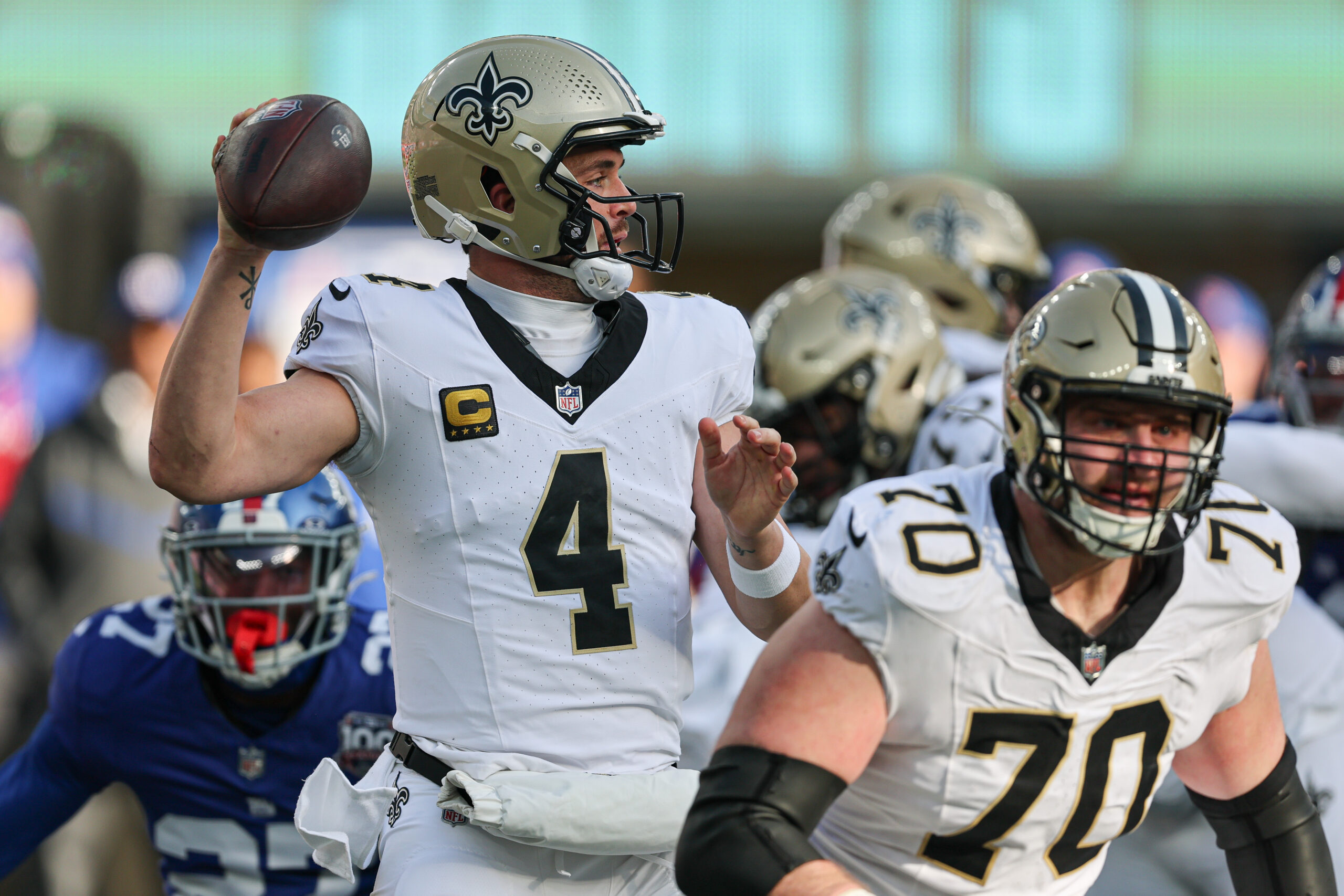
Dec 8, 2024; East Rutherford, New Jersey, USA; New Orleans Saints quarterback Derek Carr (4) throws the ball during the first half against the New York Giants at MetLife Stadium. Mandatory Credit: Vincent Carchietta-Imagn Images
Training camps open soon. Rosters need to reach 53. Somewhere between now and final cuts, a team with a quarterback injury or a shaky backup plan will make a call — likely to Wilson or Garoppolo, given they remain the most decorated unsigned options on the board. That’s the window. Not a bidding war. Not a negotiation between equals. A minimum-salary, zero-guarantee call to a player who once reset the market.
What Your Favorite QB’s Contract Really Means
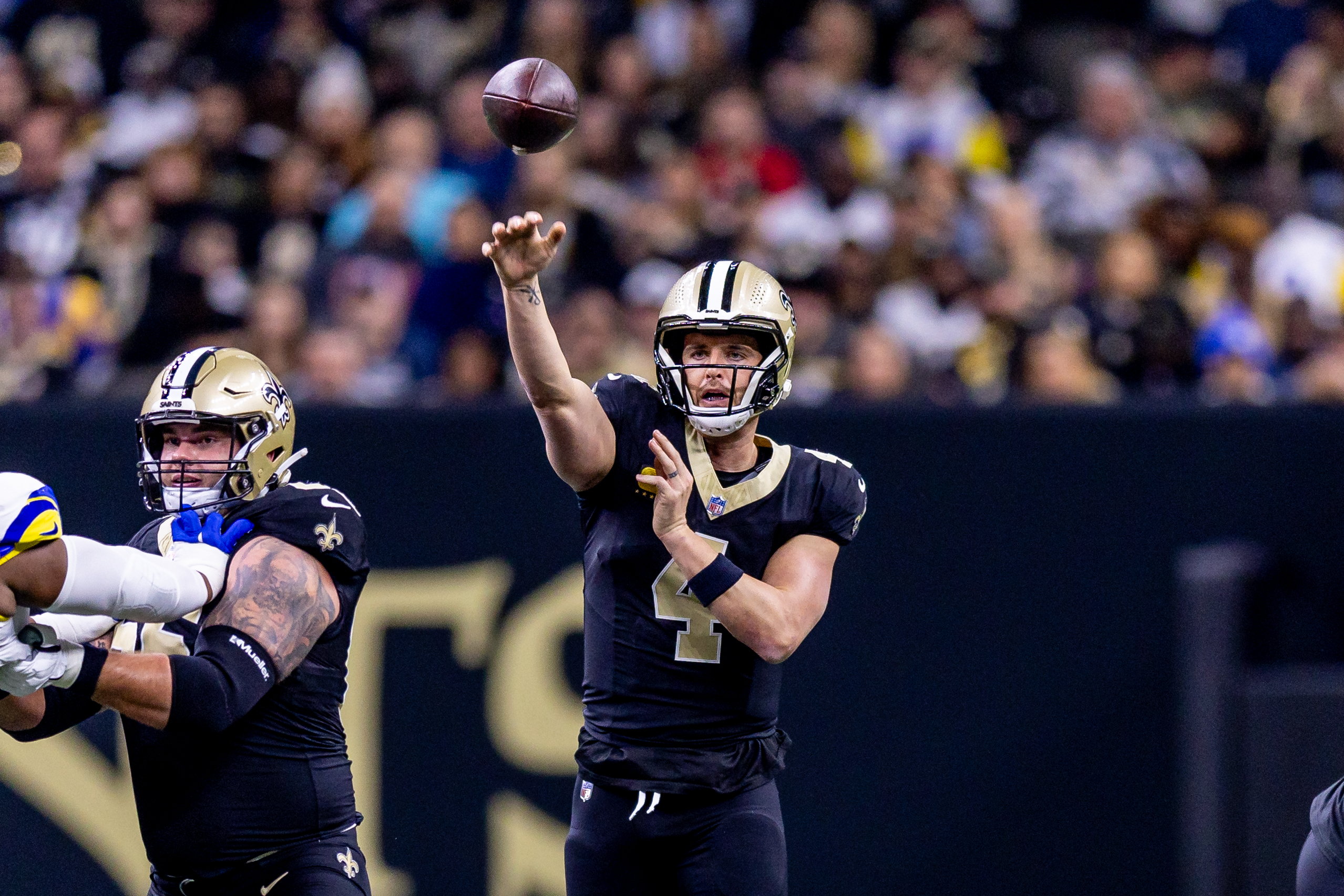
Dec 1, 2024; New Orleans, Louisiana, USA; New Orleans Saints quarterback Derek Carr (4) passes against the Los Angeles Rams during the first half at Caesars Superdome. Mandatory Credit: Stephen Lew-Imagn Images
Next time a franchise quarterback signs a $250 million extension and the confetti falls, remember Wilson, Garoppolo, and Carr. The celebration has a shelf life. The NFL pays quarterbacks like kings and discards them like replaceable parts, sometimes within the same contract cycle. Three men with more than $650 million in combined career earnings — and not one stable starting job between them in 2026 — are living proof that in the NFL, even the biggest payday can’t buy you a roster spot. Which of these three deserves one last shot in 2026 — and which team should make the call? Tell us in the comments.