
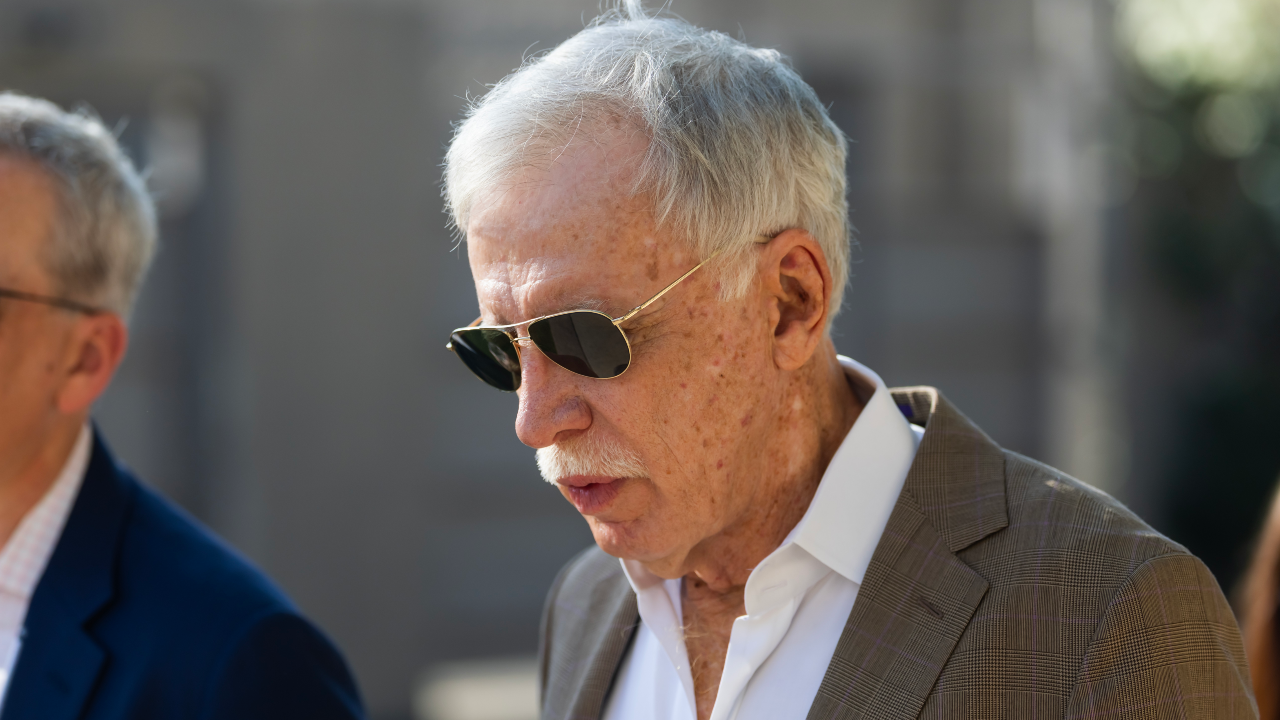
Somewhere in a Los Angeles County Superior Court filing, the man who built SoFi Stadium put a price tag on betrayal: $400 million. Stan Kroenke, whose net worth Bloomberg pegs near $27 billion, didn’t just send a letter. He sued the city that hosted his 300-acre Hollywood Park development, the same city that once rolled out the red carpet for his NFL franchise. Inglewood approved up to 60 digital billboards surrounding his stadium. Kroenke treated that approval like a declaration of war.
The Deal That Built a District
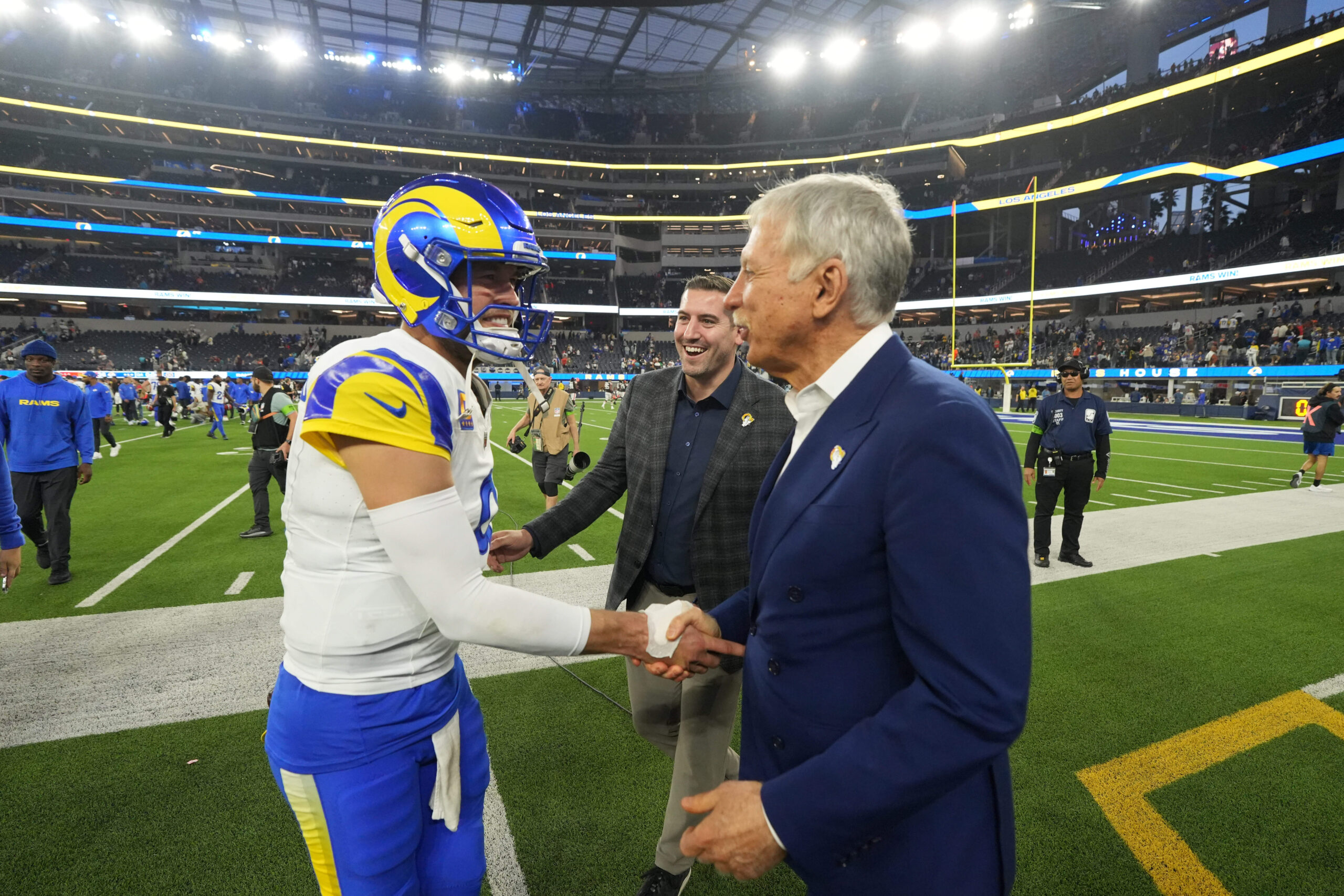
Dec 3, 2023; Inglewood, California, USA; Los Angeles Rams quarterback Matthew Stafford (9) interacts with vice president of football operations Tony Pastoors (center and owner Stan Kroenke (center) after the game against the Cleveland Browns at SoFi Stadium. Mandatory Credit: Kirby Lee-Imagn Images
Hollywood Park wasn’t just a stadium project. Kroenke’s development spans roughly 300 acres of retail, office, and residential space anchored by SoFi Stadium and YouTube Theater. A 2015 development agreement between Kroenke’s company and Inglewood laid out commercial rights, infrastructure obligations, and advertising restrictions that barred billboards near the complex. Kroenke’s team built roads, utilities, and public improvements under that contract. The deal made Inglewood a destination. Every Super Bowl ticket, every concert crowd, every NFL Sunday generated foot traffic the city never had before. That traffic became very valuable real estate for advertisers.
Sixty Signs, One Breaking Point
Feb 26, 2026; Indianapolis, IN, USA; Large helmets of the Los Angeles Rams, Arizona Cardinals, Tampa Bay Buccaners and New Orleans Saints at the NFL Scouting Combine at Lucas Oil Stadium. Mandatory Credit: Kirby Lee-Imagn Images
In April 2025, Inglewood approved a contract with WOW Media to install up to 60 digital billboards around Hollywood Park that would share advertising revenue with the city. That sounds like a smart municipal play. Except Kroenke’s lawyers say it violated the 2015 development agreement that prohibited billboards near his property. The city, in their view, sold competing ad space on the doorstep of a venue whose sponsorships depend on exclusivity. Inglewood counters that the agreement is unenforceable and cannot limit how the city manages public land or generates revenue.
The $400 Million Counterpunch
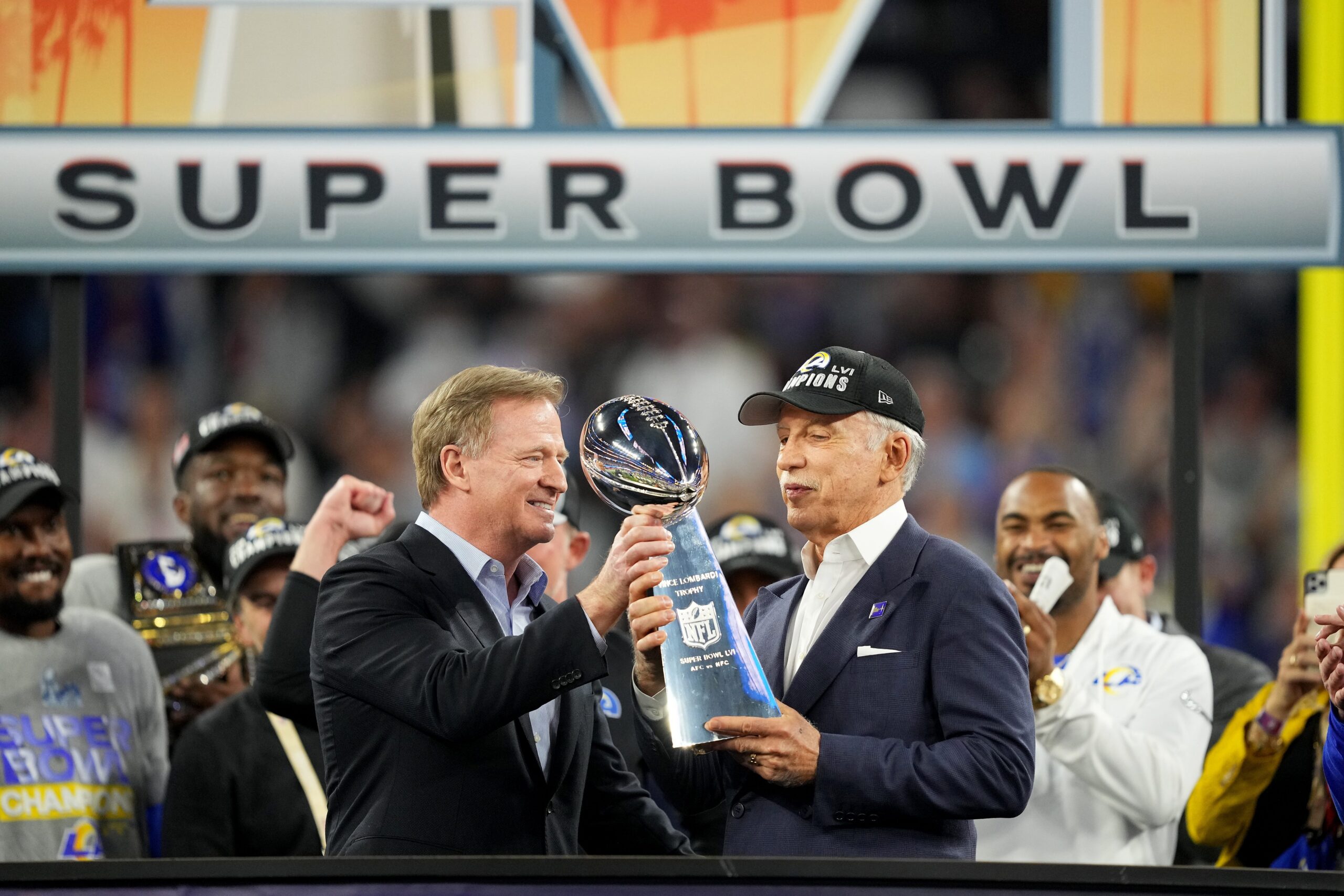
NFL Commissioner Roger Goodell presents Los Angeles Rams owner Stan Kroenke the Lombardi Trophy at the conclusion of Super Bowl 56, Sunday, Feb. 13, 2022, in Inglewood, Calif. Syndication The Enquirer
In December 2025, Kroenke’s company Pincay Re LLC filed suit against the city, in the case Pincay Re LLC v. City of Inglewood. The $400 million represents reimbursement Kroenke seeks for infrastructure and services tied to the development, including roads, sewer systems, upgrades, and ongoing police and fire protection. Not punitive damages. Not a scare tactic. A contractual invoice. Kroenke’s companies first fought to block the billboards in court and lost, when a judge found the development agreement was not properly enacted and could not be enforced. So he escalated. That’s not impulsive. That’s a billionaire who tried negotiation, got nowhere, and reached for the heaviest weapon in the drawer.
Ambush Marketing at the Gate
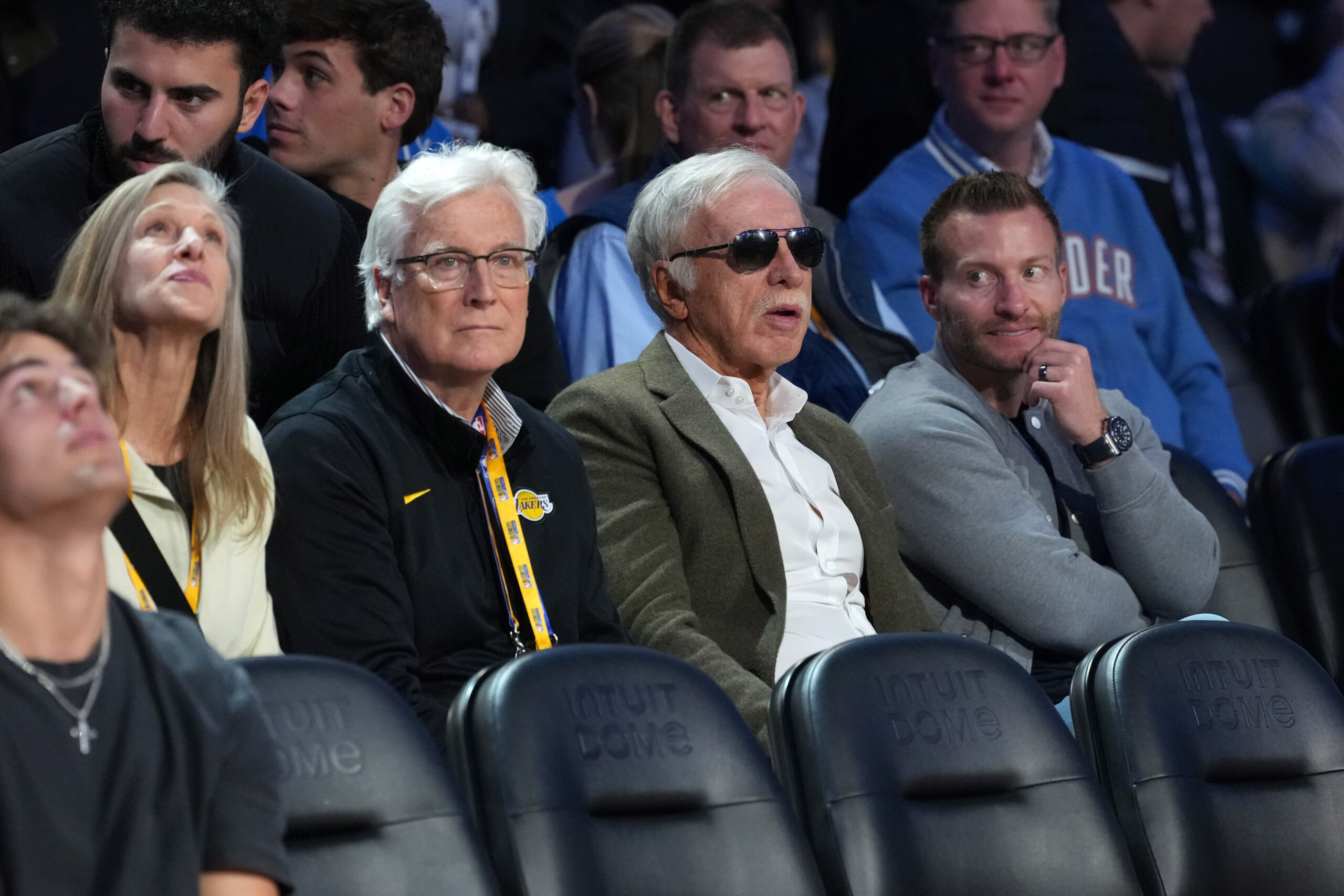
Feb 14, 2026; Los Angeles, CA, USA; Los Angeles Dodgers chairman and controlling owner Mark Walter (left), Los Angeles Rams owner Stan Kroenke (center), and Rams coach Sean McVay look on during the 2026 NBA All Star Saturday Night at Intuit Dome. Mandatory Credit: Kirby Lee-Imagn Images
The digital billboards aren’t static highway ads. They display dynamic, real-time content capable of targeting fans walking toward stadium entrances. Kroenke’s legal team argues this enables “ambush marketing,” where competitors buy billboard space to undercut the exclusive sponsorships brands pay millions to secure inside SoFi. Picture a Pepsi ad flashing 500 feet from the gate of a Coca-Cola sponsored venue. That doesn’t just annoy the sponsor. It destroys the premium those exclusivity deals command. Kroenke’s lawyers warn the signs would undercut sponsorships around some of the world’s biggest events, including 2026 World Cup matches, the 2027 Super Bowl, and 2028 Olympic events.
The Numbers Behind the Rage
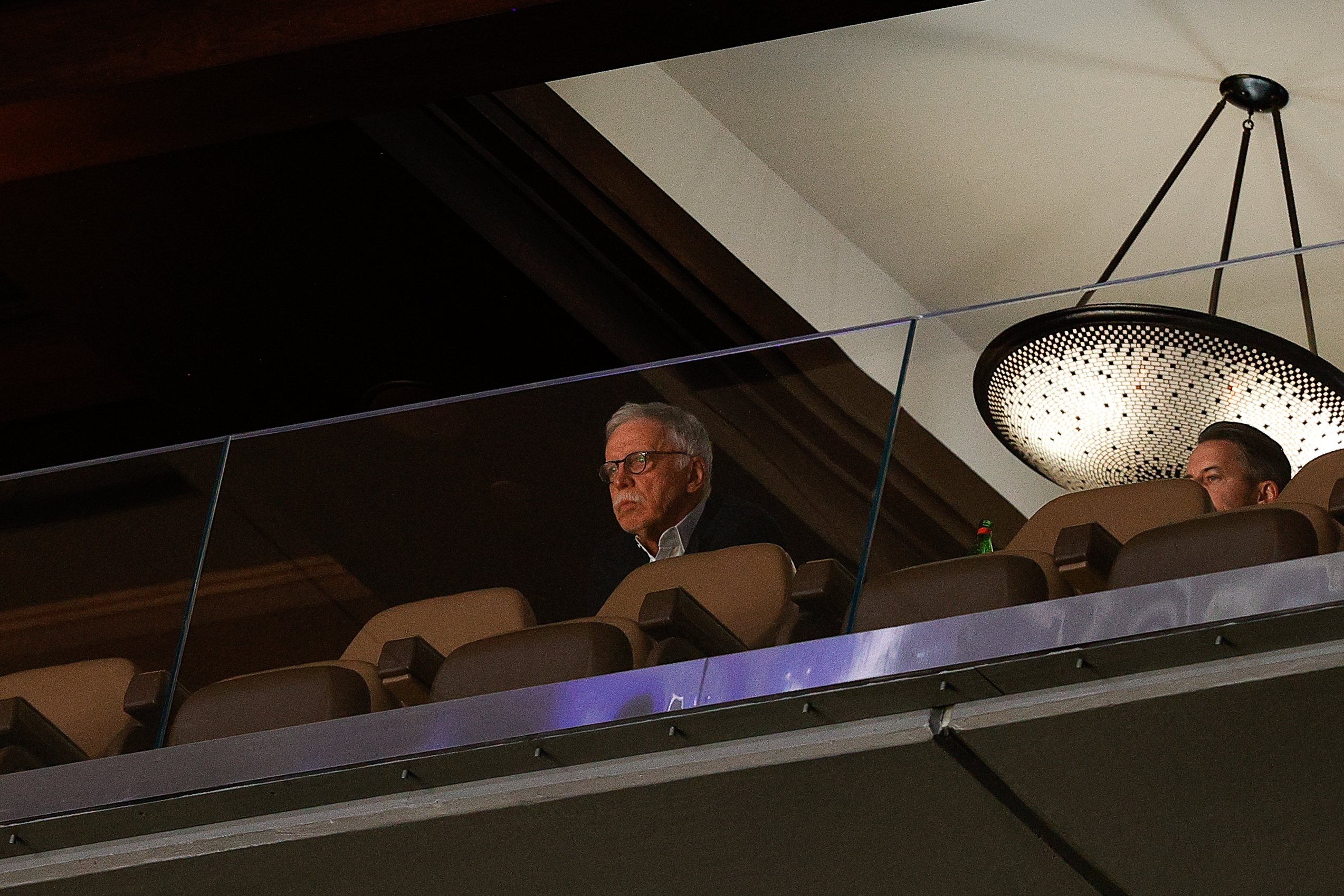
Nov 22, 2024; Denver, Colorado, USA; Denver Nuggets owner Stan Kroenke looks on from his penthouse in the fourth quarter against the Dallas Mavericks at Ball Arena. Mandatory Credit: Isaiah J. Downing-Imagn Images
Sixty digital billboards. A revenue-sharing contract that hands the city a cut of the advertising take. Those aren’t small numbers for a city that desperately wants recurring income. But Kroenke’s exclusive sponsorship deals at SoFi likely dwarf whatever WOW Media generates. The entire business model of a modern NFL stadium rests on controlling the advertising environment within and around the venue. Inglewood essentially opened a competing storefront in its own tenant’s parking lot, then acted surprised when the tenant called a lawyer.
Every Stadium City Is Watching
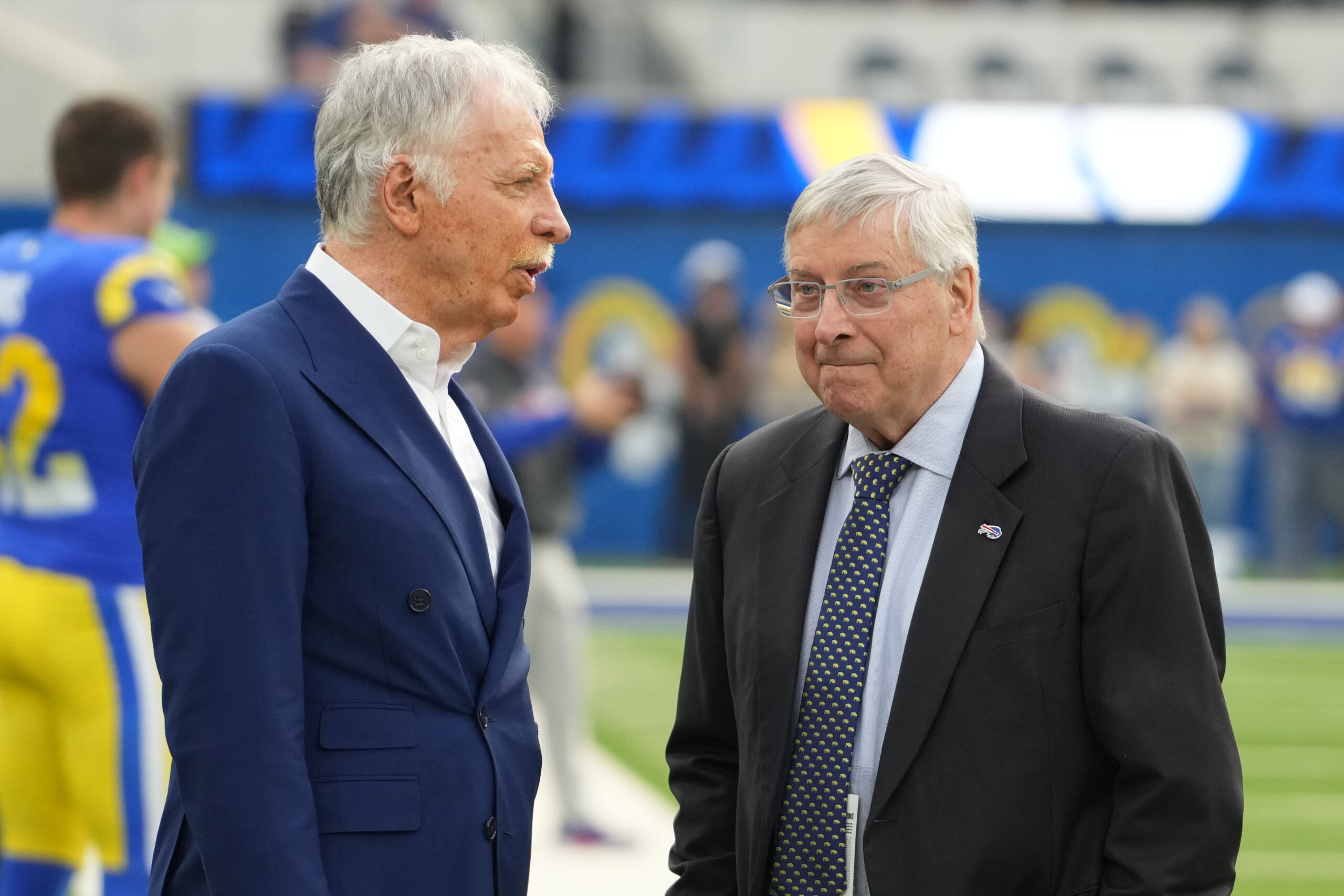
Dec 8, 2024; Inglewood, California, USA; Los Angeles Rams owner Stan Kroenke (left) and Buffalo Bills coach Terry Pegula at SoFi Stadium. Mandatory Credit: Kirby Lee-Imagn Images
This case reaches far beyond Inglewood. Cities across America have signed development agreements with billionaire sports owners, trading tax incentives and infrastructure commitments for the promise of economic transformation. If Inglewood can approve competing advertising around a privately developed stadium district, every municipality with a similar deal just got a playbook. And every team owner just got a reason to demand tighter contract language. The ripple effect could reshape how stadium deals get negotiated for the next generation of NFL, NBA, and MLB venues.
The Precedent Nobody Predicted
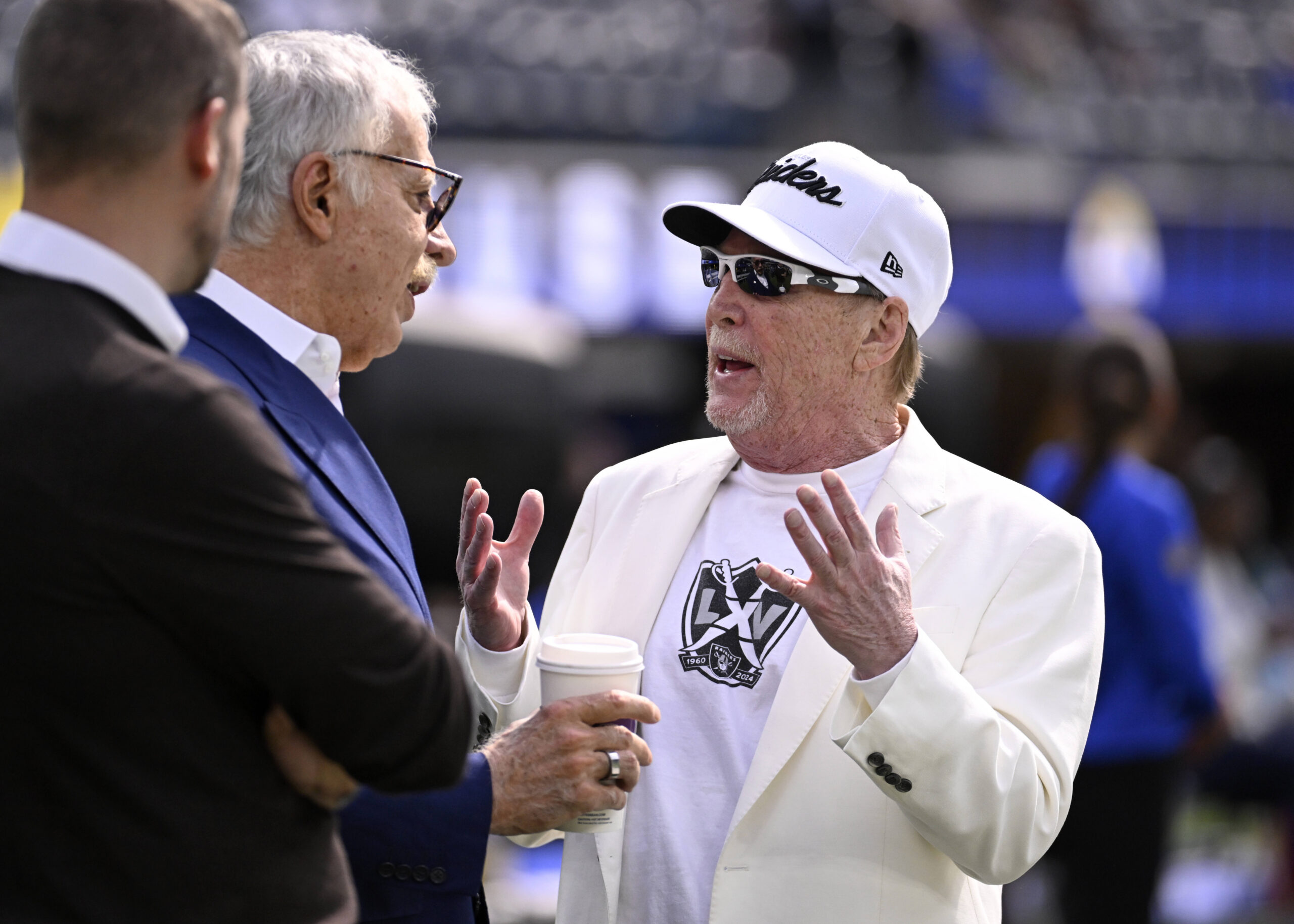
Oct 20, 2024; Inglewood, California, USA; Las Vegas Raiders owner Mark Davis, right, talks with Los Angeles Rams owner Stan Kroenke before an NFL game at SoFi Stadium. Mandatory Credit: Alex Gallardo-Imagn Images
Most people assumed stadium deals were settled once the ribbon got cut. Build the venue, sign the leases, everybody profits. That assumption just died in Los Angeles County Superior Court. The real story is that stadium districts create competing economic ecosystems. The city wants to monetize the traffic the developer created. The developer wants to control the commercial environment the city promised. Those interests collide the moment a city realizes it’s sitting on advertising gold it contractually gave away. Once you see that tension, every stadium deal in America looks like a ticking clock.
A Resident Revolt Complicates Everything
Feb 7, 2016; Santa Clara, CA, USA; Denver Broncos quarterback Peyton Manning (18) hugs Shannon Sharpe after defeating the Carolina Panthers in Super Bowl 50 at Levi’s Stadium. Mandatory Credit: Robert Deutsch-Imagn Images
Kroenke isn’t the only one fighting. Inglewood resident Shannon Roberts has pushed a petition initiative to prohibit commercial billboards on public streets, aiming to put the question before voters. After the city moved to court over the initiative, Roberts filed a competing suit on March 5, 2026. That complicates Inglewood’s position. The city can’t easily claim the billboards serve the public interest when members of that public are actively trying to ban them. Judge Maurice A. Leiter’s August 29, 2025 order in the Kroenke litigation left the city’s billboard approval intact, but the legal battle is far from settled, with a trial date set in the Pincay Re case.
The Fight That Rewrites the Rules
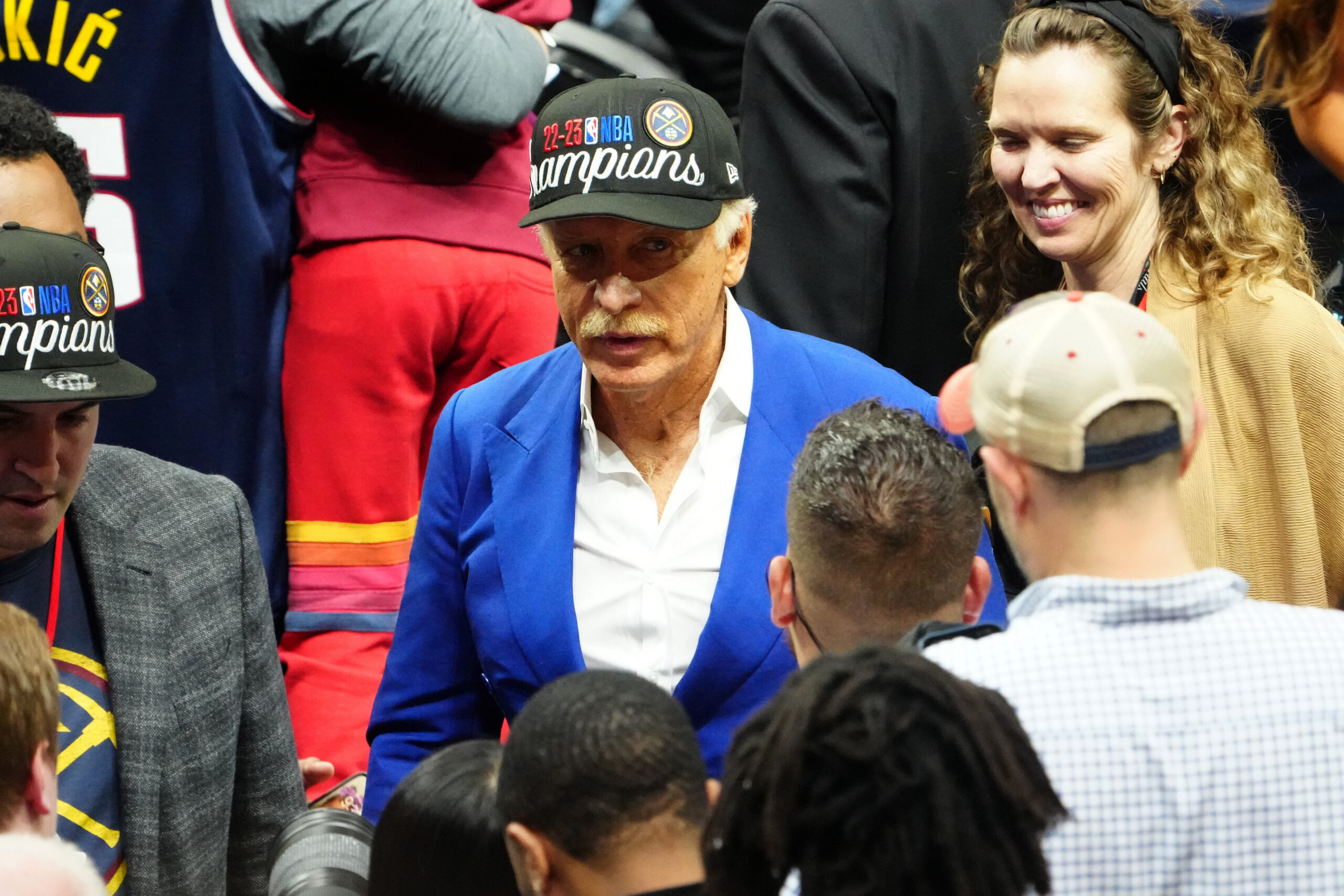
Jun 12, 2023; Denver, Colorado, USA; Denver Nuggets owner Stan Kroenke celebrates after the Nuggets won the 2023 NBA Championship against the Miami Heat at Ball Arena. Mandatory Credit: Ron Chenoy-Imagn Images
A nearly $27 billion man doesn’t sue for $400 million because he’s annoyed. He sues because the outcome determines whether development agreements mean anything at all. If Kroenke loses, cities nationwide learn they can renegotiate stadium deals through zoning approvals without ever reopening a contract. If Inglewood loses, municipalities learn that welcoming a billionaire developer means surrendering commercial control of their own streets for decades. Either way, the next city that builds an NFL stadium will write a very different contract. The old handshake model is already dead. So where do you land — is Kroenke protecting a deal the city agreed to, or is Inglewood right to cash in on the traffic he created? Drop your verdict in the comments.