
Somewhere inside the Steelers’ facility, a front office that spent three years assembling a roster designed to be “a quarterback away” handed the keys to a man who turns 43 this season. Aaron Rodgers signed a one-year deal with Pittsburgh, a contract that includes a base salary in the low-$20-million range and can be worth up to $25 million with incentives, to return as the Steelers’ starting quarterback. This is not a bridge option and not a ceremonial mentor role. It is a starter’s contract, with the offense tailored to his arm. The four-time MVP walked back into a building that had been constructed with a veteran star in mind, and the cap sheet now reflects that reality.
The Roster Khan Built
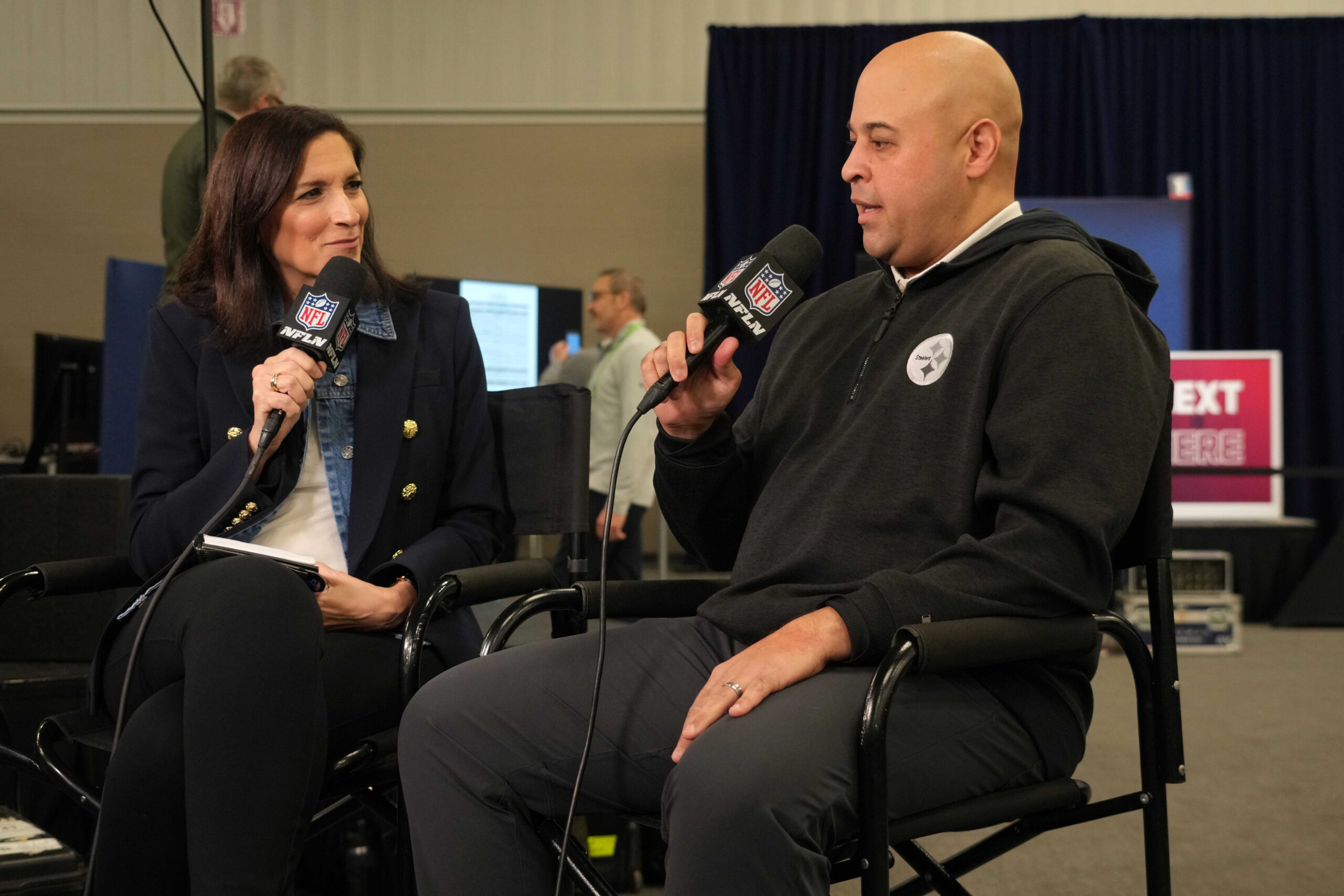
Feb 25, 2025; Indianapolis, IN, USA; Pittsburgh Steelers general manager Omar Khan (right) is interviewed by NFL Network reporter Judy Battista during the NFL Scouting Combine at the Indiana Convention Center. Mandatory Credit: Kirby Lee-Imagn Images
Omar Khan spent multiple offseasons reshaping Pittsburgh through aggressive free agency signings, targeted trades, and multi-year extensions for core players. Inside and outside the organization, the guiding idea became familiar: build a roster strong enough that it could hold up regardless of short-term uncertainty at quarterback. Every move pointed toward a team one elite passer away from genuine contention. Khan’s own contract extension, a new three-year deal that keeps him under contract through the 2028 season, signaled that ownership believed in the blueprint and wanted continuity in the front office. Head coach Mike Tomlin previously praised Khan’s bold approach and willingness to make aggressive moves, and that reputation carried real weight early in his tenure. For a time, the bold, creative label fit the way the Steelers did business under their new general manager.
The Nickname Starts to Crack
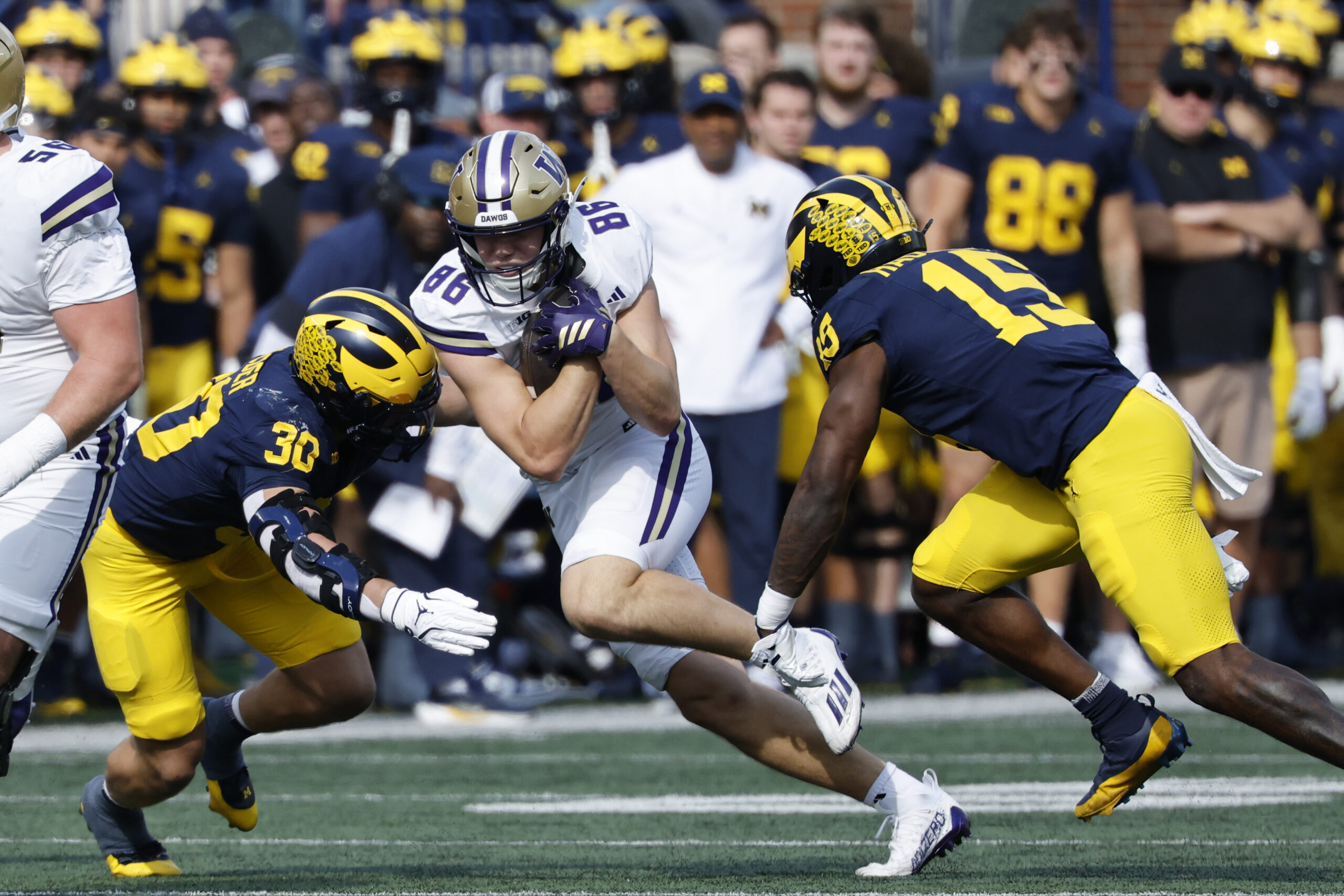
Oct 18, 2025; Ann Arbor, Michigan, USA; Washington Huskies defensive lineman Omar Khan (98) runs the ball in the first half against the Michigan Wolverines at Michigan Stadium. Mandatory Credit: Rick Osentoski-Imagn Images
Here is where the comfortable assumption falls apart. As moves piled up, fans and commentators increasingly treated Khan’s aggressive style as proof he was a roster-building genius by default. But the basic results are unavoidable: the Steelers have yet to win a playoff game under this regime. Local media and national outlets have offered mixed assessments of Khan’s tenure, with some columns questioning whether the front office has done enough to convert bold moves into postseason success and others wondering if Pittsburgh is relying too heavily on familiar organizational habits. The admiration for Khan’s early aggression remains, but the unquestioned awe behind it clearly does not. And in that environment, Khan still chose to double down on Rodgers.
The Bet Nobody Can Take Back
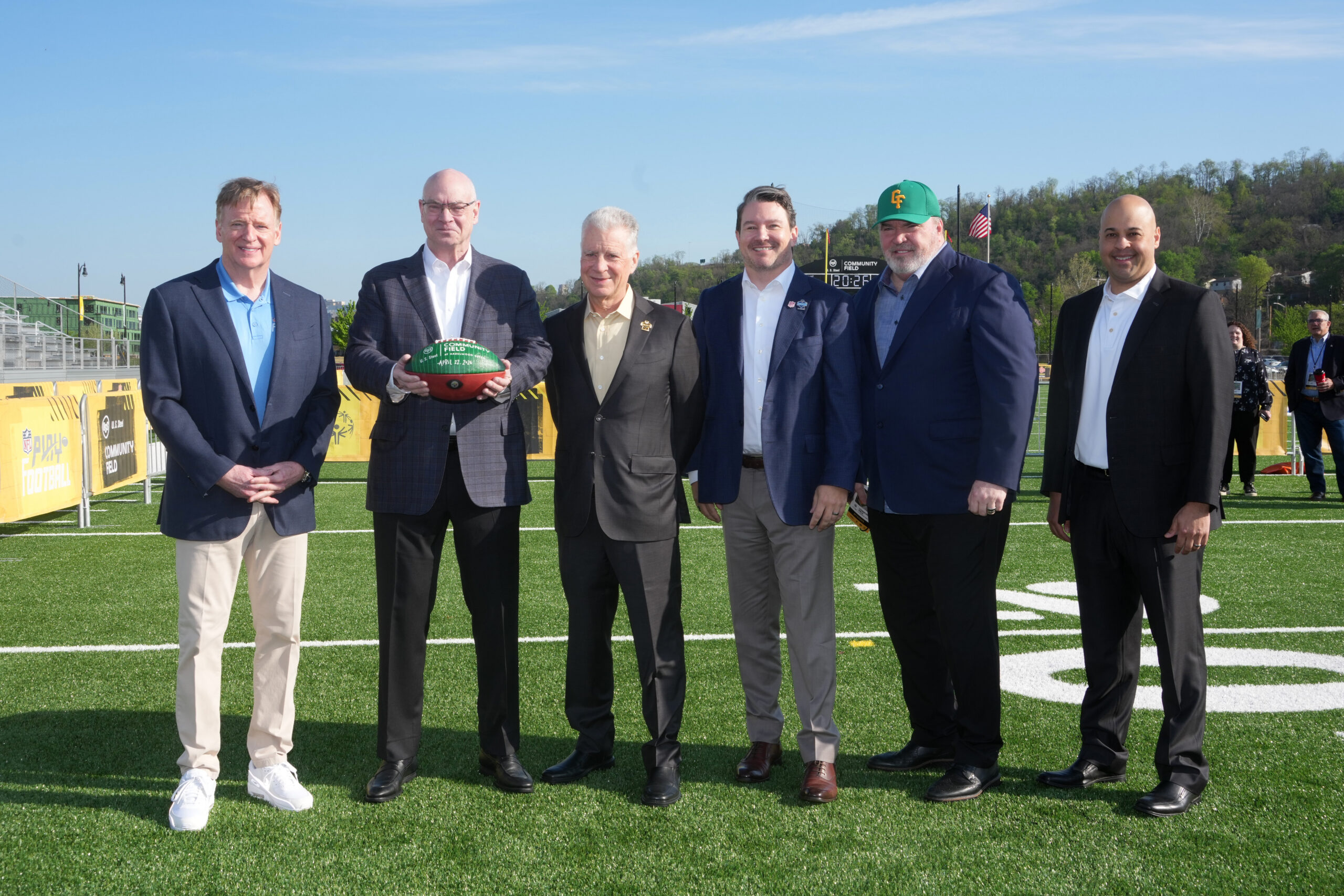
Apr 22, 2026; Pittsburgh, PA, USA; From left: NFL commissioner Roger Goodell, U.S. Steel chief executive officer David Burritt, Pittsburgh Steelers owner Art Rooney II, Richard King Mellon Foundation director Sam Reiman, Pittsburgh Steelers coach Mike McCarthy and general manager Omar Khan pose during Hazelwood Green Park Field groundbreaking ceremony. Mandatory Credit: Kirby Lee-Imagn Images
Khan and the Steelers used the uncommon unrestricted free agent tender on Rodgers as a procedural move, then actively pursued a new deal to bring him back as the unquestioned starter. Reporting indicates the contract’s base salary lands in the low-$20-million range, with incentives pushing the total value to roughly $25 million. Coaching hires and offensive philosophy have been shaped to suit Rodgers’ strengths and preferences, reinforcing that this is a team built around one arm. A 42-year-old arm. The franchise has publicly expressed confidence that Rodgers can still “throw it with anybody,” and this contract is the financial proof of that belief. That confidence now carries an eight-figure price tag and a season’s worth of scrutiny.
How the Machine Works
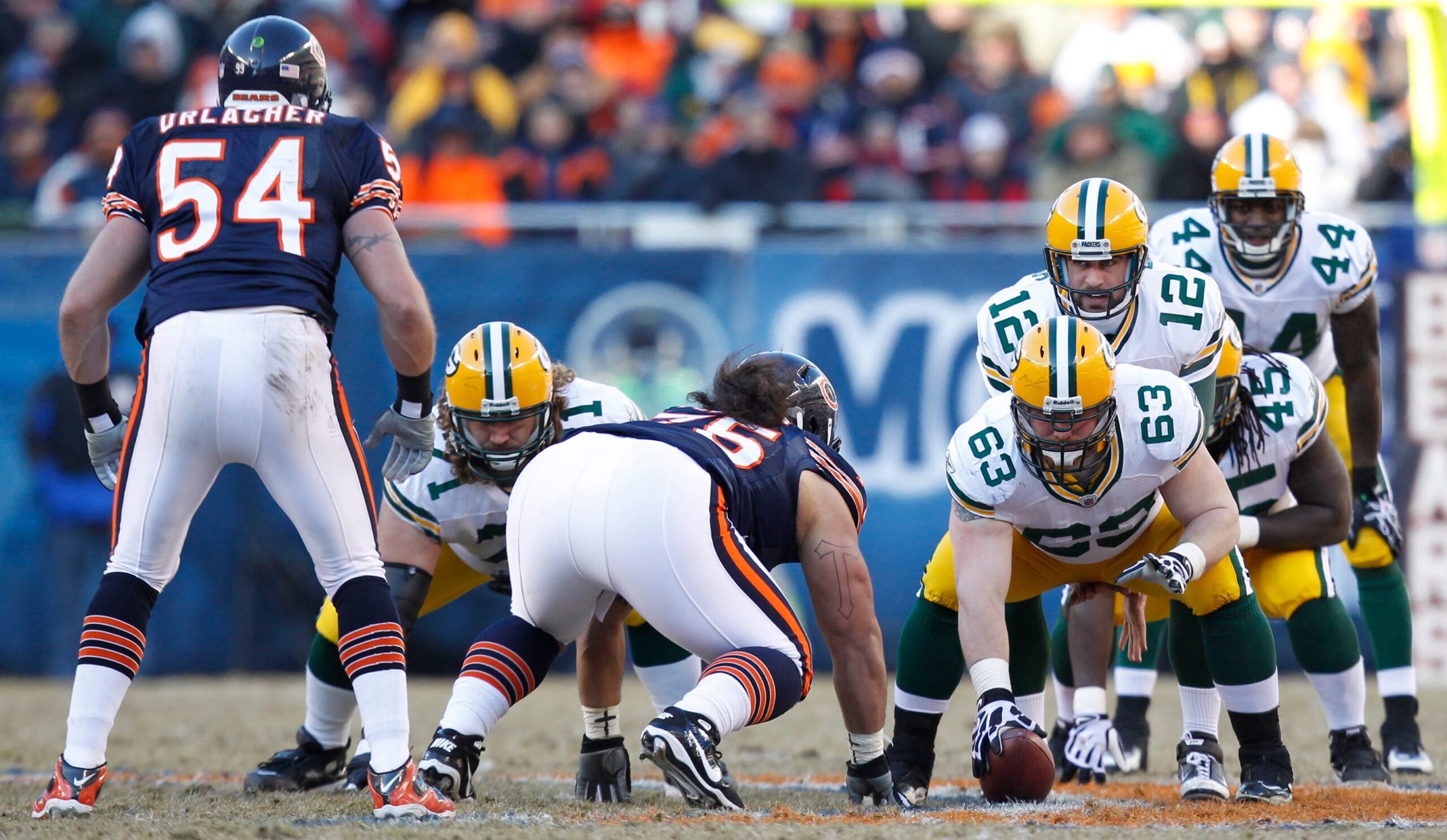
Green Bay Packers’ Aaron Rodgers keeps his eyes on Chicago Bears’ Brian Urlacher during the second quarter of the NFC Championship football game on January, 23, 2011, at Soldier Field in Chicago.
The mechanism driving this decision is older than Khan’s tenure. Pittsburgh’s front office has historically avoided full-scale rebuilds, preferring to retool around aging veterans rather than endure multi-year losing stretches. Khan inherited that philosophy and, in many ways, turbocharged it. Multi-year contracts have locked in defensive cornerstones. Draft capital has often gone toward players expected to contribute quickly rather than long-term projects. The entire architecture assumes that a veteran quarterback would arrive and fully activate what the roster already has in place. Think of it as a race car carefully built over three years, waiting for a driver. Rodgers is that driver. At 42, the engine light is already on, even if the car still looks fast on paper.
The Numbers Behind the Gamble
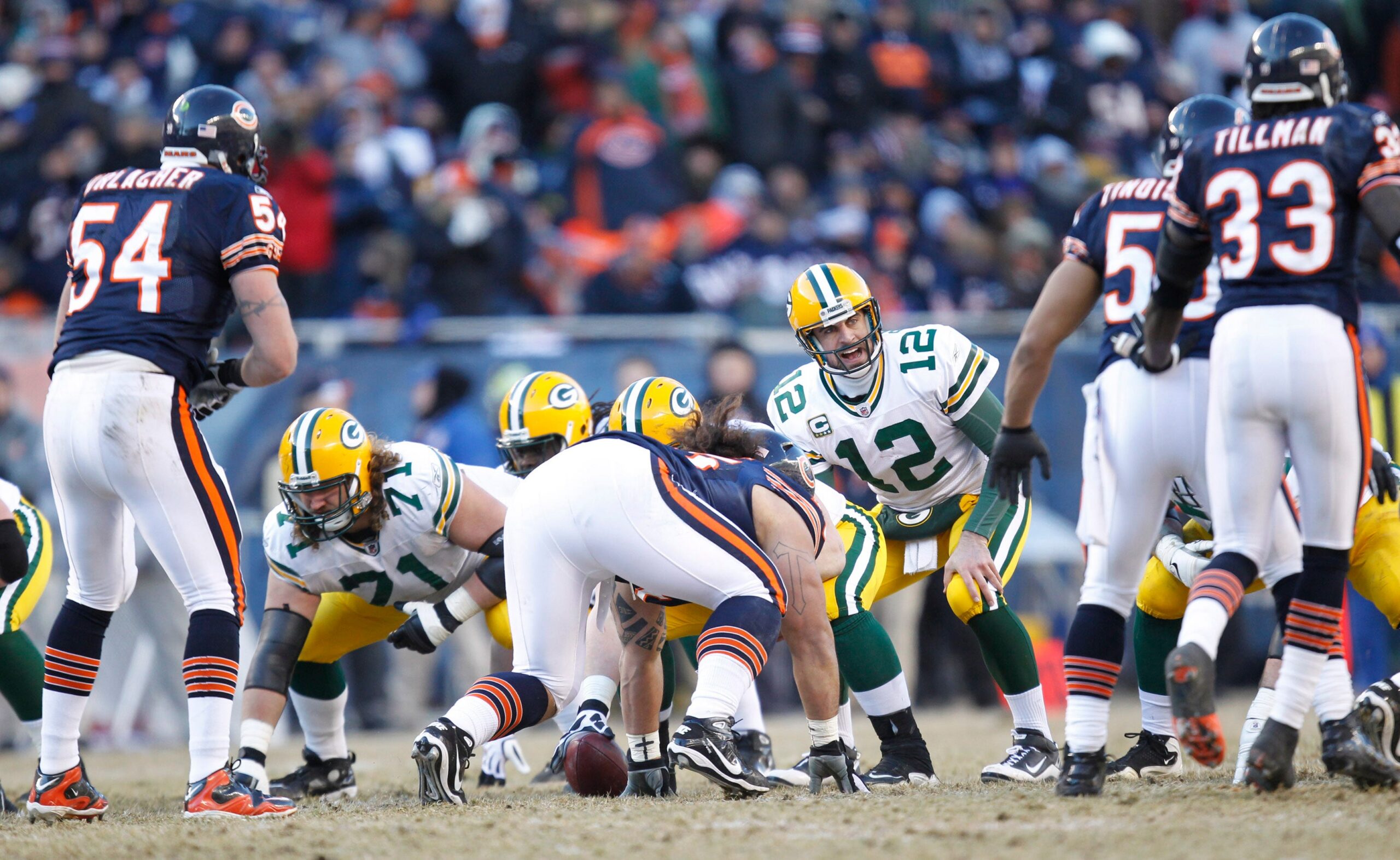
Green Bay Packers’ Aaron Rodgers during the NFC Championship game against the Chicago Bears on January, 23, 2011, at Soldier Field in Chicago.
The numbers on the ledger are stark. Zero playoff wins under Khan’s tenure as general manager. A new contract that keeps him under team control through the 2028 season despite that postseason record. A one-year quarterback deal that can be worth up to $25 million for a player born in 1983 and entering his 22nd NFL season. Rodgers ranks among the oldest starting quarterbacks to sign this kind of high-end, short-term commitment in league history. Khan’s extension and Rodgers’ new deal both landed in the same broader window of organizational decision-making, meaning ownership chose to reward the architect and fund his riskiest blueprint yet at essentially the same point in the franchise timeline. The Steelers are paying premium prices for a contention window that biology could slam shut on any given Sunday.
Who Else Pays the Price
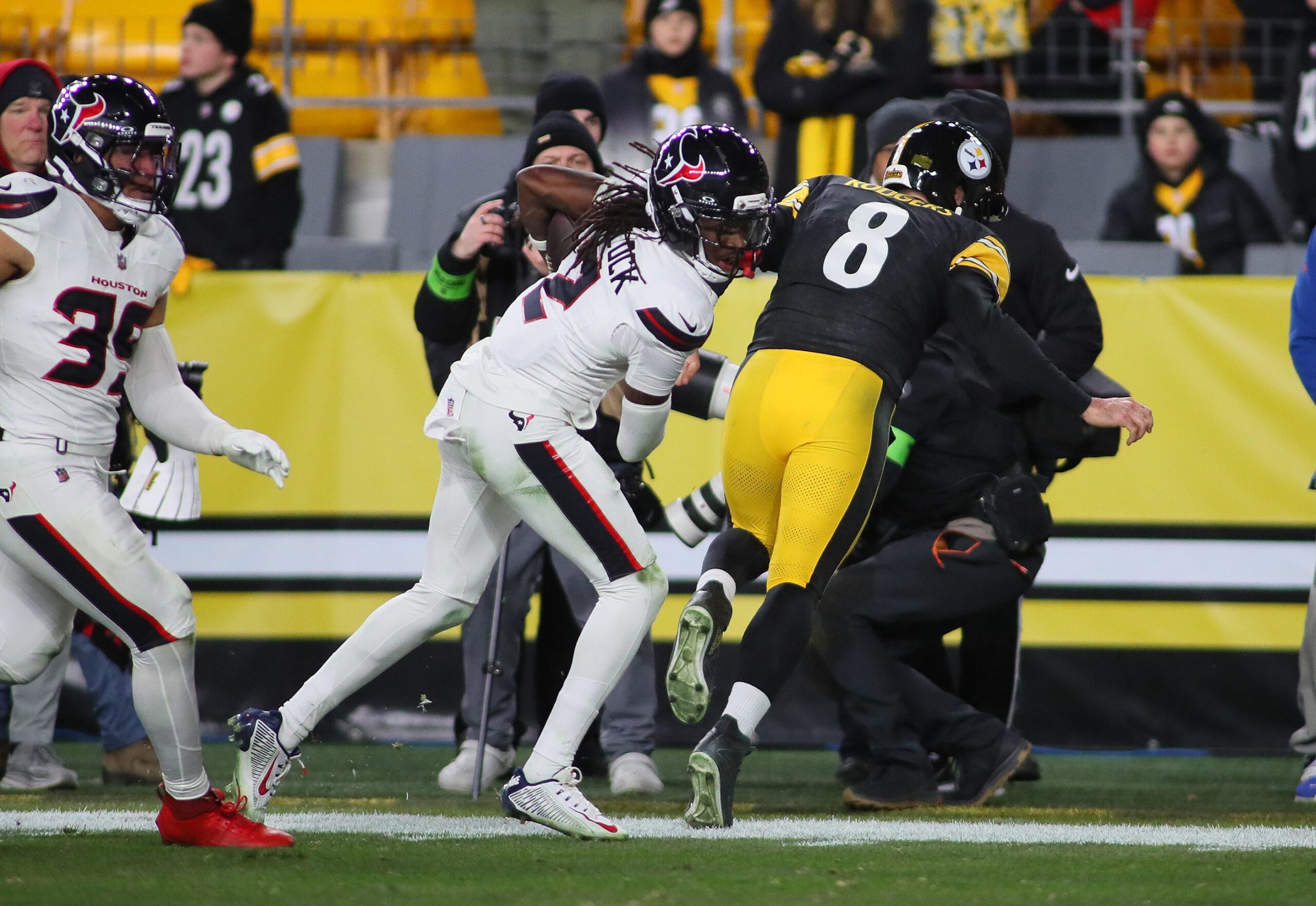
Houston Texans safety Calen Bullock (2) shoves Pittsburgh Steelers quarterback Aaron Rodgers (8) out of the way while on his way to the end zone after intercepting a pass during the second half of the NFL Wild Card game at Acrisure Stadium in Pittsburgh, PA on January 12, 2026.
Every dollar committed to Rodgers is a dollar that cannot be allocated to a premium veteran backup or a higher-end developmental quarterback behind him. Every offensive scheme built around his timing, preferences, and pre-snap control becomes obsolete the moment he retires or noticeably declines. The offensive staff, assembled and adjusted to maximize what Rodgers does well, faces a philosophical reset whenever the post-Rodgers era begins. Younger players on the roster are operating inside a window they didn’t create, tethered to a timeline controlled by a 42-year-old’s body. If Rodgers delivers a playoff win, Khan looks prophetic and the entire operation is validated. If he does not, much of the supporting cast risks burning prime years in service of a bet that never fully pays off.
The Rule This Rewrites
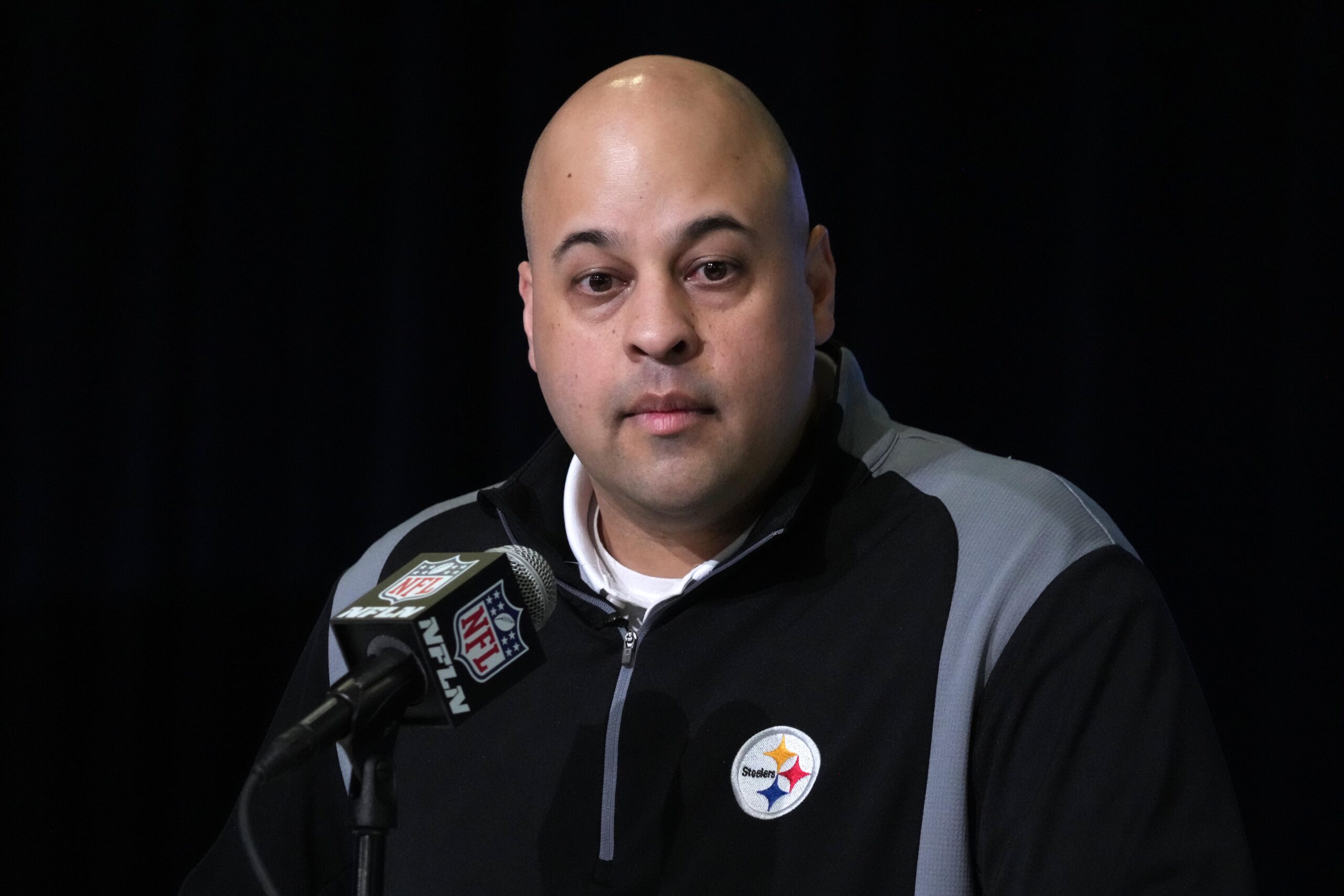
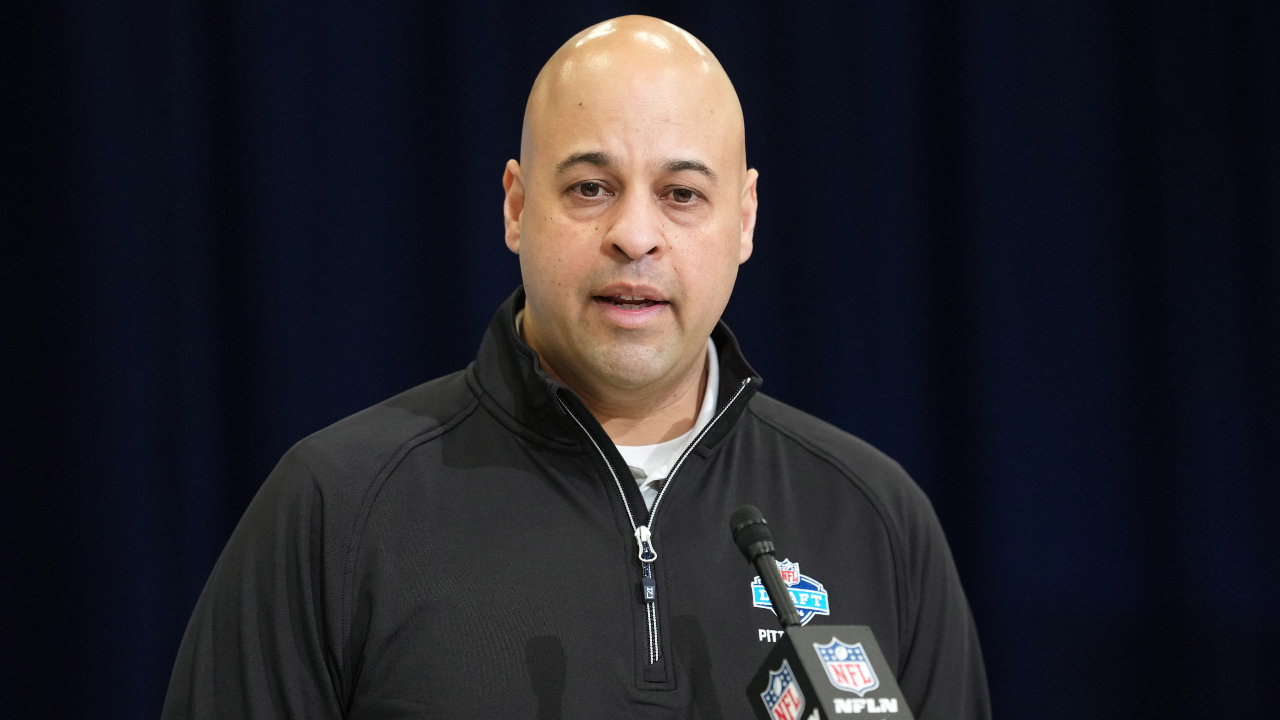
Feb 28, 2023; Indianapolis, IN, USA; Pittsburgh Steelers general manager Omar Khan during the NFL combine at the Indiana Convention Center. Mandatory Credit: Kirby Lee-Imagn Images
Once you see it, you cannot unsee it: Khan’s legacy and Rodgers’ final chapter are now the same story. Khan’s reputation was built on process — bold trades, clever cap maneuvers, aggressive acquisitions, and a willingness to move on quickly from mistakes. But reputations built on process eventually face a results audit. Khan’s extension through 2028 means his contractual security overlaps almost perfectly with however long Rodgers can realistically play at a high level. This is not a strange exception to how Pittsburgh operates; it is the new rule. The general manager’s reputation now rises or falls with the health, performance, and durability of a single player in his early 40s.
The Dominoes Still Standing
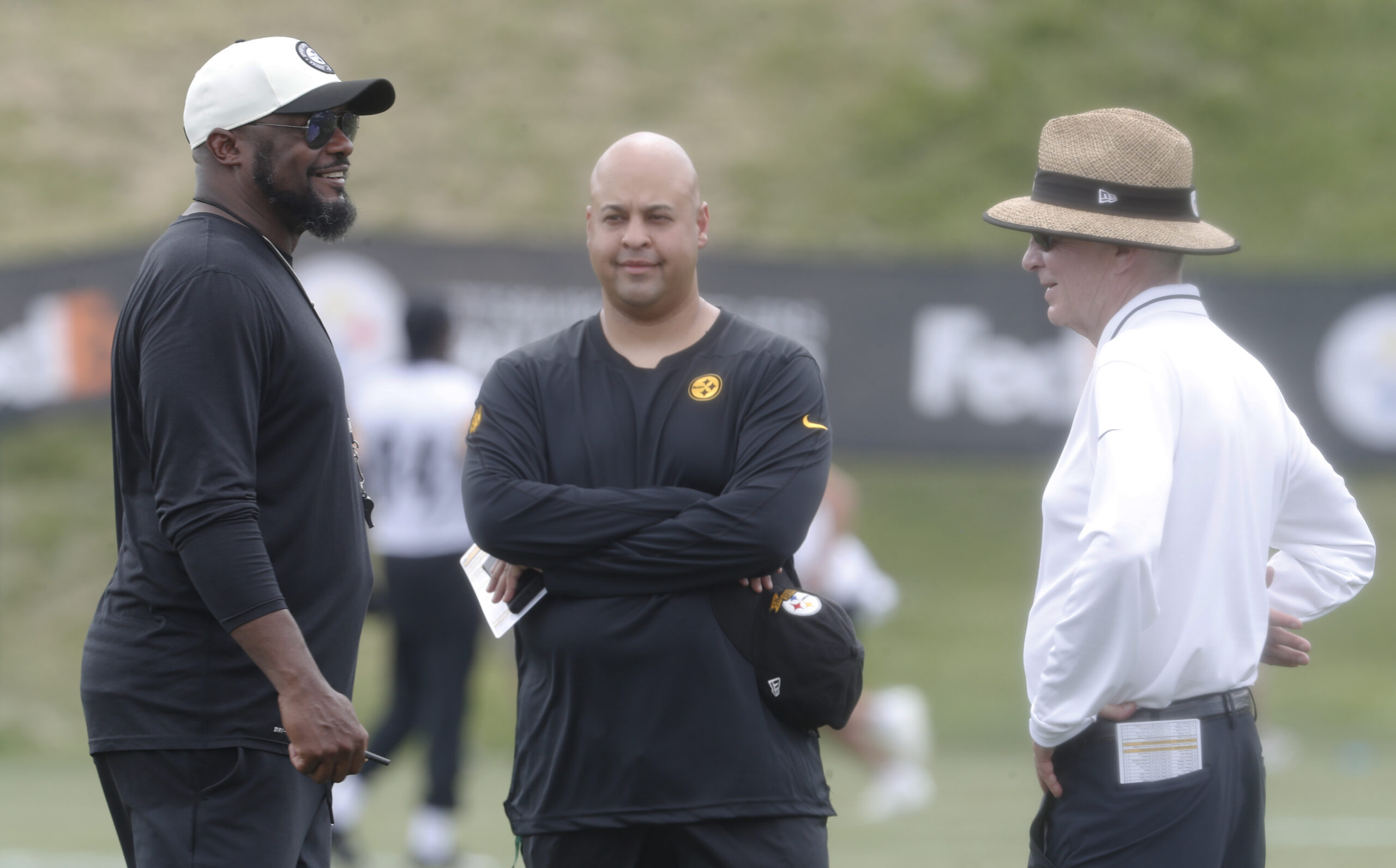
Jul 27, 2023; Latrobe, PA, USA; Pittsburgh Steelers head coach Mike Tomlin (left) and general manager Omar Khan (middle) and chairman Art Rooney II talk on the field during training camp at Saint Vincent College. Mandatory Credit: Charles LeClaire-Imagn Images
If Rodgers misses time, the Steelers do not have a clear, established developmental quarterback ready to slot into a long-term succession plan. The roster Khan built to win now will continue to age alongside its quarterback, not apart from him. Key defenders on multi-year deals will be deeper into their contracts by the time any successor is fully comfortable, assuming one even emerges quickly. The transition from “contention window” to “rebuilding project” could be triggered by a single injury or a single season of sharp decline. All the while, the AFC around Pittsburgh grows younger at quarterback and faster on offense, as other franchises align their timelines with emerging passers. Khan may still make bold moves, but the applause that accompanied his earliest swings has already faded into more cautious second-guessing with every month Rodgers adds to his odometer.
The Bar Stool Truth
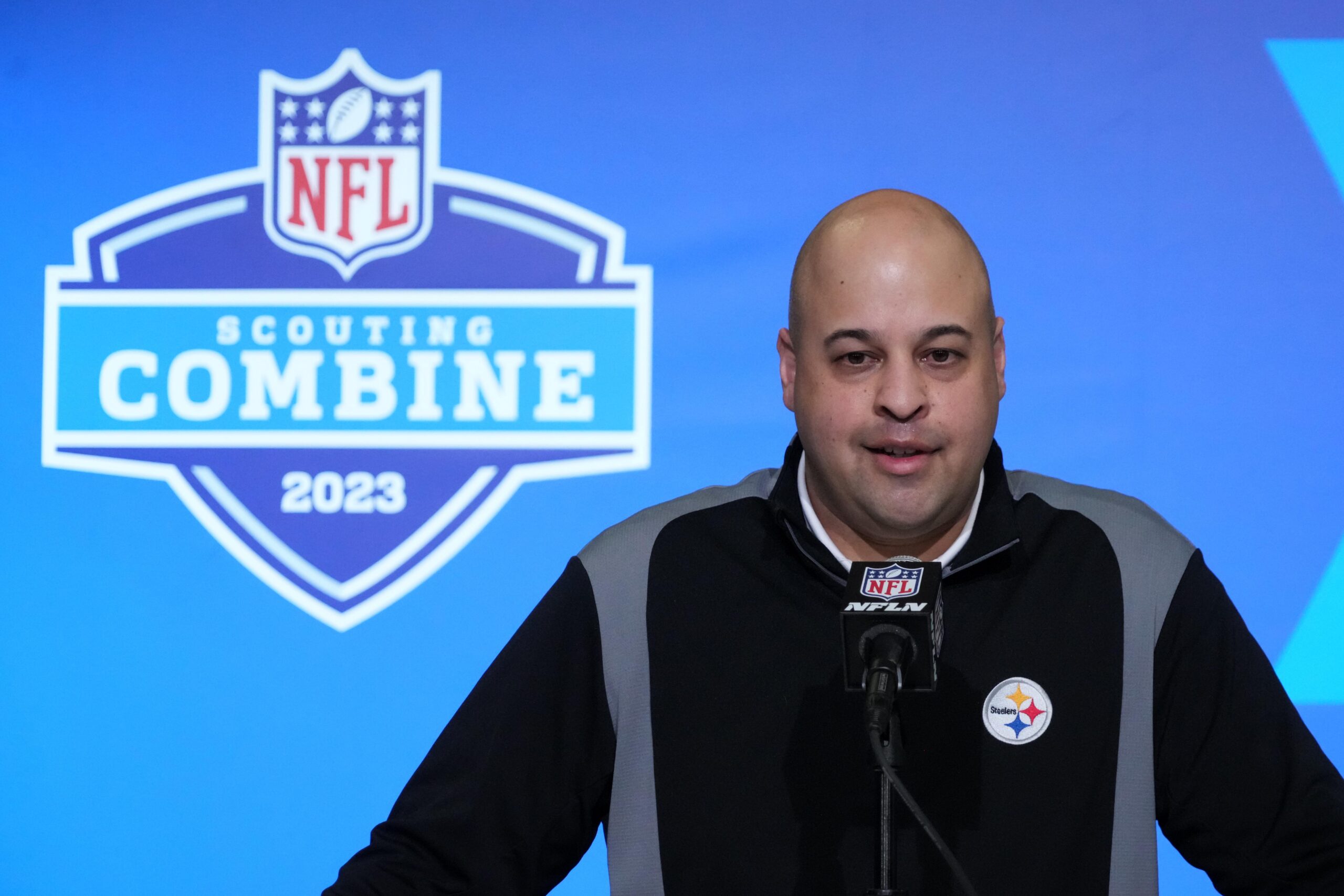
Feb 28, 2023; Indianapolis, IN, USA; Pittsburgh Steelers general manager Omar Khan during the NFL combine at the Indiana Convention Center. Mandatory Credit: Kirby Lee-Imagn Images
Most people will see a quarterback signing. The real story is a general manager who welded his professional future to a biological clock he cannot control. Khan is under contract through 2028. Rodgers turns 43 this season. The math is simple and merciless. If this gamble works, Khan becomes the executive who proved that Pittsburgh’s long-standing philosophy of retooling around veterans can still win in a modern NFL shaped by young quarterbacks and explosive offenses. If it doesn’t, the bold, flattering image that once surrounded him will be replaced by a far harsher verdict. Either way, the Steelers chose to find out with virtually no margin for error. Do you think the Steelers were right to tie this window to Rodgers, or should they have turned the page sooner? Let us know what you think in the comments.