


Robert Griffin III didn’t float a vague idea on a studio set and move on. The 2011 Heisman Trophy winner sat down and built a full blueprint for a 24-team College Football Playoff, complete with automatic bids, loss limits, and campus-hosted games. This wasn’t a hot take. It was an architectural drawing. And the conference with the most to lose from that blueprint is the one that has treated the playoff like a private invitation list for the better part of a decade.
A Reputation That Outlived Its Record

Alabama offensive lineman Alphonse Taylor makes a snow angel in the confetti after defeating Clemson to win the College Football Playoff Championship on Jan. 11, 2016, in Glendale.
Since the College Football Playoff began in 2014, the SEC has had more appearances and more national titles than any other conference, and it owns the best overall CFP record through the 2025 season. That track record has helped create an environment where, as CBS Sports and others have noted, the SEC often seems to receive “the benefit of the doubt” from the selection committee when close decisions are made. In practice, that has meant an SEC team with multiple losses could leapfrog a conference champion from another league because of perceived schedule strength and brand prestige. It means the system rewarded history over current performance. Most fans assumed that edge was just how college football worked. RG3’s proposal treats that assumption like a wall worth knocking down.
The Four-Loss Guillotine

Jan 20, 2024; Baltimore, MD, USA; ESPN college football and NFL analyst Robert Griffin III reacts on the sidelines before a 2024 AFC divisional round game between the Houston Texans and the Baltimore Ravens at M&T Bank Stadium. Mandatory Credit: Tommy Gilligan-Imagn Images
Griffin’s plan imposes a hard cutoff: four-loss teams are out. Period. No exceptions for brand name, conference affiliation, or strength of schedule. Then it guarantees automatic bids for every FBS conference champion with three or fewer losses, up to 10 spots reserved before a single at-large bid is awarded. Fourteen remaining slots go to the highest-ranked eligible teams. That structure strips away the safety net that has given the SEC extra seats at the table for years. No more backdoor entries for mediocre November teams carrying famous logos.
How the Math Destroys the Old Model

Georgia Bulldogs head coach Wes Johnson does an interview with sour power candy on his hat as Georgia Bulldogs take on Arkansas Razorbacks during the SEC baseball tournament championship game at Hoover Metropolitan Stadium in Hoover, Ala. on Sunday, May 24, 2026. Georgia Bulldogs defeated Arkansas Razorbacks 11-1
Under the current 12-team setup, the SEC can still position multiple non-champions to earn at-large bids on the strength of reputation, computer rankings, and perceived schedule toughness. Under RG3’s rules, those spots get claimed first by champions from conferences that rarely sniff the playoff. A Sun Belt champion with two losses walks in before a third-place SEC team with three. Think of it as turning a private club with an exclusive VIP entrance into an open tournament where every league champion gets a guaranteed ticket. The hidden side door is gone.
The Numbers the SEC Doesn’t Want You to See
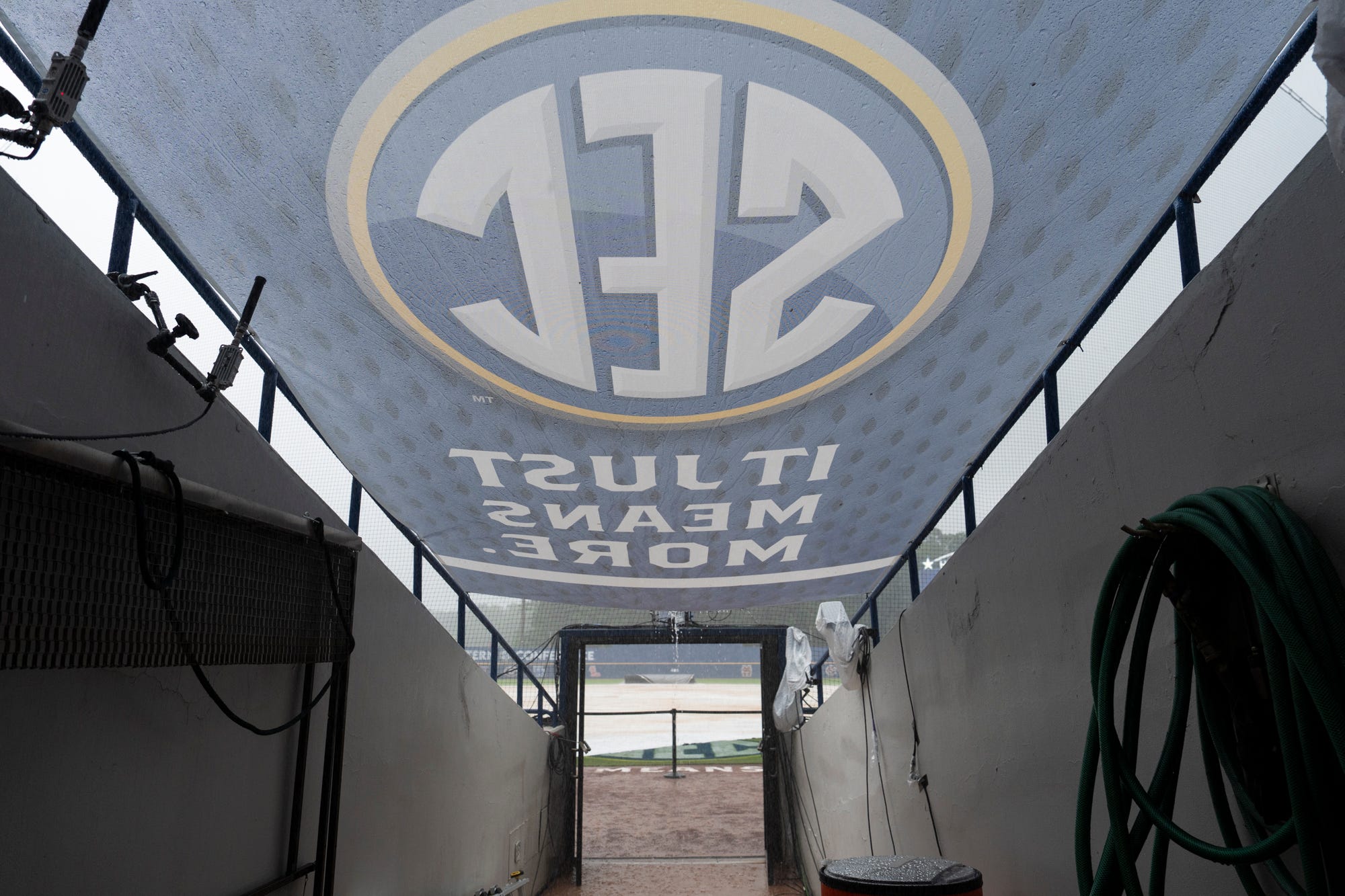
Weather delay before Georgia Bulldogs take on Arkansas Razorbacks during the SEC baseball tournament championship game at Hoover Metropolitan Stadium in Hoover, Ala. on Sunday, May 24, 2026.
The SEC’s postseason dominance in the CFP era is real: it leads all conferences in appearances, wins, and national titles since the playoff began, and it has turned that success into enormous financial and branding power. But those same numbers also show how often other leagues are squeezed to the margins, with only a limited rotation of conferences breaking through to the final bracket. Griffin’s proposal doesn’t kick the SEC out of the playoff. It forces the conference to earn every single bid on merit rather than coasting on a decade-old reputation. Campus-hosted first-round games and a seeding structure that rewards conference champions add another layer: home-field advantage shifts toward teams that actually won their league.
The Boardroom Battle Nobody Sees
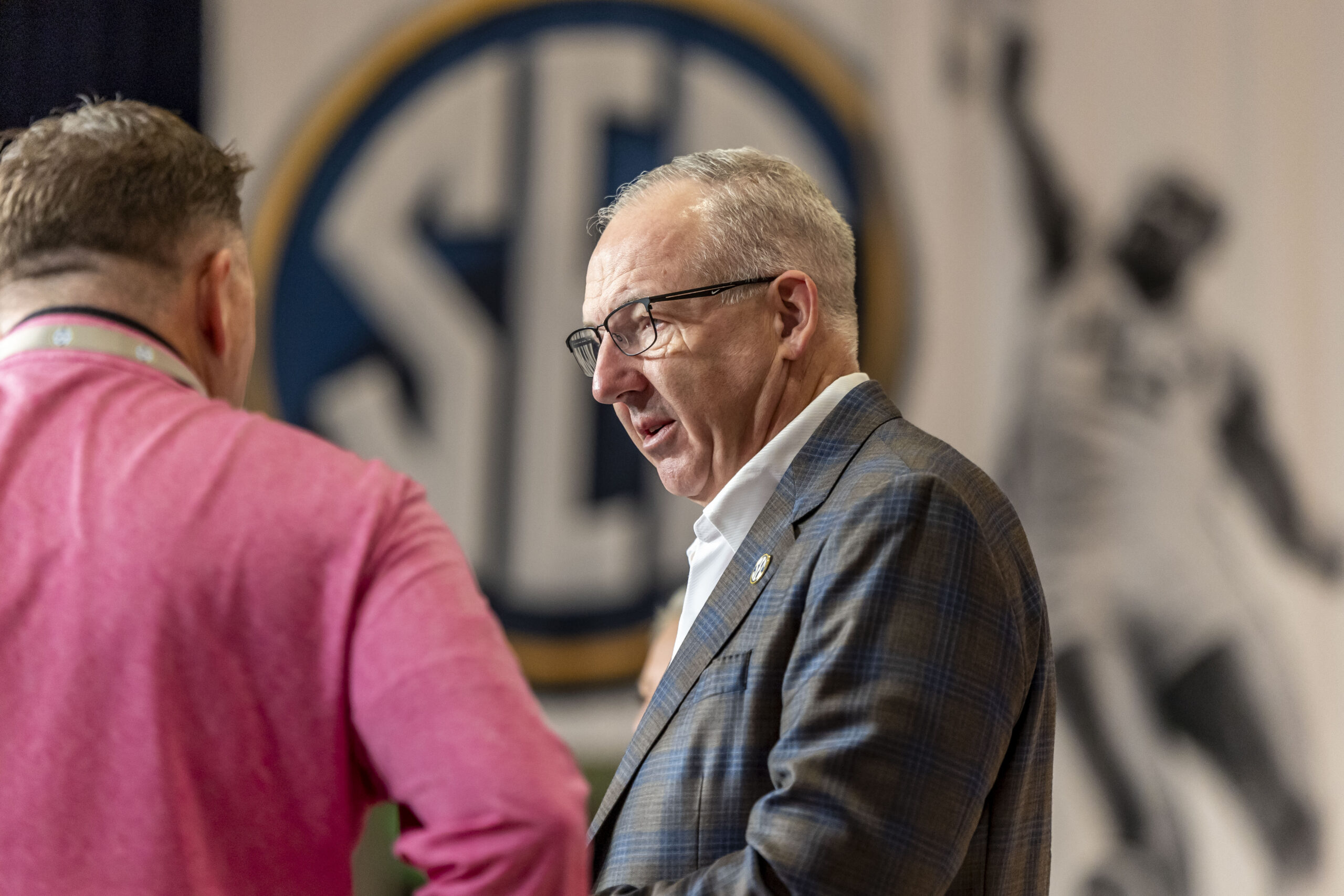
Oct 14, 2025; Birmingham, AL, USA; SEC commissioner Greg Sankey talks with staff before SEC Media Days at Grand Bohemian Hotel. Mandatory Credit: Vasha Hunt-Imagn Images
SEC commissioner Greg Sankey has pushed for a 16-team model, not 24. Reporting from national outlets makes clear that Sankey’s resistance to a larger field can stall the entire expansion process, because no format moves forward without agreement from both the SEC and the Big Ten. The SEC and Big Ten together effectively set the terms of the CFP’s future. That dual grip extends beyond the field and into the committee room where format decisions get made. RG3’s 24-team framework doesn’t just challenge how teams qualify. It challenges who controls the conversation, and that might be the part that stings most.
A New Rule, Not an Exception
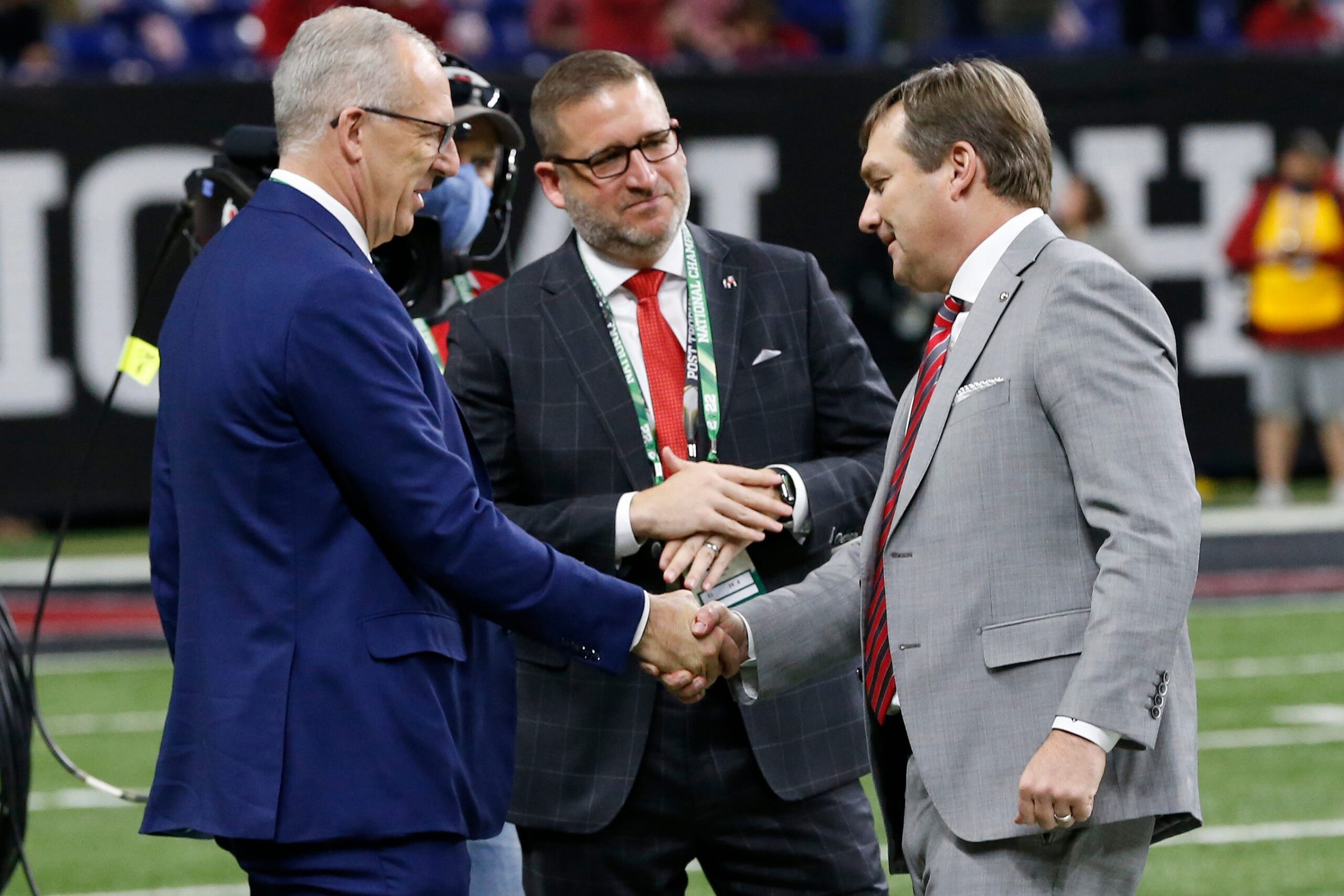
SEC Commissioner Greg Sankey shakes hands with Georgia coach Kirby Smart at Lucas Oil Stadium before the College Football Playoff National Championship game in Indianapolis, on Monday, Jan. 10, 2022.
This proposal sets a precedent that reframes the entire expansion debate. If automatic bids for every FBS conference champion become the baseline expectation, no future format can walk that back without looking like a power grab. The SEC has treated the playoff like its personal proving ground for years. RG3’s blueprint says the proving ground belongs to everyone. Once you see the structure laid out, the old 12-team model looks less like a fair competition and more like a system designed to protect the teams already inside.
What the SEC Loses Next

Nov 16, 2024; Gainesville, Florida, USA; SEC commissioner Greg Sankey looks on during the game between the Florida Gators and LSU Tigers during the first half at Ben Hill Griffin Stadium. Mandatory Credit: Matt Pendleton-Imagn Images
If a 24-team model gains traction, the SEC loses more than bracket spots. It loses the narrative that its regular season is the de facto playoff. Every November argument about SEC strength of schedule mattering more than a conference title from a smaller league evaporates when that smaller league’s champion holds a guaranteed bid. Sankey can fight the format in boardrooms, but the public appetite for broader access keeps growing as more commissioners, coaches, and networks line up behind 24 teams. The counter-move is predictable: argue that dilution cheapens the product.
The Heisman Winner vs. the Machine

Jan 24, 2026; Bloomington, IN, USA; Indiana Hoosiers quarterback Fernando Mendoza (15) holds the Heisman Trophy with Indiana Hoosiers head coach Curt Cignetti on Saturday, Jan. 24, 2026, during the Indiana Football College Football Playoff National Championship celebration and parade at Memorial Stadium. Mandatory Credit: Grace Hollars-USA TODAY Network via Imagn Images
A former Heisman Trophy winner just handed the public a detailed structural alternative to a system that two mega-conferences have quietly engineered to serve themselves. Griffin’s plan guts the SEC’s margin for error by reserving valuable real estate for teams the current system tends to overlook. Whether the CFP adopts 16, 24, or something else, the debate has shifted. The question is no longer whether the SEC deserves the benefit of the doubt. The question is who gave them that benefit in the first place, and whether anyone voted on it. If you were in that CFP meeting room, would you fight for 16, 24, or keep it at 12 — and why?