
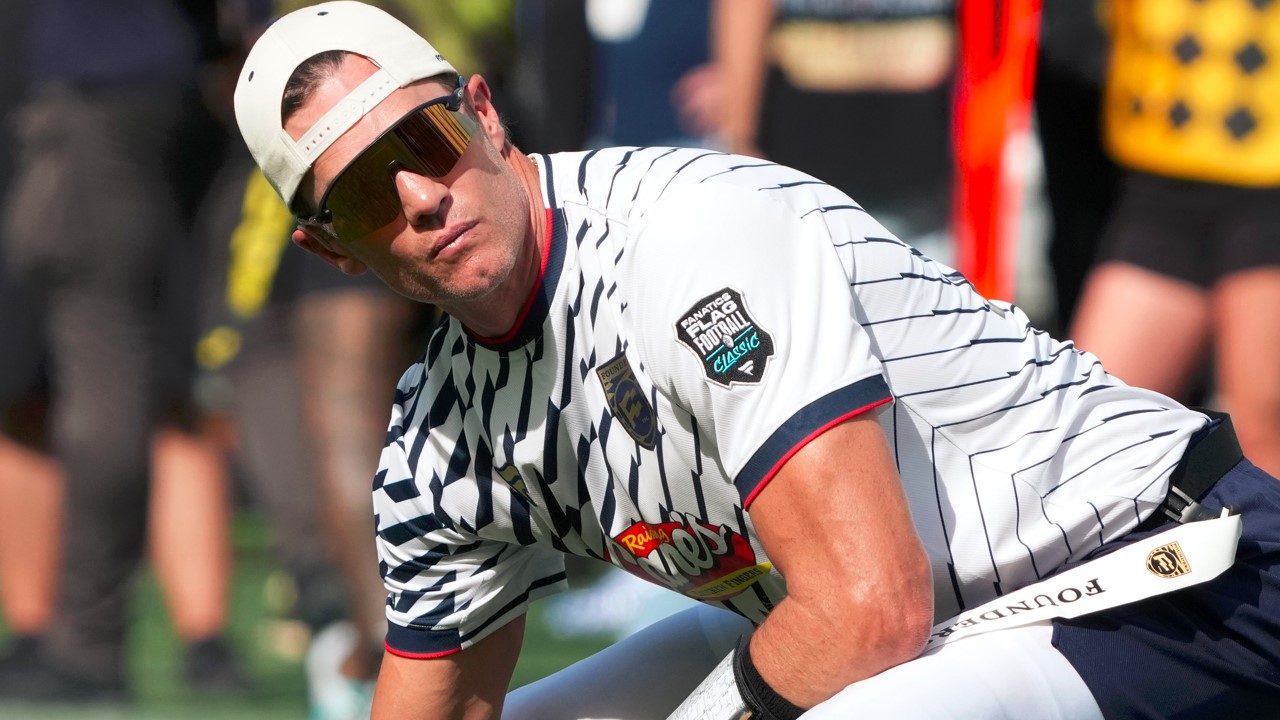
Stadium lights up at BMO Stadium in Los Angeles. Tom Brady on one sideline, Joe Burrow on the other, flag football routes being run under a California sky that was never supposed to host this game. Three weeks earlier, missiles were flying over the Persian Gulf. The Fanatics Flag Football Classic was built for Riyadh, bankrolled by Saudi sovereign money, designed as a crown jewel of the kingdom’s sports empire. Instead, it landed roughly 8,000 miles from its intended home, and the people who paid for it weren’t in the building.
A Riyadh Showcase Built on Sovereign Cash
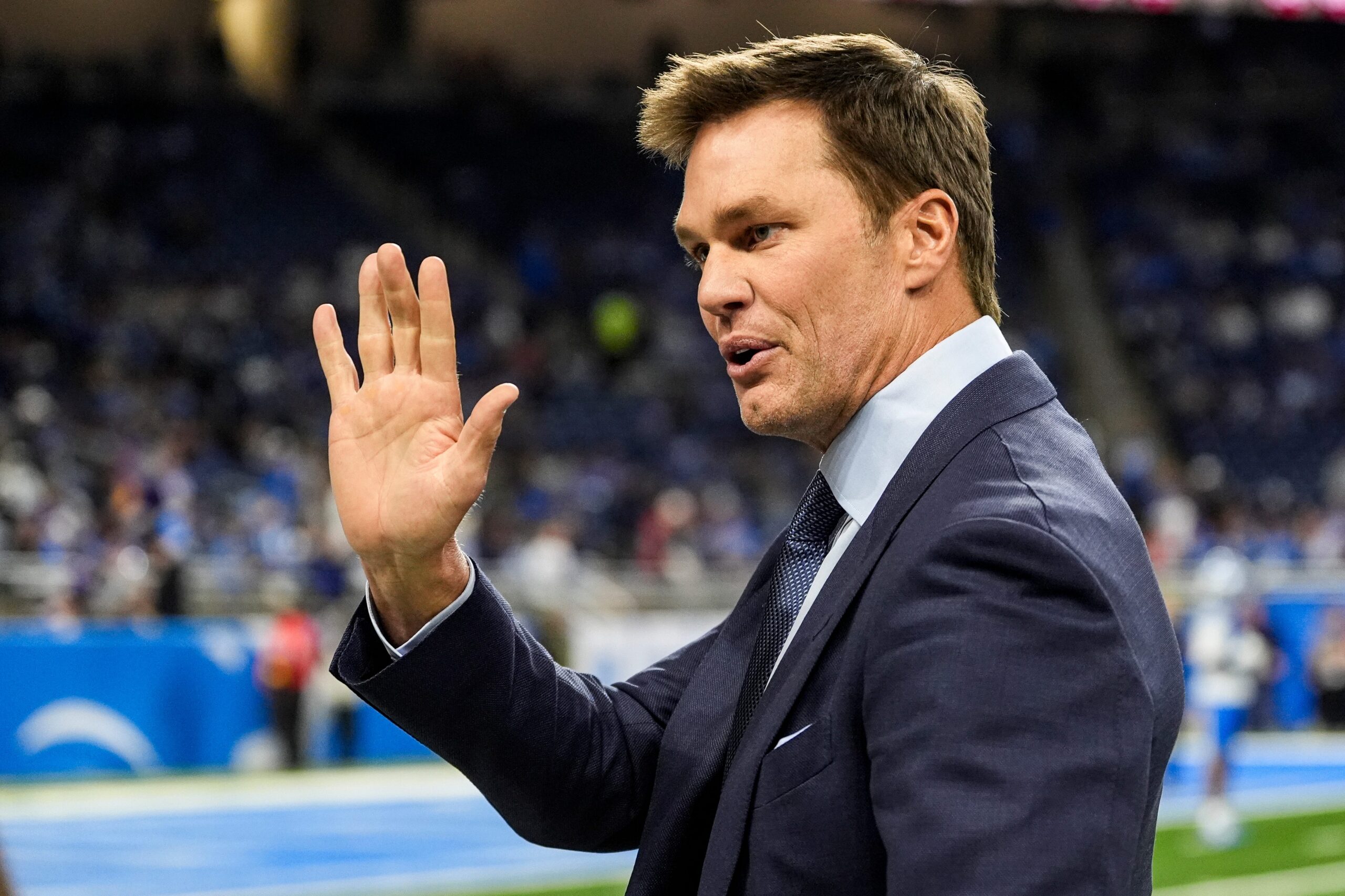
Tom Brady waves at Detroit Lions fans at Ford Field in Detroit on Sunday, November 2, 2025.
The original plan was a multi-year sponsorship agreement between Fanatics and Sela, a Saudi entertainment conglomerate owned by the Public Investment Fund, the kingdom’s roughly $900 billion sovereign wealth fund. Sela would organize and bankroll Brady’s flag football showcase in Riyadh. Fanatics Studios, launched in January 2026 as a joint venture with OBB Media, would produce it. Fox would broadcast it. The Classic would double as an Olympic preview, using the same rules governing flag football’s 2028 LA Games debut. Then Operation Epic Fury rewrote the calendar.
Missiles Change the Math
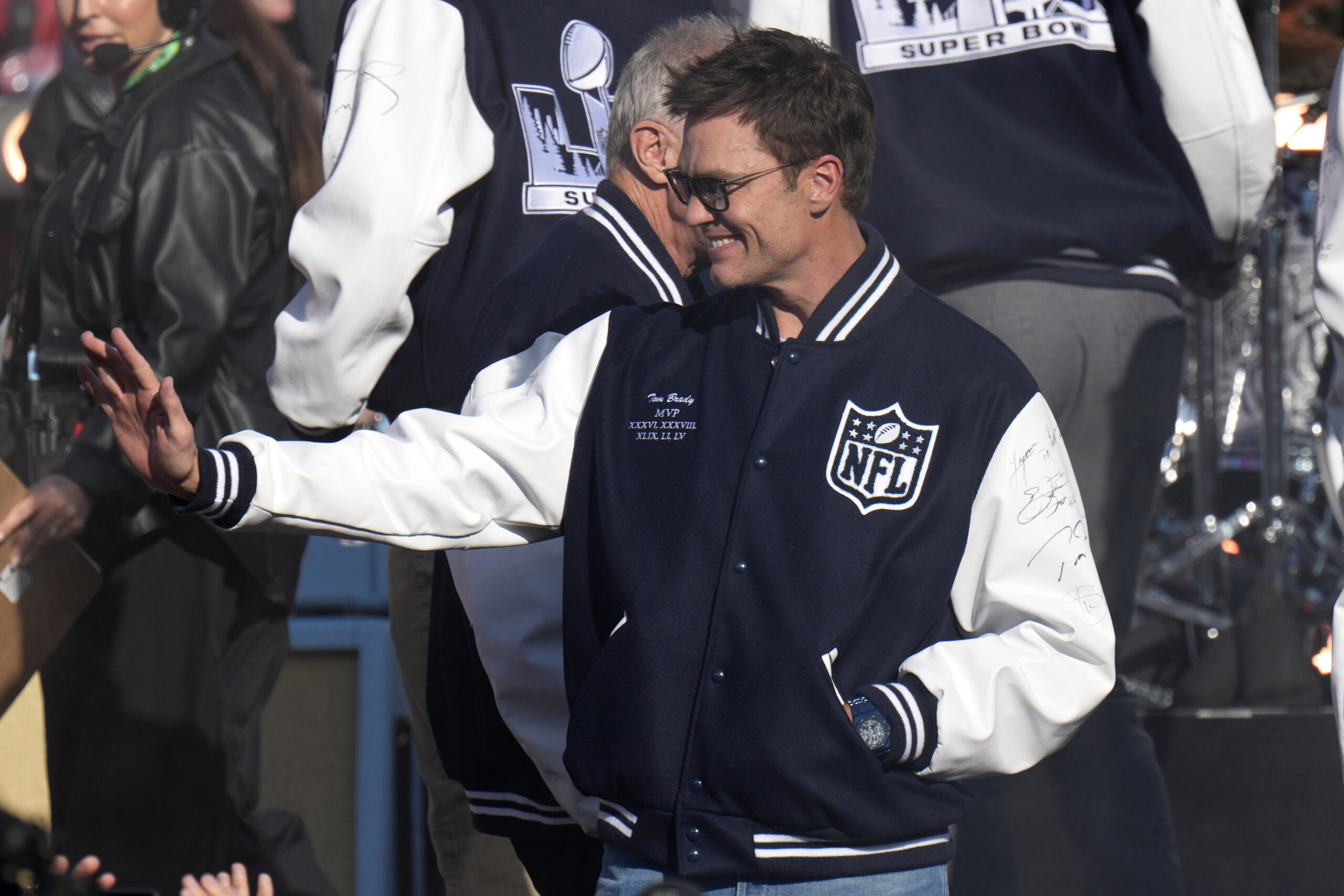
Feb 8, 2026; Santa Clara, CA, USA; Tom Brady waves before Super Bowl LX between the Seattle Seahawks and the New England Patriots at Levi’s Stadium. Mandatory Credit: Kyle Terada-Imagn Images
On February 28, 2026, a joint U.S.-Israeli assault on Iran opened Operation Epic Fury, a 38-day air campaign that struck more than 1,000 targets on its first day alone. Iran retaliated across the Gulf, launching missile and drone strikes on Saudi Arabia and other allied states, including attacks on Saudi oil refineries and the Prince Sultan Air Base. Saudi officials told Fanatics to postpone the Classic by a full year and keep it in Riyadh once conditions cooled. That sounds reasonable. Most partners would defer to the country absorbing missile strikes. Fanatics, with a Fox broadcast window locked and Olympic timelines ticking, chose a different answer entirely.
The Deal That Imploded in Three Weeks
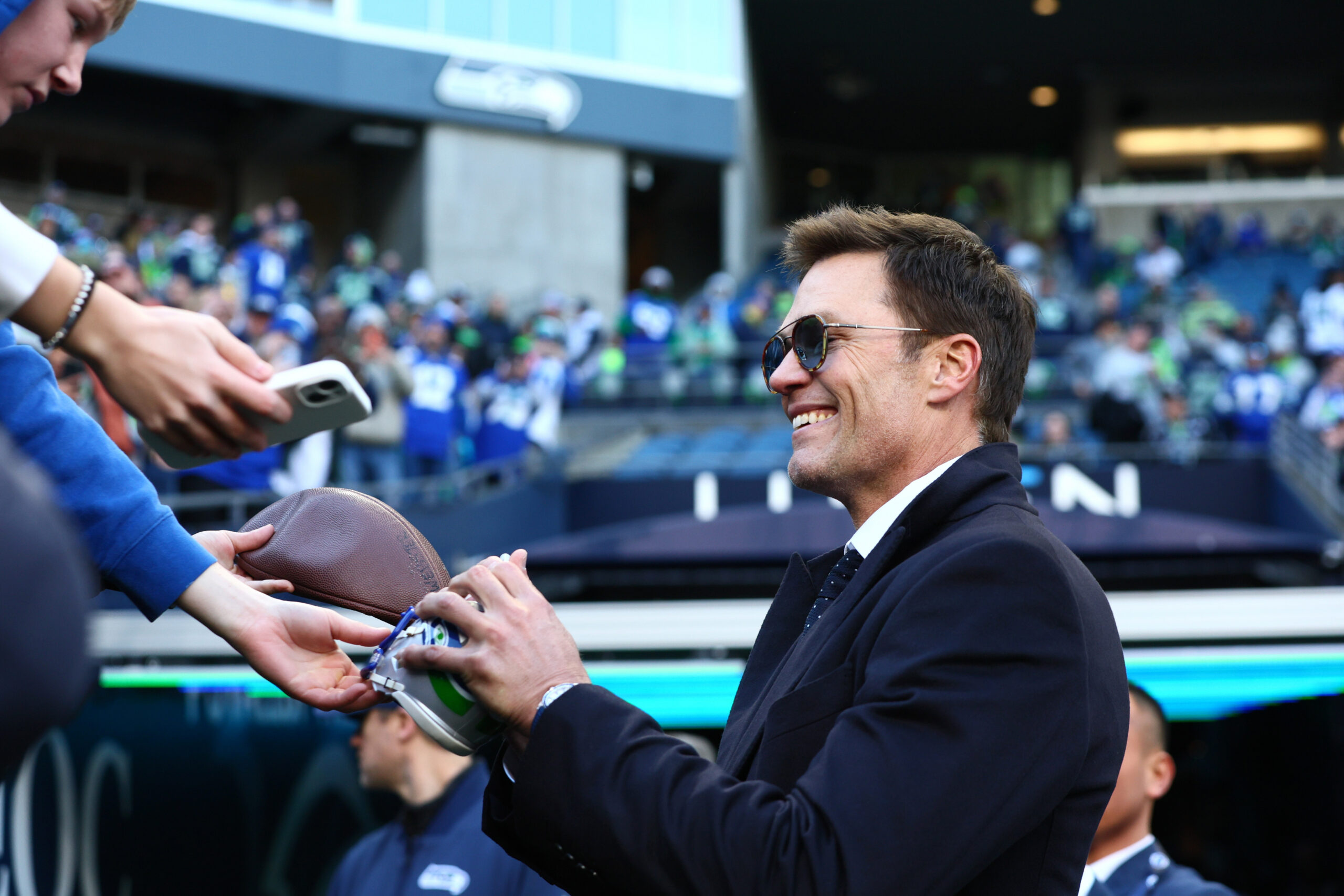
Jan 25, 2026; Seattle, WA, USA; Tom Brady signs autographs before the 2026 NFC Championship Game between the Seattle Seahawks and the Los Angeles Rams at Lumen Field. Mandatory Credit: Kevin Ng-Imagn Images
Fanatics relocated the Classic to BMO Stadium in Los Angeles and kept the March 21 date. Front Office Sports had already called the multi-year deal “in peril.” Then Saudi officials pulled further funding. Then Sela filed a lawsuit in England’s commercial court. A Saudi-funded exhibition of American football culture ended up staged in Los Angeles without a dollar of Saudi money. One broadcast window. One refusal to postpone. One sovereign partner left holding sunk costs and a lawyer’s phone number.
Why English Court Changes Everything
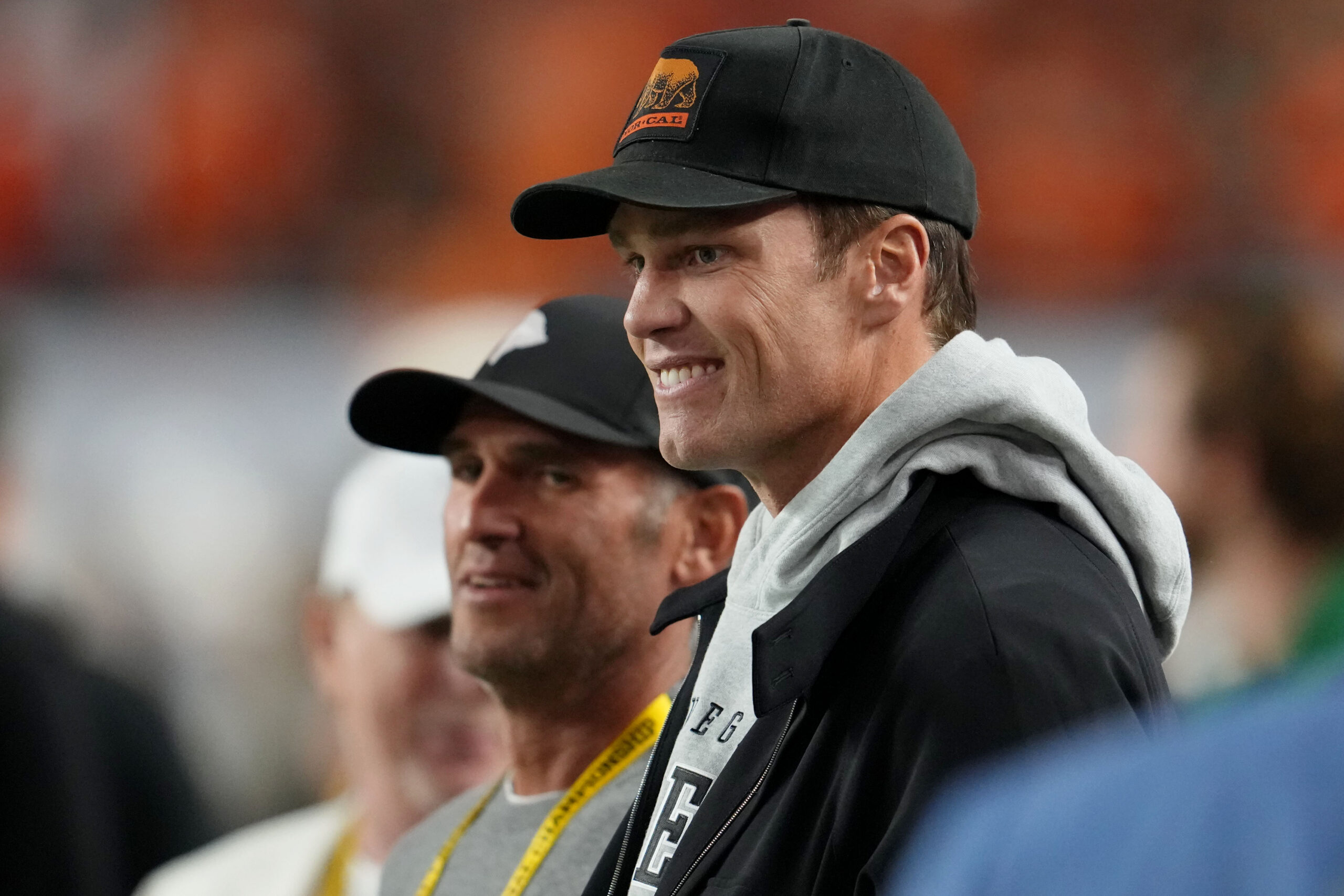
Jan 19, 2026; Miami Gardens, FL, USA; Tom Brady looks on from the sideline before the CFP National Championship college football game between the Indiana Hoosiers and the Miami Hurricanes at Hard Rock Stadium. Mandatory Credit: Kirby Lee-Imagn Images
Here is the mechanism most people miss. Under GCC civil law, force majeure is codified. War typically qualifies. But Sela’s contract sends disputes to England’s commercial court, where, as legal firm Slaughter and May puts it, “there is no doctrine of force majeure in English law.” The protection exists only if the contract’s own language creates it. That venue clause, buried in boilerplate, quietly decided who held the leverage when bombs started falling. Sela agreed to play on a field where its strongest argument may not exist.
685,000 Viewers and a Humbling Scoreboard
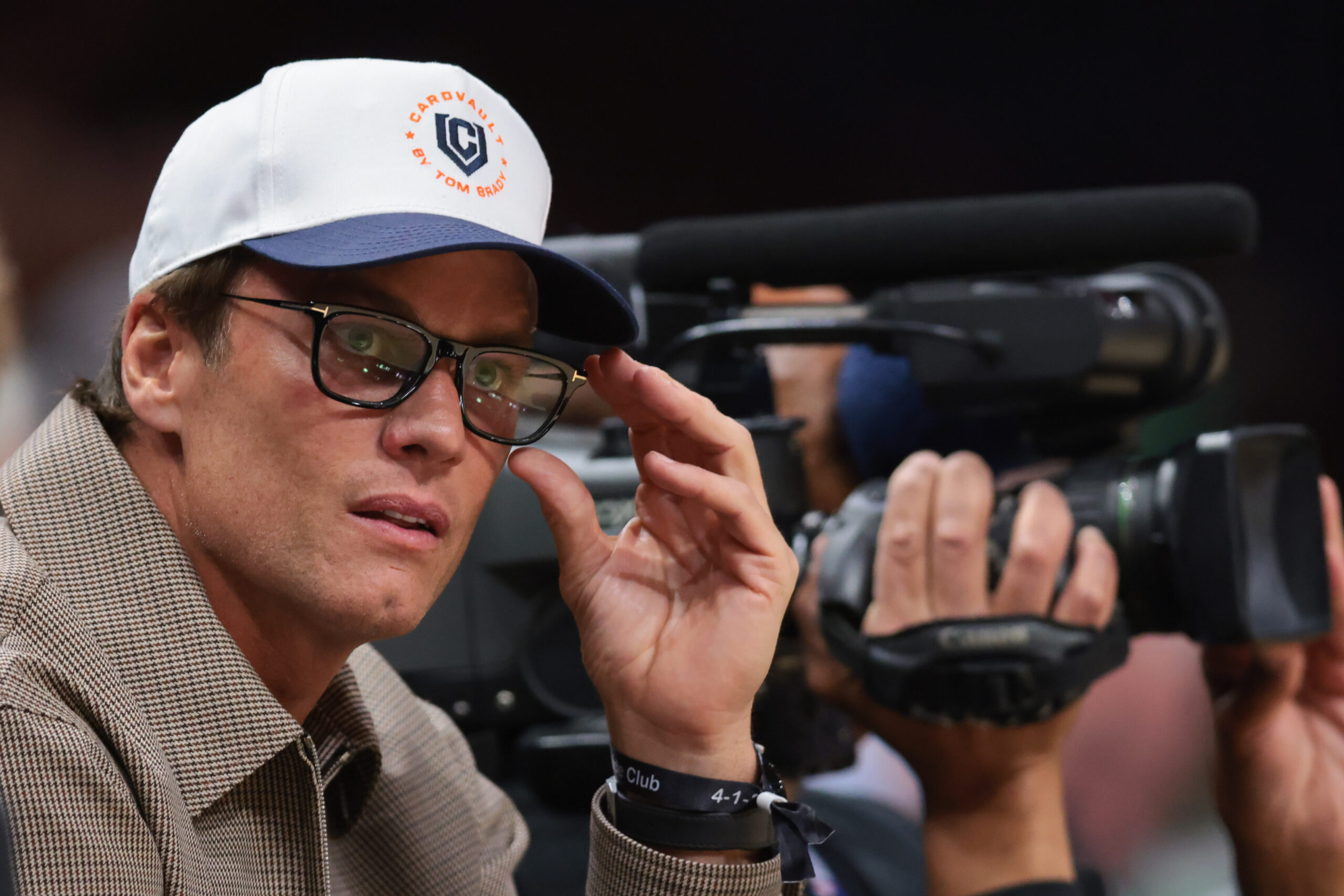
Apr 1, 2026; Miami, Florida, USA; Tom Brady attends the game between the Miami Heat and the Boston Celtics at Kaseya Center. Mandatory Credit: Sam Navarro-Imagn Images
The Classic aired on Fox and averaged about 685,000 viewers. Respectable for a brand-new property. Less respectable for a Tom Brady vehicle. And the scoreboard told a story the marketing never promised: Team USA’s flag football specialists routed Brady’s Founders 43–16 and Joe Burrow’s Wildcats 39–14 in the round robin. Joe Burrow once said he’d “always wanted to play in the Olympics.” The players who actually train for this sport made the NFL stars look like tourists. That gap between celebrity billing and on-field reality mirrors the gap between the deal’s promise and its collapse.
The Ripple Hits Every Future Deal
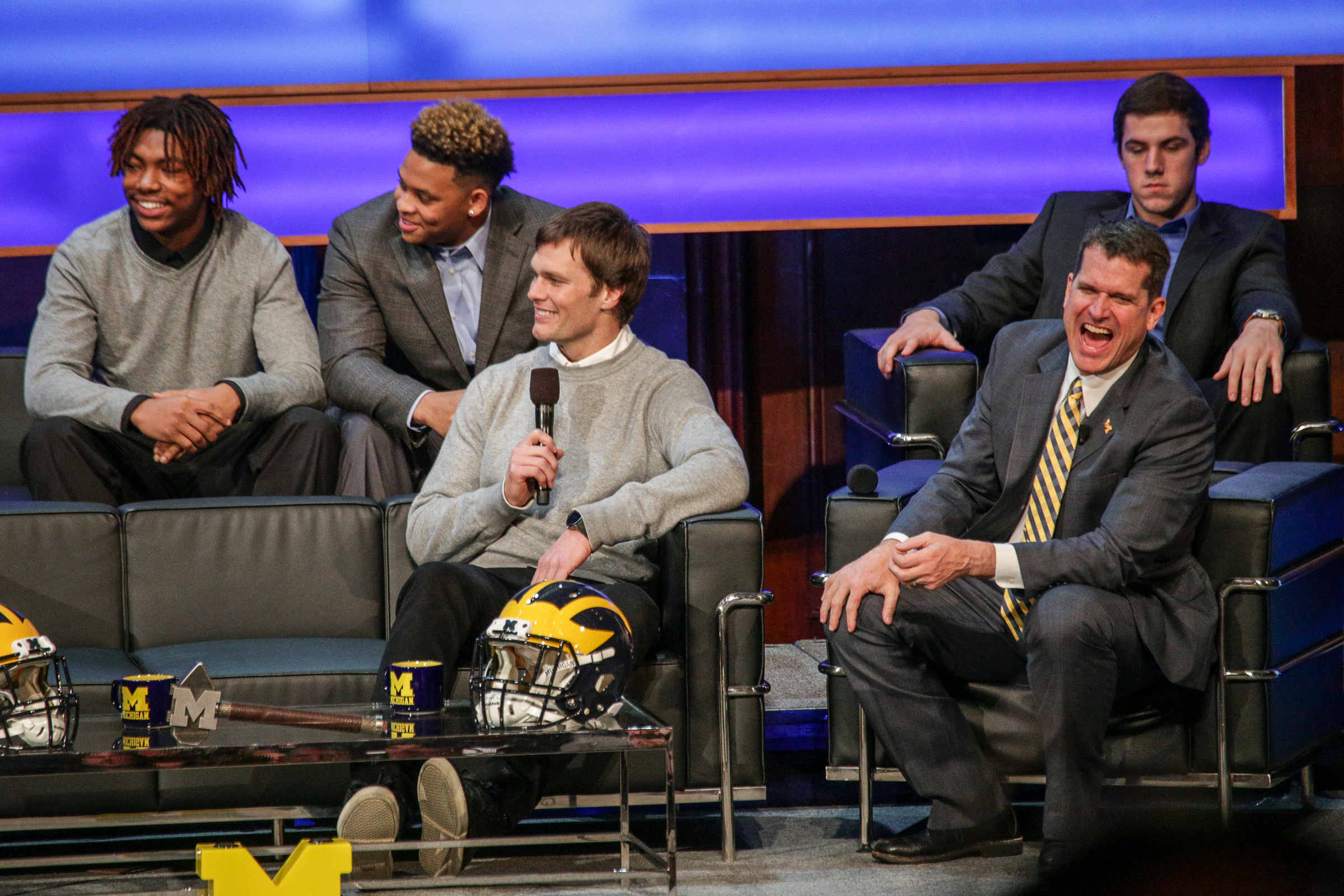
Feb. 3, 2016; Ann Arbor, MI, USA; New recruits Ahmir Mitchell, Kingston Davis, and Brandon Peters, look on as their new head coach Jim Harbaugh and Patriots QB Tom Brady have a laugh, during the University of Michigan Athletic Department in partnership with The Players’ Tribune and Carhartt special event, ‘Signing of the Stars,’ at Hill Auditorium; Mandatory credit: Kimberly P. Mitchell-USA TODAY SPORTS via Imagn Images
Sela’s lawsuit seeks damages for planning expenses and potential lost revenues tied to the original Riyadh event. But the real cost is systemic. Sports marketers with PIF-backed deals are now scrutinizing their own war, sanctions, and relocation clauses. If Sela recovers substantial damages, the price of insuring events in geopolitically volatile regions climbs, pushing more marquee properties back to North America and Europe. One relocated flag football game could reshape how billions in cross-border sports sponsorship money gets allocated for years.
A New Rule, Not a Freak Exception
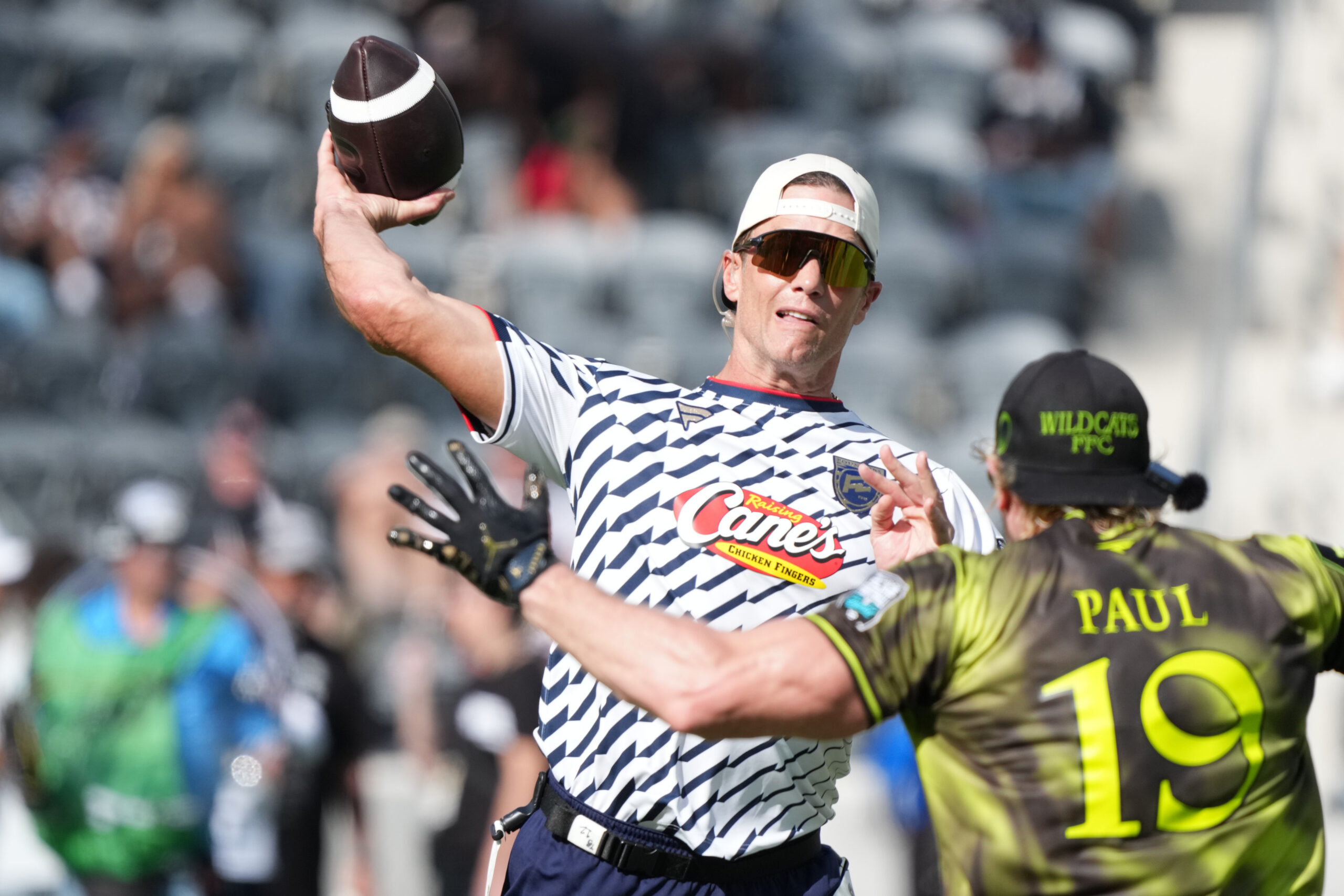
Mar 21, 2026; Los Angeles, CA, USA; Founders FFC quarterback Tom Brady (12) throws ball against Logan Paul of Wildcats FFC during the Fanatics Flag Football Classic at BMO stadium. Mandatory Credit: Kirby Lee-Imagn Images
This case looks like a quirky one-off until you see the pattern. PIF channels Saudi state power into sports through subsidiaries like Sela, using multi-year deals to import Western brands. Fanatics Studios leverages content, commerce, and athlete relationships to anchor a media empire ahead of LA28. And legal venue clauses quietly shift wartime disputes from Gulf courts to English ones. Once you see how sovereign wealth, Olympic timelines, and contract fine print interlock, every future mega-event partnership carries the same hidden fault line. The Brady game just cracked it open first.
The Sealed Lawsuit Nobody Can Read
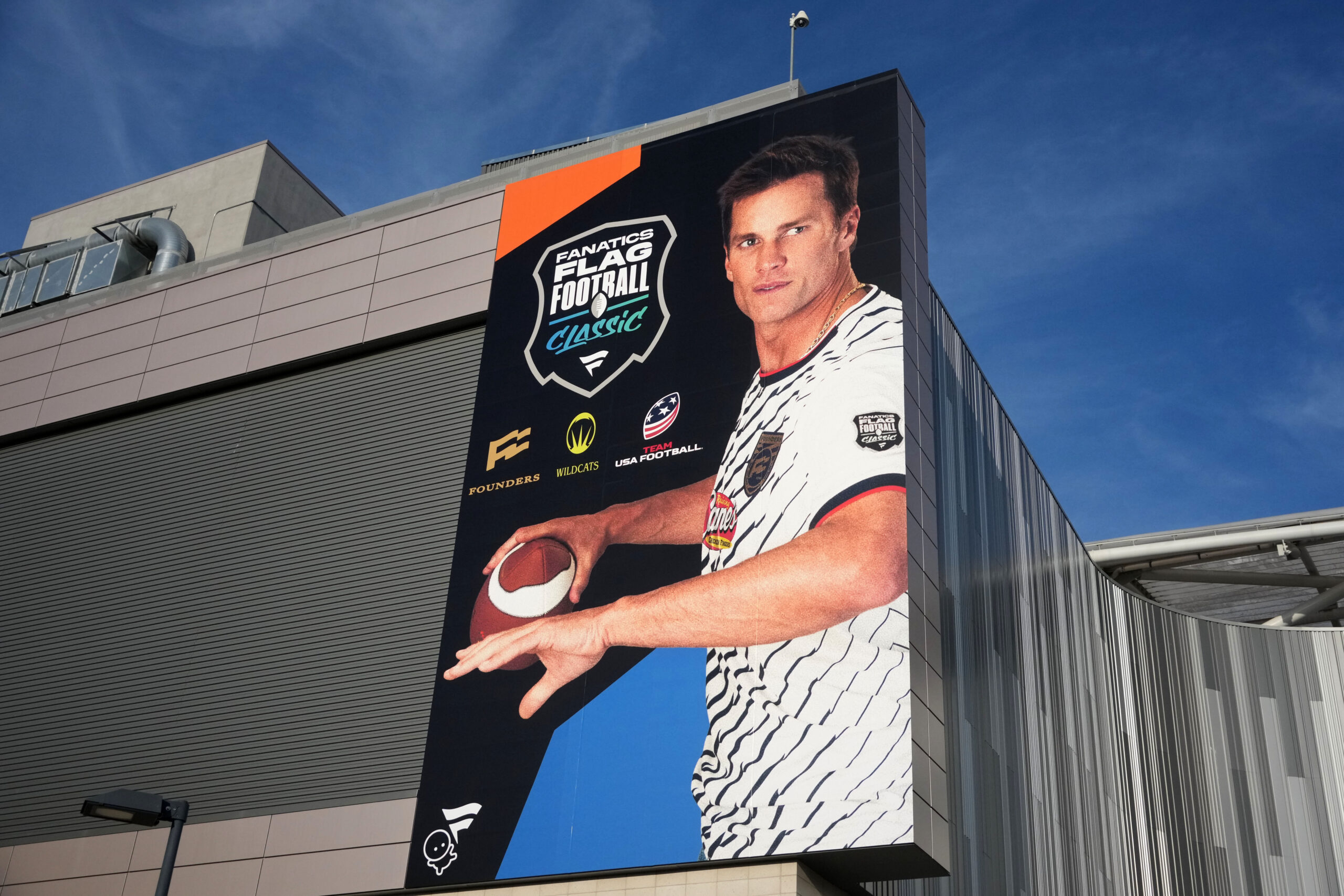
Mar 21, 2026; Los Angeles, CA, USA; An image of Founders FFC quarterback Tom Brady on the BMO Stadium facade during the Fanatics Flag Football Classic. Mandatory Credit: Kirby Lee-Imagn Images
The suit remains under seal because Fanatics Studios has not yet formally responded. That secrecy adds pressure. If the court narrowly construes war-related relief under English law, it could discourage reliance on generic force majeure language across global sports contracts. Smaller agencies and mid-tier leagues that cannot absorb sudden relocations or lawsuits become less attractive partners for sovereign funds, concentrating power among a handful of global players. The sealed complaint in London may quietly redraw the map of who gets to host the world’s games.
The Counter Move Already Forming
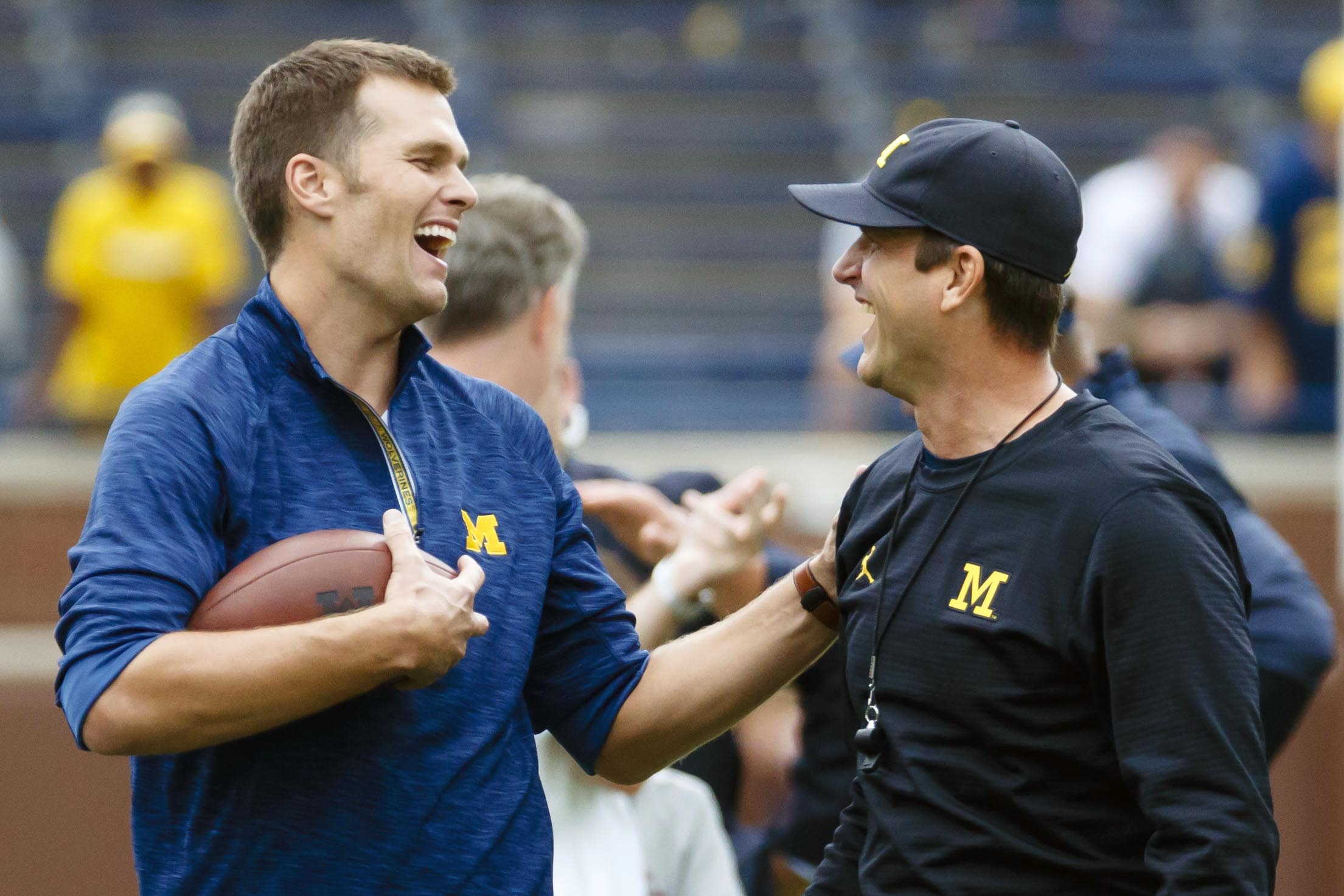
Sep 17, 2016; Ann Arbor, MI, USA; New England Patriots quarterback Tom Brady and Michigan Wolverines head coach Jim Harbaugh laugh during warm ups prior to the game against the Colorado Buffaloes at Michigan Stadium; Mandatory Credit: Rick Osentoski-USA TODAY Sports via Imagn Images
Fanatics is deepening ties with U.S. and Olympic institutions, leaning into LA28 and domestic networks to reduce dependence on any single foreign sovereign partner. PIF, meanwhile, could redirect capital to rival platforms or tighten control clauses to prevent another unilateral relocation. Both sides are adapting. NFL owners have already agreed in principle to let players compete in Olympic flag football, raising the stakes for every exhibition tied to the 2028 Games. The next contract between a sovereign fund and an American sports company will read very differently, because missile trajectories are now a line item.