
Somewhere in a college football facility right now, a quarterback is staring at two contracts. One keeps him on campus, backed by a collective willing to pay $4 million a year for his arm. The other sends him to the NFL, where a rigid rookie wage scale slots him at roughly $915,000. The dream job pays less than the one he already has. A generation ago, that sentence would have been nonsense. Today, it describes the single strangest financial reality in American sports, and the players caught in it are making decisions that would have baffled every quarterback who came before them.
The $4 Million Amateur
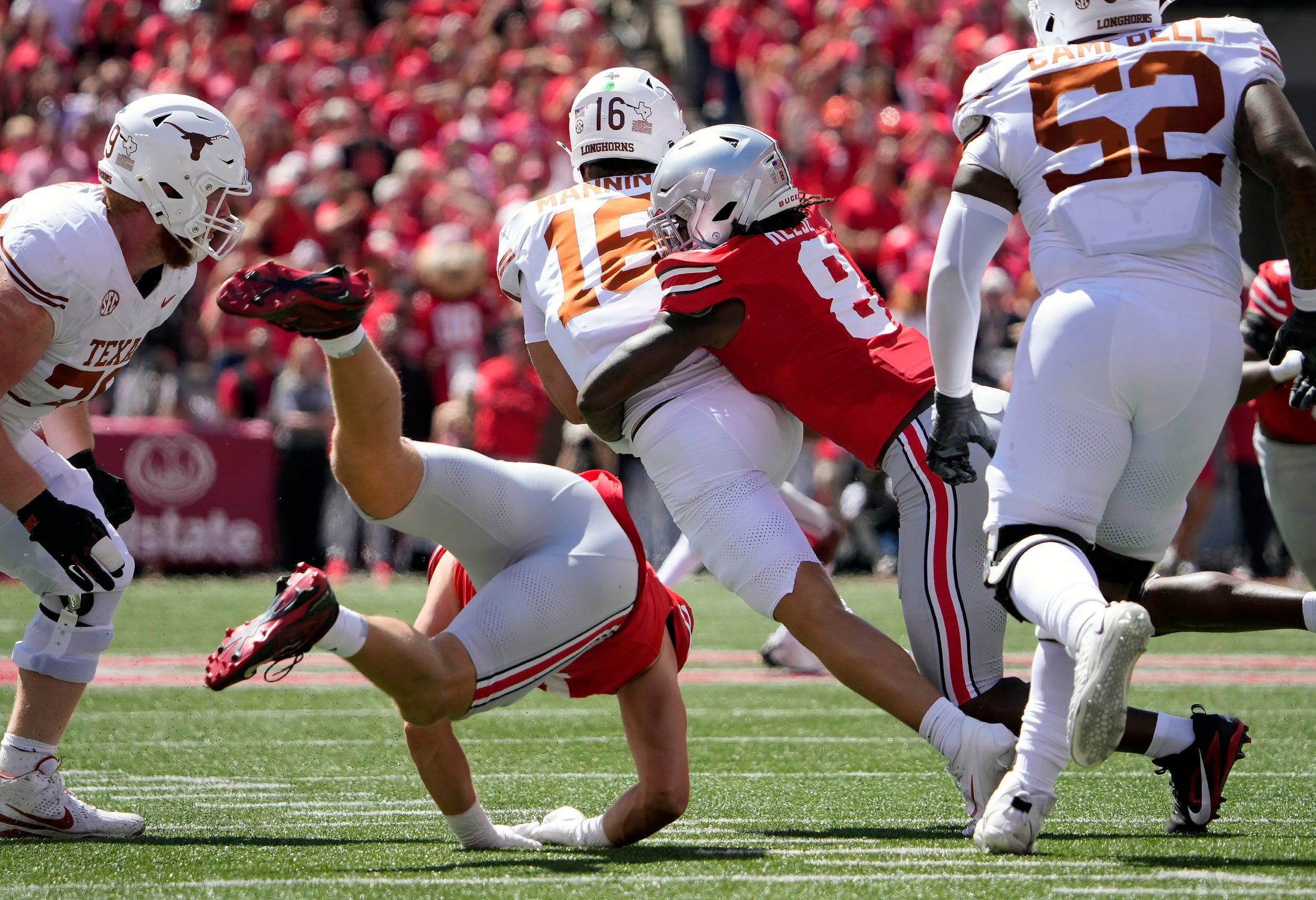
Ohio State Buckeyes linebacker Arvell Reese (8) tackles Texas Longhorns quarterback Arch Manning (16) on a run in the first quarter of their game at Ohio Stadium in Columbus, Ohio on Aug 30, 2025.
These aren’t hypothetical numbers. Duke’s Darian Mensah signed an NIL deal widely reported at $4 million per year. Alabama’s Ty Simpson turned down transfer offers reportedly worth $4 million to $6.5 million. On3’s NIL valuations for 2026 list Arch Manning at $5.4 million and Jeremiah Smith at $4.2 million. The word “amateur” still technically applies to all of them. Meanwhile, the House v. NCAA settlement launched revenue sharing of roughly $20.5 million per school starting in 2025, with football claiming the lion’s share. The money flooding college campuses dwarfs what used to be unimaginable.
The Ladder That Flipped
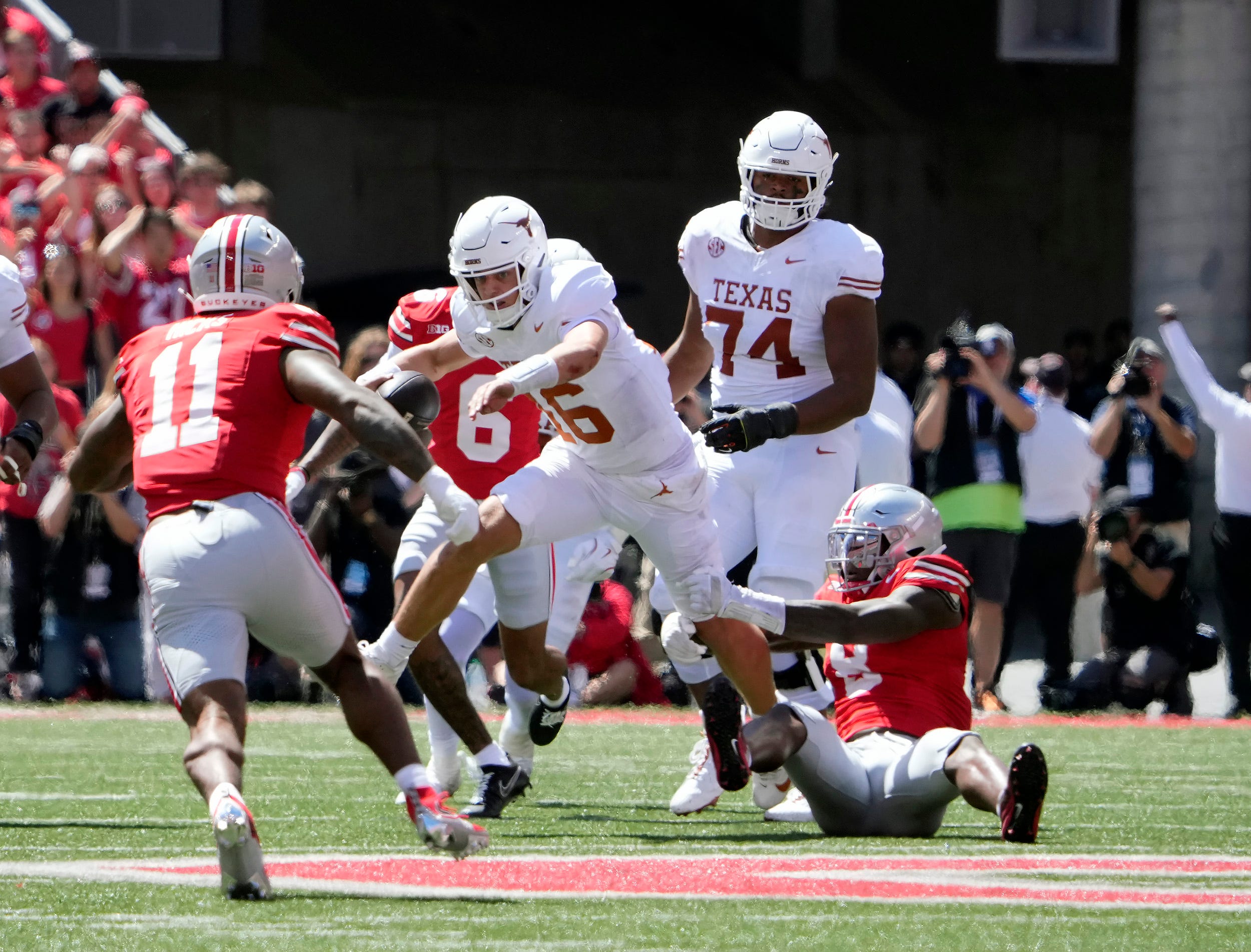
Ohio State Buckeyes linebacker Arvell Reese (8) tackles Texas Longhorns quarterback Arch Manning (16) in the second quarter of their game at Ohio Stadium in Columbus, Ohio on Aug 30, 2025.
For decades, the financial logic was simple: high school to college to the pros, each rung paying more than the last. Everybody assumed the NFL was the jackpot. That assumption held for so long nobody questioned it. But NIL collectives and revenue sharing didn’t just crack that ladder. They inverted it for the very players who were supposed to benefit most from going pro. Quarterbacks commanding $3 to $6 million college packages are entering a draft where some will earn less than they did last season. The old model didn’t just bend. It broke.
The Rookie Wage Scale Trap
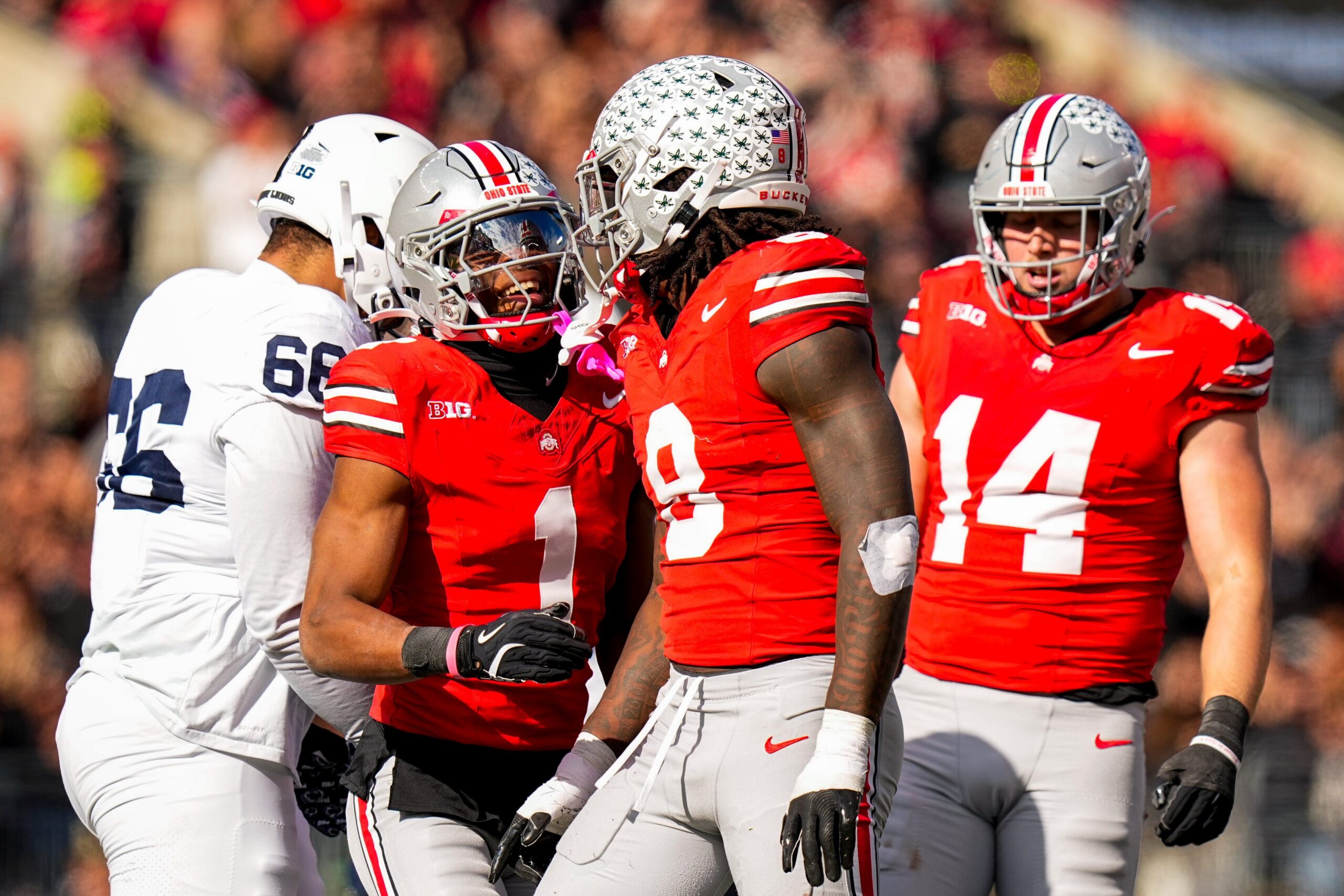
Ohio State Buckeyes cornerback Davison Igbinosun (1) and linebacker Arvell Reese (8) celebrate after Reese sacked the quarterback in the second half of the college football game at Ohio Stadium on Saturday, Nov. 1, 2025 in Columbus, Ohio.
The NFL’s rookie wage scale locks every drafted player into a four-year contract slotted by pick number. Late-round selections in 2026 sign deals worth roughly $4.36 million total, with first-year salaries around $915,000. The league minimum for rookies sits at $885,000. That structure made sense when college players earned nothing. Now collectives can outbid it. A quarterback worth $4 million to a booster collective walks into an NFL building and accepts less than a quarter of that. Four million to $915,000. Same arm. Same talent. Different jersey.
The Hidden Subsidy
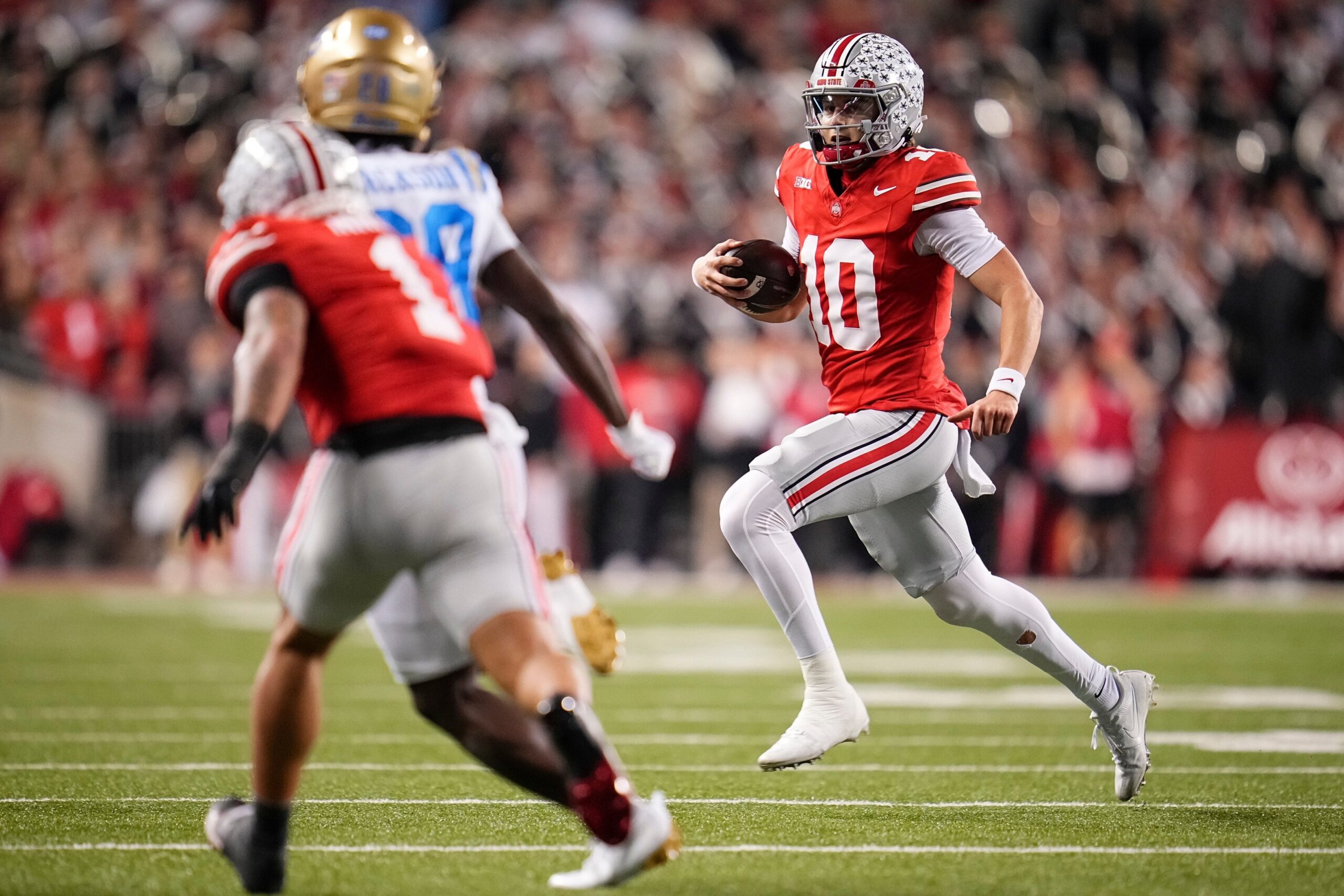
Ohio State quarterback Julian Sayin runs with the ball against UCLA on Nov. 15.
Think about what the rookie wage scale actually does. NFL teams get first-round quarterbacks for a fraction of their market value while colleges pay those same players more than the pros will. The league built a system where someone else develops and overpays talent, then the NFL locks it down cheaply for four years. It functions like a tech company acquiring a startup founder and slashing their salary to entry-level corporate pay. The founder’s skills didn’t change. The power structure did. NFL owners benefit from a compensation gap they didn’t create but will never voluntarily close.
The Numbers Side by Side
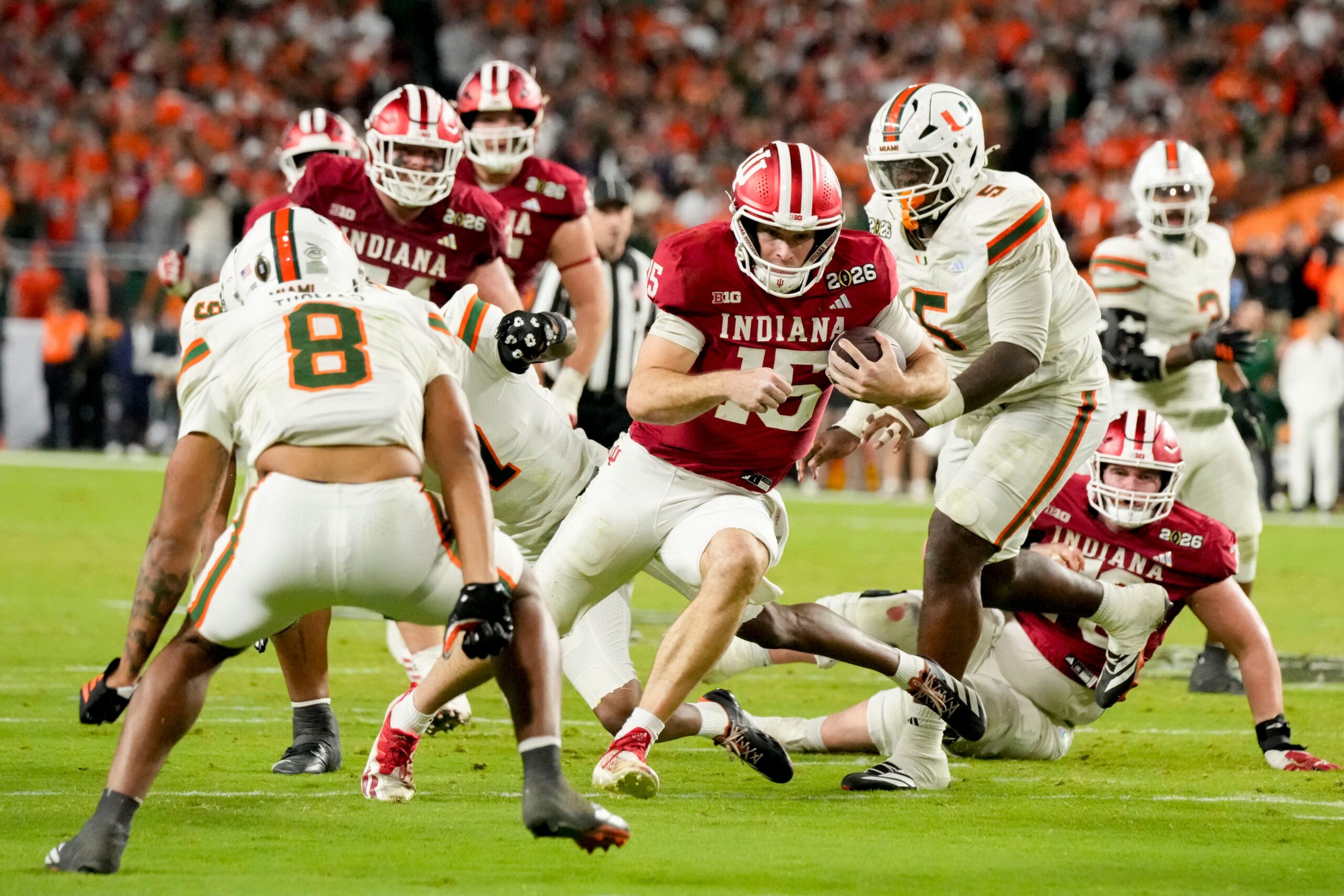
Indiana Hoosiers quarterback Fernando Mendoza (15) rushes into the end zone for a touchdown Monday, Jan. 19, 2026, during the College Football Playoff National Championship college football game against the Miami (FL) Hurricanes at Hard Rock Stadium in Miami Gardens.
Sam Leavitt’s NIL valuation: $4.0 million. Brendan Sorsby reportedly fielded offers in the multi-million-dollar range at Texas Tech. Those are college paychecks. On the NFL side, only the top handful of draft picks earn first-year salaries exceeding $3 million. By pick 20, the number drops sharply. By the late rounds, it lands at $915,000. If the NFL is supposed to be the financial upgrade, a world where “amateur” quarterbacks clear $4 million while rookies scrape by at $915,000 is one where the math has quietly stopped making sense.
Who Pays the Price
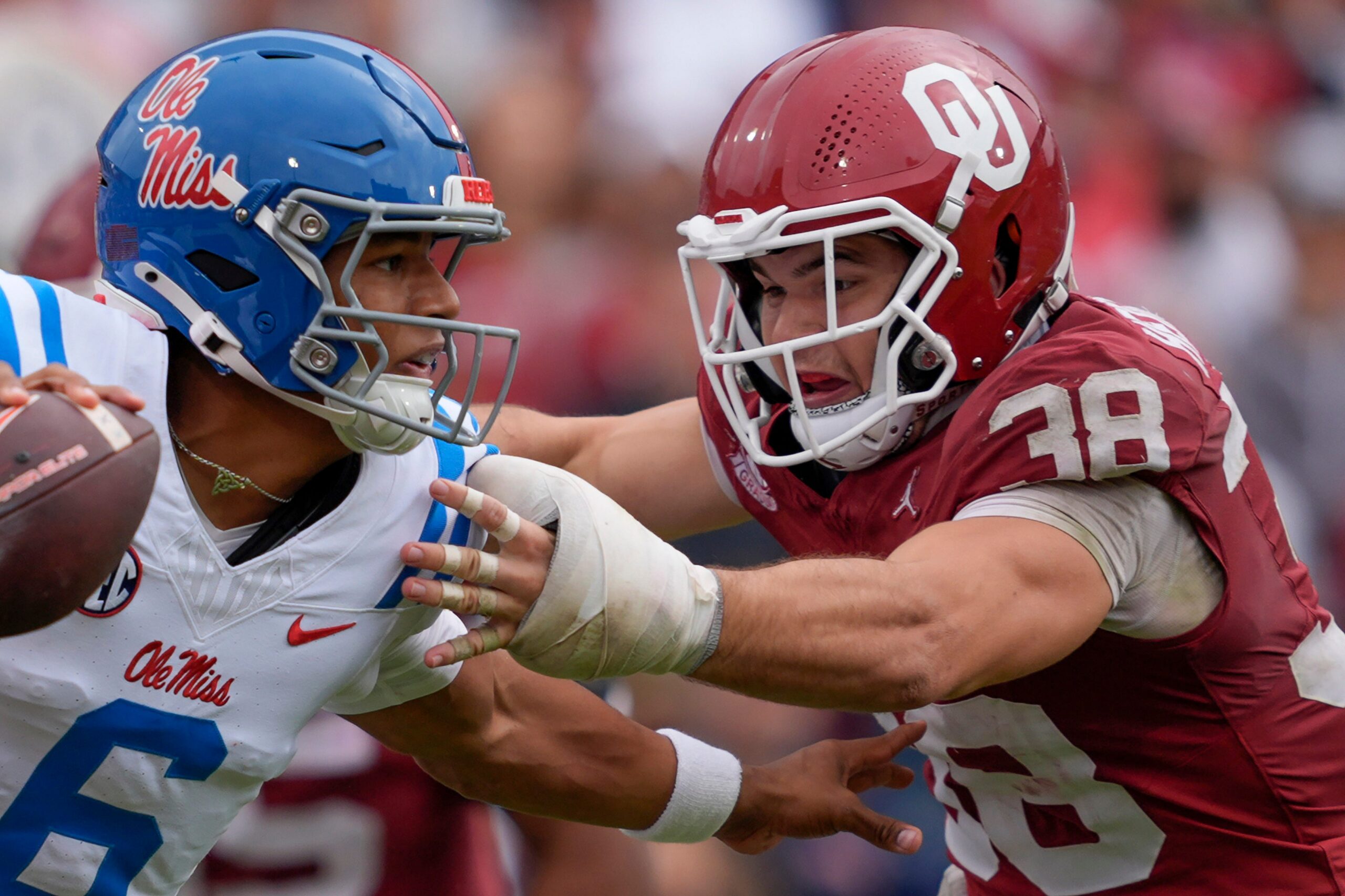
Oklahoma Sooners linebacker Owen Heinecke (38) runs after Ole Miss Rebels quarterback Trinidad Chambliss (6) during a college football game between the University of Oklahoma Sooners (OU) and the Ole Miss Rebels at Gaylord Family-Oklahoma Memorial Stadium in Norman, Okla., Saturday, Oct. 25, 2025. Ole Miss won 34-26.
The ripple hits players who aren’t quarterbacks even harder. If a $4 million college QB takes a pay cut to go pro, imagine what happens to offensive linemen and linebackers whose NIL deals were smaller but still exceeded late-round rookie money. Some players are already delaying the draft to maximize college earnings, and agents are openly strategizing around the gap. Schools committing tens of millions annually to talent retention are reshaping roster decisions league-wide. The NFL’s developmental pipeline, which relied on players rushing toward professional paychecks, now competes with campuses that can match or beat them.
The New Rule, Not the Exception
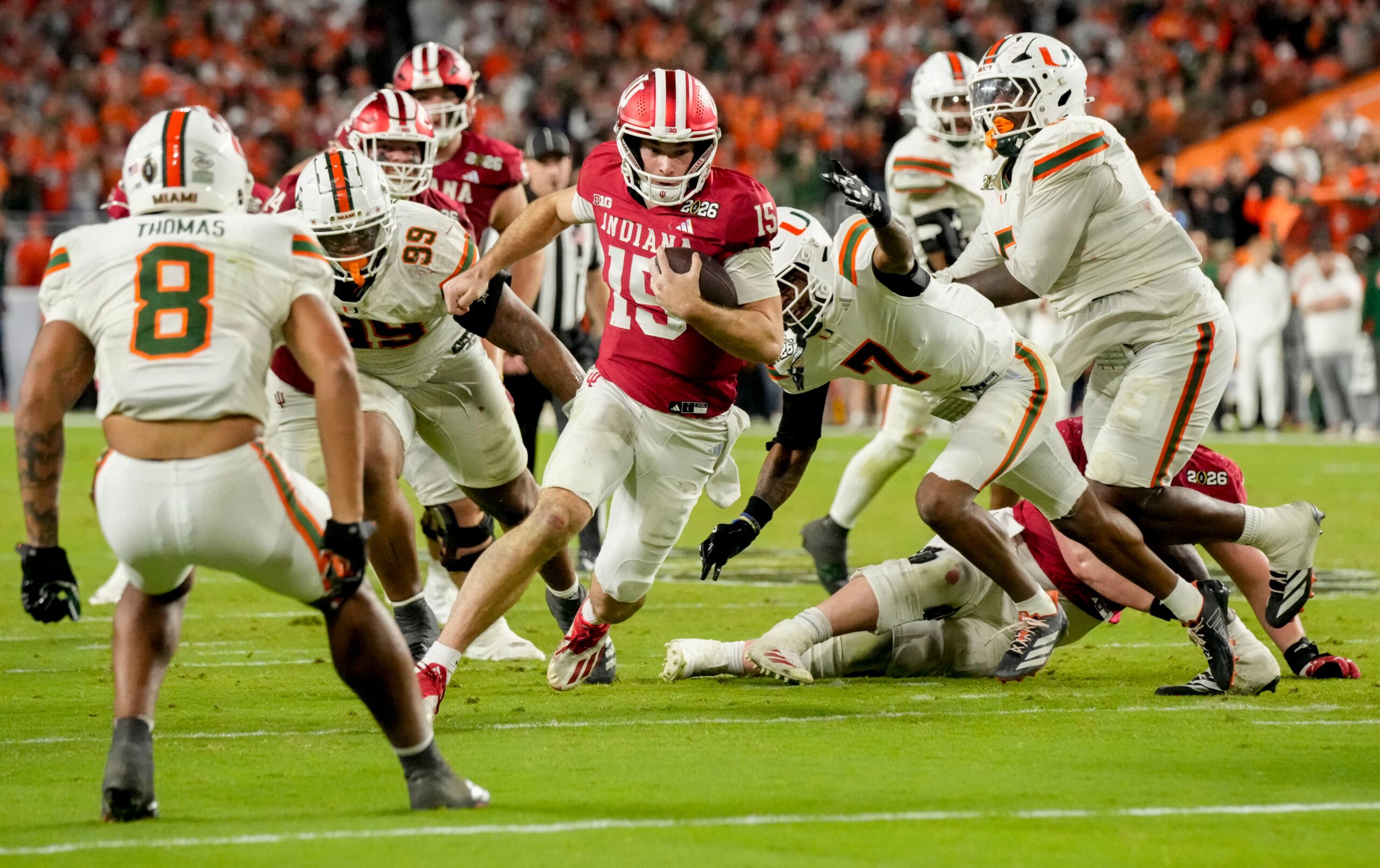
Indiana Hoosiers quarterback Fernando Mendoza (15) rushes into the end zone for a touchdown Monday, Jan. 19, 2026, during the College Football Playoff National Championship college football game against the Miami (FL) Hurricanes at Hard Rock Stadium in Miami Gardens.
This isn’t a quirk. The House settlement institutionalized large, school-funded payments on top of NIL, and the pool of quarterbacks who can command $4 million packages keeps growing while the rookie scale hasn’t changed in structure. One analyst put it bluntly: the old model “died when college quarterbacks started earning more than NFL draft picks.” Once you see that the pay inversion is baked into two competing systems with no mechanism to reconcile them, every future draft class looks the same. The exception became the baseline.
The Draft as a Gamble
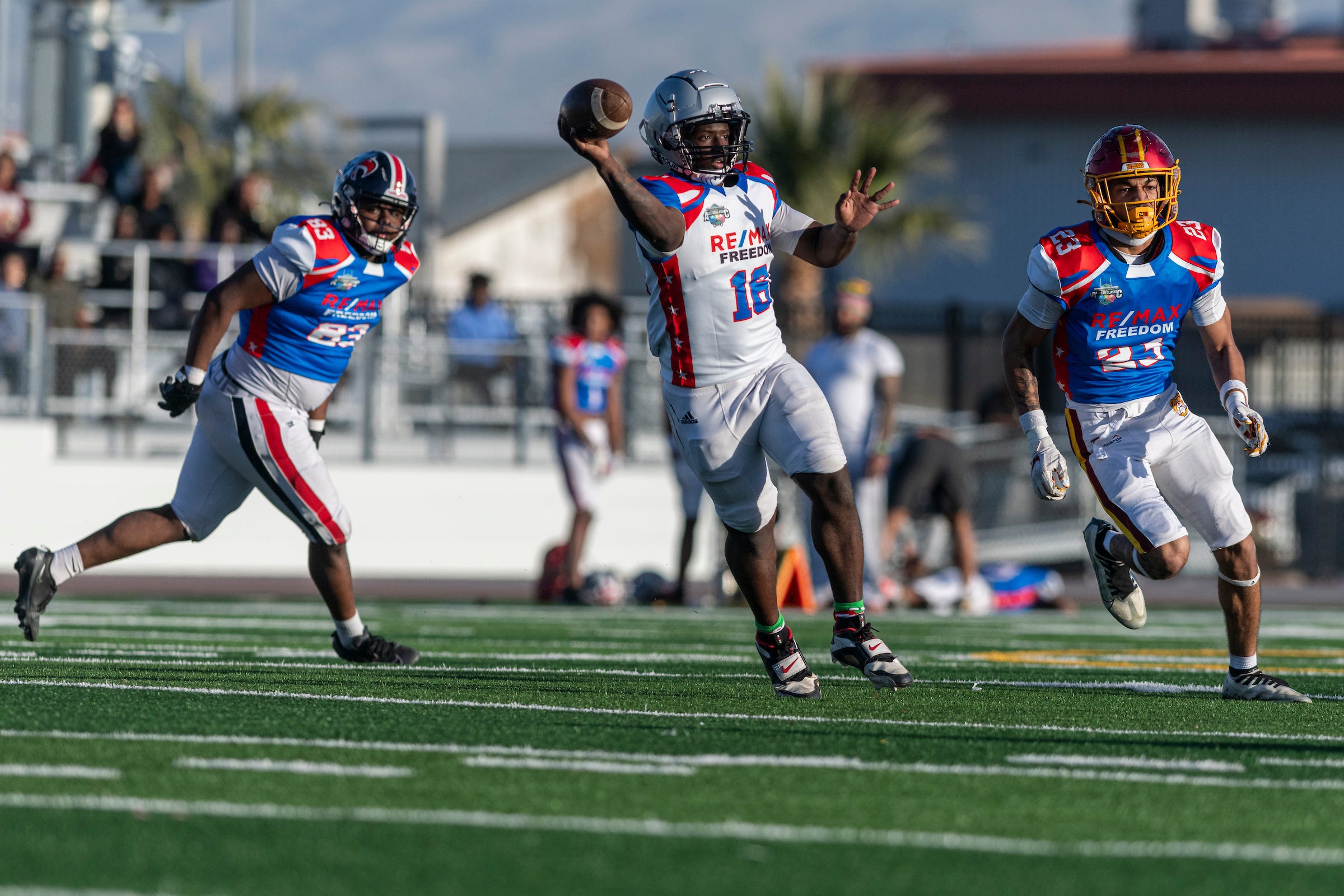
Granite Hills quarterback Aamir Snead throws a pass against the Antelope Valley during the HD All-Star Classic football game at Victor Valley College on Saturday, Jan. 24, 2026. The Victor Valley won 34-28.
Players entering the 2026 draft know the math. Some will never recoup the millions they left on the table by leaving campus early. The AP reported that some players drafted this year are functionally “taking a pay cut” to join the NFL. That phrase alone would have been absurd five years ago. Now it describes a growing slice of elite passers whose journey goes from $4 million on campus to a wage-scale slot closer to $915,000 than a generational windfall. The draft used to be the finish line. Now it looks more like a leap of faith.
The Question Nobody Will Answer
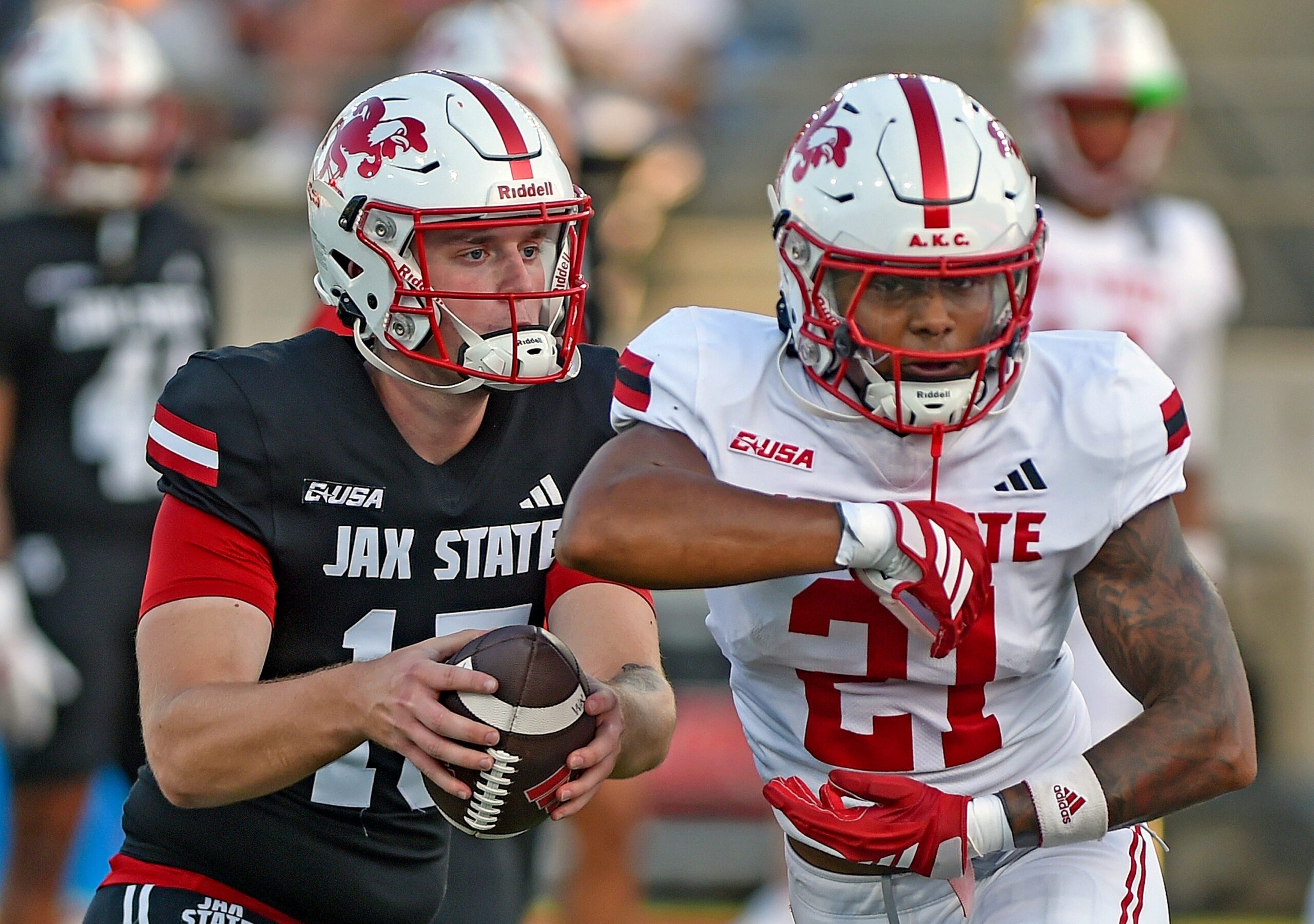
Jax State quarterback Jack Moran fakes a handoff during spring college football action at AmFirst Stadium in Jacksonville, Alabama April 16, 2025. (Dave Hyatt / Hyatt Media LLC)
Here is what most fans still haven’t absorbed: the dollars themselves are real, but the hierarchy they create, $4 million in college, $915,000 in the pros, doesn’t add up to the story football has sold players for decades. Knowing that changes how you watch every draft pick shake the commissioner’s hand. The smart money says a quarterback will eventually turn down the NFL entirely and stay in college for the paycheck. When that happens, remember the numbers were already screaming it before anyone was willing to listen. Would you stay in college for $4 million or bet on yourself in the NFL? Tell us where you’d draw the line.