

Free agency is two weeks away, and half the league is about to find out if their front office knows the difference between spending money and lighting it on fire. For the first time ever, teams are working with more than $300 million per club, a number that would’ve sounded like monopoly money back in 2016 when the cap sat below $156 million. The league is about to spend close to $10 billion on players this year, and ten teams are sitting on serious war chests heading into the March 9 tampering period. Some of them are going to build contenders; others are going to become punchlines. Who’s got the cash, and who’s smart enough to use it?
1. Tennessee Titans: The NFL’s New Cash Kings
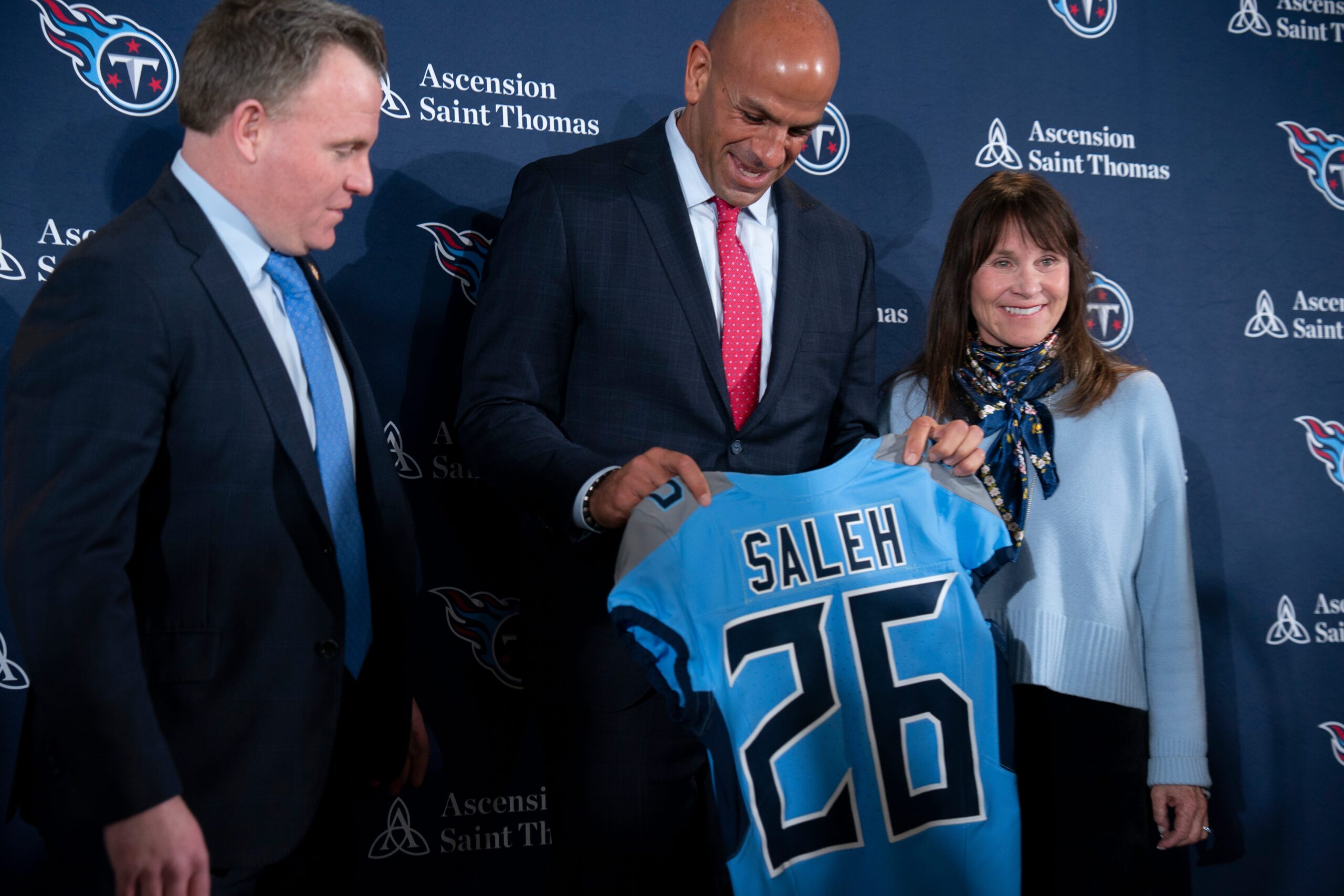
Tennessee Titans general manager Mike Borgonzi, left, new head coach Robert Saleh, center, and owner Amy Adams Strunk stand for portraits after the new head coach’s introductory press conference at Ascension Saint Thomas Sports Park in Nashville, Tenn., Thursday, Jan. 29, 2026. Mandatory Credit: DENNY SIMMONS-Imagn Images
The Titans walk into 2026 with more than $104 million in projected cap space, the most money in football, and enough to chase multiple top-tier starters in one offseason. That kind of firepower makes them the league’s undisputed spending champion before a single contract gets signed. The problem? This is a 3–14 roster that tore everything down to the studs. Tennessee needs help at receiver, corner, edge rusher, both offensive and defensive lines, basically everywhere that matters. The front office can afford to be aggressive; whether they’re smart about it is the bigger question. The Patriots showed how to turn cap space into wins last year. The Giants showed how to turn it into regrets. Tennessee’s about to show which path they’re taking.
2. Las Vegas Raiders and Los Angeles Chargers: West Coast War Chests
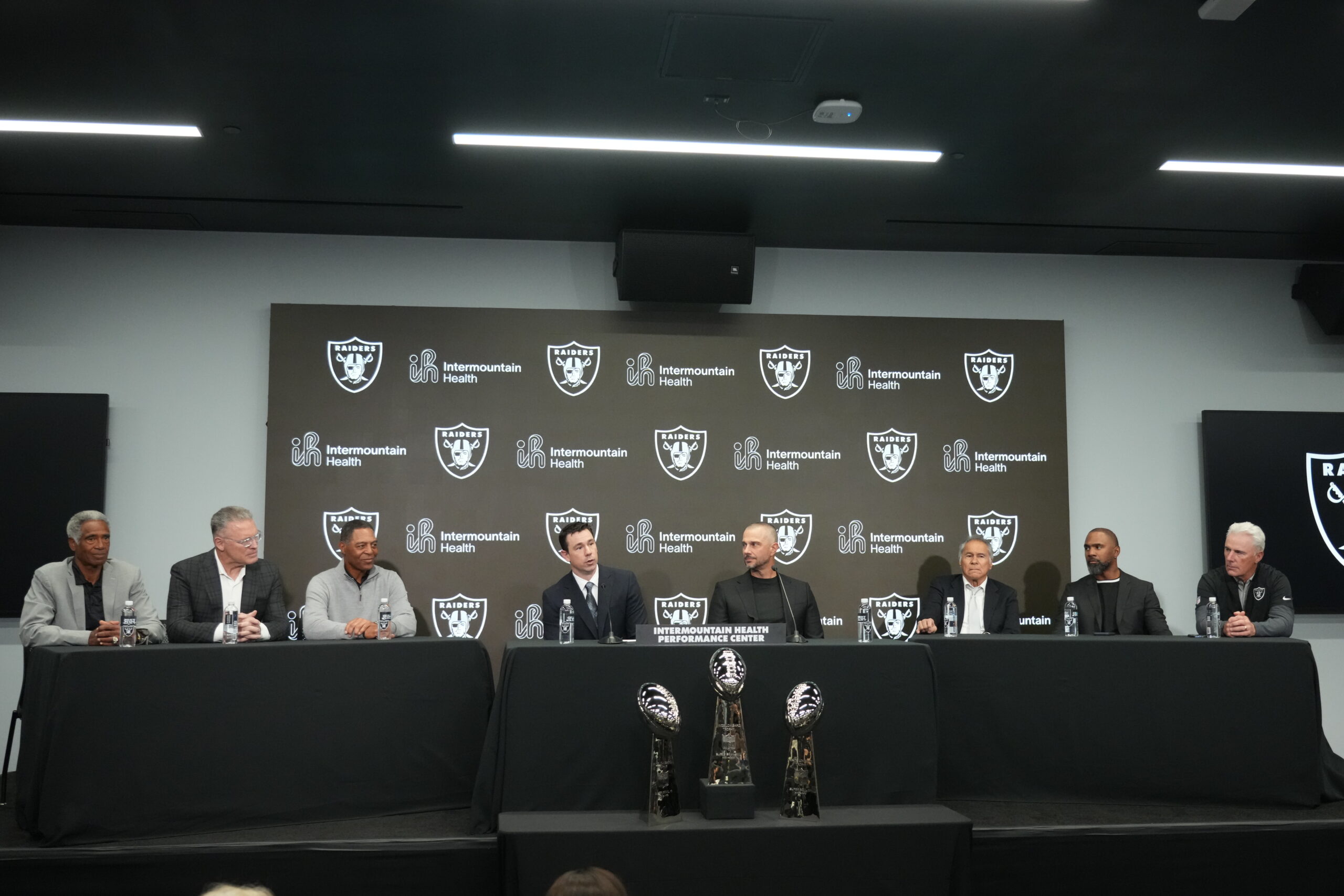
Feb 10, 2026; Henderson, NV, USA; Las Vegas Raiders coach Klint Kubiak speaks at introductory press conference at Intermountain Health Performance Center. Mandatory Credit: Kirby Lee-Imagn
Las Vegas sits at number two with more than $91 million in projected cap space, while the Chargers hold the third spot at roughly $83 million, giving both West Coast franchises clearance to shop in every premium aisle. The Raiders can chase a pass rusher, add offensive line depth, bring in veteran quarterback insurance, and still have room left over for midseason additions. Their fans are tired of watching January football from the couch. The Chargers might be the quietest threat in this entire conversation as they’re pairing that flexibility with a young quarterback on a rookie contract, the exact formula that turns good rosters into championship rosters. Los Angeles can go hard after a true number-one receiver, reinforce both lines, add secondary depth, and still keep powder dry for in-season moves. Most teams don’t get this kind of window. Once the franchise quarterback hits his second contract, the financial freedom evaporates. Both teams have the cash.
3. New York Jets and Washington Commanders: East Coast Money, East Coast Pressure
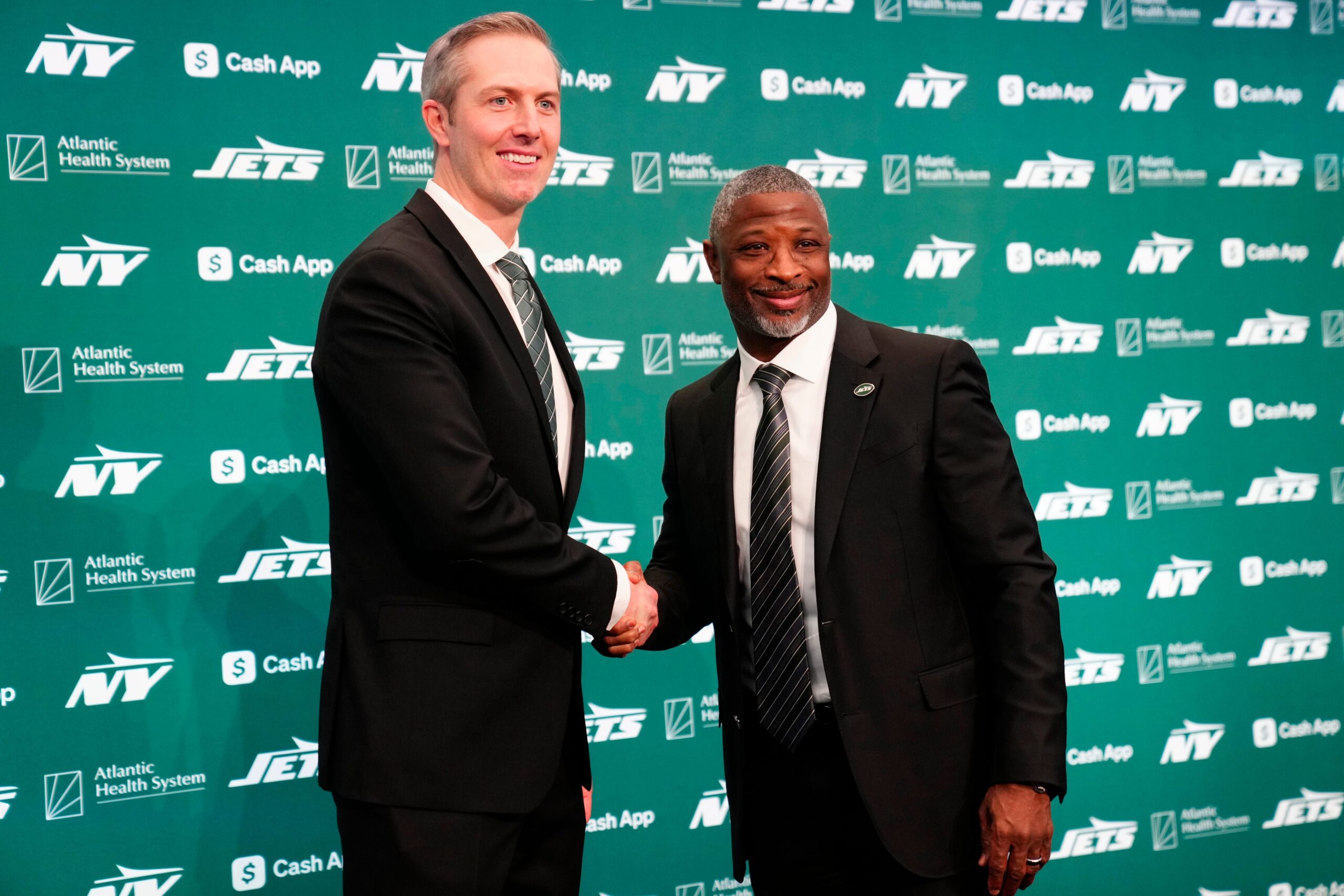
New York Jets General Manager Darren Mougey and Jets Head Coach Aaron Glenn, shake hands as they pose for the press, at the Atlantic Health Jets Training Center, Monday, January 27, 2025, in Florham Park. Mougey and Glenn were introduced to the press in their new positions for the first time. Mandatory Credit: Kevin R. Wexler-Imagn Images
The Jets enter 2026 with roughly $80 million in projected cap space, while the Commanders sit fifth league-wide in the mid-70s, putting both East Coast franchises in the top five with enough firepower to rebuild entire position groups in one offseason. New York has watched this movie play out twice in the past year with completely opposite endings. New England spent aggressively across nearly two dozen free-agent signings and went from a four-win season to the Super Bowl. The Giants spent heavily and landed right back at 4–13. The Jets are now standing at the same crossroads with the same decision: swing smart or swing loud. Washington’s cap flexibility comes with a young roster that needs reinforcements everywhere, giving them a chance to build around their core without the burden of massive veteran contracts eating up the budget.
4. Seattle Seahawks: Defending Champions with Room to Reload
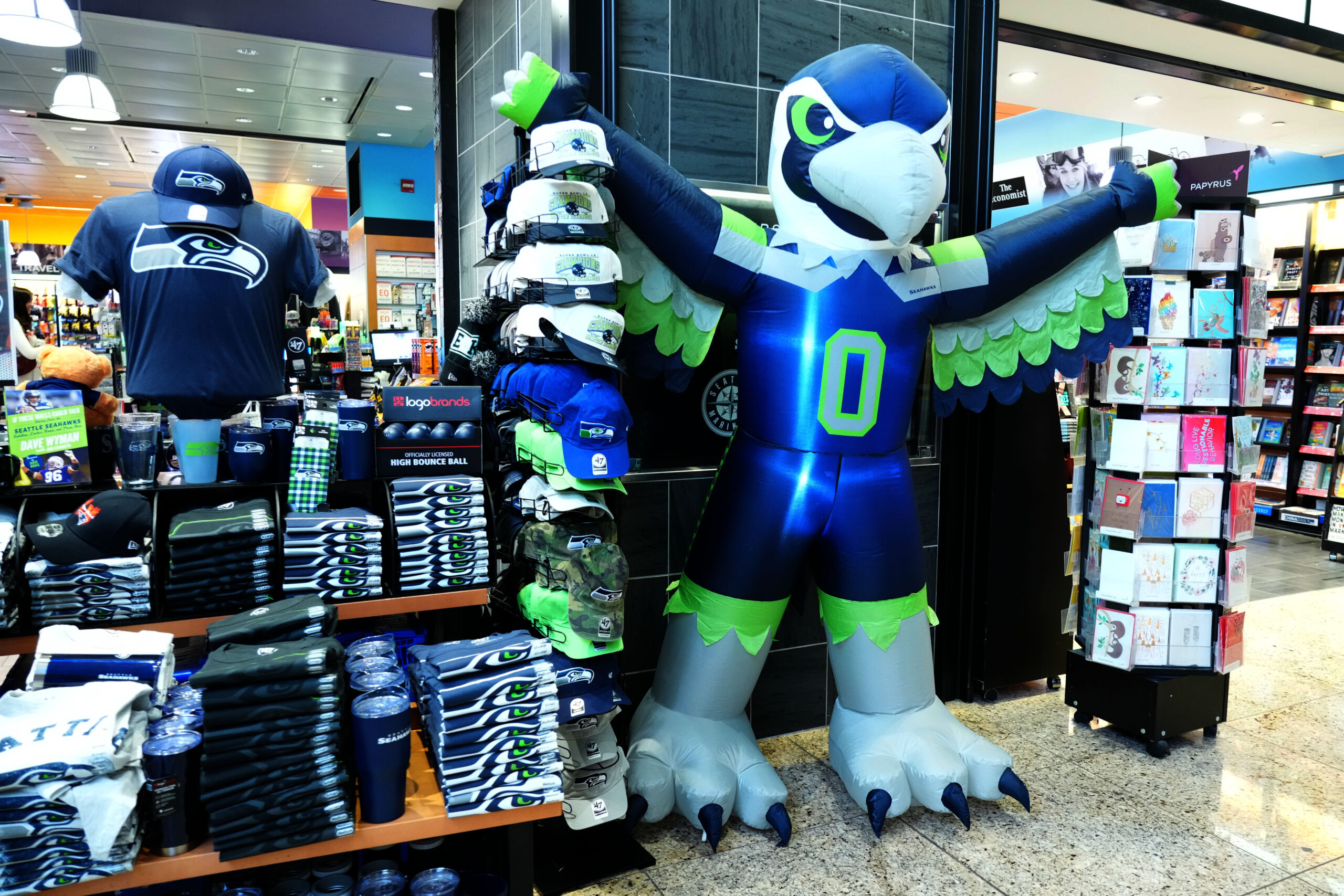
Feb 11, 2026; Seattle, WA, USA; A Seattle Seahawks Super Bowl LX champions merchandise display with replica mascot Blitz at he Hudson store at the Seattle-Tacoma International Airport. Mandatory Credit: Kirby Lee-Imagn Images
Seattle enters the offseason with one of the league’s healthiest balance sheets, projected in the mid-60s to low-70s in cap space and sitting firmly in the top tier around sixth in most 2026 cap-space rankings. That gives head coach Mike Macdonald serious flexibility to keep building around a roster that just lifted the Lombardi in Super Bowl LX. The Seahawks pulled off one of the league’s most impressive coaching transitions, moving from Pete Carroll’s long tenure to Macdonald’s modern approach without falling out of contention. That championship run proved the core is legitimate, and now they’ve got the financial runway to keep the window open. Seattle can retain key free agents, add depth across the roster, and still have room for opportunistic moves when the market shakes out.
5. New England Patriots and New York Giants: Same Money, Opposite Fates
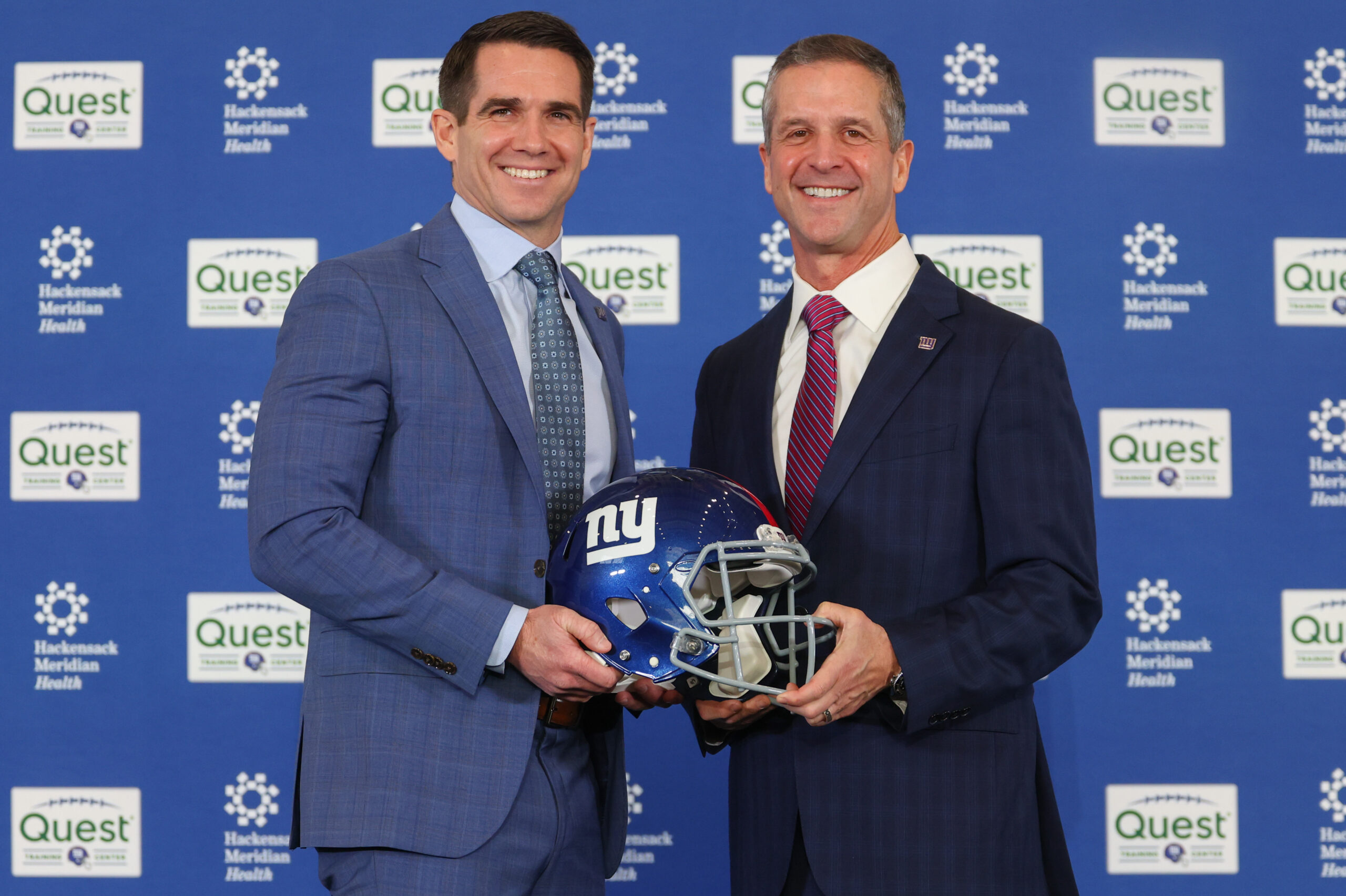
Jan 20, 2026; East Rutherford, NJ, USA; New York Giants general manager Joe Schoen and head coach John Harbaugh pose after the press conference announcing Harbaughís hiring at Quest Diagnostics Training Center. Mandatory Credit: Ed Mulholland-Imagn Images
If you’re looking for proof that cap space alone doesn’t determine success, look at what these two franchises just pulled off in 2025. The Patriots led the league in cap room heading into last offseason and decided to go all-in, making nearly two dozen free-agent signings headlined by names like Stefon Diggs, Harold Landry, Robert Spillane, Carlton Davis, and Milton Williams. They paired that spending spree with a strong draft and went from a four-win season to double-digit victories and a Super Bowl trip. Drake Maye’s development played a huge role, but the front office gave him the pieces to succeed instead of hoping he’d carry a skeleton crew. The Giants also opened 2025 with serious cap room and spent heavily trying to drag themselves into relevance, only to stumble to another 4–13 finish. New England heads into 2026 still in positive cap territory with room to keep building, while the Giants are squeezed near the cap line with only a few million to work with. Both spent big. Only one got what it paid for.
6. Kansas City Chiefs: Dynasty in Cap Hell
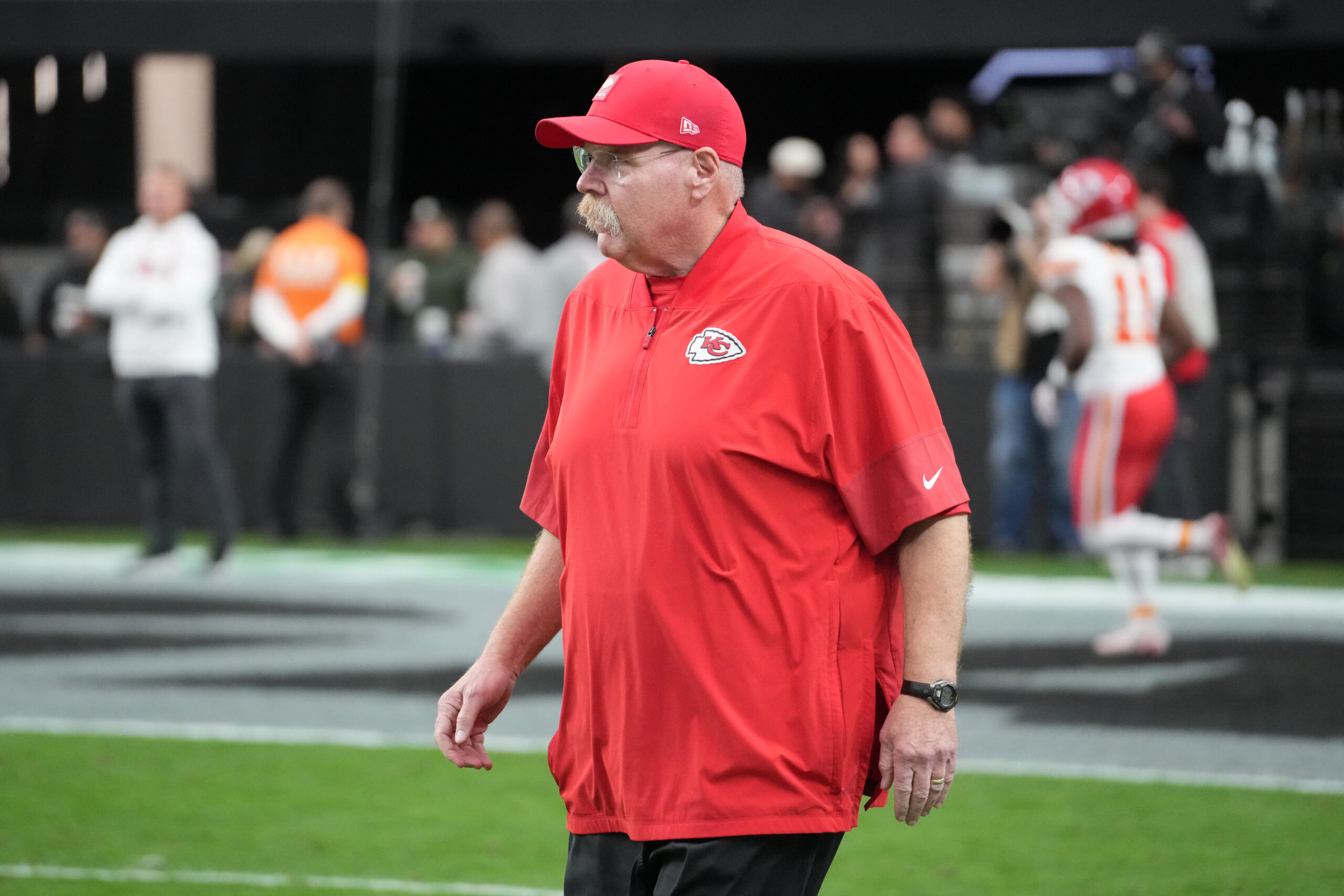
Jan 4, 2026; Paradise, Nevada, USA; Kansas City Chiefs head coach Andy Reid reacts during the game against the Las Vegas Raiders at Allegiant Stadium. Mandatory Credit: Kirby Lee-Imagn Images
No team makes less sense on paper than the Kansas City Chiefs. They enter the 2026 offseason roughly $55 million over the projected cap, dead last in the league, with Patrick Mahomes alone carrying a projected cap hit in the high-70s and restructure models showing more than $40 million in potential savings if the deal is reworked. Kansas City has to slash, restructure, and juggle before the March 11 deadline when the new league year begins, and every veteran on the roster is suddenly wondering if they’re about to get the call. This is what cap hell looks like when you’ve actually been winning championships instead of tanking: big numbers, tough decisions, and a front office scrambling to find room. The Chiefs have proven they know how to manipulate the system and stay dangerous even when the math says they shouldn’t be able to field a team.
7. Dallas Cowboys and Minnesota Vikings: Star Power, Heavy Bills

Feb 5, 2026; San Francisco, CA, USA; Dallas Cowboys owner Jerry Jones poses on the NFL Honors Red Carpet before Super Bowl LX at Palace of Fine Arts. Mandatory Credit: Kirby Lee-Imagn Images
Dallas and Minnesota are living in the same uncomfortable zip code. The Cowboys are projected to be around $30 million over the 2026 cap, and most projections have the Vikings even deeper in the red, in the high-40s to low-50s range, putting both franchises among the three worst cap situations in football. The common thread is heavy money tied up in cornerstone players—quarterbacks and stars who eat massive chunks of the budget, leaving little room to fill out the roster. About a third of teams league-wide are currently projected in negative cap territory, but Dallas and Minnesota are at the deep end of that pool with less room to maneuver. Their path to being “big spenders” doesn’t start with new signings. It starts with cuts, restructures, and deciding which core players are worth investing in and which are about to be looking for new teams.
The Broke Champions and the Cash-Rich Rebuilds

Feb 11, 2026; Seattle, WA, USA; Seattle Seahawks wide receiver Jaxon Smith-Njigba (11) interacts with fans during the Super Bowl LX World Champions parade in downtown Seattle. Mandatory Credit: Steven Bisig-Imagn Images
The wildest part of the 2026 cap landscape is how backwards everything looks. The Chiefs are sitting tens of millions over the cap and still being talked about as the team nobody wants to see in January. The Seahawks just won Super Bowl LX and still have room to spend because they built smart. Meanwhile, the Titans have more than $100 million sitting in the bank after going 3–14, and the Raiders and Chargers are flush with cash despite limited recent postseason success. Roughly a third of the league is projected underwater, and most of those teams are the ones that actually competed for something last season. The salary cap was supposed to create parity, but it has also created a system in which success is punished with financial handcuffs while failure is rewarded with spending money.
March 9 Separates the Smart from the Desperate
NBC’s NFL play-by-play announcer Mike Tirico, left, speaks with NFL Commissioner Roger Goodell during an NFL Draft press preview on Wednesday, Jan. 17, 2024 at Ford Field in Detroit. Mandatory Credit: Mandi Wright-Imagn Images
The legal tampering period opens at noon Eastern on March 9 and runs through March 11 at 4 p.m. Eastern, when the new league year officially begins. Between now and then, ten teams with serious financial firepower will show whether they understand the difference between spending and building. The Titans, Raiders, Chargers, Jets, Commanders, and Seahawks have the money to reshape their rosters in one offseason. The question is whether they’re chasing the right players for the right reasons or just making headlines with big-name signings that don’t fit. The Chiefs, Cowboys, and Vikings have to cut veterans, restructure contracts, and make painful decisions before they can even think about adding talent. Over the next two weeks, the league’s about to find out which front offices learned the right lesson from 2025.
If you enjoyed this article please like and follow us here on MSN! Thank you for reading and have a great day!
Sources:
NFL projects a 2026 salary cap in the range of $301M to $305M – USA Today
NFL Teams Ranked by Cap Space Heading Into 2026 Free Agency – Sports Illustrated
Sources: Stefon Diggs agrees to 3-year, $69M deal with Patriots – ESPN
How the Chiefs will find 2026 salary cap space before March 11 – Arrowhead Pride
NFL Salary Cap Space – Over The Cap
Key NFL offseason dates for 2026 – CBS Sports