
The NFL has always celebrated offense. Quarterbacks get the magazine covers. Wide receivers get the shoe deals. Running backs get the highlight reels narrated in slow motion. The players who actually changed the architecture of professional football? Most of them played defense. Across more than a century of pro football, a small fraternity of defenders hit so hard, rushed so violently, and dominated so completely that the league had no choice but to rewrite its own rulebook to contain them. Some had their signature moves formally banned. Others forced entire positions to be reimagined and repriced. What connects them isn’t just talent. It’s fear. The kind of fear that makes a general manager rethink his entire draft board, that makes an offensive coordinator redesign his playbook overnight, that makes a left tackle worth more than most quarterbacks on the roster. These are the 10 NFL legends who were so terrifying that the league literally outlawed their dominance.
1. Dick Butkus Played Like He Took the Game Personally
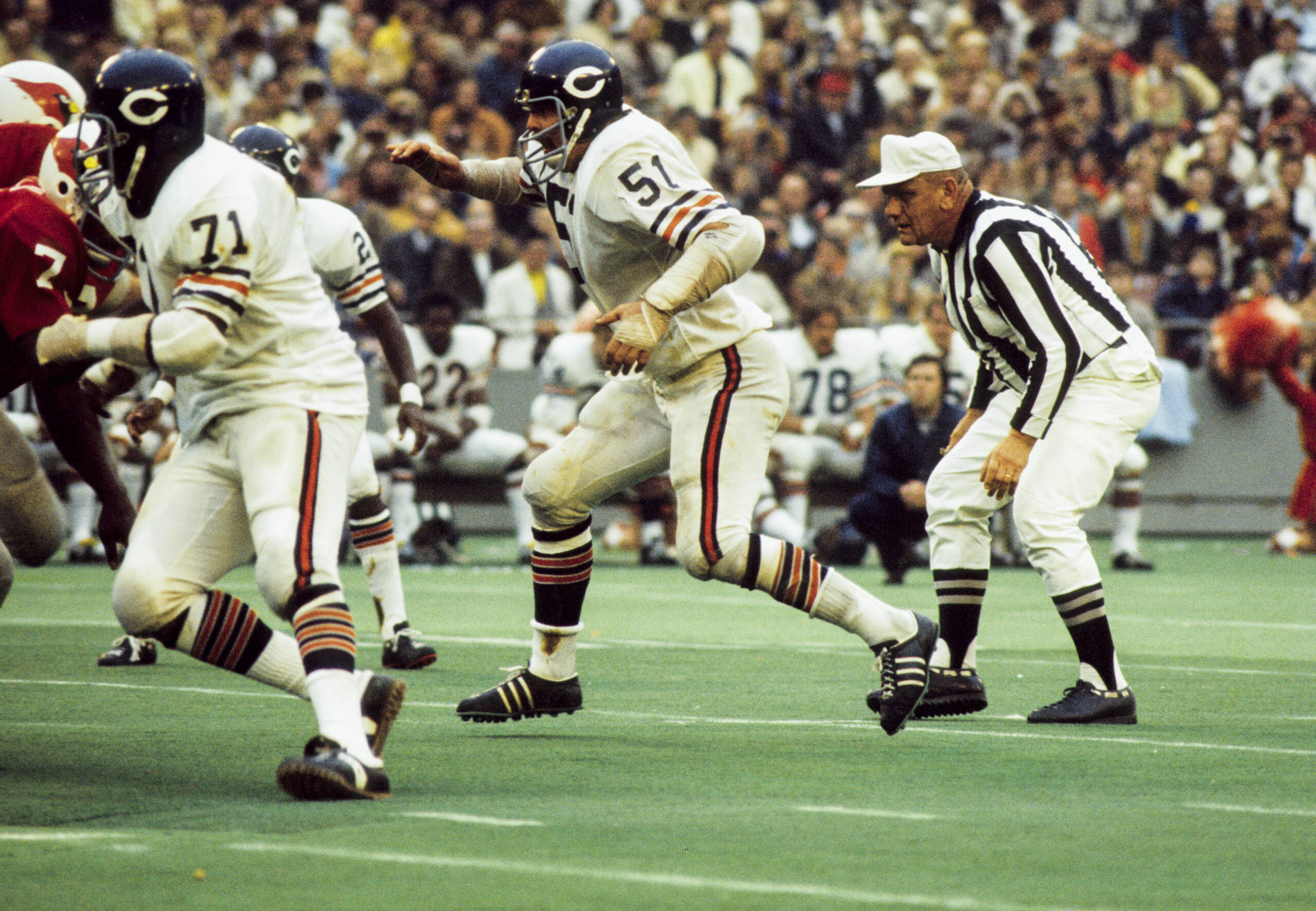
Oct 29, 1972; St. Louis, MO, USA; FILE PHOTO; Chicago Bears defensive players Dick Butkus (51) and Tony McGee (71) in action against the St. Louis Cardinals at Busch Stadium. Mandatory Credit Herb Weitman-Imagn Images
Dick Butkus played middle linebacker for the Chicago Bears from 1965 to 1973 with a ferocity that transcended scheme or strategy. He hit harder, read plays faster, and terrified opponents more thoroughly than anyone in his era. Going across the middle against Butkus was considered a career-threatening decision. He never won a championship with those Bears teams, but his impact was structural; he established the template for what a middle linebacker could be when raw violence met elite football intelligence. Giants GM George Young later used Butkus as the ultimate measuring stick when scouting Lawrence Taylor.
2. Night Train Lane’s Tackle Was So Vicious They Named It After a Noose
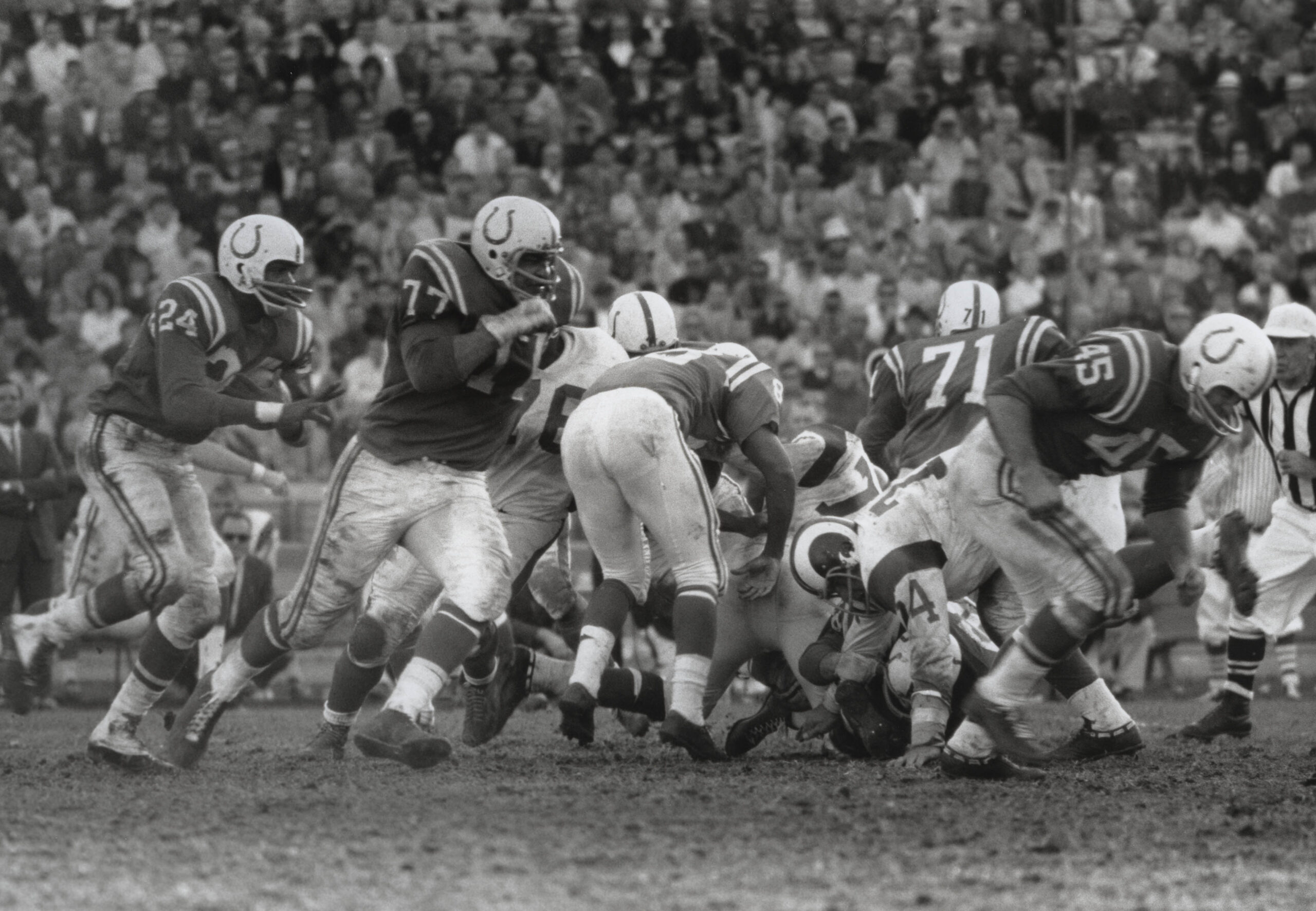
Dec 18, 1965; Los Angeles, CA, USA; FILE PHOTO; Baltimore Colts running back Lenny Moore (24 ) carries the ball against the Los Angeles Rams at Los Angeles Memorial Coliseum during the 1965 season. Mandatory Credit: David Boss-Imagn Images
Dick “Night Train” Lane walked into Rams camp in 1952 as an undrafted free agent and immediately set the NFL’s single-season interception record with 14 picks in just 12 games—a mark that still stands more than 70 years later. But Lane’s real terror was physical. His signature clothesline-style hit, known as the “Night Train Necktie,” targeted ball carriers around the head and neck with such violence that the league eventually outlawed the technique entirely. His 68 career interceptions still rank among the most in NFL history.
3. Ronnie Lott Chose Amputation Over Missing a Game
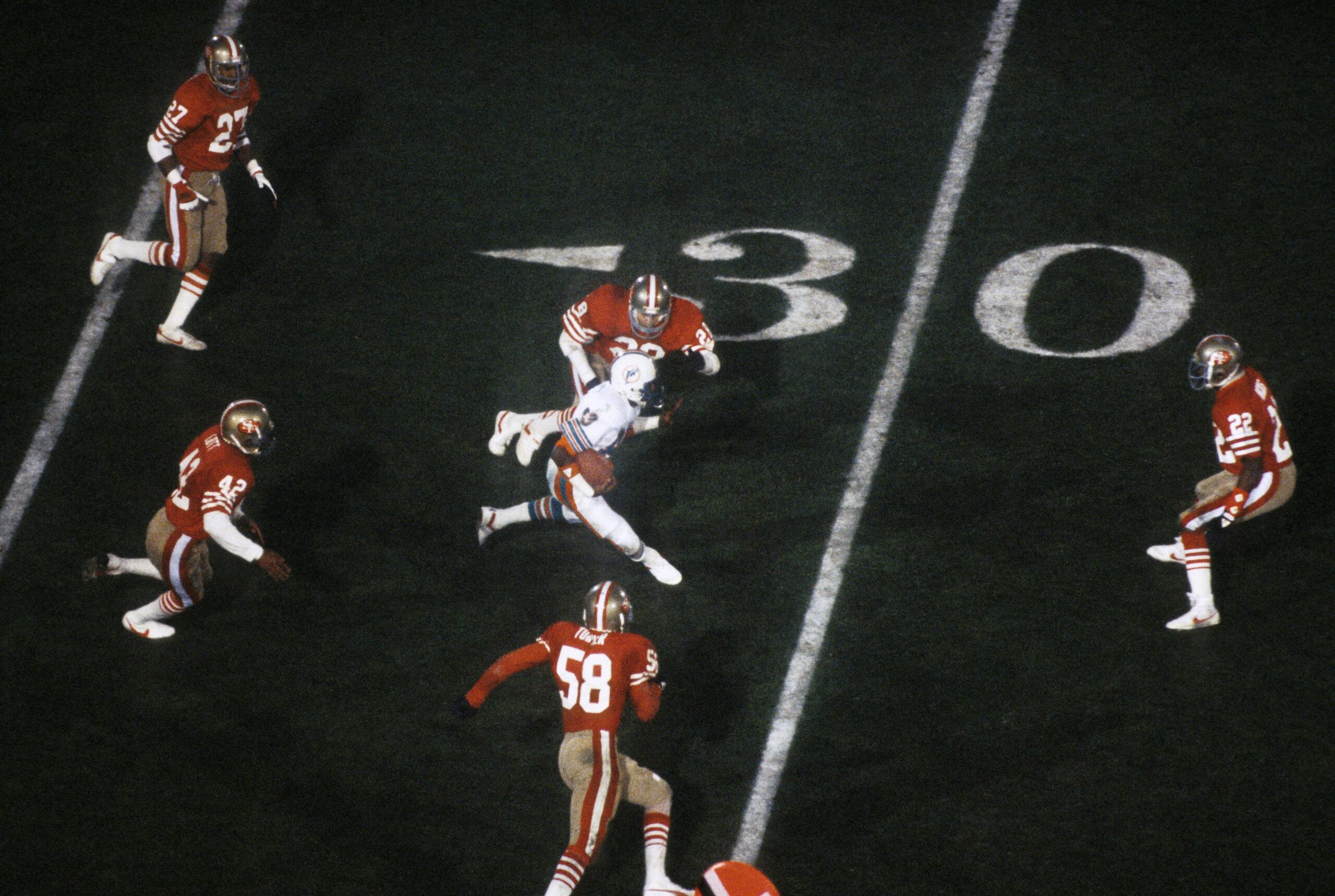
Jan 20, 1985; Stanford, CA, USA; FILE PHOTO; Miami Dolphins receiver Mark Clayton (83) runs with the ball against San Francisco 49ers defenders Tom Holmoe (28), Keena Turner (58), Ronnie Lott (42) and Dwight Hicks (22) during Super Bowl XIX at Stanford Stadium. The 49ers defeated the Dolphins 38-16. Mandatory Credit: Manny Rubio-Imagn Images
Ronnie Lott won four Super Bowls with the San Francisco 49ers and played safety with a recklessness that bordered on self-destruction. After a tackle crushed his left pinky finger during the 1985 season, Lott chose to have the tip amputated rather than undergo surgery and recovery that would have sidelined him. That decision alone tells you everything about his approach to the sport. Lott finished his career with 63 interceptions, ten Pro Bowl selections, and a reputation that made crossing routes over the middle feel like a health risk.
4. Jack Lambert Made Intimidation a Defensive System
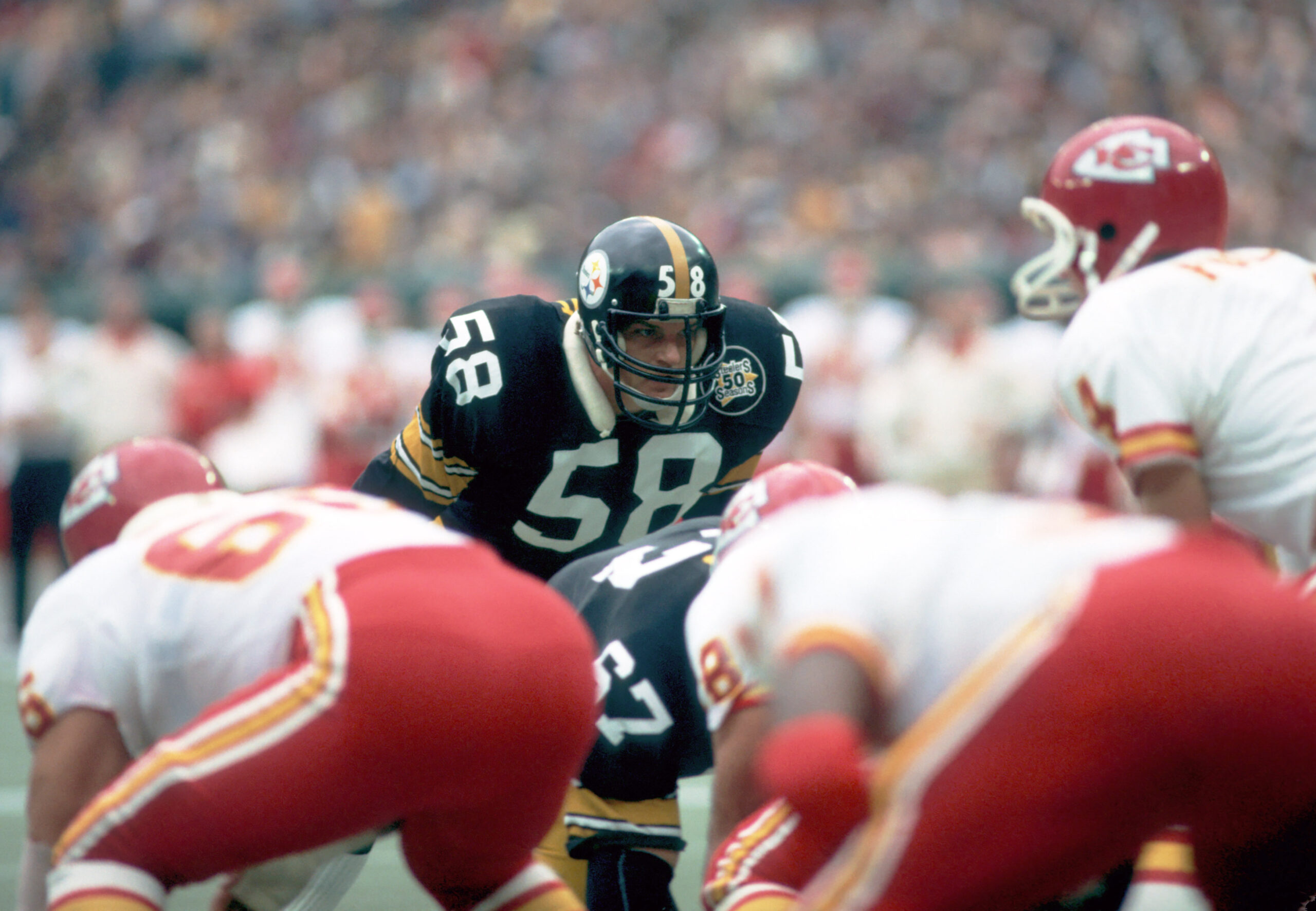
Dec 5, 1982; Pittsburgh, PA, USA; FILE PHOTO; Pittsburgh Steelers linebacker #58 JACK LAMBERT in action against the Kansas City Chiefs at Three Rivers Stadium. The Steelers defeated the Chiefs 35-14. Mandatory Credit: Photo By Malcolm Emmons-Imagn Images © Copyright Malcolm Emmons
Jack Lambert was the emotional detonator at the center of Pittsburgh’s four Super Bowl–winning defenses. The middle linebacker played with a toothless snarl and a fury that unnerved teammates as much as opponents. Joe Greene—himself one of the most feared men in NFL history—reportedly said Lambert was “so mean he doesn’t even like himself.” Lambert’s intimidation translated directly into outcomes: 1976 NFL Defensive Player of the Year, nine Pro Bowls, and a presence in the middle that made the Steelers’ Stunt 4-3 work because offensive lines couldn’t account for both Greene’s angle and Lambert’s violence at the same time.
5. Mel Blount Made Receivers Disappear—So the NFL Rewrote the Passing Game
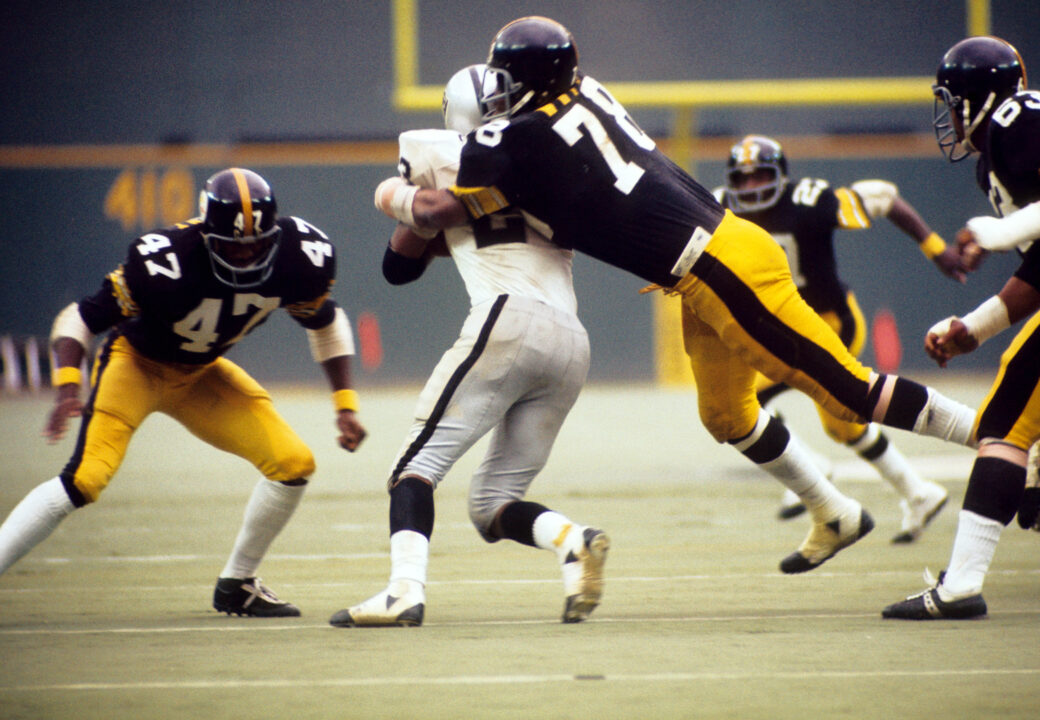
At 6’3″ and well north of 200 pounds, Mel Blount played cornerback like a linebacker. Before the 1978 rule changes, defensive backs could physically maul receivers all the way downfield, and nobody exploited that freedom like Blount. He led the league with 11 interceptions in 1975 and routinely erased opposing wideouts from the game. His physicality was so extreme that the NFL introduced the “Mel Blount Rule,” which restricted defenders to one bump within five yards of the line of scrimmage. That single rule change opened the floodgates for the modern passing era—5,000-yard seasons, spread offenses, and the air-attack game we watch today all trace a direct line back to Blount being too dominant to allow.
6. Reggie White Rushed the Passer—and Pioneered Free Agency
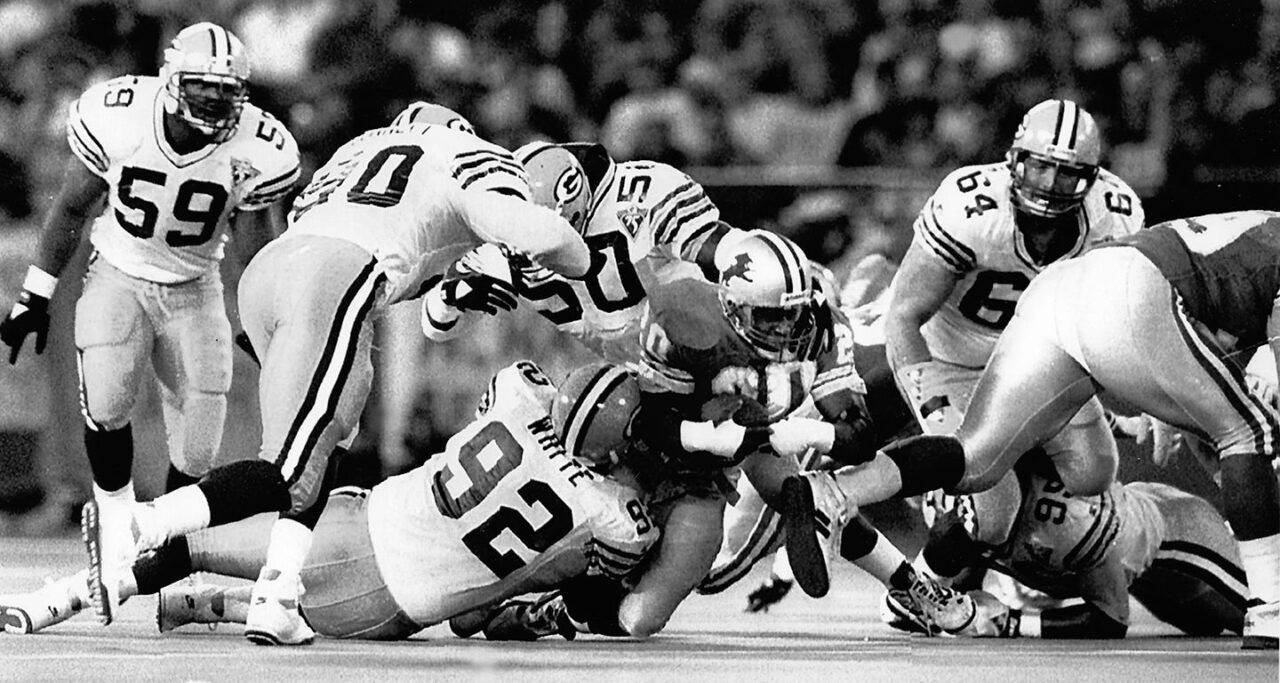
Reggie White retired with 198 career sacks, the most in NFL history at the time of his retirement, and a legacy that extended well beyond the field. The “Minister of Defense” recorded 21 sacks in the strike-shortened 1987 season, an absurd pace of 1.75 per game. But White’s off-field impact was equally seismic: his 1993 free-agent signing with the Green Bay Packers helped pioneer the modern era of free agency. He validated the investment by leading Green Bay to a Super Bowl XXXI victory, recording three sacks in the title game. At 6’5″ and 300 pounds, White combined power, speed, and hand technique in a way that made offensive coordinators redesign their protections around a single player.
7. Deacon Jones Invented the Head Slap—Then Got It Erased
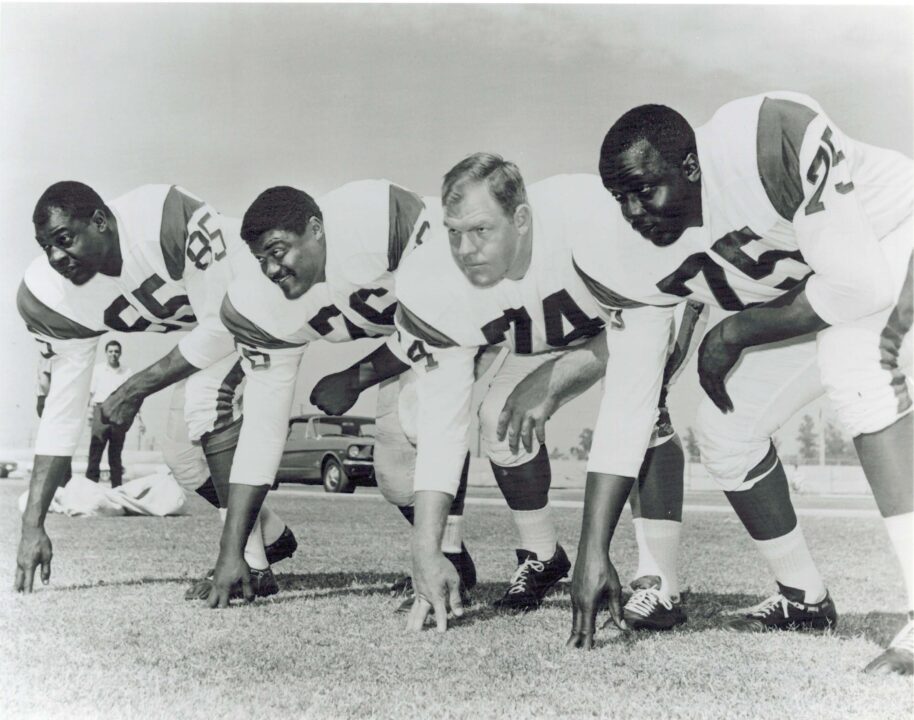
David “Deacon” Jones turned a simple open-hand strike into the most devastating pass-rush weapon the NFL had ever seen. His head slap stunned offensive linemen just long enough for Jones to blow past them and demolish the quarterback. He’s credited with coining the term “sack” and finished his career with an estimated 173.5 unofficial sacks. Jones once explained his logic with typical bluntness: the head slap was designed to “give myself an initial head start on the pass rush.” By 1977, the NFL formally banned the technique. Jones had already retired, but the carnage he left behind forced the league’s hand permanently.
8. Mean Joe Greene Tilted the Line—And Tilted the Entire League
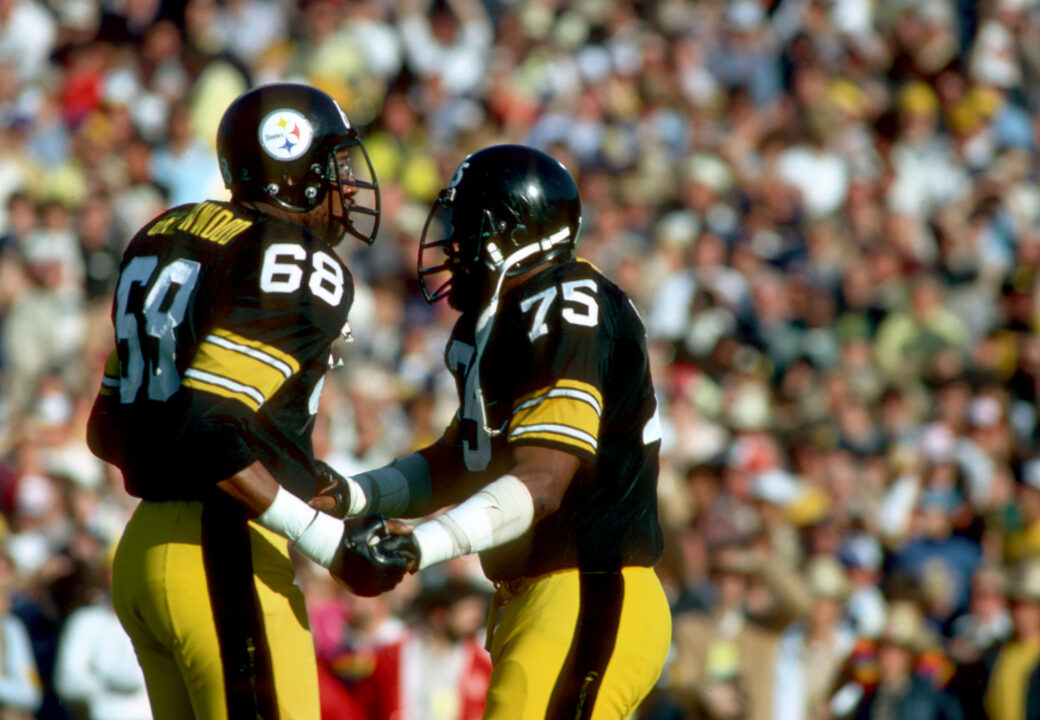
Joe Greene didn’t just play defensive tackle for the Pittsburgh Steelers. He reinvented the position. Alongside defensive line coach George Perles, Greene developed the “Stunt 4-3″—lining up at a 45-degree angle between the center and guard rather than head-up on a blocker. The geometric chaos it created was almost impossible to counter. The Steelers won four Super Bowls riding that scheme. Greene himself later admitted that many of his techniques, the head slap, hitting quarterbacks below the knee, and striking them in the head, wouldn’t survive a single quarter under modern rules. “So I don’t know,” Greene told reporters. “I really don’t know.”
9. Lawrence Taylor Didn’t Just Rush the Passer—He Created a Position’s Economy
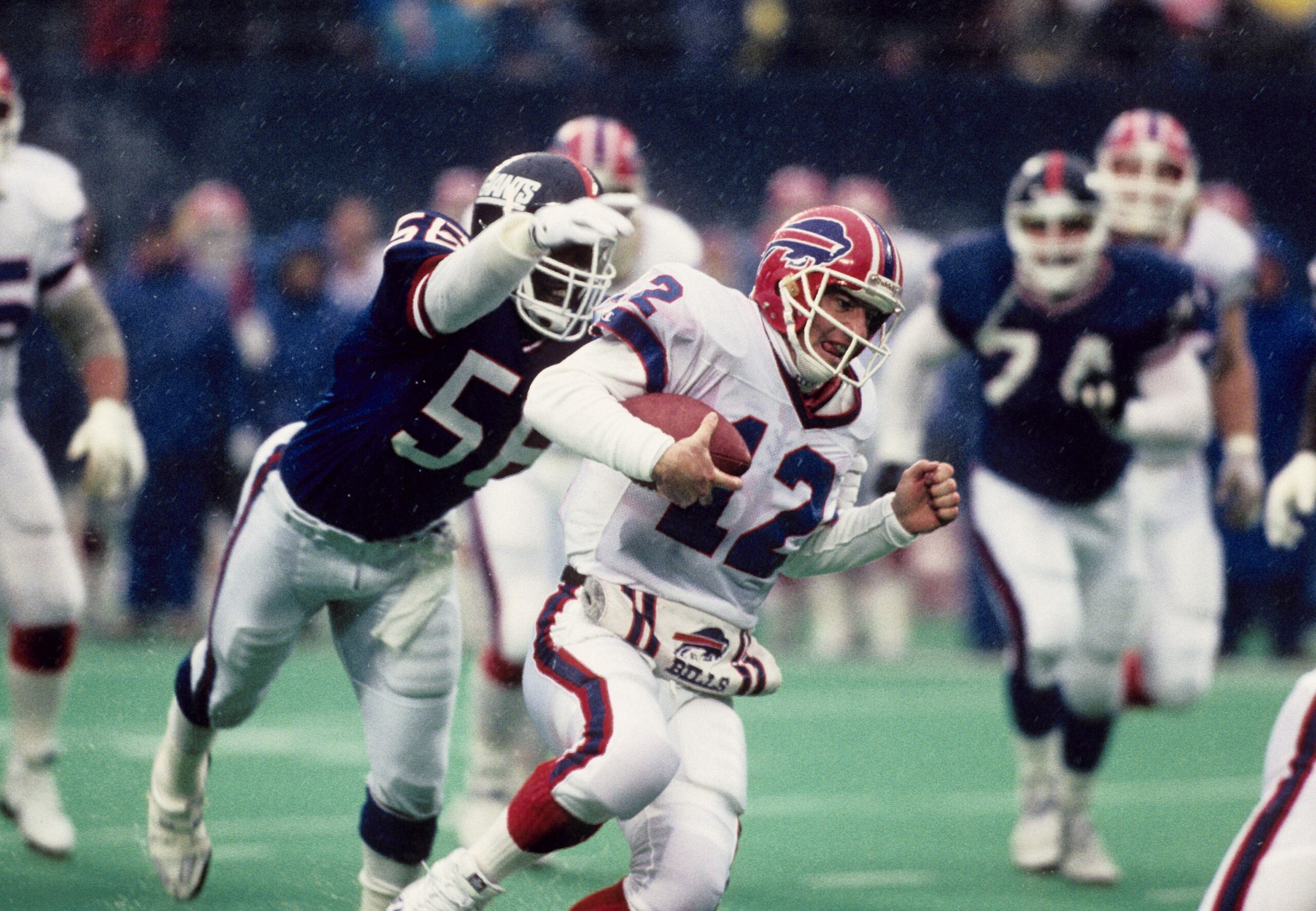
Dec 15, 1990; E. Rutherford, NJ, USA; FILE PHOTO; Buffalo Bills quarterback Jim Kelly (12) is tackled by New York Giants linebacker Lawrence Taylor (56) at Giants Stadium. The Bills defeated the Giants 17-12. Mandatory Credit: Imagn Images
Before Lawrence Taylor, left tackle was just another spot on the offensive line. After him, it became one of the highest-paid positions in professional sports. The Giants selected Taylor second overall in 1981 after GM George Young predicted he was “bigger and stronger than Butkus was” and “devastating on the blitz.” Taylor delivered immediately: 9.5 sacks as a rookie, Defensive Rookie of the Year, and Defensive Player of the Year, all in the same season. He peaked at 20.5 sacks in 1986 when he won league MVP, one of only two defensive players ever to earn that honor. As John Madden put it: “Lawrence Taylor, defensively, has had as big an impact as any player I’ve ever seen.” His blind-side speed forced every team in the league to invest premium draft picks and top-tier money in athletic left tackles, a market correction that persists today.
10. Aaron Donald Proved the Pattern Still Holds
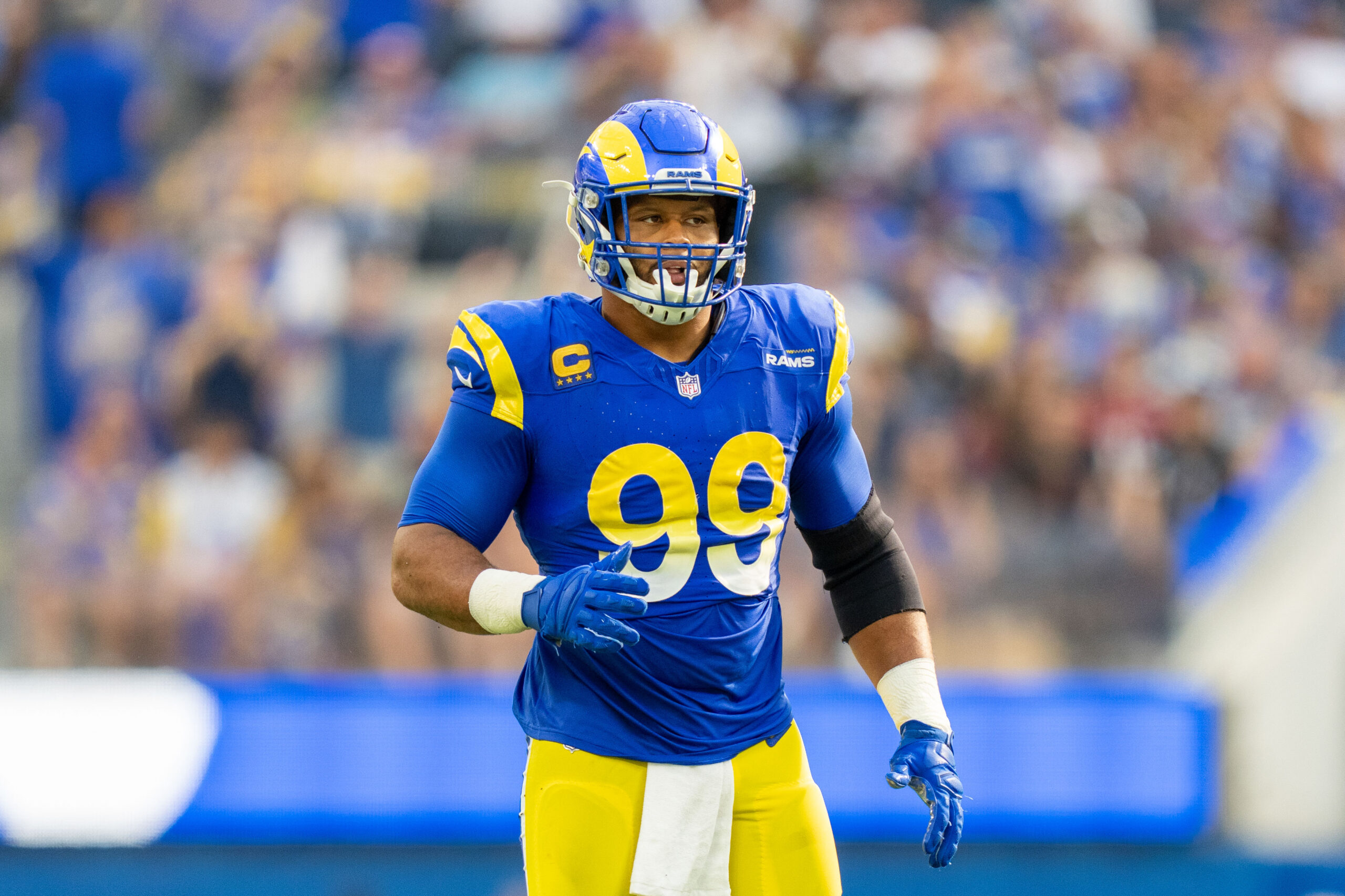
October 15, 2023; Inglewood, California, USA; Los Angeles Rams defensive tackle Aaron Donald (99) during the third quarter against the Arizona Cardinals at SoFi Stadium. Mandatory Credit: Kyle Terada-Imagn Images
Aaron Donald retired after the 2023 season with 111 career sacks, three Defensive Player of the Year awards—tied for the most in NFL history with Taylor and J.J. Watt—and a Super Bowl ring earned when he pressured Joe Burrow into an incompletion on the final play of Super Bowl LVI. The most staggering measure of his dominance: Donald was double-teamed on 70 percent of his snaps in 2018, yet still led the NFL in sacks that season. His pass-rush win rate against double teams was better than most linemen managed against single blocks. “You’ve got to put him up with the likeness of Lawrence Taylor, Mean Joe Greene,” former Rams defensive coordinator Raheem Morris said. Donald’s dominance proved that the pattern stretching from Deacon Jones through LT still operates in the modern game.
Fear Itself Is an Economic Signal
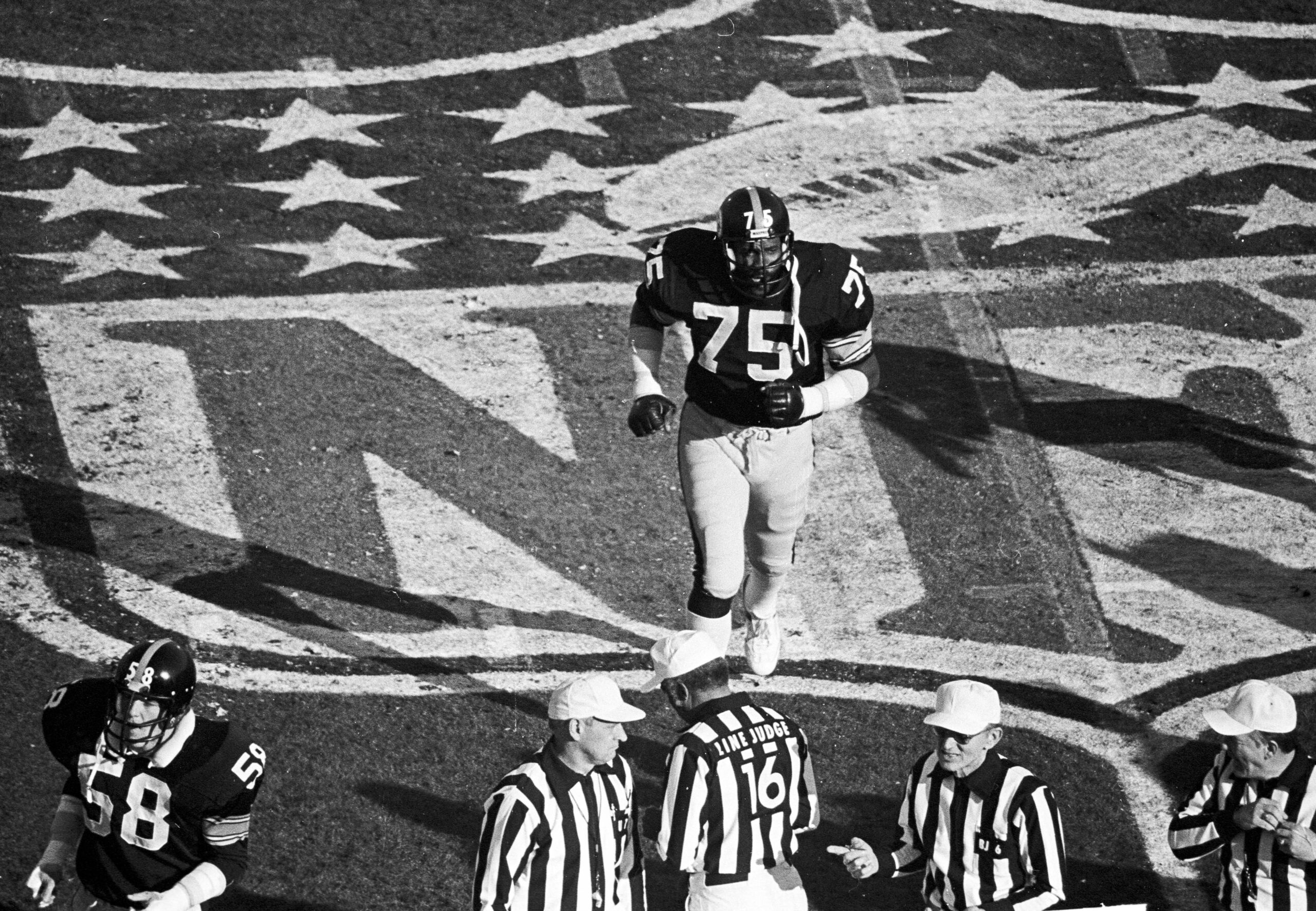
Jan 20, 1980; Pasadena, CA, USA; FILE PHOTO; Pittsburgh Steelers defensive tickle Joe Greene (75) on the field during Super Bowl XIV against the Los Angeles Rams at the Rose Bowl. The Steelers defeated the Rams 31-19. Mandatory Credit: Manny Rubio-Imagn Images
The through-line connecting all 10 of these defenders isn’t just sack totals or Pro Bowl selections. It’s a structural disruption. Deacon Jones and Night Train Lane forced the league to outlaw specific techniques. Mel Blount’s dominance birthed the modern passing era. Lawrence Taylor single-handedly turned left tackle into a premium investment. Aaron Donald proved the cycle hasn’t ended—that when one defender generates enough fear, the entire sport reorganizes around containing him. Defensive greatness operates on two parallel tracks: statistical dominance and psychological impact. The stats fill highlight reels. The fear reshapes how professional football is built, coached, and paid for … permanently.
If you enjoyed this article please like and follow us here on MSN! Thank you for reading and have a great day!
Sources:
“Lawrence Taylor” — Britannica
“LT and the Evolution of the NFL Left Tackle” — Bleacher Report
“Why Was the Deacon Jones Head Slap Banned from the NFL?” — ClutchPoints
“Mean Joe Greene Not Sure He Could Play Under Today’s Rules” — NBC Sports
“Night Train Lane Was Member of NFL’s 75th Anniversary Team” — ESPN Classic
“Mel Blount Rule and 1978 NFL Rule Changes” — Times Delphic