
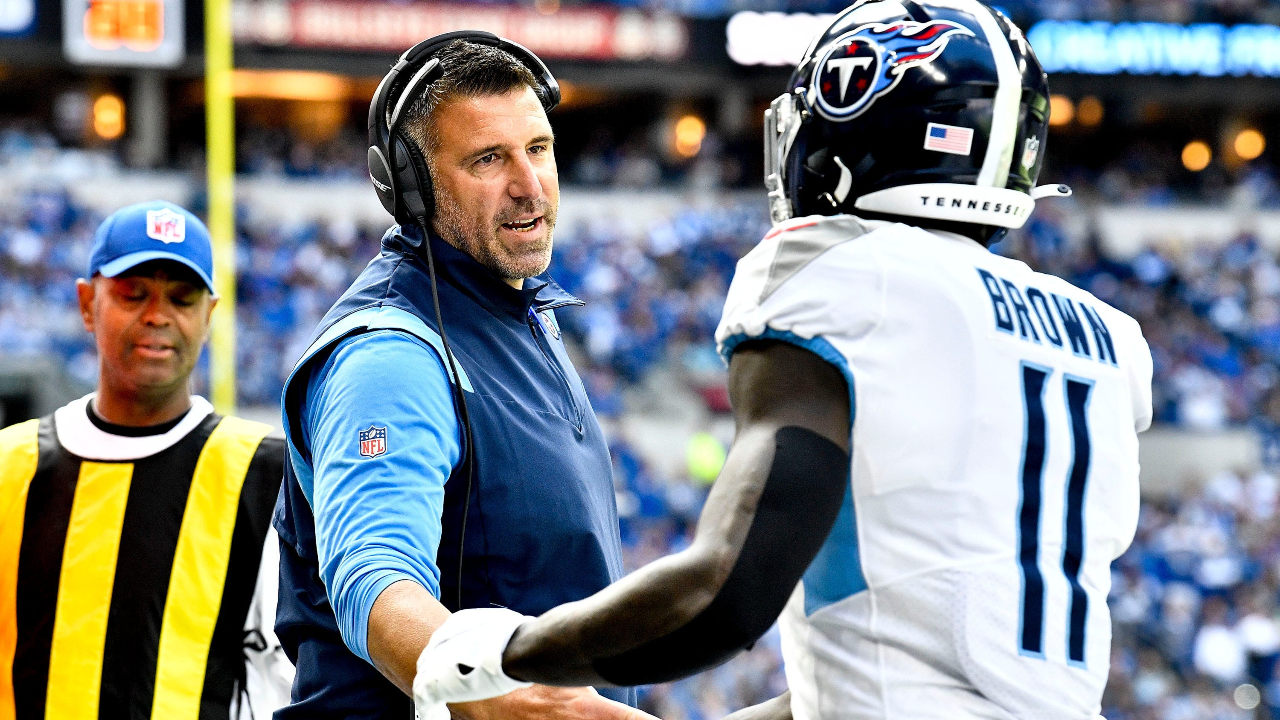
The calendar flipped past June 1, and Howie Roseman picked up the phone. Months of whispered speculation, cap spreadsheets passed between front offices, and a star receiver quietly telling people he wanted out for his family. All of it pointed to this moment. A.J. Brown, a three-time Pro Bowler and the most electric weapon Philadelphia had built an offense around, was headed to New England. The compensation coming back told a story all by itself: a first-round pick in 2028 and a fifth in 2027.
Why June 1 Changed Everything
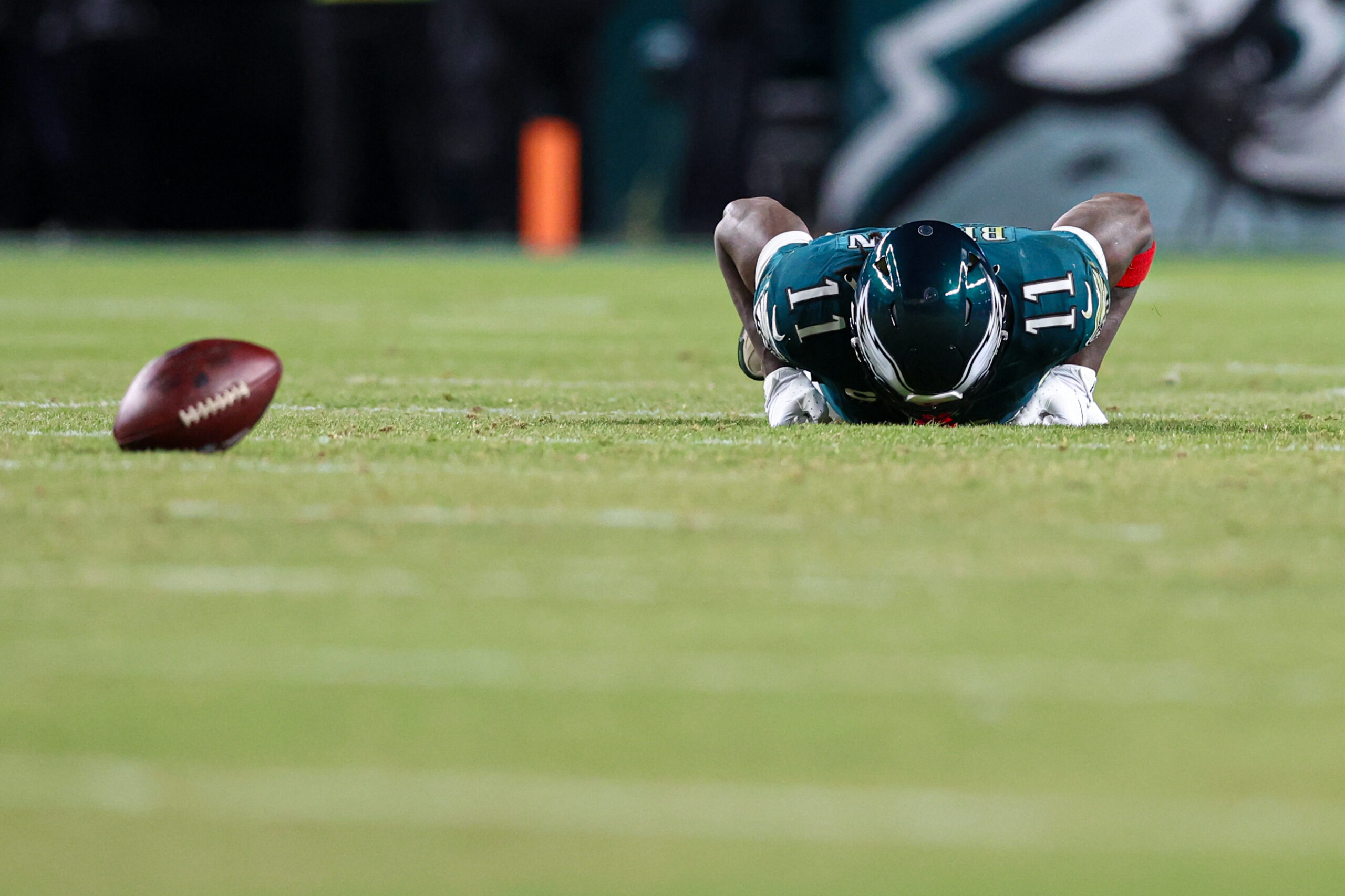
Jan 11, 2026; Philadelphia, PA, USA; Philadelphia Eagles wide receiver A.J. Brown (11) on the turf after a missed catch against the San Francisco 49ers in an NFC Wild Card Round game at Lincoln Financial Field. Mandatory Credit: Bill Streicher-Imagn Images
Trading Brown before June 2 would have driven roughly $27.16 million in bonus proration forward onto the 2026 cap, a charge too prohibitive against Philadelphia’s limited 2026 space. By waiting, Roseman spread the damage: a $43.45 million dead-money total split into about $16.35 million in 2026 and roughly $27.1 million in 2027. Two manageable years instead of one catastrophic one. The entire trade hinged on a date on a calendar, and Roseman had been circling it for months.
The Price of Keeping Stars
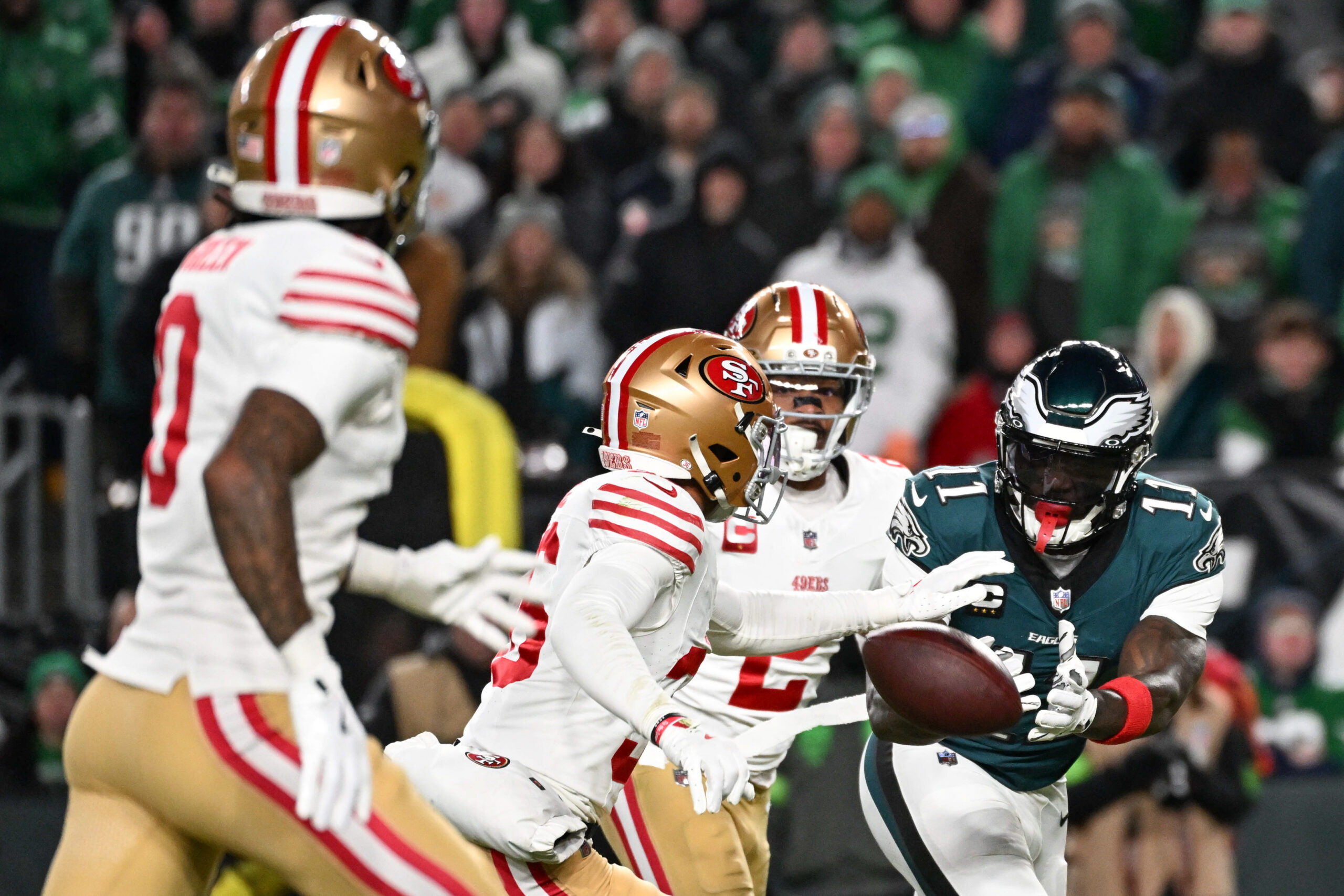
Jan 11, 2026; Philadelphia, PA, USA; Philadelphia Eagles wide receiver A.J. Brown (11) is unable to make a catch as San Francisco 49ers safety Marques Sigle (36) looks on during the second quarter in an NFC Wild Card Round game at Lincoln Financial Field. Mandatory Credit: Eric Hartline-Imagn Images
Most fans assumed a contender with a Super Bowl window would never voluntarily subtract a top-tier receiver. Brown was owed another $113 million over four years, expiring after 2029, averaging roughly $28.25 million annually, with a fully guaranteed $29 million due in 2026 alone. By moving him, Philadelphia avoided that future cash outlay while absorbing the dead money now. The gap between elite WR1 money and the rest of a roster is the pressure that cracks every contender eventually. Roseman decided to crack it on his own terms.
The $50M Philadelphia Walks Away From
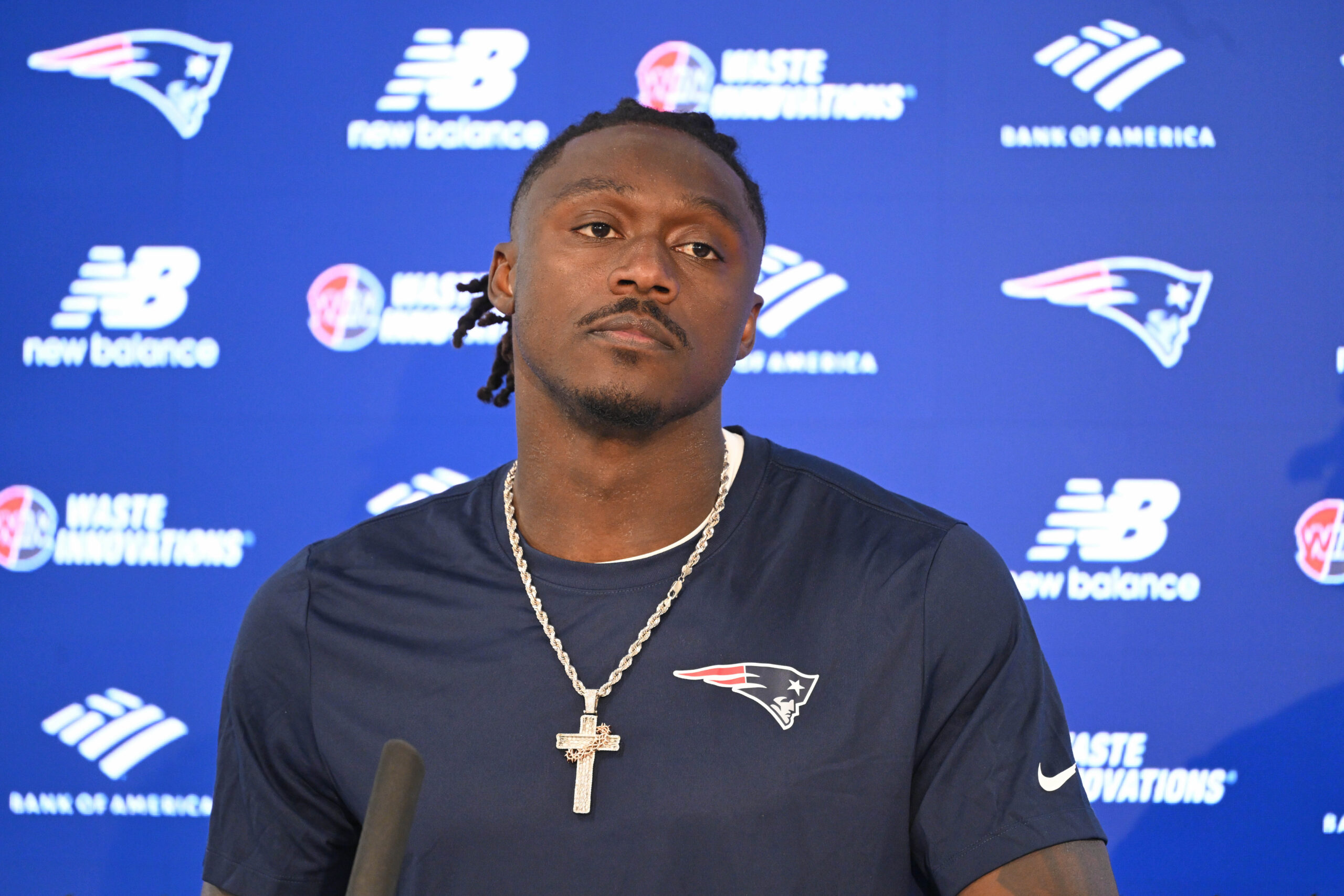
Jun 2, 2026; Foxborough, MA, USA; New England Patriots wide receiver A.J. Brown (1) speaks at a press conference after practice at the team’s OTA at Gillette Stadium. Mandatory Credit: Eric Canha-Imagn Images
Strip the move to its core and the savings sit squarely on Philadelphia’s side of the ledger. Against the $43.45 million in dead money it absorbs, the team sheds the $113 million in future cash it owed Brown, which works out to well over $50 million in net obligations the Eagles no longer carry on his deal. That is the figure the headline points to: not a single-year cap trick, but the cash and commitment Philadelphia walks away from on a contract it no longer has to fund.
“Hard to Find Great Players”
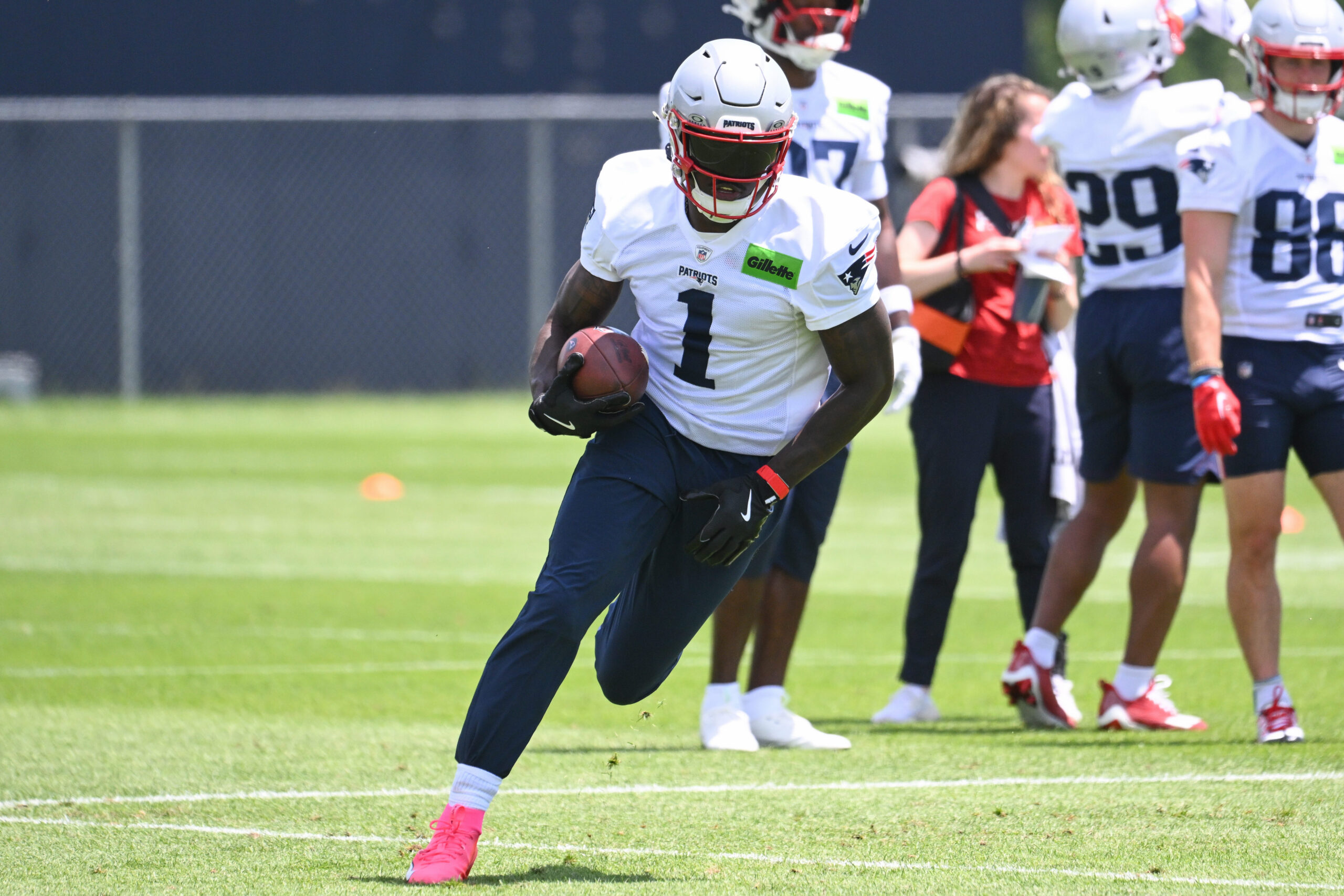
Jun 2, 2026; Foxborough, MA, USA; New England Patriots wide receiver A.J. Brown (1) runs after making a catch during the team’s OTA at Gillette Stadium. Mandatory Credit: Eric Canha-Imagn Images
Roseman has long framed Brown as exactly the kind of player teams fight to keep, then traded him for a draft pick more than two years away. He called the deal a “win-win.” Brown wanted a fresh start for his family. Roseman wanted sustainability. Both got what they asked for. One star gone, a future first acquired, and a complex contract off the books. The same front office, opposite outcomes. That contradiction is the entire trade.
The Machine Behind the Move
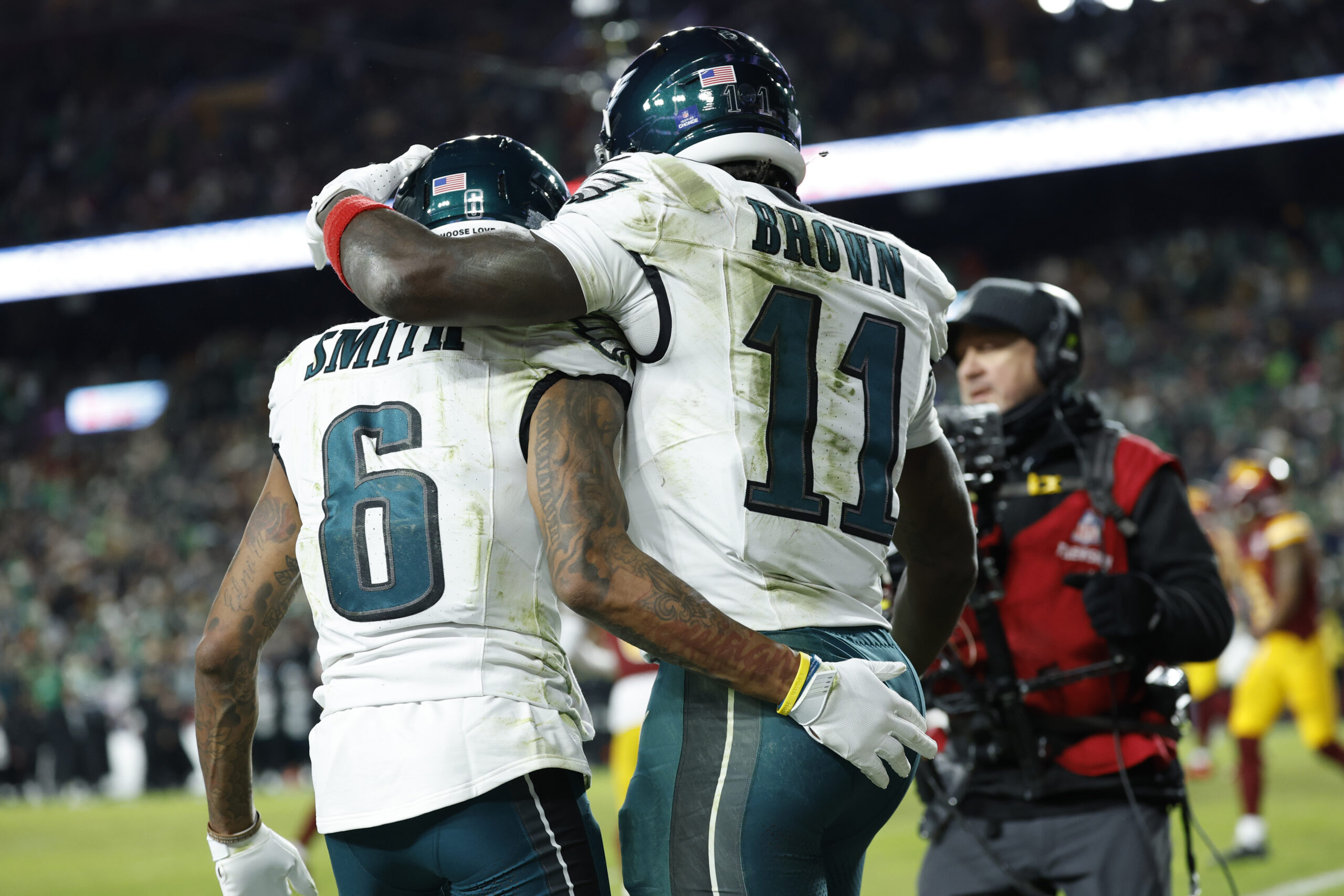
Dec 20, 2025; Landover, Maryland, USA; Philadelphia Eagles wide receiver Devonta Smith (6) celebrates with wide receiver A.J. Brown (11) after making a catch for a touchdown against the Washington Commanders in the first half at Northwest Stadium. Mandatory Credit: Geoff Burke-Imagn Images
Fans blamed emotion. Blamed chemistry. Blamed the locker room. The real engine was math. June 1 rules, bonus-proration schedules, and multi-year cap modeling dictated when this trade could happen and what it would cost. New England can keep Brown’s 2026 cap hit around $6.79 million by treating a $27.45 million option bonus as $5.49 million of proration plus his $1.3 million base salary. Philadelphia eats dead money now. New England spreads live money later. Two franchises using the same cap system as opposite weapons.
The Numbers That Rewrite the Narrative
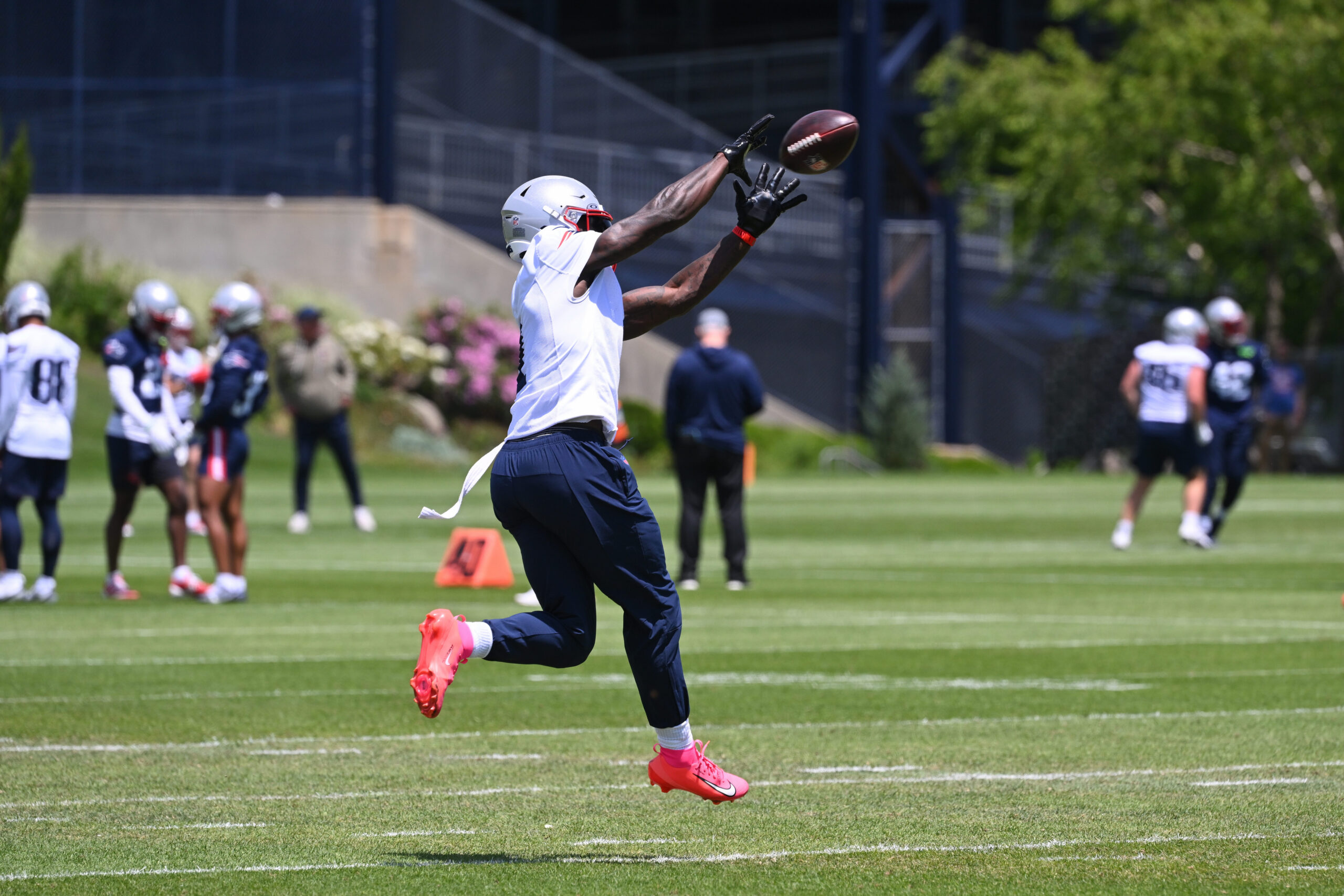
Jun 2, 2026; Foxborough, MA, USA; New England Patriots wide receiver A.J. Brown (1) makes a catch during the team’s OTA at Gillette Stadium. Mandatory Credit: Eric Canha-Imagn Images
Brown’s contract used one of the league’s most complex structures, with five option bonuses tied to void years stretching from 2030 to 2034. By absorbing the pain after June 1, Roseman front-loads the financial cost into 2026 and 2027 so that, once the 2027 charge resolves, Brown’s deal is off Philadelphia’s books entirely by 2028. Think of it as refinancing a mortgage early: swallowing fees now to free up cash for what comes next. The 2028 first-round pick lands in the same window the Eagles project real cap flexibility.
The Receiver Room Scramble
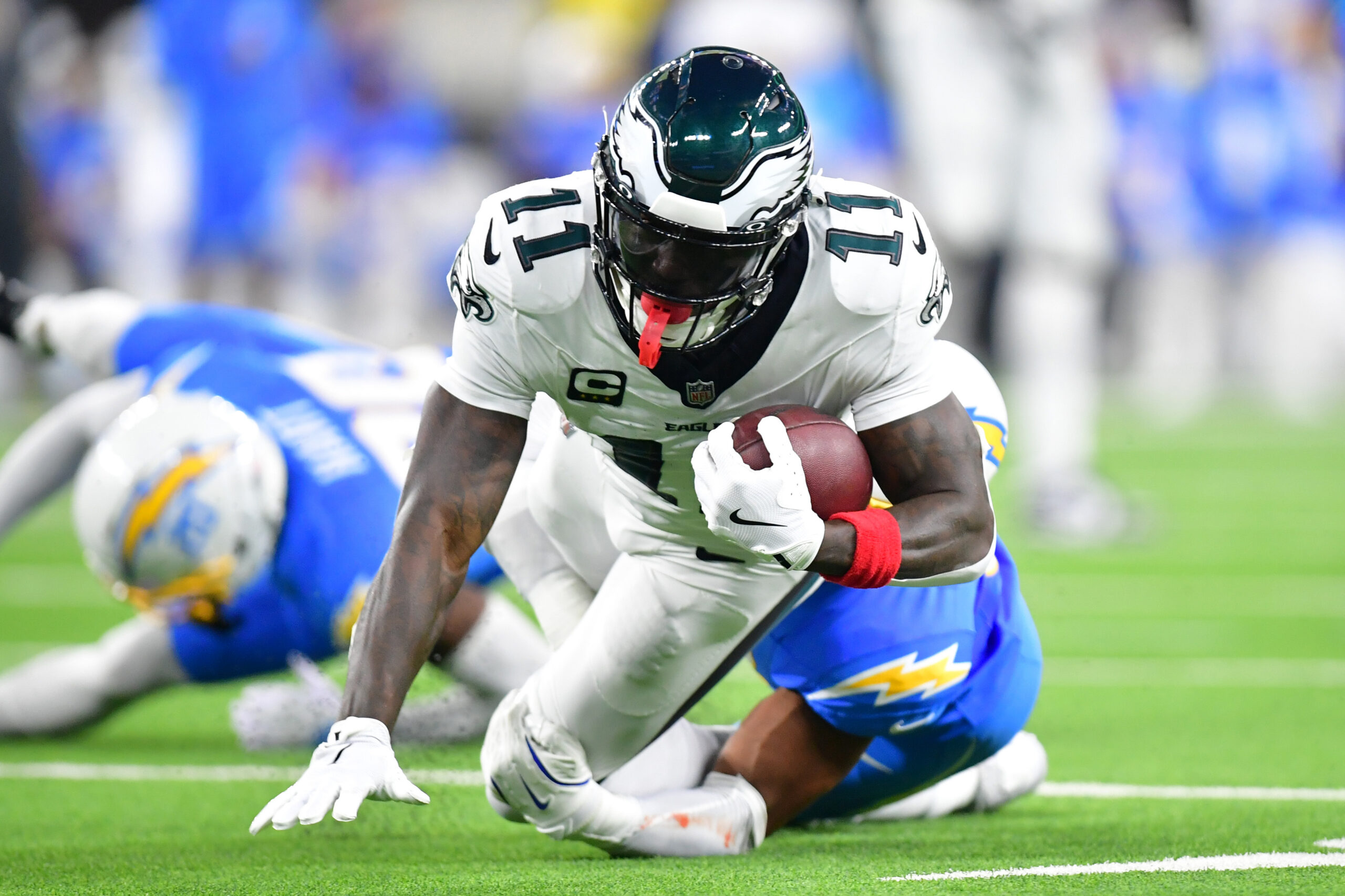
Dec 8, 2025; Inglewood, California, USA; Philadelphia Eagles wide receiver A.J. Brown (11) runs against Los Angeles Chargers linebacker Daiyan Henley (0) in the first half at SoFi Stadium. Mandatory Credit: Gary A. Vasquez-Imagn Images
DeVonta Smith steps into the clear WR1 role, a cost-controlled homegrown receiver replacing a highly paid imported star. The Eagles moved up three spots in the first round to draft USC’s Makai Lemon at No. 20 overall. Dontayvion Wicks arrived in April via trade with Green Bay, signing a one-year, $12.5 million extension. Combined, their cap charges could fall below what Brown alone would have cost. But a rookie and a trade acquisition are being asked to help replace a three-time Pro Bowler.
The Playbook Roseman Keeps Running
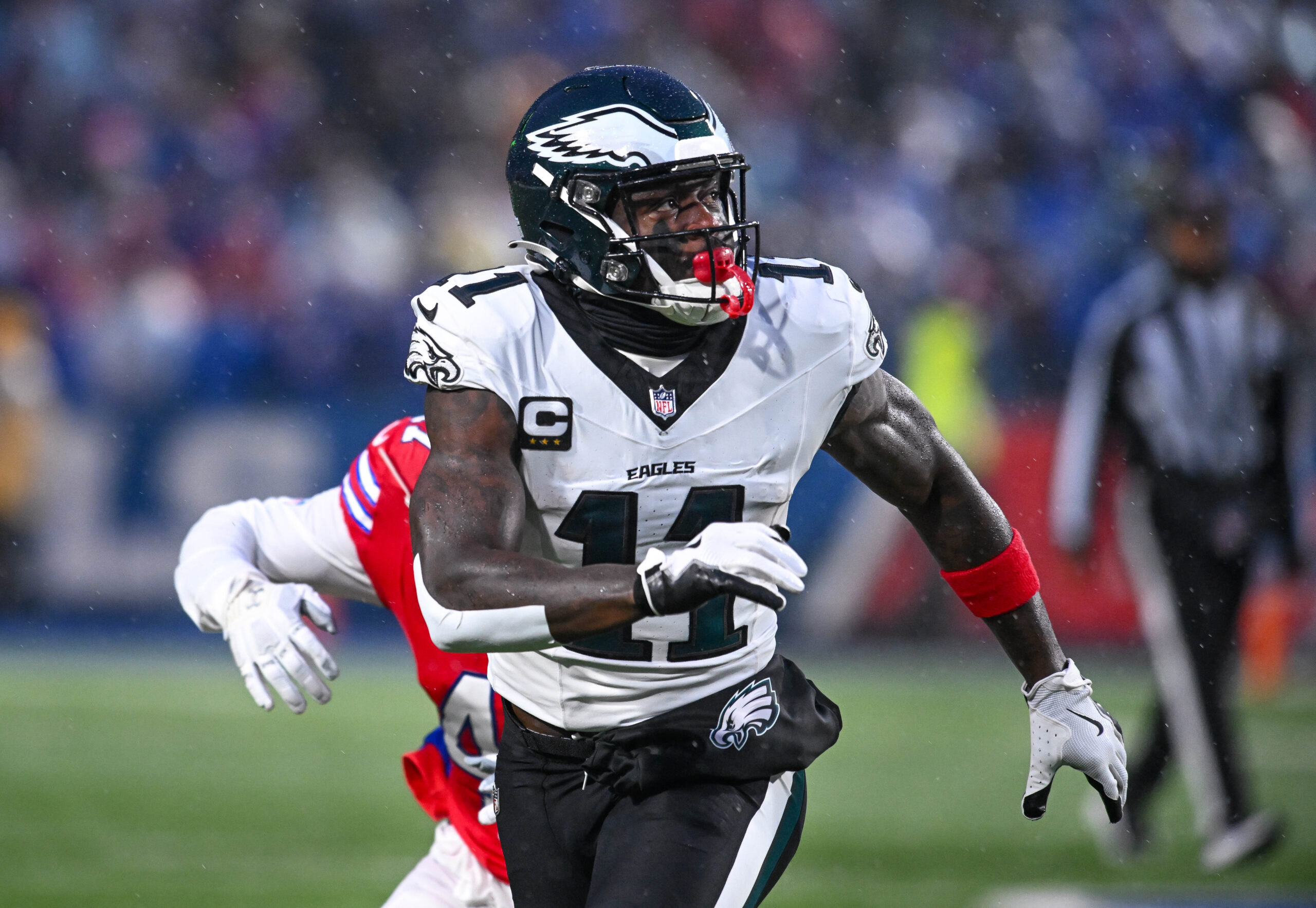
Dec 28, 2025; Orchard Park, New York, USA; Philadelphia Eagles wide receiver A.J. Brown (11) looks to receive a pass in the first quarter against the Buffalo Bills at Highmark Stadium. Mandatory Credit: Mark Konezny-Imagn Images
Donovan McNabb. Carson Wentz. Now A.J. Brown. Roseman has traded franchise faces before, and in at least one case, the resulting draft haul helped fuel a Super Bowl run. The pattern is unmistakable: move the big name while he still commands premium value, convert him into picks and cap space, and reload. The Eagles asked for at least a first-round pick, and a first-rounder was widely viewed as the floor to get any deal done.
New England’s Gamble on the Other Side
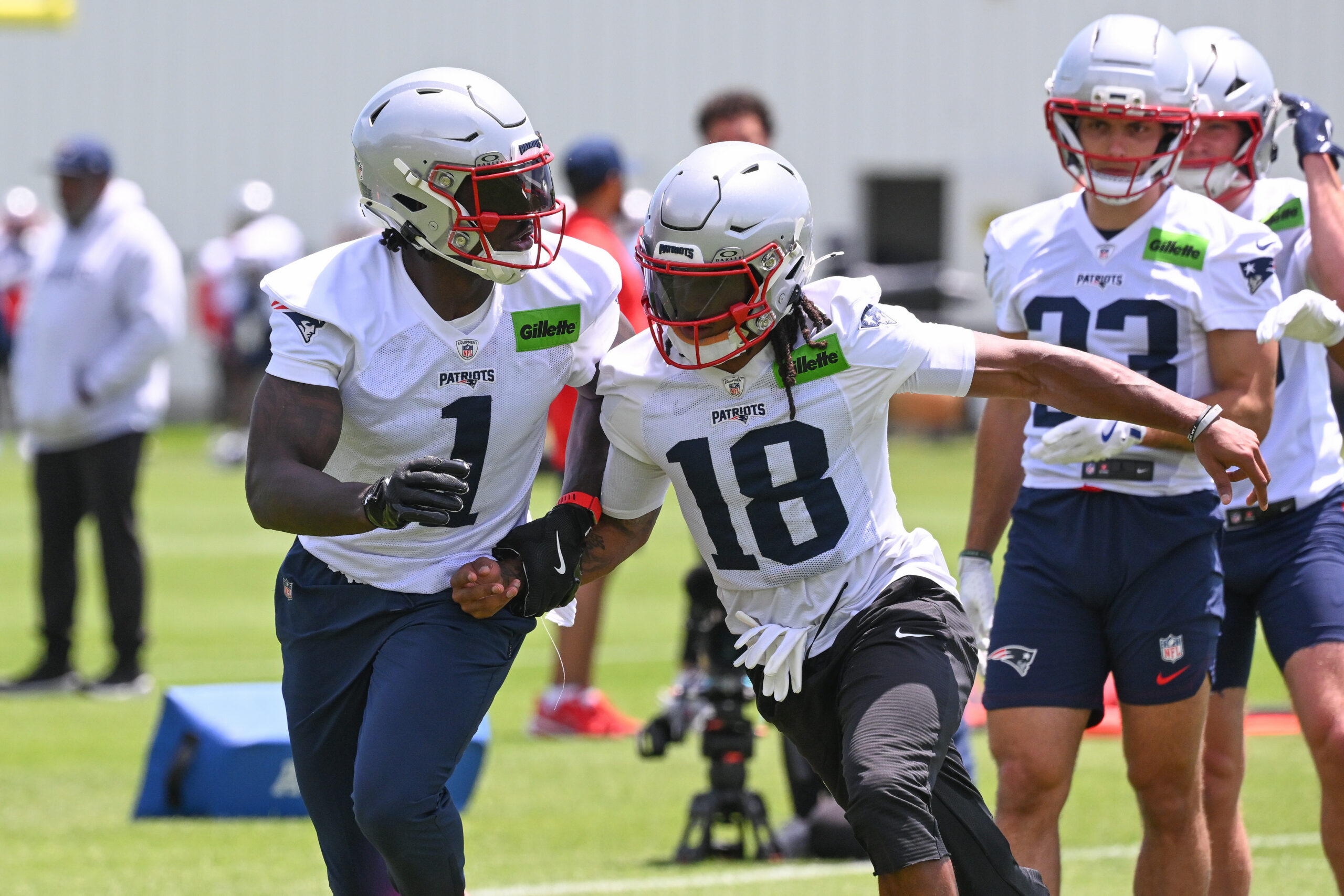
Jun 2, 2026; Foxborough, MA, USA; New England Patriots wide receiver Kyle Williams (18) covers wide receiver A.J. Brown (1) during the team’s OTA at Gillette Stadium. Mandatory Credit: Eric Canha-Imagn Images
Brown reunites with Mike Vrabel, who coached him from 2019 through 2021 in Tennessee. The Patriots take on Brown, who turns 29 on June 30, betting a chunk of their offensive identity on a receiver in his late twenties while building around quarterback Drake Maye. With his option years, Brown’s cap numbers climb to roughly $11 million, $17.9 million, and $23.6 million from 2027 to 2029, lining up with Maye’s cheaper deal. Miss that window, and the Patriots paid star money for a closing one, with as much as $53.52 million in dead money looming in 2030 if the deal is left unaltered.
The Portfolio That Never Stops Moving
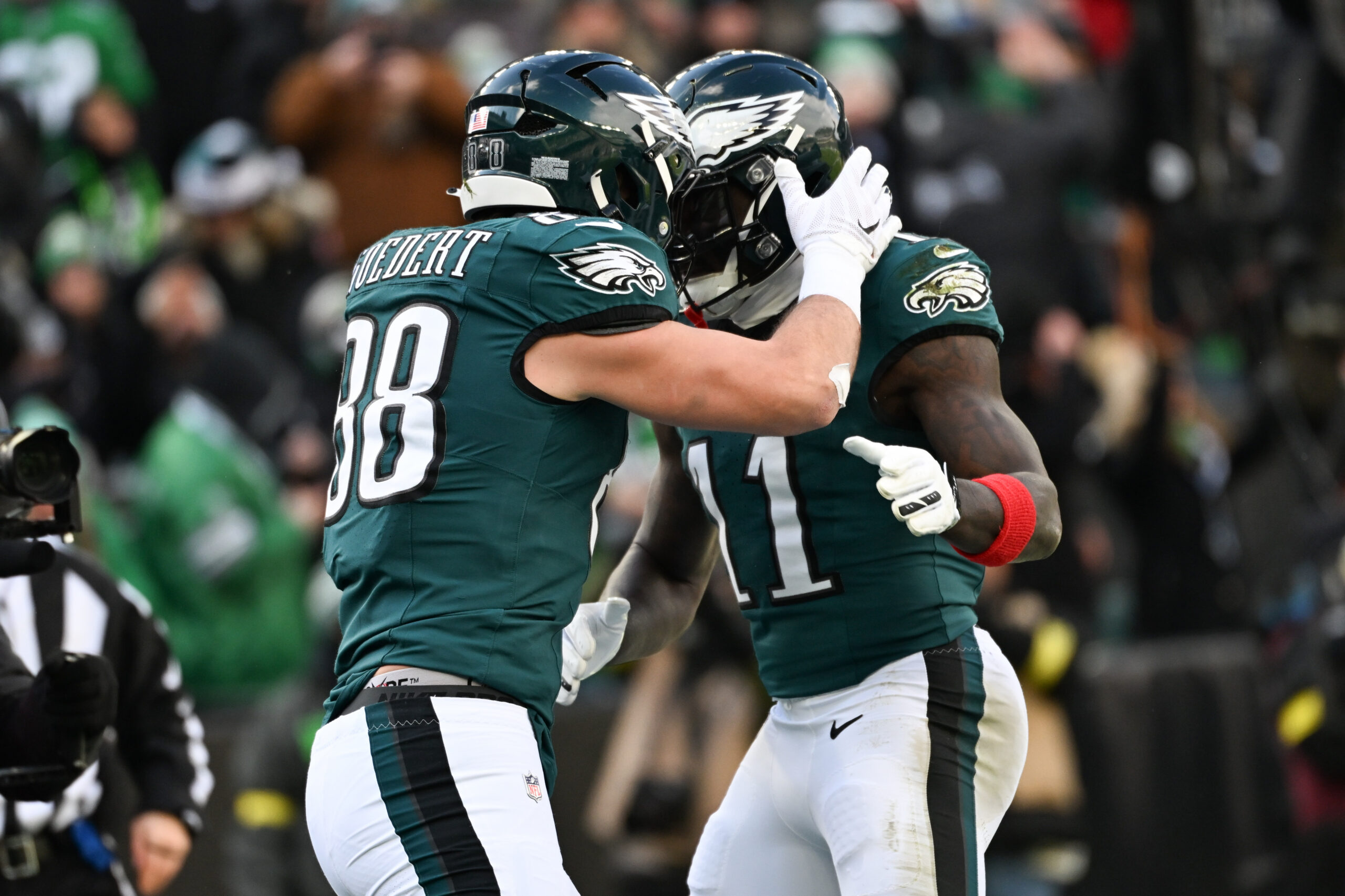
Dec 14, 2025; Philadelphia, Pennsylvania, USA; Philadelphia Eagles tight end Dallas Goedert (88) celebrates with wide receiver A.J. Brown (11) after scoring a touchdown against the Las Vegas Raiders during the first quarter at Lincoln Financial Field. Mandatory Credit: Eric Hartline-Imagn Images
National analysts still list the Eagles among the teams with the biggest Super Bowl windows heading into 2026. That should tell you something. Roseman traded a Pro Bowl receiver, absorbed more than $43 million in dead money, and the franchise’s championship outlook barely flinched. Once you see the roster as a constantly rebalanced portfolio of cap commitments and draft picks rather than a collection of beloved names, Brown’s exit stops looking like betrayal. It looks like a reallocation. Every veteran on a mega-deal around the league should be watching. So is this Roseman playing chess while everyone else plays checkers, or is trading a three-time Pro Bowler in his prime a gamble that ages badly? Tell us in the comments who won this trade.