
The NFL set the 2026 salary cap at $301.2 million — the first time in 32 years it has exceeded $300 million. That’s $22 million more than last year and 40 percent higher than it was five years ago. Reporter Tom Pelissero called the growth “astronomical.” Meanwhile, the Dallas Cowboys are $58.4 million over the limit.
The Clock
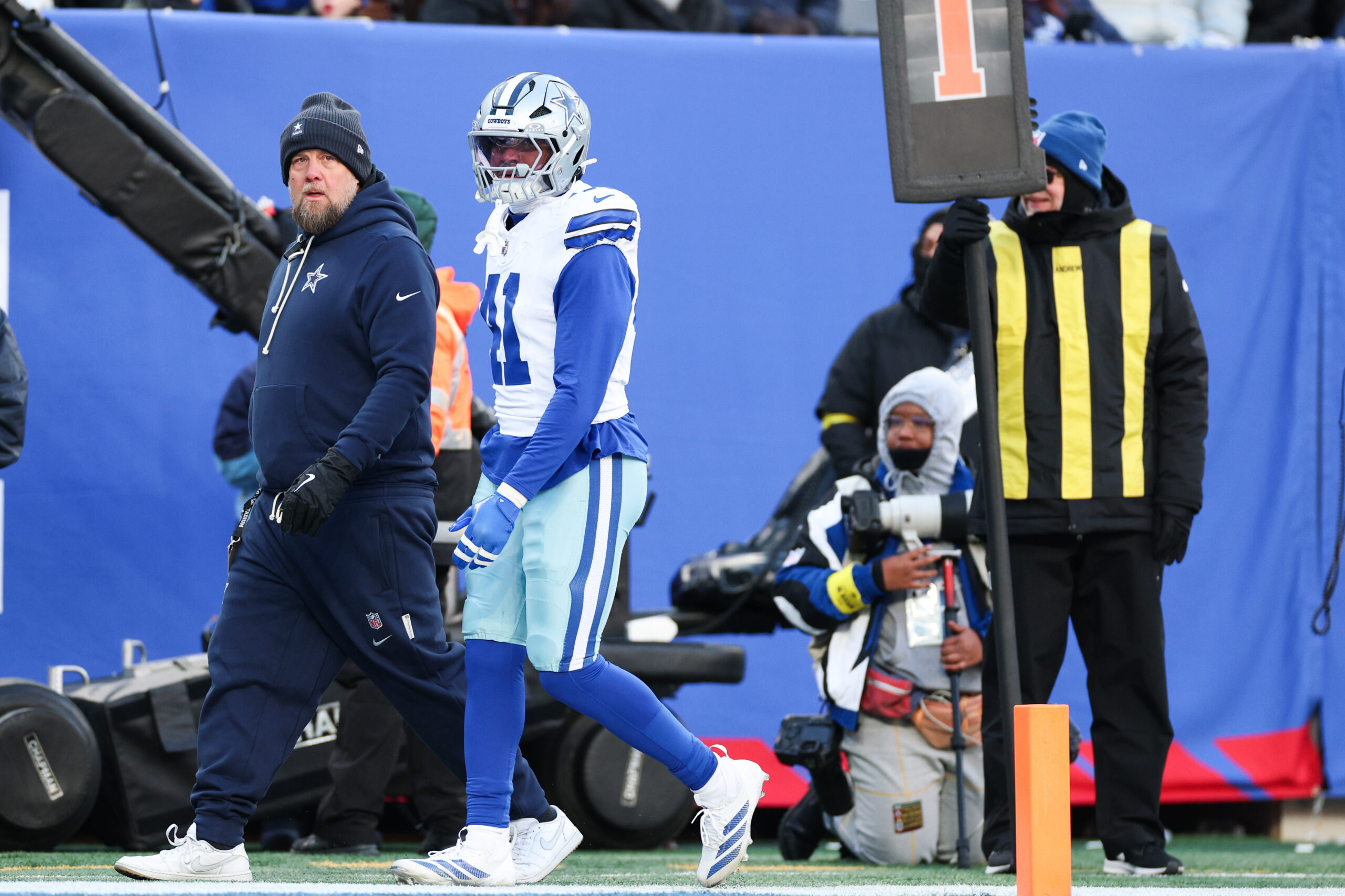
Jan 4, 2026; East Rutherford, New Jersey, USA; Dallas Cowboys defensive end Donovan Ezeiruaku (41) leaves the field after being ejected during the third quarter against the New York Giants at MetLife Stadium. Mandatory Credit: Vincent Carchietta-Imagn Images
Every team has to get under the cap by March 11, the start of the new league year. Free agency negotiations open March 9. That gives teams just nine days to cut players, redo contracts, or make trades to get their numbers right. The NFL’s cap is a hard ceiling — unlike the NBA, you can’t go over it. Period. Tennessee has $92.6 million in room to spend. Dallas needs to shed $58.4 million. That’s a $150 million difference between two teams playing by the same rules.
The Myth
Jan 4, 2026; East Rutherford, New Jersey, USA; New York Giants quarterback Jameis Winston (19) waves to fans after the game against the Dallas Cowboys at MetLife Stadium. Mandatory Credit: Vincent Carchietta-Imagn Images
People assume a rising cap helps everyone equally — more money, more balance, more fairness. But look at the math. The cap started at $34.6 million in 1994 and has roughly doubled since 2011. Over that same stretch, the average team’s value went from $1.04 billion to $7.13 billion — a sevenfold jump. For every $1 the cap gave players, owners gained $7 in team value.
The Extraction
Dec 8, 2024; Inglewood, California, USA; Los Angeles Rams guard Kevin Dotson (69) wears a Guardian helmet cap against the Buffalo Bills in the second half at SoFi Stadium. Mandatory Credit: Kirby Lee-Imagn Images
Players agreed to a smaller share of league revenue in the 2011 labor deal — dropping from about 57.5 percent to 47.5 percent. That’s a 10-point cut. The cap kept going up, but owners got richer far faster. Total player costs per team, including benefits, hit $378.8 million. But each franchise gained about $6 billion in value over the same period. The cap limited what players could earn. It didn’t limit how much owners made. The next labor deal could control around $800 billion in total player pay.
The Machine
Jacksonville Jaguars head coach Doug Pederson directs during the ninth day of an NFL football training camp practice Saturday, Aug. 3, 2024 at EverBank Stadium in Jacksonville, Fla. Today marked the first day of public practice inside the stadium.- Imagn Images
The NFL brings in $23 billion a year. TV and streaming deals alone are worth roughly $110 billion over 11 years. Commissioner Goodell wants revenue to reach $25 billion a year by 2027. There are nine international games planned for 2026, and Goodell wants to eventually have 16 so every team plays one abroad each season. More games mean more media money, which pushes the cap up. But the cap still isn’t growing nearly as fast as team values.
The Proof
Aug 24, 2024; Green Bay, Wisconsin, USA; General view of the NFL logo on an officials cap during warmups prior to the game between the Baltimore Ravens and Green Bay Packers at Lambeau Field. Mandatory Credit: Jeff Hanisch-Imagn Images
In 2016, the cap was $155.3 million. In 2026, it’s $301.2 million — doubled in 10 years. Average team values went from $1.04 billion to $7.13 billion — nearly seven times higher. The Cowboys are worth $13 billion, the most of any sports franchise, yet they’re the most over-budget team in the league. A quarterback franchise tag now costs $43.9 million. A wide receiver tag is $27.3 million, up 14 percent from last year. Player costs keep rising, but the real wealth stays with ownership.
The Casualties
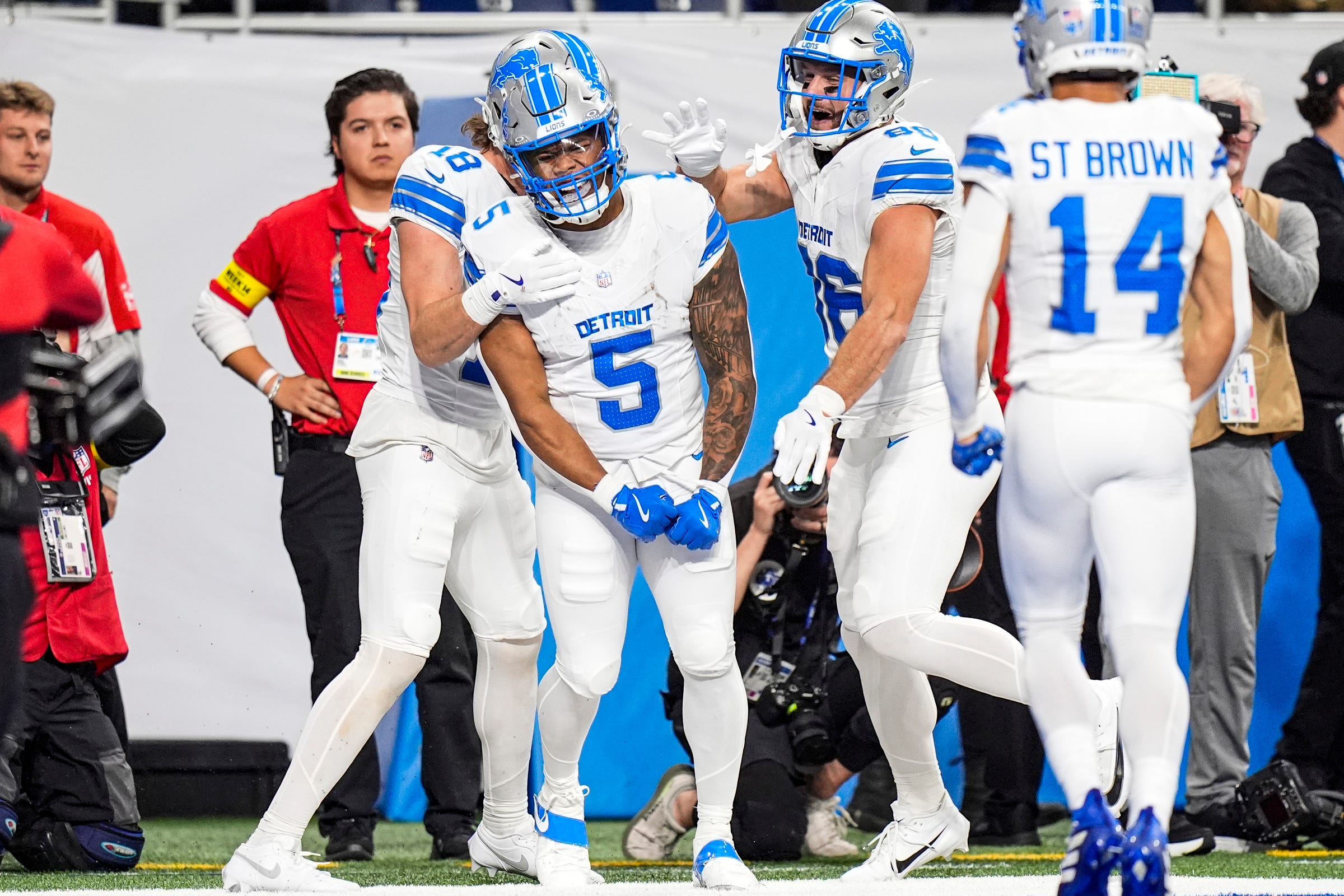
Detroit Lions running back David Montgomery (5) celebrates a touchdown against Dallas Cowboys during the first half at Ford Field in Detroit on Thursday, Dec. 4, 2025.- Imagn Images
When teams are over the cap, real people pay the price. Veterans get cut. Popular players get traded for cap relief. Teams like the Cowboys, Saints, and Vikings stay in budget trouble year after year, even though the cap keeps growing, because the system lets wealthy teams push costs into the future. At the same time, the free agent market fills up with released players, which drives down veteran salaries. Teams with cap room — like the Titans — get to pick up talent cheaply. Teams in cap trouble lose their best players.
The Precedent
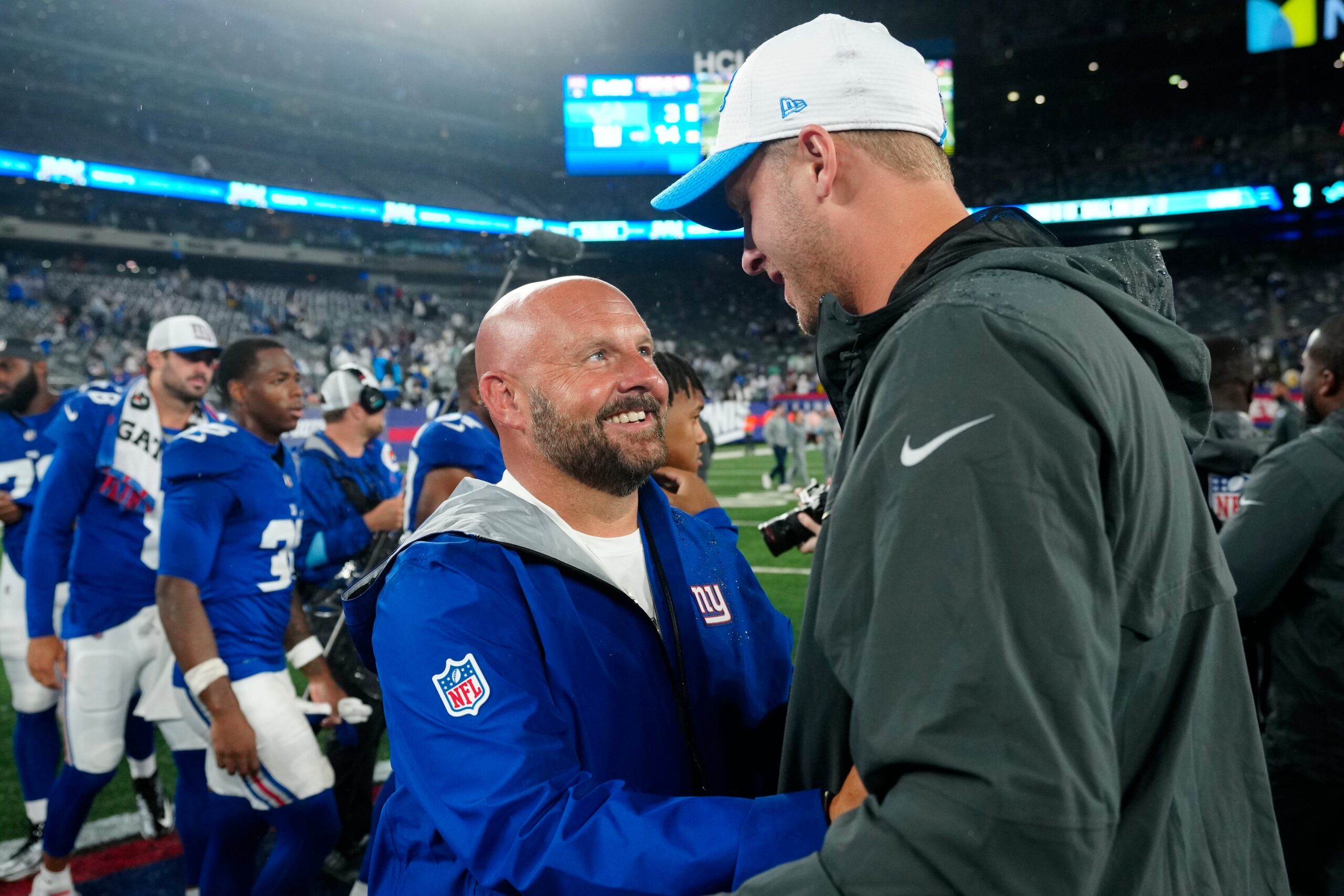
New York Giants Head Coach Brian Dabolll, is shown with Detroit Lions quarterback, Jared Goff, after the game, Thursday, August 8 2024, in East Rutherford.- Imagn Images
This isn’t a one-time problem. It’s how the system works now. About 67 percent of NFL revenue is split evenly among all 32 teams. The remaining 33 percent stays local — and big-market teams make far more from premium seats, sponsorships, and stadium deals. So while the cap rises the same for everyone, the money behind each team does not. The “hard cap” makes it seem like everyone’s on equal footing, but the reality is that the gap between rich and less wealthy franchises keeps widening.
The Negotiation
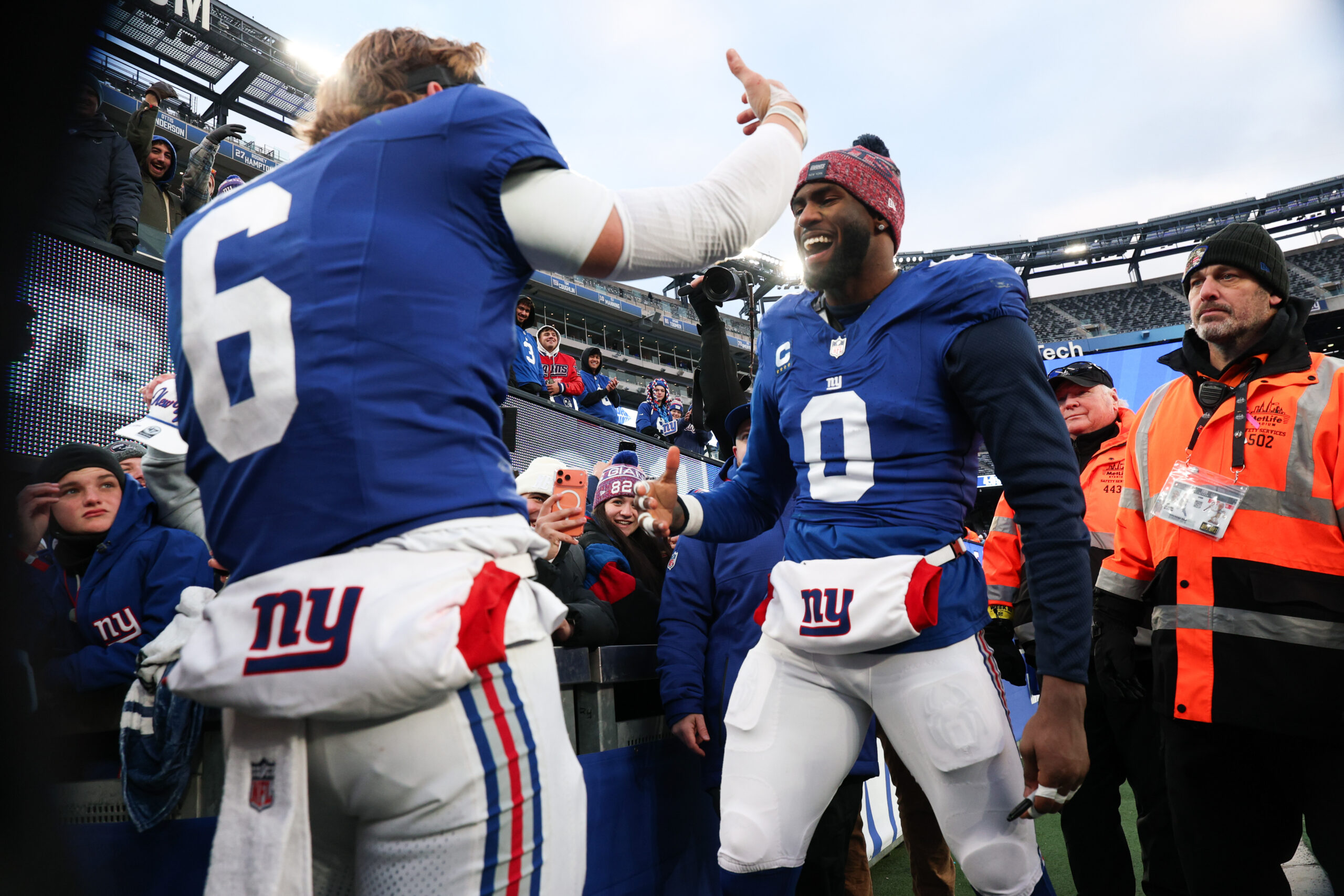
Jan 4, 2026; East Rutherford, New Jersey, USA; New York Giants linebacker Brian Burns (0) greets New York Giants quarterback Jaxson Dart (6) after the game against the Dallas Cowboys at MetLife Stadium. Mandatory Credit: Vincent Carchietta-Imagn Images
The next labor deal, due around 2029, will shape the NFL for a generation. An estimated $800 billion in total player pay could be at stake. Ownership has already started pushing its priorities: an 18-game season and 16 international games per year. The players’ union took a 10-point revenue cut in 2011 and never recovered. New streaming deals could generate billions more each year. The big question is: who gets that money — players or owners?
The Bottom Line
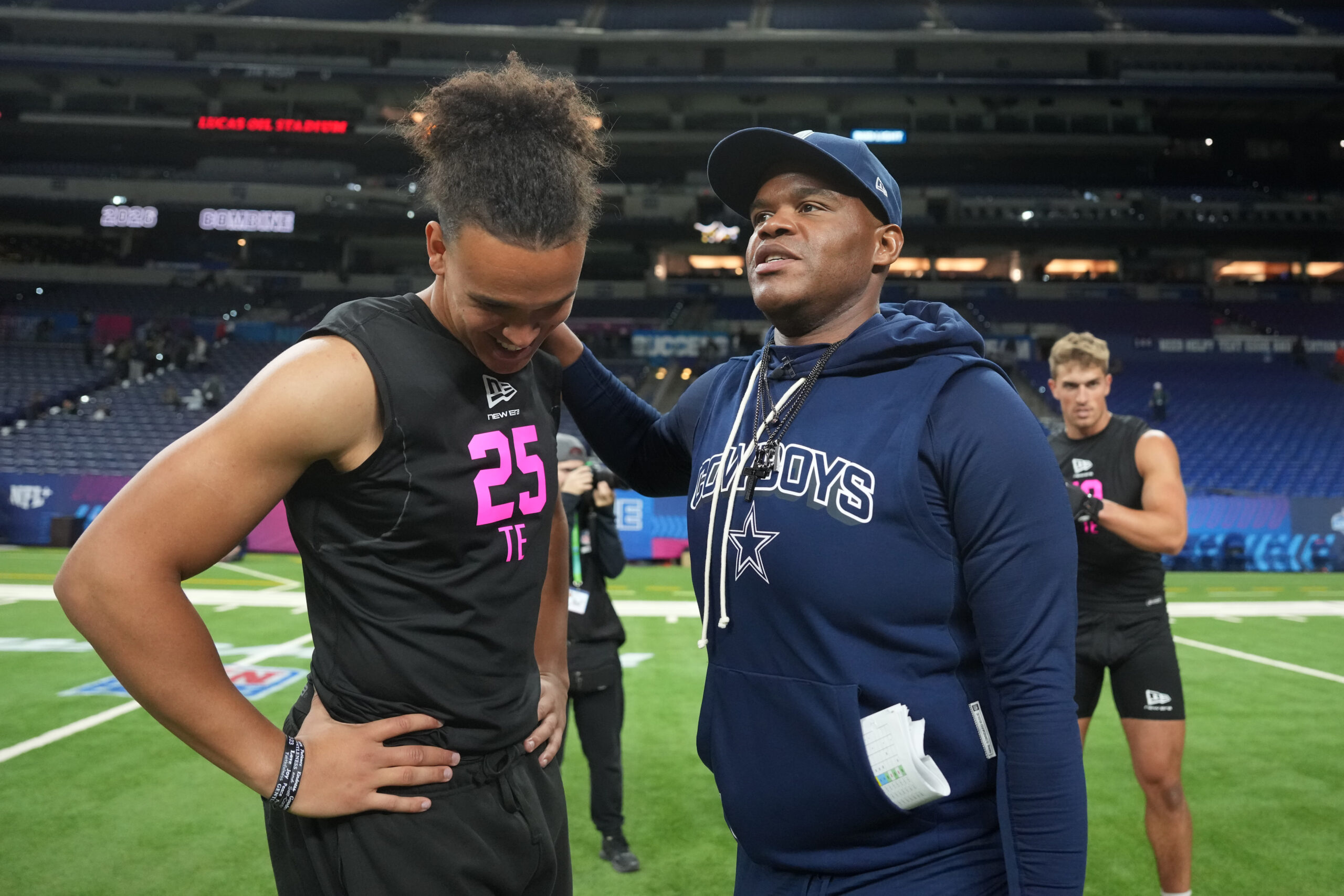
Feb 27, 2026; Indianapolis, IN, USA; Dallas Cowboys tight end coach Lunda Wells and Vanderbilt tight end Eli Stowers (TE25) during the NFL Scouting Combine at Lucas Oil Stadium. Mandatory Credit: Kirby Lee-Imagn Images
Here’s what fans won’t hear on draft night: every dollar the cap goes up could have gone up faster if players still earned 57.5 percent of revenue instead of 47.5. The cap doubled. Team values grew seven times over. Owners built a $23 billion business and gave players a controlled slice while the real wealth flowed upward. When you celebrate a record salary cap, you’re really celebrating how well the system works — for ownership. And in 2029, they’ll negotiate the next deal from the same position of power.
If you enjoyed this article, please like and follow us here on MSN! Thank you for reading, and have a great day!
Sources:
GoLongTD
ESPN , NFL salary cap hits milestone at $301.2 million for 2026 , Feb 27, 2026
DAZN / Sportsnet.ca
S&P Global
Front Office Sports
Bleacher Report