
Lamar Jackson won his second MVP in February 2024. Sixteen months later, the Baltimore Ravens restructured his contract because they had no other choice. Not because he’s washed. Not because he got hurt. Because the math on the deal he negotiated himself — $260 million, no agent, no intermediary — finally caught up with an organization that chose him over an 18-year head coach and still couldn’t get him to sign a new one. Jackson’s 2027 cap number now sits at $84.49 million. Run the maximum void-year options, and NBC Sports puts it at $86.98 million, the third-highest cap hit in the entire NFL.
The Restructure Is the Confession
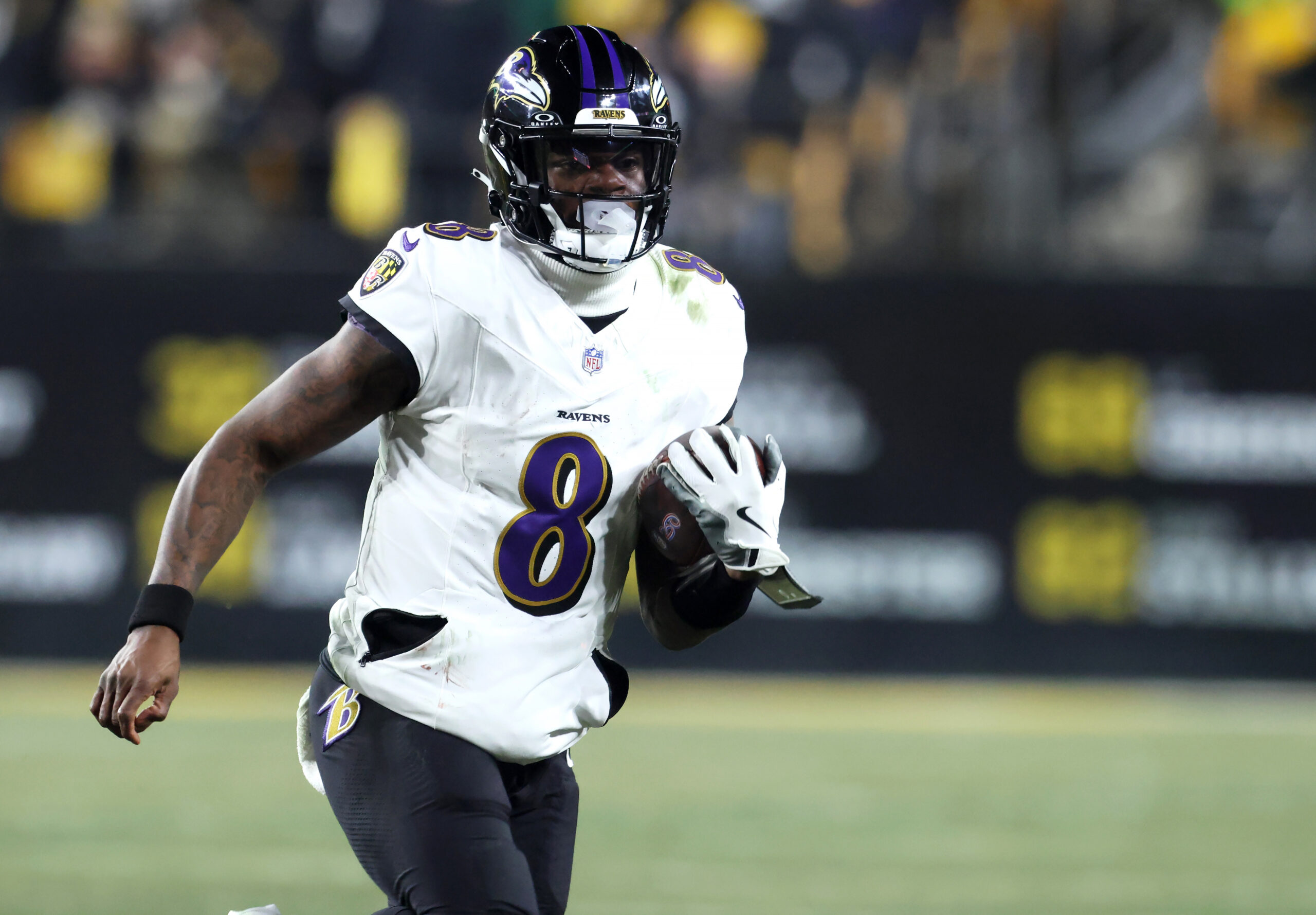
Jan 4, 2026; Pittsburgh, Pennsylvania, USA; Baltimore Ravens quarterback Lamar Jackson (8) rushes the ball against the Pittsburgh Steelers during the first half at Acrisure Stadium. Mandatory Credit: Charles LeClaire-Imagn Images
The Baltimore Ravens did not restructure Lamar Jackson’s contract because it was the smart move. They did it because extending him before the free agency Wednesday deadline didn’t happen, and without a restructure, they couldn’t function as a football team. So they activated a clause, converted $51.25 million of his 2026 salary into a signing bonus, spread the cap hit across four years, including two void years, and dropped his 2026 number from $74.5 million to $34.54 million. That freed $39.96 million in cap space… room Baltimore used to get back into the pass-rush market, signing Trey Hendrickson to a four-year, $112 million deal the next day. The restructure looks like a plan. It was a retreat. Extension talks failed, the deadline arrived, and Baltimore blinked. Every dollar they freed in 2026 is a dollar they owe in 2027 with interest, and that interest is $84.49 million sitting at the top of Jackson’s ledger like a bill that’s been in the drawer too long.
Bisciotti Fired the Wrong Man
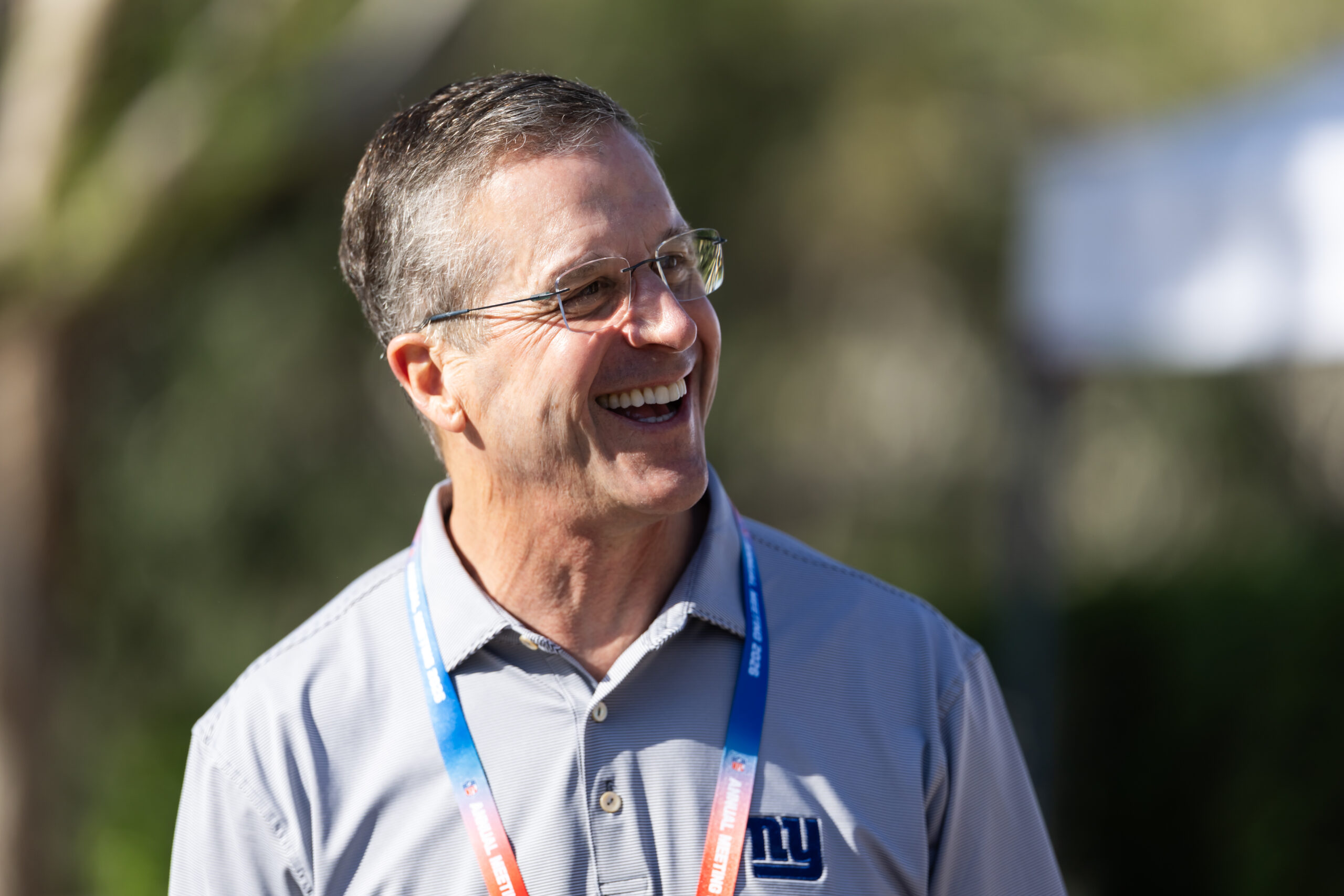
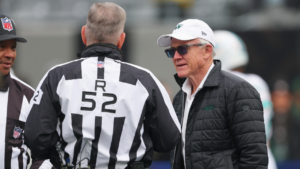
Mar 30, 2026; Phoenix, AZ, USA; New York Giants head coach John Harbaugh during the 2026 NFL Annual League Meeting at the Arizona Biltmore. Mandatory Credit: Mark J. Rebilas-Imagn Images
After 18 years, six AFC North division titles, a Super Bowl ring, and a 180-113 regular season record, Steve Bisciotti fired John Harbaugh. The Ravens had gone 8-9. They’d gone 3-6 at home. And Bisciotti, by all accounts, had decided the future was Lamar Jackson, that the franchise needed a new direction built around its two-time MVP, not around the coach who’d built everything around winning football games. Harbaugh went to the New York Giants. Jesse Minter — 42-year-old defensive coordinator, never been a head coach in the NFL — got the job. Bisciotti spoke to Jackson directly after the season, telling him the extension needed to get done before free agency. That conversation didn’t produce a contract. It produced a restructure. John Harbaugh is already rebuilding in New York. The contractor’s gone. The house is still falling apart.
Riddick Said the Quiet Part Out Loud
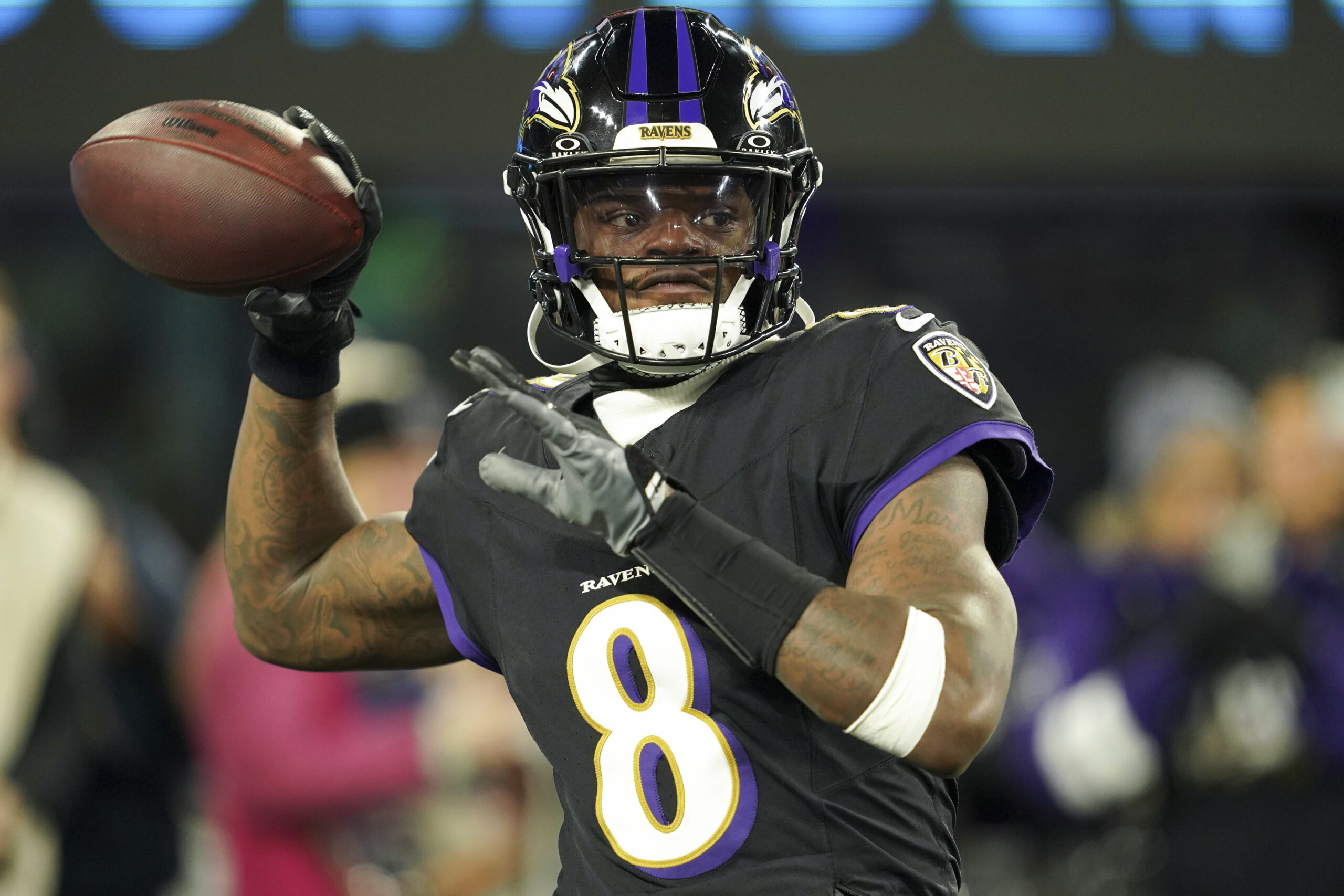
Dec 21, 2025; Baltimore, Maryland, USA; Baltimore Ravens quarterback Lamar Jackson (8) warms up prior to the game against the New England Patriots at M&T Bank Stadium. Mandatory Credit: Mitch Stringer-Imagn Images
“It’s not out of the question for a number of different reasons.” Louis Riddick, ESPN’s Get Up, April 7, 2026, talking about trading Lamar Jackson. Not a hot-take merchant. A former NFL front office executive who understands exactly what he’s saying and exactly how it lands. He didn’t stop there: “There’s always the possibility that Steve Bisciotti says, ‘Hey, look, this isn’t working. This isn’t moving the way I want it to. Is it possible that they could deal Lamar Jackson? Of course it’s possible.” The Ravens are projected $20-plus million over the salary cap in 2027 right now, before they even get to Jackson’s $84.49 million number. When Riddick says “of course it’s possible,” the word doing the work isn’t “possible.” It’s “of course.” That’s not a scenario. That’s a man who knows where the math ends up.
He Negotiated His Own Deal. The Market Didn’t Wait.
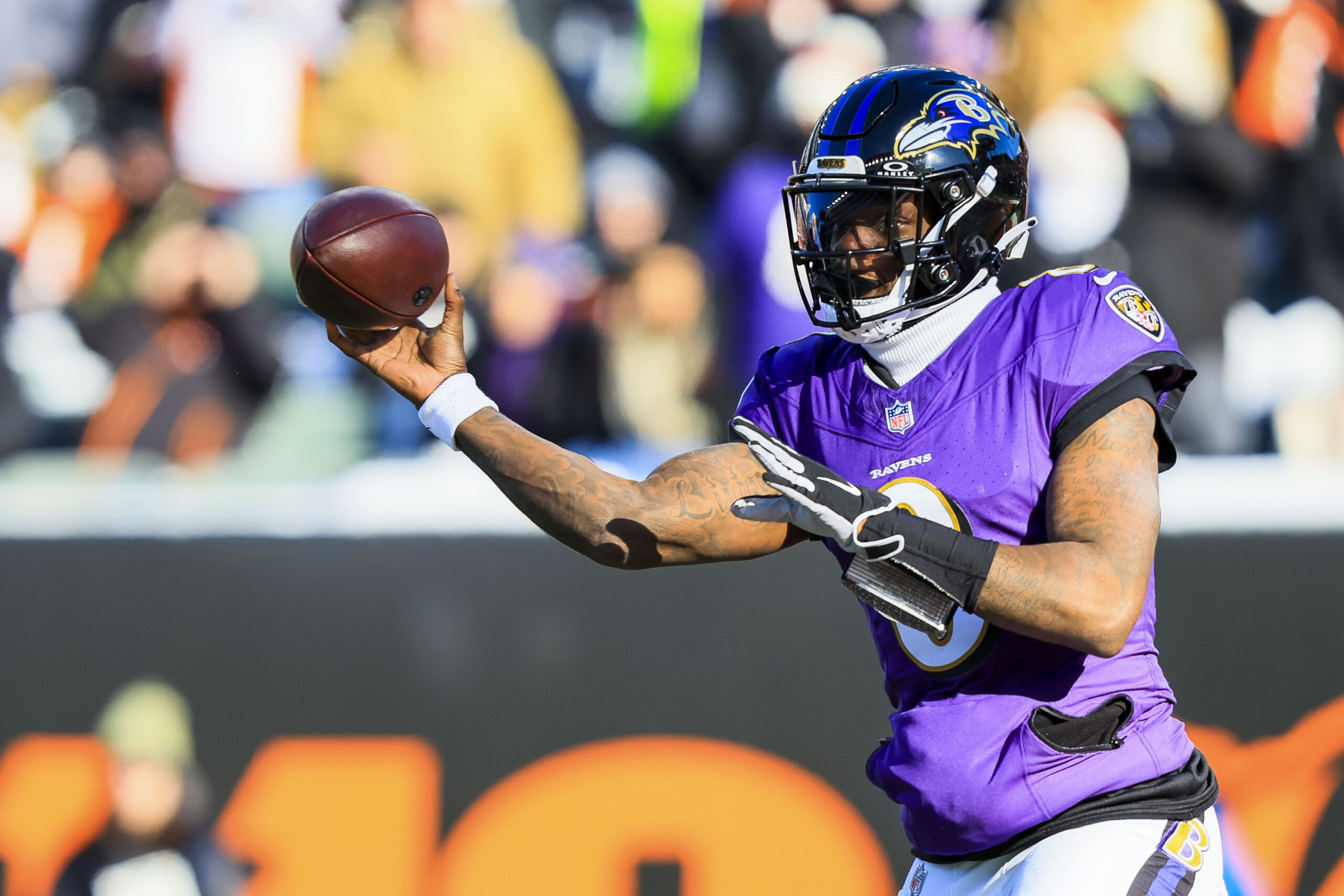
Dec 14, 2025; Cincinnati, Ohio, USA; Baltimore Ravens quarterback Lamar Jackson (8) throws a pass against the Cincinnati Bengals in the first half at Paycor Stadium. Mandatory Credit: Katie Stratman-Imagn Images
When Jackson signed his 2023 extension without an agent — $260 million, $185 million guaranteed, no-trade clause, no-tag clause — the football world stood back and marveled. He’d extracted the richest contract in NFL history at the time. $52 million average annual value. Top of the market. By early 2026, with contracts for Josh Allen, Dak Prescott, Joe Burrow, Trevor Lawrence, Jordan Love, Tua Tagovailoa, Jared Goff, and Justin Herbert all eclipsing or matching his rate, Jackson had fallen to ninth in AAV among NFL quarterbacks, and the 2026 rookie class hadn’t even reset the market yet. Three years. Ninth. The man who outmaneuvered a front office couldn’t outrun a calendar. A veteran agent in early 2026 would have been pushing hard for extension talks while Jackson still had maximum leverage — two MVP trophies, a new coaching staff, the moral high ground. That window opened and closed without a deal. The no-trade and no-tag clauses protect Jackson from being forced out. Nothing in that contract protects him from a market that simply kept going without him.
They Backed Out of a Trade in 24 Hours. Still No Extension.
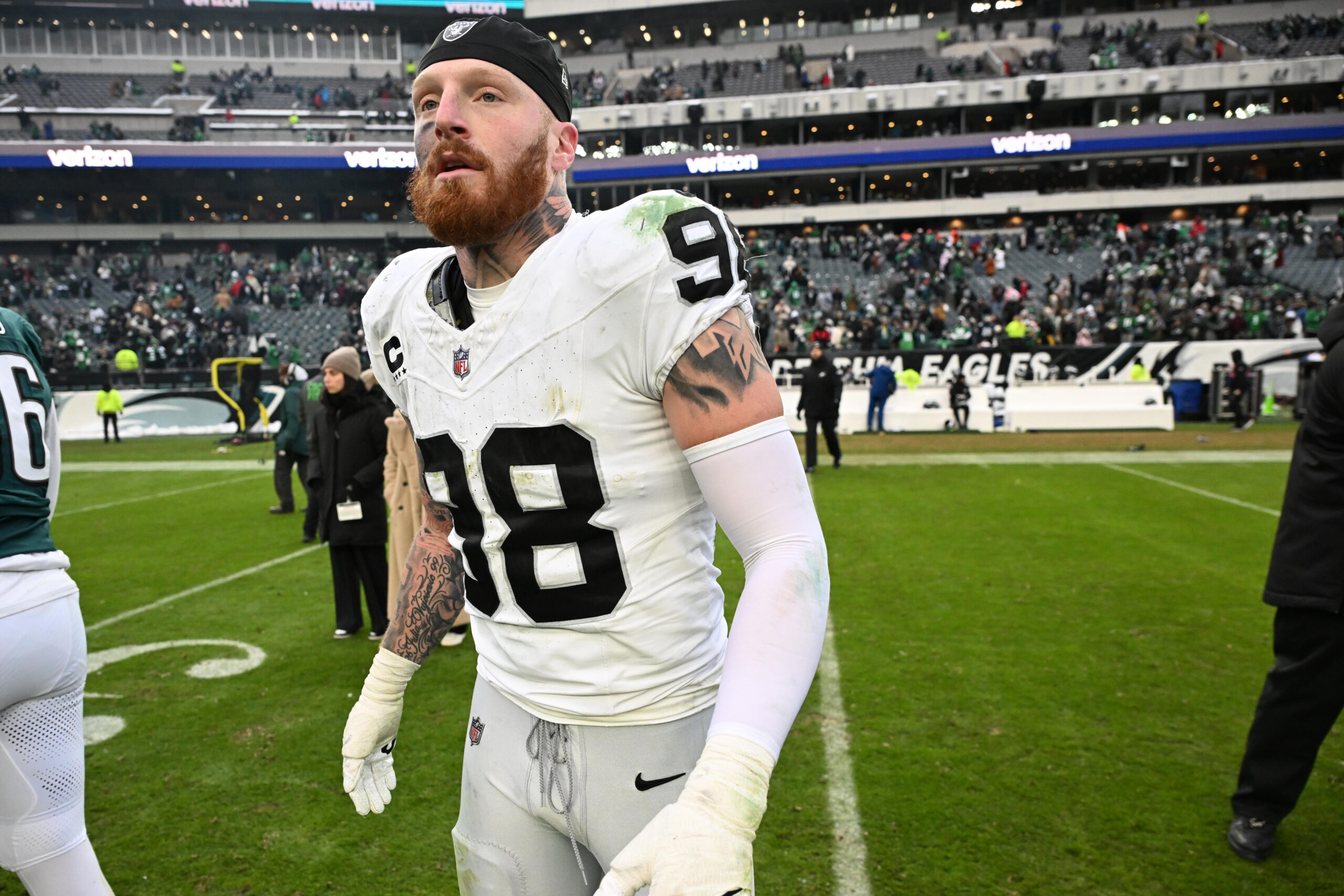
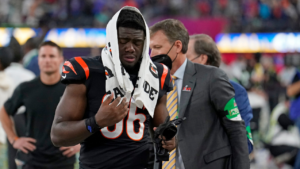
Dec 14, 2025; Philadelphia, Pennsylvania, USA; Las Vegas Raiders defensive end Maxx Crosby (98) on the field after loss to the Philadelphia Eagles at Lincoln Financial Field. Mandatory Credit: Eric Hartline-Imagn Images
On March 6, 2026, the Baltimore Ravens and the Las Vegas Raiders agreed in principle to a blockbuster deal: Maxx Crosby heading to Baltimore in exchange for two first-round picks. Crosby flew in for a physical. Four days later, on March 10, it was over — Crosby failed his medical evaluation and the Ravens pulled out. The Raiders’ statement landed like a cold slap: “The Baltimore Ravens have backed out of our trade agreement for Maxx Crosby. We will have no further comment at this time.” Baltimore signed Hendrickson the next day. The Crosby collapse is worth sitting with. The Ravens were willing to commit two first-rounders for a defensive lineman, nearly closed that deal, then watched it fall apart at the medical. They’ve been trying to extend their two-time MVP quarterback for the better part of a year, with the owner personally telling him the clock was ticking, and he couldn’t get it done. Something about that math doesn’t add up. And the thing that doesn’t add up is leverage.
“Not My Focus.” Until It Was the Only Focus.
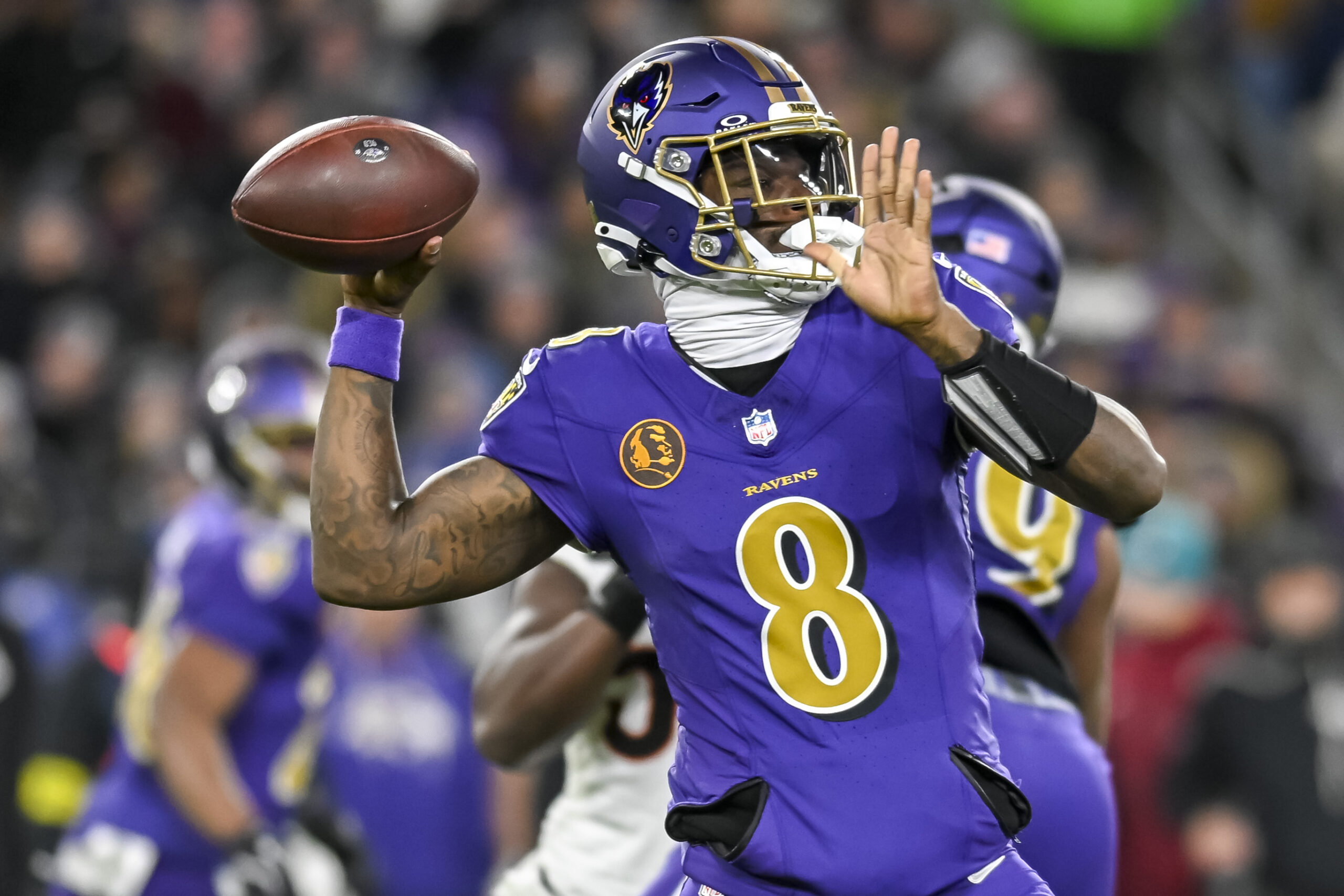
Nov 27, 2025; Baltimore, Maryland, USA; Baltimore Ravens quarterback Lamar Jackson (8) looks to pass during the game against the Cincinnati Bengals at M&T Bank Stadium. Mandatory Credit: Tommy Gilligan-Imagn Images
After Pittsburgh beat Baltimore 26-24 in Week 18 — a loss that ended their season — a reporter asked Lamar Jackson about his future with the Ravens. His answer: “We just lost a game, a divisional game, a game to put us in the playoffs. I’m not even thinking about that right now, to be honest with you. I’m still caught up in what just happened.” Six weeks later, his future was the most discussed contract situation in professional football. Riddick was on ESPN talking about trades. The owner was restructuring instead of extending. A new head coach was running voluntary OTAs while the quarterback situation remained unresolved. Jackson showed up to those workouts, which the league read as a good sign. But there’s a difference between showing up to throw routes in April and agreeing to restructure $260 million worth of your financial future. The Ravens need both. So far, they’ve got one.
Minter Walked Into Someone Else’s Fire
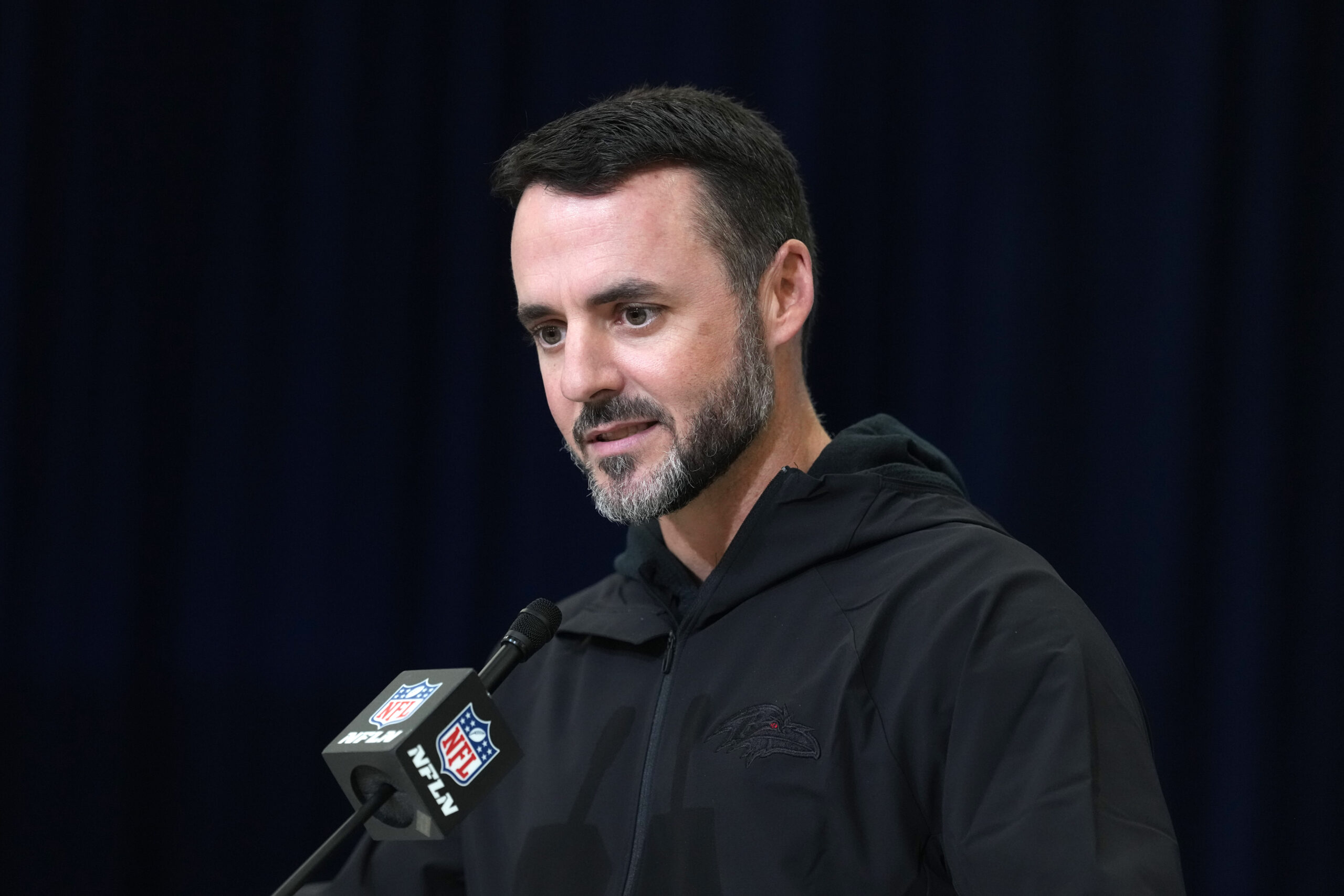
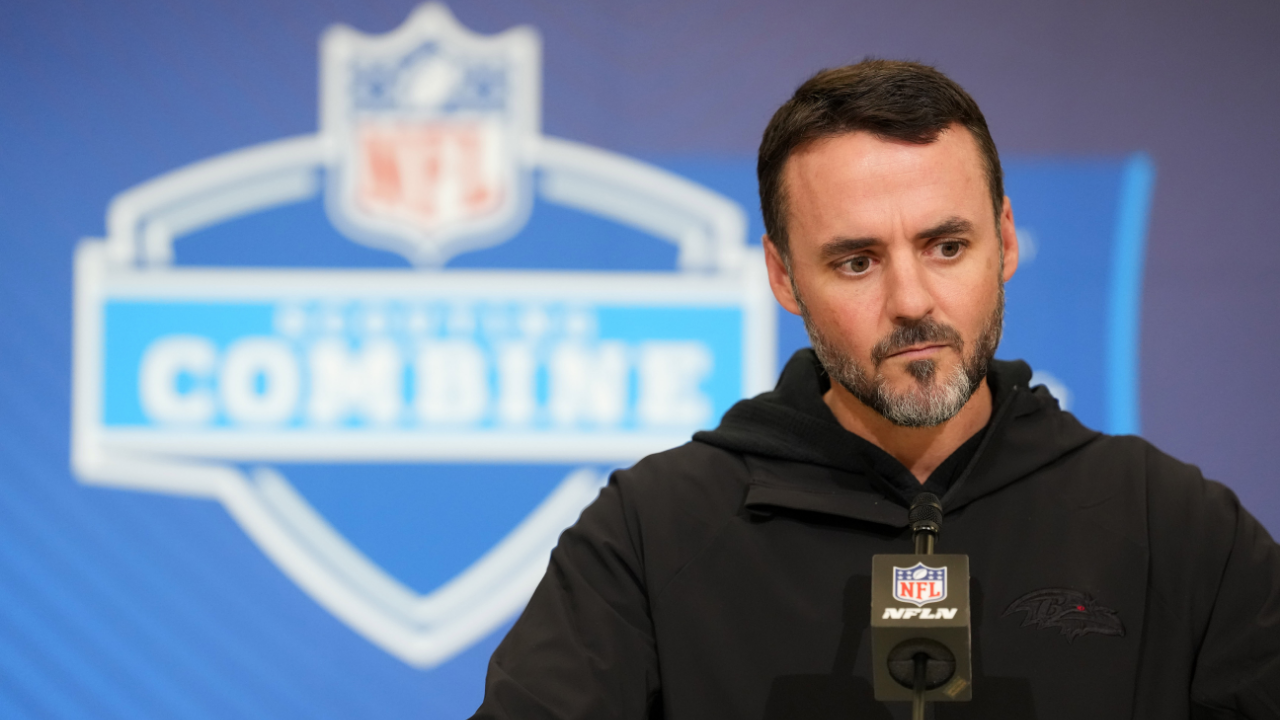
Feb 24, 2026; Indianapolis, IN, USA; Baltimore Ravens coach Jesse Minter speaks at the NFL Scouting Combine at the Indiana Convention Center. Mandatory Credit: Kirby Lee-Imagn Images
Jesse Minter’s first order of business as a first-time NFL head coach wasn’t installing a defensive scheme or building a culture. It was inheriting a 3-6 home record, a fired legend, a failed trade, and a franchise quarterback whose contract is now a league-wide cautionary tale. Harbaugh built the program Minter now runs. Six division titles, a Super Bowl, 18 seasons of organizational stability. All of it was replaced by a new voice because Bisciotti decided the future wore number eight. What Minter actually controls — game plans, roster development, scheme — is the easy part of his job. The hard part is building trust in a locker room that watched its head coach of 18 years get walked out the door, watched an offseason collapse into restructures and botched trades, and now waits to see whether its franchise quarterback will still be a Raven when training camp opens.
The Counter-Argument Exists
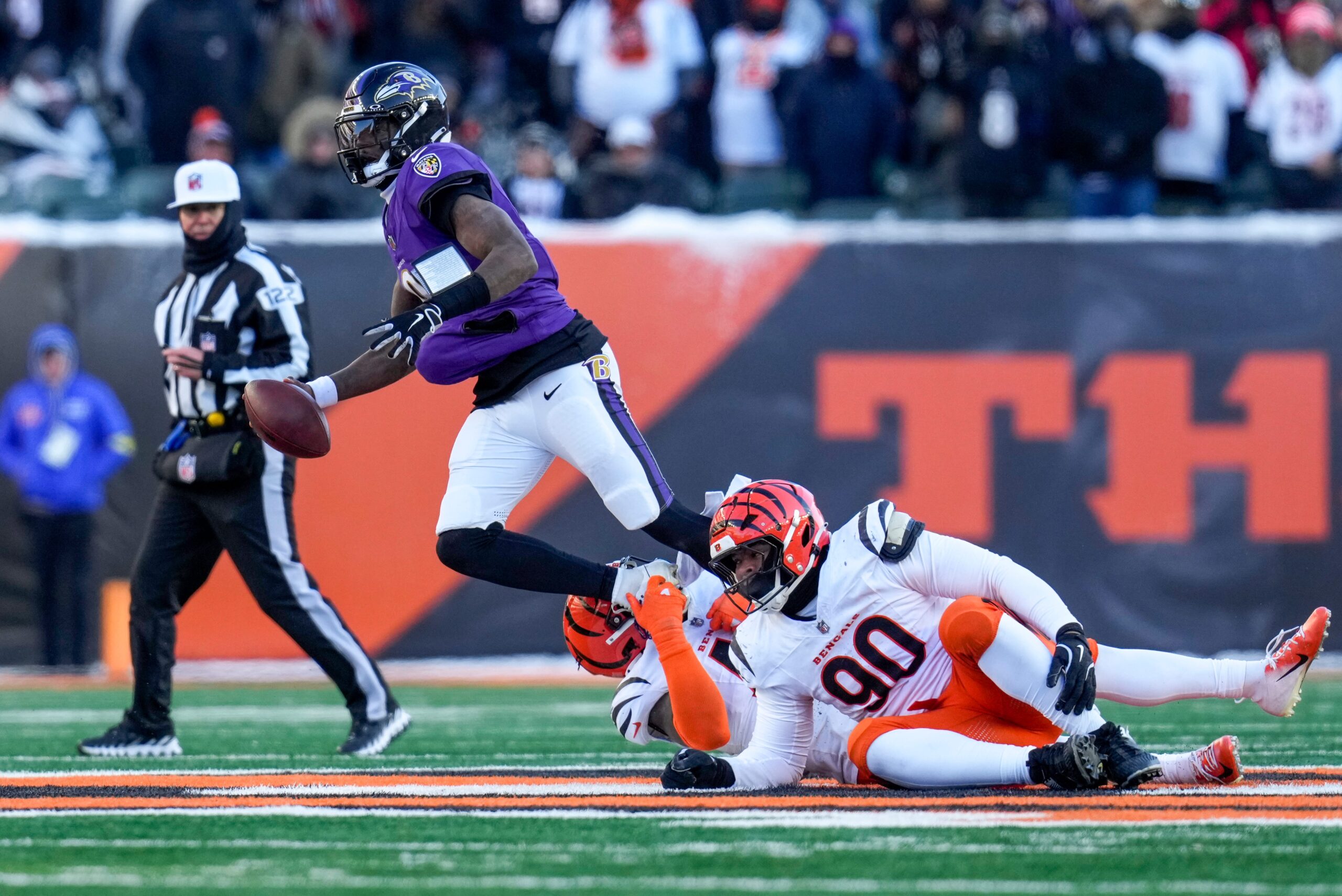
Baltimore Ravens quarterback Lamar Jackson (8) is sacked by Cincinnati Bengals linebacker Demetrius Knight Jr. (44) in the third quarter of the NFL Week 15 game between the Cincinnati Bengals and the Baltimore Ravens at Paycor Stadium in Cincinnati on Sunday, Dec. 14, 2025. The Bengals were shut out, 24-0.
The Ravens can restructure Jackson’s contract again in 2027. NBC Sports calculated that the move would reduce his cap number to approximately $53.68 million for that season. That’s a number a contending team can build around. The problem is what Spotrac’s void-year breakdown shows on the back end: exercise that option and dead cap climbs to $91.625 million once the contract expires, spread across two post-contract seasons. Every restructure is a credit card advance — you can keep pulling cash against the limit, but the balance doesn’t disappear. Baltimore has already borrowed from 2027. Borrowing again from 2028 means the franchise is managing dead money deep into the next decade. Jackson could still sign an extension tomorrow and make all of this moot. The 2026 season could change the conversation entirely.
One Season to Answer Everything
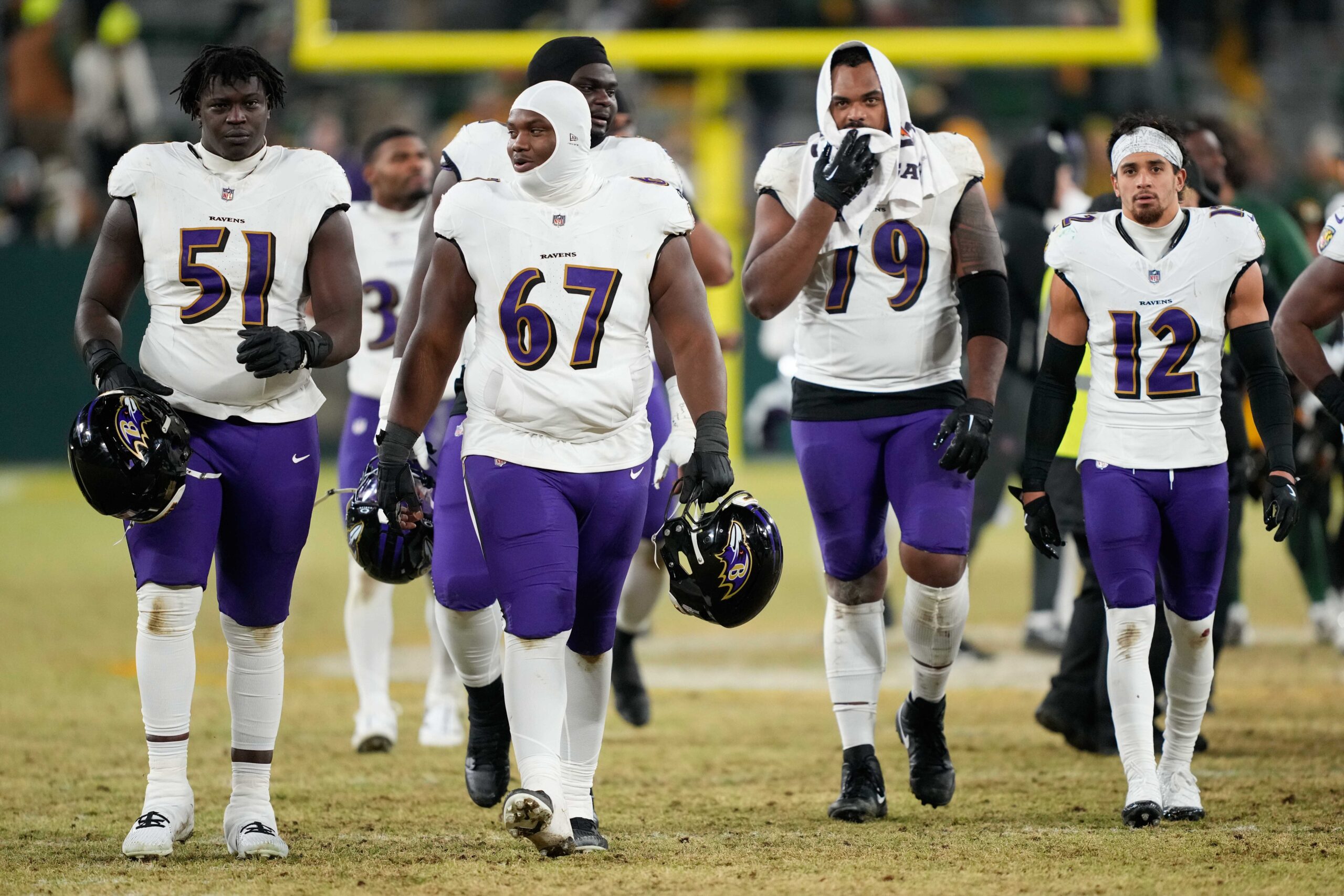
Dec 27, 2025; Green Bay, Wisconsin, USA; Baltimore Ravens offensive tackle Emery Jones Jr. (51), Baltimore Ravens center Corey Bullock (67), Baltimore Ravens defensive tackle CJ Okoye (91), Baltimore Ravens offensive tackle Ronnie Stanley (79) and Baltimore Ravens safety Alohi Gilman (12) after a game against the Green Bay Packers at Lambeau Field. Mandatory Credit: Kayla Wolf-Imagn Images
Here is what 2026 decides. If Jackson plays like the guy who won two MVPs — if Hendrickson disrupts opposing offenses, if Minter’s defense holds, if Baltimore wins the AFC North and makes noise in January — the extension negotiation reopens with real stakes on both sides. Bisciotti gets his validation. Jackson gets his market reset. The cap crisis becomes a footnote. But if the Ravens go 8-9 again, or worse, the question Riddick raised publicly becomes the question every front office in the league is quietly running the numbers on: what would it actually take to trade Lamar Jackson? He has a no-trade clause — he can say no to any deal. He could stall until 2028 when he walks out a free agent who can’t be tagged. But Bisciotti fired John Harbaugh to avoid exactly this kind of organizational limbo. One year, one number, no way out. The money doesn’t lie about which way the pressure is building.
Sources
Ravens Restructure Lamar Jackson’s Contract — Baltimore Ravens Official
Ravens rework Lamar Jackson deal, still eye extension — ESPN (Adam Schefter)
Ravens exercise right to restructure Lamar Jackson’s contract — NBC Sports / ProFootballTalk
Will this be Lamar Jackson’s final season with the Ravens? It’s not out of the question — NJ.com / The Athletic
Ravens nix Maxx Crosby trade with Raiders over failed physical — The Athletic
Ravens fire head coach John Harbaugh after 18 seasons — The Athletic