

Mike Evans walked away from Tampa Bay after 12 seasons, 866 receptions, 13,052 yards, and 108 touchdowns. He signed a three-year deal worth about $42.5 million with the San Francisco 49ers on March 12, 2026, and the most accomplished receiver on the free agent market didn’t chase the richest offer. His agent Deryk Gilmore said the decision was “never about money,” and Buccaneers and league executives have since confirmed Tampa put more cash on the table than San Francisco did. The contract structure backs that up. Only $14.3 million is fully guaranteed at signing, all of it tied to Year 1, with the rest dependent on team decisions and performance. That’s not a retirement payday. That’s a bet on himself.
Why San Francisco, Why Now
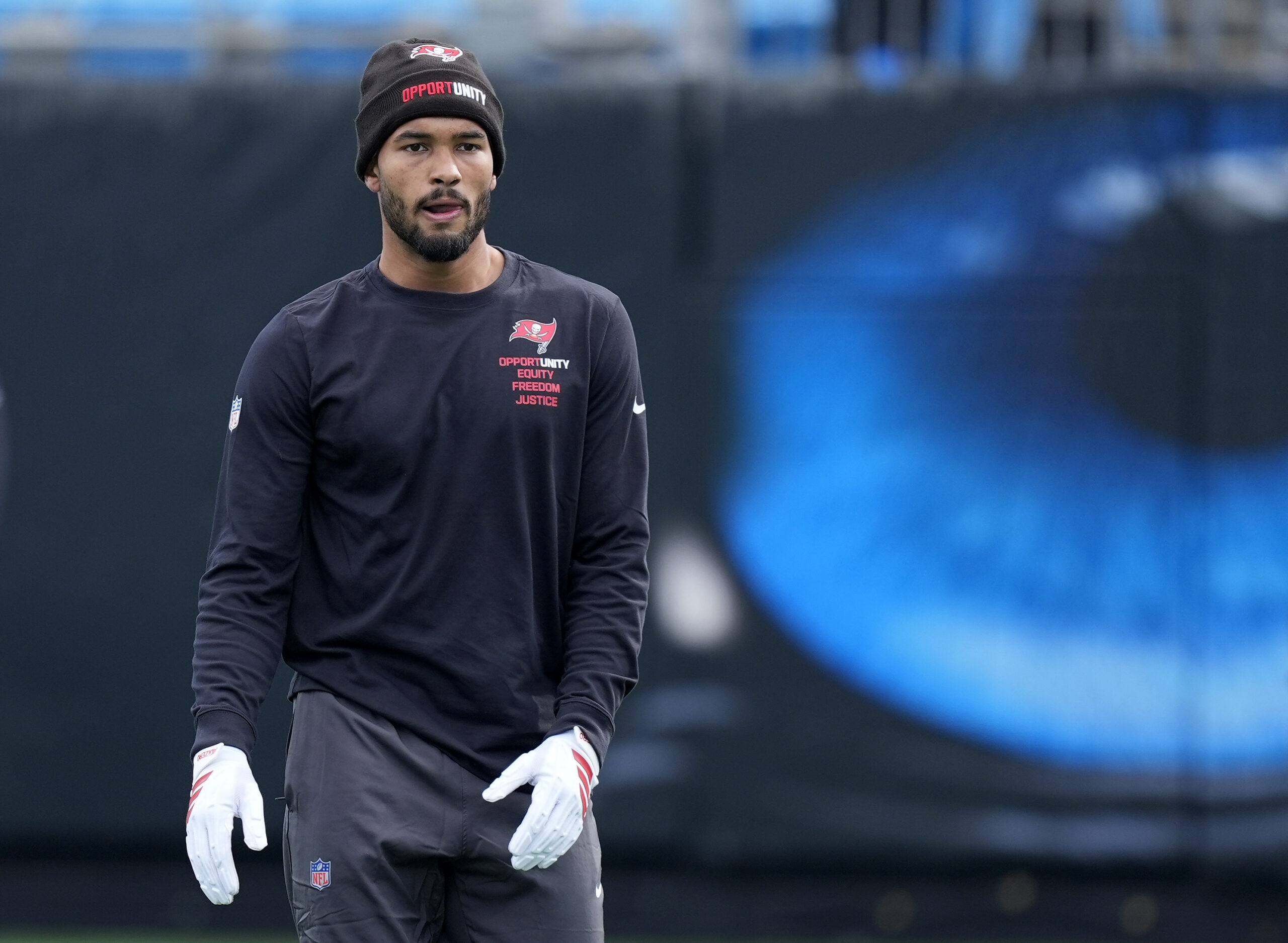
Dec 21, 2025; Charlotte, North Carolina, USA; Tampa Bay Buccaneers wide receiver Mike Evans (13) during pregame warmups against the Carolina Panthers at Bank of America Stadium. Mandatory Credit: Jim Dedmon-Imagn Images
Tampa Bay finished 7–10 in 2025 and missed the playoffs. San Francisco went 12–5 and made the postseason before being blown out 41–6 by Seattle, a loss that exposed how thin their margin for error had become. Evans chose a playoff contender with Kyle Shanahan’s receiver‑friendly system over a franchise where he’d already won a Super Bowl and that’s now threading the needle between retool and rebuild. “Football wise, this was the best spot for me,” Evans said. Brock Purdy posted a 7–2 record with 20 touchdowns and an 86.1 PFF grade in 2025, giving Evans a young, efficient quarterback at the center of his next act. And despite a down year statistically, Evans tied Jerry Rice’s record with 11 consecutive 1,000‑yard seasons to start his career. He wants a second ring, not a farewell tour.
The Grocery Bill Hits Tampa
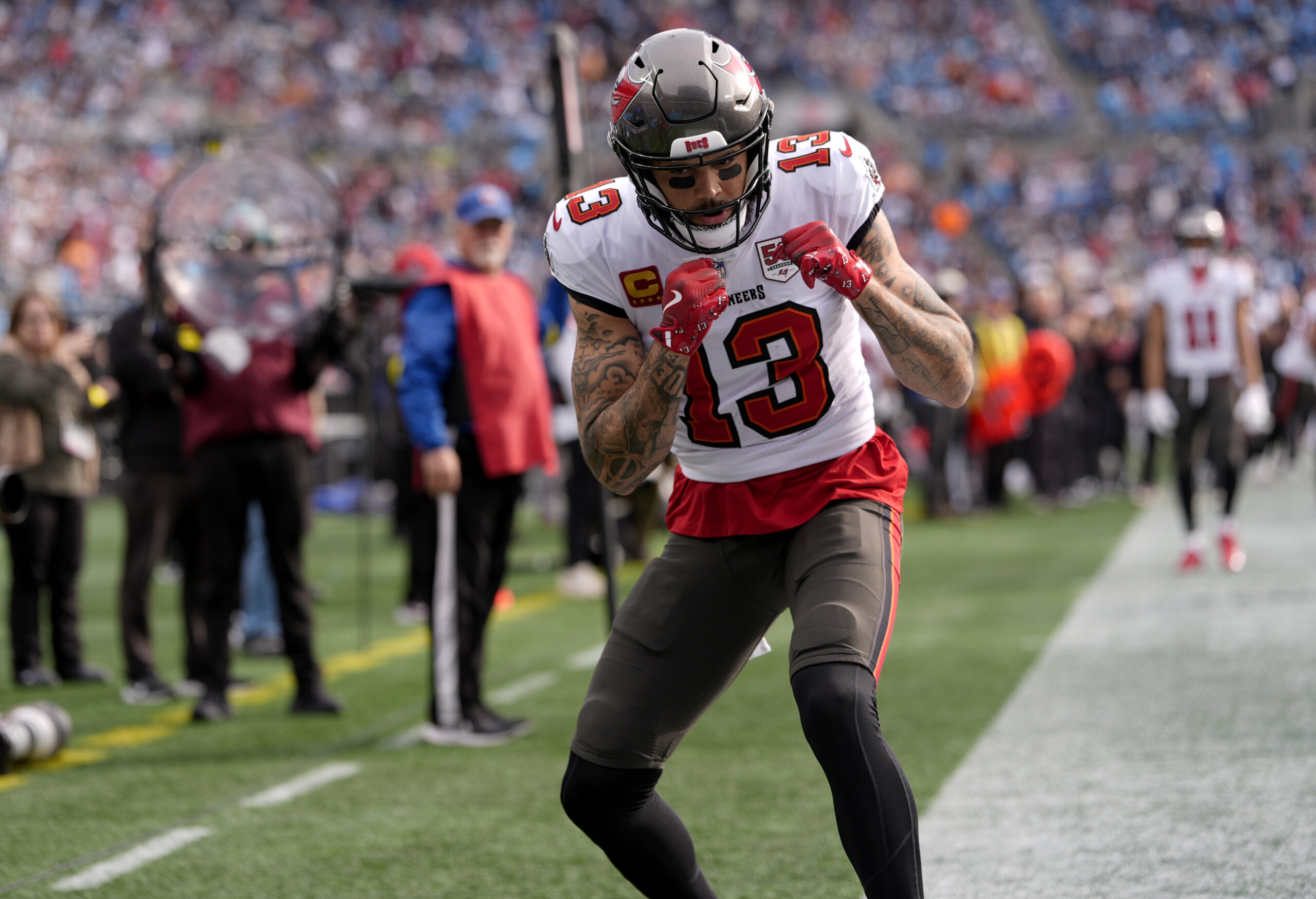
Dec 21, 2025; Charlotte, North Carolina, USA; Tampa Bay Buccaneers wide receiver Mike Evans (13) reacts a touchdown during the first half against the Carolina Panthers at Bank of America Stadium. Mandatory Credit: Jim Dedmon-Imagn Images
The Buccaneers lost the franchise’s all‑time leader in six major statistical categories. Evans holds the team records for receptions, receiving yards, receiving touchdowns, total touchdowns, yards from scrimmage, and 100‑yard receiving games, along with multiple playoff receiving marks. Now the Bucs face a 2026 draft with a gaping hole at receiver and no obvious heir to his role on the roster. That’s not a depth chart problem. That’s an identity crisis for a franchise that built its modern brand around one player’s week‑to‑week reliability. Twelve years of production vanished in a single free agency decision. Tampa’s rebuild just got a timeline nobody budgeted for.
The 49ers Rewired Their Draft Board

Dec 11, 2025; Tampa, Florida, USA; Tampa Bay Buccaneers wide receiver Mike Evans (13) looks on during warmups before the game against the Atlanta Falcons at Raymond James Stadium. Mandatory Credit: Kim Klement Neitzel-Imagn Images
Evans gives San Francisco a ready‑made WR1 to pair with Deebo Samuel, Brandon Aiyuk’s looming contract considerations, and a roster geared to win now. With the April 23 draft approaching, the 49ers can lean harder into defensive priorities and line of scrimmage help instead of hunting for an instant‑impact wideout at the top of the board. Veteran star plus drafted depth is a different calculus than hoping a rookie can immediately replace what you didn’t sign in March. Evans bought the front office a kind of flexibility that young draft picks can’t provide: immediate, bankable production with minimal install time. Every team trying to build its receiver room primarily through the draft just watched San Francisco skip a step by writing one check to a future Hall of Famer.
The Contract Nobody Expected
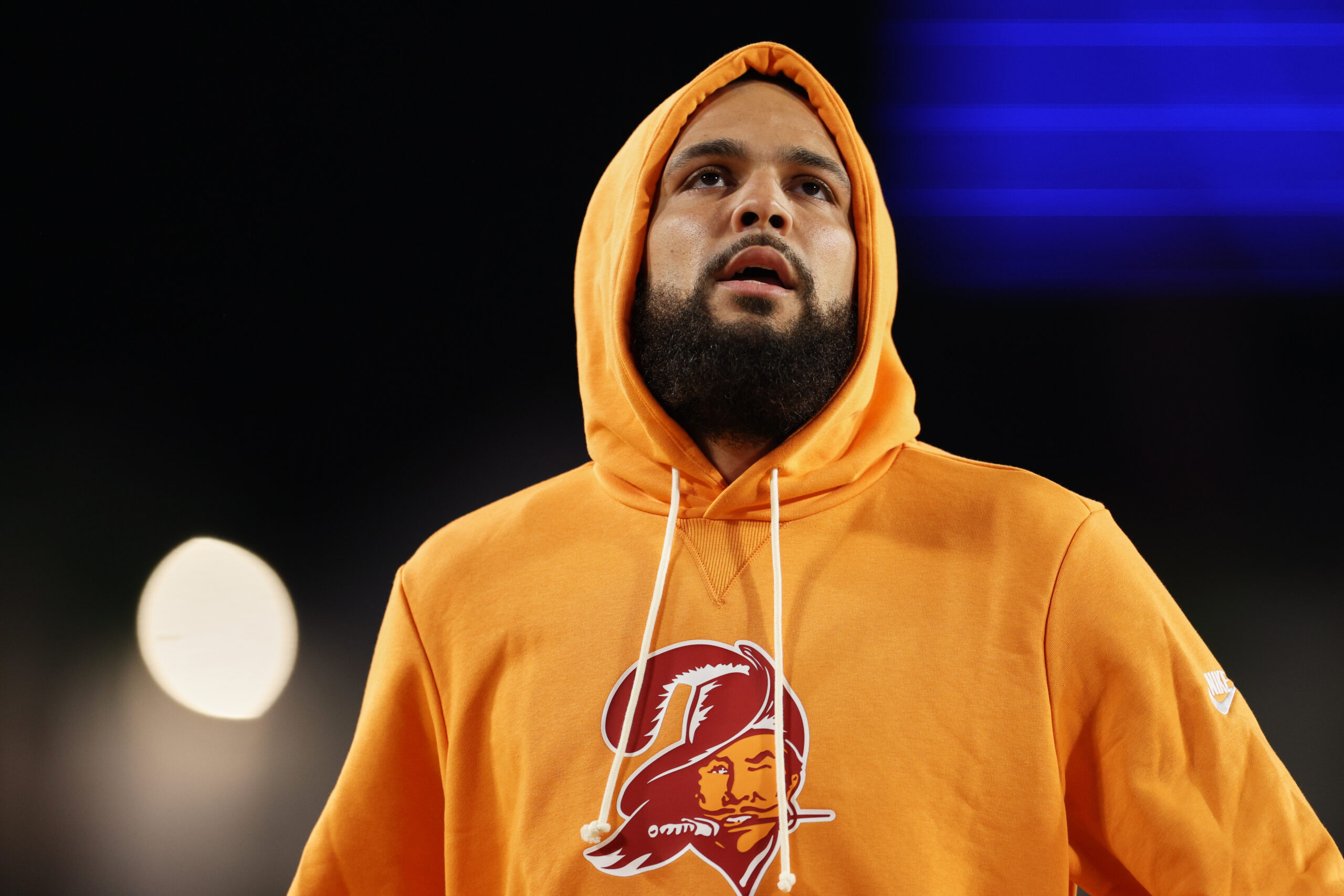
Dec 11, 2025; Tampa, Florida, USA; Tampa Bay Buccaneers wide receiver Mike Evans (13) warms up before the game against the Atlanta Falcons at Raymond James Stadium. Mandatory Credit: Nathan Ray Seebeck-Imagn Images
Here’s where the cascade crosses into territory nobody’s discussing. ESPN’s breakdown shows Evans’ contract is technically a three‑year, $42.5 million deal but in practice functions like a one‑year, $14.3 million fully guaranteed commitment with team‑controlled options after that. His deal includes a $12 million signing bonus and option bonuses of $12.05 million in 2027 and $10.95 million in 2028, which the 49ers can choose to exercise or not. The player can’t force those options; the team decides whether the relationship continues at full freight. A six‑time Pro Bowler, a two‑time All‑Pro, the most decorated receiver in this year’s market, accepted a structure where the franchise holds every clean exit ramp after Year 1. That’s not how aging stars typically maximize leverage. That’s how a player who genuinely prioritized winning and fit over long‑term security signs. Same mechanism, different industry: this is a performance contract disguised as a veteran deal.
The Hidden Blueprint for Aging Stars
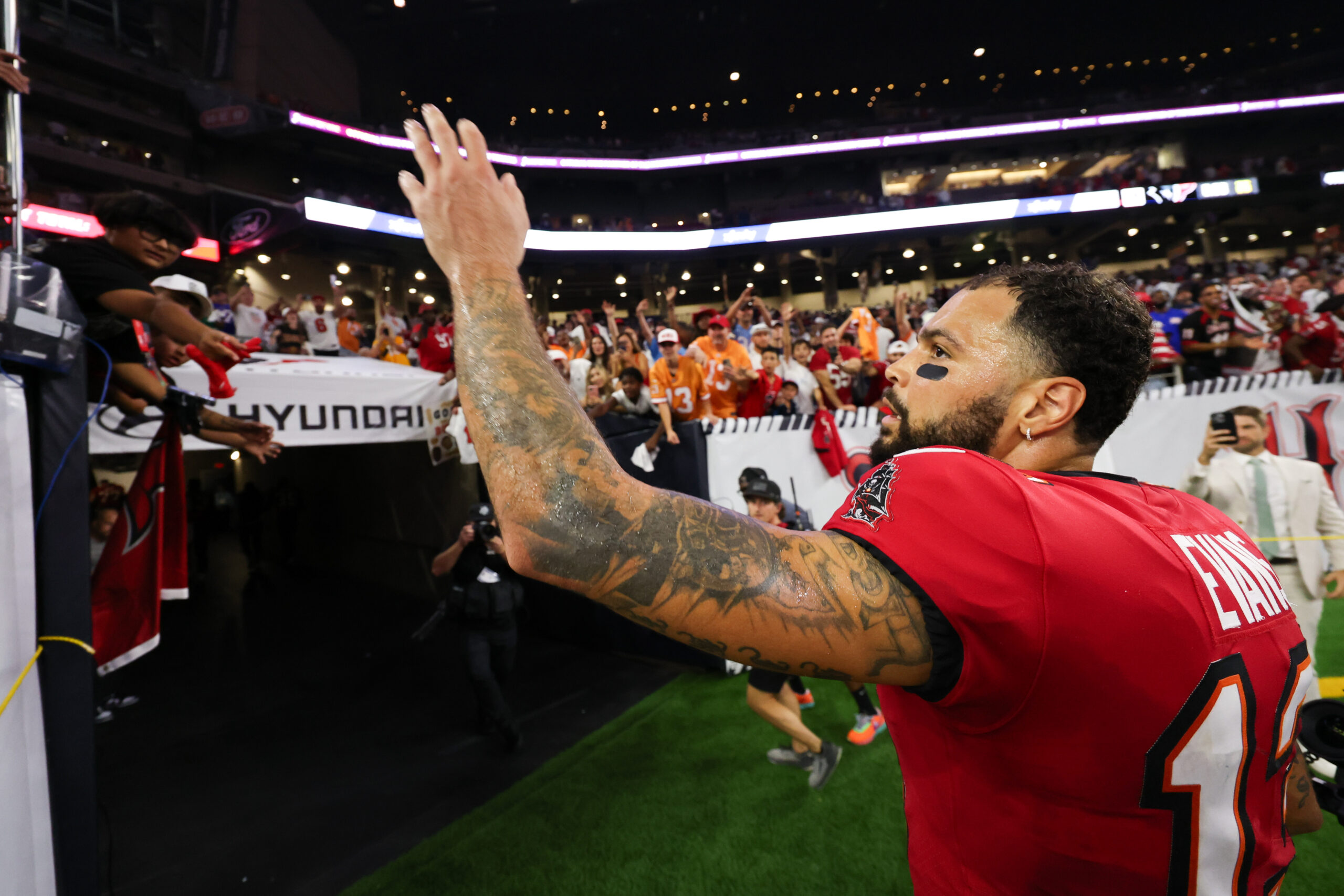
Sep 15, 2025; Houston, Texas, USA; Tampa Bay Buccaneers wide receiver Mike Evans (13) waves to fans after the game against the Houston Texans at NRG Stadium. Mandatory Credit: Thomas Shea-Imagn Images
Option bonuses. Void years. Front‑loaded guarantees with team‑controlled exits. Evans’ deal is a textbook example of how the NFL’s financial architecture lets contenders acquire aging legends with tightly managed risk. The 49ers absorb roughly $4.25 million in cap space for Year 1 while paying $14.3 million in cash, thanks to bonus proration stretching into four void years. On paper it’s three years. In practice it’s a one‑year rental with two optional extensions, each with a team‑side decision point. That gap between cap charge and cash outlay is the hidden engine. It touches every front office trying to squeeze one more star into a contender’s window. Every aging receiver’s next contract just got reshaped by Evans’ willingness to accept that structure.
The Voice Inside the Bet
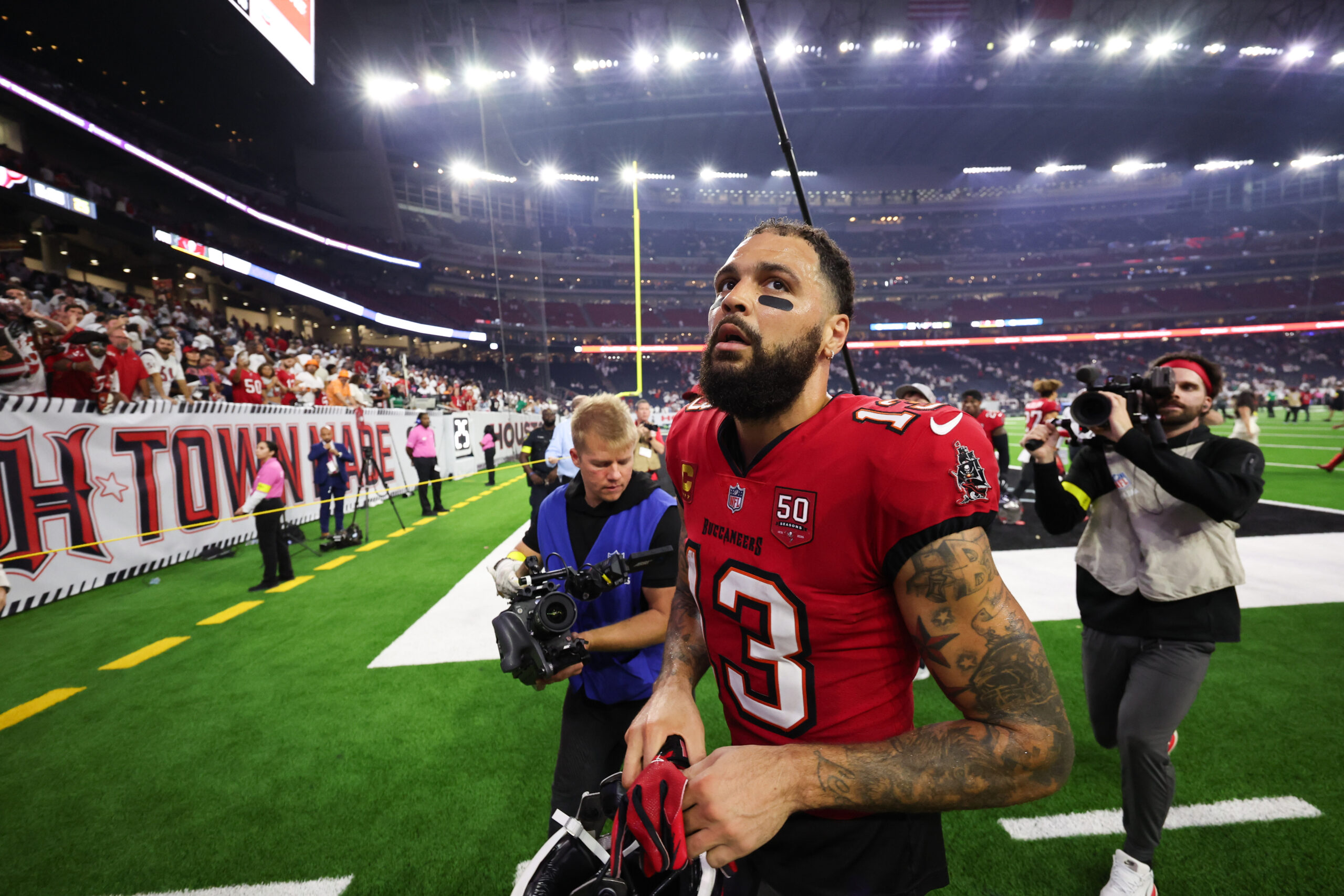
Sep 15, 2025; Houston, Texas, USA; Tampa Bay Buccaneers wide receiver Mike Evans (13) looks on after the game against the Houston Texans at NRG Stadium. Mandatory Credit: Thomas Shea-Imagn Images
Evans played just eight games in 2025. A broken collarbone cost him six weeks. Hamstring issues followed. After 12 years of near‑perfect durability, his body finally blinked. He finished with 30 receptions, 368 yards, and three touchdowns, easily the least productive season of his career. Now he arrives in a locker room that already views him as a jolt of fresh air. Teammates have called his move to San Francisco a “new chapter” and a chase for “a new challenge,” echoing the language his agent and general manager Jason Licht have used to describe why he left Tampa. Think about what that means. A man with 108 career touchdown catches, tied with Jerry Rice for 11 straight 1,000‑yard seasons, coming off his worst statistical year, chose a contract that forces him to prove he can still be that player. The collarbone healed. The question is whether the rest of him did.
A New Rule for Free Agency
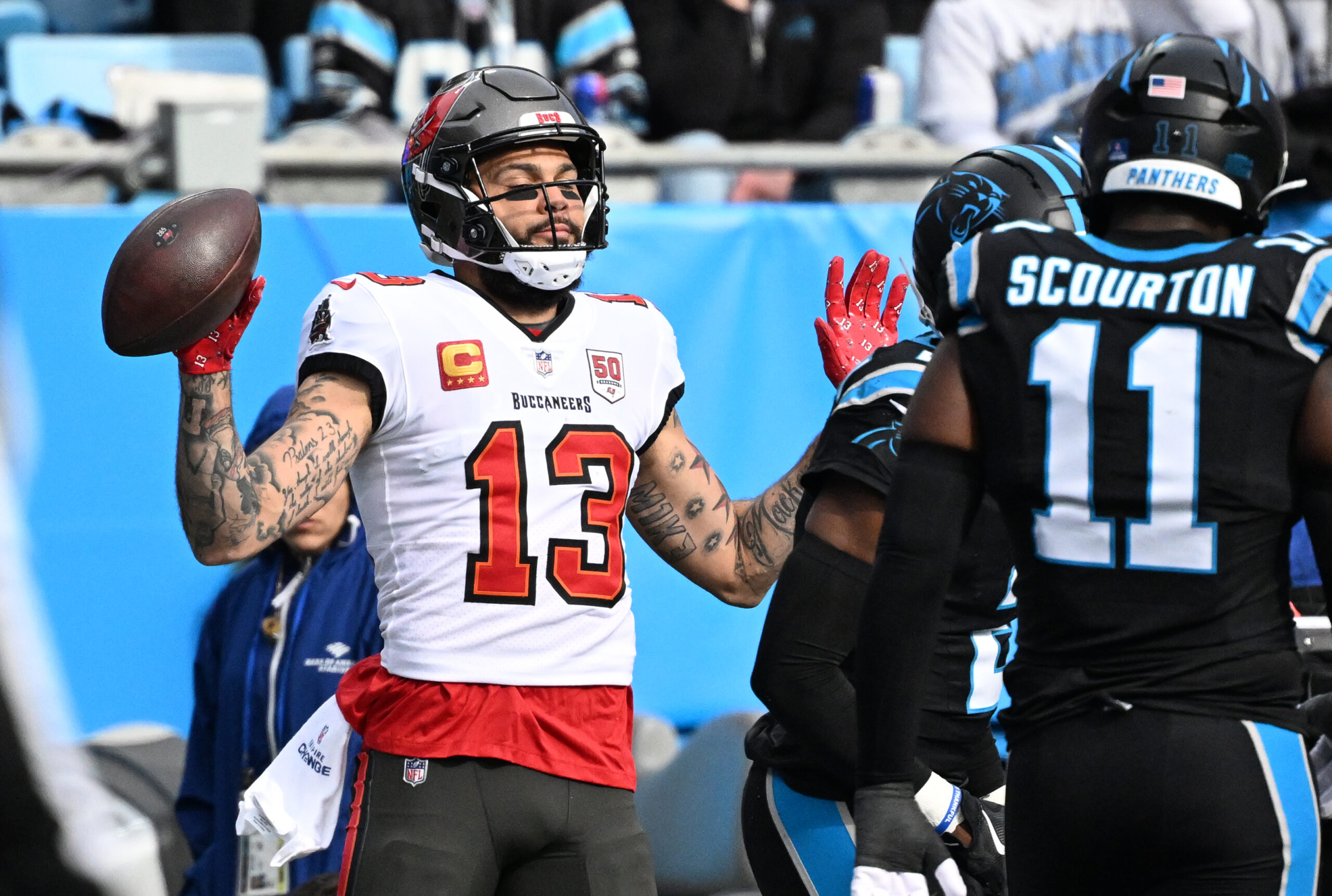
Dec 21, 2025; Charlotte, North Carolina, USA; Tampa Bay Buccaneers wide receiver Mike Evans (13) reacts after a touchdown during the first half against the Carolina Panthers at Bank of America Stadium. Mandatory Credit: Bob Donnan-Imagn Images
Evans’ deal sets a template for how Hall of Fame‑bound veterans can negotiate their final big move. “Never about money” stops being empty spin when the contract structure validates the claim—when a player turns down a richer offer from his original team to join a contender on a deal loaded with options and limited guarantees. Option‑heavy veteran contracts won’t replace traditional multi‑year megadeals for stars in their prime, but for thirty‑something legends chasing one more ring, this framework just became the cleanest way to match risk and reward. Front‑load the guarantees. Attach option bonuses to Years 2 and 3. Let performance dictate the relationship. The player gets his championship shot. The franchise gets its escape hatches. Both sides accept risk, and both sides keep the window open if it works. That model didn’t exist at this level of profile before March 12, 2026.
Who Wins, Who Bleeds

Dec 21, 2025; Charlotte, North Carolina, USA; Tampa Bay Buccaneers wide receiver Mike Evans (13) reacts a touchdown during the first half against the Carolina Panthers at Bank of America Stadium. Mandatory Credit: Jim Dedmon-Imagn Images
The 49ers got an all‑time great at a relative discount with minimal long‑term obligation. Evans got his contention window in an offense built to feature versatile pass catchers. Tampa Bay lost the most productive player in its history at the exact moment its roster and quarterback situation were already tipping into uncertainty. Young receivers entering free agency will study this deal and wonder what it means for their own market—whether contenders will choose short‑term bets on legends over longer, richer commitments to players still building résumés. And Evans himself? He traded his iconic No. 13 for No. 5, the jersey he wore in high school and youth ball, because Brock Purdy already owns 13 in San Francisco. The number had belonged most recently to Demarcus Robinson, who now has to move aside for the future Hall of Famer. Twelve years of identity, gone in a single digit. The irony: the man who said it was never about money just made the most expensive symbolic sacrifice in the league—he left more cash in Tampa and still gave up the number that defined his career.
The Cascade Keeps Breaking
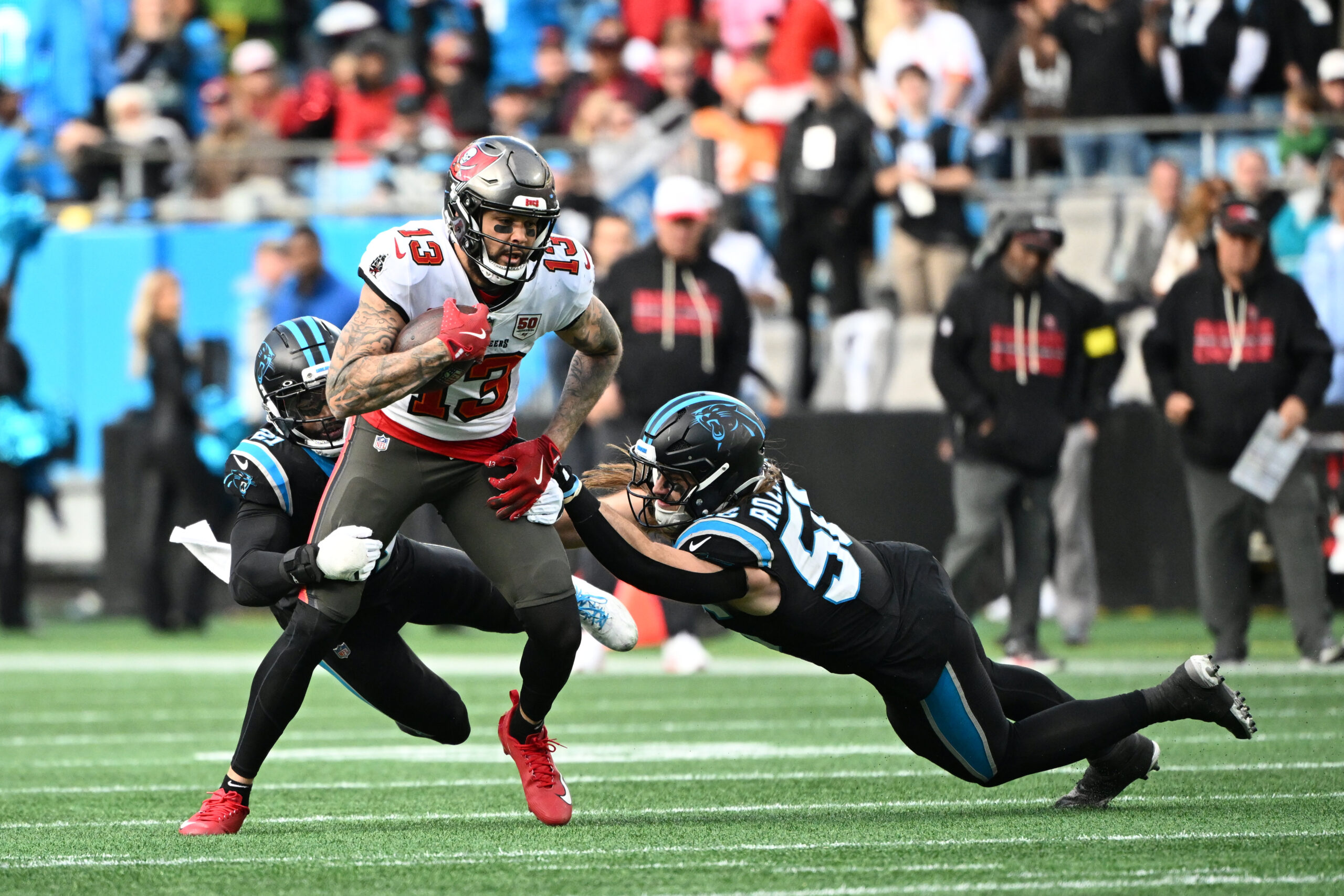
Dec 21, 2025; Charlotte, North Carolina, USA; Tampa Bay Buccaneers wide receiver Mike Evans (13) with the ball as Carolina Panthers safety Nick Scott (21) and linebacker Christian Rozeboom (56) defend in the fourth quarter at Bank of America Stadium. Mandatory Credit: Bob Donnan-Imagn Images
If Evans produces in 2026, every aging star with a ring and a résumé will point to this contract structure when they call a contender. If his body fails again, front offices will treat option‑heavy veteran deals as cautionary tales and tighten their offers, but the blueprint will still exist. The Buccaneers will try to counter through the draft and development. Other franchises will accelerate their own veteran pursuits now that a Hall of Fame trajectory player has publicly valued situation over salary. The 49ers, fresh off a 41–6 playoff humiliation, didn’t sign Evans to re‑live that. They signed him to make sure it never happens again. One signing. One contract structure. One decision that quietly rewired how legends finish their careers. And the ripple still hasn’t stopped moving.
Sources:
“Mike Evans Moving On After 12 Seasons with the Bucs.” Tampa Bay Buccaneers, 8 Mar 2026.
“Compilation of Mike Evans’ Career Stats and Accolades.” Tampa Bay Buccaneers, 6 Jan 2026.
“Breaking Down Mike Evans’ Contract with the 49ers.” ESPN, 17 Mar 2026.
“Mike Evans’ Agent Releases Statement on His Departure from Tampa Bay.” Yahoo Sports, 9 Mar 2026.