
The Detroit Lions, fresh off a franchise-best 15-win season in 2024, watched their offensive line disintegrate across two brutal offseasons. Four-time Pro Bowl center Frank Ragnow retired. Veteran guard Kevin Zeitler signed with Tennessee. Then this spring, longtime left tackle Taylor Decker requested his release, and center Graham Glasgow followed him out the door. That unit once powered the second-most points and touchdowns of any five-man group in the NFL. Now the Lions were working the phones, desperate to trade up in the 2026 draft.
How the Collapse Happened in Stages
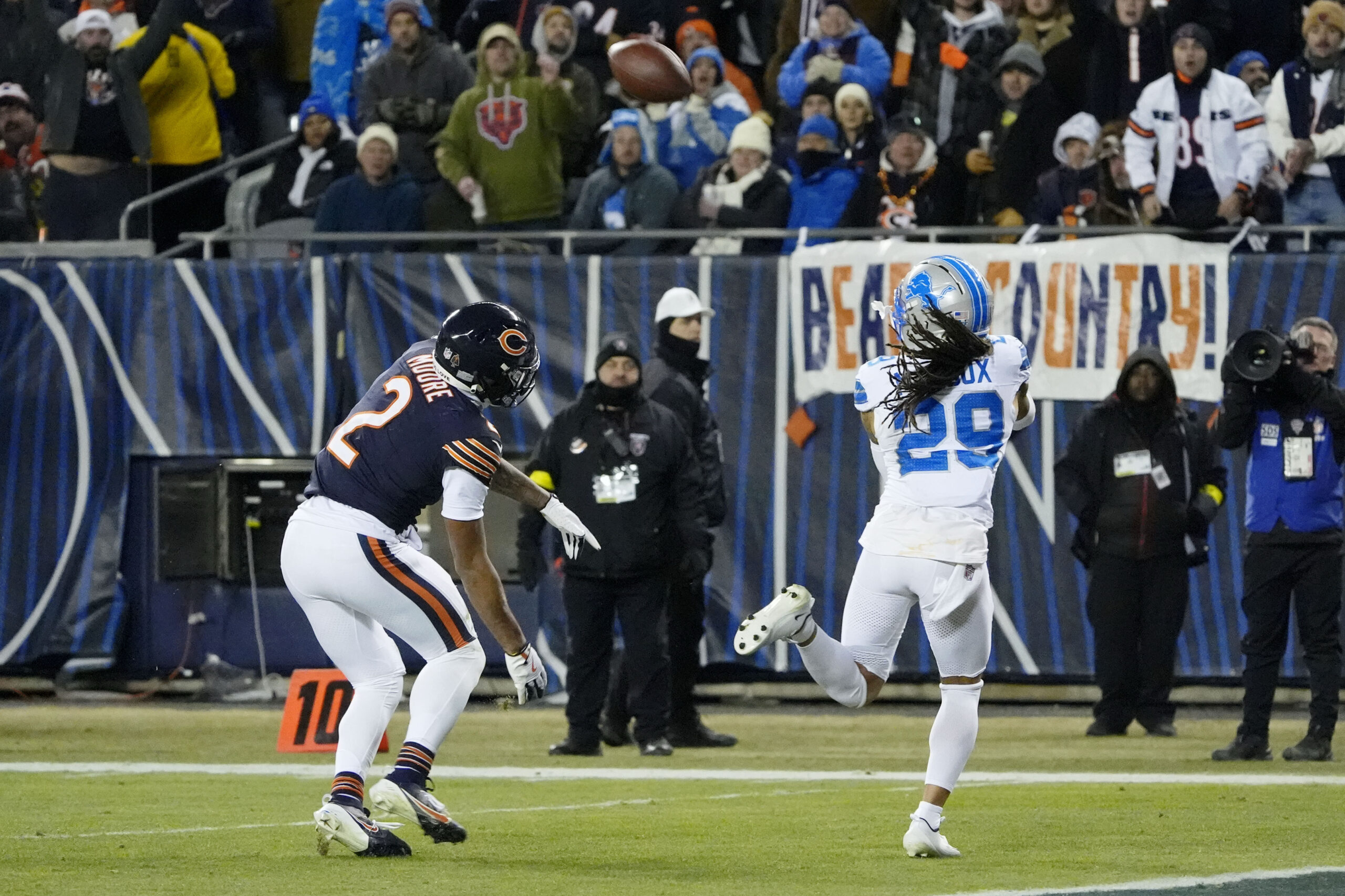
Jan 4, 2026; Chicago, Illinois, USA; Detroit Lions cornerback Avonte Maddox (29) intercepts a pass intended for Chicago Bears wide receiver DJ Moore (2) during the second half at Soldier Field. Mandatory Credit: David Banks-Imagn Images
June 2025 gutted the interior. Ragnow walked away from football. Zeitler left for the Titans. Two starters gone before training camp. Detroit limped through the 2025 season with patchwork replacements, and the damage compounded. By April 2026, Decker and Glasgow were released, carrying a combined $21 million in cap implications. Four starting linemen across two consecutive offseasons. The mechanism was sequential failure: each departure made the next one more likely, because the remaining players absorbed more punishment behind a weaker unit.
Your Grocery Bill Has an Offensive Line Problem
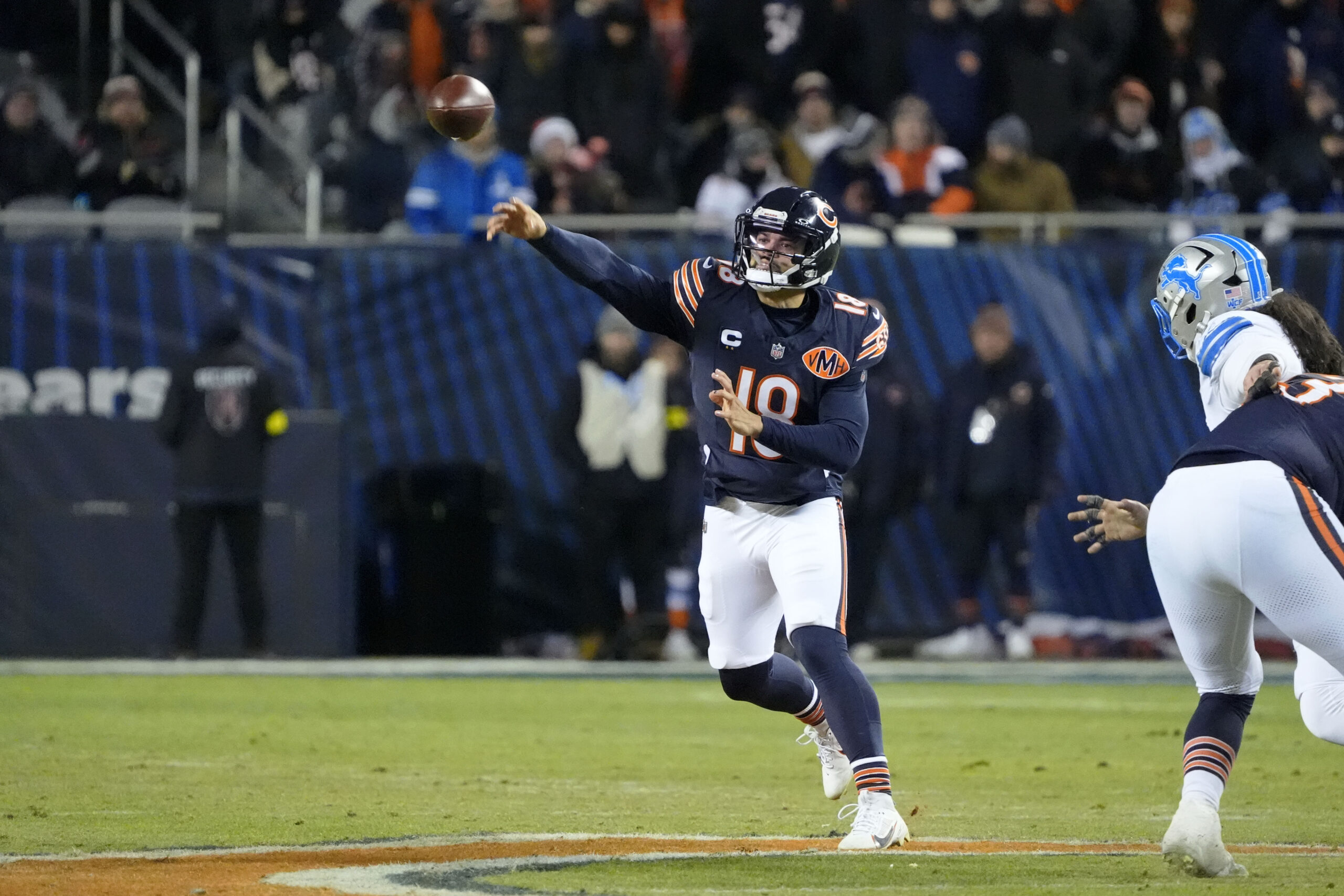
Jan 4, 2026; Chicago, Illinois, USA; Chicago Bears quarterback Caleb Williams (18) passes the ball against the Detroit Lions during the second half at Soldier Field. Mandatory Credit: David Banks-Imagn Images
The direct hit lands on the field. Ragnow and Zeitler represented 40% of an offensive line that produced elite scoring numbers. Losing that protection means more sacks, more turnovers, more stalled drives. For Lions fans who watched their team reach contender status, the regression is visceral. Season ticket holders, fantasy owners, local businesses that thrived around a winning franchise: everyone downstream from a collapsing pocket feels the squeeze. And Detroit’s front office knew the 2026 draft was the only realistic fix on a compressed timeline.
The Draft Room Scramble
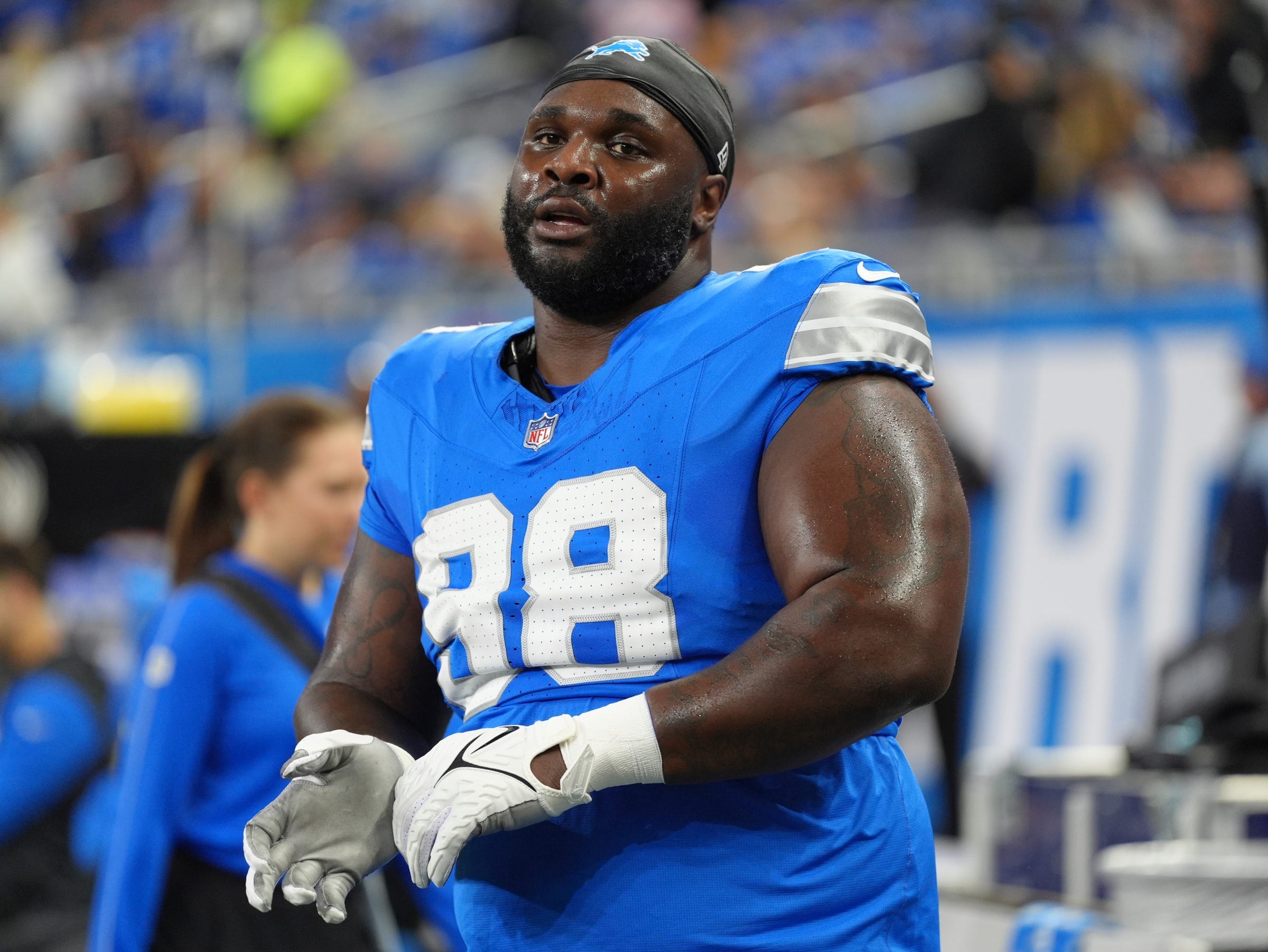
Detroit Lions nose tackle DJ Reader (98) warms up before the NFL game against the Tennessee Titans at Ford Field in Detroit on Oct. 27, 2024.
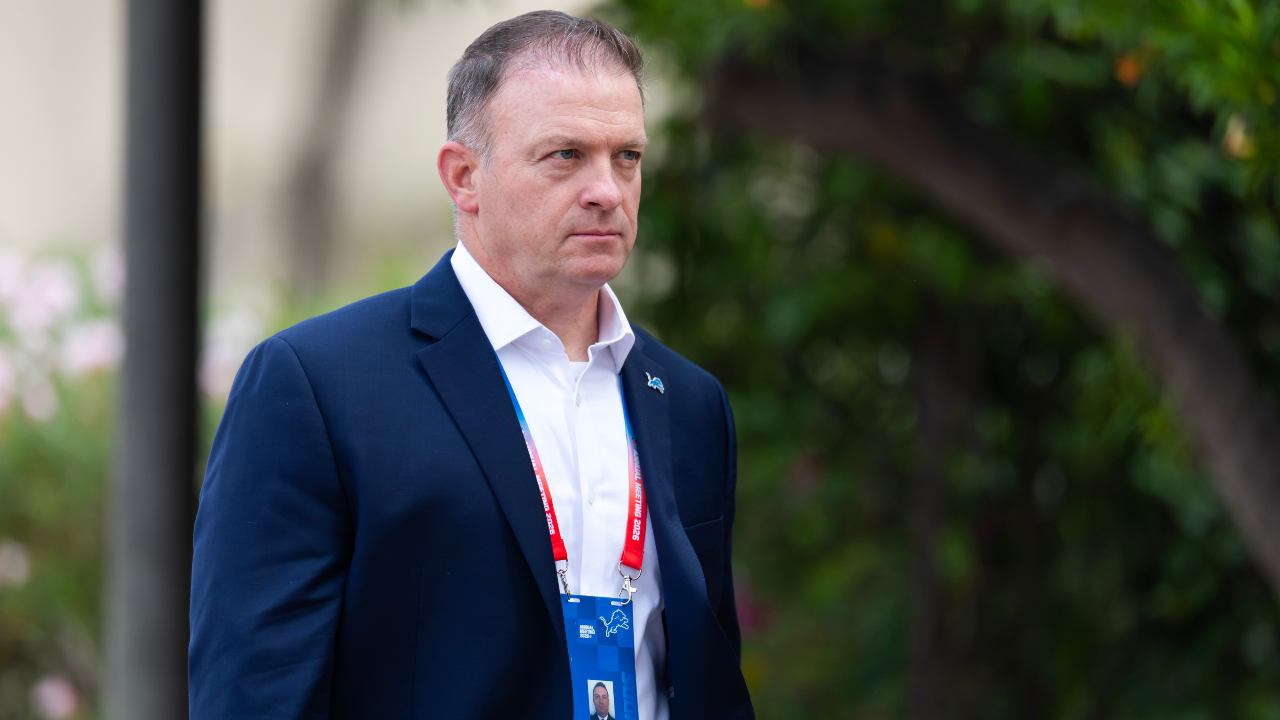
ESPN’s Jeremy Fowler reported that teams were watching Detroit as a “trade-up threat” heading into the 2026 draft. The Lions held pick 17, but a run on offensive tackles was projected in the top 14 selections. GM Brad Holmes talked about having “multiple levers at your disposal,” confirming the front office was actively weighing trade-up scenarios. Calls went out. The Chiefs’ ninth pick and the Browns’ sixth pick surfaced as potential targets. Every team with a top-15 selection knew Detroit might be calling, which meant the price was climbing.
The Tackle Market Nobody Saw Coming
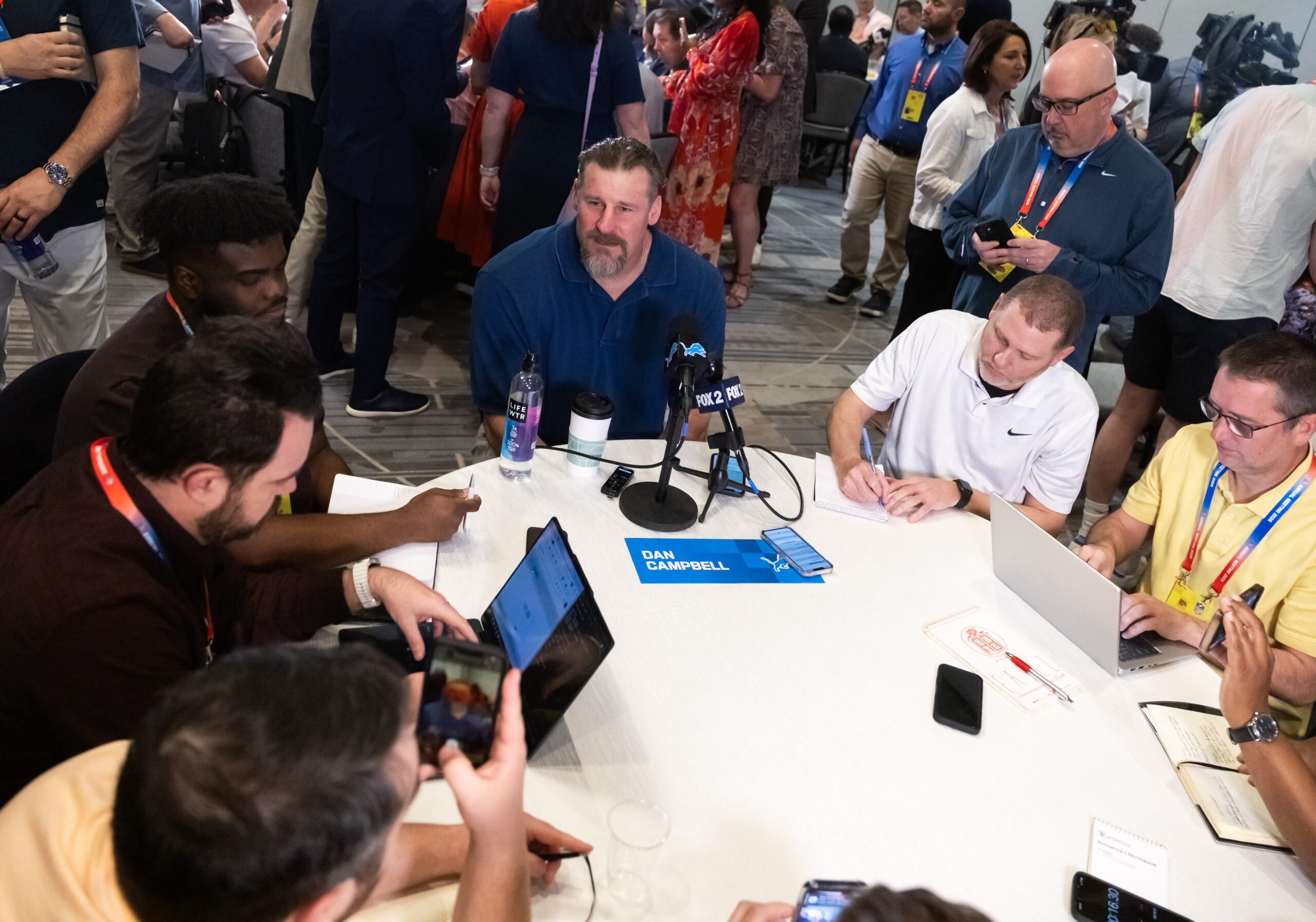
Mar 30, 2026; Phoenix, AZ, USA; Detroit Lions head coach Dan Campbell (center) speaks to reporters and the media during the 2026 NFL Annual League Meeting at the Arizona Biltmore. Mandatory Credit: Mark J. Rebilas-Imagn Images
Reports confirmed the Lions had been “sniffing hard” around free agent offensive tackles before the draft even started. That search rippled across the entire tackle market. When a team with Detroit’s cap space and desperation enters the bidding, prices inflate for everyone. Teams that needed a tackle but lacked Detroit’s urgency suddenly found themselves outbid or priced out. One franchise’s crisis became a league-wide market distortion. The Lions weren’t just shopping for themselves. They were reshaping what every offensive tackle costs.
The Machine Behind the Collapse
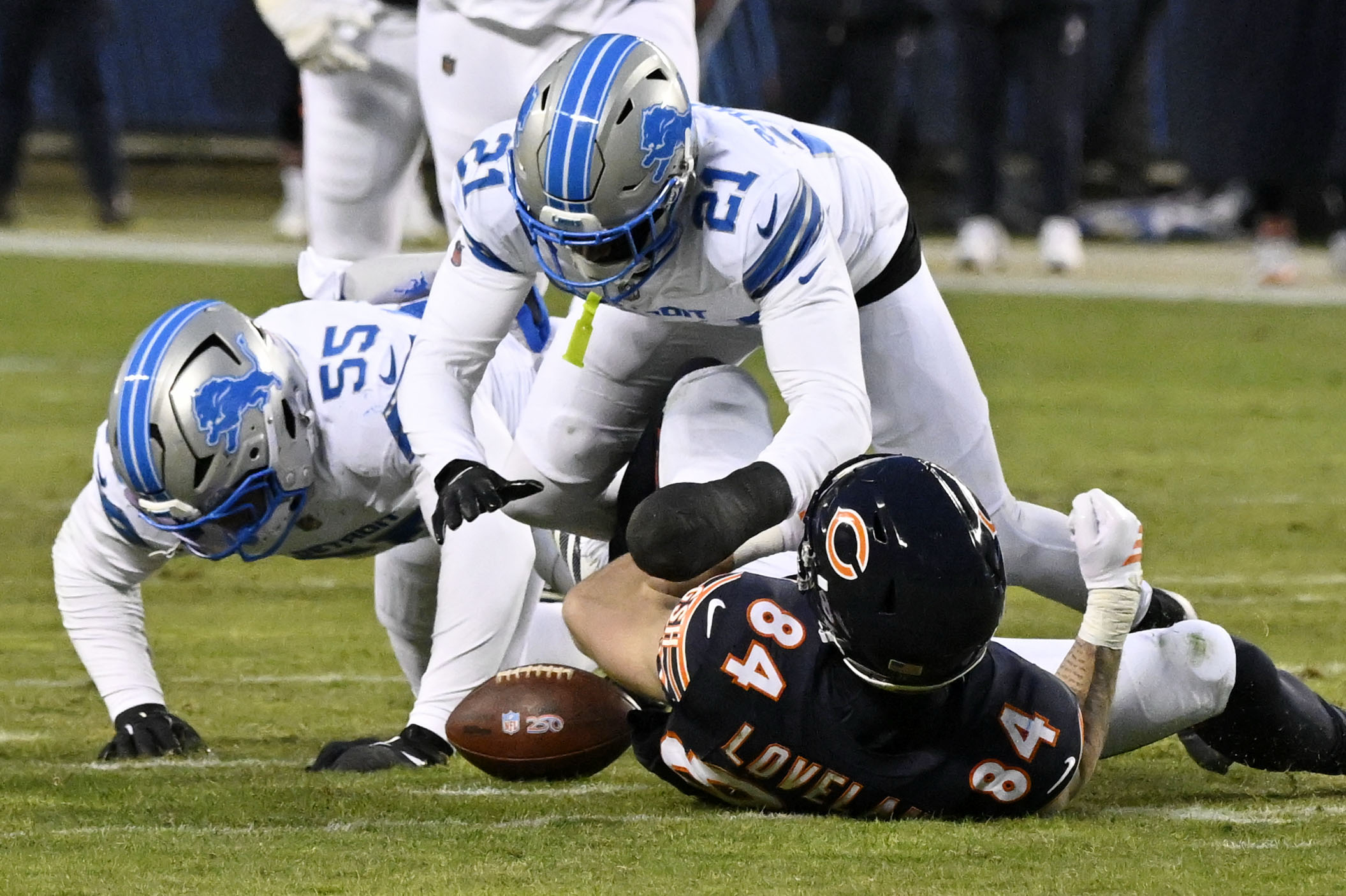
Jan 4, 2026; Chicago, Illinois, USA; Detroit Lions linebacker Derrick Barnes (55) and cornerback Amik Robertson (21) battle for a loose ball against Chicago Bears tight end Colston Loveland (84) during the first half at Soldier Field. Mandatory Credit: Matt Marton-Imagn Images
Every one of these ripples traces back to the same structural failure: the NFL’s salary cap forces championship windows to close violently. Elite linemen age, demand top-market deals, or retire. You can’t replace all of them through the draft in a single cycle. Ragnow retires. Zeitler leaves for money. Decker absorbs more hits, breaks down, asks out. Glasgow follows. Cap pressure. Aging bodies. Fewer reinforcements. The cascade accelerates. That’s how a 15-win team finds itself making desperate draft-day phone calls 18 months later.
The Voice From Inside the Crisis
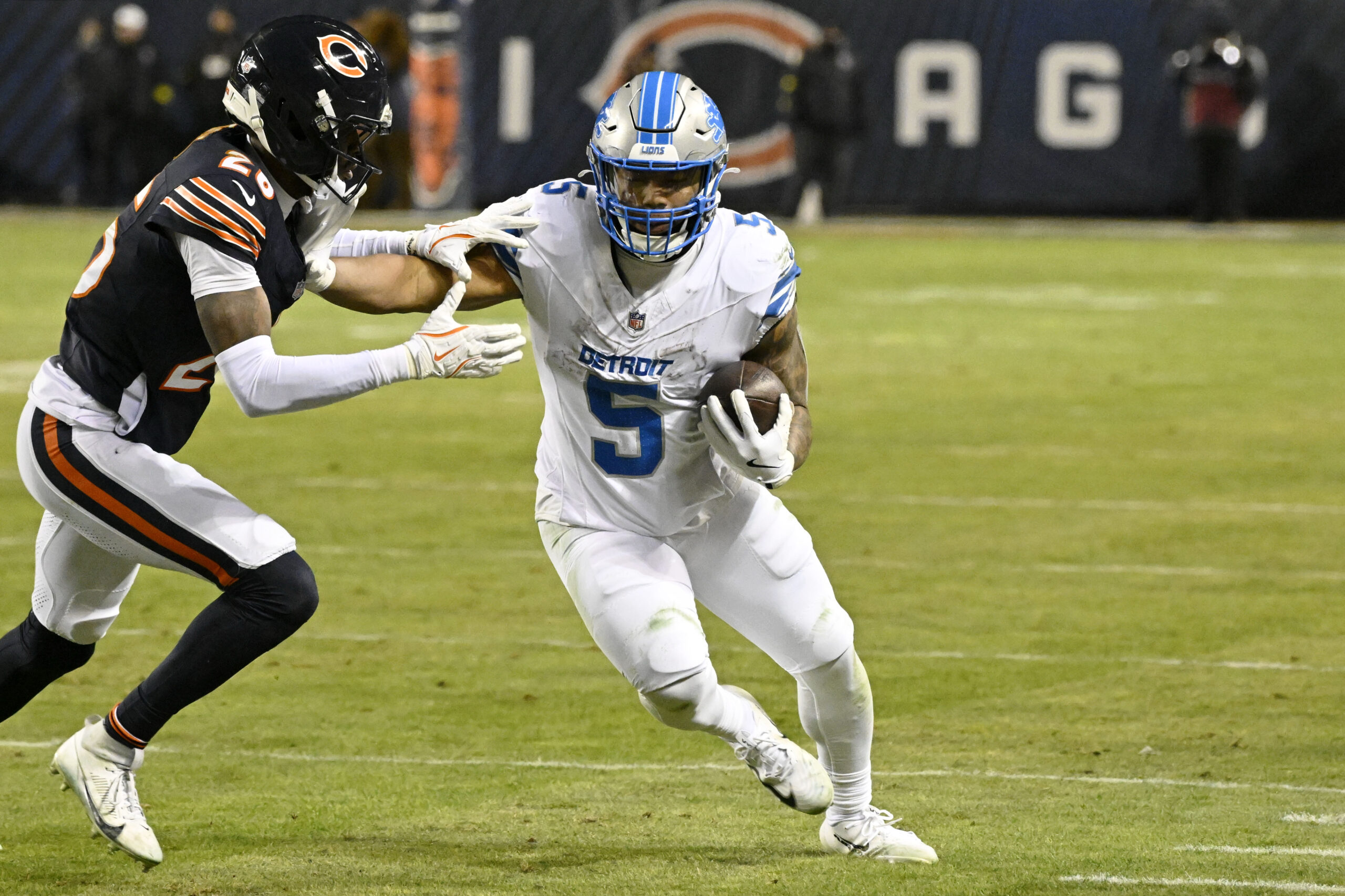
Jan 4, 2026; Chicago, Illinois, USA; Detroit Lions running back David Montgomery (5) runs with the ball against Chicago Bears cornerback Nahshon Wright (26) during the second half at Soldier Field. Mandatory Credit: Matt Marton-Imagn Images
Brad Holmes described the team’s approach as being “very strategic” about “when to use those levers.” That’s front-office language for a man staring at a roster hole he can’t fill cheaply. Decker had given Detroit 145 career starts over a decade. His departure request wasn’t a business decision. It was a signal that the locker room felt the foundation shifting. When your longest-tenured lineman asks to leave, the players still on the roster notice. The Lions’ trade-up urgency carried emotional weight, not just strategic math.
A New Rulebook for Contender Windows
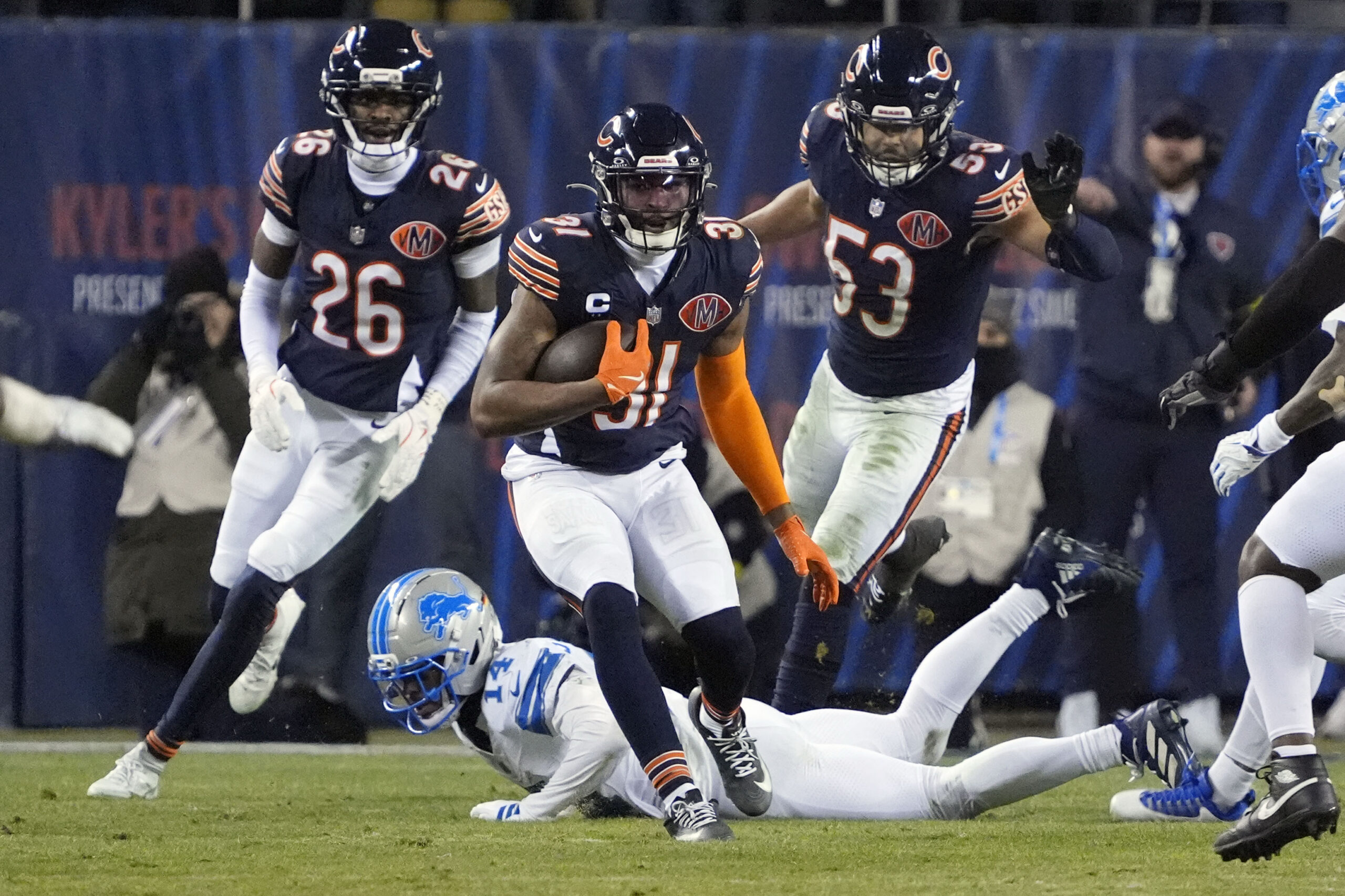
Jan 4, 2026; Chicago, Illinois, USA; Chicago Bears safety Kevin Byard III (31) runs with the ball after making an interception against the Detroit Lions during the second half at Soldier Field. Mandatory Credit: David Banks-Imagn Images
Detroit’s collapse is setting a precedent across the league. Teams watching the Lions’ trajectory are recalculating how long a championship window actually stays open. The old assumption was that a 15-win roster buys you three or four years of contention. The Lions proved it can unravel in two offseasons. Front offices in Philadelphia, San Francisco, and Baltimore are now stress-testing their own offensive line depth, asking the same question: if our Pro Bowler retires tomorrow, how fast does the whole thing fall apart?
Who Wins When the Lions Lose
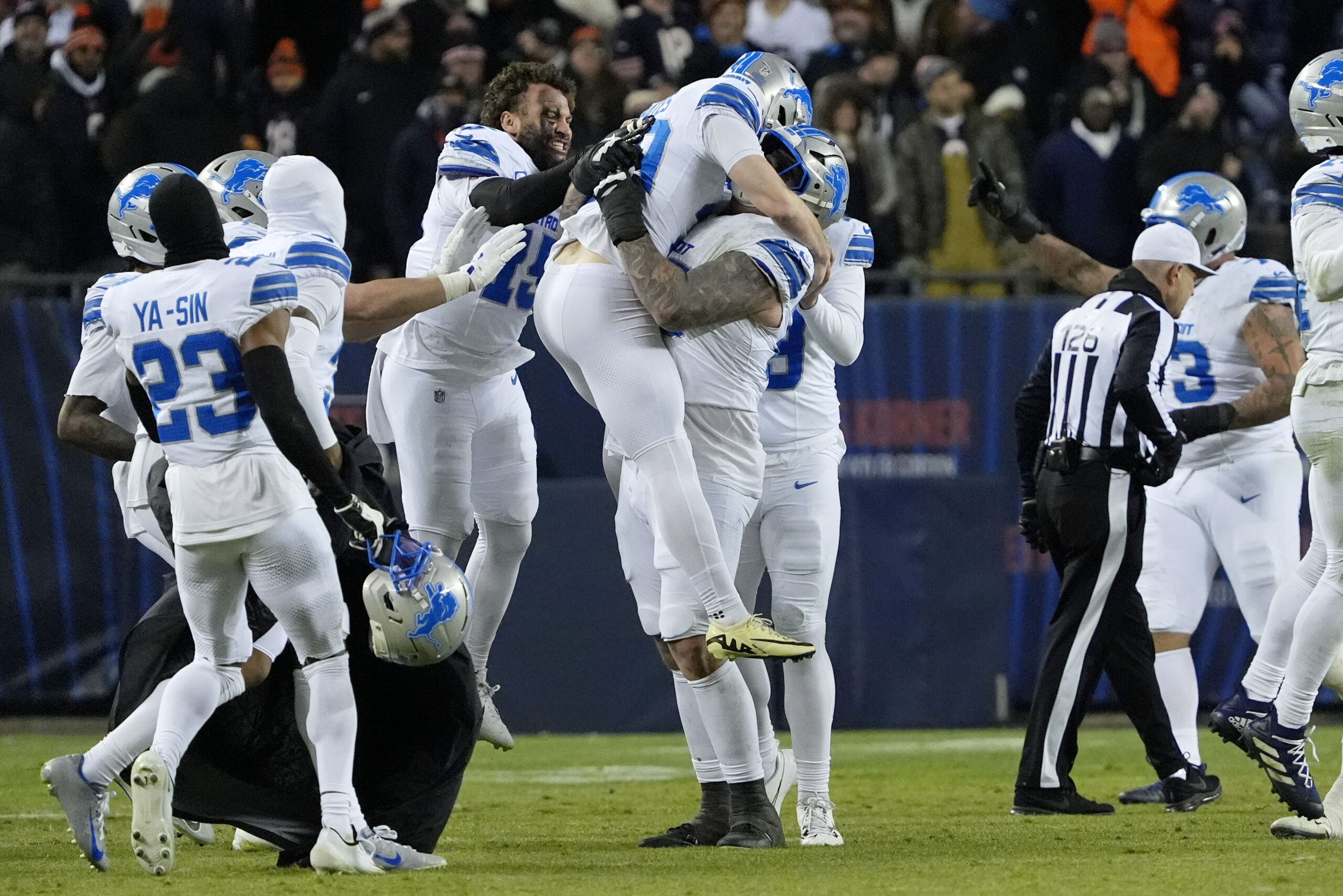
Jan 4, 2026; Chicago, Illinois, USA; Detroit Lions place kicker Jake Bates (39) celebrates with teammates after kicking a game-winning field goal against the Chicago Bears at Soldier Field. Mandatory Credit: David Banks-Imagn Images
The NFC North got a gift. Green Bay, Minnesota, and Chicago all benefit from Detroit’s structural erosion without spending a dollar. Agents representing offensive linemen across the league gained leverage overnight because Detroit’s desperation inflated the market. The teams holding top-15 draft picks could have extracted a ransom from Holmes if the tackle run had broken differently. And the irony: the Lions ultimately stayed at pick 17 and selected Blake Miller. All that urgency, all those calls, and the answer was sitting right where they already stood.
The Cascade Keeps Moving
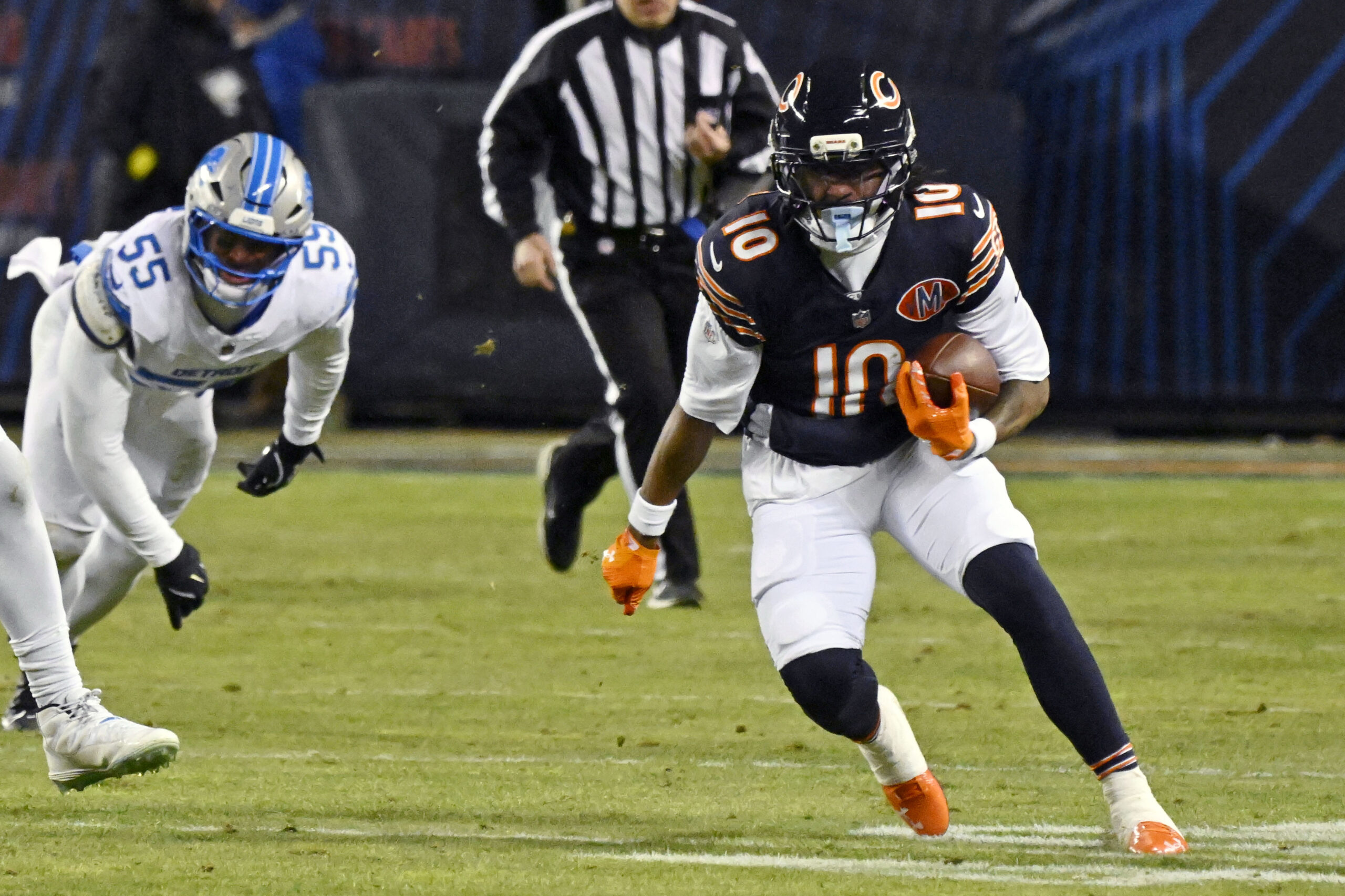
Jan 4, 2026; Chicago, Illinois, USA; Chicago Bears wide receiver Luther Burden III (10) runs with the ball against the Detroit Lions during the second half at Soldier Field. Mandatory Credit: Matt Marton-Imagn Images
Blake Miller now carries the weight of a franchise rebuild on his rookie shoulders. If he struggles, the Lions face the same trade-up pressure next April with fewer assets. If he succeeds, Detroit becomes the template for how to survive catastrophic line turnover through draft discipline rather than panic trades. Either way, the hidden system hasn’t changed. The cap still forces hard choices. Veterans still age out. And the next 15-win team is already one retirement away from making the same desperate phone calls Detroit just hung up.
Sources:
ESPN (Jeremy Fowler), April 2026
ESPN Draft Coverage, April 2026
Detroit Lions Official Announcements, June 2025
Detroit Lions Official Announcements, April 2026
Tennessee Titans Signing Reports, June 2025