
Pittsburgh just hosted the biggest NFL Draft in history. Over three days, 805,000 fans flooded the city, shattering Detroit’s 2024 record of 775,000. Thursday night alone drew more than 320,000 for Round 1, a separate record nobody saw coming. Two attendance marks fell in one weekend. But the crowd size is only the surface story. Inside the draft room, 32 front offices made picks that revealed something stranger: a coordinated strategic shift that will ripple through rosters, free agency, and your team’s chances for years. The on-field consequences are just starting.
Nine Linemen in Round 1 Changed Everything
Dec 25, 2025; Kansas City, Missouri, USA; General view of the Amazon Prime Thursday Night Football logo at GEHA Field at Arrowhead Stadium. Mandatory Credit: Denny Medley-Imagn Images
Nine offensive linemen went in Round 1. That’s 28% of all first-round picks, roughly 2.7 times the historical average. The NFL has never done this in the modern draft era. Not close. Front offices across the league looked at the same data and reached the same conclusion: protect the quarterback or lose him. Whether this reflects panic over offensive line injuries, a thin upcoming free-agent market, or shared scouting intelligence, the result is identical. Thirty-two teams entered the draft. Nine decided the trenches couldn’t wait another year.
The Teams That Passed Will Pay in October
Jan 10, 2026; Charlotte, NC, USA; The NFL Wild Card logo on the field prior to the 2026 NFC wild card playoff football game between the Los Angeles Rams and the Carolina Panthers at Bank of America Stadium. Mandatory Credit: Bob Donnan-Imagn Images
When nine linemen fly off the board in Round 1, every team that passed on one faces the consequences. The remaining offensive line talent got pushed to Rounds 2 and 3, where younger, rawer prospects carry steeper learning curves. Teams banking on mid-round linemen will start slower. That means more sacks, more quarterback hits, more early-season losses for rosters that gambled on skill positions instead. The Cowboys grabbed Caleb Downs at 11 and earned Kiper’s “winner” label. Teams that ignored the trenches will feel it by October.
The Giants Got Their Linebacker
Jacksonville Jaguars place kicker Cam Little (39) kicks a 67-yeard field goal as punter Logan Cooke (9) makes the hold during the second quarter of an NFL football matchup at EverBank Stadium, Sunday, Jan. 4, 2026, in Jacksonville, Fla. [Corey Perrine/Florida Times-Union]
New York used the No. 5 pick on Arvell Reese, the Ohio State linebacker considered one of the most versatile defenders in the class. Then they used the No. 10 pick, acquired from Cincinnati in the Dexter Lawrence trade, on offensive tackle Francis Mauigoa to protect Jaxson Dart. Two premium picks, two different sides of the ball, one coherent plan: fix the defense, then protect the quarterback they drafted last year. That’s a rebuild with a blueprint, not a panic purchase.
The Tight End Panic Nobody Expected
Buffalo Bills place kicker Matt Prater (15) kicks a field goal during the third quarter of an NFL football AFC Wild Card playoff matchup, Sunday, Jan. 11, 2026, in Jacksonville, Fla. The Bills defeated the Jaguars 27-24. [Corey Perrine/Florida Times-Union]
Nine tight ends went in the first three rounds. That’s roughly 9.4% of the top 96 picks devoted to a position historically drafted in Rounds 3 through 5. Teams paid premium prices for a position that used to be a value play. That’s panic buying, not value shopping. The Kyle Shanahan and Andy Reid offensive systems turned tight ends into hybrid weapons: blockers, route runners, mismatches. Now every front office wants one. The ripple hits secondary and cornerback depth hard. Those picks went to tight ends instead.
Day 2 Was the Real Draft
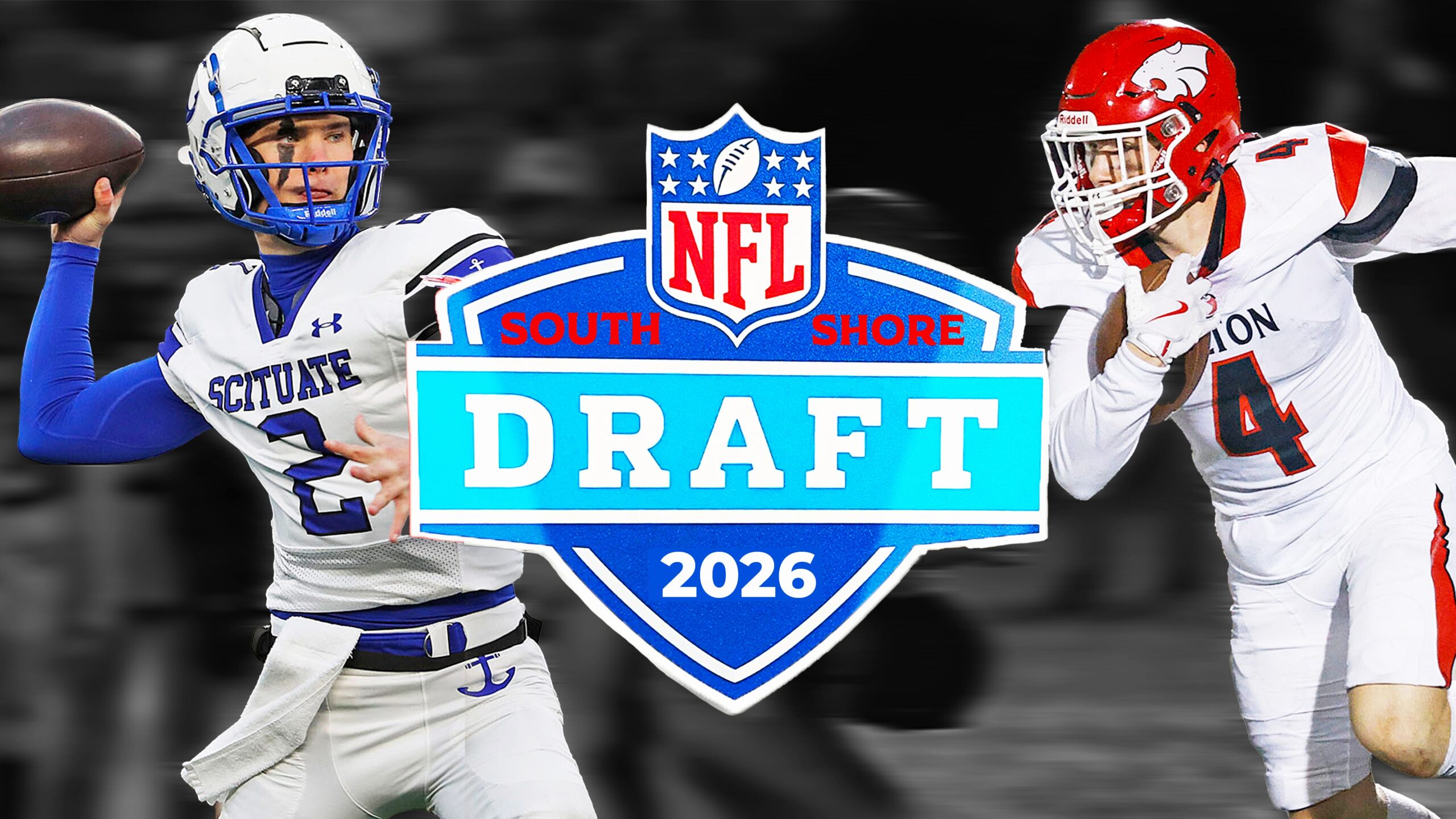
Making a 2026 NFL Mock Draft of South Shore high school football players, including Scituate QB Jonny Donovan and Milton WR/S Ronan Sammon.
Rounds 2 and 3 delivered a scramble for the positions Round 1 skipped. With nine linemen and several top tight ends already off the board, Friday night became a feeding frenzy for cornerbacks, safeties, and edge rushers. Quarterbacks also landed in unusual spots, pushing projected first-rounders into the middle rounds. Teams that held their Day 2 picks instead of trading up walked away with starter-quality defensive talent at rookie-contract prices. That’s the quiet advantage nobody is grading yet.
The Hidden Draft Philosophy War
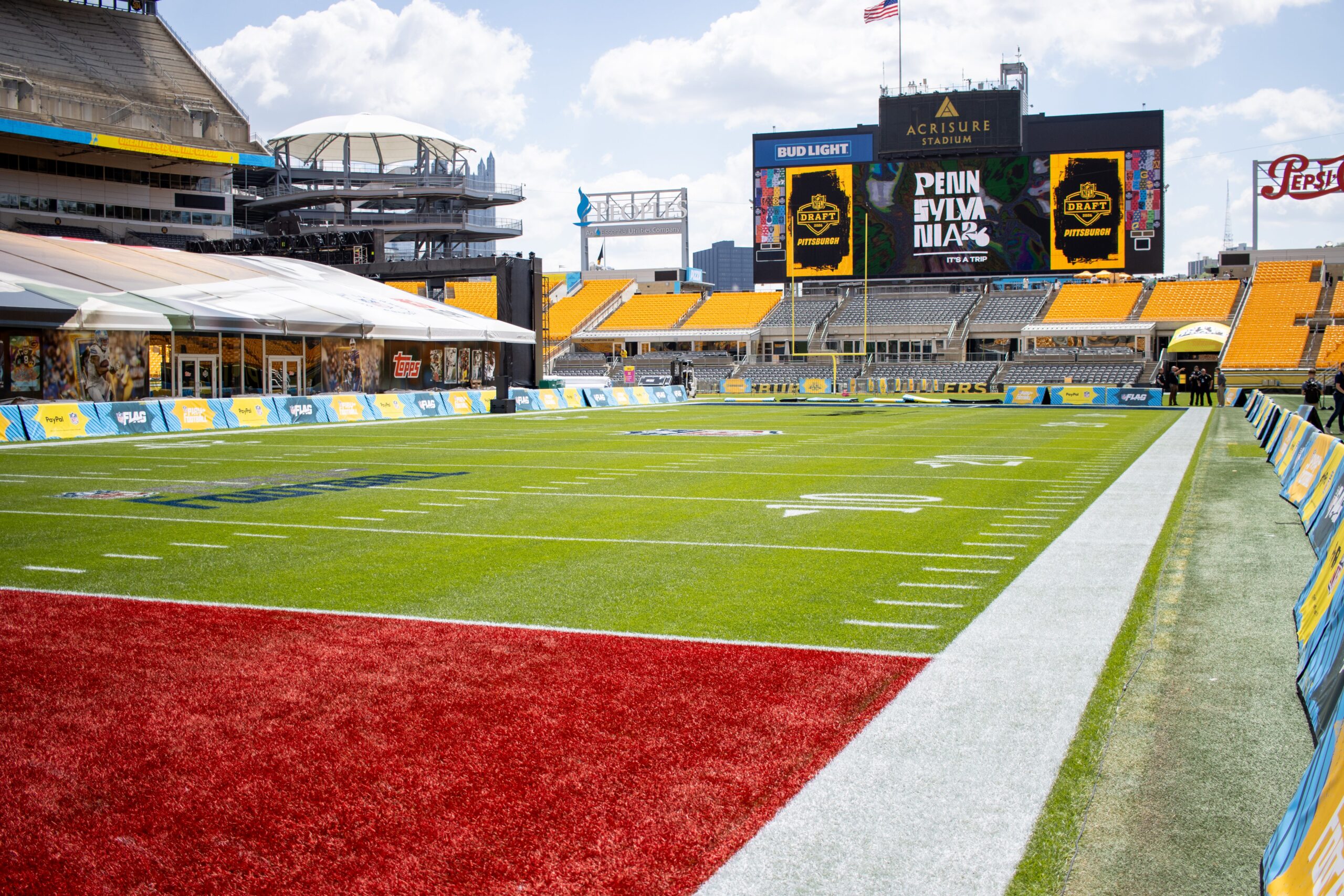
Wednesday, April 22, 2026, Pittsburgh Pa. A flag football field is painted on the playing surface for the flag football skills competition being held at Acrisure Stadium.
Nine OL in Round 1. Nine tight ends in Rounds 1 through 3. Same draft. Same weekend. That’s not coincidence. The NFL just told you its offensive philosophy for the next three years: build the infrastructure first, add the skill players later. Foundation over flash. Protection over speed. The league watched quarterbacks get destroyed behind bad lines and decided, collectively, to fix it. One draft class. Eighteen premium picks. All pointed at the same structural rebuild. And every team that ignored the signal will pay the price in free agency.
The Record Run on Pass Catchers
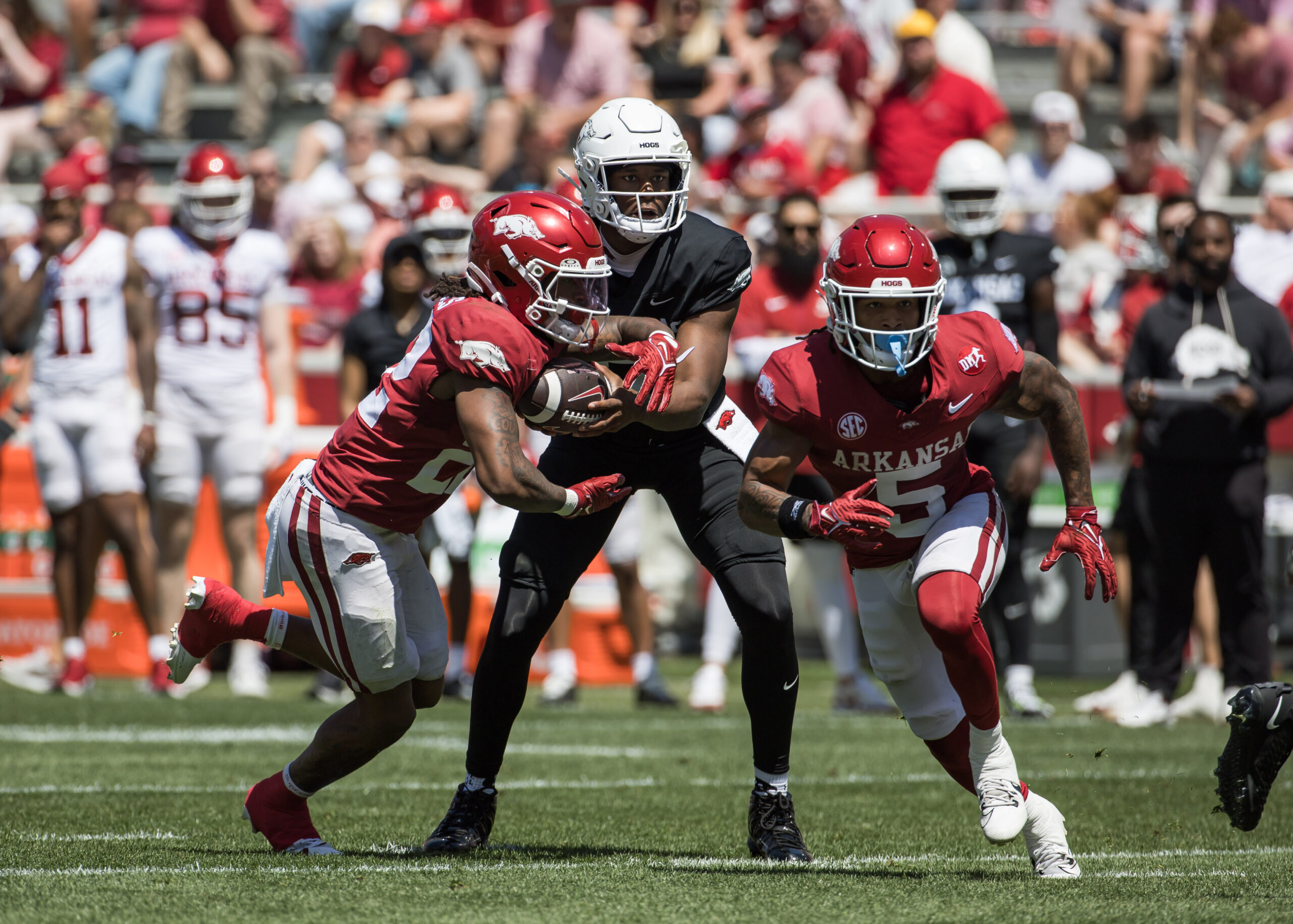
Apr 25, 2026; Fayetteville, AR, USA; Arkansas Razorbacks quarterback KJ Jackson (7) hands off to running back TJ Hodges (22) as running back Sutton Smith (5) crosses in front to block during the spring game at Donald W. Reynolds Razorback Stadium. Mandatory Credit: Brett Rojo-Imagn Images
The tight end surge was only half the story. Combined receiver and tight end selections across the first two days broke positional pace against prior drafts, reshaping secondary math for 2026. Defenses that didn’t draft cornerback depth are about to face rookie classes with more route-running variety than the league has ever produced in one cycle. The coverage arms race starts in August. Teams that spent Round 1 on the trenches and Rounds 2 and 3 on skill talent now look like the smartest rooms in the league.
The Grades That Prove Experts Disagree
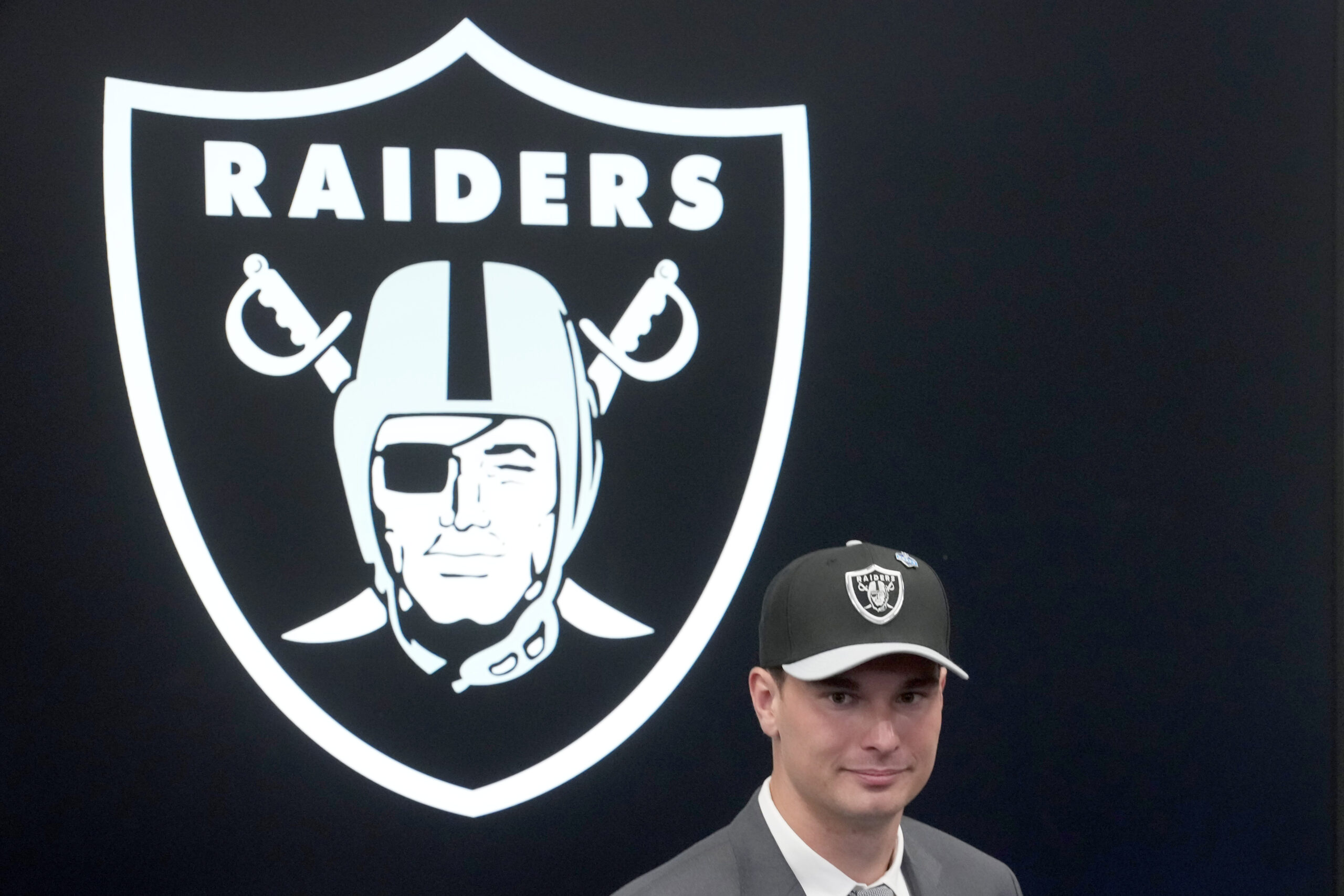
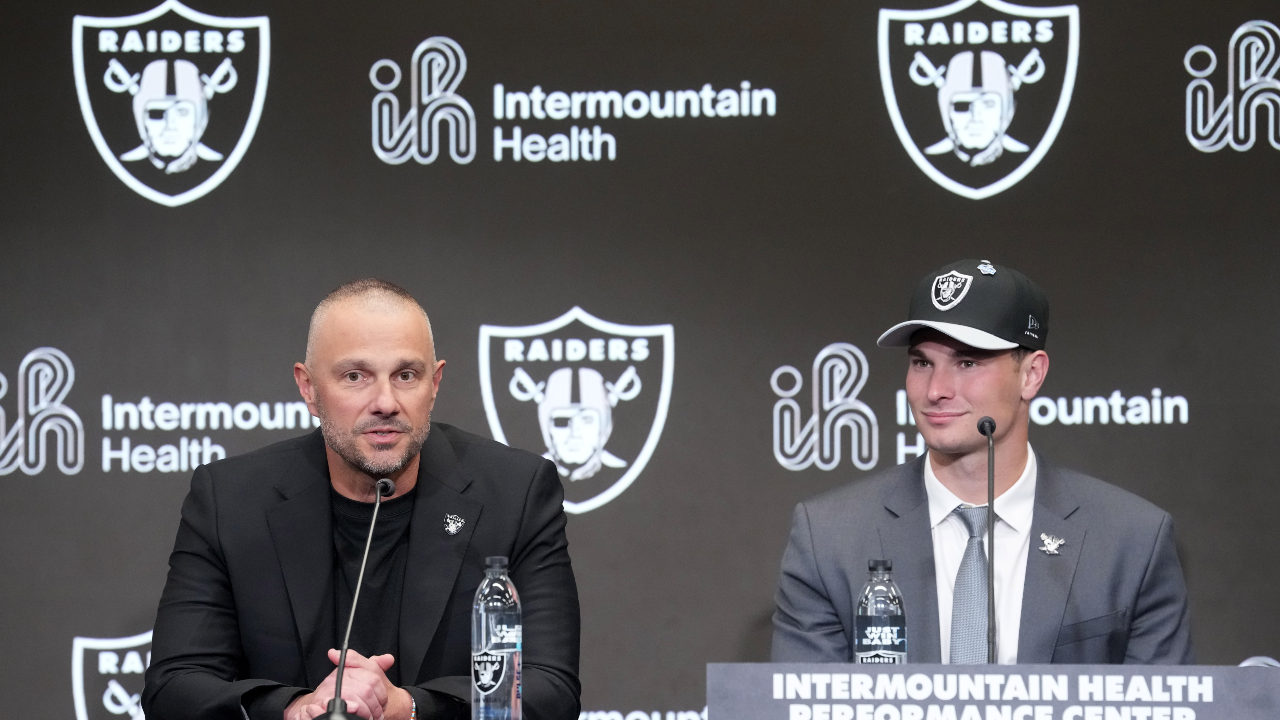
Apr 24, 2026; Henderson, NV, USA; Las Vegas Raiders quarterback Fernando Mendoza speaks at introductory press conference at Intermountain Health Performance Center after being selected as the No. 1 pick in the 2026 NFL Draft. Mandatory Credit: Kirby Lee-Imagn Images
The 49ers received an A-minus from one analyst and a D-minus from another. Same draft class. Same seven rounds. Opposite conclusions. The Broncos ranged from A-minus to C-minus. Kiper gave them a C-plus. PFF gave them a C-minus. That spread reveals something most fans miss: draft grades measure analyst methodology, not team quality. One grader rewards consensus board fit. Another penalizes surprise picks. Denver effectively spent a Round 1 and a Round 3 on Jaylen Waddle via trade. Analysts who counted Waddle graded higher. Those who didn’t graded lower. Same team, different scorecards.
Kiper Called the Winners and Losers
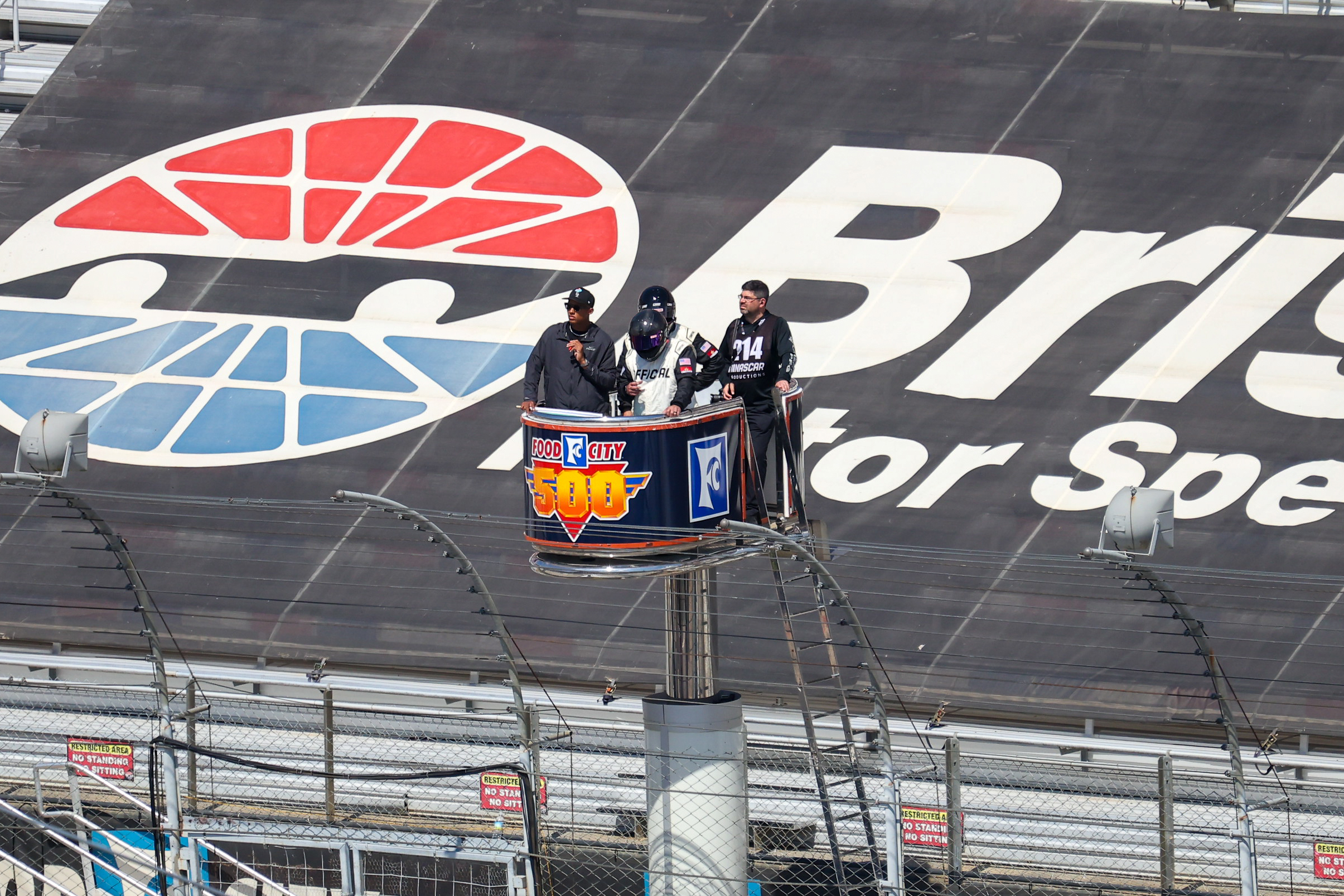
Apr 12, 2026; Bristol, Tennessee, USA; NFL quarterback Joshua Dobbs serves as a honorary starter at Bristol Motor Speedway. Mandatory Credit: Randy Sartin-Imagn Images
Mel Kiper Jr. named the Cowboys and Jets as draft winners. He called the Rams “very questionable.” On the Raiders’ Fernando Mendoza pick at number one overall, Kiper said, “We all knew it was going to happen, and they had the benefit of just getting to pick before any other team.” The Jets landed EDGE David Bailey at two, TE Kenyon Sadiq at 16, and receiver Omar Cooper Jr. at 30. The Ravens grabbed Penn State guard Vega Ioane and earned a B-plus. Pittsburgh’s Omar Khan received a B from Kiper for the Steelers’ 2026 class.
The QB Domino Nobody Noticed
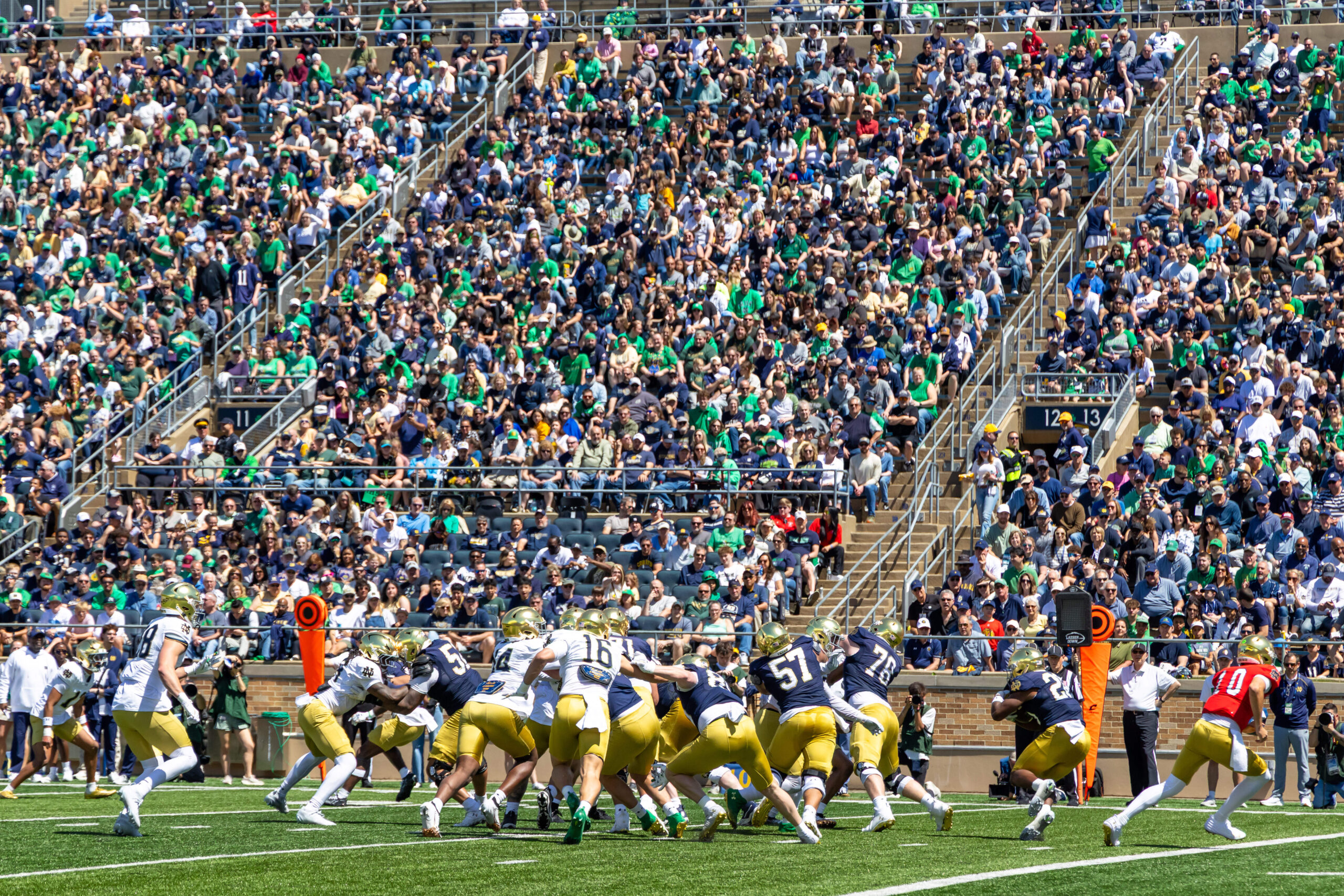
Apr 25, 2026; Notre Dame, IN, USA; Notre Dame Fighting Irish quarterback Noah Grubbs (10) leads the offense during the Blue-Gold game at Notre Dame Stadium. Mandatory Credit: Michael Caterina-Imagn Images
Mendoza went No. 1 to the Raiders, but the real story was how long the next quarterback waited. Teams that needed a passer held their fire, letting projected first-round quarterbacks slide into Round 2 and Round 3 territory. That’s the second straight draft where QB demand cratered after the top pick. Teams learned from 2025: reaching for a quarterback costs more than waiting one round. Expect this pattern to compress QB salaries at the back of Round 1 for the next two cycles.
The Rules Are Already Shifting
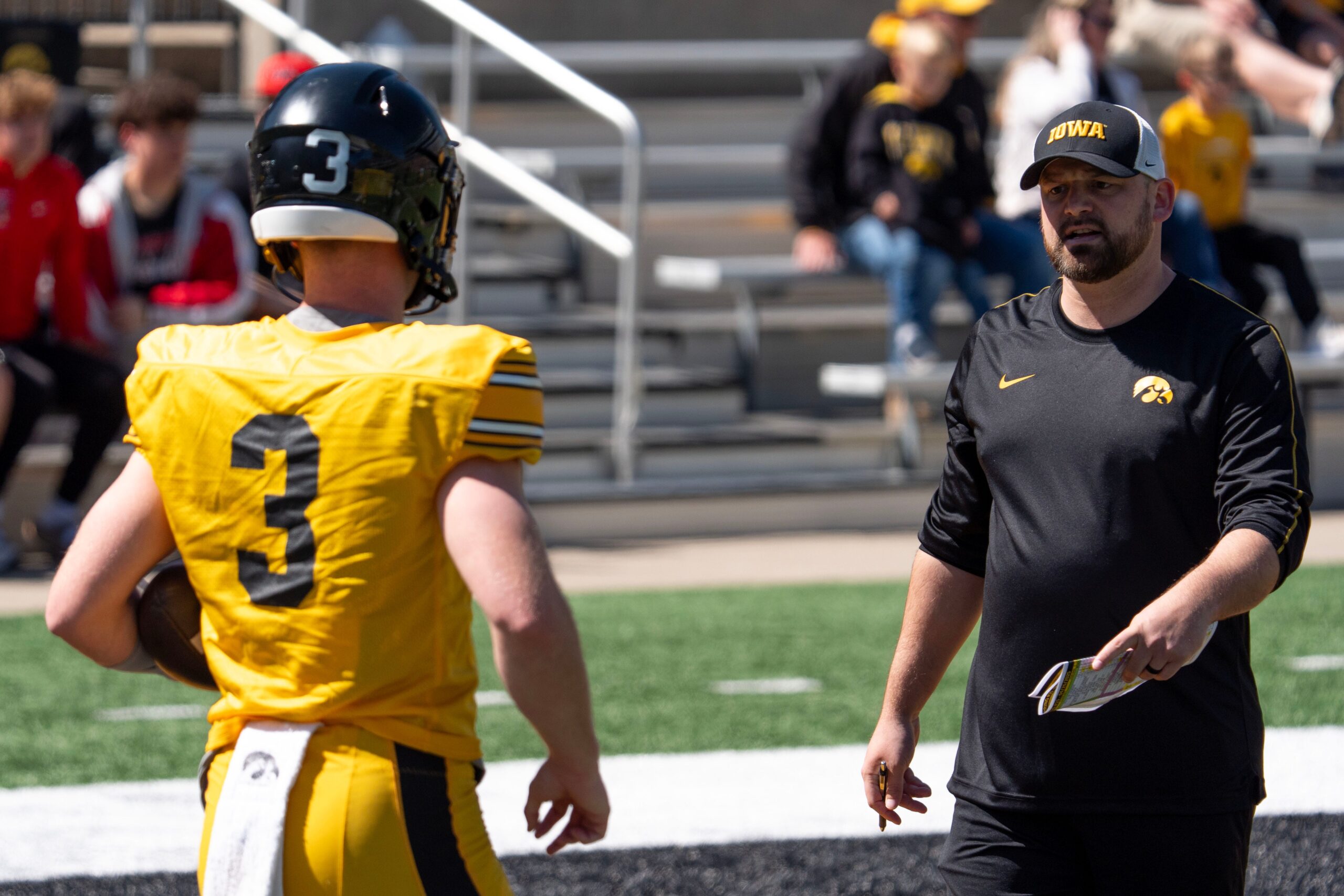
Iowa quarterback coach Billy Vandemerkt, right, talks to Jimmy Sullivan (3) April 25, 2026 during the team’s spring practice at Kinnick Stadium in Iowa City, Iowa.
This draft will be cited for the next five years as the moment the NFL reset its positional priorities. Nine first-round linemen becomes the new baseline. Future drafts will be measured against 2026. The tight end premium rewrites how teams value the position in trade negotiations and contract extensions. And the attendance records, 805,000 total and 320,000 for Round 1 alone, prove the draft itself has become a destination event rivaling playoff weekends. The NFL turned a personnel meeting into a festival. That changes revenue projections, host city bids, and broadcast negotiations.
Record Crowds, Record Rain
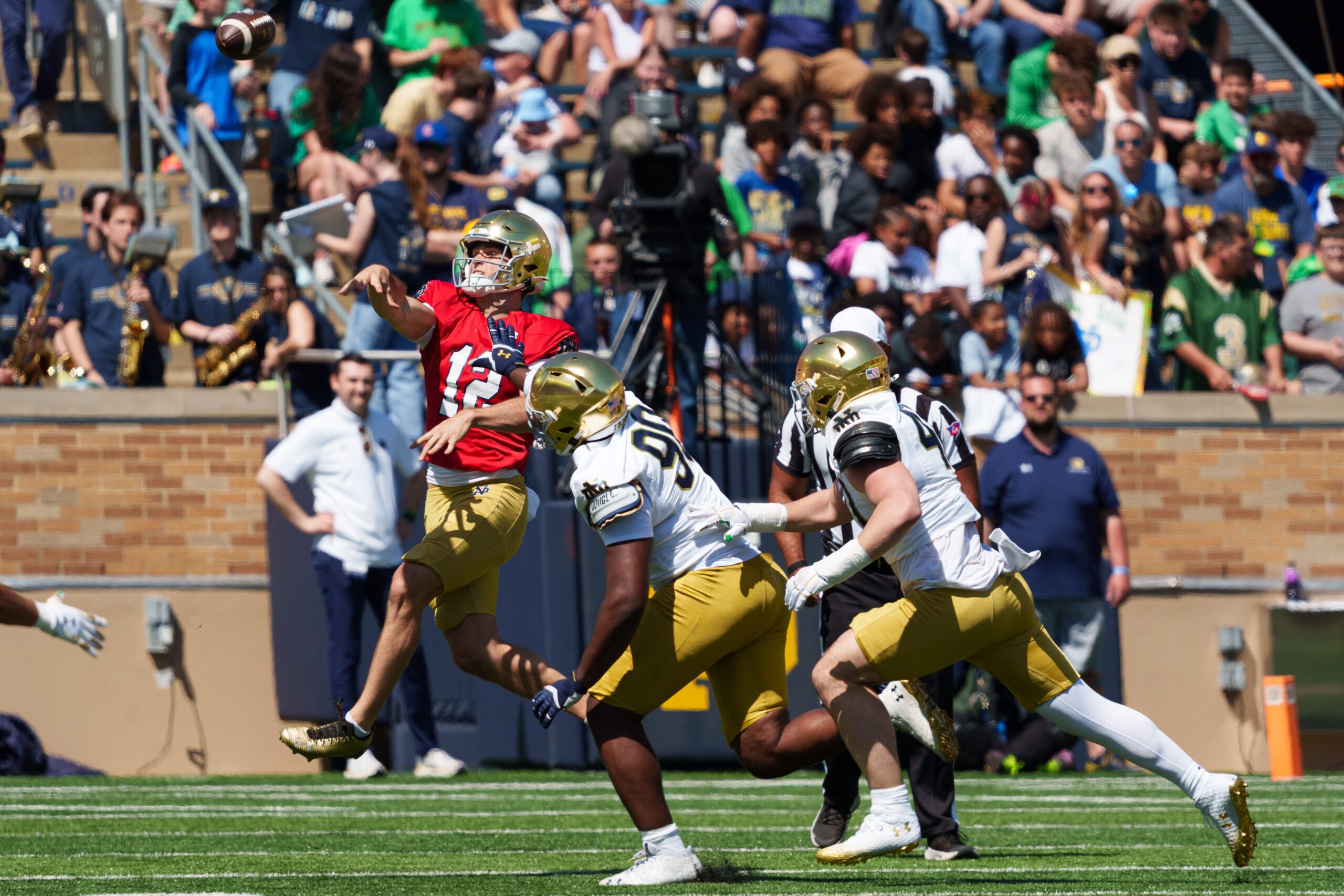
Notre Dame quarterback Blake Hebert (12) throws the ball away during the Blue-Gold spring game at Notre Dame Stadium on Saturday, April 25, 2026, in South Bend.
Pittsburgh’s 805,000 figure landed despite weather that would have emptied most outdoor events. Rain soaked the crowd outside Acrisure Stadium on multiple nights, and the city still blew past Detroit’s previous record before Saturday even started. The weatherproofing of the draft matters for host city bids: if Pittsburgh can hit 805,000 in the rain, cities with worse April weather now have a harder pitch. Green Bay, Kansas City, and Washington are all watching. Fan demand no longer bends to the forecast.
Who Wins and Who Pays
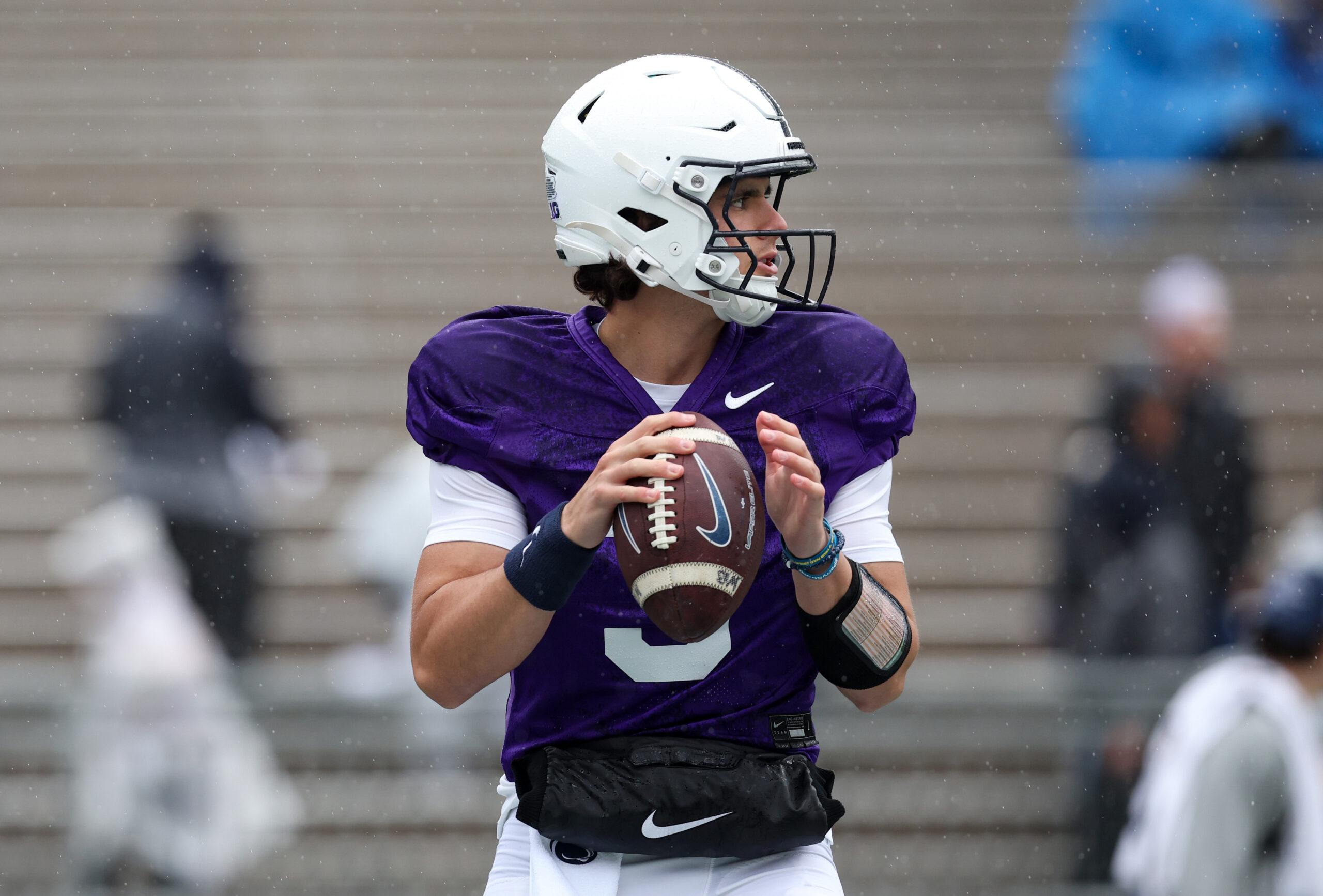
Apr 25, 2026; University Park, PA, USA; Penn State Nittany Lions quarterback Rocco Becht (3) drops back to throw a pass during the Penn State Blue-White Spring game at Beaver Stadium. Mandatory Credit: Matthew O’Haren-Imagn Images
Teams graded A will see fan engagement spike: merchandise sales, season-ticket confidence, social media momentum. Teams graded D face the opposite. The Jaguars had ten picks and produced what analysts called a “quiet draft.” Volume without narrative is invisible. Denver’s single pick in the first three rounds means their entire class depends on late-round development. One injury to a Day 3 pick and the Waddle trade looks catastrophic. The Giants traded defensive tackle Dexter Lawrence to the Bengals for the No. 10 overall pick, leaving Cincinnati without a first-round selection. Quiet rosters get loud criticism fast.
The Cascade Keeps Breaking
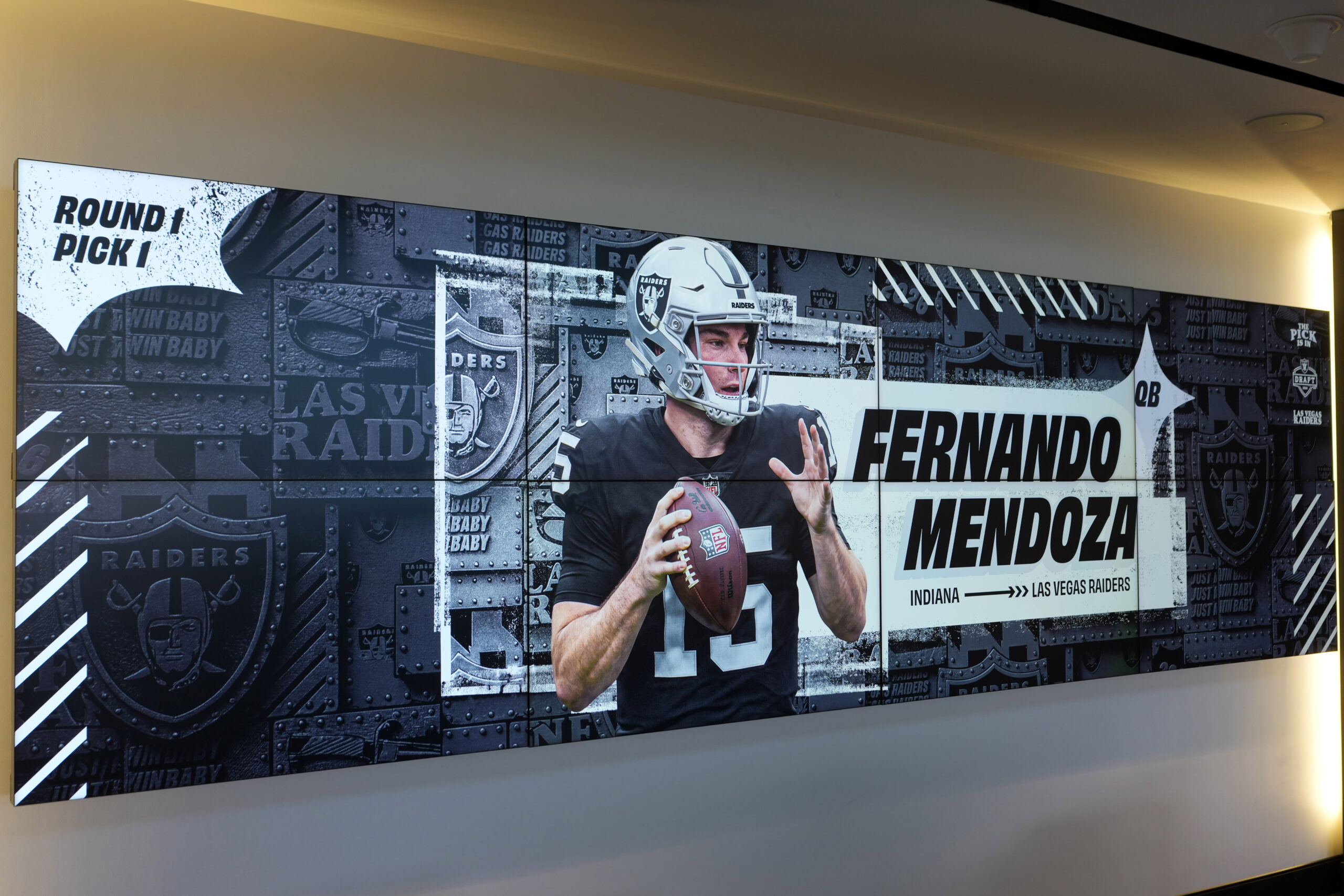
Apr 24, 2026; Henderson, NV, USA; A graphic featuring Las Vegas Raiders quarterback Fernando Mendoza at introductory press conference at Intermountain Health Performance Center after being selected as the No. 1 pick in the 2026 NFL Draft. Mandatory Credit: Kirby Lee-Imagn Images
One ESPN analyst predicted the Bears’ 2026 class would “put Bears over the top and into a Super Bowl.” If that holds, Kiper’s authority grows and his future grades carry even higher stakes. If the Rams’ “questionable” class wins a playoff game, the entire grading industry faces a credibility audit. Draft grades are scorecards on GM decision-making at the moment of selection. The real test arrives Week 1. And the 2026 draft just proved that the grades, the records, and the strategy shifts are all connected by one truth: the NFL is rebuilding from the inside out.
What This Means for 2027
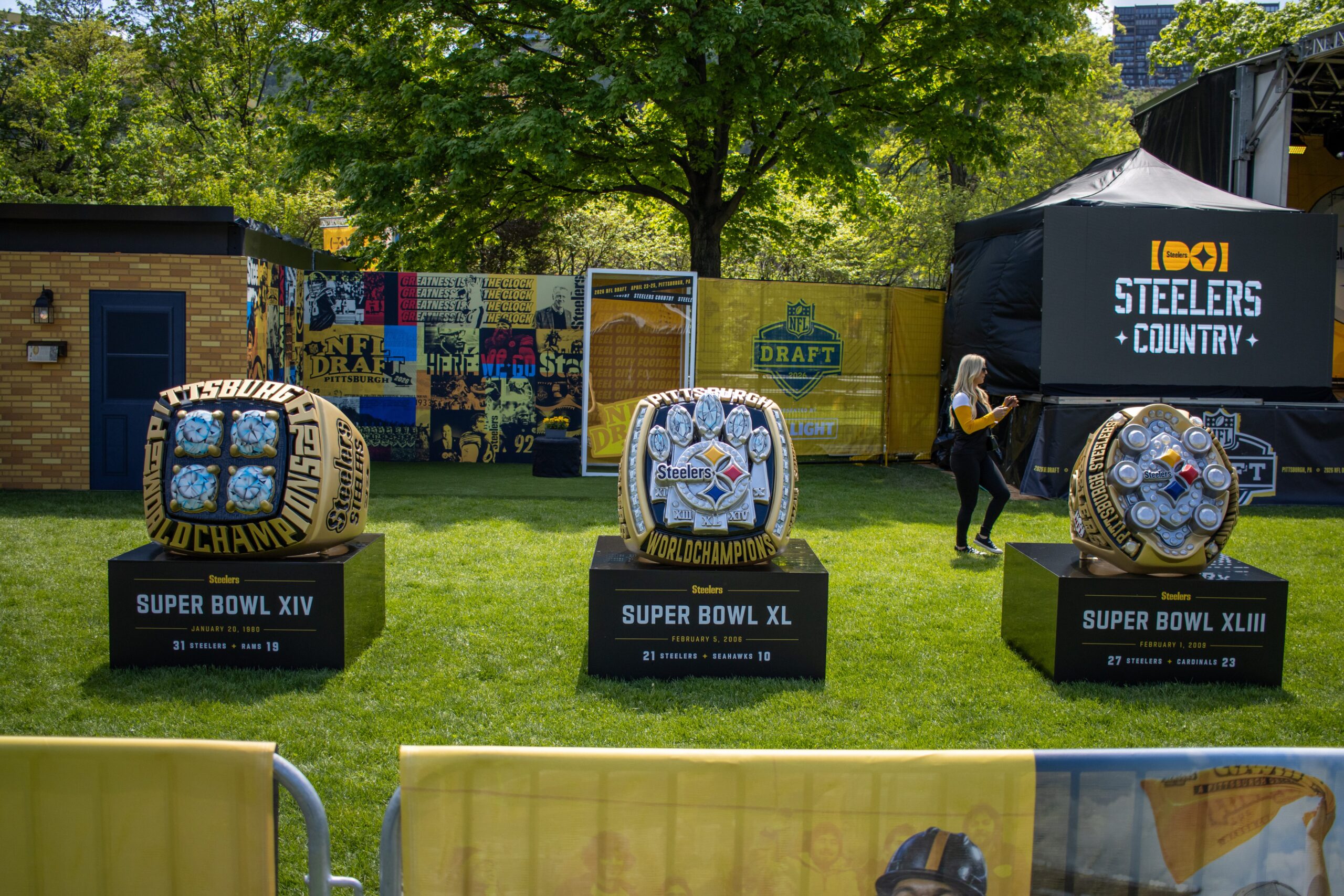
Wednesday, April 22, 2026; The other three Steelers Super Bowl Championship rings on display at the Point State Park Fan Experience.
The 2026 class sets the benchmark every front office will quote next April. If nine Round 1 linemen become the norm, college programs will accelerate pro-style blocking development, and the 2027 tackle market will flood earlier. If the tight end premium holds, expect veteran TEs to push for receiver-tier extensions this summer. And if attendance stays above 800,000 in the next host city, the draft officially becomes a top-five NFL revenue event alongside the Super Bowl, conference championships, Thanksgiving, and opening weekend. The 2026 draft didn’t just break records. It rewrote the calendar.
Sources:
ESPN, “NFL says draft in Pittsburgh set attendance record,” April 25, 2026.
NFL.com, “First round of 2026 NFL Draft delivers 13.2 million viewers across ESPN platforms,” April 26, 2026.
The New York Times (The Athletic), “Pittsburgh breaks NFL Draft attendance record with crowd of 805,000,” April 26, 2026.
CBS News Pittsburgh, “A record number of people attended the NFL draft in Pittsburgh,” April 22, 2026.
NFL.com, “2026 NFL Draft: Raiders select Indiana QB Fernando Mendoza with No. 1 overall pick,” April 23, 2026.
New York Giants, “Giants trade Dexter Lawrence to Bengals for No. 10 draft pick,” April 19, 2026.