
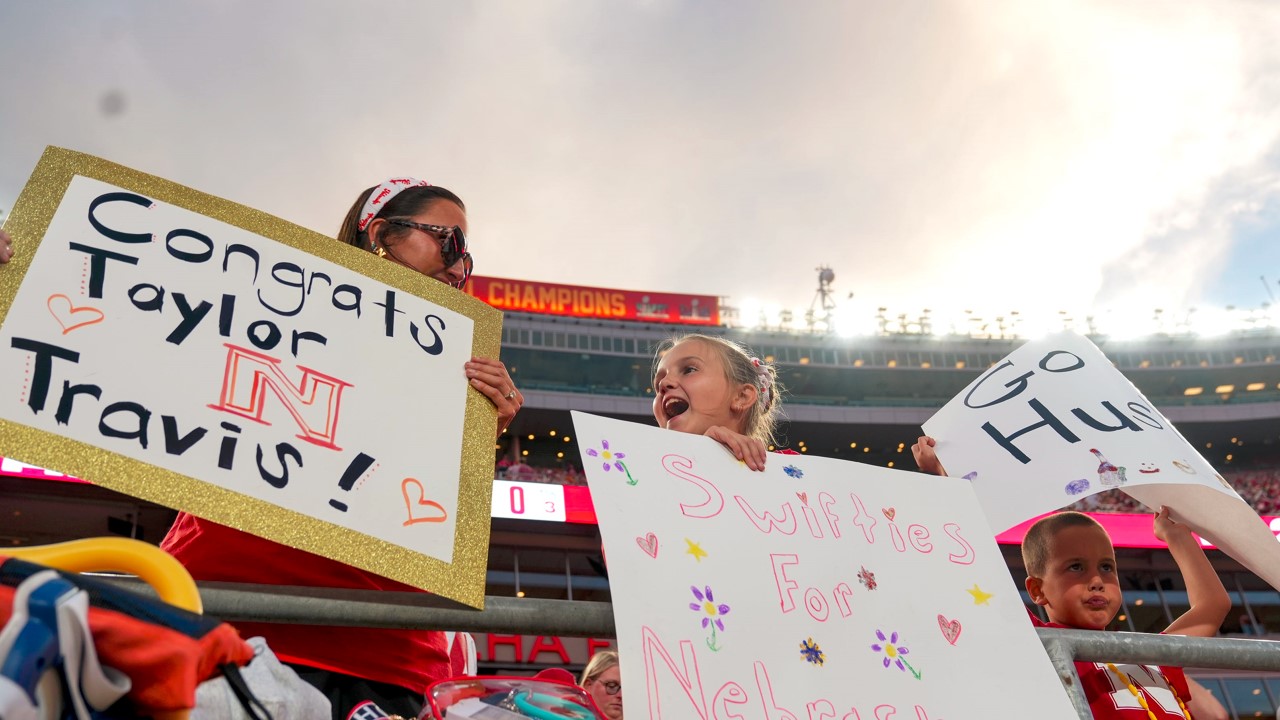
The camera found her before it found the quarterback. Somewhere in a Kansas City suite, a blonde woman in a Chiefs jacket raised a beer, and roughly 24 million viewers leaned closer. Not because of the game. Not because of the matchup. Because the most famous entertainer on the planet had chosen a football stadium as her Sunday destination. The NFL had spent decades courting corporate America for attention. Then a pop star showed up uninvited and generated what no traditional sponsorship deal ever could.
The Jersey That Broke the Internet
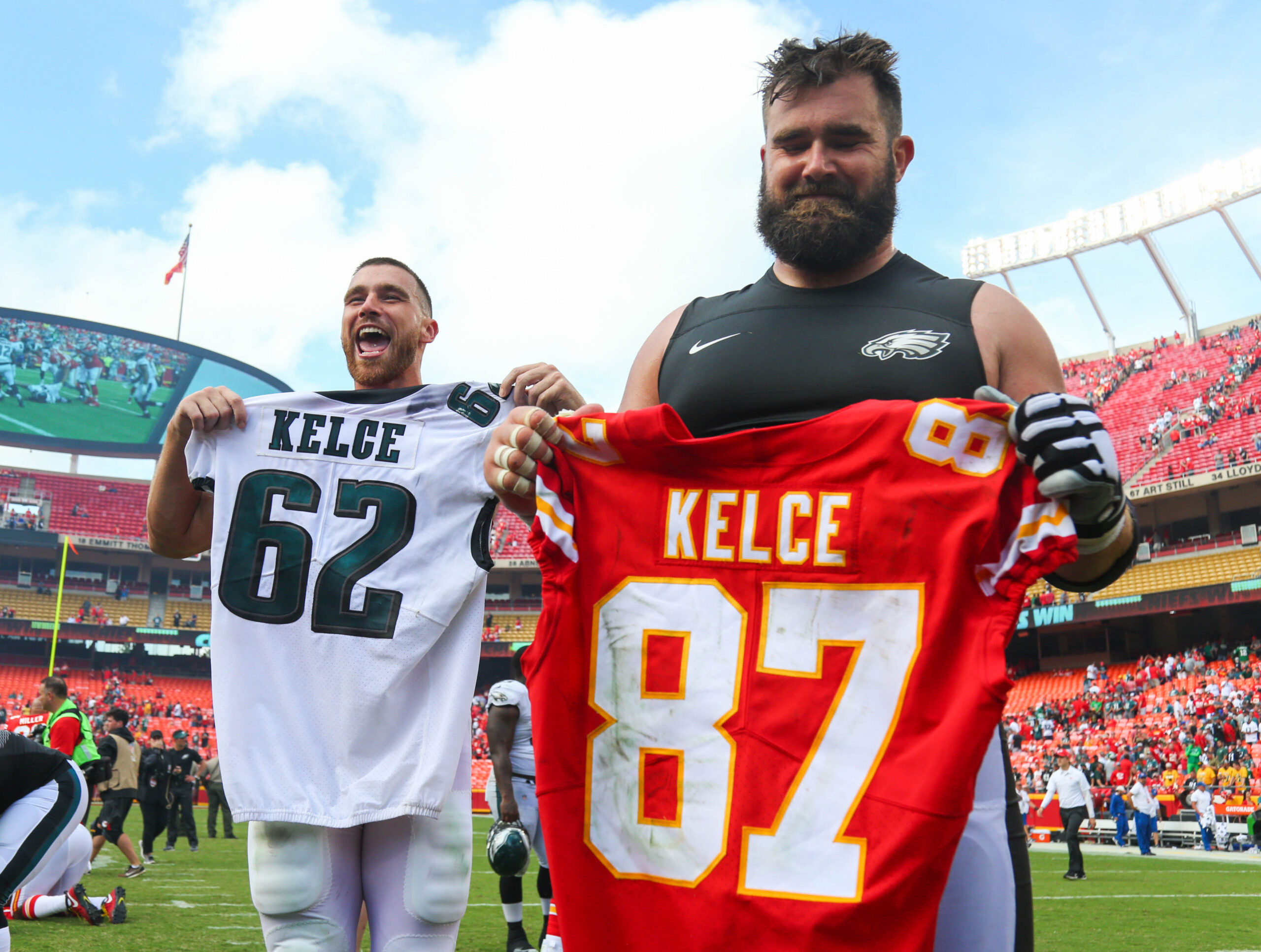
Sep 17, 2017; Kansas City, MO, USA; Kansas City Chiefs tight end Travis Kelce (87) and Philadelphia Eagles center Jason Kelce (62) swap jersey after the game at Arrowhead Stadium. Mandatory Credit: Jay Biggerstaff-Imagn Images
Travis Kelce’s No. 87 jersey saw a nearly 400 percent spike in sales after Swift appeared at her first Chiefs game on September 24, 2023. Overnight, a tight end’s merchandise became one of the top five sellers across the entire league. Resale platforms like StubHub reported roughly triple the typical sales volume for certain Chiefs games within 24 hours of her being spotted in a suite. Chiefs home tickets turned into cultural currency. And the NFL hadn’t spent a single marketing dollar to make any of it happen.
The Audience Nobody Expected
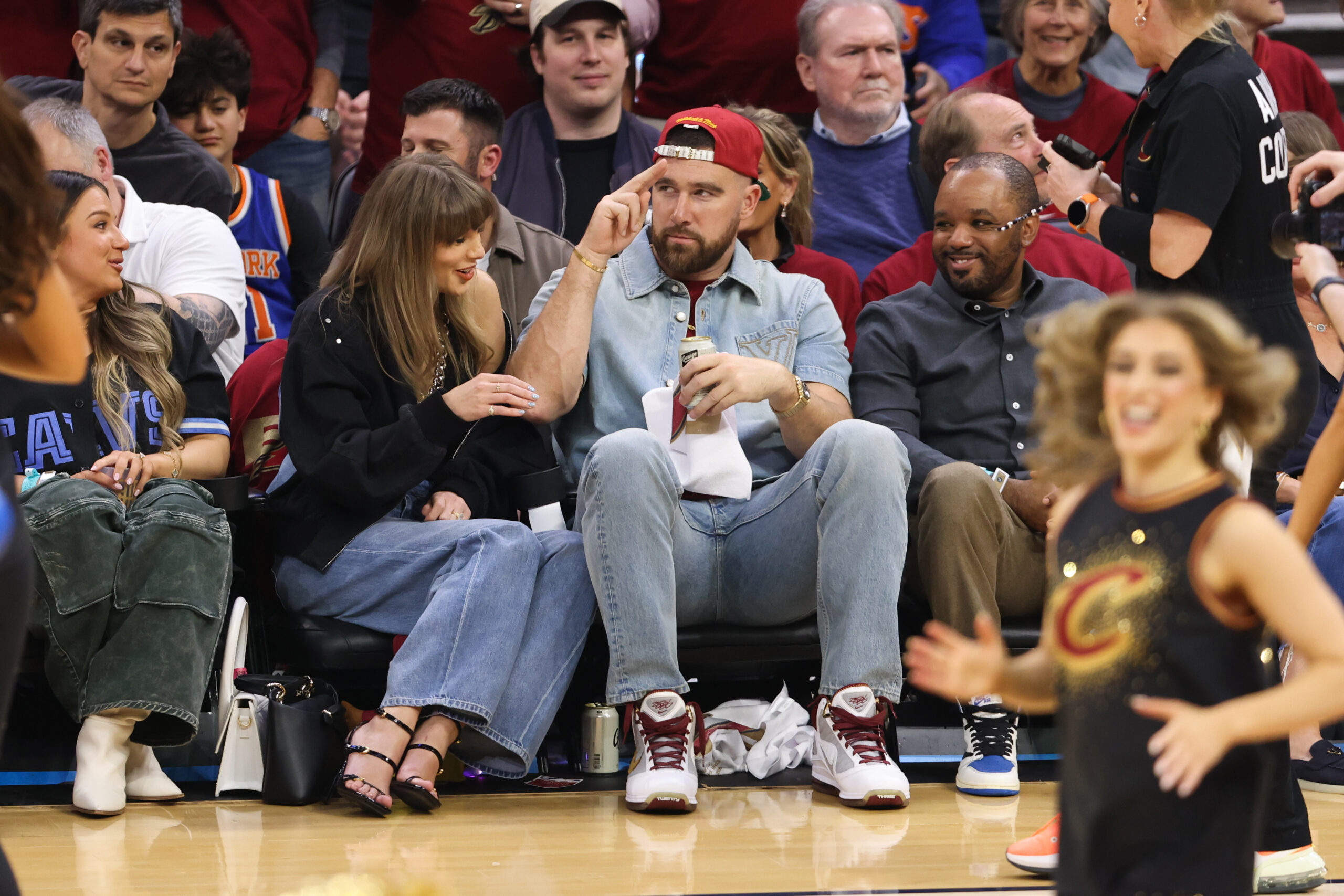
May 23, 2026; Cleveland, Ohio, USA; Taylor Swift and Travis Kelce react during game three of the eastern conference finals for the 2026 NBA playoffs between the New York Knicks and Cleveland Cavaliers at Rocket Arena. Mandatory Credit: Scott Galvin-Imagn Images
Female interest in NFL broadcasts surged during games where Swift appeared or was expected to appear, especially among younger women and girls. In some high‑profile Chiefs matchups, networks reported double‑digit percentage gains in female viewership and big spikes among teen girls and women in key advertising age ranges. The NFL had chased those demographics for years with pink jerseys and targeted ad campaigns. Swift delivered them by holding hands with a tight end. The league’s most valuable sponsorship packages, collectively worth about $2.49 billion in the 2024 season, struggled to match that kind of organic demographic shift. One woman in a suite did what billions in corporate partnerships rarely manage to do: change who actually shows up to watch.
The Billion‑Dollar Girlfriend
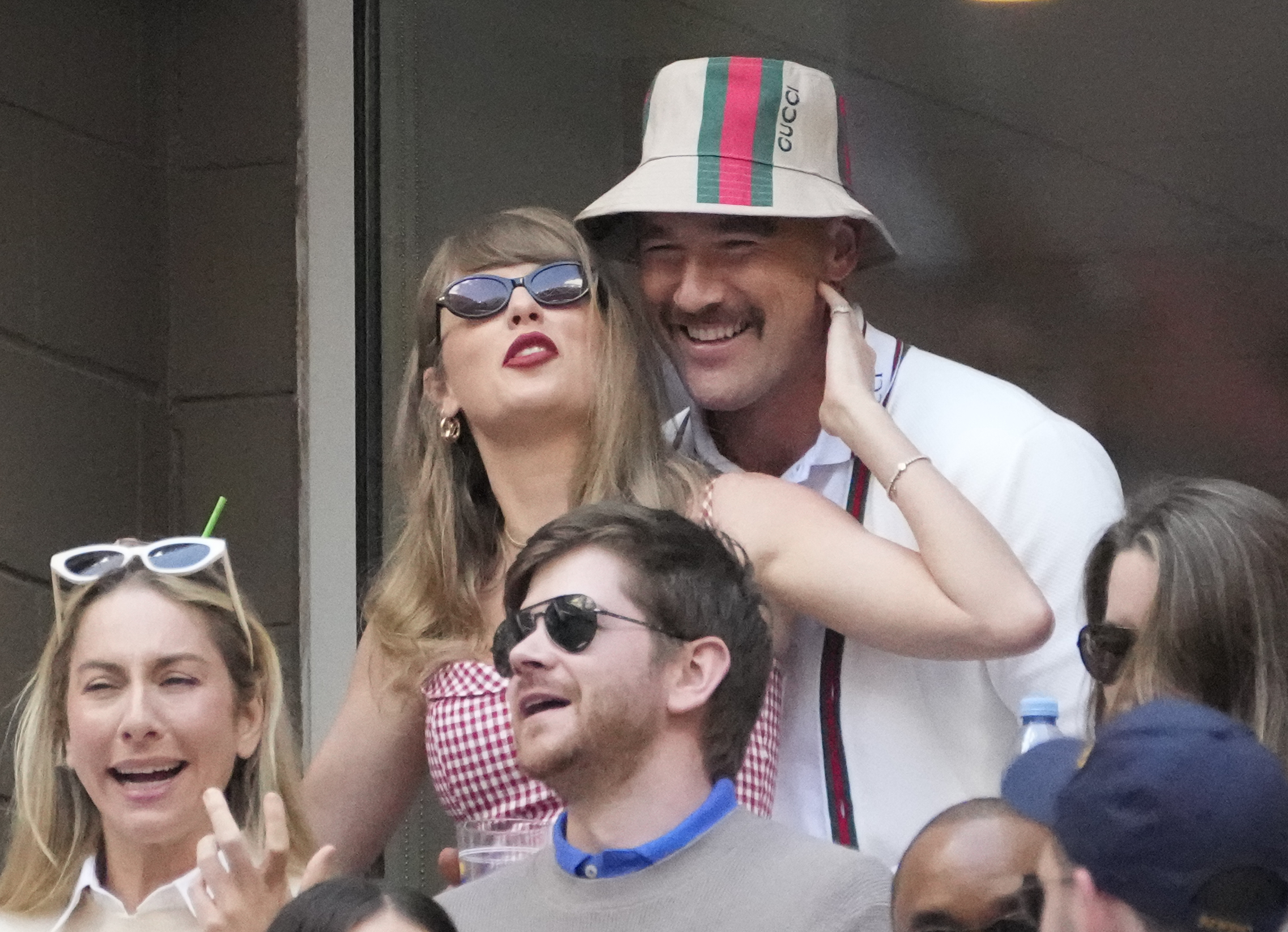
Sep 8, 2024; Flushing, NY, USA; Recording artist Taylor Swift and Kansas City Chiefs tight end Travis Kelce talk during the men’s singles final of the 2024 U.S. Open tennis tournament at USTA Billie Jean King National Tennis Center. Mandatory Credit: Robert Deutsch-Imagn Images
Apex Marketing Group tracked the numbers across two NFL seasons. Their finding: Swift’s presence has generated just under $1 billion in brand‑exposure value for the league and the Kansas City Chiefs from 2023 through early 2025. No contract. No negotiation. No logo placement. Nearly a billion dollars in equivalent media value from a woman who just wanted to watch her boyfriend play football. The NFL’s entire sponsorship apparatus brings in around $2.49 billion per year from corporate partners, and Swift matched a massive chunk of that output in free attention.
Why Free Beats Paid

Bianca Sanabria Serna in a portrait at home in Boca Raton, Fla., on September 9, 2025. Serna was recently in an energy drink commercial with Travis Kelce. She is also a Taylor Swift fan.
Corporate sponsors buy impressions. Swift created obsession. That distinction matters. A Bud Light logo on a scoreboard registers and vanishes. Swift walking into Arrowhead Stadium generated news cycles that lasted days, social media storms that lasted weeks, and demographic shifts that lasted across multiple seasons. The mechanism is authenticity. Paid placements feel transactional because they are. An organic cultural moment feels real because it is. The NFL stumbled into one of the most efficient marketing engines in modern sports, and the cost was exactly zero dollars.
The Numbers Behind the Phenomenon
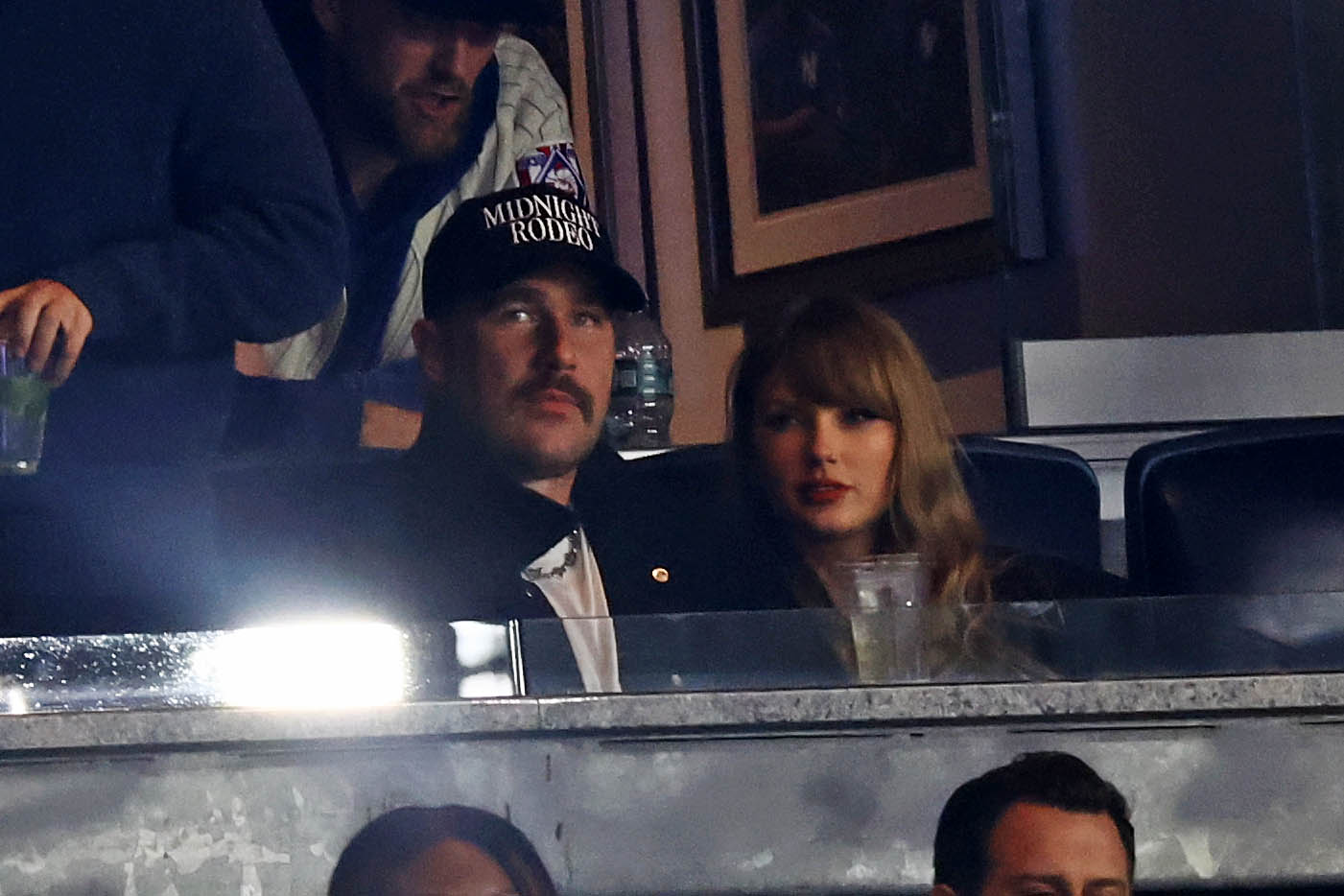
Oct 14, 2024; Bronx, New York, USA; Recording artist Taylor Swift and Kansas City Chiefs tight end Travis Kelce watch game one of the ALCS for the 2024 MLB Playoffs between the New York Yankees and the Cleveland Guardians at Yankee Stadium. Mandatory Credit: Vincent Carchietta-Imagn Images
In just her first partial season in the NFL spotlight, Apex calculated about $331.5 million in equivalent brand value between late September 2023 and late January 2024. Four months. A third of a billion dollars. Over a longer window from 2023 into early 2025, that figure climbed to just shy of $1 billion in cumulative exposure tied to her presence and the media coverage around it. Meanwhile, the NFL’s total revenue in its 2024 fiscal year has been widely reported in the low‑$20‑billion range, with national revenue alone reaching about $13.8 billion and being split equally among the 32 clubs. Each team received $432.6 million in national revenue, a record distribution that underscored how fast the league’s money machine is growing. Nobody can isolate exactly how much of that growth traces back to one pop star’s Sunday appearances, but the correlation is loud enough to hear from the parking lot.
The Ripple Across the League
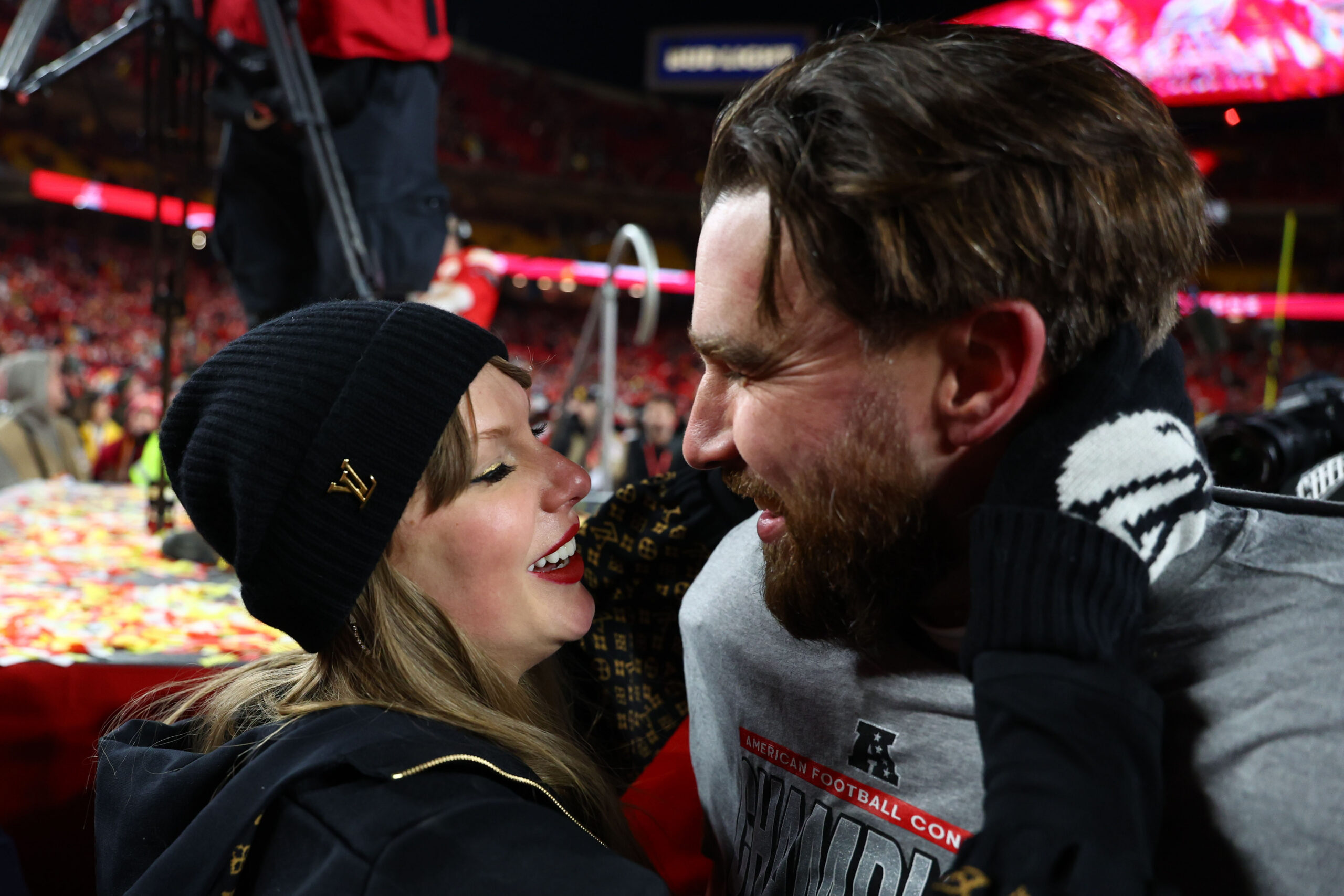
Jan 26, 2025; Kansas City, MO, USA; Recording artist Taylor Swift and Kansas City Chiefs tight end Travis Kelce (87) react after the AFC Championship game against the Buffalo Bills at GEHA Field at Arrowhead Stadium. Mandatory Credit: Mark J. Rebilas-Imagn Images
Swift’s effect didn’t stay in Kansas City. Viewership surges hit nationally televised Chiefs games, pulling casual fans and non‑fans into broadcasts across the country. Advertisers noticed. Networks noticed. The league’s trajectory toward commissioner Roger Goodell’s long‑stated $25 billion revenue target accelerated visibly as ratings records fell and ad inventory became even more valuable. Every team’s revenue share climbed. Thirty‑one franchises that had nothing to do with Travis Kelce’s love life still cashed checks fattened by his girlfriend’s cultural gravity. That’s the part that should terrify every CMO writing sponsorship checks.
The Rule That Changed Forever
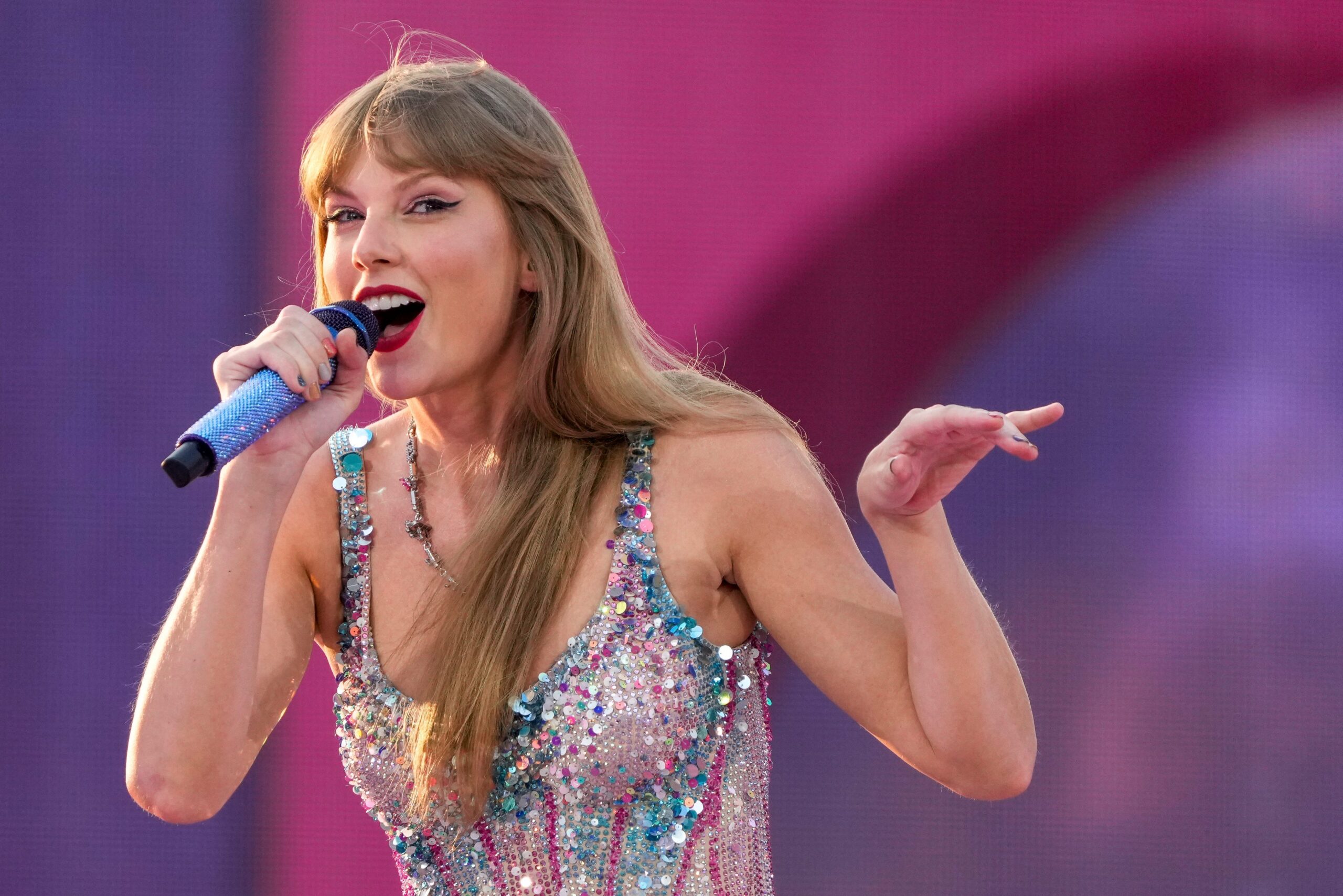
Taylor Swift performers during the first night of the Cincinnati stop of the Eras Tour at Paycor Stadium in downtown Cincinnati, Ohio, on June 30, 2023.
This wasn’t a fluke. Swift’s Eras Tour became the highest‑grossing concert tour in history, ultimately clearing the $1 billion mark and then some as it circled the globe. Her cultural reach isn’t comparable to a standard celebrity endorsement. It operates on a different scale entirely. The precedent she set for the NFL is permanent: organic cultural relevance can outperform paid sponsorship in audience acquisition and engagement. Once you see that equation, every traditional sports marketing playbook looks like a relic from a dead era.
What Happens When She Leaves
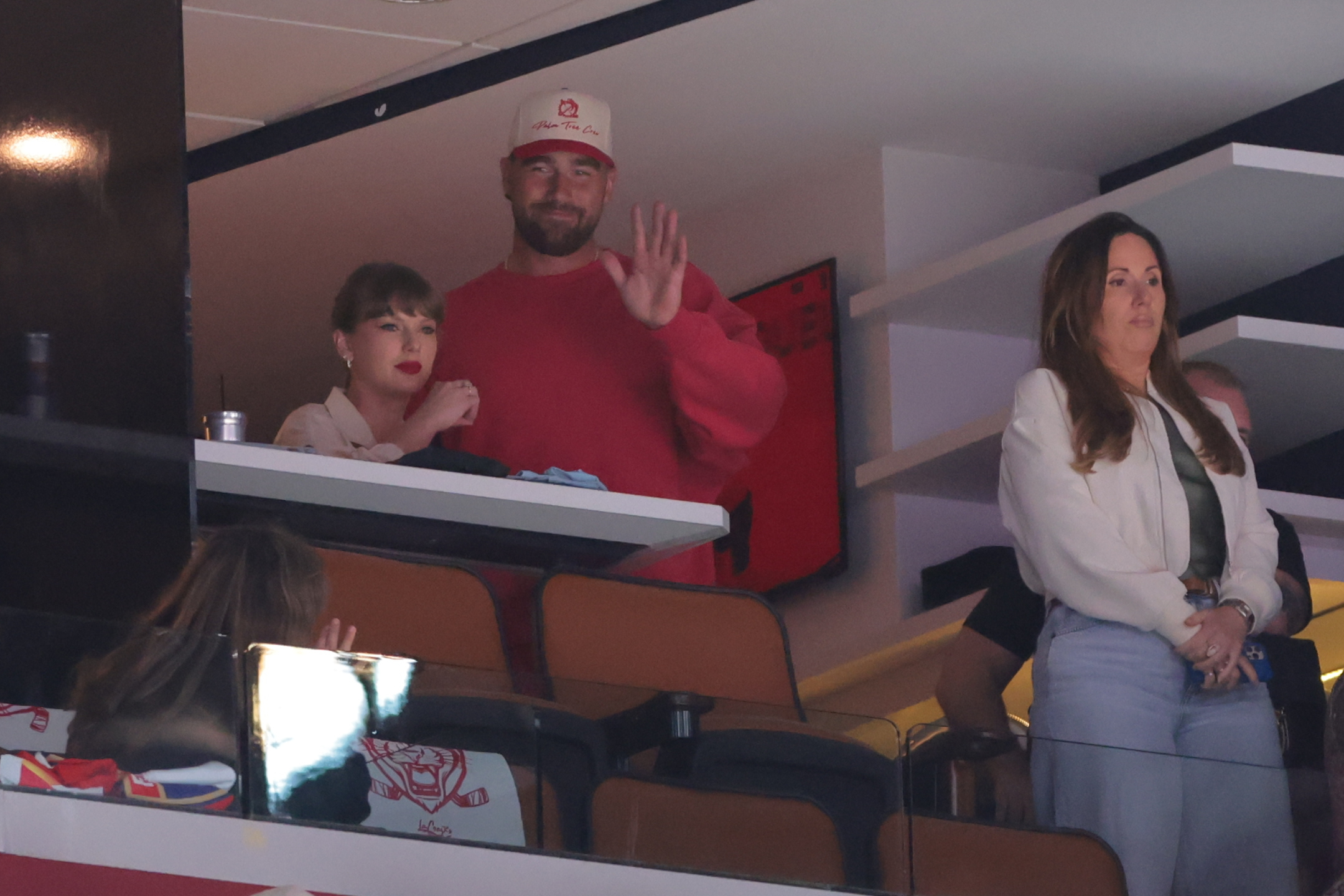
Jun 12, 2025; Sunrise, Florida, USA; American singer-songwriter Taylor Swift and Kansas City Chiefs Travis Kelce are in attendance during the game between Edmonton Oilers and Florida Panthers in game four of the 2025 Stanley Cup Final at Amerant Bank Arena. – Credit: Sam Navarro-Imagn Images
Swift and Kelce’s relationship has now stretched over multiple seasons, and their engagement has been widely reported as their careers and public lives have continued to intertwine. Yet the NFL still built no hard infrastructure around this windfall. No formal long‑term partnership. No contractual guarantee. No binding logo deal. The league’s bonus marketing engine depends entirely on a romance continuing and a pop star choosing to keep showing up on Sundays. If she stops attending, the female viewership bump cools off. The merchandise surge settles back toward normal. The cultural crossover fades. The NFL’s most valuable recent marketing asset is someone it doesn’t employ, doesn’t pay, and can’t control.
The Sponsorship Model on Trial

Karlee Reed, left, and Andrea Fisher face off as to who’s Taylor Swift’s #1 fan during the CMA Music Festival at LP Field in Nashville on June 14, 2009.
Every corporation paying into that multibillion‑dollar sponsorship pool should be asking one question: if a single person’s authentic presence can generate a comparable wave of cultural impact for free, what exactly are they buying? The answer reshapes professional sports. Sponsorship dollars buy logo placement. Cultural relevance buys fandom. The NFL now knows the difference, and so does every league watching. The next billion‑dollar marketing moment is unlikely to come solely from a boardroom negotiation. It will come from whoever sits in the stands and makes America care. Do you think the NFL should chase more organic moments like this—or double down on traditional sponsorships?