
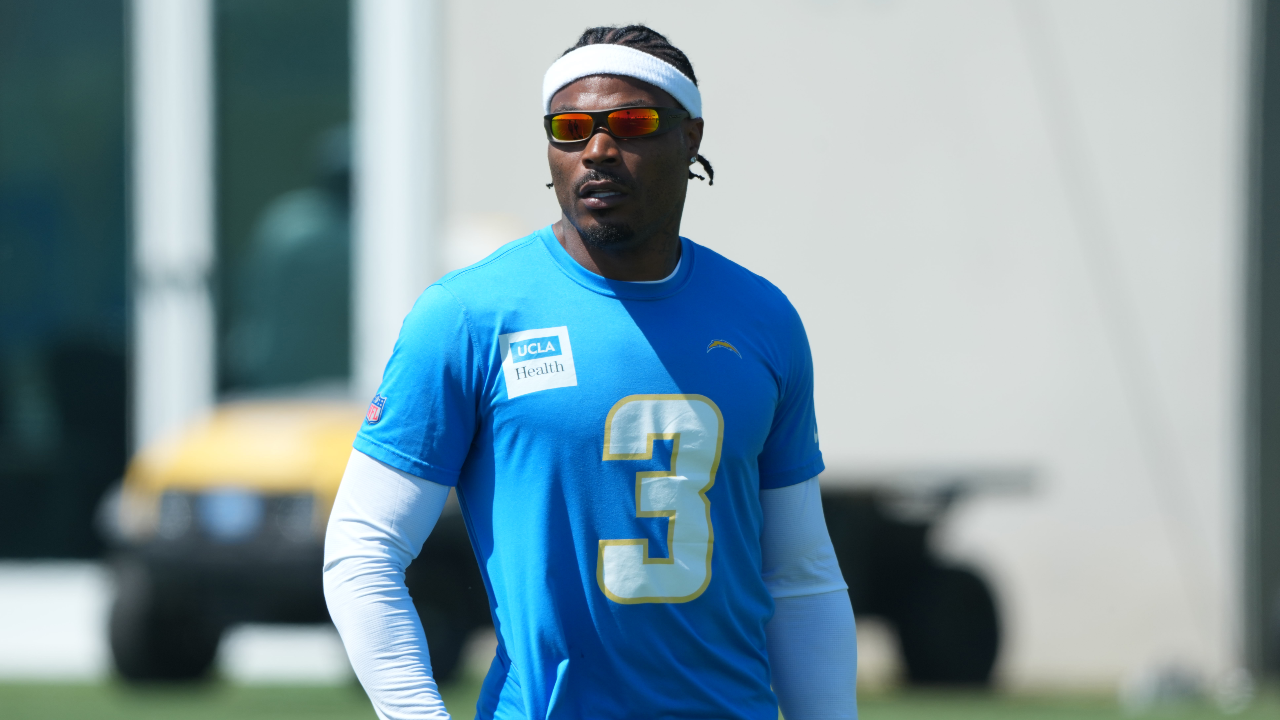
The ink barely dried before the number started circulating through every front office in the league. Three years. $75.6 million. $57.5 million guaranteed. The Los Angeles Chargers locked down Derwin James Jr. with a contract extension that didn’t just reward their best defender. It reset the entire safety market for the second time in three years. Five Pro Bowl selections. Ninety-four tackles, three interceptions, and eight quarterback hits in his most recent season alone. Every general manager with a safety approaching free agency felt the ground shift beneath their salary projections.
The Margin That Moved Millions
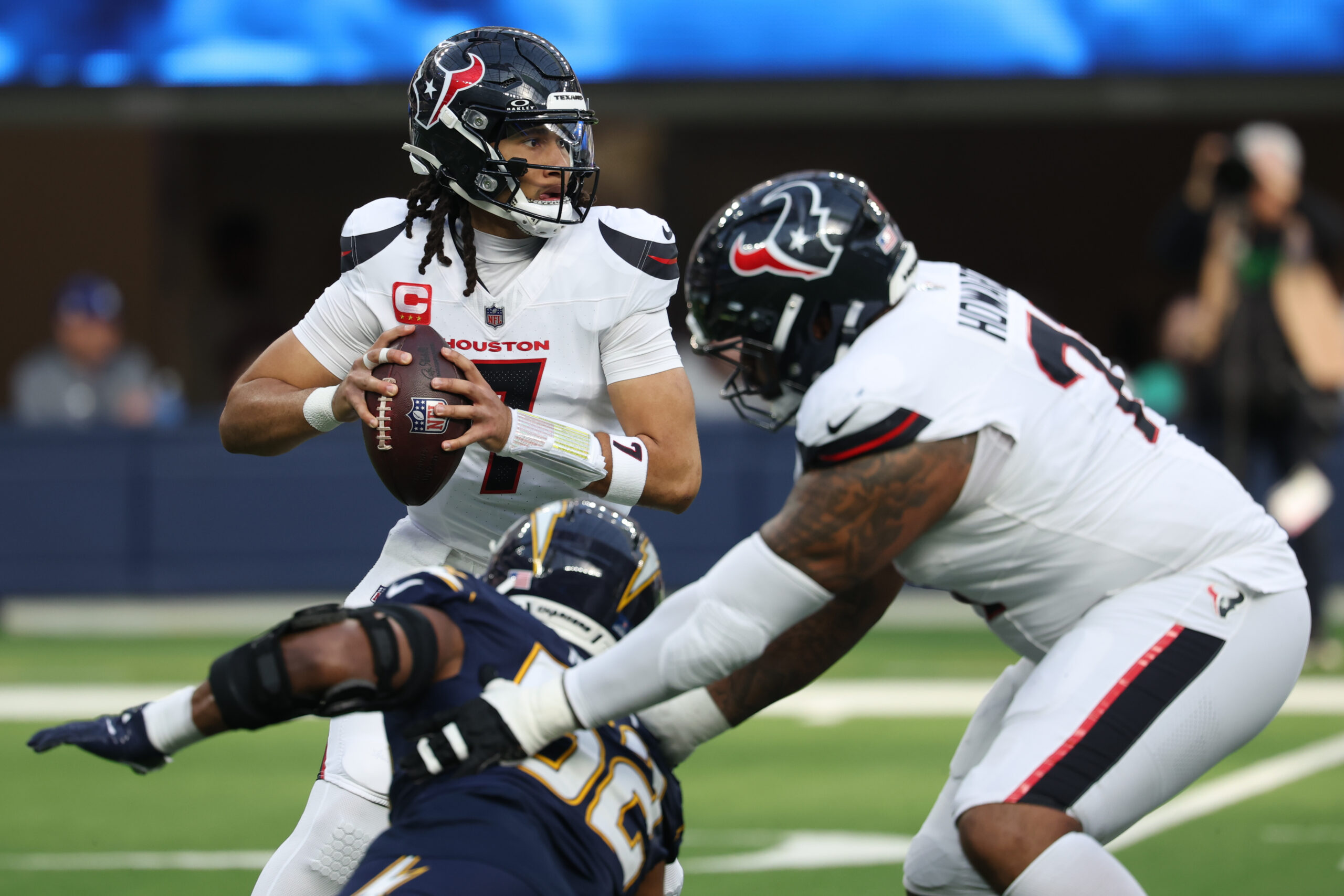
Dec 27, 2025; Inglewood, California, USA; Los Angeles Chargers safety Derwin James Jr. (3) reacts after a defensive play against the Houston Texans during the first half at SoFi Stadium. Mandatory Credit: Kiyoshi Mio-Imagn Images
James’s new average annual value lands at $25.2 million per year. The man he leapfrogged, Baltimore’s Kyle Hamilton, signed for $25.1 million. One hundred thousand dollars separates the NFL’s two highest-paid safeties. That razor-thin gap tells the whole story of a position market that has reached a tipping point. Teams aren’t debating whether elite safeties deserve premium money anymore. They’re racing to pay it before the next deal makes theirs look cheap. GM Joe Hortiz made the call before that window closed.
A Pattern Built on Proof
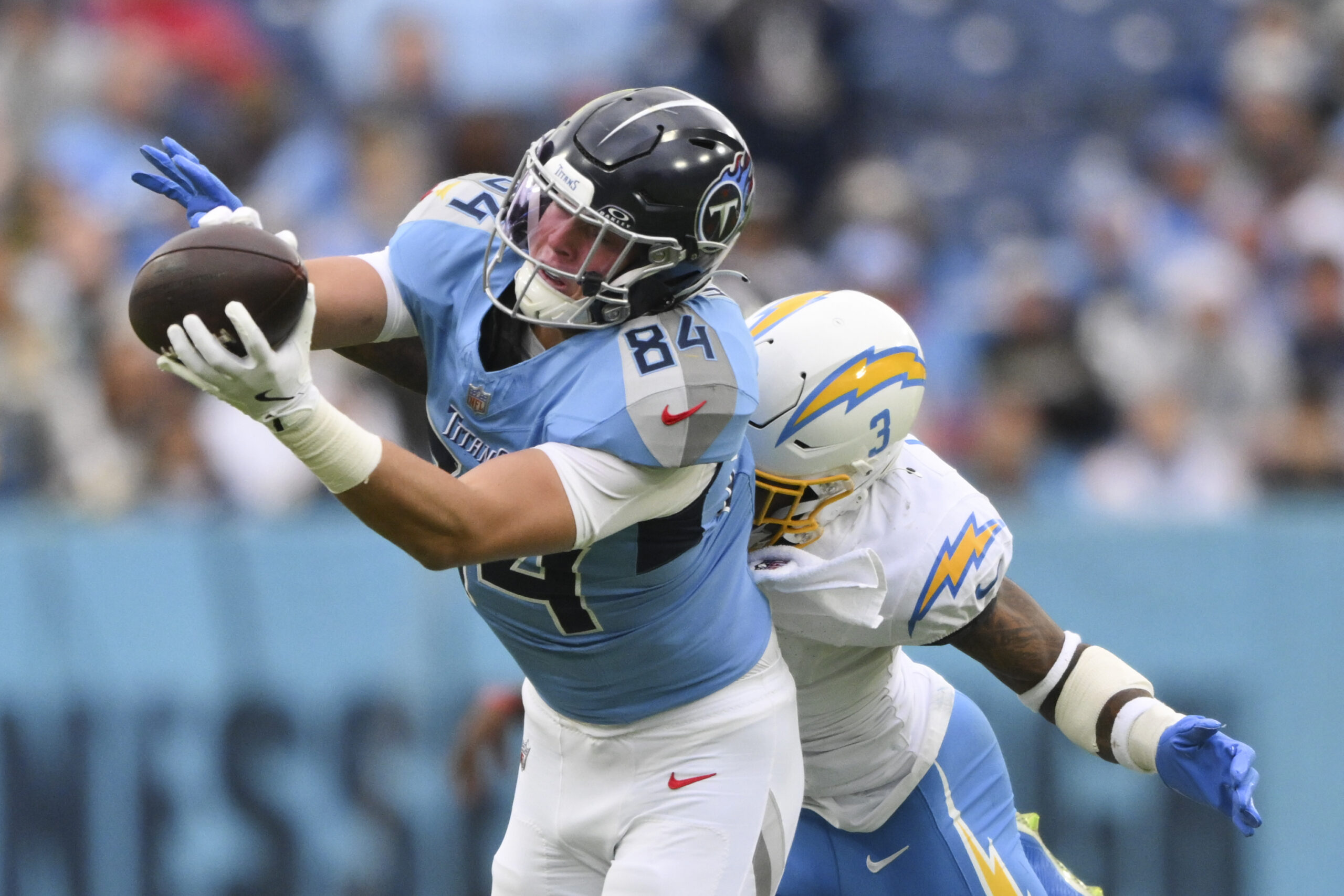
Nov 2, 2025; Nashville, Tennessee, USA; Tennessee Titans tight end Gunnar Helm (84) makes a catch against Los Angeles Chargers safety Derwin James Jr. (3) during the fourth quarter at Nissan Stadium. Mandatory Credit: Steve Roberts-Imagn Images
James first became the highest-paid safety in 2022 when he signed a four-year extension worth roughly $19.1 million annually. That deal looked bold at the time. The assumption across the league held that safeties simply couldn’t sustain that kind of valuation, that the market would correct itself. It didn’t correct. It accelerated. James’s production justified every dollar, and other elite safeties used his contract as their own negotiating floor. The myth that safeties couldn’t command top-tier money started cracking the moment James proved it wrong.
The Second Reset Changes Everything
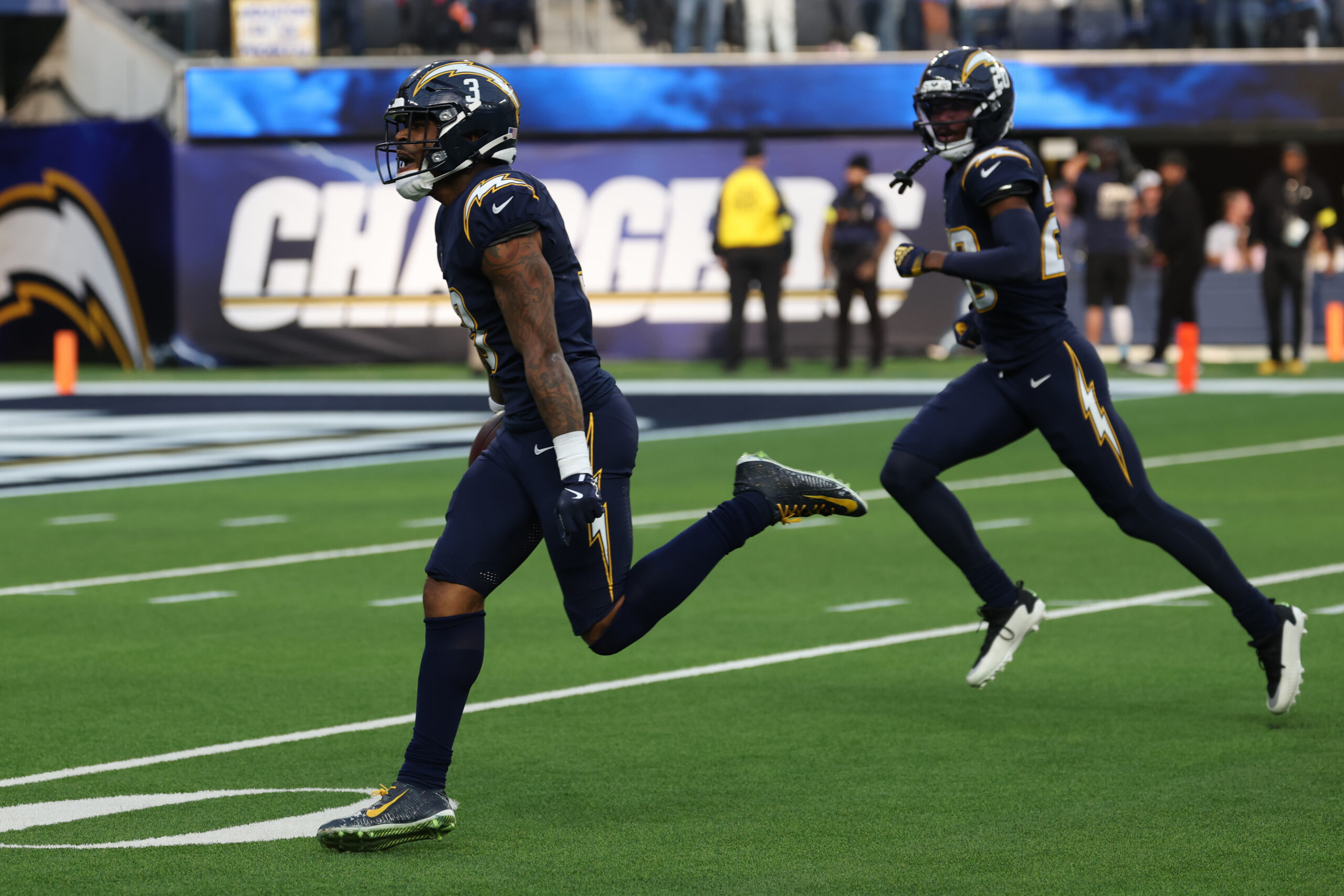
Dec 27, 2025; Inglewood, California, USA; Los Angeles Chargers safety Derwin James Jr. (3) reacts after making an interception against the Houston Texans during the first half at SoFi Stadium. Mandatory Credit: Kiyoshi Mio-Imagn Images
Resetting a position market once is impressive. Doing it twice rewrites the rules. James jumped from $19.1 million per year to $25.2 million. That’s a 32% leap in annual value in a single contract cycle. The Chargers’ defense ranked fifth in total yards allowed, and James anchored the secondary that made it possible. This wasn’t a team overpaying for potential. This was a franchise paying for production it already received. Two sacks. Three picks. Eight quarterback hits. From a safety. The old valuation model for the position died right there.
Why Versatility Broke the Market
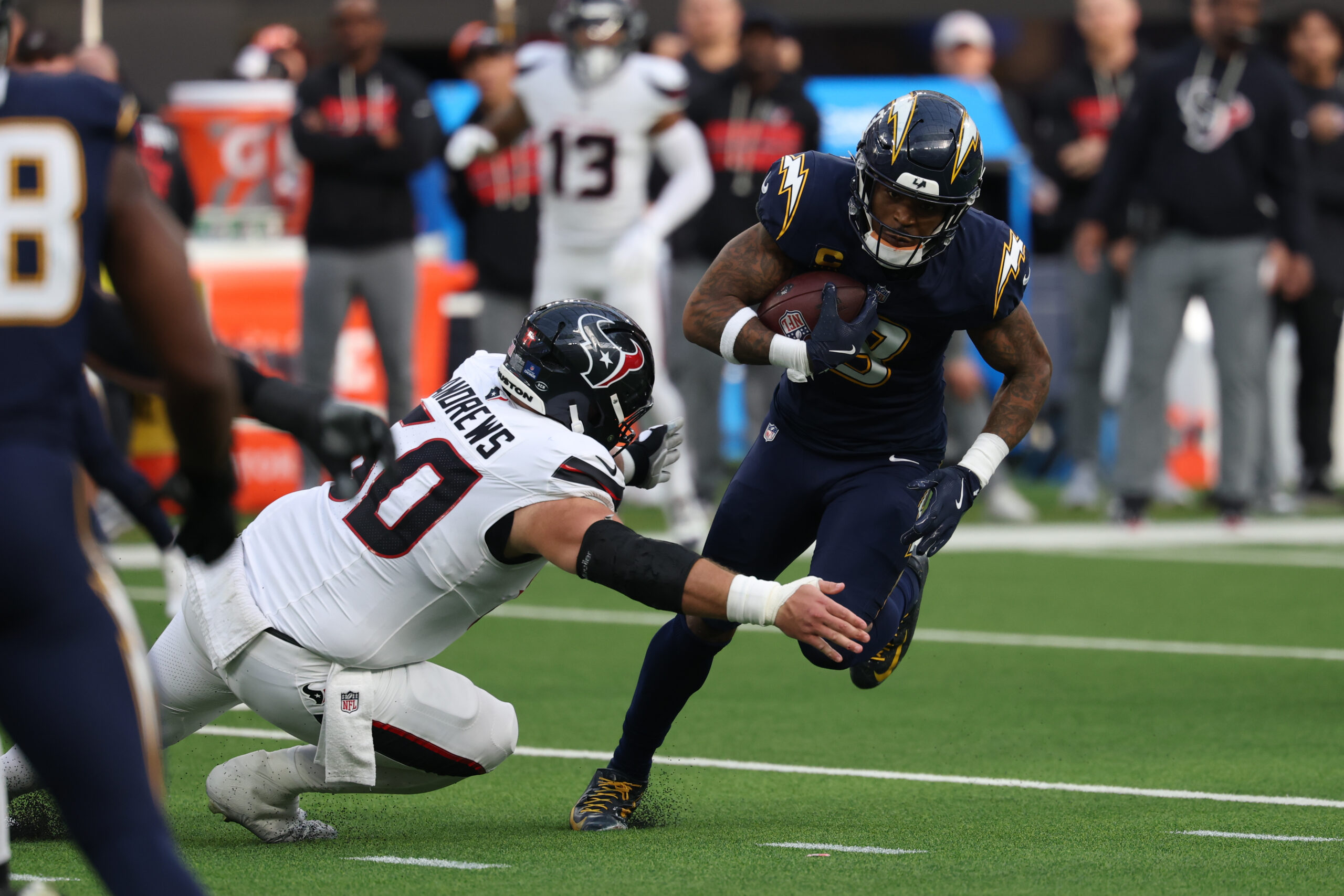
Dec 27, 2025; Inglewood, California, USA; Los Angeles Chargers safety Derwin James Jr. (3) is tackled by Houston Texans center Jake Andrews (60) after making an interception during the first half at SoFi Stadium. Mandatory Credit: Kiyoshi Mio-Imagn Images
Traditional safeties played one role. James plays four. Deep coverage, box run support, blitz packages, and leadership on the back end. That hybrid skill set forced teams to rethink what a safety is worth because replacing James would require multiple players at multiple salaries. The Chargers understood something the rest of the league is still catching up to: a safety who impacts every phase of defense functions like a defensive quarterback. And defensive quarterbacks, it turns out, now command compensation that looks a lot like the offensive version.
The Numbers Behind the Commitment
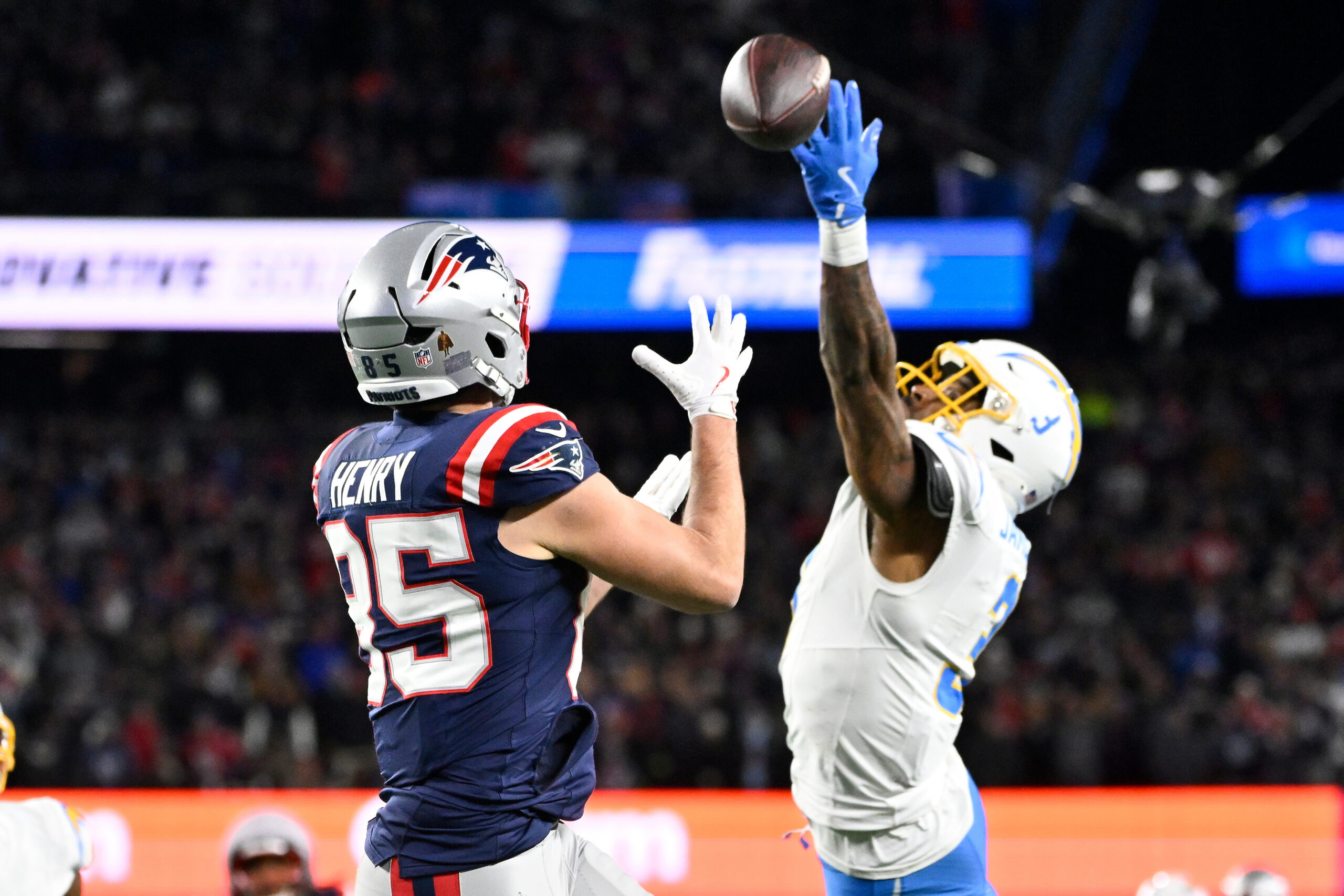
Jan 11, 2026; Foxborough, MA, USA; New England Patriots tight end Hunter Henry (85) makes a catch against Los Angeles Chargers safety Derwin James Jr. (3) for a touchdown during the second half in an AFC Wild Card Round game at Gillette Stadium. Mandatory Credit: Eric Canha-Imagn Images
The $57.5 million in guaranteed money tells the real story. That’s roughly 76% of the total deal locked in as guaranteed cash. The Chargers didn’t hedge. They committed. For context, James’s 2022 extension set the bar. Hamilton’s deal in Baltimore matched it. Now James has vaulted past both benchmarks with a structure that rewards immediate performance while keeping the Chargers flexible long-term. Hortiz built a deal that says “franchise cornerstone” in every clause, and the guaranteed percentage backs that language with actual dollars.
The Ripple Hitting Every Front Office
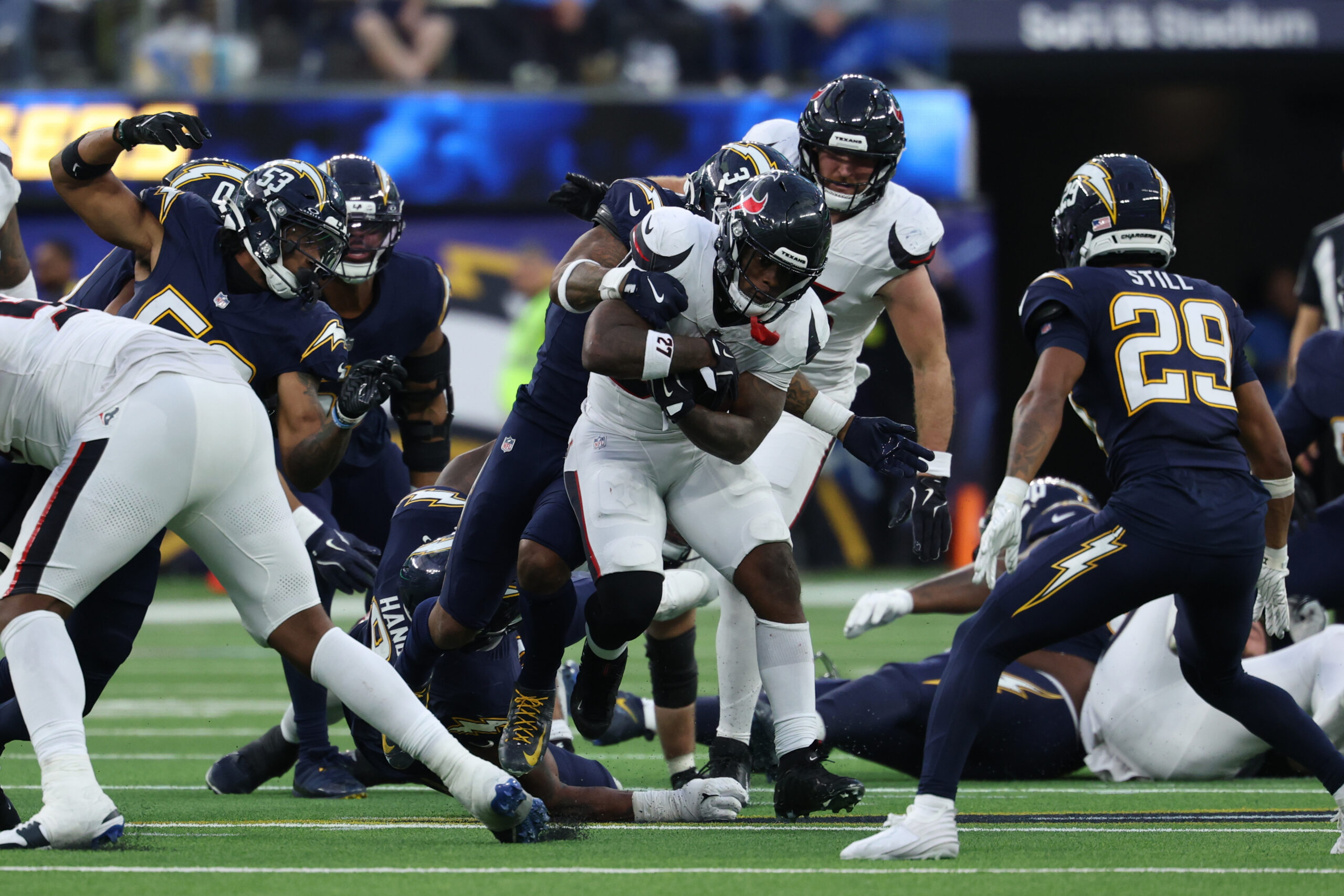
Dec 27, 2025; Inglewood, California, USA; Houston Texans running back Woody Marks (27) is tackled by. Los Angeles Chargers safety Derwin James Jr. (3) during the second half at SoFi Stadium. Mandatory Credit: Kiyoshi Mio-Imagn Images
Every team with an elite safety just watched their cap projections explode. James’s $25.2 million annual value establishes the new floor, not the ceiling. The next top safety to negotiate will use this deal as the starting point. Teams that undervalue their secondary talent will lose it. Teams that pay market rate will sacrifice spending elsewhere. That’s the ripple effect of a single contract extension signed in Los Angeles. The Chargers solved their problem. They created one for 31 other franchises trying to build competitive defenses on a budget.
The New Rule for Defensive Spending
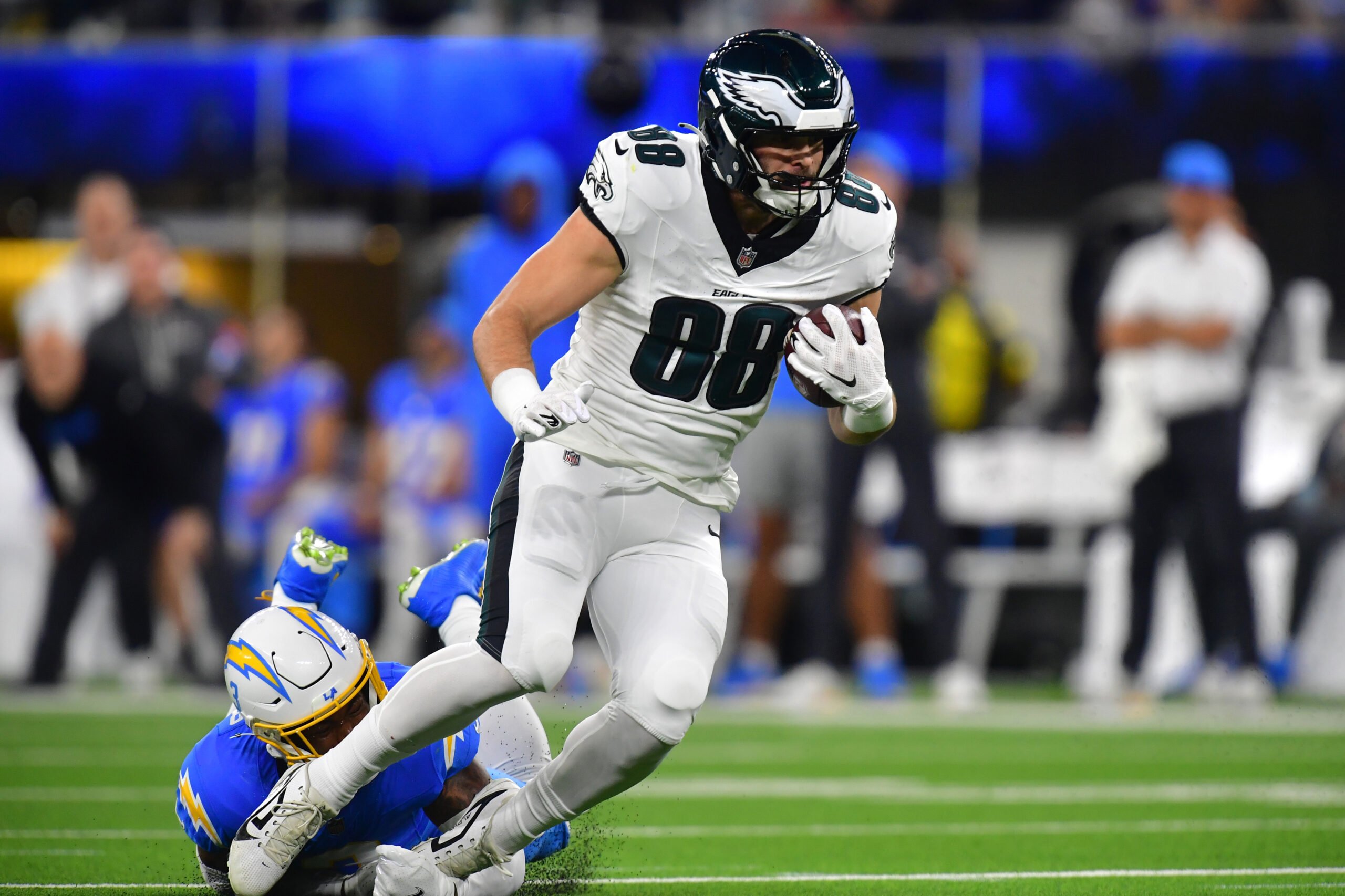
Dec 8, 2025; Inglewood, California, USA; Los Angeles Chargers safety Derwin James Jr. (3) tackles Philadelphia Eagles tight end Dallas Goedert (88) in the first half at SoFi Stadium. Mandatory Credit: Gary A. Vasquez-Imagn Images
This isn’t an outlier contract. It’s a precedent. When the same player resets the same position market twice, the league stops treating it as an anomaly and starts treating it as the new standard. James proved that elite safety play translates directly to team defense, with the Chargers finishing fifth in yards allowed. Once you see that connection, every front office decision about secondary spending changes. The era of treating safeties as replaceable mid-round commodities ended the moment James signed his name for the second time.
What Comes Before the Next Deal
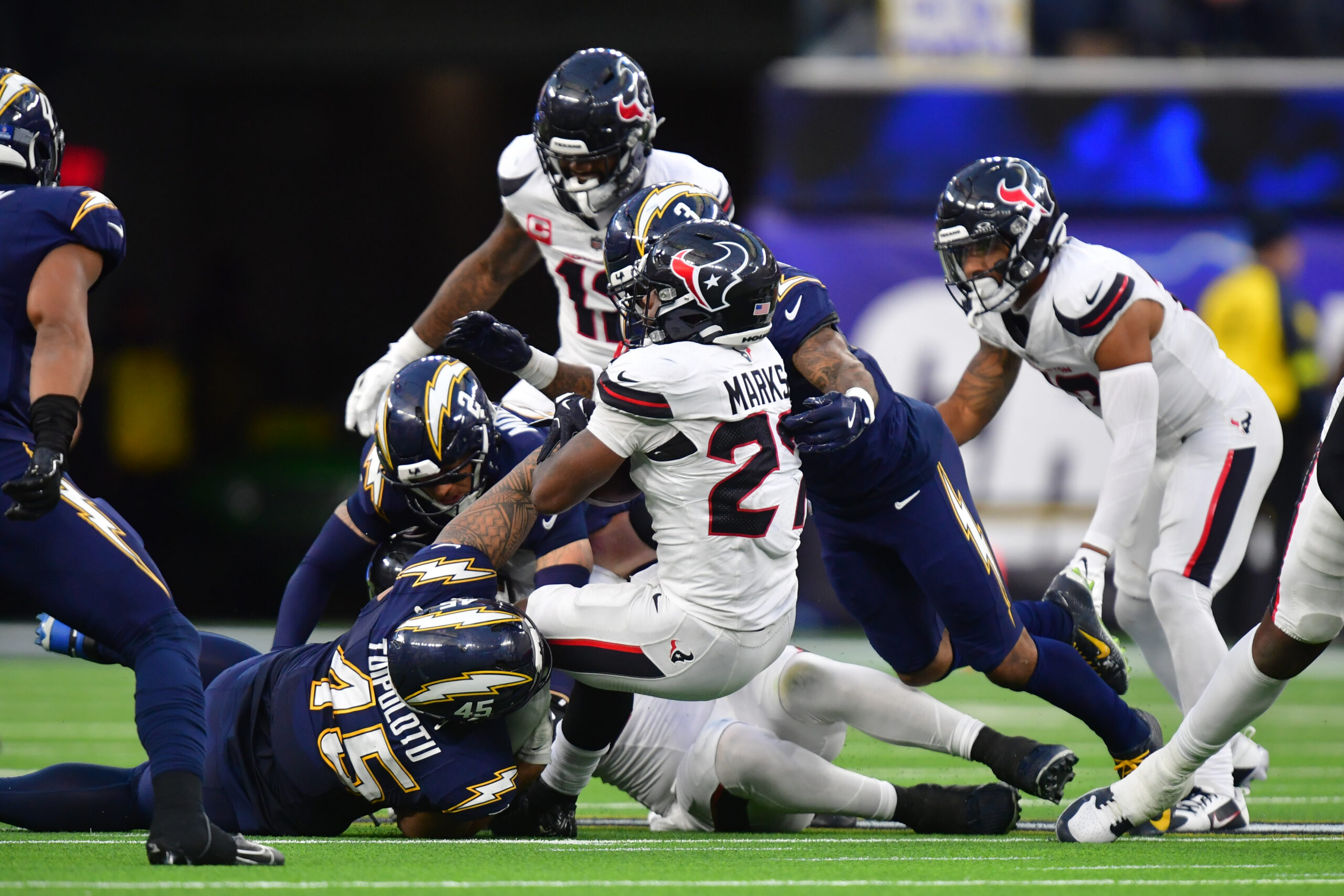
Dec 27, 2025; Inglewood, California, USA; Houston Texans running back Woody Marks (27) is tackled by Los Angeles Chargers long snapper Josh Harris (47) and safety Derwin James Jr. (3) during the second half at SoFi Stadium. Mandatory Credit: Gary A. Vasquez-Imagn Images
James’s deal runs three years. By the time it expires, the salary cap will have climbed again, and the safety market will have absorbed this new baseline. If James maintains his five-time Pro Bowl trajectory, he could realistically reset the market a third time. No safety in NFL history has done that. The Chargers built a contract that keeps James through his prime years while leaving room for exactly that possibility. Hortiz didn’t just retain a player. He positioned the franchise to define how defenses get built for years to come.
The Framework Nobody Else Sees Yet
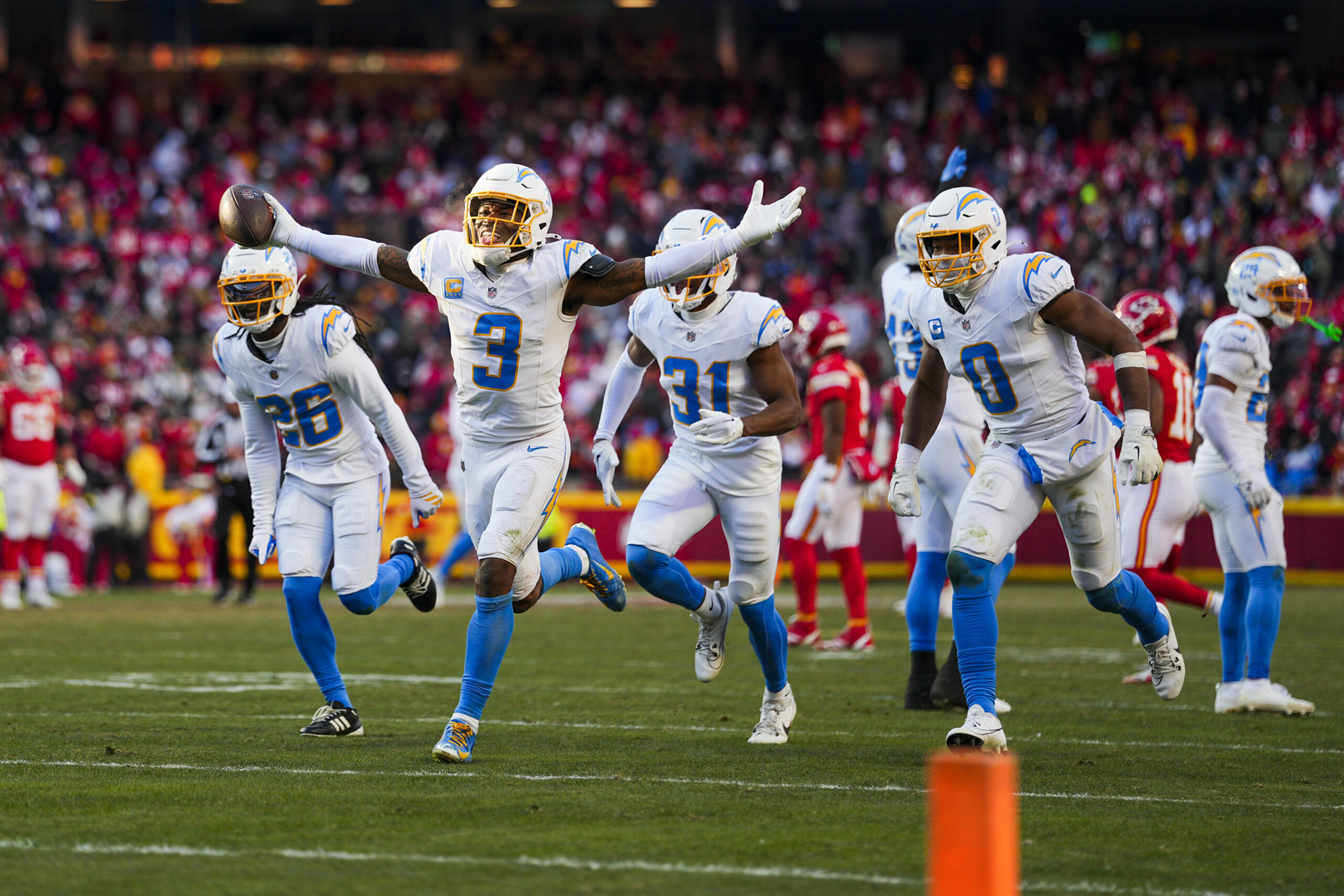
Dec 14, 2025; Kansas City, Missouri, USA; Los Angeles Chargers safety Derwin James Jr. (3) celebrates with cornerback Donte Jackson (26) and linebacker Daiyan Henley (0) following an interception against the Kansas City Chiefs during the fourth quarter at GEHA Field at Arrowhead Stadium. Mandatory Credit: Jay Biggerstaff-Imagn Images
Most people see a big contract. The sharper read is this: the Chargers just proved that investing in defensive versatility pays for itself in wins, and the rest of the league will spend the next three years trying to copy the model without having the player to make it work. James went from $19.1 million to $25.2 million annually because no other safety alive can do what he does on every snap. Thirty-one front offices now face the same question: pay the premium or watch someone else win with it. So here’s the real question: did the Chargers lock down a generational anchor, or did they just light the fuse on a safety market that’s about to burn every team that follows? Drop your take below.