

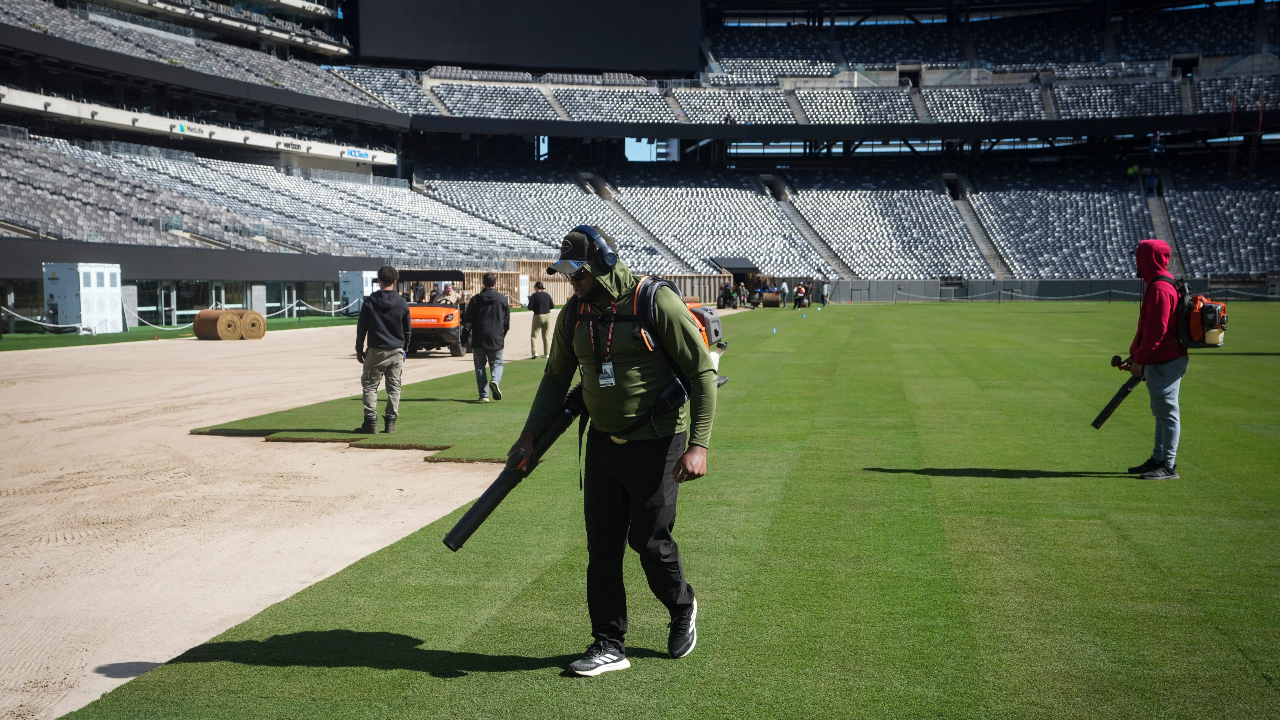
Somewhere in East Rutherford, New Jersey, 82,500 seats sit waiting for the biggest soccer match on earth. MetLife Stadium, already the NFL’s largest venue, will host the 2026 FIFA World Cup final on July 19. Two NFL franchises share those seats every fall. Now the entire planet gets a turn. That dual identity captures something shifting across professional football: the stadiums themselves have become the product. The list below counts down the league’s ten biggest buildings, and the deeper you go, the more each one challenges a simple assumption: that the largest stadium automatically wins. By the end, the numbers stop making the case you expect.
10. M&T Bank Stadium, Baltimore, 71,008

Dec 21, 2025; Baltimore, Maryland, USA; A Baltimore Ravens cheerleader performs during the second half of the game against the New England Patriots at M&T Bank Stadium. Mandatory Credit: James Lang-Imagn Images
The Ravens’ home opens the countdown at 71,008 seats, proof that even the smallest entry on a “biggest” list still dwarfs most venues in world sport. Baltimore consistently fills it, and the building has aged into one of the league’s more respected game-day environments. But it sets up the first quiet question this list keeps asking. If a stadium this size already delivers a packed, electric Sunday, what exactly are teams chasing when they build bigger?
9. Highmark Stadium, Buffalo, 71,608
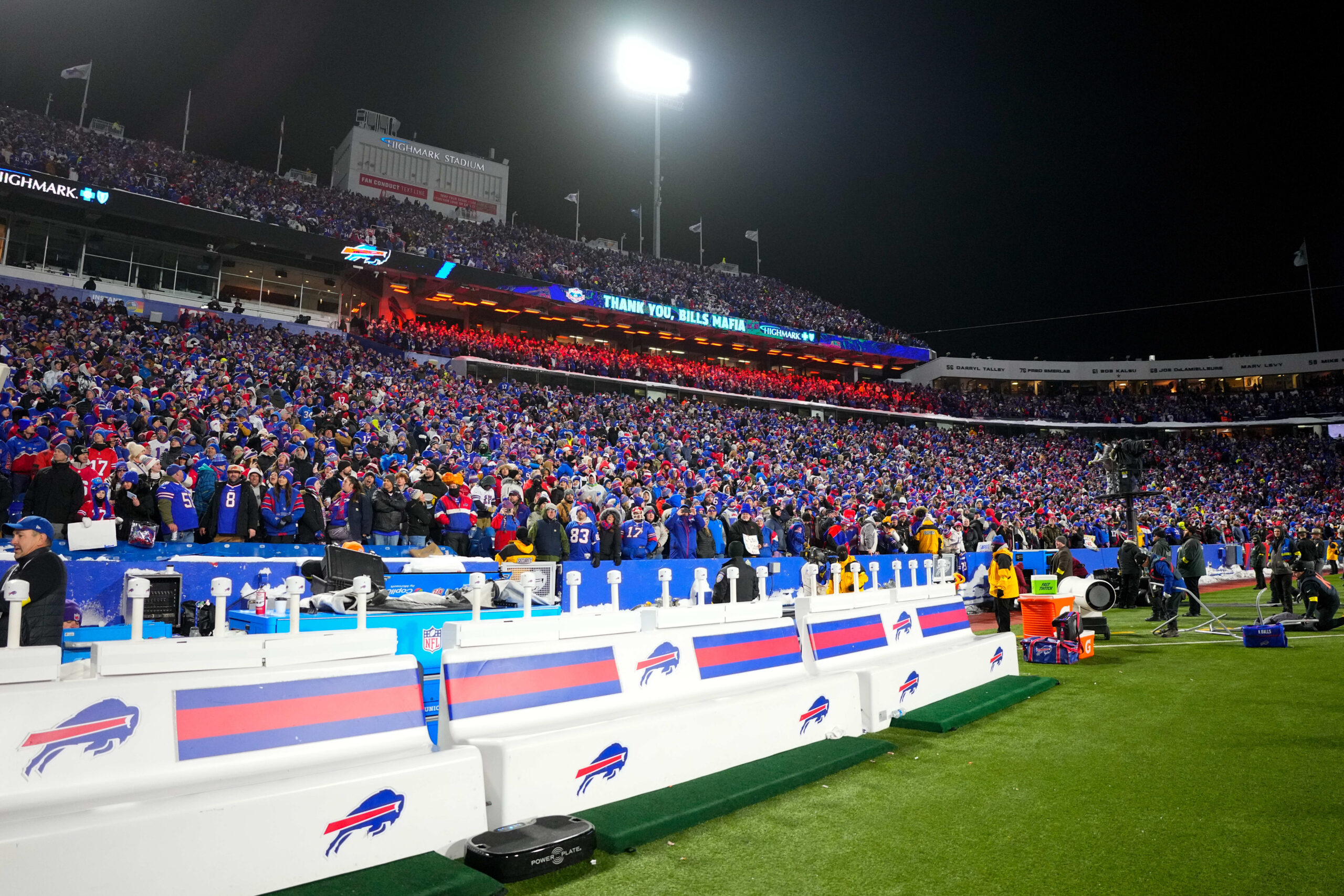
Jan 4, 2026; Orchard Park, New York, USA; Fans remain in the stands after the game between the Buffalo Bills and the New York Jets at Highmark Stadium. Mandatory Credit: Gregory Fisher-Imagn Images
Buffalo’s current Highmark Stadium seats 71,608, and that number is about to shrink on purpose. The Bills’ new stadium deliberately cuts capacity to 60,000, with another 5,000 to 10,000 in standing-only sections. Its exterior features 4,400 giant steel panels covered in perforations shaped like the Bills’ charge logo, engineered specifically for wind manipulation. That’s not decoration. That’s acoustic weaponry. The first real surprise lands here: a franchise looked at its biggest-stadium status and chose to get smaller.
8. NRG Stadium, Houston, 72,220
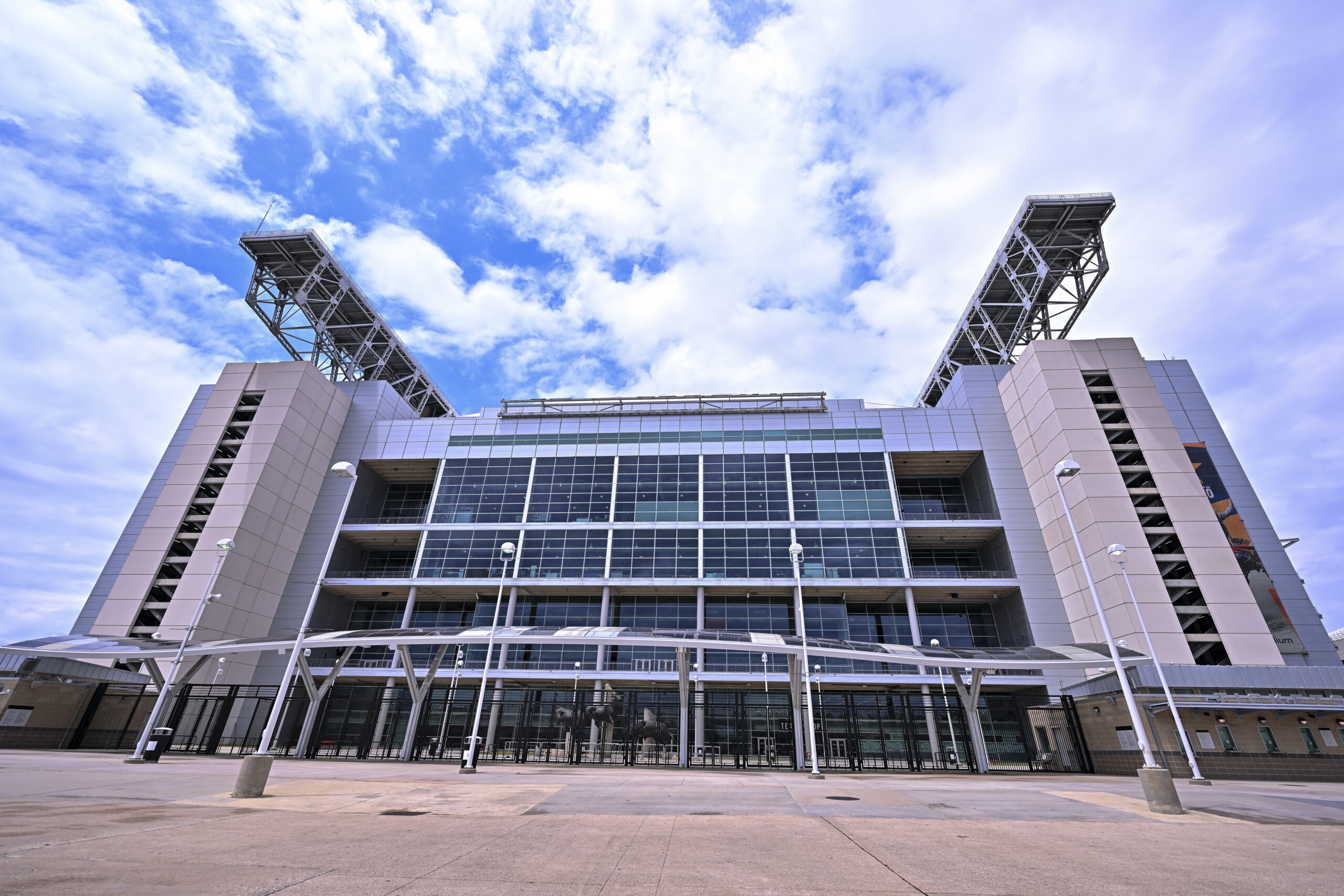
May 11, 2026; Houston, Texas, USA; A general view of the front of the stadium ahead of the 2026 FIFA World Cup at NRG Stadium. Mandatory Credit: Maria Lysaker-Imagn Images
NRG Stadium holds 72,220 and quietly outperforms venues that cost far more. It ranked sixth-best overall for fan experience and third-best for food options in the league. Houston proves a stadium doesn’t need to top the size chart to win the day for the people actually inside it. That theme, experience over scale, only gets louder from here. The buildings that spent the most, you’ll see, often satisfy fans the least.
7. Caesars Superdome, New Orleans, 73,208
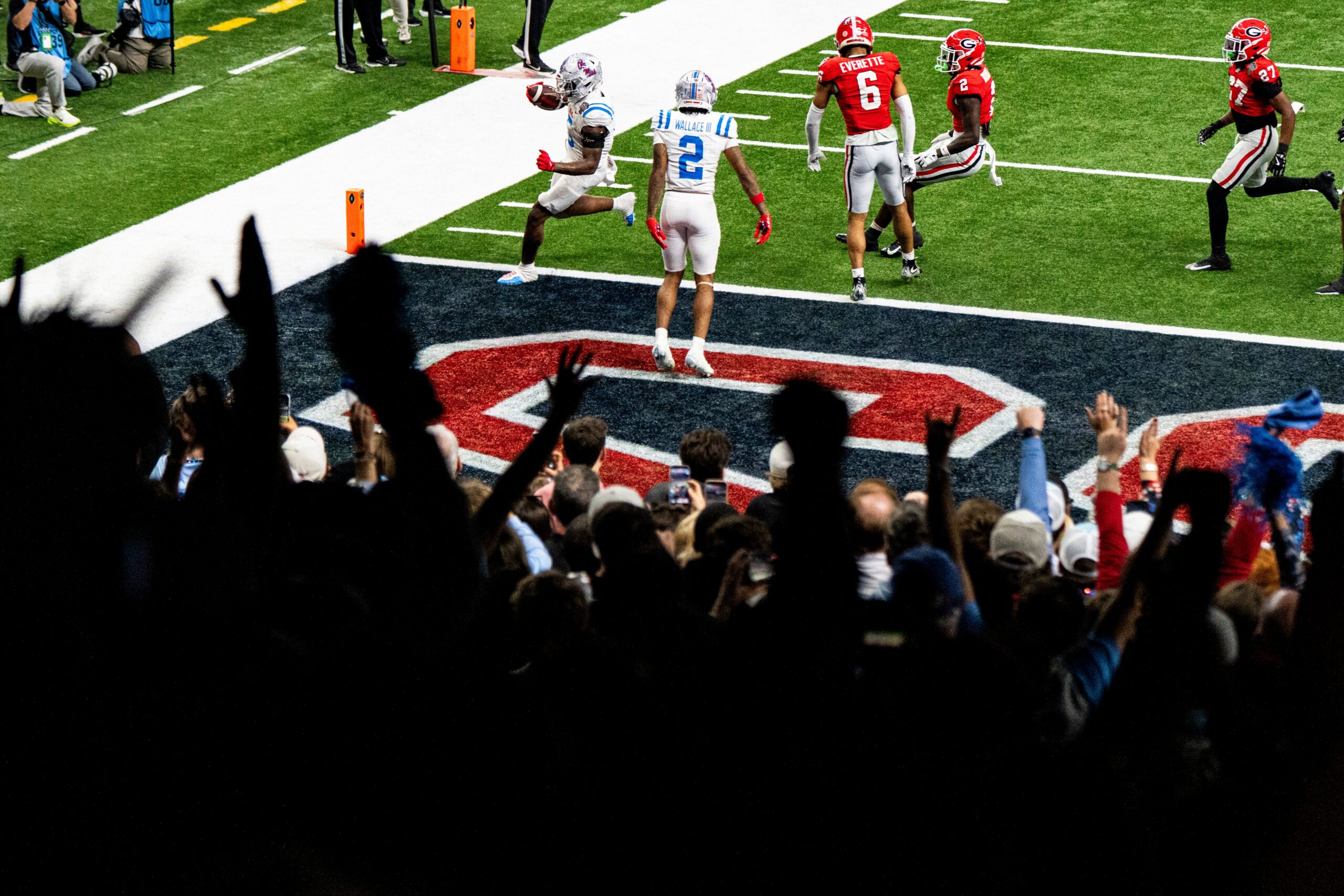
Ole Miss running back Kewan Lacy (5) scores a touchdown during the Sugar Bowl and College Football Playoff quarterfinals at Caesars Superdome in New Orleans, La., on Thursday, Jan. 1, 2026. Ole Miss defeated Georgia 39-34.
The Superdome seats 73,208 and carries unmatched history, having hosted nine Super Bowls, more than any other stadium in NFL history. Yet the 2025 Super Bowl there drew just 65,719 fans. Here’s the twist that reshapes the whole list: the league doesn’t award its biggest games to its biggest stadiums. The 2026 Super Bowl went to Levi’s Stadium, which drew 70,823, and neither venue ranks among the NFL’s three largest. The NFL hands its showcase to venues that deliver controllable, monetizable experiences, not raw seat counts.
6. Bank of America Stadium, Charlotte, 74,867
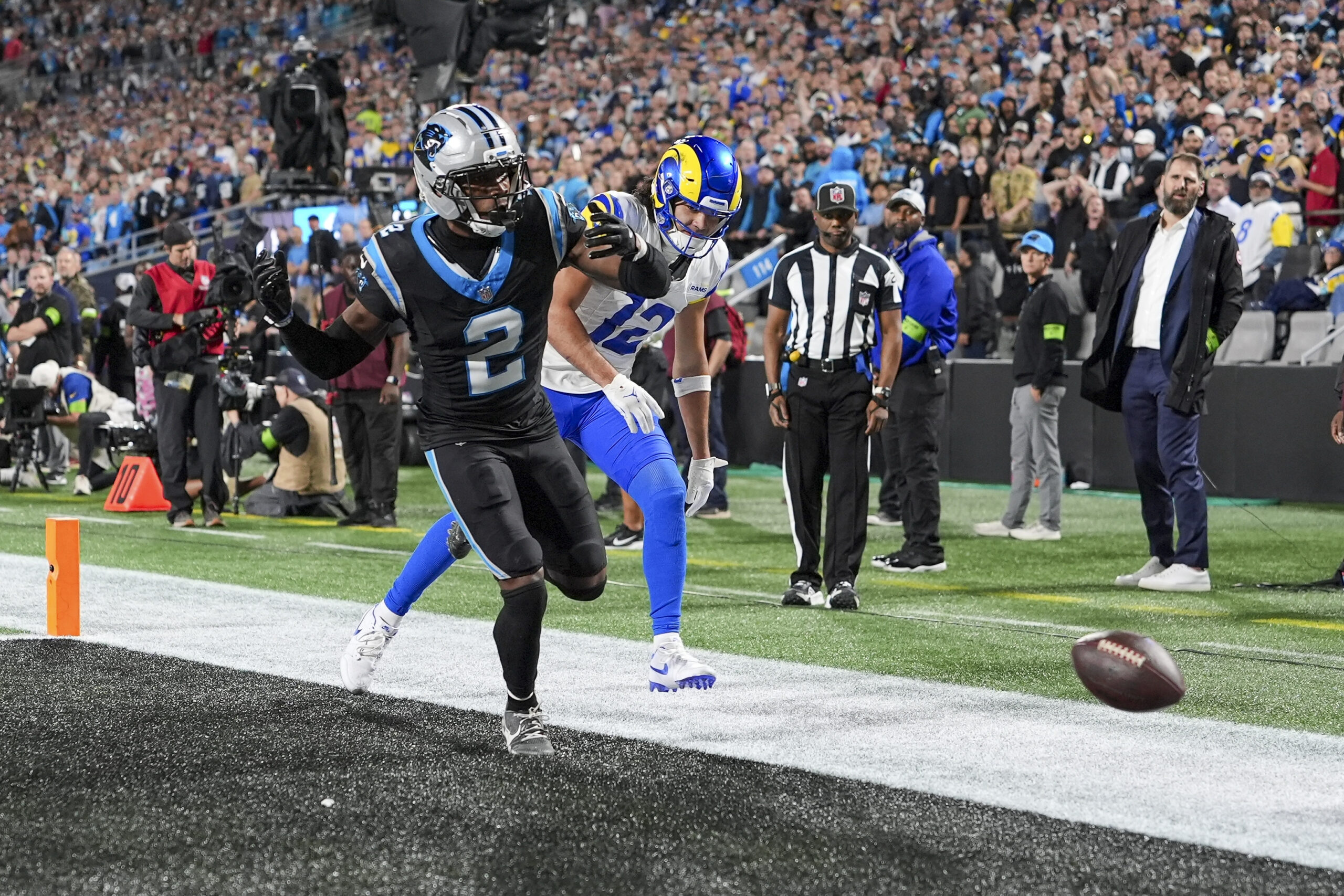
Jan 10, 2026; Charlotte, NC, USA; Carolina Panthers cornerback Mike Jackson (2) breaks up a pass play for Los Angeles Rams wide receiver Puka Nacua (12) during the second half of the NFC Wild Card Round game between the Carolina Panthers and the Los Angeles Rams at Bank of America Stadium. Mandatory Credit: Jim Dedmon-Imagn Images
Bank of America Stadium seats 74,867, and like the rest of this list, it still fills. But filling it is getting more expensive. Rising construction costs push ticket prices upward at every renovated venue, and middle-income fans face the sharpest squeeze as premium pricing replaces general-admission economics. The stadium stays the same size. The crowd inside it quietly changes. That demographic shift is the cost nobody prints on the capacity chart.
5. Empower Field at Mile High, Denver, 76,125

Jan 25, 2026; Denver, CO, USA; New England Patriots place kicker Andy Borregales (36) attempts a field goal against the Denver Broncos during the first half in the 2026 AFC Championship Game at Empower Field at Mile High. Mandatory Credit: Ron Chenoy-Imagn Images
Empower Field holds approximately 76,125 fans at over 5,200 feet above sea level, the highest perch in the NFL. The thin air is supposed to be the home-field edge. But the next entry detonates the idea that altitude, or size, is what makes a stadium fearsome. Because the loudest building in the history of sports doesn’t sit at the top of this list. It sits one spot below Denver, and it has never been close to the biggest.
4. Arrowhead Stadium, Kansas City, 76,416
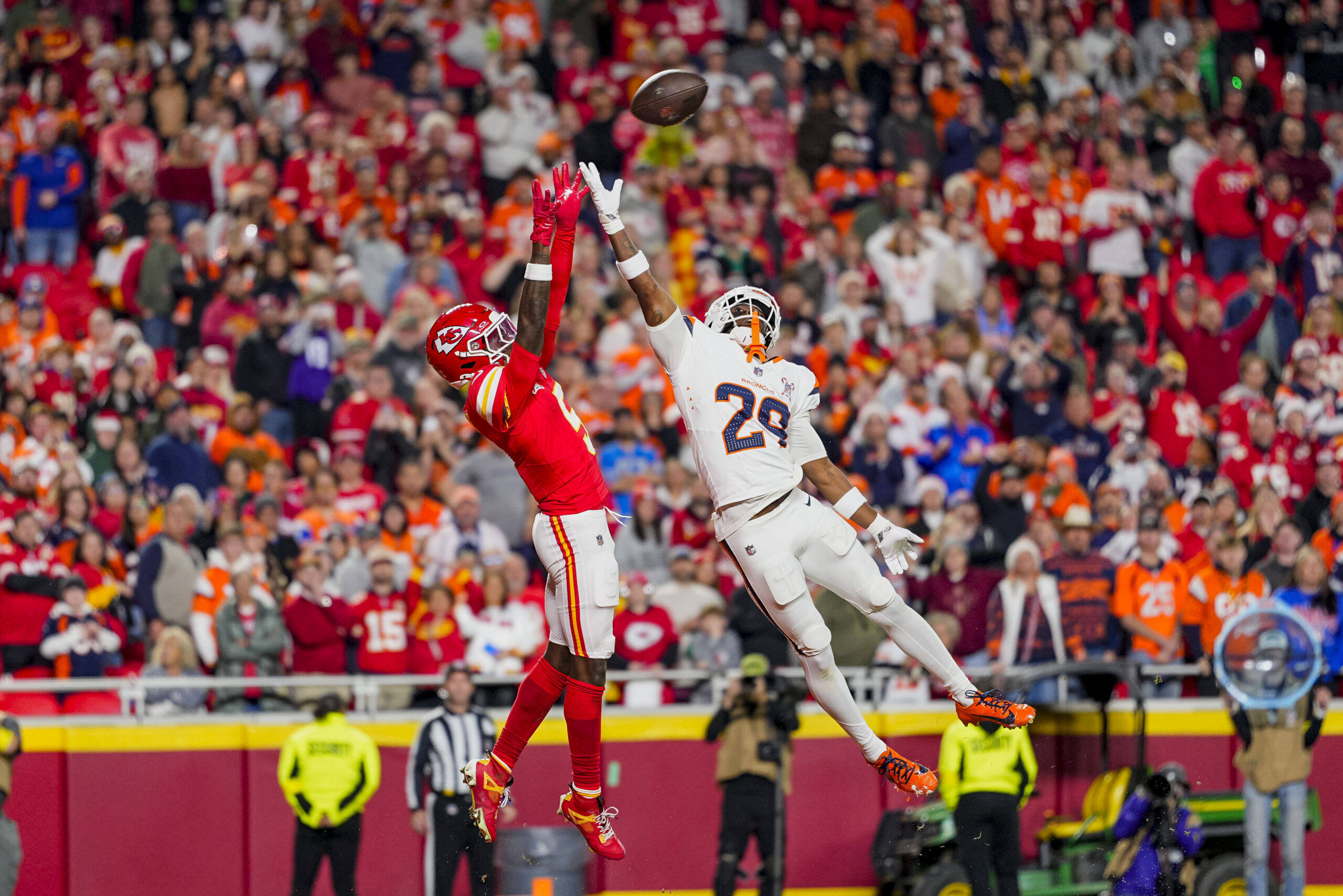
Dec 25, 2025; Kansas City, Missouri, USA; Kansas City Chiefs wide receiver Hollywood Brown (5) misses a catch against Kansas City Chiefs running back Kareem Hunt (29) at GEHA Field at Arrowhead Stadium. Mandatory Credit: Jay Biggerstaff-Imagn Images
Arrowhead ranks fourth in NFL capacity at 76,416, yet it holds the world record for loudest crowd noise at 142.2 decibels, set during a 2014 game against New England. That exceeds the sound of a jet engine at takeoff. Read the ranking again. Not first. Not second. Fourth. The three stadiums larger than Arrowhead have never touched that number. Fan dedication and bowl design created something raw capacity never could. Seattle’s Lumen Field once set a Guinness World Record at 137.6 decibels through the same philosophy. Bigger stadiums don’t produce bigger noise.
3. AT&T Stadium, Arlington, 80,000

Dec 21, 2025; Baltimore, Maryland, USA; New England Patriots tight end Hunter Henry (85) celebrates a touchdown against the Baltimore Ravens during the first half of the game at M&T Bank Stadium. Mandatory Credit: James Lang-Imagn Images
At 80,000 seats, AT&T Stadium sits third, the gleaming benchmark for what money can buy. And yet the most expensive stadiums don’t deliver the best experiences. SoFi Stadium in Inglewood, built for approximately $5 billion, ranks as the worst overall fan experience in the NFL. The most expensive stadium in league history delivers the least satisfying day out. Meanwhile Soldier Field, the NFL’s oldest venue at 102 years and its smallest at 61,500 seats, maintains one of the strongest fan cultures in the league. Money builds walls. It doesn’t build atmosphere.
2. Lambeau Field, Green Bay, 81,441
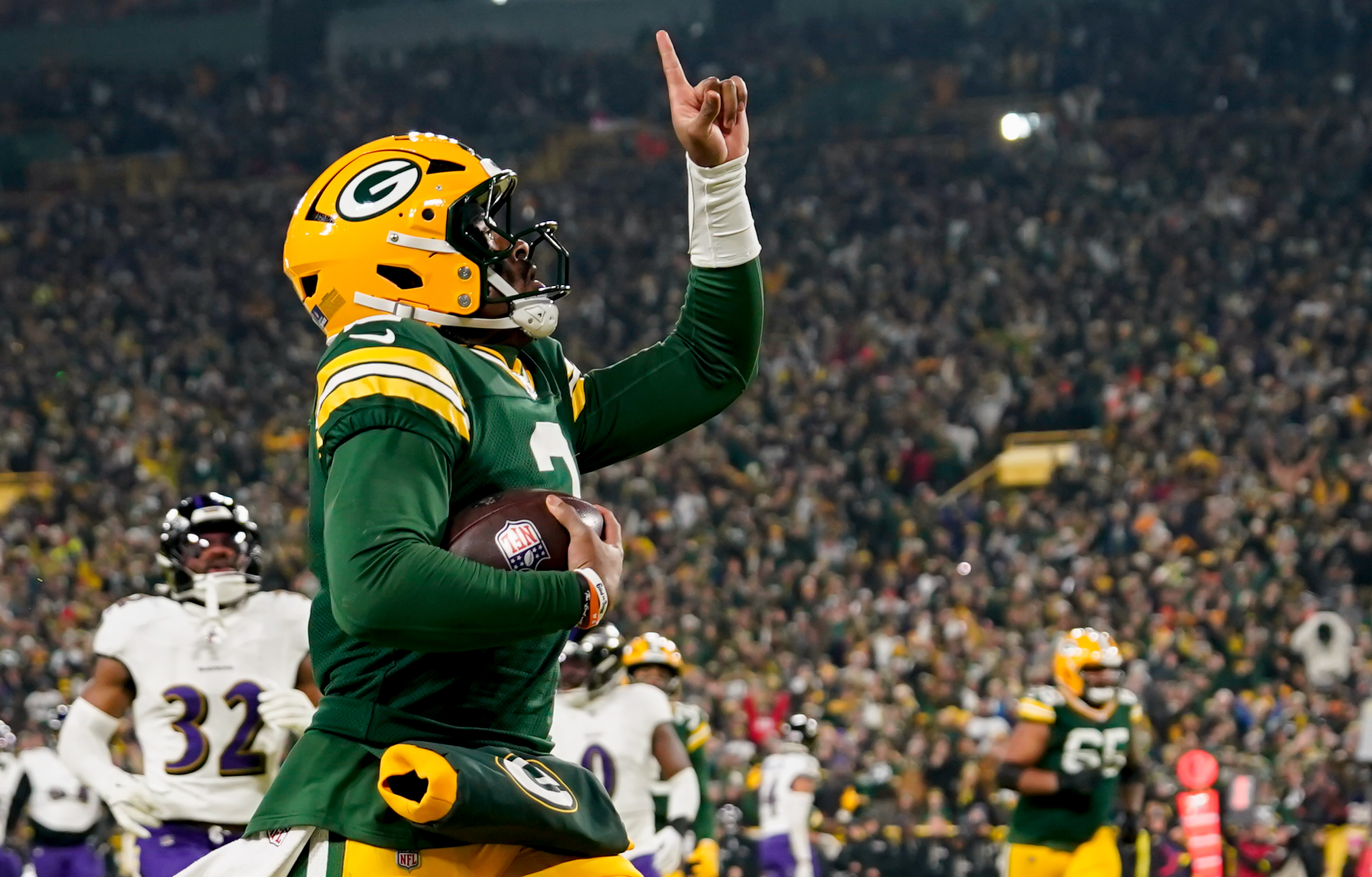
Dec 27, 2025; Green Bay, Wisconsin, USA; Green Bay Packers quarterback Malik Willis (2) celebrates after a touchdown during the second quarter against the Baltimore Ravens at Lambeau Field. Mandatory Credit: Kayla Wolf-Imagn Images
Lambeau Field’s 81,441 seats, a figure that quietly includes standing-room tickets, sit second, and Green Bay has sold out every home game since 1959. Every single one. That loyalty exposes who modern stadiums are actually built for. The Washington Commanders’ new RFK-campus stadium carries a $3.8 billion price tag, with roughly $1.15 billion in public funding, among the largest taxpayer subsidies for a stadium in U.S. history. Its 65,000-seat bowl stays below D.C.’s 130-foot Height Act limit while a dome rises above it, because domes don’t count toward the cap. Luxury suites can account for up to roughly 20% of total stadium revenue despite a small share of capacity. Green Bay sells out on devotion. The new builds are designed around something else entirely.
1. MetLife Stadium, East Rutherford, 82,500
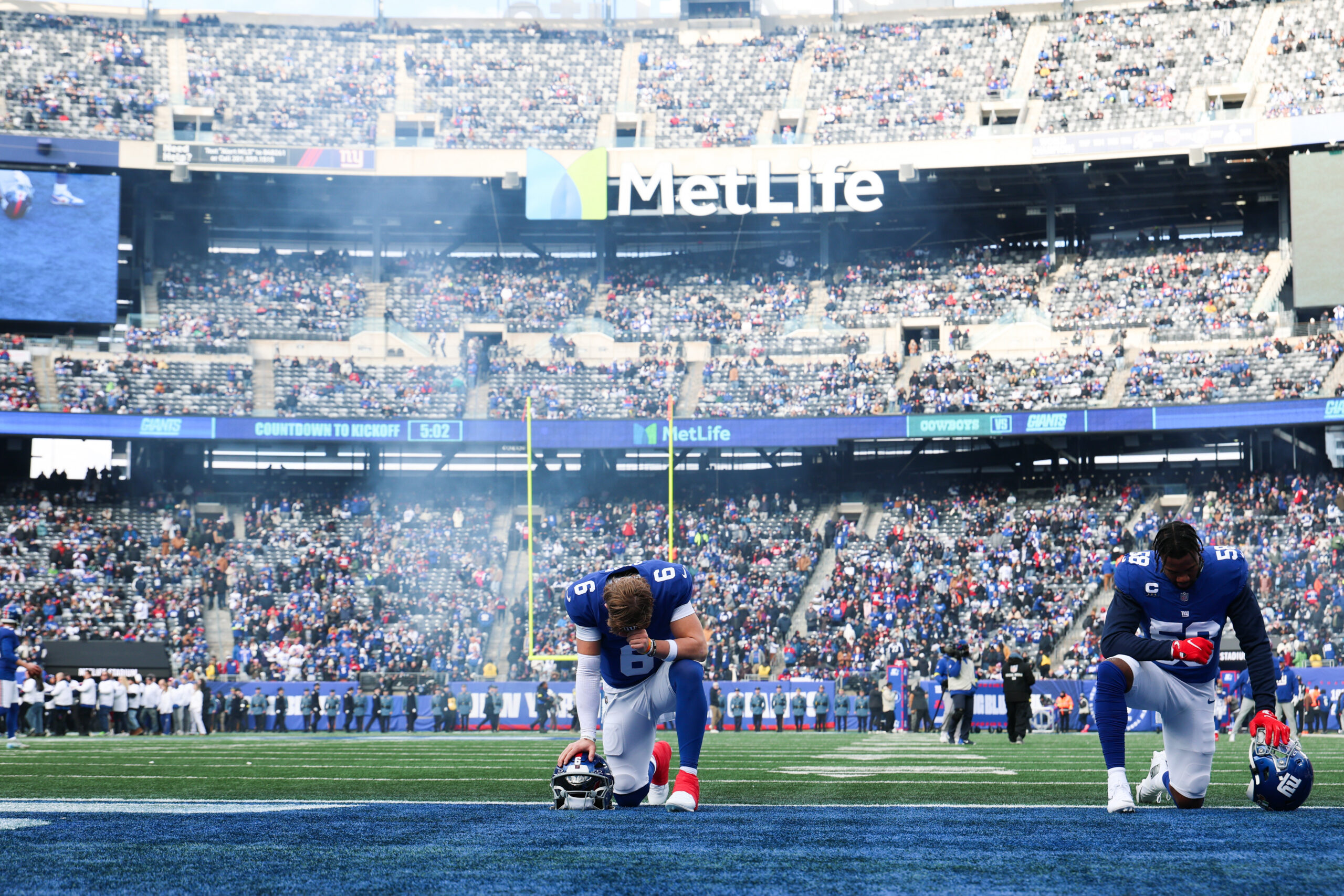
Jan 4, 2026; East Rutherford, New Jersey, USA; New York Giants quarterback Jaxson Dart (6) kneels in the end zone before the game against the Dallas Cowboys at MetLife Stadium. Mandatory Credit: Vincent Carchietta-Imagn Images
MetLife’s 82,500 seats edge Lambeau’s by barely a thousand, crowning it the NFL’s largest, and on July 19 it becomes the largest stage in world sport. MetLife will host eight 2026 FIFA World Cup matches, including Match 104, the final. Here is the surprise the whole list has been building toward: being the biggest is no longer the point. NFL Week 1 in 2024 saw 15 teams combine to sell 98% of available seats, with eight reporting complete sellouts, proving demand is real across the league regardless of size. MetLife’s World Cup turn proves these buildings have evolved into multi-sport, multi-revenue platforms. Fan advocacy groups will likely push for affordable seating in future deals. Whether they succeed depends on whether owners view fans as customers or as the atmosphere itself. Arrowhead’s 142.2 decibels, three spots down this list, suggest the answer matters more than any blueprint. So here’s the real debate: if you could only keep one, would you take the loudest house in football or the biggest? Tell us which stadium belongs higher on this list, and which one is overrated, in the comments.